

Key Takeaways
- To create a social sportsbook like Rebet, set up two separate virtual wallets, add features that get users interacting with each other, and connect live sports data.
- Start by knowing your users and the type of social experience they expect.
- Make a user journey that makes it easy to find games, make picks, share them, and stay involved.
- Find out how Idea Usher can help you build a social sportsbook that fits your business idea and gives users a simple social betting experience.
To build a social sportsbook like Rebet, develop a platform that combines sports betting, real-time sports data, social interactions, peer-to-peer betting, digital wallets, and responsible gaming controls. Those who want to know what goes into building a social sportsbook with us usually ask for a clear feature scope and honest guidance on compliance. They also want a realistic budget and timeline, plus a social layer that keeps users coming back.
For businesses, this creates an opportunity to build a social sportsbook that goes beyond conventional betting functionality. However, launching one requires more than a betting interface. You need real-time sports data, an odds and trading infrastructure, secure wallets and payments, social interactions, KYC/AML controls, responsible gaming tools, and a regulatory framework designed around the target market.
In this blog, we’ll explain how to build a social sportsbook like Rebet, including its key features, technology stack, development process, integrations, compliance requirements, and estimated development costs.
Why Are Social Sportsbooks Different From Traditional Sportsbooks?
Social sportsbooks add a community layer to sports predictions. Instead of focusing only on private wagers, users can make picks, follow friends, share plays, and compete through virtual currencies and social features. Traditional sportsbooks mainly center on real-money betting and operate under applicable sports betting laws. Social sportsbooks such as Rebet, Fliff, and Thrillzz offer a different experience built around community and engagement. According to Mordor Intelligence, the social casino market, a close category, was valued at USD 8.36 billion in 2025 and is projected to reach USD 13.49 billion by 2031, at a CAGR of 8.32%.
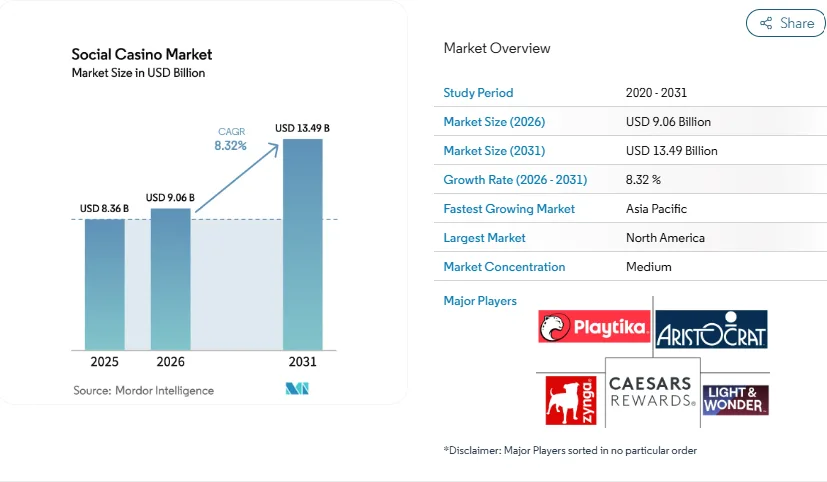
Source: Mordor Intelligence
From Bets to Community Picks
A traditional sportsbook usually revolves around one user, one bet slip, and one result. A social sportsbook keeps familiar betting markets but adds a community layer where users can share and discuss their picks. Rebet follows this model across 60+ sports and 3,000 betting markets. Instead of keeping picks private, users can share them with others, making each game more interactive.
| Feature | Traditional Sportsbook | Social Sportsbook, e.g., Rebet |
| Currency | Real-money deposits | Rebet Coins and Rebet Cash |
| Legal framework | Sports betting law | Promotional sweepstakes model |
| Bet visibility | Private bet slip | Picks can appear in a social feed |
| Competition | User vs. sportsbook | Leaderboards, challenges, and shared picks |
| Reach | Depends on licensing | Rebet and Bracco operate in 40+ states |
How Social Feeds Change Betting
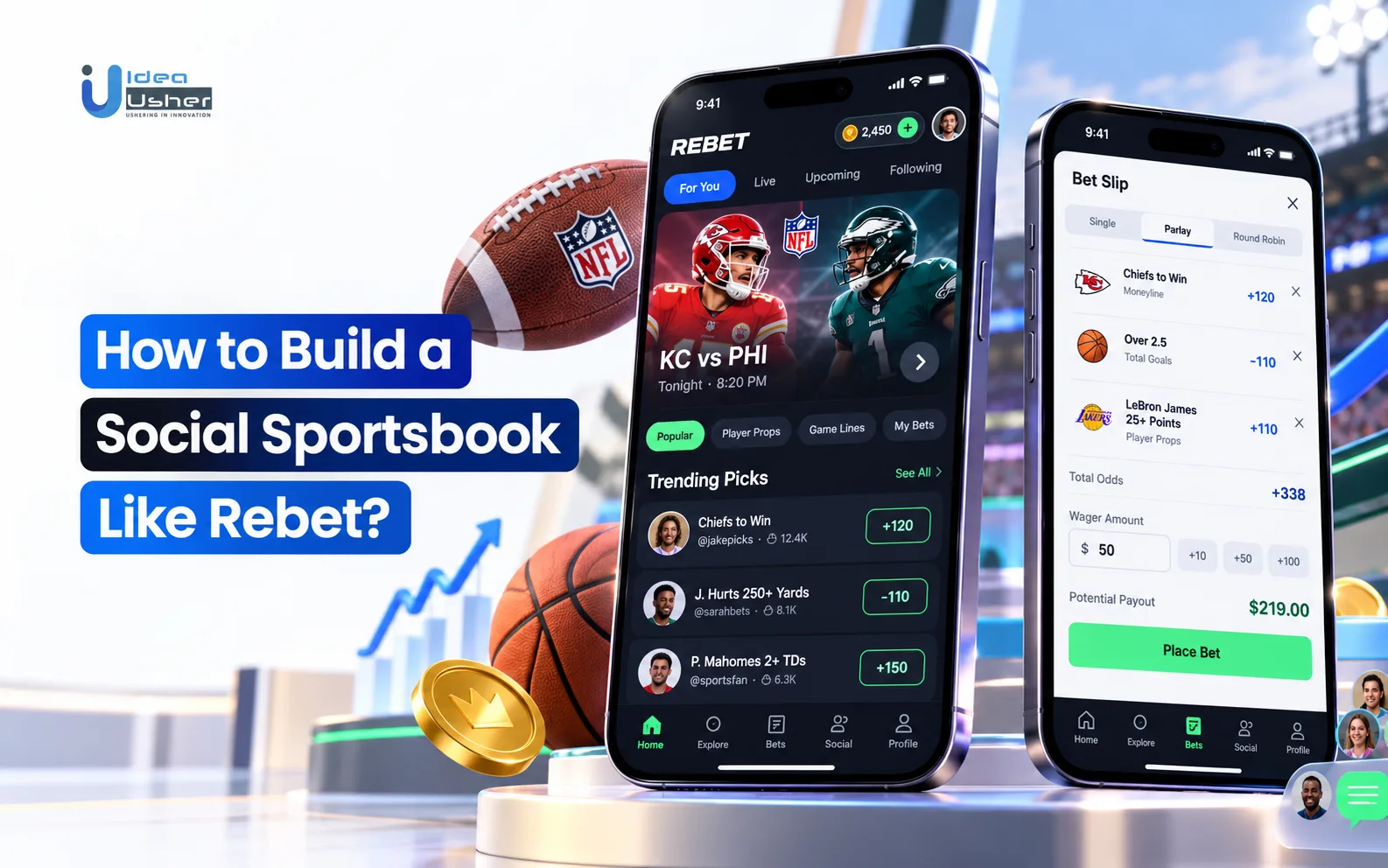
The social feed turns a betting app into a place where users can discover and discuss picks. Instead of opening the app only to place a bet, users can browse what others are picking and find new bettors to follow. Rebet’s navigation includes a feed, Discovery tab, bet slip, and profile. Users can explore other bettors, interact with their picks, and track their own activity.
What Social Feeds Add
- Discovery: Users can find bettors and picks worth following.
- Interaction: Friends can comment on or copy a pick.
- Progress: Coins, milestones, and leaderboards add a competitive element.
- Daily engagement: Challenges give users reasons to return between games.
Why Following Picks Matters
People often use recommendations from friends when making betting decisions. A Dimers survey of 2,000 U.S. adults who regularly bet during the FIFA World Cup found that 29% based picks on instinct or recommendations from friends and family. Social sportsbooks build this behavior directly into the product.
On Rebet, users can follow other bettors and use the Rebet button to copy their picks. This makes sharing picks part of the core experience.
However, copy features need transparency. The same Dimers survey found that 41% of bettors who relied on social media lost money. Research tracking 5,467 betting slips from three popular tipsters also found losses for both the promoted bets and followers who copied them. Showing verified pick histories can therefore help users understand performance rather than seeing only winning picks.
How Peer Challenges Work
Peer challenges shift the experience from simply betting against the house to competing directly with another user. Rebet allows users to create challenges and bet against each other through simplified betting lines.
| Platform | How It Adds a Peer Layer |
| Rebet | Users bet directly against each other |
| Prophet X | Players can set their own odds |
| WagerLab | Lets users place wagers with friends |
| BettorEdge | Combines peer-to-peer betting with community features |
| Rabbet | Focuses on peer-to-peer social sports picks |

What Makes Rebet’s Social Sportsbook Model Different?
Rebet treats the social layer as the main product rather than an add-on to a bet slip. Users can post picks, copy other players, challenge friends, and play through a two-currency virtual system. Rebet has also expanded into casino-style games, making it a hybrid platform rather than a pure sportsbook. These choices separate it from traditional sportsbooks and earlier social betting apps.
1. Social Picks and Peer Betting
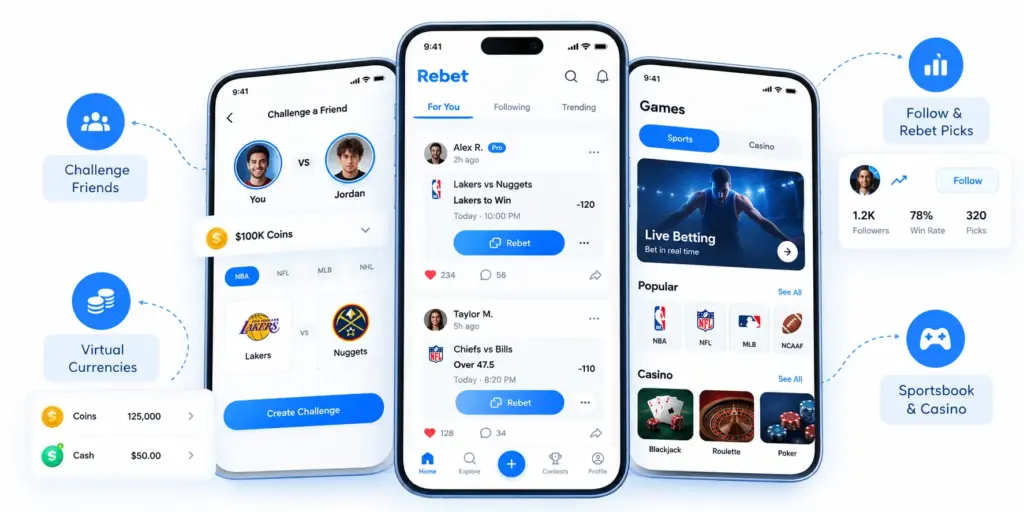
Rebet launched in February 2024 as a free-to-play social sportsbook, built by four Dartmouth College students. Its CEO, Carson Hubbard, said the social side of sports fandom was missing from traditional and social sportsbooks. The peer-to-peer feature addresses this gap by letting users create contests, set terms, and compete directly with friends.
Prophet X takes the model further by letting players set their own odds. Rebet keeps familiar sportsbook markets while adding the peer layer. P2P contests can create a strong social hook, but they also require collusion monitoring and transaction controls from the start.
2. Rebetting Other Users’ Picks
The Rebet button gives the app its name and lets users copy another player’s pick with one tap. Users can follow friends or other bettors, engage with their picks, and rebet them. This makes individual picks shareable across the community. What makes this feature work is the trust around each pick:
- Discovery tab: Users can find and follow other bettors.
- Visible records: Leaderboards and follower counts provide context about a player’s performance.
- Feed interaction: Users can publish picks and receive likes and comments.
- Competitive edge: One reviewer notes that rebetting friends’ picks gives Rebet a feature that Fliff does not currently offer.
3. Rebet Coins and Rebet Cash
Rebet uses two virtual currencies. Rebet Coins support social play and entertainment, while Rebet Cash is used for eligible sweepstakes contests with redeemable prizes. The distinction is important because the platform operates under a promotional sweepstakes model rather than a traditional sportsbook model.
| Currency | Purpose | How Users Get It | Can It Be Redeemed? |
| Rebet Coins | Social play, contests, leaderboard climbing | Sign-up bonus and optional coin packages | No |
| Rebet Cash | Eligible sweepstakes contests | Welcome bonuses, coin purchases, daily bonuses, and promotions | Yes, subject to terms |
| Conversion | Reference point | Sweepstakes currency is often valued 1 to 1 with USD, but terms vary | Check the app’s terms |
4. Rewards and Social Engagement
Rebet uses rewards, milestones, leaderboards, and daily challenges to keep users active. Challenges can include single-sport picks and multi-leg parlay-style plays. Users can also challenge friends and build status within the community. Rebet has also introduced Prop City, which lets users create custom props and share them with the community. The platform also offers features such as same-game parlays, live betting, and personalized promotions, according to its own site.
5. Sportsbook and Casino Expansion
Rebet has expanded beyond sports by adding casino games such as blackjack, roulette, and poker. This gives the platform a broader entertainment offering and keeps users engaged outside major sports events. Track360 notes that a hybrid model can increase the value of each acquired player while keeping the platform active between sports seasons. It also points out that combining sportsbook, casino, and crypto payment features creates additional compliance considerations.
| App | Product Focus | Peer or Social Angle |
| Rebet | 60+ sports across 3,000 betting markets, plus casino games | P2P contests and the Rebet button |
| Fliff | Focuses solely on sports | Standard social sportsbook features |
| Legendz | Sportsbook and casino, with 30+ sports | Mixed sports and casino gaming |
| Prophet X | Social sportsbook | Peer-to-peer model where players set the odds |
How Does a Social Sportsbook Like Rebet Work?
A social sportsbook like Rebet lets users sign up, verify their identity, make sports picks with virtual currency, and share those picks with a community. Users can follow, copy, or challenge other players through the social feed. A two-currency wallet supports play and eligible prizes, while live sports data, identity checks, and rewards keep the experience running from signup to redemption.
1. User Onboarding and Profile Creation
Rebet starts with a mobile-only app. Users create an account, choose a username, verify their contact details, and complete identity verification. Rebet says Plaid handles identity verification, which can include checking a Social Security number and possibly a government ID. Once verified, users can access the platform, where their profile displays their balance and stats.
Rebet’s Signup Flow
- Download the official Rebet app.
- Tap Sign Up and enter the required details.
- Create a username and password.
- Accept the terms and submit.
- Verify your email with the code provided.
- Complete ID verification and start making picks.
Reviewers report that the welcome bonus includes 100 Rebet Coins and 1 Rebet Cash after ID verification, with no promo code required. Builders should also account for sweepstakes laws and age requirements, which can be 18 or 21 depending on the state.
2. Sports, Markets, and Live Odds Discovery
After onboarding, users can browse leagues, sports, and betting markets. Rebet offers 60+ sports and leagues, including the NFL, NBA, MLB, NHL, and NCAA. Markets include moneylines, spreads, props, and in-play options. Users can also switch to Easy-to-Read lines to make odds easier to understand.
| Market Type | What It Does in the App |
| Moneyline | Pick which side wins the event |
| Spread | Pick a side against a margin |
| Totals and props | Pick over or under a number, or a player stat |
| Prop City | Build custom prop bets |
| In-play | Make picks while the game is live |
3. Creating and Publishing a Pick
Users create a pick through the bet slip by selecting a market and building a single pick or parlay. Once placed, the pick can appear on the social feed, where others can view, comment on, or copy it. Rebet’s homepage describes the same flow: users make picks, publish them, and let followers react. This turns a bet into shareable content.
Prop City adds another layer by letting users create and share custom props. Rebet also lists same-game parlays among its offerings. For builders, the key is connecting fast sports updates with social features such as leaderboards and achievements.
4. Following, Rebetting, and Challenging Users
Once picks become public, users can follow, rebet, or challenge other players. Rebet’s navigation includes a feed, Discovery tab, bet slip, and profile. Following fills the feed, rebetting copies another user’s pick, and challenges create direct competition.
- Follow: Discover bettors and build a personalized feed.
- Rebet: Copy a friend’s or top handicapper’s pick with one tap.
- Compare: Use leaderboards and follower counts to assess performance.
- Challenge: Create peer-to-peer contests and compete directly.
5.Tracking Results and User Performance
Tracking completes the social betting loop. Rebet profiles show user balances and stats, while the app provides an overview of virtual credit that has been bet, purchased, and redeemed. Leaderboards add public performance records, while milestones and daily challenges give users additional goals.
| Where Users Look | What They See |
| Profile | Balance and personal stats |
| Wallet overview | Virtual credit bet, purchased, and redeemed |
| Leaderboards | Rankings, follower counts, and win-loss records |
| Milestones and challenges | Progress toward in-app goals and status |
6. Rewards, Redemptions, and Wallet Activity
The wallet supports Rebet’s sweepstakes model. Rebet Coins are used for social play, while Rebet Cash can be used in eligible sweepstakes contests. Rebet Cash cannot be purchased directly and can come through welcome bonuses, coin purchases, daily login bonuses, and social promotions. Rebet also offers a VIP Club with five tiers: Bronze, Silver, Gold, Platinum, and Diamond.
Rebet Redemption Rules
| Redemption Term | Detail |
| Playthrough | 1x |
| Minimum redemption | 20 Rebet Cash |
| Maximum redemption | 1,000 Rebet Cash per day |
| Exchange rate | 1 Rebet Cash for $1 |
| Fee | $0.75 per successful redemption |
| Payment method | Bank transfer |
| Processing time | 1 to 3 business days |
What Features Should You Build Into a Rebet-Like Social Sportsbook?
A Rebet-like social sportsbook needs three main layers: social, betting, and wallet. The social layer keeps users connected, while the betting layer handles picks, rebetting, challenges, and live odds. The wallet manages virtual currency, rewards, and redemptions. Growth and compliance features support the entire platform.
1. Social Sports Feed
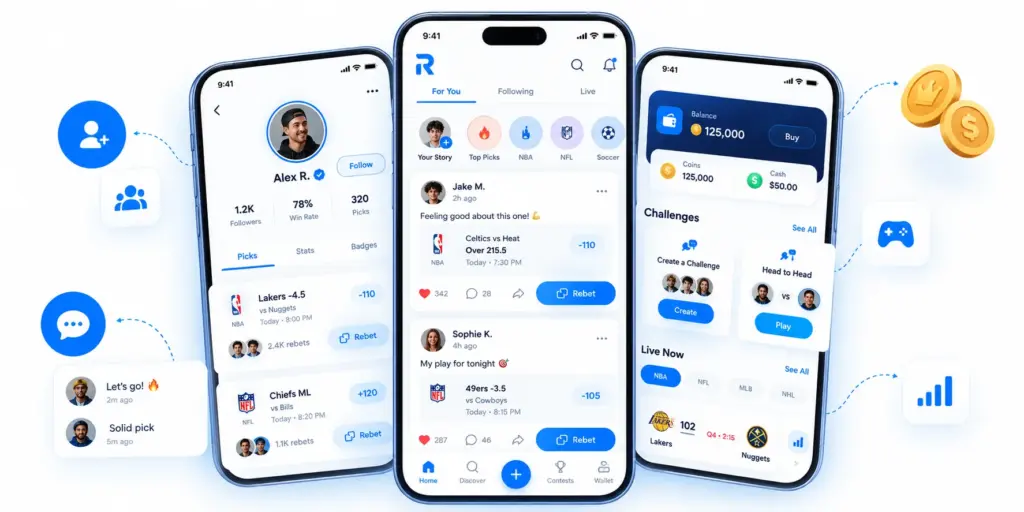
The feed is the main entry point for a social sportsbook. On Rebet, users can view, comment on, or copy picks shared by others. Fliff uses a similar feed to highlight popular bets and community activity. For builders, a live feed needs real-time updates so users always see fresh picks and results.
2. Public Bettor Profiles
Profiles help users decide whom to follow or copy. Rebet shows balances and stats, while Fliff adds avatars, win-loss records, badges, trophies, favorite teams, and preferred sports.
| Profile Element | Why It Matters | Example |
| Avatar and username | Builds identity | Fliff |
| Win-loss record | Shows performance | Rebet |
| Balance and stats | Shows activity | Rebet |
| Badges and trophies | Rewards engagement | Fliff |
| Favorite teams and sports | Helps users find similar bettors | Fliff |
3. Pick Publishing and Rebetting
Pick publishing is the core action, while rebetting makes picks shareable. Rebet’s Rebet button lets users copy another player’s pick with one tap. Prop City also lets users create and share custom props. Fliff lets users tail or fade friends’ picks.
Key Features to Build
- One-tap publishing: Post picks directly from the bet slip.
- Rebet with attribution: Link copied picks to the original user.
- Custom pick builder: Let users create unique props.
- Tail and fade: Give users ways to agree or disagree with picks.
4. Friend Challenges and Peer Bets
Friend challenges and peer bets let users compete directly with friends instead of only betting against the sportsbook. Users can create challenges, set their terms, and invite others to join. This adds a social element to betting and gives users another reason to return and interact with the community.
| App | Challenge Feature | How It Works |
| Rebet | Peer-to-peer contests | Users create contests and set their own terms |
| Thrillzz | Squads and Squad challenges | Groups compete with shared prize pools |
| Fliff | Fliff Superstars | Peer-to-peer daily fantasy using real USD |
5. Followers, Reactions, and Comments
Following, reactions, and comments make picks feel social. Rebet lets users publish picks and interact with followers, while Thrillzz adds chat, leaderboards, and shared picks through Squads. Moderation tools such as reporting, blocking, and keyword filters should support these features.
6. Leaderboards and Performance Stats
Leaderboards give users a public way to compare performance. Rebet shows follower counts and win-loss records, while Fliff uses levels, badges, and XP. Thrillzz adds daily leaderboards and real-time sports statistics.
| App | Feature | What It Does |
| Rebet | Leaderboards and milestones | Ranks users and shows records |
| Fliff | Levels, badges, and XP | Rewards activity and progress |
| Thrillzz | Daily leaderboards and Sports Stats Widget | Ranks players and shows game data |
7. Live Sports Scores and Odds
Live data makes the platform feel like a real sportsbook. Rebet provides real-time data across 60+ professional and college leagues, including in-play markets. Thrillzz offers live plays and sports visualizations, while Novig lets users sell positions early. A backup admin system can also help when data synchronization fails.
8. Virtual Currency and Rewards
The currency system supports the sweepstakes model. Rebet uses Rebet Coins for social play and Rebet Cash for eligible contests. Fliff adds XP, while Thrillzz uses Prize Tickets and loyalty levels. Sportzino uses a seven-tier VIP program.
| App | Play Currency | Prize Currency | Extra Reward Layer |
| Rebet | Rebet Coins | Rebet Cash | VIP Club with five tiers, Bronze to Diamond |
| Fliff | Fliff Coins | Fliff Cash | XP |
| Thrillzz | Thrillzz Coins | Thrillzz Sweeps | Prize Tickets, loyalty levels, and Daily Wheel |
| Sportzino | Gold Coins | Sweeps Coins | Hall of Fame VIP Program with seven tiers |
Fliff also shows how pricing can work, with reviewers listing $0.99 for 5,000 Fliff Coins. The free route still needs to remain available for the sweepstakes model.
9. Wallet and Redemption Management
The wallet should be simple for users but tightly controlled underneath. Fliff lets users switch between Fliff Coins and Fliff Cash, while redemption rules vary across platforms. Rebet’s minimum redemption is 20 Rebet Cash, compared with $50 in Fliff Cash. Both use a 1x playthrough for bonus cash.
| Redemption Term | Rebet |
| Playthrough | 1x |
| Minimum redemption | 20 Rebet Cash |
| Maximum redemption | 1,000 Rebet Cash per day |
| Exchange rate | 1 Rebet Cash for $1 |
| Fee | $0.75 per successful redemption |
| Processing time | 1 to 3 business days by bank transfer |
The admin layer should also cover transactions, KYC, compliance, and geo-blocking. In the US, the platform must also provide a free route to participate rather than making a purchase the only way to enter.
10. Referral and Community Growth
Referral tools turn users into a growth channel. Rebet gives each member a unique referral link or code, and friends must enter it during registration, since it cannot be added later. Reviewers report the referrer earns 50 Rebet Cash after the friend buys a Rebet Coin bundle, while another review lists 100 Rebet Cash. Either way, the bonus carries a 1x playthrough.
How to Build a Social Sportsbook Like Rebet?
To build a social sportsbook like Rebet, work through seven connected steps. First, define the social betting experience. Then map the user journey, build the betting engine, and add social picks and challenges. After that, connect live sports data, design a two-currency wallet, and set up compliance controls. Compliance should run through the entire process, not wait until launch.
1. Define the Social Betting Experience
Before coding, decide what type of social sportsbook you want to build. Rebet is a free-to-play social sportsbook with a social feed, peer-to-peer contests, official data, and two virtual currencies: Rebet Coins for social play and Rebet Cash for eligible sweepstakes contests.
| Model | How It Works | Example |
| Free-to-play social picks | Virtual coins with a sweepstakes currency | Thrillzz uses Thrillzz Coins and Thrillzz Sweeps |
| Hybrid sportsbook and casino | Sports picks and casino-style games | Rebet added casino games; Thrillzz has 200+ casino-style games |
| Peer exchange or prediction market | Users trade at market prices | Novig moved from a sweepstakes sportsbook to a CFTC-regulated prediction market |
| Social peer betting | Friends bet each other directly | WagerLab lets users bet with friends and is described as legal in all 50 states |
2. Map the Rebet-Style User Journey
Map every screen before development. Rebet requires ID verification before users can access features, with Plaid providing the identity check. Its bottom navigation includes the feed, Discovery, bet slip, and profile. Fliff also requires verification before users can buy coin packages or redeem Fliff Cash.
The core flow is:
- Sign up: Enter basic details such as name, age, and email.
- Verify and claim: Verify email and ID to receive 100 Rebet Coins and 1 Rebet Cash.
- Explore markets: Browse 60+ sports with real-time odds.
- Pick, rebet, or challenge: Make picks, join peer contests, or copy another user’s pick.
- Track and share: Review bets, rewards, and community activity.
- Redeem: Redeem eligible Rebet Cash after a 1x playthrough.
Track each step as an event so you can identify where users drop off.
3. Build the Core Betting Engine
The betting engine handles the bet slip, stakes, potential returns, and settlement. Rebet supports moneylines, spreads, props, and in-play betting, along with Prop City and Easy-to-Read lines. Admin tools should also support live and historical bet monitoring with audit trails.
4. Add Social Picks and Challenges
The social layer is what separates Rebet from a standard sportsbook. Its patent-pending Rebet button lets users copy a friend’s pick in one tap. Peer contests let users create their own terms, while the feed supports likes and comments.
Key Social Features
- Feed and follow: Publish picks and help users discover bettors.
- Rebet button: Copy a pick in one tap with credit to its author.
- Visible records: Show follower counts and win-loss records.
- Peer contests: Let users create and accept challenges while monitoring collusion.
- Groups: Thrillzz Squads offer chat, leaderboards, and shared picks.
5. Integrate Live Sports Data
Integrate live sports data to give users real-time scores, odds, and game updates while they browse or place picks. Rebet supports data across 60+ professional and college leagues, while tools like Socket.IO can help deliver live updates inside the app. A reliable data feed also helps keep in-play betting accurate and responsive.
| Option | What It Offers |
| Sportradar | Data, odds, trading, and risk tools |
| Genius Sports | Data and odds APIs |
| Sportsdata.io or RapidAPI | Match data |
| Socket.IO | Real-time updates |
6. Design the Wallet and Rewards
A social sportsbook wallet must clearly separate its two currencies. Rebet Coins support social play, while Rebet Cash is used for eligible sweepstakes contests and cannot be purchased directly. It can come from welcome bonuses, coin purchases, daily login bonuses, and social promotions.
| Redemption Term | Rebet |
| Playthrough | 1x |
| Minimum redemption | 20 Rebet Cash |
| Maximum redemption | 1,000 Rebet Cash per day |
| Exchange rate | 1 Rebet Cash for $1 |
| Fee | $0.75 per successful redemption |
| Processing time | 1 to 3 business days by bank transfer |
Rebet also has a five-tier VIP Club from Bronze to Diamond. Fliff uses XP, Thrillzz offers Prize Tickets, and Sportzino has a seven-tier Hall of Fame VIP Program. Keep the free route to play clear because sweepstakes rules depend on it.
7. Prepare Compliance and Launch Controls
Prepare compliance and launch controls early so your social sportsbook can operate within the rules of each market. This includes age and identity checks, geolocation, responsible gaming tools, fraud controls, and a free entry route where required. Building these controls from the start also makes it easier to handle changing state regulations before launch.
| Control | What to Build | Example |
| Free entry route | Free coins, daily rewards, and no-purchase paths | Fliff and Thrillzz allow mail-in requests |
| Identity and age | KYC at sign-up and before redemption | Rebet verifies ID before access; Fliff lists 21+ |
| Geo-blocking | State exclusion map and admin rules | Fliff publishes a list of excluded states |
| Responsible gaming | Self-exclusion and limits | Rebet provides these controls |
| Fraud and collusion | Multi-account and matched-bet monitoring | Sportzino allows one account per player |
Regulation can also change your market coverage. California banned sweepstakes-model social casinos, joining Montana, Connecticut, New Jersey, and Washington. Illinois ordered 65 operators to block residents, while Sweepsy reports that Rebet, Thrillz, and KicKr exited Tennessee. Build state-by-state controls so market changes can be handled through configuration rather than major code changes.
Which APIs Are Required for a Social Sportsbook?
A social sportsbook needs APIs for sports data and odds, live scores, KYC, geolocation, payments, fraud detection, and notifications. These integrations provide real-time game information, verify users, check their location, manage virtual currencies and payouts, detect suspicious activity, and keep users updated about their picks and games.
1. Sports Data and Odds APIs
Sports data and odds APIs provide the live odds, markets, scores, and match data that users need to make picks. Rebet uses official real-time data across 60+ professional and college leagues. Providers such as Sportradar, Genius Sports, Sportsdata.io, and RapidAPI can support different levels of coverage depending on your sportsbook’s needs.
| Provider | What It Offers | Fit for a Social Sportsbook |
| Sportradar | Real-time data, odds, trading, and risk tools | Fast onboarding and prebuilt widgets |
| Genius Sports | 600,000+ fixtures across 40+ sports | NFL play-by-play data through an enterprise partnership |
| Sportsdata.io or RapidAPI | Match data | Lighter options for an MVP |
The Sportradar and Genius comparison comes from a rival vendor’s blog, so treat its positioning as opinion.
2. Live Scores and Statistics APIs
Live scores and statistics APIs provide the real-time game updates users need while placing or following bets. They can deliver scores, player stats, team stats, and game status for live markets. Rebet supports in-play betting, while platforms like Thrillzz use live sports widgets to keep users updated during games.
What Your API Should Support
- Live scores and game status: Power in-play markets and bet settlement.
- Player and team statistics: Support props such as Rebet’s Prop City.
- Pre-built widgets: Make it easier to display live game data.
- Real-time updates: Keep odds, scores, and results updated as games change.
- Manual fallback: Allow admins to update match data if the API fails.
3. KYC and Identity Verification APIs
KYC controls access to the platform. Rebet requires ID verification before users can access features, with Plaid providing identity checks. Plaid can verify names, addresses, dates of birth, phone numbers, and ID numbers. It also supports document checks, selfie liveness, and SMS verification. Plaid claims selfie verification can reach a 94% pass rate. Fliff also requires verification before buying coin packages or redeeming Fliff Cash.
| Check | What It Does | Example |
| Data source verification | Matches user details against records | Plaid Identity Verification |
| Document verification | Checks government ID authenticity | Plaid + selfie |
| Selfie and liveness | Matches the person to the ID | Plaid Selfie Check |
| Phone verification | Confirms the number by SMS | Plaid SMS verification |
| Watchlist screening | Checks AML and PEP hits | Plaid Monitor |
| Age and identity bundle | Combines KYC checks | GeoComply IDComply |
Plaid charges a base fee per verification attempt, with additional fees for some checks. Decide which checks run during signup and which can wait until redemption.
4. Geolocation and Geofencing APIs
Geolocation and geofencing APIs check where a user is located before allowing access to certain sportsbook features. They help enforce state restrictions and block users from excluded locations. Tools such as GeoComply can use GPS, WiFi, and other signals to detect fake locations, VPNs, and proxies.
5. Payment and Wallet APIs
Payment and wallet APIs handle coin purchases, payouts, and wallet activity inside a social sportsbook. They can support card payments, bank transfers, and other payment methods while keeping track of user balances and redemptions. A clear wallet system also makes it easier to manage virtual currencies and follow the platform’s payout rules.
| API Layer | Role | Example |
| Card processing | Sells coin bundles | Stripe, PayPal, PayKings |
| Bank rails | Purchases and payouts | Trustly and ACH |
| Payment hubs | Cards, ACH, cash, and wallets | PayNearMe |
| Payout orchestration | Sends prizes to accounts | MIDsource, Soap |
| Crypto rails | Funding and redemption | Rebet uses crypto-friendly rails |
6. Fraud and Risk Detection APIs
Fraud and risk detection APIs help protect your social sportsbook from fake accounts, bonus abuse, collusion, and suspicious betting activity. They can check device details, IP addresses, payment patterns, and betting behavior to spot unusual activity. This is especially important for P2P betting where users may try to manipulate matched bets.
Key Fraud Signals
- Device fingerprints: Detect multiple accounts on one device.
- IP and location behavior: Identify location jumping and proxy betting.
- Payment links: Connect accounts using the same cards or bank accounts.
- Wagering patterns: Flag matched betting, syndicates, and account takeover.
- Counterparty pairings: Detect repeated P2P matches.
7. Push Notification and Communication APIs
Push notification and communication APIs help keep users connected to the sportsbook. They can send alerts about upcoming games, bet results, odds changes, and important account updates. Tools like Firebase Cloud Messaging can also support real-time alerts, while chat APIs can help users talk about picks and games inside the app.
| API | Use in a Social Sportsbook |
| FCM and Apple Push Notification service | Bet alerts and match results |
| SMS verification | Phone verification |
| Real-time chat | Group conversations |
| Ticket and in-app support | Account and payout help |
Add notification preferences from the start so users can control which alerts they receive. Responsible gaming rules should also guide when and how notifications are sent.
How Much Does It Cost to Build a Social Sportsbook Like Rebet?
Building a social sportsbook like Rebet usually costs $60,000 to $350,000. The final cost depends on whether you build a lean MVP or a full platform with more sports, games, and social features. The biggest cost drivers are sports data, real-time infrastructure, and US state coverage. The sections below break down the main costs.
1. Social Sportsbook MVP Development Cost
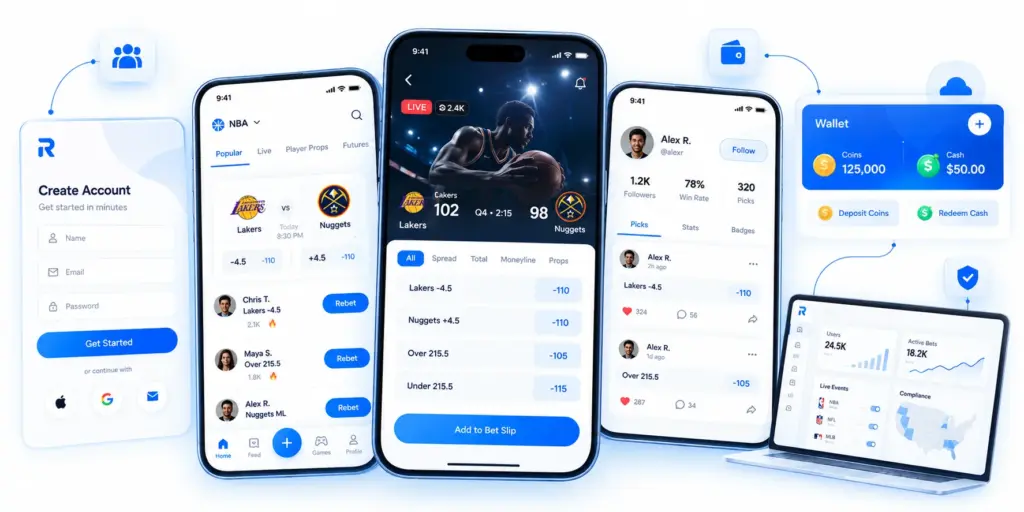
A social sportsbook MVP usually includes sign-up, a virtual wallet, pick slips, a social feed, and leaderboards. Published betting MVP estimates range from $50K to $80K and $80K to $150K+. Rebet’s four Dartmouth founders spent about a year building the app, raised a little over $1 million, and partnered with Sportradar before launch. This shows how a small team can start lean by buying the odds infrastructure instead of building it. An MVP can also reduce initial development costs by 30-50%.
| MVP component | Published cost reference |
| UI/UX design | $5,000 to $20,000 |
| Core backend | $80,000 to $200,000 |
| Complete social betting MVP | $50,000 to $80,000 to $150,000+ |
2. Full-Scale Platform Development Cost
A full platform can add parlays, player props, live picks, richer profiles, referrals, and casino games. Rebet now offers blackjack, roulette, and poker, along with features such as Prop City, custom props, and esports. More markets mean more pricing, settlement, and testing work.
Real-money platforms cost considerably more. A single-state real-money sportsbook costs $300,000 to $600,000, while live multi-jurisdiction platforms can cost $700,000 to over $1.5 million. Fliff’s merger with Mojo Fantasy also shows how platform consolidation can support expansion.
Key Full-Scale Cost Drivers
- Live and in-play picks
- Casino, pick’em, or daily fantasy
- Native iOS and Android apps plus web
- Risk, promotions, VIP, and support tools
- Peak game-day load testing
3. Sports Data and Odds Integration Costs
Sports data is one of the biggest recurring costs. Rebet uses Sportradar and covers 60+ professional and college leagues. Cheaper feeds are available, but they may differ in latency and official-data rights. Each provider also uses its own market structure, which can increase engineering work if you switch providers.
| Provider tier | Published price |
| Developer odds APIs | $99 to $299/month; entry plans from $29/month |
| Streaming updates | $99/month add-on |
| Pro-bettor tooling | $3,000/month |
| Enterprise data per sport | $5,000+/month |
| Sportradar API | From $1,250/month; full contracts at $30K+/month |
| Sportradar managed trading | $25,000 to $50,000/month |
Enterprise providers often keep pricing behind sales calls, so these are reference points rather than quotes. A practical approach is to start with a mid-tier feed and upgrade as volume and league coverage grow.
4. Social and Real-Time Infrastructure Costs
The social layer adds another infrastructure cost. Rebet lets users follow bettors, react to picks, and copy picks, while early users reportedly logged in about nine times a day. That creates demand for WebSockets, notifications, and frequent feed updates.
Managed services can reduce development work:
| Provider | Published price |
| Stream | From $499/month for about 10K MAU; $0.08 per additional user |
| Sendbird Pro | From $399/month |
| Ably | $2.50 per million messages + $1.00 per million connection minutes |
Ably’s customer list includes SportsBet, and sub-200 ms latency is cited as the expected global benchmark. Slips shows another approach with custom bet creation, matching and escrow, multiple contest formats, and group chat. Fliff has also added decimal stake entry, haptic feedback, and a redesigned bottom-sheet interface.
5. Compliance and Security Costs
Compliance adds significant costs because sweepstakes products depend on strict age, identity, and location controls. Operators typically verify users at signup and perform deeper checks before redemption. Location checks can combine IP and GPS data at login and key transactions.
Rebet launched in 47 states, excluding Idaho, Michigan, and Nevada. Its newer Pick’Em feature is currently available only in California, with more states planned. Meanwhile, a dozen states have made delayed identity checks more difficult, while California’s AB 831 increased vendor liability.
What Business Model Can You Use for a Social Sportsbook?
The most proven model for a social sportsbook is free-to-play with a dual-currency sweepstakes structure. Players use one currency for play and another for redeemable prizes. Operators can then add revenue through P2P fees, referrals, sponsorships, and premium tiers. Rebet follows this model with its coin-and-cash system, social feed, and casino in one wallet.
1. Free-to-Play and Sweepstakes Model
Players receive a non-redeemable play currency and a sweepstakes currency that can be won, claimed for free, and redeemed for prizes. Rebet uses Rebet Coins for play and Rebet Cash for sweepstakes entries. Rebet Cash can be redeemed at a one-to-one rate, with both currencies available through free daily options. The model depends on a genuine no-purchase entry route.
2. Revenue and Market Risk
Eilers & Krejcik Gaming estimates US sweepstakes casinos sold about $14.3 billion in Gold Coin packages, producing roughly $4-5 billion in net operator revenue after prize redemptions. Earlier estimates put player spending at $8.5 billion to $10.6 billion, with about $3.4 billion in net gaming revenue.
Only around 12% of players purchased, making retention important. California’s AB 831 also removed close to 20% of the addressable market.
| Dimension | Social / Sweepstakes | Regulated Real-Money |
| Gaming license | Not required | State or national license |
| Tax on revenue | Standard corporate tax | 10%-51% GGR tax by market |
| Time to launch | Weeks to months | 6-18 months in Tier-1 states |
| Main risk | Sweepstakes-law scrutiny | Licensing and taxation |
3. Peer-to-Peer Transaction Fees
P2P platforms match users and charge a fee instead of building a traditional vig into the odds. Traditional sportsbooks commonly use a 4.76%-10% vig. BettorEdge says it has matched over $100 million across 35,000+ bettors. Rebet lets users create contests with customizable terms, while Slips uses matching and escrow with a subscription model.
| Platform | Published fee approach |
| Traditional sportsbook | 4.76%-10% vig |
| BettorEdge | About 1% on winnings |
| Kalshi | Up to $1.75 per 100 contracts |
| Novig | $0 maker/taker fee on pre-game straight bets |
Novig later moved from a sweepstakes platform to a CFTC-regulated prediction market, showing why the fee model needs to match the regulatory structure.
4. Virtual Currency Economics
Virtual currency revenue depends on purchases, free claims, redemptions, and payment costs. Rebet sells coin packages through Visa, Mastercard, or Apple Pay, while new users receive 100 Rebet Coins and 1 Rebet Cash. Fliff has a $1 minimum purchase and gives users 5,000 Fliff Coins plus one Fliff Cash through daily login rewards.
Key Currency Levers
- Bundle pricing: Encourage purchases with discounted packs.
- Free-claim cadence: Support retention and the no-purchase route.
- Redemption thresholds: Control prize liability.
- Payment mix: Manage processing fees and declines.
Around 65%-70% of coin sales are typically returned through prize redemptions, leaving about a third as net revenue. Payment processing and KYC/AML are major cost pressures.
5. Affiliate and Referral Revenue
Affiliate marketing can support user acquisition when gambling-related advertising is restricted. Track360 reports 80- 250 CPA per first depositor and 25%-40% revenue share on a net-revenue equivalent. A common target is keeping blended acquisition cost below 33% of player lifetime value. Rebet’s sportsbook and casino combination allows one acquired user to generate revenue across both products.
| Channel | Cost model | Restriction risk |
| Affiliate and content partners | CPA / RevShare / hybrid | Low |
| Creators and social channels | CPA / hybrid | Medium |
| Paid search and social | CPC / CPM | High |
| App store featuring | Fixed / revenue cut | High |
User referrals can also lower acquisition costs. Rebet’s Rebet duplication feature, shareable picks, and 100 Rebet Coins + 1 Rebet Cash welcome bonus help turn users into distribution channels.
6. Sponsorship and Brand Partnerships
Sponsorship revenue grows with audience size. Rebet reported hundreds of thousands of monthly active users and has used partnerships to drive engagement. Its Celebrity Live Dealer Night featured Johnny Manziel and Bryce Hall, who has more than 26 million followers. Digital Sports Tech also powers Rebet’s Prop City, bet-builder parlays, trading, and risk services.
Prediction-market and sportsbook advertising also grew 21% in the first seven months of the latest year. LeBron James, Derek Jeter, and Eli Manning signed with Polymarket, while Giannis Antetokounmpo joined Kalshi. Betr is also building a super app combining picks, social sportsbook, social casino, and arcade products.
7. Premium Community Features
Premium tiers can monetize highly engaged users without changing the core wager. BettorEdge offers no-fee orders and cashback, while its Groups feature includes chat, leaderboards, and personalized feeds. Slips uses subscriptions, and Fliff offers Superstars. Rebet’s badges, milestones, daily challenges, and leaderboards can also support premium upgrades.
Suggested Rollout
- Launch free leaderboards, badges, and daily challenges.
- Add private groups and chat as the community grows.
- Introduce subscriptions with advanced stats, ad-free use, and early access.
- Add fee discounts or cashback for paying members if you offer P2P contests.
Build a Custom Social Sportsbook With IdeaUsher
Build a custom social sportsbook with IdeaUsher using scalable architecture, real-time sports integrations, social betting features, and secure virtual currency systems. Our team brings 500,000+ hours of coding experience and includes ex-MAANG and FAANG developers who can help turn your sportsbook concept into a production-ready platform.

Custom Social Sportsbook Development
We build custom social sportsbooks around your target users, business model, and market. From user onboarding and betting flows to social feeds, leaderboards, and admin tools, we can develop the core platform around your requirements. The platform can be designed to support your MVP today and scale with new features as your user base grows.
Real-Time Sports Data Integration
Connect your sportsbook with real-time odds, scores, statistics, and sports data APIs. We can integrate the data infrastructure needed for live markets, in-play betting, player props, and real-time updates. This helps create a responsive betting experience where users can follow games and make decisions using current data.
Social Betting and P2P Features
Add the features that make your platform social. We can develop pick sharing, following, rebetting, P2P challenges, comments, leaderboards, and group interactions to help users connect around sports. These features can turn individual betting activity into a community-driven experience that encourages ongoing engagement.
Virtual Currency and Wallet Development
Build a secure dual-currency wallet for virtual coins, sweepstakes currency, rewards, transactions, and redemptions. We can also develop wallet controls, transaction tracking, KYC workflows, and admin tools around your business model. Our team can structure the wallet to support clear transactions, reward management, and future monetization needs.
Conclusion
Building a social sportsbook like Rebet starts with creating a betting experience that feels social and easy to use. Users should be able to make picks and see what others are doing without feeling lost. You also need the right sports data and a system that can handle users as the platform grows. Most importantly, plan your compliance and wallet rules early so you do not have to rebuild the product later.
FAQs
A1: A social sportsbook combines sports betting with social features. Instead of only placing bets, users can share picks, follow other bettors, comment on their activity, and join challenges. Platforms like Rebet also use virtual currencies and rewards to make the experience more interactive.
A2: A social sportsbook like Rebet lets users sign up, verify their identity, explore sports and odds, and make picks using virtual currency. Users can then share their picks and follow what others are doing. They can also rebet popular picks or join peer challenges while tracking their results and rewards.
A3: Rebet makes betting more social by letting users see and interact with other people’s picks. Users can follow bettors, copy their picks, join challenges, and take part in a shared betting community. Its use of Rebet Coins and Rebet Cash also gives the platform a different model from a traditional sportsbook.
A4: Building a social sportsbook like Rebet can cost around $60,000 to $350,000 depending on the product scope. A basic MVP costs less, while features such as live betting, social tools, multiple sports, casino games, and advanced compliance systems increase the budget. Sports data and real-time infrastructure can also become major ongoing costs.
A5: A social sportsbook can take around 3 to 6 months for an MVP, while a larger platform can take longer. The timeline depends on the number of sports, social features, integrations, wallet systems, and compliance requirements. Starting with a focused MVP can help you launch sooner and add more features after testing the market.
A6: A social sportsbook usually needs sports data and odds APIs, KYC and identity APIs, geolocation APIs, payment APIs, fraud detection tools, and notification services. These integrations provide live sports information while helping the platform verify users, check locations, manage transactions, and send important updates.