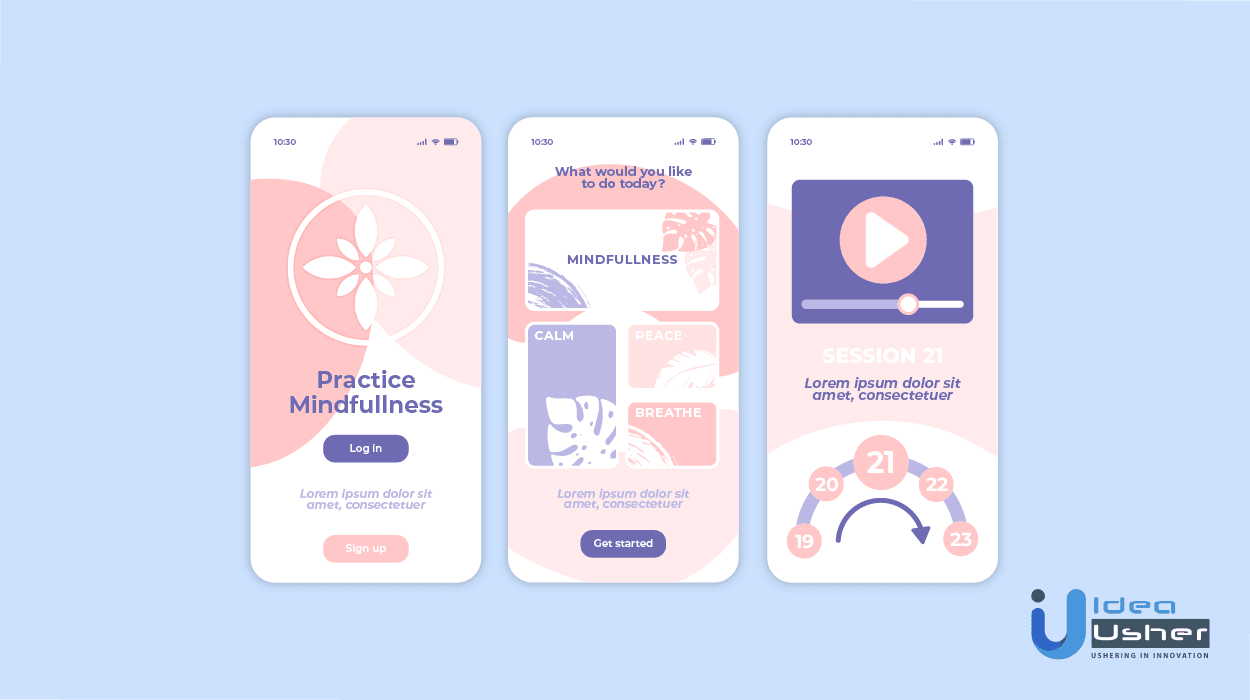
From mindfulness apps taking responsibility in maintaining our calm and stability to health care apps taking note of our heart rate and oxygen level in our blood. These technological advancements have indeed pushed our lives up a notch.
Over these past few decades, technology has taken a 360-degree flip and has entirely revolutionized our world and our day-to-day lives. It not only has made our life easier and faster but better and more fun.
This significant technology change has paved the way for multifunctional devices like smartphones and smart-watches, taking most of our load off our hands.
But do we resort to technology on all fronts?
Even though the world around us has adapted to the recent developments, few things still need some room to find their standing. In 2026, many businesses have ventured into meditation apps and released them on Google PlayStore.
Today in this blog, we’ll get to the hype around mindfulness apps how well do they work.
Let’s begin.
The era of meditation :
In ancient times, dealing with stress, maintaining a calm atmosphere, having a mindful environment, building self-confidence didn’t need any reminder or an alarm.
Instead, it came from within, and the relentless practice built a stronger mind and better health to work.
But these days, we are never able to put ourselves first and keep on pushing back our needs and requirements. The amount of stress we deal with has shaken up our balance between our personal and professional life.
Juggling our day-to-day responsibilities and bringing sanity into our lives seems to be next to impossible.
We are constantly searching for help, either manual or automotive, to relieve our minds’ pressure. One such method that people usually resort to is mediation and mindfulness.
How does meditation help?
The need to pull ourselves together in this fast-paced world is necessary and ought to be felt seriously.
Meditation is a technique that might sound ancient but still provides everything that a mind needs to calm itself down.
oscillation between work and home puts our mind and body through an extensive routine. It often results in mental breakdown and many such health problems that require strict conduct.
Isn’t it better to take precautions rather than finding a cure in times ahead?
Meditation isn’t only limited to mental health and supports you through your physical health. It gives mental strength, better focus, and concentration and fosters kindness your life.
Having a mindful life is as essential as having a financially stable life. No matter how much money you earn, if you don’t know the art of binding yourself together, you might fall.
The need for a mindful life in 2026
Let’s take a minute and analyze the amount of time we give to ourselves.
With one eye constantly monitoring the laptop screen and one eye checking the next project’s updates, we have entirely lost ourselves amidst the ocean of work.
Our lives’ sanity has made peace with the constant pressure and anxiety we make our lives go through. And now, we don’t even feel the difference.
Mindfulness is a part of meditation; it’s an element that one practices under the art of mediation. You tend to become intensely aware of what is going around you and how your surroundings function.
Spending a portion of your daily life in only planning, working, dealing with problems can be draining and can give rise to significant issues like stress, depression, insomnia, hypertension, etc.
Nothing in excess is healthy, and these issues should be taken utmost care of in general.
In these past few years, we have gone through a lot, from going into a complete lockdown to maintaining our work-life balance simultaneously.
Not only did we come across a series of cookery shows to engage ourselves in, but a variety of self-care apps brought us closer to our consciousness and the ability to be mindful and alert at the same time.
Going through these mindfulness apps how well they work needs
Some examples of mindfulness exercises:
Attention to detail:
Paying a great deal of attention to what is going on around you helps you focus and keep you ready for things ahead. It is making you prepared and stable enough to face any challenge in your way.
Focus on your breathing and mind:
There may be days where negative thoughts and stressful days surround you. Try to sit back and relax for a couple of minutes, close your eyes and take a deep breath. Focus on your breath; the rhythm it moves in and calms you through that process. Once you regain your composure, try solving the problem once again. This activity might open new opportunities for you.
Live in the moment:
Never let your thoughts take over the practicality of life. Keep yourself grounded and ideas in one place as it will help you prioritize one issue at a time.
Make peace with the changes in your life:
Accept what and who you are. No external assurance can guarantee what you don’t feel from within. The details you possess and the skill set you have gained will never match with the people who surround you.
Structured exercises:
There are a plethora of activities one can perform to attain a mindful environment. Using music for relaxation, physical movements and fitness regimes to relieve stress, etc. helps you in abundant ways.
Try to focus on the exercises you do, the sensation it brings, the energy you infuse and
The entry of mindfulness apps how well do they work in the digital zone:
With the change from manual work to automizing every detail, the work environment’s development has proven to be thriving and not stopping anytime soon.
Nowadays, there is an app at your service for every job, from booking service for your laundry to meditating through the app’s instructions.
The interest and need around mindfulness apps how well they work has increased substantially over time, but the confusion about how one should start and go about it still seems a significant roadblock.
The questions remain the same
“How should we get started ?”
“What are mindfulness apps how well do they work ?”
“Do we need these apps ?”
Graph of Mindfulness/Meditation apps has seen significant growth in these recent times, gaining traction with various audiences. Such apps instill a motivation to start practicing meditation straight up from your phone or smart-watch.
So, how do these apps help?
These apps’ characteristics vary from version to version, but most apps focus on an impressive array of mediations organized by topics.
These topics range from dealing with anxiety, stress, relationships, and most importantly, sleep. Sleep turns out to be the most crucial focus of these apps, with mindful meditation, meditation music, and stories curated to help you sleep faster.
Such apps usually cater to a wide variety of audiences, ranging from kids to teenagers, adults and are open to anyone who feels the need to gain a mindful environment.
These mindfulness apps or breathing apps heavily monitor their user’s progress and engagement throughout their session. To increase the user’s interest and focus in these apps, they may present badges, streaks, and rewards to encourage the user’s participation even more.
They also provide paid and free content and unlock various practices like guided meditation, transcendental meditation, and so on. These apps can work on all sorts of divides, android, and iOS.
How well these mindfulness apps work?
Many of these apps claim their multiple benefits and the help they are willing to provide. But it’s essential to know how well the app turns out and what mindful practicing is.
These meditation apps provide a gamut of options to the user, including morning meditation, healthcare sector, relaxing sleep music, guided sleep meditation, and even segregating sessions according to the genre like mediation for kids, beginners, adults, etc., plan accordingly.
The audience mainly focuses on these mindfulness apps how well do they work, and the extent to which they are hassle-free and easy to operate.
what’s the difference?
Users of these meditation apps have seen a noticeable difference in their thinking and anxiety pattern. Their minds wander less often, and an increase in positivity along with kindness has been one of the major takeaway.
Research has also shown decreased depression and stress after just a few days of using their customized routines and applications.
Music, visuals, and good breathing features prove to be one of these apps’ attractive characteristics. Sounds of waves, beaches, trees, rain help the user gain their calm and meditate peacefully.
These features, along with guided and self-guided meditation routines, build a better user interaction.
What makes an excellent mindfulness app ?
Mindful apps have become an essential part of many user’s routines. Due to the easy accessibility and portability, it becomes easier for people to practice it at any time of the day.
There are many reasons why one opts for a mindfulness app, how well they work and why people continue to practice meditation through these applications.
Here are few key points that make a mindful app even more popular among the masses.
Easy access and minimalist: it works wonders if it is easy to approach, and the interface works well with all kinds of devices. The first thing a user looks at is the kind of services the app is providing and how well it functions.
Fewer ads and distractions: ads constantly disrupt the concentration, and peaceful environment one has built up during one routine. Technical glitches and ads tend to cause a dislike among the users as it consumes a lot of their time while breaking their trail of thoughts.
Multiple options: not everyone is downloading the app for the same reason. The reasons vary from person to person. The opportunity to customize the routine according to the pressing issue should be available.Exploring options like breathing rhythms, specific guided practices for anxiety and stress,
sleep music, creating your routines to activate your parasympathetic nervous system, and building a stronger foundation of concentration and self-esteem also increase the user’s interest in the app
Tracking and unlocking stages: Track the user’s daily use of the app as it helps them practice and customize their routines accordingly. Unlocking stages and receiving badges prove to be stepping stones as they continue to motivate users to enjoy and create their own healthy meditation practice.
A variety of relaxing and guided exercises: the exercises shouldn’t restrict to only meditation. Activities should vary with every routine ranging from early morning ones to before going to bed at night. Increasing your attention and focus span to enhancing your emotional and physical well-being should also be prioritized equally.
Top 10 Best Mindfulness Apps:
Top 10 Best Mindfulness Apps in the USA (2026 Edition)
Mindfulness has moved from being a niche wellness trend to a mainstream mental health practice across the United States. With rising stress levels, demanding work schedules, digital overload, and growing awareness around mental health, millions of Americans now rely on mindfulness apps to manage anxiety, improve sleep, increase focus, and build emotional resilience.
From Silicon Valley professionals to college students in Boston and corporate teams in Chicago, mindfulness apps are being integrated into daily routines. In this guide, we explore the top 10 best mindfulness apps in the USA in 2026, analyzing their features, strengths, pricing models, and who they are best suited for.
1. Headspace
Headspace remains one of the most recognized mindfulness platforms in the United States. Known for its clean interface and structured programs, it is especially effective for beginners who want step‑by‑step guidance rather than random meditation sessions.
The app offers curated courses that gradually introduce core meditation techniques such as breath awareness, body scanning, visualization, and stress management. Beyond meditation, Headspace has expanded into sleep support, focus music, and even workplace mental wellness programs.
Headspace partners with employers, healthcare providers, and universities across the country, making it widely accessible. Its evidence-informed approach appeals to users who want credibility along with ease of use.
Best for: Beginners and professionals who prefer structured guidance.
2. Calm
Calm has built a strong reputation in the US market for sleep improvement and relaxation. While it offers guided meditations, its biggest differentiator is its high-quality sleep content, including celebrity-narrated sleep stories and immersive soundscapes.
The app focuses heavily on reducing nighttime anxiety and helping users fall asleep faster. It also provides daily mindfulness sessions and breathing exercises that can be completed in under 10 minutes.
Key Features:
Celebrity-narrated sleep stories
Daily guided meditation sessions
Nature sounds and ambient music
Breathing and relaxation exercises
Stress reduction programs
Why It’s Popular in the USA:
Sleep deprivation is a growing issue in American adults. Calm directly addresses this problem, making it a go-to app for users seeking better sleep hygiene.
Best for: Users struggling with sleep and nighttime stress.
3. Insight Timer
Insight Timer is one of the largest free meditation platforms available in the United States. Unlike subscription-heavy apps, Insight Timer provides thousands of free guided sessions from teachers worldwide.
The app includes live classes, discussion groups, and a highly customizable meditation timer for independent practice. Its community-driven model makes it particularly attractive for users who value variety and social engagement.
Key Features:
Extensive free meditation library
Live meditation and yoga classes
Community discussion groups
Customizable meditation timer
Courses from global mindfulness teachers
Why It’s Popular in the USA:
Many Americans prefer flexible, low-cost options. Insight Timer’s strong free offering lowers the barrier to entry for beginners.
Best for: Budget-conscious users and those seeking diverse meditation styles.
4. Aura
Aura stands out because of its AI-driven personalization. Instead of browsing hundreds of sessions, users answer mood-related questions and receive tailored meditation recommendations.
It combines mindfulness, mood tracking, coaching, and short-form audio sessions that fit into busy schedules. This makes it particularly attractive to young professionals and tech-savvy users.
Key Features:
AI-personalized meditation recommendations
Mood and emotional tracking
Short daily mindfulness sessions
Life coaching and CBT-based content
Why It’s Popular in the USA:
Personalization is highly valued in the American app market. Aura’s algorithm-driven approach enhances user engagement and retention.
Best for: Busy professionals looking for tailored guidance.
5. Ten Percent Happier
Ten Percent Happier takes a practical, no-nonsense approach to meditation. Designed partly for skeptics, it emphasizes science-backed mindfulness techniques and real-world stress solutions.
The app features expert instructors, structured courses, and podcast-style interviews with psychologists and meditation teachers.
Key Features:
Science-backed meditation courses
Practical stress management techniques
Expert interviews and podcast content
Clear progress tracking
Why It’s Popular in the USA:
Many Americans prefer practical and evidence-based solutions. This app removes the “spiritual” tone and focuses on measurable benefits.
Best for: Skeptics and analytical thinkers.
6. Smiling Mind
Smiling Mind is widely adopted in schools and educational institutions. It provides age-specific programs designed for children, teenagers, and adults.
The structured lesson plans make it ideal for educators and parents looking to introduce mindfulness to younger audiences.
Key Features:
Programs tailored by age group
School-based mindfulness curriculum
Structured learning pathways
Simple, easy-to-follow exercises
Why It’s Relevant in the USA:
With increasing attention on youth mental health, tools that support emotional development in schools are in high demand.
Best for: Families, schools, and educators.
7. Simple Habit
Simple Habit was created specifically for busy lifestyles. Most sessions are five minutes long, making them easy to integrate into morning routines, lunch breaks, or commutes.
The app includes situational meditations such as preparing for a presentation, calming nerves before a meeting, or managing travel anxiety.
Key Features:
5-minute quick sessions
Situation-based meditation library
Sleep and stress relief programs
Offline access
Why It’s Popular in the USA:
Fast-paced work culture makes short-form mindfulness appealing.
Best for: Time-constrained individuals.
8. Breethe
Breethe combines traditional meditation with hypnotherapy and personal development content. It offers programs focused on confidence, relationships, career growth, and emotional healing.
Its broader wellness positioning differentiates it from pure meditation apps.
Key Features:
Sleep hypnosis programs
Guided meditations
Personal development tracks
Relaxation music
Best for: Users interested in both mindfulness and self-improvement.
9. Healthy Minds Program
Healthy Minds Program is grounded in neuroscience research. It focuses on developing four key mental pillars: awareness, connection, insight, and purpose.
The app integrates educational podcast-style lessons with practical meditation exercises, helping users understand the science behind mindfulness.
Key Features:
Research-backed framework
Skill-building meditation plans
Educational audio lessons
Progress tracking tools
Best for: Users interested in long-term cognitive development.
10. Balance
Balance delivers a highly personalized meditation journey. The app adapts over time based on user feedback, goals, and experience level.
Its onboarding process asks detailed questions to customize daily meditation sessions.
Key Features:
Adaptive meditation programs
Personalized daily plans
Sleep and anxiety support
Progress-based evolution of sessions
Best for: Users who want a customized meditation experience.
Here is a complete guide of few mindfulness apps how well they work:
Headspace:
Headspace is one of the most popular mindfulness apps in the United States. It is designed to help users build a meditation habit through structured and easy-to-follow programs. The app begins with a basic introduction to mindfulness and gradually helps users strengthen their focus, reduce stress, and improve overall mental clarity.
How Headspace works:
Users can start with a free introductory meditation program that allows them to understand the basics of mindfulness. After completing the initial sessions, they have the option to subscribe and unlock full access to its wide range of content.
The app offers special meditation series covering areas such as stress, sleep, relationships, performance, and overall health. It also includes short, quick meditations for people who need an instant calming session during a busy day.
Daily progress tracking, reminders, and structured courses make Headspace suitable for both beginners and experienced users.
Calm:
Calm was developed with the intention of making people feel happier, healthier, and more relaxed. This app provides guided meditations, breathing exercises, sleep stories, and relaxing sounds to help users unwind.
It includes visual scenes and soothing music that can be used while sleeping or even while working. Users can track their meditation time and measure their improvement over a period of time.
The app frequently adds new content, although a subscription is required to unlock most of its premium features.
Insight Timer:
Insight Timer is known for offering one of the largest collections of free guided meditations. It allows users to explore different meditation styles without immediately committing to a paid subscription.
The app includes thousands of meditation tracks, live sessions, and community discussions. Users can also set a customizable meditation timer for independent practice.
Because of its wide variety of teachers and topics, it is suitable for users who like flexibility and diverse learning experiences.
Aura:
Aura focuses on personalized meditation experiences. Instead of asking users to search through long lists of content, it provides recommendations based on mood and preferences.
Users are encouraged to check in with their emotions, after which the app suggests suitable meditation sessions. It also includes mood tracking and life coaching features.
The short and simple sessions make Aura ideal for busy individuals who want quick and effective mindfulness support.
Ten Percent Happier:
Ten Percent Happier offers a practical approach to meditation. It focuses on delivering clear, science-based techniques that help reduce stress and improve emotional balance.
The app provides guided meditations, expert interviews, and structured courses that help users understand the fundamentals of mindfulness.
It is particularly helpful for individuals who prefer a straightforward and less spiritual explanation of meditation practices.
Smiling Mind:
Smiling Mind is a nonprofit organization that provides an app-based meditation program focused on mental wellbeing. It aims to create stability and calmness in everyday life.
The app offers programs for children, teenagers, adults, and professionals. It is also widely used in schools, where educators are trained to incorporate mindfulness practices into classrooms.
HOME: The app extends its support to families at home, guiding parents and caregivers on how to manage stress and anxiety in a mindful way.
WORK CULTURE: Smiling Mind also supports workplaces by helping employees manage stress, improve focus, and maintain emotional balance in professional settings.
Simple Habit:
Simple Habit is designed for people who have limited time but still want to practice mindfulness. Most sessions are short and can be completed in just a few minutes.
It offers meditation sessions tailored to specific situations such as preparing for meetings, managing travel anxiety, or calming nerves before important events.
Its quick-access structure makes it suitable for individuals with fast-paced lifestyles.
Breethe:
Breethe combines meditation with personal development content. It provides guided meditations, sleep hypnosis programs, and motivational audio tracks.
The app focuses not only on stress relief but also on confidence building, emotional healing, and self-growth.
It is ideal for users who want mindfulness along with personal improvement guidance.
Healthy Minds Program:
Healthy Minds Program is developed with a strong foundation in scientific research. It focuses on building long-term mental skills such as awareness, connection, and emotional understanding.
The app combines educational lessons with practical meditation sessions. Users can track their progress as they develop mindfulness habits.
It is suitable for those who want a research-backed and structured mindfulness journey.
Balance:
Balance offers a highly personalized meditation experience. During the initial setup, users answer questions about their goals and experience level, allowing the app to create customized meditation plans.
As users continue their practice, the sessions adapt according to their feedback and progress.
The app focuses on helping users manage stress, improve sleep, and develop better emotional control through consistent and guided practice.
Are Mindful Apps worth the time?
A lot of promotion happens around these mindfulness apps, how well do they work, and the essence of meditation that they claim will do wonders. During these tough times of a pandemic worldwide, people have to choose a new everyday life, shifting from the existing fast-paced life.
Adapting to the norms is where people needed guidance and help to work their way through these challenging times. Getting confined to one space and maintaining social distancing has taken a toll on many minds.
Now the only thing these people are left with are their thoughts and ideas.
Are these apps worth ?
Mindful apps have been a blessing in disguise. The very nature of meditation and streamlining of thoughts was a lost cause for ages.
Now people are opting for such apps as they show unexpected results if practiced regularly.
During these lockdown phases, people have enough time to reflect upon themselves and determine the underlying cause of stress and anxiety. So they want to get all their pieces together.
MARKET SHARE:
The market share of these Mindfulness Meditation Apps is estimated worth $4,206.1 Million By 2027 | CAGR: 41.01% [1]
According to a new study, the global mindfulness meditation app is expected to reach USD 4,206.1 million by 2027. The popularity of these apps has reached a new level as the will to connect from within has increased.
Here are three major reasons why Mindfulness Apps are worth your time:
Relieving stress:
One of the significant reasons people adapt to these apps is that it allows you to pull yourself together through mediation and peaceful exercises. The users have seen a rise in their confidence level, lesser anxiety and stress overshadowing their thought process, and better attention span.
Greater communication:
A healthy mind pumps in motivation even more throughout your day-to-day chores. With good self-esteem and confidence, people tend to participate in more interactions and activities, giving them more room for improvement. It also reduces daily life loneliness by a significant percentage.
Improved memory:
With regular practice and diligence throughout the routines customized for them, users have seen a tremendous difference in their thinking ability. Their cognitive and motor skills are refined, and they tend to focus more on their daily work and rituals.
The future of Mindful Apps:
As there are many mindfulness apps available around us, we have grown used to the practice they are offering us for years. But there are few points wherein we can reflect upon these mindfulness apps how well do they work, and the changes to restore their credibility in the future, making the audience and their interest back in the app.
Provide more innovative practices than just mere content:
There has been a wide variety of content for the user to read and adapt, but through these mindful apps, the audience is looking for more and something that enlightens their mind, body, and soul.
Instead of providing all the content and activities in the first couple of sessions, the apps can segregate it into different sectors and unlock different features and ways to practice them.
It will help them understand why all characteristics they need to imbibe to unlock different stages and practice accordingly.
More expert guidance is needed:
Most of the time, the apps lack in providing expert guidance throughout the routines, which leads to unsuccessful practices from the audience.
It spoils the user’s mood and urges them to opt-out of such a meaningful practice as they see no change or difference after their routine.
People need a step-by-step guide to put them into practice, and the experts need to bring around new ways and techniques to mindful meditation.
More group exercises:
Mindful meditation, composed breathing exercises bring about a change in our mind and body altogether. It helps us in our concentration, stress management, and better communication as well.
Genuine social interaction through meditation seems to be a helpful idea as it promotes both the advantages of mindful meditation and users get to know and the idea of bonding.
Together they can, invent solutions, devise problems through the app collectively.
Furthermore, they evolve as a bunch, with different backgrounds and mindsets and eventually form a connecting factor for the users. This will further motivate them to look at the routines through a better, creative, and innovative aspect.
Knowing in-depth about these mindfulness apps, how well do they work. How revolutionary they are, the existing users can also motivate other people around them to try these applications out.
CONCLUSION:
Thoughtful meditation is like a muscle; the more you practice, the stronger it gets. After getting to know what are mindfulness apps and how well do they work, and what kind of importance they hold,
one thing becomes very clear;
Attaining a mindful environment is a must for everyone. Making peace with anxiety, harmful and tiring schedules, sleep ridden nights is not normal.
It needs to change for your own good.
If you still think about whether to go for it or not, you can refer to the data above to make a fair decision.
you can easily opt for a better and relaxed routine to begin your day with.
Why choose Idea Usher to develop a meditation app?
Nowadays, developing a mindfulness meditation app takes more effort and time. It requires a series of functions to create engaging content.
Right from learning the authenticity of meditation and its steps to achieve relaxation to the experts guiding the owners’ choice.
These steps can take a lot of time and resources to complete
If you wish to create a meditation app or a breathing app, we have economical and viable solutions for that as well. Get in touch with Idea Usher and create a world-class app to be a part of the future’s popular meditation apps