

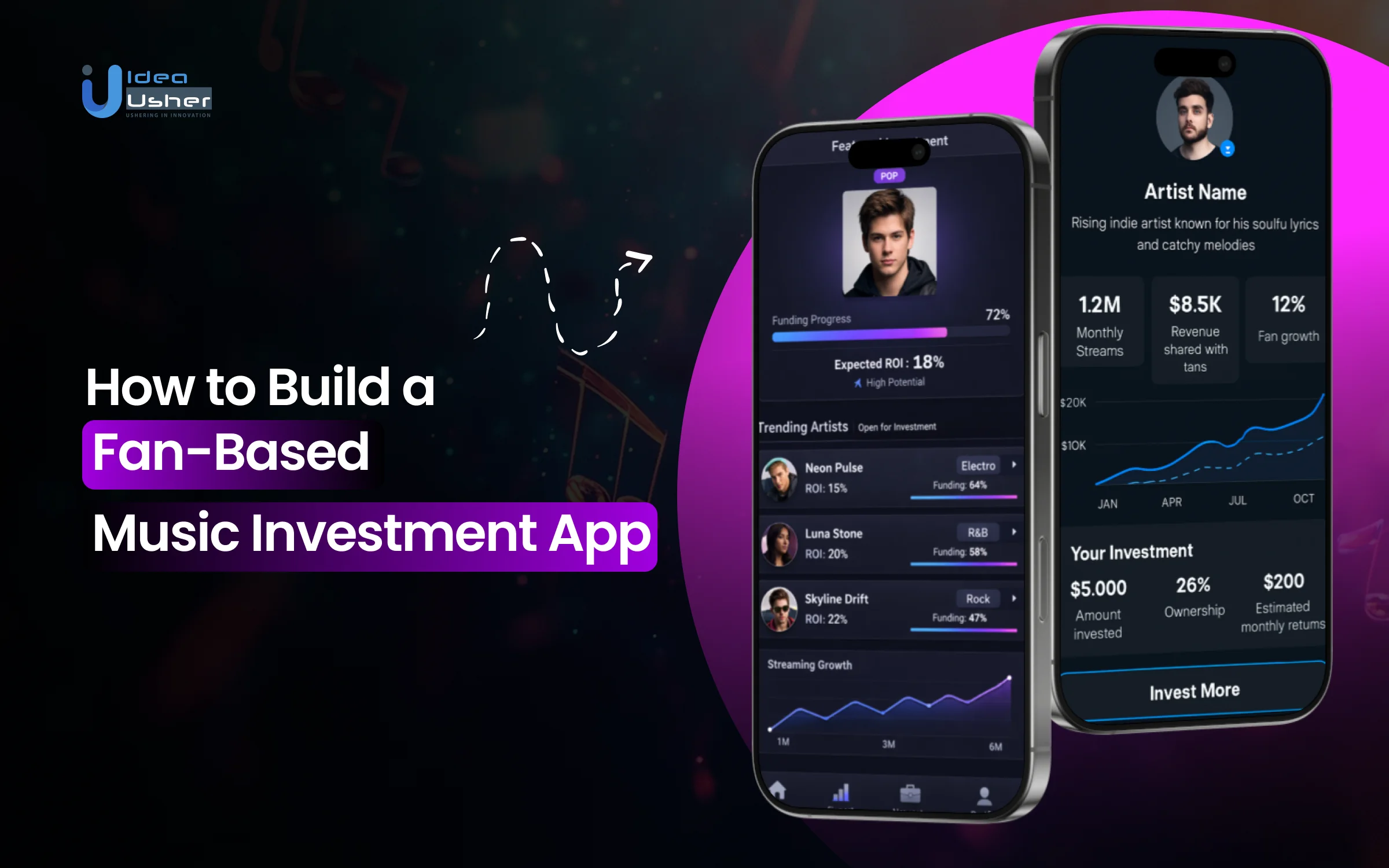
Fans already behave like investors, even if the music industry rarely treats them that way. They stream songs repeatedly, share releases, buy early merchandise, and support artists long before there is any commercial certainty. For many independent musicians, this early support replaces advances or sponsorships, which is why interest is growing around the fan-based music investment app model, where loyalty can translate into shared ownership.
These platforms change how value moves between artists and their communities. Instead of one-way support, fans can back specific projects or revenue sources and participate as the music grows. Making this model work requires more than enthusiasm. It depends on clear ownership structures, transparent tracking, reliable payouts, and systems that build trust on both sides.
In this blog, we explain how to build a fan-based music investment app by covering key product decisions, technical architecture, and the challenges involved in combining music, money, and community into a viable platform.
What Is a Fan-Based Music Investment App?
A fan-based music investment app is a digital platform that allows fans to financially support artists by contributing small investments toward music projects, releases, or catalogs. In return, fans receive defined rewards, revenue participation, or exclusive benefits tied to the artist’s success.
Unlike traditional music investment models, this approach blends fan engagement with structured financial participation. Fans are no longer passive listeners but active contributors who support creativity while sharing in the value generated by the music they believe in.
- Creates an alternative funding channel for artists, reducing reliance on labels and upfront advances
- Enables direct access to capital while allowing artists to retain creative and ownership control
- Strengthens long-term fan relationships by turning supporters into active contributors
- Connects fans, artists, and monetization workflows within a single platform
- Ensures transparent contribution tracking, reward allocation, and revenue sharing
- Builds a sustainable ecosystem where emotional fan support aligns with structured financial incentives without added complexity
How the Fan-Based Music Investment App Works?
A fan-based music investment app works by allowing fans to invest in artists or music projects and earn returns through shared revenue models, supported by transparent tracking and secure digital infrastructure.

1. Artist Project Creation and Approval
Artists create music projects by defining funding goals, timelines, and reward structures. The platform reviews submissions to ensure clarity, authenticity, and alignment with participation guidelines before making them available to fans.
2. Fan Onboarding and Participation
Fans register on the app, explore available music projects, and contribute small investment amounts. Each contribution is recorded clearly, allowing fans to understand their participation and associated rewards.
3. Contribution Tracking and Ownership Records
The platform tracks every fan contribution digitally and links it to defined rewards or revenue participation. This ensures accurate records of fan involvement and transparent tracking throughout the project lifecycle.
4. Music Release and Revenue Generation
Once funded, the artist completes and releases the music through distribution channels. Revenue generated from streams, licensing, or sales is collected and prepared for distribution based on participation rules.
5. Reward and Revenue Distribution
Fans receive rewards or earnings according to predefined contribution terms. The platform automates distribution to ensure timely, proportional, and transparent payouts aligned with each fan’s participation level.
6. Performance Monitoring and Ongoing Engagement
Fans and artists can monitor project performance, earnings, and engagement metrics through dashboards. Ongoing updates help maintain interest and support long-term fan involvement.
Role of Blockchain in Fan-Based Music Investment App
Blockchain supports a fan-based music investment app by ensuring trust, transparency, and accuracy. While fans use a simple interface, blockchain maintains reliable records of participation, rewards, and revenue distribution.

1. Transparent Contribution and Ownership Records
Blockchain enables every fan contribution to be recorded as a tamper-resistant digital entry. This ensures clear visibility of participation history, prevents unauthorized changes, and creates a trusted source of truth for all stakeholders.
2. Secure Reward and Revenue Distribution
By using blockchain-based logic, the platform can automate reward and revenue allocation based on predefined rules. This reduces manual intervention and ensures accurate, timely, and verifiable payouts to fans and artists.
3. Trust Without Centralized Dependence
Blockchain reduces reliance on centralized record-keeping by maintaining distributed ownership and transaction logs. This helps build trust among fans and artists who may not have prior relationships but require transparent financial accountability.
4. Auditability and Long-Term Record Integrity
All contributions and payout records remain traceable over time, allowing easy audits and historical verification. This is especially important for artists and fans tracking long-term project performance and earnings.
5. Enabling Secondary Transfers and Flexibility
Blockchain-backed records make it easier to support controlled transfer or resale of participation rights. This adds flexibility for fans while preserving ownership accuracy and platform governance rules.
How Artists Earning Upto 30% of Streaming Revenue Create a $5+ Billion Fan Investment Opportunity?
The global NFT music market is projected to reach USD 1,039.6 million by 2033, growing from USD 72.02 million in 2023 at a 30.6% CAGR between 2024 and 2033. This rapid growth reflects increasing acceptance of digital ownership and alternative monetization models for music. It also signals rising demand for platforms that help artists bypass traditional revenue bottlenecks.

Despite driving the majority of streams, artists typically receive only 16–30% of total streaming revenue, with the remaining share absorbed by labels, distributors, and platforms, creating a multi-billion-dollar gap that direct fan investment models are designed to fill.
Why Streaming Revenue Gaps Push Artists Toward Fan Investment Models
This revenue imbalance is a core reason why artists seek new funding and monetization channels. Fan-based music investment apps directly respond to this structural limitation.
- Limited earnings from streaming platforms: Low revenue shares restrict artists’ ability to fund production, marketing, and growth, especially in early or independent stages.
- High dependence on volume-driven payouts: Streaming income requires massive play counts, making it difficult for niche or emerging artists to achieve sustainable cash flow.
- Lack of upfront capital: Artists often wait months for meaningful payouts, creating financial pressure during project development and release cycles.
- Growing openness to direct fan participation: Artists increasingly view fans as financial partners rather than passive listeners, paving the way for structured fan investment models.
What This Means for Building a Fan-Based Music Investment App
This revenue gap explains why fan-based music investment apps are gaining traction and why building such platforms now makes strategic sense.
- Clear market demand for alternative funding: Artists actively seek platforms that offer capital access without sacrificing ownership or creative control.
- Stronger value proposition for fans: Fans can directly support artists while participating in rewards or revenue tied to music performance.
- Sustainable platform monetization opportunities: By facilitating funding, tracking contributions, and managing rewards, platforms can generate recurring value across multiple artist projects.
- Alignment with digital ownership adoption: As digital music assets and ownership models grow, fan investment apps naturally bridge artist needs and fan engagement.
How Money and Rewards Flow in a Fan-Based Music Investment App?
This section explains the financial and reward movement inside a fan-based music investment app. It focuses on where money originates, how it is allocated, and how rewards or earnings reach fans and artists in a structured, transparent way.
1. Fan Contributions and Fund Collection
Fans contribute small investment amounts toward specific music projects or artist campaigns. These contributions are securely recorded and pooled under defined terms, ensuring clear tracking of who contributed, how much, and for which project.
2. Allocation of Funds to Artist Projects
Once contribution goals or milestones are met, funds are allocated to the artist based on predefined rules. This ensures artists receive capital only under agreed conditions tied to project progress and accountability.
3. Music Release and Revenue Generation
After project completion, music is released across distribution channels. Revenue is generated through streams, licensing, sales, or brand collaborations, forming the primary source of returns connected to fan participation.
4. Reward and Revenue Calculation Logic
The platform calculates fan rewards or revenue shares based on contribution size, reward type, and participation terms. This logic ensures fair, proportional allocation without manual intervention or ambiguity.
5. Distribution of Rewards and Earnings
Rewards or earnings are distributed to fans through the app according to predefined schedules. Fans can view payouts, reward status, and historical records, maintaining full transparency across the lifecycle of their participation.
Key Features of a Fan-Based Music Investment App
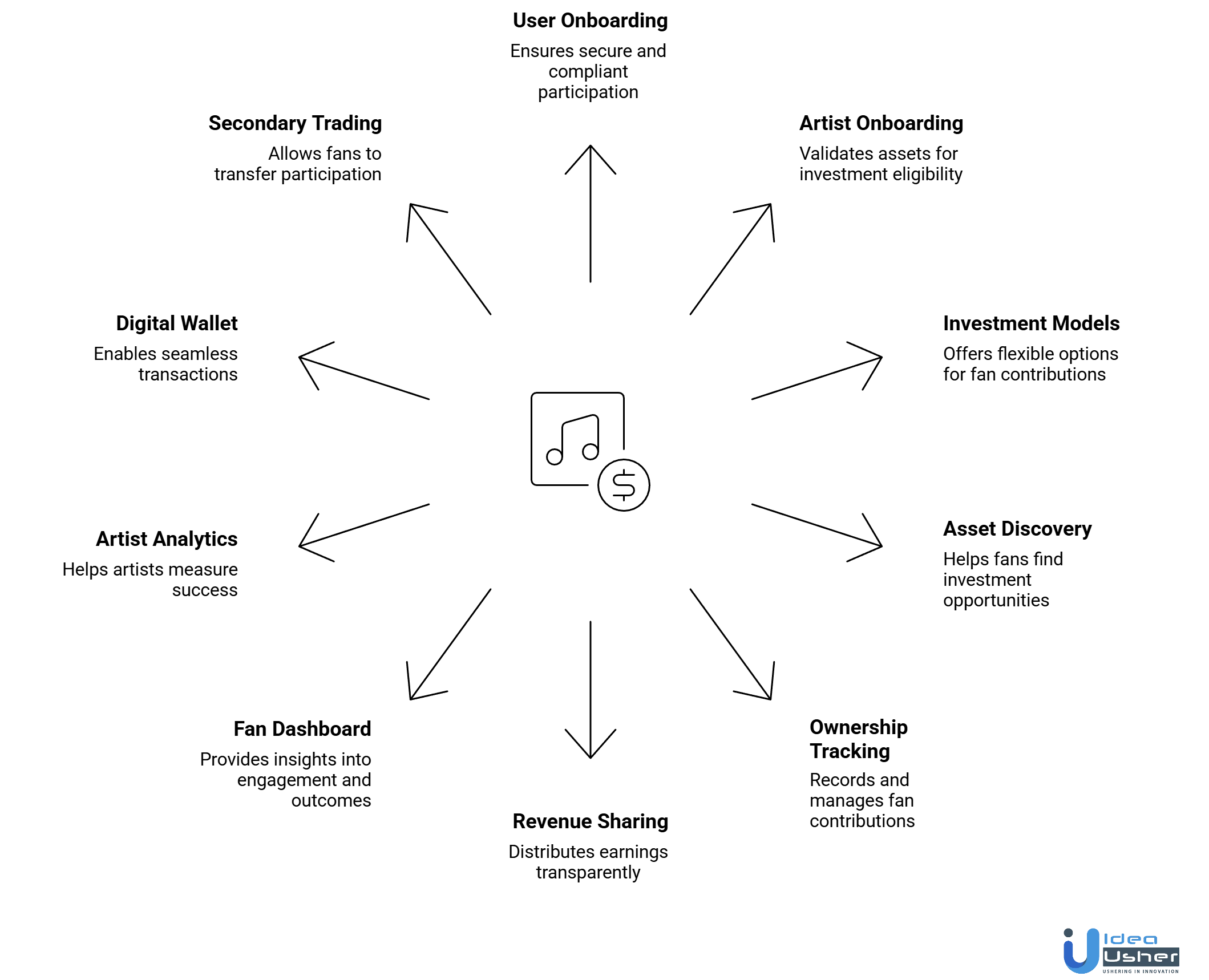
A fan-based music investment app requires particular segments that balance emotional engagement with financial transparency and security. These features support informed participation and sustainable platform growth across diverse artist ecosystems globally.
1. User Onboarding and Fan Verification
A structured onboarding process allows fans to register, verify identity, and securely participate in music investments. Verification builds trust within the ecosystem while ensuring compliant participation, fraud prevention, and accurate ownership tracking across all user activities.
2. Artist and Music Asset Onboarding
Artists onboard by submitting music assets along with ownership and revenue details. The platform validates rights, contribution goals, and earning structures, ensuring only eligible and monetizable assets are available for fan-based investment.
3. Fan-Based Investment Models
The app supports flexible investment models that allow fans to contribute small amounts toward music projects or catalogs. These models balance emotional fan engagement with structured financial participation and transparent reward allocation.
4. Music Asset Discovery and Browsing
Fans can explore music assets through curated listings, artist profiles, and performance indicators. Discovery tools help users understand investment opportunities while maintaining clear visibility into contribution goals and potential returns.
5. Ownership and Reward Tracking
Each fan’s contribution is recorded as a measurable ownership or reward entitlement. The platform tracks these records digitally, ensuring accurate representation of participation, rewards, and long-term value tied to supported music assets.
6. Revenue Sharing and Payout Management
Revenue generated from supported music is distributed based on predefined sharing rules. Automated payout management ensures timely, transparent, and proportional earnings distribution aligned with each fan’s level of participation.
7. Fan Portfolio and Investment Dashboard
A personalized dashboard allows fans to monitor supported artists, contribution history, earned rewards, and payouts. This feature provides clear insights into engagement impact and financial outcomes over time.
8. Artist Performance and Earnings Insights
Artists gain access to performance analytics showing fan support, revenue trends, and earnings distribution. These insights help artists measure campaign success and make informed creative or financial decisions.
9. Digital Wallet and Payment Integration
The app integrates secure digital wallets and payment systems to manage contributions and payouts. This enables seamless transactions, balance tracking, and reward withdrawals without disrupting the fan experience.
10. Secondary Trading or Transfer Options
The platform allows fans to transfer or resell their investment participation under predefined rules. This feature introduces liquidity while ensuring ownership accuracy, transaction transparency, and controlled circulation of participation rights within the fan-based music investment ecosystem.
How to Build a Fan-Based Music Investment App?
Building a fan-based music investment app involves combining user engagement design, financial infrastructure, and regulatory alignment. Our developers follow a structured development process to transform fan support into a secure and scalable investment-driven platform.
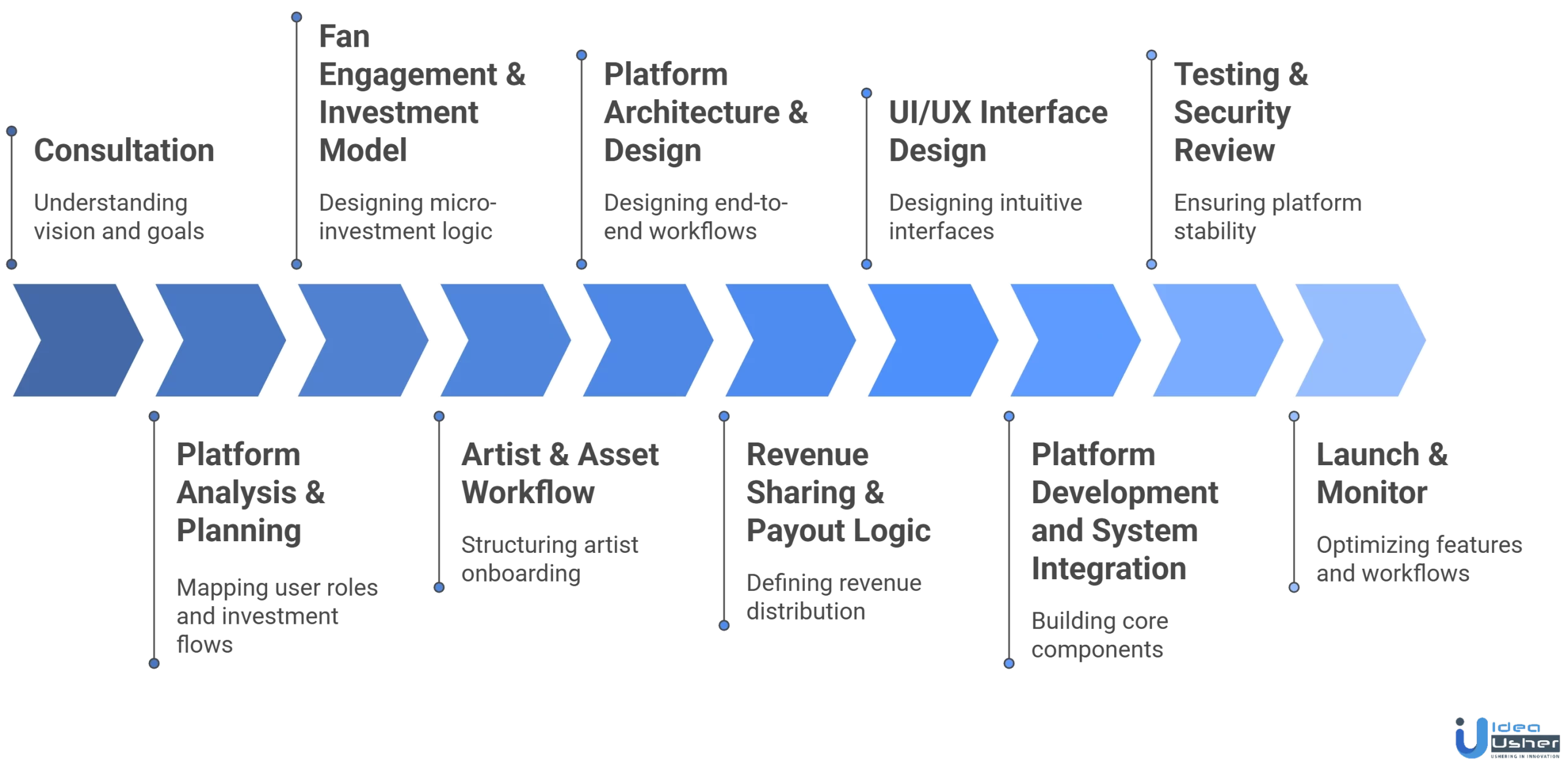
1. Consultation
We begin by understanding your vision, target audience, and engagement goals. Our developers assess fan participation models, artist monetization strategies, and compliance considerations to define a clear product direction aligned with market expectations.
2. Requirement Analysis and Platform Planning
Our team translates business goals into structured requirements by mapping user roles, fan journeys, and investment flows. This phase ensures well-defined platform logic, scalability planning, and clarity around rewards, ownership, and revenue sharing.
3. Fan Engagement and Investment Model Design
We design fan-first participation models that balance emotional engagement with financial structure. Our developers focus on micro-investment logic, reward mechanisms, and contribution thresholds that encourage sustained fan involvement without complexity.
4. Artist and Asset Workflow Definition
We structure artist onboarding and asset submission workflows to ensure clarity and ease of use. This includes defining how music projects are listed, funded, tracked, and monetized within a controlled and transparent ecosystem.
5. Platform Architecture and Data Flow Design
Our developers design end-to-end workflows that connect user actions, investment records, and revenue data. This step ensures smooth interaction between engagement features, ownership records, and payout processes.
6. Revenue Sharing and Payout Logic Planning
We define how revenues are calculated, allocated, and distributed to fans and artists. This includes setting payout schedules and contribution-based logic to ensure fair, transparent, and predictable earnings distribution.
7. User Experience and Interface Design
We design intuitive interfaces that simplify complex investment concepts for fans. The focus remains on clarity, accessibility, and trust, ensuring users can support artists confidently without technical friction.
8. Platform Development and System Integration
Our developers build and integrate all core components, including onboarding, dashboards, payments, and analytics. We ensure consistent data accuracy and reliable system behavior across all user interactions.
9. Testing, Validation and Security Review
We perform extensive testing to validate workflows, calculations, and user access controls. This phase ensures platform stability, data protection, and accurate reward tracking before public launch.
10. Launch, Monitoring and Continuous Improvement
After launch, we monitor user engagement, transaction activity, and platform performance. Our team continuously optimizes features and workflows to support long-term growth, user retention, and platform scalability.
Build a Fan-Based Music Investment App With IdeaUsher for $60K–$115K
A fan-based music investment app built with us costs about $60,000 to $115,000 or more. The final number depends on how many features you want and how strict your rules are. A simple version where fans back an artist and track rewards sits near the low end. A full version with royalty tokens, wallets, payouts and identity checks moves higher. We give you a clear estimate once we know what you want to build.
1. Fan Investment App Development Cost
Here are the main parts of the build and what each one usually costs. Not every project needs every part at full size. So your total will land somewhere inside the $60,000 to $115,000+ range. The biggest line is the core app because it holds everything fans and artists touch each day. The smaller lines add up fast though, so it helps to decide early which ones you really need.
| Build Part | Typical Cost |
| Discovery and product planning | 4,000–8,000 |
| Requirement analysis and planning | 7,000–12,000 |
| Artist onboarding design | 6,000–10,000 |
| Fan investment and reward model | 8,000–15,000 |
| Core app development | 20,000–40,000 |
| Wallet, payments and payouts | 10,000–20,000 |
| Analytics and insights | 6,000–12,000 |
| UI/UX design | 7,000–12,000 |
| Testing and security | 8,000–15,000 |
| Launch support | 4,000–8,000 |
| Total Estimated Cost | 80,000–152,000 |
Consult with IdeaUsher for a personalized cost estimate and development plan to build a scalable, fan-centric music investment app aligned with your goals.
2. What Is Included in Our Build?
Your budget buys a platform that is ready for real fans and real artists on day one. We plan the product with you first and then design and build it. After that we test it hard and help you launch. We also stay around after launch to watch how the app is doing. Most founders like this because they do not have to hunt for extra vendors halfway through.
- Fan sign-up with identity checks
- Artist onboarding and music asset setup
- Investment and reward logic
- Wallet, payment and payout tools
- Fan portfolio dashboard and artist earnings view
- Security testing and launch support
3. Royalty Tokenization Changes Development Costs
Royalty tokenization makes the build cost more. A simple rewards app only has to count points. A royalty app has to turn a real share of a song into a token and keep that token tied to real income. That means more design work on how songs get listed and how rights get checked. It also means more testing because a mistake touches real money. In our table this shows up mostly in two lines.
Why These Lines Grow
- Artist onboarding design ($6,000 – $10,000): every song needs its rights checked before fans can buy a piece.
- Fan investment and reward model ($8,000 – $15,000): the app must split income fairly between every token holder.
- Extra testing: payout math has to be right for every fan every time.
4. Smart Contract, Wallet, and Payout Costs
This is the part that moves the money, so it needs the most care. Smart contracts hold the ownership records and split the income. Wallets show fans what they own. Payouts send the money out. In our build the wallet, payment and payout work costs $10,000 to $20,000. Contract security is extra work on top of that.
| Part | Typical Cost |
| Wallet, payments and payouts (our build) | $10,000 – $20,000 |
| Audit of a simple token contract | $5,000 – $20,000, based on Sherlock’s reference prices |
| Network fee per payout on Polygon | Less than $0.02 on average |
A royalty contract has payout rules inside it. So expect it to sit above the simple token price.
How Musicow Handles Wallets
Musicow shows why wallets matter to fans. It teamed up with Roc Nation to bring its model of buying and selling song royalty shares to the US, and early users were promised a free $10 in their Musicow wallet. That small gift puts a balance in front of a new fan right away. It also means the wallet and payout system must work smoothly from the first minute.
5. KYC, Investor Verification, and Compliance Costs
Selling shares of music income is not just an app project. Rules decide who can buy and how much you can raise. So you pay for identity checks and for legal work too. The size of your raise changes which rules apply. The SEC lists the limits for each route in a 12-month period.
| Route | Raise Limit |
| Regulation Crowdfunding | $5 million |
| Regulation A, Tier 1 | $20 million |
| Regulation A, Tier 2 | $75 million |
These limits come from the SEC’s exempt offering chart.
How JKBX Handles Compliance
JKBX is a good example of the extra work. It sells Royalty Shares in a Tier 2 Regulation A offering that only starts after the SEC qualifies it. It also uses an SEC-registered transfer agent called Brassica Services. Rules by state add more steps. One of its offerings was not open to residents of New Jersey, Texas or Washington while state registrations were pending. JKBX also partnered with the global trading firm GTS to bring royalty investing to retail investors at scale.
6. What Drives Custom Feature Costs?
Two apps can look alike and still cost very different amounts. The difference is usually in the details under the screens. Every extra rule or extra integration takes more time to build and test. So it pays to decide what you really need before we start. Then you spend money where fans will notice.
- Platform size: more artist tools, investment flows and admin controls mean more work.
- Reward design: complex perks and incentives take longer to plan and test.
- Compliance needs: identity checks and local rules add legal and build time.
- Payout logic: more ways to split income make the math harder.
- Security level: strong data and transaction protection adds to the testing budget.
Cost-Affecting Factors to Consider During Development
Development costs depend on app features, security, compliance, and scalability, so early evaluation is crucial for building a reliable, cost-efficient fan-based music investment app.
1. Platform Scope and Feature Depth
The number of fan engagement features, investment workflows, artist tools, and admin controls directly impacts development effort, testing complexity, and overall delivery timelines.
2. Fan Engagement and Reward Mechanisms
Designing meaningful reward structures, contribution logic, and incentive systems requires careful planning and testing, which can increase development time and cost.
3. Compliance and Regulatory Requirements
Identity verification, payment regulations, and regional compliance rules add complexity to system design and can significantly influence development scope and legal coordination efforts.
4. Ownership, Rewards, and Payout Logic
Accurate calculation of fan rewards, revenue shares, and payout schedules increases development complexity, especially when handling multiple contribution models.
5. Security and Data Protection Measures
Implementing secure data storage, access controls, and transaction protection is essential for safeguarding fan information and financial activity, impacting overall development investment.
A Fan-Based Music Investment App Build With Us Takes Around 16–21 Weeks
A typical fan-based music investment app build with Idea Usher takes about 16 to 21 weeks. That gets you a first version with fan accounts, artist projects, a wallet and automatic payouts. The cost usually lands between $60,000 and $115,000+ depending on how many features you add. A smaller app can go live faster. An app with many payment options or tricky reward rules will take longer. Here is how the weeks get split across four phases.
| Phase | Time | Estimated Cost |
| Product Planning and Model Design | 3–4 weeks | $15,000 – $30,000 |
| Core App and Blockchain Build | 8–10 weeks | $25,000 – $45,000 |
| Wallet and Royalty Payout Setup | 3–4 weeks | $10,000 – $20,000 |
| Security Testing and Launch | 2–3 weeks | $10,000 – $20,000 |
1. Product Planning and Model Design
This first phase takes about 3 to 4 weeks. We talk about who your fans are and what they get back for their money. We also decide how artists list a project and how big each fan share should be. Skipping this step is risky. CB Insights found that 42% of startups said the main reason they failed was that nobody needed their product. So we check the idea first and write code later.
| What We Do | What You Get |
| Discovery calls | Clear goals for fans and artists |
| Investment model | Share sizes, rewards and payout rules |
| Flow maps and designs | Clickable screens to test with real people |
2. Core App and Blockchain Build
This is the longest phase at about 8 to 10 weeks. The team builds the fan app and the artist dashboard. They also build an admin panel and the smart contracts that keep ownership records. We build the contracts so the rules can change later without starting over.
- Fan sign-up, project pages and a simple portfolio view
- Artist tools to create a project and set a funding goal
- Admin controls to approve or pause a project
- Smart contracts that record who owns what
How Royal Did It
Royal was founded by electronic music producer Justin “3LAU” Blau and JD Ross. The platform sold fans a share of song streaming rights from artists like Nas, Diplo and The Chainsmokers. Artists picked the perks that came with each tier. Royal also shipped a Song Valuation Calculator that shows the fair value of a song’s estimated future master streaming royalties. Later the team said it would rebuild the platform to store data onchain and let the public deploy smart contracts.
It then wound down its own marketplace while still allowing token trades through OpenSea. The lesson is that your first design will change, so build it to bend.
3. Wallet and Royalty Payout Setup
This phase takes about 3 to 4 weeks. We connect the wallet and the payment system, then build the engine that splits money between fans and artists. This part matters a lot because normal music money is slow. DistroKid says artists can usually expect earnings from most streaming services around three months after streams start. Fans on your app will want to see their share clearly. So we build a payout screen that shows what came in and when it will be paid.
How JKBX Handles Payments
The team also said it was working on a way for users to trade their shares on a secondary market. A good payment partner makes launch easier. A trade feature is worth planning early even if you add it later.
4. Security Testing and Launch
The last phase takes about 2 to 3 weeks. We test the smart contracts and the payout math. We also check who can touch the wallets and the admin tools. This is not a small risk. Chainalysis reported $3.4 billion in stolen funds in 2025, up from $2.2 billion the year before. The top three hacks made up 69 percent of the total.
Also, private key compromises were the biggest cause of stolen crypto in 2024 at 43.8%. So we spend real time on keys and access, not just code.
| Check | What We Test |
| Smart contracts | Bugs in ownership and payout rules |
| Wallet access | Who can sign, approve or withdraw |
| Payout math | Every fan gets the right share |
| Soft launch | A small group of artists and fans goes first |
Challenges & How Our Developers Will Solve Those?
Developing a fan-based music investment app presents technical, regulatory, and trust-related challenges. Our developers apply practical solutions and proven frameworks to address these issues while ensuring platform stability, compliance readiness, and user confidence.

1. Balancing Fan Emotion
Challenge: Fans often invest emotionally in artists, which can blur financial expectations and create misunderstandings around returns, risks, and reward structures.
Solution: Our developers design clear fan-based investment models with transparent contribution terms, visible reward logic, and risk disclosures, ensuring fans understand participation outcomes while maintaining emotional engagement.
2. Artist Trust and Platform Adoption
Challenge: Artists may hesitate to involve fans financially due to concerns around creative control, ownership dilution, and misuse of their music projects.
Solution: We build artist-first controls that allow project approval, funding limits, and earnings visibility, ensuring artists retain authority while safely monetizing fan support.
3. Reward and Revenue Calculation Accuracy
Challenge: Managing rewards and revenue distribution across thousands of fan contributions increases calculation complexity and risks payout inconsistencies.
Solution: Our developers implement structured reward engines and automated payout logic that ensures accurate calculations, consistent distributions, and transparent earning records for every fan.
4. Preventing Misuse and Fraud
Challenge: Open participation models can attract fraudulent campaigns, fake accounts, or misuse of contributed funds.
Solution: Our developers apply layered validation, monitoring tools, and access controls to protect fans and artists, maintaining platform integrity and long-term trust.
5. Fan Trust and Transparency
Challenge: Fans need confidence that their contributions, rewards, and earnings are tracked correctly and handled fairly.
Solution: Our developers focus on transparent dashboards, real-time updates, and clear reward tracking, helping users trust the platform without technical complexity.
Our Web3 and Blockchain Experience in Music and Fan Platforms
You can build a fan-based music investment app with Idea Usher. Idea Usher is a development partner for Web3 and blockchain products. The team plans the app and writes the smart contracts. It also builds the fan wallet and the artist dashboard and the admin panel. Fans back a song or an artist and share in what that music earns later. Artists get support early and stay close to the people who listen to them. Idea Usher takes the project from the first idea all the way to launch.
Our Web3 Music and Fan Experience
Idea Usher has worked on Web3 music and fan products for a long time. The work covers NFT music apps and fan tokens and tokenized rewards and asset tokenization. The projects below show how we think about a fan-based music investment app today. You can see more in our portfolio and the MOGO case study.
MOGO: NFT-Powered Music Ecosystem
MOGO is a blockchain music platform where artists turn their songs into NFTs and fans support them by donating tokens or buying music NFTs. Gas fees were the first big problem, because indie artists could not afford them. The team moved the app from Ethereum to Binance Smart Chain, and the fees dropped a lot. NFTs are stored on IPFS, so they stay safe even if the app is suspended. The project took more than seven months. The space is also crowded. Water & Music says more than 90 music NFT startups have launched since fall 2020.
What fans and artists can do in MOGO:
- Fans connect a MetaMask wallet and follow artists
- Fans donate tokens or buy a music NFT and earn rewards
- Artists upload free and paid songs and mint music NFTs
- Artists earn Mogo tokens and can use the featured artist option
Fan Token Platform for Fan Ownership
A fan token is a digital token that a fan holds for an artist or a team. It can give the fan a vote on small choices and a way into special perks. Socios is the biggest example. It has nearly 2.5 million users and 75 brands in 23 countries. Chiliz also says the number of fan token holders grows about 215 percent every year. One early football token sold out in under two hours. Fans clearly like owning a small piece of something they love. Idea Usher builds the same pieces for music apps. That means the token contracts and the wallet and the voting polls. You can read how we explain it in our Socios-style platform guide.
Tokenized Fan Engagement for Stakeholders
Here fans earn something every time they show up. The idea is simple. A fan who joins in becomes a small stakeholder in the artist’s journey.
| Fan action | What the fan gets |
| Attends an event | Tokens as a reward |
| Buys merchandise | Tokens that unlock other rewards |
| Holds tokens | Access to private live-streamed concerts |
People do join in when they have a say. Chiliz says nearly 248,000 Socios users have voted in polls.
Rairplay
Rairplay is an indie music app we built. It is not a token app but it shows how engagement works. Its Rairplay score helps artists see how their songs perform. Fans also get song picks from their own area, so they can back artists from their city. The player has a radio mode, and it stops fans from skipping a song in the first 30 seconds. These signals are what an investment app can later use to show which artists fans really care about.
Asset Tokenization Ownership Infrastructure
Asset tokenization turns the rights to something real into digital tokens. A song’s royalty share can be split into small parts so more people can own a piece. Big firms think this will grow. McKinsey sees about $2 trillion of tokenized assets by 2030 in its base case. Citi expects tokenized securities to reach $5.5 trillion by 2030. The two numbers are far apart, so nobody knows the exact size yet. What matters is that the base needs to be built well. Idea Usher builds this base through its asset tokenization platform development service.
Allayya
Allayya is a music platform we built for calming tracks like meditation and sleep. Its owners can upload and share tracks easily through one content management system. A tool like this is the starting point for artist onboarding in a fan-based music investment app. A song has to be added and managed before anyone can own a share of it.
What We Build for Fan Investment Platforms?
We build the full set of tools that lets a fan own a small piece of a song and get paid when it plays. That means NFT ownership contracts, automatic royalty splits, wallets, identity checks, security audits and easy dashboards. Each part is made to work with the others, so artists can sell shares and fans can trust where the money goes. We plan everything around how your platform wants to run, so nothing feels stuck on later.
1. Royalty Tokenization and NFT Contracts
A fan should know exactly what they own. So we turn a share of a song’s streaming royalty into a token that sits in the fan’s wallet. The contract keeps a record of who owns how much, and nobody can change it quietly. We also set the rules for resale, so the next buyer gets the same rights as the first one.
How Royal Does It
Royal is a good example of this. 3LAU gave away 333 limited digital assets, which is Royal’s own word for its NFTs, and they stood for 50% of the streaming ownership in his single Worst Case. Later, The Chainsmokers teamed up with Royal to mint 5,000 NFTs tied to streaming royalties from their album So Far So Good, and the tokens came with extra perks.
2. Smart Contract Revenue Sharing Systems
This is the part that moves the money. When streaming income comes in, the contract splits it by token share without anyone doing it by hand. Artists, labels and co-writers can all have their cut set before launch. Fans can open the records and check the math themselves, and that is what makes them trust a platform.
- Splits for artists, labels and co-writers set before launch
- Royalties divided by how many tokens each fan holds
- Rules like a minimum amount before a fan can claim
- Every payout saved on chain so anyone can check it
3. Fractional Music Rights Tokenization
Most fans cannot buy a whole song, and they do not need to. We split the rights into small parts so a fan can start with a tiny amount. We also set limits like how many tokens one person can hold. Transfers between fans are handled too, so owners can sell when they want.
Royal’s drop for two Nas songs shows how this looks in real life.
| Tier | Royalty Share | Price |
| Gold | 0.0143% | $50 |
| Platinum | 0.0857% | $250 |
| Diamond | 2.14% | $4,999 |
Royal sold these three tiers for the first live sale on its platform.
Related service: Asset Tokenization
4. Investor Wallets and Artist Payouts
Fans need a safe place to hold their tokens and see their earnings. Artists need to get paid without chasing anyone. So we build wallets that show balances and past transactions in one place. Fans can ask to withdraw and the payout runs on clear rules. It sounds simple but it is where most users decide if they trust the app.
How anotherblock Does It
anotherblock handles payouts in a smart way. It partnered with Polytrade, which took over the job of sending royalties to token holders. It also joined Coinbase’s Base network for the Onchain Summer campaign, with exclusive drops on a network built for secure and low-cost transactions.
- Wallets that hold more than one token
- Clear royalty balance for each song
- Withdrawal requests with status updates
- Payout history fans can download
Related service: Web3 Development
5. KYC and Investor Eligibility Controls
Selling shares of music rights means you must know who is buying. We add identity checks when a person signs up and rules for which countries can join. A fan from a blocked place simply cannot buy. But one check at the door is not enough. Sumsub found that 76% of fraud happens after the KYC step. So we also watch accounts after they join and flag strange activity for a person to review.
6. Smart Contract Audits for Music Investments
A small bug in a payout contract can cost real money. So we test the code before any fan puts money in. We check who is allowed to change things, how the royalty math works and whether the ownership records stay safe. The table shows what usually goes wrong.
7. Artist and Fan Investment Dashboards
Everybody wants to see how a song is doing. Fans want to know what they earn and artists want to know who their top supporters are. We build two simple dashboards for this. This matters because fans who care a lot are worth building for. Goldman Sachs expects paid streaming subscribers to reach 827 million from 752 million, and it counts 20% of paid subscribers as superfans who spend twice as much as the average one.
- For fans: portfolio view, royalty earned per song and payout status
- For artists: token sales, top supporters and royalty flow
How IdeaUsher Built MOGO for 25+ Music Artists?
MOGO is a music streaming app where artists turn songs into NFTs and fans can listen to them, support them and own them. IdeaUsher built the whole thing, from the fan app and the artist panel to the blockchain part and the admin tools. Artists upload their music and mint it with a few taps. Fans buy it or back the artist with tokens. We made it simple enough that an indie artist with no blockchain skills could still use it.
1. Building an NFT Music Streaming Platform
MOGO started with a simple idea. Indie artists should learn how blockchain can help them earn from their songs. So we built two sides of the app. One side is for artists who upload and mint their music. The other side is for fans who listen and buy. The project took more than 7 months, and the fan app uses Flutter so it runs on both Android and iOS. The artist panel and the admin panel use React JS.
| Step | Artist Flow | Fan Flow |
| 1 | Sign up | Sign up |
| 2 | Create profile | Create profile |
| 3 | Upload free and paid content | Follow artists |
| 4 | Mint music NFT | Connect wallet |
| 5 | – | Listen to music |
| 6 | – | Donate tokens |
| 7 | – | Buy music NFT |
| 8 | – | Get incentivised |
These are the steps from MOGO’s own app flow.
2. Integrating Blockchain for Music Ownership
Blockchain was the hardest part of the build. At first the app used Ethereum, but the fees were too high for indie artists. So we moved to BNB Chain, which dropped the gas fee on each transaction by a lot. The gap is big even today. In a live Chainspect comparison, Ethereum’s average fee was $2.43 and BNB Chain’s was $0.0234.
| Network | Average Fee per Transaction |
| Ethereum | $2.43 |
| BNB Chain | $0.0234 |
Storage was the next problem. We used IPFS to store the NFTs, which kept them safe and cheap to hold for a long time even if the app is ever suspended. This way a fan’s song does not vanish if the app goes down.
3. Artist Monetization Through Music NFTs
Artists can earn from MOGO in more than one way. They do not have to wait for streams to add up. They sell songs as NFTs and fans can also support them directly. The app also shows artists what they earn at all times, so nothing feels hidden. That matters a lot when your whole income is small to begin with.
- Mint songs as NFTs and sell them to fans
- Upload both free and paid content
- Get Mogo tokens on their accounts so they stay on the platform
- Receive token donations from fans
- Get a featured artist spot to be seen by more listeners
The revenue model was made clear so artists always know their share, and featured artist spots helped drive their earnings.
4. Artist-Fan Engagement Experience
Getting people to use a new app is hard. Fans already have plenty of ways to listen. IFPI found that fans spend about 20.7 hours a week on music and use around seven different ways to engage with it. So MOGO needed good reasons for fans to come back. We gave small rewards for things fans already love to do.
Rewards That Keep Fans Active
- Fans get rewards for liking songs and subscribing to artists, which helped more of them stick around.
- Artists in the featured spots get found faster by new listeners.
5. Applying MOGO to Fan Investment Apps
MOGO is not a royalty app. But many parts of it carry over to fan investment apps. The artist and fan sides, the low fees, the safe NFT storage and the reward system all matter there too. The table shows how each piece moves over.
| What We Built in MOGO | How It Helps a Fan Investment App |
| Music NFT minting | Royalty share tokens for songs |
| BNB Chain and low fees | Small investments without big costs |
| IPFS storage | Safe records of what each fan owns |
| Mogo token rewards | Perks for active fans and investors |
| Clear artist earnings | Simple royalty splits fans can check |
What Bolero Music Shows
Bolero Music is a good example of where this goes next. This platform is not an IdeaUsher build. Bolero launched its Polygon-based Song Shares feature and over 30 artists signed up, each promising 5 to 10 percent of future song royalties. Its XP and Roles system is a neat idea too. Users earn points to move from Newbie to Legend and win rewards like free shares. That is very close to what we did with MOGO’s rewards. Entry starts at as little as $25.
What ANote Music Shows
ANote Music took a different path. This one is not an IdeaUsher build either. It partnered with Revelator so Revelator clients can list their catalogues on ANote. It also teamed up with Royalty Bank in Japan, with a plan in three phases that includes a Royalty Bank Trading Platform powered by ANote. The lesson is simple. A fan investment app grows faster when it plugs into the data and partners artists already use.
Real-World Fan Music Investment Apps in The Market
Real-world fan music investment apps allow listeners to invest in songs and royalties through regulated and blockchain-based platforms. This section showcases active market solutions shaping fan-driven participation in music ownership.
1. BAND Royalty
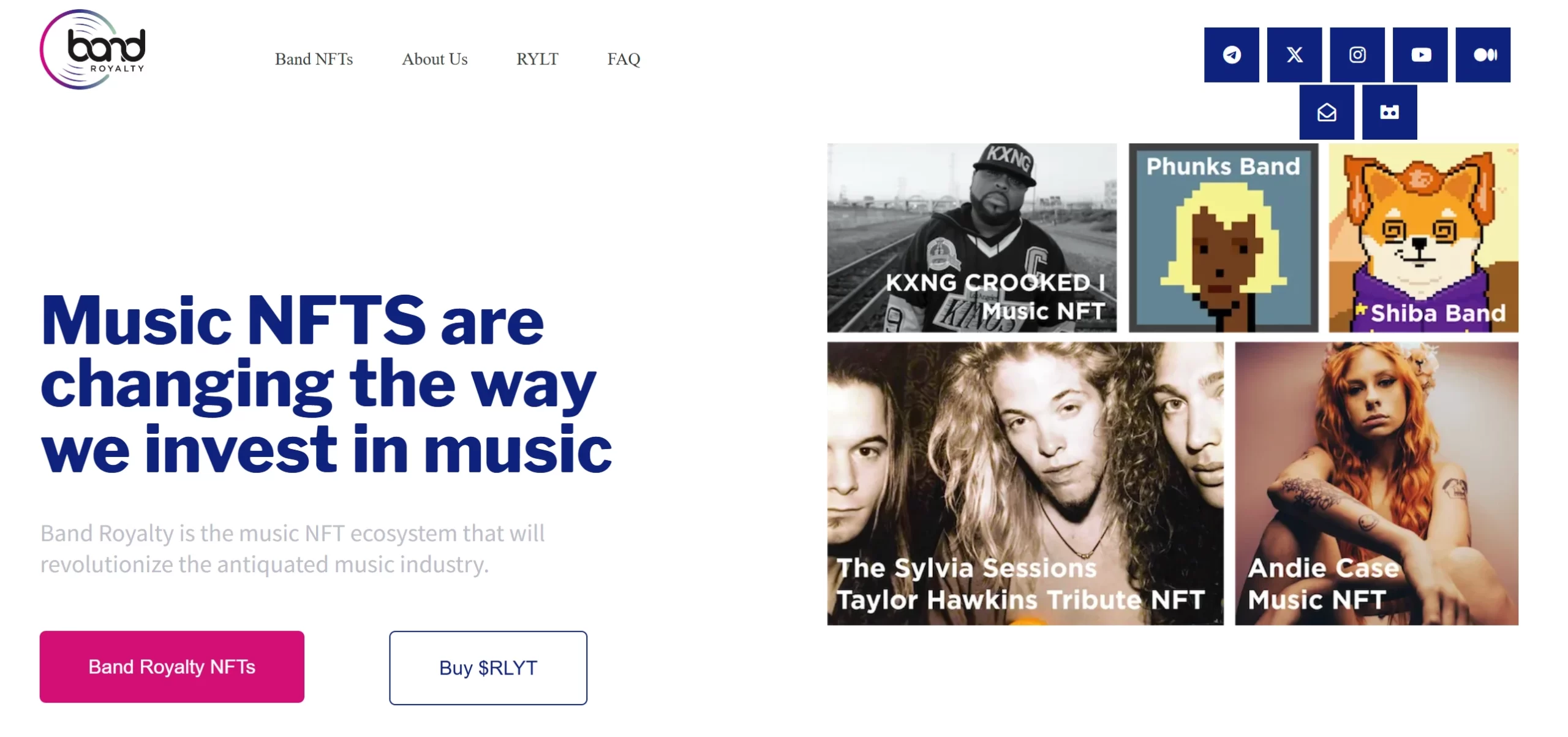
BAND Royalty is a blockchain-based music NFT platform built on Ethereum that allows fans to participate in music revenue through royalty-linked NFTs. These NFTs connect holders to streaming and licensing income while combining ownership, engagement, and transparent on-chain tracking.
2. Opulous
Opulous combines music and DeFi by issuing Music Fungible Tokens (MFTs) backed by song copyrights. Blockchain infrastructure ensures automated royalty distribution, enabling fans to earn recurring income from streaming revenue across platforms.
3. Audius
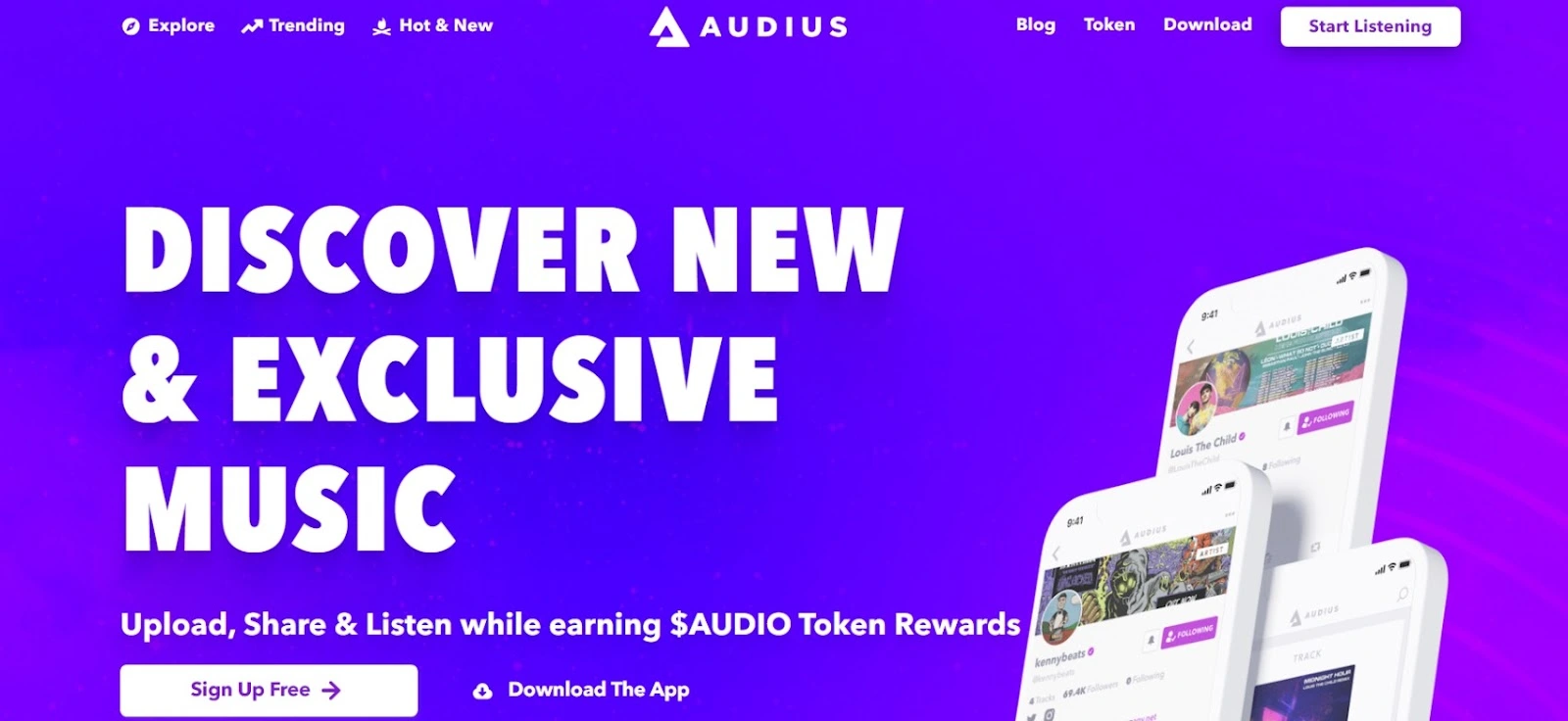
Audius is a blockchain-based streaming service where artists and fans interact through the $AUDIO token. It enables decentralized governance, token-based rewards, and direct value sharing without reliance on traditional labels or intermediaries.
4. Anotherblock
Anotherblock allows fans to invest in fractionalized royalty tokens from well-known songs. Blockchain smart contracts automate royalty tracking and payouts, offering transparent access to high-profile music assets traditionally reserved for industry insiders.
5. Gala Music
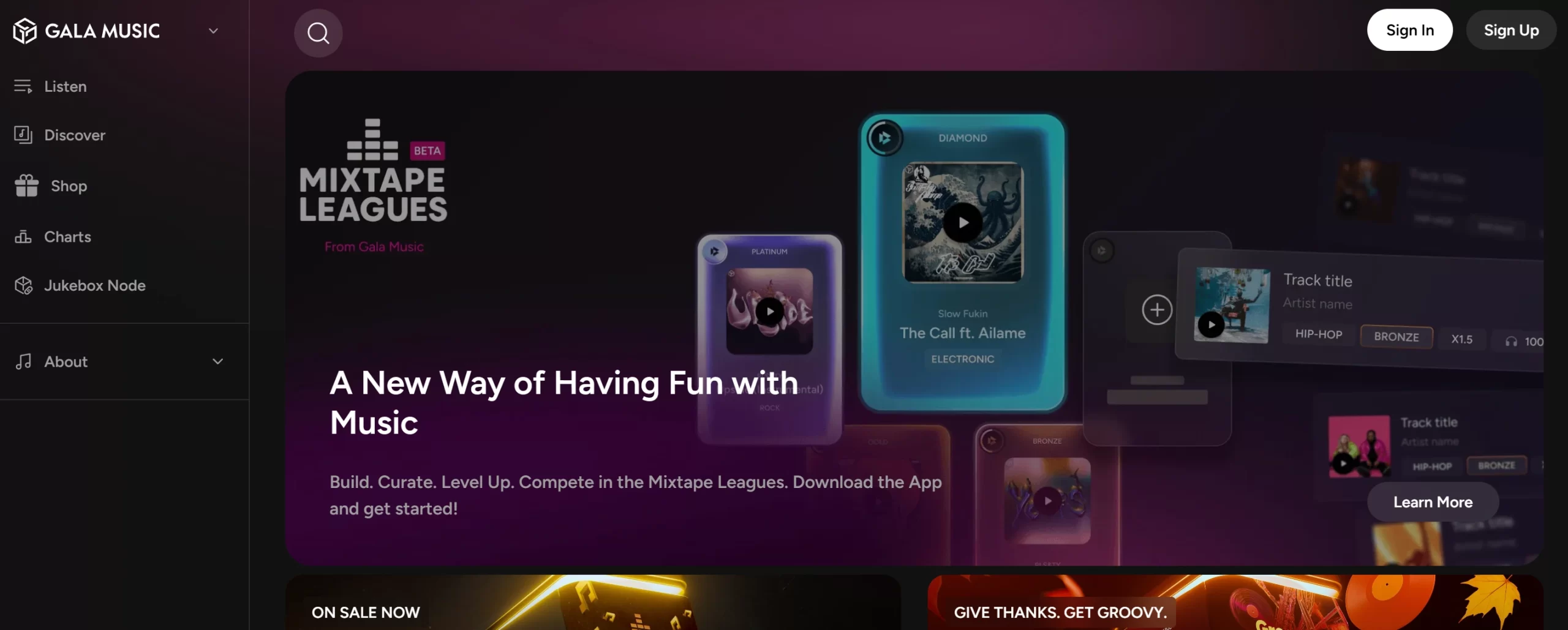
Gala Music lets fans invest by becoming node owners and hosting music NFTs. Blockchain records streams and rewards node operators with crypto, turning the music distribution infrastructure itself into a fan-driven investment opportunity.
Conclusion
Building a fan-based music investment app means balancing emotional connection with financial responsibility. Fans want to support artists they believe in, while expecting clarity and fairness in return. That balance is achieved through thoughtful design, clear communication, and strong compliance foundations. When you approach fan music investment app development with respect for both creators and users, trust grows naturally. The result is not just a product, but a shared ecosystem where music, ownership, and community evolve together with purpose and accountability. This alignment supports sustainable growth over time for everyone.
Build a Fan-Based Music Investment App With IdeaUsher!
A successful fan-based music investment app must balance fan enthusiasm with financial clarity. We help you create platforms where fans understand their investments and artists feel supported, protected, and fairly represented.
Why Founders Choose Us
- Fan Focused Product Design: We design intuitive investment flows that help fans understand risks, returns, and artist performance without overwhelming them.
- Secure Investment Infrastructure: Our development approach ensures funds, transactions, and revenue distributions are handled safely and transparently.
- Regulatory Aware Development: We align app features with applicable financial and investor protection requirements to support smooth approvals and long term operations.
- Scalable Community Architecture: The app is built to support growing fan communities, multiple artists, and new monetization models over time.
Review our portfolio to see how we have supported businesses in launching investment-driven music platforms.
Speak with our team to explore how your fan-based music investment app can move from concept to market-ready solution.


FAQs
A.1. A successful fan-based music investment app combines emotional fan engagement with financial clarity. It offers simple investment flows, transparent earnings data, and meaningful artist storytelling that helps users feel confident supporting music projects they care about.
A.2. Fans earn returns through shared royalties, revenue participation, or profit distributions tied to music performance. Clear payout structures and real time reporting help users understand how their investments generate value over time.
A.3. Fan music investment app development must comply with financial regulations, investor protection laws, and copyright rules. Depending on the region, this may include KYC processes, disclosures, and limitations on who can invest and how funds are handled.
A.4. Trust is built through transparency, verified artist profiles, clear contracts, and consistent communication. When fans understand where their money goes and how artists benefit, long term relationships and platform credibility grow naturally.