


Key Takeaways
- AI health apps turn wearable data into personalized recommendations that support better sleep, recovery, fitness, and wellness.
- Platforms like Vora combine wearable, biomarker, nutrition, and lifestyle data to deliver meaningful daily guidance.
- Developing a Vora-like app requires wearable integrations, AI coaching, health scoring, voice features, and secure infrastructure.
- Growing interest in preventive healthcare and longevity creates revenue opportunities through subscriptions, diagnostics, recommendations, and partnerships.
- How Idea Usher can help businesses build Vora-like health apps with AI, wearable integrations, scalable infrastructure, and secure data management.
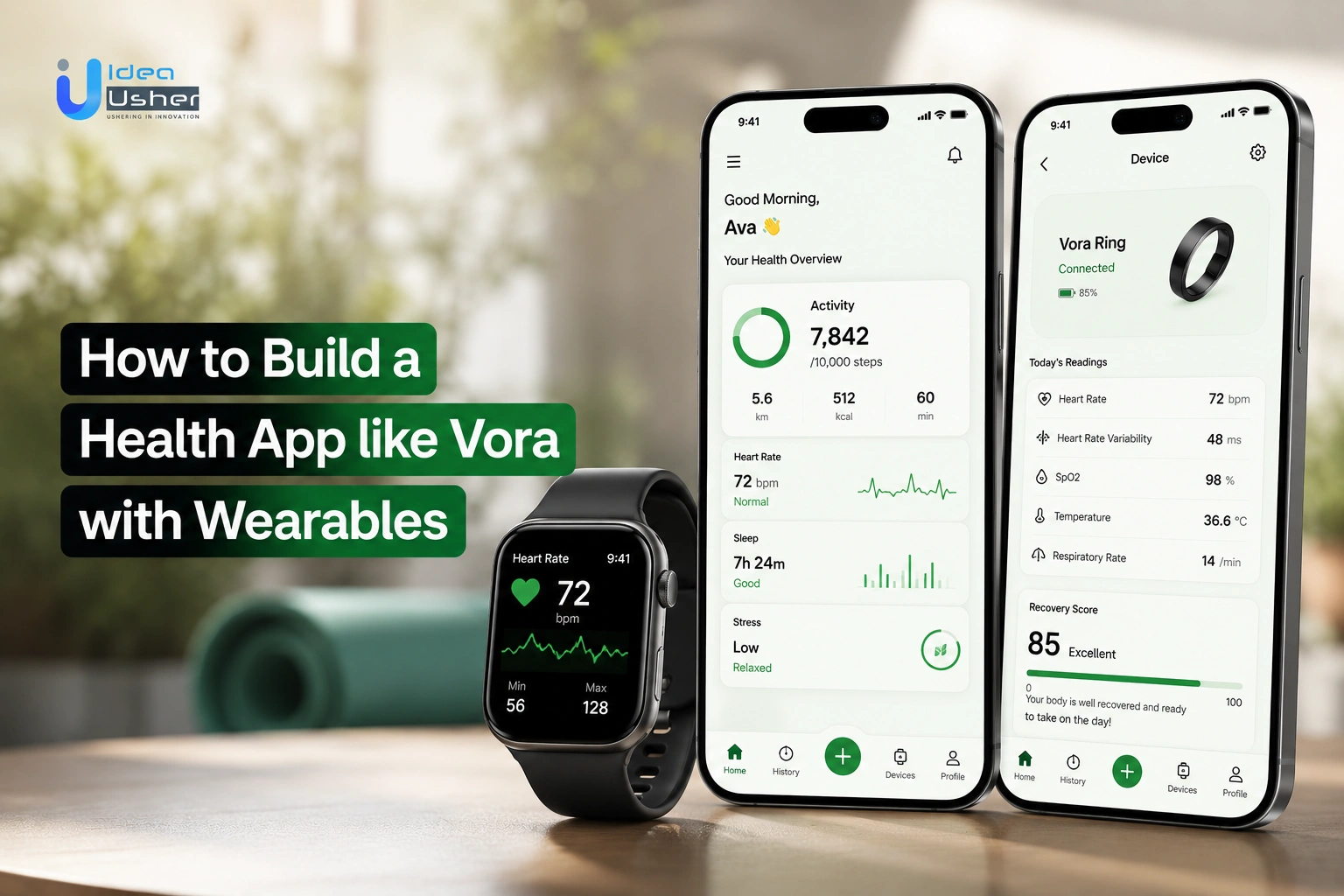
As healthcare becomes more focused on prevention and long-term wellness, people want tools that help them understand their health without adding extra complexity. This has led to a growing interest in health apps that connect with wearable devices. Instead of just displaying numbers, these apps help users understand what their daily habits mean for their overall well-being. They can highlight trends in sleep, activity, and recovery while offering personalized guidance that feels relevant to everyday life. For many users, this makes staying healthy feel less like tracking data and more like having a smart health companion.
Over the years, we’ve developed numerous AI health coaching solutions that combine predictive analytics and wearable device integration to deliver personalized wellness guidance and continuous health monitoring. Using this expertise, we’re writing this blog to explore how to build a health app like Vora with wearables, including its key features, development process, and costs.
The Market Opportunity for AI-Driven Longevity Platforms
According to Future Market Insights, the health coaching apps market was valued at USD 4.4 billion in 2025 and is expected to grow steadily over the next decade as more people take a proactive approach to their health. Instead of relying solely on doctors when problems arise, consumers are using wearables and AI-powered health platforms to understand their bodies in real time.

Source: Future Market Insights
This growing focus on prevention, personalized wellness, and daily health optimization is creating a strong opportunity for apps that can transform complex health data into simple, actionable guidance.
- Biomarker Tracking: Moving from annual blood tests to ongoing biological monitoring.
- Risk Modeling: Using data to identify chronic conditions years before symptoms manifest.
- Custom Interventions: Replacing generalized advice with personalized wellness protocols.
For entrepreneurs, this is a highly profitable entry point. Platforms providing these insights capture a premium audience ready to pay for actionable longevity strategies.
Wearables Driving Growth
Wearable technology provides the infrastructure for the longevity economy. Millions of people use devices from Apple, Oura, WHOOP, Garmin, and Fitbit to track heart rate variability, sleep, and skin temperature. Raw data has limited value. Consumers see biometric spikes or drops but rarely know what actions to take. This gap is where AI creates value. By integrating with wearable APIs, your platform can ingest this biometric stream. AI algorithms then translate the data into clear health guidance, transforming tracking gadgets into proactive advisory tools.
Why Investors Back Longevity
Venture capital is moving rapidly into the longevity ecosystem. Investors recognize that combining AI, biotech, and consumer health creates a massive new market. Startups focusing on biomarker analytics and automated coaching command strong valuations because they solve a major systemic problem. Founders entering this space capitalize on ideal timing. AI models can now handle complex biological data, and consumer willingness to fund their own longevity is high.
- Scalable Architecture: Digital platforms scale to millions of users with low incremental costs.
- Data Moats: Continuous data collection trains proprietary models, creating a strong competitive advantage.
- Diverse Revenue: Platforms support consumer subscriptions, corporate wellness partnerships, and targeted e-commerce.

How Vora Connects Wearables, Biomarkers, and Lifestyle Data?
Vora is an AI-powered health coaching app designed to help people better understand their overall health and make smarter lifestyle choices. It connects with wearables and other health data sources to create a personalized picture of each user’s well-being. Instead of simply tracking metrics, Vora turns health information into practical daily guidance that can help improve energy levels, recovery, fitness, and long-term wellness. The app focuses on helping users build sustainable habits through personalized insights and ongoing AI-driven coaching.
1. Syncing Wearables and Apps
Vora serves as a unified health intelligence layer by pulling fragmented data into a single ecosystem. Most users track their health across multiple devices, leaving critical information scattered. Vora solves this by integrating with Apple Watch, Oura, WHOOP, Garmin, and Fitbit.
Through these connections, the platform automatically ingests baseline biometrics like sleep stages, recovery percentages, and heart rate variability. By syncing with aggregators like Apple Health, Vora centralizes your data stream without requiring manual user logs.
- Continuous Sync: Background data ingestion removes user friction.
- Unified Dashboard: Cross-device metrics are normalized into one standard index.
- Operational Scale: The infrastructure supports hundreds of API integrations simultaneously.
2. Combining Biomarkers and Lifestyle Data
Wearable data only reveals part of the health equation. To build a true longevity asset, a platform must look beneath the skin. Vora goes beyond basic movement tracking by incorporating bloodwork and biological markers directly into its core engine. This approach blends daily behavioral signals with deep clinical data. When you analyze nutrition, workout performance, and lifestyle habits alongside blood panels, the picture becomes clear.
| Data Type | Key Metrics | Platform Value |
| Wearables | HRV, Sleep, Resting Heart Rate | Real-time strain and recovery monitoring |
| Biomarkers | Lipid Panels, Inflammation | Long-term chronic disease risk assessment |
| Lifestyle | Macronutrients, Habits | Direct correlation with daily performance |
By blending these distinct data layers, Vora creates an asset with high customer retention. Users rarely leave when a platform holds their complete biological history.
3. Turning Raw Data Into Daily Coaching
Raw data does not change human behavior. Showing an entrepreneur a graph of declining heart rate variability does not solve their fatigue. Vora focuses entirely on utility by converting chaotic data streams into clear daily coaching paths. The AI analyzes cross-functional data points to deliver daily readiness scores, recovery guidance, and adaptive workout planning.
The Vora Logic Model: Instead of telling a user their sleep was poor, Vora identifies that late-night sodium intake caused a drop in deep sleep, then automatically adjusts their morning training schedule to protect immune health.
The Wearable Ecosystem Behind Vora’s AI Health Coach
Many people use devices like Oura, Apple Watch, Garmin, and WHOOP, but the data often remains scattered across separate apps. Vora brings all of this information together in one place, giving users a clearer understanding of their overall health. By combining data from different sources, the platform can provide more personalized insights and AI-driven guidance that supports long-term wellness and longevity goals.

1. Device Strengths and Health Signals
No single hardware device captures the entire human biometric picture perfectly. Every brand has a specific engineering focus and excels at measuring distinct physiological markers. Vora maximizes these individual strengths by pulling data from multiple sources simultaneously rather than forcing users into one brand ecosystem.
By combining these specialized inputs, Vora builds a complete baseline of user health. The platform reads sleep architecture from the most accurate rings and tracks intense physical movement from the best sports watches.
| Wearable Device | Why It’s Used |
| Oura Ring | Chosen for its highly accurate sleep tracking, body temperature monitoring, and resting heart rate measurements, making it valuable for recovery and wellness insights. |
| Apple Watch | Used for activity tracking, workout monitoring, calorie expenditure analysis, and advanced health features such as ECG and heart rate monitoring. |
| Garmin | Preferred for endurance training, cardiovascular performance analysis, training load measurement, and GPS-based outdoor activity tracking. |
| WHOOP | Known for continuous recovery monitoring, strain tracking, and insights into how daily habits affect overall readiness and performance. |
2. Multi-Wearable Integration Benefits
Vora improves the accuracy of its AI coaching by integrating data from multiple wearables such as Oura, Apple Watch, Garmin, and WHOOP. Instead of relying on a single device, the platform combines information from different sources to build a more complete view of a user’s health and daily activities. This helps Vora deliver more reliable insights and personalized recommendations, even when data from one device is incomplete or less accurate. The result is a smarter coaching experience that adapts to each user’s lifestyle and health goals.
3. Moving Data Into Action
Raw biometrics like heart rate variability or sleep efficiency percentages are meaningless to busy professionals without context. Vora processes these complex streams through its central AI engine to generate clear daily directives. The software translates biometric fatigue into immediate lifestyle adjustments.
Instead of showing static charts, Vora outputs a dynamic operational plan for the user every morning. This covers physical exertion thresholds, dietary timing, and nervous system down-regulation strategies.
Vora Action Matrix: When the platform detects low heart rate variability from a WHOOP combined with elevated body temperature from an Oura ring, it suppresses intense training recommendations. Instead, Vora automatically generates a low-glycemic nutrition plan and schedules a restorative breathing session to intercept potential illness.
Key Features of a Wearable-Integrated Health App Like Vora
Building a successful health app requires more than collecting health data. Vora creates a seamless experience by bringing together key health tracking tools and turning complex biometric information into clear, actionable insights. This allows users to better understand their health, track progress over time, and receive personalized guidance that supports their wellness and longevity goals.
1. Multi-Wearable Sync
Vora eliminates device isolation by creating a single health profile from several hardware ecosystems. Instead of forcing users to stick to one brand, Vora connects with Apple Watch, Oura, WHOOP, Garmin, Fitbit, and Apple Health. This infrastructure handles the data synchronization in the background. Users simply connect their accounts once, and Vora continually processes their combined health metrics without requiring manual oversight.
2. AI Daily Wellness Plans
Every morning, Vora generates a personalized wellness plan based on real-time health signals. The platform evaluates current biometric levels against user goals to build custom daily schedules.
- Workouts: Adjusts target heart rate zones based on central nervous system fatigue.
- Nutrition: Suggests specific macronutrient targets to counter physical stress.
- Habits: Recommends optimal hydration windows and wind-down times.
3. Recovery Intelligence
Vora calculates a daily readiness score by analyzing resting heart rate, sleep quality, training load, and heart rate variability trends. This feature tells users exactly how much stress their bodies can handle. By presenting this data as a simple score, Vora helps busy professionals avoid overtraining and burnout. Users know at a glance when to book a demanding meeting or prioritize deep rest.
4. Biomarker Integration
Wearable metrics focus on short-term strain, while blood tests reveal long-term cellular health. Vora allows users to upload standard lab results directly into the platform. This integration bridges clinical medicine and daily habit tracking. It makes Vora a true longevity tool rather than just a basic fitness tracker.
| Clinical Marker | Wearable Correlate | Vora Platform Insight |
| Fasting Glucose | Sleep Fragmentation | Pinpoints how metabolic dips disrupt recovery |
| Hs-CRP (Inflammation) | Lowered Baseline HRV | Identifies systemic stress before injuries happen |
5. Voice AI Coaching
Busy users rarely want to spend ten minutes typing out logs. Vora features a natural voice interface that allows users to interact with their health data through conversation.
- User Voice Input: Vora, I have a headache and feel sluggish after my run today. What should I change?
- Vora Voice Output: Your baseline hydration is down 20% today. Skip the afternoon coffee and sip 500ml of water with electrolytes before your next meeting.
This conversational interface supports hands-free tracking and voice logging, keeping engagement high throughout the day.
6. Smart Nutrition Tracking
Vora uses AI-powered food recognition to simplify diet logging. Users can snap a photo of their plate, and the app identifies the components and logs the estimated nutritional value automatically. The platform then aligns future meal suggestions with real-time recovery data. If a heavy workout drains glycogen stores, Vora adjusts the next meal recommendation to emphasize clean carbohydrates and clean proteins.
7. Unified Health Scoring
To maintain high user retention, Vora condenses complex sleep, activity, nutrition, and vital signs into a single health score. This metric gives users a clear view of their overall physical trajectory. The scoring system helps investors scale the app, as users love seeing a single number improve over months of dedication. It converts millions of chaotic data points into a clear baseline metric for human performance.
How to Build a Health App Like Vora with Wearables?
Building a competitive longevity platform takes more than great ideas. We focus on creating a seamless health experience by connecting wearable data, AI capabilities, and intuitive user journeys into a single product. Our approach helps turn complex health information into meaningful insights that users can easily understand and act on, leading to better engagement and long-term value.
1. Define the AI Experience First
Before writing any code, we establish the primary value proposition of the software. A successful platform must choose whether to focus on longevity coaching, recovery tracking, or comprehensive health intelligence. Vora succeeds because it moves past static charts and focuses entirely on daily execution.
Our product engineering teams help you map user journeys that prioritize immediate action over data display. We design the interface to give users clear direction the moment they wake up, turning complex biology into a simple daily habit.
2. Integrate Multiple Wearable Devices
To build a high-value health asset, your application must communicate with diverse hardware brands. We build robust integration layers that seamlessly ingest data from Apple Watch, Apple Health, Oura, WHOOP, Garmin, and Fitbit. Our developers leverage native SDKs and cloud APIs to establish stable background sync loops. This ensures the application gathers continuous streams of activity and recovery metrics without draining user phone batteries.
3. Create a Unified Data Engine
Every wearable brand structures data differently. An Oura ring logs sleep stages using its own formatting, while a Garmin watch outputs workout strain in a completely different schema. We build data normalization pipelines that clean and standardize these distinct inputs into a single database format.
- Metric Alignment: Standardizing varied biometric inputs into unified reference scales.
- Time-Series Processing: Organizing continuous health signals chronologically for accurate analysis.
- Conflict Resolution: Creating smart logic to resolve overlapping data points from different devices.
This unified backend architecture enables your system to analyze cross-functional health indicators without data crashes.
4. Develop AI Scoring Systems
The core value of your intellectual property rests on your proprietary algorithms. We develop machine learning models that process normalized biometric trends to output custom readiness scores and workout recommendations. Our data scientists implement predictive scoring models that adapt over time as the system gathers more information on user habits.
| Scoring Vector | Data Inputs Evaluated | Coaching Output Generated |
| Systemic Readiness | Deep sleep trends and baseline HRV | Cognitive and physical strain limits |
| Adaptive Training | Historical workout loads and resting heart rate | Custom target heart rate zones |
5. Build Voice Coaching Features
Modern health consumers expect frictionless interactions with their software. We integrate conversational AI and natural language processing tools to enable interactive voice coaching inside the application. This allows users to ask health-related questions, receive personalized guidance, and engage with the platform more naturally and intuitively.
Hands-Free Value: A user can verbally log their breakfast or ask about their current recovery score while driving. The AI processes the voice file, updates the user profile instantly, and returns conversational guidance. Our mobile engineering teams implement reliable speech-to-text engines that handle diverse accents and natural phrasing effortlessly.
6. Add Biomarker and Lifestyle Layers
Wearable tracking becomes far more powerful when paired with clinical insights. We build secure upload systems that integrate blood biomarkers and medical lab results directly alongside daily movement metrics. This allows the application to contrast short-term physical strain against long-term internal biomarkers like inflammation markers or lipid panels. Our team links these data fields with smart food logging systems, creating a comprehensive look at user longevity.
7. Ensure Compliance and Security
Health data demands strict security architectures from day one. We engineer cloud infrastructure with end-to-end encryption, strict user privacy controls, and scalable database designs capable of handling millions of concurrent server updates. Our security specialists ensure your platform adheres to rigid health data regulations, protecting your business from legal liabilities. By building on a secure foundation, we help you launch a highly scalable platform that is attractive to institutional investors.
Cost to Develop a Health App Like Vora with Wearables
Allocating capital to build a wearable-integrated health app requires a clear understanding of engineering costs, data architecture, and development milestones. We work alongside investors and founders to budget these complex technical requirements efficiently, ensuring every dollar spent builds a highly scalable digital asset.
MVP vs Full-Scale Development Cost
Launching a health app does not always require building every feature from day one. We often recommend starting with an MVP that includes essential capabilities such as wearable integrations, health tracking, and personalized dashboards. This approach can typically be developed for $40,000–$70,000, allowing businesses to test market demand and gather user feedback.
As the product grows, advanced features like AI coaching, voice interactions, biomarker analysis, and nutrition intelligence can be added to create a more comprehensive platform similar to Vora.
- MVP Range: $40,000 to $70,000 (Core syncing, standard metrics, basic UI)
- Full-Scale Premium Platform: $100,000 to $250,000+ (Advanced AI engines, custom scoring, voice tools)
Our engineering squads work alongside you to decide where to start. We can build a robust MVP that serves as a solid foundation, ensuring your early investment goes directly into high-impact user features.
Budget Breakdown for Key Wearable Integrations
Building a health app like Vora often involves connecting with multiple wearable devices so users can view all their health data in one place. Each integration comes with its own technical requirements, authentication processes, and data synchronization challenges. Understanding the cost and complexity of these integrations helps businesses plan their development budget more effectively.
| Wearable Integration | Key Requirements | Estimated Integration Cost (USD) |
| Apple Health & Apple Watch | HealthKit integration, activity tracking, heart rate data, sleep metrics, workout synchronization, iOS testing | $5,000 – $15,000 |
| Oura Ring | Oura API access, sleep analysis, readiness scores, temperature data, user authentication | $8,000 – $20,000 |
| WHOOP | OAuth authentication, recovery metrics, strain scores, sleep insights, continuous data syncing | $8,000 – $18,000 |
| Garmin Connect | Garmin Health API integration, activity tracking, GPS data, training load and recovery metrics | $10,000 – $25,000 |
| Fitbit | Fitbit Web API, activity data, sleep monitoring, heart rate tracking, user permissions | $5,000 – $15,000 |
| Google Health Connect | Android health data synchronization, permissions management, cross-app health sharing | $4,000 – $12,000 |
| Samsung Health | Samsung SDK integration, activity and wellness metrics, Android compatibility testing | $5,000 – $15,000 |
| Polar | Polar AccessLink API integration, heart rate and fitness tracking data synchronization | $5,000 – $12,000 |
| Withings | Biometric data integration for weight, blood pressure, sleep, and health measurements | $5,000 – $15,000 |
| Dexcom (CGM) | Continuous glucose monitoring data, real-time syncing, health analytics integration | $10,000 – $30,000 |
Estimated Total Integration Budget
The total integration budget depends on the number of wearables you plan to support and the depth of data synchronization required. While a few core integrations can help launch an MVP quickly, a mature platform often expands its ecosystem over time to provide users with a more comprehensive health experience.
| Number of Integrations | Estimated Cost Range |
| 3–4 Core Integrations | $25,000 – $70,000 |
| 5–7 Integrations | $50,000 – $120,000 |
| 8–10 Integrations | $80,000 – $200,000+ |
Typical Vora-like setup: Apple Health, Oura, WHOOP, Garmin, Fitbit, and Google Health Connect would generally require an integration budget of $40,000–$100,000, depending on the complexity of the data pipelines, analytics features, and ongoing maintenance requirements.
Key Factors Influencing Costs
Several technological complexities directly dictate the ultimate financial investment required to build your app. Understanding these cost drivers helps us optimize your product roadmap to avoid budget overruns. Our team helps you navigate these variables smoothly. We analyze your specific business goals to implement scalable solutions that control costs while delivering a highly defensible tech asset.
| Development Driver | Complex Engineering Requirement | Estimated Cost Impact |
| API Architecture | Replicating infrastructure for hundreds of unique wearable brands and health data sources | $20,000 – $60,000+ for integrations, data pipelines, and synchronization systems |
| AI Personalization | Training custom models on continuous time-series biometric and behavioral data | $40,000 – $150,000+ for AI development, model training, and recommendation engines |
| Data Protection | Implementing enterprise-grade cloud security, encryption, access controls, and privacy compliance | $15,000 – $50,000+ for security engineering and compliance infrastructure |
| Scalable Cloud Infrastructure | Supporting real-time data processing and growing user volumes | $10,000 – $40,000+ initial setup, plus ongoing operational costs |
| Cross-Platform Development | Building and maintaining iOS, Android, and backend systems | $30,000 – $100,000+ depending on feature complexity |
Competitive Advantage of Aggregating Multiple Wearable Ecosystems
Relying on a single hardware ecosystem restricts a digital health platform’s market reach and limits data accuracy. By aggregating multiple wearable streams into a unified layer, an open health platform creates a comprehensive biological profile that closed, single-device ecosystems cannot duplicate.
Unified Data Creates Better Insights
Most wearables excel at tracking specific metrics but fall short elsewhere. A device that accurately captures gym metrics might be too bulky to wear comfortably during deep sleep cycles. By aggregating data from multiple ecosystems, a centralized health platform bypasses individual hardware limitations to construct a complete, uninterrupted biological baseline.
When you blend specialized sleep, movement, and nervous system trends, the automated coaching becomes far more accurate. The software stops guessing and begins spotting real physiological patterns.
- Holistic Baseline: Combining distinct hardware strengths to eliminate monitoring gaps.
- Contextual Accuracy: Overcoming individual tracking errors by cross-verifying signals across devices.
- Sustained Engagement: Keeping users active even if they swap their smart watch for a classic timepiece.
A strong example of this multi-device philosophy is the platform Gyroscope. Instead of forcing users into a single brand, Gyroscope syncs various hardware inputs to build a beautifully complete digital twin of a user’s biology, a strategic move that drives their estimated $2 million in annualized subscription revenue and proves that consumers crave a single home for their complete health profile.
Eliminating Vendor Lock-In Expands Reach
Supporting multiple wearable devices allows a health platform to reach a much broader audience and adapt to changing consumer preferences. Users can continue using their preferred devices, whether it’s a smartwatch or a smart ring, without being locked into a single ecosystem. This flexibility improves user adoption, strengthens long-term engagement, and helps the platform remain relevant as new wearable technologies enter the market.
Unmatched Intelligence Layer
The real value of an open health platform comes from its ability to combine data from multiple sources and turn it into meaningful guidance. Instead of showing isolated metrics, the system analyzes patterns across sleep, recovery, activity, and other health signals to provide recommendations that feel more personalized and relevant to each user. This creates a smarter experience than apps that rely on data from a single device.
Platforms like Humanity Health demonstrate the potential of this approach by bringing together data from a wide range of wearables and transforming it into actionable health insights. This strategy has helped Humanity reach $1.94 million in annual recurring revenue, highlighting how strong data intelligence can become a valuable competitive advantage and a key driver of long-term user retention.
How Health Apps Create Multiple Revenue Streams From One User?
A well-architected digital health app like Vora does not rely on a single monetization channel. When we design health platforms, we structure the software backend to unlock separate, compounding transactional layers from the exact same user. This approach maximizes user lifetime value while diversifying your business risk.
1. Subscriptions for AI Health Coaching
The foundation of a platform’s recurring revenue sits on premium tier subscriptions. Users pay a predictable monthly or annual commitment to access high-value computing layers, including advanced biological analytics, customized health optimization paths, and dynamic readiness tracking.
A prime market example of this architecture is WHOOP. By eliminating hardware costs and focusing entirely on a recurring subscription model, WHOOP drives massive user scaling, pushing their estimated annualized revenue past $1 billion. Their app keeps users locked into long-term cycles because the software continuously interprets complex data patterns rather than just displaying static steps.
2. In-App Diagnostics and Biomarkers
Wearable sensors provide continuous external telemetry, but matching those signals with internal blood biomarkers creates a highly defensible premium service model. Integrating diagnostic orders directly into your platform opens a major upselling avenue. It also gives users a more complete understanding of their health by connecting daily habits with measurable biological outcomes.
| Platform Tier | Monitored Vectors | Monitored Metrics |
| Wearables Integration | Continuous external tracking | HRV, Sleep Stages, Core Temperature |
| Biomarker Ingestion | Internal clinical analysis | Lipids, Micronutrients, Inflammation Markers |
The platform InsideTracker thrives on this dynamic, matching wearable sleep and activity feeds with home blood testing kits. By charging premium fees for regular lab evaluations, InsideTracker builds an active user base, driving their annual revenues toward $32 million through high-margin physical diagnostics.
3. Personalized Commerce and Products
When a platform secures a user’s trust by housing their biological data, the e-commerce conversion rates often outpace standard marketing funnels. The integrated AI shifts from generic ads to highly customized ecosystem recommendations. This creates a more relevant user experience while helping businesses generate additional revenue through personalized product and service offerings.
Targeted Commerce Flow: If the application identifies a three-week downward trend in deep sleep continuity alongside elevated ambient skin temperatures, it automatically presents a targeted recovery supplement protocol or suggests a direct virtual consultation with a human specialist.
Oura successfully scales this layered approach. On top of their smart ring hardware sales, Oura captures staggering software and device revenue, reaching an estimated $1 billion in annual intake. This proves that health consumers eagerly invest in targeted, data-backed health solutions.
4. B2B Insurance Partnerships
The final monetization layer scales your digital health platform from a consumer app into a highly lucrative enterprise engine. Large health insurance providers and corporate wellness operations actively seek scalable software that keeps people out of expensive emergency rooms. We design platforms with secure data sharing portals that let users opt-in to clear health metric sharing with their employers or healthcare networks.
By helping insurance ecosystems reduce risk through data-driven preventive care, you open up large B2B enterprise contracts. This shifts your platform from chasing individual consumer downloads to securing multi-year institutional relationships that stabilize corporate value over time.
Build a Health App like Vora with Idea Usher
Launching a premium longevity application requires specialized technical expertise in handling continuous medical and biological data. With over 500,000 hours of coding experience, our team of ex-FAANG developers helps founders architect robust, highly secure backend systems that convert chaotic wearable signals into a seamless consumer experience.

Unified Health Intelligence
We design digital health ecosystems that bring health data from different sources into one unified experience. By combining information from wearables, lab results, nutrition tracking, and daily lifestyle habits, we help businesses deliver more personalized insights and actionable recommendations. This approach, used by platforms like Vora and Levels, enables users to better understand how their everyday choices impact their overall health and long-term wellness.
AI and Wearable Engineering
Our engineers implement the critical software layers that turn basic tracking tools into an active daily health advisor. We focus on building advanced algorithms capable of processing complex physical trends.
- Custom Scoring: Engineering algorithmic readiness scores based on heart rate variability and deep recovery metrics.
- Voice Integration: Implementing conversational voice recognition tools for quick, natural food and habit logging.
- Device Aggregation: Structuring secure API connections for Apple Watch, Oura, WHOOP, Garmin, and Fitbit.
This deep integration style matches the setup used by Welltory. Welltory analyzes heart rate variability from almost any consumer wearable to deliver hyper-personalized stress and energy reports, showing how powerful an open hardware strategy can be.
End-to-End Scalability
We provide full product delivery, handling every single milestone from the initial UX wireframes to final production scaling. This comprehensive oversight protects founders from the common communication gaps that happen when juggling separate design and software agencies.
| Development Phase | Strategic Focus Area | Engineering Deliverable |
| Product Discovery | Architecture planning | Scalable technical blueprint |
| Core Construction | AI training and hardware sync | Functional cross-platform builds |
| Deployment | End-to-end security audits | Compliance-ready cloud launch |
Our Launch Commitment: We optimize your codebase for rapid deployment while securing the entire pipeline against modern privacy hazards. By treating regulatory compliance as a core feature rather than an afterthought, we ensure your software is ready for enterprise partnerships and institutional funding from day one.
Conclusion
Building a health app like Vora involves much more than connecting wearable devices. The real opportunity lies in turning health data into personalized insights that help users make better decisions every day. As demand for AI-driven wellness and longevity solutions continues to grow, businesses that focus on seamless integrations, meaningful user experiences, and actionable health guidance will be well positioned to stand out in this rapidly evolving market.
Things to Know About AI Health Apps
Q1: How is an AI health app different from a regular fitness app?
A1: Most fitness apps focus on tracking activities such as steps, workouts, or calories. AI health apps take things further by analyzing your data and providing personalized guidance. Rather than simply showing your progress, they help you understand what changes can improve your results and support your long-term health goals.
Q2: Can AI health apps work with multiple wearables?
A2: Yes. Many modern platforms connect with devices like Apple Watch, Garmin, Fitbit, Oura, and WHOOP. This allows users to see all their health information in one place instead of switching between different apps. The result is a clearer and more complete view of overall health.
Q3: Are AI health apps accurate?
A3: AI health apps can provide useful insights when they have access to reliable data. They are particularly effective at spotting patterns and helping users make healthier decisions. However, they should be viewed as wellness tools rather than medical experts. For diagnosis or treatment, users should always consult a healthcare professional.
Q4: Can AI health apps replace doctors?
A4: No. These apps are designed to support healthy habits and improve health awareness. They can help users stay on track with fitness, recovery, and wellness goals, but they cannot replace professional medical advice. Think of them as a helpful companion rather than a substitute for a doctor.


