

Key Takeaways
- Growing demand for AI women’s health assistants is making personalized healthcare more accessible through familiar platforms like WhatsApp and iMessage.
- These assistants combine LLMs, natural language processing, RAG, and predictive analytics to deliver personalized, evidence-based health guidance.
- They support menstrual health, fertility, pregnancy, menopause, mental wellness, and symptom tracking while improving long-term user engagement.
- Successful platforms prioritize clinical accuracy, privacy, regulatory compliance, secure messaging, and intelligent care escalation to build user trust.
- How Idea Usher can help businesses build AI women’s health assistants with LLM integration, secure messaging, predictive AI, and scalable healthcare infrastructure.
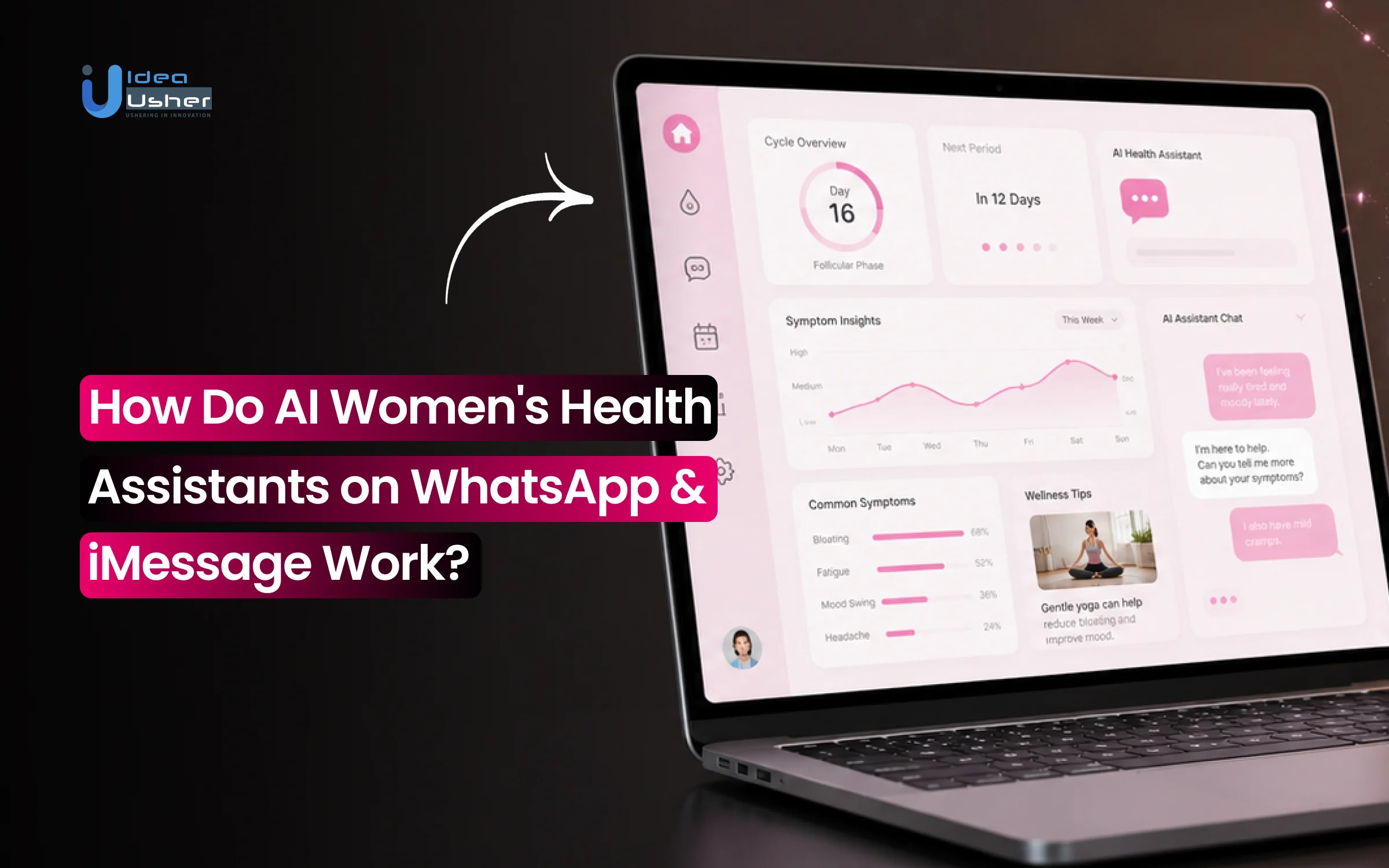
Women’s healthcare is becoming more accessible as AI assistants move to platforms like WhatsApp and iMessage. Many people now rely on these assistants because they provide quick answers, personalized guidance, and on-demand support whenever questions arise. Instead of waiting for the next doctor’s visit or opening another app, users can simply start a conversation in a messaging platform they already use. This shift is helping healthcare providers and femtech businesses deliver more consistent care while making health support feel simple, familiar, and always within reach.
Over the years, we’ve developed several AI-powered health assistants that help healthcare providers and wellness businesses deliver personalized care through conversational experiences. Drawing from this experience, we’re writing this blog to explain how AI women’s health assistants on WhatsApp and iMessage work.
Market Potential of AI Women’s Health Assistants
According to Future Market Insights, the healthcare virtual assistants market was valued at USD 1.4 billion in 2025 and is projected to reach USD 24.8 billion by 2036, growing at a 29.8% CAGR. This rapid growth reflects the rising demand for AI-powered healthcare solutions, especially those that deliver personalized support. For founders, AI women’s health assistants present a timely opportunity to build trusted platforms that improve access to care while addressing one of the fastest-growing segments in digital health.
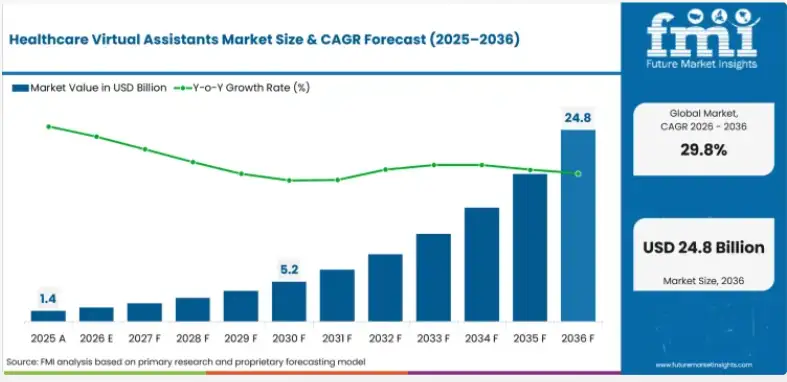
Source: Future Market Insights
Digital Women’s Healthcare Demand
Women’s healthcare is moving toward continuous, personalized support instead of occasional doctor visits. AI health assistants help bridge this gap by offering symptom tracking, health reminders, and reliable guidance whenever users need it. This always-available support makes it easier for people to stay engaged with their health and build better daily habits.
The market is already proving the value of this approach. Flo Health has evolved from a simple period tracker into a comprehensive AI-powered health platform, growing its annual recurring revenue to more than $275 million. Its success highlights the growing demand for personalized women’s health solutions and the strong business potential of subscription-based AI healthcare platforms.
Messaging Platforms Unlock Adoption
AI women’s health assistants are making digital healthcare much easier to access by working inside WhatsApp and iMessage. Instead of asking users to install another app, they let people chat with an AI, track symptoms, get health reminders, and receive personalized guidance through messaging platforms they already use every day. This simple experience encourages higher engagement and makes it easier for users to stick with the service.
The success of this approach is already visible in the market. Clue built its reputation by combining science-backed health insights with intelligent symptom tracking that fits into daily routines. The platform has grown a global user base and reached an estimated annual software revenue run rate of more than $15 million, showing that convenient and trusted women’s health solutions can achieve strong commercial growth.
Accelerating Femtech Investment
Strong investor interest in AI healthcare is creating new opportunities for founders. As more specialized virtual care platforms secure major funding and prove their ability to scale, investors are looking for AI solutions that solve real healthcare problems. An AI women’s health assistant offers a chance to build a trusted product in a growing market while addressing everyday healthcare needs with personalized, always-available support.
What Health Topics Can AI Women’s Health Assistants Support?
Modern AI women’s health platforms do much more than track periods or send reminders. They analyze health data, identify patterns, and provide personalized insights across different stages of a woman’s life. By bringing multiple health needs into one intelligent platform, these solutions offer more meaningful support and create a better long-term experience for users.
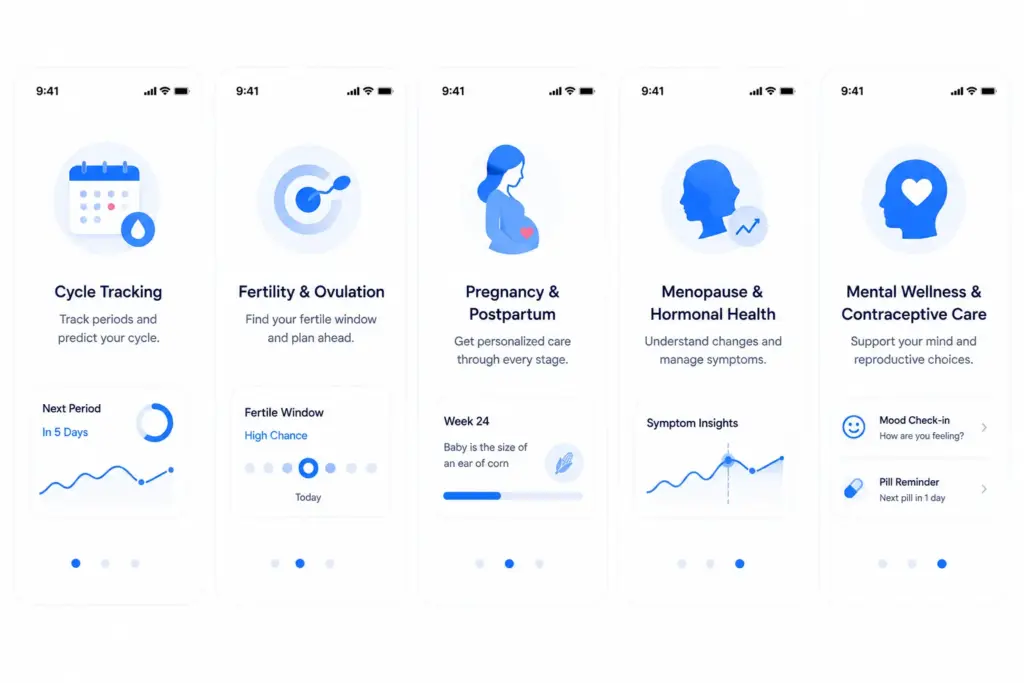
1. Menstrual Health & Cycle Tracking
The foundational layer of digital reproductive health relies on precise cycle analytics. Instead of using static calendar calculations, next-generation platforms deploy predictive machine learning algorithms to map individual monthly rhythms. The software logs ongoing symptoms to predict ovulation windows and detect subtle physiological changes that may signal irregular cycle trends.
A clear market standard for this feature set is Flo. The application integrates advanced predictive logic with deep symptom logs to deliver hyper-personalized reproductive insights. By translating raw data into customized monthly roadmaps, the platform builds a reliable daily habit that keeps user engagement high.
2. Fertility, Ovulation & Family Planning
For individuals navigating conception, timing and biological accuracy are everything. AI assistants optimize family planning by compiling multiple health data points into clear fertility windows. The system eliminates guesswork by sending automated updates and answering reproductive queries through conversational interfaces.
- Frictionless Windows: Automating the calculation of peak conception periods using baseline health metrics.
- Conversational Context: Providing immediate answers to complex lifestyle queries without requiring text database searches.
- Adaptive Mapping: Shifting predictions in real time based on changes in cycle consistency.
Glow demonstrates how effectively this structural approach can support family planning. The app combines complex fertility algorithms with specialized reproductive education and peer networks. This comprehensive integration reduces the emotional stress of conception while creating a highly defensive market position driven by data integrity.
3. Pregnancy & Postpartum Care
The maternal health journey requires continuous monitoring and highly adaptive care frameworks. Artificial intelligence systems support users throughout gestation by delivering localized health guidance and organizing critical medical workflows. Maven Clinic illustrates the enterprise power of virtual maternal care.
The platform coordinates virtual care, postpartum rehabilitation, and family design resources through a scalable digital dashboard. By connecting users with contextual guidance during critical health transitions, it delivers undeniable clinical value to enterprise clients and consumer accounts alike.
4. Menopause & Hormonal Health
Midlife wellness represents one of the fastest-growing investment opportunities in the digital health sector. As women transition into perimenopause, hormonal shifts introduce highly unpredictable physiological symptoms that general-purpose health software completely fails to interpret.
- Biometric Synchronization: Reading subtle fluctuations in skin temperature, sleep quality, and heart rate variability.
- Symptom Mapping: Quantifying lifestyle impacts across cognitive, musculoskeletal, and vasomotor indicators.
- Clinical Preparedness: Generating structured PDF health logs to help users have high-value, data-backed doctor appointments.
This complex tracking is masterfully executed by Oura Advisor. Powered by a custom, clinician-vetted language model, the system interprets continuous biometric signals directly through a dedicated women’s health lens. It ensures that standard monthly shifts or perimenopausal changes are viewed in context, preventing inaccurate alerts while giving users complete control over their physical data.
5. Mental Wellness & Contraceptive Guidance
Comprehensive wellness requires an infrastructure that seamlessly blends physical metrics with cognitive health tracking. Advanced virtual companions use ongoing check-ins to monitor emotional well-being alongside routine contraceptive management. Clue balances these complex requirements by merging scientific period tracking with clear contraceptive reminders and cognitive wellness insights.
This unified dashboard ensures that users manage their reproductive choices while remaining deeply connected to their emotional health patterns, cementing the platform’s role as an indispensable daily asset.
Core Technologies Behind AI Women’s Health Assistants
Building an AI women’s health assistant requires more than adding a chatbot to a healthcare app. The platform needs reliable AI models, clinically validated knowledge, and strong safety measures to deliver accurate, personalized guidance. This combination helps users receive relevant support while maintaining the trust that healthcare applications depend on.
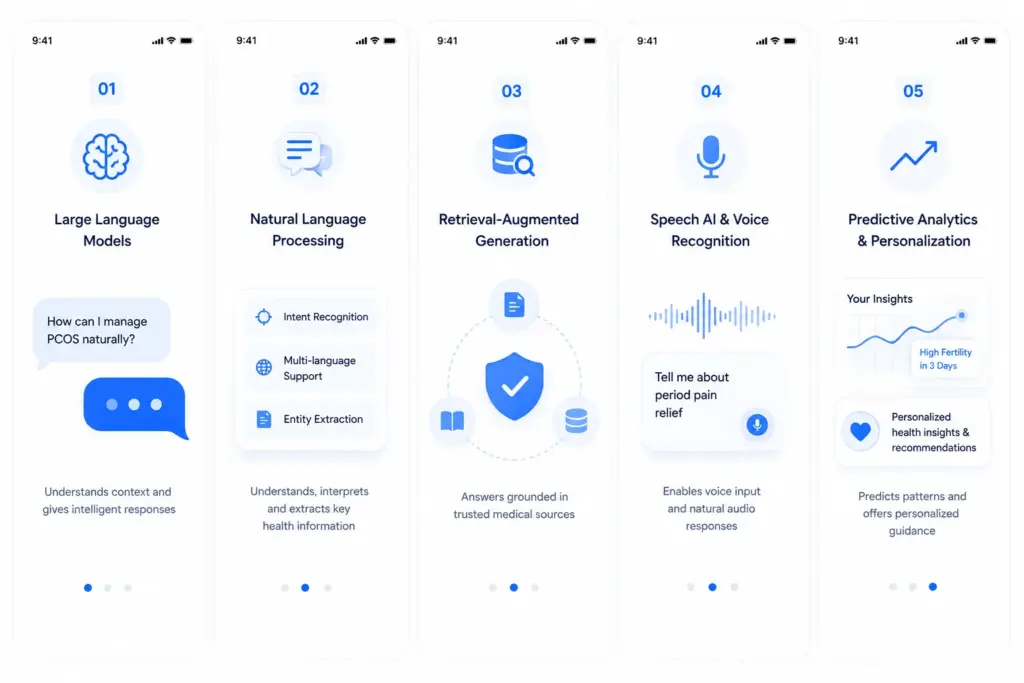
1. Large Language Models
Conversational intelligence relies entirely on advanced Large Language Models. These systems process complex user inputs to grasp the subtle emotional and physical context behind questions about fertility, pregnancy, and hormonal shifts. Rather than using rigid chat templates, specialized algorithms adapt their explanations based on the user’s comprehension levels. This dynamic language processing forms the primary foundation for building long-term user trust and platform authority.
2. Natural Language Processing
Natural Language Processing acts as the primary analytical layer that decodes user intent from everyday text. When a consumer describes their physical status in informal terms, the software instantly extracts crucial medical entities and translates them into clinical categories.
- Intent Recognition: Differentiating between a routine health query and an acute symptom description.
- Multilingual Translation: Analyzing and responding in various languages without losing localized medical context.
- Entity Extraction: Stripping away conversational filler to isolate specific symptoms, frequencies, and pain scales.
This parsing capability allows the software to interact without requiring users to master complex medical jargon. By welcoming conversational, natural speech, the platform dramatically expands its accessible demographic.
3. Retrieval-Augmented Generation
To completely eliminate artificial intelligence hallucinations, engineering teams deploy Retrieval-Augmented Generation. Instead of relying solely on baseline model knowledge, this architecture forces the app to verify every health claim against a closed loop of trusted medical assets. This structural verification ensures that answers remain grounded in current evidence-based medicine. For founders, implementing this retrieval process mitigates legal liabilities and satisfies strict data validation requirements.
4. Speech AI & Voice Recognition
Voice-first communication removes major user friction points, allowing individuals to dictate updates on the go. Speech AI captures spoken sentences, handles audio processing, and converts the sound waves into crisp digital text for backend analysis.
- Frictionless Entry: Replaces tiny smartphone keyboards with low-effort audio recording.
- Acoustic Parsing: Filters background noise to accurately capture health metrics.
- Vocal Synthesis: Converts textual health insights back into natural voice responses.
This hardware flexibility transforms how users engage with the software. By providing an audible feedback loop, the platform accommodates hands-free use during busy daily routines, cementing high daily usage.
5. Predictive Analytics & Personalization
The commercial durability of a health platform depends heavily on its ability to transition from reactive logging to proactive guidance. Predictive analytics engines process continuous biological inputs to project future wellness milestones. By connecting biometric data streams with machine learning, the software uncovers hidden personal patterns before the user even notices a physical shift. This analytical predictive power transforms the app into an essential daily advisor, maximizing user retention and justifying premium tier monetization.
How Do AI Women’s Health Assistants on WhatsApp & iMessage Work?
The commercial value of deploying healthcare solutions directly into conversational apps lies in the total elimination of user onboarding friction. Instead of building expensive native apps that struggle for active downloads, companies host advanced neural networks inside daily communication software. This architecture turns routine messaging into a highly private, clinical-grade health portal.
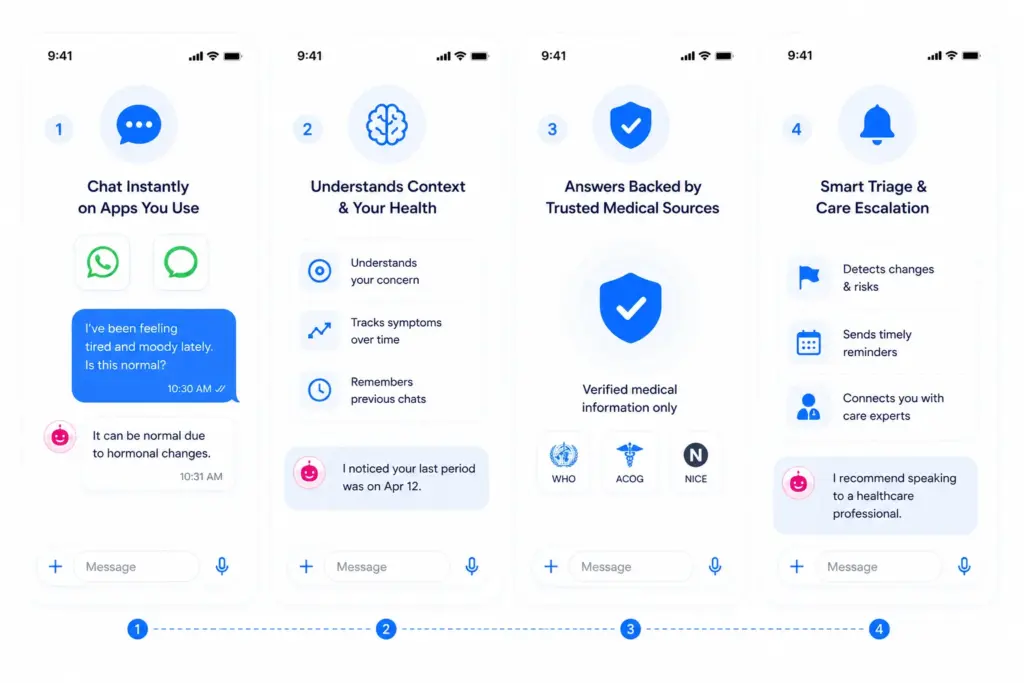
1. Instant Chat on Familiar Apps
The primary user experience happens inside the same chat interfaces individuals use to message friends. A user texts an inquiry or describes a symptom exactly how they would speak to a confidant. The backend artificial intelligence parses the unstructured chat text instantly without requiring complex dropdown selections.
A prominent example of this frictionless engagement is Pinky Promise, a chat-first women’s healthcare platform supporting over 400,000 users. By allowing women to describe intimate symptoms over text, it provides a highly private, judgment-free medical space. The software interprets everyday conversational inputs and instantly bridges the gap between private consumer concerns and structured clinical care.
2. Context-Aware Conversations
Behind the chat screen, advanced Natural Language Processing models process the input to determine the precise medical intent. Rather than spitting out generic canned answers, the system cross-references the message with the user’s logged medical timeline, age, and pregnancy status to build a tailored response.
- Intent Analysis: Differentiating between standard wellness inquiries and acute pain signals.
- Biometric Evaluation: Tracking symptom changes over multi-month intervals to note deviations.
- Conversational Memory: Retaining specific details from previous chats to avoid repetitive user prompting.
This dynamic processing powers HelpMum’s specialized WhatsApp companion, Mamabot, which delivers crucial maternal healthcare support to pregnant women in developing regions. Mamabot actively evaluates a mother’s location, pregnancy stage, and medical status to provide customized nutrition advice, monitor development milestones, and automate clinic reminders. This deep context-awareness turns a simple text bot into an active, life-saving health advocate.
3. Verified Medical Knowledge
To safeguard patient health, these conversational engines are strictly barred from generating independent, unverified claims. Engineering teams implement Retrieval-Augmented Generation to ensure that every diagnostic tip or educational response matches approved medical knowledge bases.
This structural safety setup completely prevents artificial intelligence hallucinations. Grounding responses in validated medical guidelines allows startups to mitigate compliance risks, build platform authority, and deliver reliable lifestyle support to users discussing sensitive biological issues.
4. Smart Triage & Care Escalation
The long-term commercial utility of a chat-based assistant rests on its capability to serve as an intelligent triage engine. As text interactions pile up, the machine learning models monitor the frequency and severity of user symptoms to proactively flag potential health anomalies.
- Symptom Flags: Spotting a sudden uptick in recorded discomfort or cycle length variance.
- Adherence Automation: Deploying daily text alerts to keep users consistent with prescription routines.
- Clinical Handoff: Instantly routing the chat history to qualified OB/GYNs when data indicates risk.
WhatsApp vs iMessage for AI Women’s Health Assistants
Choosing the primary platform for a virtual healthcare assistant directly determines your development budget and audience reach. While both communication systems route data securely, they require vastly different software integrations, pricing models, and target demographic strategies.
1. Reach and Market Accessibility
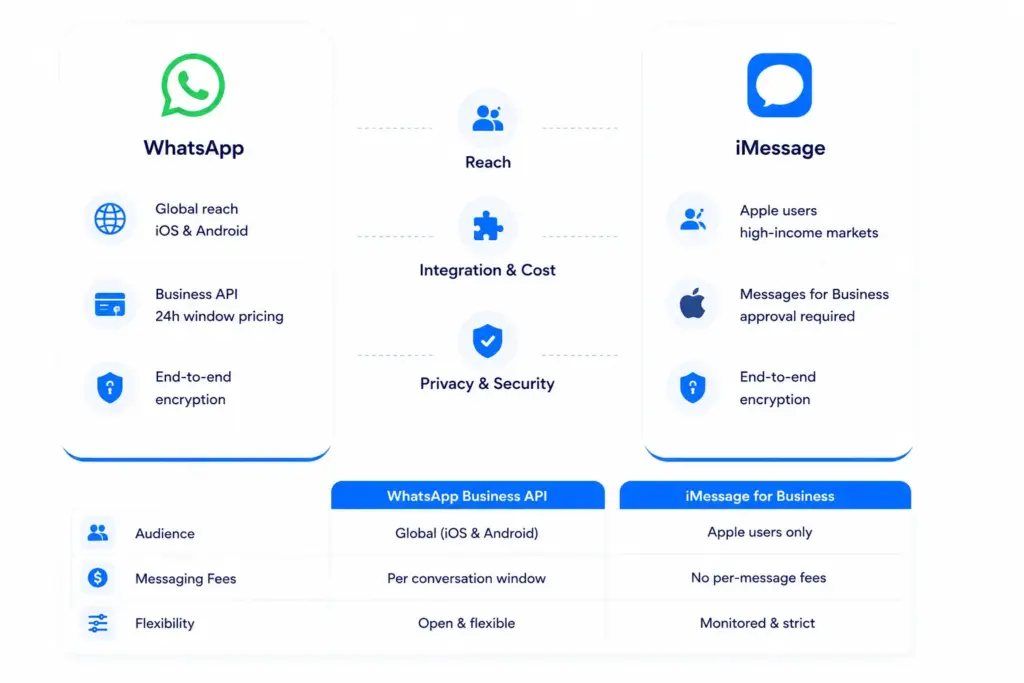
WhatsApp controls an immense global footprint, maintaining dominant penetration across Europe, Latin America, and Asia. Because it operates identically on both Android and iOS devices, it provides a highly unified target market for healthcare applications aiming for mass consumer scaling.
Conversely, iMessage locks its feature sets exclusively to the Apple hardware ecosystem. This limitation restricts your market reach primarily to affluent urban demographics and regions with massive iPhone market shares, such as North America.
2. Integration Architecture & Cost
Building an AI women’s health assistant for WhatsApp or iMessage requires developers to follow each platform’s rules. WhatsApp uses the Meta Business Platform API and charges businesses based on 24-hour conversation windows, while Apple Messages for Business has a stricter approval process before a service can launch. Choosing the right platform depends on the target audience, expected message volume, and compliance requirements.
Wildflower Health shows how this approach can scale successfully. The company generates an estimated $25 million to $50 million in annual revenue by connecting patients with personalized maternal and family care through digital interactions. Its success demonstrates that conversational AI can improve access to care while helping healthcare organizations operate more efficiently.
3. Privacy and Compliance Guardrails
Both software applications secure texts using end-to-end encryption protocols, ensuring that incoming data strings remain unreadable to outside networks during transit. However, network-level encryption does not equal full healthcare compliance.
- Database Isolation: Separating chat records from identity details on your internal cloud backend.
- Consent Automation: Building mandatory opt-in text flows before logging any health data.
- Audit Trails: Logging every system interaction to satisfy strict medical privacy audits.
This technical balance between chat accessibility and medical data safety is perfectly highlighted by Gabbi. Operating as an AI-powered assessment tool for women’s breast cancer risks, the company has scaled its financial operations past $380 million in revenue. The software uses structured medical intake algorithms to calculate personalized screening plans. To maintain this level of commercial scale, the underlying platform ensures that all text-based data inputs transition smoothly into heavily secured backend storage layers.
4. Choosing the Optimal Health Interface
The right platform depends on who your users are and where you plan to grow. Many startups launch on WhatsApp first because it offers a large global audience and makes it easier to test and refine conversational experiences. As the product matures, adding iMessage helps expand reach and deliver a consistent AI health experience across more mobile users.
| Strategic Metric | WhatsApp Business API | iMessage for Business |
| Primary Audience | Universal global reach across iOS and Android | High-income demographics locked to Apple hardware |
| Messaging Fees | Variable transactional fees charged per conversation | No per-message delivery costs from the platform |
| System Flexibility | Highly open ecosystem with rich automated workflows | Monitored environment with intense design guidelines |
Common Challenges When Deploying AI on WhatsApp & iMessage
Launching a virtual healthcare companion on highly accessible chat apps introduces unique software bottlenecks. While these interfaces completely eliminate consumer onboarding friction, they require deep technical precision to ensure patient safety and maintain backend stability.
1. AI Accuracy vs Clinical Safety
Women’s health covers highly sensitive biological fields like pregnancy, prenatal care, and perimenopause. In these domains, unverified advice from a conversational engine can lead to severe real-world consequences. Building a reliable app requires stripping away standard generative flexibility and replacing it with strict data verification parameters.
By engineering a closed-loop validation pipeline, we ensure that your conversational assistant acts as a safe, compliant guide. This defensive technical foundation protects user wellbeing while building an authoritative market presence that investors can comfortably back.
2. Privacy and Compliance Requirements
Consumer messaging applications protect texts during transit with end-to-end encryption, but that alone does not satisfy strict medical privacy legislation. Storing and analyzing conversational medical histories requires an entirely independent, fortified backend architecture.
- Encrypted Isolation: Moving patient chat histories off public networks and into siloed, compliant databases.
- Consent Frameworks: Building low-friction, automated opt-in text flows before logging any biomarker variables.
- Secure Access Syncing: Implementing strict token authentication to safely share text data across electronic health record registries.
We handle the heavy lifting of backend data compliance by constructing fortified cloud environments from the very first line of code. This end-to-end security setup ensures your product meets top-tier healthcare standards, allowing your brand to scale seamlessly without running into legal or regulatory roadblocks.
3. Messaging Platform Limitations
While consumer messaging platforms offer incredible daily engagement, they operate as closed software ecosystems. WhatsApp and iMessage enforce completely different developer entry points, automated message layout constraints, and brand approval pipelines.
Our development teams navigate these technical restrictions by building modular, highly adaptive conversational layouts. We ensure your core artificial intelligence logic lives independently in the cloud backend. This smart separation allows your application to deliver a fluid, deeply personalized patient experience while remaining fully compliant with changing app store policies.
Top 5 AI Women’s Health Assistants in the USA
We explored the U.S. market to find AI women’s health assistants that truly stand out. Our research focused on platforms that offer practical support, personalized guidance, and a better overall care experience rather than just basic AI chat features. The examples below highlight some of the most promising solutions and make it easier for women to get reliable health support.
1. Maven Clinic
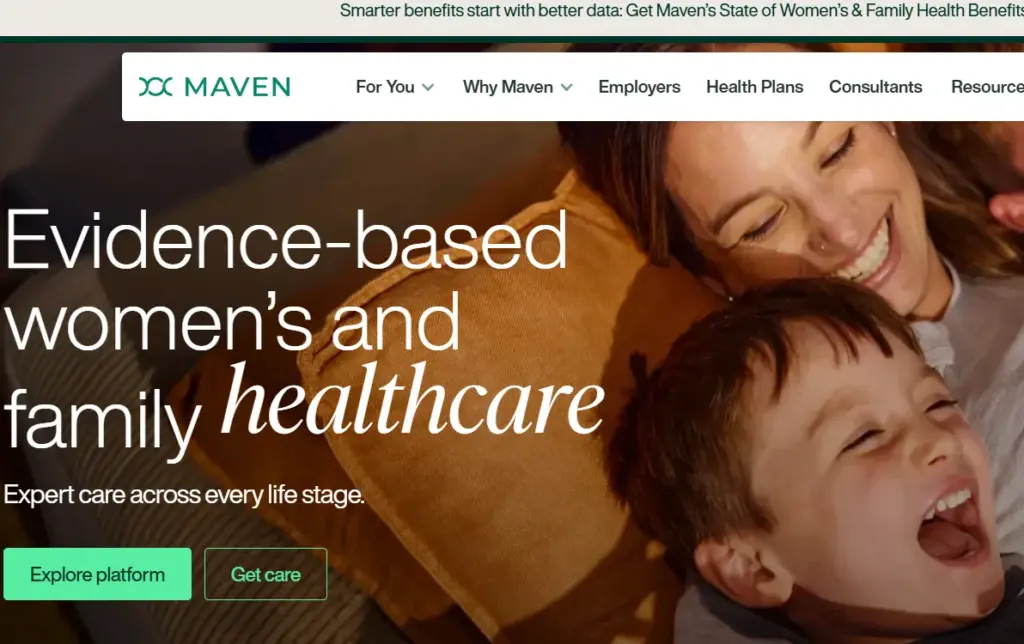
Maven is the largest virtual clinic dedicated to women’s and family health in the U.S. Its AI layer, Maven Intelligence, helps personalize care journeys by integrating symptom information, clinical guidelines, and virtual care programs. The platform supports fertility, pregnancy, postpartum care, menopause, pediatrics, and family planning. It serves millions of members through employer and health plan partnerships.
2. Midi Health
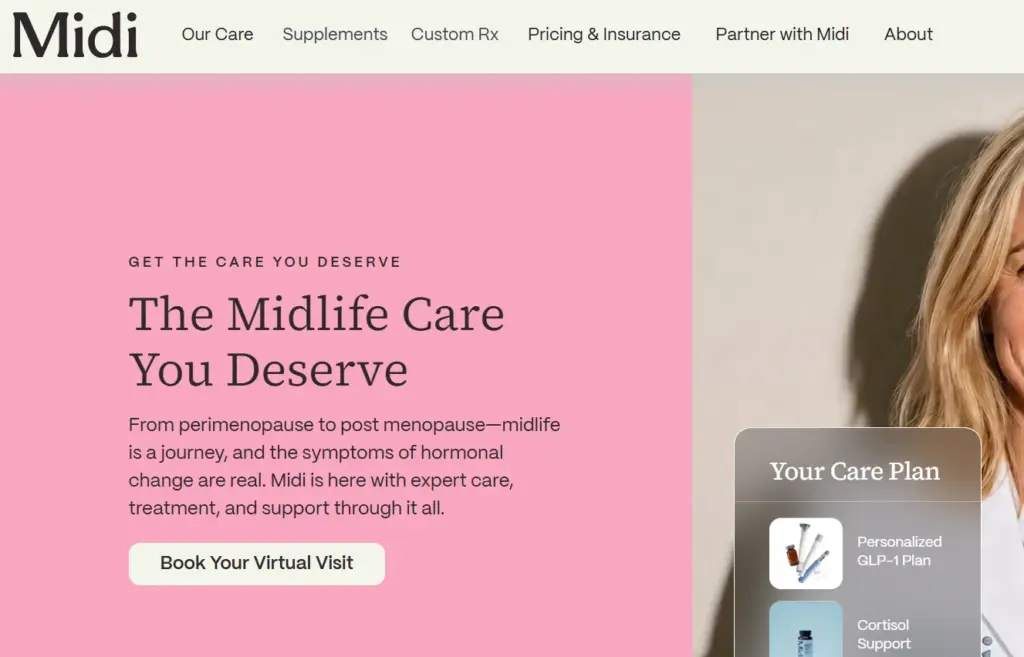
Midi Health specializes in menopause care and recently expanded its AI capabilities with a proprietary chatbot trained exclusively on validated women’s health research. The AI assists clinicians while improving patient education and scaling virtual menopause care across the U.S.
3. Ema Health
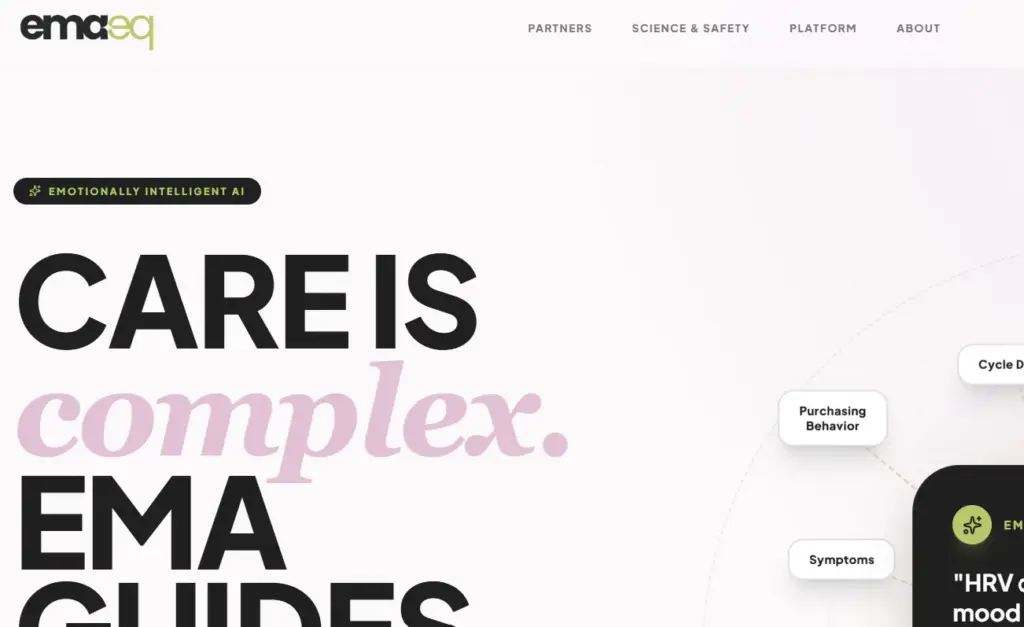
Ema positions itself as an AI companion built specifically for women’s health. Rather than offering generic medical advice, it focuses on emotionally intelligent conversations and personalized guidance based on millions of women’s health interactions covering menstrual health, fertility, PCOS, pregnancy, and menopause.
4. Atta
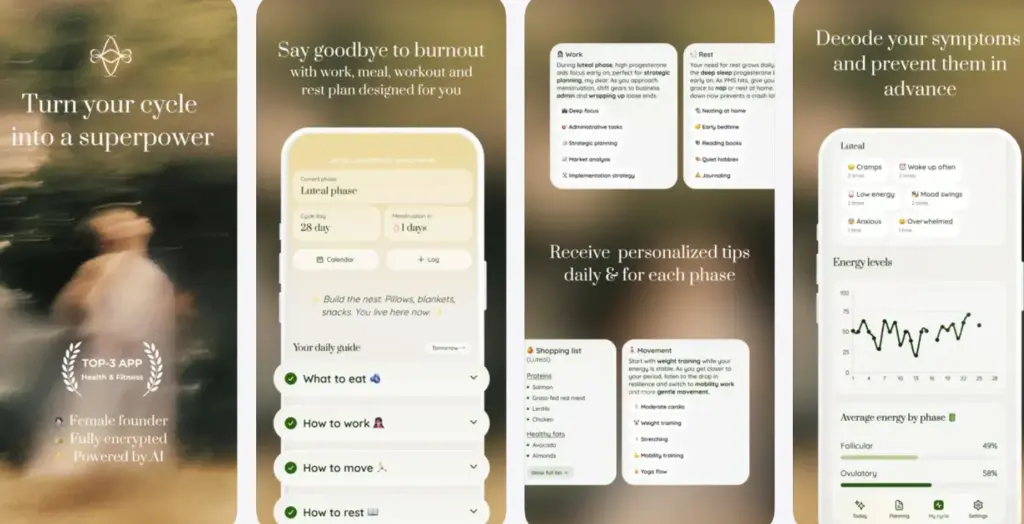
Atta is an AI-powered women’s health assistant that learns from users’ symptoms, hormone patterns, mood, and energy levels to generate personalized daily recommendations for nutrition, exercise, work planning, recovery, and cycle management. It helps users make informed daily decisions by adapting its recommendations as their health patterns change over time.
5. Oura with Oura Advisor
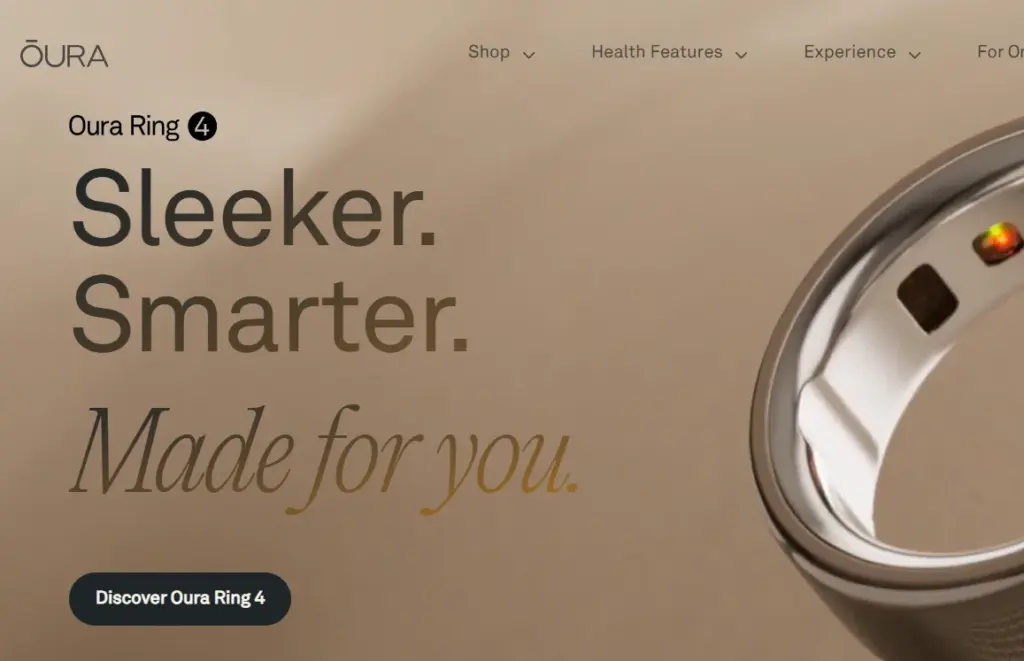
Oura has expanded beyond wearable tracking by introducing a proprietary large language model focused on women’s health. The AI combines sleep, stress, activity, and menstrual cycle data to provide individualized answers related to reproductive health and menopause while keeping user data within Oura’s own infrastructure.
Build an AI Women’s Health Assistant with Idea Usher
Bringing a high-performing digital health asset into the femtech space requires deep technical precision. It demands an execution partner capable of turning complex artificial intelligence frameworks into a smooth, clinically safe product. IdeaUsher collaborates with healthtech founders and healthcare enterprises to engineer custom, production-ready wellness assistants that securely process patient data, protect intellectual property, and scale seamlessly.
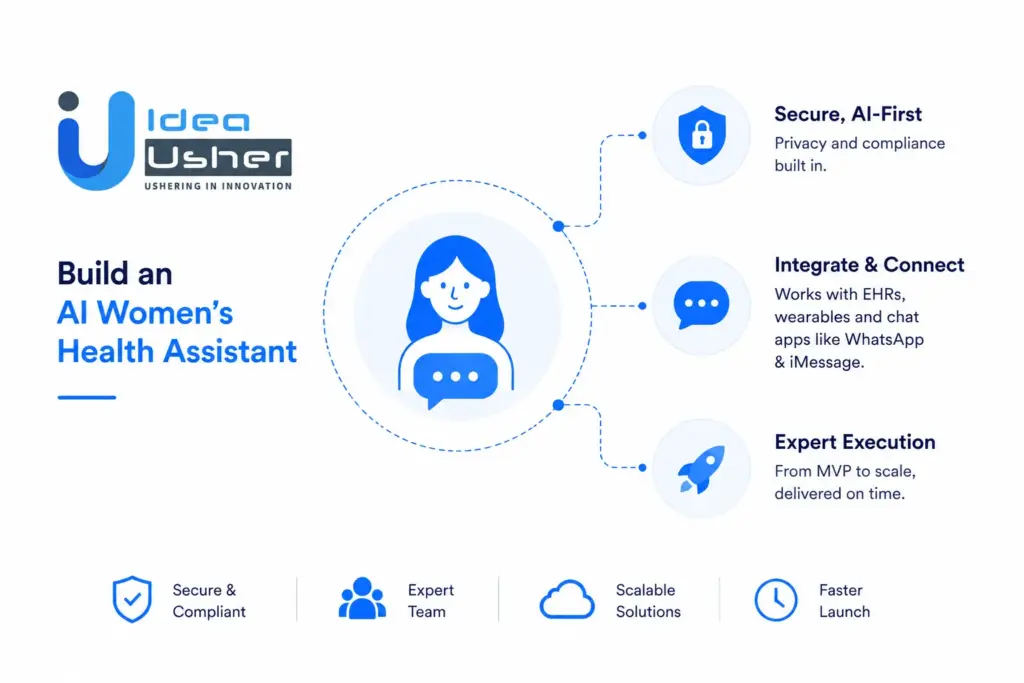
Secure, AI-First Healthcare Platforms
We build custom AI women’s health assistants designed around your business goals and care model. Instead of relying on generic templates, we create scalable platforms that deliver personalized experiences while meeting high standards for privacy and security. The result is a flexible solution that can evolve with new clinical needs, user feedback, and future growth.
Ecosystem Integration & Messaging Channels
The commercial viability of a health assistant relies on its ability to meet patients exactly where they are. We integrate your custom artificial intelligence engines directly into daily messaging software like WhatsApp and iMessage. This completely eliminates onboarding friction and keeps user engagement exceptionally high.
- Messaging Pipelines: Building responsive conversational flows within ubiquitous chat interfaces.
- EHR Integration: Syncing chat inputs smoothly with standard electronic health records.
- Biometric Connectivity: Developing secure APIs to pull live data effortlessly from fitness wearables.
Our engineering depth ensures that your application handles thousands of concurrent data uploads without suffering latency issues or system crashes. Connecting conversational frontends with robust healthcare databases builds a resilient technical asset that lowers operational overhead for provider workflows.
Expert Execution and Faster Launches
IdeaUsher provides the specialized technical execution required to navigate the highly regulated digital health landscape. With over 500,000 hours of coding experience, our team of ex-MAANG/FAANG developers delivers elite domain expertise across thousands of successful software launches.
We understand the rigorous standards required to build stable, highly fundable consumer health platforms. By combining advanced artificial intelligence capabilities with transparent project management, we help founders de-risk the development process and transition their femtech visions into high-yielding digital realities.
Conclusion
Behind every AI women’s health assistant is a system that turns everyday conversations into personalized health support. By using familiar messaging apps like WhatsApp and iMessage, these solutions make it simple for users to ask questions, receive guidance, and stay engaged with their health. The experience feels natural while giving businesses a faster and more accessible way to reach and support users.
Things to Know About AI Women’s Health Assistants
A1: An AI women’s health assistant is a digital health companion that uses artificial intelligence to provide personalized support through chat or voice conversations. It can answer common health questions, help users track symptoms, monitor menstrual cycles, offer pregnancy or menopause guidance, and recommend healthy habits. Many platforms are available through mobile apps or messaging services like WhatsApp and iMessage, making health support easier to access whenever users need it.
A2: No. AI women’s health assistants are designed to complement healthcare professionals rather than replace them. They can provide educational information, symptom tracking, medication reminders, and personalized wellness recommendations. However, they cannot diagnose medical conditions or prescribe treatment. For serious symptoms, emergencies, or medical decisions, users should always consult a licensed healthcare provider.
A3: Most AI women’s health assistants support a wide range of health needs throughout different life stages. These include menstrual cycle tracking, fertility planning, pregnancy support, postpartum recovery, menopause management, hormonal wellness, and general reproductive health education. Some platforms also include mental wellness check-ins, nutrition guidance, fitness recommendations, and chronic condition support to provide a more complete health experience.
A4: Yes. Many healthcare companies are bringing their AI assistants to popular messaging platforms such as WhatsApp and iMessage. This allows users to ask health questions, receive reminders, track symptoms, and get personalized guidance without downloading a dedicated app. Using familiar messaging platforms also improves accessibility and encourages more consistent engagement.