

Key Takeaways
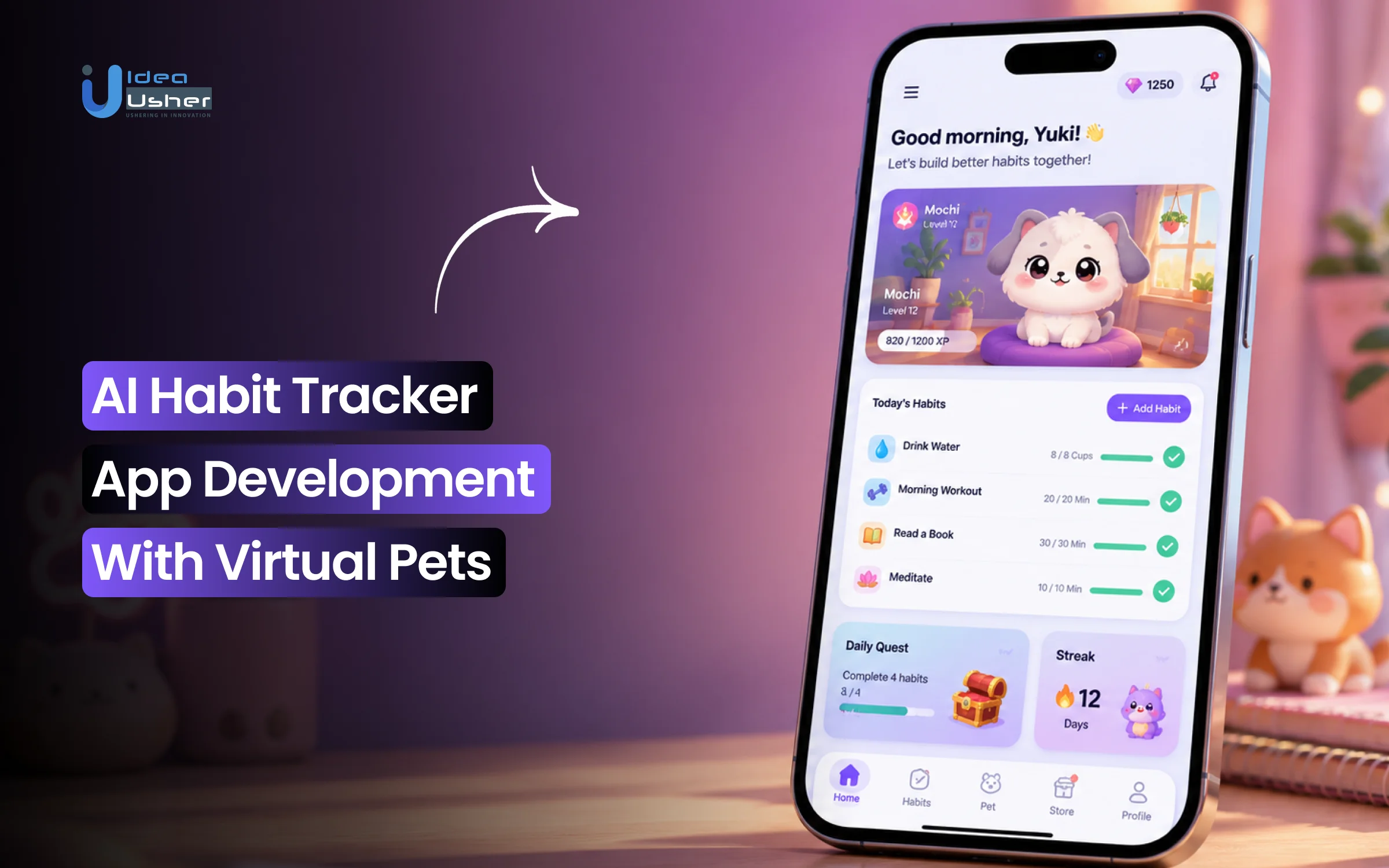
- AI habit tracker apps with virtual pets combine artificial intelligence and gamification to make habits more sustainable.
- Unlike traditional habit trackers, virtual pet companions create stronger motivation through coaching, adaptive goals, and accountability.
- Building a successful platform requires habit tracking tools, AI recommendations, predictive analytics, and pet evolution.
- The popularity of Finch, Habitica, Otto, and Habit-chi highlights opportunities for startups and entrepreneurs.
- How Idea Usher can help businesses develop AI habit tracker apps through AI personalization, gamification, and mobile app expertise.
Many people have tried habit-tracking apps, only to stop using them after a few days or weeks. The problem is that most apps focus on tracking progress but do little to keep users engaged. AI habit tracker apps with virtual pets take a different approach by making self-improvement feel more interactive and rewarding. As users complete habits and reach goals, their virtual companions grow alongside them, creating a stronger sense of motivation and consistency. This growing demand is creating new opportunities for businesses to build engaging wellness experiences.
We’ve built several AI habit-tracking solutions using personalization engines and reward-based engagement systems to help users stay consistent with their goals. Based on this experience, we’re writing this blog to explore how to develop an AI habit tracker app with virtual pets, including the core features, technologies, and development considerations behind a successful product.
Why Traditional Habit Tracker Apps Fail to Retain Users?
According to Straits Research, the global habit tracking app market was valued at around $1.7 billion in 2024 and is expected to reach $5.5 billion by 2033. This growth shows that more people are actively looking for tools that can help them build better routines and improve their daily lives. For startups and investors, it highlights a growing opportunity in the digital wellness and self-improvement space.
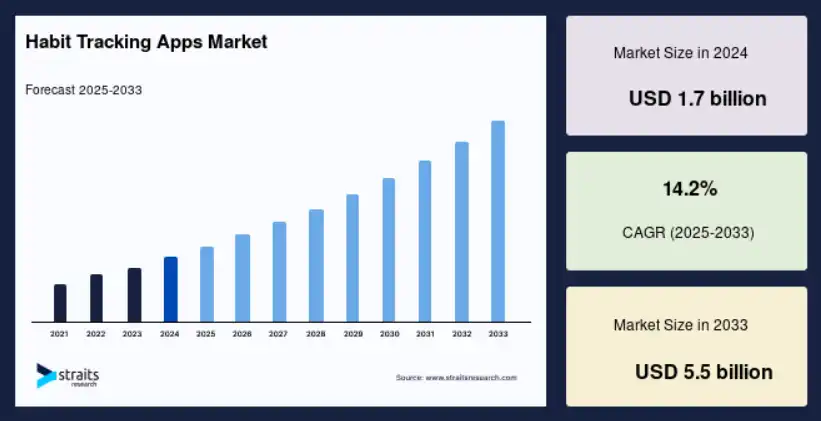
Source: Straits Research
Despite strong market demand, many habit-tracking apps struggle to keep users engaged for the long term. Getting downloads is no longer the biggest challenge. Retention is where most products fall short. Many platforms focus only on tracking habits and measuring progress, but users need ongoing motivation and support to stay consistent. This creates a significant opportunity for AI-powered habit tracker apps with virtual pets that make habit building feel more personal, engaging, and rewarding over time.
Apps Turn Progress Into Data, Not Motivation
The foundational error of early-generation habit trackers is an over-reliance on quantitative metrics at the expense of qualitative satisfaction. They function more like accounting ledgers than motivational tools. A user does not feel fundamentally transformed simply because an algorithm informs them they have completed a task 14 days in a row. When a platform merely digitizes behavior without contextualizing it, the tracking process itself becomes an administrative burden or just another chore on a digital to-do list.
This data-centric approach fails because it targets the wrong type of motivation:
- Extrinsic vs. Intrinsic Rewards: Graphs and completion percentages are extrinsic rewards. They offer a short-lived dopamine hit but fail to foster intrinsic motivation, which is the internal desire to change one’s identity.
- The Cognitive Load of Manual Entry: Forcing users to manually log every glass of water or gym session introduces friction. When the effort to track a habit exceeds the perceived reward of the habit itself, churn is inevitable.
- Data Without Actionable Insights: Presenting a user with a bar chart showing they missed three days of meditation provides historical reporting instead of a psychological solution. It tells them what happened but offers no strategy on how to course-correct.
For an investment to yield a highly defensible digital asset, the product philosophy must shift from passive data aggregation to active behavioral guidance. The value lies not in storing data points, but in translating those data points into real-time, personalized encouragement that reinforces a user’s sense of self-efficacy.
Users Lose Interest After Initial Excitement
Every habit tracker enjoys a short period where users are excited to try something new. During the first few days, people are highly motivated to log habits and track progress. The problem starts when that initial excitement fades. Most traditional habit apps depend on simple streaks and badges to keep users engaged, but these rewards quickly lose their appeal and fail to create long-term commitment.
Another major issue is how these apps handle missed habits. Many users build momentum for several days or weeks, only to miss one day and see their streak reset. That single setback often feels discouraging enough to make them abandon the app altogether. Modern habit platforms are moving beyond this approach by focusing on flexible progress systems, personalized motivation, and features that help users recover from missed days instead of feeling punished by them.
One-Size-Fits-All Plans Cause Churn
One of the biggest weaknesses of traditional habit apps is that they treat every user the same. A busy professional, a student, and a parent all have different schedules, challenges, and goals, yet many apps offer identical habit plans and routine templates. Since habits are shaped by personal circumstances, users are more likely to stay engaged with platforms that adapt recommendations to their lifestyle instead of forcing them into a one-size-fits-all system.
This lack of personalization creates an immediate engagement drop-off due to two primary structural flaws:
| Structural Flaw | Operational Impact | Investor Risk |
| Overwhelming Onboarding | Forcing users to adopt five major habits simultaneously in week one, leading to cognitive fatigue. | High Day-7 churn rates and negative app store reviews. |
| Inelastic Goals | Failing to adjust habit difficulty based on real-time user performance or changing external factors. | Loss of high-lifetime-value (LTV) users who outgrow the app’s basic utility. |
Many habit apps fail because they expect users to follow the same routine every day, regardless of changing schedules or energy levels. In reality, consistency comes from flexibility. Instead of pushing users to complete a 45-minute reading session during a busy week, smarter AI-powered platforms can suggest smaller alternatives, such as reading for 5 minutes. This helps users maintain momentum, avoid burnout, and stay committed to their goals over the long term.
The Role of Virtual Pets in AI Habit Tracker Apps
The digital health sector is shifting away from rigid interfaces. To capture market share, you have to make the user care enough to stay. Integrating virtual pets into the core architecture transforms a cold routine into a responsive ecosystem. This gamified approach changes how users view the software. Instead of interacting with a spreadsheet, users connect with an entity that reacts to their progress. Backed by AI, these companions adapt their growth milestones to match the user’s specific pace, directly driving daily usage.
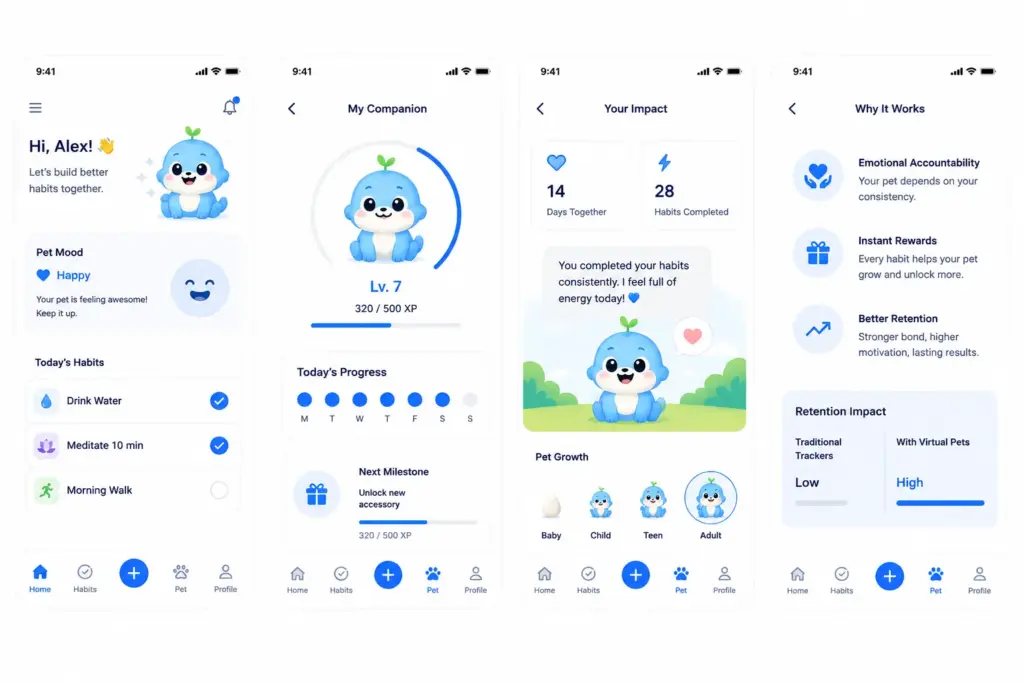
This model solves the industry’s retention problem. It leverages deep psychological triggers, transforming routine software into an emotionally resonant product that users are hesitant to delete.
How Pets Create Emotional Accountability
Traditional habit trackers rely heavily on self-discipline, which is an unreliable resource. When a user fails to complete a task on a standard application, the only consequence is an empty check box. AI-driven virtual pets shift this dynamic by introducing external emotional accountability. Linking the well-being of a digital companion to real-world actions creates a sense of benevolent responsibility.
Human beings are naturally wired to respond to caretaking cues. When an application successfully mirrors these cues through an AI companion, user motivation shifts from self-preservation to the preservation of their digital pet.
We see early validations of this psychology in the current app market. For instance, platforms like Habitica built an RPG ecosystem where skipping real-world tasks damages a user’s avatar and party members. Similarly, apps like Finch: Self-Care Pet use a gentle digital bird that grows solely through the user’s daily reflection and wellness habits.
This dynamic works effectively because of several core behavioral factors:
- Sunk Cost Identity: As users invest time into customized naming and styling, the digital asset accumulates psychological value.
- Empathy-Driven Triggers: An AI pet that displays fatigue when a user skips a habit triggers an immediate empathetic response, converting a passive chore into a protective duty.
- Proactive Interventions: An AI companion can change its tone based on historical patterns, offering words of encouragement exactly when needed.
Ultimately, this relationship reduces the friction of starting a habit. A user might ignore their own fitness goals after an exhausting day at work, but they are more likely to complete a brief exercise if it directly revitalizes their digital companion.
Turning Habits Into Rewarding Experiences
One of the biggest challenges with habit formation is that the rewards often take weeks or even months to appear. This is where virtual pets make a difference. Every time a user completes a habit, their companion grows, unlocks new interactions, or reaches new milestones. That immediate sense of progress keeps users motivated and gives them a reason to come back each day.
Instead of simply checking off tasks, users feel like they are helping a companion thrive. The experience becomes more personal and engaging, making habit tracking feel less like a routine and more like a journey. This emotional connection is a key reason why virtual pet-based habit apps often achieve stronger long-term engagement than traditional habit trackers.
Virtual Pets Improve Long-Term Retention
From a product valuation standpoint, the ultimate metric of success is lifetime value driven by sustained retention. Most digital products suffer a steep drop-off after thirty days because the experience becomes entirely predictable. A companion-based architecture combats this fatigue by maintaining a dynamic relationship that scales alongside the user.
| Retention Driver | Legacy App Mechanics | AI Virtual Pet Mechanics |
| Daily Hook | Generic push notifications that users quickly mute. | Curiosity regarding the pet’s daily state or surprise discoveries. |
| Milestone Value | Flat achievement badges that offer zero utility later. | Visible evolutionary changes that reward long-term dedication. |
| Churn Mitigation | Zero friction to abandon the app since no emotional bond exists. | High emotional friction because abandoning the app means leaving a customized companion. |
Core Features of an AI Habit Tracker App With Virtual Pets
Building a competitive product in the digital wellness space requires a feature set that balances functional tracking with high-engagement psychology. As consumer demand shifts toward interactive self-improvement, market winners are leveraging AI habit tracker apps powered by dynamic virtual pets to solve the industry retention crisis. The following architecture details the core software mechanisms necessary to build a high-retention platform.
A. User Habit Tracking Features
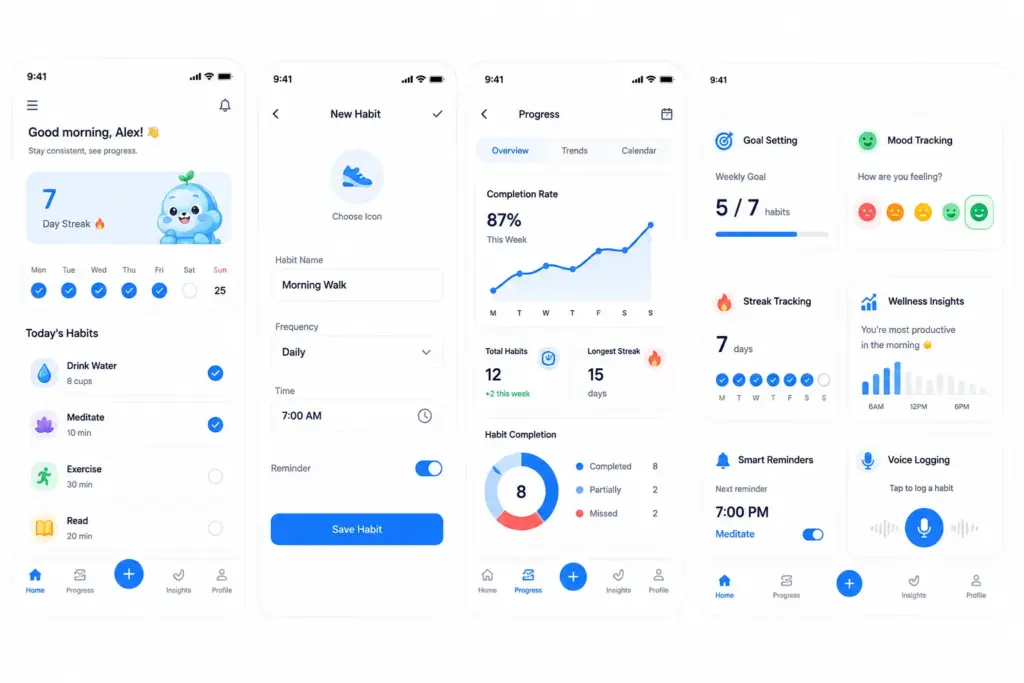
User habit tracking features form the foundation of any AI-powered habit tracker app, helping users organize routines, monitor progress, and stay accountable to their goals. By combining intelligent tracking tools with personalized insights, these features make it easier to build consistent habits and maintain long-term self-improvement.
Habit Creation & Management
Users can set up custom behaviors or select standard routines from a flexible library. The system accommodates complex parameters, allowing individuals to define specific success metrics for each distinct habit. This flexibility makes the platform suitable for a wide range of personal and professional goals. Users can also modify habits over time as their priorities and routines evolve.
Daily Habit Scheduling
This module organizes tasks into distinct temporal blocks throughout the day. It provides a structured daily agenda that aligns with user workflows to ensure higher compliance. A well-organized schedule reduces decision fatigue and improves consistency. It also helps users build routines that fit naturally into their everyday lives.
Goal Setting
The application enables users to establish short-term milestones and long-term objectives. This framework breaks massive lifestyle adjustments into manageable pieces to prevent cognitive fatigue. Smaller goals make progress feel more achievable and motivating. As milestones are reached, users gain confidence to pursue larger objectives.
Progress Dashboards
A clean dashboard translates user activity into clear visual summaries. It gives individuals an immediate look at their performance trends without overwhelming them with raw data points. Visual insights make it easier to identify strengths and areas for improvement. They also help users stay focused on meaningful progress rather than isolated results.
Streak Tracking
The software logs consecutive days of successful completion to build momentum. The backend utilizes a flexible calculation model to prevent immediate user discouragement after a single missed day. This encourages users to stay committed even when setbacks occur. Maintaining streaks can become a powerful source of daily motivation.
Mood Tracking
Users can quickly log their emotional state alongside their daily habits. This data helps the platform uncover how psychological patterns correlate with habit execution over time. Understanding emotional triggers can lead to more effective habit-building strategies. It also allows users to become more aware of their overall well-being.
Wellness Insights
The platform synthesizes habit compliance and mood data into actionable summaries. These automated reports help users understand the environmental factors that influence their daily routines. Personalized insights make self-improvement more data-driven and practical. Over time, users can make better decisions based on recurring behavioral patterns.
Smart Reminders
Context-aware alerts go out based on user behavior and real-time schedules. The engine avoids repetitive pinging and instead focuses on sending messages when the user is most likely to act. This makes reminders feel helpful rather than intrusive. Timely prompts can significantly improve habit completion rates.
Voice-Based Logging
Natural language processing allows users to record completed habits via quick voice inputs. This integration removes interface friction and makes tracking completely hands-free. Voice interactions are especially useful during busy moments or workouts. The added convenience encourages more consistent habit logging.
B. AI Coaching Features
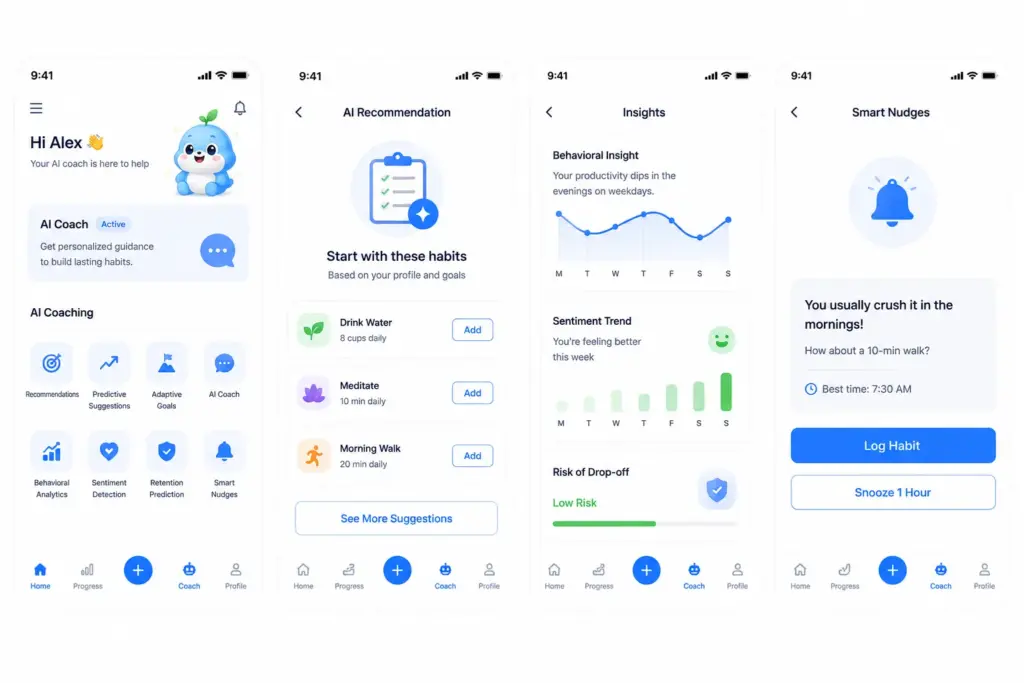
AI coaching features make habit tracking feel more personal and effective. Instead of simply recording completed tasks, the app learns from user behavior and provides guidance that adapts over time. This helps users stay motivated, overcome setbacks, and build habits that are more likely to stick in the long run.
Personalized Habit Recommendations
The AI engine analyzes onboarding profiles to recommend optimal starting routines. It builds a foundational plan tailored to the user’s current fitness level or professional schedule. This reduces the guesswork involved in building new habits. Users receive recommendations that feel practical and achievable from day one.
Predictive Habit Suggestions
By processing historical performance data, the system anticipates when a user might struggle with specific routines. It automatically suggests realistic modifications before a complete failure occurs. This proactive approach helps users stay on track during challenging periods. It also reduces the likelihood of abandoning habits altogether.
Adaptive Goal Planning
The platform dynamically scales task difficulty based on weekly completion rates. If a user achieves perfect compliance, the goals expand, while consecutive misses trigger a gentle reduction in difficulty. This creates a balanced experience that prevents burnout. Users can continue progressing at a pace that matches their capabilities.
AI Wellness Coach
A conversational agent provides real-time guidance and answers user queries. The coach acts as a supportive guide, helping users navigate behavioral hurdles with evidence-based advice. Personalized conversations make the experience feel more engaging and human. The coach can also offer encouragement during periods of low motivation.
Behavioral Analytics
The backend engine processes completion velocity and contextual data to identify hidden performance trends. It highlights specific friction points such as recurring drops in evening productivity. These insights help users understand what is helping or hindering their progress. Over time, they can make informed adjustments to improve consistency.
Sentiment Detection
The software analyzes voice inputs and mood logs to assess the user’s underlying emotional state. This allows the system to adjust its messaging tone from motivational to empathetic during stressful periods. More personalized communication creates a stronger connection with users. It also ensures support feels relevant to their current situation.
Retention Prediction Models
Machine learning algorithms flag users who show signs of impending churn based on micro-behavioral changes. This early warning system allows the platform to trigger targeted retention strategies. Timely interventions can re-engage users before they lose interest. For businesses, this can significantly improve long-term retention metrics.
Intelligent Nudging Engine
The system replaces generic notifications with highly targeted behavioral triggers. It delivers specific prompts based on past successes to maximize the chance of immediate user engagement. These nudges feel more helpful because they are tailored to individual behavior patterns. As a result, users are more likely to take action instead of ignoring reminders.
C. Virtual Pet Features
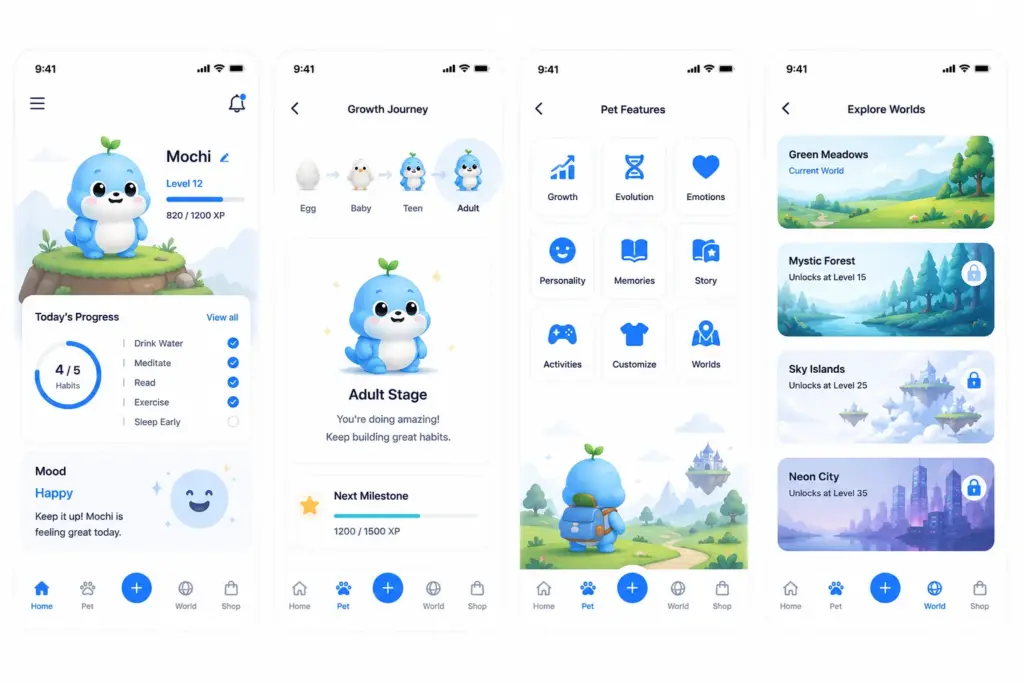
Virtual pet features are what transform a habit tracker from a productivity tool into an engaging companion experience. As users complete habits and make progress toward their goals, their digital companion grows alongside them, creating a stronger emotional connection and giving them an enjoyable reason to stay consistent every day.
Pet Growth Stages
The digital companion advances through a clear lifecycle from an egg to a fully grown adult. Each phase requires specific experience milestones, providing a long-term visual anchor for user progress. This gives users a constant reminder of how far they have come. Watching the pet grow makes everyday habit completion feel more meaningful.
Evolution Systems
The companion branches into unique physical forms based on the specific types of habits a user prioritizes. A focus on fitness yields different aesthetic designs than a focus on mindfulness or productivity. This creates a more personalized experience for every user. It also encourages users to explore different self-improvement paths.
Emotional States
The companion experiences shifting moods like happiness, high motivation, fatigue, or loneliness. These real-time shifts reflect the user’s tracking consistency and create immediate emotional accountability. Users can instantly see the impact of their actions on their companion. This emotional feedback strengthens engagement and encourages consistency.
Pet Personalities
Every companion develops distinct behavioral traits based on initial user selection or ongoing interactions. A pet might lean toward being playful, disciplined, or deeply inquisitive, altering how it engages. These unique personalities make companions feel more lifelike. Over time, users develop a stronger emotional connection with their pet.
Memory Systems
The AI companion retains past interactions, user setbacks, and major achievements. It references these historical moments in future conversations, creating a deeper sense of an evolving relationship. This continuity makes interactions feel more personal and authentic. Users feel understood rather than treated as anonymous app users.
Pet Storytelling
The platform wraps daily progress in a rolling narrative where the companion explores virtual lore. Users unlock chapters of this ongoing story as they maintain their real-world habits. Story-driven progression adds an element of curiosity and discovery. It gives users another reason to keep returning to the app.
Interactive Activities
Users can feed, play with, or train their companions using points earned from real-world success. These mechanics offer a direct way to enjoy the immediate rewards of daily discipline. Interactive activities make progress feel tangible and rewarding. They also help create moments of fun beyond habit tracking.
Pet Customization
An integrated marketplace allows users to modify their companion’s appearance with unique accessories and gear. This drive for personalization acts as a highly effective monetization loop. Customization gives users greater ownership over their experience. It also encourages long-term engagement as new items become available.
Virtual Worlds
As the companion grows, it unlocks new environmental zones to explore, from quiet forests to futuristic landscapes. This progression provides a continuous sense of discovery over months of usage. New environments help keep the experience fresh and exciting. They also give users long-term goals beyond completing daily habits.
How to Develop an AI Habit Tracker App With Virtual Pets?
Creating a successful AI habit tracker app with virtual pets requires more than just tracking habits and showing progress. The real challenge is building an experience that keeps users motivated and gives them a reason to return every day. Features like AI coaching, virtual pet growth, and reward systems all play an important role in making habit formation more engaging.
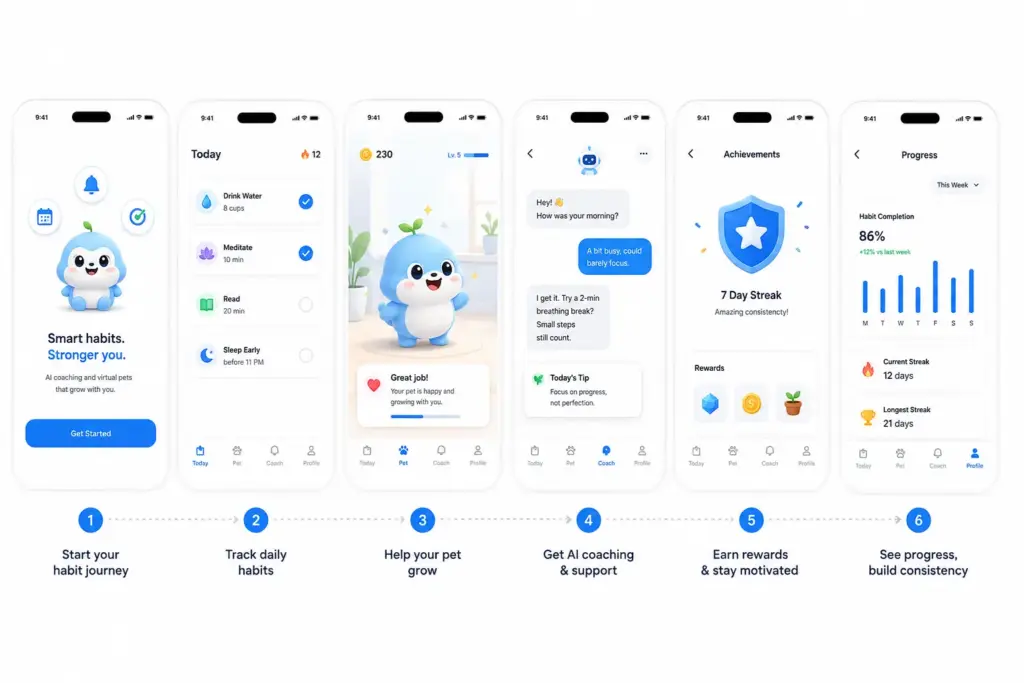
At IdeaUsher, we help founders turn these ideas into scalable and market-ready products. By combining strong product engineering with proven engagement strategies, we build companion-based wellness apps designed for long-term user retention
1. Define the Engagement Strategy
Every successful software product begins with a clear thesis on user behavior. The core value proposition relies on shifting user actions from a place of forcing discipline to a state of natural and regular engagement. We design this strategy to pinpoint the exact friction points that cause people to abandon traditional wellness tools like boring data logging or a lack of immediate validation.
To differentiate the application from legacy software, our product teams apply established behavioral design frameworks like the Hook Model or the Fogg Behavior Model. We construct the platform architecture to address three critical pillars during the initial design phase:
- The Trigger: Move away from generic push notifications. We anchor the app to existing daily events or real-time environmental factors.
- The Action: Minimize the steps required to complete a task. We engineer the interface to make logging a habit feel frictionless, whether through a single tap or a voice command.
- The Variable Reward: Ensure the feedback loop is never entirely predictable. Our game designers build dynamic and evolving feedback that keeps users coming back.
By focusing on these psychological fundamentals, we create a product that values user identity formation over simple milestone reporting. This strategic clarity forms the foundation for all subsequent design and development choices we make.
2. Pet Progression System
The virtual pet is much more than a visual feature. It acts as the user’s companion throughout their habit-building journey. As users complete habits and reach milestones, the pet grows alongside them, creating a stronger sense of progress and making everyday achievements feel more rewarding. To keep users engaged, the pet responds to their actions and reflects their consistency over time.
When users stay on track, the companion becomes more active and unlocks new interactions. This emotional connection encourages users to return regularly and helps transform habit building into a more engaging and personal experience.
3. AI Coaching and Personalization
Modern AI habit tracker apps do more than simply record completed tasks. They learn from user behavior and adapt over time to provide a more personalized experience. By analyzing progress patterns and daily routines, the AI can identify potential challenges early and offer guidance that helps users stay consistent and achieve their goals more effectively.
Dynamic Scaling in Action: If our system detects a drop in user consistency during a hectic work week, it automatically suggests a micro-habit alternative. A 45-minute reading goal temporarily scales down to a 5-minute session, preserving the behavioral routine without causing burnout.
4. Gamification and Retention Loops
Retention loops work best when users feel they are constantly making progress, even through small actions. Features such as daily quests, streak rewards, pet growth, and achievement systems create regular moments of accomplishment that encourage users to return. Over time, these layers of engagement help transform short-term motivation into a long-term habit-building routine.
| Feature Layer | Core Software Mechanism | Behavioral Outcome |
| XP & Leveling | Points distributed for task completion feed into a global profile level. | Provides immediate and visible validation for daily discipline. |
| Daily Quests | A rotating trio of minor tasks that refresh every twenty-four hours. | Drives daily active usage by offering predictable micro-rewards. |
| Seasonal Challenges | Time-limited community events featuring exclusive rewards. | Prevents typical holiday or seasonal user engagement slumps. |
Effective gamification is not just about rewarding perfect streaks. The goal is to keep users motivated even when they miss a day or face setbacks. By offering achievements, rewards, and unlockable content tied to real-world progress, the app creates a sense of accomplishment that encourages users to stay engaged and continue building positive habits over time.
5. Create Scalable AI Infrastructure
Building an AI habit tracker app requires a technology stack that can support personalized experiences, real-time interactions, and growing user demand. The platform needs to process user activity quickly while ensuring that habit tracking, AI coaching, and virtual pet interactions remain smooth and responsive as the user base expands.
A scalable infrastructure also makes it easier to deliver personalized recommendations and behavioral insights in real time. As the platform collects more data, it can better understand user patterns, improve engagement strategies, and provide a more reliable experience without sacrificing performance.
6. Test, Launch, and Optimize
The final phase of development focuses on refining the user experience through real-world testing. A digital product is never truly complete so we handle continuous optimization based on quantitative behavioral data and direct user feedback. Our launch roadmap follows a structured and iterative sequence to minimize risk and protect your capital investment:
- Closed Beta Testing: We deploy the core application to a small group of power users to identify critical usability flaws and system bugs.
- Cohort Retention Analysis: We closely monitor day-7 and day-30 retention figures. If the day-30 retention curve does not flatten, our team refines the onboarding flow or the pet progression system before scaling up marketing.
- Continuous Feature Improvement: We utilize automated feedback loops to discover which gamification mechanics drive the highest engagement. We regularly update the platform with fresh content and optimization fixes to maximize user lifetime value.
Gamification Systems That Increase Habit Completion Rates
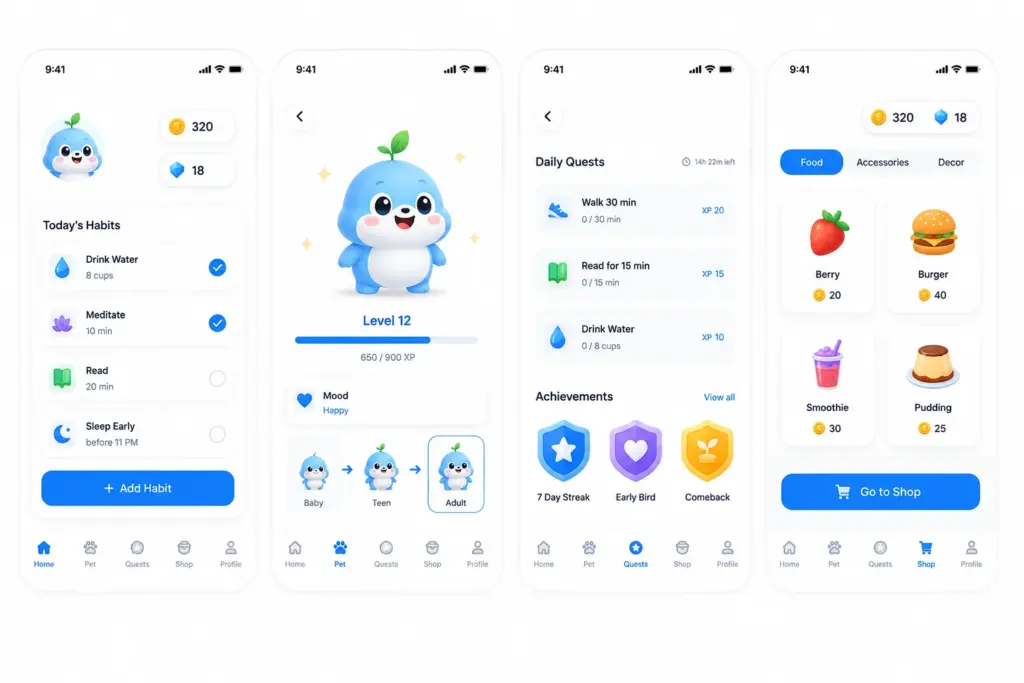
An app’s ability to drive behavior relies heavily on its motivational design. To build sustained consistency, modern AI habit tracker apps featuring virtual pets move past simple checklist setups and focus on deep intrinsic engagement. Combining behavioral loops with immersive gameplay turns standard lifestyle logging into a responsive experience where users feel a constant sense of progression.
1. Progress-Based Rewards
Building long-term tracking routines requires a reliable system of immediate feedback. Micro-rewards help bridge the gap between starting a challenging habit and seeing real lifestyle changes. By distributing specialized in-app assets for completing daily tasks, the platform establishes a direct connection between effort and instant validation. Platforms like Habbie show how effective this is by rewarding users with virtual coins to buy food for their digital companion whenever real-world goals are achieved.
The Micro-Reward Engine: Each logged action awards a specific mix of experience points and virtual currency. Users spend these earnings in a dedicated shop to customize their pet’s lifestyle, creating an immediate incentive to check off tasks.
2. Pet Evolution Mechanics
The digital companion functions as a living mirror of the user’s personal growth journey. To build genuine emotional accountability, the pet’s entire life cycle physical appearance and emotional mood must react dynamically to real-world consistency. Apps like Finch emphasize this connection by having your pet bird mature and embark on entirely new daily explorations powered exclusively by your completed tracking milestones.
- Branching Evolution Paths: Pets transform into completely distinct forms based on the habit categories the user targets. Prioritizing physical fitness unlocks athletic character models while focusing on meditation or study yields mindful or scholarly variations.
- Dynamic Emotional Responses: Maintaining a solid tracking streak keeps the companion energetically animated and happy. Missing scheduled routines causes the pet to look visibly tired or reclusive, encouraging users to return to protect their companion’s well-being.
- Interactive Relationship Levels: Consistency unlocks deeper bonding tiers, unearthing custom pet behaviors, unique voice lines, and hidden animations that reward sustained platform interaction.
Linking character evolution directly to daily actions makes self-improvement highly visual. Users no longer just track abstract numbers on a screen; they actively raise a digital companion that highlights their personal lifestyle transformation.
3. Challenges and Achievements
When standard daily routines start feeling predictable, competitive challenges and structured achievements provide a necessary boost of motivation. These milestones shift focus from simple day-to-day completion to reaching ambitious long-term personal goals. Platforms like Otto capitalize on this by channeling completed task momentum into exploration loops where your creature discovers rare gear and develops new attributes during active outdoor quests.
| Challenge Layer | Core System Mechanic | Target Behavioral Outcome |
| Daily Quests | A rotating trio of minor goals that reset every 24 hours. | Drives regular daily check-ins and creates immediate momentum. |
| Seasonal Events | Limited-time community milestones featuring unique thematic rewards. | Minimizes typical seasonal user drop-offs and boosts engagement. |
| Resilience Badges | Achievements awarded for recovering after missing a scheduled routine. | Values long-term recovery over fragile easily broken streaks. |
We build these engagement mechanics to celebrate milestone consistency without overly punishing natural schedule disruptions. By incorporating special streak-preservation items and distinct recovery badges, the app keeps a single missed day from completely derailing a user’s progress. This balanced approach helps users build a resilient long-term mindset that protects retention and supports lasting behavior change.
Cost to Build an AI Habit Tracker App With Virtual Pets
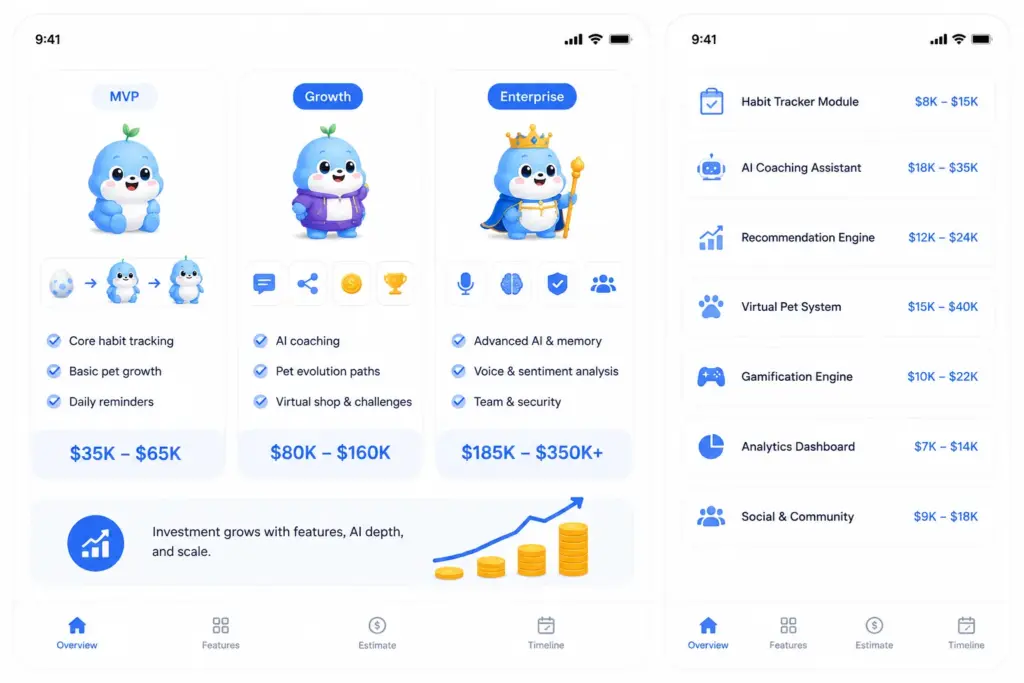
Allocating budget for next-generation AI habit tracker apps centered around virtual pets requires a clear look at how features, design complexity, and machine learning models interact. Balancing technical architecture with artistic execution shapes the overall investment strategy. The following breakdown maps out the standard financial milestones for building a market-ready application across different scaling stages.
MVP Cost
A Minimum Viable Product concentrates exclusively on core functionality to validate user demand. This setup moves away from massive custom AI algorithms and instead utilizes foundational mechanics to prove the core concept. It allows founders to test user engagement, gather feedback, and refine the product before making larger investments in advanced features.
- Core Features: Cross-platform framework, manual habit logging, a single linear pet growth line with three visual forms, basic daily push triggers, and standard local device analytics.
- Estimated Cost Range: $35,000 to $65,000
Our development teams structure the MVP to lay a scalable foundation. This approach ensures that early user data can be collected without incurring major infrastructure costs.
Growth-Stage Product
Moving into the growth phase expands the system with targeted automation and rich interactive mechanics. This tier introduces dedicated machine learning layers alongside deep game design elements. The focus shifts from validating the idea to improving user engagement, retention, and monetization opportunities.
- Core Features: Integrated open-source language models for basic coaching, predictive goal adjustment, multiple branching pet evolution paths, a complete virtual currency shop, custom pet accessories, and seasonal community challenges.
- Estimated Cost Range: $80,000 to $160,000
We calibrate this stage to optimize day 30 user retention. By blending active intelligence with deeper gamification layers, the product transforms into a highly defensible market asset.
Enterprise Platform
An enterprise-grade AI habit tracker app is designed for scale, performance, and advanced personalization. It can support large user communities while delivering secure data management, deeper behavioral insights, and sophisticated AI experiences. These platforms are often built for businesses, healthcare providers, and rapidly growing consumer wellness brands that require robust infrastructure and long-term scalability.
- Core Features: Bespoke vector database architectures for personal pet memory, voice command habit processing, real-time sentiment analysis, custom-trained coaching models, team-based management dashboards, and complete corporate security compliance.
- Estimated Cost Range: $185,000 to $350,000+
Our enterprise architecture prioritizes low-latency data processing alongside secure data storage frameworks. This setup guarantees smooth performance even during massive concurrent traffic peaks.
Feature-Wise Cost Breakdown Table
A feature-wise cost breakdown provides a clearer picture of where your development budget is allocated. Since AI habit tracker apps combine multiple systems such as habit management, AI coaching, virtual pets, and gamification, understanding the cost of each module helps founders prioritize features, plan an MVP, and make informed investment decisions.
| Feature | Estimated Cost |
| Habit Tracker Module | $8,000 to $15,000 |
| AI Coaching Assistant | $18,000 to $35,000 |
| Recommendation Engine | $12,000 to $24,000 |
| Virtual Pet System | $15,000 to $40,000 |
| Gamification Engine | $10,000 to $22,000 |
| Analytics Dashboard | $7,000 to $14,000 |
| Social & Community Features | $9,000 to $18,000 |
Development Timeline
Building an AI habit tracker app with virtual pets involves multiple stages, from product planning and design to AI integration and launch. A structured development timeline helps ensure that each phase is completed efficiently while reducing technical risks and avoiding costly delays. It also gives founders a clearer understanding of how the product evolves from an initial concept into a fully functional and scalable platform.
- Discovery (Weeks 1 to 3): Scope alignment, user journey mapping, and selecting the optimal AI model parameters.
- UX/UI Design (Weeks 4 to 7): Building functional wireframes, polishing companion interfaces, and mapping evolution screen aesthetics.
- MVP Development (Weeks 8 to 15): Setting up primary cross-platform code bases, local databases, and basic tracking features.
- AI Integration (Weeks 16 to 20): Deploying machine learning pipelines, connecting analytics engines, and setting up conversational states.
- Testing & QA (Weeks 21 to 23): Rigorous edge case testing, checking cross-device behavior, and running system load tests.
- Launch & Optimization (Weeks 24 and beyond): Rolling out the app to public store channels and setting up active post-launch support systems.
Choosing the Right AI Models for Habit Personalization
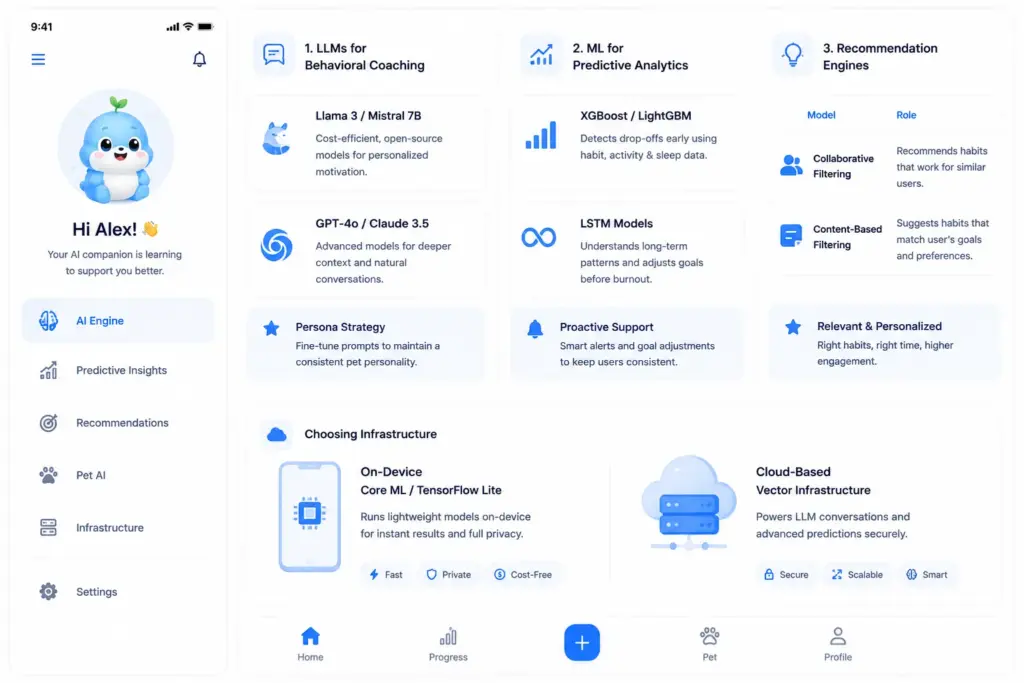
Building next-generation AI habit tracker apps centered around virtual pets requires a smart backend brain to drive personalization. Without a solid machine learning layer, your digital companion is just a static script. To create an app that feels truly responsive, you need to combine different artificial intelligence models that handle everything from text generation to predictive scheduling.
1. LLMs for Behavioral Coaching
Large Language Models give your virtual pet its unique voice and conversational personality. Instead of repeating the same generic reminders, an LLM lets the pet adapt its tone based on how well the user is maintaining their routines.
- Open-Source Efficiency (Llama 3 / Mistral 7B): Perfect for developers who want to keep processing costs low. These models can be fine-tuned on custom behavioral therapy datasets to deliver highly targeted motivational text.
- Commercial APIs (GPT-4o / Claude 3.5 Sonnet): Best for handling highly complex context. They process user journal entries and emotional check-ins to generate incredibly natural and fluid conversations.
The Persona Strategy: We recommend fine-tuning your chosen model with a custom system prompt. This ensures the AI maintains a consistent character voice, whether that is an energetic fitness coach puppy or a calm mindful kitten, without breaking immersion.
2. ML for Predictive Analytics
A great app does not just wait for users to log habits. It can predict when someone is likely to lose momentum and take action before that happens. Time-series and classification models analyze historical behavior to optimize reminders and improve consistency. This helps users stay on track without feeling overwhelmed by constant notifications.
Gradient Boosting (XGBoost / LightGBM)
These frameworks process structured data such as habit completion history, daily activity levels, and sleep patterns. The model can identify when a user is starting to fall behind and trigger timely interventions before a streak is broken. This proactive approach can significantly improve user retention over time.
Recurrent Neural Networks (LSTM Frameworks)
LSTM models are designed to analyze behavioral patterns across longer periods. They can detect trends in user activity and determine when goals may be becoming too difficult, allowing the app to recommend more achievable alternatives. As a result, users are less likely to experience burnout and abandon their routines.
3. Recommendation Engines
Recommendation engines help users discover habits that are relevant to their goals without overwhelming them with too many options. By analyzing past behavior, preferences, and successful routines, the system can suggest small, achievable habits that fit naturally into a user’s lifestyle and improve long-term engagement.
| Model Architecture | Core Functional Role | Product Benefit |
| Collaborative Filtering | Matches user profiles with similar behavioral cohorts to suggest successful routines. | Connects users with community-proven habits they haven’t discovered yet. |
| Content-Based Filtering | Suggests new routines that directly match the categories the user already prioritizes. | Keeps the habit list highly relevant to the user’s specific self-improvement goals. |
Choosing Infrastructure
Choosing the right AI infrastructure is about finding the balance between performance, scalability, and operating costs. Some AI tasks can run directly on a user’s device for faster responses and better privacy, while more advanced processing is typically handled in the cloud.
- On-Device Core ML / TensorFlow Lite: Handles basic classification models and minor habit suggestions directly on the smartphone. This ensures instant performance and complete user data privacy with zero server costs.
- Cloud-Based Vector Infrastructures: Manages complex LLM conversations and heavy predictive workflows via secure cloud servers. This setup allows your virtual pet to maintain a deep long-term memory of past interactions across multiple user devices.
How Finch, Habitica, and Habit-chi Keep Users Engaged for Months?
Traditional productivity tools usually lose their charm after a week or two because empty grids and repetitive alarms fail to keep people interested. To beat this drop-off, modern AI habit tracker apps featuring virtual pets move past simple checklist setups and focus on building deep intrinsic engagement. Combining behavioral loops with immersive gameplay turns standard lifestyle logging into a responsive experience where users feel a constant sense of progression.
1. Finch and Self-Care
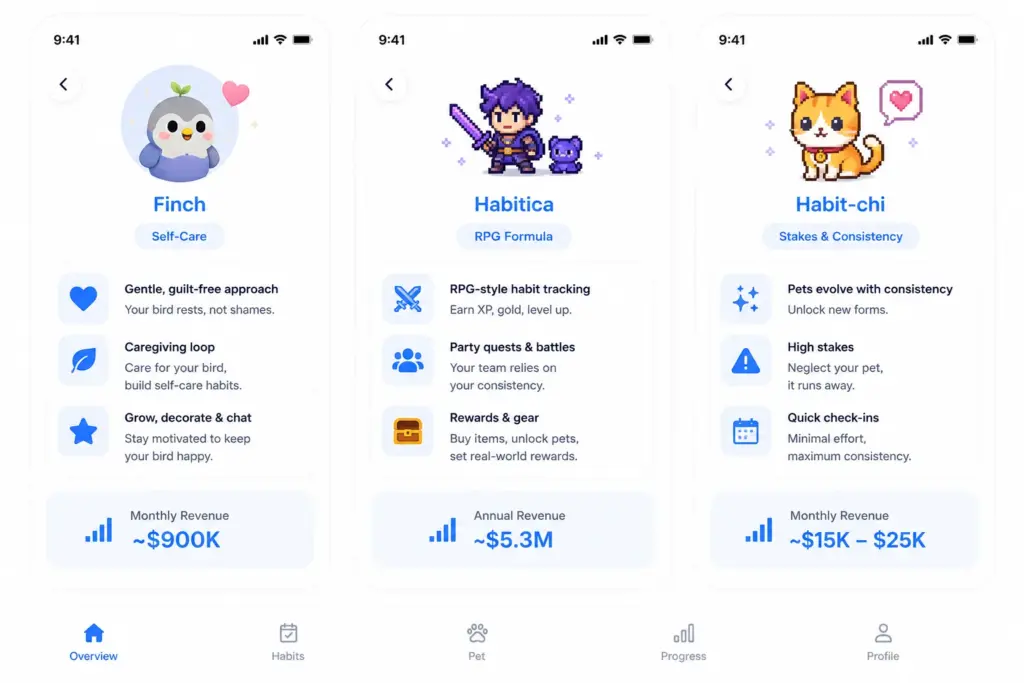
Finch changes the dynamic of self-improvement by replacing harsh self-discipline with emotional connection. Instead of staring at an empty checklist, you take care of a little baby bird that grows entirely based on your daily mindfulness, hydration, and mental health exercises.
The magic lies in how the app handles user motivation. If you fail to complete your habits, the app never shames you; your bird simply rests. This gentle space removes the guilt of missing a day, turning the app into a safe sanctuary rather than another demanding chore. This approachable model pays off well, with global monthly revenue hitting around $900,000 through a heavily adopted premium subscription plan.
The Caregiving Loop: Users often find it much easier to care for a digital pet than to focus directly on themselves. By clothing decorating and chatting with their bird, users naturally complete their real-world self-care routines just to keep their companion thriving.
2. Habitica and RPG Formula
If Finch represents a gentle approach to self-care, Habitica acts as a full retro role-playing game. It treats your real life like a fantasy video game where completing tasks grants experience points and gold while slacking off actively damages your character’s health pool.
- True Social Accountability: Users can form parties to tackle massive boss battles together. If you skip your morning study session or gym routine, your entire team takes damage from the boss, creating a strong social incentive to stay on track.
- Deep Collectible Mechanics: Gold earned from tracking habits lets you buy weapons, equipment, and rare pet hatching potions. This continuous progression curve ensures there is always a new milestone to reach.
- Custom Reward Systems: Beyond in-game items, you can set custom real-world rewards like spending 50 in-game gold pieces to watch an episode of your favorite show.
By keeping users hooked with group quests and customizable gear, the platform brings in a steady $5.3 million in estimated annual revenue through optional cosmetic purchases, gem packs, and team server subscriptions.
3. Habit-chi and Stakes
Habit-chi taps into nostalgic virtual pet mechanics to create strong daily consistency. The app features over twenty beautifully animated retro pixel-style pets whose overall happiness, mood, and evolution paths depend entirely on how steady you remain with your real-life commitments.
| Tracking Aspect | App Feature Mechanics | Target User Reaction |
| Visual Evolution | Long-term consistency unlocks advanced character forms. | Gives users a visible badge of honor for their hard work. |
| High Behavioral Stakes | Complete neglect causes your animated pet to run away. | Creates a powerful urge to log back in and protect your progress. |
| Quick Check-ins | A minimal highly responsive calendar interface. | Minimizes tracking friction so checking off tasks takes seconds. |
The standout feature of the app is its unique runaway mechanic. If you ignore your goals for too long, your pet will pack its bags and leave. This setup introduces real consequences to procrastination, giving you the immediate spark of motivation needed to log back in maintain your streak, and complete your collection. Operating on a leaner indie framework, this tighter retro loop brings in a stable $15,000 to $25,000 monthly, powered by quick ad-removal passes and instant evolution boosters.
Questions to Ask Before Starting AI Habit Tracker App Development
An app’s ultimate success depends heavily on its underlying motivational design. To build sustained consistency, modern AI habit tracker apps featuring virtual pets move past simple checklist setups and focus on building deep intrinsic engagement. Combining behavioral loops with immersive gameplay turns standard lifestyle logging into a responsive experience where users feel a constant sense of progression.
How Will You Design the Core Habit Loop?
A successful platform must balance behavioral psychology with entertaining gameplay loops. You need to map out exactly how daily real-world activities connect to virtual character rewards. Platforms like Habbie show the value of seamless automated logging by syncing directly with fitness tracking hardware to reward users effortlessly.
- Data Entry Mechanics: Will users log their habits manually or will the app pull data automatically from background smartphone sensors and wearables?
- Accountability Loops: What happens to the companion when a user misses their goals? Will the pet lose energy or will it give gentle encouraging feedback? Platforms like Habit-chi implement strict emotional accountability where your pixel-art animal companion will get sad or even run away if real-world tasks are ignored for too long.
- AI Personalization: How will machine learning models change a user’s tracking journey based on their unique performance trends and behavioral history?
Which AI Infrastructure Fits Your Project Budget?
Running high-performance machine learning models can scale up cloud computing costs quickly. You must choose a technical architecture that delivers fast performance without draining your startup capital. A well-planned infrastructure can help balance AI capabilities, scalability, and long-term operational costs as the platform grows.
The Technical Trade-off: Running compact models directly on the user’s smartphone cuts server costs to zero and ensures total data privacy. Processing large models on cloud servers allows for much deeper character memory and richer dialogue but requires ongoing subscription fees.
How Will Your App Stand Out in a Crowded Market?
The app stores are filled with basic checklist utilities. To capture a loyal audience, your application needs a distinct value proposition that turns routine data logging into a fun habit-building experience. Users today expect more than simple tracking tools; they want personalized guidance, meaningful rewards, and engaging experiences that keep them motivated. .
| Competitive Focus Area | Standard Tracking Utility | Next-Gen Gamified Platform |
| User Onboarding | Blank calendars and empty checklists. | Choosing a starter pet companion and setting personal goals. |
| Notification Strategy | Static alarms that get swiped away. | Context-aware AI updates written in the pet’s unique voice. |
| Retention Drivers | Abstract graphs showing data trends. | Branching character evolutions driven by real-world actions. |
What Is Your Strategy for an Efficient Initial Launch?
Trying to launch a massive platform with hundreds of features right out of the gate often leads to delayed timelines. Focus your initial release on a lean, high-performing prototype. This allows you to validate user demand faster and gather valuable feedback from real users. Early insights can help shape future development priorities and reduce the risk of investing in features that users may not need.
- The MVP Framework: Identify the absolute minimum number of tracking tools, pet animations, and AI systems needed to validate your concept with real users. Popular apps like Finch proved this approach by starting with core mindfulness logging and a simple growing bird companion before expanding into a massive wellness ecosystem.
- Scalable Frameworks: Choose cross-platform front-end frameworks like Flutter or React Native to build for iOS and Android simultaneously using a single codebase.
- Monetization Plans: Select an entry revenue model like monthly premium subscriptions, paid pet cosmetics, or ad-supported tiers that fits your target audience. Tools like Otto show how to blend these ideas by letting users earn special currency through task completion to buy custom clothing and accessories for their digital companions.
Top 5 AI Habit Tracker Apps With Virtual Pets in the USA
The combination of artificial intelligence and gamification is transforming how people build and maintain habits. Instead of relying on simple checklists and progress logs, modern AI habit tracker apps use virtual companions and personalized experiences to keep users engaged. The following platforms are among the most popular examples, showing how digital companions can make self-improvement more interactive and rewarding.
1. Finch: Self-Care Pet
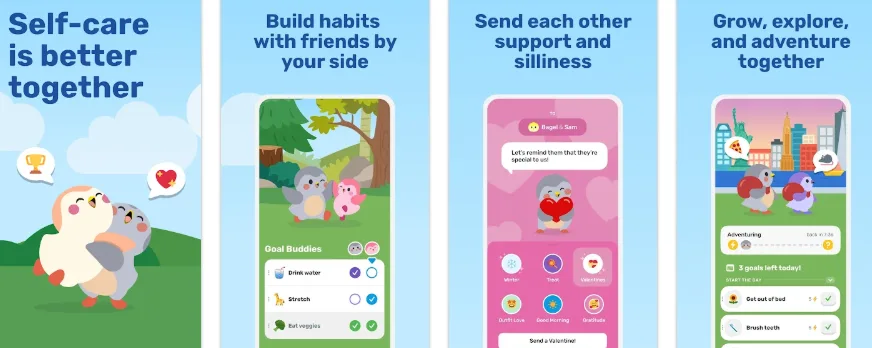
Finch stands out as a market leader by pairing a gentle digital bird with deep psychiatric and behavioral tracking mechanics. Your pet grows and goes on daily adventures solely funded by your real-world mindfulness exercises, journaling, and habit completion. The platform integrates smart sentiment tracking to adjust the companion’s dialogue and check-ins based on your current emotional state.
Habit Tracking Features
- Flexible Goal Customization: Create personalized checklists for complex routines or choose from pre-built wellness bundles targeting morning anxiety and focus.
- Mood Tagging Integration: Link emotional logs directly to your habits to uncover exactly which routines lift your mental health over time.
- Granular Progress Analytics: Review data maps that show your habit completion velocity alongside historical mood shifts without cluttering your dashboard.
2. Habitica
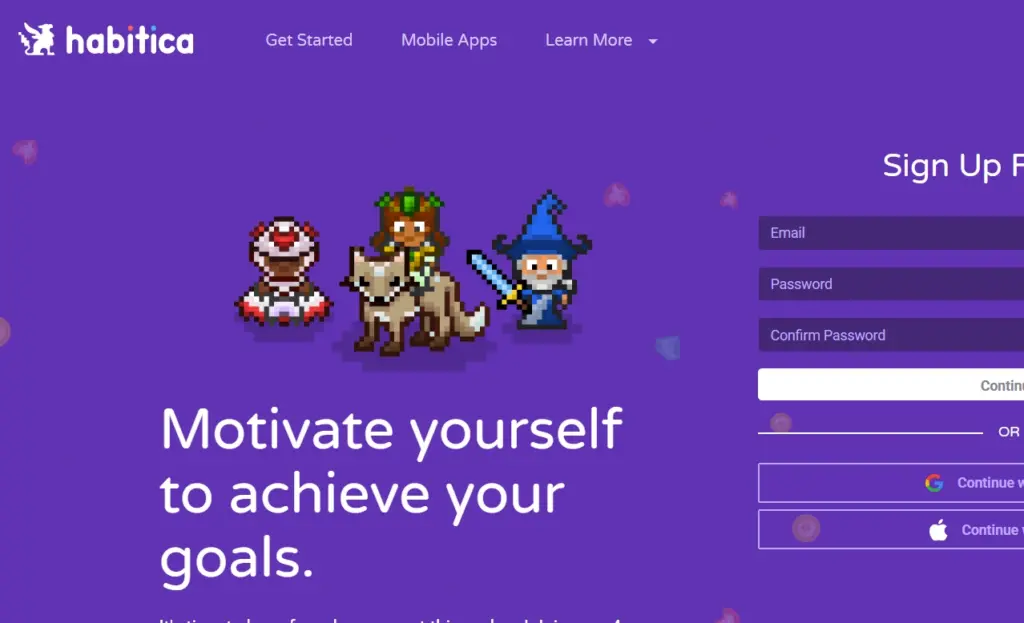
Operating as a full-scale retro RPG, Habitica treats your real-world habits as monsters to defeat and daily routines as quests to complete. Your virtual pet collection and character level depend directly on your task compliance. Skipping your habits causes tangible damage to your avatar and your digital companions, leveraging social proof and group accountability loops to keep you consistently engaged.
Habit Tracking Features
- Tri-Tier Task Architecture: Separate your life into open-ended Habits, recurring scheduled Dailies, and one-time traditional To-Do lists for total structure.
- Custom Step Checklists: Break down massive single habits into smaller micro-steps inside a single entry to monitor your precise daily progress.
- Color-Coded Difficulty Metrics: Watch tasks automatically shift from warm green to warning red based on your consistency level to spot slipping habits instantly.
3. OtterLife
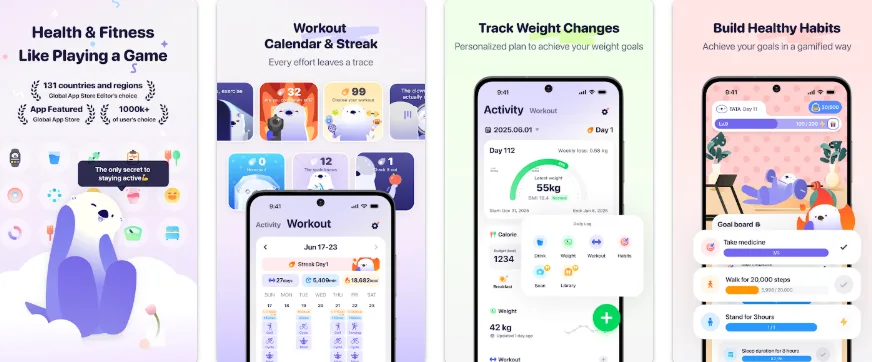
OtterLife leverages machine learning to build an intelligent wellness ecosystem centered around an adorable virtual otter. The app automatically syncs with wearable health data to evaluate your stress, sleep, and fitness patterns. The AI companion uses these real-time metrics to scale your daily habit difficulty up or down dynamically, ensuring your goals match your actual physical capacity.
Habit Tracking Features
- Biometric Routine Syncing: Automatically log physical habits like sleep windows or workout targets via background smartwatch telemetry integration.
- Adaptive Goal Adjustments: Experience an engine that automatically dials down your target goals on high-stress days to protect your overall habit streak.
- Contextual Trend Tracking: Map your daily step counts and hydration metrics alongside your pet’s evolutionary state to view your lifestyle balance at a glance.
4. Otto: Daily Tasks Virtual Pet
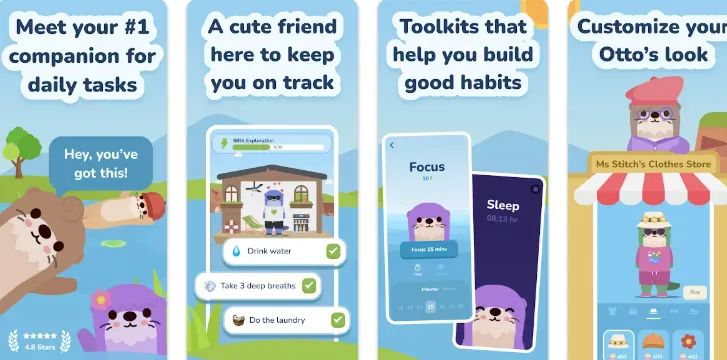
Specially designed with features that assist neurodivergent users and individuals managing ADHD, Otto combines a comprehensive daily planner with an interactive virtual pet. Completing tasks on your customized to-do list fuels your pet’s energy, allowing it to go on world explorations and unlock rare gear. The backend uses adaptive reminder systems to keep you focused without causing notification fatigue.
Habit Tracking Features
- Cognitive Load Minimizer: Use a simplified entry system designed specifically to prevent brain overwhelm when creating multi-step daily schedules.
- Time-Blocked Task Allocation: Drag and drop your core habits into morning, afternoon, or evening slots to match your natural energy cycles.
- Persistent Home Screen Widgets: Keep your daily tracker checklists and pet status updates visible on your device background for instant logging access.
5. Habit-chi
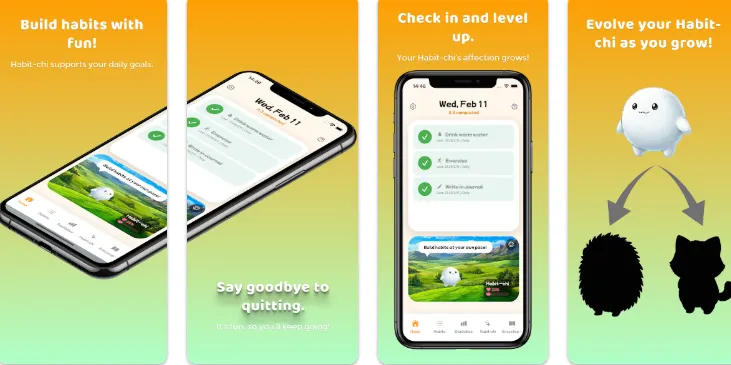
Habit-chi relies on a highly responsive emotional mechanic where your pixel-art virtual companion directly mirrors your personal habit consistency. The app features over twenty collectible characters that evolve into unique physical forms based on the specific types of routines you maintain. Neglecting your real-world goals for too long causes your pet to run away creating a powerful psychological driver that prevents procrastination.
Habit Tracking Features
- Multi-Category Grouping: Sort your tracking routines into distinct silos like Fitness Mindset or Career to observe your development patterns clearly.
- Dynamic Streak Preservation: Apply earned platform buffers to protect your long-term tracking streaks during unexpected schedule disruptions or illness.
- One-Tap Validation Logs: Clear out your completed daily routines through a hyper-responsive single-tap dashboard that requires zero sub-menu navigating.
Contact Idea Usher For AI Habit Tracker Apps
Bringing a complex digital wellness application to market requires an experienced development partner who understands behavioral psychology and high-performance cloud architecture. With over 500,000 hours of coding experience, our team of ex-MAANG/FAANG developers has the exact technical skill set needed to turn challenging concepts into smooth, highly engaging platforms. We handle the heavy lifting of machine learning integrations, data tracking, and interactive game mechanics so you can focus entirely on your business growth strategy.

Turn Your Idea Into a Product
Launching a successful platform in a competitive app store means avoiding the common technical traps that cause early user churn. Simple data logs no longer capture modern consumer attention. Our goal is to build digital products that retain users through interactive design and seamless functionality.
The IdeaUsher Edge: We manage the entire product engineering lifecycle. Our cross-functional product teams translate your core business concepts into clear technical tasks, ensuring your launch hits the market on schedule and operates flawlessly under heavy user traffic.
We balance backend performance with front-end usability to keep production lines moving efficiently. By eliminating development friction early on, your platform enters the marketplace optimized for immediate monetization and user adoption.
Build All Systems Under One Roof
Managing separate vendor contracts for machine learning models, game design assets, and database architecture often results in broken user experiences. We solve this problem by uniting all critical engineering disciplines under a single cohesive development framework.
- Advanced Machine Learning Pipelines: Our team deploys custom predictive algorithms that analyze daily routine completion velocity to offer highly responsive user goals.
- Dynamic Gamification Systems: We construct custom reward architectures complete with virtual storefronts and progression metrics that continuously incentivize regular app usage.
- Responsive Visual Companions: Our game engineers build multi-tier evolution matrices that transform digital pets based on real-time user habit tracking inputs.
By centralizing your entire engineering ecosystem, we ensure that your conversational companion scripts, rewards data, and predictive notification schedules work together with zero system latency.
Get Your Custom Roadmap and Estimate
Every business venture has distinct budgetary requirements and feature priorities. We do not believe in rigid templates or one-size-fits-all development packages. Instead, we tailor our system deployment paths around your unique market strategy. Reaching out to our engineering consultants gives you immediate access to practical product insights. We break down complex system parameters into transparent milestones, so you understand exactly how your resources are spent.
Conclusion
Building next-generation AI habit tracker apps with virtual pets gives businesses a powerful tool to solve user churn. By blending adaptive machine learning with responsive game design loops, you can transform daily routine logging into an emotionally rewarding relationship that drives massive long-term retention. At IdeaUsher, we guide you through this entire engineering process from scoping your first MVP features to deploying a fully scalable backend infrastructure that turns your software vision into a major market success.
Things to Know About AI Habit Tracker Apps
Q1. What are the essential features of an AI habit tracker app with virtual pets?
A1: Core features typically include habit tracking, AI-powered recommendations, personalized coaching, virtual pet evolution, progress analytics, reminders, rewards, and gamification systems that encourage long-term engagement. The most successful platforms combine these features into a seamless experience that keeps users motivated every day. Strong onboarding and habit recovery tools can further improve retention rates.
Q2. Can an AI habit tracker app support multiple virtual pets?
A2: Yes. Many platforms allow users to collect, nurture, and customize multiple virtual pets. This creates additional engagement loops and provides opportunities for monetization through premium pet content and upgrades. Users can also assign different pets to different goals or habit categories.
Q3. What technologies are used to build AI habit tracker apps?
A3: Development often involves mobile frameworks like Flutter or React Native, cloud infrastructure, AI models for personalization, analytics platforms, and secure backend systems for managing user data and real-time interactions. Modern architectures are also designed to support future AI enhancements and feature expansion. The right technology choices can significantly impact scalability and performance.
Q4. How can AI personalize the habit-building experience?
A4: AI can analyze user behavior, completion patterns, goals, and engagement history to suggest realistic habits, adjust difficulty levels, provide coaching, and recommend actions that improve consistency. This helps create a more relevant experience that adapts as user needs change over time. Personalized experiences often lead to higher engagement and better habit completion rates.
Q5. What monetization models work best for virtual pet habit apps?
A5: Popular models include subscriptions, premium AI coaching plans, pet customization purchases, exclusive challenges, seasonal content, and freemium upgrades that unlock advanced features. Many successful apps combine multiple revenue streams to maximize user lifetime value. A balanced monetization strategy can generate revenue without negatively affecting the user experience.