

Key Takeaways
- AI mental health apps combine voice biomarker analysis with conversational AI to detect risks early and deliver personalized behavioral healthcare.
- Core capabilities include voice screening, AI patient intake, intelligent triage, clinical decision support, continuous monitoring and EHR integration.
- Behavioral health AI improves early intervention, clinician productivity and patient outcomes while reducing manual workflows and care delays.
- Healthcare-grade AI, regulatory compliance and secure interoperability are essential for building scalable enterprise mental health platforms.
- How Idea Usher can help you build AI mental health app like Kintsugi and Limbic with voice biomarker intelligence, conversational AI, secure healthcare integrations.
The competitive advantage in behavioral healthcare is no longer collecting more patient information. It is recognizing meaningful clinical signals before they become a crisis. This evolution is accelerating demand for the AI mental health app as healthcare providers combine voice intelligence, conversational assessments and AI-powered triage to improve early intervention and care coordination.
Traditional mental healthcare relied on self-reported assessments, manual intake, and fragmented referral workflows that delayed early intervention. Modern providers increasingly require voice biomarker AI, conversational intake, behavioral screening, clinical decision support, speech analysis, remote monitoring, EHR integration, HIPAA-ready infrastructure, and workflow automation to enable earlier detection, intelligent triage, personalized care navigation, and clinician-led decision-making.
In this blog, we’ll explore how to build an AI mental health app like Kintsugi and Limbic, covering its core features, AI architecture, technology stack, development process, and how IdeaUsher can help build enterprise-grade behavioral health platforms powered by passive voice intelligence and conversational AI.
Why AI Mental Health Apps Are Scaling Fast
The global mental health ecosystem is undergoing a rapid, structural transition toward AI-driven digital platforms, expanding exponentially, growing from $2.1 billion to $9.1 billion at a compound annual growth rate (CAGR) of 23.3%. This transformation is fueled by a severe widening of the care gap, as traditional behavioral health infrastructures fail to keep pace with demand.
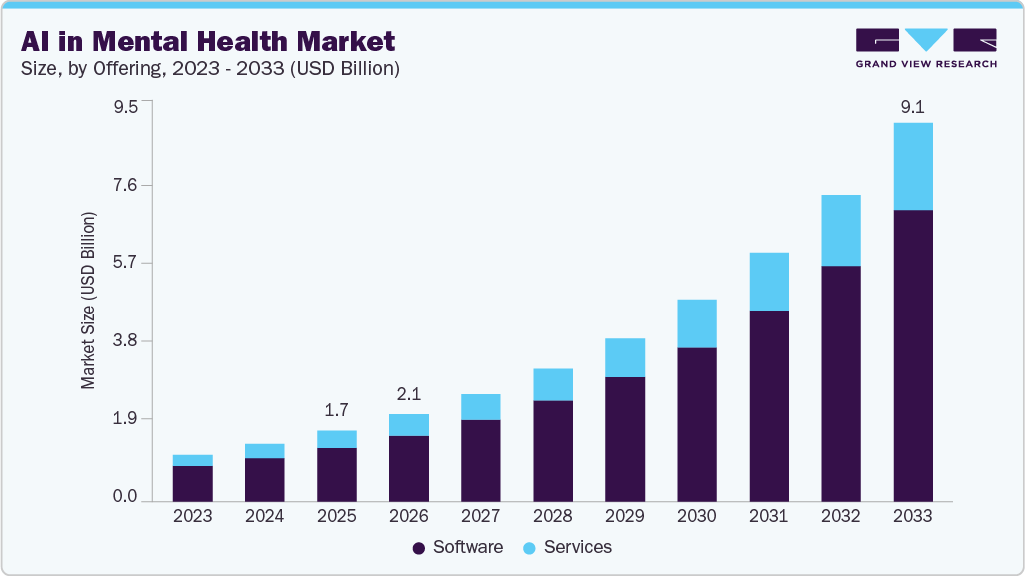
Driven by high enterprise demand across hospital systems and corporate wellness networks, software and conversational AI account for 75.8% of AI mental health market revenue, while depression and anxiety apps represent over 38% of the digital mental health market, providing immediate, sub-minute access to care.
A. Growing Demand for Intelligent Behavioral Healthcare
The surging market adoption is driven by an unprecedented mismatch between patient volume and available clinical capacity:
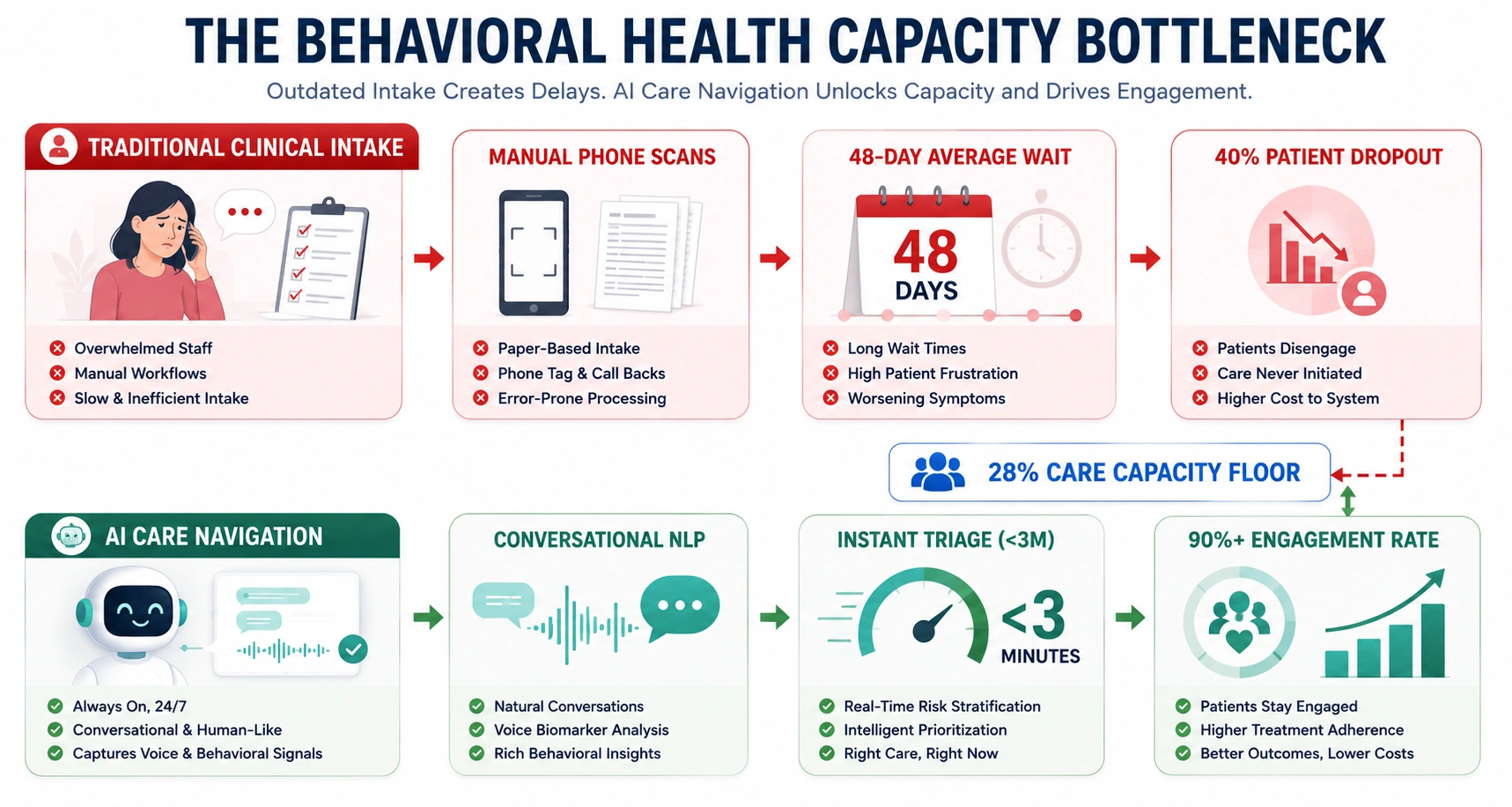
These healthcare challenges are accelerating demand for AI-powered solutions that expand clinical capacity, shorten care delays, and improve patient access at scale.
- The Global Access Deficit: According to the World Health Organization (WHO), the global median is just 13 mental health workers per 100,000 people, falling below 1 per 100,000 in many low- and middle-income regions. In the U.S., over 60 million adults experience mental health conditions annually, while more than 150 million people live in Mental Health Professional Shortage Areas (HPSAs).
- Extended Delay to Treatment: Specialist shortages leave outpatient waiting lists at 4–8 weeks, during which up to 40% of patients discontinue care before attending their first therapy session.
- Anxiety & Depression Dominance: Anxiety and depressive disorders account for over 32% of AI mental health software demand. Patients increasingly rely on 24/7 conversational AI and Natural Language Processing (NLP) solutions, a segment that now holds 44% of the market.
B. Why Providers Are Replacing Manual Mental Health Workflows
For hospital networks, outpatient clinics, and digital health organizations, manual mental health workflows create severe operational drag and clinician burnout. Replacing paper-based intakes and static phone screenings with intelligent triage platforms yields immediate, measurable operational relief:
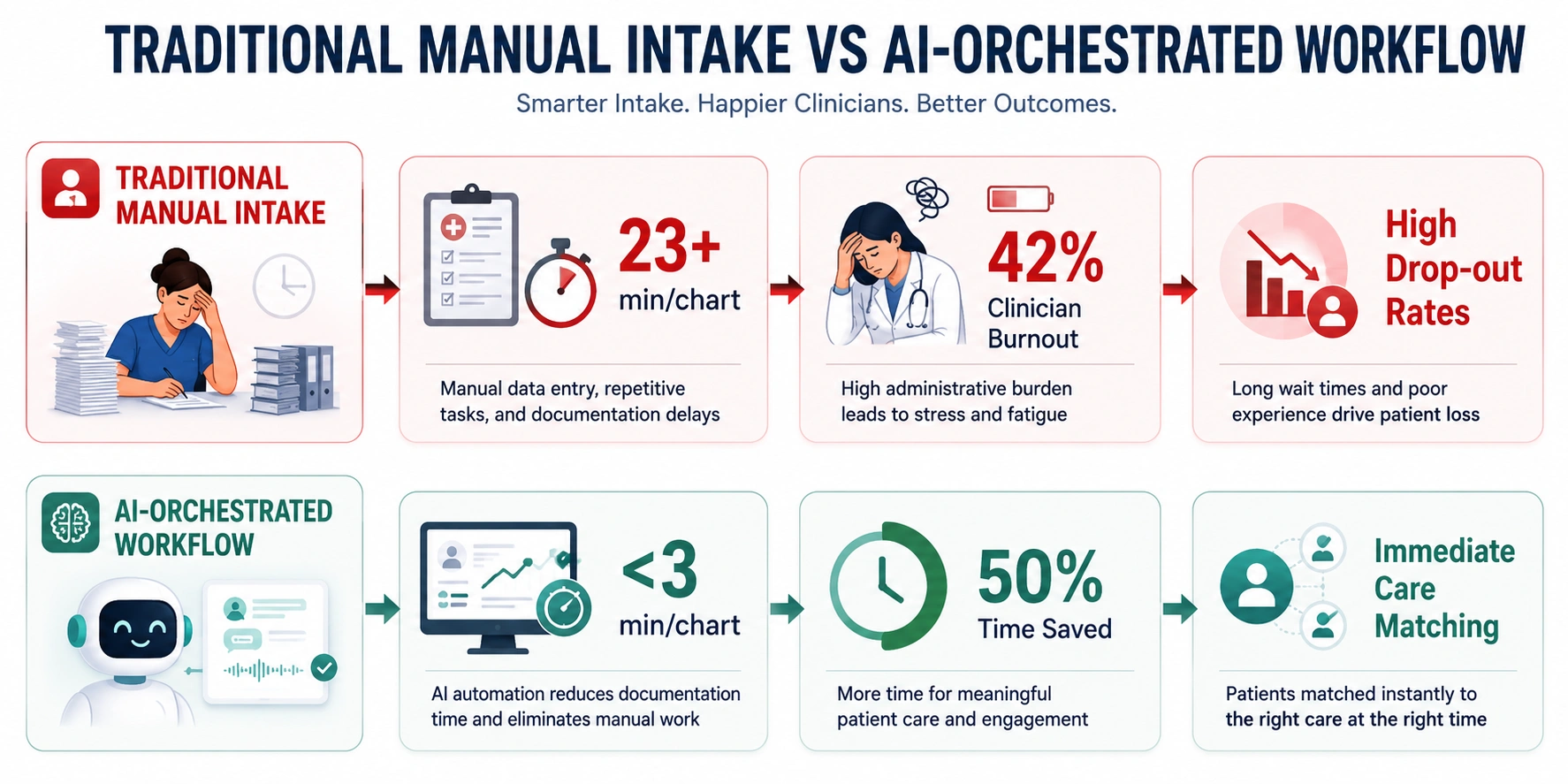
AI-powered automation reduces administrative burdens, improves screening accuracy, accelerates clinical workflows, and allows providers to focus more on patient care.
- The Documentation Trap: Behavioral health specialists spend 3+ hours daily on clinical documentation, including SOAP notes, treatment plans, and insurance authorizations. For every 15-minute patient visit, clinicians spend about 9 minutes documenting in the Electronic Health Record (EHR).
- Escalating Burnout Rates: Heavy documentation requirements and administrative workloads have driven 42% of psychiatrists and mental health professionals to report active burnout symptoms.
- High Human Error in Screening: Paper-based assessments such as PHQ-9 and GAD-7 produce a 30–35% error rate due to incomplete forms, recall bias, and manual data-entry errors, often resulting in inaccurate patient triage and care pathways.
C. Where AI Creates Measurable Clinical and Business Value
Healthcare networks and health plans are making substantial investments in AI behavioral health platforms due to proven, quantifiable ROI across both clinical and administrative metrics:
| Operational & Business Vector | Traditional Mental Health Workflows | AI-Powered Behavioral Health Platforms | Direct Financial & Strategic Return |
| Intake & Triage Processing | 12 to 14 business days average wait | Real-time (< 60 seconds) automated risk stratification | Up to 80% faster patient onboarding and 25% higher clinical capacity |
| Clinical Documentation Time | ~12.7 minutes spent per referral note | 50% to 70% reduction in documentation time via ambient AI | Saves 6+ clinician hours weekly and reduces staffing costs by 30% |
| Treatment Pathway Accuracy | ~35% mismatch rate requiring re-triage | 45% reduction in treatment plan modifications | Cuts rework costs by 40% and improves treatment efficiency significantly |
| Emergency Department Diversion | High acute visits due to delayed care | 28% reduction in psychiatric ER readmissions | Reduces acute care expenses by 20% and improves patient outcomes |
AI behavioral health platforms reduce operational costs, boost clinician productivity, and improve care outcomes, enabling faster, scalable, and more sustainable mental health service delivery.
- Substantial Cost Offset: Healthcare providers using AI for automated pre-intake, clinical documentation, and continuous monitoring achieve an estimated $3.20 return for every $1 invested (3.2:1 ROI) within 12 months by improving clinician productivity and reducing missed appointments.
- Elimination of “Pajama Time”: Ambient AI scribes designed for behavioral health eliminate up to 2 hours of after-hours charting daily, enabling clinicians to increase billable patient encounters by 15–20% without extending work hours.
- Payer & Employer Value: Enterprise health plans using AI mental health navigation report $1,200–$2,500 in annual savings per enrolled member through early intervention that reduces emergency room visits and psychiatric hospitalizations.
How Kintsugi and Limbic Transform Mental Healthcare
The digital transformation of behavioral healthcare is moving beyond basic video appointments toward an interconnected, data-driven front door. Leading this shift are specialized clinical AI platforms like Kintsugi and Limbic.
While both platforms target the initial barriers to mental healthcare, they approach the challenge from distinct clinical angles: Kintsugi uses non-invasive acoustic analytics to detect implicit distress signals, while Limbic provides conversational clinical eTriage to structure patient intakes. Together, these technologies demonstrate how multi-modal AI converts subjective mental health screening into an objective, continuous, and highly accessible care pipeline.
A. Kintsugi’s Voice Biomarker Screening Platform
Kintsugi addresses a core challenge in mental health diagnostics: many patients downplay, mask, or struggle to describe their emotional distress. Kintsugi’s platform, Kintsugi Voice, operates as an API-first screening tool that analyzes subtle vocal markers to identify signs of depression and anxiety in real time.
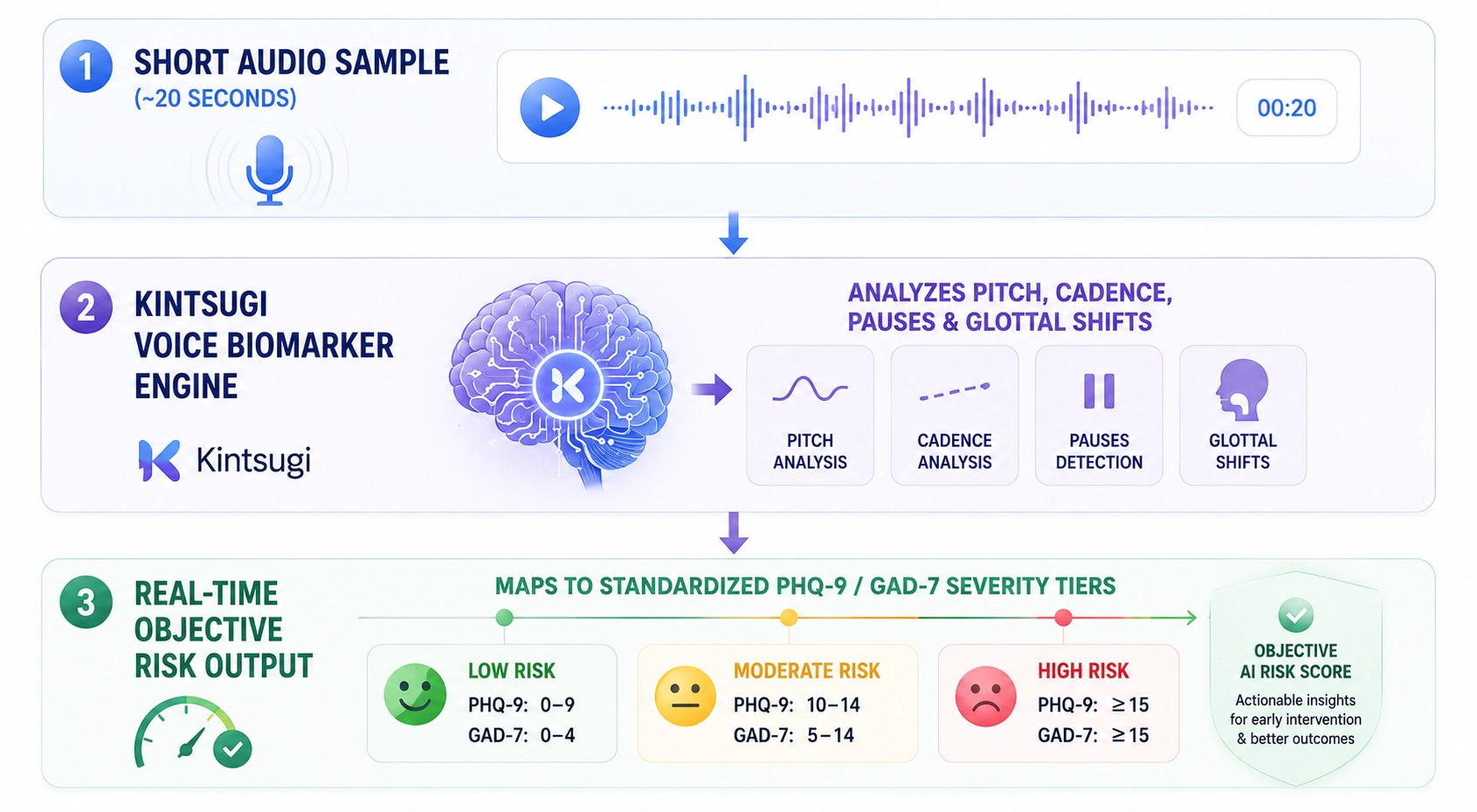
The platform combines advanced speech AI with clinically validated voice biomarkers to deliver scalable, objective mental health screening across diverse healthcare environments.
- Acoustic Mechanics Over Content: The platform analyzes how people speak rather than what they say, using deep learning to evaluate pitch, cadence, vocal cord tension, and pause duration, physiological markers associated with psychomotor retardation.
- Language-Agnostic & Non-Invasive: By processing non-contextual acoustic features instead of spoken words, the platform delivers accurate screening across different languages and accents without generating text transcriptions.
- Passive Workflow Integration: Operating in the background during telehealth visits, routine consultations, and remote monitoring, the platform alerts care teams to potential depression or anxiety using as little as 20 seconds of free-form speech.
B. Limbic’s AI Intake and Clinical Triage Platform
While Kintsugi identifies hidden emotional distress through voice analysis, Limbic operates at the front door of psychological therapy services as a conversational eTriage assistant. As a certified Class IIa medical device, Limbic Access manages self-referrals, collects clinical histories, and stratifies patient risk prior to human consultation.
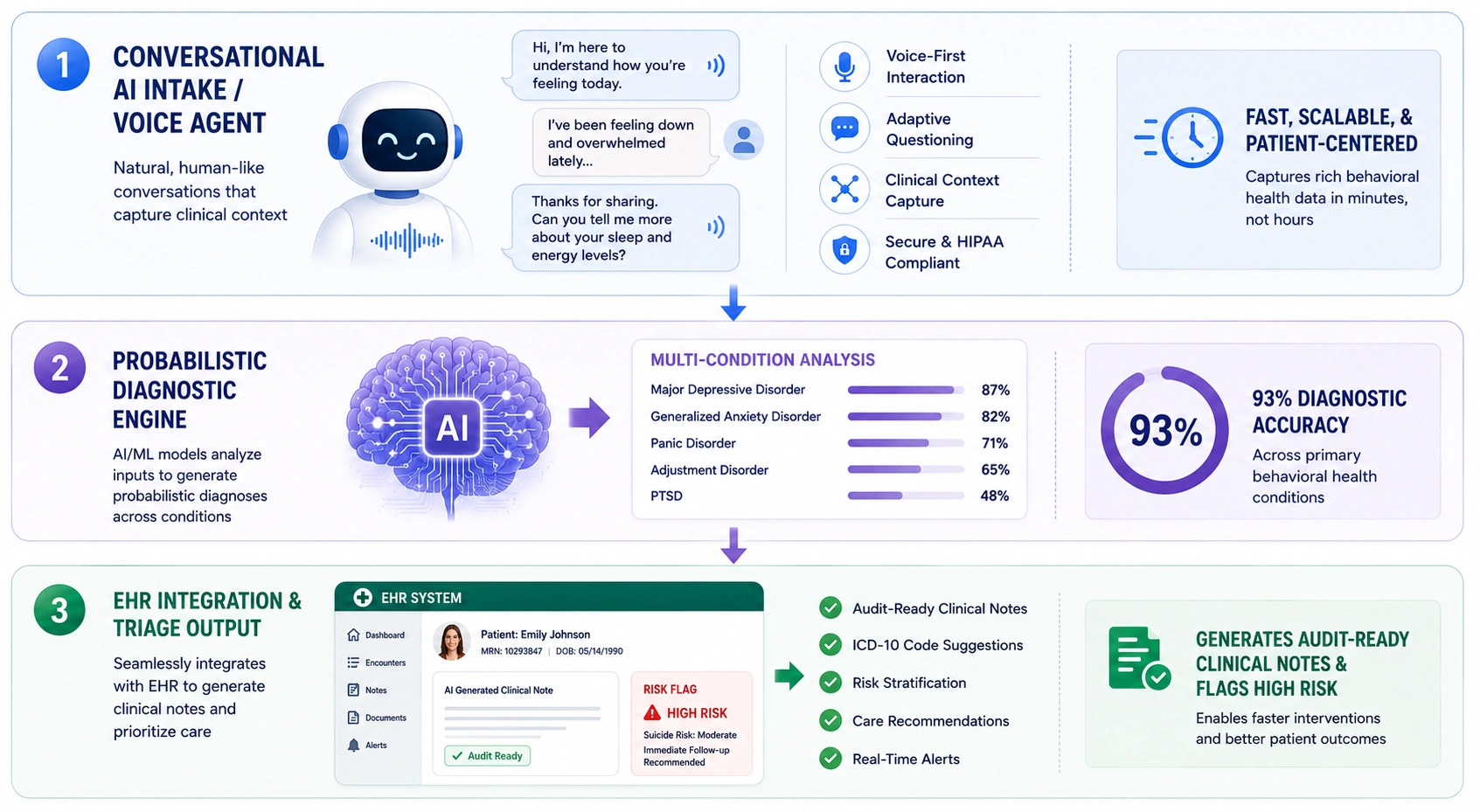
The platform streamlines patient intake, automates clinical assessments, and prioritizes care pathways, enabling providers to deliver faster, more informed mental healthcare decisions.
- AI-Powered Diagnostic Prediction: Limbic guides users through interactive conversations, dynamically administering validated psychometric scales (e.g., PHQ-9, GAD-7) to predict presentation categories with 93% diagnostic accuracy.
- Automated Clinical Documentation: By delivering structured, pre-session clinical summaries directly into provider electronic health records (EHRs), Limbic cuts assessment times by 23.5% (saving ~12.7 minutes per intake).
- Expanded Access to Underserved Populations: By offering a stigma-free, 24/7 conversational interface, Limbic significantly increases care access among underrepresented groups, including a 179% increase in non-binary self-referrals and a 40% boost among ethnic minority populations.
C. Shared Capabilities Driving Better Patient Outcomes
Combining passive biomarker analysis with interactive eTriage highlights how modern behavioral health platforms deliver measurable clinical and operational value:
| Functional Dimension | Kintsugi Voice Biomarkers | Limbic Conversational eTriage | Combined Patient & Health System Impact |
| Primary Intake Vector | Passive micro-acoustic analysis of short speech clips. | Active, interactive conversational eTriage. | Multi-modal intake capturing both implicit physiological and explicit self-reported data. |
| Diagnostic Capability | Flags sub-perceptual signs of depression and anxiety. | Classifies 8+ clinical conditions with 93% accuracy. | Reduces misdiagnosis rates, cutting downstream treatment pathway transfers by 45%. |
| Operational Impact | Screen populations during routine calls without extra surveys. | Saves 12.7 minutes per assessment, returning thousands of clinical hours. | Maximizes specialist capacity, allowing care teams to treat high-acuity cases faster. |
| Access & Health Equity | Bypasses language barriers with language-agnostic voice modeling. | Offers low-stigma, 24/7 digital intake channels. | Expands healthcare access to historically underserved and isolated demographics. |
The Enterprise Takeaway: Health systems create a frictionless care continuum by combining passive bio-acoustic screening with automated intake and triage. Kintsugi identifies at-risk individuals during routine interactions, while Limbic instantly assesses and routes them to the correct treatment pathway.
Together, these platforms dismantle traditional healthcare bottlenecks, reducing wait times from weeks to minutes, preventing clinician burnout, and delivering timely, equitable care to diverse patient populations.
Core Features of an AI Mental Health App
Modern mental health platforms require more than AI chatbots. The following enterprise-grade capabilities enable accurate behavioral health screening, intelligent clinical decision support, streamlined care delivery, and seamless healthcare integration while helping providers improve outcomes and expand access to quality mental healthcare.
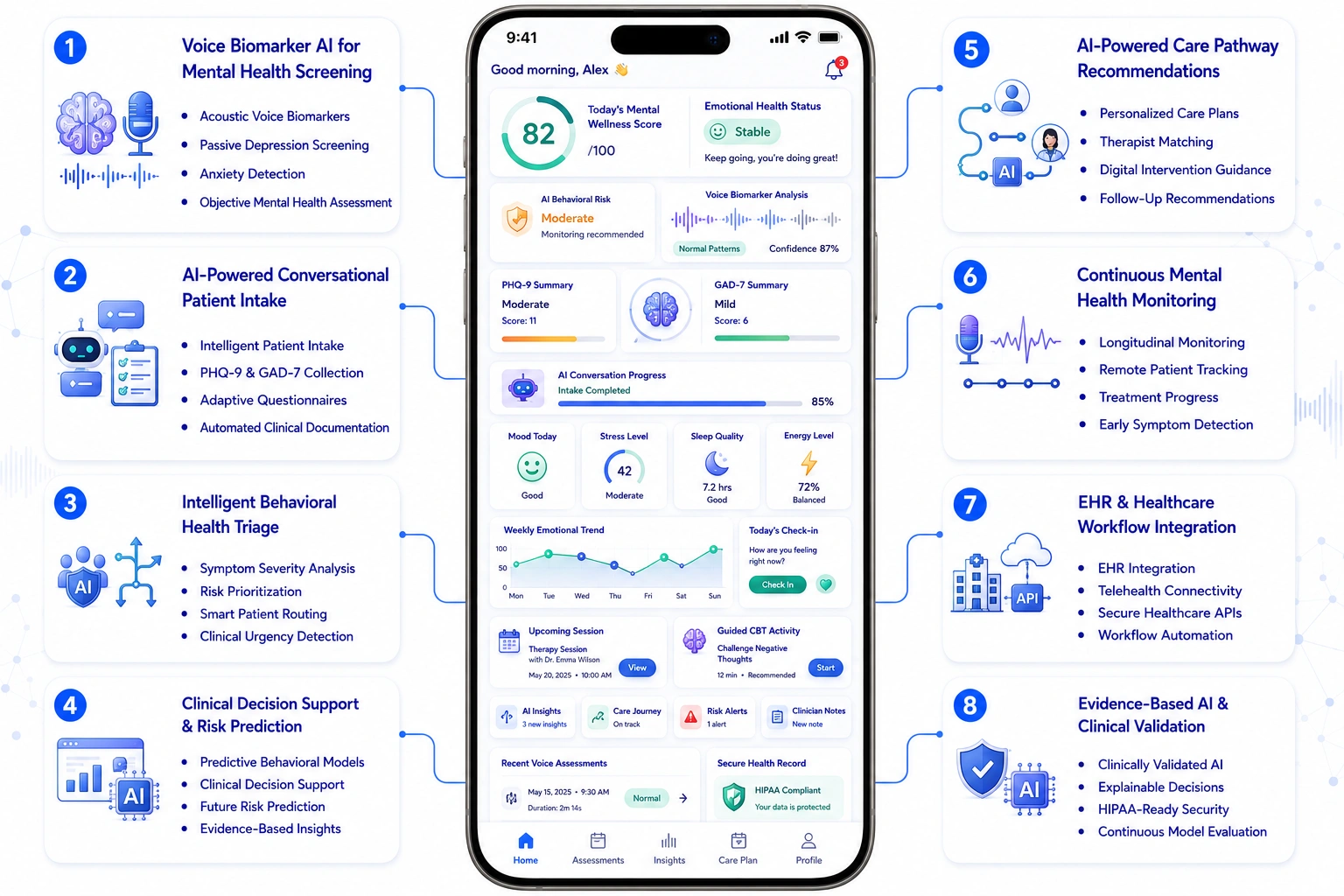
1. Voice Biomarker AI for Mental Health Screening
Voice biomarker AI analyzes acoustic signals such as pitch, tone, cadence, pauses, and vocal energy instead of spoken content to identify behavioral health patterns. This enables passive depression and anxiety screening, objective mental health assessments, earlier intervention, and scalable population-level screening.
2. AI-Powered Conversational Patient Intake
AI-powered conversational intake automates patient assessments through adaptive conversations, symptom collection, medical history capture, and standardized questionnaires like PHQ-9 and GAD-7. It reduces administrative workload, improves patient engagement, standardizes intake quality, and prepares clinicians before consultations.
3. Intelligent Behavioral Health Triage
An AI triage engine evaluates symptom severity, behavioral indicators, clinical urgency, and patient responses to prioritize cases automatically. This helps healthcare organizations reduce wait times, allocate resources efficiently, identify high-risk individuals earlier, and route patients to appropriate care pathways.
4. Clinical Decision Support and Risk Prediction
Clinical decision support combines predictive AI models with behavioral health data to identify likely mental health conditions, treatment priorities, and future risks. It enhances clinician decision-making through evidence-based insights while ensuring licensed professionals remain responsible for diagnosis and care planning.
5. AI-Powered Care Pathway Recommendations
AI-powered care navigation matches patients with the most appropriate therapists, treatment programs, digital interventions, or follow-up services based on assessment results, clinical guidelines, and individual needs. This improves care coordination, treatment adherence, and overall patient outcomes across healthcare systems.
6. Continuous Mental Health Monitoring
Continuous monitoring tracks changes in behavioral health through recurring voice samples, conversational assessments, and longitudinal patient data. Ongoing analysis enables early detection of symptom progression, supports remote care, measures treatment effectiveness, and helps clinicians intervene before conditions worsen.
7. EHR and Healthcare Workflow Integration
Enterprise mental health platforms should integrate with Electronic Health Records (EHRs), telehealth systems, scheduling platforms, and clinical workflows through secure APIs and interoperability standards. Seamless integration minimizes manual work, improves data continuity, and accelerates adoption across healthcare organizations.
8. Evidence-Based AI and Clinical Validation
Clinical AI should be supported by validated models, peer-reviewed research, explainable decision-making, HIPAA-ready infrastructure, and continuous performance evaluation. Strong clinical validation builds provider trust, ensures regulatory readiness, improves patient safety, and enables responsible deployment in real-world healthcare environments.
How to Build a Mental Health App Like Kintsugi and Limbic
Building a clinical AI platform like Kintsugi or Limbic requires a structured development approach that combines healthcare expertise, AI engineering, regulatory compliance, and enterprise integration. Each stage ensures the platform delivers accurate clinical insights, secure operations, and scalable healthcare adoption.
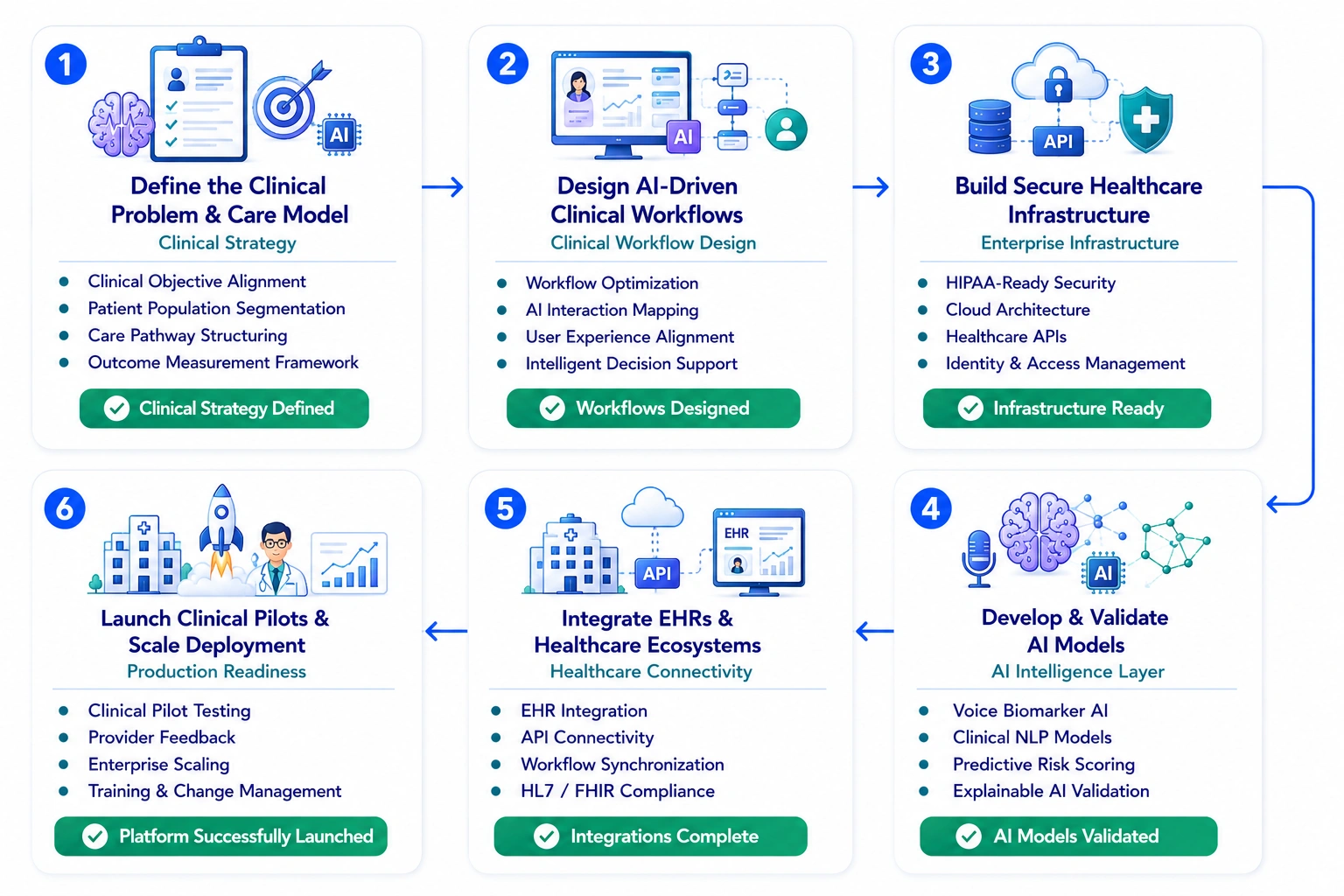
1. Define the Clinical Problem and Care Model
We begin by identifying the target behavioral health condition, patient population, clinical objectives, care pathways, and success metrics. This foundation ensures every AI capability solves real healthcare challenges while supporting measurable clinical and business outcomes.
- Clinical Objective Alignment: Defines measurable healthcare goals, patient outcomes, and success indicators aligned with organizational priorities and care delivery models.
- Patient Population Segmentation: Identifies target user groups based on demographics, conditions, and behavioral patterns to tailor personalized care experiences effectively.
- Care Pathway Structuring: Maps end-to-end patient journeys including diagnosis, intervention, monitoring, and follow-up to ensure consistent and efficient care delivery.
- Outcome Measurement Framework: Establishes KPIs and analytics methods to track clinical effectiveness, patient engagement, and overall care impact.
2. Design AI-Driven Clinical Workflows
Our team maps complete clinical workflows covering patient intake, AI screening, triage, clinician review, and care navigation. Every interaction is designed to improve operational efficiency while fitting naturally into existing healthcare delivery processes.
- Workflow Optimization Strategy: Designs streamlined clinical processes that reduce manual effort, improve efficiency, and enhance patient and provider experience across systems.
- AI Interaction Mapping: Defines how AI integrates into each workflow stage, supporting decision-making without disrupting existing clinical operations or provider responsibilities.
- User Experience Alignment: Ensures workflows are intuitive for both patients and clinicians, improving engagement, usability, and overall healthcare service delivery outcomes.
- Automation and Decision Support: Incorporates intelligent automation and AI-driven recommendations to assist clinicians in faster and more accurate decision-making.
3. Build a Secure Healthcare Infrastructure
We develop a scalable healthcare architecture with HIPAA-ready security, encrypted data storage, secure APIs, identity management, consent controls, and interoperable infrastructure that protects sensitive patient information while supporting enterprise healthcare environments.
The following table outlines essential infrastructure components required to build secure, scalable, and compliant mental health platforms for enterprise healthcare environments.
| Infrastructure Component | Purpose in the Platform |
| Data Security Framework | Protect patient information using end-to-end encryption, role-based access control (RBAC), multi-factor authentication (MFA), audit logs, and continuous security monitoring. |
| Compliance and Governance | Ensure compliance with HIPAA, GDPR, and regional healthcare regulations through consent management, data governance, audit trails, and regulatory documentation. |
| Scalable Cloud Architecture | Build cloud-native infrastructure with auto-scaling, load balancing, containerization, and microservices to support growing patient volumes and enterprise deployments. |
| API and Interoperability Layer | Enable secure data exchange with EHRs, telehealth platforms, laboratories, and third-party healthcare applications using HL7, FHIR, and REST APIs. |
| Identity and Access Management | Implement secure authentication, authorization, role-based permissions, single sign-on (SSO), and identity management to control access across patients, clinicians, and administrators. |
| Disaster Recovery and Business Continuity | Maintain platform availability through automated backups, failover mechanisms, disaster recovery planning, and high-availability infrastructure to minimize downtime and protect clinical operations. |
Note: Enterprise mental health platforms require security and compliance to be embedded into the architecture from day one. Building these capabilities early simplifies regulatory approvals, strengthens patient trust, and supports long-term scalability across healthcare organizations.
4. Develop and Clinically Validate AI Models
Our AI engineers build and validate machine learning models using high-quality clinical datasets, rigorous testing, bias mitigation, and explainable AI techniques. Every model is optimized to support clinicians with reliable, evidence-based decision support.
The table highlights advanced AI technologies and models enabling accurate diagnostics, predictive insights, and intelligent clinical decision support in mental healthcare platforms.
| AI Technology | Recommended AI Models | Role in the Platform |
| Speech AI and Voice Biomarker Models | CNNs, RNNs (LSTM/GRU), wav2vec 2.0, HuBERT | Analyze acoustic signals like pitch, tone, cadence to detect mental health indicators objectively. |
| Clinical NLP and Conversational AI | GPT-based models, BERT, ClinicalBERT, Dialogflow, Rasa | Enable intelligent conversations, extract symptoms, automate assessments, and support adaptive clinical interactions. |
| Predictive Risk Scoring Models | XGBoost, Random Forest, Logistic Regression, Deep Neural Networks | Assess behavioral patterns and clinical data to generate risk scores and prioritize patient care. |
| Retrieval-Augmented Clinical Intelligence (RAG) | RAG pipelines with LLMs (GPT, LLaMA), vector databases (FAISS, Pinecone) | Use clinical knowledge bases to generate accurate, explainable responses and improve decision support reliability. |
| Multimodal Machine Learning | Multimodal Transformers, Fusion Models, Deep Neural Networks | Combine voice, behavioral, and clinical data to improve prediction accuracy and enable personalized care insights. |
| Secure Healthcare Cloud Infrastructure | AWS HealthLake, Azure Health Data Services, Google Cloud Healthcare API | Provide secure, scalable infrastructure with encryption, APIs, and compliance for clinical AI deployment. |
Note: The exact AI stack depends on the platform’s clinical objectives. Enterprise mental health platforms like Kintsugi and Limbic typically combine multiple AI technologies rather than relying on a single machine learning model to deliver accurate, scalable, and clinically reliable behavioral health intelligence.
5. Integrate EHRs and Healthcare Ecosystems
We integrate the platform with Electronic Health Records (EHRs), telehealth platforms, scheduling systems, provider dashboards, and third-party healthcare services. Seamless interoperability reduces manual work and enables efficient clinical workflows across healthcare organizations.
- EHR Integration Strategy: Connects platform with existing electronic health record systems to enable seamless data exchange and unified patient information access.
- API and System Connectivity: Develops secure APIs to integrate with third-party healthcare tools, ensuring smooth communication across multiple digital health platforms.
- Workflow Synchronization: Aligns integrated systems to maintain consistent data flow, reduce duplication, and improve coordination across healthcare teams and services.
- Interoperability Standards Compliance: Ensures adherence to standards like HL7 and FHIR for consistent and reliable data exchange across healthcare systems.
6. Launch Clinical Pilots and Scale Enterprise Deployment
Before full deployment, we conduct clinical pilots, evaluate real-world performance, gather provider feedback, optimize workflows, and prepare regulatory documentation. Once validated, we scale the platform across hospitals, health systems, and behavioral healthcare networks.
- Pilot Testing and Validation: Conducts controlled deployments to evaluate system performance, usability, and clinical effectiveness in real-world healthcare environments.
- Feedback and Iteration Process: Collects insights from clinicians and patients to refine workflows, improve features, and enhance overall platform performance continuously.
- Enterprise Scaling Strategy: Expands deployment across healthcare organizations with infrastructure readiness, training programs, and support systems for long-term adoption.
- Change Management and Training: Provides onboarding, training, and support to ensure smooth adoption by healthcare providers and staff.
Cost to Build a Mental Health App Like Kintsugi and Limbic
The cost of building a clinical AI mental health app depends on its AI capabilities, healthcare integrations, compliance needs, infrastructure complexity, and deployment scale. Enterprise-grade platforms require significantly higher investment than MVPs due to advanced AI, security, and clinical validation requirements.
The table below provides an estimated development cost based on each phase involved in building a secure, AI-powered mental health platform. The cost ranges reflect MVP-level investment at the lower end and enterprise-level investment at the higher end.
| Development Phase | Estimated Cost (MVP → Enterprise) | What the Phase Covers |
| Clinical Discovery & Planning | $10,000 – $25,000 | Define clinical objectives, patient journeys, care pathways, business requirements, compliance strategy, and technical architecture roadmap. |
| UI/UX & Clinical Workflow Design | $15,000 – $40,000 | Design patient journeys, clinician dashboards, conversational flows, accessibility, prototypes, and AI-assisted healthcare workflows. |
| Healthcare Infrastructure Development | $25,000 – $90,000 | Build HIPAA-ready cloud infrastructure, security layers, APIs, databases, authentication, interoperability, and scalable backend systems. |
| AI Model Development & Validation | $40,000 – $250,000 | Develop voice AI, NLP models, predictive analytics, model validation, explainability, testing, and continuous learning pipelines. |
| EHR & Third-Party Integrations | $20,000 – $100,000 | Integrate EHRs, telehealth platforms, payment systems, scheduling, notifications, healthcare APIs, and interoperability standards. |
| Testing, Compliance & Deployment | $15,000 – $70,000 | Perform QA testing, security audits, compliance validation, cloud deployment, performance optimization, and production launch. |
| Total Estimated Cost | $100,000 – $800,000+ | Combined estimated cost across all development phases aligned with platform-level benchmarks. |
Note: These estimates represent custom development costs and vary depending on AI complexity, healthcare compliance requirements, regulatory approvals, technology stack, third-party integrations, and the expertise of your development partner.
Development Cost by Platform Level
The platform-level cost ranges below are realistic directional estimates based on current industry benchmarks for AI-driven healthcare applications. However, exact costs can vary significantly depending on scope, regulatory depth, AI sophistication, and geographic development rates.
| Platform Level | Estimated Cost | Features Included |
| MVP | $100,000 – $180,000 | AI patient intake, rule-based or basic ML voice analysis, mental health assessments, clinician dashboard, secure authentication, cloud deployment, and baseline HIPAA-ready setup. |
| Mid-Level | $180,000 – $350,000 | Advanced AI triage, predictive risk scoring, EHR integration, remote monitoring, conversational AI, workflow automation |
| Enterprise | $350,000 – $800,000+ | Voice biomarker AI, multimodal AI, clinical decision support, large-scale integrations, explainable AI, enterprise-grade security, and multi-tenant architecture. |
Note: These ranges are more aligned with real-world healthcare AI development costs. Enterprise platforms, especially those involving clinical validation, FDA considerations, or large-scale deployments, can exceed these estimates significantly.
Factors That Influence Development Budget
Several platform-specific factors directly influence the cost of developing an AI-powered mental health solution. The final budget depends not only on application features but also on clinical AI complexity, regulatory requirements, healthcare integrations, and deployment scale.
- AI Model Development & Clinical Validation: Building proprietary NLP, voice biomarker, and clinical prediction models requires annotated datasets, validation studies, and continuous optimization, typically adding $40,000–$250,000+.
- Healthcare System Integrations: Integrating EHRs, telehealth platforms, identity providers, scheduling systems, and HL7/FHIR standards generally costs $20,000–$100,000, depending on integration scope and complexity.
- Regulatory Compliance & Security: Meeting HIPAA, GDPR, SOC 2, and ISO 27001 requirements involves secure architecture, encryption, audit logging, and documentation, adding $15,000–$70,000+.
- Conversational AI & Clinical Workflows: Designing intelligent intake, adaptive questionnaires, clinical decision support, and provider workflows typically costs $15,000–$40,000.
- Real-Time AI Infrastructure & Cloud Architecture: Low-latency inference, scalable cloud infrastructure, GPU workloads, monitoring, and high availability generally require $25,000–$90,000 for implementation, plus ongoing infrastructure costs.
- Long-Term AI Monitoring & Maintenance: Continuous model monitoring, drift detection, retraining, compliance updates, and performance optimization typically require $2,000–$10,000 per month, depending on deployment scale.
How AI Mental Health App Like Kintsugi and Limbic Make Money
Unlike consumer-facing “chat-bot therapists” (like Woebot or Wysa) that rely on direct B2C subscriptions, enterprise clinical AI platforms like Limbic and Kintsugi make money through a B2B2C business model.
They do not charge the end-patient. Instead, they sell their AI engines directly to healthcare systems, health insurance plans (payors), and clinical mental health providers. Their tools automate clinical intake, run voice-biomarker triage, and support between-session Cognitive Behavioral Therapy (CBT).
AI Mental Health Business Model Summary
| Revenue Stream | Target Customer | Pricing Structure | Key Monetization Driver |
| Enterprise Platform SaaS | Health Systems & Clinics (e.g., UK NHS, US Providers) | Annual/Multi-Year Contracts (€30k to €200k+ per region/clinic network) | Automating patient intake, triage, and reducing human administrative hours. |
| Voice Biomarker API Rake | Telehealth Platforms, Call Centers, Payors | Per-Call / Per-Minute Processing Fees | Real-time analysis of voice audio clips to flag depression/anxiety risk. |
| Value-Based Care Shared Savings | Insurance Companies & Health Plans | Performance-Linked Shared Value | Lowering emergency drop-offs, improving therapy completion, and cutting cost-per-care. |
| EHR & Clinical Tool Integrations | Hospital IT & Digital Health Suites | Integration & Maintenance Upcharges | Seamless workflow sync with electronic health record systems (Epic, Cerner). |
The core revenue mechanisms combine recurring enterprise subscriptions, API licensing, value-based healthcare contracts, and premium clinical services to generate predictable, scalable, and sustainable long-term business growth.
1. Enterprise SaaS Contracts for Clinical Intake (The Limbic Model)
Platforms like Limbic (which provides class-certified AI intake assistants like Limbic Access) sell software directly to public and private health networks (such as the UK’s NHS Talking Therapies or US health networks).
- The Clinical Bottleneck Problem: Traditional mental health services lose time and revenue during patient intake, as manual phone screenings consume staff hours and high pre-appointment drop-off reduces care access.
- How They Monetize: These AI mental health apps license to healthcare providers via annual subscriptions based on patient volume or covered lives. Automating triage and self-referrals cuts administrative costs, reduces missed appointments, and increases patient throughput, driving operational savings.
2. API Licensing for Vocal Biomarkers (The Kintsugi Model)
Platforms specializing in voice AI like Kintsugi (via its KiVA enterprise API)—monetize by embedding their software directly into existing healthcare call centers, nurse hotlines, and telehealth platforms.
- Voice-Based Triage: The AI analyzes short 20-second audio clips of a patient’s speech (focusing on pitch, inflection, and cadence rather than words) to screen for clinical depression and anxiety in real time.
- How They Monetize: The company charges on a usage-based API framework (per-call or per-volume processed) or through enterprise seat tiers for clinical call centers. Health plans pay for this technology because identifying at-risk patients early prevents expensive emergency psychiatric visits later.
3. Payor (Insurance) Value-Based Contracts
Health insurance providers lose billions when untreated mental health conditions exacerbate physical illnesses (e.g., a patient with unmanaged depression is statistically much less likely to adhere to diabetes or heart medication).
- Targeting Payors: AI mental health tools sell to insurance companies as a risk-mitigation layer.
- Value-Based Pricing: Instead of just flat software fees, platforms can structure contracts around outcome metrics. If the AI intake or therapy-companion tool successfully increases therapy completion rates or lowers hospital readmission rates, the startup captures a percentage of the overall health cost savings achieved by the insurer.
4. Between-Session Patient Support Modules
Many platforms offer digital “conversational companions” (like Limbic Care) that guide patients through CBT exercises between human therapy sessions.
- Upselling Modules: Health networks pay modular add-on fees to unlock these extended care features.
- Clinician Productivity: By keeping the patient engaged between appointments, clinicians can cover more ground in fewer active clinical hours, allowing clinic operators to scale their practice capacity without linearly hiring more therapists.
Challenges in Building an AI Mental Health App
Developing a clinical AI mental health app involves technical, clinical, and regulatory complexities beyond traditional healthcare apps. Addressing these challenges early ensures accurate AI predictions, secure patient data management, seamless clinical adoption, and long-term product scalability.
1. Clinically Accurate and Reliable AI Models
Challenge: Training AI models using diverse clinical datasets while reducing bias and ensuring consistent accuracy across varied patient demographics and conditions.
Solution: Our developers use validated datasets, apply bias mitigation techniques, implement explainable AI, conduct continuous testing, and integrate clinician feedback loops to ensure reliable, accurate, and clinically trustworthy model performance.
2. Complex Healthcare Ecosystem Integration
Challenge: Integrating with multiple EHR systems, telehealth platforms, and APIs without disrupting workflows or compromising interoperability and data consistency across healthcare systems.
Solution: Our developers implement HL7 and FHIR standards, build scalable APIs, ensure secure data exchange, and conduct rigorous integration testing to maintain seamless interoperability across diverse healthcare platforms.
3. Real-Time Voice Processing in Unstable Networks
Challenge: Processing real-time voice data accurately despite network instability, background noise, device variability, and latency issues affecting audio quality and AI performance.
Solution: Our developers implement edge processing, adaptive compression, noise reduction, offline buffering, and real-time quality checks to ensure consistent voice data capture and reliable AI performance in unstable network conditions.
Build Enterprise AI Mental Health Apps with IdeaUsher
IdeaUsher operates as an elite digital product engineering partner and healthcare technology catalyst, leveraging 11+ years of experience across 50+ countries. Powered by 250+ niche experts, 1,000+ completed projects, and a 4.9/5 Clutch credential, we construct high-performing behavioral health applications from scratch.
We handcraft premium, HIPAA-compliant digital mental health systems optimized with vocal biomarker engines, conversational triage pipelines, and real-time EHR interoperability gates to help you capture digital health market dominance.
Why Enterprises Partner With Us
Healthcare networks, health plans, and digital health innovators choose us to deploy AI mental health apps because we transform unstructured voice clips and patient dialogues into objective, clinical-grade triage assessments.
- Language-Agnostic Acoustic Processing: We construct advanced signal-processing models that analyze pitch, cadence, pauses, and tone instead of spoken words, enabling objective depression and anxiety screening without language barriers or invasive questionnaires.
- Clinical Protocol Screening (PHQ-9 & GAD-7): Our developers build conversational AI intake modules that guide patients through empathetic dialogues while accurately scoring PHQ-9 and GAD-7 assessments before clinical consultation.
- Real-Time Self-Harm Risk Escalation: We engineer safety-first detection microservices that identify crisis keywords and acoustic distress signals, automatically triggering immediate human intervention and emergency care workflows.
- Bi-Directional FHIR & EHR Interoperability: We implement secure HL7 FHIR API bridges that seamlessly sync vocal biomarker scores, AI-generated triage summaries, and referral notes with electronic health records.
- Isolated Cloud Runtime Security: We deploy platform core services within independent encrypted cloud containers, ensuring patient privacy and compliance with HIPAA, GDPR, and DTAC standards.
Ready to revolutionize behavioral health access with an automated, AI-powered acoustic screening and triage engine? Partner with Idea Usher’s principal healthcare technology and AI software architects to map out your custom product build today.
Conclusion
The future of mental healthcare lies in intelligent platforms that combine AI, clinical expertise, and secure healthcare infrastructure to deliver faster, more accessible, and evidence-based care. AI mental health apps like Kintsugi and Limbic demonstrate how voice biomarkers, conversational AI, and clinical decision support can transform behavioral health services at scale. If you’re planning to launch a similar solution, partnering with an experienced healthcare AI development company, IdeaUsher can help you build a compliant, scalable, and clinically reliable platform tailored to your business goals.
FAQs
A.1. Core features include voice biomarker analysis, conversational AI intake, behavioral health triage, and clinical decision support. Additional capabilities include care pathway recommendations, EHR integration, continuous monitoring, and enterprise-grade security with regulatory compliance.
A.2. AI improves mental healthcare by enabling earlier screening, automating patient intake, prioritizing high-risk cases, supporting clinical decision-making, reducing administrative workload, and expanding access to timely behavioral healthcare across larger populations.
A.3. A clinical mental health platform should comply with regulations such as HIPAA, GDPR, and applicable regional healthcare standards. Strong security, consent management, audit trails, and encrypted data handling are equally important for deployment.
A.4. The cost to build an AI mental health app typically ranges from $100,000 to $800,000+. Actual costs depend on AI complexity, healthcare integrations, compliance requirements, clinical validation, platform features, and whether you build an MVP or an enterprise-grade solution.