

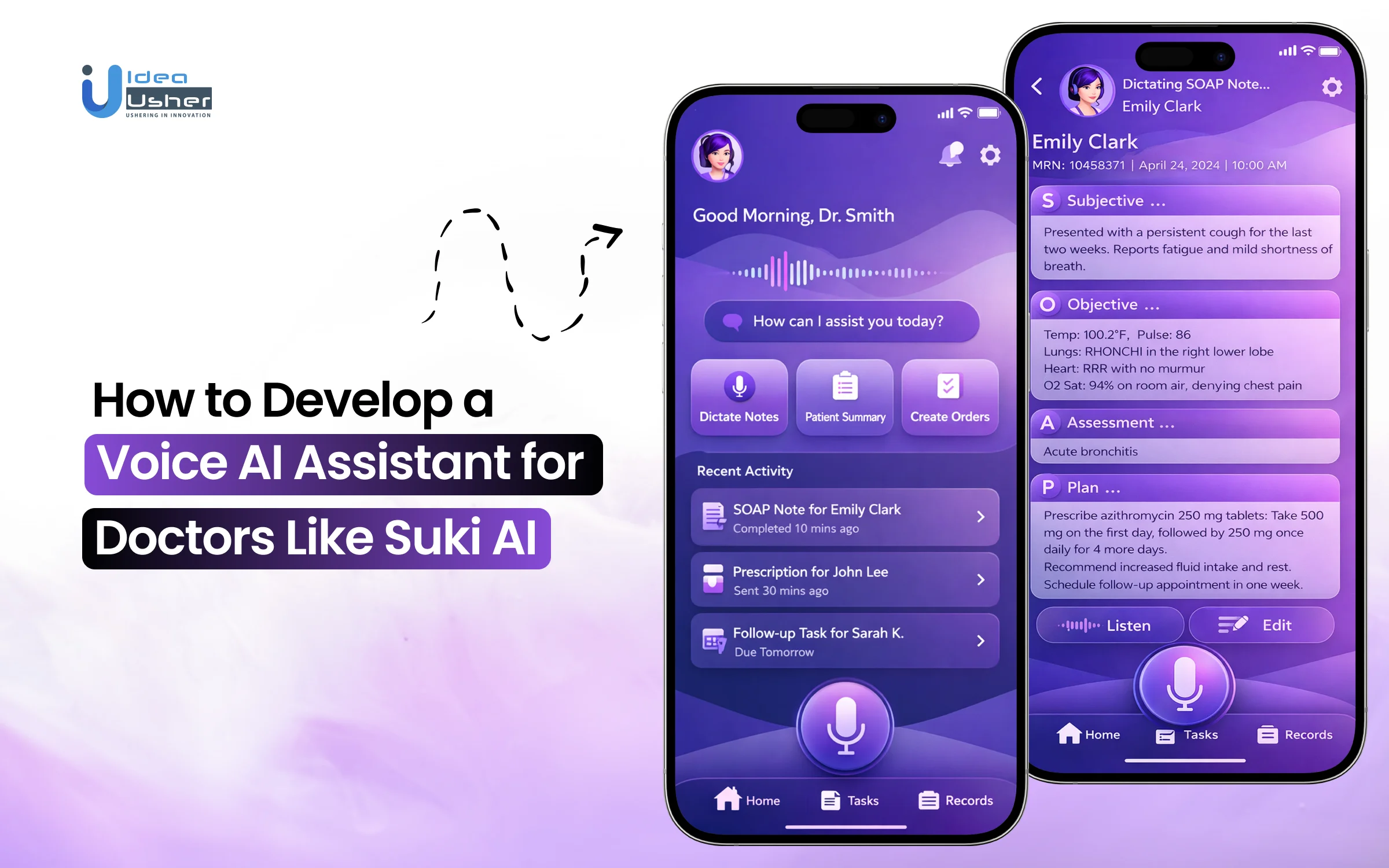
Doctors often need to manage documentation, coding, and workflow tasks while actively engaging with patients can divide attention during consultations. The growing interest in Suki AI app development is driven by the need to streamline clinical tasks without interrupting patient care and reduce the overall workload associated with capturing clinical details, updating records, and handling administrative work with voice-enabled assistants.
The integration of speech recognition, natural language understanding, medical context mapping, task automation, and EHR into a seamless real-time workflow is essential, as voice-first interfaces fundamentally change how these systems operate. The effectiveness of the platform depends on how well it interprets clinical conversations while maintaining accuracy, compliance, and minimal disruption to the care experience.
In this blog, we explain how to develop a voice AI assistant for doctors like Suki AI by examining core features, system architecture, and practical considerations involved in building reliable and scalable voice-driven healthcare solutions.
Why Voice AI Is Reshaping Clinical Workflows Today?
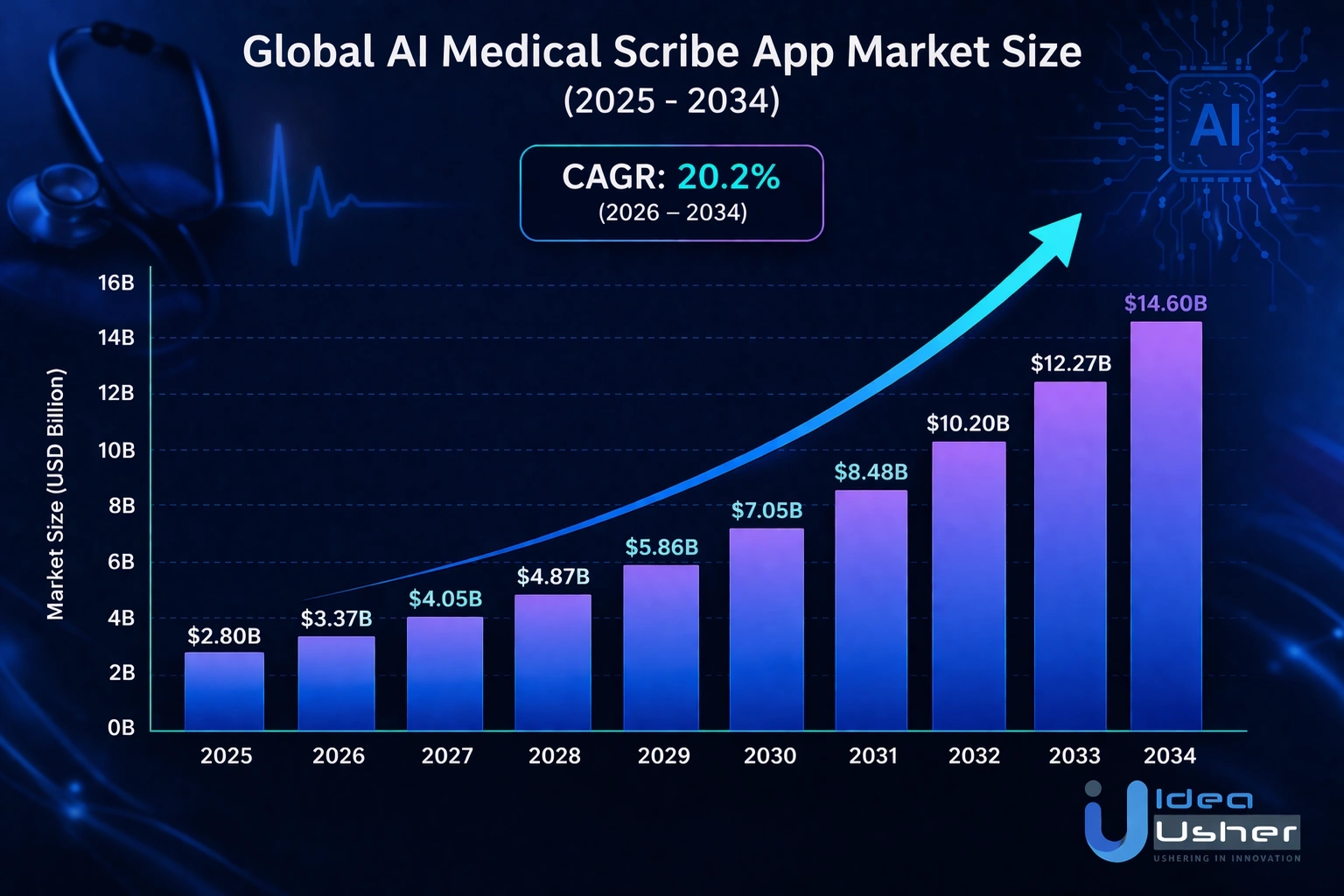
The healthcare industry is shifting toward intelligent automation to combat digital friction, a trend fueled by the global AI medical scribe market, projected to grow from $2.8 billion in 2025 to $14.6 billion by 2034 expanding at a CAGR of 20.2%. This rapid growth reflects how modern Suki AI app development focuses on ambient intelligence to capture clinical data without requiring manual text entry.
A systematic review found that AI-powered voice-to-text (AIVT) technology decreased the average documentation time per patient from 5.3 minutes to 4.54 minutes. Implementation of ambient AI scribes at The Permanente Medical Group saved 3,442 physicians an average of one hour per day on documentation.
Generative AI platforms in hospital settings have been shown to reduce EMR writing time by approximately 1.5 hours daily, equivalent to saving 20–30 workdays per year. A multicenter study involving 263 clinicians found that after 30 days of using an ambient AI scribe, the proportion of participants experiencing burnout dropped from 51.9% to 38.8%
A. From EHR Burnout to Hands-Free Care Delivery
Administrative tasks are the primary cause of professional exhaustion among physicians. A voice AI assistant for doctors alleviates this burden by replacing keyboard-heavy workflows with natural language processing. Instead of spending hours post-shift on documentation, clinicians use voice commands to finalize their notes in real time.
| Feature | Impact on Burnout |
| Ambient Listening | Eliminates the need to type while speaking to patients. |
| Automated Summarization | Converts conversational dialogue into structured medical notes. |
| Hands-Free Navigation | Allows doctors to pull up patient history via voice during exams. |
| Real-Time Synchronization | Updates the record instantly, preventing documentation backlogs. |
B. Why Hospitals Are Investing in Voice-First AI
Health systems are prioritizing these tools because they directly influence the financial and operational health of the organization. Beyond improving the work-life balance for staff, these platforms ensure that clinical data is captured with high precision, which is vital for compliance and reimbursement.
- Increased Patient Volume: By reducing the minutes spent on each chart, doctors can see more patients daily without extending their working hours.
- Revenue Integrity: Voice AI helps capture specific medical codes and diagnostic details that might be missed during manual entry, reducing claim denials.
- Operational Standardization: Large-scale organizations use these platforms to maintain a consistent quality of documentation across different departments and specialties.
- Data Accuracy: AI-driven systems minimize human errors associated with fatigue or rushed data entry during busy shifts.
C. Market Demand for Ambient Clinical Intelligence
The appetite for sophisticated voice solutions is growing as healthcare providers seek more than simple transcription. The current market is moving toward platforms that offer deep integration and reasoning capabilities.
- EHR Compatibility: There is a high demand for tools that work natively within systems like Epic, Cerner, and MEDITECH to ensure a unified workflow.
- Specialty-Specific Support: Market leaders are developing models tailored for over 100 specialties, including orthopedics, cardiology, and emergency medicine.
- Scalability: Modern solutions are designed to support everything from independent practices to massive multi-state hospital networks.
- Multilingual Capabilities: Global demand is rising for AI that can accurately process and translate multiple languages in diverse clinical settings.
What Is Suki AI and Why It Stands Out?
Suki AI is a voice-powered digital assistant designed to help doctors and other clinicians manage their administrative workload. It acts as an “invisible” scribe that listens to patient-doctor conversations and uses generative AI to automatically create clinical documentation, such as SOAP notes.
Unlike simple dictation tools, Suki is an interactive assistant that can respond to voice commands to retrieve patient data, stage medical orders, and answer clinical questions directly from a hospital’s Electronic Health Record (EHR) system.
A. Voice as the Primary Interface in Healthcare
The core philosophy behind a voice AI assistant for doctors is the shift toward an invisible user interface. By making voice the primary method of interaction, technology no longer competes for the clinician’s attention.
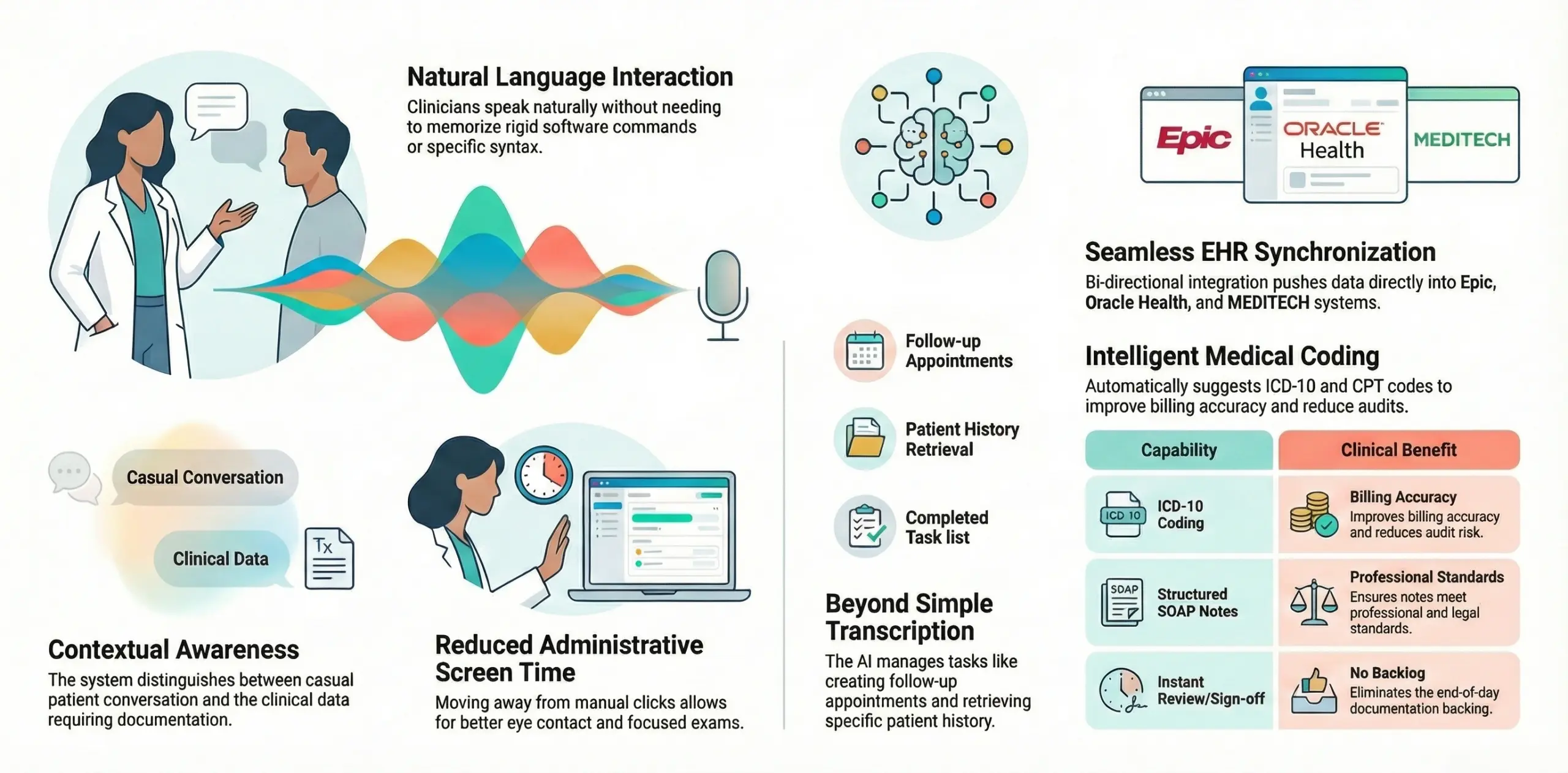
- Natural Interaction: Doctors can speak naturally without memorizing rigid software commands or specific syntax, such as:
- “Suki, show me the patient’s last A1c”.
- “Suki, order Metformin 500mg”.
- Contextual Awareness: The system distinguishes between casual conversation and the clinical data that needs to be documented.
- Reduced Screen Time: Moving away from clicks and scrolls allows for a more focused physical exam and better eye contact with patients.
- Mobility: Being voice-first means the solution is often accessible via mobile devices, allowing for documentation on the move.
B. Beyond Transcription: Clinical Workflow Automation
Transcription is merely the first step in a much larger automation process.A robust clinical assistant manages the administrative lifecycle of a patient visit, ensuring that information flows where it is needed without manual intervention.
- Task Execution: Doctors can use voice commands to create follow-up appointments or generate patient instructions.
- Information Retrieval: Instead of searching through years of patient history, the AI can surface specific data points, such as the last three blood pressure readings, via a simple query.
- Proactive Assistance: The system can suggest orders or reminders based on the conversation, acting as a cognitive partner during the care process.
- Specialty Adaptation: The AI adapts its understanding based on the specialty, recognizing that a surgical note requires a different structure than a psychiatric evaluation.
C. Real-Time Documentation and Coding Capabilities
Efficiency in healthcare is heavily dependent on the speed and accuracy of medical coding and note generation. Suki AI app development prioritizes the immediate transformation of spoken words into billable, structured data.
| Capability | Technical Function | Clinical Benefit |
| ICD-10/CPT Coding | Automatically suggests relevant codes based on the clinical note. | Improves billing accuracy and reduces the audit risk. |
| Structured Output | Organizes data into SOAP (Subjective, Objective, Assessment, Plan) format. | Ensures notes meet professional and legal standards. |
| HCC Capture | Identifies Hierarchical Condition Categories for complex patient management. | Optimizes reimbursement for value-based care models. |
| Instant Review | Allows clinicians to review and sign off on notes immediately after a visit. | Eliminates the end-of-day documentation backlog. |
D. EHR Integration with Epic, Oracle, MEDITECH
The value of a voice AI assistant for doctors is nullified if it exists in a silo. Success in this space requires deep, bidirectional integration with the major players in the Electronic Health Record market.
- Epic Integration: High-level synchronization ensures that data captured via voice is pushed directly into the appropriate fields in Epic’s Hyperspace or Haiku apps.
- Oracle Health (Cerner): Integration allows for seamless workflow continuity, maintaining the integrity of the hospital’s central database.
- MEDITECH and Others: By supporting a wide range of EHRs, the platform provides a consistent experience for doctors who may work across different facilities.
- Automatic Sync: This eliminates the need for “copy and paste” workflows, as the AI populates the patient record in real time, ensuring the most up-to-date information is always available to the entire care team.
How a Voice AI Assistant for Doctors Works Behind the Scenes?
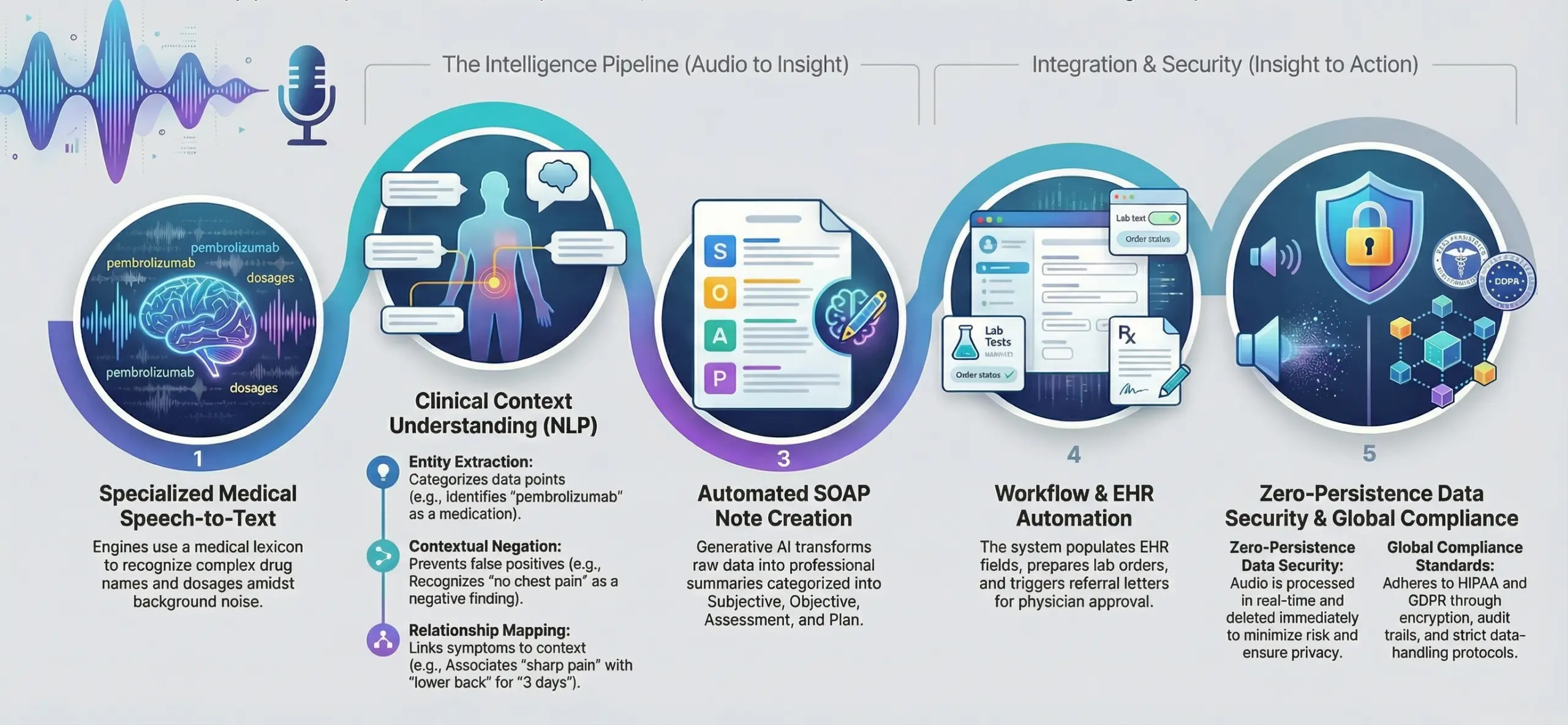
A voice AI assistant for doctors functions as a sophisticated bridge between spoken clinical dialogue and structured medical records. It operates through a multi-layered pipeline that translates sound waves into actionable medical data while maintaining strict regulatory compliance.
1. Speech-to-Text Engine for Medical Conversations
The first layer of the system must overcome the acoustic challenges of a clinical setting, such as background noise from medical equipment and the complex pronunciation of pharmaceutical names.
- Medical Lexicon: Unlike consumer AI, these engines are trained on millions of hours of clinical speech.
- Pharmacological Recognition: It accurately transcribes complex drug names (e.g., pembrolizumab) and dosages.
- Ambient Noise Filtering: Algorithms isolate the doctor and patient voices from background clinic noise.
- Multi-Speaker Diarization: The system identifies who is speaking to distinguish patient history from physician instructions.
2. NLP Models for Clinical Context Understanding
Once the audio is transcribed, Natural Language Processing (NLP) identifies the “medical intent” behind the words. This stage moves beyond simple text to understand the actual clinical meaning of the conversation.
- Entity Extraction: The model identifies and categorizes specific data points like medications, dosages, symptoms, and previous diagnoses.
- Contextual Negation: It understands that “The patient is not experiencing chest pain” is a negative finding, preventing the AI from accidentally flagging “chest pain” as a symptom.
- Relationship Mapping: The system links symptoms to specific body parts or timeframes, such as associating “sharp pain” specifically with the “lower back” for the “past three days.”
- Medical Coding: Mapping natural language to standardized codes like ICD-10, SNOMED-CT, or CPT.
3. Generative AI for Structured Note Creation
This is where the raw data is transformed into a professional document. Generative models take the extracted clinical entities and weave them into a standardized format such as SOAP note.
- Intelligent Summarization: The AI condenses lengthy, multi-topic patient encounters into concise summaries, focusing only on clinically relevant information while discarding conversational filler.
- Section Categorization: Data points are dynamically categorized into Subjective, Objective, Assessment, and Plan sections, ensuring the note meets rigorous medical-legal standards
- Style Adaptation: Mimicking the specific writing style or shorthand preferred by the individual physician.
- Draft Generation and Refinement: A complete clinical note is produced nearly instantly, allowing the doctor to perform a final review and sign-off rather than building the document from scratch.
4. Workflow Automation and Task Execution Layer
The voice AI assistant for doctors acts as an operational hub. This layer takes the “intents” identified by the NLP and triggers actions across the broader healthcare ecosystem.
- EHR Write-Back: The system automatically populates the relevant fields in the Electronic Health Record, such as the “History of Present Illness” or “Physical Exam” sections.
- Order Entry: If a doctor mentions “ordering a CBC and CMP,” the assistant can prepare those lab orders in the system for a one-click approval.
- Referral Triggers: Drafts referral letters to specialists mentioned during the encounter.
- Follow-up Scheduling: Flagging the need for a 2-week follow-up in the practice management system.
5. Secure Data Handling and Compliance Systems
Security is the non-negotiable foundation of the Suki AI app development project. Because these systems handle protected health information (PHI), they must adhere to the highest global security standards.
- HIPAA/GDPR Compliance: Ensuring all data processing meets legal standards for privacy.
- Zero-Persistence Buffers: Audio is often processed in real-time and deleted immediately after transcription to minimize risk.
- Encryption: Data is encrypted both “at rest” (stored) and “in transit” (moving between the mic and the cloud).
- Audit Trails: Maintaining a transparent log of every time data is accessed or modified by the AI.
How to Train AI Models on Medical Data?
Training a specialized voice AI assistant for doctors requires a departure from general-purpose machine learning workflows. To achieve clinical-grade reliability, the development process must focus on high-fidelity data curation and specialized fine-tuning techniques that prioritize factual precision over conversational creativity.
1. Sourcing High-Quality Clinical Datasets
The foundation of a reliable medical AI is “research-grade” data that accurately reflects real-world clinical environments. Engineers must move beyond public datasets to source longitudinal, verified records that include diverse accents and complex medical scenarios.
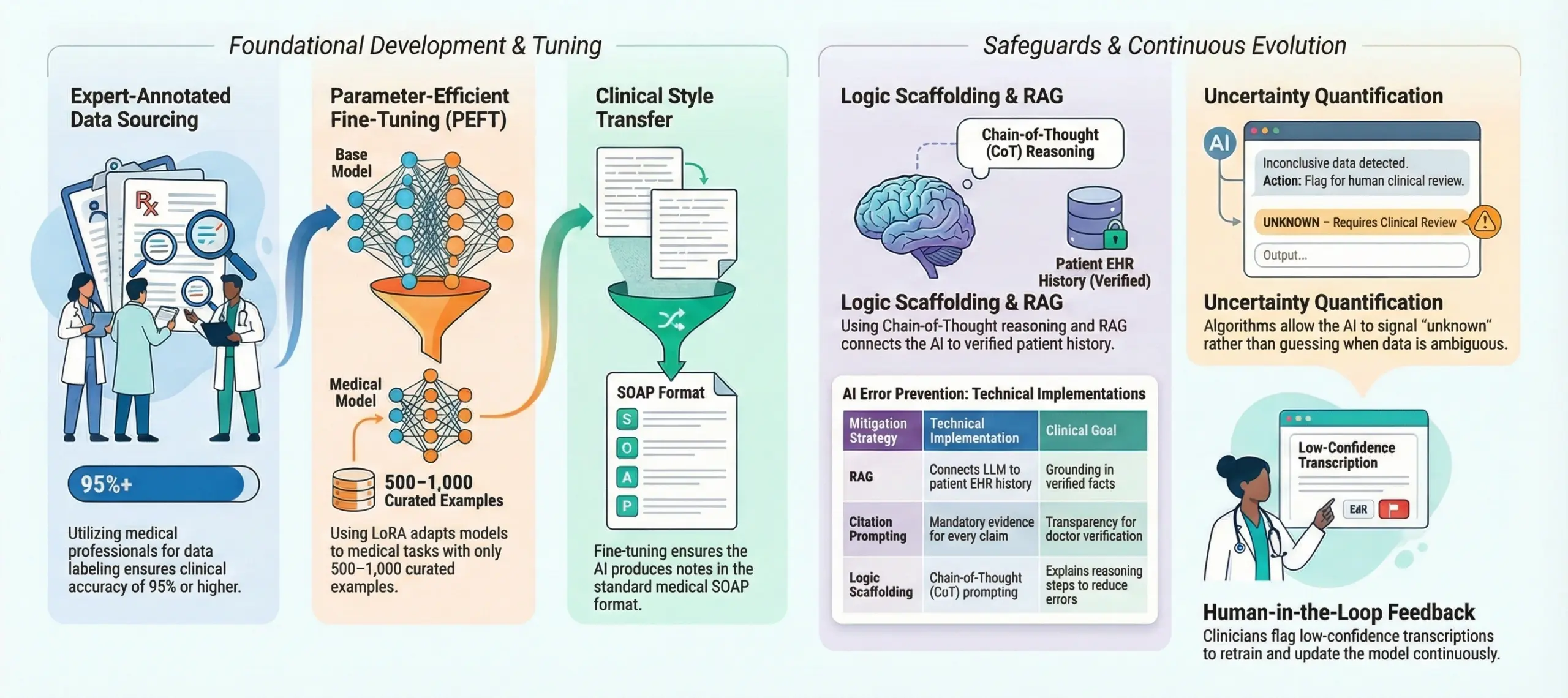
- Expert-Annotated Data: Utilizing medical professionals as annotators ensures that labels for symptoms, diagnoses, and medications are 95%+ accurate.
- Diverse Speech Samples: Collecting audio from varied clinical settings helps the model overcome background noise and different physician speaking styles.
- Ethical Sourcing: Partnering with HIPAA-compliant data providers like Shaip or Defined.ai ensures all training data is de-identified and legally obtained.
- Domain Specificity: Prioritizing datasets that link transcriptions with actual EHR outcomes allows the model to learn the relationship between conversation and documentation.
2. Fine-Tuning LLMs for Medical Accuracy
General large language models (LLMs) often lack the deep context required for healthcare. Fine-tuning involves adjusting a pre-trained model on specialized medical corpora to ensure it understands the nuances of clinical reasoning and terminology.
- Parameter-Efficient Fine-Tuning (PEFT): Techniques like LoRA (Low-Rank Adaptation) allow developers to adapt models to medical tasks with relatively small, high-quality datasets of 500–1,000 curated examples.
- Specialized Foundations: Starting with medical-specific models like Med-PaLM or BioBERT provides a head start in understanding pharmaceutical names and anatomical structures.
- Clinical Style Transfer: Fine-tuning the generative layer ensures the AI produces notes in the standard SOAP format preferred by healthcare institutions.
- RLHF with Clinicians: Reinforcement Learning from Human Feedback, specifically from doctors, helps the model align its outputs with professional medical standards and tone.
3. Reducing Hallucinations in Clinical AI
The risk of AI hallucinations carries significant consequences in medicine. This necessitates strict grounding mechanisms to ensure assistants exclusively document verified dialogue to maintain record integrity and provider trust.
| Mitigation Strategy | Technical Implementation | Clinical Goal |
| Retrieval-Augmented Generation (RAG) | Connects the LLM to a trusted medical knowledge base or the current patient’s EHR history. | Ensures the AI draws from verified facts rather than its internal weights alone. |
| Citation-Enforced Prompting | Instructs the model to provide mandatory evidence grounding for every clinical claim made in a note. | Increases transparency and allows doctors to verify the source of each documented finding. |
| Uncertainty Quantification | Implements algorithms that allow the AI to signal “unknown” or “insufficient information” rather than guessing. | Prevents the fabrication of data when the audio or context is ambiguous. |
| Logic Scaffolding | Uses Chain-of-Thought (CoT) prompting to force the AI to explain its reasoning steps before generating a final summary. | Reduces errors by breaking down complex clinical assessments into verifiable intermediate steps. |
4. Continuous Learning and Model Updates
Medical guidelines and terminologies evolve, meaning a voice AI assistant for doctors cannot remain static. Implementing a “Human-in-the-Loop” feedback system ensures the model improves with every use.
- Active Learning Loops: The system identifies “low-confidence” transcriptions and flags them for human review, using the corrected data to retrain the model.
- Performance Monitoring: Automated triggers detect “concept drift,” where the model’s accuracy begins to decline as medical trends or documentation standards change.
- User-Specific Adaptation: The AI learns from a specific doctor’s manual edits, eventually mirroring their unique shorthand and preferred note-taking style.
- Regular Regulatory Sync: Periodic updates ensure the AI remains compliant with the latest FDA, HIPAA, and insurance coding requirements (such as annual ICD-10 updates).
Core Features Your Voice AI Assistant Must Include
The Suki AI app development must prioritize seamless utility and clinical precision to compete in the modern healthcare market. A successful platform transforms the consultation room into an intelligent data hub, capturing every critical detail while the doctor remains focused on the patient.

1. Ambient Listening and Conversation Capture
Modern systems utilize sophisticated microphone arrays and noise-cancellation algorithms to capture natural doctor-patient dialogue. This allows the software to distinguish between clinical data and casual rapport without requiring the doctor to pause or trigger the system manually.
The voice AI assistant for doctors ensures that no critical symptom or diagnostic detail is missed by operating in the background. This high-fidelity audio processing serves as the foundation for generating accurate, legally defensible, and comprehensive medical records.
2. Real-Time Clinical Note Generation
The AI processes spoken words through advanced NLP models to instantly organize information into standard SOAP notes. This immediate conversion ensures that the patient’s story is documented with technical accuracy while the clinical details are still fresh.
The system identifies key medical findings and discards irrelevant filler rather than providing a raw transcript. This creates a polished, professional note that requires minimal editing, significantly reducing the time clinicians spend on manual keyboard entry after hours.
3. Voice Commands for Charting and Navigation
Effective Suki AI app development incorporates a voice-driven command layer that allows doctors to navigate complex EHR menus. Physicians can simply speak to open specific charts, view lab results, or order prescriptions without touching a mouse or keyboard.
The assistant accelerates routine administrative tasks like referral generation and follow-up scheduling by treating “voice as the interface.”This level of control keeps the clinician’s hands free for physical examinations while maintaining a fluid, uninterrupted digital workflow.
4. AI-Powered Clinical Decision Support
A high-tier voice AI assistant for doctors does more than record; it analyzes. The system can alert physicians to potential drug interactions, suggest missed screenings based on patient history, or provide real-time updates on the latest clinical guidelines.
The AI assists in identifying patterns by acting as a clinical copilot that might be overlooked during a busy shift. This integration of decision support tools elevates the quality of care and ensures that the clinician has every available insight.
5. Automated Medical Coding and Billing Support
The software automatically extracts relevant ICD-10, CPT, and HCC codes directly from the generated clinical notes. This ensures that the complexity of the visit is accurately reflected in the documentation, leading to faster reimbursements and fewer insurance denials.
The AI process prioritizes the alignment of notes with specific billing requirements to minimize the risk of down-coding or clerical errors. This automated precision protects the financial health of the practice while ensuring that all documentation meets strict regulatory and institutional standards
6. Multi-Language and Multi-Specialty Support
The AI must accurately process and translate multiple languages and dialects in real time to serve a diverse patient population. This ensures that non-English speaking patients receive the same level of documentation accuracy and clarity during their medical consultations.
Customized models for over 100 specialties ensure the AI understands specific terminology, from cardiology to behavioral health. This specialty-specific tuning allows the voice AI assistant for doctors to provide relevant, structured content regardless of the clinical context.
Step-by-Step Development Process for Voice AI
Successful Suki AI app development requires a disciplined engineering approach that balances clinical accuracy with technical scalability. This structured roadmap ensures that every layer of the assistant remains reliable, secure, and deeply integrated into the medical environment.
1. Define Use Cases Across Clinical Workflows
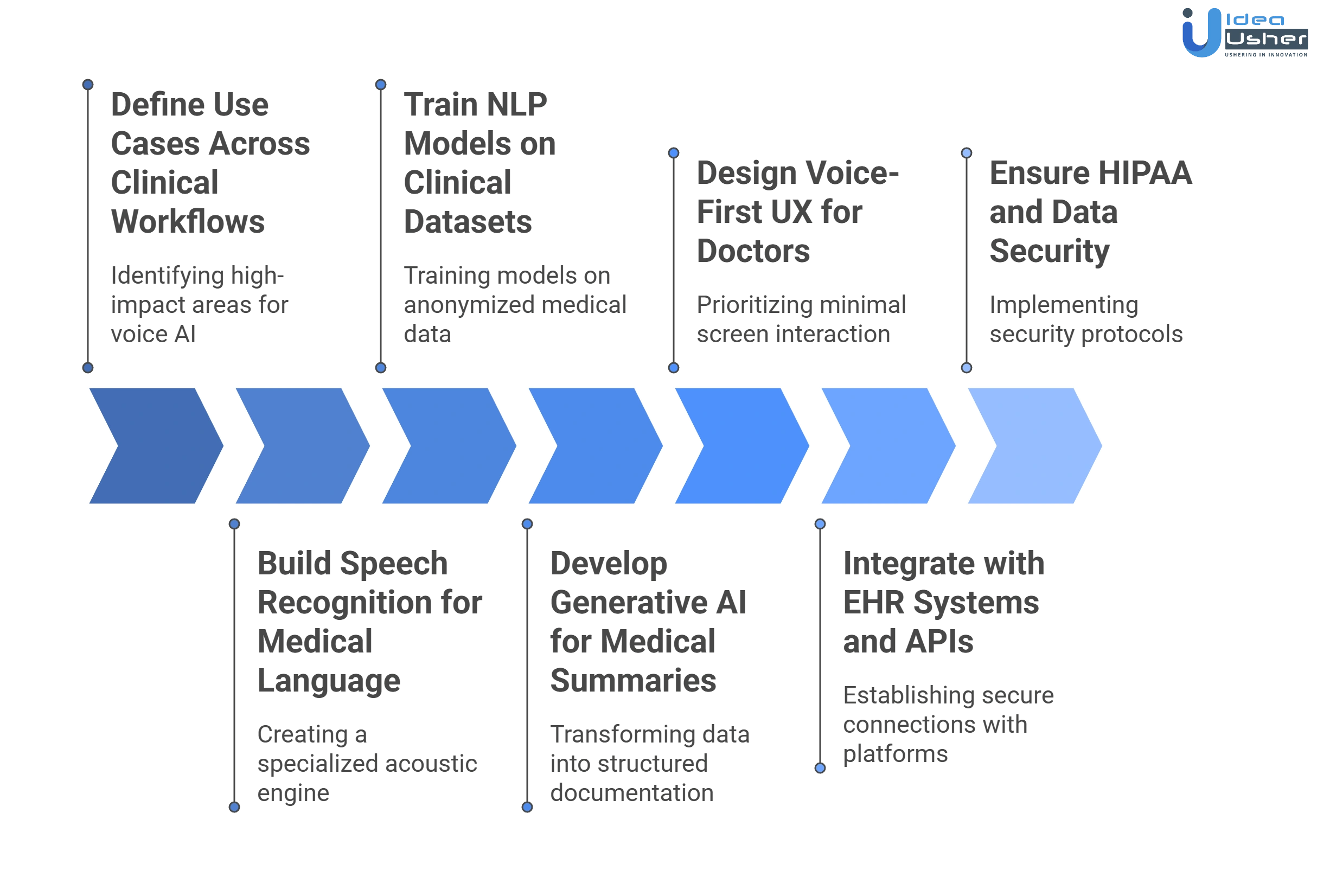
The initial phase focuses on identifying high-impact areas where a voice AI assistant for doctors can reduce friction. Engineering teams must map specific workflows, such as surgical notes, primary care consultations, and emergency room intake, to ensure the AI addresses real-world clinical needs.
2. Build Speech Recognition for Medical Language
The Suki AI app development continues with the creation of a specialized acoustic engine capable of recognizing complex pharmaceutical names and anatomical terms. This custom speech-to-text layer is optimized to handle diverse accents and the ambient background noise typical of busy hospital settings.
3. Train NLP Models on Clinical Datasets
Machine learning engineers train proprietary models on vast sets of anonymized medical data to ensure the system understands clinical intent. This training enables the AI to distinguish between symptoms, diagnoses, and medications within a natural, unscripted doctor-patient conversation.
4. Develop Generative AI for Medical Summaries
The core intelligence layer utilizes generative models to transform extracted data into structured, professional clinical documentation. This process involves fine-tuning large language models to produce concise SOAP notes that mirror the specific writing styles and requirements of different medical specialties.
5. Design Voice-First UX for Doctors
User experience design for a voice AI assistant for doctors prioritizes minimal screen interaction and high-speed feedback loops. The interface is built to be “invisible,”allowing clinicians to execute commands and review summaries through intuitive voice-driven navigation and mobile-first layouts.
6. Integrate with EHR Systems and APIs
Technical teams establish secure, bidirectional connections with major platforms like Epic and Oracle Health through FHIR and proprietary APIs. This integration ensures that voice-generated data flows instantly into the correct fields of the patient’s permanent electronic health record.
7. Ensure HIPAA and Data Security Compliance
Security protocols are woven into every stage of the Suki AI app development process to protect sensitive patient information. This includes implementing end-to-end encryption, strict access controls, and comprehensive audit logs to remain fully compliant with HIPAA, GDPR, and other global healthcare regulations.
Suki AI like Voice AI Assistant for Doctors Development Cost Breakdown
The financial commitment required for Suki AI app development varies based on the depth of clinical automation and the complexity of the integrated ecosystem. For those looking to enter this space, budgeting must account for both the core AI engine and the extensive compliance frameworks required for medical-grade software.
| Development Phase | MVP Level | Enterprise Level | Key Deliverables |
| Discovery & Architecture | $5,000 – $10,000 | $20,000 – $35,000 | Technical roadmap, compliance strategy, and system design. |
| Data Engineering | $12,000 – $20,000 | $40,000 – $75,000 | Cleaned clinical datasets, medical lexicons, and labeling. |
| AI Model Development | $25,000 – $45,000 | $85,000 – $160,000 | Custom STT, NLP intent engines, and generative SOAP note logic. |
| UI/UX & App Build | $15,000 – $28,000 | $50,000 – $90,000 | Voice-first interface, mobile/web apps, and command layer. |
| EHR Integration | $8,000 – $15,000 | $35,000 – $70,000 | Bidirectional API sync with Epic, Cerner, and MEDITECH. |
| Security & Compliance | $10,000 – $20,000 | $30,000 – $65,000 | HIPAA/GDPR encryption, audit trails, and BAA agreements. |
| Total Estimated Cost | $75,000 – $138,000 | $260,000 – $500,000 | Scalable, clinical-grade voice assistant solution. |
Primary Factors Affecting Development Costs
The final expenditure for a voice AI assistant for doctors is driven by several high-impact variables that extend beyond basic coding. Strategic decisions regarding data privacy and system interoperability can influence the total budget by as much as 30% to 50%.
- Integration Depth and EHR Complexity: Deep, bidirectional “write-back” capabilities with enterprise systems like Epic typically add $10,000 to $30,000 per platform due to intensive data mapping and validation.
- Data Preparation and Quality Assurance: Achieving the 95% to 98% accuracy required for clinical viability often consumes 25% of the total budget for data cleaning and validation.
- Regulatory and Compliance Engineering: Maintaining HIPAA and SOC 2 Type II compliance through advanced encryption and audit logs increases initial costs by 15% to 20% compared to non-regulated software.
- Inference and Infrastructure Scaling: While API-based models offer lower entry costs, high-volume usage can drive monthly infrastructure bills to between $3,000 and $12,000 based on clinician activity.
- Specialty-Specific Tuning: Tailoring the AI with custom vocabularies and note templates for fields like oncology or orthopedics typically increases the build cost by $8,000 to $12,000 per specialty module.
MVP vs Full-Scale Voice AI Platform
The Suki AI app development strategy begins with an MVP to validate clinical accuracy and speed up market entry. Transitioning to a full-scale voice AI assistant for doctors then enables deep enterprise integration and comprehensive ecosystem-wide automation.
A. What to Include in an MVP Version
The Suki AI app development goal for an MVP focuses on solving documentation challenges with minimal infrastructure. This version provides essential value for early adopters while remaining lean for rapid iteration.
- Core Ambient Scribing: The ability to capture doctor-patient dialogue and generate a structured SOAP note with at least 90% to 95% accuracy.
- Basic Medical Vocabulary: A speech engine tuned for general medicine and a few select high-volume specialties.
- Essential Clinical Templates: A library of 5 to 10 standard note formats (e.g., Progress Notes, H&P, Discharge Summaries).
- Mobile-First Interface: A clean, intuitive app that allows doctors to record and review notes on their smartphones.
- Foundational Security: Strict HIPAA-compliant data encryption and secure user authentication to ensure patient privacy from day one.
B. Scaling to Enterprise Healthcare Systems
Transitioning from an MVP to an enterprise-grade voice AI assistant for doctors requires a shift toward interoperability and high-volume stability. At this level, the platform becomes an invisible layer that connects every department in a hospital network.
- Bidirectional EHR Integration: Moving beyond simple “copy-paste” to deep sync with systems like Epic and Oracle Health, allowing the AI to write data directly into specific chart fields.
- Voice-Driven Command Layer: Enabling doctors to execute complex tasks like ordering labs, querying patient history, or navigating the EHR via voice.
- Enterprise Security & SOC 2: Implementing advanced audit trails, single sign-on (SSO), and SOC 2 Type II certification to meet the demands of large-scale health systems.
- Cross-Specialty Intelligence: Expanding support to 100+ specialties, each with its own unique linguistic model and clinical reasoning logic.
C. Timeline Differences
The development timeline is heavily influenced by the complexity of the AI models and the depth of third-party integrations required.
| Development Phase | MVP Timeline | Enterprise Timeline |
| Discovery & Design | 2 – 3 Weeks | 1 – 2 Months |
| AI Model Training | 4 – 6 Weeks | 4 – 6 Months |
| App Development | 4 – 8 Weeks | 6 – 9 Months |
| EHR Integration | 2 – 4 Weeks | 3 – 5 Months |
| Testing & Compliance | 2 – 3 Weeks | 2 – 3 Months |
| Total Estimated Time | 3 – 5 Months | 12 – 18 Months |
D. When to Start with MVP vs Full Product
Choosing the right starting point depends on your current market position, available capital, and the specific problem you are solving within the healthcare landscape.
- Start with an MVP If: You are a startup looking to validate a unique clinical hypothesis, have limited initial funding, or need to gather real-world user feedback to refine your AI’s accuracy before a larger rollout.
- Start with a Full Product If: You are an established healthcare organization with a clear mandate for digital transformation, have secured significant investment, or are building a platform specifically to compete with high-tier incumbents like Suki or Nuance.
- The Hybrid Approach: Many successful developers build an MVP for a specific high-need specialty (like Orthopedics) and then use that traction to secure the funding and data necessary to scale into a full-scale, multi-specialty enterprise solution.
Tech Stack Required to Build a Suki-Like Platform
Selecting the right technical foundation is the most critical decision in Suki AI app development. The stack must prioritize low-latency processing, extreme accuracy in medical terminology, and ironclad security to meet the rigorous demands of a clinical environment.
| Component | Recommended Stacks | Strategic Purpose |
| Voice Engines & STT | OpenAI Whisper, Google Cloud Healthcare STT, Deepgram, Microsoft Azure Speech. | Provides high-fidelity, real-time transcription capable of handling medical jargon and background clinical noise. |
| NLP & Medical LLMs | Med-PaLM 2, BioBERT, LangChain, Hugging Face Transformers, Llama 3 (Self-hosted). | Enables the system to extract medical entities, understand clinical intent, and generate structured SOAP notes. |
| Cloud & GPU Infra | AWS (HealthLake/SageMaker), Google Cloud Platform, Microsoft Azure for Health. | Offers scalable, HIPAA-compliant GPU computing power required for real-time AI inference and data storage. |
| EHR Interoperability | SMART on FHIR, HL7 v2/v3, Redox Engine, Health Gorillla, Mirth Connect. | Facilitates the seamless, bidirectional exchange of patient data between the voice AI assistant for doctors and the EHR. |
| Compliance & IAM | AES-256 Encryption, OAuth 2.0, Okta (IAM), Vanta/Drata for SOC 2 monitoring. | Ensures the platform adheres to HIPAA, GDPR, and HITECH standards through robust encryption and access controls. |
Key Technical Considerations for the Stack
Developing a voice AI assistant for doctors requires a specialized approach to infrastructure that balances performance with regulatory safety.
- On-Device vs. Cloud Processing: Implementing “Edge AI” for initial speech-to-text reduces latency and improves privacy, while a hybrid model ensures system responsiveness despite fluctuating hospital internet speeds.
- Model Fine-Tuning and Distillation: Utilizing “Model Distillation” to create specialized versions of medical LLMs reduces inference costs by 30% to 40% without sacrificing clinical accuracy or speed.
- Asynchronous Integration Layers: Building an asynchronous middleware layer allows the assistant to function smoothly while data synchronization happens in the background, preventing UI freezing during EHR data transfers.
- Zero-Trust Security Architecture: Integrating security into every API call via a zero-trust model ensures that every request is authenticated, minimizing data breach risks in multi-tenant healthcare environments.
Key Challenges in Building Voice AI for Healthcare
Developing a voice AI assistant for doctors involves navigating a complex landscape of technical, regulatory, and human factors. Addressing these hurdles is essential for creating a reliable tool that maintains clinical integrity while functioning seamlessly within high-pressure medical environments.

1. Handling Medical Terminology and Accuracy
Challenge: General-purpose speech engines often fail to recognize complex pharmaceutical names, rare anatomical terms, and specialty-specific jargon during fast-paced consultations.
Solution: Our engineers implement custom acoustic models fine-tuned on massive medical datasets, ensuring 99% accuracy by using phonetic mapping and specialized medical lexicons to catch every clinical nuance.
2. Ensuring Data Privacy and Regulatory Compliance
Challenge: Protecting sensitive health information is a legal necessity, as any data breach can lead to massive fines and loss of trust.
Solution: We build a zero-trust architecture featuring end-to-end AES-256 encryption and automated audit logs, ensuring every interaction remains fully compliant with HIPAA, GDPR, and local healthcare privacy standards.
3. Real-Time Processing Without Latency
Challenge: High-latency systems disrupt the clinical flow, causing frustration if the doctor has to wait for the AI to process spoken words.
Solution: Our developers utilize edge computing and optimized model distillation techniques to reduce inference time, providing near-instantaneous transcription and note generation regardless of the hospital’s internal network speed.
4. Integration with Legacy EHR Systems
Challenge: Many hospitals rely on older, fragmented Electronic Health Record systems that lack modern APIs, making seamless data synchronization extremely difficult.
Solution: We deploy specialized middleware and FHIR-based adapters that bridge the gap between our AI and legacy databases, ensuring stable, bidirectional data flow without requiring expensive infrastructure overhauls.
5. User Adoption Among Clinicians
Challenge: Doctors are often resistant to new technology if it adds complexity or requires a steep learning curve during their busy shifts.
Solution: Our team focuses on a voice-first, “invisible” user interface that mirrors natural workflows, providing intuitive onboarding and immediate time-saving value to ensure high engagement and long-term clinician satisfaction.
How to Ensure 99% Accuracy in Clinical Voice AI?
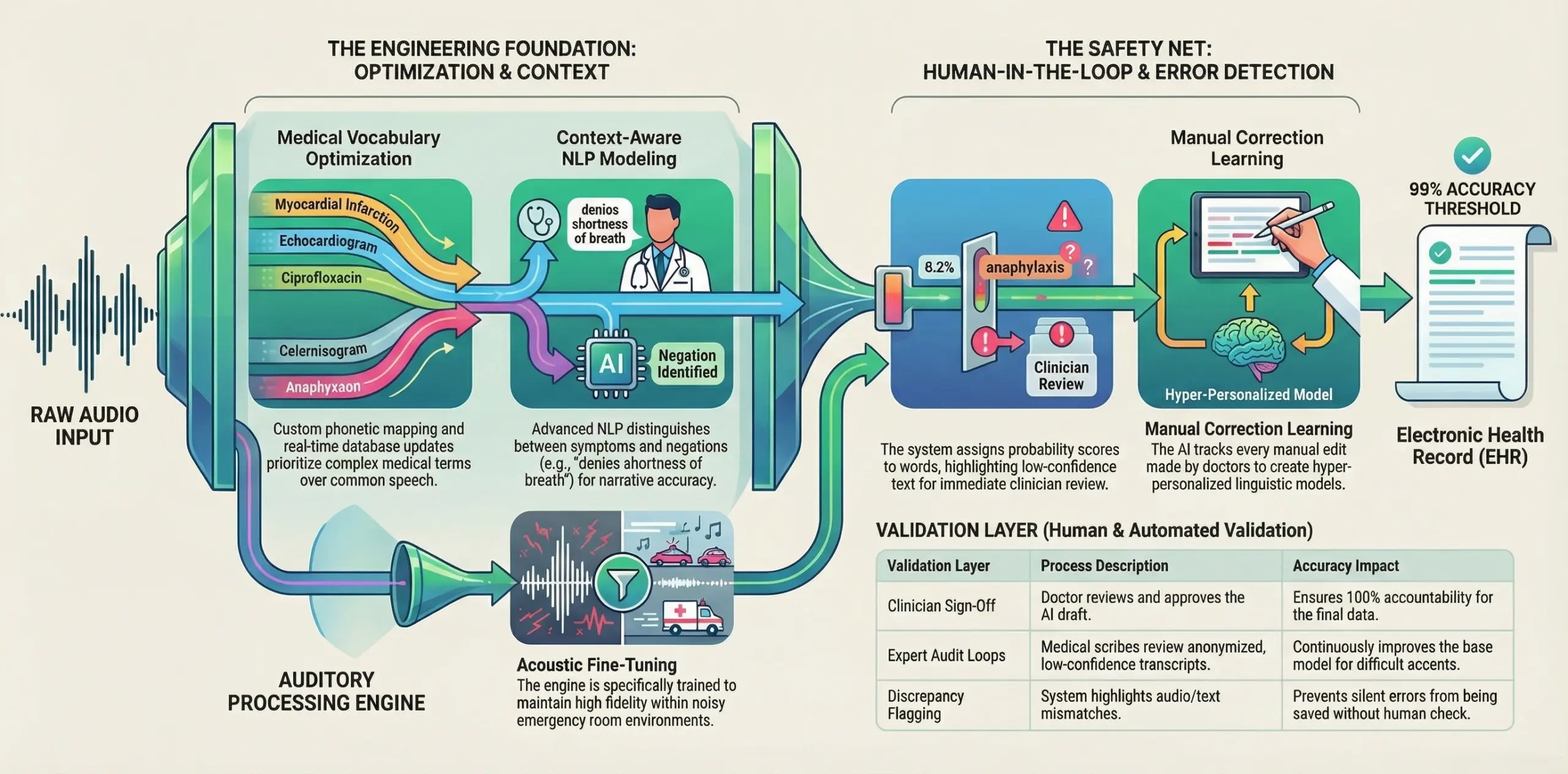
The Suki AI app development process prioritizes near-perfect accuracy as a baseline requirement for clinical safety. High-stakes medical environments require a voice AI assistant for doctors to utilize multi-layered verification architectures that eliminate ambiguity and prevent life-altering errors.
A. Medical Vocabulary Optimization
The primary hurdle for clinical voice engines is the sheer complexity of medical terminology. General-purpose models often struggle with similar-sounding drug names (look-alike/sound-alike) or rare procedural jargon.
- Custom Phonetic Mapping: Our developers implement specialized phonetic dictionaries that prioritize medical lexicons over common vocabulary, ensuring “clopidogrel” is never mistaken for a common phrase.
- Specialty-Specific Weighting: By adjusting the model’s linguistic weights based on the doctor’s specialty, the AI knows that a cardiologist is more likely to say “systolic” than a general therapist.
- Dynamic Lexicon Updates: We integrate real-time updates from official databases like the RxNorm and SNOMED CT to ensure the assistant is always aware of new medications and diagnostic codes.
- Acoustic Fine-Tuning: The engine is trained on diverse “noisy” environments, such as emergency rooms or clinics with heavy background chatter, to maintain high fidelity in suboptimal conditions.
B. Context-Aware NLP Models
Accuracy is not just about transcribing words; it is about understanding their clinical intent. Context-aware models analyze the relationship between words to ensure the generated documentation reflects the true medical narrative.
- Negation Detection: Advanced NLP identifies that “The patient denies any shortness of breath” means the symptom is absent, preventing the AI from accidentally listing it as an active complaint.
- Entity Relationship Extraction: The system links specific dosages to the correct medications and frequencies, ensuring the plan section of the note is technically and clinically coherent.
- Pronoun Resolution: The AI tracks the subject of the conversation, ensuring that descriptions of family history are not confused with the patient’s own current symptoms.
- Intent Classification: By distinguishing between a doctor’s command to the device and their conversation with the patient, the system prevents “administrative noise” from entering the permanent record.
C. Human-in-the-Loop Validation Systems
To reach the 99% accuracy threshold, automated systems must be supported by human intelligence. This feedback loop ensures the AI learns from its mistakes and adapts to the specific nuances of individual practitioners.
| Validation Layer | Process Description | Accuracy Impact |
| Clinician Sign-Off | The final step where the doctor reviews and approves the AI-generated draft before it enters the EHR. | Ensures 100% accountability and clinical verification of the final data. |
| Manual Correction Learning | The AI tracks every manual edit a doctor makes to its drafts and updates its future predictions accordingly. | Creates a hyper-personalized model that mirrors the doctor’s unique writing style. |
| Expert Audit Loops | Anonymized, low-confidence transcripts are reviewed by medical scribes to retrain the underlying models. | Continuously improves the “base” model’s performance on difficult accents or terms. |
| Discrepancy Flagging | The system highlights sections where the audio and the generated text have low similarity scores for immediate review. | Prevents silent errors from being saved without a secondary human check. |
D. Real-Time Error Detection Mechanisms
A sophisticated voice AI assistant for doctors acts as its own editor, identifying potential inaccuracies as they happen. These “active safety” features alert the clinician to discrepancies before the note is finalized.
- Clinical Consistency Checks: If the doctor mentions a diagnosis that contradicts the recorded vital signs, the AI can flag the inconsistency for a quick verbal or manual correction.
- Confidence Scoring: Every transcribed word is assigned a probability score; anything below a certain threshold is highlighted in the draft to catch the clinician’s attention during review.
- Real-Time Feedback Loops: The system provides visual cues such as a specific color for “high-risk” medical terms, allowing the doctor to verify critical data points at a glance.
- Grammar and Syntax Logic: Specialized medical grammars ensure the AI doesn’t produce “word salad,” maintaining the professional structure required for insurance audits and legal documentation.
Monetization Models for Voice AI in Healthcare
The commercial success of Suki AI app development relies on aligning pricing structures with the operational budgets of healthcare institutions. Effective monetization strategies must balance immediate value delivery with the long-term scalability required by diverse medical environments and enterprise networks.
1. SaaS Subscription for Hospitals and Clinics
Monthly or annual subscription tiers provide a predictable revenue stream while offering clinics varied levels of ambient documentation power. This model typically scales from basic automated scribing to advanced packages that include deep EHR integration and hands-free navigation capabilities.
2. Per-User or Per-Physician Pricing Models
Charging on a per-clinician basis ensures that costs remain transparent and directly proportional to the size of the medical staff. This approach often ranges from $299 to $499 per user, allowing organizations to budget accurately without worrying about fluctuating usage volumes.
3. Enterprise Licensing with EHR Providers
Strategic partnerships with major EHR vendors allow for large-scale licensing agreements that embed the voice AI assistant for doctors directly into the hospital’s existing infrastructure. These high-value contracts often involve custom engineering, priority support, and volume-based discounts for thousands of license seats.
4. Revenue from Coding and Billing Optimization
Platforms can monetize through value-added services that focus on revenue cycle management, such as automated ICD-10 coding and denial risk scoring. By capturing missed billable details in real time, the software pays for itself by significantly increasing the practice’s overall reimbursement accuracy.
Real-World Use Cases Across Healthcare Settings
Deploying a voice AI assistant for doctors provides measurable efficiency gains across diverse medical environments. Strategic Suki AI app development ensures that ambient intelligence adapts to the unique pace and documentation requirements of each specific clinical setting.

1. Voice AI in Outpatient Clinics
Primary care physicians utilize ambient listening to manage high patient volumes without manual charting. The AI captures the entire dialogue, allowing doctors to maintain eye contact and complete documentation during the visit.
Real-World Example: The American Academy of Family Physicians (AAFP)conducted a pilot study using Suki AI where participating physicians reported a 72% reduction in documentation time, saving an average of 3.3 hours per week per clinician.
2. Hospital Workflow Automation
The voice integration allows clinicians to retrieve patient data in acute care settings and update charts hands-free. This minimizes the time spent at communal workstations and reduces the risk of cross-contamination.
Real-World Example: Ascension Health, one of the largest private healthcare systems in the U.S., implemented voice AI assistants across multiple departments to streamline surgical documentation and reduce the “after-hours” charting burden for their hospitalist teams.
3. Telemedicine and Virtual Consultations
Integrated voice AI monitors digital audio streams during video visits to generate structured clinical notes automatically. This eliminates the need for doctors to toggle between the call and the EHR.
Real-World Example: Amwell, a leading telehealth platform, partnered with clinical voice AI providers to integrate ambient recording directly into their virtual care modules, allowing providers to focus entirely on the screen-to-screen patient interaction while the note is generated in the background.
4. Specialty-Specific Use Cases
Specialized models recognize unique procedural terminology for fields like orthopedics or cardiology. These assistants understand specific physical exam maneuvers and automatically populate the relevant specialized templates within the medical record.
Real-World Example: St. Elizabeth Healthcare deployed voice AI specifically for their orthopedic and sub-specialty clinics, where the system successfully mastered complex surgical terminology and anatomical descriptions that general-purpose voice tools typically fail to transcribe accurately.
Case Study: How Voice AI Reduces Clinician Burnout
The integration of a voice AI assistant for doctors transforms the clinical environment from a screen-focused workspace into a patient-centered one. Real-world data from Suki AI app development initiatives demonstrates that removing the mechanical burden of documentation is the most effective intervention for restoring professional satisfaction and operational health.
A. Before vs After Voice AI Implementation
This transition represents a fundamental shift in how a physician interacts with both the patient and the digital infrastructure of the hospital. The following table highlights the operational transformation observed after deploying ambient clinical intelligence.
| Operational Metric | Traditional Manual Workflow | Voice AI-Enabled Workflow |
| Documentation Method | Manual typing and clicking within EHR templates. | Natural conversation captured via ambient listening. |
| Physician Focus | Split between the computer screen and the patient. | 100% focused on patient interaction and eye contact. |
| Data Entry Timing | Delayed; often completed at the end of the shift. | Real-time; notes are drafted during the encounter. |
| “Pajama Time” | 2–3 hours of administrative work after hours. | Near-zero; charts are finalized between appointments. |
| Mental Workload | High cognitive tax from multitasking and recall. | Low; AI handles the structure and data organization. |
B. Productivity Gains and Time Savings
The financial and operational ROI of a voice AI assistant for doctors is driven by the sheer volume of time reclaimed for clinical care.
- Significant Reduction in Charting Time: Physicians utilizing advanced voice assistants report a 60% to 72% decrease in the time required to complete a clinical encounter note.
- Increased Patient Access: Reclaiming administrative hours allows clinics to increase their daily patient capacity by 15% to 20% without adding stress to the provider.
- Faster Billing Cycles: Because notes are completed immediately, the coding and billing process begins hours or even days sooner than with traditional manual workflows.
- Improved Note Quality: AI-generated notes are often more comprehensive, capturing specific details that might be forgotten during delayed manual entry.
C. Impact on Patient Engagement and Satisfaction
The restoration of the doctor-patient relationship is the most significant “soft” benefit of ambient intelligence. When the digital barrier of the computer screen is removed, the quality of care improves fundamentally.
- Enhanced Active Listening: Clinicians can engage in more meaningful dialogue, leading to a 10% to 15% increase in the proportion of time spent making direct eye contact with patients.
- Shared Decision Making: With a hands-free interface, doctors can pull up lab results or imaging via voice, reviewing them alongside the patient to foster a collaborative treatment environment.
- Higher Patient Trust: Research indicates that patients feel more respected and heard when their physician is not distracted by a keyboard, directly correlating to higher satisfaction scores.
- Clearer Patient Instructions: The AI can instantly generate jargon-free summaries of the visit, ensuring patients leave with a clear understanding of their care plan and follow-up steps.
Future Trends in Voice AI for Healthcare
The next generation of Suki AI app development is moving toward proactive, autonomous systems. These advancements aim to transition the voice AI assistant for doctors from a passive listener to an intelligent partner that anticipates clinical needs.
1. AI Clinical Copilots and Autonomous Workflows
Future assistants will autonomously trigger actions like pharmacy orders or lab referrals based on conversational context. This evolution reduces manual intervention, allowing the AI to manage the administrative lifecycle of a patient visit independently.
Real-World Example: Microsoft and Nuance have integrated the Dragon Ambient eXperience (DAX) with GPT-4 capabilities to provide “Copilot” features that suggest clinical goals and automate task prioritization for nursing staff.
2. Integration with Wearables and IoT Devices
Voice AI will soon synchronize with real-time data from patient wearables and hospital IoT sensors. This creates a holistic view where the assistant can verbally brief the doctor on continuous glucose or heart rate trends.
Real-World Example: Mayo Clinic has explored integrating ambient voice interfaces with remote patient monitoring (RPM) platforms to give clinicians voice-activated summaries of data collected from patients’ home-based medical devices.
3. Multimodal AI Combining Voice, Text, Vision
Next-tier platforms will analyze voice, clinical text, and medical imaging simultaneously to provide comprehensive diagnostic support. This multimodal approach ensures that the AI “sees” what the doctor sees during physical examinations or x-ray reviews.
Real-World Example: Google Health is developing multimodal models like Med-Gemini, which can process spoken history alongside high-resolution pathology slides to suggest more accurate differential diagnoses during the patient encounter.
4. Personalized AI Assistants for Clinicians
Hyper-personalized AI will learn the specific verbal nuances, shorthand, and unique clinical preferences of individual doctors. This ensures that every generated note perfectly reflects the specific “voice” and professional style of the user.
Real-World Example: Suki AI has already implemented “Suki Show,” a feature that uses machine learning to adapt to a doctor’s individual editing patterns, ensuring that over time, the AI-generated drafts require zero manual corrections.
Why Choose IdeaUsher for Voice Assistant like Suki AI Development?
Partnering with a specialized development firm, IdeaUsher ensures your Suki AI app development journey is technically sound and strategically positioned. Our team bridges the gap between complex clinical requirements and cutting-edge automation.
A. Experience in Healthcare AI Solutions
We bring a deep understanding of the regulatory landscape and clinical workflows. Our engineers have a proven track record of delivering HIPAA-compliant platforms like Kamelion, MediPort, Vezita etc. that prioritize data integrity and physician efficiency.
B. Expertise in Voice, NLP, and Generative AI
Our technical core excels in building sophisticated speech-to-text engines and generative models. We specialize in fine-tuning LLMs for medical accuracy, ensuring every voice AI assistant for doctors we build is precise.
C. Proven Approach to Scalable App Development
We utilize a modular architecture that allows your platform to grow from a localized MVP to an enterprise-grade system. Our process focuses on low-latency performance and high-volume data handling capabilities.
D. End-to-End Support from Idea to Deployment
Our partnership extends from initial strategy and UI/UX design to EHR integration and post-launch maintenance. We provide the comprehensive technical oversight necessary to navigate the complexities of the healthcare market.
Build Your Voice AI Assistant for Doctors with IdeaUsher!
Partner with our ex-FAANG/MAANG developers to transform your vision into a market-leading voice AI assistant for doctors. With over 500,000+ hours of development experience, IdeaUsher has delivered complex solutions for numerous global enterprises. We provide the technical depth required for high-tier Suki AI app development, ensuring your platform is scalable, compliant, and ready for clinical deployment.
- Strategic Development Roadmap: Our consultants analyze clinical goals to build a technical blueprint from LLM selection to EHR integration. This ensures ROI and long-term architectural stability.
- Expert Concept Validation: Work with senior architects to stress-test your concept against medical regulations and market demands. We refine your MVP to deliver immediate clinical value.
- Enterprise-Grade Scalability: We transition AI concepts into high-performance products that support thousands of concurrent users. Our infrastructure provides the low latency required for global medical documentation.
Conclusion
The era of digital friction in healthcare is giving way to a more intuitive, clinician-centric future. Investing in Suki AI app development represents a strategic move toward eliminating administrative burnout and restoring the focus on patient care. By implementing a sophisticated voice AI assistant for doctors, healthcare organizations can bridge the gap between complex EHR requirements and seamless clinical workflows. As ambient intelligence continues to evolve, these voice-first tools will become indispensable, ensuring that technology finally serves the healer rather than the other way around.
FAQs
A.1. The initial investment for a baseline version typically starts at $80,000. Comprehensive enterprise solutions involving deep EHR integration and specialized medical NLP tuning generally range between $150,000 and $500,000.
A.2. Technical safeguards include end-to-end AES-256 encryption and a zero-trust architecture. Security standards also require signed Business Associate Agreements, automated audit logs, and SOC 2 Type II certification for data protection.
A.3. A human-in-the-loop system involves clinical experts reviewing AI-generated outputs to verify medical accuracy. This validation process is essential for maintaining safety standards and refining the underlying models through continuous high-quality feedback.
A.4. Integration with major EHRs is achievable through SMART on FHIR and HL7 standards. Specialized middleware like Redox or Health Gorilla manages the bidirectional data mapping necessary to sync notes directly into patient charts.