


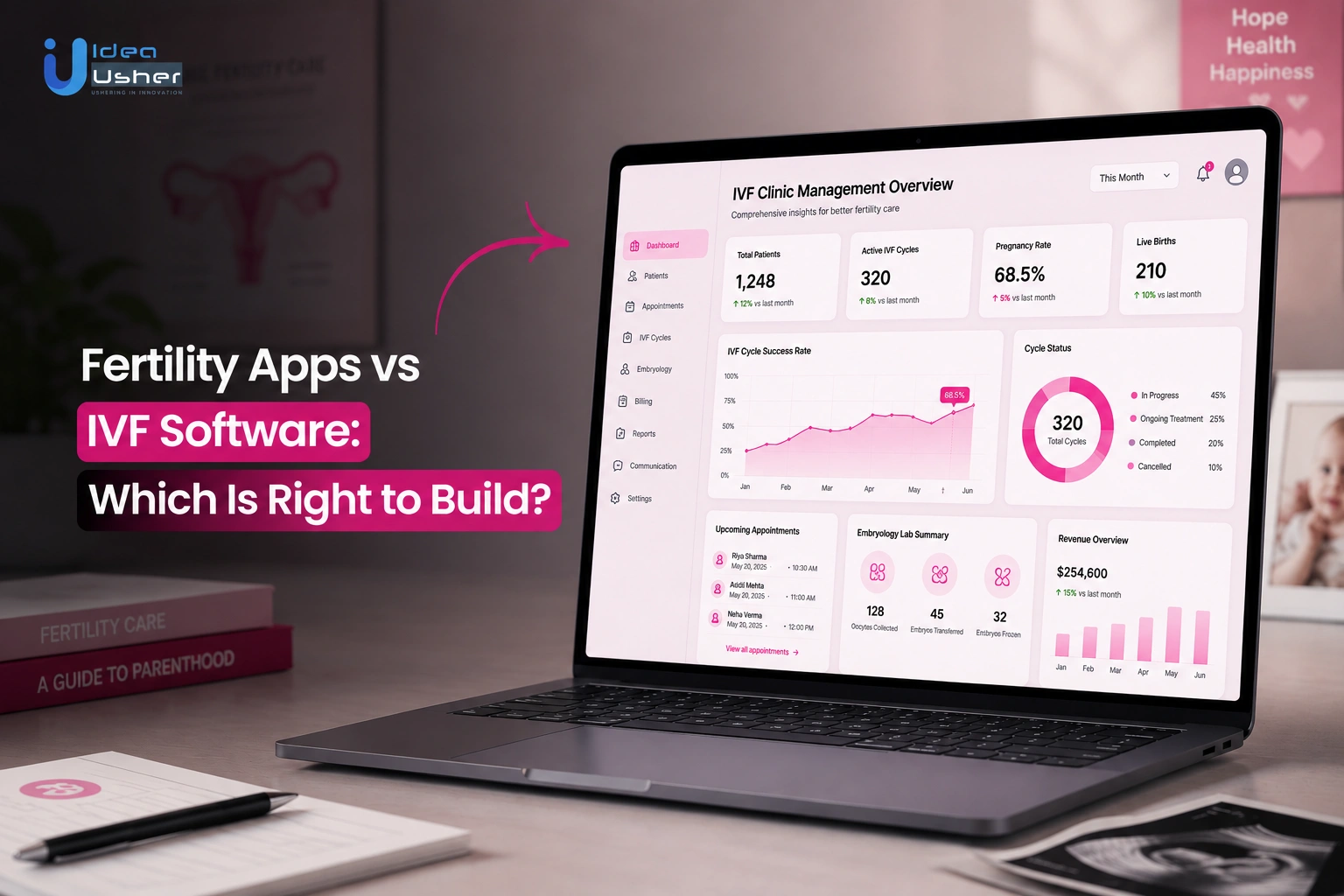
Key Takeaways
- The choice between fertility apps and IVF software depends on your target users, business model, and long-term growth strategy.
- Fertility apps focus on cycle tracking, AI-powered insights, and patient engagement, while IVF software streamlines clinic operations, laboratory workflows, and treatment management.
- Although fertility apps are faster to launch, IVF software offers stronger enterprise value through recurring SaaS revenue, AI-powered automation, and long-term clinic partnerships.
- Both platforms benefit from AI, secure healthcare integrations, telehealth, analytics, and compliance to deliver better fertility care and operational efficiency.
- How Idea Usher can help businesses build fertility tech solutions with AI-powered features, healthcare compliance, and enterprise-ready architecture.
The fertility tech market is growing faster than ever, but one mistake many founders make is assuming every fertility product serves the same purpose. In reality, fertility apps and IVF software are built for completely different audiences. A fertility app helps people understand their reproductive health and stay engaged throughout their fertility journey, while IVF software is designed to help clinics streamline treatments and deliver better patient care. The choice between the two shapes your product strategy, business model, and long-term growth. If you’re planning to build in this space, understanding where the real opportunity lies is far more important than deciding which features to launch first.
We’ve built numerous fertility solutions that combine AI-driven health analytics and secure EMR integration to create scalable digital health platforms for patients and fertility clinics. As we’ve this expertise, we’ve put together this blog to help you understand the differences between fertility apps and IVF software, so you can determine which platform aligns best with your business goals, target audience, and long-term growth strategy.
The Rising Demand for Fertility Technology Solutions
According to Virtue Market Research, the Global Fertility Tech Solutions Market was valued at USD 6.66 billion and is expected to reach USD 8.30 billion by 2030, growing at a 3.2% CAGR. This steady growth is being driven by more people seeking fertility care later in life and rising demand for digital tools that simplify treatment, help patients stay on track, and improve their overall care experience.

Source: Virtue Market Research
This shift has created strong opportunities for digital fertility platforms. Carrot Fertility is a leading example, combining employer-sponsored fertility benefits with a connected care platform. The company has grown into a major player in the market and generates more than $70 million in estimated annual revenue, showing the commercial potential of patient-focused fertility technology.
The Need for Smart Clinic Workflows
As fertility clinics treat more patients, managing IVF procedures has become much more complex. Every treatment involves detailed schedules, medication plans, embryo records, and laboratory workflows that general electronic medical record systems were never built to handle. This is why many clinics are moving to software designed specifically for reproductive medicine.
Modern IVF software also brings AI into the laboratory. It can analyze time-lapse embryo images, assist embryologists in selecting the most promising embryos, and automate routine administrative work. This helps reduce manual errors, improves operational efficiency, and allows clinical teams to spend more time on patient care and treatment outcomes.
A High-Growth Market for Investors
The fertility technology market has become one of the fastest-growing areas in digital health, attracting strong interest from investors. Enterprise fertility software offers predictable subscription revenue, long-term clinic relationships, and growing demand as more fertility centers adopt digital workflows. With assisted reproductive treatments increasing worldwide, scalable SaaS platforms have significant long-term business potential.
A good example is TMRW Life Sciences, which built an automated specimen management and embryo tracking platform for IVF labs. By improving safety and compliance, the company grew rapidly and surpassed $20 million in annual revenue.

Fertility Apps vs IVF Software: What’s the Core Difference?
Consumer fertility apps are built for individuals who want to better understand and manage their reproductive health. They make it easy to track menstrual cycles, predict ovulation, log symptoms, and monitor fertility over time. Many also use AI to provide personalized insights that help users plan for pregnancy or simply gain a clearer picture of their hormonal health.

IVF software serves a very different purpose. It is designed for fertility clinics to manage treatments, patient records, laboratory workflows, and embryo tracking throughout the IVF process. Because it handles sensitive medical data and critical clinical operations, it must support strict compliance, accuracy, and seamless coordination between doctors, embryologists, and administrative staff.
Platforms like Flo Health demonstrate the massive potential of the consumer model. By building an app around individual health tracking and community education, Flo scaled its global subscriber base, driving annual revenues to approximately 275 million dollars.
Who Uses Each Solution and Why?
Consumer apps are built for everyday mobile users. Their main features include notifications, content feeds, and basic data visualizations. The engineering focuses on supporting high volumes of concurrent users and maintaining application retention rates. Clinical software serves medical professionals including reproductive endocrinologists, embryologists, and clinic managers.
Daily workflows involve coordinating medical appointments, logging lab results, and auditing embryo storage conditions. This environment requires absolute technical accuracy. If a consumer app drops an entry, the user skips a log. If clinical software fails during a cycle, it can compromise sensitive lab procedures.
Enterprise software like EngagedMD has successfully commercialized the clinical support side. By integrating digital patient intake, informed consent automation, and fertility education modules directly into clinic workflows, they created a business model that scales via institutional providers, yielding annual revenues of around 7.7 million dollars.
What Makes Them Different?
At first glance, fertility apps and IVF software may seem similar because both support reproductive health. In reality, they solve very different problems. One helps individuals manage their fertility journey, while the other helps clinics deliver and manage complex IVF treatments. Understanding these differences is important because the features you build will shape your product, target audience, and long-term business strategy.
| System Feature | Consumer Fertility Applications | Clinical IVF Software Platforms |
| Primary Focus | Cycle tracking, ovulation prediction, and AI coaching | Embryo grading, cryo storage tracking, and treatment protocols |
| Integrations | Consumer wearables, smart thermometers, and health kits | Lab hardware, incubators, electronic medical records, and billing |
| Data Compliance | Low liability, standard consumer privacy policies | High liability, strict HIPAA, GDPR, and medical audits |
| Data Type | Self-reported logs, symptoms, and basic body metrics | Lab analytics, biopsy results, and specimen tracking data |
Which Platform Should You Build First?
Choosing the right platform depends on your investment thesis, capital resources, and technical risk tolerance. A consumer platform offers lower barriers to entry and faster product launches. Success depends on digital marketing execution, brand loyalty, and keeping cost per acquisition below customer lifetime value.
The enterprise software path requires more upfront development capital and a long, consultative sales process. However, this model yields highly predictable recurring revenue, exceptional customer retention, and defensive market barriers. Clinics rarely switch software vendors once a platform integrates with their daily laboratory operations.
Key Features That Differentiate Fertility Apps from IVF Software
Although fertility apps and IVF software both support reproductive healthcare, they are built to solve different problems. Understanding the key features of each helps you choose the right product strategy, prioritize development, and build a platform that meets the needs of your target users.
Fertility Apps Focus on Everyday User Engagement
Consumer fertility apps are designed to keep users engaged throughout their fertility journey, not just during treatment. They focus on making reproductive health easier to understand with personalized insights, simple tracking tools, and features that encourage users to return regularly.

- Smart Cycle and Ovulation Forecasting: Predicts peak fertile windows by analyzing body temperature, hormone tests, and period histories.
- Daily Symptom and Mood Logging: Tracks physical signs like cervical mucus changes along with energy levels to paint a clear picture of hormonal health.
- Proactive Medication Alerts: Delivers well-timed notifications ensuring patients stick to strict supplement or hormone schedules.
- Wearable Hardware Synchronization: Hooks into smartwatches and rings to pull continuous biometrics like resting heart rate and sleep patterns.
- Personalized AI Insights: Translates raw user data into custom wellness tips, educational modules, and reproductive guidance.
IVF Software Powers Clinic Operations
IVF software is built to support the complete workflow of fertility clinics, from patient intake to laboratory management and treatment follow-up. Instead of focusing on individual users, these platforms help clinical teams work more efficiently while maintaining accuracy, compliance, and high standards of patient care.
- Centralized Patient Record Management: Coordinates comprehensive medical histories, diagnostic test results, and partner details in one secure place.
- Precision Cycle Planning Dashboards: Maps out intricate medication timelines, hormone monitoring checks, and egg retrieval dates for clinical staff.
- Advanced Embryology Workflows: Records real-time microscopic observations, fertilization details, and cell division milestones in the laboratory.
- Fail-Safe Cryo Tracking: Pinpoints the exact physical location of frozen eggs, sperm, and embryos across specialized storage tanks.
- Integrated Scheduling and Medical Billing: Streamlines visit bookings, manages specialist calendars, and processes complex insurance codes natively.
- Automated Regulatory Compliance: Compiles required national data registries and generates audit trails to maintain official clinic certifications.
Shared Features Both Platforms Should Include
Despite serving different audiences, fertility apps and IVF software share several essential features. These capabilities improve the user experience, strengthen communication, and ensure sensitive health data is managed securely across the platform. Building these core features from the start creates a stronger foundation and makes it easier to scale your product as user needs evolve.
1. Secure Patient Portal
A secure patient portal keeps all essential health information in one place, making it easier for users to manage their fertility journey. Patients can view appointments, access reports, receive treatment updates, and communicate with their care team without relying on multiple systems.
Miro Fertility is a good example, offering a portable fertility record that patients can securely share across different clinics while staying connected with their healthcare providers.
2. Teleconsultation and Virtual Care
Virtual consultations make fertility care more convenient by allowing patients to speak with specialists from home. They reduce unnecessary clinic visits, simplify follow-up appointments, and help patients stay connected with their care team throughout treatment. Kindbody uses this hybrid approach by combining virtual fertility consultations with in-person clinical care, giving patients greater flexibility while maintaining a consistent care experience.
3. Secure Messaging Between Patients and Providers
Secure in-app messaging helps patients stay in touch with their care team throughout the treatment process. They can ask questions, receive medication instructions, and get timely updates without switching to external communication channels. Meddilink includes encrypted messaging within its patient app, enabling secure, real-time communication between clinics and patients while improving engagement and response times.
4. Analytics and Performance Dashboards
Analytics dashboards turn health and treatment data into insights that are easy to understand and act on. Individuals can track fertility patterns over time, while clinics can monitor treatment performance, patient engagement, and operational efficiency from a single view.
Flo Health is a leading example, using data analytics to deliver personalized cycle insights and long-term health trends for millions of users.
5. AI-Powered Recommendations
Artificial intelligence helps fertility platforms deliver more personalized and timely support. It can analyze user or clinical data to provide better recommendations, automate routine tasks, and assist healthcare teams in making informed decisions throughout the treatment journey.
iHOPE is a strong example, using AI to estimate live birth probabilities, support medication scheduling, and generate patient-friendly reports for both patients and clinicians.
Development Cost Comparison: Fertility App vs IVF Software
Investing in reproductive health technology requires a clear understanding of the capital required to build a stable, scalable product. Whether you are launching a consumer-facing mobile application or an enterprise clinic platform, budgeting involves looking past initial coding to consider regulatory frameworks, integration complexity, and long-term infrastructure stability.
What Determines the Cost of Each Platform?
Consumer fertility apps are usually quicker and more affordable to build because they focus on patient-facing features. As the product grows, adding AI-powered insights, personalized coaching, and wearable support increases the overall development effort. IVF software is more complex from the beginning. It must fit into daily clinic operations, securely manage sensitive patient data, and connect with laboratory systems and hospital software.
That is why these platforms typically require more time, specialized expertise, and a higher initial investment.
- Biological Chain of Custody: Clinical systems handle the legal tracking and chain of custody for delicate biological specimens, which requires a rigorous, institutional-grade security architecture.
- Database Encryption and Access Control: To survive strict medical audits and meet international healthcare compliance laws, every database layer must feature advanced encryption and airtight access controls.
- Upfront Infrastructure Investment: The absolute necessity for clinical accuracy, legal compliance, and long-term data durability means professional IVF platforms require a substantially higher upfront financial investment than consumer wellness applications.
Fertility App vs IVF Software Development Budget
Building an MVP is the fastest way to validate your idea and enter the market with a controlled budget. As your platform grows, we can gradually add advanced capabilities such as AI-powered embryo grading, predictive analytics, and enterprise clinic workflows. This phased approach keeps development manageable, helps you invest where it matters most, and ensures the platform can scale with your business.
| Development Phase & Metrics | Consumer Fertility Application | Enterprise IVF Software Platform |
| MVP Development Cost | $40,000 to $75,000 | $90,000 to $160,000 |
| Enterprise / Full-Scale Cost | $100,000 to $250,000+ | $250,000 to $600,000+ |
| Average Timeline to Launch | 3 to 6 months | 6 to 12+ months |
| Primary Technical Drivers | UI/UX design, wearable APIs, high concurrent traffic handling | EHR interoperability, HL7/FHIR protocols, lab hardware sync |
| Compliance Capital Needed | Standard GDPR/CCPA data privacy implementation | Deep HIPAA compliance, medical device data security, data audits |
How to Reduce Development Costs?
Reducing development costs is not about removing essential features. It starts with building a focused MVP that solves the most important user problems. Consumer fertility apps should prioritize cycle tracking and patient engagement, while IVF platforms should first establish reliable patient records, scheduling, and core clinic workflows. This approach validates the product early and avoids spending on advanced features before they are needed.
A modular, cloud-native architecture also helps control long-term costs by making the platform easier to scale. Planning integrations, security, and compliance from the beginning prevents expensive changes later in development. Working with an experienced healthcare software team further speeds up delivery, keeps the budget predictable, and results in a secure platform that is ready to grow with your business.
Who Uses Fertility Apps and Who Needs IVF Software?
Although fertility apps and IVF software both support reproductive healthcare, they are designed for very different users. Understanding who uses each platform helps you identify the right market, prioritize features, and build a solution that delivers real value from the start.
Fertility Apps Are Built for Individuals and Couples
Consumer fertility apps are built for people who want to better understand and manage their reproductive health. Users expect a simple experience that helps them track menstrual cycles, predict fertile windows, monitor lifestyle habits, and receive personalized insights. Many couples also use these apps together to stay informed throughout their fertility journey and prepare for treatment if needed.
A strong example is Premom, which combines its fertility tracking app with at-home ovulation testing kits. This connected approach has helped the company build a large consumer audience and generate an estimated $14 million in annual revenue, showing the growing demand for patient-focused fertility solutions.
IVF Software Is Designed for Fertility Clinics
Clinic software ignores general consumer wellness completely to solve complex operational, laboratory, and regulatory headaches for specialized medical entities. The user ecosystem inside an active fertility center consists of multiple highly specialized professional personas.
- Reproductive Endocrinologists: Rely on the platform to review extensive patient histories, analyze hormone trends, and configure exact multi-drug ovulation induction protocols.
- Embryologists and Lab Teams: Use the software as a strict digital ledger to track embryo development, log time-lapse cell division data, and ensure error-free cryopreservation storage management.
- Nurses and Coordinators: Need centralized dashboards to orchestrate medication timelines, schedule delicate retrieval appointments, and manage patient communications.
- Clinic Administrators: Require deep functional integrations to handle medical billing engines, insurance claims, and multi-site healthcare compliance auditing.
The core value proposition of enterprise clinic systems lies in consolidation. Instead of forcing clinical personnel to jump between generic electronic medical records, standalone lab logs, and independent billing engines, specialized IVF platforms house the entire operational pipeline under one secure roof.
Platforms like MedITEX have commercialized this exact infrastructure requirement. By providing multi-center medical diagnostic tracking and specialized lab compliance modules to healthcare systems globally, they have established deep enterprise value, driving their annual software licensing revenues to approximately 5 million dollars.
Fertility Apps and IVF Softwares Who Got Recent Funding
Investment in fertility technology continues to grow as demand for digital reproductive healthcare increases. Investors are backing companies that improve patient experiences, streamline clinic operations, and use AI to enhance fertility care. The examples below highlight fertility apps and IVF software companies that have recently attracted funding, showing where the market is placing its confidence.
Fertility Apps Continue to Attract Investors
Consumer fertility apps continue to gain investor attention as more people turn to digital tools to manage their reproductive health. Platforms that combine personalized insights, AI-powered guidance, and accessible care are showing strong growth potential and attracting significant funding.
Flo Health
Flo Health became Europe’s first FemTech unicorn after raising over $200 million in Series C funding led by General Atlantic in 2024. The investment is being used to expand its AI-powered women’s health platform, enhance personalized fertility insights, and grow its global user base of more than 70 million monthly active users.
Maven Clinic
Maven Clinic, one of the world’s largest virtual women’s and family health platforms, has continued to attract investor interest while expanding its AI capabilities through Maven Intelligence. The company serves more than 2,000 employers worldwide and remains one of the highest-funded FemTech companies, reflecting strong confidence in digital fertility and family care solutions.
AI IVF Platforms Are Securing Major Funding
AI-powered IVF platforms are attracting strong investment as fertility clinics adopt smarter technologies to improve treatment outcomes and operational efficiency. Companies that use AI for embryo analysis, workflow automation, and clinical decision support are emerging as some of the most promising businesses in reproductive healthcare.
Alife Health
Alife Health raised $22 million in Series A funding to accelerate its AI-powered IVF platform. The company develops tools that help fertility specialists with embryo assessment, treatment planning, and clinical decision-making, making IVF procedures more data-driven and efficient.
AIVF
Israeli startup AIVF secured $25 million in Series A funding to expand its AI operating system for IVF clinics. Its EMA platform uses artificial intelligence to support embryo selection and optimize IVF workflows, helping clinics improve treatment outcomes and operational efficiency.
Build a Fertility Tech Solution with IdeaUsher
Investing in reproductive health technology requires an engineering partner who understands the high stakes of medical data. Building software in this space demands clean execution, absolute data security, and an architecture that can scale as your business grows.
End-to-End Development for Fertility Platforms
Turning a fertility platform idea into a successful product requires the right technology partner. From planning to launch, every stage should be designed with scalability, security, and long-term growth in mind. Our team manages the complete development lifecycle, from product strategy and UI/UX design to cloud deployment and ongoing support.
We build custom fertility apps and IVF software around your business goals, ensuring the platform remains secure, high-performing, and ready to scale as your users or clinic network grows.
Healthcare AI and Compliance Expertise
Building fertility software requires more than great features. Security, compliance, and reliable healthcare integrations are essential for earning the trust of both patients and medical professionals. We build every platform with HIPAA and GDPR compliance in mind while integrating AI capabilities and healthcare interoperability from the start. Our team ensures your software connects smoothly with existing EHR systems, supports secure data exchange, and provides a reliable foundation that can scale with your business.
Build With a Team That Knows HealthTech
Moving from an initial business concept to a live market launch requires deep engineering experience. IdeaUsher brings a specialized workforce of developers with extensive experience building enterprise-grade software architectures.
- Extensive Technical Experience: Over 500,000 hours of dedicated engineering and coding experience across complex digital products.
- Top-Tier Talent Pool: A development team featuring seasoned professionals from elite global technology backgrounds.
- Global Delivery Track Record: Proven history of launching highly scalable health technology and artificial intelligence solutions worldwide.
We eliminate the guesswork that often delays early-stage software projects. By combining deep domain knowledge of medical workflows with agile development practices, we help you optimize your budget, mitigate regulatory risks, and get your platform to market faster.
Conclusion
Choosing between a fertility app and IVF software starts with understanding your target users. A fertility app is the right choice if you want to help individuals manage their reproductive health. IVF software is better suited for clinics that need to streamline treatments, laboratory workflows, and patient management. Some businesses also combine both into a connected platform that links patients with providers and creates a more seamless care experience. Defining your product goals early will help you invest in the right features and build a solution that can grow with the market.
Things to Know About Fertility Tech Solutions
A1: A fertility app is made for people who want to track their reproductive health, understand their cycles, and improve their chances of conception. IVF software is built for fertility clinics to manage treatments, patient records, laboratory work, and daily operations. The right choice depends on who you want to serve. If your audience is consumers, build a fertility app. If your customers are healthcare providers, IVF software is the better fit.
A2: Both products have strong business potential, but they generate revenue in different ways. Fertility apps usually earn through subscriptions, premium features, and telehealth services. IVF software is sold to clinics as an enterprise SaaS solution, often through long-term contracts. If you’re looking for rapid user growth, a fertility app is a good option. If your goal is higher-value B2B customers, IVF software offers greater long-term revenue potential.
A3: Yes. AI adds value to both platforms, but in different ways. Fertility apps use AI to predict ovulation, analyze health patterns, and provide personalized recommendations. IVF software uses AI to support embryo assessment, treatment planning, and clinical decision-making. In both cases, AI improves accuracy and saves time while helping users make better-informed decisions.
A4: Any platform that stores or processes health information should be designed with privacy and security in mind. Depending on your target market, you may need to comply with regulations such as HIPAA or GDPR. If your platform connects with hospitals or EHR systems, standards like HL7 and FHIR may also be required. Planning for compliance from the beginning is much easier than adding it later.


