

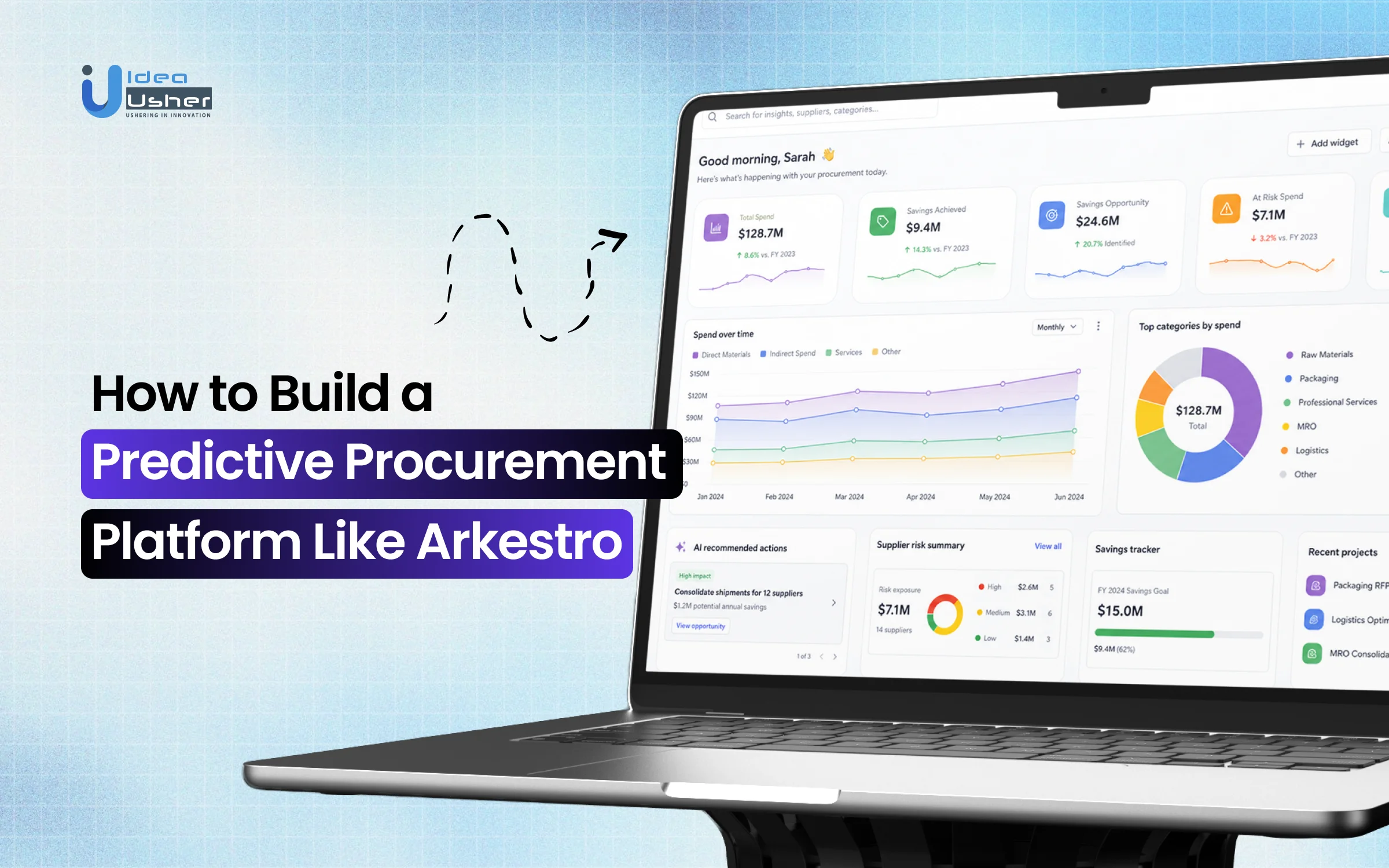
Key Takeaways
- Predictive procurement platforms use AI forecasting and supplier intelligence to optimize sourcing decisions proactively.
- Platforms like Arkestro automate supplier recommendations, spend forecasting and sourcing workflows using predictive analytics.
- Core features include AI procurement analytics, autonomous RFQs and negotiation optimization systems.
- Enterprises adopt predictive procurement for faster sourcing, lower procurement costs and stronger supplier performance.
- How IdeaUsher can help you build predictive procurement platforms with AI automation, ERP integrations and scalable SaaS architecture.
Procurement teams no longer gain an advantage from simply digitizing workflows. The real competitive edge now comes from predicting supplier behavior, pricing trends and purchasing outcomes before decisions are made. That shift is increasing demand for a modern predictive procurement platform capable of transforming procurement from a reactive process into a data-driven operational strategy.
Traditional procurement systems focused on approvals, sourcing workflows and spend tracking after transactions occurred. As supply chains become more volatile and enterprise spending grows more complex, businesses now expect predictive analytics, automated sourcing recommendations, supplier intelligence, real-time forecasting and AI-driven procurement orchestration integrated into a unified platform.
In this blog, we will talk about core features, architecture, development costs and how IdeaUsher can help build a predictive procurement platform like Arkestro by using predictive decision-making to improve procurement speed, savings and operational efficiency.
Why Legacy Procurement Systems Fail Enterprises
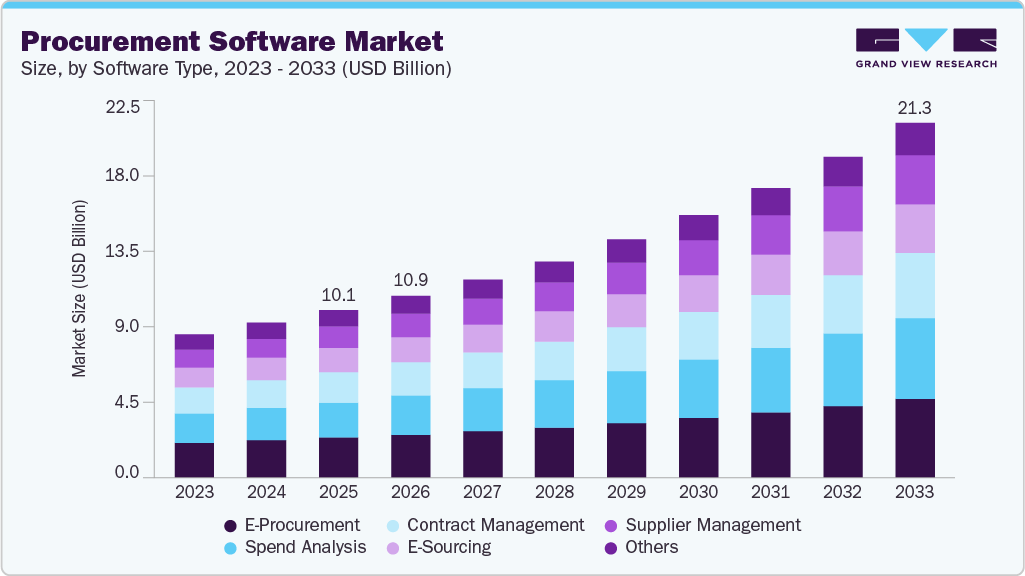
Modern enterprises still rely on static workflows, spreadsheets, and fragmented supplier systems that create data silos and limit real-time optimization. This challenge persists even as the global procurement software market grows from $10.06 billion in 2025 to $21.29 billion in 2033 at a 10.0% CAGR, with many legacy systems still failing to deliver actionable value.
These systems fail because they only record past transactions instead of shaping future outcomes. PwC reports 89% of operations leaders say tech investments underdelivered due to poor data quality, while the Hackett Group found procurement workloads rose 8% despite shrinking budgets.
Enterprises also face unmanaged tail spend involving 80% of vendors but only 20% of spend, alongside maverick purchasing that erodes 10% to 20% of savings. To reduce these losses, enterprises are adopting AI-powered predictive procurement.
A. Reactive Procurement Leads to Higher Enterprise Spend
Procurement becomes inherently reactive when data is trapped in silos and workflows remain manual. Teams uncover inefficiencies weeks after capital leaves the organization, resulting in a preventable drain on enterprise wealth.
- Undetected Maverick and Tail Spend: Lack of real-time visibility allows unauthorized, off-contract purchases to slip through, actively eroding corporate cost-saving initiatives.
- Missed Volume Discounts: Fragmented systems fail to consolidate purchasing data across different business units, sacrificing significant bulk-purchasing leverage during vendor negotiations.
- Unchecked Supplier Price Creep: Without proactive monitoring, gradual vendor price increases and market volatility go unnoticed, forcing the enterprise to absorb premium rates.
B. Manual Supplier Negotiations Slow Procurement
Legacy procurement cycles relying on fragmented emails, offline spreadsheets, and manual RFP cycles introduces massive operational friction. This administrative drag slows enterprise time-to-market while severely limiting a team’s ability to scale efficiently.
- Prolonged Cycle Times: Managing quote comparisons and contract redlines via disconnected communication tools stretches standard negotiation timelines from days to months.
- Increased Risk of Human Error: Manual data entry across separate systems leads to costly clerical mistakes, misaligned specs, and compliance oversights.
- Stifled Strategic Collaboration: Sourcing managers bogged down by paperwork lack the bandwidth to thoroughly analyze market variables or build high-value supplier relationships.
C. Legacy ERP Tools Lack Predictive Intelligence
Standard Enterprise Resource Planning (ERP) platforms are exceptional at tracking purchase orders, managing inventory ledgers, and processing invoices. However, they lack the predictive intelligence required to optimize these workflows.
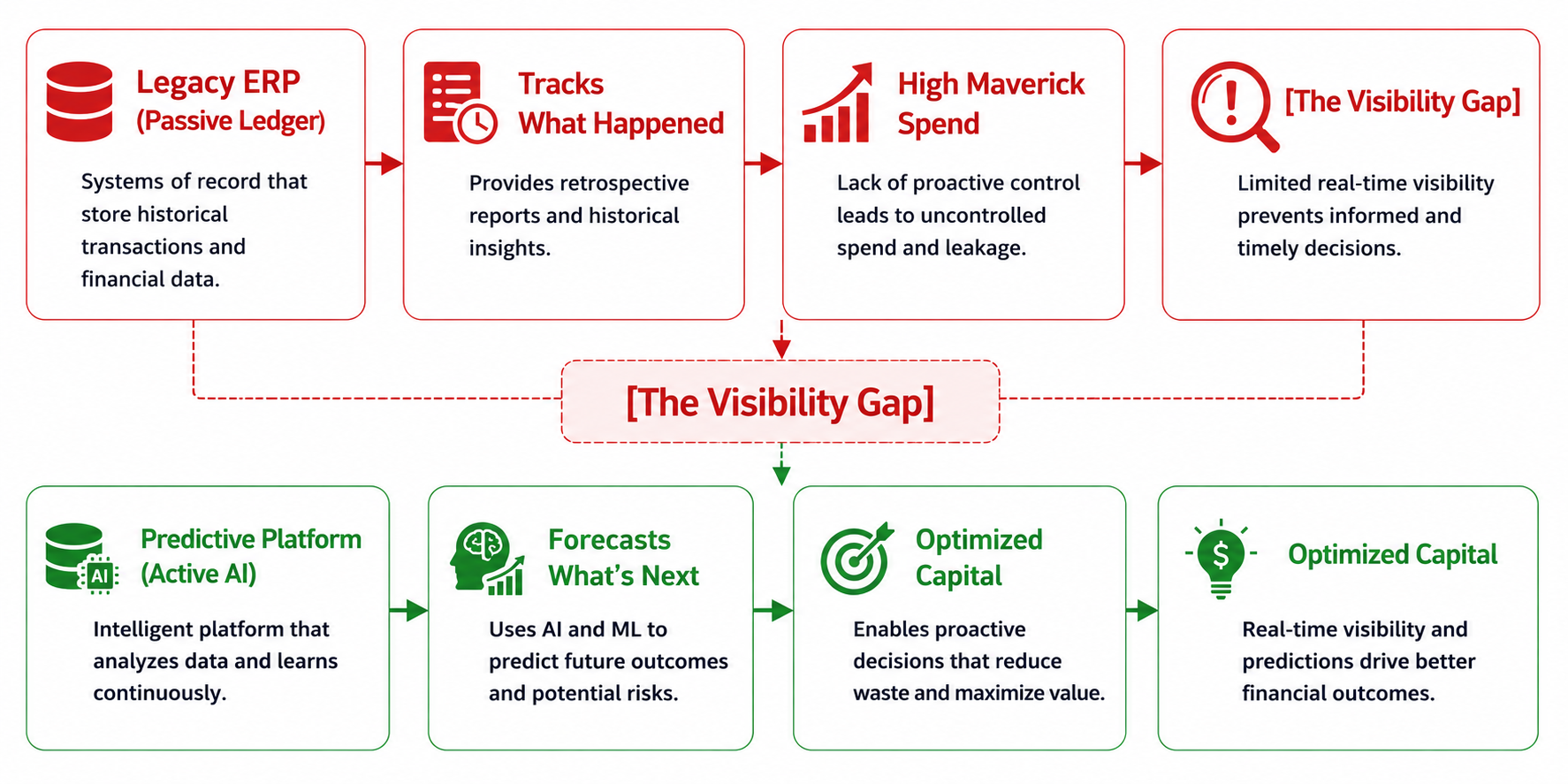
While legacy tools focus entirely on static, backward-looking records, predictive systems analyze real-time variables across three critical operational areas:
- Passive Historical Ledgers: Legacy tools merely display rows of backward-looking data rather than automatically recommending the optimal, real-time business actions modern teams expect.
- Blindness to Market Volatility: Rigid ERP frameworks cannot predict impending commodity price surges or dynamically suggest the best buying windows to capture cost savings.
- Untracked Supplier Risk: Without predictive intelligence, systems fail to flag sudden supplier risk profile changes or geopolitical disruptions before they impact the supply chain.
D. Why Predictive Procurement Is Gaining Adoption
The enterprises are shifting toward predictive procurement powered by AI and decision intelligence to overcome the limitations of legacy software. This modern approach transforms procurement from a reactive back-office function with intelligent orchestration engines that optimize transactions before they even occur.
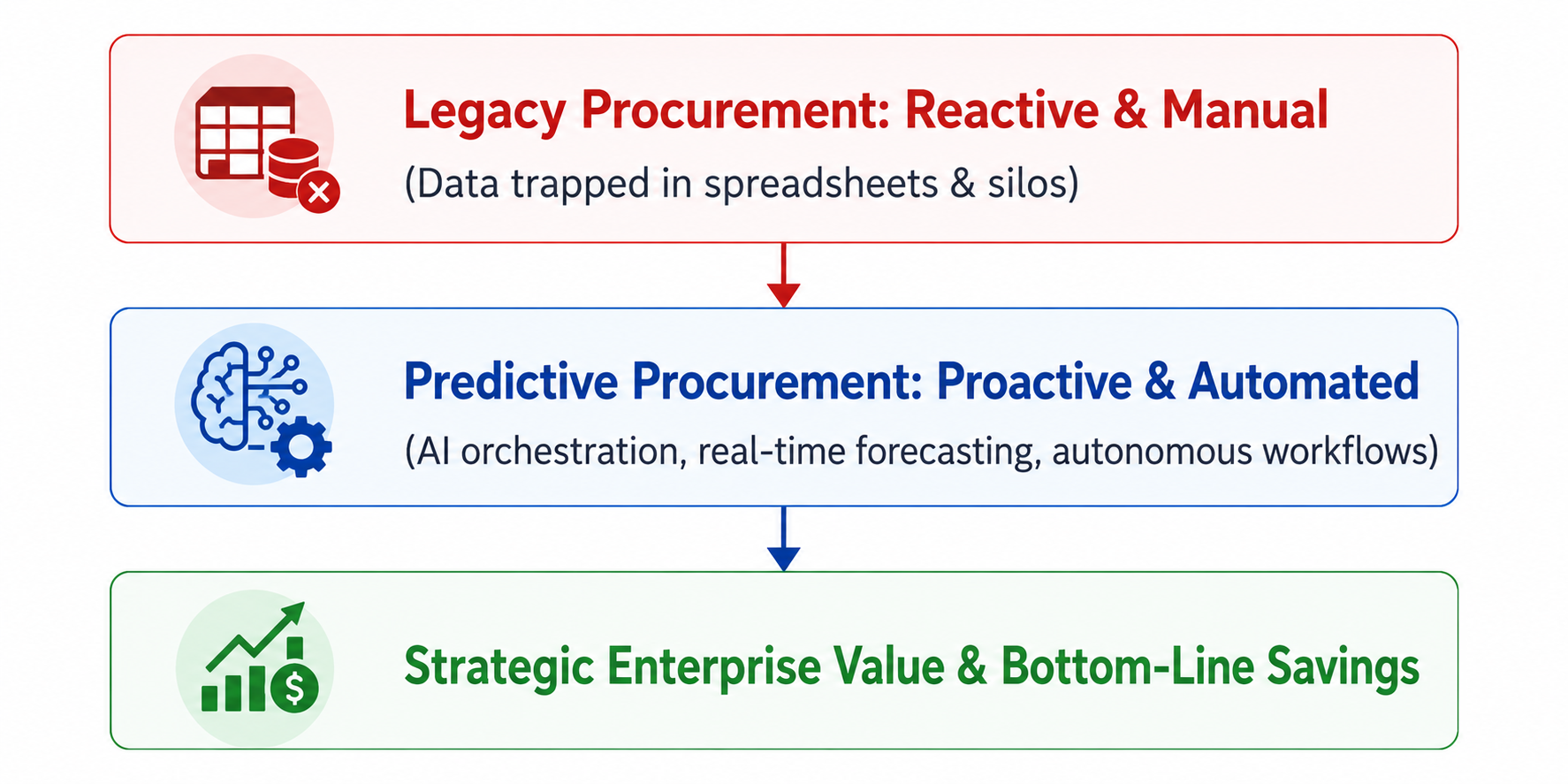
Predictive procurement platforms analyze internal historical data alongside trillions of external market data points to optimize the supply chain across four core pillars:
- AI-Driven Procurement Orchestration: Automating the end-to-end purchasing lifecycle by connecting demand triggers, supplier selection, and compliance checking into a single, unified workflow.
- Supplier Recommendation Engines: Utilizing machine learning algorithms to evaluate historical performance, delivery reliability, pricing trends, and risk metrics to automatically suggest the ideal vendor for every new requirement.
- Autonomous Sourcing Workflows: Streamlining repetitive negotiation cycles by deploying AI-guided behavioral models that can request, evaluate, and pre-approve initial supplier quotes based on predefined enterprise guardrails.
- Spend Forecasting and Procurement Intelligence: Utilizing predictive analytics to parse internal historical spend alongside external market indices, allowing leadership teams to accurately forecast future capital requirements and lock in favorable rates.
What Is a Predictive Procurement Platform Like Arkestro?
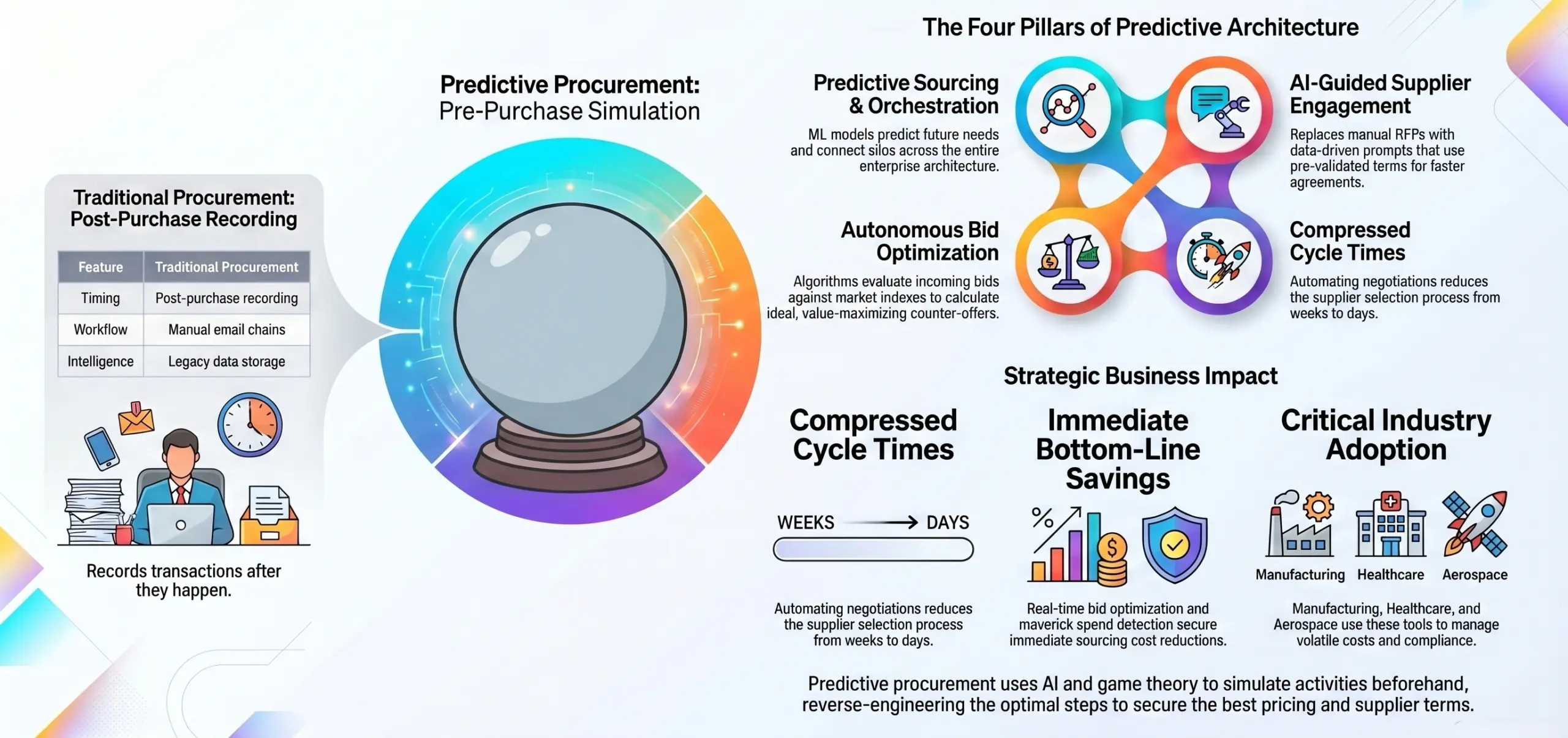
Arkestro is a leading AI-powered predictive procurement platform designed to simulate procurement activities before they begin and reverse-engineer the optimal steps to achieve the best possible outcomes.
Unlike traditional procurement software that primarily records transactions or manages workflows after a purchase decision is made, Arkestro leverages artificial intelligence, machine learning, and game theory to pre-emptively analyze spend data, automate supplier negotiations, and predict pricing.
A. The Core Concept Behind Predictive Procurement
At its foundation, predictive procurement infuses intelligence into every touchpoint of the purchasing lifecycle. Building a custom solution like Arkestro involves orchestrating four architectural pillars:
- Predictive Sourcing: Utilizing machine learning models to analyze market trends, demand cycles, and historical supplier performance. This allows the system to accurately predict future resource needs and suggest the absolute best window to initiate sourcing activities.
- Procurement Orchestration: Eliminating data silos by seamlessly connecting and automating complex workflows across your entire enterprise architecture—from initial purchase requisition down to final ERP entry and settlement.
- AI-Guided Supplier Engagement: Moving away from rigid, manual RFPs. The platform uses data-driven insights to structure communication, automatically prompting suppliers with optimal, pre-validated baseline terms that encourage faster agreements.
- Autonomous Bid Optimization: Algorithms actively evaluate incoming bids against internal budget limits, historical price points, and broader market indexes. The system highlights anomalies and calculates the ideal counter-offers to maximize value automatically.
B. How Arkestro Uses AI to Optimize Procurement Decisions
Platforms like Arkestro don’t just automate data entry; they automate decision intelligence. To achieve this level of optimization, a custom procurement platform processes data through several continuous analytical layers:
- Historical Procurement Analysis: The platform ingests vast quantities of legacy enterprise data, automatically cleaning and categorizing past purchase orders, invoices, and supplier communication patterns to map out true baseline costs.
- Supplier Response Modeling: By analyzing past interactions, the AI learns how individual vendors or market segments typically respond to price pressures, volume adjustments, and deadlines, creating highly accurate behavioral profiles.
- Dynamic Negotiation Intelligence: During an active sourcing event, the system applies game theory and predictive algorithms to simulate negotiation paths, advising sourcing managers on exactly how to phrase parameters to secure the best possible terms.
- Real-Time Sourcing Recommendations: As market variables shift, the engine continually calculates risk-to-reward ratios, serving up instant, actionable recommendations directly on the procurement dashboard to mitigate supply chain disruptions before they occur.
C. Key Business Benefits of Predictive Procurement
Investing in a custom predictive procurement architecture delivers immediate, measurable impact across the enterprise:
- Reduced Cycle Times: Eliminating administrative friction and manual email chains compresses supplier selection and negotiation from weeks to days.
- Lower Sourcing Costs: Catching maverick spend early and automatically optimizing bids secures immediate bottom-line savings on all spend.
- Better Supplier Performance: Data-driven tracking routes contracts to top-performing partners, reducing delivery delays and quality issues.
- Higher Procurement Visibility: Real-time dashboards provide leadership with a unified view of spend velocity, contract pipelines, and savings.
- Improved Compliance Governance: Automated guardrails ensure every transaction inherently complies with corporate policies and regulatory standards.
D. Industries Adopting Predictive Procurement Platforms
While any organization with complex purchasing needs benefits from this technology, several capital-intensive verticals are aggressively driving adoption:
- Manufacturing: To forecast fluctuating raw material costs, optimize bill-of-materials (BOM) sourcing, and avoid assembly line stoppages.
- Logistics & Supply Chain: For real-time spot-market rate optimization, fuel cost hedging, and dynamic freight capacity booking.
- Healthcare: Managing highly fragmented medical supply chains, tracking device compliance, and preventing critical inventory shortages across multi-facility networks.
- Retail & E-commerce: To dynamically adjust purchasing volumes based on rapid, seasonal consumer demand shifts and volatile shipping timelines.
- Aerospace & Defense: Navigating hyper-strict compliance mandates, multi-tier supplier tracing, and long-lead-time component sourcing.
- Enterprise SaaS Procurement Teams: Streamlining the evaluation, renewal cycles, and tier-optimizations of complex software portfolios across massive organizational footprints.
Core Features of a Predictive Procurement Platform
Building an enterprise-grade platform capable of matching or exceeding Arkestro’s capabilities requires a sophisticated architecture of interconnected, intelligent features. It transitions procurement from a workflow management task into an automated, data-driven strategy engine.

1. AI-Powered Spend and Procurement Analytics
True procurement transformation begins with deep data transparency. An advanced analytics layer processes raw financial data into clear, actionable business intelligence by utilizing five core components:
- Spend Categorization: Ingests disorganized line-item text from invoices and POs, automatically cleansing and mapping data into standardized taxonomies like UNSPSC codes.
- Supplier Benchmarking: Aggregates performance metrics across the vendor base, allowing teams to instantly compare suppliers on cost, delivery speed, and SLA compliance.
- Forecasting Models: Uses time-series analysis on historical demand and macro indicators to project future material requirements and budget spend.
- Procurement KPIs: Monitors vital health metrics via real-time dashboards, including Maverick Spend, Savings Realization, and Cycle Time Velocity.
- Opportunity Detection Engines: Continuously scans enterprise databases to find cost-saving opportunities, flag duplicated vendor services, and uncover volume discounts.
2. Predictive Supplier Recommendation Engine
Selecting the right partner requires analyzing thousands of data points simultaneously. A predictive recommendation engine automates this complexity by processing multiple critical data layers:
- Vendor Scoring Systems: Dynamically updates supplier profiles by calculating composite scores based on historical delivery timelines, product quality, and pricing stability.
- Risk Analysis: Continuously reviews global news, financial registries, geopolitics, and weather to catch and flag potential supply chain disruptions early.
- Historical Fulfillment Accuracy: Compares quotes with shipping manifests and invoices to highlight vendors that consistently hit exact delivery metrics.
- Pricing Trend Prediction: Analyzes seasonal market movements via regression algorithms to estimate future price adjustments and optimize contract timing.
- Supplier Performance Intelligence: Translates qualitative feedback and unstructured data into clear, searchable metrics for a complete view of vendor capability.
3. Autonomous RFQ and Sourcing Workflows
Manual RFQ management introduces unnecessary friction and slows down operations. Replacing these slow steps with automated sourcing pipelines streamlines the vendor outreach lifecycle:
- Smart RFQ Generation: Generates comprehensive, context-aware Request for Quote packages instantly by analyzing internal BOMs, engineering specs, and historical drafts.
- Automated Supplier Outreach: Identifies the best-suited suppliers in your database and securely handles invitations, follow-ups, and document collection once approved.
- AI-Driven Bid Evaluation: Parses unstructured quote text and tables, mapping line items into a structured matrix for instant, side-by-side comparison.
- Procurement Workflow Triggers: Uses event-driven logic to advance projects automatically, routing high-value quotes to executive leadership based on custom enterprise parameters.
4. Dynamic Negotiation Optimization Algorithms
Negotiation is where predictive intelligence directly impacts the bottom line. Utilizing game theory, data analytics, and behavioral modeling, this layer refines and improves every supplier interaction:
- Price Elasticity Analysis: Calculates how shifts in volume, contract duration, and payment schedules affect vendor pricing to pinpoint the most cost-effective combination.
- Bid Optimization: Evaluates initial supplier bids against historical benchmarks and current market indexes to generate data-backed counter-offers.
- AI Negotiation Recommendations: Provides sourcing managers with exact pricing floors, payment adjustments, and specific scripts to secure ideal contract terms.
- Multi-Vendor Comparison Engines: Consolidates multi-variable supplier quotes into a clear grid, balancing risk, delivery speed, and cost to highlight the highest-value option.
5. Procurement Workflow Management Dashboard
An enterprise platform needs a central dashboard to keep operations organized and under control. This control center bridges data intelligence and human workflows through a single interface:
- Procurement Command Centers: Provides role-based dashboards for CPOs, sourcing managers, and finance leaders, highlighting high-priority tasks and urgent supply chain alerts.
- Real-Time Procurement Monitoring: Delivers end-to-end tracking of active requisitions, RFQs, and approvals, giving teams full visibility into every open purchase.
- Approval Workflow Automation: Routes approvals along dynamic paths based on budgets, transaction values, and risk classifications to eliminate operational delays.
- Multi-Team Collaboration Systems: Centralizes communication between procurement, finance, legal, and operations directly alongside sourcing documents, replacing scattered email threads.
6. ERP and Enterprise System Integrations
A predictive procurement platform cannot operate in isolation; it must integrate with your existing enterprise systems. Building a reliable data loop requires secure, low-latency API connections to your core business tools:
- Procurement & Sourcing Ecosystems: Synchronizes sourcing activities directly with foundational platforms like SAP Ariba and Coupa to keep operational workflows aligned.
- Enterprise Resource Planning (ERP): Pulls live transactional, material, and supplier master data from systems like Oracle NetSuite, Microsoft Dynamics 365, and QuickBooks Enterprise.
- CRM & Financial Tools: Connects with platforms like Salesforce to align procurement schedules with sales forecasts, and integrates with systems like Workday to automate vendor payments and cost allocation.
How to Build a Predictive Procurement Platform Like Arkestro
Building an enterprise-grade predictive procurement platform requires a deliberate blending of data engineering, machine learning, and secure enterprise application integration. The development lifecycle must transform unstructured corporate purchasing data into an automated, self-optimizing orchestration engine.
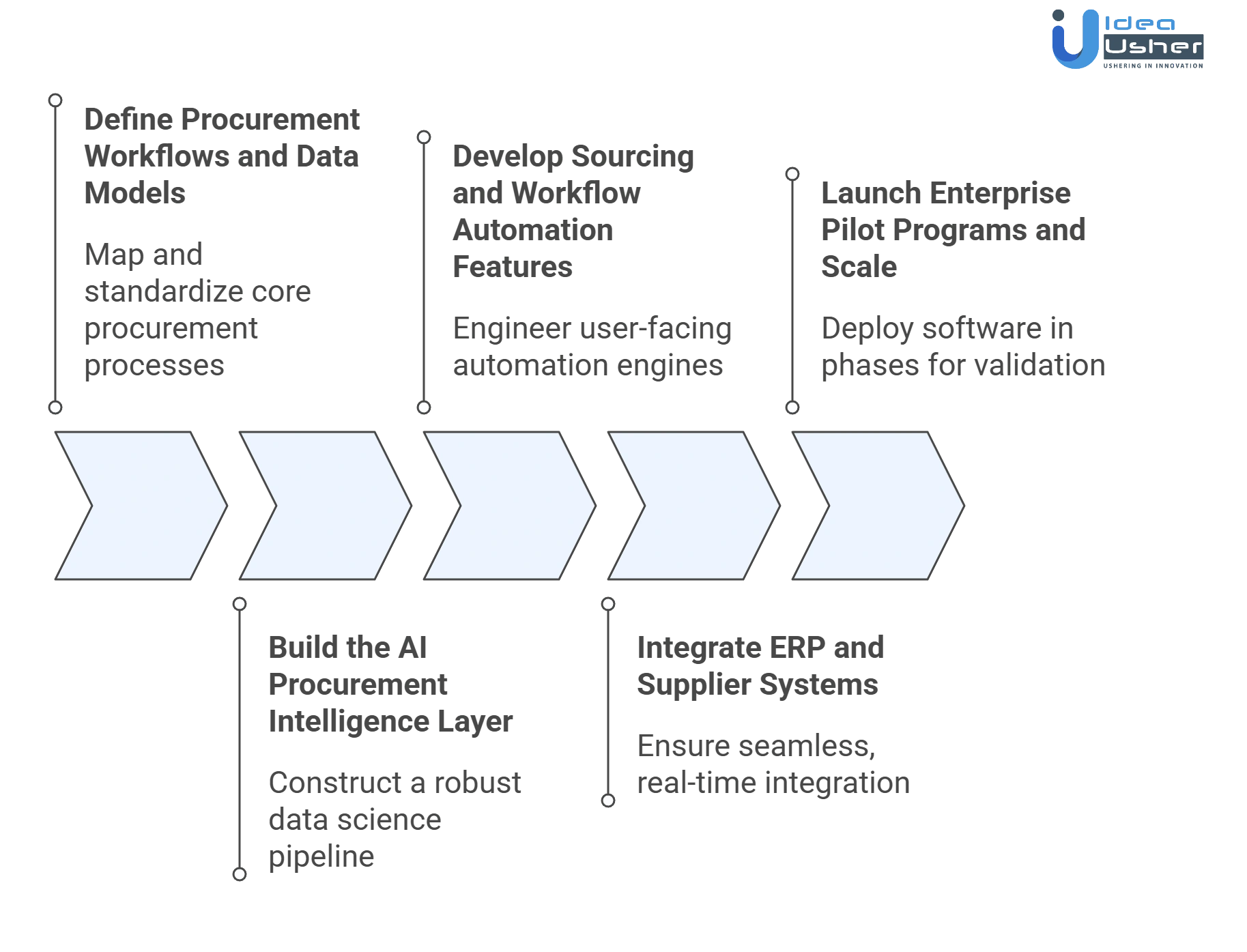
1. Define Procurement Workflows and Data Models
Before writing a single line of machine learning code, your development team must accurately map and standardize the core procurement processes the software will automate. Establishing precise data models at this stage ensures the AI layer receives clean, structured inputs.
- Indirect Procurement: Standardizes workflows for everyday operational spend to capture tail spend and enforce corporate policy.
- Strategic Sourcing: Models high-value, long-term direct material events, capturing commodity indices and volume pricing breaks.
- Vendor Onboarding: Structures digital pipelines that automatically collect, verify, and store tax, banking, and compliance documents.
- Procurement Approvals: Designs dynamic, role-based matrices to route requisitions based on cost thresholds and risk metrics.
- Contract Intelligence: Extracts critical metadata from agreements, including renewal dates, volume commitments, and SLA penalties.
2. Build the AI Procurement Intelligence Layer
The core differentiator of a platform like Arkestro is its ability to transition from simple automation to cognitive decision-making. This requires constructing a robust data science pipeline.
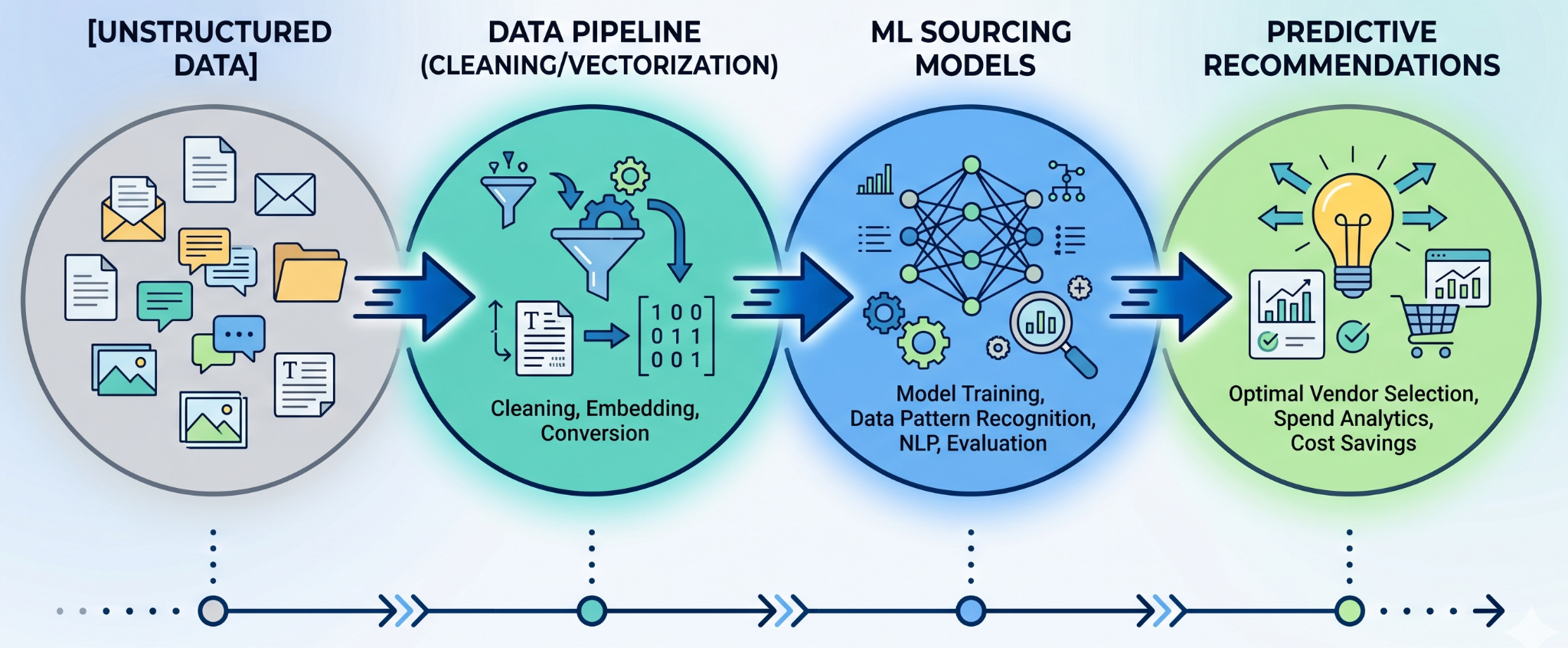
- Procurement Datasets: Architecture must ingest massive historical data, cleaning multi-year line-item invoices, purchase orders, and RFP responses across international entities.
- AI Model Training: Data scientists train custom NLP/LLM models to categorize chaotic line-item descriptions and regression models to recognize pricing anomalies.
- Spend Prediction Systems: Time-series algorithms analyze purchasing patterns, inventory shifts, and economic markers to project future spend and optimal buying windows.
- Supplier Scoring Algorithms: Multi-factor classification models continually recalculate vendor reliability based on fulfillment speed, price consistency, and contract compliance.
3. Develop Sourcing and Workflow Automation Features
With the intelligence layer established, the next stage involves engineering the user-facing automation engines that strip administrative burden from the procurement team.
- RFQ Automation: Systematically drafts comprehensive RFQ packages, pulls engineering specs, and triggers distribution to pre-selected supplier tiers without manual intervention.
- Procurement Approvals: Deploys an event-driven workflow engine that automatically approves low-risk requisitions while instantly escalating high-value exceptions to senior stakeholders.
- Vendor Communication Systems: Engineers secure supplier portals and email parsing to let vendors submit bids and update timelines directly within an auditable ecosystem.
- Workflow Orchestration: Develops a reliable backend state machine to manage the sourcing lifecycle, moving tasks smoothly between the AI core, human operators, and suppliers.
4. Integrate ERP and Supplier Systems
A predictive procurement platform must act as an intelligent fabric over existing systems. Seamless, real-time integration ensures data consistency and prevents costly dual-entry errors.
- API Integration Frameworks: Designs low-latency API wrappers and webhook layers capable of communicating securely with cloud apps and legacy on-premise mainframes.
- Procurement Synchronization: Builds bi-directional pipelines that automatically update supplier records, trigger inventory adjustments, and create purchase orders across SAP, Oracle, or NetSuite instantly.
- Financial Reconciliation Workflows: Develops automated three-way matching systems that digitally compare POs, warehouse manifests, and final invoices to trigger touchless financial settlement.
5. Launch Enterprise Pilot Programs and Scale
Deploying enterprise software requires a phased approach to de-risk implementation and validate the AI’s financial performance before an all-encompassing rollout.
- Pilot Deployments: Rolls out the software initially to a single business unit, region, or spend category to stress-test data integrations and user adoption profiles.
- Procurement KPI Tracking: Monitors target metrics during the pilot, specifically analyzing changes in cycle times, cost savings, maverick spend, and user engagement.
- AI Optimization Feedback Loops: Captures human-in-the-loop decisions (e.g., overriding an AI recommendation) via telemetry pipelines to continuously retrain and refine ML models.
- Enterprise Rollout Planning: Uses pilot success metrics to map out a phased, company-wide expansion supported by targeted user training and data governance blueprints.
Cost to Build a Predictive Procurement Platform Like Arkestro
The financial investment required to build a predictive procurement platform varies significantly based on the system’s architectural complexity, the depth of its integrations, and the sophistication of its machine learning engine. Enterprises must balance the urgency of deployment with the depth of custom intelligence required to drive measurable return on investment (ROI).
| Development Phase | What the Phase Covers | Estimated Cost |
| Discovery & Scope Definition | Mapping Buyer & Supplier journeys and designing high-fidelity UI/UX wireframes for dashboards and RFQ workflows. | $8,000 – $12,000 |
| Platform Infrastructure & Sourcing Workflows | Establishing data schemas, user roles, and secure cloud infrastructure (AWS/Azure) with relational databases. | $30,000 – $45,000 |
| Procurement Workflows | Building a manual/semi-automated RFQ wizard and Buyer Command Center for sourcing event tracking. | $20,000 – $30,000 |
| Quote Analysis & Automation | Developing a secure Supplier Portal for vendor registration, RFQ access, quote submissions, and compliance uploads. | $15,000 – $25,000 |
| Analytics & Approvals | Implementing rule-based quote parsing and comparison matrices for bid evaluation. | $12,000 – $20,000 |
| QA Testing & Deployment | Creating historical spend dashboards, procurement analytics, and static approval workflows. | $10,000 – $18,000 |
| Total Estimated Investment | Lean MVP Scale Development (Ready for pilot testing and initial user feedback) | $75,000 – $130,000 |
A. MVP Procurement Platform Development Cost
Building a Minimum Viable Product (MVP) is recommended to validate the platform’s core value proposition with minimal exposure. An MVP focuses on automating foundational procurement tasks while establishing basic data pipelines.
- Estimated Cost Range: $85,000 to $170,000
- Estimated Timeline: 4 to 6 months
An MVP typically covers:
- Basic Sourcing Workflows: Digital creation, submission, and tracking of standard RFQs and purchase requisitions.
- Supplier Onboarding: A secure, centralized portal where vendors can register, upload basic compliance paperwork, and view open bids.
- Procurement Dashboards: A clean, intuitive interface displaying essential historical spend tracking, active contract lists, and simple cycle-time metrics.
- Initial ERP Integrations: Unidirectional data synchronization with a single core system (e.g., pulling supplier records from QuickBooks Enterprise or a standard relational database).
B. AI-Driven Enterprise Procurement Platform Cost
A enterprise-grade platform capable of matching Arkestro’s predictive orchestration and autonomous decision intelligence requires a significantly larger, multi-layered development effort. This tier is built to serve massive, multi-national organizations handling highly complex, direct, and indirect spend categories.
- Estimated Cost Range: $250,000 to $600,000+
- Estimated Timeline: 9 to 18+ months
An enterprise-grade solution includes:
- Predictive Analytics: Advanced time-series forecasting models that accurately project material cost trends, supply chain disruptions, and optimal purchasing windows.
- AI Negotiation Systems: Autonomous negotiation engines utilizing game-theory models to automatically structure and refine bidding boundaries with suppliers.
- Procurement Intelligence Engines: Real-time data processing layers that scan unstructured documents, ingest global market feeds, and instantly flag maverick spend or supplier risk anomalies.
- Advanced Security Infrastructure: Bank-grade data protection including SOC 2 Type II compliance, localized data residency configurations, immutable audit logs, and deep Role-Based Access Control (RBAC).
C. Factors That Affect Predictive Procurement Development Costs
When planning your budget, several critical technical variables will dictate where your final development costs fall within the spectrum:
- Legacy ERP Integrations: Simple cloud API connections contrast with highly complex, bi-directional sync pipelines required for customized, on-premise SAP or Oracle environments.
- Advanced AI/ML Development: Standard rule-based automation is cost-effective, but custom LLMs and reinforcement learning for autonomous vendor dialogue require elite data science expertise.
- Enterprise Compliance & Governance: Achieving SOC 2 Type II, ISO 27001, and GDPR certifications demands rigorous auditing, end-to-end encryption, and complex data isolation architectures.
- Dynamic Workflow Customization: Building a fixed procurement platform is straightforward, but engineering a multi-tenant SaaS architecture where divisions can dynamically map custom approval matrices adds structural complexity.
- Global Enterprise Scalability: Supporting millions of concurrent transactions, automated quote iterations, and global supply chain feeds requires a premium, event-driven microservices architecture.
D. Recommended Team Structure for Procurement SaaS Development
Engineering an intelligent software ecosystem capable of reshaping enterprise supply chains requires a balanced team of cross-functional experts. A typical team structure assembled to deliver a platform of this caliber includes:
- AI/ML Engineers: Data scientists specializing in time-series forecasting, NLP for document ingestion, and reinforcement learning for autonomous optimization.
- Backend Architects: Senior engineers designing secure, low-latency APIs, microservices, and database architectures for massive corporate ledgers.
- Procurement Workflow Specialists: Domain experts ensuring software maps to enterprise supply chain psychology, compliance mandates, and negotiation mechanics.
- DevOps Engineers: Infrastructure professionals focused on CI/CD pipelines, Kubernetes container orchestration, and strict cloud security guardrails.
- Enterprise UX/UI Designers: Experience designers converting dense financial data and complex workflow approvals into clean, actionable dashboards.
Technology Stack for Predictive Procurement Platforms
An enterprise-grade predictive procurement platform requires a secure, scalable, and intelligent technology stack. The architecture must seamlessly combine advanced data science with resilient enterprise cloud infrastructure to enable autonomous, real-time decision-making.The table below outlines the core components, specific technologies and architectural goals required to build and scale a modern predictive procurement platform:
| Architectural Layer | Core Components | Technologies Used | Strategic Enterprise Value |
| AI & ML Intelligence | Spend forecasting, contract NLP, risk scoring, autonomous negotiation engines | Time-series models, NLP, Reinforcement Learning | Transforms legacy data into proactive sourcing recommendations. |
| Cloud Infrastructure | Scalable hosting, container orchestration, decoupled microservices, real-time messaging | AWS, Azure, Kubernetes, Kafka, RabbitMQ | Ensures 99.99% uptime and zero system lag under massive enterprise data volumes. |
| Secure Data Pipelines | ERP data ingestion, format normalization, stream processing, bidirectional sync | ETL tools, Apache Flink, Spark, REST/GraphQL APIs | Breaks down corporate silos by turning fragmented records into unified data streams. |
| Security & Compliance | Strict access management, immutable audit trails, end-to-end data encryption | RBAC, AES-256, TLS 1.3, SOC 2 Type II, GDPR, ISO 27001 | Safeguards sensitive financial records while ensuring global regulatory alignment. |
| Multi-Tenant SaaS | Logical/physical tenant isolation, data governance, regional localized compliance | Multi-tenant databases, localized tax/currency engines | Allows the platform to scale across thousands of global enterprises safely. |
Real-World Examples of Predictive Procurement Systems
Implementing a predictive procurement platform moves beyond theoretical efficiency and delivers immediate, measurable impact across complex corporate operations. Bridging legacy corporate inertia and advanced data science requires strategic engineering. This approach ensures system reliability, fluid data, and sustained user engagement.
A. How Enterprises Reduce Procurement Costs
The operational value of predictive procurement is best understood through anonymized, real-world case studies across capital-intensive industries:
1. Automotive & Electronics Manufacturing
The Challenge: A global manufacturer faced highly volatile material prices and unstable supplier lead times, causing production delays and costly emergency spot-market purchasing.
The Solution: The enterprise deployed a predictive sourcing platform that analyzed historical transactions and commodity indices to forecast market dips and dynamically analyze Bills of Materials (BOM).
The Outcome: The platform accurately timed market dips and consolidated purchasing across global plants, cutting direct material spend by 12% and eliminating production line stoppages.
2. Global Supply Chain & Logistics
The Challenge: A third-party logistics provider relied on manual email and phone chains to secure spot-market freight capacity across thousands of routes, creating massive workflow bottlenecks.
The Solution: The company implemented an autonomous sourcing workflow with an AI response engine that analyzed carrier behavior, pricing elasticity, and lane reliability to instantly issue optimized spot-quotes.
The Outcome: The platform compressed negotiation cycles from hours to minutes, lowering transportation costs by 14% and scaling operational throughput with no extra headcount.
3. Enterprise Healthcare Network
The Challenge: A multi-facility healthcare system suffered from high maverick spend and continuous compliance risks driven by decentralized purchasing and fragmented supplier tracking.
The Solution: The network deployed a centralized procurement platform with an intelligent recommendation engine, automated compliance guardrails, and cross-facility inventory consolidation tools.
The Outcome: The platform flagged non-compliant vendors in real-time, driving procurement compliance to 99% and saving millions by consolidating tail spend and eliminating contract leakage.
B. How Idea Usher Helps Build Your AI Procurement Platform
Building an intelligent procurement platform that securely connects modern data science with legacy enterprise systems requires specialized expertise. Idea Usher helps transform complex sourcing strategies into scalable, custom software solutions.
With over 500,000 engineering hours focused on delivering enterprise SaaS ecosystems, our engineering teams understand the unique nuances of complex supply chains, data compliance, and machine learning infrastructure.
Our Strategic Capabilities Include:
- Elite Engineering Core: Our Ex-MAANG developers design resilient, multi-tenant cloud architectures built to process millions of concurrent global transactions with zero operational latency.
- Deep Workflow Automation: We build intelligent backend engines flawlessly map unique corporate approval matrices, risk criteria, and custom supplier onboarding into automated software steps.
- Advanced AI & Analytics: Our data scientists deploy time-series forecasting and NLP parsers to transform unorganized contract PDFs and invoices into actionable, real-time cost-saving alerts.
- Robust ERP Integrations: We engineer secure, bi-directional API pipelines connect predictive software with legacy systems like SAP, Oracle, Microsoft and NetSuite for seamless financial reconciliation.
Proven Success Metrics
While every enterprise infrastructure is unique, custom procurement software engineered by our team delivers clear operational returns, helping organizations achieve milestones such as:
- Compressing sourcing cycle times by 40%, transforming prolonged multi-week RFP cycles into rapid, data-backed, multi-day turnarounds.
- Significantly increasing supplier response rates by replacing complex, clunky paperwork with frictionless, highly intuitive vendor portal communication workflows.
- Automating up to 80% of routine procurement approvals, allowing internal procurement teams to shift focus from manual tracking to high-value strategic vendor relationships.
- Providing absolute procurement visibility via custom, real-time command dashboards that give executive leadership a crystal-clear look at spend velocity, compliance health, and realized bottom-line savings.
Challenges in Building Predictive Procurement Platform
Developing a predictive procurement platform requires overcoming entrenched technical and operational hurdles. Bridging the gap between legacy corporate inertia and advanced data science demands a strategic engineering approach to ensure system reliability, seamless data fluidness, and sustained user engagement.
1. Procurement Supplier Data Quality Management
Challenge: Erratic, unstandardized supplier inputs, duplicate entries, and fragmented invoice text across legacy databases consistently corrupt downstream machine learning model predictions.
Solution: Our engineers implement automated ETL pipelines utilizing advanced data-cleansing algorithms and LLM-powered parsing to normalize chaotic multi-source inputs into a clean, unified data taxonomy.
2. ERP Integration Complexity
Challenge: Legacy, heavily customized on-premise ERP environments feature brittle data schemas that reject standard, real-time bi-directional API synchronizations.
Solution: Our ex-MAANG software architects build secure, decoupled middleware layers and custom webhook frameworks that orchestrate low-latency data handshakes without disrupting core enterprise operations.
3. AI Model Recommendation Accuracy
Challenge: Outdated training sets and unpredictable macroeconomic shocks cause predictive algorithms to drift, delivering inaccurate cost-forecasting models or flawed negotiation parameters.
Solution: Our data scientists engineer continuous machine learning telemetry loops, integrating live external market indexes and human-in-the-loop validation to constantly retrain and optimize pricing engines.
4. User Adoption and Workflow Transition
Challenge: Internal procurement teams frequently resist automated platforms due to complex interfaces or fear of losing granular operational control.
Solution: Our enterprise UX designers build intuitive, scannable command dashboards with clear role-based access, ensuring the software acts as an accessible, high-visibility operational copilot.
5. Maintaining Global Compliance Standards
Challenge: Navigating fragmented, cross-border privacy mandates, regional data residency laws, and shifting corporate governance guidelines complicates multi-tenant cloud software architectures.
Solution: We develop isolated database structures and immutable ledger audit trails, natively hardcoding SOC 2, GDPR, and ISO standards directly into the core platform infrastructure.
Why Choose Idea Usher for Predictive Procurement Platform Development
Partnering with Idea Usher means gaining access to over 250+ technical talent equipped to transform complex corporate supply chains. We blend advanced data science with robust cloud architecture to build resilient, high-performance predictive procurement ecosystems tailored for the enterprise.
A. 500K+ Hours Building Enterprise SaaS Platforms
Our decades of combined engineering experience allow us to navigate the structural complexities of large-scale B2B software, ensuring your platform is secure, reliable, and built to handle immense transactional volume.
- Enterprise SaaS Expertise: We design multi-tenant cloud architectures built for high availability, zero cross-tenant data leakage, and fluid performance under heavy, concurrent enterprise workloads.
- Ex-MAANG Engineers: Our core architecture is guided by elite engineers who bring foundational knowledge in building ultra-scalable, fault-tolerant global systems.
- Complex Workflow Experience: We excel at translating intricate operations into clean, automated digital states, eliminating systemic friction from your day-to-day corporate processes.
- Scalable B2B Architecture: Our teams build modular, microservices frameworks that allow your procurement software to scale effortlessly alongside your growing organizational footprint.
B. Expertise in AI Automation and ERP Integrations
We bridge the critical gap between cutting-edge artificial intelligence and rigid legacy infrastructure, creating highly synchronized data loops that turn siloed corporate information into automated, bottom-line savings.
- AI-Driven Workflow Automation: We build intelligent software engines capable of automating repetitive sourcing actions, structured communications, and multi-tier procurement approvals autonomously.
- Predictive Analytics Systems: Our data teams implement advanced time-series forecasting and regression models to accurately project market pricing shifts and supplier risk metrics.
- Deep ERP Integrations: We engineer secure, bi-directional API pipelines connecting your platform natively with heavyweight systems like SAP, Oracle, Microsoft, and Coupa.
- Financial Synchronization: Our systems seamlessly link procurement triggers with backend accounting ledgers, ensuring automated three-way matching and touchless invoice reconciliation.
C. End-to-End Development for Scalable Procurement Platforms
From initial product strategy to long-term infrastructure maintenance, we provide a complete, worry-free product lifecycle that guarantees your software remains technically sound, highly secure, and continually optimized.
- Strategy & Architecture Planning: We map your workflows, compliance needs, and data models before engineering begins to guarantee absolute project alignment.
- UI/UX & Cloud Development: Our designers build scannable, role-based dashboards while our developers deploy containerized applications using Kubernetes.
- Security & Compliance: We build strict security frameworks directly into your software, ensuring full alignment with SOC 2 Type II, GDPR, and ISO 27001.
- Deployment & Scaling Support: We manage initial pilot rollouts, configure automated CI/CD pipelines, and provide dedicated engineering support for long-term success.
Book a Predictive Procurement Strategy Consultation
Ready to modernize your supply chain infrastructure? Speak directly with Idea Usher’s enterprise software architects to validate your predictive procurement platform idea and build a scalable, AI-powered sourcing ecosystem.
Our Consultation Covers:
- Procurement platform feasibility analysis to validate your custom feature requirements.
- AI workflow architecture consultation to outline your predictive data science layers.
- ERP integration assessment for mapping secure connections to legacy systems.
- Development roadmap planning establishing clear milestones from MVP to Enterprise scale.
- Enterprise SaaS scaling strategy ensuring long-term architectural performance.
Conclusion
Predictive procurement platforms are reshaping enterprise sourcing through AI-driven automation, supplier intelligence, and real-time procurement forecasting. Businesses are moving beyond traditional procurement systems toward intelligent platforms that optimize sourcing decisions, reduce operational costs, and improve supplier performance at scale. Building a platform like Arkestro requires deep expertise in enterprise SaaS architecture, AI models, workflow automation, and ERP integrations. With 500K+ engineering hours and ex-MAANG experts, Idea Usher helps founders and enterprises develop scalable predictive procurement platforms tailored for long-term growth and enterprise adoption.
Things to Know About Predictive Procurement Platform
Q.1. What is the difference between traditional and predictive procurement?
A.1. Traditional procurement platforms function as passive ledger systems that merely record historical transaction data. In contrast, predictive platforms utilize machine learning and decision intelligence to analyze variables and optimize sourcing transactions before they are finalized.
Q.2. How do ERP integrations impact predictive procurement platform development?
A.2. Connecting predictive platforms to legacy enterprise systems requires complex, bi-directional API orchestrations. Developing secure middleware layers ensures real-time data synchronization across platforms like SAP and Oracle without disrupting core financial workflows.
Q.3. What types of data are needed for predictive procurement software?
A.3. Building an effective solution requires scalable data pipelines capable of ingesting massive, multi-source enterprise datasets. Continuous automated cleansing and natural language processing normalize unstructured invoice text to ensure model recommendation accuracy.
Q.4. What is the cost to develop a predictive procurement platform?
A.4. Developing a lean Minimum Viable Product requires an investment ranging from $95,000 to $150,000. This initial phase focuses on core sourcing workflows, standard supplier portals, and rule-based quote comparison matrices.