

Key Takeaways
- Short-drama apps use short vertical episodes, unexpected story twists, custom content suggestions and small payments to keep viewers watching and generate regular revenue.
- Enterprises should first identify their target audience, drama niche, content plan and earning model before building a full platform.
- A good MVP should include vertical video, swipe discovery, watch history, episode unlocking, user accounts and a simple CMS.
- The app needs video delivery, secure payments, adaptive streaming, access controls and analytics. After development, thorough testing and optimization must happen before launch.
- The short-drama app development cost can start at $15,000–$50,000 for an MVP and reach $350,000–$850,000+ for enterprise platforms, depending on features and scale.
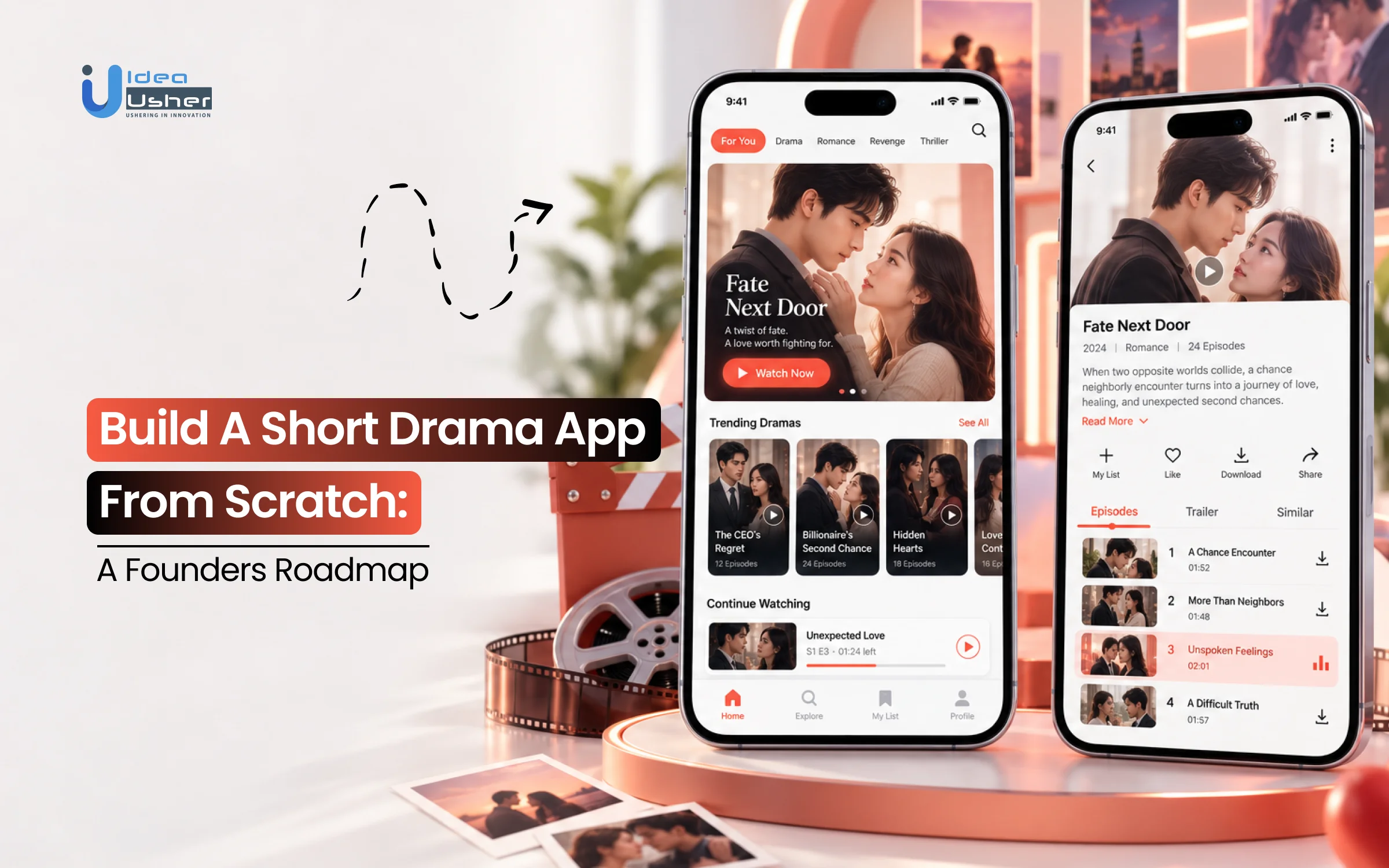
The next winner in the short-drama category might not be the company with the largest video collection, but the one that turns a few minutes of watching into something people do every day. For founders thinking about short-drama app development, the opportunity is to create a focused entertainment product. The key is to use unexpected story twists to bring viewers back, recommendations to help them discover more content and episode-based payments to generate regular revenue.
Traditional streaming models rely on long-form content, broad catalogs and monthly subscriptions. Short-drama platforms require a different operating model, combining vertical video delivery, serialized storytelling, coin-based unlocking, subscriptions, content analytics and rapid experimentation. Product decisions must connect audience psychology, content economics and infrastructure costs.
In this blog, we will talk about how to build a short drama app from scratch, covering product strategy, essential features, technology architecture, development stages, monetization, costs and the roadmap for scaling, helping businesses understand how to launch, monetize and grow a competitive short-vertical drama app.
Why Short Drama Apps Are Becoming a Serious Business
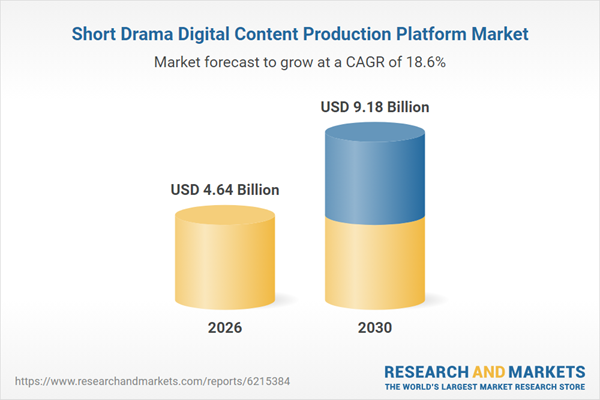
The short-drama digital content production platform market is projected to grow from $3.91 billion in 2025 to $4.64 billion in 2026 and will reach $9.18 billion by 2030, at a CAGR of 18.9%. This growth highlights the rising demand for mobile-first, short-form entertainment and creates strong opportunities for platforms that can scale content efficiently.
Short-drama platforms have become a viable entertainment market by combining algorithmic vertical feeds with serialized fiction. In 2025, global downloads reached 2.3 billion, and in-app purchase revenue hit $2.98 billion. Short-drama downloads rose 186% year-over-year in Q4, while traditional OTT streaming app downloads dropped 7%.
A prominent example, ReelShort users in the US region averaged 35.7 daily mobile minutes, outpacing Netflix (24.8), Amazon Prime Video (26.9), and Disney+ (23). This drives media investments in short-drama platforms for audience acquisition, monetization, and engagement.
A. Microdramas Turn Short Episodes Into Repeat Viewing
Microdramas condense traditional television narrative structures into 60 to 120-second vertical episodes. Rather than requiring 45-minute viewing commitments, platforms use continuous swipe-to-watch mechanics:
- Pacing: Storylines open in media res, resolving micro-conflicts while introducing sharp cliffhangers every 90 seconds.
- Engagement: Viewers consume 15 to 30 episodes in fragmented sessions throughout the day (commutes, waiting lines), driving cumulative daily watch times that rival social video feeds.
B. The Market Opportunity Is Bigger Than Another OTT App
The microdrama sector operates differently from conventional streaming (OTT) services, which often struggle with plateauing subscription growth and high production costs.
According to research from Omdia, the U.S. microdrama market alone is forecast to reach $1.5 billion in revenue. However, founders must view this figure as an indicator of shifting consumer behavior rather than a blanket guarantee of success. While addressable demand is surging, profitability depends on managing customer acquisition costs (CAC) against player lifetime value (LTV).
C. What Founders Can Learn From ReelShort And DramaBox
ReelShort and DramaBox offer valuable lessons in monetization, onboarding and distribution, showing founders how different strategies can drive engagement, retention and growth.
| Business Vector | ReelShort Pattern | DramaBox Pattern | Founder Takeaway |
| Monetization Engine | Coin-based episode unlocks. | Weekly subscriptions of $15–$20. | Hybrid pricing captures casual payers and high-LTV frequent viewers. |
| Freemium Onboarding | First 5–10 episodes free, plus rewarded ads for coins. | Deferred sign-in, preview hooks, and daily check-in rewards. | Frictionless viewing should build emotional engagement before the first paywall. |
| Distribution Strategy | TikTok/Reels performance marketing driving app installs. | Multi-language localization and broad catalog depth. | Paid acquisition needs rapid content releases to reduce churn. |
Founders should not copy these apps verbatim; rather, they should adapt the core principles: low initial friction, aggressive narrative pacing, and flexible micro-monetization.
What Makes A Short-Form Vertical Drama App Different?
A short-form vertical drama platform is not simply a mobile-friendly Netflix or a long-form TikTok. It is a purpose-built streaming category engineered around high-frequency dopamine loops, portrait-native video delivery and micro-transaction economics.
Where conventional streaming platforms focus on catalog breadth and scheduled viewing sessions, short-drama apps turn narrative consumption into a rapid, continuous progression mechanic.
A. The Product Is Built Around Episodes, Not Video Libraries
Traditional OTT giants (like Netflix, Prime Video, or Max) design their applications around passive discovery across vast video archives. Short-drama platforms invert this model by optimizing entirely for granular, sequential progression:
| Dimension | Conventional OTT Platforms | Vertical Short-Drama Apps |
| Episode Length | 40 to 60 minutes per installment | 60 to 120 seconds per episode |
| Pacing & Beats | Slow-burn character arcs and multi-episode build-ups | Instant conflict within 5 seconds; mandatory cliffhanger every 55 seconds |
| Content Discovery | Browsing rows of posters and multi-paragraph synopses | Direct-to-video feeds; auto-playing the first scene immediately |
| Session Model | Scheduled, sit-down viewing (living room / TV screen) | Opportunistic micro-sessions (transit, waiting rooms, mobile-only) |
| Progression Unit | Seasons and long-form episodes | Fast-advancing vertical swipes across 60–100 micro-episodes |
Because each installment lasts just one to two minutes, the interface removes conventional media browsing barriers. Viewers do not read reviews or deliberate over 90-minute commitments; they are thrust immediately into active playback, lowering the psychological friction required to sample a show.
B. How Short Vertical Drama App Works
The operational architecture of a micro-drama platform operates like a high-velocity retention flywheel. This loop connects discovery, viewing, monetization and re-engagement into one continuous journey, designed to sustain attention and encourage repeat sessions.
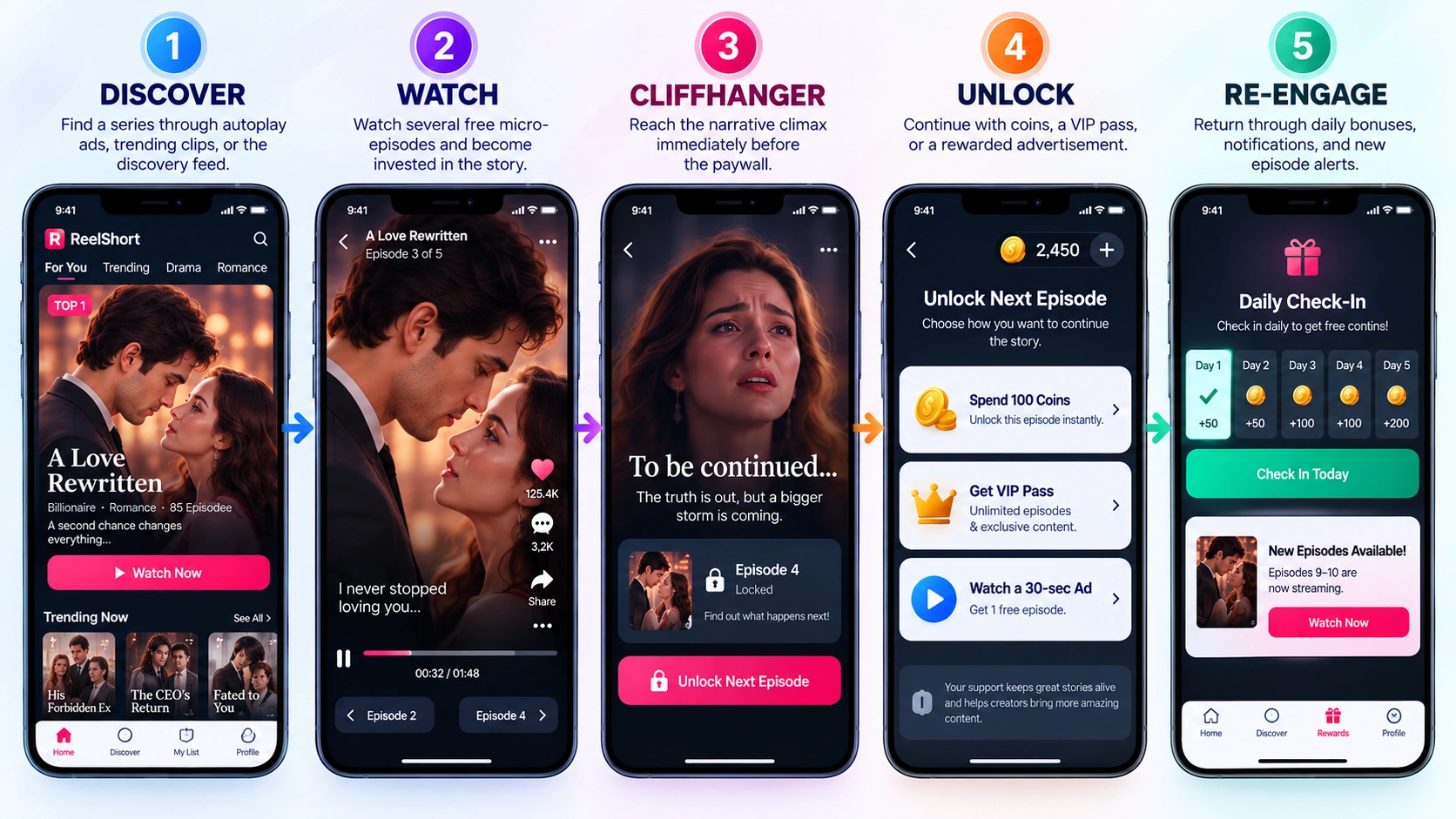
Every UI element, push notification, and video pre-fetch queue is engineered to keep the viewer moving through five sequential phases:
- Instant Hook (Discover): The viewer enters directly into a high-stakes scene often routed straight from a TikTok or Instagram Reels ad into the first episode with zero splash-screen delay.
- Frictionless Viewing (Watch): The first 5 to 10 episodes stream without interruption or monetization prompts, allowing the user to form an emotional connection to the protagonist’s dilemma.
- The Paywall Spike (Cliffhanger): The free window terminates at a critical revelation (e.g., an unmasked identity, an interrupted wedding, an imminent betrayal), creating maximum emotional urgency to see the immediate resolution.
- Impulse Conversion (Unlock): The user encounters a one-tap unlock modal. They spend 20 to 50 in-app coins, initiate a weekly VIP pass, or watch an opt-in rewarded video ad to immediately advance to the next 60-second beat.
- Re-Engagement (Return): If a user exhausts their balance and pauses their session, dynamic push notifications and daily login coin bonuses re-engage them when the next narrative arc goes live.
C. The Real Differentiator Is Content And Retention
Building an intuitive 9:16 mobile player is an engineering baseline; the true commercial moat of a short-drama enterprise resides in content production agility and granular behavioral telemetry:
- Industrialized Production Pipelines: Leading studios can shoot an 80-episode series in 5–7 days on $50,000–$150,000 budgets, enabling platforms to test and rotate dozens of scripts each quarter.
- Algorithmic Tropes & Story Engineering: Common tropes include billionaire revenge, secret heiresses, urban fantasy and high-society rivalries, with conflicts starting within 3 seconds, escalating at 30 seconds and cutting at peak tension.
- Micro-Drop-Off Analytics: Platforms track second-by-second viewer drop-offs at episode boundaries. A 35% drop-off at Episode 7, for example, can trigger rapid cliffhanger edits or paywall adjustments.
- Cultural Localization & Dubbing: Global expansion uses local casts, AI voice dubbing and synchronized multilingual subtitles to adapt content across English, Spanish and Southeast Asian markets.
While clean video engineering and low-latency playback are necessary to prevent viewer drop-off, sustainable profitability depends on this symbiotic pairing of data-driven script pacing and continuous retention mechanics.
Validate Your Short Drama App Idea Before Development
Building a custom micro-drama streaming platform requires significant capital for media infrastructure and content production. Validating your narrative thesis and audience demand before writing code prevents expensive engineering reworks.
Partnering with IdeaUsher ensures your early audience research, pilot metrics and content telemetry translate into a focused technical roadmap and an optimized MVP scope.
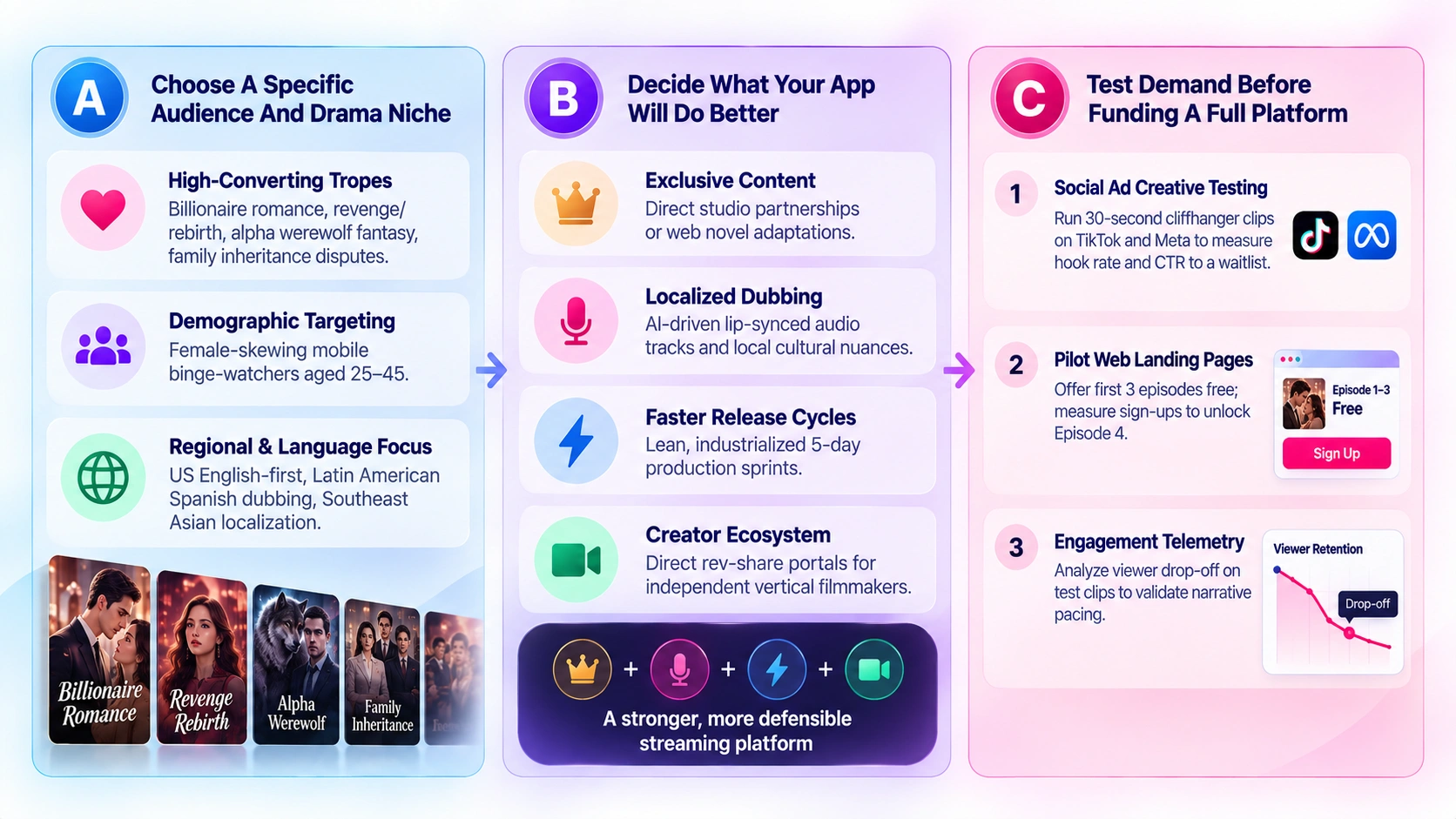
A. Choose A Specific Audience And Drama Niche
Success starts with a focused audience and clear drama niche, allowing platforms to build stronger content-market fit and compete through specialization rather than catalog breadth. Broad generalist catalogs fail against established incumbents. Winning platforms dominate targeted sub-genres:
- High-Converting Tropes: Focus on high-emotion, fast-turnaround narrative niches (e.g., billionaire romance, revenge/rebirth, alpha werewolf fantasy, or family inheritance disputes).
- Demographic Targeting: Align story tone with core viewing segments such as female-skewing mobile frequent-viewers aged 25–45 who consume episodic fiction during daily commutes.
- Regional & Language Focus: Prioritize specific high-growth geographic and language corridors (e.g., US English-first productions, Latin American Spanish dubbing, or Southeast Asian localization) instead of spreading content spend thin across global markets.
B. Decide What Your App Will Do Better
Define what your app can do better, faster or more uniquely than established platforms. A clear competitive advantage strengthens differentiation, improves retention and creates a defensible position.
| Positioning Advantage | Strategic Focus | Operational Impact |
| Exclusive Content | Direct studio partnerships or web novel adaptations. | Defensible IP catalog that competitors cannot license. |
| Localized Dubbing | AI-driven lip-synced audio tracks and local cultural nuances. | Faster international scale with lower localized shoot overhead. |
| Faster Release Cycles | Lean, industrialized 5-day production sprints. | Predictable weekly episode drops to drive Day-30 retention. |
| Creator Ecosystem | Direct rev-share portals for independent vertical filmmakers. | Scalable content pipeline without 100% upfront in-house production costs. |
The strongest advantage is rarely a single feature. It comes from combining exclusive IP, localization, production speed and creator supply into a system competitors struggle to replicate. This creates stronger differentiation while supporting faster market expansion, lower content risk and sustainable user retention.
C. Test Demand Before Funding A Full Platform
Before committing significant capital, validate demand with lightweight experiments that measure audience interest, content engagement and conversion. Early behavioral data helps confirm product-market fit and reduce development risk.
- Social Ad Creative Testing: Run 30-second cliffhanger clips on TikTok and Meta to measure hook rate (3-second views) and click-through rates (CTR) to a waitlist.
- Pilot Web Landing Pages: Drive ad traffic to a lightweight web funnel offering the first 3 episodes free; measure sign-ups to unlock Episode 4.
- Engagement Telemetry: Analyze viewer drop-off on hosted test clips to evaluate whether your narrative pacing justifies custom app development.
What are the Features of A Short Drama Streaming App
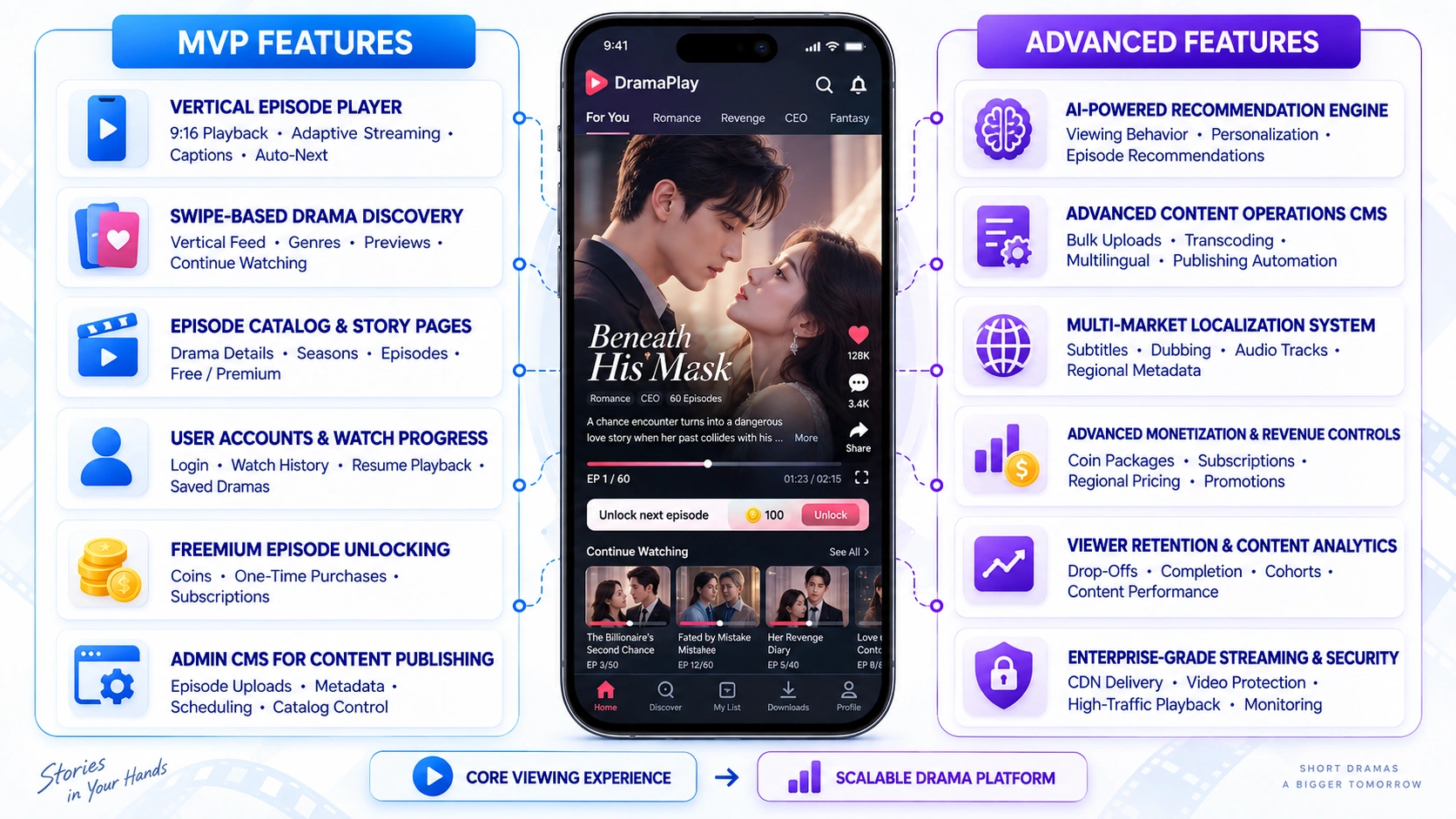
A short drama app MVP should focus on the core viewing and monetization experience, while advanced capabilities help scale content operations, personalization, and revenue. The following tables separate the features needed to launch from those that support a larger streaming business.
A. MVP Features To Launch Your Short Drama App
The MVP should deliver a complete viewing and monetization journey, from discovering a drama to unlocking its next episode. These six features establish the foundation for validating your content strategy.
| Feature | What the Feature Does | Business Value |
| Vertical Episode Player | Supports 9:16 playback, adaptive bitrate streaming, captions, playback controls, and automatic next-episode progression. | Creates smoother viewing and encourages continued watching. |
| Swipe-Based Drama Discovery | Provides a vertical feed for browsing genres, previewing content, and accessing continue-watching recommendations. | Reduces discovery friction and improves content engagement. |
| Episode Catalog & Story Pages | Shows drama details, synopses, seasons, episode listings, thumbnails, and free or premium availability. | Simplifies exploration and presents premium stories clearly. |
| User Accounts & Watch Progress | Supports login, watch history, resume playback, and saved dramas across sessions. | Improves convenience, repeat visits, and viewer retention. |
| Freemium Episode Unlocking | Offers initial episodes for free, with premium access through coins, one-time purchases, or subscriptions. | Builds an early monetization path while letting users experience content before paying. |
| Admin CMS For Content Publishing | Enables episode uploads, drama and season organization, metadata management, and scheduled releases. | Provides catalog control and supports consistent publishing. |
These features should work as one connected product, not isolated modules. A viewer discovering a drama through the swipe feed should move seamlessly to its story page, watch episodes, resume progress and unlock premium content without leaving the app.
For founders, this keeps the first release focused on content consumption, retention and revenue validation. Advanced personalization and enterprise infrastructure can follow once usage data and content volume justify the investment.
B. Advanced Features For A Scalable Drama Platform
Advanced features become valuable when a short drama app moves beyond its initial catalog and needs to support larger audiences, more content, and multiple revenue opportunities. These six capabilities help prepare the platform for growth.
| Feature | What the Feature Do | Business Value |
| AI-Powered Recommendation Engine | Uses viewing behavior, content preferences, and episode-level engagement to personalize drama and episode recommendations. | Improves content discovery, increases watch time, and strengthens retention. |
| Advanced Content Operations CMS | Supports bulk uploads, automated transcoding, multilingual content management, and publishing automation. | Reduces operational effort and scales the content pipeline. |
| Multi-Market Localization System | Manages subtitles, dubbing, audio tracks, regional availability, and localized metadata. | Supports market expansion and improves accessibility for regional audiences. |
| Advanced Monetization & Revenue Controls | Supports coin packages, subscription tiers, regional pricing, promotional offers, and access rules. | Optimizes revenue across different audiences and purchasing behaviors. |
| Viewer Retention & Content Analytics | Tracks episode drop-offs, completion rates, continuation behavior, cohort retention, and content performance. | Identifies high-performing stories, improves content decisions, and optimizes monetization. |
| Enterprise-Grade Streaming & Security | Provides scalable CDN delivery, video protection, high-traffic playback optimization, and infrastructure monitoring. | Supports reliable streaming at scale, protects content, and reduces service disruptions. |
The right short drama app feature roadmap depends on your audience, content strategy, monetization model and launch scale. Start with core capabilities that deliver reliable viewing and validate demand, then add advanced systems as usage grows.
Define the MVP around one viewing experience, one monetization model and one manageable content pipeline. This keeps development focused while leaving room for future integrations and improvements.
How To Build A Short Vertical Drama App
Engineering a vertical micro-drama platform requires orchestrating high-concurrency streaming infrastructure, mobile-native UI/UX, and sub-second transaction processing. The development lifecycle spans five technical milestones designed to move from product scoping to scalable production deployment.
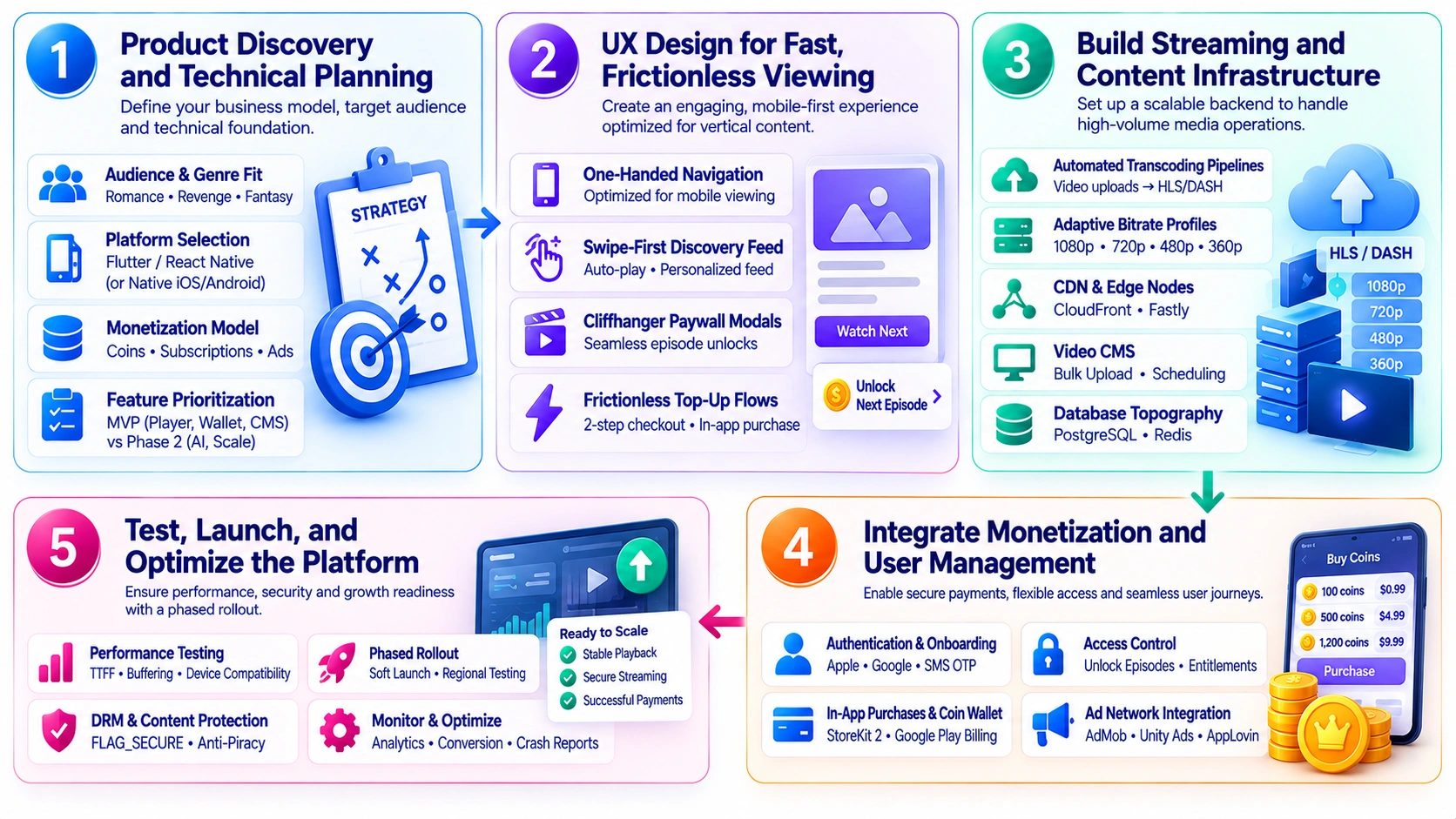
1. Product Discovery And Technical Planning
We start by aligning business goals, audience needs and technical requirements before development begins. Our developers define the platform architecture, prioritize MVP capabilities and establish monetization foundations to ensure the product can launch efficiently while supporting future growth and scalability.
| Planning Dimension | Strategic Focus | Technical Specification |
| Audience & Genre Fit | High-intent mobile viewers (romance, revenge, werewolf fantasy) | Ingestion workflows tuned for 60–100 episode seasons (60–120s per episode). |
| Platform Selection | Cross-platform MVP vs Native Dual-OS | Flutter/React Native for rapid time-to-market; Native Swift/Kotlin for custom video renderers. |
| Monetization Architecture | Pay-per-episode microtransactions, VIP passes, rewarded ads | Double-entry virtual coin ledger with real-time balance sync. |
| Feature Prioritization | MVP launch vs Phase 2 scaling | Prioritize swipe player, coin wallet, and basic CMS over AI recommendations. |
2. UX Design For Fast, Frictionless Viewing
We shape the interface around instant decision-making and continuous consumption, reducing unnecessary steps between moments of interest and action. Our developers prioritize intuitive controls, contextual prompts and streamlined interactions that keep viewers focused.
- One-Handed Vertical Navigation: Position high-frequency interactive elements (episode drawer, coin purchase modal, audio toggle) within the natural mobile thumb reach zone.
- Swipe-First Discovery Feed: Invert the traditional catalog grid by routing users straight into an auto-playing video feed on app launch, eliminating browse friction.
- Cliffhanger Paywall Modals: Trigger non-blocking slide-up sheets at the 55-second mark of locked episodes, showing remaining wallet balance alongside a one-tap “Unlock Next Episode” action.
- Frictionless Top-Up Flows: Design 2-step checkout sheets for coin pack purchases that execute without forcing the user out of full-screen video playback.
3. Build The Streaming And Content Infrastructure
We engineer the backend to handle high-volume media operations reliably, from ingestion through delivery and editorial control. Our developers focus on automation, scalability and data consistency so growing catalogs remain manageable as audience demand increases.
- Automated Transcoding Pipelines: Master video uploads trigger automated encoding microservices (e.g., AWS Elemental MediaConvert, FFmpeg) to output chunked HTTP Live Streaming (HLS) and Dynamic Adaptive Streaming over HTTP (DASH) manifests.
- Adaptive Bitrate Profiles (ABR): Segment videos into 2- to 3-second .ts/.m4s fragments across multiple bitrates (1080p, 720p, 480p, 360p) to match dynamic cellular conditions.
- CDN Caching & Edge Nodes: Configure edge caching rules (CloudFront, Fastly) with geographic routing and pre-warmed caches for early free episodes.
- Administrative Video CMS: Build an editorial web dashboard for batch uploading 80+ episodes simultaneously, mapping teaser trailers, scheduling staggered releases, and managing localized SRT/VTT subtitle tracks.
- Database Topography: Deploy PostgreSQL for relational user and financial ledgers, alongside Redis for session caching, rate limiting, and real-time episode view counts.
4. Integrate Monetization And User Management
A reliable monetization layer must balance fast access, transaction security and flexible user journeys. Strong account management, verified payments and accurate entitlement tracking ensure every purchase, reward and unlock is processed consistently.
- Authentication & Guest Passports: Implement frictionless onboarding via Apple Sign-In, Google OAuth, and SMS OTP. Assign anonymous guest device UUIDs so users can purchase coins and watch episodes before creating a formal account.
- Server-Side IAP Validation: Process Apple StoreKit 2 and Google Play Billing purchases exclusively through backend webhooks. Model balances update only after cryptographic receipt verification against platform servers.
- Granular Access Control: Maintain real-time access tables linking user_id to unlocked episode_id arrays to ensure instant playback entitlement checks at edge proxies.
- Ad Network Mediation: Integrate rewarded video SDKs (Google AdMob, Unity Ads, AppLovin) configured with server-to-server (S2S) reward callbacks to credit user coin wallets upon ad completion.
5. Test, Launch, And Optimize The Platform
We treat launch as an evidence-driven engineering phase, validating playback performance, device stability, content protection and monetization behavior under real conditions. Our developers use phased releases to identify bottlenecks before scaling acquisition.
Launch Rule: Validate sub-second Time-to-First-Frame (TTFF) across cellular 4G and 5G before scaling paid media.
- Client Caching Validation: Verify that the mobile player’s background pre-fetch manager buffers the next two episodes without triggering out-of-memory (OOM) exceptions on lower-tier Android hardware.
- DRM Verification: Confirm that screen-capture blocking flags (FLAG_SECURE on Android, prevention layers on iOS) prevent video piracy across all active streams.
- Phased Rollout Strategy: Execute a soft launch in selected geographic markets to gather real-world conversion data on episode paywall placements, tune coin bundle price points, and resolve player crash issues before scaling user acquisition spend.
What Does It Cost To Build A Short Drama App?
Building a short drama app can cost anywhere from a lean MVP to a large-scale streaming platform, depending on its features, content infrastructure, and monetization model. Understanding development costs by phase and platform scope helps founders plan investment and choose the right starting point.
A. Phase-Wise Short Drama App Development Cost Table
Short drama app development costs vary significantly by product scope, technical complexity and scalability requirements. A phase-wise breakdown helps businesses estimate investment across planning, design, engineering, streaming, monetization and testing while identifying where advanced capabilities can increase overall costs.
| Development Phase | Estimated Cost | Key Deliverables |
| Discovery & Planning | $5,000–$25,000 | Business analysis, feature scope, technical roadmap and project planning |
| UI/UX Design | $7,000–$40,000 | User flows, wireframes, visual design and interactive prototypes |
| Frontend Development | $15,000–$150,000 | Mobile app interface, video player, navigation and user interactions |
| Backend Development | $15,000–$200,000 | APIs, authentication, databases, content management and business logic |
| Streaming & Monetization Integration | $8,000–$150,000 | Video delivery, subscriptions, in-app purchases, coins and payment flows |
| Testing & Deployment | $5,000–$75,000 | Functional testing, performance testing, security, bug fixing and app deployment |
| Total Cost (MVP to Enterprise) | $50,000–$850,000 | Varies based on platform scale, advanced features, content infrastructure, integrations and customization |
Note: Phase-wise estimates reflect the potential investment across individual development stages. Actual spending may vary based on project requirements, technical complexity, team structure, integrations and the level of customization required.
B. Platform Level Wise Cost Table
Short drama app investment depends heavily on the platform maturity, audience scale and feature depth. Comparing development levels helps businesses understand how costs increase as they move from basic streaming capabilities toward advanced personalization, global delivery and enterprise infrastructure.
| Platform Level | Estimated Cost | Typical Scope |
| White-Label or Basic MVP | $15,000–$50,000 | Core streaming, user accounts, basic CMS, episode unlocking, coin payments, and essential analytics |
| Growth-Stage Custom Platform | $50,000–$150,000 | Advanced recommendations, subscriptions, coins, multilingual content, notifications, content moderation, and stronger analytics |
| Advanced Commercial Platform | $150,000–$350,000 | Multi-platform delivery, advanced CMS, AI-powered discovery, creator tools, localization, DRM, and scalable backend infrastructure |
| Enterprise-Grade Platform | $350,000–$850,000+ | Multi-region delivery, high-concurrency streaming, enterprise analytics, advanced security, compliance, AI personalization, multiple apps, and dedicated infrastructure |
Note: Platform-level estimates represent broader product maturity stages, from basic MVPs to enterprise deployments. Final short drama app development costs depend on audience scale, infrastructure demands, advanced features, security requirements and geographic expansion plans.
C. Why Short Drama App Development Costs Vary by Platform Type
White-label and MVP platforms cost less by using prebuilt components like registration, vertical streaming, basic CMS, episode unlocking, subscriptions, and analytics. Developers simply customize branding, set up integrations, and upload content, enabling faster, lower-cost deployment.
A White-Label or Basic MVP is suitable for:
- Startups testing a short-drama business idea
- Regional content providers
- Independent production houses
- Businesses targeting one language or market
- Companies that need a quick and affordable launch
These platforms are commonly built by white-label solution providers, clone-app development companies, and small-to-mid-sized development teams. They are ideal when the main goal is market validation rather than building proprietary technology.
Higher costs for advanced commercial and enterprise platforms stem from custom, scalable architecture, including AI recommendations, complex CMS workflows, creator tools, localization, DRM, fraud defense, enterprise analytics, and multi-region streaming.
An Advanced Commercial or Enterprise-Grade Platform is suitable for:
- Established media and entertainment companies
- Large OTT platforms
- Telecom operators and super-app providers
- Studios with large content libraries
- Businesses launching across multiple countries
- Platforms expecting high traffic and complex monetization
The higher cost comes from custom development, advanced integrations, infrastructure, security, localization, and long-term scalability. A white-label or MVP short drama app development is best for fast validation, while an advanced or enterprise platform is more suitable for businesses seeking greater control, differentiation, and global growth.
D. Factors That Will Affect The Development Cost
The cost of short drama app development depends on more than the number of screens or features. Video infrastructure, content operations, monetization complexity, and scalability requirements can significantly influence the final budget. The following factors should be evaluated before requesting a development estimate.
- Platform and App Architecture: Separate iOS and Android apps cost more than cross-platform development. A basic MVP may cost $15,000–$50,000, while multi-platform builds increase development and testing costs.
- Streaming and Video Infrastructure: Storage, transcoding, CDN delivery, adaptive bitrate streaming and playback optimization can add $10,000–$50,000+, excluding ongoing storage and bandwidth fees.
- Content Management and Monetization: Advanced CMS workflows, episode scheduling, coin systems, subscriptions, payment gateways and rewarded ads can add $15,000–$60,000, depending on monetization complexity.
- AI Personalization and Analytics: Recommendation engines, viewer tracking, performance dashboards and AI-powered discovery can add $20,000–$75,000+ for custom backend and data infrastructure.
- Scalability, Security and Maintenance: Multi-region deployment, DRM, payment security, privacy compliance, load testing and ongoing maintenance can push enterprise budgets to $350,000–$850,000+.
How To Monetize A Short Drama App Without Hurting Retention
Monetizing a vertical micro-drama app is a delicate balance between driving impulse transactions and preserving narrative momentum. Locking episodes too early causes catastrophic churn, while being overly lenient eliminates conversion pressure.
A sustainable monetization architecture uses audience segmentation, dynamic paywall placement, and gamified reward loops, ensuring non-paying viewers stay engaged while frequent-watchers seamlessly convert into high-LTV spenders.
The Retention-First Monetization Matrix
Instead of treating all traffic identically, successful operators route users through distinct monetization tiers based on engagement depth and wallet maturity:
| Viewer Segment | Primary Behavior | Best Monetization Path | Guardrail to Protect Retention |
| New Samplers | Watching episodes 1–5 | 100% Free Hook Phase | Zero ads, zero paywalls, frictionless guest mode (no signup friction). |
| Price-Sensitive Casuals | Engaged but abandon at payment gates | Rewarded Video Ads & Daily Tasks | Cap at 5–8 ads per day; require opt-in; never inject unskippable interstitials. |
| Impulse Viewers | Emotionally invested at peak cliffhangers | Micro-Coin Packs ($2.99 – $9.99) | One-tap auto-unlock toggles; clear, transparent coin counters. |
| Power Consumers | Finish multiple series weekly | Weekly / Monthly VIP Passes | Ad-free viewing, daily coin stipends, and early-access series drops. |
Key Strategies to Protect Viewing Momentum
Maintaining viewing momentum is essential for turning initial interest into sustained engagement and revenue. The right product strategies should minimize interruptions, strengthen viewing habits and make premium access feel natural.
- The 10-Episode Emotional Hook: Never drop the paywall at Episode 2 or 3. Viewers need at least 6 to 10 minutes of narrative investment to care about the protagonist’s conflict before encountering a transaction gate.
- Soft Paywalls via Rewarded Ads: When an engaged viewer with a zero coin balance reaches a locked episode, present a choice: “Unlock instantly for 25 coins OR watch 1 short video ad.” This preserves daily active users (DAU) who would otherwise uninstall.
- Separating “Purchased” from “Reward” Coins: Maintain two backend balances. Reward coins from ads, check-ins or referrals can expire after 7 days and unlock older episodes, while paid coins never expire and unlock high-demand finales instantly.
- Streak Gamification & Daily Login Drops: Offer escalating coin rewards for consecutive days of app opens (e.g., Day 1 = 5 coins, Day 7 = 35 coins). This establishes an ongoing viewing habit and pulls paused heavy viewers back into the active story loop.
- Never Disrupt the Player Canvas: Avoid full-page checkout redirects. Use a lightweight native bottom sheet over the paused player for coin purchases via Apple Pay or Google Pay, letting viewers resume the cliffhanger instantly without context switching.
Common Mistakes When Building A Vertical Drama App
The vertical short drama app development requires careful planning around content, user experience, monetization, streaming and scalability. At IdeaUsher, we help businesses avoid common development mistakes by building user-focused, scalable platforms aligned with their goals and audience needs.
1. Poor Video Streaming Can Reduce Viewer Retention
Challenge: Short episodes demand fast loading, but inefficient video processing, buffering, and inconsistent network conditions can interrupt playback and reduce viewer retention.
Solution: Our developers design video delivery around adaptive bitrate streaming, CDN integration, and optimized transcoding workflows. We also test playback across devices and network conditions to improve loading speed, reduce buffering, and maintain a reliable viewing experience.
2. Episode Unlocking Errors Can Disrupt Payments
Challenge: Coin purchases, subscriptions, and premium episodes require accurate access control, payment verification, and synchronization between transactions and viewer entitlements.
Solution: Our developers implement secure payment integrations, server-side entitlement validation and transaction tracking. We test purchase flows, failed payments, refunds, and restoration scenarios to ensure users receive the correct episode access without compromising revenue or trust.
3. Poor CMS Scalability Can Slow Content Management
Challenge: As episode volumes increase, manual uploads, inconsistent metadata, and inefficient publishing workflows can slow content operations and create errors across the platform.
Solution: Our developers build structured CMS workflows for episode organization, metadata management, publishing schedules and automated processing. We also design scalable backend architecture and content delivery pipelines that help teams manage larger catalogs efficiently.
Why Choose IdeaUsher For Short Drama App Development?
IdeaUsher operates as an enterprise product engineering partner and media tech innovator, leveraging 11+ years of software expertise, a team of 250+ technical specialists and a 4.9/5 Clutch rating. Having completed 1,000+ builds across 50+ countries, we engineer custom, high-concurrency vertical streaming applications built for rapid viewer acquisition, micro-monetization, and global scale.
A. Build A Product Around Your Business Model
We collaborate with founders to translate digital entertainment concepts into viable technical roadmaps. From mapping core feature scopes such as episode gating and dynamic coin wallets to configuring multi-tier monetization logic (pay-per-episode micro-transactions, ad-rewarded unlocks and recurring VIP tiers), we align your software architecture directly with your unit economics.
B. Develop The Viewing Experience And Content Infrastructure
We build the viewing experience around speed, reliability and seamless content delivery. Our developers optimize mobile playback, cloud infrastructure and content operations to keep viewers engaged while giving teams the tools to manage and scale growing catalogs.
- Frictionless Mobile UX: Native vertical video players (iOS/Android) featuring sub-second swipe transitions, episode cliffhangers, and intuitive watchlists.
- Low-Latency Streaming & Scalable Architecture: Multi-CDN distribution and automated cloud transcoding to deliver instant playback without buffering.
- Creator & Administrative CMS: High-capacity backend tools to manage episode drops, track viewer engagement telemetry, and schedule targeted push notifications.
C. Plan For Growth Beyond The First Release
We design scalable, future-ready architectures that evolve with your business. Our developers build for global expansion, data-driven optimization and long-term flexibility, ensuring the platform can adapt as content, users and revenue grow.
- Global Localization: Automated AI subtitle translation, multilingual audio track routing, and multi-currency checkout support.
- Data-Driven Retention: Comprehensive analytics pipelines tracking drop-off rates, average revenue per user (ARPU), and episode completion metrics to refine content acquisition.
- Zero Vendor Lock-In: Complete delivery of clean, modular source code, ensuring 100% platform and IP ownership.
Turn Your Short Drama App Idea Into A Development Plan!
Connect with Idea Usher’s principal streaming software architects to share your app concept, target audience, preferred monetization model, and launch goals for a tailored short drama app development discussion.
Conclusion
The short vertical drama app is an opportunity to turn serialized storytelling into a scalable entertainment business. The right MVP can validate audience demand, monetization, and content strategy before larger investments in infrastructure and expansion. IdeaUsher helps founders plan and build the technology behind that vision, from vertical streaming and CMS architecture to payments and analytics. Share your app idea with our team to discuss the right scope and short drama app development roadmap.
FAQs
A.1. A short drama app development needs vertical video playback, swipe-based discovery, episode progression, user accounts, watch history, premium unlocking, and a content management system for publishing.
A.2. Short drama app development costs range from $15,000–$50,000 for a basic MVP to $350,000–$850,000+ for enterprise platforms, depending on features, infrastructure, monetization, and scalability requirements.
A.3. Short drama apps commonly generate revenue through subscriptions, coin-based episode unlocking, one-time purchases, and rewarded advertisements. Freemium access allows viewers to experience content before purchasing.
A.4. Short drama apps retain viewers through cliffhanger-driven episodes, seamless next-episode progression, personalized recommendations, watch history, notifications, and consistent content releases that encourage repeat viewing.