

Key Takeaways
- Decide who your app is for and create stories they will actually want to watch.
- Local language content can help you reach viewers from different parts of India.
- Launch with a few strong dramas first and learn what works before building a much bigger library.
- Let users discover a drama quickly and continue from one episode to the next without any extra steps.
Launching a micro drama app in India is not just about putting short videos on a platform. You need to understand what Indian viewers enjoy and what keeps them watching. Regional languages can also open the app to audiences beyond the biggest cities. It is better to start small with a few strong stories and a simple viewing experience. You can then see what works and build the platform around it.
Micro drama apps are changing how people watch stories by keeping episodes short and easy to follow. If you are planning to launch one in India, the right content and viewing experience can make a big difference. At IdeaUsher, we’ve built several micro drama app solutions, and we’ll use this experience to explain what it takes to turn your idea into a working platform.
Why Is India Becoming a Strong Market for Micro Drama Apps?
India is becoming an attractive market for micro drama apps because people are already comfortable watching short videos on their phones. The format also fits well with the way viewers consume entertainment during short breaks. According to Coherent Market insights, the India micro drama market is estimated at $1.5 billion and is projected to reach $6.5 billion, growing at a 29% CAGR. This creates room for new platforms that understand Indian viewing habits instead of simply copying international short drama apps.
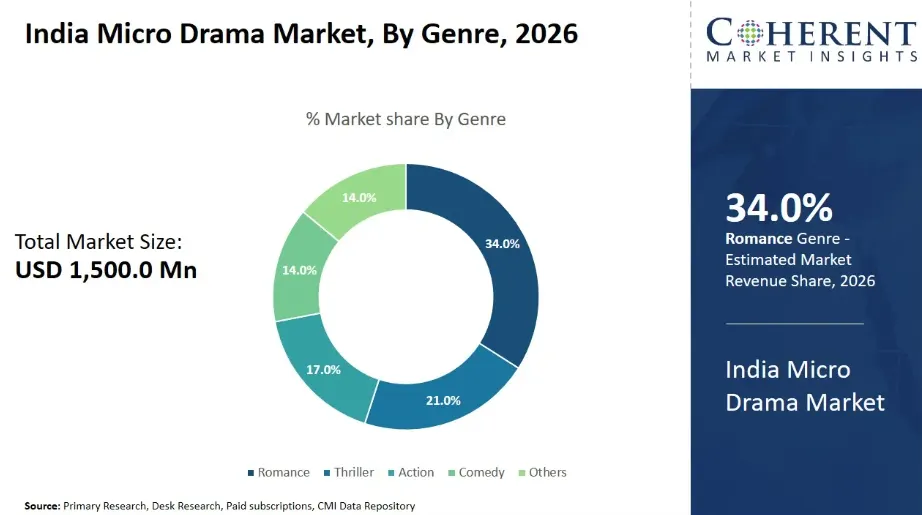
Source: Coherent Market Insights
Mobile-First Viewing Habits
Micro dramas fit naturally into the way Indian users watch content on their phones. Viewers can follow a story without needing a long viewing session. Social feeds also give these apps an easy way to attract new viewers. 89% of Indian micro-drama viewers discover shows through social feeds, while the median viewing time is 3.5 hours a week.
| Viewing habit | App opportunity |
| Short video viewing | Short episodes |
| Social discovery | Drama clips |
| Quick sessions | Easy episode continuation |
| Mobile viewing | Vertical stories |
This means founders can build around a habit that already exists instead of creating a completely new viewing behavior.
Regional Language Opportunity
Regional content can help micro drama apps reach audiences across India. A platform does not have to compete for every viewer at once. It can start with one language and grow as it builds an audience. Story TV shows how quickly this can work. The platform has crossed 1 crore users and built a library of 300+ original micro dramas. Its content is designed for mobile viewing with one-minute episodes and Indian stories.
For a new platform, this makes regional storytelling a useful way to build a clear identity before expanding into more languages.
Short Video To Paid
India already has a large audience for free short-form content. The bigger opportunity is getting some of those viewers to pay for stories they want to finish. Around 40 million users have paid for micro dramas at least once, while the wider addressable audience is estimated at 250–280 million.
This creates room for more than one revenue model:
- Free episodes for discovery
- Small payments for episode unlocks
- Subscriptions for regular viewers
- Ads for users who prefer free content
Another example is WINCHI, which uses AI to create one-minute vertical micro dramas. Its current product supports AI-generated stories with daily, weekly and monthly subscription options. The app was updated in September 2026, showing how AI can help new platforms experiment with faster content production.
Which Micro Drama Audience Should You Target First?
The best starting audience is not always the biggest one. For an Indian micro drama app, choose a group with a clear language preference and strong interest in a few story types. This lets you build your first content library around real viewer needs instead of trying to reach everyone at once. It also makes your marketing much easier to plan.
Hindi Or Regional Language?
Hindi can give you wider reach, while regional languages can help you find a more focused audience. Tamil, Telugu and Kannada are already among the leading regional languages for micro drama viewing. Choosing the right language early can also shape your content style and marketing strategy. .
| Language approach | Best for |
| Hindi | Wider reach |
| Tamil or Telugu | Regional growth |
| Bengali or Marathi | Focused audiences |
| Bhojpuri | Tier-2 and Tier-3 markets |
Kuku TV is a good example. Its creator program now accepts writers and producers working in Hindi, Tamil, Telugu, Malayalam and Kannada. The platform is also expanding its short drama catalog through new creator partnerships. For a new platform, starting with one strong language can be better than adding several languages without enough content.
Which Genre Should Lead?
Romance, family drama and comedy currently lead viewer preferences in India. Romance alone is estimated to make up around 34% of the market. That does not mean every app should focus only on romance. You could build around a sharper combination such as:
- Regional romance
- Family conflict
- Revenge stories
- Small-town stories
The goal is to create a content identity that viewers can quickly understand.
Mass Audience Or Niche?
Trying to serve everyone from the beginning can make content and marketing harder. A niche audience gives you a clearer way to test what people watch and what they are willing to pay for. India has around 250–280 million addressable users, but only 15–17 million monthly paying users today. Around 40 million people have paid for micro dramas at least once. That gap gives founders room to start small and expand after finding a format that works.
How Narrow Should You Start?
Your first audience should be specific enough to understand but large enough to support regular viewing. For example, you could target Telugu-speaking viewers who enjoy romance and family stories instead of simply targeting all Indian viewers. This also helps control content costs. Once you find stories that work, you can dub or adapt them for other audiences.
ShortMax shows how this can grow at scale. It now offers 50,000+ short dramas and movies across 19 languages, with recent updates adding localized dramas and performance improvements.
What Will Make Your Micro Drama App Stand Out in India?
Your micro drama app needs a clear reason for viewers to choose it over other entertainment platforms. That could come from original stories, easier access to content or a stronger focus on Indian languages. The experience also needs to help users find something interesting without spending too much time searching. A strong mix of content and discovery can make the app feel different from a regular short-video platform.
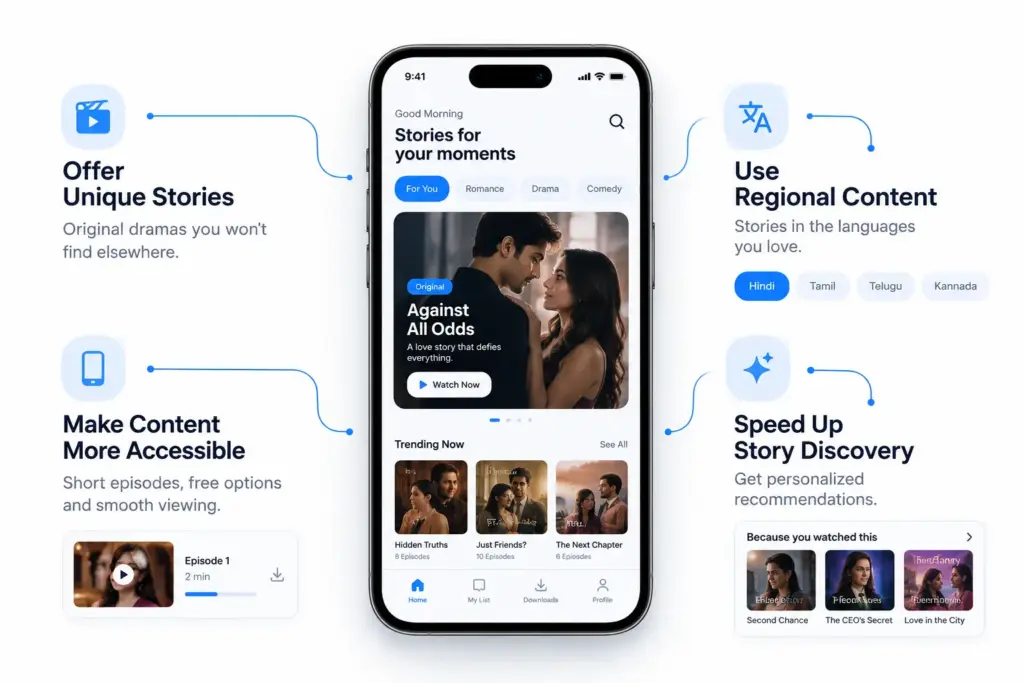
1. Offer Unique Stories
Original stories can give your platform something viewers cannot easily get somewhere else. This becomes even more important as established entertainment companies start entering the space. Story TV, for example, recently partnered with Applause Entertainment to develop premium micro dramas and adapt Hello Mini into a vertical format.
For a new platform, the goal does not have to be hundreds of shows. A smaller library with distinctive characters, strong hooks and local story ideas can give viewers a reason to return.
2. Make Content More Accessible
Accessibility can mean making dramas easy to watch even when users have little time or limited data. Short episodes, simple navigation and quick resume options can remove friction from the viewing experience. The opportunity is also moving beyond subscriptions. India’s micro drama market is estimated at around $2.8 billion, while advertising revenue is expected to grow from about $29 million to roughly $600–660 million as AVOD expands.
| Accessibility choice | Why it helps |
| Short episodes | Easier to fit into daily routines |
| Free episodes | Helps users try the app |
| Ad-supported viewing | Reaches users who do not pay |
| Simple navigation | Reduces drop-offs |
3. Use Regional Content
Regional storytelling can become a strong way to stand out in India. Meta and Ormax found that after Hindi and English, Tamil, Telugu and Kannada are the leading languages for micro drama consumption.This creates room for platforms that go deeper into one language instead of trying to cover the whole country. ShortFree, for example, promotes personalized recommendations with AI-powered dubbing and subtitles while offering content from Indian and international micro-drama studios.
4. Speed Up Story Discovery
Discovery is one of the biggest areas where a micro drama app can compete. Viewers should not have to browse through a huge catalog before finding something they like. 89% of Indian micro drama viewers discover these shows through social feeds, and the median viewer spends around 3.5 hours a week watching them.
That makes the recommendation experience especially important. Your app can learn from what users watch and skip, then surface similar stories, characters or genres. Even the wider market is moving toward this approach, with Redseer estimating 15–17 million monthly paying users against a 250–280 million addressable audience.
A strong platform should make the next story feel obvious. The less effort users need to find something worth watching, the easier it becomes to keep them inside the app.
How Will You Get Enough Content to Keep Viewers Coming Back?
You need a content pipeline that can keep the app fresh after launch. A few popular dramas may bring the first viewers, but they will not be enough to keep them coming back for months. The better approach is to build a mix of original shows, licensed stories and creator partnerships. This gives you more content without putting the entire production burden on your own team.
How Much Content Before Launch?
You do not need hundreds of dramas on day one. What matters more is having enough episodes for viewers to understand the format and continue watching after finishing their first story. A smaller library also lets you see which genres and characters perform well before you spend more on production.
Redseer says deeper content libraries will become increasingly important as India moves toward AVOD. Its latest analysis estimates that micro-drama advertising revenue could grow from about $29 million to roughly $600–660 million, creating a much larger need for fresh content.
A practical starting mix could look like this:
| Launch content | Purpose |
| 5–10 main series | Build the core catalog |
| Several completed stories | Encourage binge watching |
| Short trailers | Support discovery |
| Different genres | Test viewer preferences |
How Often Should Episodes Be Released?
Consistency matters more than simply having a large library. If viewers finish a series and find nothing new, they have little reason to return. Micro dramas are designed for frequent viewing, so your content team needs a release schedule that keeps the catalog moving. This is becoming a real issue in India. Earlier Redseer research found that slow refresh cycles and repetitive stories were major reasons for user churn, showing that content velocity can directly affect retention.
A better release pattern is:
New episode → viewer returns → next episode → new story recommendation
That cycle becomes even more important when advertising is part of the business model because more viewing creates more opportunities to monetize.
Produce, License Or Partner?
You do not have to produce every story yourself. A mix of owned content, licensed stories and creator partnerships can give you more variety while keeping production risk under control. Pocket Films is an example of the library-led approach. Its current app combines thousands of short films with original micro dramas and international short-form content, including Hindi-dubbed titles.
At the same time, partnerships can help platforms build original IP without creating every production capability internally. The recent Balaji Telefilms and YouTube partnership, for example, covers five premium shows with 200 episodes, while Balaji retains ownership of the IP.
For a startup, this can mean starting with a small owned catalog and using outside creators or licensed content to fill the gaps.
How Can One Story Drive Another?
A strong story should not end the viewer’s session. Once someone finishes a popular drama, the app should already have another story ready that feels relevant. This can be based on genre, characters, language or viewing behavior. For example, someone finishing a revenge drama could immediately see another revenge series rather than being sent back to a generic home screen.
This matters because Indian viewers already spend significant time with the format. Meta and Ormax found that viewers spend a median of 3.5 hours per week watching micro dramas and 89% discover them through social feeds.
The content strategy should therefore connect shows together:
Story A → Similar story → New genre → Popular series
That turns one successful title into a discovery path for the rest of your catalog.
Can AI Cut Localization Costs?
AI can make it easier to take one successful drama into several languages without producing the entire show again. It can support translation, dubbing, subtitles, scripting and post-production, helping teams move faster as their catalogs grow. Redseer specifically identifies GenAI as a way to improve production economics and increase release frequency.
ShortFree is already using this approach. The platform offers AI-powered dubbing and subtitles and also promotes originals created with Dashverse’s proprietary GenAI tools.
The economics could become significant. Redseer estimates that producing a roughly 100-episode micro drama series could cost around $15,800–$21,000 today. With greater use of GenAI, that could fall to about $5,300–$6,300 over the next few years. This could make it easier for platforms to produce more shows and expand into more languages.
How Will People Find Your Micro Drama App in India?
Your drama app should not depend only on people searching for it in an app store. In India, social platforms can act as the first step in the viewing journey. The idea is simple, which is to show viewers a short part of a story, make them curious about what happens next, and then bring them into the app. This makes content itself a major part of your acquisition strategy.
1. Social Feeds As Acquisition
Social feeds are especially important because people are already discovering micro dramas there. 89% of Indian viewers discover micro dramas through social feeds, while viewers spend a median of 3.5 hours each week watching them. That changes how a founder should think about marketing. Instead of creating one advertisement and running it for months, your team can keep testing different story hooks, characters and cliffhangers.
| Channel | What to use |
| Instagram Reels | Story clips |
| Episode hooks | |
| YouTube Shorts | Character moments |
| Creator pages | Native recommendations |
Bullet, which partnered with ZEE, is a good example of this feed-first approach. Its vertical dramas were designed for younger mobile viewers, while the partnership gave Bullet access to the wider ZEE5 ecosystem.
2. Turn Clips Into Stories
A good promotional clip should not try to explain the whole drama. It should give viewers enough context to understand the situation and then stop at the moment they want to know more. The best clips leave one important question unanswered so viewers feel curious about the next episode.
Think about a simple sequence:
Problem → Emotion → Twist → Stop → Continue in app
For example, a clip could show a woman discovering that her husband has been hiding a second family. The video does not need to reveal what happens next. That unanswered question becomes the reason to watch the full story. This works well because micro dramas already use the same short-form language as social video. Around 65% of viewers discovered micro dramas recently, showing how quickly social discovery can introduce people to the format.
3. What Makes Trailers Click
A micro drama trailer needs to create curiosity within the first few seconds. Long introductions usually do not work well here. Viewers should understand the conflict quickly and feel that something important is about to happen. A strong opening moment can make them stop scrolling and watch the clip till the end.
| Weak trailer | Stronger trailer |
| Introduces the characters | Starts with the conflict |
| Explains the story | Creates a question |
| Shows several scenes | Focuses on one strong moment |
| Gives away the ending | Stops before the payoff |
ReelShort continues to build its product around this fast-hook format. Its current app description promotes stories where every minute has a hook, while recent updates continue adding new mini-series and storylines.
For an Indian platform, the same idea can be adapted to local stories. A strong regional character or familiar family conflict can often make a better trailer than a generic promotional video.
4. Move Viewers Into Your App
Getting someone to watch a Reel is only the first step. The next challenge is giving them a clear reason to continue the story inside your app. The transition should feel natural rather than like a completely separate marketing journey. You could end a social clip at a major cliffhanger and offer the next episode inside the app. Deep links can take viewers directly to that drama instead of making them search through the home screen.
Social clip → Drama page → Episode 1 → Next episode → Unlock
This matters because the Indian market still has a large gap between viewers and paying users. Redseer estimates 250–280 million addressable users compared with 15–17 million average monthly paying users.
That means your acquisition funnel should not ask everyone to pay immediately. Some viewers can enter through free episodes and gradually become regular users.
5. When Should You Pay
Paid acquisition makes more sense after you know which stories and creatives can bring back viewers. Spending heavily before that point can simply make an expensive acquisition problem bigger. Industry reporting suggests that acquiring a paying micro-drama subscriber can cost around ₹300–₹500, or roughly $3–$5, while general social-video user acquisition can be much cheaper.
A better sequence is:
Organic clips → Test engagement → Identify winning stories → Run paid campaigns → Measure retention → Scale
This becomes even more important as the market moves toward advertising. Redseer expects India’s micro-drama advertising revenue to rise from about $25 million to roughly $5.3–$5.8 billion, creating a much larger opportunity to monetize viewers who may never become subscribers.
How to Launch a Micro Drama App In India?
Launching a micro drama app in India starts with choosing a clear audience and building content around what they want to watch. You also need a simple viewing experience that works well on mobile and a launch strategy that brings people into the app. Start with a focused product instead of trying to cover every genre and language at once. Once you understand what viewers respond to, you can expand the platform with more content and new revenue streams.
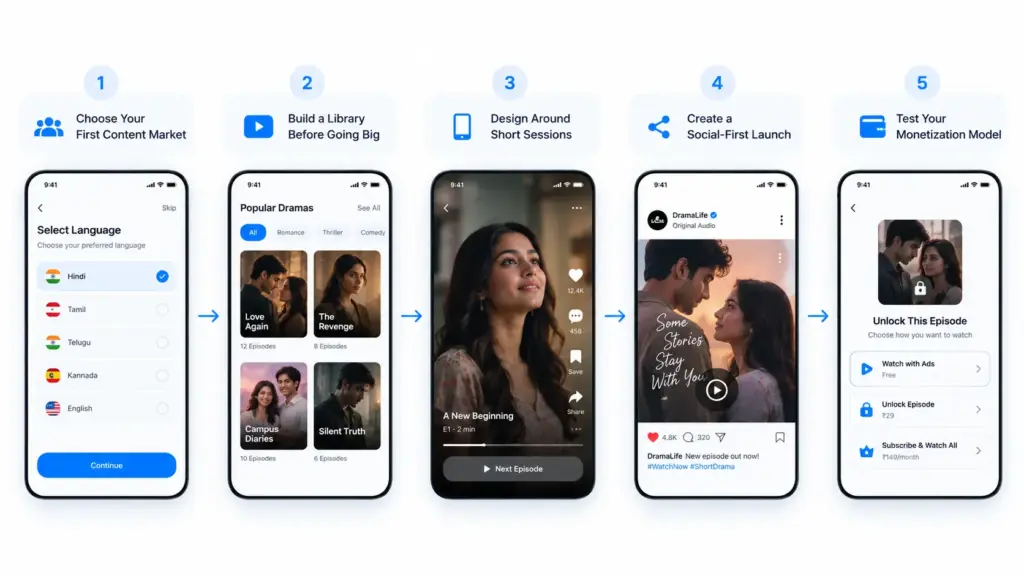
1. Choose Your First Content Market
Your first decision should be who you want to serve. You could begin with Hindi content for wider reach or focus on a regional audience where you can build a stronger identity. Meta and Ormax found that Tamil, Telugu and Kannada are the leading regional languages after Hindi and English for micro-drama consumption.
A focused launch can also make content production easier. Instead of creating stories for everyone, you can build around one language, a few genres and a specific type of viewer.
2. Build a Library Before Going Big
A micro drama app needs enough content to keep viewers moving from one story to another. You do not need a massive library at launch, but users should have more than one reason to stay after finishing their first series. Even a small library can work well if the stories are engaging and cover a few different interests.
A useful starting mix could be:
| Content | Launch role |
| Original dramas | Build identity |
| Licensed shows | Expand the catalog |
| Regional stories | Reach new audiences |
| Short clips | Drive discovery |
QuickTV shows how this can work at scale. Its current app offers short dramas in Hindi, Tamil and Telugu, along with dubbed Chinese dramas. It was also updated recently with new shows and weekly episode releases.
3. Design Around Short Sessions
Micro dramas should fit naturally into the small gaps in a viewer’s day. The app should let someone open a story, watch an episode and return later without losing their place. Long menus and complicated navigation can work against the format. Meta and Ormax found that viewers spend a median of 3.5 hours a week watching micro dramas across around seven to eight short sessions. About 90% of viewing happens alone, which makes the experience highly personal.
That means your MVP should make three things very easy:
Discover → Watch → Continue
4. Create a Social-First Launch
Your marketing should begin before people download the app. Short clips can introduce characters and story conflicts through Instagram Reels, YouTube Shorts and other social feeds. This is especially important because 89% of Indian micro-drama viewers discover the format through social feeds.
The opportunity is to turn each drama into several pieces of marketing content. A strong cliffhanger can become a Reel, while another scene can introduce the main character or create curiosity around the next episode.
5. Test Your First Monetization Model
Do not assume that subscriptions are the only way to make money. You can test free episodes, subscriptions, episode unlocks and advertising to understand what your audience prefers. India’s micro drama market is projected to grow from around $2.8 billion to roughly $28.5–31 billion. Redseer also expects advertising revenue to grow from about $25 million to around $5.3–5.8 billion as AVOD expands.
The current opportunity can be viewed like this:
Free viewing → Viewer interest → Paid unlock or subscription → Long-term retention
6. Use Data to Shape Stories
Once people start watching, their behavior can tell you more than early opinions or surveys. Look at which stories get completed, where viewers stop watching and which characters or genres bring them back. This can help your content team decide what to produce next. It can also improve recommendations and marketing because the app starts learning what different viewers actually enjoy.
7. Scale After Product-Market Fit
Do not expand into every language and genre just because the technology allows it. First find a content format that keeps people watching and gives you a sustainable path to revenue. Then use that winning format as the base for expansion. The market is large, but recent moves also show why careful scaling matters.
Where Should the Viewer Start Paying in Your Drama App?
The best monetization strategy is usually a mix rather than one payment model for everyone. Let viewers experience enough of a story to become interested and then give them different ways to continue. Some may prefer paying for individual episodes while others may choose a subscription. Ads can also keep the app accessible to viewers who do not want to pay.
How Many Episodes Should Be Free?
The first few episodes should give viewers enough of the story to understand whether they want to continue. Making everything free can make it harder to convert users, while placing a paywall too early can stop people before they become interested. A practical model is to offer the opening episodes for free and then introduce payment once the main conflict becomes stronger. This also gives the platform time to understand where viewers usually drop off.
Free episodes → Build interest → Create a cliffhanger → Introduce payment
When Should The Paywall Appear?
The paywall should appear at a moment when the viewer already wants to know what happens next. Putting it after the first episode may feel too aggressive for a new user. Waiting until the viewer has watched several episodes can create stronger buying intent. This matters because around 40 million Indians have paid for micro dramas at least once, while only 15–17 million are monthly paying users. That suggests many viewers are willing to pay without necessarily wanting a recurring subscription.
Coins Or Subscription?
Both models can work because they serve different types of viewers. Coins are useful when someone wants to unlock a particular episode or finish one story. Subscriptions make more sense for viewers who watch regularly and want broader access.
| Model | Best for | Viewer action |
| TVOD | Occasional viewers | Pay per episode |
| SVOD | Regular viewers | Pay for access |
| AVOD | Price-sensitive users | Watch with ads |
| Microtransactions | High-intent viewers | Buy coins or unlocks |
Redseer says subscriptions currently generate about 99% of India’s micro-drama revenue, but advertising is expected to become a much larger part of the market.
Can Rewarded Ads Unlock Episodes?
Rewarded ads can give users another way to continue watching without paying. Instead of forcing a payment after a free episode, the app can let viewers watch a short advertisement and unlock the next episode. This model fits micro dramas because episodes are already short and viewers often make quick decisions about whether they want to continue. More than 65% of surveyed consumers have expressed interest in an ad-supported micro-drama experience.
A simple approach could be:
Watch ad → Unlock episode → Continue story
This also gives you a way to monetize users who may never become subscribers.
Should Everyone Pay The Same?
Not necessarily. A new viewer and a loyal viewer may have very different willingness to pay. You could test different offers based on viewing behavior rather than showing everyone the same package. For example, a regular viewer could receive a discounted subscription while an occasional viewer gets a smaller episode bundle. The important part is to test pricing without making the system confusing.
The bigger opportunity is therefore not choosing between subscriptions and ads. It is building a payment journey where free viewing brings people in and different monetization options capture different levels of interest.
When Does a Micro Drama App Become Expensive to Scale in India?
A micro drama app usually becomes expensive when growth starts affecting the systems behind the viewer experience. More users mean more video delivery, while a larger catalog creates more work for your content team. Adding languages, payment options and personalization also increases the technical load. Planning for these changes early can help you avoid rebuilding the platform later.
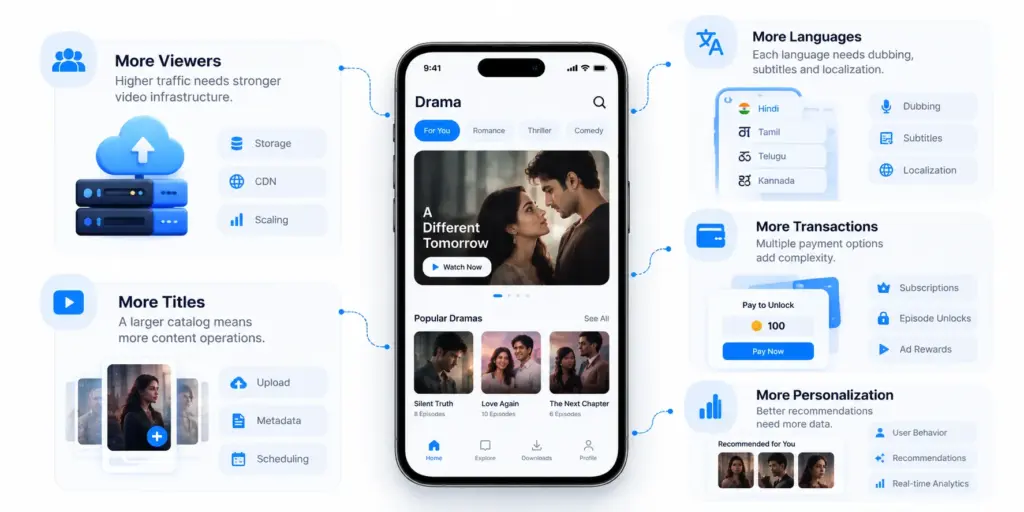
More Viewers Mean More Video Infrastructure
Video delivery can become one of the biggest running costs once your audience grows. Every episode needs storage, transcoding and reliable delivery across different network conditions. A small MVP can use a simpler setup, but a larger platform may need CDN optimization and stronger cloud infrastructure to handle traffic without buffering.
The infrastructure needs to grow with the audience:
| Growth stage | Main concern |
| Early MVP | Basic cloud storage |
| Growing audience | CDN and video optimization |
| Large catalog | Transcoding and storage efficiency |
| High traffic | Multi-region delivery and scaling |
More Titles Mean More Operations
Adding more shows does not only increase storage requirements. Someone also needs to upload episodes, manage metadata, create thumbnails, schedule releases and track content performance. Without a proper content management system, these tasks can quickly become difficult to manage.
A scalable CMS can help your team manage the catalog from one place. It also makes it easier to schedule releases across multiple languages and keep successful stories visible.
More Languages Mean More Work
Localization can open new audiences, but simply translating subtitles is not enough. A growing platform may need dubbing, subtitles, metadata and localized promotional clips for each language. The more languages you add, the more important it becomes to automate repetitive parts of the process.
Localization can involve:
Script → Translation → Voice → Subtitles → Metadata → Promotion
Building this pipeline early can make regional expansion much cheaper than handling every language manually.
More Transactions Mean More Complexity
Once the app starts using subscriptions, episode unlocks, coins and advertising together, payments become harder to manage. You need to connect each successful transaction with the correct content access. Refunds, failed payments and subscription renewals also need to be handled properly.
This becomes more important as the market moves beyond subscriptions. Redseer estimates that around 40 million users have paid for micro dramas at least once, while advertising is expected to become a major revenue layer alongside subscriptions and micro-payments.
A scalable payment setup should therefore keep these parts connected:
| Payment activity | Platform requirement |
| Episode unlock | Instant access |
| Subscription | Recurring entitlement |
| Coins | Wallet tracking |
| Refund | Access adjustment |
| Ad reward | Episode unlock |
More Personalization Means More Data
Personalization becomes more useful as your catalog grows because users have more stories to choose from. But recommendations also require more behavioral data. The platform needs to understand what users watch, skip, finish and return to without slowing down the experience.
This is already becoming part of the product strategy. Bullet, backed by ZEE, has introduced AI-powered personalization, content pricing and performance prediction as part of its micro drama ecosystem. Its Trinetra AI platform also brings together content intelligence, production, multilingual audio and monetization tools.
For a startup, that does not mean building a complex AI system from day one. Start with useful viewing signals and improve recommendations as the audience grows.
IdeaUsher Can Help You Scale Smarter
At IdeaUsher, we can help you build the micro drama platform with scalability in mind from the beginning. Our team can structure the video delivery, content management, payment and personalization layers so you do not have to rebuild the product every time your audience grows.
The goal is not to overbuild the first version. It is to choose an architecture that gives you room to add more viewers, content, languages and revenue streams without making every expansion expensive.
When Should You Expand Beyond Your First Audience?
Expand only after your first audience gives you clear signs that the format is working. Viewers should be returning regularly, finishing stories and showing interest in more content before you move into new markets. This keeps expansion tied to real demand instead of making the platform bigger just for the sake of growth. Once the core audience is strong, the same winning format can be adapted for new languages, genres and regions.
1. Add Languages After Winning
Start with the language that gives you the strongest audience response. Once you have successful stories, you can dub or adapt them instead of creating completely new shows for every market. This can make regional expansion much cheaper and faster. India already shows strong demand for regional micro dramas. Tamil, Telugu and Kannada are the leading regional languages after Hindi and English, according to Meta and Ormax.
A simple expansion path could look like this:
Hindi → Telugu → Tamil → Kannada
This approach also gives you a chance to test whether the same story works across different audiences before investing in a larger regional catalog.
2. Expand Genres Without Diluting
Adding genres can bring new viewers, but your app should still feel like it has a clear identity. If romance is working well, you could move into family drama or relationship-based comedy before suddenly adding unrelated genres. Meta and Ormax found that romance, family drama and comedy are currently the most preferred micro-drama genres in India.
| Your winning format | Logical next move |
| Romance | Family romance |
| Family drama | Relationship drama |
| Revenge | Crime thriller |
| Comedy | Romantic comedy |
The idea is to expand around what already works, rather than making the catalog too broad too quickly.
3. Take Stories Into New Markets
A successful Indian story does not always have to stay within India. Once a format proves popular locally, you can explore dubbed versions and international distribution. This can create another revenue stream without requiring an entirely new production pipeline. DramaBox shows how this model can work. It has reported more than 90 million registered users worldwide, operates across 200+ countries and regions, and has surpassed 100 million Google Play downloads. More recently, it signed a global distribution agreement for the AI-produced English micro drama The Wolf King’s Forbidden Bride.
4. Add More Ways To Monetize
Once the catalog becomes larger, you can give viewers more ways to pay instead of depending on one model. Subscriptions can serve regular viewers, while episode unlocks and advertising can bring in people who are less willing to commit. ReelShort offers a useful example of this mixed approach. Its current app combines in-app purchases with subscriptions and lets users earn reward coins through daily activities and ads. Its latest updates also added more ways to earn coins and improved the rewards experience.
Build a Micro Drama App with Idea Usher
We can help you turn your micro drama idea into a focused MVP built around your target audience, content strategy and business model. Our team can start with the core viewing experience and monetization features instead of adding features that your first users may not need. With 500,000+ hours of coding experience, we bring experience in building complex digital products.
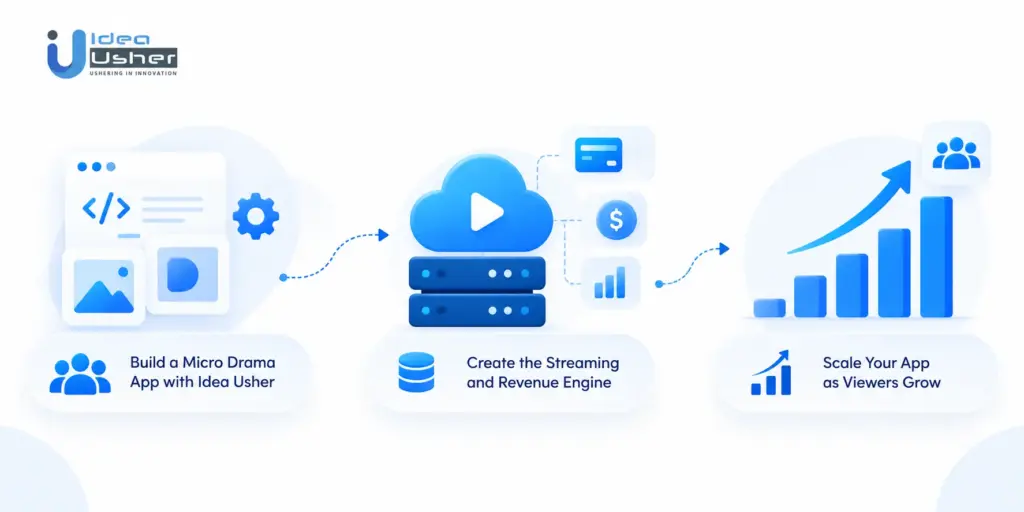
Create the Streaming and Revenue Engine
A micro drama app needs more than a video player. We can build the systems behind vertical streaming, content management, episode unlocks, subscriptions, coin wallets and rewarded ads so your viewing and revenue flows work together. Our team includes ex-MAANG and ex-FAANG developers who can handle the technical requirements of a scalable drama platform.
Scale Your App as Viewers Grow
Your first version should not become a limitation when your audience starts growing. We can build the architecture so you can add more content, languages, personalization and monetization options without rebuilding the entire platform. This gives you a practical path from MVP to a larger micro drama business while keeping development focused on what your audience actually needs.
Conclusion
The micro drama market in India gives founders a chance to build a focused entertainment platform around short and engaging stories. The best approach is to start with a clear audience and a small content library instead of trying to compete with large OTT platforms from day one. Social media can help bring viewers to the app while regional content can help you reach new audiences. As the platform grows, you can add more stories, languages and revenue options based on what your viewers actually want.
FAQs
A1: The cost depends on how much of the platform you want to build in the first version. A basic MVP can start around $20,000–$40,000, while a larger platform with advanced streaming, payments, recommendations and content management can go beyond $70,000. Your content production and video infrastructure will also add to the overall investment.
A2: You do not need hundreds of dramas before launch. A small library with several complete stories can be enough to test viewer interest and see which genres perform well. It is more important to have content that keeps viewers watching and gives them another story to start after finishing one. Redseer also highlights deeper content libraries as important for the growth of India’s micro drama market.
A3: Micro drama apps can earn through subscriptions, episode unlocks, coins and advertising. Subscriptions currently make up most of the revenue in India, but advertising is expected to become a much bigger part of the market. Redseer estimates India’s micro drama advertising revenue could grow from about $25 million to roughly $5.3–$5.8 billion as AVOD expands.
A4: Yes. A regional micro drama app can focus on one language and build a strong audience before expanding into other regions. This can also help you create stories that feel more relevant to local viewers instead of competing with every Hindi and English platform. Regional content is already an important growth opportunity as India’s short-form entertainment audience continues to expand.