

Key Takeaways
- Businesses are adopting AI prompt-to-app platforms to build, maintain, and automate applications through natural language and intelligent AI workflows.
- Platforms like Vybe combine AI app generation, autonomous AI coworkers, workflow automation, and enterprise integrations to reduce manual development effort.
- Modern AI platforms rely on LLMs, AI agents, cloud-native infrastructure, and real-time data synchronization to support scalable business operations.
- Long-term success depends on secure architecture, enterprise governance, autonomous maintenance, and seamless integrations with existing business systems.
- How Idea Usher can help businesses build AI platforms like Vybe with LLM integration, AI agents, workflow automation, enterprise security, and scalable cloud infrastructure.
Building software is no longer the hardest part. The real challenge begins after launch, when applications need regular updates to keep up with changing business needs. Every new feature, integration, or security requirement demands time and developer effort. This is one of the biggest reasons AI-powered prompt-to-app platforms are becoming more popular. They help businesses not only build applications faster but also simplify ongoing app maintenance by automating routine development work. Platforms like Vybe show how AI can keep applications running smoothly with minimal manual intervention.
We’ve developed several AI-powered prompt-to-app solutions that combine LLMs with AI agent orchestration frameworks to help businesses build applications that can evolve and maintain themselves with minimal manual effort. With this expertise, we’re sharing this blog to explore how to build an AI platform like Vybe, covering the key technologies, architecture, and features needed to create an intelligent app maintenance platform.
Market Potential of AI-Powered Prompt-to-App Platforms
According to Dimension Market Research, the global AI Prompt Marketplace is expected to grow from USD 2.6 billion in 2026 to USD 25.3 billion by 2035, expanding at a CAGR of 28.8%. This rapid growth reflects how quickly businesses are adopting generative AI to build applications, automate workflows, and boost productivity. As more companies look for faster and simpler ways to develop software, AI-powered app builders are becoming one of the fastest-growing segments in enterprise technology.
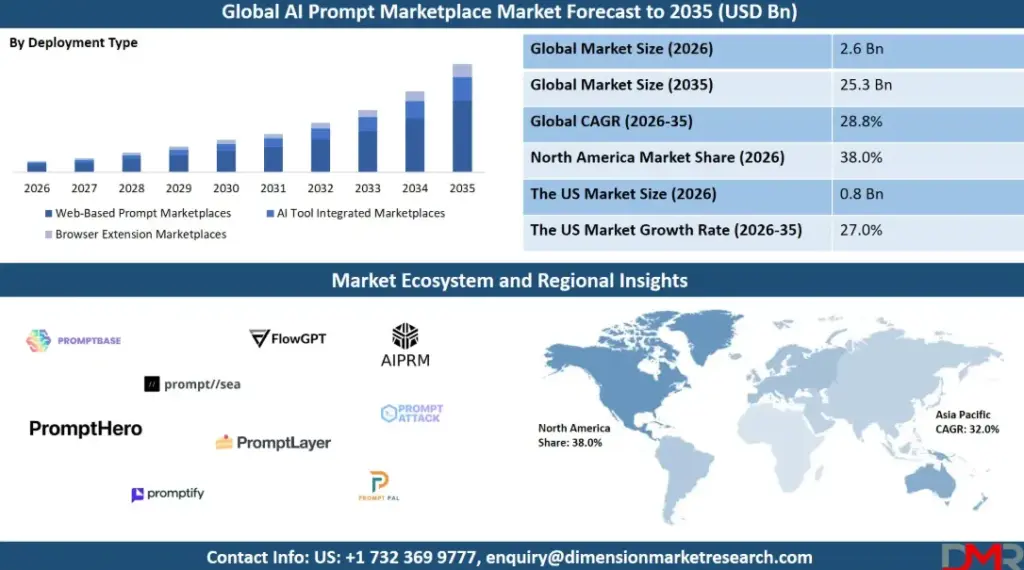
Source: Dimension Market Research
Consider the explosive growth of Lovable, a prominent AI-driven development platform that reached an estimated 400 million dollars in annual recurring revenue following its highly publicized funding rounds. This momentum is heavily driven by the enterprise software development space, where over 70% of new corporate applications utilize low-code or AI-assisted frameworks.
Why Enterprises Are Investing
Enterprise organizations are no longer looking at AI software builders as experimental novelty tools. Corporate technology buyers are systematically restructuring their operations to integrate these automation systems directly into their central engineering workflows to address real structural pain points.
Take Vercel’s v0 platform as a prime example of enterprise penetration. By generating production-ready frontend components directly from text and image prompts, v0 has captured more than 4 million unique users, with its parent company scaling past an estimated 200 million dollars in annual recurring revenue. This level of adoption highlights a major market trend:
- Massive Cost Reduction: Technology executives report saving thousands of dollars per developer annually by migrating repetitive UI tasks to AI engines, optimizing corporate payroll.
- Eliminating Bottlenecks: Manual design-to-code translation can consume weeks of engineering resources, whereas automated builders reduce development time by up to 90%.
- Empowering Non-Technical Teams: Moving app creation outside traditional IT departments allows product managers and business teams to spin up internal tooling instantly without adding to the development backlog.
This enterprise shift ensures deep capital retention for software platforms that provide structured, reliable code output. Businesses willingly allocate premium enterprise budgets to tools that show an immediate, visible return on their engineering efficiency.
Why Now Is the Best Time
A unique convergence of market factors has created a rare, high-yield window for founders to launch proprietary AI app builder platforms. The global tech sector faces a severe, structural shortage of specialized engineering talent, making it impossible for companies to scale their software needs through human capital alone.
| Market Dynamics | Legacy Software Era | Modern AI Era |
| Developer Leverage | 27 million professional engineers globally | 100+ million non-technical builders using text prompts |
| Task Efficiency | Manual layout creation takes days | AI models achieve a 55% faster task completion rate |
| Product Lifecycle | Rigid releases, slow iteration cycles | Fast fluid updates, constant AI-powered refinement |
How Vybe Evolved From AI App Builder to AI Coworkers?
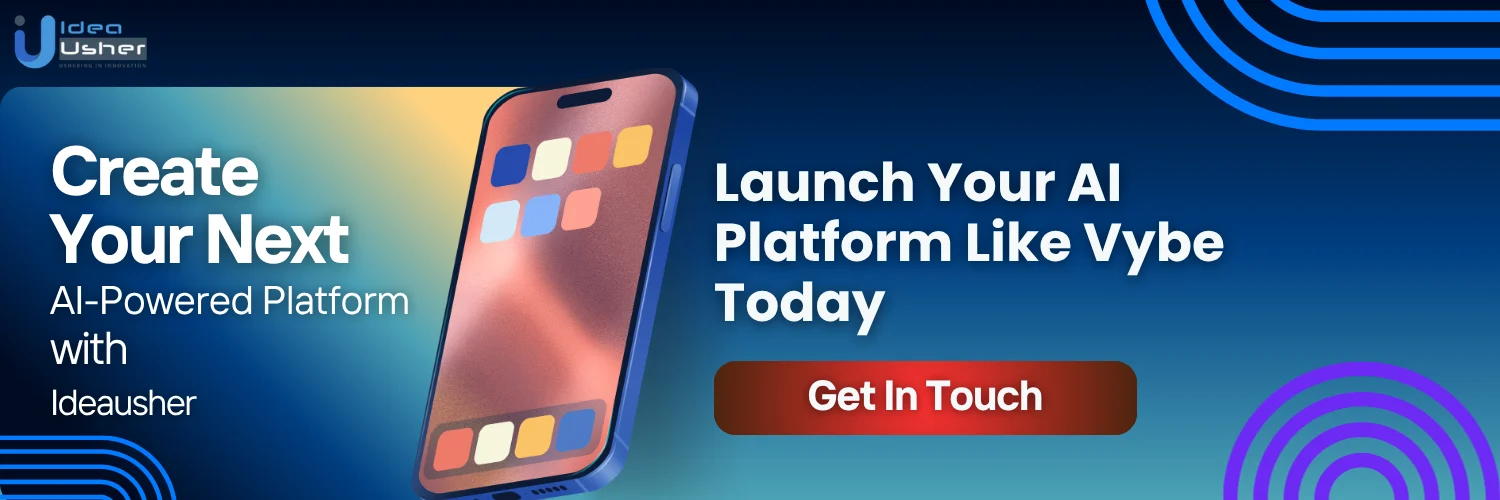
Vybe makes it easy for businesses to build custom internal apps without the complexity of traditional software development. Users can simply describe what they need, and the platform generates secure applications while also helping automate everyday business tasks with AI. This saves development time, improves team productivity, and gives companies a faster way to turn ideas into working software.
Why Vybe Started as an AI App Builder
Vybe was created to help businesses overcome the slow process of building internal software. Instead of waiting on IT teams, employees can use simple text prompts to create dashboards, business tools, and data management apps on their own. This approach speeds up development, reduces technical barriers, and helps organizations respond more quickly to changing business needs.
- Instant Infrastructure: The platform handled all cloud deployment, security patching, and hosting logic behind the scenes automatically.
- Database Synchronization: Users could plug directly into data warehouses like Redshift or Snowflake, instantly turning raw tables into structured visual charts.
- Operational Acceleration: Teams built fully functional applications in minutes, replacing legacy internal setups like Looker or custom-coded admin portals.
This strategic product focus proved highly attractive to the venture market. Vybe secured a 10 million dollar seed funding round led by major investment players like First Round Capital and Y Combinator, with deep participation from industry operators across OpenAI and Anthropic. This early capital injection allowed the engineering team to optimize its layout engines, scaling the platform to an estimated 330,000 dollars in initial annual recurring revenue.
How AI Coworkers Expanded the Platform
As businesses began using Vybe, it became clear they needed more than app creation. They also wanted AI to handle repetitive work automatically. In response, Vybe introduced AI agents that can take care of routine tasks across different teams. This helps employees spend less time on manual processes and focus on work that creates more value for the business.
| Operating Division | AI Coworker Core Capabilities | Business Infrastructure Connections |
| Product & Research | Monitors competitor movements, analyzes customer calls, scores incoming leads | Interacts directly inside Slack channels and shared workspace docs |
| Customer Operations | Reviews user bug databases, flags high-priority tickets, drafts responses | Links with external CRMs and messaging channels automatically |
| Finance & Admin | Tracks recurring billing variations, parses invoices, builds spending briefings | Syncs across thousands of distinct enterprise tool integrations |
This architectural upgrade drastically improves the software’s economic footprint within client companies. Instead of a business using the tool occasionally to construct a new interface, the platform’s AI agents run continuously in the background, handling manual tasks that typically consume days of human labor every single week.
What This Evolution Means for Future AI Platforms
The software industry is moving beyond AI tools that only help write code. Businesses now want platforms that can build applications, automate workflows, and handle routine operations with minimal human effort. This shift is driving the rise of AI-native platforms that help companies work faster, reduce manual tasks, and scale more efficiently.
Strategic Insight: Building a competitive software asset today requires looking beyond basic design export features. The true value lies in orchestrating deep contextual workflows where AI components converse with external APIs, remember organizational guidelines, and execute multi-step business logic safely.
How Vybe Works: AI Agents, Apps, and Business Automation
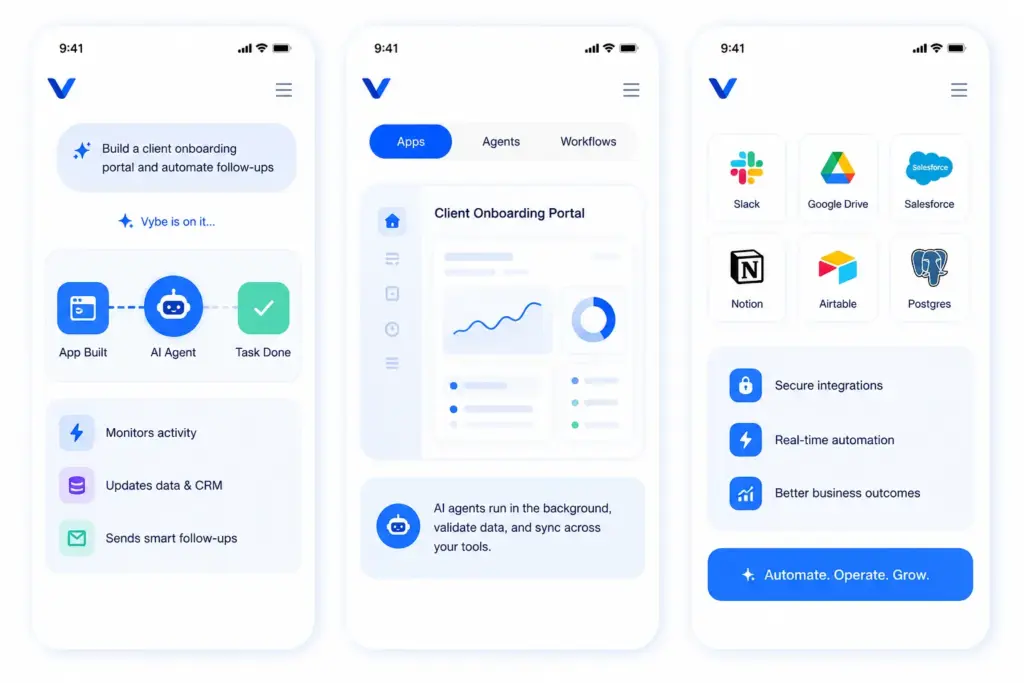
Vybe operates as an open-ended operational framework that connects natural language inputs to multi-step software execution. Instead of forcing teams to jump between separate visual editors and script-writing platforms, the system unifies application layout generation and autonomous agent logic inside a single canvas.
1. Autonomous Task Execution
Unlike legacy, trigger-based workflow tools that rely on strict if-this-then-that rule sets, Vybe’s AI coworkers interpret broad, context-dependent operational goals. These autonomous agents assess incoming live data, make independent adjustments based on structural company guidelines, and interact directly across core systems without requiring constant human button clicks.
- Proactive Account Management: Agents monitor public client activity databases, flag high-value renewal signals, and draft contextual follow-up communications inside connected channels automatically.
- Intelligent Data Auditing: The engine screens incoming operational records, updates internal CRMs, and maps out comprehensive weekly division performance briefings.
- Meeting Pipeline Readiness: The system cross-references calendar events, scans recent account historical timelines, and delivers personalized briefing documents directly to team managers.
2. Unified Apps, Workflows, and AI
Vybe connects AI-generated applications with automated workflows, allowing businesses to do more than just create interfaces. Teams can build internal dashboards using simple text prompts, while AI agents work in the background to process data, validate information, and trigger actions across connected business systems. This allows everyday workflows, such as customer onboarding, to run with far less manual effort and much greater efficiency.
3. Ecosystem Integrations and Automation
An autonomous execution platform is only as effective as the enterprise software ecosystem it can reach. Vybe maintains strong utility walls by connecting directly with central communication hubs, database structures, and third-party SaaS APIs while preserving strict, enterprise-grade data security guidelines.
| Feature Area | Basic Infrastructure Access | Vybe Commercial Tier Implementation |
| System Entry Point | 100 free operational credits per day | Structured plans ranging from $99 to $1,999 per month |
| Data Usage Rate | Baseline API credit consumption | Fixed top-ups priced exactly at $0.01 per operational credit |
| Enterprise Security | Standard encryption layers | Advanced air-gapped data routing with custom SOC 2 compliance |
What are Core Features of an AI Platform Like Vybe?
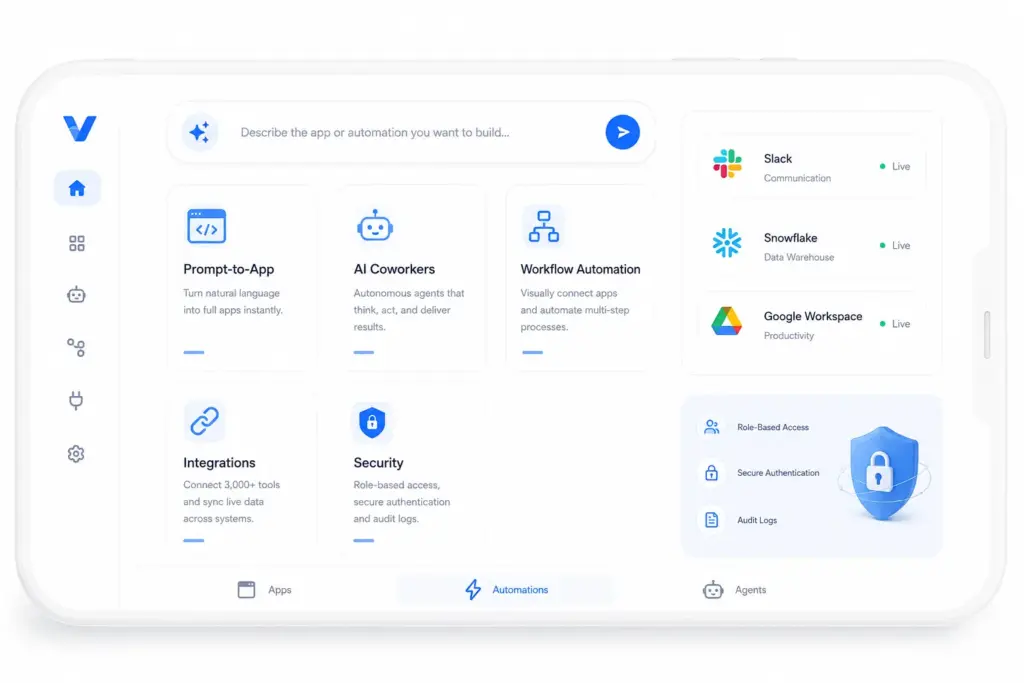
Building a sustainable business asset in the automation market requires packing deep operational utility into an accessible setup. In the AI-native workspace, Vybe establishes the standard by combining interactive interface creation with background logic systems. Users rely on these specific architectural pillars to replace manual development cycles and optimize company operations.
1. AI Prompt-to-App Generation
Users begin the creation process by entering natural language descriptions directly into the Vybe prompting window. The system reads the intent to construct complete web applications with matching database schemas and logic layers automatically. This feature allows non-technical operators to build custom inventory trackers or client management boards without writing a single line of traditional code. The platform manages the entire configuration behind the scenes, turning plain English into functional software layouts within minutes.
2. Autonomous AI Coworkers
Instead of relying on rigid, trigger-based rules that break easily, users deploy smart AI agents inside Vybe to manage continuous business processes independently. These digital teammates evaluate incoming information and execute multi-step operational logic autonomously.
- Contextual Processing: The agents read and interpret nuanced user requests rather than searching for exact keyword matches.
- Proactive Execution: Agents run customer research, build competitor briefs, and update internal databases without waiting for human intervention.
- Team Alignment: The coworkers interact seamlessly inside communication streams, delivering automated briefings to team managers.
3. Visual Workflow Automation
To construct cohesive internal processes, users open the Vybe visual canvas to link their custom applications straight to automated workflows. The workspace allows teams to map out exactly how data should move across different departments. An operator can configure an automation sequence where an incoming client ticket instantly activates an AI coworker. The agent reads the request, checks past account history, and updates the relevant visual dashboard module automatically.
4. Integrations and Live Data Sync
An execution tool is only valuable if it can connect with existing enterprise systems. Users link Vybe directly to central databases, CRMs, and over 3,000 third-party software integrations to keep corporate files aligned in real time. This extensive connectivity turns the software into a centralized operational hub.
Because data updates continuously across all linked endpoints, teams can make critical business decisions based on accurate information without manual data entry.
| Integration Channel | Active Workspace Target | Operational Value |
| Communication Hubs | Enterprise Slack channels | Allows agents to deliver real-time operational alerts |
| Data Warehouses | Enterprise Snowflake setups | Ensures apps display up-to-the-minute metrics |
| Productivity Tools | Connected Google Workspace | Automates meeting preparation and documentation |
5. Security and Access Management
Security is a core part of Vybe, making it suitable for enterprise use. The platform includes role-based access controls, secure authentication, and audit logs to protect sensitive business data. These built-in safeguards allow companies to automate workflows with confidence while maintaining control over who can access critical information.
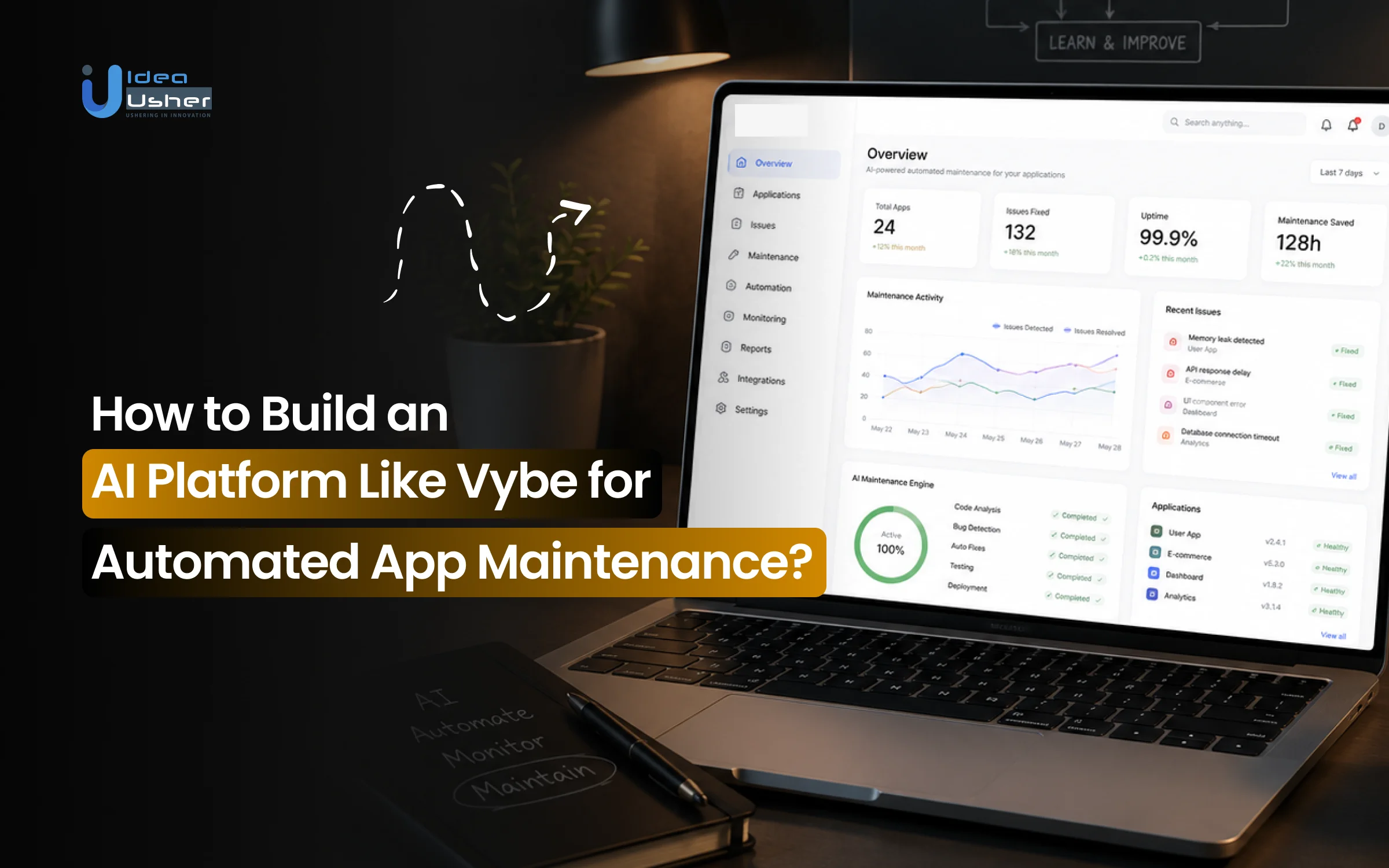
6. AI Maintenance and Updates
Software traditionally demands constant manual patching, but Vybe handles application upkeep automatically. The platform runs continuous background monitoring on all live apps to catch workflow friction points and optimize processing speed.
- Bug Resolution: The AI handles script errors and fixes structural database layout bugs independently.
- Workflow Optimization: The engine monitors integration flows and updates broken connection patterns automatically.
- Performance Enhancements: The system adjusts backend query structures to keep load times low as user databases expand.
This automated maintenance eliminates the need for an expensive, dedicated DevOps team, letting founders launch software assets that remain highly reliable without heavy long-term operational expenses.
7. Production Deployment and Infrastructure
The final step in the automation cycle happens when users launch their finished projects to a live cloud environment with a single click. Vybe handles all server provisioning, environment configurations, and version management automatically. The platform structures this setup across accessible usage tiers. Subscription pricing starts at a flat $99 per month for the entry plan, scaling up to a $499 team plan and a $1,999 monthly scale tier as usage expands.
Additional processing capacity is managed through transparent credit allocations priced exactly at $0.01 per credit, allowing companies to scale their infrastructure smoothly as real-world operational demands grow.
Development Steps to Build a Platform Like Vybe
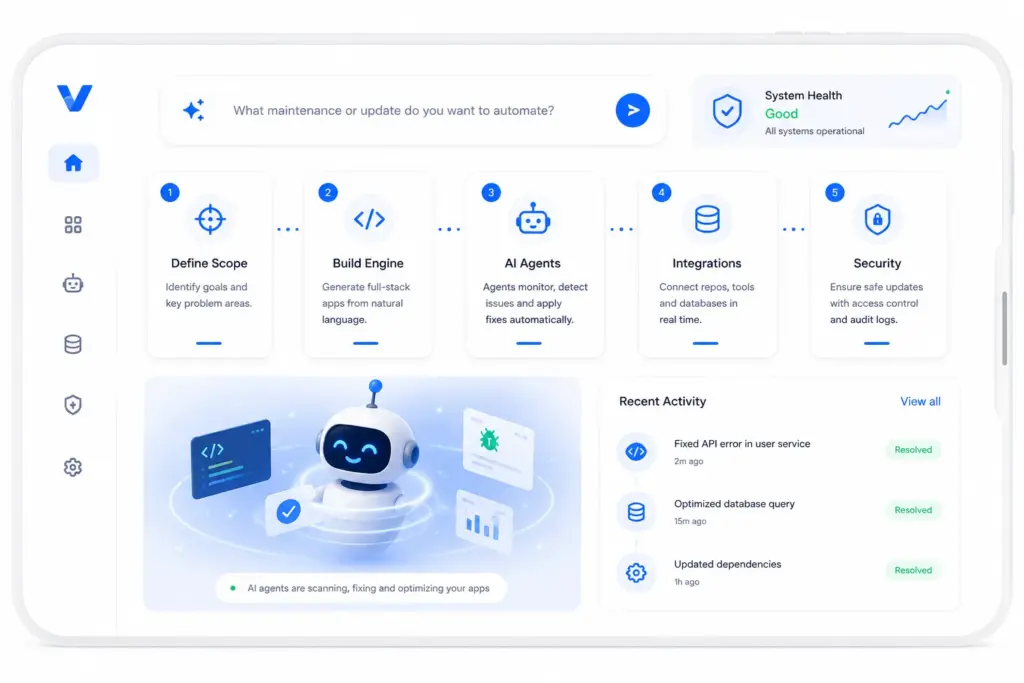
Building an enterprise-grade AI maintenance ecosystem requires an engineering approach that goes far beyond simple script generation. For anyone looking to disrupt the traditional IT sector, the true commercial opportunity lies in building self-healing software assets that monitor, patch, and scale autonomously. This demands a tight synchronization between real-time data monitoring and semantic code execution models.
1. Define Your AI Maintenance Scope
Every successful automation system must start with absolute clarity on the precise operational friction points it intends to solve. We begin by helping you isolate high-impact maintenance categories so your initial launch delivers an immediate, visible return on engineering efficiency to your B2B buyers.
- Bug Detection Parameters: We map out the diagnostic parameters required to catch syntax exceptions, broken API calls, and logic errors.
- Feature Update Logic: Our product architects design structured pipelines that allow the AI to safely insert new layout components without disturbing legacy code bases.
- Target Audience Alignment: We tune the user workflows specifically for either enterprise IT divisions managing massive legacy codebases or lean startup teams looking to automate their DevOps operations entirely.
2. Build the Prompt-to-App Engine
To repair or update software autonomously, your platform must first understand how to construct application architectures from the ground up. We develop a robust generative engine that interprets natural language instructions to construct complete, full-stack applications with synchronized database schemas and secure authentication setups.
| Generation Phase | Technical Implementation Strategy | System Output |
| Intent Processing | Specialized semantic translation layers tuned for codebase geometry | Structured full-stack architectural blueprints |
| Canvas Assembly | Dynamic multi-tenant front-end rendering engines | Responsive, click-ready user interfaces |
| Database Provisioning | Automated generation of relational schemas and Postgres instances | Live, secure backend data storage units |
This foundational layer matches the prompt-driven execution models used by top market players. Vybe successfully capitalized on this framework to secure a 10 million dollar seed funding round led by First Round Capital and Y Combinator, scaling their operation past an estimated 330,000 dollars in initial recurring revenue by treating code structure as a fluid conversational canvas.
3. Agents for Autonomous Maintenance
The true power of your software asset lies in shifting away from simple trigger-based rules and moving toward active, goal-oriented decision loops. We construct specialized AI agents that run continuously in the background to analyze the health, stability, and speed of your clients’ live applications.
Our engineering teams build these autonomous coworkers to parse error logs, isolate broken package integrations, and write clean, semantic code modifications independently. Because the system can run continuous optimization scripts, it keeps enterprise platforms running smoothly without requiring a manual developer ticket for every minor bug.
4. Enterprise Data and Business Tools
An automated maintenance tool can only protect what it can see. We build robust, real-time ingestion pipelines that allow your platform’s AI agents to securely interact across existing databases, CRMs, cloud repositories, and corporate communication networks.
- Repository Synchronization: We construct deep integration bridges that pull down and push up code changes straight through platforms like GitHub or GitLab.
- Communication Channel Hookups: Our developers configure secure web sockets to route automated status reports and maintenance alerts directly into team Slack channels.
- Live Database Optimization: We implement parsing wrappers that allow the AI to evaluate raw database behavior, updating indexes and query structures automatically.
5. Enterprise Security and Governance
Corporate technology buyers will never trust an automated system with their central codebase unless it features flawless security guardrails. We implement rigorous governance protocols to ensure that every single code modification generated by the AI undergoes strict verification before it hits production.
Strategic Insight: We integrate advanced Role-Based Access Control (RBAC), multi-tenant Single Sign-On frameworks, and immutable audit logs into your system structure. This ensures enterprise managers can easily view historical maintenance timelines, manage agent permissions, and implement manual approval requirements for critical code updates.
6. Deploy a Scalable AI Infrastructure
As your customer base grows, running complex AI parsing loops across thousands of active applications can heavily strain server resources and inflate operational overhead. We build a high-performance, cloud-native architecture utilizing containerized microservices and semantic caching layers to keep your system fast and cost-effective.
We deploy smart model-routing mechanisms that pass routine bug-fixing tasks to smaller, highly efficient open-source models while saving resource-heavy frontier models for complex architectural restructuring. This infrastructure layout dramatically cuts down your API credit consumption, allowing you to maximize your SaaS profit margins as you scale.
7. Improve Through AI Learning Loops
Our approach focuses on building a platform that improves over time through continuous learning. By analyzing how AI agents perform in real-world scenarios, the system becomes more accurate, reduces repeated errors, and delivers better automation with every update. At Idea Usher, we build AI platforms that are designed to scale, adapt, and create long-term value for your business.
Cost to Build a Platform Like Vybe
Allocating capital to build an autonomous agent and application generation engine requires an analytical approach to infrastructure and model design. When managing a software build of this complexity, budgeting must account for the initial coding layers as well as continuous token usage, model routing architectures, and data orchestration. Balancing these technical components dictates your overall product runway and long-term viability.
MVP vs Enterprise Development Cost
Bringing a product-to-market layer to life requires matching your development phases with your capital availability. An initial Minimum Viable Product (MVP) focuses purely on validating your core prompting and application generation workflows, while an enterprise ecosystem expands into full workflow execution.
- Core AI MVP ($30,000 – $70,000): This phase establishes baseline prompt-to-UI translation, standard database setup, and essential interface builders. It provides the exact functional framework Vybe utilized after securing its 10 million dollar seed round from First Round Capital and Y Combinator, helping them scale early operations to an estimated 330,000 dollars in initial annual recurring revenue.
- Commercial SaaS Platform ($80,000 – $170,000): This layer introduces real-time multiplayer coordination, deep software integrations, custom brand tooling, and public application deployments.
- Enterprise-Grade System ($190,000 – $400,000+): A complete operational powerhouse featuring autonomous AI coworkers, air-gapped data environments, local repository syncing, and complex compliance frameworks.
When you partner with us, we ensure your early codebase transitions smoothly through each pricing milestone. This modular engineering approach protects your upfront investment while creating a platform ready for enterprise adoption.
Factors That Influence Budget
The ultimate price of your platform depends on how deeply your autonomous components must interact with external business applications. Understanding these engineering drivers prevents unexpected budget spikes during production. Our engineering teams review these components during your initial product discovery sessions. We guide you toward intelligent model combinations, matching the strategy used by industry leaders.
| Architectural Element | Lower-End Implementation | Higher-End Implementation | Budget Impact |
| Model Optimization | Public commercial APIs (OpenAI / Claude) | Fine-tuned proprietary open-source models | $12,000 to $60,000 |
| Agent Autonomy | Trigger-based, linear automated actions | Continuous, context-aware goal-oriented decision loops | $15,000 to $45,000 |
| Data Synchronization | Single-point snapshots with standard APIs | Real-time active database sync engines | $10,000 to $35,000 |
| Tenant Infrastructure | Shared cloud environments | Secure isolated air-gapped database containers | $8,000 to $30,000 |
For example, Vybe structures its business around custom tier pricing, starting at $99 per month and moving to $1,999 per month, balanced by a transparent $0.01 per credit usage rate to manage background computing costs effectively.
Reduce Costs Without Compromising Quality
Building an advanced AI generation platform does not mean you have to exhaust your financial resources on theoretical research. By adopting smart development habits and using pre-built software blocks, you can launch a functional application safely within tight financial boundaries.
- Utilize Pre-Trained Foundation Models: Avoid the massive financial burden of training models from scratch. Use prompt optimization layers over public models to achieve excellent generation results for a fraction of the cost.
- Maintain Strict Feature Scoping: Focus your initial build entirely on your highest-value tools, such as the core conversational app builder, before adding expensive secondary automation features.
- Adopt Modular Code Architectures: Build your platform using isolated microservices. This allows your team to upgrade individual backend tools without rewriting the core application.
Why AI App Development Platforms are Growing?
The software development industry is rapidly shifting toward AI-powered platforms that simplify how businesses build and manage applications. As development costs rise and engineering resources become harder to scale, companies are looking for faster and more efficient alternatives. This growing demand is creating a major opportunity for AI-driven SaaS platforms that automate software development and enterprise workflows.
1. Faster Software Development Demand
AI-powered app builders help businesses create and update software much faster than traditional development methods. Teams can turn simple text prompts into working dashboards, internal tools, and business applications within minutes. This reduces development delays and allows organizations to launch new features much more quickly.
The rapid growth of Lovable shows the demand for this approach. The platform reached an estimated $500 million in ARR and secured a $330 million Series B funding round at a $6.6 billion valuation. These milestones highlight how strongly investors value AI platforms that help companies build and ship software faster.
2. Enterprise Driving Market Growth
Organizations are no longer evaluating generative programming software as an unstable, experimental tool. Corporate technology buyers are systematically integrating automated frameworks into their central engineering divisions to optimize developer output and empower non-technical staff to safely construct administrative utilities.
- Automating Repetitive Tasking: Moving standard front-end layout configurations and baseline API integrations to automation layers frees up human engineers for heavy algorithmic problems.
- Empowering Operational Groups: Business units, product managers, and account teams can spin up custom, dedicated internal applications instantly without adding to the corporate IT queue.
- Production-Ready Deliverables: Modern enterprise platforms output cleanly commented, fully typed code frameworks that slide directly into existing corporate data environments without friction.
This commercial upmarket transition is clearly visible in the growth of Vercel’s v0 architecture, a specialized AI tool generating UI components from natural language text and image layouts. Backed by Vercel’s massive 300 million dollar Series F funding round that valued the parent company at 9.3 billion dollars, v0 has captured a multi-million user base.
Because its Teams and Enterprise tiers account for more than 50% of its product revenue, it demonstrates that corporate tech buyers are completely willing to allocate significant budgets to highly structured, scalable code generation engines.
3. AI Transforming Software Creation
The category is shifting from simple autocomplete coding assistants toward fully autonomous, agentic software engineering environments. Modern development ecosystems do not just output individual script snippets; they handle database provisioning, manage environment containerization, and implement automated self-healing loops to fix deployment errors without human button clicks.
| Traditional Era Constraints | Automated Engineering Ecosystems |
| Hand-written layout token mapping taking days | Prompt-to-app conversion rendering in under 60 seconds |
| Manual debugging processes requiring active ticket triage | Self-healing diagnostic loops patching script exceptions live |
| Rigid per-seat license constraints stalling team adoption | Dynamic token and usage credit scales matched to precise utilization |
Consider the recent trajectory of Replit, which has evolved its core cloud workspace into a powerhouse driven by autonomous AI agents. By charging users on an effort-based usage model where simple agent tasks cost pennies and complex operations scale appropriately, Replit unlocked an incredible consumption-based revenue line.
This transactional framework propelled the company’s annualized revenue to 525 million dollars. This immense financial traction allowed the team to secure a fresh 400 million dollar Series D investment round, vaulting their market valuation to 9 billion dollars. This evolution proves that the future belongs to platforms that function as fully integrated, self-sustaining development systems.
What Makes Some AI App Builder Startups Grow Faster Than Others?
When a platform aligns its underlying AI orchestration model with the exact workflow needs of its target user base, it unlocks a compounding acquisition loop. Analyzing how market leaders capture users provides a direct engineering and financial playbook for launching a highly successful software asset.
The prompt-to-app market has split into distinct structural shapes based on who is using the software and how the code is handled. Rather than competing directly on generic feature sets, top platforms win by tailoring their user environment to specific operational segments.
| Platform | Primary Focus | Target Users | Key Differentiator |
| Vybe | Enterprise internal app development and AI-powered workflow automation | Enterprise product, operations, and IT teams | Secure AI app builder with autonomous agents for enterprise workflows. Estimated $330,000 in early recurring revenue. |
| Lovable | AI-powered MVP and web app generation | Startup founders, product managers, and small teams | Fast prompt-to-app generation with collaborative workspaces. Pro: $25/month, Business: $50/month, estimated $400 million valuation. |
| Bolt (StackBlitz) | Browser-based full-stack development | Developers, indie hackers, and technical builders | Browser-based coding with WebContainers and terminal access. Pro: $25/month, Teams: $30/user/month, over $40 million ARR. |
Why Apps Builders Scale Faster Than Others?
The core differentiator between standard software growth and viral, vertical scaling lies in the initial user onboarding loop. Fast-growing applications structure their interfaces so that a user experiences an instant “aha” moment within the first sixty seconds of entering a prompt.
- Viral Shared Experiences: Platforms like Lovable and Bolt let users publish their generated web applications to a public live URL with a single click. When a user creates a cool tool and shares it on social media, every visitor who clicks that link becomes a potential new builder, creating an automated, zero-cost user acquisition loop.
- Granular Consumption Economics: Transitioning away from strict per-seat restrictions and adopting token or credit systems helps businesses match their software expenses directly with user output. Bolt’s token-metered architecture allows power users to scale up their background computing processing smoothly, ensuring the platform remains highly profitable as project codebases expand.
- Deep Ecosystem Attachments: A platform scales faster when it avoids acting as an isolated garden. Connecting code generation directly with established developer pipelines, such as automating pull requests straight to GitHub repositories or linking with data platforms like Supabase, turns the tool from a basic playground into a vital step in an organization’s active production stack.
Lessons Founders Can Learn from These Platforms
For entrepreneurs looking to build the next generation of generative AI creation software, these compounding success stories offer an explicit technical and commercial roadmap. To build a highly defensible platform, you must pick your target user persona early and build your entire infrastructure to match their daily workflow constraints.
If you choose to target corporate buyers, governance and infrastructure security take priority over raw feature velocity. Your system must feature robust role-based access management and data isolation frameworks to give corporate technology executives peace of mind. Conversely, if you are targeting independent builders, maximizing iteration speed, eliminating setup steps, and supporting modular package expansion will directly drive your user retention numbers.
Build a Platform like Vybe with Idea Usher
Deploying corporate capital into the automated application market demands a technology partner that prioritizes speed, architectural security, and long-term business scalability. At Idea Usher, we do not just write standard code scripts. We construct highly valuable AI platforms tailored to your specific commercial goals. We understand the balance between complex large language model orchestration and strict budget management, helping your product hit the target market with maximum competitive impact.
Our development squads operate as a direct extension of your organization, handling the technical friction so you can focus on user acquisition. Here is how we build an advanced, prompt-to-app platform modeled after industry leaders.
AI Strategy for Your Business Goals
Turning a bold software concept into an industry-ready platform requires deep technical alignment before the first line of code is written. We bypass generic, one-size-fits-all templates, diving deep into custom prompt engineering, tailored agent work loops, and intelligent model routing designed specifically for your target audience.
- Target Audience Definition: We help you map out your exact customer focus, whether you want to target startup founders who need rapid application deployments or enterprise technology divisions looking to automate their inner operations.
- Agent Flow Architecture: Our product architects map out custom background processes that allow AI agents to parse complex inputs and execute multi-step business logic safely.
- Token Budget Optimization: We build smart routing layers that pass routine layout adjustments to lighter models while saving heavy computing tasks for advanced engines, keeping your data costs down.
Our structured engineering process ensures your system remains flexible, adapting cleanly as your user base expands. You receive a fully validated product foundation that instantly proves its commercial value to corporate technology buyers.
Secure, Enterprise-Ready Platforms
A basic code export utility cannot survive in today’s sophisticated enterprise B2B landscape. We focus on constructing robust, fully containerized software ecosystems that combine interactive front-end visual boards with deep backend logic networks. This thorough approach to development matches the high-standard frameworks deployed by top market innovators.
| Functional Feature | Our Engineering Approach | Core Strategic Value |
| Prompt-to-App Logic | Semantic parsing layers built specifically to understand application structures | Move from conversational text prompts to active web applications in minutes |
| Live Data Synced Bridges | Secure connection layers linking to tools like Slack and over 3,000 corporate APIs | Converts raw company data databases into active, real-time visual dashboards |
| Air-Gapped Guardrails | Isolated multi-tenant databases with granular role-based access controls | Protects sensitive corporate source code to clear strict vendor security reviews |
Why Founders Choose Idea Usher
Building a software asset capable of supporting thousands of concurrent automated operations requires elite engineering experience. We back your project with a proven track record of over 500 successfully delivered digital products and 500,000+ hours of technical product development.
Strategic Insight: Our core engineering squads include experienced ex-MAANG developers who know how to build systems for low-latency performance and massive data throughput. This deep level of technical execution ensures your platform remains completely resilient under heavy enterprise traffic workloads.
Conclusion
Building an AI platform like Vybe involves much more than generating applications from text prompts. The real value comes from combining AI app creation with workflow automation, enterprise integrations, and secure infrastructure. A well-designed platform should help businesses build internal tools quickly while reducing manual work through intelligent AI agents.
Things to Know About AI Prompt-to-App Platforms
A1: An AI app builder focuses on generating applications from natural language prompts, automatically creating the frontend, backend, database, and deployment pipeline. An AI agent platform goes a step further by enabling autonomous AI coworkers that can monitor applications, execute workflows, interact with business systems, and continuously optimize operations without requiring manual intervention. Understanding this distinction helps founders choose the right architecture based on whether they need rapid app creation or intelligent business automation.
A2: Yes, modern AI platforms can assist with maintaining existing applications by identifying bugs, suggesting code improvements, monitoring application health, generating documentation, and automating repetitive maintenance tasks. Many platforms also integrate with CI/CD pipelines, cloud services, and third-party tools to streamline testing and deployments. However, production environments still benefit from human oversight for critical updates, security validation, and compliance requirements.
A3: AI-powered prompt-to-app platforms are widely adopted across industries that need to build internal software quickly without lengthy development cycles. Healthcare organizations use them for patient and staff management, financial firms automate internal operations, retailers create inventory and order management systems, while HR, logistics, education, and customer support teams develop custom workflows tailored to their daily operations. Their flexibility makes them valuable for almost every enterprise seeking digital transformation.
A4: The development timeline depends on the scope and level of AI automation. A basic MVP with prompt-to-app generation, authentication, database management, and core integrations can often be developed within a few months. A full-scale enterprise platform featuring AI agents, workflow orchestration, advanced security, multi-tenant architecture, and autonomous maintenance capabilities generally requires a significantly longer development cycle with multiple release phases.