


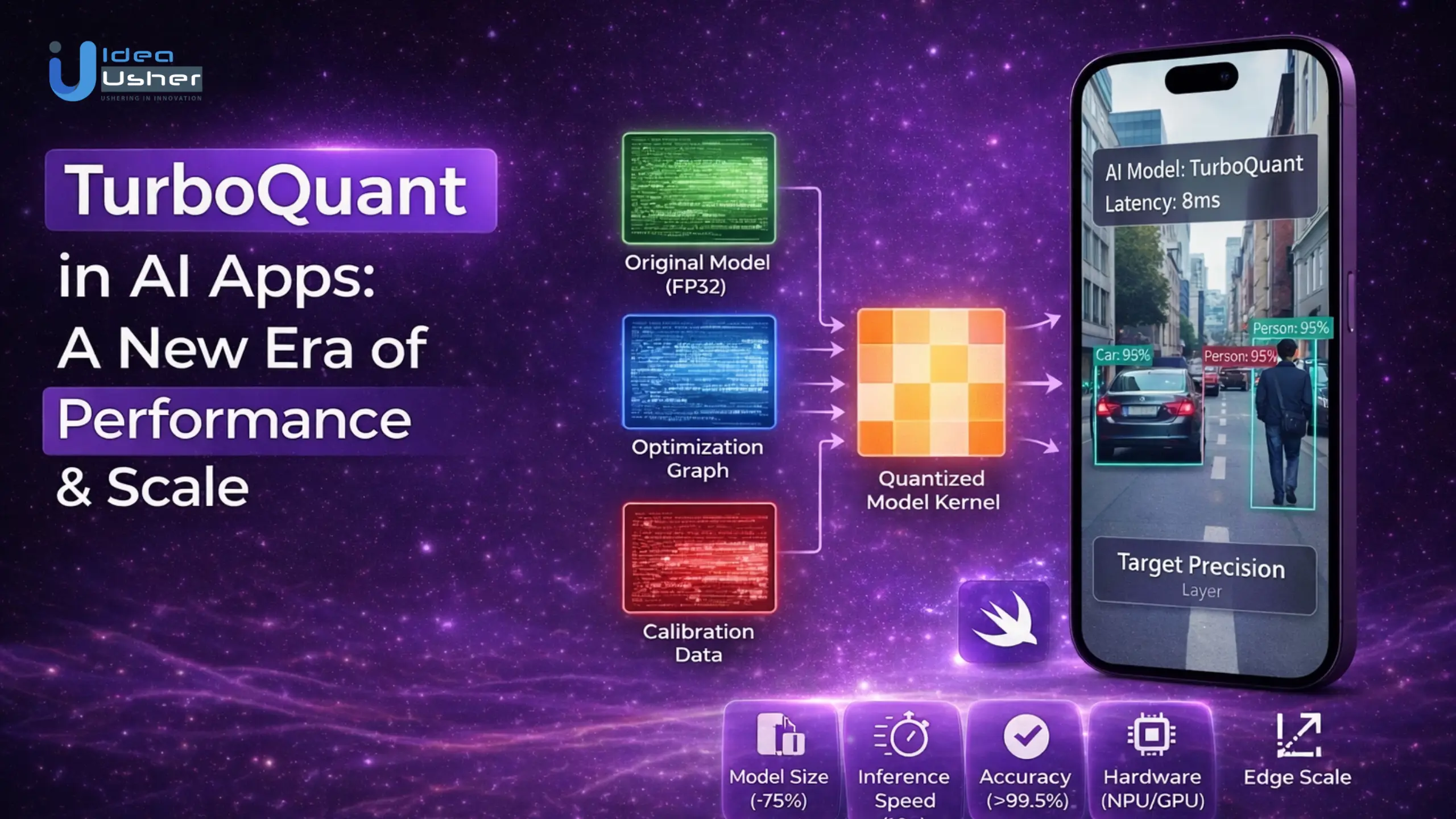
Artificial Intelligence has moved far beyond experimentation and is now deeply embedded in the core of modern applications across industries. Whether it is fintech platforms making real-time decisions, healthcare apps assisting in diagnostics, or consumer apps delivering hyper-personalized experiences, AI is now a foundational layer that defines how digital products function. However, despite this rapid adoption, a persistent challenge continues to limit its full potential, and that challenge is efficiency at scale.
This is exactly where TurboQuant begins to reshape the conversation by introducing a fundamentally different approach to AI optimization. Instead of focusing only on building more powerful models, TurboQuant shifts attention toward making those models significantly faster, lighter, and more deployable across different environments. This shift is critical because it transforms AI from being powerful but expensive into something that is both powerful and practical for real-world applications.

What is TurboQuant and Why It Matters
TurboQuant was developed by researchers at Google Research and was formally introduced in a Google Research blog post published on March 24, 2026. It focuses on making large AI models, especially transformer-based systems, faster and cheaper to run by aggressively optimizing how data is stored and computed during inference.
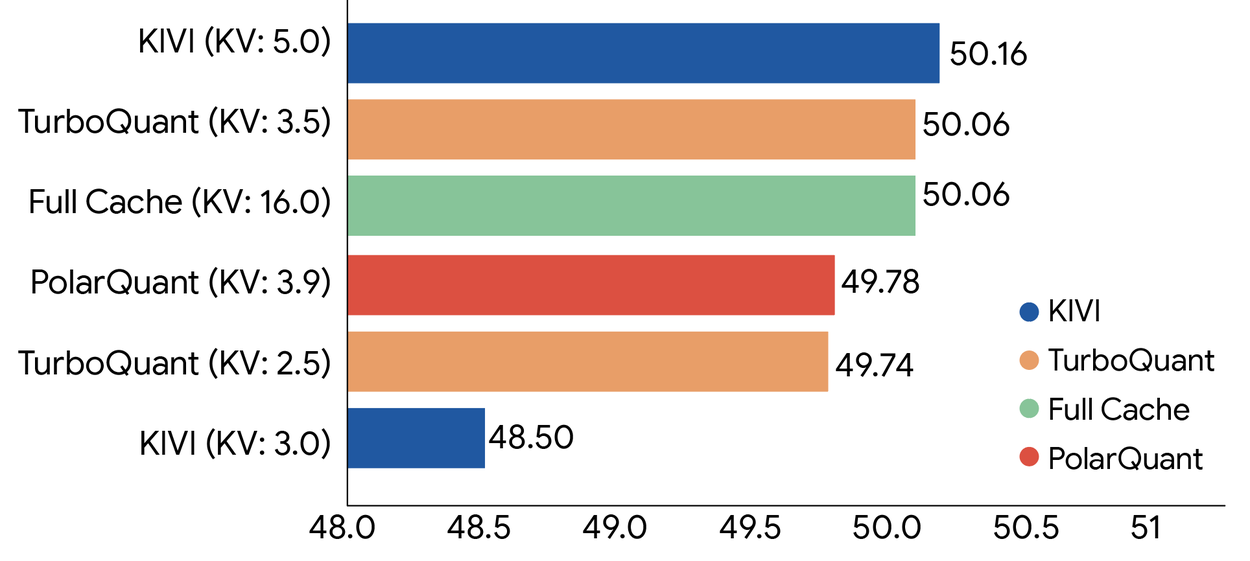
Credit – Google
At its core, TurboQuant applies low-bit quantization to model operations and, more importantly, to the key-value (KV) cache used in large language models. By compressing KV cache representations to very low precision levels, such as around 3 bits per channel, it significantly reduces memory usage and speeds up attention computations. This directly improves inference latency and allows larger models to run on smaller or more cost-efficient infrastructure.
Unlike generic optimization techniques, TurboQuant is designed for real-world deployment constraints where memory bandwidth and compute cost are the main bottlenecks. It reduces the need for high-end GPUs, improves throughput, and enables more efficient scaling of AI workloads without sacrificing usable accuracy.
In the coming years, TurboQuant is expected to play a critical role in how AI is integrated into applications. As apps increasingly rely on real-time AI features such as copilots, personalized recommendations, voice interfaces, and autonomous agents, the ability to run models efficiently will become a competitive advantage.
For application development, this means faster response times, lower infrastructure costs, and the ability to deploy AI directly on edge devices such as smartphones and embedded systems. It also enables continuous AI processing in the background without draining resources, which is essential for next-generation apps that rely on persistent intelligence rather than on-demand queries.
TurboQuant effectively shifts AI from being resource-heavy and centralized to being lightweight, scalable, and deployable across environments. This makes it a foundational technology for building future-ready applications where AI is not just a feature but a core layer of the product experience.
The Core Problem with AI in Modern Apps
To understand why TurboQuant is such a breakthrough, it is important to examine the limitations that developers and businesses face when integrating AI into applications today. These challenges are not theoretical but are actively slowing down innovation, increasing costs, and limiting scalability across industries that rely heavily on intelligent systems.
High Infrastructure Costs
Running AI models, especially large-scale models, requires substantial computational power that often depends on GPUs or high-performance cloud infrastructure. This leads to significantly higher operational costs, making it difficult for startups and even established businesses to scale AI features efficiently without impacting profitability.
Latency and User Experience Issues
Applications that depend on real-time AI responses frequently struggle with latency, particularly when models are large or not optimized for speed. Whether it is a chatbot responding to a query or a recommendation engine updating suggestions, delays can negatively impact user satisfaction and reduce overall engagement within the application.
Difficulty in Edge Deployment
Deploying AI directly on devices such as smartphones, wearables, or IoT systems remains a complex challenge due to limited memory, processing power, and battery constraints. This often forces developers to rely on cloud-based inference, which introduces additional latency and dependency on stable internet connectivity.
Scaling Challenges
As applications grow and user bases expand, AI systems become harder to scale efficiently because increased demand often requires proportional increases in infrastructure. This creates a situation where growth leads to rapidly increasing costs, making long-term scalability difficult to sustain.
TurboQuant directly addresses these issues by improving how AI models operate, making them more efficient, adaptable, and scalable without requiring excessive resources.
How TurboQuant Works in Practice
TurboQuant operates through a combination of advanced techniques that optimize both the structure and execution of AI models. It is not a single method but a comprehensive pipeline of improvements that collectively enhance performance while maintaining accuracy.
Precision Optimization
At the core of TurboQuant is precision reduction, where high-precision numerical representations are converted into lower precision formats. This significantly reduces the computational load required for inference while ensuring that the model maintains acceptable levels of accuracy in real-world use cases.
Model Compression
TurboQuant reduces the size of AI models by eliminating redundant parameters and compressing weight representations. Smaller models are easier to deploy, require less memory, and can run more efficiently across a wide range of devices and platforms.
Hardware-Aware Execution
One of the most powerful aspects of TurboQuant is its ability to adapt models based on the hardware they are running on. Whether it is a GPU, CPU, or mobile processor, TurboQuant ensures that the model is optimized for that specific environment, maximizing efficiency and performance.
Dynamic Adaptation
Unlike traditional static optimization techniques, TurboQuant can dynamically adjust how models operate based on real-time requirements. This means it can prioritize speed in latency-sensitive scenarios while maintaining higher precision in tasks where accuracy is critical.
How TurboQuant Transforms AI in Applications
TurboQuant is not just an incremental improvement but a transformative approach that changes what is possible with AI in applications. By removing key limitations, it enables developers to build faster, smarter, and more scalable systems that deliver better user experiences.
Real-Time AI Becomes Truly Instant
With TurboQuant, inference times are significantly reduced, allowing AI systems to respond almost instantly in real-world scenarios. This is particularly important for applications such as conversational AI, gaming systems, and financial platforms where response speed directly impacts user experience and engagement.
Cost-Effective AI at Scale
TurboQuant reduces computational requirements, which in turn lowers infrastructure costs and minimizes reliance on expensive hardware. This enables businesses to scale their AI systems more efficiently without experiencing exponential increases in operational expenses.
Enabling Edge AI and Offline Capabilities
By reducing model size and computational demands, TurboQuant makes it possible to run AI models directly on devices. This enables offline functionality, improves data privacy, and reduces dependency on cloud-based systems for real-time processing.
Massive Scalability Without Infrastructure Explosion
TurboQuant allows applications to handle a larger number of users without requiring proportional increases in infrastructure. This creates a more sustainable growth model where performance improvements are achieved without excessive financial investment.
Unlocking Advanced AI Features
With reduced computational overhead, developers can integrate more advanced AI capabilities into their applications. This includes features such as real-time video processing, continuous background intelligence, and highly personalized user experiences that were previously difficult to implement at scale.
Use Cases Across Industries
TurboQuant has wide-ranging applications across multiple industries where AI plays a critical role in delivering value and improving outcomes.
Fintech Applications
In fintech, TurboQuant enables faster and more efficient fraud detection, credit scoring, and risk analysis by reducing latency and improving processing speed in real-time decision-making systems.
Healthcare Solutions
Healthcare applications benefit from TurboQuant through faster diagnostics, improved medical imaging analysis, and more responsive patient monitoring systems that can operate even on edge devices.
E-commerce Platforms
E-commerce platforms use TurboQuant to enhance recommendation engines, optimize pricing strategies, and analyze customer behavior more efficiently while keeping infrastructure costs under control.
Social and Community Apps
Social platforms rely on TurboQuant to improve content moderation, feed ranking, and engagement algorithms, resulting in safer and more engaging user experiences.
AI SaaS Products
For AI-driven SaaS platforms, TurboQuant enables better scalability, improved performance, and higher profitability by allowing them to serve more users with fewer resources.
TurboQuant vs Traditional Optimization Approaches
Traditional optimization techniques have long been used to improve the performance of AI models, but most of these approaches are incremental in nature and focus on isolated aspects of the model rather than the entire execution pipeline. Methods such as pruning, knowledge distillation, and basic quantization provide improvements, but they often fail to address the deeper inefficiencies that arise when models are deployed at scale across diverse environments.
TurboQuant introduces a more comprehensive and system-level approach to optimization that goes beyond simply reducing model size or tweaking performance parameters. It combines precision reduction, adaptive quantization, compression, and hardware-aware execution into a unified framework that continuously aligns the model with real-world constraints such as latency, cost, and device limitations. This makes it significantly more effective in production scenarios where performance must be balanced with scalability and operational efficiency.
One of the key differences lies in how TurboQuant treats optimization as a dynamic process rather than a one-time adjustment. Traditional techniques are often applied during model training or post-processing and remain static once deployed. In contrast, TurboQuant allows models to adapt in real time based on workload, hardware, and application requirements, which results in more consistent and optimized performance across different use cases.
Another major distinction is the level of integration with hardware. Traditional approaches typically optimize models in a hardware-agnostic manner, which can lead to suboptimal performance when deployed on specific devices. TurboQuant, however, is designed to be hardware-aware, meaning it tailors execution to CPUs, GPUs, and edge devices to extract maximum efficiency without requiring additional infrastructure investments.
To better understand the difference between these approaches, the comparison below outlines how TurboQuant performs against traditional optimization techniques across key parameters that matter in real-world AI applications.
TurboQuant vs Traditional Optimization
| Parameter | Traditional Optimization Techniques | TurboQuant Approach |
|---|---|---|
| Optimization Scope | Focuses on specific techniques such as pruning or static quantization, often applied in isolation without considering full deployment context | Uses a unified pipeline combining quantization, compression, and hardware-aware execution for end-to-end optimization |
| Precision Handling | Limited and mostly static, often relying on fixed precision formats decided during training or conversion | Dynamic precision adjustment based on workload, enabling better balance between speed and accuracy in real time |
| Performance Improvement | Moderate improvements that may not scale effectively under heavy workloads or large user bases | Significant performance gains due to reduced computation, faster inference, and optimized execution paths |
| Cost Efficiency | Partial cost reduction but still dependent on high-end infrastructure for scaling | Strong cost reduction by minimizing compute requirements and enabling efficient resource utilization |
| Hardware Utilization | Typically hardware-agnostic, which can lead to inefficient execution on specific devices | Deep hardware awareness that optimizes models specifically for CPUs, GPUs, and edge devices |
| Scalability | Scaling often requires proportional increases in infrastructure and cost | Enables high scalability with minimal additional infrastructure by improving throughput and efficiency |
| Edge Deployment | Limited support due to large model sizes and high compute requirements | Highly suitable for edge devices due to reduced model size and lower memory footprint |
| Adaptability | Static after deployment with little to no real-time adjustment capability | Dynamic and adaptive, allowing models to adjust behavior based on runtime conditions |
| Implementation Complexity | Easier to implement initially but may require multiple tools and iterations to achieve desired results | More complex initially but provides a streamlined and consistent optimization framework once integrated |
| Long-Term Efficiency | Gains may plateau over time as models grow larger and more complex | Designed for long-term efficiency, especially for large-scale and continuously evolving AI systems |
This comparison highlights that TurboQuant is not just an alternative optimization method but a more advanced evolution of how AI performance should be approached in modern applications. By addressing both computational efficiency and deployment challenges simultaneously, it provides a more future-ready solution for businesses aiming to scale AI effectively.
Challenges and Considerations
Despite its advantages, TurboQuant comes with certain challenges that need to be carefully managed during implementation. Quantization requires expertise, and improper execution can lead to minor reductions in model accuracy that may impact performance in sensitive applications.
Additionally, hardware compatibility can influence the effectiveness of TurboQuant, as not all devices support advanced quantization techniques equally. However, as tools and frameworks continue to evolve, these challenges are becoming easier to overcome, making TurboQuant more accessible to developers.
The Future of TurboQuant in AI Development
TurboQuant is expected to play a critical role in the future of AI as models continue to grow in size and complexity. Efficiency will become just as important as capability, and solutions like TurboQuant will be essential for maintaining balance between performance and scalability.
Future advancements may include deeper integration with large language models, improved support for edge AI systems, and enhanced capabilities for real-time multimodal processing. These developments will further expand the potential of AI in applications across industries.
Final Thoughts
TurboQuant represents a significant shift in how AI systems are designed, optimized, and deployed in modern applications. By focusing on efficiency without compromising performance, it enables businesses to build scalable, cost-effective, and high-performing AI solutions that can meet the demands of a rapidly evolving digital landscape.
For organizations looking to integrate AI into their products, adopting approaches like TurboQuant is no longer optional but a strategic necessity. It provides the foundation needed to deliver better user experiences, reduce operational cost, and stay competitive in an increasingly AI-driven world.
To truly unlock the benefits of TurboQuant and build AI-optimized applications that are fast, scalable, and production-ready, partnering with the right development team becomes critical. At Idea Usher, we specialize in designing and developing AI-first products that are optimized for performance, scalability, and real-world deployment efficiency. Whether you are building intelligent SaaS platforms, enterprise copilots, or next-generation mobile apps, our team can help you implement advanced optimization strategies like TurboQuant to gain a competitive edge.
If you are planning to build future-ready AI products, now is the time to focus not just on intelligence, but on efficiency. Build AI-optimized applications with Idea Usher and stay ahead in the next wave of innovation.
FAQ‘s
1. What is TurboQuant and how does it improve AI app performance?
TurboQuant is an advanced model quantization algorithm that reduces the size of AI models while maintaining high accuracy. By converting full-precision models into optimized low-bit representations, it significantly improves inference speed, reduces latency, and enables faster AI processing in applications.
2. How does TurboQuant help scale AI applications?
TurboQuant enables AI apps to scale efficiently by lowering compute requirements and memory usage. This allows businesses to deploy AI models across multiple devices, including mobile and edge environments, without requiring expensive infrastructure upgrades.
3. Does TurboQuant reduce model accuracy?
No, TurboQuant is designed to maintain high accuracy levels (often above 99%) even after quantization. It uses calibration data and optimization techniques to ensure that performance loss is minimal while achieving major efficiency gains.
4. What types of applications benefit most from TurboQuant?
TurboQuant is especially beneficial for:
- Computer vision apps (object detection, AR)
- Mobile AI applications
- Real-time analytics platforms
- Edge AI systems (IoT devices, smart cameras)