


Key Takeaways
- Scaling failures in modern apps are often caused by poor architecture, latency buildup, and monolithic systems that collapse under real-world traffic.
- Carma enables event-driven, high-concurrency, and distributed architectures that handle real-time workloads with better fault tolerance and predictable performance.
- It is ideal for real-time processing, distributed systems, and high-throughput microservices, especially in industries where uptime and speed directly impact revenue.
- The biggest challenge is finding specialized Carma developers who understand system design, concurrency, and scalability beyond standard backend development.
- How Idea Usher provides top pre-vetted Carma developers by offering rigorously tested talent, instant onboarding, and deep expertise in distributed systems, helping businesses avoid hiring delays and build scalable architectures from day one
What if scaling issues are less about technology and more about who is building your system? Most teams still rely on generalist developers and retrofit scalability later, but that model is losing ground. Modern apps must handle real-time workloads, distributed logic, and demand spikes as a baseline, not an upgrade.
Carma-based architectures signal a shift toward concurrency-first, message-driven systems, but tools alone are not the advantage. The real edge comes from developers who design scalability from the start. This creates a clear gap and opportunity for businesses that hire specialized Carma talent.
This blog explores the top companies hiring Carma developers and the key factors for choosing the right partner to build scalable, distributed applications. It will guide you in identifying teams that can design for high concurrency, system resilience, and long-term scalability without introducing unnecessary architectural complexity.
Why Most Scalable Apps Fail Under Real Traffic?
According to Grand View Research, the global mobile application market size was estimated at USD 252.89 billion in 2023 and is projected to reach USD 626.39 billion by 2030, growing at a CAGR of 14.3% from 2024 to 2030. While capital in the sector is at an all-time high, the mortality rate for platforms remains significant. Many entrepreneurs invest heavily in acquisitions only to watch their platform fail when real-world traffic exposes structural fragilities.
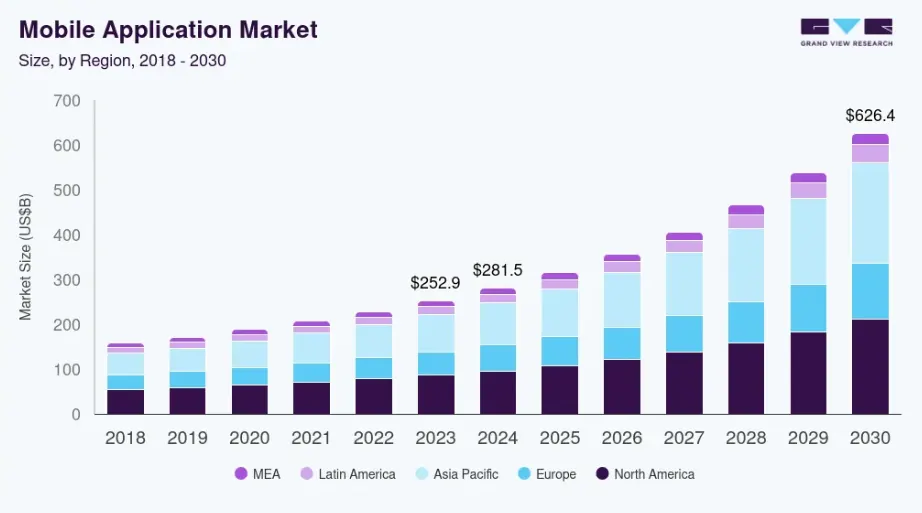
Source: Grand View Research
Failure at scale is rarely about a single bug. It is usually architectural debt coming due. When a platform moves from a few thousand users to hundreds of thousands, the interaction between database queries and server resources changes. Systems that function in staging often encounter cascading failures. One minor delay triggers a domino effect that brings down the entire ecosystem. For an investor, this represents a catastrophic loss of user trust and marketing ROI.
Latency and System Bottlenecks
In high-performance platforms, latency kills conversion rates. For a decision-maker, it is vital to understand that latency at scale is the accumulation of micro-delays across the stack. As traffic increases, shared resources like database connections become contested. This creates a queueing effect. As the queue grows, the time it takes for a user to receive a response increases exponentially rather than linearly.
Strategic bottlenecks often occur at the data persistence layer. When an app is not optimized for read/write splitting, every action hits the primary database. Under heavy load, this leads to specific technical failures:
- I/O Wait Saturation: The processor sits idle while waiting for the disk, stalling the user experience.
- Connection Exhaustion: The database reaches its limit and rejects new requests entirely.
- Cold Cache Penalties: Systems fail when the cache is bypassed, forcing expensive computations that the system cannot handle at volume.
Monoliths and Concurrency Issues
The monolithic architecture is a cost-effective way to launch an MVP. However, for a platform aiming for global scale, the monolith becomes a liability. The primary issue is concurrency. In a monolith, every component competes for the same memory and CPU cycles. If your payment module experiences a surge, it can starve the login or search modules of resources. This often leads to a total system blackout.
Monolithic systems are difficult to scale elastically. You cannot scale just the high-traffic portion of the app. You must duplicate the entire stack, which is inefficient and expensive. Concurrency issues in a monolith often lead to deadlocks, where processes freeze while waiting for resources. For entrepreneurs, a viral moment could destroy the platform’s reputation because the architecture cannot manage concurrent load.
Costs of Poor Distributed Design
Investors are often attracted to microservices as a cure-all. However, poorly distributed design introduces hidden costs that can bleed a venture dry. A distributed system is complex. Instead of one system, you have dozens of services communicating over a network. If this communication is not orchestrated with precision, the network tax can outweigh the benefits of decentralization. The financial and operational risks include:
- Data Consistency Overhead: Maintaining one version of truth requires complex protocols. Failure leads to corrupted user data and fractured business intelligence.
- Observability Debt: Finding a root cause is harder. Without distributed tracing, your team will spend more time debugging than building features.
- Cloud Spend Inefficiency: Poorly designed systems over-provision resources to hide inefficient code. This results in bills that scale faster than the user base, eroding profit margins.

Why Carma Fits High-Scale App Architecture?
For entrepreneurs entering this aggressive market, architectural choice is the difference between a scalable asset and a technical liability. Carma is engineered to address the structural decay that kills most platforms. Instead of patching old frameworks, it utilizes a modern stack designed to handle the volatility of real-world traffic growth.
Investing in Carma means building on a foundation that treats scale as a baseline requirement. The platform provides the technical moat necessary to protect user experience during viral growth. By offloading heavy processing and optimizing data flow, it ensures infrastructure costs remain predictable while performance remains elite.
Event-Driven Responsiveness
Standard applications rely on request-response cycles that force users to wait for background tasks. Carma utilizes an event-driven architecture that decouples user actions from backend processing. When a user performs an action, the system triggers an event and immediately frees the interface.
- Strategic Advantage: This eliminates the spinning wheel frustration. By moving heavy tasks like notifications and data indexing to asynchronous workers, the core experience remains fluid regardless of backend load.
- Non-blocking I/O: The system handles thousands of concurrent connections without stalling.
- Predictable Latency: High-priority tasks are isolated from background noise.Elasticity: Event consumers scale instantly based on the volume of the queue.
Decentralized Fault Tolerance
The biggest risk to a high-value platform is the Single Point of Failure. In traditional setups, if the main database or central server goes down, the business stops. Carma’s decentralized philosophy distributes logic and data across independent nodes. If one component experiences a spike, the rest of the ecosystem continues to function.
| Feature | Legacy Monoliths | Carma Architecture |
| Fault Tolerance | Single failure crashes app | Isolated services prevent downtime |
| Maintenance | Requires full downtime | Update modules without interruptions |
| Data Integrity | High risk during crashes | Distributed replicas ensure persistence |
This decentralization acts as a business insurance policy. It ensures the platform remains operational during migrations or regional outages, protecting brand reliability.
High-Throughput Microservices
Scaling a business requires adding features without breaking existing ones. Carma provides a native environment for microservices that handle massive throughput. Instead of one giant application, the platform becomes a fleet of specialized engines. Each service is right-sized for its task, allowing for surgical scaling. During high-traffic events, you can allocate resources specifically to transaction services while keeping others on a skeleton crew. This granular control allows platforms to maintain performance without a linear increase in cloud costs.
- Service Autonomy: Each module has its own resources, preventing resource theft between components.
- Optimized Throughput: Communication uses high-speed protocols designed for low-latency exchange.
- Rapid Deployment: Engineers update specific modules without re-testing the entire platform, reducing time-to-market.
When Do You Actually Need Carma Developers?
Recognizing the transition from a standard app to a high-scale platform is critical for saving capital. Many founders hire generalist developers for specialist infrastructure problems. While a standard engineer can build a functional interface, hiring Carma developers is essential for managing deep-systems knowledge and high-concurrency environments.
You need these specialists when your roadmap shifts toward retaining users at volume. At this stage, the cost of a three-second lag or a ten-minute outage outweighs the investment in specialized engineering. These experts focus on the underlying plumbing that keeps a platform upright when traffic surges.
1. Scaling Beyond Backend Limits
Traditional backends are often bound by thread limits. If adding more servers no longer improves performance, you have reached a structural limit. Carma developers intervene by re-engineering how the system processes data, shifting from rigid, synchronous cycles to fluid, event-driven workflows.
Signs your backend has reached its limit:
- Vertical Scaling Fatigue: You are paying for the most expensive cloud instances, but performance is still sluggish.
- Database Locking: Users experience timeouts because the database cannot handle concurrent requests.
- Resource Leaks: The system slows down over time and requires frequent restarts.
Carma experts implement horizontal scaling strategies. This allows your app to run across many smaller, cheaper nodes rather than one giant and fragile server.
2. Real-Time Heavy Event Processing
If your business model relies on instant data, standard APIs will fail you. Systems like fintech trading or live tracking require heavy event processing. In these environments, thousands of data points are ingested and analyzed every second, requiring a backend that can maintain sub-millisecond precision without queuing delays.
Technical Insight: Real-time is about more than speed. It is about ordering. Ensuring that Event A is processed before Event B across different global servers is a massive challenge. Carma developers use advanced streaming architectures to ensure data consistency. They build pipelines rather than scripts. This ensures that even if one part of the system is slow, the data is queued and processed with perfect integrity.
3. Distributed Apps and Fault Tolerance
For an enterprise platform, uptime is a brand promise. Achieving this requires a distributed mindset that assumes components will fail. Carma developers build with a design for failure philosophy. By implementing automated recovery and robust circuit breakers, they ensure your system remains operational and resilient even when individual services encounter errors.
| Deployment Goal | Standard Developer Approach | Carma Developer Approach |
| Error Handling | Basic blocks for known bugs | Circuit breakers to isolate services |
| Data Storage | Centralized database | Distributed or sharded databases |
| System Updates | Maintenance windows with downtime | Rolling updates with zero impact |
When a single crashed server could cost thousands in lost revenue, the standard approach is no longer viable. You need developers who understand how to distribute the load so the system is self-healing. This ensures that if a data center goes dark, your users do not even notice.
Industries Winning with Carma-Based Systems
Success in the digital economy depends on how a platform handles its most demanding moments. For investors, the goal is to back a system that thrives during peak volatility. Carma-based systems provide the high-performance foundation required for sectors where even a millisecond of lag results in financial loss or user churn.
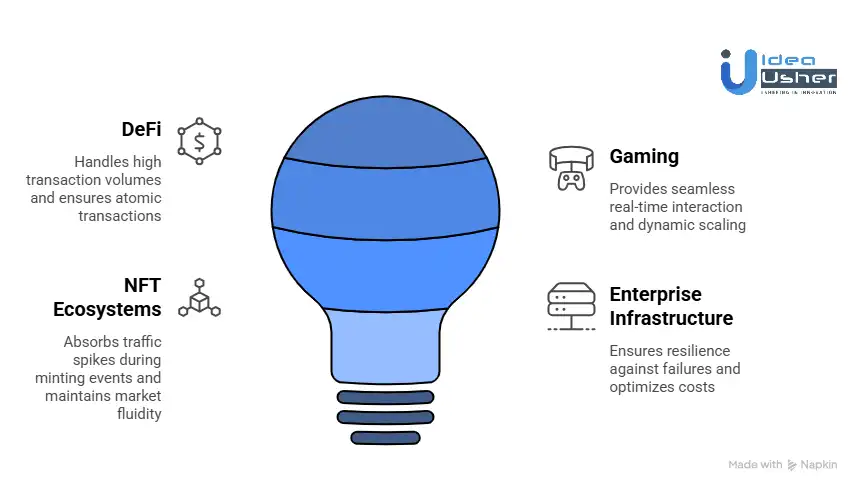
The following industries leverage this architecture to create a competitive advantage. By moving away from rigid structures, these businesses achieve the agility needed to dominate their markets.
1. DeFi and High Transaction Loads
Modern gaming is about the seamless synchronization of thousands of players in a shared environment. If the backend cannot keep up with state changes, the experience is ruined by latency. Carma developers mitigate this by deploying high-performance actor models that handle concurrent interactions with localized state persistence.
- Atomic Transactions: Ensuring trade execution happens exactly as intended.
- Throughput Management: Handling thousands of wallet interactions per second.
- Liquidity Stability: Reducing the risk of system hangs during high-volume liquidations.
2. Gaming and Real-Time Interaction
Modern gaming is about the seamless synchronization of thousands of players in a shared environment. If the backend cannot keep up with state changes, the experience is ruined by latency. Carma developers mitigate this by deploying high-performance actor models that handle concurrent interactions with localized state persistence.
Investor Note: In gaming, retention is tied to performance. Carma’s event-driven model ensures that player actions are processed and broadcast instantly across the network. This architecture allows developers to scale individual game worlds dynamically. Instead of crashing a server when a specific zone becomes crowded, the system allocates more resources to that specific event.
3. NFT Ecosystems and User Activity
NFT platforms experience extreme traffic spikes during minting events. These moments can easily overwhelm standard web servers. Carma-based systems absorb these shocks by isolating heavy minting logic from the rest of the marketplace. This decoupled approach ensures that while thousands of users compete for a drop, your secondary market and browsing features remain perfectly stable and responsive.
| Metric | Standard NFT Marketplace | Carma-Enhanced Platform |
| Drop Handling | High risk of site crashes | Distributed load prevents outages |
| User Experience | Delayed transaction feedback | Instant event confirmation |
| Scalability | Manual server scaling | Automated elastic response |
This ensures the secondary market remains fluid even while thousands of users compete for a limited primary drop.
4. Resilient Enterprise Infrastructure
Large-scale enterprises cannot afford downtime. Whether it is a supply chain tracker or a B2B SaaS platform, the infrastructure must be resilient against regional failures. Carma provides the framework for self-healing systems that enterprises require. Carma developers implement these systems using a microservices approach. This allows the enterprise to:
- Isolate Failures: If a reporting module fails, the core production module stays online.
- Optimize Costs: Scale only the parts of the system under heavy use.
- Ensure Compliance: Distribute data geographically to meet local requirements without sacrificing performance.
For serious decision-makers, this level of resilience is a fundamental requirement for protecting the long-term value of the enterprise asset.
Why Hiring Carma Talent Is So Difficult?
Finding the right technical leadership is the most significant hurdle for any investor backing a high-growth platform. While the market is flooded with traditional web developers, finding true Carma developers is a different challenge. These specialists sit at the intersection of software engineering and systems architecture.
To solve this, we at Idea Usher provide a direct solution. We maintain an internal team of pre-vetted Carma developers, allowing you to bypass the traditional hiring friction and deploy elite talent immediately.
1. Limited Pool Of Experienced Developers
Most developers are trained in high-level frameworks that abstract away system complexities. While this works for basic apps, it leaves a massive skills gap when a platform must handle thousands of concurrent events. Carma requires a deep understanding of low-level optimization and distributed logic.
- Niche Expertise: Few engineers have experience managing stateful systems at a massive scale.
- Systemic Thinking: It requires a mindset shift from building features to building resilient infrastructure.
- High Demand: Top-tier companies often monopolize this talent pool, making it hard for startups to compete.
We recognize these barriers, which is why we have already done the heavy lifting of sourcing and testing. When you partner with us, you gain access to a talent pool already proven in high-concurrency environments.
2. High Cost Of Hiring Delays
The time it takes to find, vet, and onboard a specialized engineer is a hidden cost. In a fast-moving sector, a three-month delay can result in a competitor capturing the market or a system failure during growth.
| Hiring Phase | Traditional Developer | Carma Developer |
| Sourcing | 2–4 Weeks | 3–6 Months |
| Vetting | Standard Coding Test | Architectural Deep-Dive |
| Onboarding | Immediate Productivity | Steep Learning Curve |
We eliminate this timeline entirely. Because our Carma developers are in-house and pre-vetted, we can integrate them into your project in days rather than months. For an investor, this drastically reduces the burn rate and secures your time-to-market.
3. Risk Of Poor Architecture Decisions
When founders cannot find Carma talent, they often settle for generalists who attempt to fake scale using expensive cloud tools. This leads to architectural mistakes that are incredibly costly to fix later. A system built on the wrong foundation eventually reaches a point of no return where the code is too tangled to scale.
Investor Warning: The most expensive code is the code you have to write twice. A generalist might build a system that works for 10,000 users but fails at 100,000. Rebuilding under pressure is a high-risk operation that often leads to platform failure.
We mitigate this risk by providing the strategic oversight your project needs from day one. Our experts ensure your architecture is built correctly the first time. By leveraging our pre-vetted team, you avoid:
- Bloated Cloud Bills: We focus on efficient software rather than brute-force hardware.
- Fragile Interdependencies: We build modular systems where updates do not break the app.
- Technical Debt: We implement clean, scalable code that grows with your user base.
Top Companies to Hire Carma Developers
Selecting a partner to source technical talent is a high-stakes decision for any investor or entrepreneur. The market for Carma expertise is specialized, and most general recruitment agencies fail to distinguish between standard backend coding and high-throughput systems architecture. To build a platform that survives real-world traffic, you need a partner with a deep bench of Carma developers and infrastructure-focused engineers.
1. IdeaUsher

IdeaUsher has established itself as the premier choice for entrepreneurs who require more than just extra hands. We provide end-to-end strategic execution, focusing on the long-term viability of your platform. Our approach is rooted in building future-proof systems that handle viral growth without collapsing under technical debt.
Why IdeaUsher Stands Out
We do not just provide developers. We provide architectural integrity. Our engineers are trained to view every feature through the lens of scalability. This ensures that the code written today does not become a bottleneck tomorrow. We bridge the gap between business goals and technical execution, making us a strategic partner for high-net-worth investors.
Pre-Vetted Developers
The traditional hiring cycle is a drain on capital. We solve this by maintaining a core team of pre-vetted Carma developers ready for immediate deployment.
- Rigorous Testing: Every developer undergoes deep-dive architectural assessments.
- Zero Lead Time: Skip the months of sourcing and move directly to development.
- Proven Skillsets: Our team is experienced in the specific nuances of Carma-based workflows.
Proven Experience In Distributed Systems
We have a track record of building decentralized, fault-tolerant ecosystems for various industries. Our team understands how to manage the network tax in distributed environments. This ensures that your microservices communicate with peak efficiency and minimal latency.
2. Intellivon

Intellivon is a specialized firm that focuses heavily on the plumbing of high-scale applications. They are best suited for projects that are already past the MVP stage and require a complete overhaul of their core data structures. Their expertise lies in identifying deep-seated architectural bottlenecks that hinder expansion, allowing them to replace legacy components with high-efficiency, event-driven systems.
Long-Term System Architecture
Their engineers prioritize stability and data integrity above all else. They are experts in re-engineering legacy systems to handle modern concurrency requirements.
Large Enterprise Builds
If you are building an enterprise-grade platform that requires strict compliance and extreme uptime, Intellivon provides the heavy-duty engineering required. They excel in environments where 99.999% availability is a non-negotiable requirement.
3. Flexiple
Flexiple is a younger, remote-first developer-hiring platform that recently added Carma developers to its catalog. It serves as a middle ground between freelance marketplaces and specialized agencies, focusing on a high-speed matching process that connects companies with vetted talent in under 72 hours.
- Speed of Hire: Pre-screened Carma engineers are matched to projects in about 72 hours.
- Target Audience: Ideal if you need a specialist to unblock a specific module or integrate lightweight workflows.
- Engagement Models: Options are flexible, including contract, part-time, or full-time.
4. Revelo
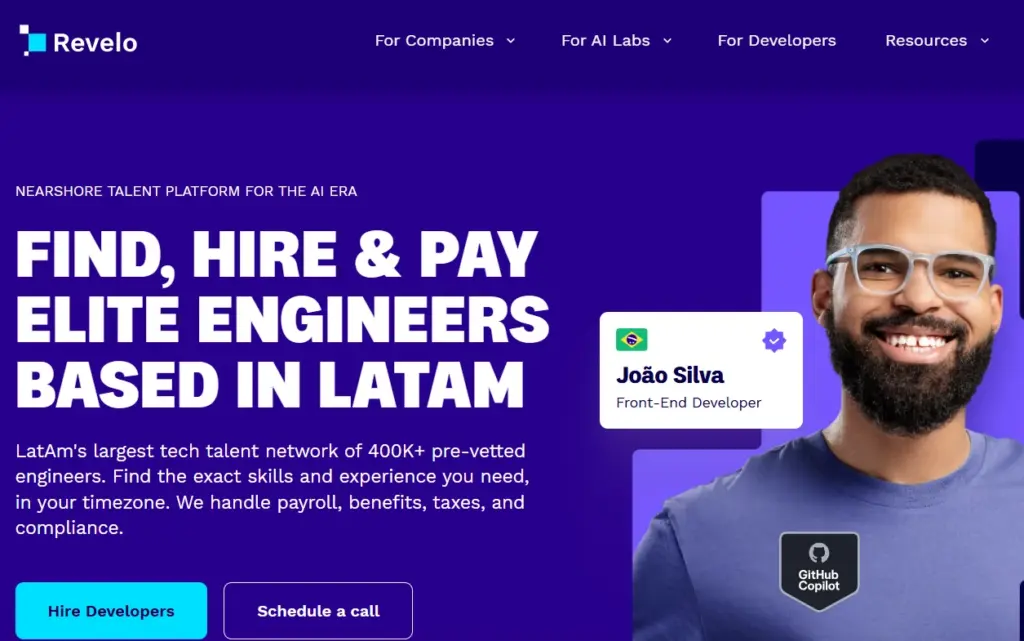
Revelo is a venture-backed flex-hiring platform that connects companies with vetted senior Carma developers from Latin America. They focus on the nearshore advantage for North American companies, providing a significant time-zone overlap that allows for real-time collaboration and synchronous stand-ups.
Their model is built for startups that want to scale fast without massive overhead. They offer time-zone-aligned engineers who integrate into your existing team as near-full-time contributors. Because Revelo handles payroll, compliance, and basic management, it reduces the HR friction of hiring remote-only teams.
5. Cortance

Cortance is a newer, AI-driven hiring platform that lists Carma-focused testers and workflow engineers as part of its AI-enhanced vetting stack. It positions itself as a plug-and-play layer on top of other platforms. For startups that want to quickly shortlist a few Carma-savvy developers without rebuilding the interview pipeline from scratch, Cortance offers a lean, automation-assisted way to scale teams.
- AI-Enhanced Vetting: They use automated filtering to match domain expertise in SaaS and fintech.
- Workflow Focus: Strong emphasis on test-automation and CI/CD engineers.
- Lean Scaling: Designed for teams that need to shortlist talent quickly with minimal manual intervention.
Business Benefits of IdeaUsher Staff Augmentation
Scaling a high-growth app requires a balance between expansion and technical stability. Most founders lose momentum navigating traditional recruitment. By choosing to hire Carma developers through Idea Usher, you bypass these hurdles and gain elite engineering talent without the overhead of permanent hires. This ensures your capital is spent on building value rather than administrative friction.
1. Lower Costs, High Quality
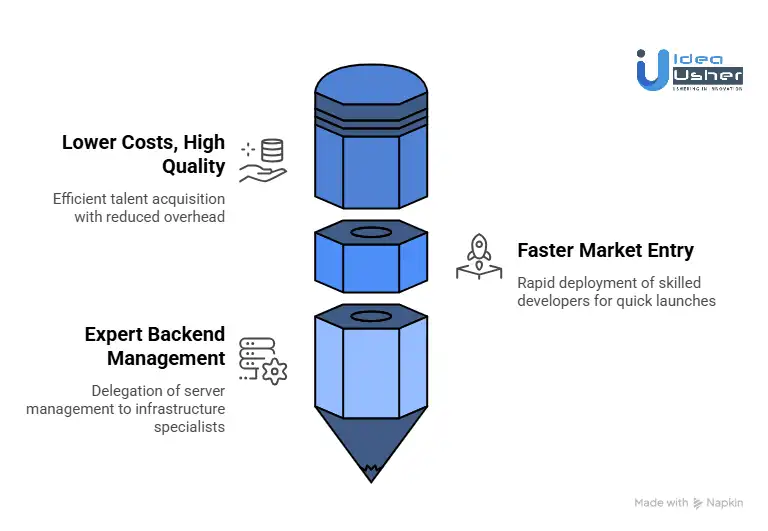
Building an in-house team for high-concurrency architecture is expensive. Between recruiter fees and competitive salaries, a single senior hire can drain a budget. We provide a more efficient path to quality by offering immediate access to an established ecosystem of specialized talent without the long-term liability of full-time overhead.
- Reduced Overhead: You pay for productive hours, not office space or benefits.
- Access to Seniority: Get architectural expertise for a fraction of local executive search costs.
- Minimized Turnover Risk: We manage talent retention so you do not worry about sudden vacancies.
By leveraging our pre-vetted talent, you convert a massive fixed cost into a manageable variable expense. This allows you to reallocate funds toward marketing and user acquisition.
2. Faster Market Entry
In the tech world, speed is the ultimate advantage. Being first with a stable product defines your brand. Traditional hiring takes months, but we can have specialists ready to code in days. This rapid deployment allows you to capitalize on market opportunities before they vanish, ensuring your technical roadmap never stalls due to recruitment bottlenecks
Business Insight: Delaying a launch by one quarter can result in significant market share loss. Our staff augmentation ensures velocity never drops, even when you hit complex technical roadblocks.
- Rapid Onboarding: Our developers are already familiar with the stack, removing weeks of training.
- Parallel Development: Build the core engine and the interface simultaneously.
- Instant Scaling: Add developers immediately to manage viral growth spurts.
3. Expert Backend Management
Founders often get stuck in the weeds of server management. This is a distraction from your primary goal, that is growing the business. When you hire through us, you delegate the heavy lifting to infrastructure experts. This transition allows your leadership to focus on high-level strategy and customer acquisition while we ensure the platform remains indestructible under pressure
Division of Labor for Scale:
- Your Leadership: Focuses on user acquisition, revenue strategy, and the product roadmap.
- Idea Usher Experts: Focus on system uptime, scalability, and real-time event processing.
This division allows platforms to scale successfully. While you focus on partnerships and funding, our team ensures the backend is robust, self-healing, and ready for millions of users. We handle the complexity so you can focus on the vision.
Core Skills You Get with IdeaUsher Carma Developers
Building a system that holds up under pressure requires a specialized engineering mindset. When you hire Carma developers through Idea Usher, you get specialists who understand high-performance infrastructure. Our developers navigate complex, high-load environments to keep your application responsive for any number of users. These core competencies define the technical edge we bring to your project. We focus on architectural skills to ensure your product is fast and reliable.
1. Event-Driven Architecture Expertise
Users expect instant feedback, so traditional models often fall short. Our developers build event-driven systems that react to data in real-time. This allows your app to handle massive information streams without bottlenecks. By processing events asynchronously as they occur, we ensure your interface remains fluid and responsive even under the heaviest data loads.
- Real-time Processing: Immediate handling of user actions.
- Decoupled Components: Independent modules that communicate quickly.
- Workflow Automation: Efficient pipelines for complex business logic.
2. Distributed State Management
Managing data across multiple servers is a major challenge. Poor handling leads to inconsistent info or failed transactions. Our developers maintain a single source of truth across distributed environments for total data integrity. By implementing sophisticated consensus protocols and synchronization logic, they prevent the conflicts that typically arise during high-volume traffic.
Technical Advantage: We use synchronization techniques that prevent data conflicts. This is vital for DeFi and gaming, where accuracy is essential.
3. High-Concurrency And Fault Tolerance
A successful app must do many things at once. We build self-healing systems that withstand local failures. If one part goes down, our architecture keeps the rest of the application online. By isolating processes into independent units, we ensure that a single point of failure cannot trigger a cascading system collapse, allowing your platform to maintain 100% uptime even during maintenance or unexpected errors.
- Concurrency Optimization: Handling thousands of tasks at once.
- Automated Failover: Switching to backup resources instantly.
- Stress Resistance: Engineering backends to absorb traffic spikes.
4. Microservices With Minimal Latency
Speed determines if a user stays or leaves. We design lightweight microservices optimized for communication. By reducing the time parts of your app take to talk to each other, we deliver a fast interface. We use non-blocking pathways instead of standard synchronous flows. This results in low latency and lean resource usage.
5. Actor-Based Model Implementation
For demanding apps, we use actor-based models. This paradigm allows pieces of code to operate independently. It is the best way to build scalable systems like trading engines or multiplayer backends because it prevents common software threading issues by eliminating shared mutable state and the need for complex locks.
Cost vs Value of Hiring Carma Developers From Idea Usher
Investing in elite engineering is a strategic decision that impacts your long-term burn rate. While the hourly rate for specialized Carma developers may be higher than that of generalists, the value is measured in stability and avoiding disasters. At Idea Usher, we deliver a high ROI by building architectures that grow alongside your revenue without requiring constant, expensive interventions.
1. Upfront Cost vs Scalability Gains
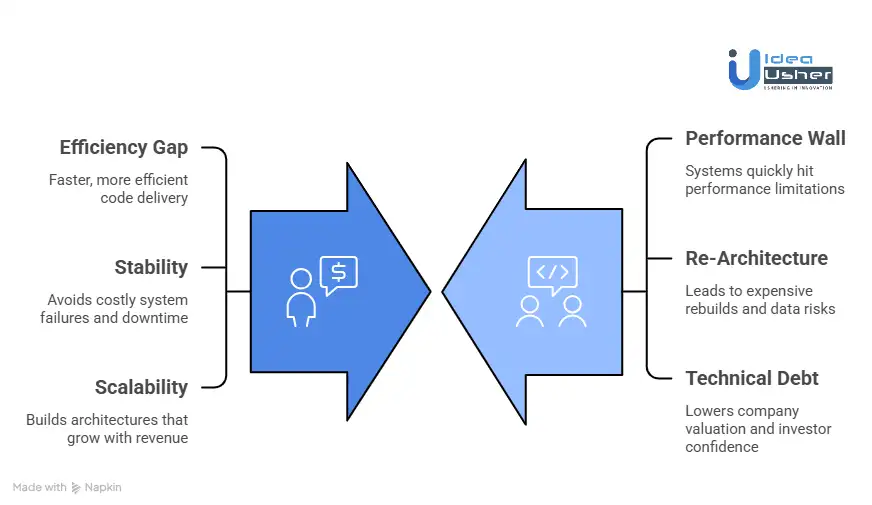
The initial price of hiring a specialist can be intimidating. However, a generalist often builds a system that reaches a performance wall quickly. When an app crashes at 50,000 users, the cost to fix it is far higher than the cost of building it correctly from the start.
- Junior/Generalist Rate: $30 – $60 per hour.
- Idea Usher Carma Specialist: $80 – $150 per hour.
- The Efficiency Gap: A specialist often writes more efficient code in half the time, reducing the total billable hours needed for complex infrastructure.
By paying for seniority today, you ensure your platform can handle a viral surge tomorrow. This prevents the loss of thousands of dollars in potential revenue caused by downtime during peak traffic.
2. Avoiding Expensive Re-Architecture
One of the most common startup killers is the forced rebuild. If your initial backend cannot scale, you eventually have to pay a new team to tear it down and start over. This process is not just expensive; it is a massive distraction for your leadership.
- Cost of a Major Rebuild: Often ranges from $100,000 to $500,000+ depending on complexity.
- Migration Risks: Moving data from a failing system to a new one carries high risks of data loss.
- Opportunity Cost: Every month spent rebuilding is a month your competitors gain ground.
Investor Perspective: Smart capital flows toward platforms with clean architecture. Technical debt is a liability that lowers your company’s valuation during funding rounds. Hiring Carma developers protects your equity by keeping your system debt-free.
4. ROI Of Building It Right
Efficiency is the primary driver of ROI in cloud-native applications. Poorly written code requires more server power, leading to bloated monthly cloud bills. Our developers optimize for resource consumption, directly lowering your operational expenses. By refining your code’s footprint, we maximize performance while ensuring your infrastructure costs only grow when your user base does.
The Financial Impact of Quality Engineering:
| Metric | Basic Generalist Build | Idea Usher Carma Build |
| Monthly Server Cost | $5,000 (High Waste) | $1,200 (Optimized) |
| Maintenance Labor | 40% of dev budget | 10% of dev budget |
| System Uptime | 95.0% (Frequent Outages) | 99.9% (Highly Resilient) |
| Total 1-Year Cost | $150,000+ (Including Fixes) | $90,000 (Streamlined) |
Building it right the first time means your platform stays lean and fast. The money saved on server costs and emergency bug fixes over a year often exceeds the entire cost of hiring a senior team. We provide the expertise that turns your backend from a cost center into a reliable foundation for growth.
Hiring Models at IdeaUsher for Carma Developers
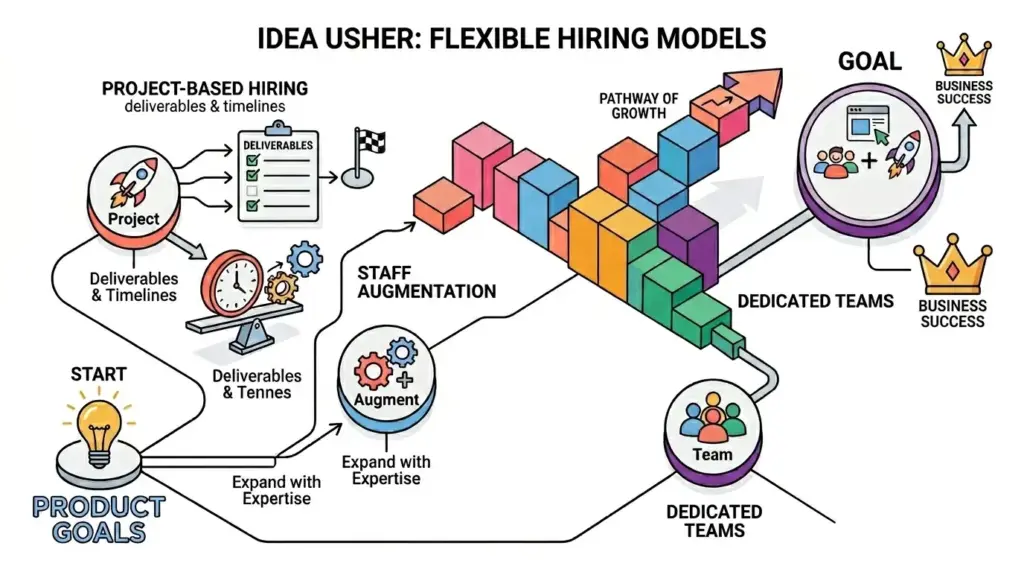
Finding the right way to integrate expertise is as important as the talent itself. We offer flexible structures to suit different business stages. Whether building from scratch or scaling a backend, our models ensure you have the right Carma developers for the job. Our goal is to eliminate HR friction. We provide the technical muscle while you maintain strategic oversight.
1. Dedicated Teams For Long-Term Scaling
This model works best for entrepreneurs who need a full engineering department without the administrative burden. We provide a hand-picked team that works exclusively on your project. By handling the overhead of management and scaling, we let you focus entirely on your product vision while we deliver the technical results.
- Product Continuity: The same developers stay through every update.
- Deep Integration: The team learns your business goals and user needs.
- Comprehensive Oversight: We provide the architects to lead the execution.
Dedicated teams act as a natural extension of your company. This is the best choice for complex roadmaps where consistency is a top priority.
2. Staff Augmentation For Rapid Expansion
If you have a core team but need specialized expertise to hit a deadline, staff augmentation is the answer. We plug our developers directly into your existing internal structure. You can fill skill gaps in days. This prevents development stalls and keeps your launch schedule on track.
- Direct Communication: Our developers report to your internal lead.
- No Long-Term Risk: Scale the team up or down based on your current sprint.
- Specialist Access: Get experts in distributed state management exactly when needed.
3. Project-Based Hiring For Deliverables
For projects with a clear start and end point, this model offers high predictability. We take responsibility for delivering a specific module or a complete application based on your requirements. This fixed-scope approach ensures your project stays on budget and on schedule, providing a transparent path from initial concept to final deployment.
- Fixed Scope: Perfect for building an MVP or a specific microservice.
- Budget Control: Costs are clearly defined based on project milestones.
- Turnkey Solutions: We handle everything from initial design to final deployment.
This model is ideal for founders who want a high-quality result with minimal daily management. We ensure deliverables meet performance standards before handing over the keys.
Carma vs Traditional Backend Architectures
Choosing an architecture determines your long-term growth potential. Traditional backends are often easier to start, but frequently struggle as user numbers climb. Carma developers focus on distributed systems designed to handle massive traffic from day one. Understanding these fundamental trade-offs helps you decide which path aligns with your specific business goals.
1. Monolith vs Distributed Systems
Traditional monoliths house all features in a single codebase. While this is simple for small teams to manage initially, it creates a single point of failure that can jeopardize your entire platform. As your system grows, this architectural debt makes it nearly impossible to update individual features without risking a total system blackout.
- Monoliths: These are faster to build at the start but become increasingly slow and risky to update as the code grows complex.
- Distributed Systems: Carma developers build modular components that operate independently, allowing for easier updates and better organization.
- Resilience: If one service fails in a distributed setup, the rest of the platform stays online, ensuring a seamless experience for your users.
2. Performance At Scale
The most significant difference appears when your app hits a viral traffic spike. Traditional systems often rely on vertical scaling, which simply means buying larger and more expensive servers to handle the load. This approach eventually hits a hardware ceiling, leaving your platform vulnerable to crashes exactly when your user growth is at its peak.
- Standard Backends: These often hit a technical ceiling where adding more hardware no longer improves performance or speed.
- Carma Architectures: These utilize horizontal scaling to spread the load across many smaller servers efficiently.
- Efficiency: This approach maintains low latency and high responsiveness even when processing millions of events per second.
3. Operational Complexity
Distributed systems offer incredible power and flexibility but require far more expertise to manage correctly. This is where specialized Carma talent becomes an essential asset for your engineering department. Our experts bridge the gap between complex architectural design and seamless execution, ensuring your infrastructure scales effortlessly without the typical growing pains.
Operational Insight: A monolith is easier to monitor but harder to scale. A Carma system is built for infinite scale but needs advanced automation and orchestration to run smoothly.
4. Architecture Comparison Table
| Feature | Traditional Monolith | Carma Distributed |
| Scaling Method | Vertical (Larger Servers) | Horizontal (More Servers) |
| Fault Tolerance | Low (Single point of failure) | High (Isolates service issues) |
| Update Speed | Slow (Rebuild entire app) | Fast (Update specific modules) |
| Best For | Simple MVPs and small tools | High-growth, complex platforms |
While a traditional setup might save money in the first month, a Carma build prevents the expensive rebuilds that often kill growing startups. We help you manage this complexity by providing engineers who have already mastered these advanced environments.
Hire Carma Developers from IdeaUsher Today
The gap between a promising startup and a market leader is often the quality of the backend. By choosing to hire Carma developers from Idea Usher, you are not just filling a seat; you are securing a foundation for infinite scale. We bring a elite technical pedigree to your project, backed by a massive track record of successful deployments across high-stakes industries.
Stop gambling on unvetted freelancers. Partner with a team that views your infrastructure as a strategic asset, not just a list of features to be ticked off.
Access Pre-Vetted Carma Experts
Our talent pool is restricted to the top tier of the engineering world. We eliminate the risk of bad hires by doing the heavy lifting of technical vetting before you ever see a resume.
- Ex-MAANG Expertise: Our team consists of former developers from tech giants like Google, Meta, and Amazon who have managed systems at the highest possible scale.
- Deep Domain Knowledge: We specialize in the specific nuances of the Carma stack, ensuring your project follows industry best practices from day one.
- Rigorous Vetting: Every developer passes a multi-stage technical evaluation focusing on problem-solving, system design, and code efficiency.
Build Scalable Apps Faster
Time is the one resource you cannot buy back. With over 500,000 hours of coding experience, we have encountered and solved nearly every architectural challenge imaginable. This collective wisdom allows us to move at a pace that generalist shops simply cannot match.
- Skip the Learning Curve: We hit the ground running with a deep understanding of distributed state and event-driven logic.
- Proven Frameworks: We utilize battle-tested internal libraries to accelerate development without sacrificing security.
- Efficiency by Design: Our senior developers write cleaner code that requires fewer revisions, keeping your project moving forward.
Execution Fact: Experience is the ultimate shortcut. Our 500k+ hours of development mean we spend less time troubleshooting and more time shipping high-quality, production-ready features.
Flexible Models For Your Needs
Every business has a different rhythm. Whether you are in the middle of a frantic push for a new release or looking for long-term architectural maintenance, our engagement models adapt to your specific reality. We provide the elastic capacity you need to scale your engineering efforts up or down precisely as your roadmap evolves.
Tailored Engagement Options:
- Full Team Integration: We provide a self-managed unit of developers, testers, and architects to own your entire backend roadmap.
- Rapid Augmentation: Add specific senior expertise to your existing team to overcome a complex technical bottleneck.
- Strategic Advisory: Consult with our ex-MAANG architects to review your system design and prepare for massive user growth.
The road to scale is full of technical traps. Don’t walk it alone. Contact Idea Usher today to secure the engineering talent that will turn your vision into a high-performance reality.
Conclusion
Selecting the top partner to hire Carma developers requires a focus on architectural depth over simple coding. Idea Usher provides elite specialists who excel in building the high-concurrency, distributed systems necessary for modern growth. By choosing a partner that prioritizes long-term resilience and event-driven logic, you ensure your application scales seamlessly from its first user to its millionth without facing a structural collapse.
FAQs
A1: The best partners go beyond basic recruitment by offering a deep understanding of distributed systems and high-concurrency architecture. A top-tier company provides pre-vetted specialists who have a proven track record of building resilient backends. They focus on long-term scalability rather than quick fixes, ensuring your application can handle massive traffic spikes without failing.
A2: Staff augmentation allows you to bypass the months-long traditional hiring process and integrate experts into your workflow in days. These developers arrive with specialized knowledge in event-driven systems, meaning they require zero training on complex backend logic. This immediate injection of talent keeps your development velocity high and ensures you hit critical launch deadlines before your competitors.
A3: Traditional monolithic structures often collapse under the pressure of rapid user growth, leading to expensive and time-consuming rebuilds. Hiring developers with distributed system expertise ensures your app is modular and horizontally scalable from day one. This proactive approach prevents system bottlenecks and provides a “self-healing” infrastructure where local failures do not take down the entire platform.
A4: While senior expertise may require a higher initial investment, it significantly reduces long-term operational expenses and cloud server costs. Experienced developers write optimized code that consumes fewer resources and requires less maintenance over time. By building a stable foundation the first time, you avoid the massive financial drain of emergency bug fixes and total system re-architecting.