

Key Takeaways
- AI travel apps transform social media travel inspiration into personalized itineraries using AI, maps and route optimization.
- Core features include social content import, AI trip planning, collaborative travel workspaces and live travel maps.
- The AI travel app development cost typically range from $40K–$280K+, depending on AI complexity, integrations and platform scale.
- Businesses monetize AI travel apps through subscriptions, travel commissions, sponsored placements and white-label licensing.
- How IdeaUsher can help you build AI travel platforms with custom AI models, geospatial intelligence and scalable cloud infrastructure.
Travel planning is shifting from manual search and fragmented booking journeys toward AI-driven experiences that can organize, personalize and optimize entire trips automatically, increasing the interest in AI travel app development cost as businesses explore platforms capable of transforming scattered travel inspiration into structured itineraries and actionable travel plans.
Traditional travel apps relied on users manually researching destinations, comparing options and building itineraries across multiple platforms. Modern travelers increasingly expect AI-powered trip planning, personalized recommendations, intelligent itinerary generation, route optimization and seamless travel organization that reduce planning effort while improving decision quality. As social media becomes a primary source of travel discovery, AI is emerging as the layer that converts inspiration into executable travel experiences.
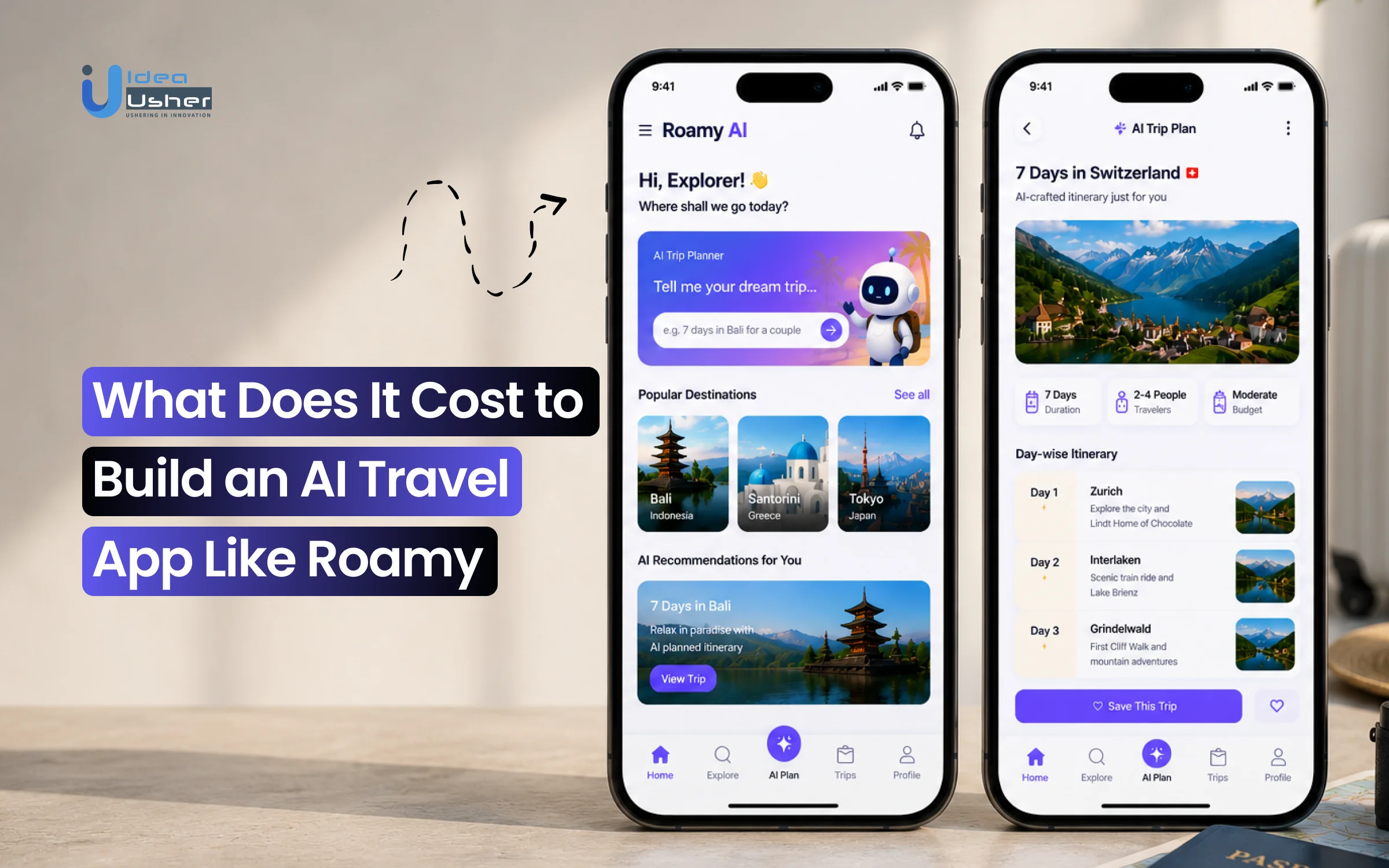
In this blog, we will talk about AI travel app development cost, core features, architecture, development timelines and how IdeaUsher can help build an AI travel app like Roamy, helping users turn saved travel content into organized journeys rather than static collections of ideas.
Why AI Travel Planning Is Replacing Traditional Trip Apps
For over two decades, planning a vacation followed a predictable, exhausting script: open twenty browser tabs, bounce between disjointed flight consolidators, scroll through questionable review boards, and manually transfer everything onto a static spreadsheet or note app.
Traditional trip apps act as digital filing cabinets. They aggregate data, but they still force you to do the heavy lifting of sorting, scheduling, and logistics.
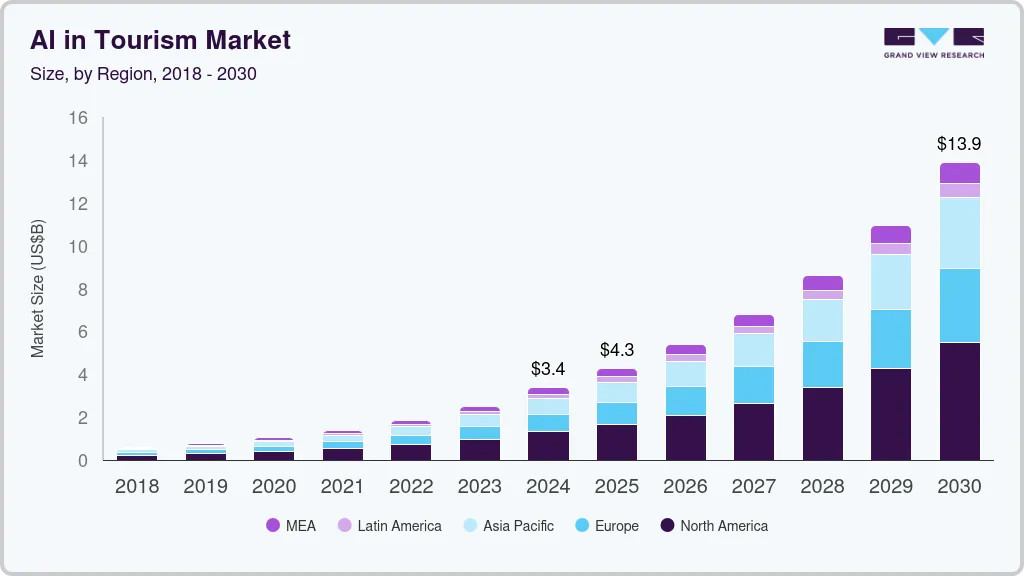
AI is transforming travel from simple data aggregation to active trip planning. As the AI in the tourism market grows from $3.37 billion in 2024 to $13.87 billion by 2030 at a 26.7% CAGR, travelers are replacing legacy apps with AI planners that understand context, optimize routes, and create personalized itineraries, bridging the gap between inspiration and execution.
McKinsey reports that 84% of travelers using generative AI say it improves trip planning, while AI-driven travel platforms experience 45% lower bounce rates. Growing adoption of AI for itinerary creation, budgeting, and local recommendations signals strong demand for intelligent travel assistants like Roamy.
A. The Shift From Search-Based To Intent-Based Travel
The core flaw of traditional travel platforms is their reliance on the search query. If you type “things to do in Kyoto”, which bury users in generic, SEO-driven listicles. These traditional apps force everyone toward the same tourist attractions, ignoring individual preferences.
AI has introduced intent-based travel means instead of parsing through keywords, advanced models understand natural human context, constraints, and nuances.
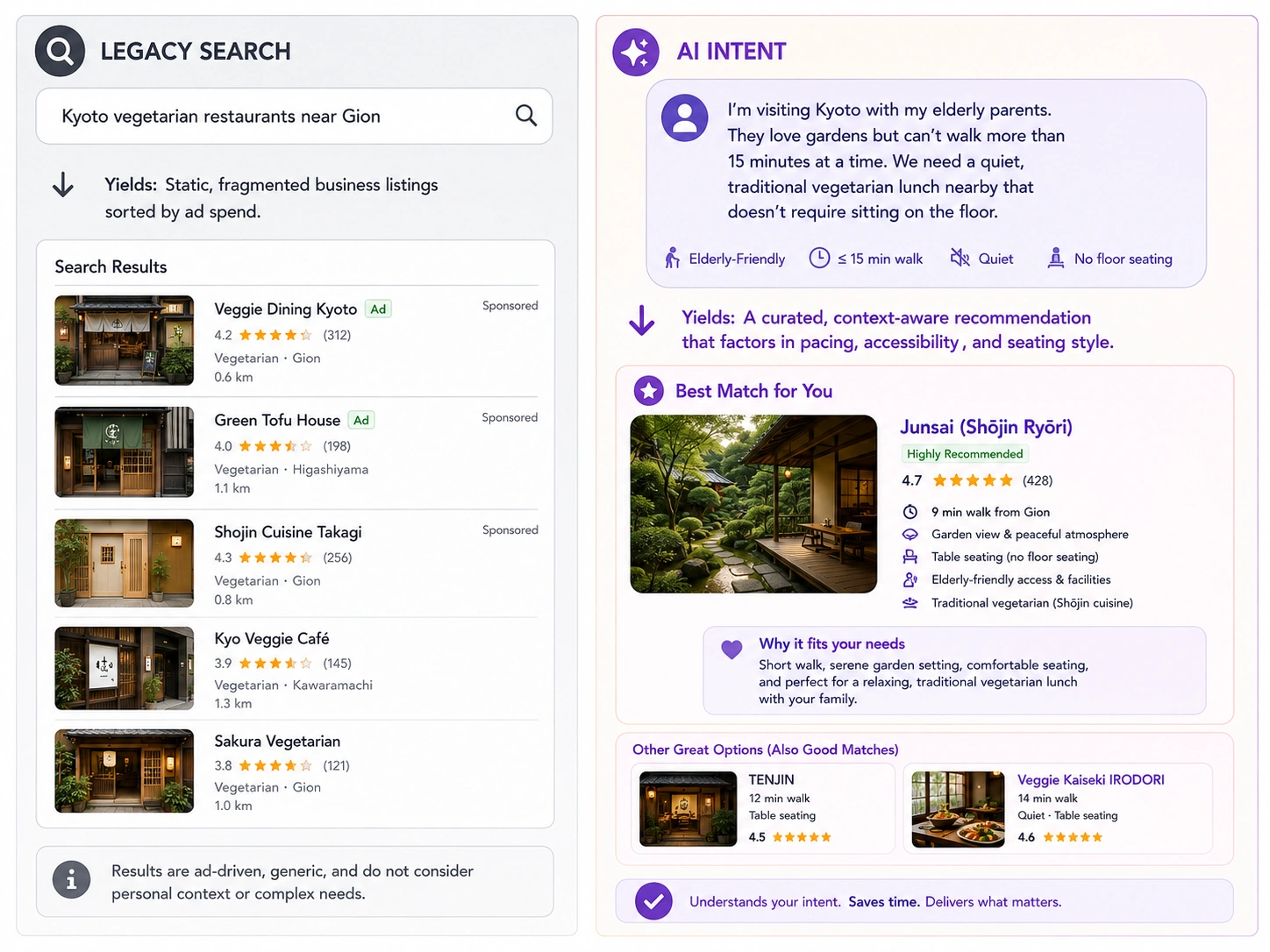
Intent-based planning honors the unique rhythm of how you want to travel, turning hours of tedious cross-referencing into a seamless conversation.
B. Why Travelers Prefer Social-First Discovery
The way we find our next destination has changed. Modern travelers don’t dream about vacations while scrolling through text-heavy booking sites; they discover them via highly visual, bite-sized content on Instagram Reels, TikTok, and YouTube Shorts.
This social-first discovery explosion has created a massive logistical headache:
- The Content Chaos: You see a stunning hidden cafe in Tokyo or a cliffside view in Amalfi, tap “Save” to a generic folder, and repeat this hundreds of times.
- The Fragmented Reality: When it’s actually time to book, those saves become a graveyard of dead links. Legacies apps can’t parse a video to figure out where that cafe actually is, what it’s called, or how far it is from your hotel.
Travelers prefer social discovery because it feels authentic and visually alive but traditional trip planners completely fail to support it.
C. How Roamy Fits Into This New Travel Behavior
Roamy bypasses traditional search boxes by meeting you where inspiration strikes. As a bridge between social media and AI logistics, it transforms casual visual browsing into actionable, real-world vacation plans.
The Roamy Experience: From Scroll to Itinerary
- One-Tap Social Ingestion: Take your scattered folders of saved Instagram Reels, TikTok videos, or web links and import them directly into the platform with a single tap.
- Automated Location Extraction: The AI processes the unstructured content, automatically identifies the exact venues, restaurants, or hotels mentioned, and organizes them into an elegant master collection.
- Visual Map Clustering: Every single extracted spot is instantly pinned onto an interactive map, giving you a clear, consolidated view of your choices without manual data entry.
- AI-Optimized Route Sequencing: Simply input your trip duration, and the intelligent itinerary builder groups your saved locations into a sensible, day-by-day plan that minimizes transit time and completely eliminates backtracking.
The Core Workflow: You do the fun part like scrolling and saving your favorite social gems and Roamy’s AI automation handles the complex logistics.
What Is Roamy And Why Is It Gaining Attention?
Roamy is an AI-powered travel planning application designed to consolidate scattered travel inspiration from social media into a structured, map-based itinerary. Developed by Logos Studio Inc., its primary selling point is its ability to automatically extract geographic locations from saved Instagram Reels, TikTok videos, screenshots, or Google Maps links and plot them directly onto a live map.
- Traditional itinerary tools require manual data input from scratch, assuming users already know exact names and logistical details.
- Roamy has captured attention by reversing this paradigm, bridging the gap between internet inspiration and real-world logistics.
- The platform treats social media videos, map pins, and web links as active building blocks for physical trips rather than passive entertainment.
- By addressing the friction of “doom-scrolling inspiration,” Roamy prevents favorite recommendations from being lost in saved folders.
A. Turning Travel Content Into Actionable Itineraries
The primary reason Roamy is trending across travel communities is its unique ability to unlock valuable information trapped within unstructured data formats. By removing the tedious paperwork from vacation planning, the platform seamlessly translates your favorite digital content into a ready-to-use visual workspace.
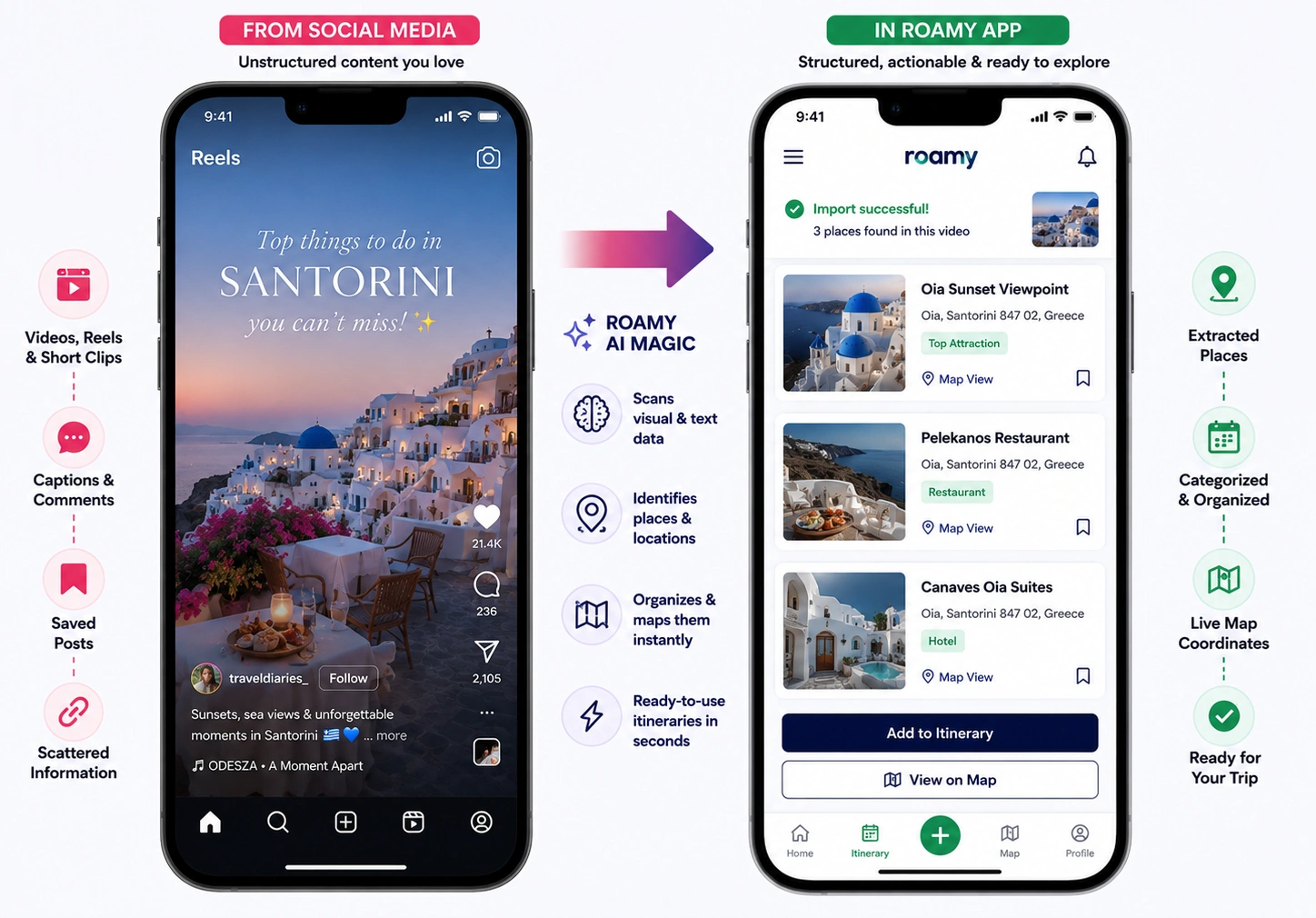
How Content Becomes Actionable:
- Breaking Down Data Silos: When you save an elegant boutique hotel on Instagram or a street-food gem on TikTok, that information remains locked inside video clips, captions, or chaotic comment sections.
- Eliminating Planning Friction: Translating those saved social clips into a real-world vacation traditionally demands hours of reverse-searching, cross-checking locations on Google Maps, and manually copying addresses into a spreadsheet.
- Multimodal AI Extraction: Roamy uses specialized artificial intelligence to break down this barrier entirely. The moment a user imports a social media link, the platform automatically scans the visual and textual data.
- Instant Structural Organization: The engine accurately identifies the specific physical venues mentioned, pairs them with live map coordinates, and stacks them into an organized, visual workspace ready for execution.
B. Core User Journey Behind The Platform
The magic of Roamy lies in how naturally it aligns with modern browsing habits. The platform maps out a streamlined, friction-free loop that transforms passive screen time into a completely mapped-out weekend away or a multi-week adventure.
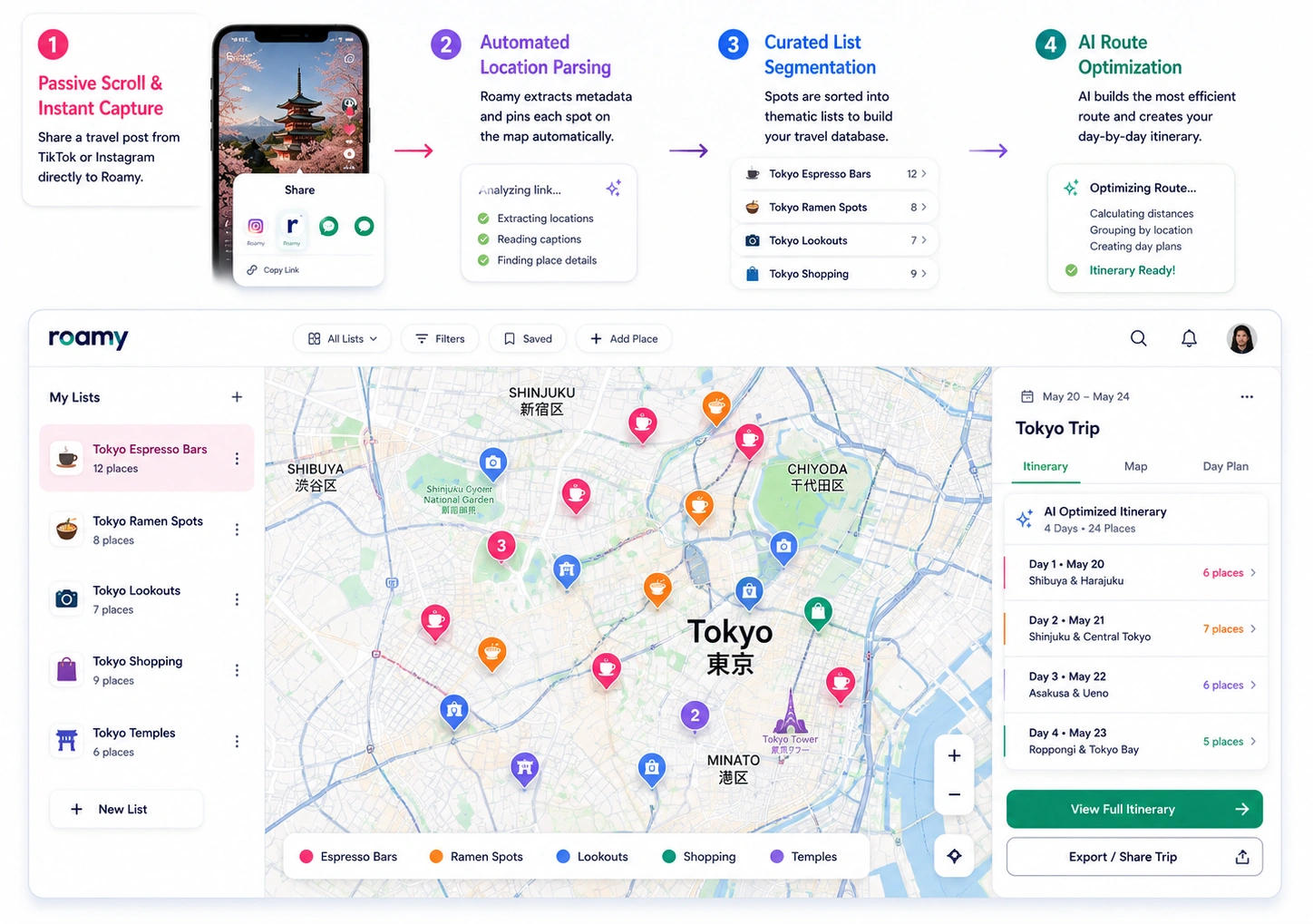
- Passive Scroll & Instant Capture (As you browse): While browsing TikTok or Instagram, you hit “Share” on an interesting travel post and send the link directly to the Roamy app.
- Automated Location Parsing (Background processing): Roamy’s backend immediately extracts the underlying metadata and explicitly pins the corresponding restaurants, lookouts, or hotels directly onto an interactive map.
- Curated List Segmentation (Organizing your vibe): Your extracted spots are sorted into custom, thematic buckets such as “Tokyo Espresso Bars,” “Paris Museums,” or “Rome Dinners” building a living, searchable travel database.
- AI Route Optimization (One-tap generation: You select your travel dates and specify which lists to execute. Roamy’s AI engine instantly sequences your spots geographically to eliminate backtracking, dividing them logically into an executable, day-by-day itinerary.
C. Key Features Driving User Adoption
Roamy’s rapid adoption is powered by a handful of core features specifically designed to kill the traditional travel spreadsheet:
- Universal Social Importer: A one-tap sharing bridge that seamlessly extracts geographical data from TikTok videos, Instagram Reels, Google Maps links, and screenshots.
- Geographic Live Mapping: A central workspace displaying all saved spots simultaneously. This allows users to easily visualize clusters of attractions and choose accommodations in highly concentrated zones.
- Multiplayer Collaborative Planning: Real-time shared lists that allow travel groups to collectively drop their personal social media bucket lists into a single master plan, eliminating endless group-chat debates.
- Intelligent Routing Engine: A logistics processor that doesn’t just list your spots chronologically, but groups them by proximity and travel efficiency, giving you an realistic timeline that maximizes your actual vacation.
The Bottom Line: Roamy is gaining widespread attention because it honors how people actually discover the world today, turning chaotic digital inspiration into real-world geographic execution.

How Roamy Works Behind The Scenes
While the front-end user experience of Roamy feels as simple as sending a text message, the application relies on an intricate, multi-layered machine learning and geospatial architecture. It shifts travel infrastructure from traditional static relational databases to real-time, dynamic data synthesis.
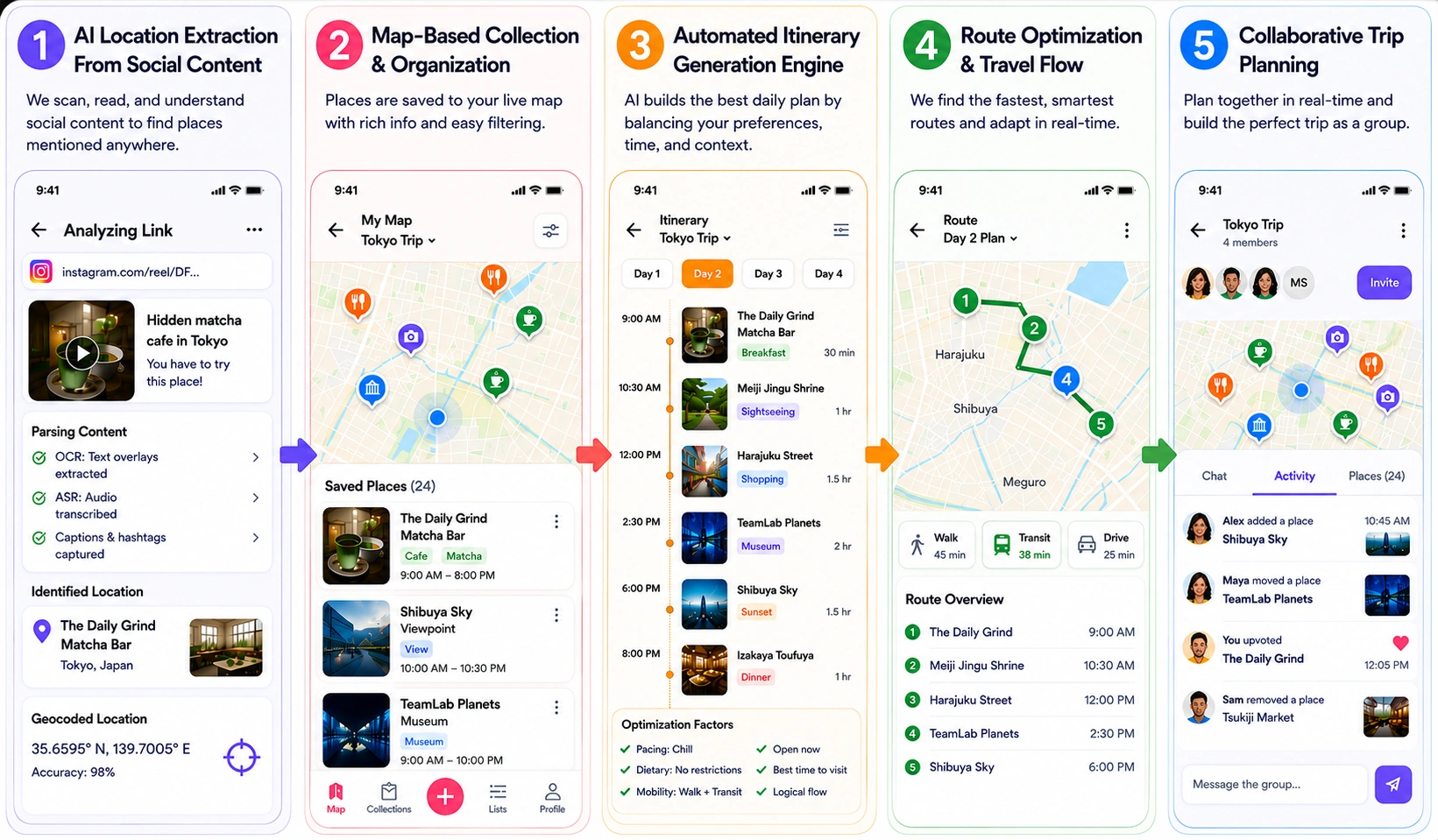
1. AI Location Extraction From Social Content
The technical journey begins the moment a user hits “Share” on an Instagram Reel, TikTok video, or a web link. Roamy’s ingestion pipeline triggers an asynchronous parsing workflow.
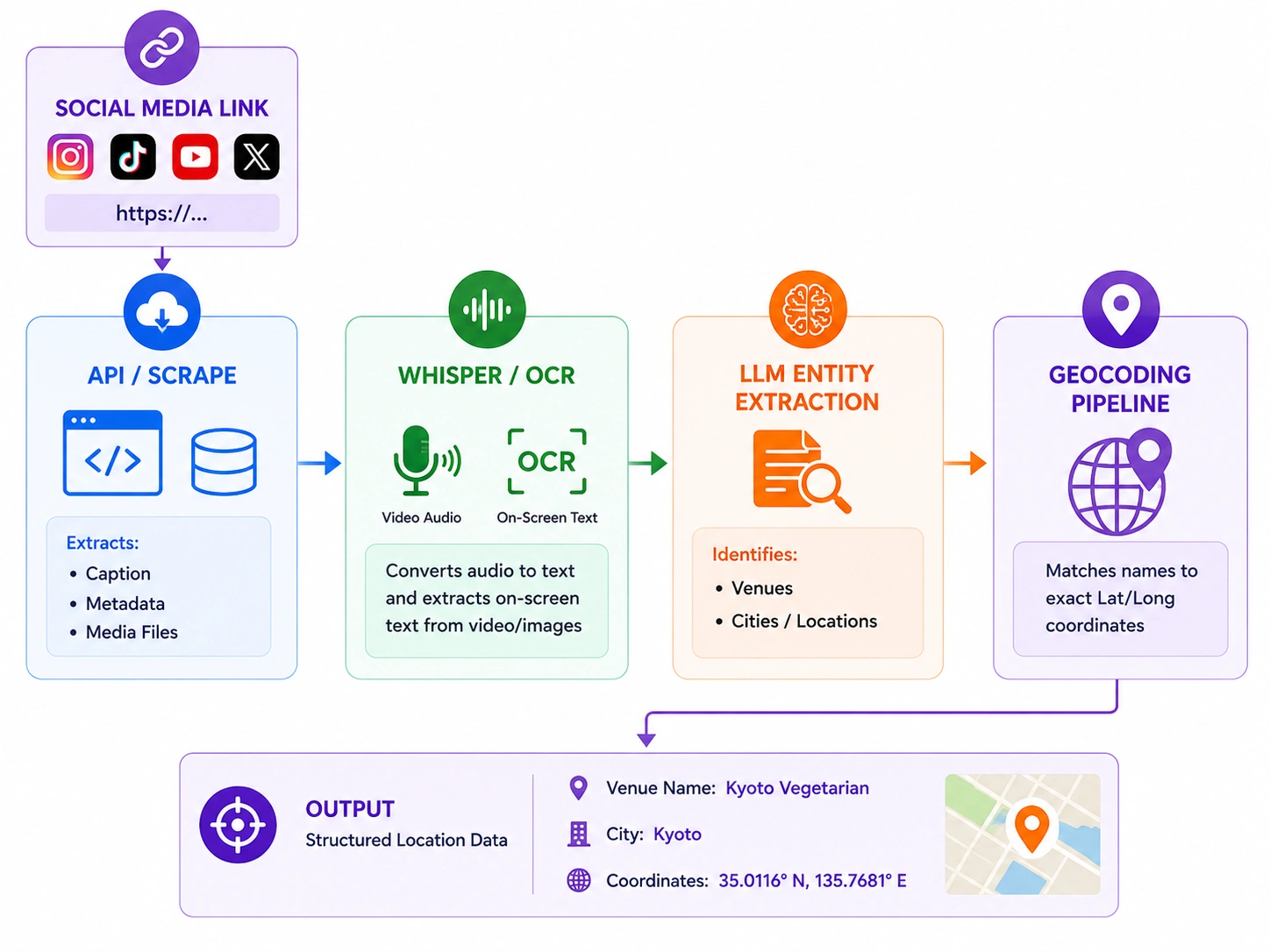
- Multimodal Parsing: The engine processes the URL to capture the caption, hashtags, and metadata. Simultaneously, it analyzes the media itself using optical character recognition (OCR) to extract text overlays, alongside automatic speech recognition (ASR) via speech-to-text models like Whisper to transcribe audio descriptions.
- Named Entity Recognition (NER): A fine-tuned Large Language Model (LLM) scans the aggregated text, stripping away casual dialogue and emojis to isolate distinct geographic entities (e.g., separating “The Daily Grind” as a cafe name from a sentence about working hard).
- Algorithmic Geocoding: The identified text string is pushed to a global spatial mapping database. If a TikTok creator simply calls a spot “this viral matcha bar in Tokyo,” the system references contextual clues, creator tags, and map registries to securely assign it precise latitude and longitude coordinates.
2. Map-Based Collection And Destination Organization
Once coordinates are established, data is structured into a personalized, live geographic workspace.
- Spatial Database Infrastructure: Points of interest (POIs) are written directly to a spatial database, allowing for ultra-fast, real-time spatial queries and visual clustering.
- Interactive Asset Stacking: Instead of treating locations as plain text, Roamy wraps each entry in an active metadata card. This card attaches the original source video link, live operating hours, historical popularity metrics, and category tags (e.g., Café, Viewpoint, Museum).
- Dynamic Visual Filtering: Users interact with a vector-based map interface. Instead of rendering a confusing wall of pins, the interface allows travelers to dynamically toggle visibility based on specific custom lists, chosen categories, or proximity to their temporary accommodation.
3. Automated Itinerary Generation Engine
The transformation of a chaotic bucket list into a logical daily schedule is managed by an advanced heuristic scheduling engine. When a user triggers a trip build, the AI processes three conflicting parameters: User Intent, Temporal Constraints, and Categorical Context.
| Parameter | What the Engine Evaluates |
| User Intent | Stated pacing preferences (“chill” vs “jam-packed”), dietary needs, and mobility boundaries. |
| Temporal Constraints | Real-world variables like fluctuating operating hours, seasonal closures, and ideal time-of-day dynamics (e.g., matching a rooftop bar to sunset). |
| Categorical Context | Logical progression spacing, ensuring the engine doesn’t accidentally schedule three heavy meals or four consecutive museums in a single afternoon. |
The system scores millions of possible permutations, rejecting illogical paths until it outputs a balanced, contextual day-by-day layout.
4. Route Optimization And Travel Flow Planning
Once the engine selects which venues fit into a specific day, logistics are passed to a routing core designed to solve a dynamic variation of the Travelling Salesperson Problem (TSP).
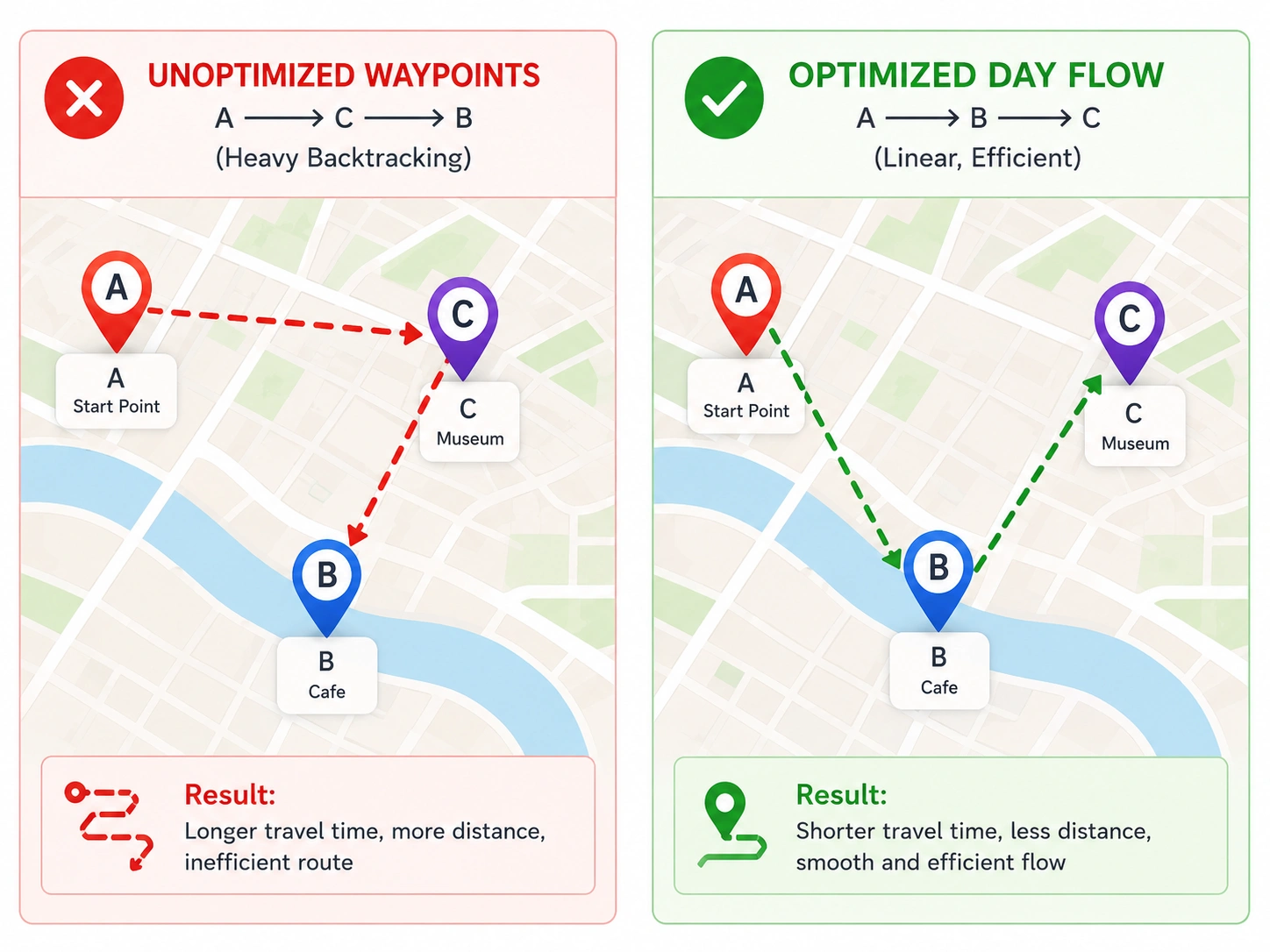
- Geospatial Clustering: The system maps localized waypoints into tightly bound clusters, ensuring that if you have four saved spots in the same neighborhood, they are completely cleared before moving across the city.
- Multi-Modal Matrix Calculations: The engine queries global transit matrix APIs to analyze true travel times across walking, driving, and public transportation infrastructure.
- One-Tap Re-Optimization: If a user dynamically drags a new café into the middle of their afternoon, the itinerary doesn’t break. The routing core runs in the background, instantaneously updating transit arrival times and re-sequencing the remaining stops to guarantee the shortest possible path.
5. Collaborative Trip Planning Infrastructure
Travel is rarely a solo endeavor. Roamy coordinates group dynamics through a real-time multiplayer backend.
- Operational Sync Engine: Utilizing WebSocket protocols and Conflict-Free Replicated Data Types (CRDTs), the application maintains a perfectly mirrored state across multiple devices simultaneously. If Guest A edits a route on an iPhone in New York, Guest B sees the pin shift on their screen in London instantly.
- Multi-Source Merging: The architecture allows multiple users to connect their independent social folders to a single event map. The system deduplicates matching pins, highlights overlapping group interests, and allows individuals to upvote or downvote suggestions directly inside the shared workspace.
Features Required To Build An AI Travel App Like Roamy
Building an intentional, social-first AI travel planner like Roamy requires combining standard mobile app components with sophisticated data extraction pipelines. The goal is to seamlessly transition user inspiration from casual browsing directly into an accurate, optimized geographic itinerary.
Cost-by-Feature Breakdown
The following table breaks down the engineering complexity, timeline, and rough cost ranges required to develop each module using a cross-platform approach (such as React Native or Flutter) with external backend cloud infrastructure.
| Feature Area | Complexity Level | Estimated Cost Range |
| Social Media Link & Video Import | High | $15,000 – $25,000 |
| Visual Search & Screenshot Detection | High | $12,000 – $22,000 |
| AI Travel Assistant & Rec Engine | Medium-High | $10,000 – $18,000 |
| Smart Itinerary Builder | Medium-High | $8,000 – $15,000 |
| Interactive Travel Maps | Medium | $5,000 – $10,000 |
| Collaborative Planning Workspace | Medium-High | $7,000 – $14,000 |
| Saved Places & Travel Collections | Low-Medium | $4,000 – $7,000 |
| Community Recommendations Layer | Medium | $5,000 – $9,000 |
| Real-Time Travel Updates | Medium | $4,000 – $8,000 |
| User Profiles & Personalization | Low | $3,000 – $5,000 |
1. Social Media Link & Video Import
This feature captures shared social media URLs, automatically parsing background metadata, captions, and on-screen elements. It helps users instantly turn viral travel videos into real, mapped locations without manual text typing.
2. Visual Search & Screenshot Location Detection
This system reads uploaded images or travel screenshots using machine learning to look for landmarks and textual signs. It helps users identify mysterious destinations or hotel names hidden within unlabelled images to identifying mysterious destinations or hotel names hidden within unlabelled images.
3. AI Travel Assistant & Recommendation Engine
A conversational chat interface that understands unstructured, nuanced user travel requests and constraints. It helps users find highly specific spots like vegetarian spots or stroller-accessible paths tailored exactly to their travel group.
4. Smart Itinerary Builder
The logic core that automatically groups and sorts saved places into structured, well-paced day-by-day plans. It helps users avoid messy travel plans by keeping their days balanced and structured.
5. Interactive Travel Maps
A dynamic, map-based interface that visually plots every single saved destination or collection. It helps users see their travel spots geographically, making it simple to pick the right hotel neighborhood.
6. Collaborative Planning Workspace
A real-time multiplayer editing system that allows multiple users to build, alter, and comment on the same itinerary. It helps travel groups avoid messy group-chats by collecting everyone’s ideas simultaneously.
7. Saved Places And Travel Collections
A clean database structure for organizing individual spots into custom, categorized lists or regional folders. It helps users maintain a clean, organized catalog of long-term bucket list destinations.
8. Community Recommendations Layer
An aggregate data engine that bubbles up popular, trending locations highly saved by other native app users. It helps users discover authentic, peer-vetted local experiences that traditional tourist guides miss.
9. Real-Time Travel Updates
A background notification pipeline syncing live transit schedules, opening hour modifications, and traffic conditions. It helps users dynamically adjust their day when unexpected delays or closures happen on the ground.
10. User Profiles And Personalization
An onboarding questionnaire and tracking module holding travel styles, dietary choices, and past favorite trips. It helps users automatically filter out irrelevant recommendations every single time they open the app.
AI Travel App Development Cost Breakdown Explained
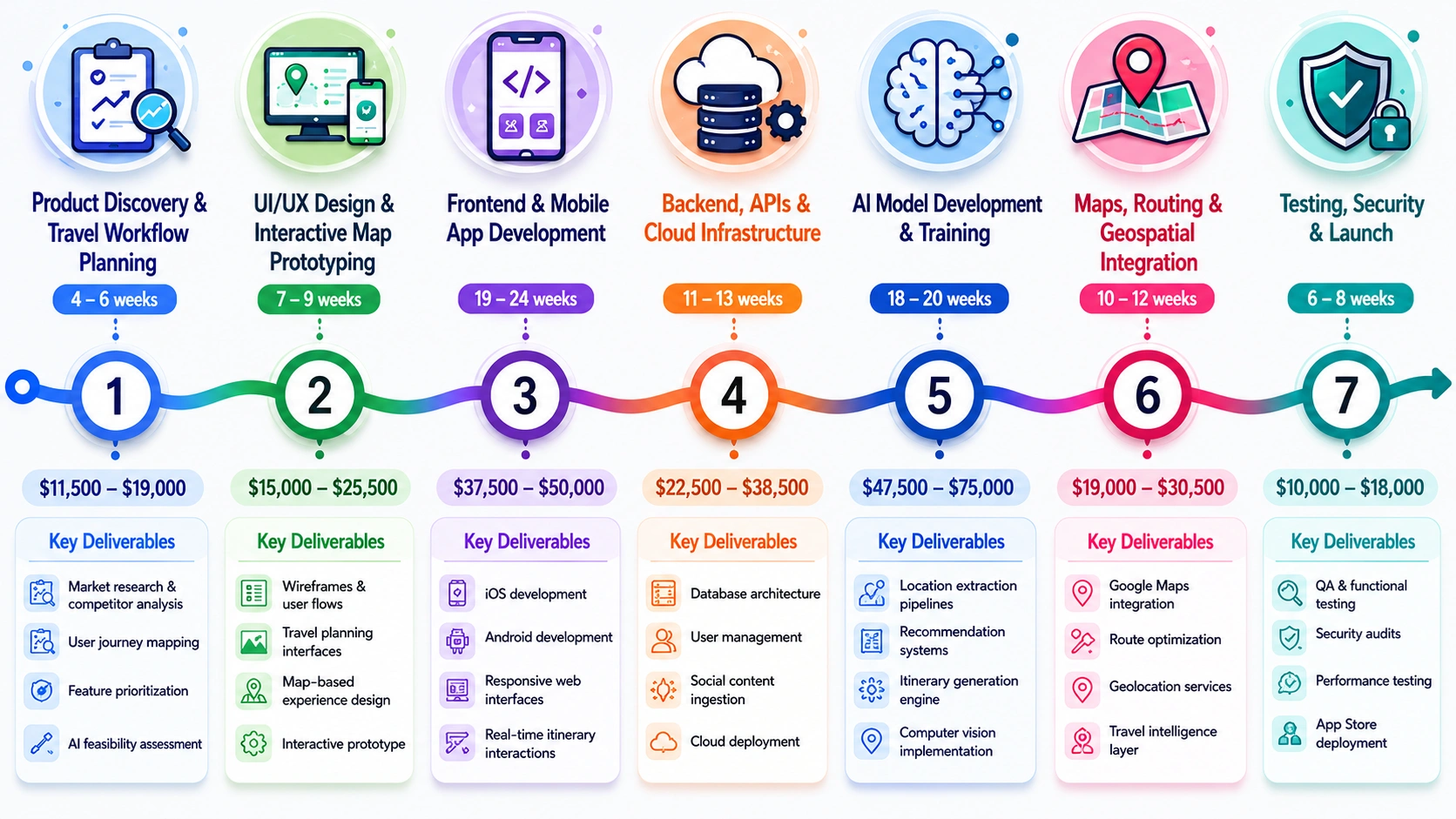
Bringing an AI-driven travel platform to life requires an organized, multi-stage engineering approach. This AI travel app development cost breakdown highlights the specific timelines and investment required at every checkpoint, from initial structural blueprints and algorithmic training to final security checks and App Store deployment.
1. Product Discovery & Travel Workflow Planning
Before writing any code, our product team aligns your business vision with target user expectations. We analyze the market landscape to isolate core travel pain points and validate the technical execution of our AI features.
| Phase | What The Phase Covers | Timeline | Estimated Cost |
| Market research | Analyzing competitor gaps, travel app trends, and modern consumer behaviors. | 1–2 weeks | $3,000 – $5,000 |
| User journey mapping | Plotting user paths from social browsing to physical itinerary execution. | 1 week | $2,500 – $4,000 |
| Feature prioritization | Defining the MVP scope to balance launch speed with value. | 1 week | $2,000 – $3,500 |
| AI feasibility assessment | Evaluating technical limits of link scraping and route optimization logic. | 1–2 weeks | $4,000 – $6,500 |
| Total Estimation | Comprehensive discovery and strategic planning phase completion. | 4–6 weeks | $11,500 – $19,000 |
2. UI/UX Design & Interactive Map Prototyping
Our design team shapes the visual identity of the application, crafting frictionless user interfaces. We focus closely on map interactions and content sharing to ensure the transition from inspiration to itinerary is clean and intuitive.
| Phase | What The Phase Covers | Timeline | Estimated Cost |
| Wireframes | Creating low-fidelity structural blueprints for fundamental app screen layouts. | 2 weeks | $3,000 – $5,500 |
| User flows | Designing step-by-step click pathways to eliminate navigational confusion. | 1–2 weeks | $2,500 – $4,500 |
| Travel planning interfaces | Crafting high-fidelity, polished screens for managing daily vacation schedules. | 2–3 weeks | $5,000 – $8,500 |
| Map-based experience design | Building interactive layouts for fluid, gesture-controlled geographic data exploration. | 2 weeks | $4,500 – $7,000 |
| Total Estimation | Complete UI/UX design blueprints and interactive prototype assets. | 7–9 weeks | $15,000 – $25,500 |
3. Frontend & Mobile App Development
Our mobile engineers build responsive, user-focused applications using cross-platform frameworks while optimizing the AI travel app development cost. We prioritize smooth animations, real-time travel updates, and seamless navigation experiences that make the platform feel intelligent, interactive, and instantly responsive.
| Phase | What The Phase Covers | Timeline | Estimated Cost |
| iOS development | Compiling Swift code patterns optimized specifically for Apple mobile hardware. | 6–8 weeks | $15,000 – $25,000 |
| Android development | Packaging Material Design layouts tailored for the global Android ecosystem. | 6–8 weeks | $14,000 – $23,000 |
| Responsive web interfaces | Engineering an adaptive desktop portal for comfortable wide-screen itinerary planning. | 4–5 weeks | $8,000 – $13,000 |
| Real-time itinerary interactions | Writing responsive UI mechanics for fluid list sorting and dragging. | 3 weeks | $5,500 – $9,000 |
| Total Estimation | Production-ready client applications across iOS, Android, and Web browsers. | 19–24 weeks | $37,500 – $50,000 |
4. Backend, APIs & Cloud Infrastructure
Our backend architects build scalable infrastructure while optimizing AI travel app development cost. We manage traffic spikes, organize user accounts, and securely process travel data streams.
| Phase | What The Phase Covers | Timeline | Estimated Cost |
| Database architecture | Setting up spatial databases to query location parameters with speed. | 3–4 weeks | $6,000 – $10,500 |
| User management | Deploying secure profile registration systems alongside encrypted OAuth data access. | 2 weeks | $3,500 – $6,000 |
| Social content ingestion | Creating scraping queues to read incoming shared social media links. | 4–5 weeks | $9,000 – $15,000 |
| Cloud deployment | Provisioning scalable AWS or Google Cloud servers with automated backups. | 2 weeks | $4,000 – $7,000 |
| Total Estimation | Scalable server logic, relational databases, and link ingestion pipelines. | 11–13 weeks | $22,500 – $38,500 |
5. AI Model Development & Training
Our machine learning engineers build and calibrate the intelligence engine of the platform. We integrate advanced language models and computer vision to automatically read, interpret, and catalog chaotic unstructured vacation recommendations.
| Phase | What The Phase Covers | Timeline | Estimated Cost |
| Location extraction pipelines | Training custom LLMs to extract precise business entities from captions. | 5–6 weeks | $16,000 – $28,000 |
| Recommendation systems | Writing algorithmic filtering loops matching user behaviors with local activities. | 4 weeks | $18,000 – $14,000 |
| Itinerary generation engine | Coding logic arrays to assemble separate waypoints into organized schedules. | 4–5 weeks | $10,000 – $16,500 |
| Computer vision implementation | Deploying image processing nodes to recognize landmarks inside user screenshots. | 5 weeks | $13,000 – $20,500 |
| Total Estimation | Trained neural networks, inference endpoints, and proprietary logic engines. | 18–20 weeks | $47,500 – $75,000 |
6. Maps, Routing & Geospatial Integration
Our backend developers connect the backend with global transit data while optimizing AI travel app development cost. We refine geospatial calculations to improve route accuracy, estimate transit timings, and efficiently manage live API requests.
| Phase | What The Phase Covers | Timeline | Estimated Cost |
| Google Maps integration | Connecting native map layers with place lookup and address verification. | 2–3 weeks | $4,500 – $8,000 |
| Route optimization | Solving complex geographic distribution problems to cut travel transit down time. | 4 weeks | $8,500 – $14,500 |
| Geolocation services | Writing phone battery-efficient coordinate tracking mechanics for real-time tracking. | 2 weeks | $3,500 – $6,000 |
| Travel intelligence layer | Merging timezone variations, operating hours, and seasonal constraints into math matrices. | 3 weeks | $6,000 – $10,000 |
| Total Estimation | Fully active geospatial mapping cluster with runtime route-solving libraries. | 11–13 weeks | $22,500 – $38,500 |
7. Testing, Security & Launch Preparation
Our QA specialists stress-test the application to optimize AI travel app development cost. We fix vulnerabilities, improve performance, and ensure app store compliance for a smooth public launch.
| Phase | What The Phase Covers | Timeline | Estimated Cost |
| QA testing | Writing automated testing scripts to catch bugs across hardware profiles. | 3–4 weeks | $5,000 – $9,000 |
| Performance optimization | Tuning load speeds, database call structures, and asset image compression. | 2 weeks | $3,500 – $6,000 |
| Security audits | Running active penetration testing to safeguard user personal and financial data. | 2 weeks | $5,000 – $8,500 |
| App Store deployment | Finalizing marketplace assets, privacy terms, and processing official launch approval. | 1 week | $2,000 – $3,500 |
| Total Estimation | Fully audited, optimized codebase successfully published to public marketplaces. | 8–9 weeks | $15,500 – $27,000 |
Roamy like AI Travel App Development Total Estimated Cost
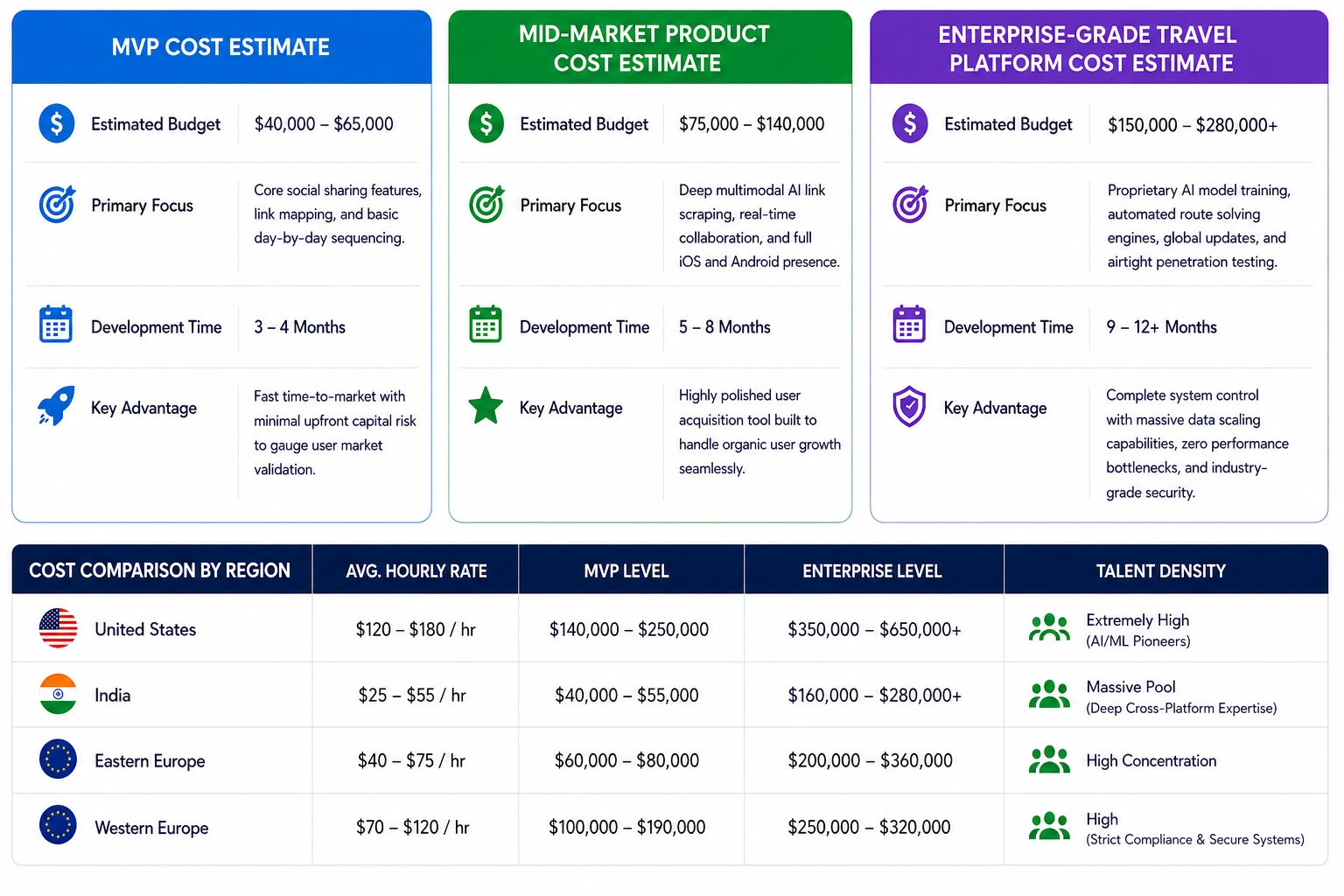
The final AI travel app development cost depends heavily on the scale of your launch and your long-term business goals. Whether you are building an initial proof-of-concept or a highly scalable global travel platform, here is how the development tiers compare.
A. MVP Cost Estimate
An Minimum Viable Product (MVP) focuses purely on validating your core value proposition with minimal overhead. It includes basic social link ingestion, essential mapping, and a simplified itinerary generation loop for early adopters.
| Metric | Details |
| Estimated Budget | $40,000 – $65,000 |
| Primary Focus | Core social sharing features, link mapping, and basic day-by-day sequencing. |
| Development Time | 3 – 4 Months |
| Key Advantage | Fast time-to-market with minimal upfront capital risk to gauge user market validation. |
B. Mid-Market Product Cost Estimate
A mid-market app scales up performance by automating the extraction engine, introducing collaborative shared lists, and expanding platform compatibility across multiple device ecosystems.
| Metric | Details |
| Estimated Budget | $75,000 – $140,000 |
| Primary Focus | Deep multimodal AI link scraping, real-time collaboration, and full iOS and Android presence. |
| Development Time | 5 – 8 Months |
| Key Advantage | Highly polished user acquisition tool built to handle organic user growth seamlessly. |
C. Enterprise-Grade Travel Platform Cost Estimate
An enterprise build treats the application as a highly advanced global infrastructure. This tier includes complex computer vision, hyper-optimized custom routing matrices, multi-region fallback cloud security, and predictive user profile personalization.
| Metric | Details |
| Estimated Budget | $150,000 – $280,000+ |
| Primary Focus | Proprietary AI model training, automated route solving engines, global updates, and airtight penetration testing. |
| Development Time | 9 – 12+ Months |
| Key Advantage | Complete system control with massive data scaling capabilities, zero performance bottlenecks, and industry-grade security. |
D. Cost Comparison By Region
The total cost matches up only if the project is built in a region that corresponds to that specific financial scope.
If a founder hires a mid-to-top-tier agency directly inside the United States at local hourly rates ($120–$180+/hour), it is impossible to build this MVP for $40,000. A US-based MVP would easily swallow $100,000+ just for basic setup, code architecture, and discovery.
To make the region-by-tier cost comparison perfectly accurate and transparent, look at how the absolute numbers shift based on where the development team sits:
| Region | Avg. Hourly Rate | MVP Level | Enterprise Level | Talent Density |
| United States | $120 – $180 / hr | $140,000 – $250,000 | $350,000 – $650,000+ | Extremely High (AI/ML Pioneers) |
| India | $25 – $55 / hr | $40,000 – $55,000 | $160,000 – $280,000+ | Massive Pool (Deep Cross-Platform Expertise) |
| Eastern Europe | $40 – $75 / hr | $60,000 – $80,000 | $200,000 – $360,000 | High Concentration |
| Western Europe | $70 – $120 / hr | $100,000 – $190,000 | $250,000 – $320,000 | High (Strict Compliance & Secure Systems) |
Note:The overall cost structure is highly accurate if and only if you are utilizing a distributed team or an offshore agency model. Idea Usher’s 250+ pre-vetted devs deliver this with elite-tier development cost efficiency seamlessly.
Key Factors Affecting AI Travel App Development Cost
The final cost of developing a modern, social-first AI travel planner is dictated by specific technical choices. Fine-tuning models, scaling data streams, and mapping real-world geometry directly shape your budget footprint.
1. AI Development & Model Integration
Integrating artificial intelligence demands balancing precision with runtime execution costs. Processing unstructured media relies on multi-modal language models like GPT-4o, which costs $2.50 per million input tokens and $10.00 per million output tokens, alongside Whispers’ audio transcription billed at $0.006 per minute.
2. Mapping APIs & Geolocation Services
Visualizing trip recommendations requires constant mapping infrastructure connection requests. Google Places API calls cost $5.00 per 1,000 Geocoding lookups and $17.00 per 1,000 Place Details requests, which can easily inflate basic server bills to $4,200+ monthly once an application hits 100,000 active travel planning sessions.
3. Data Processing & Storage Infrastructure
Handling heavy multimedia social links requires resilient cloud architectures. Running real-time multiplayer WebSockets for group trips, hosting relational spatial databases, and storing short-form video assets on AWS S3 typically adds an active infrastructure maintenance fee ranging between $800 and $2,500 every single month.
4. Mobile App Development Costs
Developing the front-end requires choosing between native or cross-platform engines. Utilizing frameworks like Flutter or React Native typically takes 600 to 1,200 engineering hours, resulting in launch costs between $30,000 and $60,000 for standard mobile products.
5. UI/UX Design Complexity
A smooth mobile interface development with custom maps and drag-and-drop modules takes 4 to 8 weeks. This design phase requires an initial investment of approximately $7,000 to $15,000.
6. Third-Party Platform Integrations
Improving static itineraries necessitates integrating live external data. Establishing custom connections for booking tools, flight engines, and weather trackers requires a separate mid-tier setup budget of $4,000 to $8,500 during the initial build phase.
7. Security, Compliance & Scalability
Securing traveler location data requires meeting international privacy standards. Implementing robust multi-region storage, automated credential layers, and passing mobile security evaluations demands a specialized compliance investment of $5,000 to $11,000.
Roamy Clone Vs Custom AI Travel Platform
When entering the booming AI travel landscape, one of the biggest factors influencing AI travel app development cost while founders face a critical architecture decision: launch quickly using a turnkey clone of a trending product like Roamy (which specializes in parsing TikTok and Instagram links into map-based itineraries) or build a proprietary, custom AI travel platform from scratch.
Below is an analysis of how these two approaches compare across technical limitations, architectural advantages, and long-term financial outcomes.
A. Limitations Of Clone-Based Development
Ready-made travel clone scripts are built on rigid, legacy databases designed strictly for static keyword searches. They are fundamentally incapable of handling complex, modern data processing pipelines.
| Metric | Details |
| Estimated Budget | $35,000 – $65,000 (Initial purchase and patching) |
| Primary Focus | Reskinning pre-existing templates and basic database fields. |
| Development Time | 1 – 2 Months |
| Key Advantage | Low upfront costs and immediate setup of standard listings. |
The Technical Hurdle: Generic clones lack the ability to process unstructured social media links or perform OCR on screenshots. Forcing advanced LLMs into these rigid frameworks typically triggers platform lag, frequent code failures, and excessive API costs.
- Inflexible Data Extraction: Clone scripts often use fragile scraping methods to pull location data from social media. These break easily when TikTok or Instagram update their structures, leading to high maintenance costs.
- AI Hallucinations: Lacking context-aware middleware, most clones rely on basic API wrappers, causing the AI to suggest closed venues or incorrect routes.
- Rigid Architecture: Monolithic clone packages are difficult to customize for unique monetization models or hyper-local adjustments, making modifications more expensive than building from scratch.
- Lack of Defensibility: Since anyone can buy the same script, clones offer no proprietary advantage, forcing businesses to compete solely on marketing rather than unique product features.
B. Advantages Of Custom AI Architecture
Building a dedicated custom AI travel platform allows engineers to weave machine learning models directly into your core data storage layers. This approach is essential for scaling dynamic user feature sets.
| Metric | Details |
| Estimated Budget | $75,000 – $140,000+ (Tailored build) |
| Primary Focus | Bespoke multimodal parsing pipelines and custom geospatial routing cores. |
| Development Time | 5 – 8 Months |
| Key Advantage | Complete intellectual property ownership with infinitely scalable code structures. |
Custom development enables real-time synchronization, advanced social media scraping, and personalized recommendation loops. These proprietary features ensure your travel app remains fast, reliable, and unique in a competitive market.
- Advanced RAG: Specialized pipelines link to live databases (e.g., Amadeus, Skyscanner) for accurate flight, hotel, and scheduling data.
- Multimodal Agentic Workflows: Custom AI uses vision models to extract “hidden gems” from social media transcripts and video frames.
- Graph Databases: Utilizing Neo4j instead of relational databases optimizes travel routes by mapping relationships between preferences and geography.
- Offline Sync: Quantized on-device models provide smart recommendations even without cell service in remote areas.
C. Long-Term ROI Comparison
While a clone-based approach offers lower upfront costs, a custom architecture yields a significantly more profitable and sustainable business model over a 3-to-5-year horizon.
| Financial & Strategic Metric | Roamy Clone Platform | Custom AI Travel Platform |
| Initial Capital Expenditure (CapEx) | Low ($5,000 – $20,000) | High ($75,000 – $250,000+) |
| Time-to-Market | 2 to 4 weeks | 4 to 9 months |
| Ongoing Operational Cost (OpEx) | High (Inefficient token usage, heavy reliance on costly third-party API middle-men) | Low (Optimized vector caching, semantic caching, and fine-tuned open-source models) |
| Monetization Streams | Limited to basic premium subscriptions or token packages. | Diversified (Affiliate B2B integrations, dynamic booking commissions, premium SaaS licensing for travel agencies). |
| Customer Lifetime Value (LTV) | Lower due to higher churn caused by generic features and generic AI responses. | Higher due to hyper-personalized UX, stickier retention, and end-to-end booking capabilities. |
| Enterprise Valuation & Exit Potential | Minimal asset value; valued strictly on a small multiple of current cash flow. | High strategic value; possess proprietary IP, custom datasets, and user-behavior ML models attractive for acquisition. |
Takeaway: Choose a Roamy Clone if your goal is rapid prototyping, niche audience testing, or an immediate, low-budget MVP launch. Choose a Custom AI Architecture if you intend to raise venture capital, integrate complex booking APIs, or build a highly defensible tech asset designed for long-term scale.
Monetization Strategies For AI Travel Apps
An AI-driven travel planner must balance smooth user experiences with a sustainable, high-yield revenue matrix. Instead of relying solely on intrusive banner ads, modern platforms mix direct consumer monetization with high-value business-to-business (B2B) utility layers to build long-term profitability.
1. Premium Subscription Plans
The direct-to-consumer software-as-a-service (SaaS) model provides predictable monthly recurring revenue by locking advanced computing features behind structured pricing tiers.
| Metric | Details |
| Pricing & Revenue Structure | Free Tier (Basic social link parsing) vs. Premium Tier ($5.99 – $14.99 / month). |
| Primary Focus | Monetizing high-frequency travelers who need deep, ongoing algorithmic or structural support. |
| Key Advantage | Builds direct, predictable cash flow while directly covering background LLM token processing costs. |
Standard free versions usually support basic social link parsing and itinerary creation. Premium tiers provide advanced features like multi-user synchronization, offline maps, live transit alerts, and computer vision-based screenshot scanning.
2. Affiliate Travel Bookings
This strategy turns localized, context-aware digital travel itineraries into direct booking entry points by embedding programmatic affiliate connections within curated day plans.
| Metric | Details |
| Pricing & Revenue Structure | 2% to 8% processing commission kickbacks per completed checkout transaction. |
| Primary Focus | Capturing monetization at the exact moment a user transitions from planning to buying. |
| Key Advantage | Generates entirely passive income streams without charging end-users a single extra cent. |
The engine integrates with global travel APIs instead of using external browsers. When the AI suggests a hotel or tour, it provides a native booking button, earning a commission the moment a user completes the transaction.
3. Sponsored Destination Placements
A data-backed monetization model that allows local hospitality networks, municipal tourism boards, and independent cafes to bid for relevant real-time visibility.
| Metric | Details |
| Pricing & Revenue Structure | Targeted Cost-Per-Click (CPC) or Cost-Per-Impression (CPM) business ad bidding engine layers. |
| Primary Focus | Monetizing local business marketing spend through predictive context and intent matching. |
| Key Advantage | Delivers hyper-targeted localized ads that users accept as genuine, helpful suggestions. |
Sponsored placements provide context-aware suggestions rather than disruptive banner ads. For instance, a cafe can bid to appear only when a user’s intent like searching for a “quiet workspace in Kyoto” that matches the business, ensuring relevant results and minimal clutter.
4. Creator Partnership Revenue Models
This framework links the application directly to the modern creator economy, creating an active digital marketplace for curated travel influencers and local guides.
| Metric | Details |
| Pricing & Revenue Structure | 70/30 or 80/20 standard revenue share split on custom paid premium content packs. |
| Primary Focus | Crowdsourcing high-quality destination content to lower internal raw database costs. |
| Key Advantage | Drives organic user acquisition as influencers naturally promote the app to their followers. |
Creators can package viral clips into premium, exclusive itineraries like a “7-Day Hidden Sicily Culinary Tour” for direct in-app purchase. The platform manages payments, retaining a processing fee before sharing profits with the creator.
5. White-Label Travel Planning Solutions
A pure business-to-business (B2B) monetization play that repackages your proprietary AI parsing and optimization infrastructure as an industry enterprise service.
| Metric | Details |
| Pricing & Revenue Structure | Custom B2B contract tiers: $10,000 – $50,000+ setup fees paired with ongoing licensing. |
| Primary Focus | Licensing complete technology stacks to corporate travel agencies, boutique hotels, and airline platforms. |
| Key Advantage | Secures large, high-volume contractual revenue streams that stabilize company valuations. |
Boutique agencies, luxury hotels, and airlines often lack custom ML resources. White-labeling your infrastructure allows them to embed your AI tools into their branded apps, enhancing their customer retention while scaling your revenue.
Partner with IdeaUsher for Your AI Travel App
Choosing the right technology partner is critical to transforming a high-potential app concept like Roamy into a market-ready product. IdeaUsher is a premier global technology provider with 11+ years of experience, a 95% client retention rate, and a portfolio of 1000+ successful projects across 50+ countries.
Using an agile Hybrid Delivery Model that pairs global cost-efficiency with local management, IdeaUsher creates AI-Native architectures by integrating UX strategy and engineering expertise, we provide high-performance platforms focused on human intent and business ROI.
Why Enterprises Partner With Us:
- AI Development Expertise: We build custom AI-First architectures using LLMs, RAG, and Autonomous Agents. Our engineering teams create responsive pipelines that transform unstructured content into structured business data.
- Travel & Location Intelligence: We manage complex global API networks and real-time transit databases. Our expertise includes building geospatial matrices and automated route optimization loops for seamless updates.
- End-to-End Team: Our 250+ technical experts manage the entire lifecycle in-house—from UI/UX prototyping to backend deployment for iOS and Android—eliminating contractor friction.
- Scalable Growth Architecture: Using enterprise-grade frameworks, WebSockets, and vector map layers, we ensure your app handles thousands of simultaneous interactions and real-time updates as you scale.
- Post-Launch Optimization: We provide 24/7 technical support, performance audits, and constant updates to keep your infrastructure running at peak performance.
Ready to reshape the future of the travel industry with a cutting-edge, social-first AI itinerary engine? Book your AI Strategy Call with IdeaUsher today and let’s transform your travel vision into a highly scalable, revenue-generating digital solution.
Conclusion
Building an AI travel app like Roamy involves far more than itinerary generation. The real investment lies in combining AI, geospatial intelligence, social content extraction, route optimization, and scalable infrastructure into a seamless user experience. The final AI travel app development cost depends on feature complexity, AI sophistication, mapping infrastructure, and long-term scalability requirements, making strategic planning essential from day one. By partnering with an experienced development team like IdeaUsher, founders can accelerate product development, reduce technical risks, and launch a differentiated AI travel platform built for long-term success.
Things to Know
Q.1. How Much Does It Cost to Build an AI Travel App?
A.1. The AI travel app development cost typically ranges from $40,000 to $280,000+, depending on features such as AI itinerary planning, route optimization, real-time collaboration, mapping integrations, and personalization capabilities.
Q.2. Should You Build a Custom AI Travel App or Use a Clone Script?
A.2. A custom AI travel app offers greater scalability, flexibility, and ownership than a clone script. It allows deeper AI integration, better user experiences, and long-term cost savings through optimized infrastructure and API management.
Q.3. How Do AI Travel Apps Make Money?
A.3. AI travel apps generate revenue through premium subscriptions, affiliate commissions from hotel and flight bookings, sponsored listings, in-app purchases, and business partnerships. Some platforms also offer white-label solutions and enterprise licensing for additional revenue streams.
Q.4. How Do Travel Apps Reduce Google Maps API Costs?
A.4. Travel apps reduce mapping costs by caching location data, minimizing duplicate API requests, and storing frequently used coordinates. These optimizations lower external API usage while maintaining accurate navigation and location services.