 (+971) 8007 4267
 (+91) 946 340 7140
 (+1) 628 432 4305

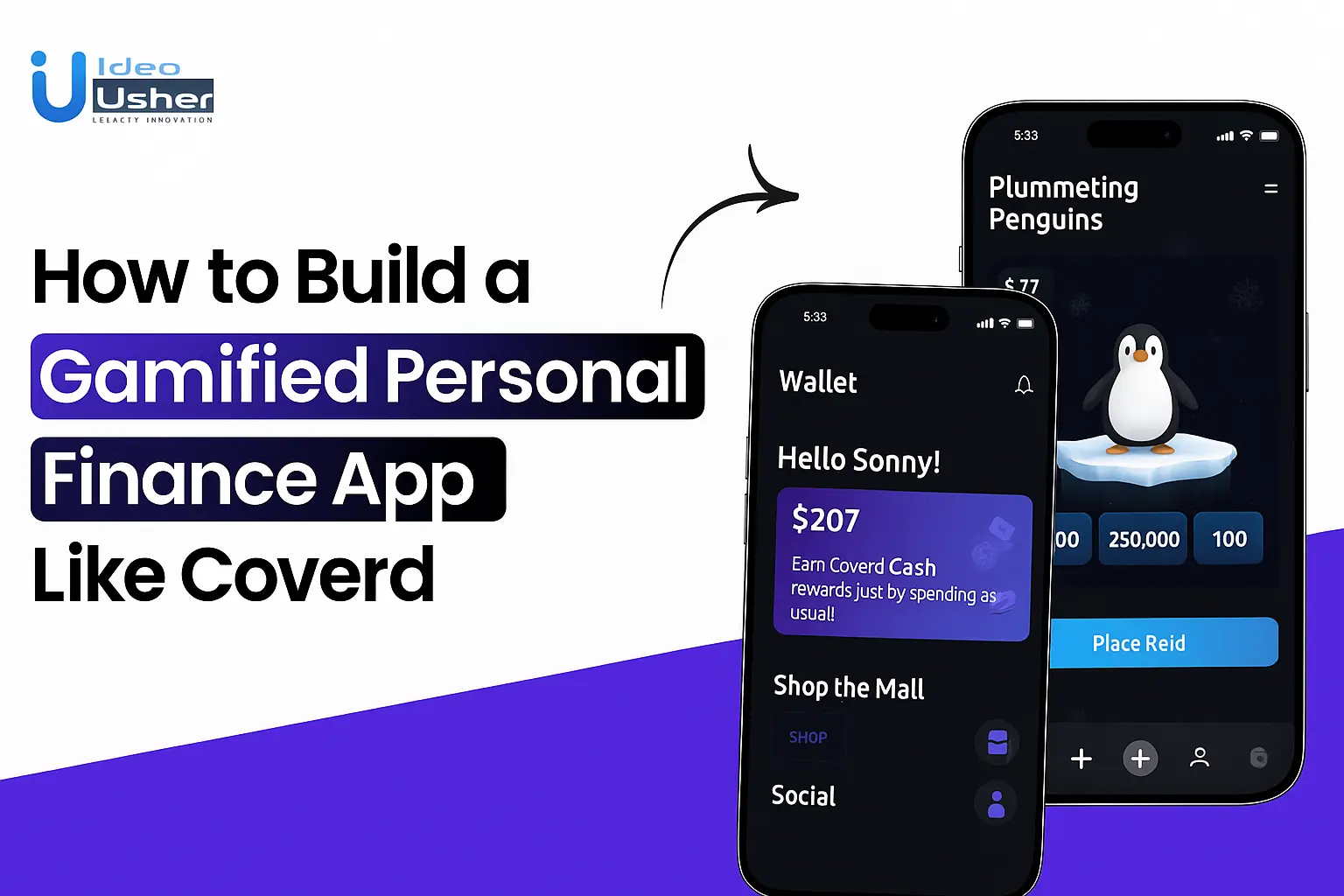
Coverd stands out in the fintech space because it blends personal finance with gaming elements that make money management interactive, engaging, and rewarding. Rather than simply tracking expenses, Coverd turns spending behavior into progress, tokens, and mini-games that motivate users to improve their financial habits. If you’re planning to build a similar app, you’re entering a rapidly growing niche where fintech meets behavioral psychology.
This guide explains the entire process of building an app like Coverd from concept to feature design, architecture, compliance, UX, reward systems, testing, and long-term scaling. It also concludes with how IdeaUsher can help you create such a solution end-to-end.

Key Market Insights
The momentum behind gamified personal-finance apps is supported by verified market data, shifting consumer behavior, and expanding fintech infrastructure. The links below point to reputable research that validates why building an app like Coverd is timely and defensible.
Increasing Adoption of Gamified Finance Solutions

Gamification is driving engagement in fintech: research shows a large share of users prefer apps that offer rewards, progress, and challenges. HTF Market Intelligence estimates the global gamification in finance apps market at about USD 2.1 billion (2024) with a projected CAGR of 18.3% through 2033, signaling strong demand for reward-based financial tools. For product and UX tactics that increase retention, see IdeaUsher’s guide on mobile app engagement strategies.
Growth Driven by Younger Demographics
Younger audiences particularly Gen Z and millennials favor interactive, learning-by-doing experiences in finance apps. Market and survey data repeatedly show that these cohorts respond strongly to gamified learning and visual progress indicators. For context on the latest user expectations and patterns, refer to IdeaUsher’s piece on mobile app development trends.
Massive Expansion of Open Banking
Open banking is a critical enabler for apps that read transaction data and trigger rewards. Allied Market Research projects the open banking market to grow from USD 13.9 billion (2020) to USD 123.7 billion by 2031 (≈22.3% CAGR), making secure account integrations more accessible for new fintech entrants. Learn more about implementing bank integrations in IdeaUsher’s fintech app development guide. (Source: Allied Market Research.)
Rising Demand for Financial Wellness Tools
Economic pressures have increased demand for proactive financial-wellness solutions. Surveys indicate a strong majority of consumers want tools that actively help them manage money and use behaviorally intelligent nudges. If you want to see how behavior design should influence fintech UX, check out IdeaUsher’s fintech design guide.
Higher Retention Than Traditional Budgeting Apps
Traditional budgeting tools struggle with retention — many see 30-day retention rates below 15%. By contrast, gamified finance apps commonly report much higher retention (often in the 35–50% range) due to recurring reward loops and habit-building mechanics. For concrete retention tactics, read IdeaUsher’s article on how to increase app retention.

Strong Investor Momentum in Gamified Fintech
Investor interest is rising for companies that merge financial health and engagement. Data aggregated from industry trackers such as Crunchbase and CB Insights shows that fintech startups incorporating gamification have raised multiple billions over recent years — reflecting investor belief in the monetization and retention potential of these models. If you’re preparing for funding, IdeaUsher’s guide on building an MVP investors love is a practical next step. (Sources: Crunchbase, CB Insights.)
Long-Term Market Potential
The broader financial-app market is forecast to grow significantly over the next decade. Precedence Research projects the financial app market to expand toward approximately USD 1.47 billion by 2030, driven by AI, analytics, open banking, and gamified UX — all trends that favor Coverd-style products. See IdeaUsher’s analysis of AI in fintech for how machine learning will amplify personalization and engagement. (Source: Precedence Research.)
Business Model for Coverd App
Coverd operates in a unique space within fintech by combining personal finance management with gamified reward systems. Its business model is built around high engagement, recurring interactions, and value-added financial incentives. Since Coverd encourages users to link debit or credit accounts, track spending habits, and participate in reward-based games, the app monetizes through a blend of transaction-driven revenue, premium upgrades, and strategic partnerships.
Coverd’s strength lies in its ability to maintain frequent user activity. Each financial action—whether it’s a purchase, a bill payment, or a spending milestone—contributes to the app’s engagement loop. This loop forms the backbone of its monetization strategy.
How Coverd’s Business Model Works
Coverd’s business model is built on four key pillars:
1. Interchange Revenue From Linked Card Spend
When users connect their debit or credit cards and make purchases, Coverd benefits indirectly from interchange revenue through its banking and card integration partners. Many neobank-style apps rely on this model because:
- It scales naturally with user spending.
- It requires no additional effort from the user.
- It aligns perfectly with Coverd’s gamification: users earn tokens when they spend, and the app earns interchange-backed revenue via partnered financial providers.
2. Premium Subscription Tiers
While Coverd may offer core features for free, a premium tier typically unlocks advanced benefits such as:
- Extra game entries
- Bonus tokens or higher reward multipliers
- Early access to new game modes
- Advanced analytics for spending insights
- Exclusive seasonal challenges
This freemium model is common in fintech because gamified incentives make users more willing to upgrade for additional rewards. The predictable subscription revenue also stabilizes Coverd’s long-term financial viability.
3. Partnerships and Sponsored Rewards
Because Coverd integrates gamified experiences with real-world spending, it naturally fits into retail partnerships, affiliate collaborations, and sponsored rewards.
Retailers and brands may partner with Coverd to:
- Offer bonus tokens for specific purchases
- Sponsor sweepstakes prizes
- Promote category-based spend challenges
- Fund reward pools for seasonal events
These partnerships create a win–win model:
Brands gain targeted visibility among financially active users, and Coverd earns partnership revenue while enhancing its rewards ecosystem.
4. In-App Purchases and Gamified Add-Ons
Like many gamified apps, Coverd can generate additional revenue by offering optional in-app enhancements such as:
- Token multipliers
- Extra game spins
- Limited-time challenge passes
- Priority access to high-value rewards
These purchases must comply with sweepstakes and non-gambling regulations, but when implemented correctly, they boost engagement and add a supplemental revenue layer without compromising user trust.
Why the Coverd Business Model Works
Coverd’s business model succeeds because it aligns revenue generation with user motivation. Instead of forcing users to subscribe or view ads, Coverd monetizes naturally through the actions users already take:
High Engagement = Higher Revenue
Gamified finance apps see significantly stronger retention than traditional budgeting tools. When users:
- Play games
- Earn tokens
- Track spending
- Complete challenges
they return more frequently, which directly increases the app’s revenue from transactions, subscriptions, and partnerships.
Rewards Loop Drives Consistent Activity
Every time a user spends in the real world, Coverd rewards them with in-app tokens that can be redeemed for credits or prizes. This feedback loop:
- Increases spending visibility
- Reinforces healthy financial habits
- Encourages users to return daily
- Creates more opportunities for monetization
Multi-Stream Monetization Increases Stability
Coverd doesn’t rely on a single monetization channel like ads or subscriptions. Instead, it blends:
- Interchange revenue
- Premium tiers
- Brand partnerships
- Gamified purchases
This diversification protects the app from market fluctuations and enhances its long-term sustainability.

The Strategic Advantage of Coverd’s Model
Coverd’s business model stands out because it combines financial management with fun and reward-driven engagement something traditional budgeting apps have failed to achieve at scale. By transforming everyday transactions into opportunities for rewards, Coverd reshapes how people interact with their finances.
Benefits of this approach:
- Higher user satisfaction due to positive reinforcement
- Better financial awareness through interactive insights
- Increased lifetime value (LTV) from engaged users
- Viral potential through social sharing of wins and rewards
- Strong investor appeal due to diversified revenue streams and high engagement loops
Coverd essentially turns boring financial activity into something enjoyable and rewarding, making its business model uniquely positioned in a growing fintech market.
Understanding What Makes Coverd Unique
Coverd stands out in the crowded fintech landscape because it goes beyond traditional budgeting or expense-tracking apps. Instead of simply showing where money was spent, it transforms everyday financial behavior into an interactive, game-like experience that motivates users to stay engaged. This combination of spending awareness + gamification + reward mechanics is what sets Coverd apart.
Unlike standard finance apps that rely heavily on charts and static dashboards, Coverd uses behavioral psychology to make money management both enjoyable and rewarding. Users are not just tracking expenses; they are earning tokens, unlocking wins, and receiving positive reinforcement for routine financial decisions. This subtle shift dramatically improves engagement and long-term retention.
- Designed for Younger Digital-Native Users
Coverd appeals strongly to Gen Z and millennials—groups that prefer interactive, visually engaging tools over traditional spreadsheets or banking dashboards. Its design and mechanics cater directly to their expectations. - Gamified Financial Behavior
Coverd rewards users with tokens or “Coverd Cash” for everyday purchases. These tokens can be used in mini-games or sweepstakes-like experiences, giving users a sense of progress every time they spend money responsibly. This makes the financial journey feel less like a chore and more like a rewarding activity. - Interactive Spending Awareness
Instead of showing passive charts, the app turns spending categories into interactive insights. Users can see real-time spending habits and immediately understand how their decisions influence token accumulation and rewards. - Mini-Games That Reinforce Healthy Habits
The app’s game mechanics aren’t just entertainment—they nudge users to stay engaged with their finances. Playing to earn rewards provides a genuine incentive to return daily, improving retention far more than traditional budgeting apps. - A Motivational Rewards Loop
Coverd’s design builds a continuous loop: spend → earn tokens → play → unlock potential rewards. This loop not only entertains users but also encourages disciplined financial behavior, such as paying down balances or managing purchases more mindfully. - Blend of Utility and Entertainment
The app carefully balances financial value with fun. Users get the functional benefits of spend tracking and financial insights while enjoying a rewarding, motivational layer that enhances their experience.
How to Build a Gamified Personal Finance App Like Coverd
If you are exploring the idea of building an app like Coverd, you’re tapping into one of the fastest-growing opportunities in fintech: merging financial wellness with gamification to create a highly engaging, habit-forming product. At Idea Usher, we help founders and enterprises turn this concept into a robust, scalable digital product by combining secure fintech technology with proven behavioral design.
A Coverd-style app is more than just a budgeting tool it uses tokens, rewards, and interactive experiences to motivate users to manage money more effectively. Building such an app demands a deep understanding of fintech infrastructure, gamified engagement loops, regulatory compliance, and scalable architecture. Below is a clear breakdown of how we approach the development of a gamified personal finance app for our clients.
Understanding Your Vision and Target Users
Our first step is to understand the problem you aim to solve and the audience you want to reach. Coverd succeeds by making finance feel fun, approachable, and rewarding your app should do the same, but with features tailored to your users.
Key discovery questions we cover with you include:
- What financial challenges do your users face overspending, lack of motivation, poor budgeting habits?
- Which demographic will your app serve Gen Z, young professionals, families, or beginners?
- What makes your app’s gamified experience different from typical finance tools?
- What type of reward system aligns best with your business goals?
This discovery phase ensures we design an app that not only looks good but truly resonates with your future users.
Defining the MVP: What Your First Version Should Include
For clients building a Coverd-like platform, we recommend starting with a focused MVP that validates your core value: financial actions → rewards → engagement.
A successful MVP typically includes:
- Secure onboarding and user authentication
- Bank account or card linking using trusted providers like Plaid or TrueLayer
- Automated transaction import and categorization
- A token system that rewards qualifying purchases or financial behaviors
- A simple mini-game where tokens can be redeemed
- A basic reward redemption system such as bill credits or partner rewards
- An admin dashboard for your team to manage users, tokens, and game rules
This allows you to quickly launch, gather feedback, and measure user engagement before investing in advanced features.
Designing the Gamification Layer
Your reward mechanics are the heart of the product. We help you design a token economy that feels fair, balanced, and motivating without encouraging unhealthy behaviors or breaking compliance rules.
Our gamification design includes:
- Clear rules for earning tokens (transactions, streaks, challenges, bill payments)
- Controlled token circulation via earning limits and “token sinks”
- Mini-games that are simple, exciting, and legally compliant
- Meaningful reward options such as bill credits, cashback boosts, or savings multipliers
- Behavioral triggers like streak rewards, progress bars, notifications, and achievements
The goal is to create an ecosystem where users feel rewarded every time they interact with your app.
Creating a Secure and Scalable Tech Architecture
Because your app interacts with financial data, we prioritize security and compliance at every step. Our development team builds reliable infrastructure that scales effortlessly as your user base grows.
Your app’s architecture typically includes:
- Mobile development using Flutter, React Native, or native iOS/Android
- A secure backend built using Node.js, Python (FastAPI or Django), or TypeScript
- PostgreSQL for structured financial data storage
- Redis for caching and real-time reward processing
- Event-driven systems (Kafka/SQS) for awarding tokens instantly after a transaction
- Third-party integrations for open banking, payments, and financial data
- Industry-standard encryption, role-based permissions, and routine penetration testing
We treat security as a core feature not an afterthought.
Ensuring Compliance and Regulatory Safety
Rewards, games, and financial data create a complex compliance landscape. Our in-house compliance partners help ensure your app meets all legal requirements before launch.
We guide you through:
- GDPR and CCPA data privacy rules
- PCI-DSS requirements
- Open banking regulations
- Sweepstakes and reward-compliance frameworks
- Anti-fraud and anti-money-laundering measures
- Clear disclosure, terms, and user agreements
This protects both your users and your business from unnecessary risk.
Monetization Strategy and Business Model
A gamified finance app offers multiple revenue streams. We help you design a business model that fits your growth goals and ensures long-term sustainability.
Top monetization options include:
- Interchange fees from purchases made using your branded debit card
- Premium subscription tiers with enhanced features
- Merchant partnerships and affiliate commissions
- Sponsored challenges, seasonal games, and branded reward pools
- Add-on financial services such as savings tools or credit insights
With the right model, your app not only engages users but also becomes a profitable fintech product.
Launch, Test, Iterate, Scale
Once your app is built, our work continues. We support your launch, track user behavior, and optimize your app based on real metrics.
Post-launch roadmap includes:
- A/B testing token rewards, game mechanics, and onboarding flows
- Expanding mini-games and seasonal reward events
- Enhancing redemption options
- Improving retention triggers such as streaks and milestones
- Implementing referral programs and viral loops
- Scaling infrastructure as your user base grows
This ensures your app evolves into a market-ready, investor-attractive platform.

The Psychology Behind Gamified Finance Apps
Gamified finance apps like Coverd work because they tap into well-established behavioral psychology principles that influence how people make decisions, form habits, and stay motivated. Traditional budgeting tools rely heavily on discipline and long-term thinking, which can feel overwhelming for many users. Gamification reframes financial management into small, achievable actions reinforced with rewards, making the process more enjoyable and sustainable.
At its core, the psychology behind gamified finance products revolves around three elements: motivation, habit formation, and emotional engagement. When these elements come together in a thoughtful design, users feel encouraged to return to the app, improve their financial awareness, and progress toward their goals.
How Gamification Drives Motivation
Gamified apps use points, tokens, streaks, and rewards to activate the brain’s natural desire for progress and achievement. These mechanics stimulate dopamine release, which increases motivation and creates a positive association with financial tasks.
Key motivation triggers include:
- Instant Rewards: Tokens or bonuses given immediately after a financial action create a sense of accomplishment.
- Visible Progress: Status bars, levels, or streak counters help users see their improvement in real time.
- Clear Goals: Missions and challenges make financial objectives feel actionable rather than abstract.
- Personal Milestones: Celebrating small wins makes long-term financial goals feel achievable.
This transforms routine tasks like checking spending or saving money into engaging interactions that users look forward to.
Habit Formation Through Repetition and Reinforcement
Forming financial habits is one of the biggest challenges in personal money management. Gamification leverages reinforcement learning, a psychological principle where repeated behaviors become habits when consistently rewarded.
Gamified finance apps support habit-building by implementing:
- Daily check-in rewards that encourage frequent use.
- Streak systems that reward consistent engagement.
- Micro-tasks that simplify complex financial actions.
- Feedback loops that reinforce good decisions.
Over time, these repeated behaviors become second nature, helping users maintain better financial discipline without feeling forced.
Emotional Engagement and Positive Reinforcement
A major reason traditional finance apps fail is that they evoke negative emotions stress, guilt, or shame when users overspend or miss goals. Gamified apps flip this emotional script by offering a rewarding, guilt-free environment.
Positive reinforcement includes:
- Celebratory animations when users take financially responsible actions.
- Chance-based games that provide fun, low-stakes opportunities for rewards.
- Token wins that give users something to look forward to even when finances feel tough.
By transforming financial tasks into emotionally positive experiences, users are more likely to return to the app regularly.
The Role of Behavioral Economics in Gamified Finance
Behavioral economics explains why users often struggle to make rational financial decisions. Features in gamified finance apps address these cognitive biases:
- Present Bias: Users prefer immediate rewards over long-term benefits. Gamified apps provide quick motivational boosts.
- Choice Overload: Simplifying options and guiding users through small steps reduces decision fatigue.
- Loss Aversion: Structured rewards help users avoid the fear of losing progress or streaks.
- Anchoring: Progress visuals and scoring systems guide users toward better financial comparisons and decisions.
By understanding and addressing these biases, Coverd-style apps help users make better choices without feeling overwhelmed.
Why Psychology-Based Gamification Works in Finance
Gamification succeeds in finance because it blends logic with emotion. Finance is typically viewed as rational, but real-world financial behavior is shaped by how users feel motivated, rewarded, informed, or supported.
Well-designed gamified finance apps:
- Turn complex financial tasks into small wins
- Create continuous momentum
- Make budgeting and spending awareness enjoyable
- Encourage consistency
- Reduce anxiety around money
- Increase user commitment over time
This combination of psychological triggers and practical financial tools results in higher retention, better outcomes, and stronger user satisfaction making gamification one of the most effective strategies for modern financial app design.
How to Build the Rewards Engine and Token Economy
A Coverd-style app relies heavily on a well-designed rewards engine and token economy. These systems determine how users earn, spend, and experience rewards and they directly influence engagement, retention, and long-term habit formation.
A poorly structured token economy can lead to user frustration, imbalanced reward distribution, or even legal complications, while a well-optimized one creates excitement, motivation, and positive financial behavior.
Designing a reward system for a gamified finance app requires strategic thinking across user psychology, financial modeling, fairness, and compliance. Below is a breakdown of how to build a robust token and rewards infrastructure.
Understanding the Role of Tokens in a Gamified Finance App
Tokens act as the central currency of engagement. They serve multiple purposes:
- Encourage users to return daily
- Reward financial actions like spending responsibly or paying bills
- Create anticipation through chance-based games
- Unlock tiers, levels, or exclusive benefits
- Reinforce progress toward financial goals
Tokens turn everyday transactions into opportunities for micro-rewards, boosting the emotional connection between users and the app.
Designing Token Earning Logic
The first step in building a token economy is defining how users earn tokens. The logic must be clear, fair, and motivating while aligning with your financial goals.
Common sources of token earning include:
- Qualifying Purchases: Users earn tokens for every transaction that meets certain criteria (e.g., category-based spending).
- Daily Login Bonuses: Incentivizes app consistency.
- Completing Challenges: Weekly/monthly missions tied to financial habits like staying under budget.
- Financial Milestones: Rewards for saving a specific amount, reducing credit usage, or paying a bill early.
- Referral Programs: Tokens granted when users invite friends or family.
Token earning rules must be transparent and carefully communicated to build user trust.
Structuring Token Value and Distribution
The value of a token must feel meaningful. If users earn too many tokens effortlessly, rewards lose value. If they earn too few, they lose motivation.
Key considerations when defining token value:
- Daily/weekly earning caps to avoid inflation
- Tiered reward systems so tokens worth more require more effort
- Dynamic difficulty scaling based on user behavior
- Seasonal or time-limited boosts to increase excitement
Balance between scarcity and accessibility ensures long-term engagement without overwhelming users.
Building the Rewards Engine
The rewards engine is the operational brain behind the token system. It determines:
- When tokens are awarded
- How rewards are triggered
- How win probabilities are calculated
- How tokens are redeemed
- How errors or disputes are handled
A robust rewards engine should include:
- Event-based triggers (e.g., transaction posted → tokens added)
- Probability models for games or sweepstakes
- Redemption logic (cashback, bill credit, savings transfers, etc.)
- Fraud prevention to detect manipulation in token accumulation
- Admin control panel for adjusting rules, values, and promotional events
The engine must be scalable, audited, and capable of handling millions of micro-transactions reliably.
Game Mechanics That Reinforce Engagement
Games are the interaction layer of the reward engine. Simple, fast, and fair games tend to perform best.
Popular mechanics include:
- Spin-the-wheel games
- Scratch cards
- Drop-based loot boxes
- Predict-and-win games
- Streak-based challenges
Each game should deliver instant feedback and tie directly to the users’ token balances.
Deliverables from the game engine:
- Consistent randomness based on fair algorithms
- Clear communication of win probabilities
- Smooth animations and sensory feedback
- Quick reward settlement
Users remain engaged when games feel exciting but not exploitative.
Redemption Options That Add Real Value
Redemption is the final—and most important—step in the reward cycle. Users must feel their time and engagement translate into meaningful outcomes.
Common redemption mechanisms:
- Bill credits applied to utilities, loans, or credit cards
- Cash equivalents transferred to a savings or debit account
- Boosted savings goals where tokens reduce the required deposit
- Store discounts or cashback via partnerships
- Exclusive in-app perks such as additional game lives or token multipliers
Each redemption method must be easy to claim and clearly explained to avoid confusion.

Maintaining Balance and Preventing Token Inflation
A sustainable token economy requires careful balancing. Token inflation when tokens become too easy to earn can ruin the reward system by making prizes feel less valuable.
Best practices include:
- Adjusting difficulty as user base grows
- Limiting token-generating events
- Introducing sink mechanics (places where tokens are spent)
- Seasonal resets or reward cycles
- Monitoring token distribution analytics weekly
A balanced system increases the emotional value of each token earned.
Ensuring Legal and Compliance Alignment
If your rewards resemble sweepstakes, contests, or prizes, compliance and legal review are mandatory.
Considerations include:
- Avoiding gambling classification
- Providing “no purchase necessary” pathways
- Transparent probability disclosures
- Complying with local sweepstakes laws
- Storing user data securely
- Preventing abuse or fraud
A compliant token and reward system protects both your users and your business.
Why a Well-Built Rewards Engine Matters
A strong rewards engine and token economy can:
- Increase daily active users
- Improve retention 3–5×
- Encourage healthier financial decisions
- Create viral moments users share online
- Build long-term loyalty
- Differentiate your app from traditional budgeting tools
Cost to Develop an App Like Coverd
Developing a gamified personal finance app like Coverd requires a thoughtful mix of fintech engineering, UX design, gamification logic, and real-time transaction processing. Because the app handles sensitive financial data while delivering a game-like experience, the development cost depends heavily on complexity, level of polish, and the number of features you want to include.
Typically, the cost to build a Coverd-style app ranges between $40,000 and $250,000+. This range varies based on whether you’re building a simple MVP, a commercial-ready product, or a full-scale gamified fintech platform with advanced features, deep compliance, and multiple reward mechanics.
To help you understand this more clearly, here is a detailed cost breakdown in both descriptive content and an organized sheet.
Cost Breakdown Explained
1. Basic MVP Version ($40,000–$70,000)
This is ideal if you want to test market interest before investing heavily.
It includes the core features needed to make the app functional:
- Bank linking (Plaid, TrueLayer, etc.)
- Basic transaction categorization
- Simple token reward system
- One mini-game
- Basic dashboard and analytics
- Limited admin controls
An MVP helps validate whether users engage with gamified financial behavior.
2. Mid-Level Product ($70,000–$150,000)
This is suitable for founders ready to launch to the public. It includes stronger gamification and better scalability:
- Multiple game types
- Daily streaks, challenges, and missions
- Advanced spending analytics
- Better UI/UX with animations
- A robust admin dashboard
- Fraud checks and enhanced compliance
This version is strong enough to attract early traction and investor attention.
3. Full-Scale Coverd-Level App ($150,000–$250,000+)
This version delivers the closest experience to Coverd’s modern gamified finance model.
It includes:
- Complex token economy with dynamic rules
- Multiple game experiences
- Wallet system + payout functionalities
- Real-time transaction pipelines
- AI-driven insights
- Advanced fraud detection
- Scalable infrastructure
- Compliance-ready architecture
This is the best option for startups planning to scale to thousands or millions of users.
Cost Comparison Sheet (For Better Understanding)
Below is a simple, visual comparison to help your readers instantly understand the differences.
| Version Type | Cost Range (USD) | Best For | Key Features Included | Estimated Timeline |
|---|---|---|---|---|
| Basic MVP | $40,000 – $70,000 | Market validation | Bank linking, basic token system, 1 mini-game, simple insights | 10–14 weeks |
| Mid-Level Product | $70,000 – $150,000 | Commercial launch | Multiple games, advanced analytics, admin panel, improved UX | 16–24 weeks |
| Full-Scale App | $150,000 – $250,000+ | Scaling & growth | Advanced games, payout system, fraud prevention, AI insights | 6–9 months |
What Influences the Final Cost?
Several major factors determine the final budget:
- Fintech integrations like Plaid or banking APIs
- Level of gamification (simple points vs dynamic reward engine)
- Number of games and animations
- Security and compliance requirements
- Backend architecture and scalability
- Platform choice (iOS, Android, or both)
- Advanced features like AI predictions, saving insights, payouts
The more features you add, especially financial ones, the more time and cost involved.
Why Investing in a Coverd-Style App Is Worth It
Gamified personal finance apps are rapidly growing because they solve a real problem:
Most users want to manage money better but lack motivation.
Gamification fixes this by rewarding financial progress the same way games reward in-app achievements.
With the right execution, your app can generate revenue through:
- Interchange fees
- Premium subscriptions
- Merchant partnerships
- Sponsored reward events
- Value-added services (credit insights, saving boosters, etc.)
This is why founders and investors are increasingly choosing gamified fintech models.

Conclusion
Building an app like Coverd requires a blend of fintech expertise, reward psychology, secure engineering, and engaging user experience design. The most successful apps in this category make finance feel simple, motivating, and enjoyable by transforming everyday spending into rewarding moments.
With the right architecture, gamification strategy, and compliance infrastructure, you can create a unique product that improves user financial behavior while remaining highly engaging.
How IdeaUsher Can Help You Build a Coverd-Like App
IdeaUsher has extensive experience in developing fintech and gamified applications. Our team understands the complexities of financial data, open banking integrations, secure architecture, and behavior-driven gamification.
What We Offer
- Product Strategy: We help refine your MVP scope, user journeys, and gamification models.
- UX/UI Design: Our designers specialize in fintech interfaces that balance trust and engagement.
- Secure Development: We build scalable mobile apps and backends with bank-grade security.
- Token and Reward Mechanics: Our experts design fair, motivating game systems.
- Compliance Alignment: We help structure sweepstakes rules, privacy policies, and security standards.
- Launch Support: From beta testing to analytics integration, we ensure a smooth rollout.
- Dedicated Teams: You get access to experienced developers, QA engineers, designers, and fintech specialists.
If you are ready to build a modern gamified finance app, IdeaUsher can create a full development roadmap and cost estimate tailored to your goals. Share your concept, and we will help you transform it into a successful product.

FAQ’s
1. How much does it cost to develop an app like Coverd?
The cost depends on the features, complexity, compliance requirements, and design quality you choose. On average, developing a Coverd-style app ranges from $40,000 to $250,000+. An MVP with basic gamification and bank linking sits on the lower end, while a fully scalable version with advanced features lands in the higher bracket.
2. How long does it take to build a Coverd-like app?
Build time varies by scope and feature depth. A simple MVP typically takes 10–14 weeks, a mid-level version takes 16–24 weeks, and a complete, highly polished product may require 6–9 months. Timelines include design, development, testing, compliance setup, and launch preparation.
3. What are the core features needed for a Coverd-style app?
You’ll need essential fintech features like bank linking, transaction categorization, spending insights, and a token-based reward system. On top of that, features such as mini-games, daily challenges, reward redemption, and an admin dashboard create the engaging gamified experience users enjoy.
4. Is it legally safe to include games or sweepstakes in the app?
Yes when implemented properly. A gamified finance app must follow sweepstakes rules, provide “no purchase necessary” pathways, disclose probabilities, and handle data securely. With the right legal structure, your games remain compliant and safe for users.


