

Key Takeaways
- Evidence-based care is becoming more accessible through digital therapeutics that deliver treatment through software and connected devices.
- AppliedVR combines immersive VR, CBT-based therapy, biofeedback, personalized treatment, and structured home programs for chronic pain and behavioral health.
- Building a similar platform requires VR development, biometrics, AI personalization, clinical dashboards, EHR integration, and strong security.
- Clinical validation and regulatory approval are essential for building trust, enabling reimbursement, and supporting long-term healthcare adoption.
Healthcare is no longer limited to treatment that happens inside a clinic. Patients are increasingly using technology to access therapeutic support from wherever they are. This has created new opportunities for digital therapeutics that can turn proven treatment methods into practical software experiences. But building something like AppliedVR involves more than putting therapy content inside a VR headset. The real challenge is creating an experience that keeps patients engaged while still supporting a clear clinical goal. For founders entering this space, one important question is how to make the technology feel useful rather than gimmicky. The strongest products use immersive experiences to make therapy easier to follow and more consistent in everyday life.
We’ve worked on digital therapeutic solutions that bring immersive technology into real-world healthcare settings. Our experience has shown us that building these products is less about creating impressive VR experiences and more about making the technology useful throughout the patient’s treatment journey. In this blog, we’ll look at how to develop a digital therapeutic like AppliedVR and what goes into turning a therapeutic concept into a practical digital product.
Why Are Digital Therapeutics Becoming a Business Opportunity?
According to Fortune Business Insights, the global digital therapeutics market was valued at USD 10.15 billion in 2025 and is expected to reach USD 67.58 billion by 2034. It is projected to grow at a 23.55% CAGR during the forecast period. North America held the largest share at 46.86% in 2025. This growth shows why digital therapeutics are gaining attention from healthcare providers and investors. The sector offers founders an opportunity to address real medical needs while building scalable software with recurring revenue potential.
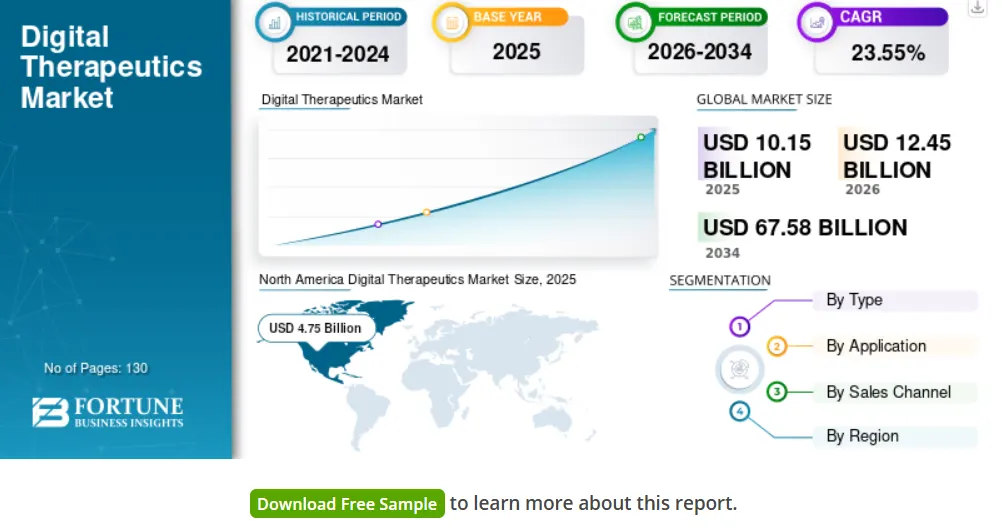
Source: Fortune Business Insights
Software is replacing or enhancing traditional pharmaceuticals. Platforms deliver evidence-based interventions through smartphones and connected devices. This model lowers delivery costs while driving high patient compliance and platform use.
Demand for Scalable, Personalized Care
Chronic conditions and mental health require ongoing support beyond traditional clinical visits. Digital therapeutic platforms meet this need by giving patients personalized guidance and regular engagement through software. The model is similar to subscription platforms that build recurring user relationships.
OnlyFans generated over $7.22 billion in gross fan spending in a single year and earned more than $1.41 billion in net platform commission through its 20% cut. The healthcare model is different, but the lesson is clear: software can create sustainable recurring engagement when it delivers value consistently.
Factors accelerating adoption include:
- Automated clinical workflows: Digital platforms can deliver therapy and monitoring with less dependence on continuous clinician involvement.
- Continuous patient data: Ongoing insights help providers understand progress and refine treatment.
- Lower delivery overhead: Software can support thousands of users without increasing costs at the same rate.
New Revenue Streams in Healthcare
Traditional healthcare often depends on in-person visits and fee-for-service payments. Digital therapeutic platforms can build more predictable revenue through subscriptions and enterprise contracts. Fansly is a useful example of how tiered access can increase user value. The platform has been estimated to receive around 50 million monthly visits by offering different membership levels.
Digital therapeutics can use a similar approach while adapting it to healthcare needs. Enterprise SaaS licensing can generate recurring revenue from health systems. Payer reimbursement can support clinically validated products through eligible billing pathways. Patient plans can also follow a tiered model where basic tracking is free and advanced features such as AI coaching or care team messaging require payment.
Why Evidence-Based Care Attracts Capital
Institutional investors are drawn to digital therapeutics because they can offer software-like margins with stronger clinical defensibility. Unlike general wellness apps, evidence-based platforms can build a moat through clinical research and regulatory approvals. Once a product demonstrates measurable outcomes, it can become part of a healthcare provider’s workflow rather than remain an optional wellness tool.
Building in this sector can also create attractive long-term opportunities. High gross margins allow platforms to add patients without a matching rise in delivery costs. Clinical IP and regulatory clearances make it harder for competitors to replicate the product. Proven platforms may also attract pharmaceutical companies and health tech firms looking to expand their digital care portfolios.

What Is AppliedVR and What Does It Do?
AppliedVR is an immersive therapeutics company replacing traditional pharmaceuticals with medical-grade virtual reality. The platform delivers non-invasive, evidence-based treatments directly to patients managing chronic pain and anxiety. By pairing software with clinical protocols, the company addresses chronic care burdens while lowering reliance on high-risk medications.
The core mission focuses on making digital care scalable and accessible. Instead of requiring frequent in-person therapy or long-term prescriptions, patients receive targeted behavioral interventions at home through standardized headset hardware.
1. Delivering Immersive VR Therapeutics
Virtual reality alters how the brain processes physical and emotional distress. AppliedVR leverages immersive visual environments, guided breathing, and biofeedback to shift focus away from pain signals in real time. Key technical and operational components include:
- Neural distraction: Immersive environments engage visual and auditory senses, interrupting core pain pathways.
- Self-regulation skills: Patients learn deep breathing and cognitive techniques that build long-term physiological control.
- Standardized hardware delivery: Pre-loaded software allows patients to start treatment without complex technical setup.
Commercial metrics illustrate strong investor backing for this platform approach. AppliedVR has secured over $71 million in total funding, driven by a $36 million Series B round. That capital supports clinical expansion and scales market distribution across major health networks.
2. Combining VR with Behavioral Therapy
RelieVRx is AppliedVR’s flagship software system designed specifically for lower back pain management. The platform delivers an eight-week home curriculum rooted in Cognitive Behavioral Therapy. Rather than offering passive distraction, the software teaches patients actionable coping strategies. Daily sessions guide users through relaxation modules, pain education, and mindful movement prompts.
Strategic value factors for healthcare providers include:
- High treatment compliance: Short daily sessions fit easily into routines, leading to higher completion rates than traditional physical therapy.
- At-home convenience: Patients complete their therapeutic regimen without traveling to specialized clinics.
- Measurable outcomes: Built-in tracking gives clinicians real-time visibility into patient engagement and progress.
3. The Clinical and FDA Journey
Building an enterprise-ready digital therapeutic requires rigorous clinical validation. AppliedVR spent years running randomized controlled trials to prove efficacy before pursuing commercial expansion. This clinical rigor culminated in RelieVRx earning FDA De Novo clearance, making it the first authorized home-based VR treatment for chronic lower back pain.
The platform’s clinical pathway highlights key milestones for digital healthcare founders:
| Regulatory & Commercial Milestone | Strategic Impact |
| Randomized Controlled Trials | Proves clinical efficacy equal to or exceeding standard care options. |
| FDA De Novo Clearance | Creates a legal classification and a defensible market position. |
| CMS Reimbursement Codes | Establishes dedicated billing pathways for health systems and insurers. |
What Conditions Does AppliedVR Target?
AppliedVR initially explored broad immersive healthcare applications before sharpening its focus on specific clinical indications. Targeting defined conditions allows digital therapeutic developers to secure FDA approvals, gain reimbursement codes, and capture enterprise health system market share.
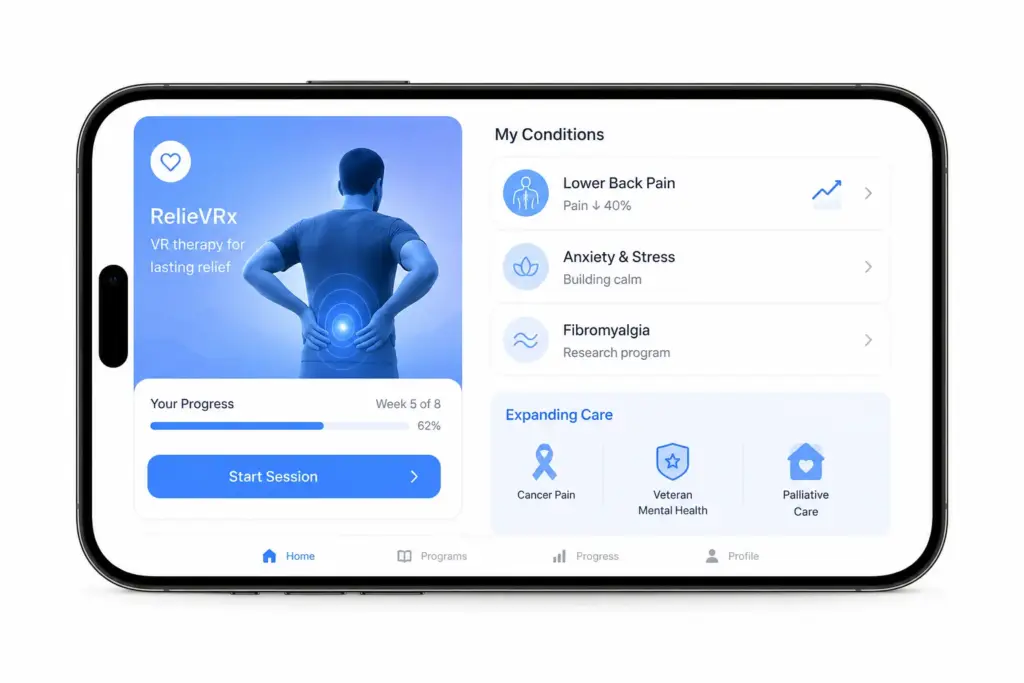
By validating software for specific medical diagnoses, the company shifted from wellness entertainment to essential healthcare infrastructure.
Chronic Lower Back Pain
Chronic lower back pain affects millions of adults globally and accounts for billions in medical spending. Traditional care relies heavily on physical therapy, invasive surgeries, or prescription opioids that carry significant addiction risks. AppliedVR targeted this condition to address a massive market gap with a non-invasive, non-opioid solution. Its FDA-cleared RelieVRx program uses virtual reality to deliver cognitive behavioral therapy and self-regulation skills at home.
Key clinical outcomes achieved in lower back pain trials include:
- Pain intensity reduction: Patients reported over 40% reduction in average pain scores after completing the 8-week curriculum.
- Decreased pain interference: Users experienced significant improvements in sleep quality, mood stability, and daily mobility.
- Long-term skill retention: Patients maintained behavioral coping mechanics months after completing treatment.
Exploring Pain and Behavioral Health Conditions
The underlying mechanics of immersive therapy apply to various conditions where centralized pain processing and stress intersect. AppliedVR conducts clinical research across several adjacent therapeutic areas. Primary research areas include:
- Fibromyalgia: Managing widespread musculoskeletal pain coupled with sleep disturbances and chronic fatigue.
- Procedural and acute pain: Reducing patient anxiety and acute pain discomfort during inpatient hospital procedures.
- General anxiety and stress: Teaching neuro-calming strategies to reduce sympathetic nervous system overdrive.
Expanding Into New Clinical Indications
For digital therapeutic platforms, scaling requires proving efficacy across additional high-cost conditions. AppliedVR uses its core software architecture to expand into oncology and veteran health programs. This expansion strategy secures broader enterprise contracts and drives higher platform valuation.
| Target Indication | Clinical Objective | Market Potential |
| Cancer Pain | Relieves chronic pain and distress in oncology patients. | Captures specialized hospital network budgets. |
| Veteran Mental Health | Addresses co-occurring PTSD and pain in military populations. | Unlocks government health system purchasing. |
| Palliative Care | Enhances end-of-life comfort without increasing sedation. | Expands home health and hospice integrations. |
Key Features of a Digital Therapeutic Like AppliedVR
Building a successful digital therapeutic requires more than strong software. It also needs clinically validated care that patients can use in their daily lives. AppliedVR offers a practical blueprint for delivering digital treatment beyond traditional clinical settings. It shows how immersive technology can make therapy more accessible and engaging.
1. Immersive VR Therapy
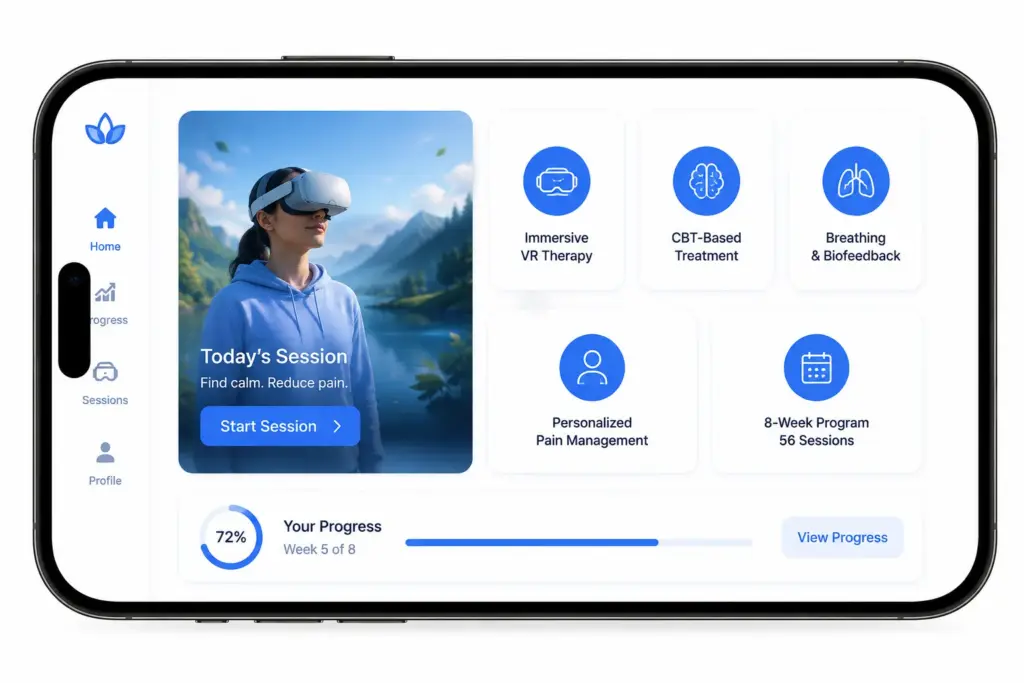
AppliedVR uses immersive headsets to transport patients into dynamic digital environments. Inside the RelieVRx program, users put on the headset and enter 3D landscapes designed to capture full visual and auditory attention. This deep immersion alters how the brain processes pain signals. Users actively navigate relaxing environments that divert neural focus away from physical discomfort.
2. Automated CBT-Based Treatment
AppliedVR embeds Cognitive Behavioral Therapy directly into its software logic. Users progress through interactive modules that teach them how thoughts, feelings, and physical pain interact.
Key software capabilities include:
- Self-paced learning: Patients complete guided CBT exercises at their own speed without waiting for a therapist.
- Automated progress prompts: The software prompts users to complete daily reflections and mental reframing exercises.
- Standardized care delivery: Every patient receives identical, evidence-based behavioral intervention without quality variance.
3. Guided Breathing and Biofeedback
Inside AppliedVR’s RelieVRx system, diaphragmatic breathing becomes an interactive game element. The headset sensors detect micro-movements and breathing rhythm during session exercises. Patients see real-time visual feedback, such as an object expanding as they inhale or changing color as their heart rate steadies. This biofeedback loop trains users to calm their nervous system on command.
4. Personalized Pain Management
AppliedVR delivers tailored toolkits rather than generic distraction content. Users select specific routines based on their current pain levels and daily stress indicators. Inside the platform, patients choose from specialized therapeutic tracks:
| Therapeutic Focus | How Users Interact Inside AppliedVR |
| Pain Education | Interactive lessons on centralized pain processing. |
| Mindfulness | Guided meditation and body-scan exercises in 3D settings. |
| Active Distraction | Interactive focus games during peak discomfort episodes. |
5. Structured Multi-Session Programs
RelieVRx follows a structured 56-session curriculum delivered over eight weeks. Users complete one short daily session, unlocking subsequent modules as they build consistency. This structured progression prevents patient overwhelm and builds long-term behavioral habits step by step.
6. Self-Guided Home Treatment
AppliedVR ships pre-configured headsets directly to prescription holders. Users unbox the hardware, power it on, and begin treatment at home without complex installation. Patients manage their care independently on their own schedule while health systems monitor compliance remotely through backend analytics.
7. Clinical Validation and Regulatory Support
AppliedVR treats regulatory clearance as a core product foundation. RelieVRx earned FDA authorization as a Class II medical device through rigorous randomized clinical trials. For platform developers, clinical backing secures provider trust, opens insurance reimbursement pathways, and protects market share against non-medical wellness apps.
How to Develop a Digital Therapeutic Like AppliedVR?
Developing a digital therapeutic requires a hybrid approach. Founders must combine software agility with medical-grade precision. Building an enterprise platform in this space means navigating clinical protocols, hardware integrations, and regulatory hurdles. The goal is to create technology that remains easy to use while meeting the standards expected in clinical care.
1. Define the Clinical Problem
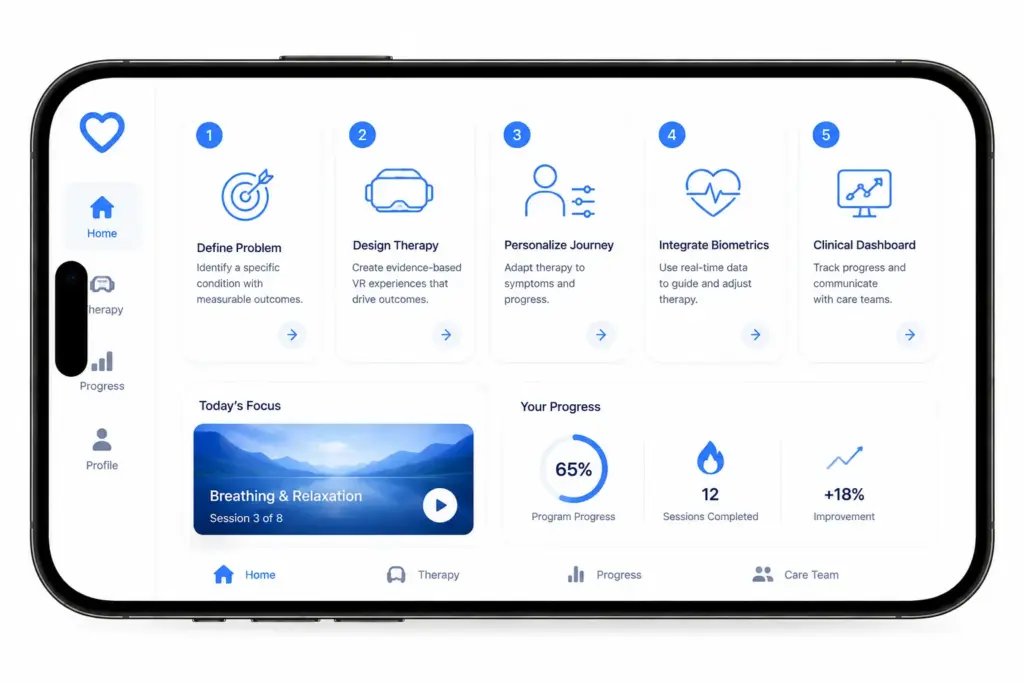
Start with a specific medical condition rather than a broad wellness idea. Look for a condition where patients face high treatment costs and traditional care still leaves clear gaps. The right opportunity should have a defined patient group and measurable outcomes such as lower pain scores or reduced medication use. It should also solve a problem that matters to health systems and insurers so the product has a clear path to adoption and reimbursement.
2. Design Evidence-Based VR Therapy
Software design in digital therapeutics must serve a clinical purpose. Every visual element, audio cue, and interactive motion should drive a therapeutic outcome. Incorporate proven frameworks like Cognitive Behavioral Therapy and acceptance therapy directly into the user experience.
| Design Element | Clinical Purpose | Product Implementation |
| Spatial Audio | Diverts neural focus | Calming 3D soundscapes tied to breath pace |
| Interactive Visuals | Reduces pain perception | Dynamic landscapes that react to user motion |
| Guided CBT Modules | Re-frames chronic distress | Structured daily reflection prompts |
3. Build Personalized Patient Journeys
Patients respond to digital therapy at different rates so the software should adapt to their progress. Start by assessing symptoms during onboarding and use that information to personalize the first sessions. As users build consistency, the platform can unlock more advanced techniques and adjust session difficulty. It can also offer calming exercises when distress levels rise to keep the experience supportive and relevant.
4. Integrate Biometrics and Feedback
Connecting hardware sensors to your platform transforms passive viewing into active biofeedback. Real-time biological data allows the software to adjust the experience dynamically. Critical biometric metrics include:
- Heart Rate Variability (HRV): Measures autonomic nervous system recovery during relaxation exercises.
- Respiration tracking: Monitors diaphragmatic breathing patterns to guide biofeedback games.
- Gaze and motion tracking: Tracks active attention and physical movement capabilities.
5. Create Clinical Dashboards
Physicians need a clear view of how patients are responding to digital treatment. A web-based dashboard can integrate treatment completion data and symptom trends and connect to existing EHR systems via HL7 FHIR. Automated alerts can also highlight missed sessions or worsening symptoms, so care teams can step in before a patient disengages.
6. Validate Safety and Efficacy
Before seeking regulatory clearance, run pilot studies to collect preliminary clinical data. Validate both the therapeutic impact and the user experience.
- User adherence testing: Ensure patients complete multi-week programs without platform fatigue.
- Safety monitoring: Track potential side effects like motion sickness or visual strain.
- Randomized pilot trials: Gather baseline comparative data against standard care options.
7. Prepare for Approval and Scale
Moving from a prototype to a commercial medical device requires compliance to be built into development from the start. A strong QMS aligned with ISO 13485 and IEC 62304 can support safer software development. Teams also need to protect patient data through measures such as HIPAA compliance and SOC 2. Choosing the right FDA pathway, such as 510(k) or De Novo, is another important step toward enterprise adoption and reimbursement.
Cost to Develop a Digital Therapeutic Like AppliedVR
Determining the capital required to build a digital therapeutic requires looking at both software engineering and clinical validation expenses. Published estimates vary widely because building an initial software prototype costs significantly less than securing formal FDA clearance.
Cost of Building an AppliedVR-Like Platform
The cost of building an AppliedVR-like platform depends on the level of clinical complexity and the technology involved. A basic prototype will cost less than a fully validated medical platform with VR experiences, patient monitoring, EHR integration, and regulatory support. The table below gives a practical estimate across the major development stages.
| Development Component | Estimated Cost |
| Product Discovery & Clinical Strategy | $10,000–$25,000 |
| UX/UI and Therapeutic Experience | $15,000–$30,000 |
| VR Application Development | $40,000–$100,000+ |
| Backend & Clinician Dashboard | $25,000–$60,000 |
| Healthcare Integrations | $15,000–$50,000+ |
| Security & Compliance | $15,000–$40,000+ |
| AI & Personalization | $20,000–$60,000+ |
| Clinical Validation | $30,000–$100,000+ |
| Regulatory Preparation | $20,000–$75,000+ |
| Estimated Total | $190,000–$540,000+ |
VR Development and Clinical Validation Costs
Building high-performance virtual reality software requires specialized engineering talent to ensure smooth 3D rendering and prevent motion sickness. Developing the core VR software application, 3D interactive environments, and real-time biofeedback integrations typically requires between $40,000 and $100,000 depending on content complexity.
Clinical validation represents a distinct expense that scales with the rigor of your medical claims. Running pilot feasibility studies and randomized controlled trials to prove efficacy requires $30,000 to $100,000 or more, depending on patient sample sizes and clinical site fees.
Building a Regulatory-Ready DTx
Securing medical-grade status requires dedicated investments in legal, compliance, and backend architecture:
- HIPAA and cybersecurity compliance: Building encrypted data pipelines, audit logs, and SOC 2 frameworks costs $15,000 to $40,000.
- EHR system integrations: Connecting the platform to hospital records via HL7 FHIR standards requires $15,000 to $50,000.
- Regulatory filings: Preparing FDA De Novo or 510(k) submissions with specialized regulatory consultants costs $20,000 to $75,000.
How Can Real-World Evidence Improve DTx Market Access?
Real-world evidence captures how patients interact with digital therapeutics outside structured clinical trial environments. While randomized controlled trials prove initial safety and efficacy to regulators, RWE demonstrates actual value to payers, health systems, and clinicians.
Collecting longitudinal data on real-world adherence, health outcomes, and cost savings allows platform operators to secure ongoing reimbursement and unlock enterprise expansion pathways.
1. Strengthen Payer Discussions
Payers want clear proof that covering a digital therapeutic lowers total cost of care. Clinical trial data shows potential, but RWE proves actual economic returns across diverse patient populations. For example, Pear Therapeutics developed reSET, a digital therapeutic for substance use disorder that generated over $12 million in annual revenue.
Their real-world studies tracked over 3,000 users, demonstrating an 82% retention rate in outpatient therapy programs and showing measurable reductions in emergency room visits and inpatient hospitalizations. Using real-world health economics data shifts reimbursement discussions from speculative proposals to outcome-based contracts:
- Sustained coverage: Demonstrating lower medical claim costs keeps your software on covered insurance formularies.
- Value-based pricing: Negotiate higher reimbursement rates by tying pricing directly to verified patient health improvements.
- Faster contracting: Commercial health plans sign enterprise contracts faster when presented with peer-reviewed real-world outcomes.
2. Clinical Credibility
Physicians rarely prescribe new software tools without seeing consistent, long-term patient results. Real-world data proves that patients actually stick to the software regimen at home. Consider Kaia Health, a digital therapeutic platform for musculoskeletal pain that has achieved over $30 million in estimated annual revenue and raised $123 million in capital.
Their published real-world evidence analyzed thousands of active users, proving that camera-based biofeedback reduced user pain scores by 33% while driving an 80% reduction in inpatient medical costs compared to traditional physical therapy care.
| Clinical Evidence Metric | Randomized Clinical Trial (RCT) | Real-World Evidence (RWE) |
| Patient Population | Highly filtered, ideal candidates | Diverse, real-world patient cohorts |
| Adherence Rates | Enforced by clinical trial staff | Measures natural home software usage |
| Economic Impact | Modeled projections | Verified claims data and hospital savings |
3. Expanding Into New Patient Populations
Real-world data reveals unexpected usage patterns, high-performing patient demographics, and adjacent clinical opportunities. Analyzing continuous user engagement metrics helps developers optimize product features and capture new market segments:
- Indication expansion: Identify off-label clinical benefits in real-world cohorts to inform future regulatory filings.
- Product refinement: Modify software UX based on how specific demographic groups interact with daily therapy sessions.
- Employer market penetration: Leverage real-world employee productivity data to win self-insured enterprise accounts.
Build a Digital Therapeutic with IdeaUsher
IdeaUsher helps healthcare innovators turn clinical ideas into software-driven medical interventions. Bringing a digital therapeutic to market requires more than standard mobile development. It demands medical-grade security, evidence-focused user experiences, and flawless technical execution.
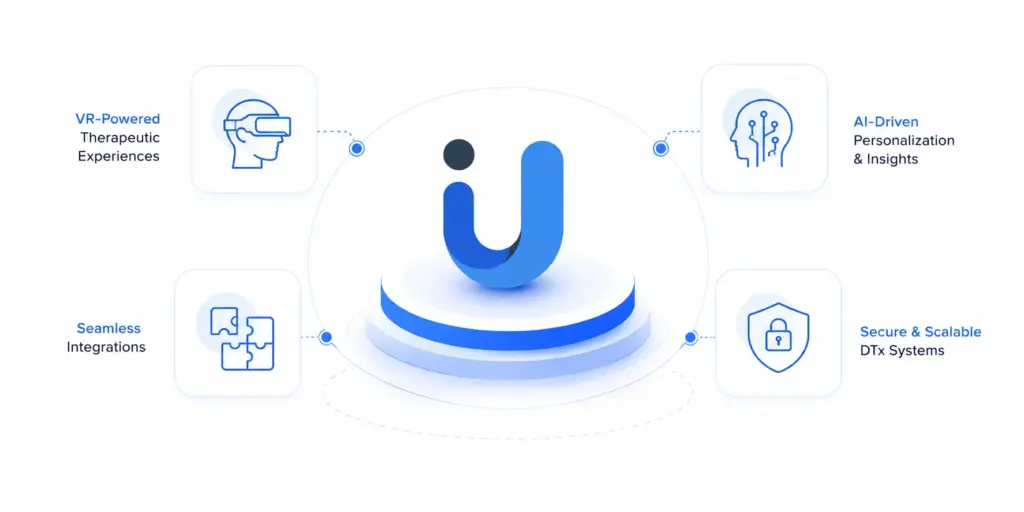
With over 500,000 hours of coding experience, our team of ex-MAANG/FAANG developers engineers scalable digital therapeutic platforms that meet strict healthcare standards. We handle the full product life cycle so you can focus on clinical validation and business growth.
From Concept to Scalable DTx
Our development approach focuses on turning treatment protocols into practical software that can scale beyond the prototype stage. We prioritize a simple patient experience so users can stay engaged through longer therapy programs. The platform is also built with secure cloud infrastructure and outcome tracking so teams can monitor progress and generate useful data for clinical studies and payer reporting.
Combine VR, AI, and Integrations
Modern digital therapeutics use immersive hardware and smart analytics to increase patient compliance and improve therapeutic outcomes. IdeaUsher integrates advanced technology modules into custom software architectures:
| Technology Focus | Core Capability | Platform Value |
| Virtual Reality (VR) | 3D visual environments & spatial audio | Delivers immersive CBT and pain distraction |
| Artificial Intelligence | Adaptive personalization engines | Adjusts therapy intensity based on user progress |
| EHR Interoperability | HL7 FHIR API integrations | Syncs patient progress directly to hospital systems |
Secure DTx Systems Ready for Growth
Regulatory approval and market access depend on robust cybersecurity, medical compliance, and data privacy frameworks.
Our engineering team bakes regulatory requirements directly into your codebase:
- Regulatory compliance standards: Platform architectures engineered to meet HIPAA, GDPR, and FDA guidelines.
- Enterprise security layers: End-to-end AES-256 encryption, role-based access controls, and complete audit logging.
- Interoperable APIs: Secure integration points for remote biofeedback sensors, wearables, and clinical dashboards.
Conclusion
A successful digital therapeutic like AppliedVR needs to balance immersive experiences with clinical effectiveness and real-world patient needs. The product must support a clear clinical goal while meeting the expectations of patients, providers, and regulators. With the right technology strategy, clinical validation, and scalable architecture, founders can turn a treatment concept into a commercially viable digital therapeutic.
Things to Know About Digital Therapeutics
A1: A digital therapeutic uses software to help prevent or manage a medical condition. Unlike a general wellness app it is built around a specific therapeutic goal and supporting evidence. The key difference is that the product needs to show that its intervention can deliver a meaningful health outcome. For founders, this means the clinical objective should shape the product from the beginning.
A2: Some digital therapeutics are regulated as medical devices because of their intended medical purpose. The classification depends on what the software does and the claims made about it. This is why regulatory planning should happen before development gets too far. Getting this decision right early can help prevent costly product changes later.
A3: Not every digital health product requires FDA authorization. A product designed to treat or manage a medical condition may come under FDA oversight depending on its intended use and risk. The appropriate regulatory pathway should therefore be considered during product planning. A DTx should be planned around its regulatory pathway rather than treating compliance as a final step.
A4: There is no fixed price for developing a digital therapeutic. The cost depends on the product’s complexity and the level of clinical and regulatory work involved. A basic DTx will cost much less than a platform that includes VR therapy, AI, clinical dashboards and healthcare integrations. The biggest budget mistake is focusing only on software development and overlooking clinical validation.