

Key Takeaways
- Mental healthcare is evolving rapidly, with AI mental health patient simulation tools helping users practice difficult conversations through realistic interactions.
- Platforms like Sonia combine conversational AI, contextual memory, voice technology, and evidence-based therapy to deliver personalized emotional support.
- Building a successful platform requires LLMs, voice AI, adaptive scenarios, AI feedback, secure infrastructure, and healthcare compliance.
- These solutions improve clinical communication, emotional resilience, training outcomes, and scalable mental health support while reducing traditional care reliance.
- How Idea Usher can help businesses build AI-powered patient simulation platforms with advanced conversational AI, healthcare integrations, and scalable architecture.
Traditional AI mental health apps mainly respond to what users say. Today, a new generation of patient simulation tools is helping people prepare for difficult conversations before they happen. Instead of giving advice through a simple chat, these tools create realistic patient simulations where users can practice conversations in a safe environment. The AI reacts naturally to different responses, making every interaction feel more authentic and personal.
We’ve built numerous patient simulation tools that combine LLMs with advanced voice AI to create realistic patient interactions. As we have this expertise, we’ve put together this blog to walk you through the key steps involved in creating a patient simulation tool like Sonia. Let’s get started!
Market Potential for AI in Mental Health
According to Grand View Research, the global AI in mental health market was valued at USD 1.7 billion in 2025 and is expected to reach USD 9.1 billion by 2033, growing at a 23.3% CAGR. This rapid growth reflects the rising demand for AI-powered mental health platforms that provide accessible and scalable support. As healthcare providers, employers, and consumers increasingly adopt these solutions, subscription-based platforms are creating strong recurring revenue opportunities while making mental health care more widely available.
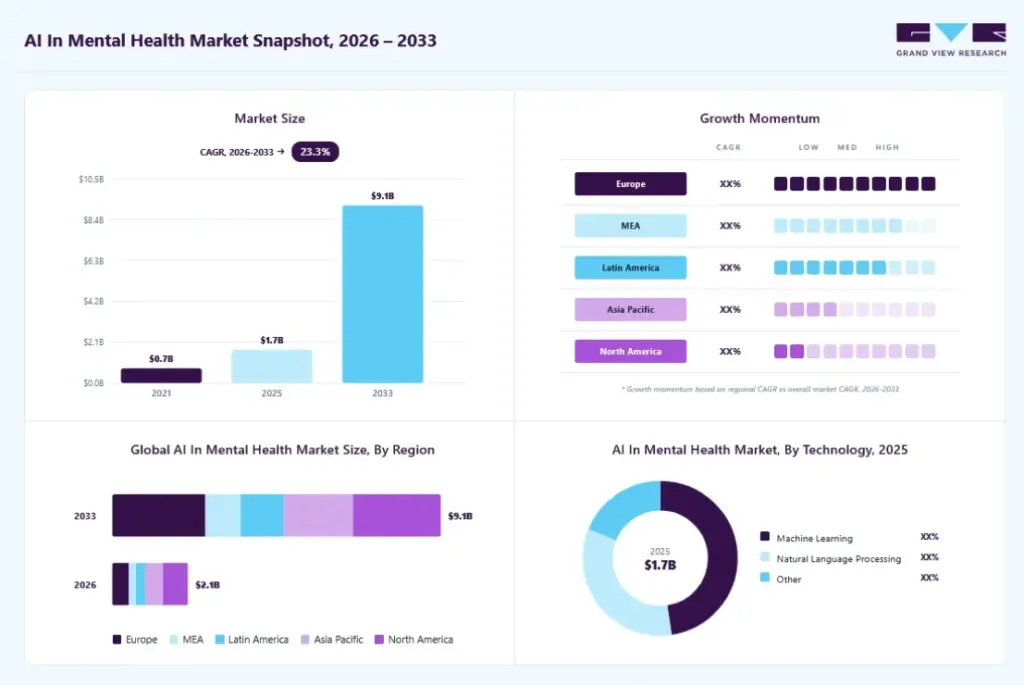
Source: Grand View Research
Look at Woebot Health, a conversational AI tool grounded in Cognitive Behavioral Therapy principles. By securing enterprise contracts with health plans, employers, and health systems, Woebot scaled its annual revenues toward $35 million after raising over $123 million in total funding.
Rising Demand
Demand for accessible mental health services continues to outpace the supply of licensed clinicians. This gap forces individuals and organizations to adopt automated software solutions that provide immediate support without waitlists.
Key market drivers include:
- 24/7 Accessibility: Users access immediate support during acute moments of distress instead of waiting weeks for an open therapy slot.
- Stigma Reduction: Conversational AI creates a safe, non-judgmental space for users reluctant to seek human therapy.
- Cost Efficiency: Health plans and employers reduce long-term medical claims by offering low-cost digital preventative care.
Another successful example is Wysa, an AI-guided mental health app using natural language processing to help users manage stress and anxiety. Wysa backed its software with an FDA Breakthrough Device designation and clinical studies, expanding across 65 countries to generate an estimated $23.9 million to $35 million in annual revenue.
Investor Confidence
Venture capital firms and strategic healthcare investors are actively deploying capital into AI mental health platforms that demonstrate strong user retention and clinical validity. Software platforms that combine evidence-based clinical frameworks with strict data privacy build defensible moats and attract multi-stage venture backing. Founders who build secure, multi-modal mental health tools stand to capture significant enterprise market share as digital health budgets shift toward AI-first solutions.
How Sonia Uses AI to Deliver Personalized Emotional Support?
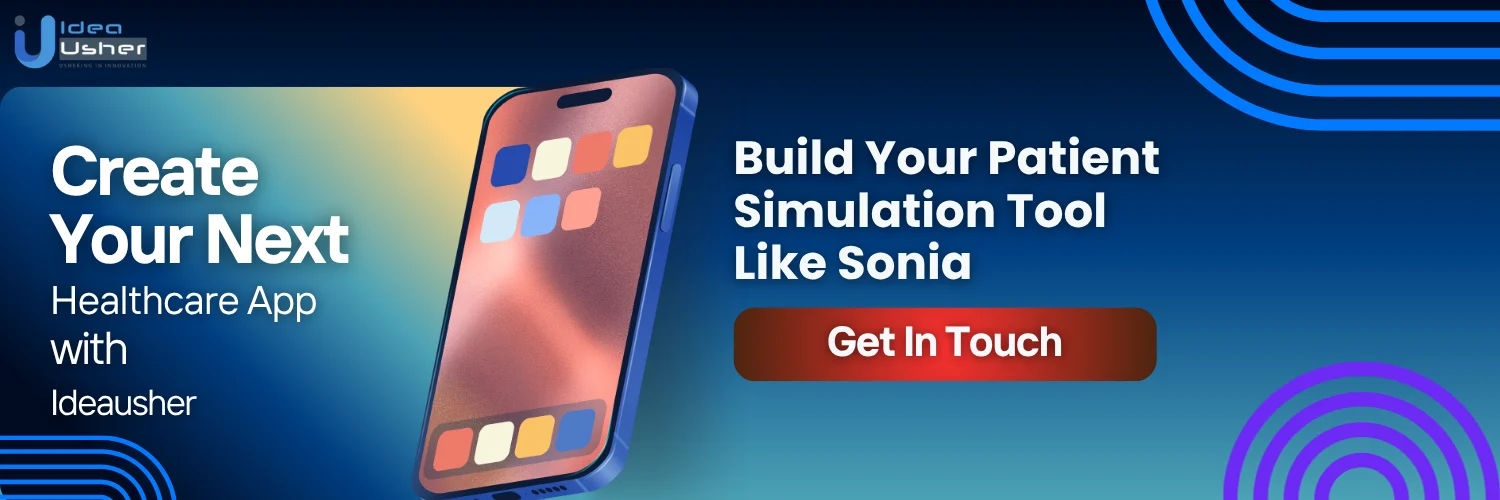
Sonia is an AI-powered mental health platform that provides instant emotional support through natural voice and text conversations. Built with guidance from researchers and clinical experts, it helps users manage challenges such as stress, anxiety, burnout, and other everyday mental health concerns. The platform is available 24/7, making professional-quality support more accessible whenever users need it.
The company has already raised over $3.4 million in seed funding and is estimated to generate around $2 million in annual revenue. Its growth highlights the rising demand for AI-driven mental health solutions that can expand access to care while supporting people between therapy sessions or when professional help is not immediately available.
1. Contextual AI
Sonia uses conversational AI to engage users in natural, human-like discussions through voice and text. Rather than providing scripted responses, it adapts conversations based on the user’s emotions, concerns, and previous interactions, creating a more personalized and continuous support experience.
- Flexible Modalities: Switch seamlessly between speaking aloud and typing depending on comfort and setting.
- Active Continuity: The system remembers past sessions, removing the need to repeat background context.
- Immediate Feedback: Real-time responses encourage users to process heavy emotions and reframe challenging situations.
2. Evidence-Based Care
The platform is built alongside psychologists, therapists, and mental health researchers, combining AI with evidence-based practices such as cognitive behavioral techniques, guided self-reflection, mindfulness, journaling, and meditation. This helps users navigate stress, anxiety, burnout, grief, relationships, and personal growth while complementing, professional mental healthcare.
Therapeutic Focus: Deliver practical coping tools that help users build resilience, organize complex thoughts, and turn daily reflection into actionable progress.
3. Personalized Privacy
Sonia delivers 24/7 emotional support by remembering user preferences, recognizing recurring themes, and generating tailored insights and support plans over time. The platform also prioritizes user trust through HIPAA-compliant security, privacy-first design, and proactive check-ins that encourage long-term emotional well-being.
- Tailored Support Plans: Generates custom action steps aligned with individual goals and progress.
- Pattern Recognition: Delivers weekly summaries that highlight recurring emotional triggers and growth areas.
- Safety Protocols: Intelligent monitoring detects high-risk situations and directs users to emergency clinical care.
The Science Behind Sonia’s AI Conversations
Building an AI platform for emotional support takes much more than adding a chatbot to an app. Users expect conversations that feel natural while following proven mental health frameworks that make the guidance safe and personalized. Sonia demonstrates how combining advanced AI with clinically informed design can create a platform that delivers meaningful support at scale while gaining strong early market traction.
Cognitive Behavioral Therapy Principles
Sonia structures its conversational flows around Cognitive Behavioral Therapy, a well-established psychological framework that links thoughts, feelings, and behaviors. Rather than delivering passive text or unverified advice, the system actively helps users reframe unhelpful cognitive distortions.
Core CBT mechanics built into the platform:
- Cognitive Restructuring: Guiding users to spot irrational thoughts and examine alternative perspectives.
- Guided Reflection: Asking targeted questions that prompt self-awareness during moments of high stress.
- Actionable Homework: Assigning micro-tasks between conversations to practice healthy coping strategies in real life.
This structured approach makes interactions predictable, safe, and clinically meaningful while operating entirely on demand.
Research-Backed AI for Emotional Wellbeing
Building an AI therapist is about more than creating realistic conversations. The platform must be clinically validated to ensure it is safe, trustworthy, and capable of delivering meaningful support. Sonia was developed with clinical psychologists and researchers, allowing its AI models to follow evidence-based therapeutic practices rather than relying only on advanced language models.
That clinical approach has produced encouraging results. In a randomized controlled trial involving 400 participants, Sonia users experienced measurable reductions in stress along with improvements in daily mood. These findings are supported by broader research showing that AI conversational tools based on CBT can significantly reduce symptoms of anxiety and depression, reinforcing the growing role of AI in mental healthcare.
Personalized Conversations
Static, script-based bots fail because users quickly spot the lack of depth. Sonia solves this by integrating large language models with persistent context memory and reflection tools.
- Contextual Memory: The platform retains past discussions to track ongoing emotional themes across weeks.
- Multi-Modal Toolkit: Combines voice and text therapy with integrated journaling and breathing exercises.
- Dynamic Adaptation: Adjusts tone and therapeutic techniques based on real-time sentiment analysis.
This combination enables deep personalized engagement that feels natural while maintaining strict boundaries around clinical safety.
Key Features of a Patient Simulation Tool Like Sonia
Building a successful patient simulation tool is about creating conversations that feel realistic and engaging. Sonia shows how natural voice and text interactions can make users feel comfortable and supported instead of talking to a scripted chatbot. By applying the same conversational approach to clinical training, developers can create virtual patients that respond naturally, encourage better communication, and help people build confidence through lifelike practice sessions.
1. AI Conversational Patient Interactions
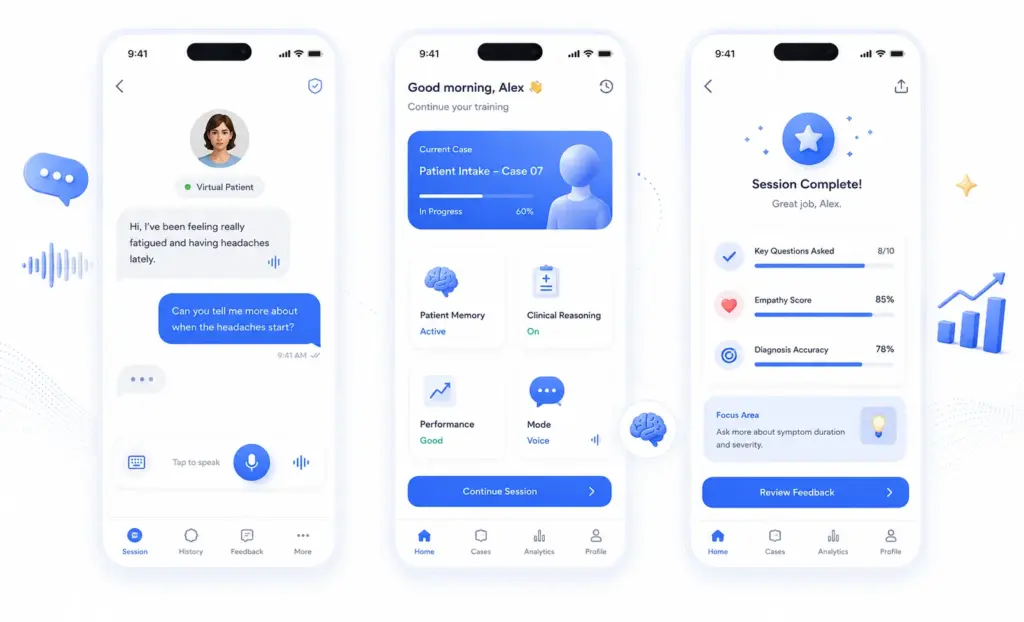
Users interact with Sonia by starting a voice call or typing directly into a chat window. The system listens, processes emotional cues, and responds without relying on pre-written scripts. When applying this to clinical training, users start a session and begin asking open-ended questions like they would during a physical patient intake:
- Natural Dialogue: Trainees speak or type questions naturally, while the AI adjusts its tone based on how questions are framed.
- Unscripted Responses: The virtual patient reveals symptoms only when the user asks the right diagnostic questions.
- Behavioral Realism: The platform simulates difficult patient behaviors, forcing trainees to de-escalate tension while gathering clinical data.
2. Personalized Patient Memory and Context
Sonia tracks user context across multiple days, eliminating the need for individuals to repeat their personal history during every interaction. Users simply jump back into the conversation where they left off. In a simulation platform, this persistent memory changes how clinical cases progress:
Session Continuity: Trainees can pause an intake session, order virtual lab tests, and return hours later to find the virtual patient referencing past conversations and newly available test results naturally. This eliminates repetitive setups and trains users on long-term patient care management.
3. Clinical Reasoning Engine
Users trust Sonia because its conversational responses are grounded in established Cognitive Behavioral Therapy frameworks designed by mental health professionals. Every interaction follows clinical logic. For a medical simulation tool, users experience this through verified medical databases:
- Validated Pathways: The platform matches patient responses against established clinical guidelines and diagnostic protocols.
- Dynamic Symptom Progression: Patient conditions improve or deteriorate logically based on the treatment decisions made by the trainee.
- Accurate Pathophysiology: The AI presents realistic secondary symptoms if the user asks probing questions about medical history.
4. Guided Reflection and Performance
After finishing a conversation on Sonia, users access guided journaling prompts and emotional reflection tools that help them process what they discussed. In a training setting, users complete a patient interview and immediately transition into an automated debrief:
- Missed Diagnostics: The system highlights essential clinical questions the user forgot to ask during the intake.
- Communication Metrics: Trainees see quantitative scores on empathy, bedside manner, and tone clarity.
- Differential Diagnosis Scoring: The platform compares the trainee’s proposed diagnosis against the ideal clinical outcome, providing clear steps for improvement.
5. Voice and Text-Based Conversations
Users access Sonia through two main modes: speaking directly into their microphone or typing messages in quiet environments. This flexibility keeps users engaged regardless of where they are located. Medical trainees utilize these same modalities depending on their training goals:
- Hands-Free Voice Mode: Trainees speak aloud to practice spoken bed-side communication, vocal pacing, and professional demeanor.
- Text Mode: Trainees type out clinical notes and queries during rapid-fire diagnostic exercises in busy environments.
- Seamless Switching: Users flip between speaking and typing without losing session momentum or resetting the case.
6. Personalized Learning Insights
Reviewing past performance helps users see how they’re improving over time instead of focusing on individual sessions. Sonia does this by highlighting recurring emotional patterns and tracking progress across conversations. In a patient simulation platform, the same idea can help trainees identify diagnostic weaknesses, improve clinical decision-making, and give instructors a simple way to measure competency across an entire cohort.
7. HIPAA-Compliant Simulation Environment
Sonia builds trust by protecting sensitive personal conversations with strong privacy protocols and secure encryption. Users rely on the app knowing their mental health data stays protected. For enterprise buyers, trainees, and institutions, the simulation environment is used with full data protection:
- Encrypted Data Flows: Trainee audio and text interactions remain encrypted during storage and transmission.
- Role-Based Access: Instructors review student performance reports while keeping individual platform interactions confidential.
- Audit Logs: Enterprise platforms track system access and data logs to ensure full compliance with healthcare training standards.
How to Create an AI Mental Health Patient Simulation Tool like Sonia?
Building an AI mental health patient simulation tool takes more than adding conversational AI. It should feel natural, respond like a real person, and create meaningful learning experiences. At IdeaUsher, we help businesses turn these ideas into scalable products by combining realistic AI conversations with thoughtful design and secure technology, creating platforms that users enjoy and organizations can confidently grow.
1. Defining the Right Use Case
Every successful platform begins with a clear purpose. At IdeaUsher, we work closely with clients to understand who the platform is for and what problems it should solve. Whether you’re building a training tool for therapists, a communication platform for healthcare professionals, or a mental wellness solution, we help shape the product around real user needs from the very beginning.
2. Create Realistic AI Patient Personas
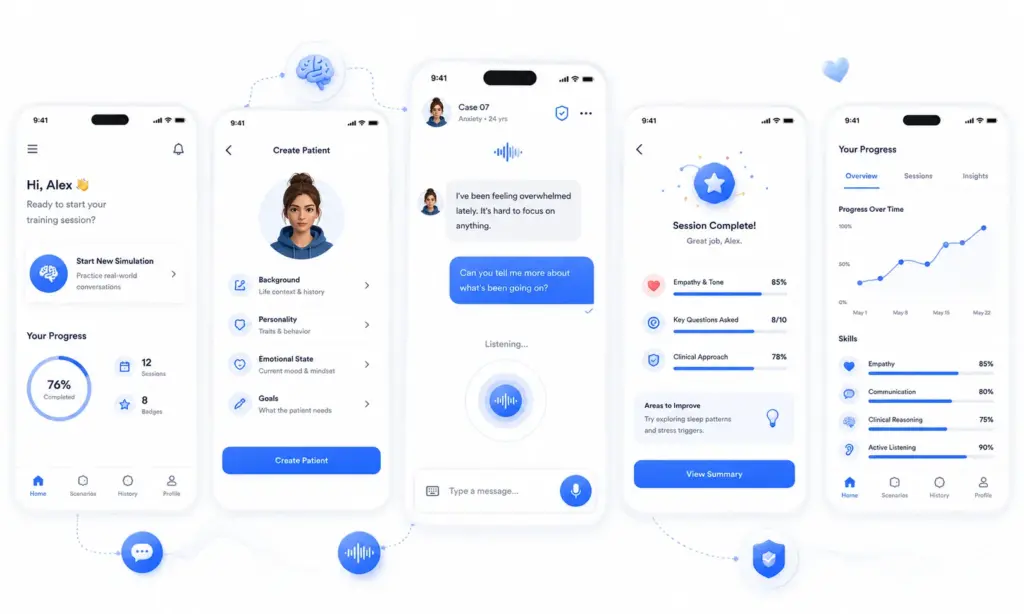
Our team designs virtual patients with unique personalities, emotional states, and life experiences so every interaction feels natural. Instead of scripted conversations, we build AI personas that respond differently based on what the user says, making each simulation more engaging and closer to a real clinical conversation.
3. Build Intelligent Conversational AI
We develop conversational AI that supports both voice and text interactions, allowing users to communicate naturally with virtual patients. By combining LLMs with contextual memory, we create AI that understands ongoing conversations and responds with empathy, making every simulation feel more realistic and immersive.
4. Evidence-Based Mental Health Practices
A great simulation platform should do more than generate responses. We build AI systems that incorporate proven mental health frameworks such as Cognitive Behavioral Therapy, guided reflection, and mindfulness techniques. This ensures conversations remain meaningful while helping learners practice effective communication in realistic scenarios.
5. Develop Dynamic Simulation Scenarios
Rather than creating fixed conversation flows, we build adaptive simulations where patient behavior changes based on each user’s decisions. This makes every session unique and helps learners develop stronger communication skills, emotional awareness, and clinical confidence through repeated practice.
6. Feedback and Performance Analytics
To turn every conversation into a learning opportunity, we integrate AI-powered feedback and analytics into the platform. Users receive insights into their communication style, empathy, and clinical reasoning, while educators and administrators can monitor progress through intuitive dashboards and detailed performance reports.
7. Security and Long-Term Growth
From the start, we design platforms with healthcare compliance, privacy, and scalability in mind. Our team implements secure architectures, AI safety guardrails, and enterprise-ready infrastructure so your patient simulation platform is prepared for real-world deployment and future expansion. By combining technical expertise with healthcare AI experience, we help businesses launch solutions that are both reliable and ready to grow.
Cost to Create a Patient Simulation Tool Like Sonia
The cost of building an AI patient simulation platform depends on its features, AI capabilities, and compliance requirements. We help founders prioritize the right functionality, plan development efficiently, and build a scalable product that supports long-term business growth while making the best use of their investment.
Estimated Development Cost
Building costs scale according to system capabilities, user capacity, and data integrations. We typically break development into clear tiers based on platform scope:
| Platform Tier | Scope & Features | Timeline | Estimated Cost |
| Basic MVP | Core text conversational AI, basic patient personas, simple feedback screen, standard user accounts. | 2–3 Months | $40,000 – $80,000 |
| Mid-Market | Low-latency voice AI, custom RAG pipelines, analytics dashboard, LMS integration, basic HIPAA protocols. | 4–6 Months | $80,000 – $150,000 |
| Enterprise | Adaptive multi-turn branching, EHR integration, custom AI guardrails, multi-tenant architecture, multi-language support. | 6+ Months | $200,000 – $350,000+ |
Factors Influencing Costs
Software budgets shift depending on technical choices made during early architecture phases. Key cost drivers we manage for our clients include:
- Conversational AI Architecture: Fine-tuning specialized open-source models costs differently than deploying commercial LLMs via APIs.
- Voice Speech Engines: Real-time speech-to-text and text-to-speech pipelines add API usage fees and require lower-latency tuning.
- Clinical Knowledge Bases: Structuring medical databases for Retrieval-Augmented Generation requires expert setup to prevent hallucinated diagnoses.
- Compliance and Security: Full HIPAA compliance, data encryption, and security audit readiness demand rigorous engineering overhead.
Cost Efficiency: We optimize backend prompt caching and database querying to slash ongoing operational cloud costs by up to 40% post-launch.
Reducing Costs Smartly
Launching a successful product does not require building every feature on day one. We help clients prioritize high-impact capabilities that validate market demand quickly:
- Launch a Targeted MVP: Start with core text or voice conversations across 5 to 10 essential clinical scenarios.
- Leverage Pre-Built Modules: We utilize our proprietary AI component libraries to fast-track foundational features like user auth and dashboards.
- Phase Third-Party Integrations: Roll out complex hospital EHR and university LMS connections after securing initial customer contracts.
- Iterate Based on Usage Data: Focus budget on features that active trainees use most based on real-world session analytics.
Popular Business Models for AI-Powered Tools like Sonia
Sonia and similar AI platforms monetize through flexible business models that serve both individual users and enterprises. Subscription plans provide recurring revenue while corporate wellness partnerships create additional growth opportunities. As these platforms expand, premium AI features and personalized experiences also become important sources of long-term revenue.
1. Freemium Subscriptions
The direct-to-consumer model relies on a freemium approach to convert casual app downloads into long-term subscribers. Users access core conversational features for free, while advanced features sit behind a recurring subscription paywall.
- Free Tier: Access to basic text-based conversations, daily check-ins, and standard mood logging.
- Premium Upgrades: Unlocks unlimited voice calls, personalized reflection insights, deep-dive CBT modules, and historical trend analysis.
- Pricing Structures: Standard consumer pricing typically runs between $9.99 and $19.99 per month or $60 to $100 annually.
Consider BetterHelp, which operates a direct-to-consumer therapy model. By monetizing subscriptions directly, the platform expanded its paid user base to hundreds of thousands of active subscribers, generating over $1 billion in annual revenue.
2. Enterprise Partnerships
B2B partnerships offer predictable, high-margin revenue by selling access to large organizations, employers, universities, and health insurance providers. Organizations cover platform access to reduce overall healthcare spend and support employee well-being.
Key sales channels include:
- Corporate Wellness Packages: Annual per-employee-per-month licensing fees paid by enterprise employers.
- University Campus Access: Bulk institutional contracts offering students automated, 24/7 mental health coverage.
- Payer Integration: Health insurance companies offering the software as a covered digital preventative benefit.
A prime example is Spring Health, a digital mental health platform built around enterprise care plans. By partnering directly with major employers and health plans, Spring Health scaled its market presence, pushing expected combined revenues toward $1 billion following major strategic acquisitions.
3. Value-Added Services
Beyond standard software subscriptions, platforms generate additional revenue by offering specialized digital programs, white-label software licenses, and value-added care modules. Offering targeted digital therapeutics for specific conditions like panic disorders, acute anxiety, or insomnia creates opportunities for higher per-user price points and clinical reimbursement.
Look at Woebot Health, which expanded from basic chat interactions into structured, specialized clinical solutions. By developing targeted therapeutic pathways and partnering with health systems, Woebot built a venture-backed enterprise model that has raised over $120 million in total funding.
Develop a Patient Simulation Tool with IdeaUsher
Building an AI patient simulation platform requires both technical expertise and a strong understanding of clinical workflows. We work with healthcare founders to design and develop scalable AI solutions that solve real training challenges, creating software that delivers long-term value for healthcare organizations.
Clinically Accurate Platforms
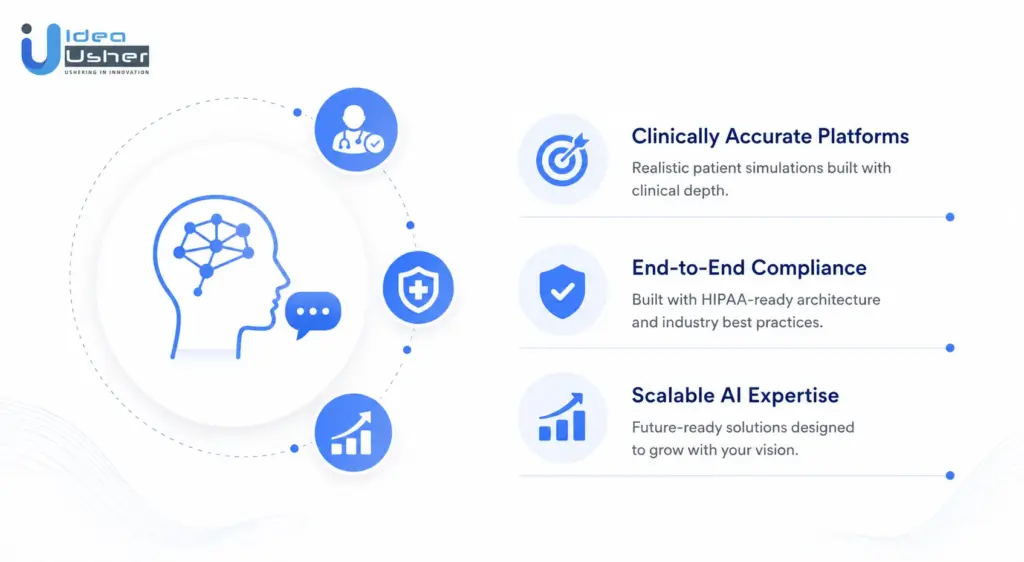
We develop custom patient simulation platforms that support natural voice conversations, branching clinical scenarios, and objective performance scoring. By combining state-of-the-art language models with low-latency voice engines, we help you launch software that feels truly realistic to trainees.
Key capabilities we build into your platform:
- Dynamic Conversational Engines: Realistic, unscripted voice and text interactions that respond to user questions in real time.
- Adaptive Patient Scenarios: Branching clinical paths where virtual patient conditions evolve based on diagnostic decisions.
- Automated Competency Assessments: Instant post-session feedback covering communication, bedside manner, and clinical accuracy.
This gives medical universities and hospital networks a reliable tool for scalable clinical training.
End-to-End Compliance
Building a healthcare platform involves much more than developing AI features. We handle everything from product design and AI development to security, compliance, and system integrations, ensuring your platform is ready for enterprise deployment. This allows you to focus on growing your business while we build software that meets healthcare industry standards.
Scalable AI Expertise
With over 500,000 hours of coding experience, our team of ex-MAANG/FAANG developers brings top-tier engineering talent directly to your project. We have built advanced healthcare solutions across AI diagnostics, clinical decision support, telehealth, and automated workflows for global enterprise clients.
Our engineering advantages include:
- Deep AI Mastery: Expertise in fine-tuning LLMs, building custom RAG pipelines, and reducing voice latency.
- Proven Track Record: Hundreds of thousands of development hours dedicated to high-security healthcare applications.
- Agile Scaling: A ready-to-deploy development team that accelerates your time to market while keeping costs predictable.
Conclusion
Creating a patient simulation platform like Sonia is about solving real healthcare training challenges with AI. The most successful platforms combine realistic patient conversations with secure technology and clinically informed design to create meaningful learning experiences. As healthcare institutions continue adopting AI-powered training, founders who build practical and scalable solutions will be well positioned for long-term growth.
Things to Know About AI Mental Health Tools
A1: An AI mental health tool is a digital platform that offers emotional support through natural conversations. Instead of waiting for an appointment, users can talk to the AI whenever they need help managing stress, anxiety, burnout, or everyday challenges. Many platforms also encourage healthy habits through features like journaling, mood tracking, and guided exercises. The goal is to make mental health support easier to access while encouraging users to seek professional care when needed.
A2: AI mental health platforms use advanced language models to understand what users are saying and respond in a thoughtful way. The conversation feels more like talking to a real person than interacting with a basic chatbot. Over time, the AI can remember previous discussions and tailor its responses to the user’s needs. This creates a more personal experience and helps users stay engaged with the platform.
A3: No. These tools are meant to support people between therapy sessions or provide guidance when professional help isn’t immediately available. They can help users reflect on their emotions, build healthier habits, and practice coping techniques. For serious mental health conditions or emergencies, support from a qualified mental health professional is still essential.
A4: A successful platform should make conversations feel natural and helpful. Users expect personalized responses, voice or text support, mood tracking, and simple tools like guided journaling or meditation. Strong privacy and security are equally important because people need to feel confident that their personal conversations are protected.