


Key Takeaways
- GLP-1 coaching platforms combine medication support, coaching, and guidance to improve weight-loss outcomes.
- Companies like DarioHealth show that behavioral support, nutrition planning, and health tracking drive better results.
- These platforms create business opportunities through subscriptions, enterprise partnerships, and patient engagement.
- Success depends on combining telehealth, monitoring tools, and personalized care in one platform.
- How Idea Usher can help businesses build GLP-1 coaching platforms with telehealth integrations, monitoring tools, coaching systems, and scalable infrastructure.
As more people seek effective and sustainable ways to manage their weight, the demand for guided support alongside medication has grown significantly. A lot of people have started using GLP-1 coaching platforms because they offer personalized guidance throughout the treatment journey rather than simply providing access to medication. Users receive support with building healthier habits, staying consistent with their plans, and navigating common challenges that can arise during treatment. This ongoing coaching helps improve engagement and makes it easier to achieve long-term health and weight management goals.
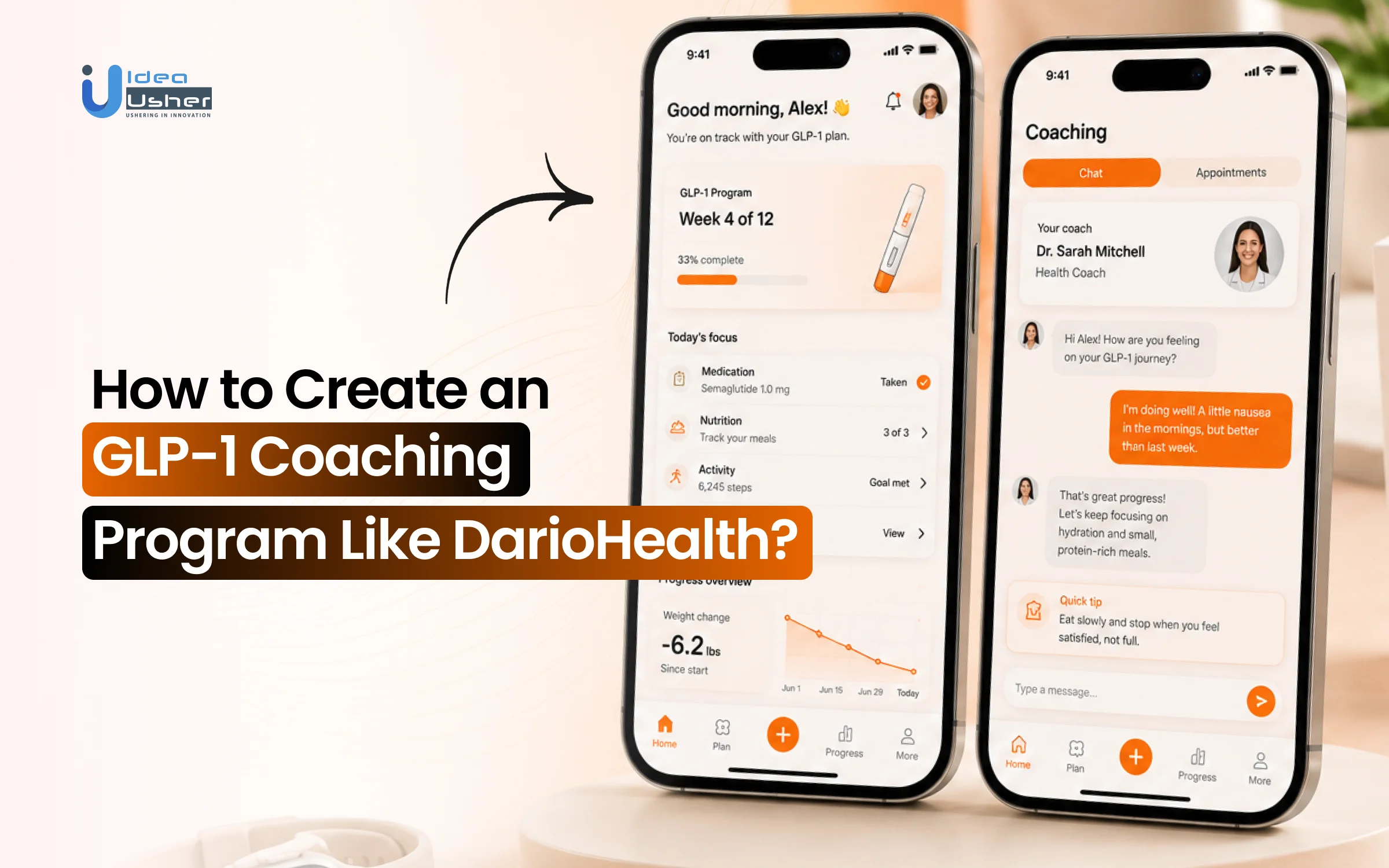
We’ve developed numerous GLP-1 coaching solutions that leverage telehealth integrations and behavior-change coaching systems to deliver personalized weight management experiences. Drawing on this expertise, we’re writing this blog to explore how to create a GLP-1 Coaching Program Platform like DarioHealth and the essential features needed to build a successful solution.
The Market Size Opportunity for GLP-1 Coaching Programs
According to Towards Healthcare, the global GLP-1 drugs market is projected to grow from US$ 52.95 billion in 2025 to over US$ 132.79 billion by 2035. This rapid growth signals more than rising demand for weight loss medications. It also highlights the need for better patient support throughout the treatment journey. Many users struggle to stay consistent with their medication plans or make the lifestyle changes needed for long-term success.

Source: Towards Healthcare
As a result, GLP-1 coaching platforms are becoming a valuable business opportunity, helping patients achieve better outcomes through personalized guidance, education, and ongoing engagement.
- Scalable Infrastructure: Digital onboarding, tracking, and communication tools.
- Recurring Revenue: Long-term patient retention via subscription models.
- Data Capitalization: Aggregating valuable insights on patient progress and adherence.
Companies that pivot early stand to capture massive revenue. For context, the digital health platform Ro launched its dedicated GLP-1 weight management business and rapidly accelerated its financial trajectory, reaching an estimated 598 million dollars in annualized revenue.
Why Medication Requires Ongoing Coaching
GLP-1 medications can deliver impressive weight-loss results, but long-term success depends on more than just taking the medication. Many patients need help adapting to new eating habits, managing side effects, and maintaining healthy routines throughout their treatment journey. Without proper support, staying consistent can become challenging, which may affect overall outcomes.
This growing need for ongoing guidance has created a strong opportunity for GLP-1 coaching platforms. The model has already shown commercial potential, with Noom reporting that its GLP-1 companion and medication programs reached a US$100 million annualized revenue run rate shortly after launch. As adoption continues to grow, platforms that combine coaching, tracking, and personalized support are well-positioned to capture a share of this expanding market.
Employers and Health Plans Drive Demand
The consumer market is massive, but the enterprise sector holds the most lucrative opportunities. Corporations and insurance providers face astronomical costs from covering these expensive medications. They are actively seeking structured coaching programs to protect their bottom line, improve employee outcomes, and control treatment costs.
This financial pressure drives strong B2B demand. By positioning your platform as a cost-containment tool, you shift from a standard wellness app to an essential corporate asset. The B2B model offers predictable revenue streams, massive user acquisition scale, and long-term contract stability that consumer-facing apps rarely achieve.

How DarioHealth Built Its GLP-1 Care Ecosystem?
DarioHealth has positioned itself as a strong example of how GLP-1 coaching platforms can go beyond medication management. The company combines prescription support, health tracking, and personalized coaching to help users stay engaged throughout their weight-loss journey. Its approach highlights an important industry trend: successful GLP-1 programs are not just focused on providing access to medication but also on delivering the ongoing guidance and behavioral support needed to achieve sustainable results.

Starting with Digital Diabetes Management
DarioHealth entered the market with a clear focus on hardware-enabled chronic care. The platform launched with a pocket-sized, connected glucose monitor that plugs directly into a smartphone. By pairing real-time blood sugar readings with automated logging and personalized coaching, the company built a highly engaging user experience. This narrow approach allowed them to gather massive data sets on consumer behavior and clinical adherence.
The initial business focused on direct-to-consumer sales, establishing a solid foundation of real-world validation. This focus on user-centric design proved that digital tools could drive sustained behavior change outside of a traditional doctor’s office.
- Smart Hardware: The pocket-sized meter transformed a clinical chore into a seamless digital habit.
- Immediate Feedback: Real-time data delivery allowed coaches to intervene when patients needed guidance most.
- Clinical Proof: Documented improvements in blood sugar levels established the proof for enterprise expansion.
Expanding into Cardiometabolic Care
Point solutions struggle to scale in a crowded healthcare market. Recognizing that diabetes rarely exists in isolation, DarioHealth executed a strategic pivot. The company expanded its clinical capabilities to cover hypertension, musculoskeletal health, and weight management. This expansion directly aligned with the surging demand for structured companion programs to support GLP-1 weight loss treatments.
To accelerate this transformation, the platform pursued aggressive consolidation. A major milestone was the acquisition of Twill, a leader in digital-led care and behavioral health navigation.
Building an Integrated Ecosystem
The modern enterprise buyer does not want to manage ten different health apps for their population. DarioHealth solved this vendor fatigue by combining coaching, remote monitoring, and behavioral therapy into a single user interface. This unified platform now manages multiple chronic conditions simultaneously, delivering a highly personalized member journey.
The financial metrics highlight the success of shifting from a consumer app to an enterprise software-as-a-service model. The business captured 22.4 million dollars in full-year revenue, backed by non-GAAP gross margins sustaining at a highly profitable 80% on their core B2B2C business.
How DarioHealth Uses Coaching and Behavioral Science to Improve Outcomes
One of the company’s biggest differentiators.
DarioHealth’s GLP-1 Behavior Change Model
DarioHealth’s GLP-1 coaching model is designed to support patients beyond medication alone. The platform combines physician-guided care with personalized coaching and health monitoring to help users build sustainable habits throughout their treatment journey. By bringing clinical support and lifestyle guidance into a single experience, DarioHealth aims to improve engagement, strengthen adherence, and help patients achieve better long-term weight management outcomes.
Coaching Alongside GLP-1 Treatment
Medication can suppress appetite, but it cannot teach a patient how to build a healthy relationship with food. DarioHealth addresses this gap by pairing clinical GLP-1 tracking with certified human coaches. This approach ensures that as a patient’s caloric intake drops, they receive immediate guidance on macronutrient balance. This focused coaching protects against muscle wasting, a frequent risk during rapid fat loss.
The platform relies on a curriculum that adapts to the physiological milestones of GLP-1 therapy. In the first few weeks, coaches focus heavily on mitigating side effects like nausea. Once the patient stabilizes, the focus shifts to strength preservation and sustainable daily movement habits.
- Targeted Nutrition Plans: Prioritizing protein intake and micro-nutrients to support body composition.
- Preservation of Lean Muscle: Structured resistance training routines designed to counteract medication-induced muscle loss.
- Proactive Symptom Management: Real-time dietary tweaks to help users manage gastrointestinal side effects.
Data-Driven Behavior Change
Data becomes actionable only when it influences daily decisions. DarioHealth leverages smart scales, continuous glucose monitors, and activity trackers to feed a central analytics engine. The software analyzes these data streams to detect patterns in user behavior. If a patient stops logging meals or shows erratic sleep patterns, the system alerts their coach to intervene before adherence breaks down entirely.
This proactive data loop keeps users highly engaged without requiring tedious manual data entry. By capturing biometric shifts instantly, the platform shifts behavioral healthcare from a reactive model to a predictive one. This seamless interaction drives high clinical adherence rates, providing a powerful performance metric that platform owners can pitch directly to enterprise buyers.
Care Beyond Medication Use
Data becomes actionable only when it influences daily decisions. DarioHealth leverages smart scales, continuous glucose monitors, and activity trackers to feed a central analytics engine. The software analyzes these data streams to detect patterns in user behavior. If a patient stops logging meals or shows erratic sleep patterns, the system alerts their coach to intervene before adherence breaks down entirely.
The platform visualizes these metrics for the user through the Dario Logbook, which acts as the central interface for all connected hardware. When a patient utilizes the Dario Smart Meter or syncs a continuous glucose monitor, data flows directly into an automated charting ecosystem. Users can track their daily nutritional footprint via an advanced Carb Counting Tool that automatically calculates nutritional values based on logged ingredients.
Key Features of a GLP-1 Coaching Program Like DarioHealth
DarioHealth has shown that a successful GLP-1 platform needs to be part of a patient’s daily routine. By combining coaching, health tracking, and personalized guidance in one place, the platform keeps users engaged throughout their treatment journey. This focus on continuous support not only improves the user experience but also helps patients stay committed to the lifestyle changes that drive long-term weight management success.
1. Coaching and Expert Guidance
A premium digital health platform must bridge the gap between clinical software and human care. The DarioHealth platform handles this by pairing automated tracking with dedicated clinical coaches who oversee the patient’s daily journey. Users log into the DarioHealth mobile application to access direct messaging channels with their assigned coach, building deep personal accountability.
- Direct Coach Messaging: Users engage in text-based consultations with certified health coaches to remove the isolation of medical weight loss.
- Clinical Triage: The DarioHealth coaching team flags unusual side effects early and alerts medical professionals before a user defaults or quits.
- Behavior Change Focus: Personalized interactions within DarioHealth target core identity shifts rather than simple caloric restriction.
2. Medication Adherence and Tracking
Missing doses or mismanaging the injection schedule can stall metabolic progress or induce severe gastrointestinal issues. DarioHealth addresses this vulnerability via an automated medication compliance dashboard inside its main interface. By interacting with proactive push alerts and visual tracking logs, DarioHealth users stay strictly aligned with their precise clinical escalation protocol.
DarioHealth Adherence Protocol: This tracking system creates clear data visualization for enterprise clients. DarioHealth proves exactly how a digital platform protects a multi-million dollar pharmaceutical investment through verified patient compliance.
3. Nutrition and Meal Guidance
GLP-1 medications alter digestion timelines and dramatically reduce appetite. This shift requires precise nutritional re-engineering to prevent malnourishment or severe lean tissue loss. Users interact with the DarioHealth digital food diary, using built-in macronutrient logging tools that highlight protein density and hydration levels.
The Strategic Design Focus Do not build a generic calorie counter. A successful GLP-1 companion app must mimic the DarioHealth approach, focusing specifically on dietary quality and micronutrient intake. Users need to know exactly how to maximize the nutritional value of smaller food portions.
By offering pre-built meal frameworks and immediate feedback on food logs, DarioHealth removes the cognitive load of dieting from an already overwhelmed patient population.
4. Activity and Fitness Monitoring
Rapid weight loss frequently results in significant muscle wasting if it is not accompanied by resistance training. The DarioHealth application pulls activity data directly from smartwatches and external fitness APIs to monitor daily energy expenditure. DarioHealth users view their synced physical metrics alongside customized workout recommendations that guide them toward structured strength training rather than endless cardio.
- Muscle Preservation Engine: DarioHealth workouts focus explicitly on progressive overload to maintain basal metabolic rate.
- Step-Count Syncing: DarioHealth pulls background movement data to encourage daily non-exercise physical activity.
- Biometric Calibration: The DarioHealth backend updates activity recommendations automatically as the user’s total body weight drops.
5. Real-Time Progress and Insights
Data points are meaningless to a user unless they are translated into actionable health trends. The DarioHealth dashboard synthesizes weight loss, glucose changes, and sleep patterns into a singular progress score. Users review their customized trend reports directly on their home screen, allowing them to comprehend their improvements without feeling overwhelmed by technical charts.
6. Multi-Condition Care Management
Building a platform limited entirely to obesity management restricts your long-term enterprise market share. DarioHealth excels by treating weight loss as a gateway to total cardiometabolic recovery. The DarioHealth system architecture allows a single user profile to manage blood pressure tracking, blood sugar metrics, and joint pain data simultaneously.
- Unified Care Experience: DarioHealth users manage diabetes, hypertension, and weight care under a single interface.
- Reduced Vendor Fatigue: Enterprise health buyers prefer contracting with one multi-condition app like DarioHealth over buying five separate niche tools.
- Higher Customer Lifetime Value: Members remain on the DarioHealth platform long-term because it adapts as their health needs evolve from weight loss to maintenance.
7. Behavior Change and Maintenance
The most profitable phase of a digital health app is the maintenance period after a user stops taking expensive medications. The DarioHealth interface shifts from clinical tracking to behavioral sustainability as a patient tapers down their drug dosage. Users rely on the cognitive behavioral modules inside DarioHealth to prevent the immediate weight rebound that occurs after stopping GLP-1 therapy.
The Investor ROI Blueprint True business value lies in building a platform that stays relevant after the medication ends. By proving your software can replicate DarioHealth’s ability to maintain weight loss without active chemical assistance, you create a highly disruptive product that enterprise payers will fund indefinitely.
How to Create a GLP-1 Coaching Program Like DarioHealth?
Launching a GLP-1 coaching platform requires careful planning across technology, compliance, and patient engagement. Users expect a seamless experience that combines healthcare services with personalized support, while businesses need a solution that can scale as demand grows. We specialize in building custom digital health platforms that bring these elements together, helping companies launch secure, user-friendly, and growth-ready healthcare products.
1. Target Audience and Care Model
Before writing a single line of code, you must finalize your commercialization pathway. Choosing between a direct-to-consumer model and an enterprise B2B framework completely changes how the backend architecture is built. If you target health plans and self-insured corporate employers, the application requires enterprise-grade security protocols and robust billing integrations.
- B2B Enterprise Model: Focuses on cost-containment metrics, deep clinical validation dashboards, and insurance reimbursement infrastructure.
- Direct-to-Consumer Model: Prioritizes frictionless cash-pay onboarding, community features, and retail subscriber engagement.
Our development team guides you through these architectural decisions early. We ensure your database design perfectly aligns with your chosen monetization strategy to prevent expensive technical restructuring down the road.
2. Structured Coaching Framework
The core value of your platform relies on its ability to drive permanent lifestyle modifications. Your software must deliver structured, evidence-based workflows covering behavioral modifications, targeted nutrition planning, and muscle preservation exercises. This structure requires a clean content delivery network capable of sending daily micro-learning modules directly to the user interface.
We build smart content engines that deliver automated, bite-sized lessons based on individual user progress. This approach allows a lean team of human coaches to manage thousands of active profiles simultaneously without losing care quality.
3. Medication Adherence System
Effective GLP-1 platforms help patients stay on track by supporting medication adherence and side-effect management throughout treatment. Features such as symptom tracking, dosing reminders, and personalized check-ins can improve engagement and create a safer user experience. Our team develops intelligent monitoring tools that help healthcare businesses deliver more proactive and data-driven patient support.
4. Personalized Health Journeys
A one-size-fits-all approach rarely works in GLP-1 care because every patient progresses differently throughout treatment. The most effective platforms adapt to individual needs by providing relevant insights, recommendations, and support based on each user’s health data and goals. We develop intelligent healthcare platforms that turn patient data into personalized experiences, helping businesses improve engagement while delivering more meaningful outcomes for users.
5. Virtual Care Collaboration
A secure communications layer is critical for connecting health coaches, registered dietitians, and prescribing physicians inside a unified space. The platform architecture must enable smooth clinical data sharing while maintaining strict compliance with healthcare data privacy laws. Coaches need instant access to provider notes, and medical teams must see behavioral logs clearly.
- Secure Telehealth Infrastructure: End-to-end encrypted video channels and asynchronous chat systems for patient-provider consultations.
- Role-Based Access Control: Technical data permissions ensuring that only authorized personnel can view sensitive medical charts.
We specialize in developing secure, compliant telecommunication frameworks. Our team handles the complex security integrations required to connect diverse clinical specialists under a single, cohesive user experience.
6. Progress and Outcome Monitoring
Enterprise health clients demand clear proof of real-world results before they renew expensive platform contracts. Your application must aggregate data from smart scales, continuous glucose monitors, and wearable activity trackers into a centralized clinical dashboard. This configuration allows administrators to export comprehensive, aggregated health outcome reports instantly.
- Hardware Agnostic Connectivity: Integrating seamlessly with Apple HealthKit, Google Fit, and major remote patient monitoring devices.
- Enterprise Reporting Panels: Clean web interfaces for corporate buyers to monitor the overall health return on investment of their workforce.
Our engineering team builds these multi-device syncing protocols and comprehensive data engines. We give your platform the power to prove its clinical value directly to major corporate stakeholders.
7. Post-GLP-1 Maintenance Program
Long-term success in the GLP-1 market depends on what happens after patients complete their medication journey. Platforms that continue to provide value through progress tracking, habit-building tools, and community support are more likely to retain users and strengthen customer loyalty. We help businesses design these long-term engagement strategies, creating digital health products that keep users connected and supported well beyond the initial treatment phase.
Cost to Develop a GLP-1 Coaching Program Like DarioHealth
Building a specialized GLP-1 coaching program requires balancing feature depth with budget constraints. The overall investment relies on the complexity of your security framework, integration depth, and UI scope. We build scalable, medical-grade applications that optimize your development budget while ensuring compliance with global healthcare data laws.
Cost Based on Complexity
The scope of your digital application sets your baseline financial investment. A simple minimum viable product helps you test market engagement quickly, while an enterprise-tier ecosystem supports massive patient populations. Our engineering team works with your product roadmap to map out these tiers. We specialize in building phased architectures so you can launch an essential product fast and add advanced layers seamlessly as your user base expands.
| Platform Tier | Estimated Budget Range | Key Included Capabilities |
| Minimum Viable Product | $45,000 to $75,000 | Basic text chat, manual meal logs, simple dose tracking |
| Mid-Tier Platform | $80,000 to $150,000 | Automated smart scale sync, custom meal plans, secure video |
| Enterprise Ecosystem | $160,000+ | Predictive analytics, provider EHR hooks, multi-condition care |
Features That Influence Budget
Certain software capabilities increase engineering hours due to security rules and algorithmic complexity. If you want to build an advanced platform like DarioHealth, specific modules require deep backend technical skills.
- Biometric Hardware Syncing: Pulling real-time data from continuous glucose monitors or Bluetooth scales demands secure API connections.
- Compliant Asynchronous Video: Integrating secure telehealth consulting channels requires medical-grade data encryption.
- Intelligent Symptom Triage: Building logic engines that flag medication side effects to clinical staff requires rigorous software validation.
Engineering Resource Distribution: We minimize your integration costs by using pre-tested, secure communication and tracking frameworks. This methodology saves your business hundreds of development hours while keeping your system robust.
Timeline and Development Team
Launching a secure medical weight loss solution requires a multidisciplinary product squad. Missing specific design or testing stages can create severe security flaws or lead to poor user reviews. A structured development process helps ensure the platform is secure, compliant, and ready to scale.
| Development Phase | Timeline | Description |
| Discovery & Compliance Architecture | Weeks 1–4 | Define requirements and establish security and compliance frameworks. |
| UI/UX Engineering & Front-End Prototypes | Weeks 5–10 | Design user-friendly interfaces and interactive prototypes. |
| Backend Development & API Integration | Weeks 11–20 | Build core features and integrate third-party systems. |
| Testing, Security Validation & Deployment | Weeks 21–24 | Test the platform and prepare for launch. |
Our Full-Stack Healthcare Squad
To complete this timeline successfully, we deploy a dedicated team containing a project manager, compliance engineer, UI designer, frontend mobile developer, backend architect, and a specialized healthcare software QA tester. By hiring our specialized team, you bypass the friction of managing separate freelance engineers. We provide a fully coordinated development squad focused on bringing your digital health solution to market smoothly and efficiently.
D2C vs Employer-Sponsored GLP-1 Coaching Business Models
Launching a competitive GLP-1 coaching program requires aligning your clinical infrastructure with a clear go-to-market strategy. Founders must decide whether to sell directly to individual consumers or target self-insured corporate employers. We build compliant, scalable backend systems designed to support either commercial pathway seamlessly.
Revenue and Acquisition Costs
Direct-to-consumer platforms scale rapidly through monthly subscriptions and bundled care packages. This channel faces high customer acquisition costs due to heavy digital ad competition. In contrast, enterprise B2B models rely on a per-member-per-month pricing structure, yielding stable, long-term contracts despite an extensive sales cycle.
- D2C Market Example: Ro leverages its direct-to-consumer Ro Body Program to capture retail demand, scaling its obesity management business to hit $598 million in annualized revenue.
- B2B Market Example: Omada Health relies on enterprise health plan partnerships for its GLP-1 Care Track, securing a large market footprint to project an annual revenue range of $322 million to $330 million.
Monetization Framework: Our development team engineers dual-mode billing architectures. We build secure checkout systems for retail subscriptions alongside automated eligibility verification lines required by major commercial payers.
User Engagement and Retention Strategies
D2C platforms thrive on brand loyalty and frictionless user experiences to keep retention numbers high. The software interface must feel intuitive, reducing the friction of logging daily habits. Employer-sponsored frameworks prioritize hard clinical metrics, macro-level adherence trends, and measurable population health outcomes to justify corporate spending.
- Consumer Retention Focus: Noom utilizes a consumer-first interface to drive app engagement, building its behavioral programs to hit a $100 million revenue run-rate for its combined prescription offerings within four months of launch.
- Enterprise Outcome Focus: Omada Health configures its platform to report aggregated workforce health metrics, proving that members successfully maintain weight stability a full year after stopping GLP-1 therapy.
Selecting the Right Model
Selecting the ideal framework depends entirely on your initial funding, compliance capabilities, and scaling speed. A hybrid model allows your business to capture cash flow from retail buyers while developing the advanced compliance features needed for corporate contracts.
| Business Metric | Direct-to-Consumer (D2C) | Employer-Sponsored (B2B) |
| Launch Velocity | Fast; minimal regulatory sales hurdles | Slow; requires strict vendor vetting |
| Data Requirements | Standard consumer privacy protections | Strict compliance and enterprise security |
| Revenue Stability | Vulnerable to month-to-month churn | Highly stable; predictable annual contracts |
Key Metrics Investors Look for in GLP-1 Digital Health Startups
The rapid evolution of medical weight loss has changed how venture capital views the digital health sector. Rather than simply funding tools that provide easy access to prescriptions, the market now prioritizes comprehensive virtual clinics that deliver structured lifestyle modification alongside medication. Capital flows directly to applications that can prove they drive real habit change and maintain user engagement over extended timelines.
1. Retention and Program Completion
Sustained usage is the foundational metric for evaluating business health. Because GLP-1 therapies require months of careful titration and long-term behavioral adjustments, high user dropout rates severely damage a platform’s financial viability. Venture firms look closely at weekly active app interactions and coaching session check-in metrics to gauge true user loyalty.
- Coaching Participation Rates: Monitoring how frequently a user opens the communication interface to message their designated nutritionist or health coach.
- Tapering Milestones: The percentage of patients who remain active on the software as they transition away from chemical treatments and into permanent maintenance programs.
Engagement Funnel Healthy Benchmark:
The health tech startup Robin Health recently secured a $2.2 million funding round specifically to scale its preventive, behavior-first obesity care framework. By providing continuous digital engagement between medical evaluations, the company proved to backers that software can successfully mitigate user drop-offs during complex chronic care journeys.
2. Clinical Outcomes and Weight Loss
A software platform cannot win corporate or venture backing purely on a sleek user interface. To secure enterprise distribution contracts, the application backend must collect, validate, and present clear biometric improvements across the entire user population.
- Average Total Weight Loss: Demonstrating a double-digit average body weight reduction across active subscribers over a six-month period.
- Metabolic Markers: Tracking down-trended blood pressure logs and stabilized blood sugar trends pulled directly from continuous monitoring integrations.
- Lean Mass Preservation: Leveraging connected smart scales to verify that users are burning fat rather than dropping dangerous amounts of skeletal muscle tissue.
Data Collection Flow:
The business necessity of proven clinical results is illustrated by Nourish, a metabolic health and nutrition clinic that closed a massive $100 million Series C funding round. Their model utilizes structured medical nutrition therapy to deliver validated health transformations, proving that measurable, clinician-led lifestyle outcomes drive major market investments.
3. Revenue Growth and Unit Economics
Long-term commercial viability comes down to balancing customer acquisition costs against the total lifetime financial value of a subscriber. Investors look past initial sales numbers to analyze the exact payback period required to recover software distribution expenses. Strong retention and recurring engagement are often the key drivers of sustainable profitability.
| Opertional Financial Metric | Ideal Startup Performance Profile |
| LTV to CAC Ratio | Greater than 3:1, showing efficient user acquisition frameworks |
| Gross Margin Target | 70% or higher, achieved by automating basic tracking tasks |
| Payback Period | Less than six months to recoup initial marketing and onboarding costs |
An excellent example of this economic balance is Ilant Health, which recently closed a $15 million Series A funding round to scale its value-based obesity management platform. By designing a system that lowers overall healthcare spending for self-insured employers through precise patient triaging, the company showed a highly scalable business model that perfectly aligns economic returns with high clinical outcomes.
The Role of Behavioral Health in Long-Term Business Sustainability
Behavioral health support plays an important role in the long-term success of GLP-1 programs. While medication can help users achieve significant weight-loss results, lasting outcomes often depend on building healthier habits and sustainable routines. We develop digital health solutions that combine behavioral support with medical care, helping businesses improve user engagement, retention, and overall treatment outcomes.

1. Improves GLP-1 Adherence
High user dropout rates represent a massive operational challenge for modern weight management applications. Patients frequently discontinue their injection schedules due to unmanaged gastrointestinal side effects or fluctuating personal motivation. The DarioHealth framework resolves this issue by integrating a dedicated Medication Cabinet interface alongside direct text-based communication lines to personal lifestyle coaches.
- Proactive Interventions: Personal wellness coaches review side effect data logs in real time to recommend quick dietary changes before a patient gives up on treatment.
- Titration Guidance: Interactive modules prepare users for regular adjustments in medication dosage to minimize physical discomfort.
- Habit-Building Routines: The platform offers structured mini-programs to help individuals discover deep personal motivators for weight loss.
DarioHealth Adherence Safeguard: By prioritizing continuous human care, the DarioHealth app drives high consumer loyalty, achieving an impressive 80% user retention rate and an average 4.9 out of 5-star rating across app platforms.
2. Integrating Mental and Lifestyle Support
Sustaining health transformations requires a unified software approach that connects physical metrics with mental well-being trackers. The DarioHealth application groups biometric tracking, nutritional logging, and stress management tools into one centralized interface. Users interact with specialized tools like a Grocery Scanner to make better dietary choices, and they sync data from continuous glucose monitors or smart scales directly into their personal progress log.
The Cross-Condition Advantage
A standalone weight app cannot scale efficiently in the modern enterprise market. DarioHealth succeeds by treating weight management as part of a broader, connected cardiometabolic ecosystem that links mental health support with diabetes and hypertension care.
DarioHealth Whole-Health Architecture: This integrated approach yields major improvements, helping active platform members secure an average 10% reduction in total Body Mass Index. This complete focus on overall wellness makes the platform highly attractive to corporate benefits buyers who want to manage multi-condition health risks through one simple interface.
3. More Sustainable Business
For digital health startups, embedding behavioral science into the user experience is a powerful economic strategy. Platforms that rely strictly on prescription delivery experience high customer churn once a patient finishes their medication cycle or pauses treatment. By shifting the focus toward long-term maintenance, a platform ensures users stay actively subscribed to track their lifestyle habits over an extended timeline.
| Business and Operational Metric | DarioHealth Documented Performance |
| Quarterly Revenue Volume | Generates roughly $5.58 million in sales per quarter |
| Gross Profit Margin | Operates at a strong trailing twelve-month gross margin of 61.1% |
| Medical Cost Reductions | Delivers an average $5,077 reduction in healthcare costs per user |
| Hospital Reduction Impact | Drives a significant 23.5% drop in patient hospitalizations |
Build a GLP-1 Coaching Platform with Idea Usher
The surging demand for medical weight management software requires a development partner who understands clinical workflow logic and robust engineering protocols. We build complete, enterprise-ready digital health platforms that scale seamlessly. Our team wraps behavioral science and remote telemetry around medication delivery networks to convert standard apps into highly profitable virtual clinics.

Long-Term Patient Success
We design custom GLP-1 platforms that look past the initial prescription phase to prioritize structural behavior modification. Our software architecture links human wellness coaching, medication adherence logs, and real-time biometric tracking into one clean interface. This comprehensive design approach ensures your users remain deeply engaged with the platform throughout their entire metabolic recovery journey.
- Frictionless Onboarding: Interactive questionnaires adapt dynamically based on patient health goals to personalize the home dashboard instantly.
- Adherence Portals: Integrated medication calendars track injection schedules and capture real-time side-effect data.
- Coaching Interfaces: Secure messaging lines connect users directly with clinical experts for instant dietary adjustments.
Idea Usher Engagement Strategy: By focusing heavily on habit validation and automated progress loops, your digital product drives superior clinical outcomes. This deep user engagement provides the exact performance data you need to secure highly lucrative enterprise distribution contracts.
Healthcare-Focused Development Expertise
Building a secure medical platform demands experienced engineering specialists who know how to protect sensitive patient records. With over 500,000 hours of coding experience, our team of ex-MAANG/FAANG developers brings elite software capabilities to your digital healthcare product. We construct resilient, scalable backend infrastructures prepared to navigate strict healthcare security audits from day one.
Our deep familiarity with healthcare architecture removes technical bottlenecks and accelerates your engineering timeline. You get a highly sophisticated mobile ecosystem built right the first time, saving your business from expensive future code revisions.
Scale With Custom Technology
Whether your business model targets individual retail consumers, self-insured corporate workforces, or large hospital systems, we engineer tailored code matching your precise go-to-market funnel. We build custom APIs that sync your mobile interface with third-party digital networks, allowing your platform to scale without operational friction.
- Telehealth Infrastructures: Secure, encrypted video consultation rooms and asynchronous chat systems for patient-provider meetings.
- EHR Interoperability: Clean backend channels that transfer behavioral charts directly into main hospital databases.
- Pharmacy API Integrations: Automated prescription fulfillment pipelines connecting medical teams straight to leading medication distributors.
Conclusion
The growing adoption of GLP-1 medications is creating new opportunities for digital health businesses. Success in this space depends on delivering ongoing support that helps users stay engaged and achieve sustainable outcomes. By combining personalized coaching, health tracking, and a user-friendly experience, businesses can build platforms that provide lasting value for both patients and healthcare organizations.
Things to Know About GLP-1 Coaching Platforms
Q1: Why are GLP-1 coaching platforms important?
A1: Many patients need support beyond medication alone. Coaching platforms help users build healthier habits, stay motivated, and navigate challenges throughout their weight-loss journey, which can improve overall outcomes. They bridge the gap between clinical care and everyday decision-making. This makes it easier for users to maintain consistent progress over time.
Q2: What features are included in a GLP-1 coaching platform?
A2: Common features include medication tracking, health monitoring, personalized coaching, nutrition guidance, telehealth consultations, and progress dashboards. These tools help users stay informed and consistent with their treatment plans. Many platforms also integrate wearable devices for real-time health tracking. Advanced solutions may include AI-driven recommendations and personalized insights.
Q3: How does coaching improve GLP-1 treatment success?
A3: Coaching provides accountability and personalized guidance that helps users make sustainable lifestyle changes. This support can make it easier to maintain progress and develop habits that last beyond the treatment period. Regular check-ins help users stay focused on their goals. Coaches can also provide practical strategies for overcoming common challenges.
Q4: Can GLP-1 coaching platforms support other health conditions?
A4: Yes. Many platforms expand beyond weight management to support diabetes, metabolic health, and other chronic conditions, creating a more comprehensive healthcare experience. This allows providers to serve a broader patient population. It also creates opportunities for long-term engagement across multiple health programs.


