


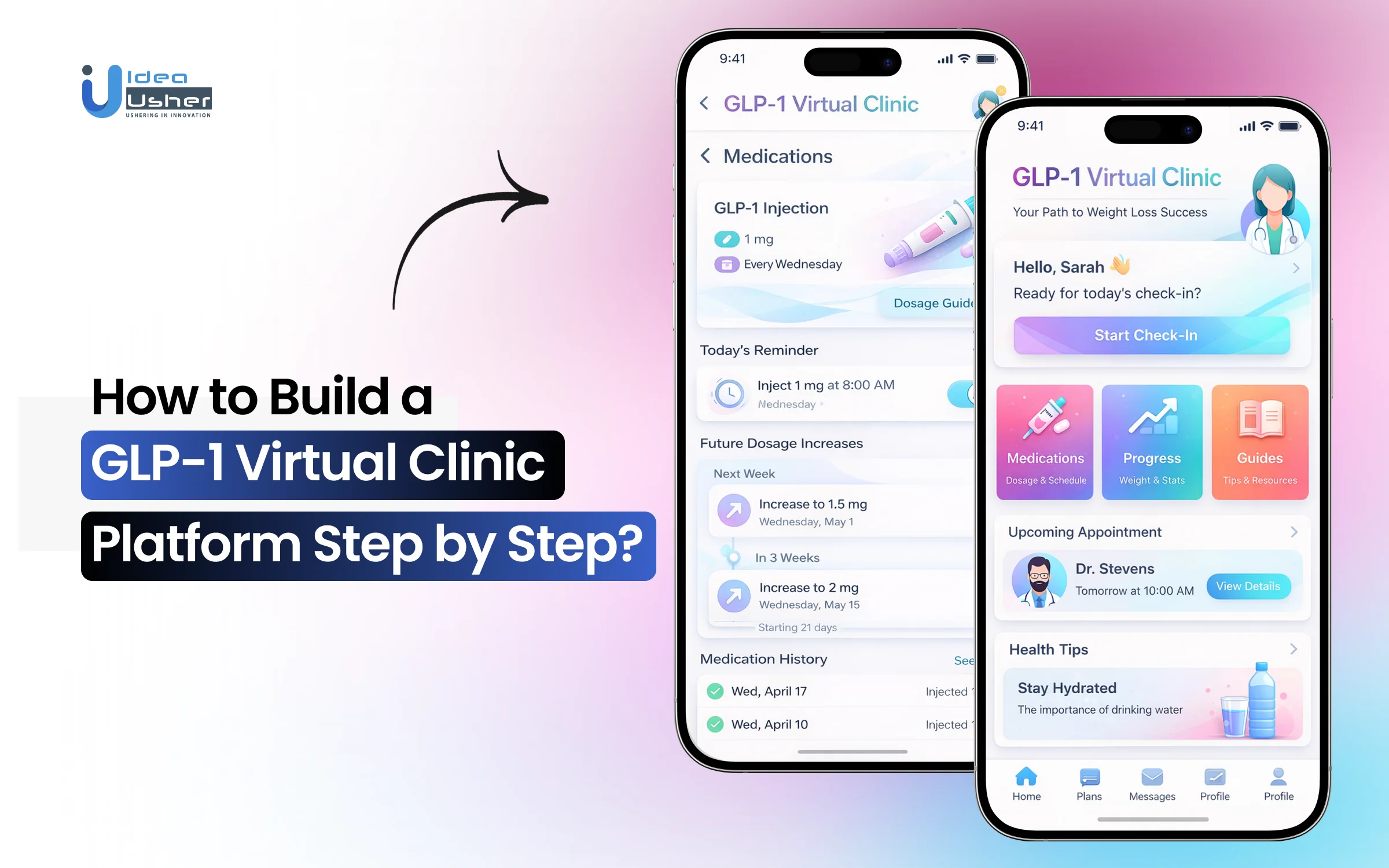
For many patients, the process can feel scattered rather than connected. They may visit one place for consults and another for prescriptions, which often breaks continuity. The popularity of GLP 1 virtual clinic platforms has started increasing because patients want faster access and more consistent care. These systems can bring screening treatment and follow-ups into one flow. They can also reduce delays in approvals and medication delivery. Providers may track progress more closely with integrated data.
Over the years, we’ve developed many digital weight management systems powered by secure telehealth infrastructure and interoperable EHR systems. As IdeaUsher has this expertise, we’re sharing this blog to discuss the steps to develop a GLP 1 virtual clinic platform.
Why GLP-1 Virtual Clinics Are Scaling Fast?
According to Transparency Market Research, the global GLP-1 analogues market size was valued at US$ 51.6 Bn in 2024 and is projected to reach US$ 211.8 Bn by 2035, expanding at a CAGR of 13.7% from 2025 to 2035. The market growth is driven by the increasing prevalence of type 2 diabetes and obesity, the rising aging population and lifestyle changes, and the ongoing development of new drug formulations.

Source: Transparency Market Research
Virtual clinics are the new entry point for weight loss. They bypass long wait times at doctor offices and provide immediate specialist access. Platforms like Ro have successfully scaled this model by combining high-speed digital consultations with reliable medication delivery.
These platforms use optimized supply chains to navigate shortages. AI tools also speed up insurance approvals for expensive treatments, ensuring patients receive their prescriptions without the usual administrative delays.
Shift to Clinical Care
The market has moved beyond basic wellness apps. Patients now seek medical oversight that integrates prescriptions with metabolic data. Form Health exemplifies this shift, utilizing ABOM-certified physicians and registered dietitians to provide clinical-grade obesity medicine virtually.
Modern clinics focus on “GLP-1 2.0” protocols. This involves tracking muscle mass and creating tapering plans for long-term weight maintenance, moving away from simple “pill-dispensing” toward holistic health management.
Investor Interest
Capital is shifting toward specialized metabolic networks. Investors are backing platforms that can scale globally and support upcoming oral GLP-1 pills. By acquiring smaller international players, leaders in the space are building massive, borderless care delivery systems.
Data is the primary value driver. Clinics using predictive analytics to personalize treatment molecules are seeing the highest 2026 valuations. These ecosystems provide a goldmine of real-world evidence for pharmaceutical research and long-term metabolic studies.

What Does a GLP-1 Virtual Clinic Platform Actually Do?
A GLP-1 virtual clinic platform is more than a digital pharmacy. It is a high-touch medical ecosystem designed to manage the complexities of metabolic health from a distance. By combining clinical oversight with seamless logistics, these platforms turn a fragmented healthcare experience into a unified journey.
The End-to-End Journey
The modern platform replaces the waiting room model with a continuous loop of care. Instead of visiting different offices for labs, consultations, and prescriptions, the patient uses a single point of truth.
The Workflow Breakdown:
- Screening: Interactive tools and BMI calculators qualify patients instantly.
- The Hub: A secure portal where patients view lab results and message their care team.
- Support: Automated reminders and tutorials are pushed to the patient based on their current dosage.
From Intake to Delivery
The journey uses a clinical-first architecture that automates the most frustrating parts of the healthcare process.
| Phase | Traditional Care | Virtual Clinic Platform |
| Intake | Paper forms and long waits. | Digital screening in 48 hours. |
| Lab Work | Physical clinic visit. | Home lab kits or mobile blood draws. |
| Cost | Brand names can cost $1,000 monthly. | Options often range from $250 to $500. |
| Delivery | Searching for local stock. | Direct to door cold chain shipping. |
Adherence and Retention
Success in GLP-1 therapy requires managing side effects before a patient quits. Asynchronous care via messaging and logging is the key to this persistence.
The Adherence Factor: Patients using remote monitoring platforms with weekly symptom checks show significantly higher medication adherence compared to standard care.
Why Async Works:
- Instant Triage: If a patient feels nauseous after an injection, they can message a coach immediately rather than waiting for an appointment.
- Dose Adjustments: Providers monitor log books in the background. They can adjust dosage protocols without a video call to keep the patient on track.
- Constant Support: Continuous access to a care team reduces the anxiety of managing a complex medication alone, leading to better long-term outcomes.
Core Features of a High-Performing GLP-1 Virtual Clinic Platform
Modern GLP-1 virtual clinic platforms are defined by their ability to blend medical rigor with high-speed automation. These six core features ensure the platform is scalable while maintaining the highest standards of patient safety and clinical outcomes.
1. Smart Intake and Risk Scoring
The platform begins with a digital front door that uses adaptive questionnaires to calculate BMI and screen for contraindications. Found uses this type of specialized intake to route patients toward the most appropriate clinical path based on their unique biology and history.
2. Video Consultations
Once screened, patients meet with licensed providers via secure video to confirm clinical suitability and discuss personalized dosing. WeightWatchers Clinic integrates these visits into its broader ecosystem, ensuring every prescription is backed by a face-to-face medical consultation.
3. Prior Auth Automation
To solve the biggest bottleneck in therapy, top platforms use AI-driven workflows to handle insurance paperwork. LifeMD excels in this area by providing dedicated insurance coverage assistance, using automated systems to populate templates and reduce approval wait times from weeks to hours.
4. Prescription Delivery Sync
Integrated logistics engines connect the clinic to licensed pharmacies to ensure a reliable medication supply. Ro has built a robust supply chain that manages cold-chain shipping and provides real-time tracking, ensuring patients receive injections directly to their door despite local shortages.
5. Remote Monitoring Engine
Platforms use connected devices, such as cellular smart scales, to transmit weight data automatically to a clinical dashboard. Calibrate utilizes these data-driven engines to track weight loss velocity and metabolic markers, triggering alerts for providers if a patient’s progress stalls.
6. Side-Effect Coaching
Because gastrointestinal issues are common, platforms include asynchronous modules for real-time symptom management. Noom Med integrates behavioral coaching with clinical care, allowing patients to log side effects like nausea and receive instant, guided advice on hydration and nutrition.
Must-Have Integrations for Clinical Reliability
To function as a true medical provider rather than a simple storefront, GLP-1 virtual clinic platforms must integrate with the broader healthcare infrastructure. These “digital pipes” ensure that data flows securely between doctors, pharmacies, and insurers, creating a reliable safety net for the patient.
1. EHR and EMR Systems
Electronic Health Record integrations are the backbone of clinical safety. By connecting to systems like Epic or Athenahealth, a platform allows providers to view a patient’s full medical history, including past diagnoses and potential contraindications.
The Precision Edge: Platforms like Form Health use integrated EMRs to ensure that every virtual visit is documented with the same rigor as an in-person hospital encounter, maintaining a single “source of truth” for the patient’s metabolic journey.
2. Pharmacy and e-Prescription APIs
Seamless medication access requires direct links to pharmacy networks. Using APIs from providers like Surescripts or DoseSpot, clinics can send prescriptions instantly to a patient’s local pharmacy or a specialized mail-order partner.
The Pharmacy Workflow:
- Real-time Checks: Automatically verify if a specific GLP-1 dose is in stock before sending the script.
- Direct Delivery: Ro uses proprietary pharmacy integrations to manage the complex “cold-chain” logistics needed to ship temperature-sensitive injectables.
- Automated Refills: Systems track when a patient is due for their next dose and trigger a renewal request to the doctor.
3. Insurance and Billing Systems
Because GLP-1 medications often cost over $1,000 per month without coverage, automated insurance verification is critical. Integration with clearinghouses allows the platform to check a patient’s formulary and “out-of-pocket” maximums in seconds.
| Integration Type | Key Function | Example Platform |
| Eligibility API | Verifies coverage before the first consult. | Sesame Care |
| Prior Auth (ePA) | Automates the “request for coverage” paperwork. | LifeMD |
| Revenue Cycle | Handles co-pays and HSA/FSA payments. | Tebra |
4. Wearables and Health Data Sync
The most advanced clinics don’t just wait for the next video call; they monitor patient progress in real time via Apple Health and Google Fit. This data provides a 360-degree view of how the medication is affecting the patient’s daily life.
- Activity Tracking: Monitoring steps and “active calories” to ensure the patient remains mobile.
- Vital Signs: Tracking resting heart rate via Fitbit to watch for common GLP-1 side effects.
- Weight Velocity: Calibrate uses smart scale integrations to automatically plot weight loss curves, alerting the clinical team if the pace of loss is too fast or has plateaued.
How to Build a GLP-1 Virtual Clinic Platform Step by Step?
Most founders underestimate the complexity of launching a compliant GLP-1 virtual clinic. A structured development roadmap reduces risk, accelerates time-to-market, and ensures regulatory readiness. When you partner with us at IdeaUsher, we transform this intricate process into a streamlined execution plan. We leverage our specialized engineering expertise to build highly engaging, compliant digital health ecosystems that attract long-term investment.
1. Discovery & Business Planning (Weeks 1–3)
Building a successful GLP-1 platform starts with a clear strategy before any development work begins. We help businesses identify the right market opportunity and create a platform that fits real patient needs and clinical operations. By planning key elements such as treatment workflows, medication management, and future scalability from the beginning, founders can avoid costly mistakes and launch a solution that is better positioned for long-term growth.
Key Objectives
- Define target patient demographics: Identify specific consumer segments like cash-pay professionals, enterprise wellness accounts, or patients seeking insurance reimbursement options.
- Analyze competitors like Ro, Found, Sequence, and Calibrate: Deconstruct the user acquisition strategies, pricing models, and clinical protocols of market leaders to isolate market gaps.
- Identify revenue streams: Establish monetization models across subscription fees, medication markups, lab coordination margins, and ancillary clinical coaching.
- Determine medication fulfillment strategy: Evaluate the trade-offs between partnering with traditional compounding pharmacies versus established standard wholesale distributors.
- Establish compliance requirements: Outline the baseline regional corporate practice of medicine (CPOM) constraints and multi-state medical board restrictions.
Deliverables
- Product roadmap: A comprehensive phased execution timeline mapping feature dependencies against technical milestones.
- Business model canvas: A structured framework detailing value propositions, cost structures, and key strategic partnerships.
- Regulatory assessment: A formal legal and operational brief defining corporate structures and state-by-state licensing pathways.
- Feature prioritization matrix: A core list segmenting the Minimum Viable Product (MVP) from subsequent phase-two feature deployments.
2. Compliance & Regulatory Strategy (Weeks 2–4)
Compliance is one of the most important factors in building a GLP-1 virtual clinic because it affects everything from patient trust to long-term business growth. We help businesses design platforms with security, privacy, and regulatory requirements in mind from the start so they can avoid costly changes later. By establishing the right foundation early, founders can focus on scaling their services with confidence while delivering a safe and reliable experience for patients.
Key Objectives
- HIPAA compliance planning: Architect a data infrastructure that guarantees end-to-end encryption for Protected Health Information (PHI) both at rest and in transit.
- State telehealth law review: Map out state-specific asynchronous versus synchronous consultation mandates to ensure absolute adherence to regional medical board rules.
- E-prescription workflow design: Outline secure digital prescription paths that comply with the Electronic Prescribing of Controlled Substances (EPCS) frameworks, where applicable.
- Patient consent management: Build dynamic, legally audited digital workflows to capture, log, and store informed consent for off-label prescriptions or compounded medications.
- Data security architecture: Define strict role-based access controls (RBAC) to isolate sensitive medical charts from standard administrative and billing data.
Deliverables
- Compliance framework: A comprehensive document detailing operational controls, data governance policies, and breach notification protocols.
- Risk assessment documentation: A proactive analysis pinpointing potential security vulnerabilities across internal networks and third-party API nodes.
- Legal workflow requirements: A technical specification detailing explicit operational parameters for clinical cross-state operations and CPOM compliance.
3. UI/UX Design & User Journeys (Weeks 4–6)
A well-designed GLP-1 platform should make the experience simple for both patients and providers. We focus on creating intuitive onboarding flows that reduce drop-offs while ensuring the right clinical information is collected. At the same time, efficient provider tools help clinicians manage patient care more quickly, allowing clinics to improve service quality and support a growing number of patients without increasing operational complexity.
Key Objectives
- Create patient onboarding flows: Engineer a frictionless digital intake process that gathers comprehensive medical histories without causing user drop-off.
- Design provider workflows: Optimize the clinician user interface to minimize cognitive load, allowing doctors to review charts and issue prescriptions efficiently.
- Optimize conversion funnels: Refine checkout, lab scheduling, and subscription sign-ups to minimize friction points for high-intent traffic.
- Improve treatment adherence experiences: Design intuitive, rewarding interfaces for long-term weight tracking, injection reminders, and symptom reporting.
Deliverables
- Wireframes: High-fidelity architectural blueprints outlining the structural layout and content hierarchy across all device form factors.
- Interactive prototypes: Clickable, high-fidelity mockups built to simulate and evaluate the end-to-end user experience prior to core engineering.
- Design system: A unified component library comprising reusable UI elements, typography styles, and accessibility standards.
- User journey maps: Detailed visual timelines tracking emotional touchpoints, operational hurdles, and system interactions for both patients and providers.
4. Core Patient Platform Engineering (Weeks 10–14)
A strong technical foundation is essential for any GLP-1 platform because patients often remain in treatment for months. We help businesses build scalable systems that can support long-term care while maintaining security and performance. To keep users engaged throughout their journey, features like virtual pet companions can be added to reward healthy habits and treatment consistency, helping improve retention and overall patient participation.
Key Objectives
- Patient registration: Build a secure authentication layer leveraging multi-factor authentication (MFA) and biometric login options.
- Health assessments: Deploy dynamic digital intake forms capable of validating complex patient health profiles in real time.
- Appointment scheduling: Integrate flexible, real-time booking engines that synchronize seamlessly with provider calendars across multiple time zones.
- Medication tracking: Create a visual dashboard for monitoring dosage escalation schedules, injection dates, and remaining refills.
- Progress monitoring: Develop interactive modules for recording weight trends, biometric changes, and patient-reported outcomes over time.
Deliverables
- Web portal: A secure, fully responsive web application optimized for desktop and mobile web experiences.
- Mobile applications: Native iOS and Android applications built to handle continuous patient engagement and secure push notifications.
- Patient dashboard: A personalized central hub housing clinical documents, upcoming appointments, and direct secure messaging channels.
5. Provider & Care Team Portals (Weeks 12–16)
A well-designed provider portal can make a significant difference in the efficiency of a GLP-1 clinic. We help businesses create tools that allow clinicians to review patient information quickly and spend more time delivering care instead of handling repetitive administrative work. This improves productivity, supports faster patient onboarding, and makes it easier for clinics to scale their operations as demand grows.
Key Objectives
- Clinical dashboards: Construct a high-throughput workspace that highlights critical patient updates and pending actions.
- Prescription workflows: Integrate direct, secure connections to digital networks for fast routing of new orders and renewals.
- Patient management systems: Build comprehensive search, filter, and tagging tools to group and manage patient populations by clinical status.
- Documentation tools: Implement structured clinical note templates that allow providers to document consultations quickly and accurately.
Deliverables
- Provider portal: A dedicated, secure web workspace optimized for efficient clinical chart reviews and fast approvals.
- Admin dashboard: A high-level operational command center for tracking platform metrics, clinical response times, and billing cycles.
- Care coordination platform: A collaborative internal hub allowing physicians, nurses, and health coaches to securely coordinate patient care.
6. Pharmacy, Telehealth & Lab Integrations (Weeks 14–18)
Building every healthcare component from scratch can increase costs and delay launch timelines. We help businesses accelerate development by integrating trusted healthcare services and third-party systems into their platform. This creates a smoother patient experience, reduces administrative work, and allows clinics to automate important parts of the care journey while getting to market much faster.
Key Objectives
- Video consultations: Integrate HIPAA-compliant WebRTC video infrastructure for states requiring live, synchronous clinical appointments.
- E-prescribing: Connect directly with national electronic prescription networks to transmit orders straight to partner fulfillment centers.
- Lab ordering: Integrate with national diagnostic networks to automate lab testing workflows from order creation to results retrieval.
- Pharmacy integrations: Build real-time API links with specialized mail-order pharmacies to automate order fulfillment and cold-chain shipping updates.
Deliverables
- Telemedicine infrastructure: A secure, low-latency video and messaging system built into the web and mobile applications.
- Medication fulfillment workflows: Automated data pipelines that route approved prescriptions to designated pharmacies based on cost and inventory.
- Clinical data integrations: Secure API layers that automatically pull diagnostic lab results directly into the patient’s medical record.
7. AI, Automation & Retention Engines (Weeks 18–24)
While GLP-1 medications can deliver strong results, keeping patients engaged throughout their treatment journey remains a major challenge. We help businesses improve long-term retention through automated engagement tools and interactive features such as virtual pet companions that encourage consistent participation. This allows clinics to deliver a more personalized experience at scale while reducing the need for extensive manual follow-up.
Key Objectives
- AI intake assistants: Deploy intelligent chat interfaces to help patients complete intake forms and answer basic, non-clinical program questions.
- Automated follow-ups: Build event-driven messaging tracks to check in on patient symptoms and track adherence at key points in the treatment cycle.
- Intelligent reminders: Set up automated push notifications and SMS alerts for weekly injection dates, upcoming appointments, and lab re-orders.
- Adherence prediction models: Implement basic data models to identify patients showing patterns that suggest a high risk of dropping out of the program.
Deliverables
- AI chatbot: A secure, highly restricted conversational interface capable of answering common FAQs and collecting basic customer service requests.
- Automation engine: A centralized rules engine that triggers targeted messaging tracks based on real-time patient behavior and milestones.
- Engagement workflows: A comprehensive map of automated communication paths designed to keep patients engaged throughout their multi-month care journey.
8. QA, Compliance Audits & Launch
Testing and optimization are critical before launching a GLP-1 virtual clinic platform. We help businesses ensure their systems are reliable, secure, and ready for real-world demand by thoroughly testing performance and scalability. This reduces the risk of operational issues after launch and provides a smoother experience for both patients and care teams as the platform grows.
Key Objectives
- Security testing: Run comprehensive external penetration testing and vulnerability scans to ensure the platform is secure against data breaches.
- Compliance audits: Conduct a thorough, independent review of all systems to verify complete alignment with HIPAA and state privacy laws.
- Beta launch: Execute a highly controlled, small-scale rollout to a limited group of users to test internal clinical and logistics workflows.
- Infrastructure optimization: Fine-tune database queries, server capacity, and API caching to ensure the platform scales smoothly as traffic grows.
Deliverables
- Production deployment: A fully live, highly resilient cloud infrastructure hosting your web, mobile, and provider applications.
- Monitoring systems: Comprehensive, real-time dashboards that track system uptime, API response times, and application error rates.
- Growth-ready architecture: A validated technical setup engineered to support high volumes of concurrent users and rapid patient growth.
Building Insurance Eligibility & Prior Authorization Workflows
Insurance verification is one of the most important operational components of a GLP-1 virtual clinic. Without automation, care teams often spend significant time verifying benefits, checking coverage, and managing prior authorization requests. At IdeaUsher, we build custom middleware engines that link directly with major clearinghouses to automate these complex insurance and administrative data loops. This allows your team to focus strictly on patient care.
1. Insurance Eligibility Verification
Insurance verification is often one of the first steps in a patient’s treatment journey. Automating this process helps clinics provide faster eligibility decisions, improve onboarding efficiency, and reduce the administrative workload on care teams. The platform should automatically verify:
- Active insurance coverage: Real-time checking of patient insurance validity at the point of onboarding.
- GLP-1 medication benefits: Direct analysis of specific formulary tiers to confirm whether weight-loss medications are covered under the patient’s plan.
- Co-pay estimates: Instant calculations of out-of-pocket costs before the prescription ever reaches the pharmacy counter.
- Coverage restrictions: Automated detection of plan limitations such as step-therapy rules or specific clinical criteria.
- Prior authorization requirements: Immediate flags signaling whether a medication requires a payer-approved clinical justification form.
Manually checking these benefits can take up to thirty minutes per patient. Our engineering team designs automated electronic data interchange workflows that process these verification tasks in seconds. By pulling real-time plan data right into the patient dashboard, the system can instantly tell if a patient qualifies for a commercial brand.
If they do not, the platform immediately offers them your compounded alternative or cash-pay pathways. This keeps your conversion funnel moving smoothly without delay.
2. Prior Authorization Management
Prior authorization can be a time-consuming process for both providers and patients, especially when multiple documents and clinical records are required. Automating these workflows helps reduce delays, improve approval rates, and ensure patients can access treatment more quickly. Many GLP-1 medications require payer approval before prescriptions can be filled. Key workflow features include:
- Automated prior authorization creation: Smart forms that pull diagnostic codes and patient records directly from your database.
- Clinical documentation collection: Centralized file systems that organize and attach required lab reports, BMI charts, and previous treatment histories.
- Electronic submission: Seamless integration with networks like CoverMyMeds to bypass slow fax-based approval processes.
- Approval tracking: Real-time dashboard indicators that monitor the status of submitted claims through every review step.
- Denial management: Structured templates and guided workflows to help the care team quickly file appeals for rejected requests.
Operational Insight: When you build your platform with us, we build smart features that protect your provider’s time. Instead of requiring manual paperwork for every approval, the system uses custom rules to pre-populate prior authorization forms with relevant clinical metrics.
This automated framework ensures that the correct lab data and medical notes are attached automatically on the first attempt. It significantly improves initial approval rates and cuts down on the back-and-forth communication with health insurance providers.
3. Superbill Generation
Not every patient will use insurance to cover their treatment costs. Many GLP-1 clinics also serve cash-pay patients who may later seek reimbursement from their insurance provider, making reimbursement support an important feature for improving the overall patient experience. For out-of-network patients, the platform should support:
- Automated superbill generation: Instant creation of detailed, itemized receipts for medical services rendered.
- CPT and ICD coding: Precise mapping of medical procedure keys and diagnostic codes for metabolic evaluations.
- Downloadable reimbursement forms: Clean, formatted documents that patients can print or download directly from their portal app.
- Claims tracking: Simple user-facing dashboards where patients can note whether their insurance plan has issued a refund.
Why This Matters
Insurance workflows can quickly become a bottleneck as a GLP-1 clinic grows. We help businesses automate key administrative processes so care teams can spend less time on paperwork and more time supporting patients. This creates a smoother onboarding experience, improves operational efficiency, and makes it easier to scale services as patient demand increases.
| Insurance Automation Impact | Result |
| Administrative Burden | Reduced by over 70% through EDI integrations and automated workflows |
| Patient Onboarding Time | Reduced from several days to less than an hour |
| Prescription Approval Rates | Improved through proactive validation and error-checking processes |
How to Scale a GLP-1 Virtual Clinic Efficiently?
As patient demand grows, operational efficiency becomes critical. Successful virtual clinics leverage automation to increase provider capacity without sacrificing patient experience. At IdeaUsher, we build the intelligent backend architecture needed to scale your clinical operations smoothly. We implement automation strategies that allow your platform to handle massive user growth while keeping overhead costs highly predictable.
1. AI Health Assistants
Relying on a manual support team to answer every basic user question quickly becomes too expensive as your customer base grows. Our development team builds secure, conversational AI modules directly into your messaging framework to resolve these routine inquiries instantly.
This approach keeps your support queues completely clear for complex, high-priority issues that require direct human intervention. AI assistants can handle:
- Common patient questions: Instant answers regarding administrative issues, billing updates, or delivery tracking.
- Medication education: Automated delivery of training materials covering proper injection techniques and storage guidelines.
- Appointment scheduling: Conversational calendar adjustments directly synced with clinical availability.
- Treatment FAQs: Fast responses to non-emergency questions about lifestyle adjustments and nutritional plans.
2. Automated Patient Monitoring
Long-term patient retention is highly dependent on proactive care management. Instead of waiting for users to reach out, our database models track progress continuously in the background. If a patient logs a sudden spike in severe side effects or stops recording data entirely, our system instantly flags their record.
The platform can trigger a custom push notification through their virtual pet interface or escalate the case directly to your nursing queue for a quick clinical check-in. The platform can continuously track:
- Weight trends: Digital logging of progress over time with built-in data visualization charts.
- Medication adherence: Proactive logs confirming that weekly injections are completed on schedule.
- Side effects: Digital symptom checks to catch common gastrointestinal issues early.
- Engagement patterns: Monitoring user login activity to identify drop-off risks before they cancel.
3. Intelligent Follow-Up Systems
Scaling a healthcare business requires maximizing the efficiency of every touchpoint. Our intelligent workflows remove the need for manual outreach by delivering the right message exactly when the patient needs it. By automating these regular communication paths, your clinic can maintain a highly personalized, supportive feel for thousands of active users simultaneously.
This consistent engagement keeps patients motivated and connected to your platform throughout their multi-month health journey. Automation can trigger:
- Check-in messages: Scheduled outreach sequences tailored to the patient’s specific week of therapy.
- Progress surveys: Automated forms designed to capture longitudinal health outcomes and satisfaction metrics.
- Refill reminders: Timely alerts sent right before a patient finishes their current medication vial.
- Coaching recommendations: Personalized dietary or behavioral tips based on the patient’s recorded trends.
4. Provider Productivity Optimization
With the right automation strategy, a single provider can effectively oversee significantly larger patient populations while maintaining quality care standards. AI-powered workflows help providers:
- Review summarized patient histories: Clean, aggregated data views that present complex health profiles at a glance.
- Generate consultation notes: Smart text generation that structures medical charts based on patient intake data.
- Identify treatment risks: Algorithmic checking that highlights potential drug interactions or contraindications instantly.
- Prioritize high-need patients: Smart triage systems that position urgent files right at the top of the provider’s task queue.
When you hire IdeaUsher, we focus on maximizing your team’s operational throughput. By removing repetitive administrative clicking and structuring clinical data efficiently, your medical team can make safe, highly informed decisions in a fraction of the time. This massive boost in daily productivity drives down operational costs and maximizes your return on investment, making your platform highly attractive to institutional backers.
2026 Regulatory Considerations for GLP-1 Virtual Clinics
Regulatory requirements continue to evolve quickly. This makes proactive compliance planning a critical part of platform development. Building a digital health infrastructure requires deep compliance from day one. Systems must easily adapt to shifting federal and state health mandates so business operations remain fully protected.
1. Expanding Insurance Coverage
Several public and private health programs are expanding access to obesity treatment services. This creates massive demand for digital GLP-1 care platforms. With major updates like the expansion of Medicare coverage for GLP-1 medications when prescribed to reduce serious cardiovascular risks in patients with obesity, public coverage for these treatments has reached a new turning point (Wellcare, 2025).
Furthermore, the Centers for Medicare & Medicaid Services launched the Medicare GLP-1 Bridge program (CMS, 2026). This initiative provides a structured pathway giving eligible Part D plan members direct access to specified weight-loss medications for a capped $50 copayment per 30-day supply (Humana, 2026). Commercial insurers are following this trend by widening their coverage policies.
To capitalize on this expanding market, flexible, automated billing engines are essential. When coverage rules shift, the system must instantly update its pre-screening criteria. This lets a clinic onboard newly covered patient demographics immediately, staying ahead of competitors.
2. FDA Compounding Considerations
As branded GLP-1 medication availability improves, clinics must carefully evaluate evolving regulations surrounding compounded alternatives and pharmacy partnerships. The regulatory environment for compounded GLP-1 therapies has tightened significantly. The FDA officially removed semaglutide from its 506E drug shortage list after determining that commercial manufacturing supply met projected demand (FDA, 2025; Frier Levitt, 2025).
- This milestone triggers strict limitations under sections 503A and 503B of the Federal Food, Drug, and Cosmetic Act, making it illegal for compounding pharmacies to produce medication variants that are essentially a copy of commercially available products (Burr & Forman LLP, 2025).
- While compounding is still permitted for individualized patient needs if a drug is formulated differently, such as removing an allergen or altering the dosage form, mass-producing exact replicas of branded injections is no longer an open option (Burr & Forman LLP, 2025).
Compliance Action Plan
To keep operations running smoothly, platforms require robust tracking tools built directly into the system architecture. This ensures an unalterable digital log of patient informed consents, medication formulations, and specific lot numbers.
As noted by legal experts, the removal of semaglutide from the drug shortage list represents a significant shift in the regulatory landscape for compounded GLP-1 medications and will impact the availability of compounded versions of these drugs (Burr & Forman LLP, 2025). By building a completely transparent supply chain, a clinic can easily verify its compounding sources and adapt seamlessly to new regulatory enforcement actions.
3. State Telehealth Law Variations
Operating a nationwide virtual clinic requires managing a complex web of varying state laws. Deploying state-specific clinical workflows solves this hurdle. Instead of routing every single patient through an identical onboarding funnel, modern healthcare software reads the user’s location instantly.
It then customizes the onboarding experience to match that state’s exact legal requirements. This localized approach allows a business to scale safely across multiple states without risking regulatory violations. Telehealth regulations vary by state and may impact:
- Provider licensing: Confirming that the treating clinician holds active credentials in the patient’s specific state (CSE Store, 2026).
- Prescribing authority: Managing state-level restrictions on asynchronous questionnaires versus synchronous medical consultations, ensuring a valid provider-patient relationship exists (CSE Store, 2026).
- Patient eligibility: Adjusting required baseline metrics, like minimum BMI criteria, based on changing state medical board mandates.
- Consultation requirements: Automatically scheduling video visits in jurisdictions that legally require live, face-to-face provider interactions before a prescription can be issued.
4. Data Privacy Requirements
Healthcare organizations must maintain strong security controls to protect patient information and meet privacy obligations. Protecting patient privacy requires implementing a multi-layered security model. All medical records must be isolated from standard marketing, tracking, and billing databases.
By using advanced encryption standards for data both in transit and at rest, a platform stays thoroughly protected against security breaches. This rigid data protection framework safeguards a clinic’s clinical reputation and builds massive trust with institutional partners looking to back the business.
Should You Use a White-Label Platform or Develop Custom Software?
One of the first decisions founders face is whether to launch using an existing telehealth solution or invest in custom platform development. Choosing the right technical path directly shapes how your business scales, protects data, and retains patients over time. The decision you make early can have a lasting impact on development costs, operational flexibility, and your ability to differentiate in a rapidly growing GLP-1 market.
When a White-Label Platform Makes Sense
White-label platforms are often chosen by businesses that want to enter the market quickly without investing significant time and resources into custom development. They provide a ready-made foundation that can help validate an idea and start serving patients faster. This route works well when:
- Speed to market is the priority: Launching a basic version in a matter of weeks to test a concept.
- Budget is limited: Avoiding the higher upfront costs of custom engineering by paying a predictable monthly subscription fee.
- Feature requirements are simple: Operating a straightforward clinic that only needs basic video calling and digital intake forms.
- Regulatory infrastructure already exists: Utilizing pre-built, general HIPAA compliance frameworks provided by the vendor.
Pros
- Faster initial launch
- Lower upfront technical investment
- Reduced early development complexity
Cons
- Limited customization options
- High dependency on a single vendor
- Restricted data access and scalability
- Missing competitive differentiation in a crowded market
When Custom Development Is the Better Choice
Custom development gives businesses greater control over how their platform operates and evolves. It allows you to create experiences that match your specific goals while building a stronger foundation for future growth and scalability. This approach is best when:
- Building a long-term healthcare business: Designing a defensible asset that adds real enterprise value for future investors.
- Creating unique patient experiences: Moving past boring medical intake forms to build highly engaging, interactive patient portals.
- Integrating proprietary AI capabilities: Automating chart summaries, risk screening, and back-office administrative tasks.
- Scaling nationally: Handling complex multi-state medical board compliance and specific regional provider networks smoothly.
- Supporting complex insurance workflows: Connecting directly with major clearinghouses for instant, automated prior authorization tracking.
Pros
- Full ownership of your source code and data
- Unlimited feature design and customization
- Seamless scaling with robust, auto-scaling databases
- Stronger competitive advantages and market protection
Cons
- Higher initial upfront investment
- Longer initial timeline before the first launch
Designing an Unfair Advantage
The GLP-1 market is incredibly crowded. Competing strictly on medication pricing against heavily funded tech companies is a losing battle for newer brands. Long-term success relies on patient retention. Because weight-loss therapies involve a multi-month dosage titration schedule, platforms must keep users actively motivated to prevent them from dropping out early due to side effects or weight plateaus.
This is where a template white-label app falls short. It cannot keep patients hooked. When you build a custom platform, you can integrate advanced gamification elements directly into the core patient journey.
For instance, introducing an interactive virtual pet companion that updates based on real-world patient milestones transforms a dry clinical regimen into a rewarding daily habit. When a user records their nutrition, logs a weight check-in, or tracks a weekly injection, their digital pet grows, gains energy, or unlocks items. This playful mechanism drives deep engagement, turning routine health tracking into an active, enjoyable lifestyle journey.
Which Option Is Right for You?
Startups validating a basic concept may benefit from a quick white-label launch to test initial demand. However, organizations planning to build a scalable, enterprise-grade GLP-1 virtual clinic achieve far greater long-term value through custom development. When you are ready to build a truly differentiated digital health platform, our team brings the specialized engineering and healthcare design expertise needed to turn your vision into reality.
We handle everything from secure data isolation to building unique features like virtual pet engagement engines, ensuring your app stands out in the market. We can construct a highly scalable, compliant system engineered specifically to protect patient data, maximize clinician efficiency, and keep your users deeply committed to their health goals for the long haul.
Cost Breakdown to Build a Virtual Clinic Platform
Building a GLP-1 virtual clinic platform is a high-capital investment due to the stringent security and clinical integration requirements. While a basic telehealth app might be affordable, a specialized metabolic ecosystem requires sophisticated backend logic to handle medications, labs, and insurance.

1. MVP vs Full-Scale Estimates
The cost of development is largely dictated by the level of automation and the complexity of the provider-patient interface.
Minimum Viable Product (MVP): $75,000 – $150,000
Focused on a core “prescribe-and-ship” model. Includes basic HIPAA-compliant video, simple intake forms, and manual pharmacy coordination.
Full-Scale Clinical Platform: $250,000 – $500,000+
A comprehensive ecosystem with automated Prior Authorizations, deep EHR integrations, AI-driven side-effect triage, and real-time data syncing from wearables.
2. Primary Cost Drivers
The “hidden” costs of these platforms lie in the infrastructure required to move medical data safely and efficiently.
| Component | Estimated Cost | Why it’s expensive |
| Integrations | $30k – $60k | Connecting to Surescripts, Labcorp, and Epic requires custom API development. |
| Compliance | $20k – $40k | HIPAA, SOC2, and HITRUST certifications are non-negotiable for medical apps. |
| AI Workflows | $40k – $80k | Building “Smart Intake” and automated insurance paperwork engines. |
| Security | $15k – $30k | Advanced encryption, MFA, and regular penetration testing to protect PHI. |
3. Infrastructure and Automation
A significant portion of the budget goes toward the “clinical engine” rather than the UI. For instance, building a Prior Authorization Automation tool can save thousands in labor costs later, but requires a high upfront investment in logic mapping and insurance clearinghouse APIs.
4. Maintenance and Scaling
Launching the app is only the beginning. To stay clinically reliable, you must budget for ongoing operational costs.
- Cloud Hosting (HIPAA-compliant): $1,000 – $3,000 / month.
- Third-Party API Fees: $500 – $2,000 / month (identity verification, lab kits, e-prescribing).
- Security Audits: $10,000 – $20,000 annually to maintain compliance.
- Feature Updates: 15% – 20% of the initial build cost per year to keep up with new GLP-1 drug releases and FDA guidelines.
How GLP-1 Clinic Platforms Replace Fragmented Weight Care?
Traditional weight programs often fail because they are episodic. Treating a chronic metabolic condition with disconnected, one-time appointments creates gaps in care. GLP-1 virtual clinic platforms solve this by replacing the revolving door of doctors and pharmacies with a single clinical thread.
Why traditional programs fail
Conventional healthcare is not built for long-term weight maintenance. Patients often get a prescription and are sent away with no follow-up. This fragmentation leads to high abandonment rates, where up to 64% of patients stop therapy within a year due to unmanaged side effects.
Connecting the Dots
Our platforms act as the connective tissue between every stage of the medical journey. By integrating the pharmacy, the lab, and the provider, we eliminate friction. PlushCare has successfully scaled this by offering same-day appointments where doctors coordinate labs and prescriptions in one workflow.
The Connected Lifecycle:
- Diagnosis: Digital labs feed automatically into the provider dashboard.
- Treatment: APIs ensure medication is in stock and shipped via cold chain.
- Follow-up: Async logs allow care teams to tweak doses without a new appointment.
Continuous vs One-time Models
Virtual clinics provide continuous remote monitoring rather than a snapshot. Mochi Health exemplifies this by providing unlimited access to doctors and nutritionists, ensuring the strategy evolves with the patient’s real-time data.
| Feature | Traditional Care | Virtual Platform |
| Data Frequency | Every 3 to 6 months. | Daily and weekly logs. |
| Triage | Patient calls and waits. | Instant AI-guided advice. |
| Adherence | Self-reported. | Automated refill tracking. |
| Cost | High per-visit fees. | 22% to 31% lower total spend. |
The Clinical Advantage: Moving to a continuous model means managing an outcome rather than selling a drug. This turns a one-time patient into a long-term metabolic health success story.
Inside the Patient Flow of a GLP-1 Virtual Clinic Platform
A high-performing GLP-1 virtual clinic platform moves a patient from curiosity to treatment with surgical precision. By digitizing the traditional office visit, these platforms ensure only qualified candidates reach the provider, saving time and increasing clinical safety.

1. From Signup to Prescription
The journey begins with a low-friction digital intake. Unlike a traditional clinic where you wait weeks for an appointment, the virtual model uses a parallel processing approach where data collection and identity verification happen simultaneously.
Everlywell has pioneered this type of streamlined entry by offering at-home collection kits that sync results directly to a digital patient profile before the first consultation.
The Onboarding Sequence:
- Identity & Consent: Secure verification and HIPAA data release.
- Metabolic Intake: A deep dive into weight history and family medical records.
- Lab Integration: The platform triggers a lab order at a local partner or ships a home kit.
- Clinical Review: A provider reviews a prepared file rather than starting from scratch.
2. Eligibility and Risk Scoring
We build intelligent backends that do the heavy lifting before a doctor opens the chart. By the time a patient hits the consult stage, they have already been assigned a clinical priority score.
Hims & Hers utilizes these automated screening layers to ensure that patients meet strict medical criteria for GLP-1 medications while filtering for those who may require alternative treatments.
- BMI Verification: Cross-referencing height and weight data to meet prescribing guidelines.
- Red Flag Detection: Automated scanning for contraindications like thyroid issues.
- Comorbidity Weighting: Assessing risk factors like hypertension to determine the care path.
3. Reducing Provider Workload
Automation is the silent partner that allows a single provider to manage a much larger patient panel without burnout. By offloading administrative tasks to the software, clinicians can focus entirely on patient care.
| Automation Task | Manual Effort | Platform Effort |
| Data Entry | 15 minutes of typing. | Instant sync from intake. |
| Prior Auth | Hours of phone calls. | Automated ePA submission. |
| Refill Checks | Monthly manual review. | Algorithmic status alerts. |
| Side Effects | Urgent unscheduled calls. | AI triage with escalation. |
The Efficiency Core: By automating 80% of the administrative noise, your providers can spend their time on high-value clinical decision-making. This doesn’t just lower overhead; it improves the quality of the medical advice delivered.
How Top GLP-1 Clinic Platforms Improve Patient Retention?
The success of GLP-1 virtual clinic platforms depends on keeping patients engaged long after the first injection. High-performing systems move beyond simple prescriptions to create a behavioral wrapper that supports the patient through the ups and downs of metabolic change.

1. Habit-Forming Journeys
Retention is built by turning a clinical treatment into a daily habit. We design interfaces that use positive reinforcement and milestone tracking to keep motivation high. Found utilizes this strategy by matching patients with a community and providing a structured curriculum that celebrates non-scale victories alongside weight loss.
The Retention Loop:
- Visual Milestones: Celebratory UI cues when a patient hits 5% or 10% weight loss.
- Daily Check-ins: Micro-interactions that prompt users to log water intake or sleep.
- Content Drip: Educational modules delivered at specific stages of the medication titration schedule.
2. Coaching for Adherence
Medication alone rarely solves the psychological hurdles of weight loss. Top platforms integrate human or AI-driven coaching to bridge the gap between clinical visits. Noom Med excels here by blending metabolic prescriptions with psychological triggers that help patients navigate social situations and emotional eating.
The Compliance Factor: Patients who interact with a coach at least once a week are 35% more likely to remain on their GLP-1 protocol after the six-month mark compared to those with no support.
3. Tracking Weight Velocity
Drop-offs often happen when a patient hits a plateau or loses weight so fast they feel unwell. We build monitoring engines that track weight velocity to catch these issues early. Calibrate uses this data-driven approach to intervene with a course correction if the patient biological response does not match the expected curve.
| Data Point | Retention Risk | Platform Response |
| Rapid Loss | Muscle wasting or fatigue. | Nudge to increase protein and strength training. |
| Plateau | Frustration and quitting. | Automated provider review for dose adjustment. |
| Missed Logs | Disengagement. | Push notification or SMS from a personal health coach. |
The Bottom Line: Retention is not about the medication; it is about the experience. By using data to predict when a patient might quit, your platform can intervene at exactly the right moment to keep them on track for life-changing results.
Where Most GLP-1 Virtual Clinic Platforms Fail to Deliver?
Launching a GLP-1 virtual clinic platform is deceptively complex. While many enter the market quickly, they often stumble by treating the medication as a retail product rather than a chronic clinical journey. Most failures stem from a “leaky bucket” in the patient experience where technology fails to meet medical necessity.
1. Monitoring Gaps
Many platforms operate as “black boxes” once the prescription is written. If a provider doesn’t have a live feed of patient data, they are practicing medicine in the dark. Without automated weight and side-effect tracking, clinical teams cannot intervene until a patient has already decided to quit.
The Visibility Gap: A platform that relies solely on monthly check-ins misses the critical “bio-feedback” window. Calibrate avoids this failure by requiring daily tracking, ensuring that the clinical team sees a plateau before the patient feels the frustration of one.
2. Pharmacy Friction
The “Paperwork Wall” is where many clinics lose their reputation. If the platform isn’t deeply integrated with pharmacy Benefit Managers (PBMs) and “cold-chain” logistics, patients face endless delays.
Common Integration Failures:
- Stock Blindness: Sending a script to a pharmacy that has a three-month backlog.
- Manual Prior Auths: Relying on fax machines instead of automated ePA tokens.
- Shipping Breaks: Failing to track the temperature-sensitive journey of the medication.
Ro has mitigated these risks by building proprietary pharmacy software that tracks supply in real-time, ensuring patients aren’t left waiting for an out-of-stock dose.
3. Engagement Churn
The “Set it and Forget it” model is a recipe for high churn. Many platforms focus 90% of their UI on the signup flow and only 10% on the next 12 months of care. When the “newness” of the medication wears off and side effects kick in, a lack of community and coaching leads to abandonment.
How Retention Killers Manifest:
- Silence: When there are no touchpoints between doses, patients lose momentum. The better way, seen with Found, involves automated “Nudge” engines that build habit loops.
- Symptom Anxiety: Nausea often leads to fear. High-performing platforms use instant AI-triage and peer support groups to normalize the experience.
- Stagnation: A lack of visible progress causes patients to stop. Integrating gamified milestones and “Non-Scale Victory” logs keeps users invested in the long-term goal.
Why Founders Trust IdeaUsher for GLP-1 Virtual Clinic Platforms?
At IdeaUsher, we architect medical-grade ecosystems rather than just building apps. With over 500,000 hours of coding experience, our team of ex-MAANG/FAANG developers understands the high-stakes environment of virtual healthcare. We specialize in turning complex metabolic protocols into seamless, automated digital experiences.
Clinical-Grade Experience
Founders choose us for systems rooted in medical rigor. We ensure full HIPAA compliance, SOC2 security, and seamless EHR integrations. Our technical background allows us to handle sensitive patient data with the precision required for high-stakes clinical outcomes.
Rapid Market Entry
We accelerate your timeline using pre-built, reusable healthcare modules. Instead of starting from scratch, we deploy proven engines for e-prescribing and automated prior authorizations. This allows you to launch a sophisticated platform in record time without sacrificing clinical safety.
Scalable Launch Support
Our partnership extends far beyond the initial deployment. We provide dedicated support from wireframes through post-launch scaling as your patient volume grows. Whether optimizing pharmacy APIs or refining AI-driven triage, we ensure your platform remains a leader in metabolic health.
Conclusion
Building a GLP-1 virtual clinic platform is a journey of balancing clinical safety with high-performance technology. By focusing on automated intake, seamless pharmacy integrations, and continuous patient monitoring, you can create a metabolic health powerhouse that delivers results at scale. At IdeaUsher, we combine our extensive coding experience with deep healthcare expertise to turn your vision into a secure, HIPAA-compliant reality that outpaces the competition.
FAQs
A1: Building your platform starts with defining a compliant workflow that bridges telemedicine and pharmacy logistics. You must partner with a specialized team to architect a HIPAA-secure backend, integrate e-prescribing APIs, and build an automated prior authorization engine. Starting with an MVP allows you to validate your model before scaling into a full metabolic ecosystem.
A2: A top-tier platform includes secure video consults, asynchronous messaging, and digital intake with built-in risk scoring. Key clinical features involve lab integration for screening, automated titration schedules, and real-time adherence tracking via wearables. On the administrative side, you need robust insurance eligibility engines and cold-chain pharmacy tracking for seamless medication delivery.
A3: A GLP-1 virtual clinic digitizes the metabolic journey from screening to maintenance. Patients complete a digital health assessment and lab testing, which a board-certified provider reviews via a clinical dashboard. Once prescribed, the platform automates insurance approval and pharmacy fulfillment while providing the patient with continuous coaching and side-effect monitoring via a mobile app.
A4: An MVP focused on core prescribing and telehealth typically costs between $75,000 and $150,000. A full-scale enterprise platform with AI-driven triage, deep EHR integrations, and automated insurance workflows can exceed $250,000. Ongoing costs include HIPAA-compliant hosting, third-party API fees for labs, and regular security audits to maintain data integrity.


