

Key Takeaways
- Creators are building stronger direct relationships with fans as creator subscription platforms offer memberships, exclusive content, and paid interactions.
- Platforms like Fansly and OnlyFans combine subscriptions, PPV content, tips, messaging, discovery, and creator analytics to support monetization.
- Building a successful platform requires secure payments, content protection, identity verification, moderation, scalable media delivery, and flexible access controls.
- These platforms can generate recurring revenue through subscriptions, tips, PPV sales, commissions, and creator-focused monetization features.
The creator economy is moving beyond simple content publishing. Many people now want more direct connections with creators and exclusive content, which is driving growing interest in creator subscription platforms. Building an app like Fansly and OnlyFans is not simply about adding subscriptions or creating a content feed. The bigger challenge is giving creators an easy way to monetize their audience while making the experience valuable enough for users to keep subscribing. A strong platform should make discovery simple and payments seamless while giving creators enough flexibility to build their own business around their audience.
The creator economy is becoming more focused on direct monetization and deeper connections between creators and their audiences. We’ve worked on creator subscription solutions that use recommendation engines and secure media streaming to support content discovery and paid experiences. In this blog, we’ll explore what it takes to build an app like Fansly and OnlyFans.
Why Are Creators Moving Toward Direct Fan Monetization?
According to Grand View Research, the global creator economy was valued at USD 252.3 billion in 2025 and is projected to reach USD 1,345.5 billion by 2033, growing at a 23.3% CAGR from 2026 to 2033. North America held the largest regional share at 33.2% in 2025. As this market grows, creators are looking beyond ad revenue and focusing more on direct relationships with their audiences. Subscriptions and paid communities can provide more predictable income while reducing dependence on algorithms and changing advertising budgets.
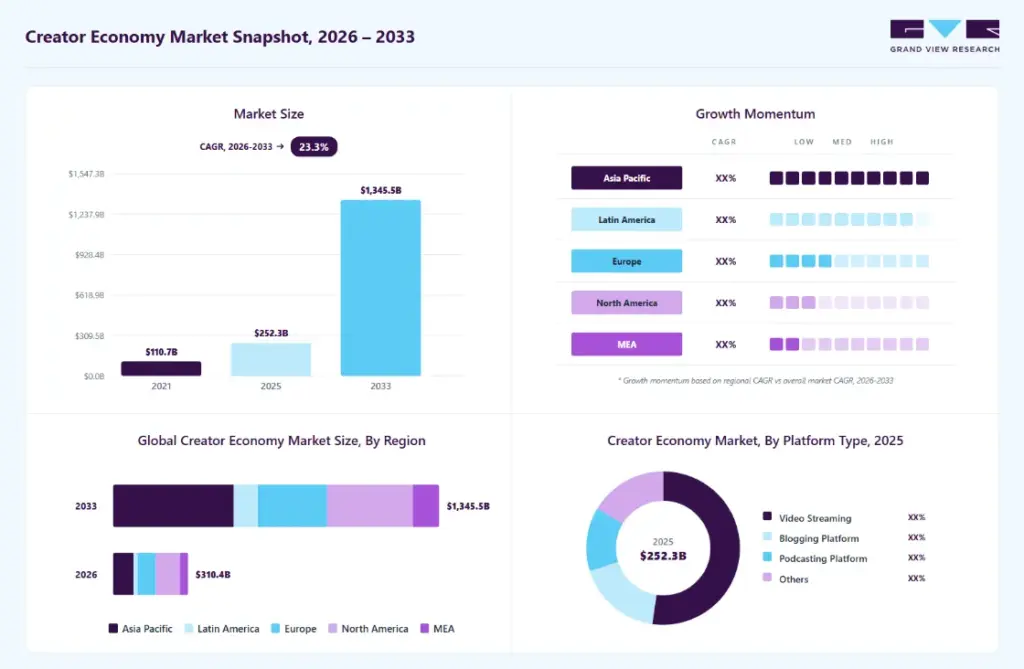
Source: Grand View Research
Predictable Recurring Revenue
Ad revenue fluctuates based on seasonality, video views, and platform policy shifts. Recurring memberships solve this instability by turning unpredictable view counts into steady monthly income.
- Base Income Stability: Knowing baseline revenue lets creators plan long-term budgets, hire staff, and upgrade equipment.
- Higher Lifetime Value: A loyal subscriber paying $5 or $10 monthly generates far more value over time than thousands of ad impressions.
OnlyFans pioneered mass adoption of this recurring model. The platform generated over $7.2 billion in gross fan spending in a single year, distributing more than $5.7 billion directly to creators. This financial predictability lets creators step off the continuous content treadmill and focus on quality production.
Fan Control and Ownership
Direct monetization gives creators more control over how they build and monetize their audience. Platforms such as Fansly support multiple subscription tiers with customizable benefits and pricing, along with tips and pay-per-view content. This lets creators offer different experiences to casual followers and high-value subscribers while creating more opportunities for recurring revenue.
Private messaging and paid content can also deepen fan engagement while increasing the value of each subscriber. Fansly supports PPV sales through both posts and DMs, while creators can set content prices and access rules based on their strategy. Top creators on Fansly earn between $10,000 and $50,000 per month by tailoring their offerings to fan demand, showing the potential of flexible direct monetization.
Algorithm Independence
Securing brand sponsorships requires constant negotiation, strict script guidelines, and lengthy approvals. Algorithmic distribution forces creators to produce high-volume content optimized for feed placement rather than depth. Moving toward direct monetization frees creators from these constraints in three clear ways:
- Editorial Independence: Creators retain total creative control without adjusting messaging to fit corporate sponsor guidelines.
- Algorithmic Immunity: Sudden updates to recommendation engines do not jeopardize monthly subscription income from existing fans.
- Smaller Reach, Higher Margin: A creator with 1,000 loyal paying members can out-earn a creator with 100,000 passive followers who relies solely on ad views.

How Do Fansly and OnlyFans Work?
Platforms like Fansly and OnlyFans combine social feeds, subscription management, payment processing, and private communication tools into a single ecosystem. Understanding how these mechanics fit together is essential for entrepreneurs planning to launch a competing platform.
How Fansly Works
Fansly operates on a flexible, multi-tiered subscription model paired with built-in discovery features. Creators do not have to settle for a single subscription price. They can build custom tiers with escalating benefits for higher-paying fans. Key operational features of Fansly include:
- Granular Content Rules: Creators can set specific access permission rules post-by-post.
- Tiered Monetization: Fans move seamlessly from free follower status to low-cost or high-tier plans.
- Integrated Promotion: Internal discovery feeds help creators attract new fans without relying purely on outside social media.
Fansly handles millions in creator transactions annually. Top-performing independent creators on Fansly generate between $10,000 and $50,000 monthly by utilizing multi-tier pricing and pay-per-view messaging. This multi-level structure allows creators to capture revenue from both budget-conscious fans and high-spending supporters on a single profile.
How OnlyFans Works
OnlyFans follows a direct creator-to-fan paywall model. Instead of paying for a site-wide membership, fans subscribe to individual creator profiles to view locked media. Core mechanics driving OnlyFans include:
- Profile Paywalls: Creators set a flat monthly subscription rate ranging between $4.99 and $49.99.
- Direct Interactions: Fans buy pay-per-view content inside private messages and send paid tips on posts.
- Platform Cut: The platform takes a flat 20% processing fee on all creator revenue.
OnlyFans processed over $7.2 billion in total gross fan spending in a single year, distributing more than $5.7 billion directly to creators. By keeping the platform simple and focusing on profile paywalls, OnlyFans scales efficiently while maintaining high transaction volumes.
How Content, Payments, and Interactions Connect
A successful fan subscription platform needs several integrated subsystems working in sync. You cannot simply throw a paywall onto a standard video feed. Essential technical components include:
- Subscription Management: Automated recurring billing engines that handle renewals and tier upgrades smoothly.
- Pay-per-View Locks: Secure media storage that decrypts files only after a microtransaction clears.
- Direct Messaging: Real-time chat infrastructure with media attachments, tip requests, and mass messaging capabilities.
- Payout Gateways: Secure payout tools allowing creators to withdraw earnings via bank transfers or alternative payment networks.
Connecting content, payments, and messaging into one frictionless interface is what turns a simple media website into an enterprise creator platform.
Fansly vs OnlyFans: What Is the Difference?
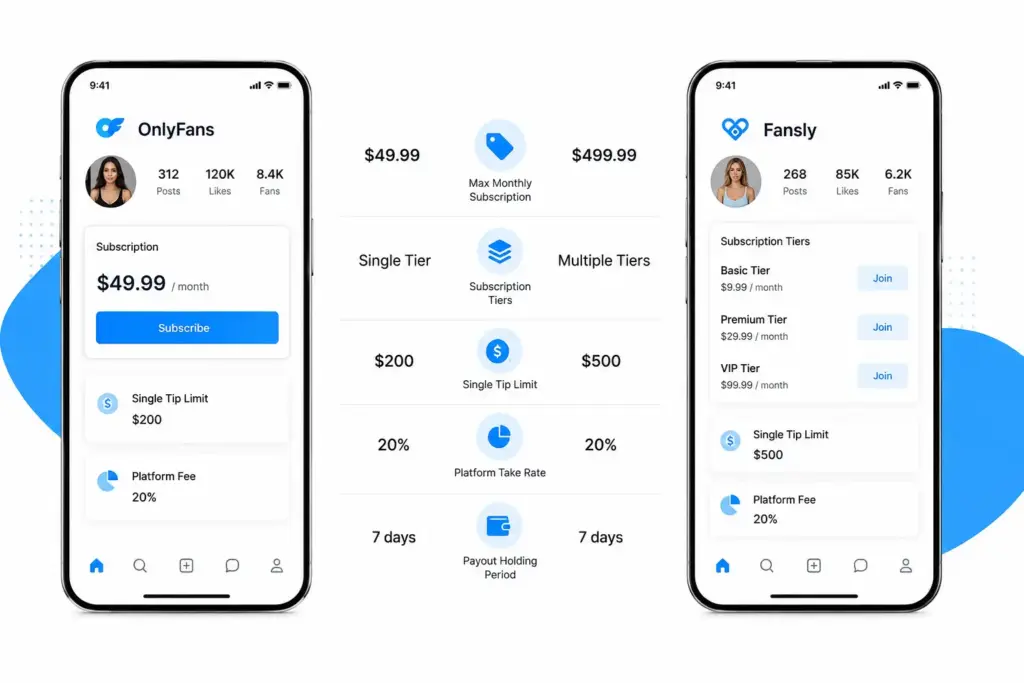
Fansly and OnlyFans follow a similar 80/20 revenue model, but the user experience is not identical. Fansly places more emphasis on built-in discovery and flexible subscription options while OnlyFans relies more heavily on creators bringing their own audience. These differences can have a major impact on how easily new creators grow and retain paying fans.
Monetization and Subscription Models
OnlyFans limits accounts to a single monthly flat rate capped at $49.99. Creators wishing to offer different price points must maintain two separate accounts, forcing fans to migrate between a free page and a paid page. Fansly removes this barrier by enabling multiple subscription tiers on a single profile, allowing creators to price tiers anywhere up to $499.99 per month. Fans can choose entry-level media access or pay higher rates for exclusive perks.
| Feature Metric | OnlyFans | Fansly |
| Max Monthly Subscription | $49.99 | $499.99 |
| Subscription Tiers | Single tier per account | Unlimited custom tiers |
| Single Tip Limit | $200 | $500 |
| Platform Take Rate | 20% | 20% |
| Payout Holding Period | 7 days | 7 days |
2. Discovery and Creator Growth
OnlyFans lacks internal recommendation algorithms. The platform functions as a closed ecosystem, requiring creators to drive 100% of their audience from external social platforms like Twitter, Reddit, or Instagram. Fansly solves this cold-start problem through native discovery features:
- For You Pag: An algorithmic feed recommending public posts and media previews to active fans.
- Hashtags and Categories: Content tagging systems that let users browse specific niches directly.
- Tiered Previews: Creators can blur or preview paywalled media inside the public feed to boost conversions.
3. Tools, Experience, and Positioning
OnlyFans maintains market dominance through sheer scale, generating over $6.6 billion in gross annual revenue and hosting 190 million registered accounts. It functions as a household name, making subscriber acquisition straightforward for creators with established followings.
Fansly caters to specialized workflows, recording around 50 million monthly profile visits. Its feature set gives creators granular control over direct messaging filters, mass PPV attachments, and automated tip goals.
Key takeaway for platform founders: OnlyFans wins on brand power and sheer user volume. Fansly wins on software depth, proving that high-value power users prefer multi-tier monetization and native discovery tools over simple paywalls.
.
Key Features of Creator Subscription Apps like Fansly and OnlyFans
Building an app like Fansly or OnlyFans means creating an experience where creators can easily share content and earn from their audience. The important part is connecting content with monetization so users can subscribe, purchase exclusive content or support creators without leaving the platform.
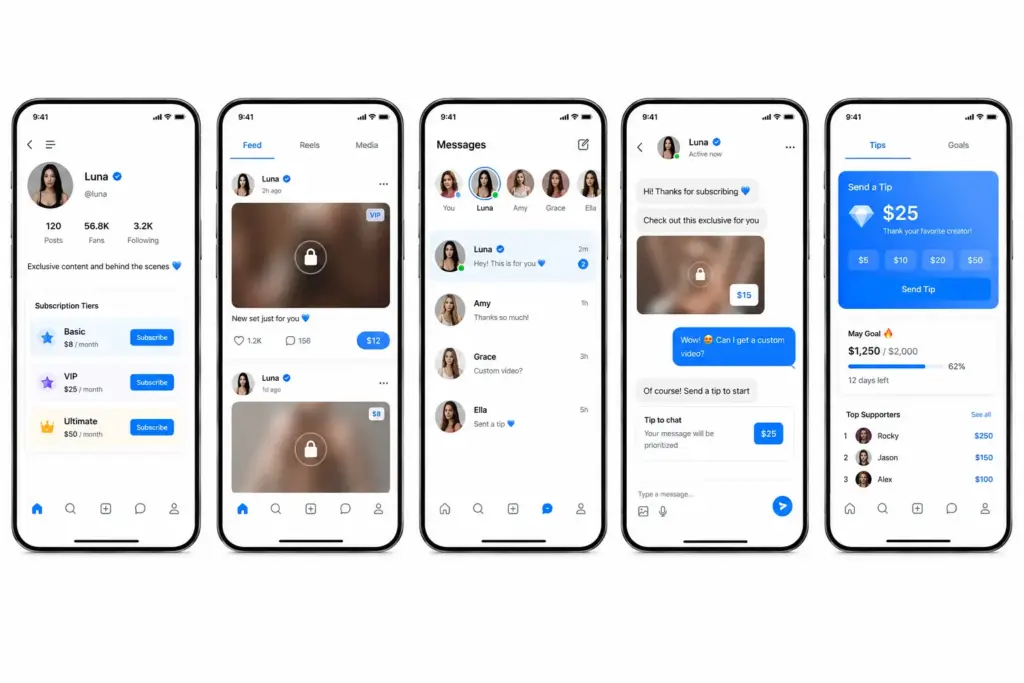
For entrepreneurs, the bigger opportunity is to make these interactions feel simple and natural. A well-designed platform can turn casual followers into paying subscribers while giving creators different ways to build recurring revenue and stronger fan relationships.
1. Profiles, Verification, and Tiers
Inside OnlyFans and Fansly, everything starts with a verified creator profile. To earn money, creators upload identification documents to pass mandatory compliance checks.
- OnlyFans Setup: Creators set a single flat monthly subscription rate for total profile access.
- Fansly Tiers: Creators set up multiple subscription tiers, giving fans choices from basic feed access to high-tier VIP perks.
This setup lets users pick their commitment level, turning casual followers into recurring monthly supporters.
2. Exclusive Content and Pay-Per-View
Monetization on OnlyFans and Fansly relies heavily on locking media behind paywalls. Creators upload photos, full-length videos, and audio clips directly to their feed. On Fansly, creators can lock individual posts inside a public feed, letting fans preview teaser content before buying. On OnlyFans, media is typically locked behind the main profile subscription paywall or sent directly via locked messages.
Key Difference: Fansly allows post-level permissions on a single profile, whereas OnlyFans requires creators to make a separate free account if they want to run a teaser feed.
3. Direct Messaging and Paid Interactions
Inboxes inside OnlyFans and Fansly function as high-revenue sales channels rather than simple chat windows.
- Mass DMs: Creators send bulk messages with locked PPV attachments to thousands of subscribers at once.
- Tip-to-Chat: Fans pay a set tip amount to place their direct message at the top of a busy creator inbox.
- Automated Welcome Messages: New subscribers automatically receive welcome messages containing exclusive PPV offers.
Both platforms make private messaging interactive, allowing creators to sell custom photos or personal video requests directly in conversation threads.
4. Discovery and Personalized Feeds
How fans find new creators differs significantly between the two platforms.
- Fansly Discovery: Features an internal For You page, search categories, and hashtags that recommend new accounts to active users.
- OnlyFans Discovery: Keeps user feeds strictly private, forcing creators to drive traffic from outside social media platforms like X, Instagram, and Reddit.
Incorporating internal discovery tools like Fansly gives smaller creators a better chance to build an audience organically.
5. Tips and Multiple Revenue Streams
Beyond subscriptions, platforms like Fansly create several opportunities for creators to earn from individual fan actions. Fans can send tips or contribute to tip goals while creators can also sell locked content through posts and DMs. This gives creators more ways to increase revenue from highly engaged fans instead of relying only on recurring subscriptions.
6. Live Streaming and Real-Time Engagement
Live streaming inside Fansly and OnlyFans creates an interactive space for real-time fan engagement. During a stream, users interact through live chat while sending instant tips. Fansly lets creators set paid entry fees for live sessions or lock streams behind specific tier levels. Creators can also run live tip goals that trigger specific actions once a financial milestone is hit.
7. Content Management and Creator Analytics
To keep creators active, OnlyFans and Fansly offer administrative dashboards that streamline daily content workflows. Both platforms provide post scheduling, media vault categorization, subscriber list segmentation, and tracking links to analyze promotional campaigns. Giving creators deep analytics on subscriber retention, message open rates, and revenue trends helps them optimize their earnings while maintaining a professional operation.
How to Develop Creator Subscription Apps like Fansly and OnlyFans?
Building a creator subscription app requires combining digital media delivery, secure billing, and real-time community engagement. Success depends on giving creators full control over how they monetize while keeping the platform safe and stable. Here is the step-by-step development strategy for launching a competitive creator platform.
1. Define Monetization and Niche
Before writing any code, establish who will use the app and how money flows through the system. Trying to serve every type of creator at once makes marketing difficult.
- Target Niches: Focus on specific verticals like fitness coaches, digital artists, cosplayers, or adult entertainers.
- Monetization Mix: Mix monthly subscriptions with pay-per-view messages, post tips, and custom media requests.
- Platform Fee Split: Decide on your platform commission, like the standard 20% cut used across the industry.
Fansly stands out by letting creators customize multi-tiered subscriptions with different access levels. Offering flexible pricing models gives your app an immediate edge over single-tier alternatives.
2. Design Creator and Fan Journeys
A strong creator subscription platform should make every step feel simple from signup to payment. Smooth creator verification and payout setup can reduce onboarding friction while easy discovery helps fans find creators they actually want to follow. The key is to connect these journeys so users can move from discovering a creator to subscribing or unlocking content without unnecessary steps.
3. Subscription and Content Infrastructure
The subscription engine should give creators fine control over who can access each piece of content. Fansly uses permission rules that can restrict posts or media based on follows, subscription tiers, or one-time purchases. For a competing platform, getting this access logic right is essential because it protects paid content while giving creators more flexibility in how they monetize it.
4. Add Messaging and Engagement
Direct communication turns passive content consumers into high-spending fan supporters. Features needed inside the inbox include:
- Mass Direct Messages: Creators send broadcast messages with attached pay-per-view media to thousands of subscribers at once.
- Automated Welcome Messages: Trigger automatic private messages containing exclusive offers when a fan first subscribes.
- Real-Time Live Streaming: Stream high-definition video with live chat, tip goals, and ticketed entry fees.
Inboxes on platforms like OnlyFans and Fansly act as high-margin sales channels where creators earn a massive share of their total revenue.
5. Analytics, Payouts, and Admin Tools
Creators expect clean dashboards to track business performance, while platform administrators need back-office control panels to keep operations safe. Integrating automated payout gateways lets creators withdraw their earnings via direct bank transfer or digital wallets without delay.
| Module | Core Functionality | Primary Metrics |
| Creator Portal | Revenue tracking, audience metrics, content performance | Active subscribers, churn rates, message open rates |
| Admin Portal | Identity verification, payout approvals, content moderation | Platform gross revenue, chargeback rates, flagged posts |
6. Implement Security and Compliance
Security should be built into the platform from the start rather than added after launch. Strong identity checks and reliable payment protection help reduce fraud while a combination of automated screening and human moderation can keep harmful content from reaching users.
Fansly itself uses third-party identity verification and payment processors as part of its safety approach. This is especially important for creator platforms because trust and payment reliability can directly affect long-term business stability.
7. Launch an MVP Before Scaling
Do not try to build every advanced feature for your initial release. Focus on launching a functional minimum viable product to test market demand quickly.
- Phase 1 MVP: Core profiles, identity checks, single-tier subscriptions, simple PPV posts, basic messaging, and credit card processing.
- Phase 2 Expansion: Multi-tiered memberships, internal discovery feeds, advanced analytics, and automated promotional tools.
- Phase 3 Maturity: Live streaming, ticketed events, custom tipping goals, and iOS or Android web app upgrades.
Validating your platform with early creators helps refine the software based on actual feedback before spending capital on large-scale infrastructure.
Cost to Develop Creator Subscription Apps like Fansly and OnlyFans
Building an app like Fansly or OnlyFans requires balancing software development costs with ongoing operational and regulatory expenses. Launching a custom platform involves custom engineering across user accounts, content locking mechanisms, real-time messaging, and high-risk payment systems. Here is a breakdown of development budgets and key cost drivers for building a creator subscription platform.
Detailed Cost Breakdown: Fansly-Like App
Platforms like Fansly rely on multi-tier subscription models, granular content access permissions, and internal discovery feeds. Building a full custom solution generally starts around $80,000 and can reach $150,000 or more if advanced features like live streaming or AI-driven content recommendations are included upfront.
| Development Component | Estimated Budget Range | Primary Cost Drivers |
| Market Research & Strategy | $3,000 to $6,000 | Target audience analysis, compliance planning, revenue modeling |
| UI/UX Design | $5,000 to $10,000 | Multi-tier interface, creator studio layouts, dark mode UI |
| Creator & Fan Profiles | $4,000 to $8,000 | Custom profile banners, media galleries, follow options |
| Subscription & Tier Management | $6,000 to $12,000 | Dynamic permission systems, multi-tiered access logic |
| PPV Content & Locked Media | $4,000 to $9,000 | Media encryption, teaser previews, automated post locking |
| Tips & Payment System | $3,000 to $7,000 | Microtransaction pipelines, high-risk merchant integrations |
| Direct & Mass Messaging | $5,000 to $12,000 | Mass DM distribution, PPV chat attachments, tipping in chat |
| Creator Dashboard & Analytics | $5,000 to $10,000 | Subscriber tracking, earnings charts, audience demographics |
| Creator Payout System | $4,000 to $8,000 | Automated split payouts, bank payout gateway hooks |
| Search & Content Discovery | $4,000 to $9,000 | Internal recommendation feed, hashtags, category search |
| KYC & Age Verification | $3,000 to $7,000 | Third-party ID verification API integrations, age checks |
| Content Moderation & Reporting | $6,000 to $12,000 | Automated media scanning, user reporting queue, DMCA tools |
| Admin Panel | $6,000 to $12,000 | User bans, payout approvals, platform revenue monitoring |
| QA & Security Testing | $5,000 to $10,000 | Penetration testing, payment flow security, load testing |
| Estimated Total | $73,000 to $132,000 | Full custom web application development |
Detailed Cost Breakdown: OnlyFans-Like App
An OnlyFans-style platform emphasizes a direct profile paywall structure and high-volume direct messaging microtransactions. Launching an MVP on web browsers allows you to test creator adoption before committing additional budget to custom native mobile applications.
| Development Component | Estimated Budget Range | Primary Cost Drivers |
| Product Research & Planning | $3,000 to $6,000 | Compliance roadmapping, feature specifications |
| UI/UX Design | $5,000 to $10,000 | Mobile-responsive design, clean creator paywalls |
| User Registration & Profiles | $4,000 to $8,000 | Age-gated onboarding, social logins, fan accounts |
| Creator Content Feed | $6,000 to $12,000 | High-volume image and video feeds, media streaming |
| Subscription Management | $5,000 to $10,000 | Single-tier recurring billing engines, credit card vaults |
| PPV & Paid Content | $4,000 to $9,000 | Locked direct messages, pay-to-unlock post feeds |
| Tips & Fan Payments | $2,500 to $6,000 | One-click post tipping, live stream tip triggers |
| Direct Messaging | $5,000 to $12,000 | Real-time chat infrastructure, automated welcome DMs |
| Creator Analytics | $4,000 to $8,000 | Retention metrics, revenue breakdown by source |
| Payout Management | $4,000 to $8,000 | Creator wallet systems, multi-currency processing |
| KYC & Age Verification | $3,000 to $7,000 | Direct API hooks into identity verification providers |
| Moderation & Reporting | $6,000 to $12,000 | Manual review dashboards, automated hashing algorithms |
| Admin Dashboard | $6,000 to $12,000 | Transaction logs, chargeback tracking, account controls |
| Security & QA | $5,000 to $10,000 | PCI-DSS compliance audits, stress testing |
| Estimated Total | $67,500 to $130,000 | Core web platform build |
Core Factors Influencing Total Budget
The total investment can change significantly based on the technical choices you make at the start. Features such as payment architecture, content delivery, security and scalability can all affect development and infrastructure costs. Planning these areas early helps avoid expensive changes as the platform grows.
- High-Risk Payment Gateways: Creator subscription apps require specialized high-risk merchant processors like CCBill or Cardinity. Payment setup, compliance audits, and chargeback mitigation tools add fees beyond standard integration coding.
- Identity Verification: Mandated age and identity verification tools like Yoti or Didit charge on a per-check basis. Integrating automated verification API checks directly into creator and fan registration flows increases initial setup expenses.
- Media Hosting and CDN Streaming: Delivering high-definition video and image content to millions of users demands heavy cloud bandwidth. AWS S3, Cloudflare, or dedicated video streaming pipelines increase ongoing monthly operating costs as traffic grows.
- Development Approach (Custom vs White-Label): Building custom software from scratch costs $70,000 to $150,000+. White-label script solutions can drop upfront development costs to $8,000 to $15,000, allowing you to launch faster and spend more capital on creator acquisition.
How to Prevent Fraud and Chargebacks in Creator Marketplaces?
Preventing chargebacks and payment fraud is critical for keeping a creator marketplace profitable. When buyers use stolen credit cards or dispute legitimate purchases, platforms face heavy gateway penalties and lost revenue. Connecting your payment infrastructure directly to your operational risk strategy protects both creator payouts and platform margins.
1. Payment Screening and Verification
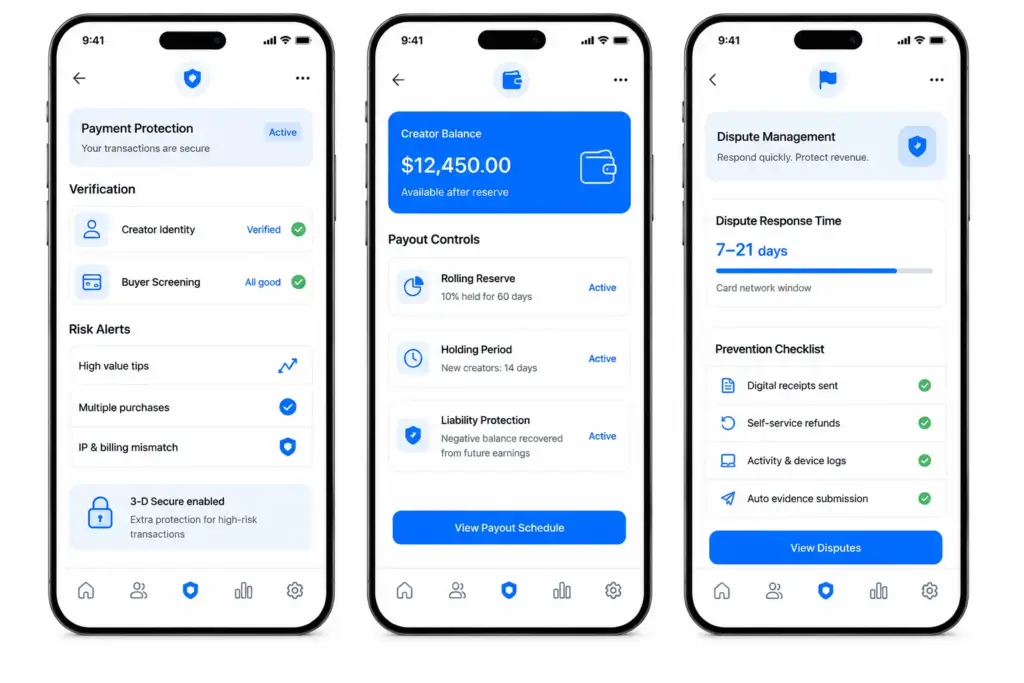
Front-line defense starts before a transaction processes. Verifying creator identities through Know Your Customer protocols stops scam storefronts from opening in the first place. On the buyer side, real-time risk scoring flags stolen cards before media access is granted.
- Identity Checks: Match bank account details with government IDs for creators withdrawing funds.
- Transaction Signals: Flag sudden spikes in high-value tips, rapid successive purchases, or mismatched IP and billing locations.
- Authentication Controls: Trigger 3-D Secure verification for high-risk transactions to shift chargeback liability back to the card issuer.
Subscription platforms like Patreon generated an estimated $228 million in annual revenue while processing over $10 billion in creator earnings. Managing payment screening at that scale requires strict risk rules so fraudulent subscribers cannot unlock exclusive content with compromised cards.
2. Smart Payout Controls
Releasing funds immediately upon purchase leaves platforms vulnerable when chargebacks hit weeks later. Structuring smart payout windows ensures funds remain available to cover disputed transactions.
| Control Strategy | How It Protects Platform Margins |
| Rolling Reserves | Withholds a small percentage of creator earnings for 30 to 90 days to cover potential dispute costs. |
| Tiered Holding Periods | Imposes longer payout clearance times for new or unverified creator accounts. |
| Clear Liability Rules | Specifies in terms of service whether negative balances are debited from future creator earnings. |
Fast-scaling subscription services like Fanvue, which surpassed a $100 million annualized revenue run rate, rely on structured payout schedules. Delaying payouts on high-risk or rapid-growth accounts gives risk teams the necessary window to flag suspicious activity before cash leaves the platform.
3. Fast Dispute Workflows
Payment disputes often come with strict response windows, so waiting too long can mean losing a valid claim. Stripe notes that merchants may have only 7 to 21 days to respond depending on the card network. An automated system can quickly collect transaction details and prepare the right evidence before the deadline.
Key Dispute Prevention Checklist:
- Send clear digital receipts with recognizable billing descriptors.
- Offer instant self-service refunds for accidental double-purchases.
- Log user activity timestamps, device details, and content consumption history.
- Auto-submit compelling evidence packages to processors the moment a dispute opens.
Maintaining clear transaction logs and active refund channels resolves customer complaints before they escalate to formal bank chargebacks, keeping merchant accounts in good standing and preserving platform margins.
How Do Fansly and OnlyFans Make Money?
Building a creator subscription platform requires a clear monetization structure. Instead of taking ad revenue, platforms like OnlyFans and Fansly build their business on direct fan-to-creator transactions. The main revenue model relies on taking a platform cut from every dollar spent on the site.
1. Subscriptions Generate Recurring Revenue
Recurring subscriptions form the revenue baseline for both platforms. Fans pay a monthly fee to unlock exclusive post feeds, video updates, and member benefits on a creator profile.
- OnlyFans Pricing: Creators set a flat monthly fee between $4.99 and $49.99 per account.
- Fansly Pricing: Creators offer multi-tiered subscriptions, letting fans choose plans ranging from $5 to $50 or more with different access perks.
- Platform Share: Both platforms keep a standard 20% cut of all subscription revenue, leaving 80% for the creator.
Predictable subscription revenue keeps cash flow stable while creators build long-term relationships with their core fans.
2. PPV Content and Tips
Subscriptions open the door, but individual transaction sales often generate higher profit margins. Creators monetize high-value interaction points beyond monthly memberships. Primary pay-per-view and tipping features include:
- Pay-Per-View Messages: Creators send locked media directly to fan inboxes, requiring payments from $5 to $100 or more to view.
- Post Tipping: Fans send extra monetary appreciation on public or paywalled feed posts.
- Custom Content and Live Stream Tips: Fans tip during live streams or pay custom fees for personalized video requests.
These microtransactions allow superfans to spend well above standard monthly subscription rates, significantly increasing the total revenue flowing through the platform.
3. Commissions and Features Scale Revenue
Scalability comes from aligning platform earnings with creator growth. As creators earn more, platform revenues expand automatically without requiring extra customer acquisition spending. Both platforms monetize through a simple split structure:
| Platform | Standard Commission Cut | Creator Payout | Key Monetization Mechanism |
| OnlyFans | 20% of gross revenue | 80% | Single profile subscriptions, PPV DMs, tips |
| Fansly | 20% of gross revenue | 80% | Tiered memberships, PPV previews, wall tips |
Platform growth can also be accelerated through referral incentives. OnlyFans pays a 5% referral fee to creators who recruit new talent for 12 months. Fansly offers a lifetime 5% referral program to encourage top creators to bring their existing networks onto the site.
Consolidating subscriptions, media sales, tips, and message unlocks into one reliable payment pipeline creates an asset-light, high-margin business model for platform founders
Contact IdeaUsher to Build Apps like Fansly and OnlyFans
Building a platform like OnlyFans or Fansly requires more than a polished interface. The technology needs to handle growing traffic and protect payments while delivering content quickly. Choosing an experienced development team early can help you build the right foundation and avoid costly technical changes as your user base expands.
From Idea to Scalable Product
IdeaUsher transforms digital concepts into full-scale creator subscription platforms. Engineering custom mobile and web applications gives you complete ownership over subscriber retention, user experience, and revenue flows. From early MVP prototypes to high-traffic production environments, the team builds infrastructure tailored for long-term platform growth.
Custom Monetization and Experiences
A competing platform can stand out by building its monetization model around the needs of creators rather than simply copying existing services. Flexible subscriptions and direct payments can give creators more control over how they earn. Strong discovery features can also help newer creators reach audiences without depending entirely on external traffic. Fansly, for example, combines subscriptions, tips, PPV content and built-in discovery tools within the same platform
Experienced Development Partner
With over 500,000 hours of coding experience, our team of ex-MAANG/FAANG engineers brings high-level technical expertise to complex application builds.
IdeaUsher Technical Snapshot:
- 1,000+ Projects Delivered: Wide portfolio across custom web and mobile solutions.
- 250+ In-House Experts: Full team covering UI/UX design, mobile dev, and backend architecture.
- End-to-End Engineering: From strategy and wireframing to API integrations and cloud deployment.
Partnering with an established team ensures your app meets strict security, performance, and scaling standards from day one.
Conclusion
A competing platform can stand out by building its monetization model around the needs of creators rather than simply copying existing services. Flexible subscriptions and direct payments can give creators more control over how they earn. Strong discovery features can also help newer creators reach audiences without depending entirely on external traffic. Fansly, for example, combines subscriptions, tips, PPV content, and built-in discovery tools within the same platform.
Things to Know About Creator Subscription Platforms
A1: Creator subscription platforms typically combine recurring subscriptions with additional monetization options such as PPV content and tips. For example, Fansly supports subscriptions, locked content, and tips as core creator revenue streams.
A2: A strong platform should cover the complete creator-to-fan journey, including creator profiles, subscription tiers, exclusive content, discovery, messaging, payments, payouts, analytics, and content permissions. Flexible access controls can also allow creators to decide whether content is unlocked through following, subscribing, tipping, or one-time purchases.
A3: The biggest challenges usually involve payment processing, creator payouts, content moderation, user verification, privacy, fraud prevention, and scalable media infrastructure. Founders also need to think carefully about creator acquisition and retention because the platform’s value depends on maintaining both sides of the marketplace. Research on creator platforms also highlights the difficulty of balancing traffic allocation between established and emerging creators.
A4: Instead of copying existing platforms feature for feature, founders can differentiate through a specific creator niche, better discovery, flexible monetization, stronger creator analytics, community tools, or greater control over audience relationships. The core objective should be solving a clear creator or fan problem that existing platforms do not address well.