

Key Takeaways
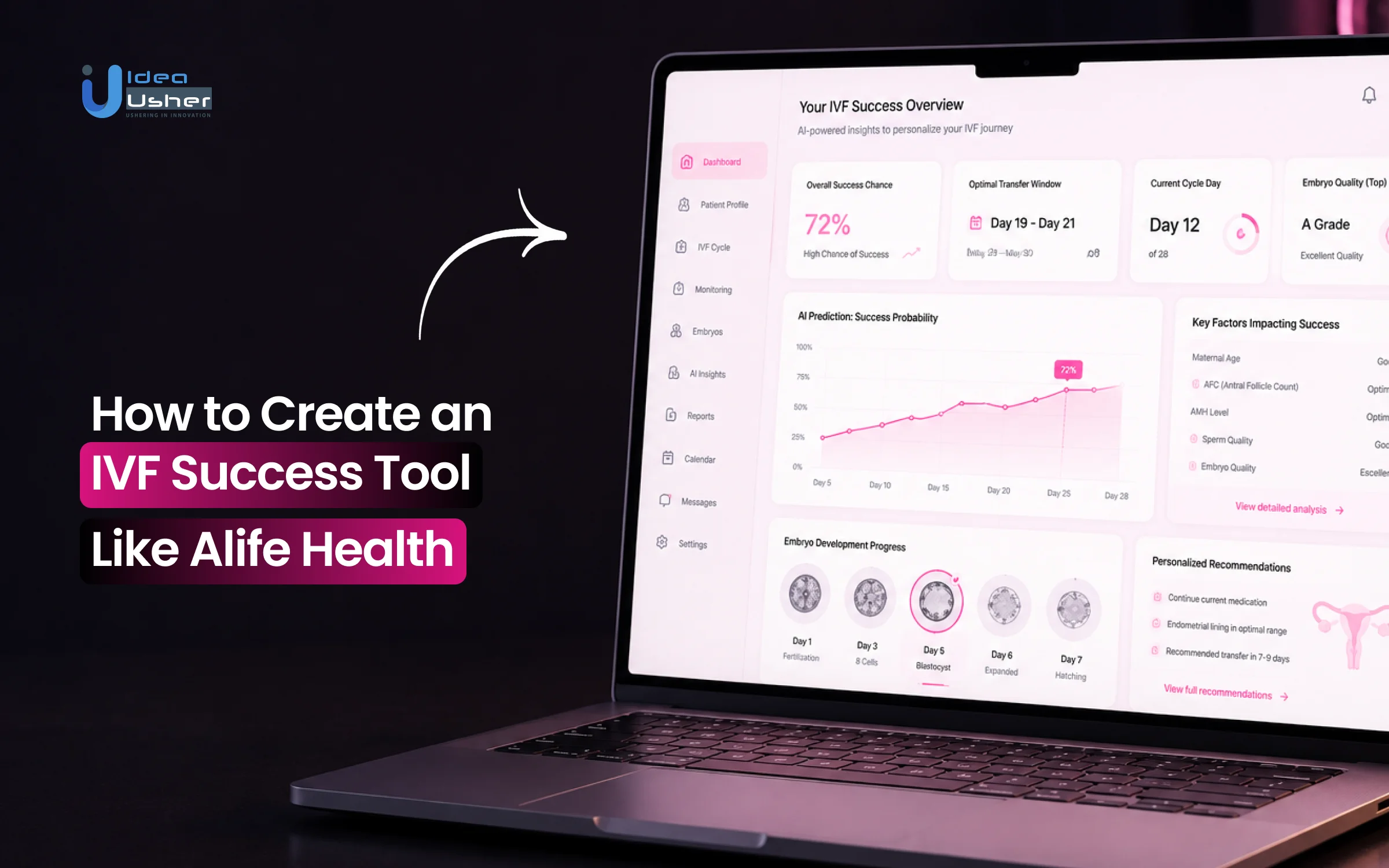
- Fertility clinics are adopting AI-powered IVF success tools to improve embryo selection, personalize treatment plans, and enhance clinical decision-making.
- Platforms like Alife Health combine predictive analytics, computer vision, explainable AI, and EMR integrations to optimize every stage of the IVF journey.
- A successful platform requires AI embryo assessment, treatment planning, lab workflow automation, secure data infrastructure, and regulatory compliance.
- AI-powered IVF solutions help clinics improve pregnancy success rates, operational efficiency, personalized care, and patient engagement while supporting clinical teams.
- How Idea Usher can help businesses build IVF success platforms with AI-driven decision support, healthcare-grade security, and scalable fertility technology solutions
Fertility clinics are under increasing pressure to improve IVF outcomes while delivering more personalized care, which is driving the adoption of AI-powered IVF success platforms. Instead of relying only on experience, these tools analyze data from past treatment cycles to uncover insights that support better clinical decision-making. This helps specialists plan treatments with greater confidence, improve embryo selection, and enhance the overall patient experience.
We’ve built numerous IVF success tools that combine AI-powered predictive analytics with computer vision models for embryo assessment, helping fertility clinics improve clinical decision-making and optimize treatment outcomes. As we have this experience, we’ve put together this blog to walk you through the key steps involved in creating an IVF success tool like Alife Health. Let’s get started!
Market Potential of AI in IVF
According to Future Market Insights, the global IVF market is projected to grow from USD 1.30 billion in 2026 to USD 3.80 billion by 2036, at an 11.0% CAGR. With more people seeking fertility treatment, clinics need smarter tools to manage growing demand. This is creating strong opportunities for AI platforms that improve IVF outcomes and make clinical workflows more efficient.
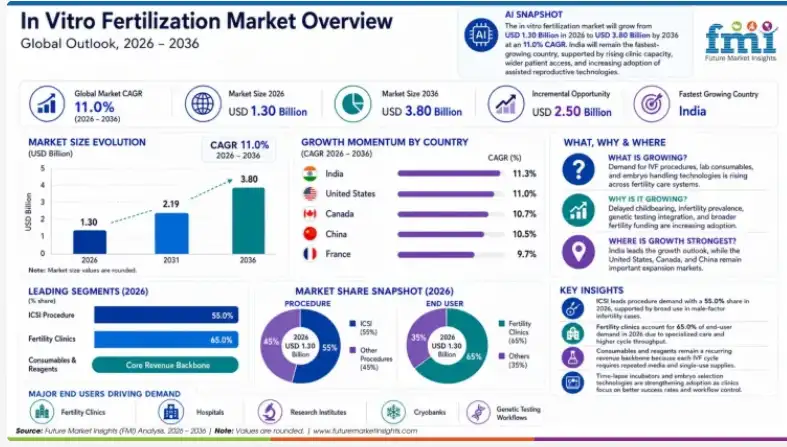
Source: Future Market Insights
At the same time, the current clinical infrastructure faces a severe capacity problem. High costs, long wait times, and a shortage of specialized embryologists limit patient access. Because traditional clinic models scale poorly on physical infrastructure alone, the industry needs scalable software platforms. Investors who build automated, intelligent systems can capture this excess demand and run highly profitable operations.
Improving Success Rates
The primary pain point in traditional IVF is the low baseline success rate, which often forces patients to go through multiple traumatic and costly cycles. Human embryologists must visually grade embryos under a microscope to select the best one for implantation. This manual process is subjective and introduces human error.
By using deep learning algorithms, computer vision software can analyze thousands of data points from time-lapse embryo imaging. The technology catches microscopic growth patterns that the human eye misses, creating an objective score for embryo viability.
- Higher Pregnancy Rates: Platforms using predictive modeling shorten the time it takes for a patient to achieve a pregnancy, saving months of treatment.
- Fewer Multiple Births: Accurate single embryo selection allows clinics to confidently avoid transferring multiple embryos, which minimizes high risk pregnancies.
- Optimized Lab Workflows: Automated monitoring frees embryologists from routine tasks, allowing clinics to handle higher case volumes without adding headcount.
Consider the tool developed by CHLOE IVF. This system uses computer vision to automate embryo assessment in real time. It gives embryologists instant, data-backed scoring to streamline laboratory workflows. By standardizing high-quality selection, platforms like this help clinics scale their operations efficiently.
On the commercial side, tools in this space are demonstrating strong traction, with some specialized software providers generating annual software as a service revenues exceeding $5,000,000 as they expand across international clinic networks.
Why Investors Are Backing
Investors are increasingly backing AI-powered fertility platforms because they solve real clinical problems while offering strong growth potential. Unlike traditional clinic businesses, software platforms can expand to support more providers without major infrastructure investments, making them easier to scale.
Over time, these platforms become even more valuable as they learn from every IVF treatment and patient outcome. Better data leads to more accurate predictions and improved clinical decisions, giving companies a lasting competitive edge in a fast-growing healthcare market.
How Alife Health Is Transforming Clinical Decision-Making in IVF?
Alife Assist serves as an AI-powered operating platform for IVF clinics, bringing together patient data and clinical workflows in one place. It helps fertility teams make better treatment decisions, optimize medication plans, improve retrieval scheduling, and automate embryo evaluation. By supporting every stage of the IVF process, the platform helps clinics work more efficiently while improving patient outcomes.
1. Better Transfer Decisions
The embryology lab is where success hangs in the balance. Traditionally, embryologists manually evaluate embryos at specific intervals under a microscope. This visual grading system is subjective and can vary significantly from one lab technician to another. Alife Health addresses this variance by using computer vision models to evaluate time-lapse videos of embryo development.
The algorithm provides a highly objective, standardized grading metric. It scans for subtle structural markers linked to successful implantation that the human eye might easily miss. This gives embryologists an incredibly reliable tool to prioritize the healthiest embryo for transfer.
- Objective Grading: Eliminates inter-operator variability across different clinic labs.
- Faster Cycles: Choosing the highest-quality embryo first reduces the total number of transfers a patient needs.
- Decreased Waste: Better prioritization means fewer viable embryos are discarded or overlooked during a cycle.
2. Predictive IVF Planning
One of the biggest challenges in IVF is choosing the right medication plan for each patient. Even small changes in dosage can affect the number and quality of eggs retrieved or increase the risk of complications. This makes treatment planning one of the most important steps in the IVF process.
Alife Health uses AI to analyze patient data and previous treatment outcomes to help doctors select the most suitable stimulation protocol. With more accurate recommendations, clinics can improve egg retrieval results, reduce risks, and give patients a better chance of a successful pregnancy.
3. Transparent AI Insights
Medical professionals are naturally skeptical of black-box algorithms that provide answers without showing the underlying reasoning. Alife Health designs its platforms with extreme clinical transparency in mind. The software displays the core data points and historical comparisons that drive each algorithmic recommendation.
This transparency allows fertility specialists to retain final medical authority while using the AI to confirm or refine their treatment plans. It also serves as a powerful communication tool for patients. Clinicians can share clear, visual data to explain exactly why a specific protocol was chosen.
Clinical Research Supporting Alife Health’s AI Models
Clinical validation plays a critical role in the adoption of AI platforms for reproductive medicine. Fertility clinics want evidence that a solution improves patient care and performs reliably across different clinical settings. This is why peer-reviewed research and transparent testing are essential for building trust.
Alife Health has focused heavily on validating its AI models through scientific studies, helping establish the platform as a trusted clinical solution rather than an experimental tool. This evidence-based approach supports wider adoption among leading fertility clinics while also reducing risk for healthcare organizations investing in AI.
1. Peer-Reviewed Studies
Alife Health has validated its embryo selection AI through research conducted with leading fertility organizations, including Boston IVF, Shady Grove Fertility, and Ovation Fertility. In a study published in Fertility and Sterility, the model was trained on more than 8,000 blastocysts collected from 11 clinics. The findings showed that embryologists disagreed on the best embryo 34.6% of the time, rising to 44% when multiple high-quality embryos were available. The AI provided more consistent and objective rankings, helping reduce this variation.
A separate study published in the Journal of Medical Internet Research found that AI-assisted embryo ranking improved selection accuracy from 38% to 50%. It also helped less experienced embryologists make decisions that were closer to those of senior specialists, allowing clinics to deliver more consistent outcomes across their teams.
2. Multi-Center Trials
To secure commercial trust and regulatory clearance, software must prove it works in real-world settings, not just controlled lab environments. Alife Health achieved a historic milestone when its Embryo Predict software received official clearance from the U.S. Food and Drug Administration. This milestone was directly supported by a rigorous, prospective, multi-center clinical trial conducted across seven leading fertility networks in the United States.
- Trial Size: Enrolled 440 patients across geographically diverse clinics to ensure demographic variety.
- Hardware Agnosticism: The software integrated seamlessly with existing lab microscopes and time-lapse imaging systems with zero new hardware required.
- Primary Outcome: The trial successfully demonstrated the software’s safety and efficacy as an adjunctive decision-support tool for Day 5, 6, and 7 blastocysts.
By verifying the algorithm across multiple independent clinic infrastructures, the trial proved that the software is highly scalable. It does not require bespoke lab configurations, meaning an investor can deploy it across an entire portfolio of clinics instantly to optimize asset performance.
3. Continuous Accuracy Gains
One of the biggest strengths of AI-powered fertility platforms is that they become more accurate as they learn from new clinical data. Every completed IVF cycle helps improve the underlying models, allowing clinics to benefit from better recommendations without changing the overall platform.
This approach is reflected in Alife’s research published in Nature Scientific Reports. In a prospective multi-center study, the company’s machine learning model helped optimize follicle-stimulating hormone (FSH) dosages and trigger timing based on previous treatment outcomes. The result was a better yield of mature eggs while also reducing medication costs for patients.
Key Features of an IVF Success Tool Like Alife Health
Alife Health uses AI and data analytics to improve both the clinical and operational side of IVF care. The platform helps automate routine tasks, supports better treatment decisions, and streamlines workflows across the IVF process, allowing fertility clinics to operate more efficiently while improving patient outcomes.
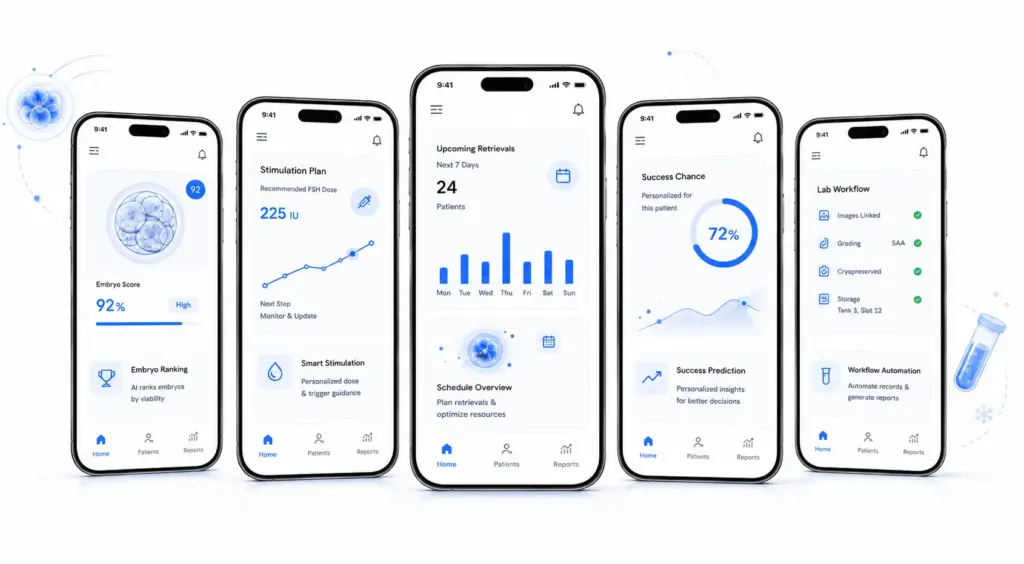
1. Embryo Selection and Ranking
Embryologists use Embryo Predict to evaluate the viability of Day 5, 6, or 7 blastocysts by uploading microscope or time-lapse images into the platform. The AI analyzes these images using deep learning and compares them with a large database of previous embryo data to generate an objective viability score.
The platform ranks embryos within seconds, giving clinicians a consistent and data-driven way to identify the best candidate for transfer. This reduces variation in manual assessments, speeds up the selection process, and helps clinics improve the chances of a successful pregnancy.
2. Smart Stimulation Planning
Doctors use Stim Assist at the start of an IVF cycle by entering key patient details such as age, Anti-Müllerian Hormone levels, and Body Mass Index (BMI). The platform analyzes this information along with historical treatment data to recommend a personalized follicle-stimulating hormone starting dose for ovarian stimulation.
As the treatment progresses, clinicians update the platform with ultrasound findings and hormone test results. Stim Assist continuously analyzes this data to recommend the best time for the trigger injection, helping improve mature egg retrieval while reducing the risk of overstimulation.
3. Predictive Retrieval Schedules
Clinic administrators and operations managers use Schedule Predict to manage the logistical bottlenecks common to high-volume fertility centers. The scheduling dashboard automatically aggregates the real-time follicle growth projections and expected trigger dates of every active stimulation patient in the clinic.
By projecting surgical windows up to a full week in advance, the software predicts potential lab crowding and peaks in patient volume.
- Staffing Optimization: Managers adjust embryologist and nursing shifts proactively based on projected surgical case volumes rather than reacting to last-minute changes.
- Reduced Over-Capacity: Alife Health can help reduce over-capacity retrieval days by up to 65%, maintaining safe operational boundaries within the facility.
- Burnout Prevention: Better forecasting minimizes unexpected weekend operations, improving staff retention and lowering clinic overhead costs.
4. Success Projections and Insights
Clinicians use the Success Predictor to estimate a patient’s chances of IVF success based on their medical history and previous treatment data. Instead of relying on general age-based averages, the platform generates personalized predictions that help doctors guide treatment planning and answer patient questions with greater confidence.
Patients receive clear, individualized success estimates for future treatment cycles, making it easier to understand their options and set realistic expectations. This personalized approach can improve patient engagement and has been shown to increase enrollment in multi-cycle treatment programs by more than 3%.
5. Lab Workflow Automation
Embryo Assist helps lab technicians manage embryo records digitally by linking microscope images with each patient’s embryo profile. The platform also records grading details, cryopreservation information, and storage locations automatically, creating a complete and organized audit trail.
Once the laboratory work is complete, Embryo Assist generates patient-ready reports without requiring extensive manual documentation. By automating routine administrative tasks and reducing up to 90% of traditional phone updates, the platform saves lab teams around 15 to 30 minutes per patient.
6. EMR and Cloud Platform
Alife Health is built as a cloud-based platform that integrates with a clinic’s existing Electronic Medical Record system through secure APIs. Patient information entered into the EMR, such as blood test results or ultrasound data, is automatically synchronized with the Alife dashboard, reducing manual data entry and improving workflow efficiency.
Because the platform runs in the cloud, clinicians can securely access patient records, treatment insights, and laboratory data from any authorized device. This allows clinics to adopt the software without investing in new hardware, making it easier to scale across multiple locations.
7. Explainable Decision Support
Alife Health is designed to support clinical decisions rather than replace them. When the platform recommends an embryo score or a gonadotropin adjustment, it also shows the patient biomarkers and clinical data that influenced the recommendation, giving doctors greater confidence in the results.
This transparent approach allows fertility specialists to combine AI insights with their own expertise before making treatment decisions. By making recommendations easy to understand and verify, the platform helps build trust among clinicians and encourages wider adoption across fertility clinics.
How to Create an IVF Success Tool Like Alife Health?
Building an IVF success tool requires expertise in healthcare, AI, security, and regulatory compliance. We help businesses turn complex ideas into scalable, clinic-ready solutions by developing secure platforms that improve clinical workflows and support better patient outcomes. Our team combines medical software engineering with AI expertise to build reliable products that fertility clinics can confidently adopt.
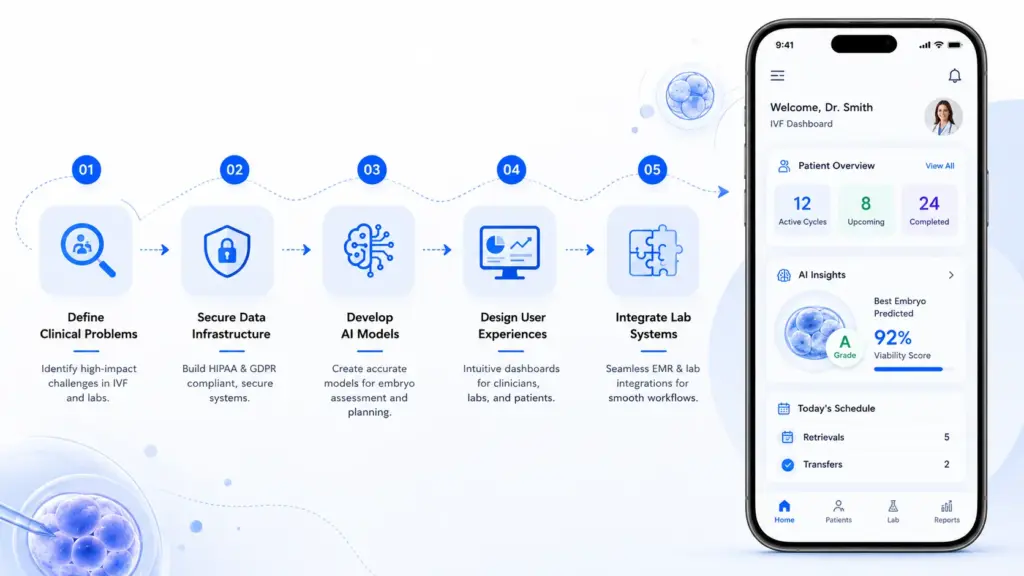
1. Define Clinical Problems
The first step in building a successful platform is mapping out the exact bottlenecks inside the fertility clinic and the embryology lab. Successful platforms avoid trying to fix every operational detail at once, focusing instead on high-impact areas where machine learning delivers measurable return on investment.
We work closely with your stakeholders to target major clinical pain points, including embryo viability grading, medication dosing calculation, and lab scheduling bottlenecks.
- Lab Variance: Standardizing embryo selection across junior and senior staff.
- Medication Safety: Minimizing hyperstimulation risks during ovarian cycles.
- Operational Scaling: Eliminating physical scheduling conflicts for retrieval surgeries.
Focusing your product roadmap on these proven friction points ensures your software provides immediate financial and clinical value to healthcare networks right from launch day.
2. Secure Data Infrastructure
Secure data management is essential for any AI-powered fertility platform handling sensitive patient information. We build HIPAA- and GDPR-compliant cloud infrastructures that securely manage clinical records, embryo images, and treatment data. This creates a strong foundation for protecting patient privacy while supporting future AI development and long-term platform growth.
3. Develop Decision AI Models
AI is the foundation of a modern fertility platform, enabling more accurate clinical decisions throughout the IVF journey. We develop computer vision and machine learning models for embryo assessment, treatment planning, and personalized clinical recommendations. Our focus on explainable AI ensures clinicians can understand the reasoning behind each recommendation, helping build trust and encourage adoption in real-world clinical settings.
4. Design Portal Interfaces
A successful fertility platform should deliver the right experience for every type of user. We design intuitive dashboards for clinicians, embryologists, and administrators while also building secure patient portals that provide treatment updates and personalized insights. This improves communication, keeps patients engaged throughout their IVF journey, and creates a better overall experience.
5. Integrate Lab Systems
Seamless integration is essential for ensuring AI platforms fit naturally into existing clinical workflows. We build secure integrations with electronic medical record (EMR) systems and laboratory software so patient data syncs automatically across platforms. This reduces manual data entry, minimizes errors, and helps clinicians spend more time on patient care instead of administrative tasks.
6. Validate Through Research
Clinical validation is essential for building trust in healthcare AI before launching it to the market. We help organizations design secure clinical studies, collect high-quality data across partner clinics, and measure key performance metrics to validate AI performance. This evidence helps demonstrate real-world effectiveness and supports adoption by healthcare providers.
7. Deploy, Monitor, and Refine
Launching an AI platform is only the beginning, as continuous improvement is key to long-term success. We help you deploy, monitor, and optimize your platform using modern DevOps practices, allowing AI models to improve as new anonymized clinical data becomes available. This keeps your solution accurate, scalable, and competitive as your business grows.
Cost to Create an IVF Success Tool Like Alife Health
Allocating capital toward building an artificial intelligence fertility platform requires a clear understanding of financial inputs and cost structures. Developing software for reproductive medicine is inherently more complex than standard business tools due to the necessity of medical accuracy, compliance, and custom data processing.
We at IdeaUsher specialize in managing these variables efficiently to prevent budget overruns. By partnering with us, you can optimize your investment and build a premium digital health asset with predictable development costs.
Cost Based on Scope
The financial commitment required to launch your platform depends on the complexity of your features and the scale of deployment. A progressive investment model allows you to establish a market foothold before committing larger capital sums to enterprise-wide infrastructure.
| Development Stage | Estimated Budget Range | Core Capabilities Included |
| Minimum Viable Product (MVP) | $80,000–$130,000 | Patient dashboard, manual embryo data logging, and core AI predictive analytics. |
| Clinic-Ready Platform | $140,000–$260,000 | AI-powered embryo ranking, basic EMR integration, and HIPAA-compliant cloud infrastructure. |
| Enterprise-Grade Ecosystem | $270,000–$500,000+ | Multi-clinic management, automated billing, real-time lab hardware integration, predictive scheduling, and enterprise-scale analytics. |
An MVP approach is ideal for securing initial clinic feedback or investor validation. As your business model proves itself, scaling toward a clinic-ready or enterprise ecosystem introduces the full automation layers required to command premium software licensing fees.
Major Cost Drivers
Understanding the specific technological pillars driving your development budget helps ensure smart resource allocation. The most significant financial drivers are tied directly to data handling and medical precision.
- AI and Computer Vision Models: Training neural networks to process time-lapse embryo imaging requires highly specialized data scientists, which represents a major portion of the software budget.
- EMR Integration Complexity: Creating smooth, secure data pathways with legacy healthcare architectures requires custom API development.
- Regulatory Compliance and Security: Meeting strict HIPAA and GDPR standards requires end-to-end data encryption and secure user authentication protocols.
- Clinical Validation Frameworks: Building auditing systems into the interface so physicians can easily verify the reasoning behind AI decisions adds to development time.
Managing these advanced elements requires a highly technical team. This is why many founders work with our engineering teams to handle complex healthcare integrations and avoid costly re-engineering down the road.
Strategies to Optimize Spend
Keeping development costs under control starts with building only the features that deliver the most value. Instead of launching a complete platform at once, focus on solving one key problem first, such as embryo assessment or treatment planning. This approach reduces upfront investment and allows you to validate the product before expanding.
We help businesses accelerate development with proven healthcare frameworks, secure cloud architecture, and compliance-ready solutions. By avoiding unnecessary development work and planning the right feature roadmap, we help you launch faster while keeping costs predictable.
Regulatory Approvals Can Become a Competitive Moat in IVF Success Tools
Navigating the complex world of healthcare regulations is often seen as a challenging barrier for digital health startups. However, for strategic investors and entrepreneurs looking to back or build an IVF success tool, the strict regulatory pathway is actually a massive commercial advantage. Securing official clearances transforms a software product into a highly valuable, protected asset.
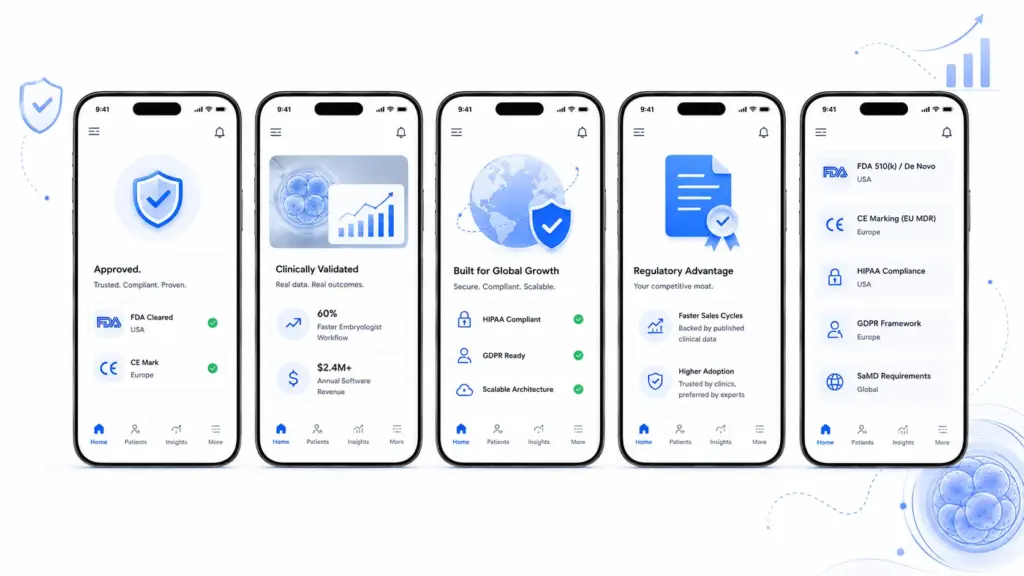
1. FDA Clearance Builds Trust
Regulatory approval plays a major role in the success of AI-powered healthcare software. Certifications from organizations such as the U.S. Food and Drug Administration (FDA) and the European CE Mark show that a platform has met important standards for safety and performance. This gives fertility clinics and healthcare providers greater confidence when adopting new technology.
The impact can be seen with Life Whisperer by Presagen, an AI platform for embryo viability assessment. After receiving the CE Mark and regulatory approvals in several Asia-Pacific markets, the company expanded its commercial partnerships and increased its annual operating revenue to more than $1.5 million, demonstrating how regulatory credibility can drive business growth.
2. Clinical Advantage
Building a defensible platform requires backing your code with real-world empirical proof. A software tool supported by prospective multi-center trials, peer-reviewed data, and verified patient outcomes stands completely apart from unvalidated tools. For healthcare organizations, this scientific backing is essential before they alter their standard laboratory or treatment protocols.
- Accelerated Sales Cycles: Enterprise sales teams can present clear, published data to medical boards, instantly overcoming common technical and clinical objections.
- Junior Staff Standardization: Real-world performance data shows that objective AI insights bridge the skill gap in the lab, maintaining high clinic success rates across all staff levels.
- Sticky Software Ecosystems: Once a clinic integrates a validated tool into its daily routines, switching to an unproven competitor introduces unnecessary clinical and operational risks.
Fairtility demonstrates how strong clinical validation can drive both adoption and business growth. Its AI platform, CHLOE EQ, uses computer vision for embryo grading and has been backed by research with leading academic institutions. The company reported that the platform helped embryologists work up to 60% faster, which supported a $15 million Series A funding round and contributed to annual software revenue of nearly $2.4 million.
3. Driving Long-Term Growth
Building your fertility platform with HIPAA and GDPR compliance from the beginning makes it much easier to expand into global healthcare markets. A secure, compliant architecture also reduces the need for costly redesigns as your product grows and helps build trust with clinics and healthcare partners.
At IdeaUsher, we develop healthcare platforms with security, compliance, and scalability in mind from day one. Our team helps you launch faster while creating a foundation that supports future growth, enterprise partnerships, and long-term investment opportunities.
4. Core Technical Regulations
To successfully launch an AI fertility product, engineers must map functionality directly to specific regional medical policies. Designing a platform without knowing where these lines are drawn leads to extensive, costly system rewrites right before market entry.
| Regulatory Standard | Target Jurisdiction | Direct Product Impact |
| FDA 510(k) / De Novo | United States | Authorizes the core diagnostic engine for commercial use by clinical teams. |
| CE Marking (EU MDR) | European Union | Sets strict parameters for data transparency, software testing, and algorithm auditing. |
| HIPAA Compliance | United States | Mandates end-to-end data encryption and strict access logs for patient records. |
| GDPR Framework | European Union | Grants patients absolute control over how their reproductive data is processed and stored. |
| SaMD Requirements | Global | Defines rules for algorithms acting as active diagnostic tools to guide treatment decisions. |
Build an IVF Success Tool with IdeaUsher
Building a clinic-ready fertility platform requires expertise in AI, healthcare regulations, and clinical system integration. At IdeaUsher, we provide end-to-end development services, from platform architecture and AI implementation to secure deployment and EMR integration, helping you launch a reliable solution that fertility clinics can confidently adopt.
Healthcare AI Experts
A successful fertility platform needs the right balance of user experience, AI, and scalable engineering. We work with you from product strategy and UI/UX design to AI development and backend engineering, building a platform that performs reliably today and scales as your clinic network and user base grow.
Secure and Compliant Architecture
Strong security and compliance are essential for any healthcare platform handling sensitive patient data. We build HIPAA-ready cloud infrastructure and secure API integrations with clinic EMR systems to protect patient information while enabling seamless data sharing. This helps healthcare providers trust your platform and supports smoother adoption across fertility clinics.
End-to-End Development
Scaling a digital health platform requires a development team that understands how to build large-scale enterprise software. When you partner with us, you gain direct access to an elite team of over 250 software specialists. With over 500,000 hours of coding experience, our team of ex-MAANG developers brings world-class technical expertise straight to your project.
We utilize clean, modern programming practices to deliver a stable, production-ready fertility platform designed to grow along with your business.
- Elite Engineering Talent: Work with developers who have built high-performance software at some of the world’s largest tech companies.
- Predictable Timelines: Leverage our established healthcare engineering blueprints to avoid common project delays and speed up your time to market.
- Built for Growth: Receive an agile, modular software codebase that easily accepts future AI feature updates and new laboratory integrations.
Conclusion
The demand for AI-powered fertility solutions is growing as IVF clinics look for better ways to improve success rates and streamline patient care. Building a platform like Alife Health takes more than AI models alone. It requires a deep understanding of clinical workflows, secure healthcare technology, and scalable product development. With the right approach, you can create a solution that delivers measurable value for clinics while improving the experience for patients.
Things to Know About IVF Success Tools
A1: AI helps fertility specialists make better decisions by learning from thousands of previous IVF cycles. It can identify patterns that are difficult to spot manually, making embryo selection, treatment planning, and success prediction more consistent. While the technology provides valuable recommendations, doctors always make the final clinical decisions. The result is a more personalized treatment plan and a smoother experience for both clinics and patients.
A2: An IVF success platform is only as good as the data behind it. Developers typically need access to anonymized patient records, embryo images, hormone reports, treatment history, and IVF outcomes. Using diverse, high-quality clinical data helps the AI produce more reliable predictions and recommendations. Before training any model, the data also needs to be cleaned, standardized, and validated to ensure accuracy.
A3: Yes. Most modern IVF platforms are designed to work alongside the systems clinics already use instead of replacing them. They can connect with EMRs, laboratory software, scheduling tools, billing systems, and patient portals. This allows doctors and embryologists to access all the information they need from one place while reducing manual data entry and improving workflow efficiency.
A4: It depends on what the software does. If the platform provides clinical decision support or qualifies as Software as a Medical Device (SaMD), it may require approvals such as FDA clearance or CE marking before entering certain markets. Developers also need to follow privacy regulations like HIPAA and GDPR to protect sensitive patient information. Building with compliance in mind from the start makes it easier to launch and earn the trust of healthcare providers.