

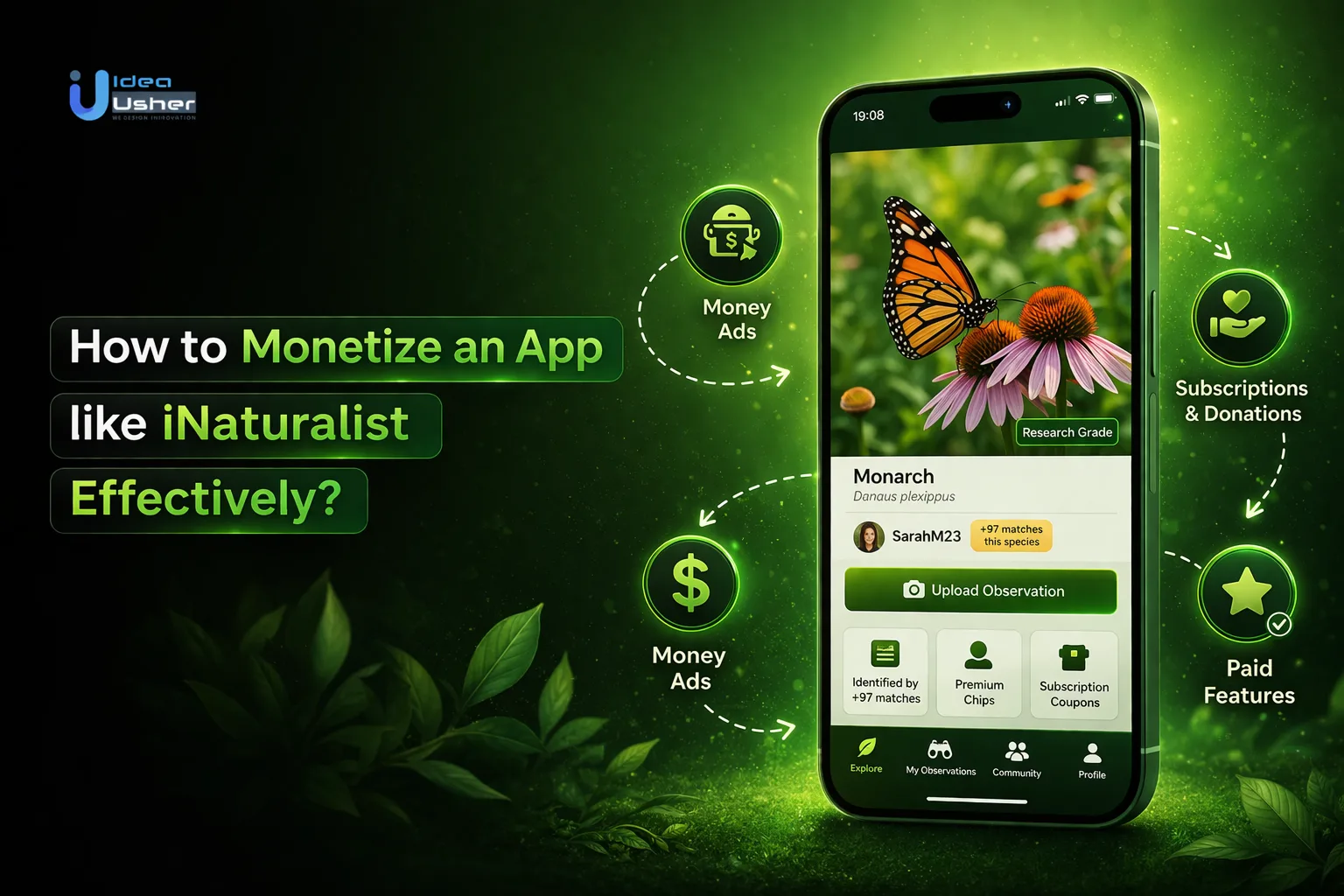
Not everyone needs to be a scientist, but many still want to contribute in a meaningful way. Earlier, there was no simple system that could let users record biodiversity data without technical expertise. That gap often left real-world observations unused and scientifically irrelevant. Apps like iNaturalist changed this by making identification faster and participation more accessible.
AI can now process images quickly, and community validation can reliably improve data accuracy. Users can easily contribute within seconds and still feel that their input holds research value. It is important to choose a proper monetization model for such apps because it must sustain infrastructure costs and support data quality systems while keeping participation open and trustworthy.
We’ve built many science community platforms that use technologies like geospatial analytics and computer vision. As IdeaUsher has this expertise, we’re sharing this blog to discuss how to monetize an app like iNaturalist.
Market Demand for Science Community Apps
According to Zion Market Research, the global community engagement software market was valued at USD 2.88 Billion in 2024 and is projected to reach USD 3.58 Billion by 2034, growing at a CAGR of 4.78%. While these figures reflect broad market growth, specialized scientific platforms are accelerating much faster as regulatory mandates transform biodiversity data into a high-stakes commercial necessity.
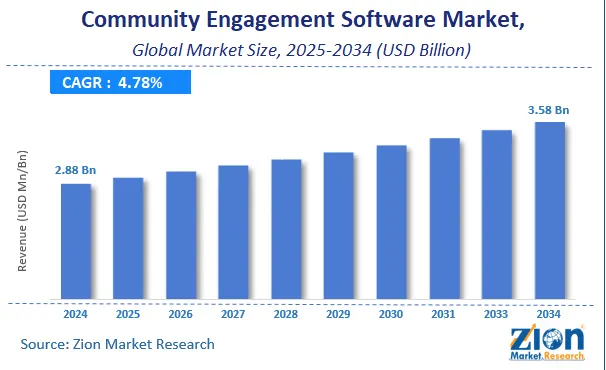
Source: Zion Market Research
For investors, the opportunity lies in shifting ecological data from a niche hobby to a foundational economic asset. Building such a platform is no longer just about community engagement; it is about creating a proprietary engine for environmental intelligence.
Success requires a strategic blend of community-driven data collection and high-level utility to serve the global demand for corporate environmental reporting.
Growth in Citizen Science
The democratization of scientific inquiry has reached a tipping point. We are seeing a shift where the public moves from passive observation to active, digitally enabled contribution. This is fueled by high-resolution smartphone optics and a desire to contribute to tangible climate solutions.
Modern platforms are seeing exponential growth in user-generated observations. For example, eBird has revolutionized ornithology by turning millions of birdwatchers into a global sensor network. For an entrepreneur, this represents a massive, decentralized workforce providing high-frequency data.
The platform value lies in converting this raw enthusiasm into structured, verifiable, and scientifically rigorous data. By gamifying the experience and providing instant value to the user, you create a self-sustaining ecosystem of high-quality data generation.
Need for Real-Time Data
In the current economy, biodiversity data is a material risk factor. Financial institutions and land developers are now required to account for nature-positive outcomes. Traditional manual surveys are no longer sufficient to meet the rigorous reporting standards of 2026.
There is an underserved demand for geolocated, temporally accurate ecological insights. A sophisticated community app solves this data gap by offering:
- Risk Assessment: Monitoring ecosystem health in real-time.
- Compliance: Providing the evidence needed for Corporate Sustainability Reporting.
- Predictive Analytics: Using observation trends to forecast shifts in species distribution.
Platforms like Zooniverse demonstrate how this data can be scaled across disciplines, allowing users to assist in everything from climate modeling to identifying distant galaxies. This versatility proves that the appetite for real-time, human-verified data extends far beyond simple biology.
Climate Tech Funding Trends
The investment landscape has matured, moving toward Nature Tech. Venture capital is pouring billions into platforms that quantify natural capital. This influx is driven by the realization that managing the environment requires precise measurement.
Strategic funding now prioritizes platforms bridging the gap between community engagement and institutional utility. Key trends include:
- Governmental Grants: Public bodies outsourcing data collection to meet national biodiversity targets.
- Corporate Partnerships: Leaders investing in data to secure supply chains and meet ESG commitments.
- Biodiversity Credits: An emerging market requiring high-fidelity, verified data produced by community science.
Exit strategies are diversifying. From data-as-a-service subscriptions to licensing proprietary identification algorithms, the financial infrastructure for these platforms is now exceptionally robust. Investors are no longer just looking for users; they are looking for the data moats these users build.

How Apps Like iNaturalist Actually Create Value?
The market for apps like iNaturalist derives its primary value from transforming raw human curiosity into structured, high-value assets. Unlike traditional social networks that monetize user attention, these specialized platforms monetize accuracy and scientific utility. For investors, the product is a proprietary pipeline that bridges the gap between casual outdoor observation and institutional environmental research.
This model creates a marketplace where data integrity is the primary currency. When a platform captures the ground truth of the natural world, it becomes an indispensable tool for governments and corporations. This shifts the business model from simple consumer fees to high-stakes environmental intelligence that serves global industries.
Research-Grade Data
The core challenge is turning a simple photo into a scientific record. iNaturalist solves this through a rigorous Data Quality Assessment process. By capturing precise GPS, time, and image metadata, the platform filters observations through community peer review. Once an observation reaches a two-thirds consensus on identification, it is elevated to Research Grade status.
This standard allows the data to be integrated into global scientific repositories like the Global Biodiversity Information Facility. For a developer, this creates a massive competitive moat. Researchers and policy-makers will always rely on the platform that provides the most reliable, peer-reviewed datasets for their decision-making.
Community + AI Growth
The synergy between human expertise and machine learning creates a self-scaling loop. This is anchored by iNaturalist’s Computer Vision model, which provides instant automated species identification suggestions. Initially, the community provides training labels; as the AI matures, it lowers the barrier to entry for new users, accelerating data collection.
This dual engine, often seen in specific Projects or localized BioBlitzes, solves the scalability issues of manual research:
- Novices get instant gratification through AI suggestions.
- Experts focus on identifying rare or complex cases that the AI cannot yet solve.
- The Platform gains an improving algorithm and a cleaner dataset with every interaction.
Data Over Subscriptions
In environmental tech, the real enterprise value is found in the data lake, not monthly user fees. As global regulations like the TNFD become standard, the demand for real-time ecological data is skyrocketing. Corporations use the Explore tools and filtered datasets to prove compliance and mitigate supply chain risks.
Owning a longitudinal dataset is a strategic infrastructure play. This data can be licensed to consultants, integrated into agritech APIs, or used for predictive modeling. The users act as a decentralized workforce building a high-value asset that appreciates significantly over time.
Who Pays for Biodiversity App Data Today in Apps like iNaturalist?
While apps like iNaturalist are often free for users, the data they generate is a high-value commodity. The shift toward a nature-positive economy has turned ecological observations into essential inputs for global risk management.
Today, the customers are the institutions requiring granular, verified environmental insights to operate. This transition from hobbyist tool to enterprise data source is where the primary ROI lies for investors.
Environmental and ESG Teams
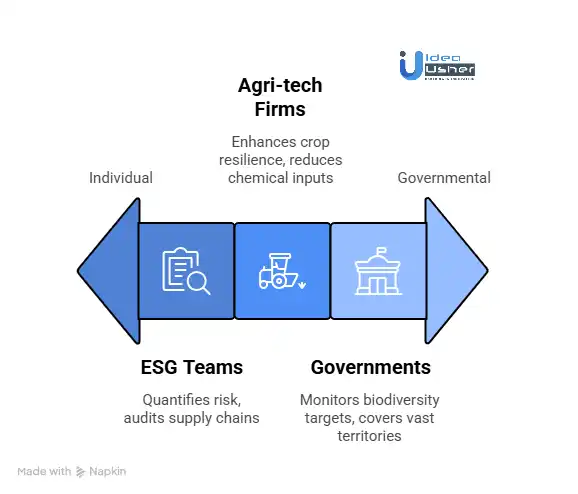
Consultancies are the bridge between raw data and corporate action. They use community-sourced observations to perform impact assessments for infrastructure, mining, and urban projects. Traditionally, this required expensive manual surveys; now, it relies on digital baseline models.
The ESG Shift: Under the TNFD framework, corporations must disclose nature-related dependencies. ESG teams pay for biodiversity data to:
- Quantify Risk: Identifying if assets are in biodiversity-sensitive zones.
- Audit Supply Chains: Verifying that sourcing doesn’t destroy local ecosystems.
- Benchmark Progress: Providing empirical evidence of restoration to shareholders.
Other platforms like Anecdata demonstrate this commercial viability by allowing organizations to buy custom-tailored data collection “spaces” for specific environmental projects, effectively serving as a private-label version of these community tools.
Agri-tech and Crop Intelligence
In agriculture, biodiversity is a critical production variable. Agri-tech firms integrate this data into digital farming platforms to enhance crop resilience. By tracking pollinators and natural pest predators, these firms provide crop intelligence that reduces reliance on chemical inputs.
The data fuels Decision Support Systems for:
- Biological Pest Control: Monitoring predator populations to optimize pesticide use.
- Pollination Mapping: Predicting yields based on local bee and butterfly density.
- Soil Health: Tracking indicator species that reflect the land’s microbiome health.
Specialized platforms like Pl@ntNet further prove this value by focusing specifically on plant identification, providing the deep botanical datasets that agricultural firms need to manage weeds and crop-related flora at scale.
Governments and Climate Impact
Governments are the largest strategic buyers of this intelligence. National agencies are mandated to hit biodiversity targets but often lack the budget for country-wide monitoring. They use these apps as a decentralized sensor network to cover vast territories at a fraction of the cost of field teams.
| User Type | Application | Value Driver |
| Municipalities | Urban Green Corridors | Citizen health and climate cooling |
| National Parks | Invasive species detection | Preventing ecosystem collapse |
| Climate Agencies | Tracking phenology | Measuring the real-world pace of warming |
This demand creates stable revenue through grants, data partnerships, and specialized contracts where the platform is paid to mobilize its community for regional conservation goals.
Freemium Models That Work in Apps like iNaturalist
While the core mission of apps like iNaturalist is often rooted in open science, building a sustainable venture requires a clear monetization strategy. The freemium model is the most effective approach for this vertical, allowing for massive data collection at the top of the funnel while converting power users into a recurring revenue stream.
The key is to keep the basic contribution experience free to ensure the decentralized sensor network remains active, while gaining high-utility professional features for those who derive commercial or academic value from the platform.
What Users Will Pay For
Identifying the willingness to pay depends on the user’s persona. While a casual hiker may never subscribe, professional ecologists, researchers, and dedicated life-listers seek tools that enhance their efficiency and depth of insight.
Features that trigger conversion often include:
- Advanced Data Visualization: Heat maps of species distribution and seasonal migration trends.
- Bulk Export Tools: The ability to export clean, formatted datasets for use in external GIS software.
- Smart Filters: Searching by specific taxonomic traits, conservation status, or localized hotspots.
Other platforms like eBird demonstrate this by offering specialized integration with personal record-keeping, showing that users value organized, high-fidelity digital journals of their scientific interactions.
Offline Maps vs Field Tools
In the field, connectivity is the primary pain point. Professional users are willing to pay for pro-grade reliability when they are far from a cell tower. This creates an upsell opportunity for features that transform a smartphone into a dedicated scientific instrument.
Strategic premium tools often include:
- Offline Vector Maps: High-detail topographic maps that function without data for precise geotagging in remote areas.
- Sound ID & Spectral Analysis: Real-time audio processing to identify bird calls or insect sounds, a feature popularized by apps like BirdNet.
- Enhanced Computer Vision: Access to advanced AI models that can identify sub-species or rare varieties with higher confidence scores.
By offering these as premium add-ons, the platform moves from a simple social app to an essential piece of field tech for serious enthusiasts and professionals alike.
Tiers That Convert Users
Conversion in science apps is about moving users from observers to curators. Pricing should reflect the increasing value a user derives from the platform as their expertise and data needs grow.
| Tier | Target Audience | Primary Driver |
| Free | Casual Observers | Basic AI Identification & Community Access |
| Pro (Individual) | Enthusiasts & Students | Offline Maps, Unlimited Species Lists, No Ads |
| Business / Lab | Research Teams | Collaborative Projects, API Access, Data Management |
Successful platforms often use a tiered SaaS model to ensure that the heaviest data users are the ones funding the infrastructure.
For instance, Pl@ntNet relies on institutional partnerships, but a commercial venture can thrive by charging for the high-level analytical tools that professional environmental consultants require.
B2B Data Licensing in Apps like iNaturalist
While consumer features drive growth, B2B data licensing is the engine for high-margin, scalable revenue. For investors, the goal is to shift from an app company to a data infrastructure provider. In this model, the community acts as a decentralized sensor network, while the platform’s value is the curated, research-grade data it provides to the enterprise market.
As global reporting standards like the CSRD and TNFD become mandatory, biodiversity data has transitioned from a niche academic interest to a critical business requirement.
Packaging Biodiversity Data
Raw observations are not a product; curated datasets are. To monetize effectively, platforms must package data in formats that satisfy both scientific rigor and corporate compliance. This involves aligning data with global standards like Darwin Core (DwC) or GeoTIFF for habitat mapping.
Successful packaging includes:
- Taxonomic Cleaning: Matching all records to official registries to avoid ambiguity.
- Verification Scoring: Using a Data Quality Assessment to label records as Research Grade, which commands a higher price.
- Temporal Continuity: Providing longitudinal data showing ecosystem changes over years, an asset impossible for consultants to replicate quickly.
APIs, Dashboards, and Access
Enterprise clients want to integrate insights into existing workflows via APIs and Climate Impact Dashboards. By offering a Data-as-a-Service (DaaS) model, you create recurring revenue and technical stickiness within client operations.
- API Access: Agri-tech firms pay to pull real-time species data into proprietary risk models.
- Custom Dashboards: ESG teams use filtered views to monitor sites for protected species, receiving alerts when new observations appear.
- Private Projects: Platforms like Anecdata allow organizations to buy private spaces to mobilize employees or communities for targeted data collection.
Pricing High-Value Datasets
Pricing is shifting from flat fees toward value-based and volume-based models. Because this data mitigates billion-dollar risks or ensures compliance, pricing reflects strategic importance rather than the cost of collection.
- Strategic Importance: Because this data mitigates billion-dollar risks or ensures compliance, pricing reflects strategic importance rather than the cost of collection.
- Volume Metrics: Charging based on records retrieved via API for agri-tech and other apps.
- Geographic Licensing: Annual fees for monitoring specific geographic radii for land developers.
- Public Sector Contracts: Multi-year contracts to manage official biodiversity databases for national governments.
Companies like Gentian illustrate this by using AI to turn raw imagery into habitat maps sold to urban planners. In this ecosystem, the most lucrative strategy is to own the ground truth that every other environmental software needs to function.
Monetizing AI Features in Wildlife Apps like iNaturalist
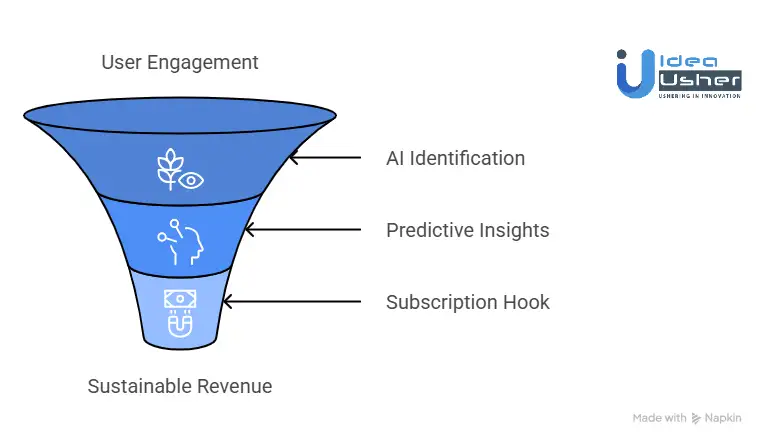
The commercial potential of apps like iNaturalist is increasingly defined by the depth of their machine learning capabilities. AI is the primary driver of user retention and data scalability, turning casual snapshots into verified scientific records. By positioning AI as a professional-grade tool, platforms shift from being simple observation logs to essential analytical engines for the global environmental market.
Paid AI Identification Tiers
Professional users require more than a “best guess.” They need high-confidence scores and taxonomic depth to ensure research integrity.
- Confidence Scoring: Premium tiers provide probability percentages, helping researchers filter for the most reliable data.
- Sub-species Recognition: Advanced Computer Vision distinguishes between rare sub-species that free models may overlook.
- Batch Processing: Commercial users can identify thousands of images at once, a service that saves environmental firms significant manual labor.
Other platforms like Pl@ntNet demonstrate that as datasets grow, the AI becomes a standalone product that can be licensed via API to third-party developers.
Predictive Insights For Researchers
AI can move beyond identification to offer predictive modeling, which is invaluable for the scientific and agricultural sectors.
- Phenology Prediction: AI predicts the timing of seasonal events, such as blooming or migration, helping researchers plan field studies.
- Range Shift Modeling: Subscriptions provide insights into how species move due to climate change, offering a “look-ahead” for conservationists.
- Invasive Alerts: Automated monitoring flags the first appearance of invasive species, a high-value service for park authorities.
Platforms like BirdNet illustrate this by using acoustic AI to map populations in real-time, creating a high-utility tool often funded through institutional grants.
AI As A Subscription Hook
Computer Vision transforms a smartphone into a laboratory-grade sensor, making it a powerful hook for recurring revenue.
- Real-time Video ID: Identifying species through a live camera feed is a significant technical feat that justifies a premium price.
- Feature Gating: Basic users receive limited daily IDs, while Pro subscribers get unlimited access and faster server-side processing.
- AI Training Modules: High-level subscribers can gain access to modules where they help refine models for rare taxa, fostering elite community contribution.
By treating advanced AI as a premium service, you cover the costs of high-compute GPU clusters while maintaining a free tier to keep the overall data lake growing.
Unique Revenue Streams Most iNaturalist-Like Apps Miss
While basic subscriptions and data licensing are the standard, the most sophisticated apps like iNaturalist tap into institutional ecosystems to unlock high-ticket revenue. These streams move beyond individual users, targeting the massive budgets of global organizations, government agencies, and corporate sustainability departments.
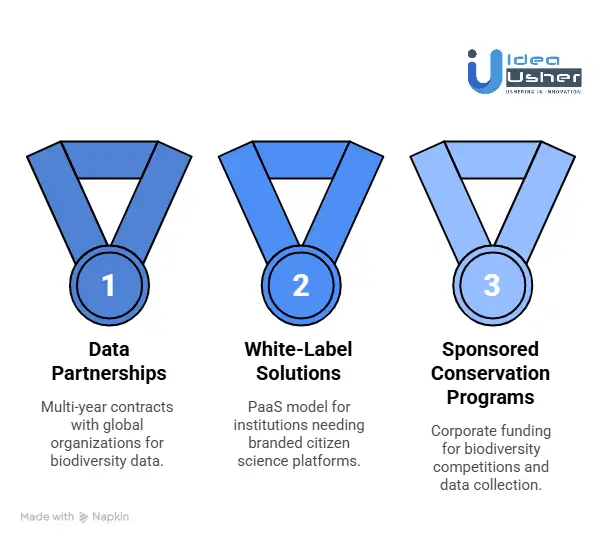
Success in this tier requires shifting from being a “community app” to becoming a “strategic partner” in global environmental infrastructure.
White-Label Solutions For Institutions
Many universities, national parks, and research NGOs want the power of a citizen science platform but need it under their own brand and with total data control. Providing a “Platform-as-a-Service” (PaaS) model allows these entities to deploy your technology without building from scratch.
- Custom Branding: Institutions pay for a white-labeled version of the app to maintain their own community identity.
- Private Data Silos: For sensitive research (e.g., tracking endangered species or mineral-rich land), organizations pay for private databases that are not shared with the public.
- Institutional Dashboards: Universities buy access to “Command Centers” that allow professors to manage hundreds of student contributors and export grades or research data automatically.
For example, Platforms like Anecdata have successfully pioneered this by allowing organizations to host “Private Projects,” providing the same robust tech stack but with customized privacy and moderation settings.
Sponsored Conservation Programs
Corporations are increasingly looking for “tangible” ways to meet their ESG goals. Instead of just buying carbon offsets, they want to fund active engagement in the field. This creates a high-margin revenue stream through sponsored content and “Impact Challenges.”
- Branded BioBlitzes: A corporation like a global outdoor brand pays to sponsor a month-long biodiversity competition, driving thousands of users to collect data in specific regions.
- Funded “Taxa Missions”: An organization might pay to “bounty” certain types of data. For example, a timber company might fund a mission to map invasive beetles in their supply chain forests.
- In-App Impact Rewards: Sponsors provide the “prizes” or donations triggered by community milestones, while paying the platform a hosting and management fee.
Data Partnerships With Global Orgs
The highest level of revenue comes from being the “Official Data Provider” for international regulatory and scientific bodies. These are typically multi-year, multi-million dollar contracts where the platform becomes part of the global reporting standard.
| Partner Type | The Opportunity | The Revenue Model |
| UN / World Bank | Providing biodiversity indices for emerging market loans. | Multi-year “Data Supply” contracts. |
| National Govs | Powering the country’s official species registry. | Annual “Infrastructure Maintenance” fees. |
| Global GBIF / IUCN | Serving as the primary feed for the “Red List” of threatened species. | Strategic grants and integration subsidies. |
Platforms like eBird have effectively become the “Gold Standard” for avian data, ensuring that every major environmental policy regarding birds must reference their dataset.
For an investor, achieving this “standard” status is the ultimate exit, as the platform becomes an un-removable piece of the global economic and scientific machine.
How to Turn Biodiversity Data Into Revenue Assets?
The transformation of raw nature observations into a financial asset is a silent revolution in environmental tech. For apps like iNaturalist, the value is not just in the photo count, but in how those images are structured into a digital twin of the natural world.
As global reporting frameworks like the TNFD move from voluntary to mandatory, this data has become a critical requirement for corporate risk management.
Structuring Data For Monetization
Data is only an asset if it is decision-ready. Raw user uploads are often noisy and inconsistent. To monetize effectively, platforms must apply rigorous structural layers.
- The Standardization Layer: Converting casual notes into Darwin Core (DwC) standards for integration into global scientific databases.
- The Verification Engine: Using Research Grade flagging where community experts or AI confirm an identification. Verified data commands a premium over unverified observations.
- Longitudinal Aggregation: Stacking years of data in the same location. A decade of photos in one forest is a temporal asset revealing climate-driven range shifts.
- Geospatial Accuracy: Refining GPS coordinates with habitat metadata to create high-resolution layers for urban planners.
Converting Field Data Into Insights
Enterprise clients do not want to look at pictures of beetles; they want to know if that beetle’s presence impacts a construction project. Turning field data into decision intelligence is the key to high-ticket B2B contracts.
- Proximity Risk Alerts: Notifying land developers when a protected species is spotted within a specific radius of their asset.
- Biodiversity Benchmarking: Comparing a company’s site against a regional pristine baseline to quantify restoration success.
- Supply Chain Verification: Using field data to prove that a specific farm is not encroaching on high-biodiversity hotspots.
- Regulatory Compliance Reports: Generating automated documentation that meets the strict environmental standards required by modern lenders.
Building Proprietary Datasets
In the data economy, your moat is the uniqueness of your dataset. While anyone can build a camera app, building a proprietary, validated database takes years of community trust and AI training.
- Acoustic Fingerprints: Developing a library of rare bird or insect calls similar to BirdNet for real-time monitoring in forestry and mining.
- Phenological Calendars: Tracking exact plant bloom dates across a continent to predict crop yields and pollinator health for agri-tech.
- Indicator Species Maps: Collecting data on sensitive species that act as early warnings for pollution or ecosystem collapse.
- Exclusive Ground Truth: Selling environmental health scores to local governments that rely on your platform as their primary source of ecological truth.
By focusing on these ground-truth assets, the platform becomes the foundational infrastructure for the nature-positive financial sector. Only by owning the data that regulators trust can an app transition from a hobbyist tool to a mandatory business utility.
Monetization Triggers Hidden in User Behavior
The transition from a casual observer to a paying customer in apps like iNaturalist is not random. It is driven by specific behaviors that signal a user has moved from curiosity to utility. By identifying these behavioral triggers, platforms can deploy surgical monetization strategies that feel like helpful upgrades rather than intrusive sales pitches.
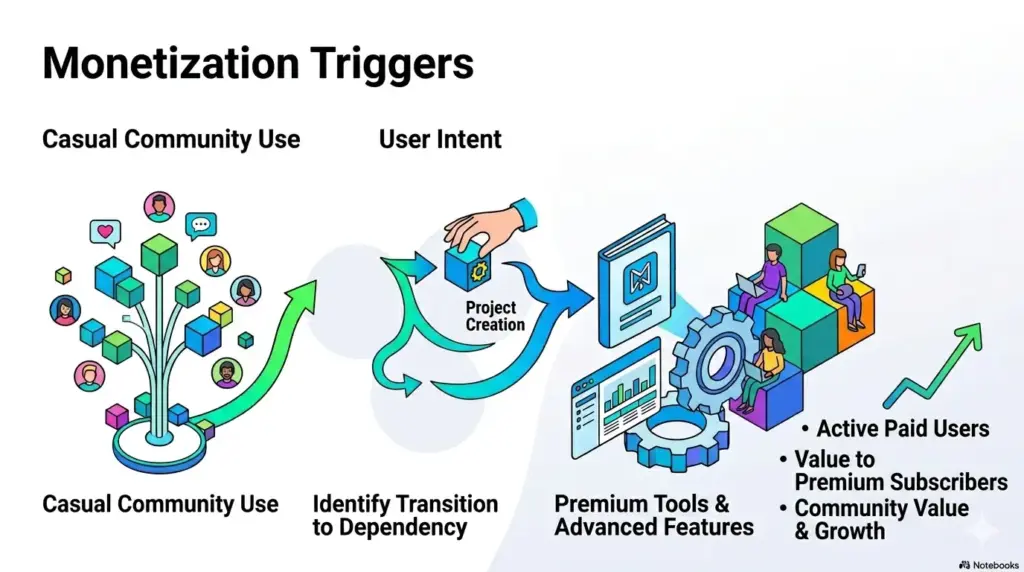
For an investor, the goldmine is the high-intent user base that depends on the platform for their professional or academic livelihood.
1. Behavioral Conversion Triggers
The conversion moment usually occurs when a user hits a technical or organizational ceiling. Once the platform becomes a primary work tool, the willingness to pay increases.
- The Content Threshold: A user who has uploaded over 500 observations is no longer a passerby. They have a vested interest in their digital legacy and are prime candidates for storage and export tiers.
- The Collaboration Trigger: When a user starts a project or a bioblitz, they have transitioned into a curator role. This is the perfect moment to offer premium group management tools.
- The Connectivity Gap: Frequent usage in remote areas suggests a high need for the offline maps and field tools found in apps like BirdNet.
- The API Demand: When a user repeatedly attempts to scrape or export large datasets, they have outgrown the consumer interface and are ready for a professional data license.
2. Identifying Power Users Early
Not all users are created equal. Predictive analytics can flag professional environmental consultants or university researchers within their first week of activity.
| User Action | Potential Persona | Monetization Path |
| Bulk CSV Exports | Environmental Consultant | B2B API Licensing |
| High Identification Accuracy | Taxonomist or Expert | Expert Verification Rewards |
| Daily Multi-Site Usage | Field Researcher | Institutional Lab Accounts |
The Professional Flag: If a user consistently uploads high-resolution macro photography or uses external microphones for acoustic data, they are not just a hobbyist. They are using your app as a professional sensor.
3. Data Driven Upsell Features
Smart monetization uses behavioral data to trigger contextual upsells. This ensures the right feature is offered at the exact moment of need.
- The Accuracy Hook: If a user frequently misidentifies a specific family of plants, a notification can offer a botanical deep-dive AI pack or a subscription to advanced computer vision features like those in Pl@ntNet.
- The Social Proof Trigger: When a user’s observation is verified by the community or cited in a research paper, a prompt can offer a professional profile upgrade to highlight their scientific contribution.
- The Logbook Expansion: For users tracking long-term trends, tools like those in eBird allow for the creation of personal lifelists and trip reports, which can be gated as premium organizational features.
- The Identification Queue: In apps like Flora Incognita, users who prioritize speed might pay for priority cloud-processing to jump the queue for complex botanical identifications.
- The Verification Pathway: Users on platforms like iRecord who focus on high-stakes data for national registries can be offered premium “Validation Dashboards” to track the progress of their records through official channels.
By mapping these triggers, a platform moves from a passive repository to a proactive service. It creates an ecosystem where the most active contributors are also the most satisfied customers because the premium features directly solve their most frequent frustrations.
Pricing Strategies for High-Value Data Products
The monetization of apps like iNaturalist hinges on transforming crowdsourced datasets into structured commercial assets. Pricing should not just cover server costs; it should capture a share of the value created for industries like agri-tech, land development, and insurance.
Success requires a balance between keeping the data pipeline open for science and capturing a premium from those using it for profit.
Usage Based Pricing For APIs
Modern data buyers prefer to pay for what they consume. Shifting to a usage-based model ensures that high-volume commercial users subsidize the platform’s infrastructure.
- The Call Based Model: Charging per API request. A weather app pulling local flower blooming data pays cents per call, but at scale, this becomes a reliable revenue stream.
- Data Volume Tiers: Pricing based on the number of records retrieved. An environmental firm downloading 10,000 Research Grade observations for a regional impact study pays a flat processing fee per thousand records.
- Enrichment Surcharges: Basic GPS data is cheap, but data enriched with AI-driven confidence scores or historical Time-Series context carries a significant markup.
Tiered Pricing for Startups and Enterprises
A one-size-fits-all approach fails in the biodiversity sector. You need to nurture a developer ecosystem while extracting maximum value from established corporations.
| Tier | Target Audience | Feature Set |
| Sandbox | Academic Researchers | Free access to limited datasets for non-commercial use. |
| Growth | Agri-tech Startups | Standard API limits and basic support for early-stage integration. |
| Enterprise | Fortune 500 / Govs | Unlimited throughput, custom SLAs, and dedicated data scientists. |
Strategic Insight: Just as Pl@ntNet offers API tiers for different commercial scales, your pricing should grow with your clients. A startup might pay $100 a month for basic identification, while a global supply chain auditor pays $10,000 for a deep-data dive into their global footprint.
Annual Contracts and Pay Per Access
The stability of your revenue depends on moving toward recurring annual contracts. While pay-per-access is great for low-friction onboarding, enterprise clients prefer the predictability of annual spend.
- The Data-as-a-Service Subscription: Providing a constant stream of real-time observations for a specific geographic area such as a national forest or a corporate campus.
- On-Demand Snapshots: One-time purchases for historical data archives. This is useful for legal firms or developers needing a baseline for an Environmental Impact Statement.
- Platform-as-a-Service (PaaS): White-labeled versions of the tech stack, similar to the model used by Zooniverse, where institutions pay annual maintenance fees to run their own private citizen science projects.
By diversifying these models, a platform can ensure consistent cash flow. You capture the quick wins from independent developers while securing the long-term stability of government and corporate partnerships.
Where Most Monetization Strategies Fail Early?
Scaling apps like iNaturalist into profitable ventures requires avoiding the volunteer trap. Many platforms fail because they prioritize community growth without building the rigorous backend required by commercial buyers. If the data is not audit-ready, it is not sellable.
The bridge between a hobbyist tool and a financial asset is narrow. Most startups fall off by ignoring the specific requirements of institutional stakeholders.
Weak Data Quality Reduces Trust
The most common failure point is dirty data. While a blurry photo is fine for a social feed, a government agency cannot base a million dollar decision on unverified observations.
- Identification Drift: Without expert-led or high-confidence AI verification, the error rate becomes too high for regulatory use.
- Geospatial Imprecision: If users frequently hide locations to protect privacy, the data loses its value for site-specific environmental impact assessments.
- The Social Media Bias: Users often over-report charismatic species like eagles while ignoring vital bio-indicators like soil fungi. This creates a skewed dataset that lacks the holistic view needed for research.
- Lack of Metadata: Observations without timestamps or weather context are less valuable to climate researchers who need environmental snapshots.
The Quality Gap: A buyer would rather pay $5,000 for 100 verified Research Grade records than receive 1,000,000 unverified observations for free. Trust is the primary currency.
Overbuilding Features Without Revenue
Engineering teams often get distracted by cool features that do not drive the bottom line. In apps like iNaturalist, this usually looks like over-gamification that does not serve the data buyer.
| Feature Type | High Dev Cost? | Revenue Potential? |
| Social Leaderboards | Yes | Low (Consumer only) |
| 3D AR Species View | High | Low (Gimmick) |
| DwC Data Export API | Medium | High (Enterprise) |
| Batch ID AI Engine | High | High (Commercial) |
Focusing on the social experience at the expense of data structure is a recipe for a zombie app. These are platforms with many users but zero bankable assets. Successful entities like Pl@ntNet ensure their core technology is robust enough to be sold as an API from day one.
Ignoring Enterprise Use Cases
Many founders wait until they have enough users before talking to enterprise clients. By then, the data structure is often incompatible with corporate needs.
- Privacy Silos: Large landholders or mining companies often want to use the tech but cannot have their proprietary findings visible on a public map. If architecture does not support private projects, you lose high-value contracts.
- Audit Trails: For an app to be used in legal environmental reporting, every observation needs a clear chain of custody. Most apps ignore this until a major client asks, and by then, the legacy data is useless for the deal.
- The Integration Gap: Enterprises use GIS software and SAP systems. If data does not plug directly into these workflows via professional APIs, you are just an island in their tech stack.
- Scale Limitations: Systems designed for one upload at a time fail when a forestry service tries to sync 50,000 camera-trap images at once.
By the time most platforms realize they need these features, an agile competitor or a white-labeled institutional solution has already locked in the multi-year government contracts. Efficiency in monetization means building for the buyer’s workflow as early as you build for the user’s camera.
Why Choose IdeaUsher for Apps Like iNaturalist?
Selecting a partner for apps like iNaturalist requires more than standard mobile expertise. It demands deep knowledge of complex data ecosystems.
At IdeaUsher, we bring the technical rigor needed to turn a community vision into a high-performance commercial engine. With over 500,000 hours of coding experience, our team of ex-MAANG/FAANG developers ensures your infrastructure is world-class.
Expertise In AI And Geospatial Platforms
Our engineers specialize in high-compute environments for real-time species recognition and precision mapping. We integrate advanced Computer Vision models and robust geospatial backends. This ensures your platform provides the Research Grade accuracy that institutional buyers and scientific organizations demand.
Built For Monetization
Most developers focus on features, but we focus on the bottom line. We architect your platform to support API licensing, white-labeled portals, and subscription hooks. By structuring your data for the enterprise market during the initial build, we ensure your app is a financial asset from day one.
Support From MVP To Scale
The journey from a Minimum Viable Product to a global standard requires a partner that can handle rapid growth. IdeaUsher provides support through every phase, from UI/UX prototyping to deploying high-availability cloud clusters. We ensure your architecture is ready for millions of users and the strict security needs of corporate contracts.
Conclusion
Monetizing an app like iNaturalist effectively requires bridging the gap between community science and corporate utility. By using IdeaUsher’s ex-MAANG/FAANG expertise to build rigorous AI verification and tiered API systems, a passion-driven platform becomes a scalable, revenue-generating engine. Success lies in owning the trusted ground truth that global markets now require for regulatory compliance.
FAQs
A1: The most effective strategy is a multi-tiered approach. While the core experience remains free, you can generate revenue through B2B API licensing for researchers and tiered subscriptions for advanced tools like offline mapping. This allows high-value data consumers to fund the platform’s infrastructure.
A2: Revenue varies based on your model. While an ad-based app might earn very little, a niche science app with a 1% conversion rate to a $10/month pro tool generates $100 monthly. The real profit often lies in B2B data sales, where a single institutional license can be worth thousands.
A3: Success requires a user-friendly frontend paired with a high-performance backend. You must integrate specialized APIs for GPS mapping, species databases, and Computer Vision for identification. Partnering with an experienced team like IdeaUsher ensures the scalability and data accuracy required for a professional resource.
A4: These apps bridge the gap between citizen scientists and researchers. Users contribute ground truth data by uploading photos or observations, which are verified by AI or experts. This creates a massive, real-time database used by organizations to monitor biodiversity and inform global environmental policy.