

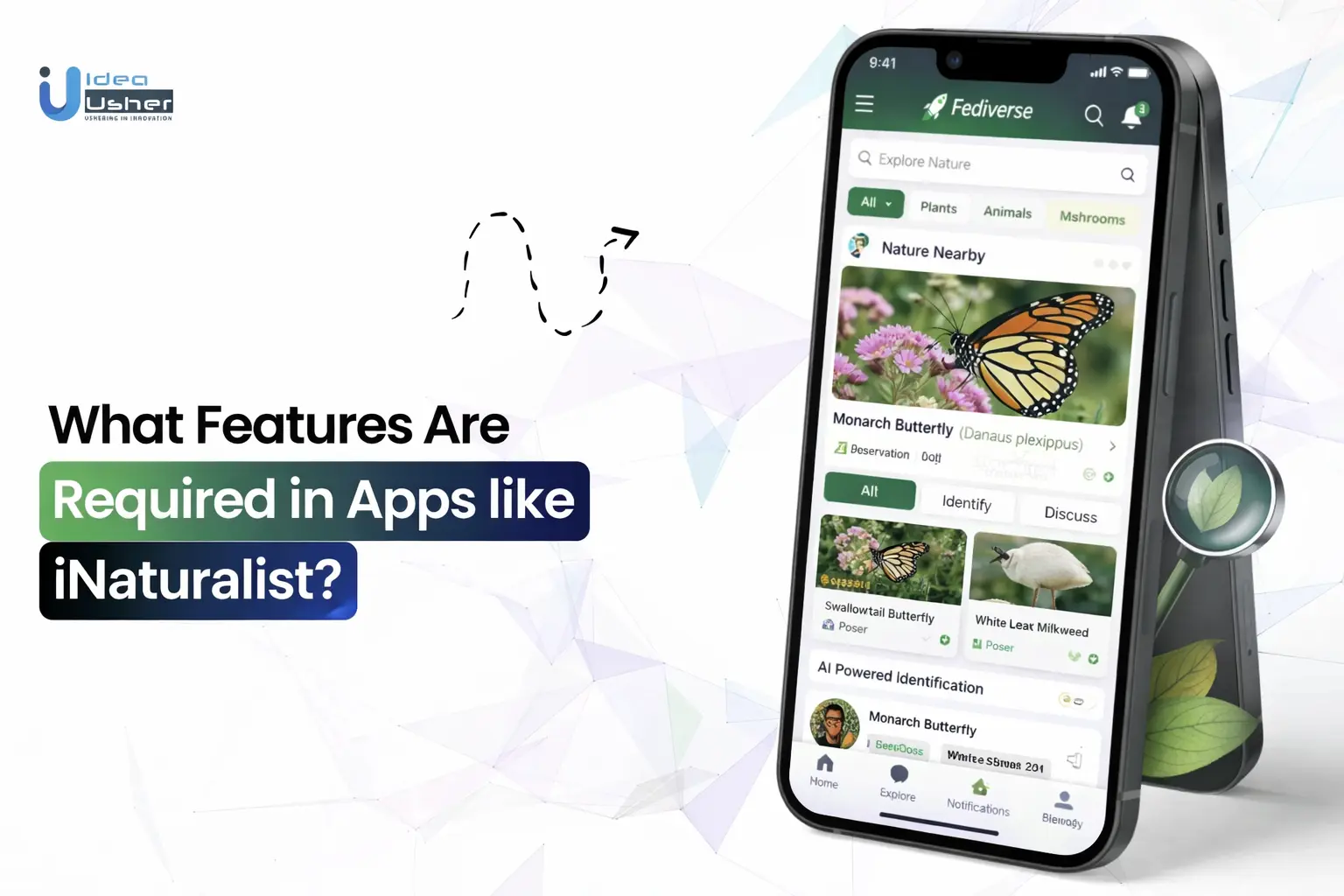
Not every question people have today fits neatly into a search bar. Some come from real-world moments, like spotting something unfamiliar or noticing patterns in nature that feel worth understanding. This is where apps like iNaturalist gained relevance, as they can naturally extend curiosity into action. These platforms now use AI to suggest species in real time while also allowing communities to verify observations collaboratively over time.
This combination helps create a system that feels both intelligent and reliable for users. It is important to choose features carefully when developing such an app because they must support high accuracy while keeping the experience simple and intuitive. The right balance ultimately decides how credible and scalable the platform becomes.
We’ve built many science community platforms powered by machine learning frameworks and geospatial technologies. With this expertise, we’re sharing this blog to discuss the key features required in an app like iNaturalist.
Why Build a Science Community App Like iNaturalist?
According to Zion Market Research, the global community engagement software market was valued at USD 2.88 billion in 2024. It is projected to reach USD 3.58 billion by 2034, growing at a CAGR of 4.78%. Beyond these numbers, 2026 marks a shift where high-fidelity mobile hardware and mature AI models make “Nature-Tech” a primary interest for institutional investors.
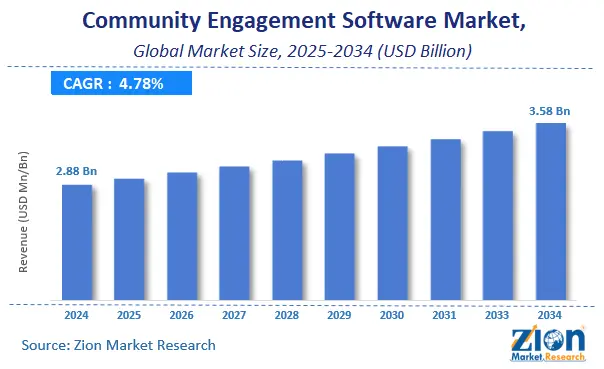
Source: Zion Market Research
For entrepreneurs, this is a strategic move to build high-integrity data pipelines. Platforms like iNaturalist and eBird have proven that crowdsourced biological records are now core to ESG reporting. The ability to generate verified, geolocated data has transitioned from a hobbyist pursuit to a critical asset for industrial and governmental sectors.
Rising Citizen Science Demand
Citizen science has entered the mainstream “participation economy.” Users now demand digital interactions that contribute to tangible environmental solutions. In 2026, scientific contribution is a form of social currency, with millions seeking platforms that validate their role in climate monitoring.
Technological barriers have vanished. Modern smartphones use on-device Neural Processing Units (NPUs) to run computer vision models, a feature popularized by apps like Seek to provide instant identification. This allows non-experts to provide data with professional-level accuracy, creating a massive, untapped workforce capable of real-time environmental monitoring at scale.
Addressing Niche Market Gaps
Legacy platforms often suffer from generalist bloat, creating friction for specialized users. A vacuum exists for vertical biodiversity apps catering to specific ecosystems or high-value taxa that require more than just a generic photo upload.
- Regional Focus: Opportunity exists in biodiversity hotspots like Southeast Asia or the Amazon, where Western platforms lack localized data and language support.
- Precision Tools: Investors should target high-impact categories, such as invasive species tracking for agriculture or pollinator health for food security.
- UX Innovation: Most current tools are designed by scientists for scientists. There is a clear gap for a platform using “FinTech-grade” UI to make data collection addictive and frictionless for the general public.
Nature-Tech Monetization Potential
Nature-Tech is no longer grant-dependent. In 2026, monetization is tied to the trillion-dollar transition toward a nature-positive economy. Private finance is scaling investments into nature-based solutions rapidly.
- B2B Data Licensing: Crowdsourced data is essential for developers and energy firms required to conduct legal environmental impact assessments.
- Digital MRV: Platforms can act as the verification layer for carbon and biodiversity credit markets, taking fees from the environmental credit ecosystem.
- Premium Tiers: Serious hobbyists and researchers pay for advanced features like high-resolution offline mapping and private project workspaces.
- Corporate CSR: Large enterprises pay for turnkey platforms where employees participate in branded conservation challenges, creating a recurring SaaS revenue stream.
What Is iNaturalist And How Does It Work?
iNaturalist is a social network for naturalists functioning as a decentralized data engine. It bridges the gap between casual enthusiasts and the global scientific community by providing a seamless interface for documenting nature. This structure creates a global database of life that grows exponentially through user contributions.
The platform relies on a feedback loop of contribution, automation, and verification. This ensures a low barrier to entry for users while maintaining high-caliber output for institutional stakeholders. It effectively turns every smartphone into a remote sensing device for the planet’s biosphere.
Recording Observations
The user journey begins with the Create Observation interface. Users capture evidence like a photograph or audio recording, which is paired with metadata like GPS coordinates and timestamps. This creates a verifiable record of an organism presence at a specific point in time.
- Geospatial Accuracy: Each observation provides data for species distribution modeling, essential for tracking climate change and habitat loss.
- Offline Capabilities: The app allows users to Bulk Upload or sync observations once connectivity is restored, catering to researchers in remote areas.
- Privacy Controls: Through Geoprivacy settings, users can choose “Open,” “Obscured,” or “Private” status to protect sensitive species.
Instant AI Identification
The platform’s primary hook is its Computer Vision suggestions. Once an image is uploaded, the AI analyzes visual patterns against millions of verified images. Within seconds, the app provides a list of Species Suggestions ranked by similarity and geographical relevance.
- Geographic Weighting: The AI cross-references suggestions with the Seen Nearby database to reduce false positives by filtering for local species.
- Machine Learning Evolution: As the database grows, the model is retrained to become increasingly accurate at identifying obscure subspecies.
- Frictionless Engagement: Instant identification rewards curiosity, ensuring high user retention through immediate gratification.
Validation And Data
The Research Grade status is achieved through human intelligence, serving as the most powerful platform. Once posted, an observation is reviewed via the Identify tab by a global network of experts who confirm or refine the identification.
- Consensus Mechanism: An observation becomes Research Grade when a Community ID reaches a two-thirds majority consensus on a specific taxon.
- Expert Crowdsourcing: High-level scientists act as moderators, creating a mentorship dynamic that maintains the integrity of the dataset.
- Institutional Utility: Through the Projects feature, agencies and NGOs pool data for impact assessments, making the platform indispensable for ecological monitoring.
Who Should Invest in an App Like iNaturalist?
Investing in a science community app is a strategic move within the “Nature Tech” sector. Unlike generic social media, these platforms build high-barrier moats through proprietary datasets and expert communities. For an investor, the appeal lies in the long-term utility of the data and high retention rates of a purpose-driven user base.
Success requires a vision where the platform bridges high-tech solutions and environmental action. Those who control the interface where human observation meets machine learning will lead the burgeoning biodiversity economy.
Eco-Conscious Startups
For startups, the opportunity lies in building a “Super App” for the environmentally aware. By integrating community observation with sustainable commerce or carbon tracking, a startup can create a holistic ecosystem for the modern green consumer.
- Engagement Moats: Using gamification features like Missions or Challenges ensures daily user returns, creating multiple touchpoints for monetization.
- Data Value: Startups can leverage aggregated, anonymized data to provide insights to urban planners or insurance companies assessing climate risk.
- Brand Partnerships: An active, eco-conscious community is highly attractive to sustainable brands seeking authentic placement and high-intent audiences.
NGOs And Research Groups
NGOs and research institutions should invest in modernizing data collection and public engagement. Moving from siloed research to a crowdsourced model reduces the cost per data point and expands the geographic reach of conservation efforts.
- Proprietary Projects: Organizations can use the Projects feature to launch targeted bio-blitzes or monitoring programs for specific regions.
- Funding Streams: Demonstrating a large, active community of citizen scientists strengthens applications for international conservation grants and philanthropy.
- Policy Influence: Owning a platform that produces research-grade data provides the empirical evidence needed to lobby for land protection and policy changes.
EdTech And Learning Platforms
The EdTech sector can utilize this technology to move learning beyond the classroom. By integrating biodiversity observation into curricula, these platforms provide a tangible way for students to engage with biology, ecology, and data science.
- Curriculum Integration: Platforms can offer tools for educators to manage “Classroom Projects,” allowing students to see their contributions in global databases.
- STEM Engagement: The use of AI Identification tools serves as a practical introduction to machine learning and computer vision for young learners.
- Subscription Models: There is a significant B2B market in selling “White-Label” versions of these platforms to schools, summer camps, and botanical gardens.
Core Features Every iNaturalist-Like App Needs
Building a biodiversity platform requires a blend of data science and user-centric design. The value of apps like iNaturalist depends on generating high-quality data through a seamless, tech-enabled experience. These core features ensure that user contributions remain accurate, actionable, and scalable across a global network.
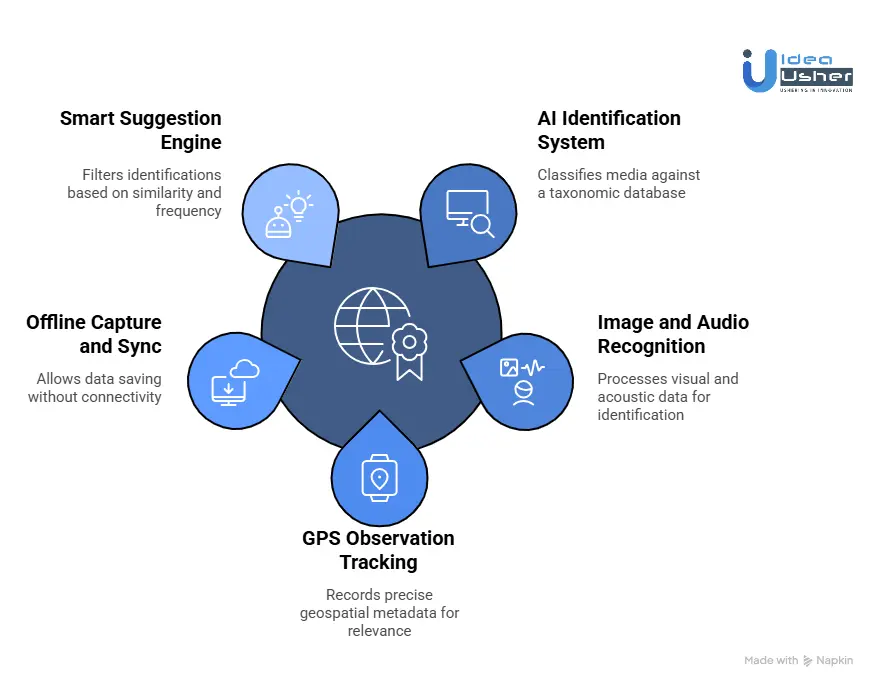
1. AI Identification System
The backbone of the platform is a deep learning system that classifies media against a taxonomic database. This provides immediate feedback and reduces the need for manual review. For example, Pl@ntNet uses this automation to process millions of flora data points efficiently without increasing labor costs.
2. Image And Audio Recognition
To capture all biodiversity, apps must process both visual and acoustic data. While images identify sedentary fauna, audio recognition documents birds and insects. Merlin Bird ID excels here by identifying species through real-time song analysis, expanding the utility of ecological research.
3. GPS Observation Tracking
Observations must be anchored by precise geospatial metadata to be scientifically relevant. The app captures coordinates the moment a user records a finding to create migration maps. Platforms like eBird leverage this spatial intelligence to provide invaluable data for conservationists and urban planners.
4. Offline Capture And Sync
Many biodiversity hotspots lack cellular connectivity, making offline functionality a requirement. The app must allow users to save media and GPS data locally. The WildMind app ensures a seamless background sync once the user returns to a networked area, protecting data integrity.
5. Smart Suggestion Engine
A suggestion engine offers identifications based on visual similarity and local frequency. By cross-referencing AI analysis with species known to inhabit specific coordinates, the engine filters out errors. The Seek app uses this geographic filtering to ensure data is high-quality from the moment of capture.
Community Features That Drive User Retention
Beyond technical tools, the success of apps like iNaturalist relies on a vibrant social ecosystem. These platforms function as a hybrid of a scientific database and a social network where engagement is fueled by a shared passion for discovery. By integrating community-driven verification and personal milestones, these apps transform a solitary hobby into a collaborative global mission.
1. Social Feeds And Profiles
Profiles act as digital journals, cataloging observations for the community to see. Dynamic feeds allow users to track local biodiversity trends or peer discoveries. For instance, Birda uses these feeds to create a birdwatching-specific network, fostering a sense of belonging as users build their naturalist identity.
2. Collaborative Verification Tools
Peer review converts casual photos into research data through integrated discussion tools. Users can comment on observations, offer corrections, or explain specific traits. This process, seen in apps like SpiderSpotter, provides direct mentorship from experts to amateurs, deepening user connection through active learning.
3. Reputation And Badges
Gamification is a primary driver for retention and data quality. By rewarding users with digital accolades for reaching milestones, the platform provides a sense of progression. Zooniverse uses similar systems where badges based on contribution accuracy motivate power users to establish themselves as trusted authorities.
4. Naturalist Follow System
The following mechanisms allow users to curate a personal network of experts and friends. By following researchers, users can learn from leaders in the field and track interesting finds globally. Much like the features in eBird, these personalized notifications provide steady re-engagement triggers that bring users back to the app.
Data Validation and Research-Grade System
The credibility of apps like iNaturalist hinges on a rigorous verification pipeline. This process filters casual snapshots into high-quality scientific evidence, ensuring data is robust enough for global research institutions and government agencies.
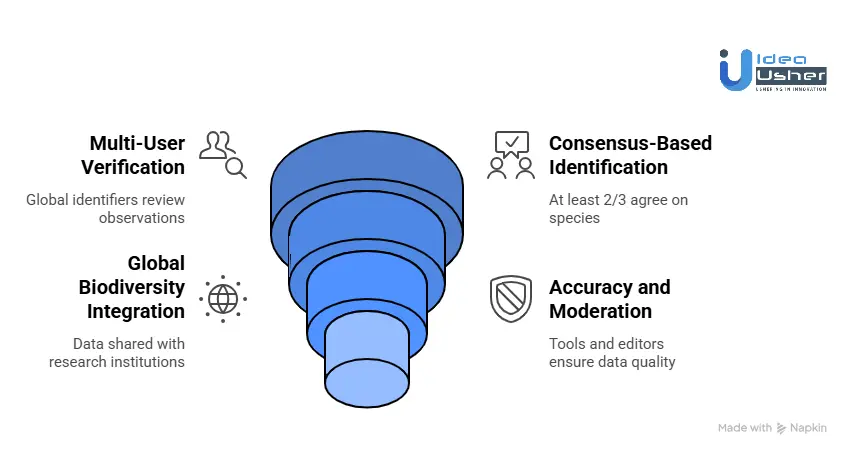
Multi-User Verification Workflow
Every observation enters a triage phase where it is visible to a global pool of identifiers. This workflow catches errors early through collective oversight and ensures no single observer is the sole arbiter of truth.
- Crowdsourced Review: Multiple users analyze the same media to verify the species.
- The Identify Queue: Expert users filter observations by location or taxon to provide high-speed feedback.
- Case Study: iNaturalist uses this tiered system to process thousands of daily uploads.
Consensus-Based Identification Model
To achieve Research Grade status, an observation must reach a mathematical consensus. This prevents a single incorrect identification from skewing the dataset.
The 2/3 Rule: In most systems, at least two-thirds of community identifiers must agree on a specific species before the data is finalized.
This democratic approach creates a self-correcting environment. Apps like Flora Incognita utilize similar logic to cross-reference AI suggestions with community votes, ensuring the final label reflects collective knowledge.
Global Biodiversity Integration
Once validated, data flows into a global network of biological records. This interoperability makes the app an essential tool for planetary-scale monitoring and conservation.
| Destination | Purpose |
| GBIF | The Global Biodiversity Information Facility uses this data for scientific papers. |
| National Parks | Agencies use the records to track invasive species in real-time. |
| Map of Life | Integrates user data to predict future species distributions. |
Accuracy And Moderation Tools
Maintaining a clean database requires sophisticated backend tools to flag anomalies. Automated scripts scan for out-of-range sightings, such as a tropical bird appearing in the Arctic, triggering a manual review.
eBird employs regional editors who manually verify rare sightings, ensuring high-stakes data points are scrutinized by experts. This hybrid of human and machine intelligence maintains the platform’s reputation for absolute accuracy.
Gamification Features for Engagement in iNaturalist-Like Apps
The success of apps like iNaturalist depends on transforming data collection into an engaging, habit-forming experience. By applying game design to citizen science, these platforms motivate users to explore further and contribute more frequently. These features turn ecological monitoring into a rewarding pursuit for users of all ages.
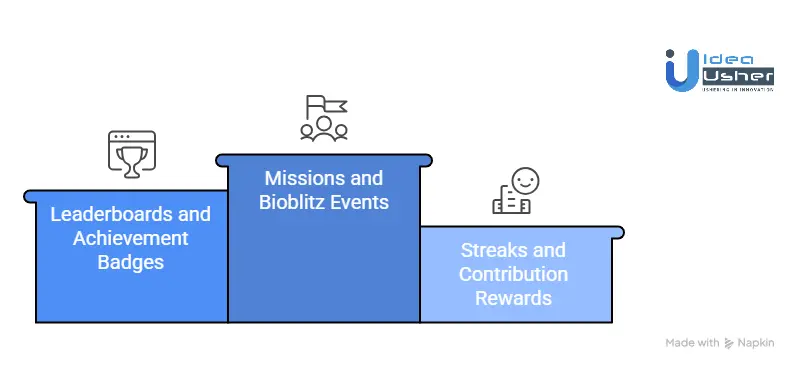
Missions And Bioblitz Events
Missions provide users with specific objectives, such as finding a particular flower or documenting urban wildlife. Bioblitz events take this further by challenging a community to record every species in a set area within a tight timeframe. These time-bound competitions create a sense of urgency and collective purpose.
- Example: Seek by iNaturalist uses monthly themed challenges to encourage users to discover different taxonomic groups.
- Impact: These events spike data volume and bring local communities together for intensive environmental “audits.”
Leaderboards And Achievement Badges
Digital rewards serve as markers of progress and expertise. Badges celebrate milestones like “100 Insects Identified,” while leaderboards foster friendly competition by ranking users based on their contribution volume or accuracy.
The Power of Status: High rankings on platforms like eBird or Zooniverse act as social proof, motivating power users to maintain their standing by consistently providing high-quality data.
Streaks And Contribution Rewards
To ensure long-term retention, apps often reward daily activity. Streaks track how many consecutive days a user has logged an observation, tapping into the psychology of consistency. These small, frequent rewards build a daily habit of engaging with nature.
| Feature | User Benefit | Platform Goal |
| Daily Streaks | Habit formation | Consistent data flow |
| Rare Find Awards | Special recognition | Discovery of elusive species |
| Leveling Up | Increased authority | Long-term user loyalty |
For example, the Birda app uses streaks to keep birdwatchers active throughout the migration seasons, ensuring the platform remains a primary tool for their hobby. This gamified layer ensures that what could be a repetitive task remains an exciting personal quest.
Advanced Features to Stand Out in the Market
To stand out in the evolving nature-tech market, apps like iNaturalist are adopting cutting-edge technologies that bridge digital interaction and the physical world. These advanced features move beyond simple data logging, offering users immersive experiences and deeper insights into their environmental impact.
1. AR Species Identification
AR transforms the smartphone screen into a live lens that identifies organisms in real-time. Instead of snapping a photo and waiting, users point their camera at a plant to see digital labels and 3D data overlays appear instantly.
Apps like Seek are pioneering this live-view identification, making nature exploration feel like a high-tech scavenger hunt.
Education: AR can highlight specific botanical features, like leaf margins or petal shapes, directly on the screen to teach users what to look for in the field.
2. AI Chatbot For Nature Queries
Integrating conversational AI allows users to ask complex questions about their findings without leaving the app. Whether a user wants to know if a berry is edible or how a specific bird migrates, a nature-focused chatbot provides instant, context-aware answers.
Platforms like PlantIn use AI-driven tools to offer expert consultations and disease diagnoses, functioning as a digital naturalist that interprets data and explains ecological roles in real-time.
3. Climate Impact Insights
Data visualization tools show users the big picture of their contributions. A personalized dashboard tracks how an individual’s observations contribute to climate research, such as documenting shifting bloom times or the arrival of invasive species.
| Metric | Insight Provided |
| Phenology Tracking | Records how local seasons are shifting over time. |
| Footprint Reduction | Apps like Earth Hero calculate how personal actions affect carbon footprints. |
| Species Recovery | Shows if a user has spotted a rare species in a recovering habitat. |
4. Personalized Discovery Feed
Advanced algorithms curate a “For You” page based on a user’s location and interests. If a user frequently identifies fungi, the app might suggest nearby parks where rare mushrooms were recently spotted or alert them to a local bioblitz.
This hyper-personalization, similar to the discovery mechanisms in Birda or Planta, ensures users are always presented with relevant opportunities to engage with the natural world.
Admin Panel Features for Platform Control in Apps like iNaturalist
Efficiently managing apps like iNaturalist requires a powerful backend to maintain data integrity and community safety. These admin tools allow operators to oversee massive datasets and user interactions, ensuring the platform remains a trusted scientific resource.
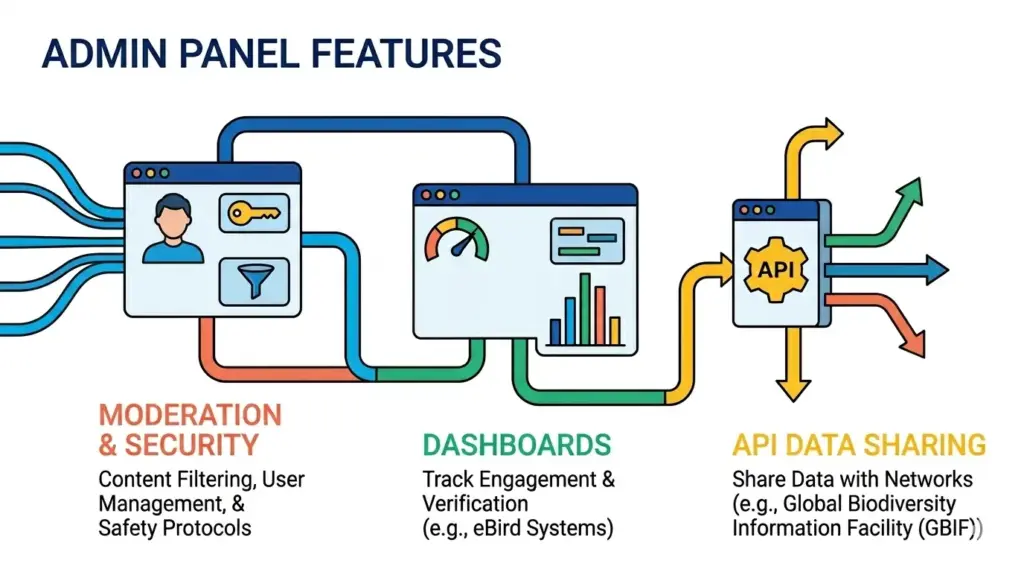
1. User Management and Moderation
The frontline of platform health is a suite of tools designed to manage the community and handle reports of harassment.
- Role Assignment: Granular controls allow admins to designate “Curators” or “Taxonomic Experts” with higher-level editing rights.
- Shadow Banning: Tools to restrict bad actors or spammers without disrupting the broader community experience.
- Platform Security: iNaturalist utilizes an admin layer to suspend accounts that consistently upload non-biological or fake data.
2. Analytics and Reporting
A central dashboard provides a high-level view of platform growth and data trends to identify underrepresented geographic regions.
- Engagement Tracking: Monitoring Daily Active Users to measure the stickiness of gamification features.
- System Efficiency: Tracking Identification Latency to see how long it takes for new observations to be verified.
- Data Mapping: Visualizing hotspots where the most research-grade data is being generated to guide outreach.
3. Content Approval Workflows
Admins need workflows to manage sensitive content and ensure that amateur errors do not skew real scientific discovery.
- Species Protection: Automated blurring of locations for endangered species to prevent poaching or harassment.
- Expert Oversight: eBird uses regional reviewers who access an admin interface to approve or flag unusual sightings.
- Quality Control: Tools to remove imagery that violates terms of service or contains non-relevant metadata.
4. API and Integrations
The true power of a biodiversity app lies in its ability to share data with the global scientific community via managed API keys.
- Data Interoperability: Systems must be configured to export data seamlessly to the Global Biodiversity Information Facility (GBIF).
- Scientific Connectivity: Managing webhooks that allow local conservation databases to pull real-time observation feeds.
- Research Impact: Ensuring every user observation has the potential to influence global policy and academic research.
Growth Strategies Used by Successful Nature Apps
Successful biodiversity platforms don’t just grow through traditional marketing; they rely on high-trust loops and strategic alignments. By turning users into advocates and data into a shared global asset, apps like iNaturalist create a self-sustaining growth engine that scales without proportional increases in acquisition costs.
1. Community-Led Growth Loops
The most powerful driver for these platforms is the Community Flywheel. Every time a user uploads an observation, they provide content for others to identify, which in turn teaches the original user and invites them back.
- User Evangelism: Passionate naturalists often act as ambassadors, organizing local bioblitzes that onboard hundreds of new users in a single weekend.
- The Network Effect: As more experts join the platform, the speed and accuracy of identifications increase, making the app more valuable for beginners.
For example, Pl@ntNet has scaled to millions of users by allowing its community to validate each other’s flora observations, creating a self-improving dataset that attracts even more botanists.
2. NGO and Institutional Partnerships
Nature apps gain rapid scale by becoming the official tool for established organizations. Partnering with NGOs allows an app to tap into an existing, highly motivated user base while gaining scientific credibility.
Strategic Alignment: When BirdLife Australia launched Birdata, they instantly provided the platform with a global network of dedicated birdwatchers who were already active in local conservation chapters.
These partnerships often result in sponsored projects where an organization pays to use the app infrastructure for specific conservation goals. This creates a sustainable revenue stream while populating the database with high-quality, verified records that researchers actually need.
3. Gamification for Retention
Gamification bridges the gap between a casual one-time user and a dedicated citizen scientist. By tapping into behavioral psychology, platforms ensure that the work of data collection feels like play.
- Progress Visualization: Apps give users a sense of personal achievement through milestone markers.
- Intangible Rewards: High-ranking users gain social status within the community, which is a powerful long-term motivator.
For example, Zooniverse uses a sophisticated “contribution ladder” where volunteers earn badges and recognition for their accuracy, motivating them to tackle increasingly complex classification tasks.
By focusing on these intrinsic motivators, successful apps achieve significantly higher engagement rates. This high retention is the foundation of a stable, growing ecological database that remains relevant for years.
Why Choose IdeaUsher for Apps Like iNaturalist?
Building a biodiversity platform requires more than just standard development. It demands a deep understanding of complex data structures and AI accuracy. At IdeaUsher, we combine technical rigor with a user-first philosophy to create digital ecosystems that are both scientifically reliable and engaging.
AI-Powered Mobile Ecosystems
We don’t just build apps, we engineer intelligent systems. Our team specializes in integrating advanced computer vision and deep learning models for real-time species identification. With over 500,000 hours of coding experience, our developers use sophisticated algorithms to ensure your platform provides high-accuracy feedback.
Scalable Community Platforms
Handling millions of observations requires a backend capable of massive data throughput. We build social architectures that support complex verification workflows and global database integrations. Our team of ex-MAANG/FAANG developers and architects systems that remain fast and stable as your community scales from hundreds to millions of users.
End-To-End Delivery And Scale
From initial strategy and UI/UX design to post-launch maintenance, we provide a comprehensive roadmap for your product. We focus on long-term scalability to ensure your app can evolve with new features like AR overlays or climate dashboards. Our end-to-end approach provides the technical support and strategic insights needed to dominate the market.
Conclusion
Building a successful iNaturalist-like app requires a blend of high-end AI, robust data validation, and engaging social features. By prioritizing scientific accuracy and global database integration, you transform a mobile tool into a powerful engine for conservation. This scalable approach empowers users to contribute meaningful data to global research efforts.
FAQs
A1: A successful nature app must include AI-powered image or sound recognition for instant species identification and a GPS-tagged observation system. It also requires community verification tools to ensure data accuracy, along with gamified elements like badges and local “bioblitz” challenges to maintain user interest.
A2: The primary goal is to bridge the gap between amateur enthusiasts and professional researchers by crowdsourcing biodiversity data. These apps turn everyday citizens into scientific contributors, helping to track species distribution, monitor the effects of climate change, and inform global conservation policies.
A3: Most platforms use a hybrid model involving premium subscriptions for advanced features, such as offline maps or expert consultations. They also generate revenue through government grants, institutional partnerships with universities, and licensing anonymized data to environmental organizations for ecological research.
A4: Development starts with defining a specific niche and selecting a technology stack that supports heavy data processing and AI integration. You must design an intuitive interface for field use, build a robust backend for community verification, and partner with scientific institutions to ensure your data remains credible and useful.