

Key Takeaways
- Insurance integrated obesity care apps combine treatment, coverage verification and medication access into one seamless patient experience.
- Core features include benefits verification, prior authorization automation, GLP-1 management and remote patient monitoring.
- These platforms help reduce treatment delays, medication abandonment and long-term patient attrition.
- Success depends on payer integrations, clinical workflows, compliance and outcomes-driven care management.
- How IdeaUsher can help you build insurance integrated obesity care app with healthcare integrations, automation and HIPAA-compliant infrastructure.
Access to obesity treatment is no longer limited by clinical availability alone and it is increasingly influenced by insurance eligibility, medication coverage and the complexity of navigating payer requirements. This shift is accelerating demand for insurance integrated obesity care software that can connect treatment, coverage verification and care management into a single patient experience.
Traditional obesity care programs relied on disconnected workflows for insurance verification, prior authorization, clinical consultations and medication access. Modern patients and providers increasingly expect real-time benefits verification, automated authorization workflows, GLP-1 eligibility screening, telehealth consultations, prescription management and continuous care coordination within a unified platform. The value is no longer just treatment access. It is reducing administrative friction that delays care and impacts outcomes.
In this blog, we will talk about core features, architecture, insurance workflows, compliance requirements, development costs and how IdeaUsher can help build insurance integrated obesity care software as GLP-1 therapies reshape obesity treatment, insurance integration is becoming a critical component of scalable digital health platforms.
Why Insurance Integrated Obesity Care Apps Are Rising
Obesity is increasingly recognized as a chronic, progressive disease rather than a lifestyle issue, affecting approximately 40% of adults in the United States and driving demand for more comprehensive, long-term treatment approaches.
The global obesity treatment market was valued at $15.92 billion in 2024 and is projected to reach $60.53 billion by 2030, growing at a CAGR of 22.31% from 2025 to 2030, driven by rising obesity prevalence, expanding insurance coverage for anti-obesity medications, and growing adoption of digital weight management solutions.
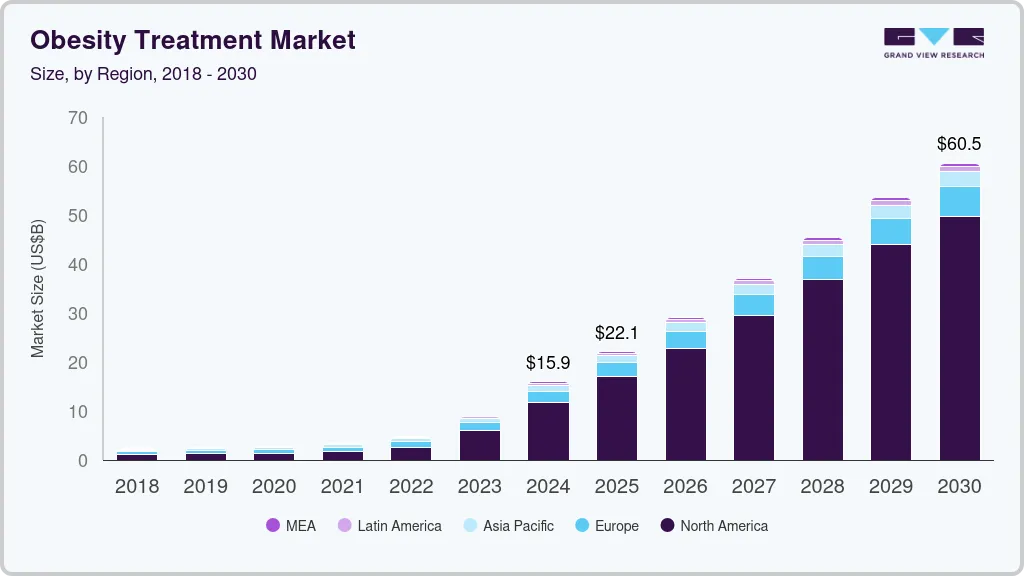
With obesity affecting more than one billion people worldwide and insurers increasingly covering GLP-1 therapies and weight management programs, insurance-integrated obesity care platforms are emerging as a high-growth segment of digital healthcare, transforming how patients access and manage treatment.
A. The Rise of GLP-1 Medications and Value-Based Obesity Treatment
The rapid adoption of anti-obesity medications (AOMs), particularly GLP-1 receptor agonists and dual GIP/GLP-1 co-agonists, is transforming obesity care. Clinical trials have shown average weight reductions of 15% with semaglutide and 15%–20.9% with tirzepatide, significantly improving treatment outcomes.
However, real-world execution introduces stark financial and clinical hurdles:
- High Patient Attrition: Real-world treatment adherence remains a challenge. Pharmacy prescription abandonment rates can reach 15%, while up to 36% of patients discontinue therapy after their first fill, particularly when out-of-pocket costs are high or ongoing care management is limited.
- Weight Regain After Discontinuation: Obesity is a chronic condition, and discontinuing GLP-1 therapy is associated with significant weight regain. Studies indicate patients may regain up to two-thirds of lost body weight within one year of stopping semaglutide.
- The Value-Based Care Imperative: Escalating drug costs are shifting focus toward value-based obesity care. Payers now demand proof of lifestyle support, nutrition tracking, and clinical engagement alongside prescriptions. Such integrated care management has successfully boosted 1-year treatment persistence from 33% to 61%.
B. Why Standalone Weight Loss Apps Struggle with Long-Term Engagement
For years, standalone weight-loss apps relied on dietary self-monitoring (DSM) and calorie tracking. While research shows that every 1% increase in logging frequency is associated with a 0.02% reduction in weight, these apps often produce limited outcomes due to a lack of clinical integration, provider oversight, and personalized obesity treatment support.
- Rapid Engagement Decline: Behavior-change studies show app engagement decreases by an average of 33.6% between week 1 and week 26, highlighting the challenge of sustaining long-term participation.
- Low Self-Monitoring Adherence: In app-only programs, users track their diet for a median of just 2.9 days per week, limiting the effectiveness of self-guided interventions.
- The Clinical Accountability Gap: Standalone apps lack integration with primary care providers, metabolic health data, and laboratory results, while often providing limited clinical oversight, adverse-event monitoring, and structured accountability, factors associated with tracking fatigue and program abandonment.
C. How Insurance Coverage Is Reshaping Obesity Care Delivery
Because standalone apps fail to curb the chronic nature of obesity, insurance coverage is completely reshaping how these digital platforms operate. Major employer health plans are increasingly opting to cover obesity therapies, yet they are strictly gatekeeping access through structured, integrated digital programs.
- Growing Employer Adoption: 67% of large employers now provide coverage for GLP-1 medications for obesity treatment, reflecting increased investment in obesity and metabolic health benefits.
- Payer-Controlled Care Pathways: Insurers are increasingly requiring patients to use insurance-approved digital care platforms that combine behavior modification, biometric monitoring, and medical care management as a condition of coverage.
- Reducing Financial Barriers to Care: Insurance coverage and subsidy programs improve access and outcomes for GLP-1 therapy. While only 18% of patients currently have full insurance coverage, 44% face out-of-pocket costs exceeding $250 per month, a level associated with higher treatment discontinuation rates.
Directly integrating care apps into insurance frameworks allows platforms to use claims data, offer access to credentialed clinicians, and monitor side effects. This shift moves obesity management from fragmented dieting to a sustainable, clinically managed pathway.
What Is an Insurance Integrated Obesity Care App?
An insurance integrated obesity care app is a specialized, clinically regulated digital health platform built to unify medical weight management, behavioral coaching, and health insurance benefits into a single ecosystem. Unlike traditional consumer weight loss apps that operate on a self-pay, self-directed model, these enterprise-grade platforms are directly connected to a patient’s health plan, employer-sponsored benefits, or pharmacy benefit manager (PBM).
By embedding the technology directly into the healthcare reimbursement pipeline, these apps shift the focus from surface-level calorie counting to scalable, data-driven chronic disease management.
A. Core Concept and Ecosystem Overview
Insurance-integrated platforms enable a “closed-loop” care model for obesity, a chronic metabolic disease. The app acts as digital connective tissue, uniting four stakeholders in a seamless cycle:
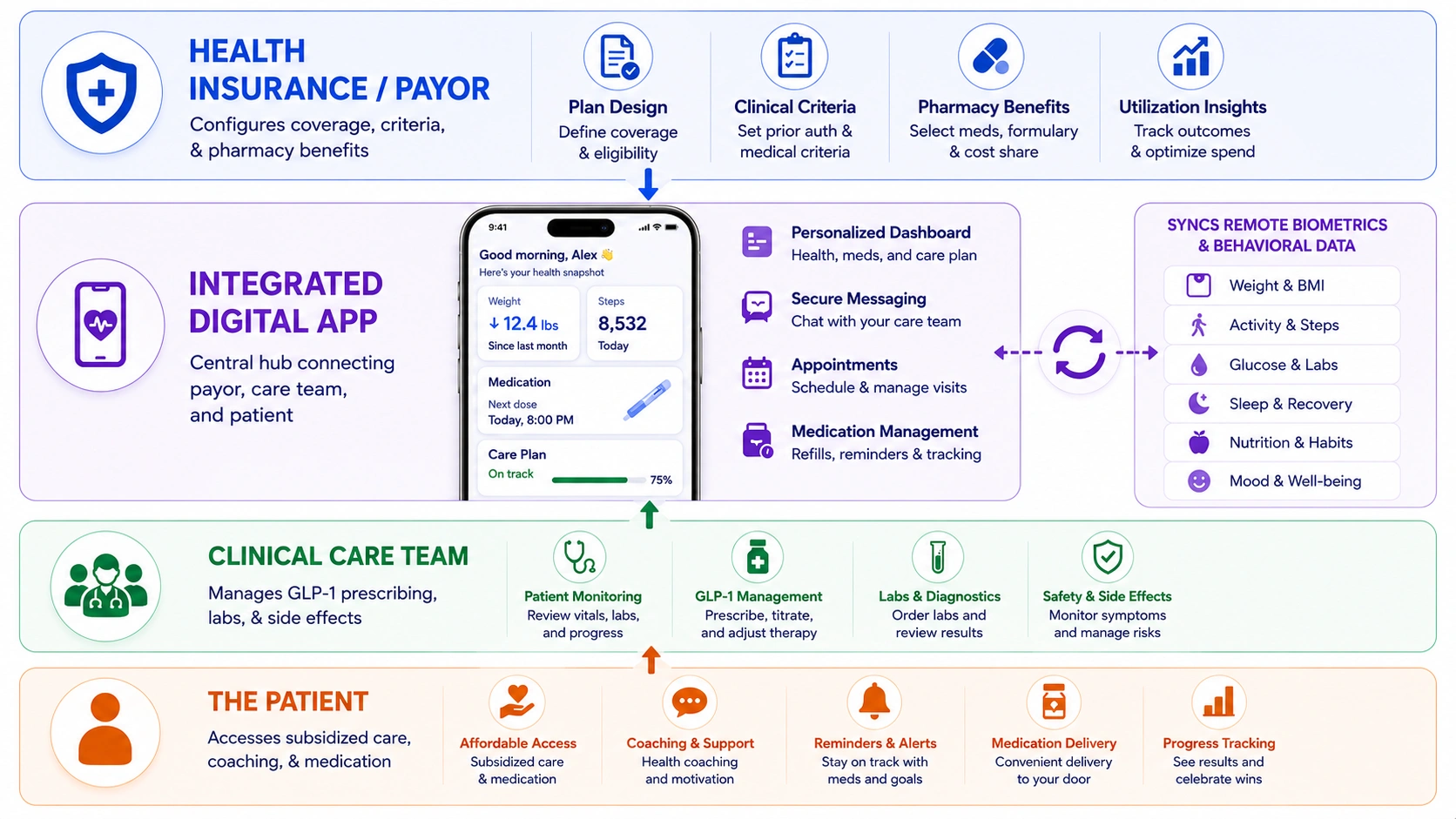
This structural integration relies on a tightly woven ecosystem across four core pillars:
1. Real-Time Eligibility and Claims Integration
The application integrates with payer databases through secure healthcare APIs to verify insurance eligibility, determine deductible status, and evaluate coverage criteria for anti-obesity medications (AOMs). Claims for digital health coaching, nutritional therapy, and remote patient monitoring (RPM) are processed through the insurance system to reduce out-of-pocket costs.
2. The Collaborative Care Team (Virtually Integrated)
Instead of relying solely on automated algorithms, the app provides a portal to a multidisciplinary, credentialed clinical team. This ecosystem typically includes:
- Prescribing Physicians or Nurse Practitioners: Who evaluate metabolic health, order lab work, and manage titration schedules for medications like semaglutide or tirzepatide.
- Registered Dietitians and Certified Diabetes Educators: Who deliver evidence-based medical nutrition therapy (MNT).
- Behavioral Health Coaches: Who focus on sustainable lifestyle modifications to protect against lean muscle mass loss and prevent weight regain.
3. Data-Driven Utilization Management (Gatekeeping)
For insurance providers, these apps act as automated clinical gatekeepers. To mitigate the soaring costs of GLP-1 medications, the app tracks objective patient compliance markers. Prior authorization approvals and renewals are tied to specific, verifiable app metrics, such as:
- Documented adherence to companion behavioral lifestyle modules.
- Frequent biometric check-ins via connected smart scales.
- Achieving clinically significant weight reduction milestones (e.g., a 5% weight loss milestone at 24 weeks).
4. Cellularly Connected Biometric Hardware
The platform integrates with cellular-enabled and Bluetooth-connected medical devices, including smart scales and blood pressure monitors, to stream encrypted biometric data to the clinical dashboard. This supports progress monitoring, plateau detection, and adverse event monitoring.
By aligning financial coverage with clinical accountability, insurance integrated obesity care apps transform weight management from a fragmented, isolated journey into a highly structured, scalable healthcare benefit.
B. Key Participants Involved in the Care Journey
Successfully developing an insurance-integrated obesity care platform requires understanding the needs and interactions of multiple stakeholders within the healthcare ecosystem.
| Participants | Primary Role | How They Use the Platform |
| Patients | Access and manage obesity treatment | Verify insurance coverage, complete health assessments, enroll in treatment programs, consult care teams, manage medications, track progress, and receive ongoing support. |
| Providers & Health Coaches | Deliver personalized obesity care | Evaluate patient eligibility, create treatment plans, monitor outcomes, manage medication programs, and communicate with patients. |
| Insurance Carriers | Manage coverage and reimbursement | Validate eligibility, process claims, handle prior authorizations, monitor treatment outcomes, and assess program effectiveness. |
| Pharmacy Benefit Managers (PBMs) | Oversee prescription drug benefits | Manage formularies, medication approvals, pharmacy networks, and optimize coverage for obesity treatments, including GLP-1 medications. |
| Employers & Health Plans | Sponsor and evaluate obesity programs | Track population health outcomes, monitor utilization trends, measure cost savings, and evaluate return on investment (ROI). |
Core Features of an Insurance Integrated Obesity Care App
Insurance-integrated obesity care apps are vital for scaling metabolic health. By bridging clinical care with payer architectures automating eligibility, authorizations, and outcomes data, these platforms minimize treatment friction, reduce abandonment, and demonstrate tangible ROI for employers and insurers.

1. Insurance Eligibility and Benefits Verification Engine
The path to metabolic care often stalls at the pharmacy counter due to unexpected out-of-pocket costs. This module functions as a real-time financial clearinghouse, running instant background checks against health insurance databases to give patients and providers absolute cost transparency before a single clinical evaluation begins.
- Real-Time Coverage Verification: Query commercial and employer-sponsored insurance databases to confirm coverage for obesity treatment and weight-management services under a patient’s active policy.
- Granular Plan Benefits Breakdown: Determine exact patient financial responsibility, including deductible status, co-insurance percentages, and out-of-pocket maximums.
- Anti-Obesity Medication (AOM) Eligibility: Check the payer’s live formulary to verify coverage, restrictions, and formulary tier placement for specific GLP-1 medications, including Wegovy® and Zepbound®.
- Copay Estimation & Affordability Analysis: Estimate retail pharmacy pricing and out-of-pocket copay obligations, enabling proactive financial assistance planning when medication costs present access barriers.
2. Personalized Obesity Risk Stratification and Eligibility Screening
Payer policies for expensive metabolic therapies are highly strict, typically requiring documented clinical necessity. This engine acts as an automated clinical intake gatekeeper, gathering biometric and medical data to stratify patient risk and ensure they perfectly meet both medical guidelines and specific insurance criteria.
- Comprehensive Clinical Assessment: Capture key baseline metrics, including Body Mass Index (BMI), waist circumference, and historical weight-loss attempts.
- Comorbidity & Laboratory Evaluation: Screen for weight-related comorbidities, including Type 2 diabetes, hypertension, obstructive sleep apnea, and hyperlipidemia, alongside metabolic markers such as HbA1c and lipid panels.
- Payer-Specific Eligibility Matching: Cross-reference the patient’s clinical profile against insurance coverage criteria, including requirements such as BMI ≥ 30 or BMI ≥ 27 with at least one qualifying comorbidity.
- Algorithmic Care Pathway Routing: Stratify patients into appropriate care pathways, including lifestyle modification programs or combined medical and pharmacological treatment plans, based on clinical and coverage eligibility.
3. Automated Prior Authorization and Appeals Management
Prior Authorizations (PAs) are the single largest operational bottleneck in modern obesity care, causing massive prescription abandonment. This advanced automation engine digitizes the entire paper chase, transforming a manual, weeks-long bureaucratic process into an optimized, high-speed electronic submission workflow.
- Automated ePA Workflow Orchestration: Extract diagnostic codes, BMI history, and clinical notes from patient records to auto-populate and submit electronic Prior Authorization (ePA) requests directly to payers.
- Smart Documentation Assembly: Compile required supporting evidence, including laboratory reports, step-therapy history, and documented treatment outcomes, to strengthen first-pass authorization submissions.
- Real-Time Prior Authorization Tracking: Monitor prior authorization and coverage request statuses through payer systems, capturing and categorizing specific denial reasons when requests are rejected.
- Intelligent Appeals Processing: Generate plan-specific appeal packages by matching denial reasons with missing clinical documentation and required eligibility criteria before resubmission to the insurer.
4. GLP-1 Medication Access and Coverage Management
Securing an approved prescription is meaningless if supply shortages or fulfillment friction prevent the patient from obtaining the drug. This module tracks the medication supply chain and coverage lifecycles continuously, ensuring patients navigate titration schedules smoothly without missing doses.
- Dynamic Formulary Synchronization: Continuously monitor health plan formularies for changes in drug tier placement, coverage exclusions, and preferred brand status to support ongoing medication access.
- Real-Time Pharmacy Inventory Tracking: Integrate with mail-order, specialty pharmacy, and pharmacy network APIs to monitor local and national GLP-1 inventory availability and identify fulfillment options with active stock.
- Automated Pharmacy Routing: Route prescriptions based on drug availability, cold-chain shipping requirements, and payer-specific mail-order pharmacy rules.
- Titration & Dosage Management: Manage step-up dosing protocols (e.g., 0.25 mg to 2.4 mg), generating renewal workflows, dosage reviews, and required authorization checks before each dose escalation.
5. Personalized Nutrition and Behavioral Health Programs
Anti-obesity medications are most effective when paired with sustained, foundational behavioral modification. This module builds a highly adaptive lifestyle support system around the patient, ensuring nutritional changes and psychological habits evolve in tandem with medical therapy.
- Adaptive Nutrition & Lifestyle Plans: Personalize nutrition strategies based on weight-loss progress, appetite changes, and evolving patient needs.
- Evidence-Based Habit Building: Support long-term behavior change through dietitian-designed coaching programs, milestone tracking, and sustainable lifestyle interventions.
- Integrated Emotional Wellness Support: Provide tools to address emotional eating, body image concerns, and other behavioral factors that impact health outcomes.
- Behavioral Coaching Programs: Deliver personalized coaching interactions, accountability mechanisms, and ongoing guidance to support long-term health improvements.
6. Remote Patient Monitoring and Connected Device Integration
Continuous, objective data is the lifeblood of safe, effective metabolic care. By embedding native integrations with medical-grade IoT hardware and consumer health applications, the platform eliminates manual tracking friction and provides the care team with an absolute, real-time view of patient physiology.
- Multi-Device IoT Integration: Connect with smart scales, continuous glucose monitors (CGMs), blood pressure monitors, and fitness trackers through Bluetooth and cellular connectivity for continuous health data capture.
- Automated Biometric Synchronization: Sync patient health data through Apple HealthKit and Android Health Connect, automatically updating patient profiles without manual data entry.
- Continuous Remote Health Monitoring: Capture daily weight trends, fasting glucose levels, energy expenditure, and sleep patterns to establish a comprehensive longitudinal health baseline.
- Automated Physiological Risk Alerts: Analyze incoming biometric data to identify and flag abnormal health indicators, including blood pressure anomalies and glycemic excursions, for timely intervention.
7. Side-Effect Monitoring and Intervention Workflows
GLP-1 medications are highly effective but are frequently accompanied by transient gastrointestinal side effects that can lead to early treatment discontinuation. This module operates as a proactive clinical safety valve, monitoring patient tolerability daily to catch and manage adverse reactions before they cause therapy drop-offs.
- Proactive Symptom Monitoring: Collect patient-reported outcomes through regular symptom check-ins, tracking common medication side effects such as nausea, constipation, acid reflux, and fatigue.
- Adverse Event Stratification: Analyze reported symptoms to distinguish expected medication-adjustment effects from high-risk clinical adverse events requiring intervention.
- Automated Self-Care Interventions: Deliver evidence-based behavioral and dietary guidance, including hydration recommendations and meal-timing adjustments, to help manage mild side effects.
- Clinical Triage Escalation: Escalate persistent, severe, or worsening symptoms through provider alerts, care-coordinator workflows, and expedited clinical review pathways.
8. Treatment Adherence and Medication Persistence Management
The long-term therapeutic and commercial value of an obesity care application is determined by its ability to keep patients consistently on therapy. This module leverages predictive behavioral modeling and smart notifications to actively intercept non-compliance and lower discontinuation risks.
- Predictive Non-Adherence Analytics: Analyze app engagement, device-sync activity, and communication patterns using machine learning models to identify patients at elevated risk of care disengagement or treatment non-adherence.
- Adaptive Dosing Reminders: Deliver personalized, time-zone-aware push notifications and SMS reminders aligned with prescribed daily or weekly dosing schedules.
- Pharmacy Refill Surveillance: Monitor prescription fill history and claims data to calculate Proportion of Days Covered (PDC) and predict refill timing to prevent medication coverage gaps.
- Proactive Re-engagement Campaigns: Trigger targeted care-coordinator outreach, adherence interventions, and motivational content when patient compliance indicators fall below predefined thresholds.
9. Clinical Outcomes and Weight-Loss Tracking
For healthcare providers, patients, and insurers alike, clear visualization of physical progress is vital for sustaining motivation and verifying therapeutic success. This feature synthesizes raw biometric uploads into clean, interactive progression charts that highlight holistic body composition improvements.
- Holistic Body Composition Analytics: Aggregate health data to track real-time weight-loss trends, BMI changes, and waist circumference reductions across 12-, 24-, and 36-month periods.
- Metabolic Improvement Visualization: Track and visualize key indicators of treatment effectiveness, including baseline blood pressure reductions, fasting glucose improvements, and other metabolic health markers.
- Longitudinal Progress Tracking: Generate interactive health trajectory graphs that visualize long-term progress and highlight key patient milestones within the application.
- Validated Clinical Evidence Reporting: Compile verified health metrics into downloadable clinical reports that support long-term insurance medication coverage and treatment continuation requirements.
10. Value-Based Outcomes and Payer Reporting Dashboard
To secure enterprise contracts and premium insurance coverage, an obesity app must move past individual success stories and prove aggregate, population-level economic viability. This module provides a high-level analytics terminal built specifically for employer benefits managers and insurance underwriters.
- Population Health Insights: Aggregate anonymized, compliant population data to analyze weight-loss trajectories, metabolic health outcomes, and overall program performance across covered populations.
- Medication Utilization Analytics: Track GLP-1 adherence rates, medication persistence, and formulary spending efficiency to evaluate treatment utilization and cost performance.
- Cost-Savings Modeling: Translate clinical outcomes including blood pressure normalization, Type 2 diabetes improvement or reversal, and other health indicators into projected reductions in downstream healthcare expenditures.
- Enterprise ROI Reporting: Generate executive-level reports that quantify clinical outcomes, cost savings, and overall return on investment (ROI) for employers, payers, and value-based obesity care programs.
How to Develop Insurance Integrated Obesity Care Apps
Building an insurance integrated obesity care application requires syncing complex metabolic protocols with stringent insurance architectures. We architect high-converting consumer portals and automated payer logic to safely scale anti-obesity medication distribution, streamline workflows, and maximize real-world therapeutic retention.

1. Define the Obesity Care Business Model
Our strategic consultants translate your corporate objectives into explicit system rules. We isolate your core target audience, design multi-stakeholder interaction layers, map precise drug titration paths, and structure scalable monetization models before writing a single line of code.
- Stakeholder & Channel Configuration: Tailor platform architecture to the operational and integration requirements of commercial health plans, employer-sponsored programs, and direct-to-consumer (DTC) cash-pay models.
- Clinical Protocol Configuration: Embed GLP-1 treatment protocols, diagnostic follow-up schedules, and step-up titration pathways into core clinical workflow and platform logic.
- Revenue & Billing Architecture: Configure enterprise billing models, subscription management, insurance claims workflows, and split-payment pathways for patient out-of-pocket expenses.
2. Map Insurance Coverage and Reimbursement Workflows
Our business analysts blueprint the backend logic required to navigate restrictive insurance guardrails. We detail the mechanical rules governing real-time eligibility checks, electronic benefits verification (eBV), and prior authorization (PA) formatting to eliminate onboarding abandonment.
- Eligibility Rule Mapping: Translate payer medical policies into automated eligibility logic that evaluates patient qualification criteria before clinical intake.
- Financial Workflow Design: Define the data flows required to track deductibles, co-insurance obligations, manufacturer copay programs/cards, and real-time out-of-pocket cost estimates.
- Prior Authorization Framework Design: Define the clinical and administrative requirements for coverage approval, including medical records, clinical documentation, and step-therapy verification required by payer networks.
3. Design Patient Engagement and Care Management
Our UX designers map intuitive, high-conversion consumer journeys optimized for chronic disease patients. We build supportive onboarding flows, friction-free health diaries, continuous cellular weight-tracking layouts, and interactive behavior change check-ins to maximize platform adherence.
- Medical Registration & Assessments: Streamline patient onboarding and metabolic health assessments while reducing registration drop-off.
- Unified Lifestyle Dashboard: Combine medication reminders, nutrition tracking, and IoT biometric data in a single patient interface.
- Behavioral Engagement Framework: Orchestrate behavioral nudges, side-effect surveys, and milestone-based interventions to sustain patient engagement.
4. Build Clinical and Provider Management Infrastructure
Our software engineers develop an advanced, multi-sided workspace for clinicians, health coaches, and care navigators. We construct speed-optimized charting tools, real-time patient population tracking lists, automated risk alerts, and compliant communication channels.
- Population-by-Exception Management: Surface high-risk patients and care-plan deviations through exception-based dashboards that prioritize patients requiring intervention over compliant cases.
- Metabolic Charting Workflows: Use tailored EHR documentation templates for rapid charting, metabolic health tracking, and titration updates.
- Cross-Disciplinary Care Coordination: Enable secure collaboration among physicians, nutritionists, and care navigators on active care plans.
5. Integrate Insurance Verification and Prior Authorizations
We remove bureaucratic friction by deploying direct, electronic connections into insurance clearinghouses. Our developers integrate real-time eBV tools and electronic prior authorization (ePA) pipelines to automatically submit and track coverage packages in seconds.
- Real-Time eBV Integration: Connect to insurance clearinghouses to verify active coverage, determine plan benefits, and identify formulary tier placement in real time.
- Automated ePA Routing: Extract diagnostic documentation, compile required clinical evidence, and route electronic Prior Authorization (ePA) submissions directly to payers.
- Denial & Appeal Automation: Interpret payer denial codes, identify missing clinical or administrative requirements, and generate plan-specific appeal submissions.
6. Connect EHRs, Pharmacies, Telehealth, & RPM Devices
We dismantle traditional data fragmentation by engineering an interoperable, interconnected health tech ecosystem. Our technical team deploys HL7 FHIR pipelines to link your app with external ambulatory EHR systems, specialty pharmacy networks, and cellular IoT health devices.
- HL7 FHIR Interoperability: Enable secure FHIR-based data exchange for clinical summaries, laboratory results, and encounter records across healthcare systems.
- Cold-Chain Pharmacy Integrations: Integrate with mail-order and specialty pharmacies to track drug inventory, stock availability, and cold-chain fulfillment requirements.
- IoT Biometric Data Aggregation: Ingest health data through Apple HealthKit and Android Health Connect, capturing telemetry from smart scales, CGMs, and activity trackers.
7. Build Outcomes Tracking & Payer Reporting Systems
We deploy advanced data warehousing solutions to transform raw biometric streams into validated corporate intelligence. Our team builds analytics engines that calculate real-time compliance indicators and generate comprehensive population health matrices for B2B contracts.
- Medication Adherence Analytics: Calculate Proportion of Days Covered (PDC), medication persistence, and other adherence metrics through automated monitoring workflows.
- Enterprise ROI Reporting: Visualize aggregated, anonymized outcomes data to track healthcare cost reductions, program performance, and ROI for employer and payer stakeholders.
- Real-World Evidence (RWE) Exports: Generate compliant, research-ready datasets for clinical outcomes studies, evidence generation, and formulary contract negotiations.
8. Ensure HIPAA Compliance & Regulatory Readiness
Our cybersecurity specialists build an impenetrable, zero-trust perimeter around your digital environment. We implement institutional-grade AES-256 data encryption, strict role-based access parameters, immutable chronological system auditing, and automated consent collection features.
- End-to-End Data Security: Protect Protected Health Information (PHI) through encryption in transit and at rest across systems and databases.
- Role-Based Access Controls: Enforce granular permissions that restrict users to the patient information required for their specific responsibilities.
- Tamper-Proof Audit Logging: Maintain immutable audit trails that record all data access, modifications, and exports for compliance and regulatory review.
9. Test, Launch, and Scale the Platform
Our QA department subjects your application to exhaustive pre-production stress testing to guarantee flawless real-world operations. We execute simulated high-volume API payloads, compliance vulnerability checks, and phased cloud rollouts to scale your system safely nationwide.
- Interoperability & Load Testing: Validate API integrations under simulated high-volume traffic to ensure platform performance, reliability, and scalability during peak demand.
- Healthcare Compliance Auditing: Conduct security assessments, vulnerability scanning, and compliance reviews to align with HIPAA, HITECH, and applicable state telehealth regulations.
- Phased Cloud Deployment: Roll out the platform through controlled geographic or user-based phases, enabling real-time feedback, performance monitoring, and system optimization before broader expansion.
Cost to Develop Insurance Integrated Obesity Care Apps
Developing an insurance integrated obesity care app requires investment across healthcare workflows, payer integrations, compliance infrastructure, telehealth capabilities, analytics, and patient engagement systems.
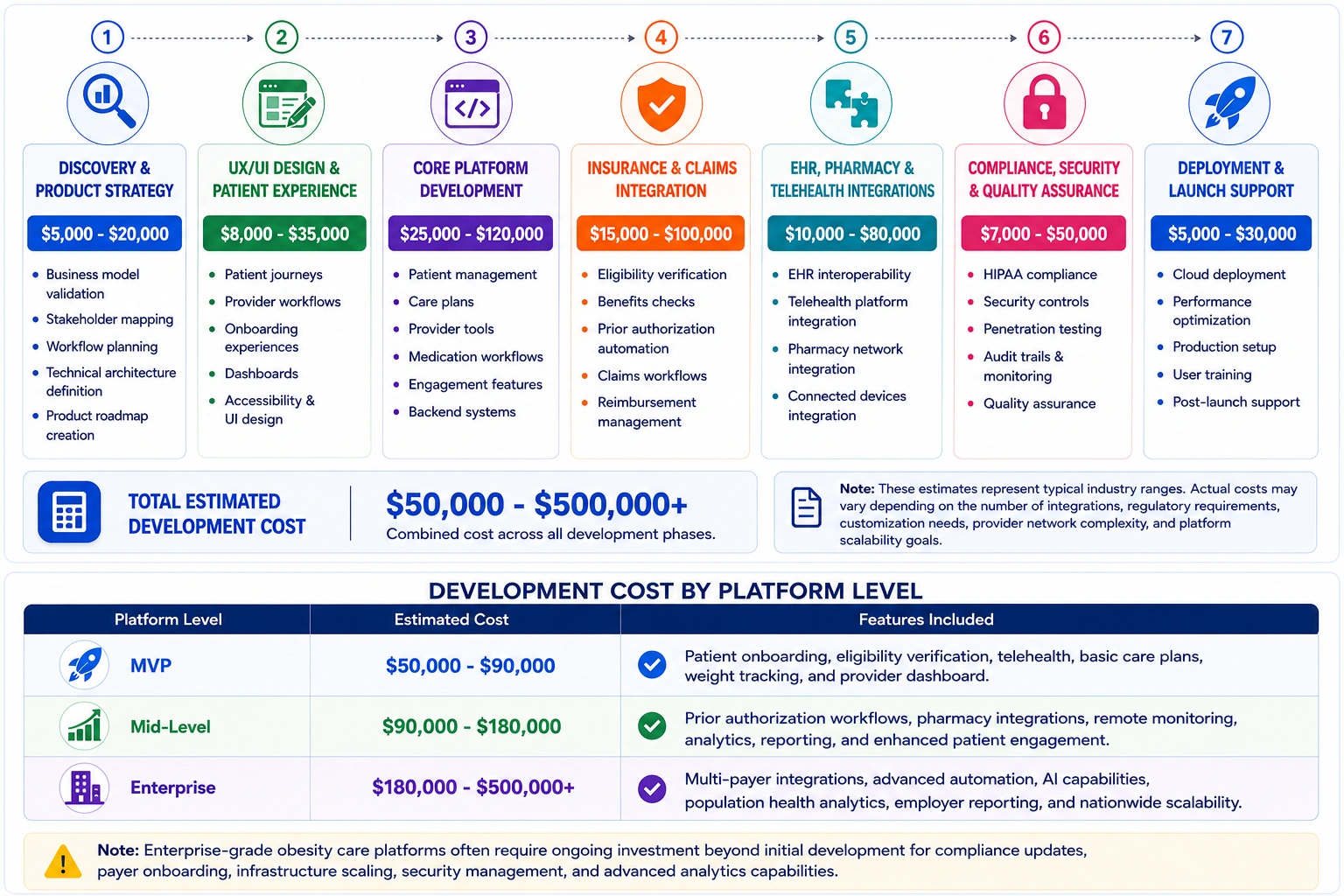
The following table breaks down estimated insurance-integrated obesity care platform development costs according to our above development process.
| Development Phase | Estimated Cost | What the Phase Covers |
| Discovery & Product Strategy | $5,000 – $20,000 | Business model validation, stakeholder mapping, workflow planning, technical architecture definition, and product roadmap creation. |
| UX/UI Design & Patient Experience | $8,000 – $35,000 | Patient journeys, provider workflows, onboarding experiences, dashboards, accessibility, and user interface design. |
| Core Platform Development | $25,000 – $120,000 | Patient management, care plans, provider tools, medication workflows, engagement features, and backend systems. |
| Insurance & Claims Integration | $15,000 – $100,000 | Eligibility verification, benefits checks, prior authorization automation, claims workflows, and reimbursement management. |
| EHR, Pharmacy & Telehealth Integrations | $10,000 – $80,000 | Interoperability with healthcare systems, telehealth platforms, pharmacy networks, and connected devices. |
| Compliance, Security & Quality Assurance | $7,000 – $50,000 | HIPAA compliance, security controls, penetration testing, audit trails, monitoring, and quality assurance. |
| Deployment & Launch Support | $5,000 – $30,000 | Cloud deployment, performance optimization, production setup, user training, and post-launch support. |
| Total Estimated Development Cost | $50,000 – $500,000+ | Combined cost across all development phases. |
Note: These estimates represent typical industry ranges. Actual costs may vary depending on the number of integrations, regulatory requirements, customization needs, provider network complexity, and platform scalability goals.
A. Development Cost by Platform Level
The overall development budget depends largely on the platform’s feature set, integration depth, automation capabilities, and operational scale. The following estimates provide a practical benchmark for different platform maturity levels.
| Platform Level | Estimated Cost | Features Included |
| MVP | $50,000 – $90,000 | Patient onboarding, eligibility verification, telehealth, basic care plans, weight tracking, and provider dashboard. |
| Mid-Level | $90,000 – $180,000 | Prior authorization workflows, pharmacy integrations, remote monitoring, analytics, reporting, and enhanced patient engagement. |
| Enterprise | $180,000 – $500,000+ | Multi-payer integrations, advanced automation, AI capabilities, population health analytics, employer reporting, and nationwide scalability. |
Note: Enterprise-grade obesity care platforms often require ongoing investment beyond initial development for compliance updates, payer onboarding, infrastructure scaling, security management, and advanced analytics capabilities.
B. Factors That Influence Development Budget
Several technical, regulatory, and operational variables directly affect the overall cost of developing an insurance-integrated obesity care platform.
- Insurance Integration Complexity: Multiple payer connections, benefits verification, claims networks, and prior authorization platforms can increase development costs by 20%–40%, adding $15,000–$75,000.
- Healthcare Interoperability Requirements: EHR integrations, FHIR implementation, pharmacy connectivity, telehealth infrastructure, and remote monitoring support typically cost $10,000–$80,000.
- Compliance and Security Standards: HIPAA compliance, audit logging, encryption, access controls, penetration testing, and regulatory documentation require $7,000–$50,000.
- Provider Network Scale: Larger provider networks, credentialing systems, scheduling workflows, and clinical operations can increase development costs by 15%–30%.
- Multi-State Expansion Requirements: Licensing, payer variations, state regulations, and regional workflows can increase infrastructure and compliance costs by 10%–25%.
- Customization and White-Label Needs: Employer branding, insurer portals, custom dashboards, and workflow customization typically add $5,000–$50,000.
Business Models Behind Modern Obesity Care Platforms
The digital health for obesity market is expanding rapidly, projected to scale from $87.48 billion in 2026 to over $530 billion by 2035. This explosive growth is driven by the integration of virtual care platforms with high-potency anti-obesity medications (AOMs) like GLP-1 receptor agonists.
To meet growing obesity care demand, digital health companies adopt specialized business models that support long-term engagement, insurance-integrated care, and sustainable clinical weight management.
1. Direct-to-Consumer (D2C) Obesity Management Programs
The D2C model bypasses traditional institutional buyers, marketing directly to individuals seeking immediate medical weight loss solutions. This model surged as digital-first clinics rushed to meet the unprecedented consumer demand for medications like semaglutide and tirzepatide.
The Mechanics: Consumers pay a recurring monthly or annual subscription fee (typically $30–$150 per month) covering the software platform, asynchronous virtual consultations, and health coaching.
Medication Fulfillment Model: Medication costs are typically separate from the subscription, with patients accessing treatment through cash-pay pharmacy networks or compounded alternatives when commercial medications are cost-prohibitive.
Customer Acquisition & Retention Challenges: D2C platforms face high Customer Acquisition Costs (CAC) and customer churn, as patients often discontinue services after reaching target outcomes or experiencing subscription fatigue.
2. Employer-Sponsored Obesity Care Solutions
Enterprises contract directly with digital obesity platforms as an added corporate health benefit to combat rising absenteeism and metabolic comorbidities among workforces
The Mechanics: Platforms provide software and clinical services to self-insured employers through a Per Member Per Month (PMPM) pricing model, with employers paying a fixed fee for each enrolled employee.
Value-Based Performance: Contracts may include risk-sharing arrangements tied to measurable outcomes, such as 5% average weight loss at 6 months or predefined engagement and adherence metrics.
ROI Justification: Program value is demonstrated through reductions in employer healthcare spending, including claims related to Type 2 diabetes, hypertension, and cardiovascular disease.
3. Health Plan Integrated Obesity Programs
This deep enterprise model embeds the digital platform directly into a commercial insurance carrier’s covered benefits, treating the app as an officially covered, in-network clinical program.
Payer-Sponsored Care Management Model: The platform is integrated into the insurer’s care management pathway, with payers funding care for high-risk, high-cost members who meet defined clinical criteria, such as BMI ≥ 30 or BMI ≥ 27 with qualifying comorbidities.
Medication Access & Prior Authorization Management: The platform serves as a required component of GLP-1 treatment management, using behavioral tracking, meal logging, and connected device data to support prior authorization approvals, renewals, and ongoing coverage validation.
4. Provider Network-Based Care Platforms
Instead of operating as isolated virtual clinics, provider network platforms act as a White-Label “Software-as-a-Service” (SaaS) extension for traditional brick-and-mortar health systems, bariatric clinics, and primary care groups.
Health System Extension Model: Health systems license the platform to extend care beyond in-person visits, allowing patients to engage through their existing hospital, health system, or primary care provider.
Remote Clinical Monitoring: Clinicians utilize integrated dashboards to monitor remote biometrics, such as data from cellular scales, and track side-effect reports. This enables scaling metabolic care without increasing clinic capacity or overhead.
5. Revenue Streams and Reimbursement Opportunities
Behind these primary business models sits a complex web of overlapping revenue streams and insurance reimbursement pathways that keep modern platforms profitable.
| Revenue Type | Description | Primary Billing Mechanism |
| SaaS / PMPM Licensing | Fixed, recurring fees paid by B2B clients (employers or health plans) for software access. | Enterprise B2B Contracts |
| Fee-for-Service Telehealth | Direct billing for virtual visits with physicians, nurse practitioners, or registered dietitians. | Standard Medical Claims |
| Remote Patient Monitoring (RPM) | Monitored streaming of physiological data via cellular-connected scales or blood pressure cuffs. | CPT Codes 99453, 99454, 99457 |
| Principal Care Management (PCM) | Ongoing virtual tracking and care coordination specifically for a single, high-risk chronic condition like obesity. | CPT Codes 99424 & 99425 |
| Pharmacy Benefit Margins | Direct revenue generated through integrated digital pharmacy mail-order fulfillment or medication delivery markups. | Pharmacy Claims / PBM Retainers |
Capitalizing on CPT & ICD-10 Alignment
To successfully capture medical insurance reimbursement, platforms must ensure precise clinical alignment between diagnosis and billing. Providers utilize specific, granular ICD-10 codes to establish medical necessity for both the digital services and corresponding medications:
- E66.811: Class 1 obesity
- E66.812: Class 2 obesity
- E66.813: Class 3 (severe) obesity
When paired with companion Z68 category codes (which document exact Body Mass Index ranges), platforms can seamlessly justify and bill insurance for automated Remote Patient Monitoring and virtual care coordination. This turns a simple mobile app into a highly reimbursable, scalable medical service.
Compliance & Regulatory Requirements of Obesity Care App
Insurance-integrated obesity care apps handle sensitive health records, insurance information, prescription data, and financial transactions. Compliance, privacy, and regulatory readiness must therefore be embedded into the platform from the beginning. The table below summarizes the key requirements and considerations.
Quick Compliance Checklist
By addressing these compliance, privacy, and regulatory requirements early, obesity care platforms can reduce risk, accelerate partnerships with insurers and providers, and establish a strong foundation for long-term growth.
| Requirement Area | Recommended Implementation | Business Benefit |
| PHI Protection | Encryption, access controls, audit logs | Protects patient data and supports HIPAA compliance |
| Vendor Compliance | BAAs with cloud and third-party vendors | Reduces third-party risk and regulatory exposure |
| Security Certifications | HITRUST and/or SOC 2 | Builds trust with providers and insurers |
| FDA Assessment | Evaluate SaMD applicability | Helps avoid regulatory issues during scaling |
| Insurance Security | Secure APIs, monitoring, vulnerability testing, intrusion detection | Safeguards payer and claims information |
| User Consent | Consent management and permission controls | Improves transparency and patient trust |
| Auditability | Comprehensive audit trails | Supports compliance reviews and investigations |
Key Compliance Standards and Regulatory Requirements
The compliance landscape is essential when developing insurance integrated obesity care applications. The table below outlines the primary regulatory frameworks, security standards, and governance requirements that support patient privacy, data protection, and healthcare compliance.
| Area | Purpose | Requirements |
| HIPAA Compliance | Protect PHI and meet U.S. healthcare regulations. | Encryption, access controls, secure authentication, audit logs, session management, secure data transfer, BAAs with PHI-handling vendors. |
| HITRUST & SOC 2 | Demonstrate security and compliance maturity. | HITRUST certification and SOC 2 compliance covering security, availability, confidentiality, processing integrity, and privacy. |
| FDA Considerations | Assess potential FDA oversight. | Evaluate diagnostic, clinical decision support, or therapeutic features that may qualify as Software as a Medical Device (SaMD). |
| Insurance Data Security | Protect payer and insurance information. | Encryption, secure APIs, vulnerability testing, intrusion detection, data retention controls, continuous monitoring. |
| Consent Management & Audit Trails | Ensure transparency and accountability. | Consent management, permission tracking, activity logs, clinical records, insurance transaction tracking, audit trails. |
Note: Addressing these requirements early reduces risk, supports insurer and provider partnerships, and improves long-term scalability.
Real-World Examples of Insurance Integrated Obesity Care Platforms
Several organizations are transforming obesity treatment through insurance-integrated digital health platforms. The following examples showcase how telehealth, medication access, reimbursement support, and personalized care are being combined to improve treatment accessibility and long-term patient outcomes.
1. LillyDirect

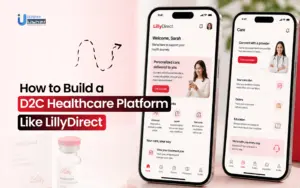
LillyDirect is a direct-to-consumer obesity care platform that connects patients with telehealth providers, pharmacies, and medication fulfillment services. Its key differentiator is streamlined access to Zepbound, supported by insurance-covered care pathways, prescription management, reimbursement support, and home delivery.
2. NovoCare

NovoCare is a patient access and affordability platform focused on GLP-1 therapy support. Key features include insurance verification, prior authorization assistance, appeals support, savings programs, and reimbursement guidance, helping patients overcome coverage barriers and improve medication access.
3. Omada Health

Omada Health combines insurance-sponsored obesity management, GLP-1 support, behavioral coaching, and virtual care. Its deep integration with health plans, employers, and pharmacy benefit managers (PBMs) enables medication adherence support, lifestyle interventions, and value-based obesity care.
4. Vida Health
Vida Health delivers insurer-integrated obesity and metabolic care through virtual coaching, physician-led treatment, behavioral health services, and anti-obesity medication management. Its enterprise-focused model helps health plans reduce costs while improving outcomes through personalized, multidisciplinary obesity care.
5. Noom Med
Noom Med combines telehealth consultations, prescription support, insurance eligibility checks, and medication management with Noom’s behavior-change methodology. Its psychology-driven approach integrates nutrition guidance, habit formation, and GLP-1 therapy support to improve long-term treatment adherence and outcomes.
Partner With Idea Usher for Insurance Integrated Obesity Care App Development
IdeaUsher is an elite, global digital health technology partner with 11+ years of experience engineering sophisticated medical applications across 50+ countries. Driven by 250+ specialized tech experts, 1,000+ completed projects, and a stellar 4.9/5 Clutch rating, expertise in medical software engineering.
We delivered various types of medical niche platforms like Zeno, Aegis Matrix, mHealth etc, utilizing predictive AI, secure IoT wearables, and automated prior authorizations to create care solutions.
Why Enterprises Partner With Us
Enterprise healthcare networks and digital health pioneers choose us because we turn high-friction medical insurance barriers into automated, high-conversion digital experiences.
- Automated Insurance Clearinghouse Integrations: We design custom backend integrations with major insurance clearinghouses to enable electronic benefits verification (eBV) and real-time out-of-pocket cost estimation.
- Proprietary ePA Logic Engines: Our developers build automated electronic Prior Authorization (ePA) services that gather EHR diagnostic records, compile required clinical documentation, and submit coverage requests to payers.
- Continuous Biometric Data Telemetry: We develop data-ingestion layers for smart scales, medical IoT devices, and connected wearables through Apple HealthKit and Android Health Connect, powering continuous health monitoring and risk stratification.
- Clinical Data Security & Compliance: We protect Protected Health Information (PHI) through HIPAA/HITECH-compliant frameworks, end-to-end encryption, and immutable audit logs.
Ready to capture market share in the booming metabolic health sector? Co-author your product blueprint by initiating an end-to-end development discovery session with IdeaUsher’s elite software consultants.
Concolusion
Insurance-integrated obesity care apps simplify access to treatment by combining clinical services, insurance processes, medication management, and progress tracking in one platform. Building these solutions requires strong integration with healthcare providers, payers, and compliance systems while ensuring a positive patient experience. As demand for obesity treatment and GLP-1 medications increases, organizations that develop scalable and data-driven platforms can improve patient outcomes, enhance operational efficiency, and support sustainable healthcare programs that deliver long-term value for patients, providers, and insurers.
Things to Know
Q.1. How do insurance integrated obesity care apps improve treatment access?
A.1. Insurance-integrated obesity care apps streamline eligibility verification, benefits checks, prior authorization workflows, and medication coverage management. This reduces administrative delays and helps patients access obesity treatments and GLP-1 medications more efficiently.
Q.2. What integrations are essential for obesity care app development?
A.2. Successful platforms typically integrate insurance verification systems, claims management tools, EHRs, telehealth services, pharmacy networks, and remote monitoring devices. These integrations create a connected ecosystem that supports coordinated obesity care.
Q.3. Why is prior authorization automation important in obesity care platforms?
A.3. Prior authorization requirements often delay treatment initiation and increase administrative workloads. Automating documentation collection, payer submissions, approval tracking, and appeals management improves operational efficiency and accelerates patient access to care.
Q.4. How much does it cost to build an obesity care app?
A.4. Development costs typically range from $50,000–$500,000+, depending on insurance integrations, EHR interoperability, HIPAA compliance, provider network complexity, analytics features, scalability needs, and custom healthcare workflows across multiple stakeholders and markets.