

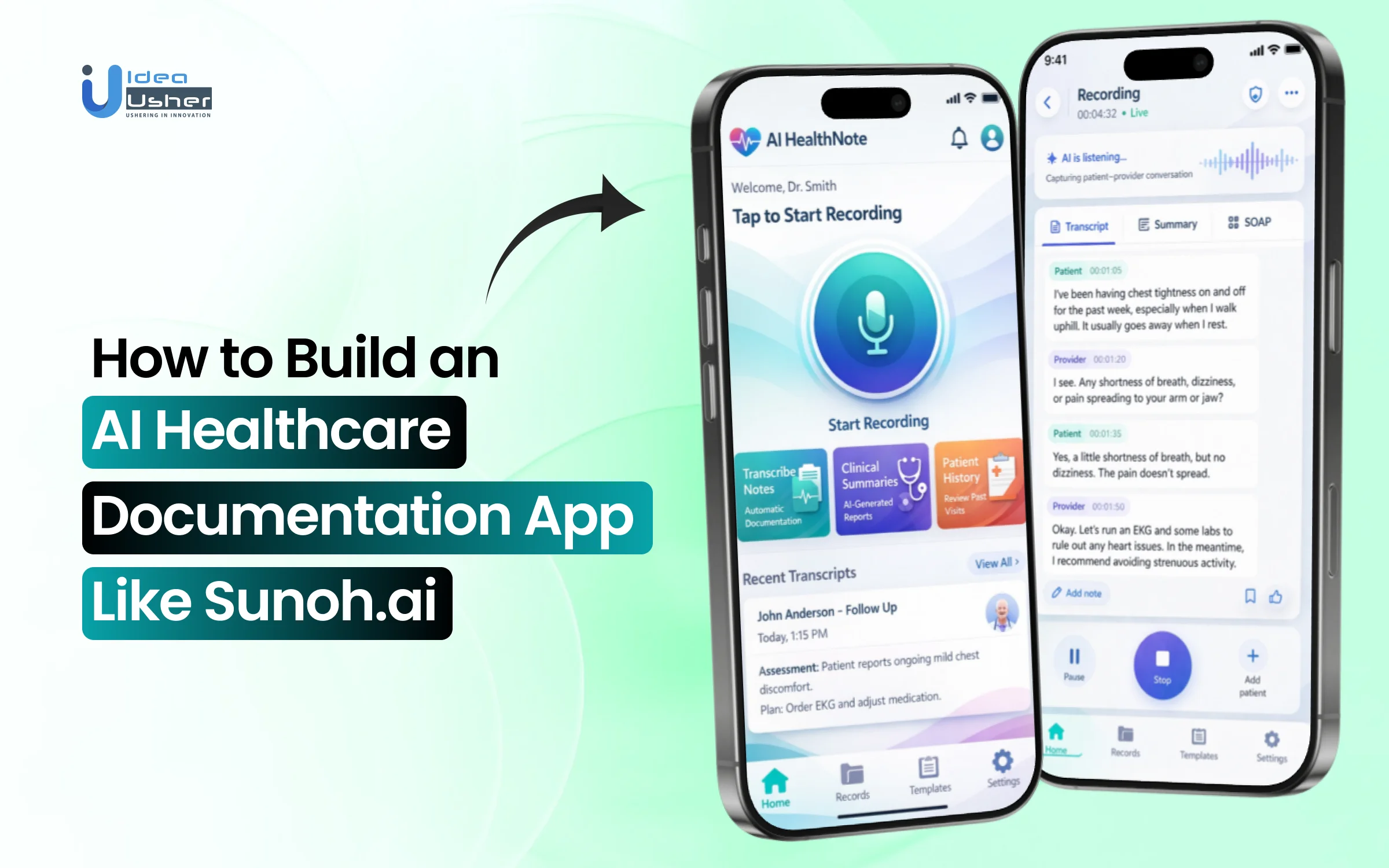
Clinical documentation often runs in parallel with patient interactions, requiring clinicians to capture detailed notes without losing focus on the consultation. The administrative burden of managing conversations, structuring information, and updating records in real time is driving interest in Sunoh AI app development, where AI systems capture and organize clinical data directly from doctor–patient interactions.
The integration of speech recognition, natural language processing, medical context mapping, summarization, and EHR integration into a secure environment is essential for turning conversations into structured records. The effectiveness of the platform depends on how well these components capture accurate information while fitting naturally into clinical workflows.
In this blog, we explain how to build an AI healthcare documentation app like Sunoh.ai by examining core features, system architecture, and practical considerations involved in developing scalable and reliable AI-driven documentation solutions for healthcare.
Why AI Medical Scribes Are Replacing Manual Documentation?
The traditional model of clinical record-keeping is no longer sustainable in a modern healthcare environment. Manual documentation creates a massive disconnect between patient care and administrative requirements, often forcing providers to choose between thoroughness and efficiency. As Sunoh AI app development continues to mature, it is becoming clear that ambient technology is the only viable solution to bridge this gap.
A. The Growing Cost of Clinician Documentation Time
The financial impact of administrative overhead extends beyond hourly rates. When physicians are tethered to keyboards, the revenue cycle slows. This creates a ripple effect touching every business aspect, from patient volume to reimbursement accuracy.
| Impact Area | Consequences of Manual Documentation |
| Revenue Generation | Lower patient throughput as doctors spend 30% of their day on data entry. |
| Reimbursement | Incomplete notes lead to down-coding and frequent insurance claim denials. |
| Operational Costs | High expenses related to hiring human scribes or transcription services. |
| Data Integrity | Increased risk of errors when notes are completed hours after the patient visit. |
B. Burnout Reduction Through Ambient AI Systems
A primary driver for adopting an AI healthcare documentation app is the urgent need to address professional exhaustion among medical staff. Ambient AI functions by capturing the natural flow of a conversation without requiring the clinician to interrupt their interaction with the patient.
- Cognitive Offloading: By removing the need to memorize details or take shorthand notes during a visit, the system allows for full focus on the patient.
- Elimination of After-Hours Work: Most clinicians spend several hours at home finishing charts. AI systems generate these notes instantly, returning personal time to the provider.
- Improved Patient Experience: Patients feel more heard when the doctor is not staring at a screen, leading to higher satisfaction scores and better retention.
- Real-Time Drafting: Since the AI prepares the note immediately, the clinician only needs to perform a quick review and sign-off rather than a full composition.
C. Shift From Transcription Tools to Clinical Intelligence
Modern healthcare technology has moved past simple dictation. While old tools merely converted speech to a wall of text, sophisticated clinical intelligence understands the nuances of a medical encounter. This intelligence is what differentiates a basic recorder from a professional-grade documentation platform.
- Categorized Data Organization: The system automatically sorts dialogue into specific sections like Chief Complaint, History of Present Illness, and Assessment.
- Medical Context Awareness: The AI can distinguish between social talk and clinically significant symptoms, ensuring only relevant data enters the medical record.
- Actionable Structured Outputs: It identifies specific orders, such as lab tests or prescriptions, and prepares them for EHR integration.
- Speaker Identification: High-end systems can differentiate between the doctor, the patient, and a caregiver, accurately attributing statements to the correct individual for a precise clinical narrative.
Market Demand for AI Clinical Documentation Solutions
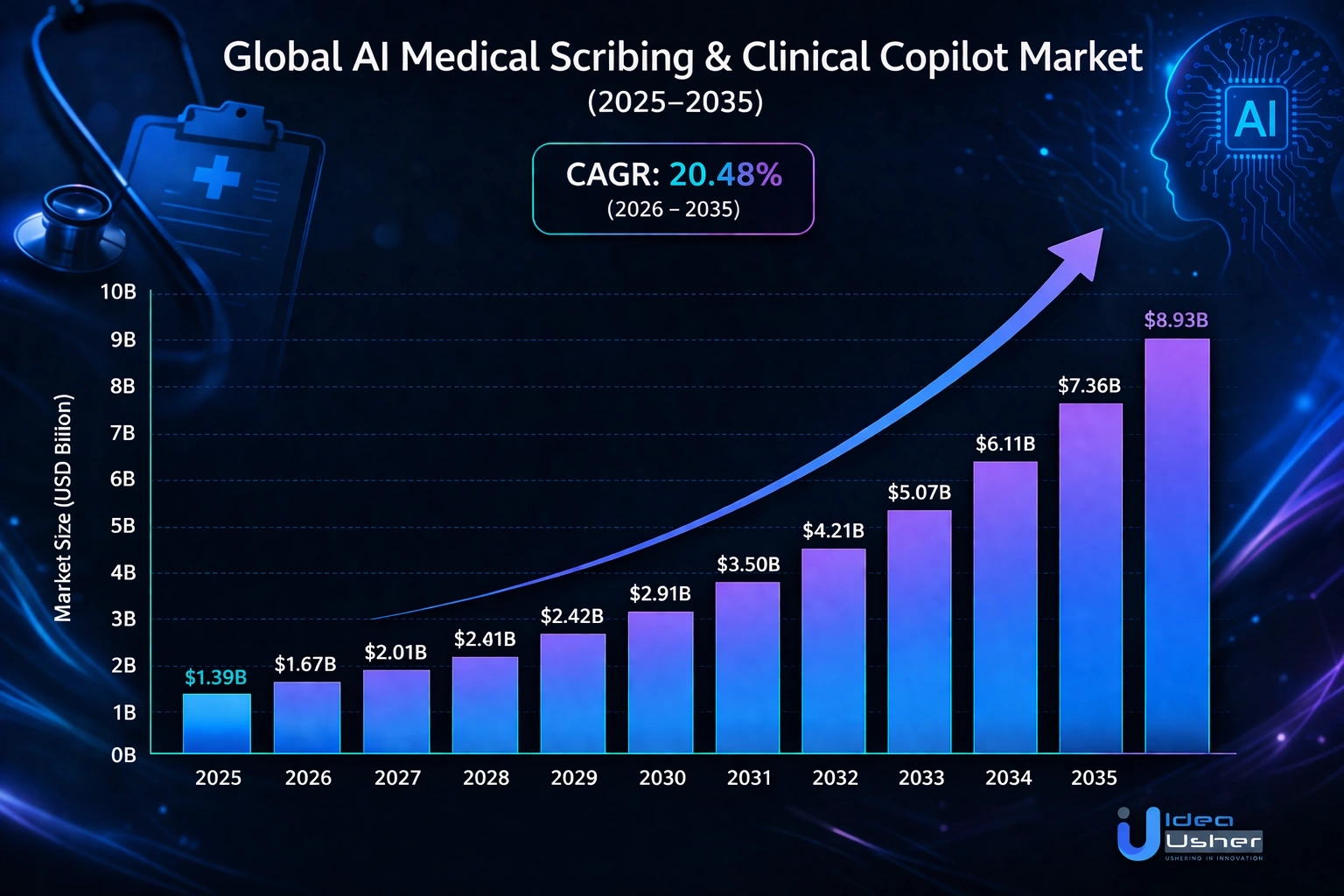
The global healthcare technology landscape is shifting toward essential infrastructure, with the AI clinical documentation market projected to reach $5.16 billion by 2026. This momentum aligns with projections that AI medical scribing will grow from $1.39 billion in 2025 to $8.93 billion by 2035 at a 20.48% CAGR, driven by a mandate to eliminate long-standing administrative friction.
A. Growth of AI Healthcare Documentation Market
The trajectory of the AI healthcare documentation app sector indicates a massive transition toward ambient intelligence. Recent data points to a multi-billion dollar opportunity as healthcare systems globally seek to automate the heaviest parts of their administrative workload.
- Market Valuation: The sector is expected to expand from 4.01 billion dollars in 2025 to nearly 14 billion dollars by 2030.
- Compound Annual Growth: A steady CAGR of over 28% highlights the sustained long-term interest in these solutions.
- Regional Leadership: North America remains the primary market, while the Asia-Pacific region is currently the fastest-growing geographical segment.
- Investment Shift: Capital is moving away from basic dictation tools toward comprehensive ambient clinical intelligence systems that offer deep EHR integration.
B. Adoption Trends Among Hospitals and Clinics
Large-scale hospital networks are now implementing these tools nationally, moving beyond private practices. Sunoh AI app development reflects a cultural shift where technology acts as a supportive partner rather than a data-entry burden for clinicians.
| User Segment | Adoption Characteristic | Key Benefit Observed |
| Health Systems | Deploying commercial AI at 2.2 times the rate of the general economy. | Enterprise-scale standardization of medical records. |
| Primary Care | Highest frequency of daily usage due to high volume of patient encounters. | Average of 25–27 minutes saved per day in EHR tasks. |
| Specialty Clinics | Focus on structured data extraction for complex billing codes. | Reduction in claim denials and improved coding accuracy. |
| Patients | High satisfaction rates (over 90%) with AI presence in the exam room. | Increased face-to-face time and better eye contact with providers. |
C. Why Startups Are Investing in Medical Scribes
The move to fund and develop ambient listening platforms is rooted in the high ROI and relatively low clinical risk of documentation automation. Unlike diagnostic AI, which faces intense regulatory scrutiny, documentation tools offer immediate operational value with a clearer path to market.
- Revenue Optimization: Early adopters see an average increase of 1.7% in weekly visit volume, directly boosting monthly revenue per clinician.
- Workforce Retention: In a competitive labor market, offering tools that eliminate after-hours work is a powerful recruitment and retention strategy.
- Base Layer for Future AI: Investors view ambient scribes as the foundation for future AI medical assistants that will eventually handle triage and clinical decision support.
- Proven Efficiency Gains: Large-scale studies show that consistent use of these tools can save upwards of 15,000 hours of documentation time across a large physician group.
What Is Sunoh.ai and How Does It Work in Clinics?
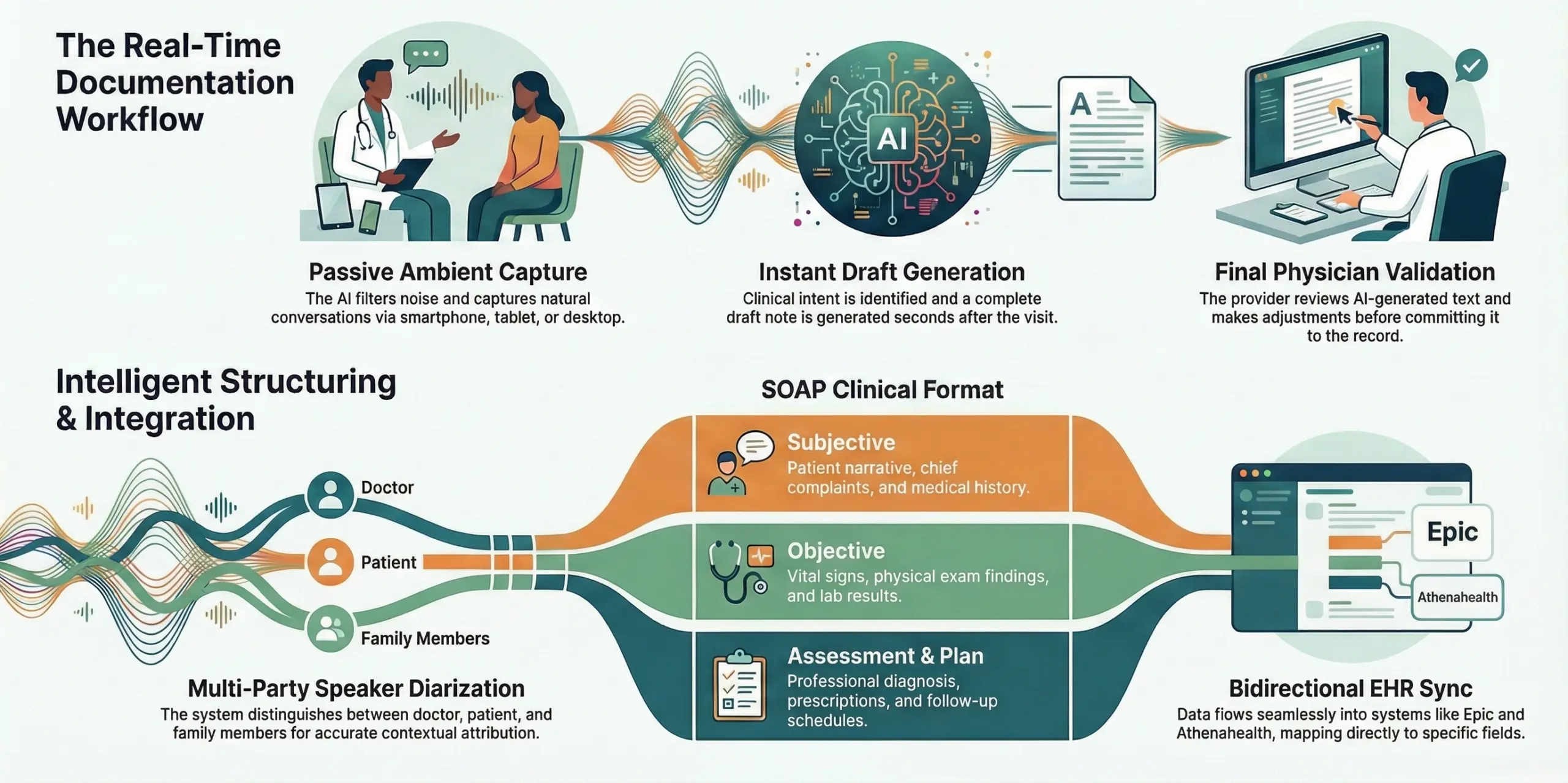
Sunoh.ai is an AI-powered ambient listening and medical scribe application designed to automate clinical documentation for healthcare providers. It functions as a digital assistant that “listens” to natural patient-doctor conversations in real-time and automatically generates structured clinical notes, such as SOAP or Progress notes, directly into a provider’s Electronic Health Record (EHR). The core value of Sunoh AI app development lies in its ability to turn unstructured vocal data into a clinical-grade document without manual intervention.
A. Ambient Listening and Real-Time Documentation Flow
The workflow of an AI healthcare documentation app is designed to be as non-intrusive as possible. It follows a specific sequence from the moment the patient enters the room to the final signing of the medical record.
- Activation: The provider starts the session on a smartphone, tablet, or desktop.
- Passive Capture: The AI listens to the conversation, filtering out background noise and non-clinical small talk.
- Instant Processing: As the conversation progresses, the system uses natural language processing to identify clinical intent.
- Draft Generation: Within seconds of the encounter ending, a complete draft of the clinical note is available for review.
- Final Validation: The physician reviews the AI-generated text, makes any necessary adjustments, and commits it to the permanent record.
B. How Sunoh Structures SOAP Notes Automatically
One of the most complex aspects of Sunoh AI app development is the ability to categorize information into the standard SOAP format. The AI does not just transcribe words; it assigns them to the correct clinical bucket based on context.
| SOAP Section | AI Action | Data Captured |
| Subjective | Synthesizes the patient’s narrative. | Chief complaints, symptoms, and medical history. |
| Objective | Extracts measurable facts mentioned. | Vital signs, physical exam findings, and lab results. |
| Assessment | Identifies the professional diagnosis. | Differential diagnoses and clinical reasoning. |
| Plan | Outlines the roadmap for care. | Prescriptions, referrals, and follow-up schedules. |
C. Multi-Party Conversation Tracking Explained
Clinical visits rarely involve just one voice and often, a parent, spouse, or medical assistant is present and contributing to the conversation. A high-quality AI healthcare documentation app must be able to distinguish between these participants to ensure accuracy.
- Diarization Technology: The system uses speaker diarization to partition the audio stream based on speaker identity.
- Contextual Attribution: It understands that if a mother says the child has a fever, that information belongs in the patient’s subjective history, not the doctor’s assessment.
- Noise Filtration: Advanced algorithms isolate the primary speakers from hallway noise or medical equipment sounds.
- Clarity in Conflict: If two people speak at once, the AI uses contextual clues to determine which statement is clinically relevant for the documentation.
E. EHR Integration and Workflow Compatibility
The ultimate utility of Sunoh AI app development is determined by how well it “talks” to existing infrastructure. A standalone app that requires copy-pasting is inefficient; therefore, deep integration is a technical priority.
- EHR-Agnostic Design: The platform is built to work with major systems like eClinicalWorks, Athenahealth, and Epic.
- Bidirectional Data Sync: Information flows from the AI to the EHR, but the AI can also pull patient history from the EHR to provide better context.
- Discrete Data Mapping: Beyond just text, the AI identifies specific data points like a heart rate of 72 bpm and maps them to the specific numerical fields in the patient’s chart.
- Mobile-First Accessibility: Doctors can start a note on an iPad and finish it on a desktop, ensuring the documentation follows the provider rather than being stuck on a single terminal.
How Ambient AI Transforms Doctor–Patient Workflows?
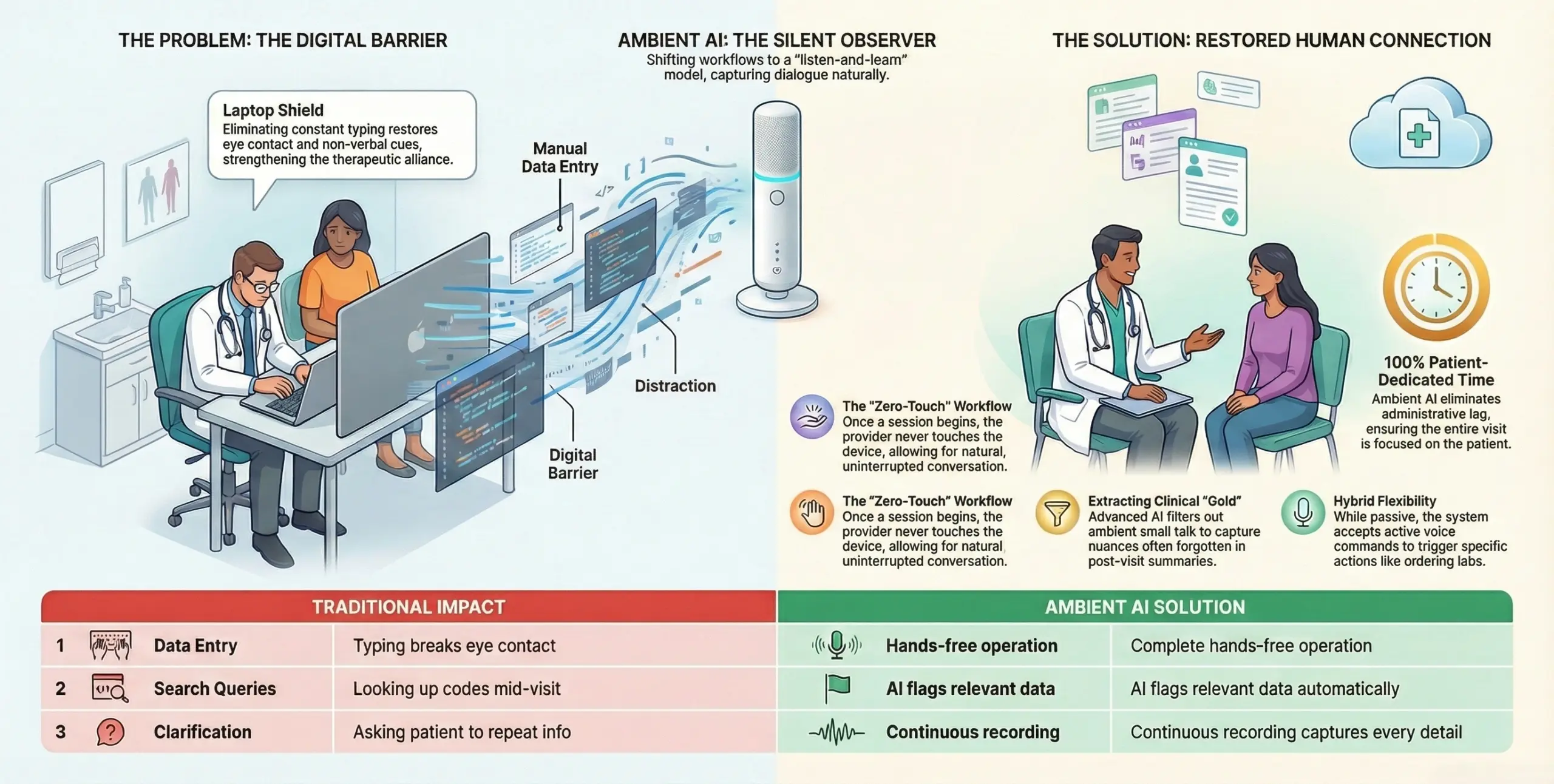
The integration of ambient intelligence removes digital barriers, shifting focus back to the human element of care. Sunoh AI app development transforms technology into a silent observer, allowing clinicians to prioritize patient communication over demanding administrative tasks.
A. Passive Listening vs Active Input Systems
The fundamental shift in ambient AI is the move to a “listen-and-learn” model. Passive systems operate silently, capturing dialogue without manual commands to ensure a natural, uninterrupted clinical workflow.
- Zero-Touch Workflow Continuity: Once a session begins, the provider never has to touch the device. This “zero-click” interface allows a natural conversation to unfold while the AI records the encounter in real time.
- Filtered Clinical Extraction: Advanced AI filters out ambient noise and small talk to extract only clinical “gold.” It captures nuances that a doctor might otherwise forget in a post-visit summary.
- Continuous Capture with Hybrid Flexibility: While the system captures natural flow, some platforms allow active voice commands (e.g., “Order a CBC”) to trigger specific EHR actions mid-conversation.
- Higher Data Fidelity: By listening to the entire encounter, the system ensures a higher level of documentation integrity compared to traditional “stop-and-tell” dictation methods.
B. Reducing Interruptions During Consultations
Every time a physician turns to a keyboard to enter data, the momentum of the diagnostic process is interrupted. An AI healthcare documentation app eliminates these micro-distractions, allowing for a more linear and efficient consultation that benefits both the provider and the patient.
| Interruption Source | Traditional Impact | Ambient AI Solution |
| Data Entry | Constant typing breaks eye contact and limits non-verbal cues. | Complete hands-free operation throughout the visit. |
| Search Queries | Stopping to look up codes or history mid-conversation. | AI extracts and flags relevant data points automatically. |
| Clarification | Asking the patient to repeat info for the sake of the “note.” | Continuous recording ensures every detail is captured the first time. |
| Administrative Lag | Spending the final five minutes of a visit staring at a screen. | 100% of the visit time is dedicated to patient interaction. |
C. Improving Patient Engagement and Care Quality
The integration of ambient intelligence removes the “digital barrier,” allowing doctors to be fully present. This fosters a stronger therapeutic alliance while ensuring higher clinical accuracy and documentation quality.
- Enhanced Therapeutic Alliance: Removing the “laptop shield” fosters eye contact and trust, ensuring patients feel “heard” and are more likely to follow recommended treatment plans.
- Verbatim Clinical Accuracy: The AI captures specific patient descriptions of symptoms like clinical “gold” that a doctor might otherwise paraphrase or omit from a manual note.
- Real-Time Collaborative Review: Doctors can quickly verify AI-generated summaries with the patient before they leave, ensuring both parties agree on the diagnostic plan and next steps.
- Increased Diagnostic Precision: Without the distraction of data entry, clinicians are better positioned to catch subtle non-verbal cues and secondary symptoms that might be missed in a rushed environment.
- Patient-Friendly Summaries: Some systems generate immediate, simplified action plans, ensuring the individual leaves the clinic with a clear understanding of their care.
Core Features of an App Like Sunoh.ai That Drive ROI
High-performance clinical platforms rely on a sophisticated blend of ambient capture and structured data processing. These core functionalities ensure that Sunoh AI app development translates directly into measurable time savings and operational excellence for modern medical practices.

1. Real-Time AI-Powered Clinical Note Generation
The system captures natural dialogue as it happens, converting unstructured speech into precise clinical narratives without requiring manual dictation. This allows for an immediate turnaround of documentation following every patient encounter.
Clinics can ensure higher data accuracy by eliminating the lag between the visit and the note completion. This real-time capability effectively removes the administrative bottleneck that typically delays patient charting and billing.
2. Automated SOAP Notes and Medical Summaries
Advanced algorithms sort captured information into the standardized SOAP format, distinguishing between subjective patient complaints and objective clinical findings. This ensures that every note meets the rigorous standards required for medical records.
Automated summarization reduces the cognitive load on providers by organizing complex interactions into concise, readable updates. This structured approach facilitates faster review cycles and ensures that no critical treatment details are overlooked during documentation.
3. Speech-to-Text With Medical Context Awareness
The AI healthcare documentation app is trained on vast datasets of medical terminology and clinical jargon unlike generic transcription. It recognizes specialized vocabulary, drug names, and anatomical references with extreme precision across various medical specialties.
Context awareness allows the AI to filter out irrelevant background chatter while focusing on clinically significant data points. This high-fidelity transcription reduces the need for extensive manual corrections, maintaining a seamless professional workflow for the clinician.
4. Multi-Language Support for Diverse Patient Bases
The platform must process and document encounters in multiple languages and dialects to serve global populations. This feature bridges communication gaps, allowing doctors to converse in a patient’s native tongue while generating notes in English.
Providing inclusive language support enhances patient trust and ensures that medical histories are captured accurately regardless of linguistic barriers. This capability is essential for practices operating in culturally diverse regions or looking to scale internationally.
5. Smart Medical Coding and Billing Assistance
Integrated intelligence identifies specific procedures and diagnoses mentioned during the visit to suggest appropriate ICD-10 and CPT codes. This alignment between documentation and coding reduces the risk of human error during the billing process.
Smart assistance leads to fewer claim denials and optimized reimbursement rates by ensuring that the level of care is fully documented. This direct link to the revenue cycle is a primary driver of financial return for the clinic.
6. EHR-Agnostic API Integrations
A successful AI healthcare documentation app must connect seamlessly with any existing Electronic Health Record system. This flexibility ensures that the tool can be deployed across various technical environments without disrupting established workflows or requiring platform migrations.
Bidirectional data flow allows the AI to both populate new notes and pull relevant historical data for better clinical context. This interoperability is vital for maintaining a unified and efficient digital ecosystem within a healthcare organization.
7. Secure Data Storage and HIPAA Compliance
Maintaining the highest standards of data privacy is non-negotiable when handling sensitive patient information. Robust encryption and strict access controls ensure that all processed audio and text remain protected against unauthorized access or data breaches.
Adhering to HIPAA and other international regulatory frameworks builds essential trust with both providers and patients. Comprehensive security protocols ensure that the platform remains a safe, compliant, and reliable component of the modern clinical infrastructure.
Step-by-Step Process to Build a Sunoh.ai-Like App
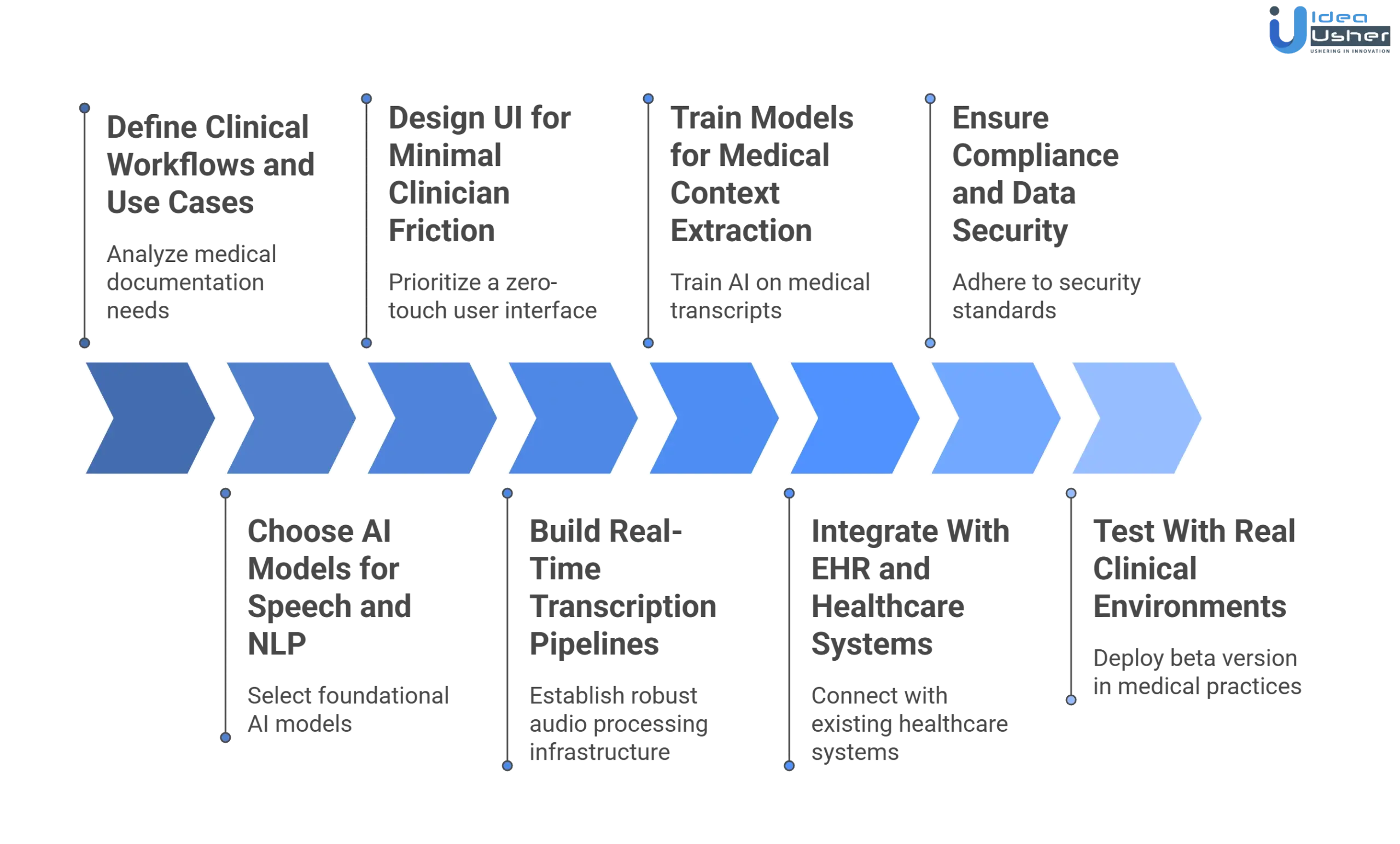
Developing a sophisticated ambient intelligence platform requires a strategic alignment between high-fidelity audio capture and clinical-grade data processing. Successful Sunoh AI app development depends on executing a series of technical milestones that prioritize accuracy, speed, and seamless integration.
1. Define Clinical Workflows and Use Cases
The development phase begins with a granular analysis of how different medical specialties conduct patient encounters. Engineers must map out the specific documentation requirements for primary care, orthopedics, or mental health to ensure the AI recognizes the unique structural needs of each clinical discipline.
2. Choose AI Models for Speech and NLP
The selection of foundational models is critical for achieving high accuracy in noisy clinical environments. Developers typically leverage advanced large language models and specialized speech-to-text engines that can be fine-tuned to handle complex medical terminology, varied accents, and multi-speaker diarization.
3. Design UI for Minimal Clinician Friction
The user interface must prioritize a zero-touch philosophy to ensure the technology does not become an additional burden. A successful AI healthcare documentation app features a clean, intuitive layout that allows physicians to start, stop, and review notes with a single click.
4. Build Real-Time Transcription Pipelines
The technical architecture requires a robust streaming pipeline capable of processing audio data with sub-second latency. This infrastructure ensures that as the conversation unfolds, the backend system is already identifying clinical intent and preparing the preliminary draft for immediate post-visit review.
5. Train Models for Medical Context Extraction
The core intelligence of the platform is built through supervised training on vast datasets of anonymized medical transcripts. This specialized training enables the system to distinguish between casual patient chatter and clinically significant symptoms, ensuring that only relevant data enters the SOAP notes.
6. Integrate With EHR and Healthcare Systems
The application must serve as a bridge to existing Electronic Health Record systems through secure API connections. Strategic integration allows for bidirectional data flow, enabling the AI to pull patient history while simultaneously pushing structured notes, orders, and ICD-10 codes into the chart.
7. Ensure Compliance and Data Security
The security framework must adhere to rigid international standards, including HIPAA and SOC2, to protect sensitive patient information. This involves implementing end-to-end encryption for audio streams, secure data at rest, and strict multi-factor authentication for all authorized clinical users.
8. Test With Real Clinical Environments
The final stage involves deploying the beta version within active medical practices to gather direct feedback from providers. This iterative testing process identifies edge cases in speech recognition and ensures the generated documentation meets the high standards required for legal and billing purposes.
AI Medical Scribe like Sunoh AI app Development
Building a high-tier clinical documentation platform requires a phased investment strategy that balances initial proof-of-concept with long-term enterprise scalability. The following cost sheet outlines the financial requirements for Sunoh AI app development based on 2026 market benchmarks for specialized healthcare artificial intelligence.
| Development Phase | MVP Level | Enterprise Level | Key Deliverables |
| Discovery & Architecture | $10,000 – $15,000 | $25,000 – $40,000 | Technical roadmap, HIPAA-compliant cloud architecture, and data flow diagrams. |
| UI/UX Design | $8,000 – $12,000 | $20,000 – $35,000 | Clinician-centric wireframes, mobile-responsive interfaces, and accessibility audits. |
| AI Model Training | $25,000 – $45,000 | $80,000 – $150,000+ | Medical-grade NLP, custom speech-to-text fine-tuning, and clinical intent extraction. |
| Core Development | $40,000 – $70,000 | $120,000 – $250,000 | Backend infrastructure, ambient listening pipelines, and multi-device sync. |
| Integrations | $15,000 – $25,000 | $50,000 – $100,000 | HL7/FHIR API connections and bidirectional sync with major EHR platforms. |
| QA & Compliance | $12,000 – $20,000 | $35,000 – $60,000 | Security penetration testing, clinical validation, and HIPAA/SOC2 audits. |
| Total Estimated Cost | $75,000 – $130,000 | $243,000 – $465,000 | A fully functional, market-ready AI clinical documentation system. |
Critical Factors Affecting Development Costs
The final budget for the Sunoh AI app development varies based on technical and regulatory shifts. Understanding these drivers ensures better capital allocation and prioritizes resource-intensive components for maximum ROI.
- Accuracy Thresholds and Model Training: Achieving the “last mile” of clinical accuracy is the costliest phase; improving from 90% to 98% often demands a 40% increase in data labeling and fine-tuning expenses.
- EHR Integration Complexity: While standard APIs are simple, custom legacy integrations can add $15,000–$30,000 per instance due to complex, unique data mapping requirements.
- Security and Regulatory Compliance: Implementing military-grade encryption and audit trails typically adds a 20% to 30% premium to total costs, covering mandatory certifications and privacy safeguards.
- Ambient Noise Filtration: Isolating voices in noisy clinics requires advanced “far-field” audio processing, which can increase backend development and optimization costs by nearly 15%.
- Scalability and Real-Time Processing: Managing simultaneous streams without latency requires robust DevOps infrastructure, with monthly cloud hosting and inference costs ranging from $2,000 to $10,000.
Tech Stack Required for AI Medical Scribe Apps
The architecture for a professional-grade platform must handle high-fidelity audio while maintaining strict privacy. Selecting the right tech stack for Sunoh AI app development ensures the system remains responsive, accurate, and scalable across diverse clinical environments.
| Component | Recommended Stack | Strategic Role in Development |
| Frontend for Clinician Dashboards | React.js, Next.js, or Flutter (for Cross-Platform Mobile) | Provides a low-latency, intuitive interface that allows doctors to review and sign off on notes across mobile and desktop devices. |
| Backend for Real-Time Data Processing | Node.js (Express) or Python (FastAPI / Django) | Manages the high-speed orchestration of audio data, user authentication, and the asynchronous task queues required for note generation. |
| AI Stack for Speech & NLP | AssemblyAI (Medical-v1), OpenAI Whisper, or Google Medical Models | Handles the heavy lifting of clinical speech-to-text, speaker diarization, and the extraction of SOAP-structured medical summaries. |
| Cloud Infrastructure for Scalability | AWS (HealthLake), Google Cloud (Healthcare API), or Azure | Ensures the platform can scale to thousands of concurrent users while maintaining HIPAA-compliant data storage and processing. |
| EHR APIs Integrations | HL7 FHIR, SMART on FHIR, and Redox Engine | Facilitates the secure, bidirectional exchange of patient data between the AI scribe and major Electronic Health Record systems like Epic or Cerner. |
Key Technical Considerations for the Stack
Building an AI healthcare documentation app involves more than just selecting languages and frameworks. The underlying logic must account for the high-stakes nature of medical data and the physical realities of a busy clinical setting.
- Audio Stream Synchronization: The backend must utilize WebSocket protocols to ensure real-time processing without packet loss. Any lag can result in missing clinical details, compromising medical record integrity.
- Cold Start Latency for AI Models: To avoid “warm-up” delays, use pre-warmed instances or GPU clusters. This ensures clinicians receive documentation drafts within seconds of concluding a patient visit.
- Diarization in Near-Field Environments: In small exam rooms with overlapping voices, the stack must excel at speaker diarization to accurately distinguish between provider and patient, preventing symptom misattribution.
- Offline Resilience and Data Buffering: Given unreliable clinical Wi-Fi, frontends require local buffering capabilities. This allows continuous recording and secure data synchronization once the connection is restored.
- FHIR-Standard Data Mapping: Beyond text, the AI must extract discrete data. This involves mapping values like vitals directly into FHIR resource fields for automated, structured EHR charting.
MVP vs Full Product: What Should You Build First
A strategic decision that balances speed with technical complexity, the initial scope of Sunoh AI app development must be carefully defined. Starting with an MVP allows for real-world validation of AI accuracy before committing to the heavy infrastructure costs of a full-scale platform.
A. Features Required for a Minimum Viable Product
A successful MVP must solve documentation fatigue without over-engineering. By 2026, the baseline for an AI healthcare app includes high-impact functionalities that provide immediate value and essential clinical utility.
- Ambient Audio Capture: Reliable, background-noise-filtering recording capabilities for mobile and desktop devices.
- Medical-Grade Transcription: An AI engine fine-tuned on clinical terminology, capable of reaching at least 95% accuracy out-of-the-box.
- Automated SOAP Note Generation: The ability to summarize a conversation into the standard Subjective, Objective, Assessment, and Plan format.
- Basic Speaker Diarization: Distinguishing between the provider and the patient to ensure the note attributes symptoms and plans correctly.
- HIPAA-Compliant Security: End-to-end encryption and secure login protocols are non-negotiable, even in the earliest version of the product.
B. When to Scale to a Full AI Platform
The transition from an MVP to an enterprise-grade system occurs when organizations require deeper integration and multi-user management. This shift transforms a validated transcription engine into an essential clinical ecosystem.
| Scale Indicator | Full Platform Requirement | Enterprise Benefit |
| Workflow Friction | Bidirectional EHR Integration (Epic, Cerner, Athena) | Eliminates copy-pasting by pushing notes directly into patient charts. |
| Operational Complexity | Multi-Specialty Templates (200+ types) | Adapts the AI output to the specific documentation style of surgeons, therapists, or GPs. |
| Revenue Optimization | Automated ICD-10 and CPT Coding Suggestions | Links documentation directly to billing to reduce claim denials and audit risks. |
| User Management | Enterprise Admin Dashboards & Role-Based Access | Allows hospital IT teams to manage permissions and audit logs across hundreds of providers. |
Development Timeline: MVP vs. Enterprise Scale
The market entry timeline for AI healthcare apps varies based on model training depth and regulatory complexity. While AI-accelerated tools compress development phases, rigorous clinical validation remains a mandatory, fixed necessity.
| Development Stage | MVP Timeline | Enterprise Timeline |
| Research & Discovery | 2 Weeks: User journeys and core AI logic. | 4–6 Weeks: Multi-department workflows and legacy audits. |
| Design & Prototyping | 2–3 Weeks: Essential mobile/web interfaces. | 6–8 Weeks: Comprehensive admin portals and white-labeling. |
| AI Model Development | 4–6 Weeks: API-based models with basic tuning. | 4–6 Months: Custom proprietary models and specialty training. |
| Core Engineering | 6–8 Weeks: Stable backend and cloud setup. | 5–7 Months: Scalable microservices and offline resilience. |
| Integration & Compliance | 3 Weeks: Basic export or single FHIR bridge. | 2–3 Months: Deep EHR sync and SOC2/HIPAA certification. |
| Testing & Launch | 2–3 Weeks: Beta testing in a single clinic. | 1–2 Months: Pilot programs across multiple hospital sites. |
| Total Estimated Timeline | 3–4 Months | 8–12+ Months |
C. Balancing Cost, Speed, and Product Quality
The “Iron Triangle” of development is particularly tight in healthcare AI, where a lack of quality can lead to clinical errors. Finding the right balance requires a phased approach that prioritizes data integrity over “flashy” features during the initial build.
- Focus on the “Last Mile” of Accuracy: Prioritize a 98% accurate transcription engine over extra UI features; high-quality core output is the primary driver of ROI by minimizing doctor editing time.
- Leverage Hybrid AI Models: Accelerate speed to market using a “Human-in-the-Loop” (HITL) model for initial users, ensuring high quality while the AI learns real-world clinical nuances.
- Incremental Integration: Start with a “Universal Clipboard” or single API to enter the market 3–5 months sooner and keep initial costs in the $75k–$130k range.
- Modular Architecture: Design the backend to be “EHR-agnostic” from day one; this technical foresight prevents expensive re-platforming and enables scaling with minimal code changes.
Challenges in Building AI Clinical Documentation Apps
Developing a high-tier clinical documentation platform involves navigating complex technical and regulatory hurdles. Successful Sunoh AI app development requires a proactive approach to accuracy, data privacy, and interoperability to ensure the final product is reliable in high-stakes environments.

1. Achieving High Accuracy in Medical Transcription
Challenge: Standard voice recognition often fails to capture complex clinical terminology, drug names, and anatomical references, leading to dangerous medical errors.
Solution: Our developers implement specialized medical-grade acoustic models and custom vocabulary libraries. We fine-tune these systems using clinical datasets to ensure 99% accuracy in specialized medical documentation scenarios.
2. Handling Diverse Accents and Languages
Challenge: Clinicians and patients often have varied linguistic backgrounds, which can cause traditional AI to struggle with phonetic interpretation and context.
Solution: We integrate multi-dialect training and advanced phonetic algorithms into the AI healthcare documentation app. This ensures the system remains inclusive and accurate across diverse global patient populations and provider accents.
3. Ensuring HIPAA and Healthcare Compliance
Challenge: Failing to meet rigid security standards like HIPAA can lead to massive legal liabilities and the loss of clinical trust.
Solution: Our team builds a zero-trust architecture featuring end-to-end encryption, automated audit logs, and secure SOC2-compliant cloud environments. We prioritize data sovereignty to ensure all patient information remains protected at rest and in transit.
4. Integrating With Legacy Healthcare Systems
Challenge: Many clinics still rely on outdated, on-premise EHR systems that lack modern API support, making automated data synchronization extremely difficult.
Solution: We utilize middleware solutions like Redox or specialized FHIR bridges to create a unified data layer. This allows our platform to push and pull clinical data seamlessly from even the oldest healthcare infrastructures.
5. Managing Real-Time Processing Latency
Challenge: High-latency processing forces doctors to wait for their notes, defeating the purpose of an automated, real-time clinical documentation tool.
Solution: Our engineers optimize the backend using GPU-accelerated inference and edge computing techniques. By streamlining the transcription pipeline, we deliver structured clinical drafts to the provider immediately after the patient encounter ends.
How to Ensure HIPAA Compliance and Data Security?
Maintaining the integrity of protected health information (PHI) is the most critical aspect of building an AI healthcare documentation app. In 2026, the regulatory landscape has evolved to require not just static data protection, but active security protocols that cover AI inference pipelines and automated data disposal.
A. Encryption Standards and Secure Data Handling
Modern healthcare applications must implement a layered encryption strategy that protects data at every stage of its lifecycle. This ensures that even in the event of a perimeter breach, the actual medical records remain unreadable and useless to unauthorized parties.
- Advanced Encryption at Rest: All clinical notes, audio files, and metadata must be stored using AES-256 encryption. By 2026, using customer-managed encryption keys (CMK) has become a standard for enterprise-level deployments.
- End-to-End Transport Security: Data moving between the clinician’s device and the cloud must utilize TLS 1.3 or higher. This prevents man-in-the-middle attacks during the real-time transmission of sensitive doctor-patient dialogue.
- Field-Level Protection: High-sensitivity data points, such as Social Security numbers or specific diagnostic codes, should be encrypted individually within the database for an added layer of granular security.
- Secure Decryption Pipelines: Decryption keys should never be stored on the same server as the encrypted data. Utilizing dedicated Key Management Services (KMS) ensures that access to the “lock” and the “key” are strictly separated.
B. Role-Based Access and Audit Logs
Controlling who can view or modify clinical data is a fundamental requirement of the HIPAA Security Rule. A robust Sunoh AI app development strategy includes sophisticated Identity and Access Management (IAM) to ensure the principle of least privilege is always maintained.
| Security Feature | Implementation Strategy | Compliance Purpose |
| Multi-Factor Authentication | Mandatory MFA using biometrics or hardware tokens for every login attempt. | Prevents unauthorized access via compromised administrative or provider credentials. |
| Role-Based Access (RBAC) | Permissions assigned by job function (e.g., Physician, Billing, Admin). | Ensures staff only see the minimum necessary data required to perform their specific tasks. |
| Immutable Audit Logs | Non-repudiable records of who accessed what data, when, and from which IP. | Provides a 6-year historical record of system activity for HIPAA audits and forensic reviews. |
| Automatic Log-Off | Session termination after a defined period of inactivity on any clinical device. | Mitigates the risk of PHI exposure on unattended tablets or workstations in shared clinic spaces. |
C. Data Anonymization and Storage Practices
To move beyond simple documentation and into advanced clinical research or model training, developers must utilize high-fidelity de-identification techniques. This allows for the secondary use of data without compromising individual patient privacy or violating the HIPAA Privacy Rule.
- Safe Harbor De-Identification: Systems must automatically detect and strip 18 specific identifiers, including names, precise geographic data, and full-face photographic images, before data is used for non-clinical purposes.
- AI-Driven PII Redaction: Leveraging specialized NLP models allows the AI healthcare documentation app to scan unstructured text for “accidental PHI” that traditional rule-based filters might miss.
- Isolated Storage Environments: De-identified datasets used for machine learning should be kept in separate, air-gapped storage buckets that have no physical or logical link to the primary production database.
- Strict Data Retention Policies: HIPAA requires that PHI be disposed of securely once it is no longer needed. Automated “purging” protocols ensure that temporary audio recordings or discarded drafts are permanently erased using cryptographic shredding.
Monetization Models for AI Medical Scribe Platforms
Establishing a sustainable revenue framework for an AI healthcare documentation app requires balancing provider affordability with the high compute costs of real-time processing. Diverse pricing strategies allow platforms to scale from independent clinics to massive hospital networks.
1. SaaS Subscription for Clinics and Hospitals
Monthly or annual tiers provide predictable revenue and often include unlimited note generation for a flat fee. This model typically ranges from $99 to $300 per provider, offering essential EHR integration and basic specialty templates.
2. Pay-Per-Use Transcription Models
Consumption-based pricing aligns costs directly with patient volume, making it ideal for low-volume specialists or part-time clinicians. Credits are typically purchased in advance, with rates averaging $1.50 to $3.00 per processed clinical encounter.
3. Enterprise Licensing for Healthcare Networks
Large organizations benefit from volume-based discounts and centralized administrative controls under multi-year contracts. These bespoke agreements often include dedicated support, custom security audits, and specialized fine-tuning for the network’s specific medical departments.
4. API-Based Monetization for Integrations
The provision of a core transcription engine to third-party developers or EHR vendors creates a revenue stream through “API as a Service.” Partners pay based on call volume or tokens, facilitating seamless documentation across platforms.
How IdeaUsher Builds Scalable Healthcare AI Solutions?
Our engineering teams combine deep medical domain expertise with advanced machine learning to deliver high-performance systems. We focus on transforming complex clinical challenges into streamlined, digital-first experiences.
A. Our Experience in AI and Healthcare Development
We have spent years architecting sophisticated AI & healthcare projects development like Kamelion, MediPort, Vezita etc, focusing on high-accuracy transcription and secure data orchestration. Our portfolio includes diverse deployments across primary care and specialized clinics.
B. Custom Solutions Tailored to Clinical Workflows
Every medical specialty has unique charting requirements. Our developers can build the AI healthcare documentation app that adapts to your specific needs, ensuring the AI recognizes specialty-specific terminology and preferred note structures.
C. End-to-End Development From MVP to Scale
Our team manages the entire lifecycle, from initial prototyping to full-scale enterprise deployment. We ensure your platform remains performant and cost-effective as your user base grows from dozens to thousands.
D. Compliance-First Development Approach
Security is integrated into every line of code we write. We prioritize HIPAA and GDPR standards, implementing rigorous encryption and audit protocols to ensure your platform remains fully protected and reputable.
Future Trends in AI Healthcare Documentation
The next phase of Sunoh AI app development involves moving beyond passive recording into proactive clinical partnership. Emerging technologies are transforming the AI healthcare documentation app from a simple scribe into a sophisticated diagnostic and analytical co-pilot.

1. Generative AI in Clinical Decision Support
Generative models now analyze patient dialogue in real time beyond capturing notes to suggest potential diagnoses or flag drug-to-drug interactions during the visit. This transition shifts the focus from administrative assistance to active clinical safety and precision.
Real-World Example: Nuance DAX Copilot uses GPT-4 to generate clinical summaries while providing immediate documentation prompts that help doctors avoid missing critical diagnostic details.
2. Voice-First Healthcare Interfaces
The hands-free revolution is expanding into voice-activated command centers where clinicians can order labs, query historical charts, or update prescriptions using only natural language. This eliminates the need for any physical interaction with computer terminals during patient care.
Real-World Example: Suki Assistant allows physicians to say “Suki, show me the patient’s last three A1c results,” instantly pulling data from the EHR via voice command.
3. Predictive Analytics in Patient Care
Documentation data is being leveraged by machine learning to predict patient deterioration or the likelihood of hospital readmission before symptoms worsen. These insights allow for early intervention and more personalized long-term treatment strategies for chronic conditions.
Real-World Example: Epic Systems integrates predictive AI models that scan clinical notes and vitals to provide a “Sepsis Likelihood Score,” alerting nursing staff hours before a crisis occurs.
4. AI Copilots for Doctors and Clinicians
Modern AI assistants are evolving into comprehensive workflow managers that handle pre-visit prep, real-time documentation, and post-visit follow-up scheduling. These copilots synchronize the entire patient journey, ensuring no administrative or clinical task falls through the cracks.
Real-World Example: Navina AI processes unstructured data from faxes, scans, and notes to create a concise “Patient Portrait,” giving doctors a complete clinical overview in seconds before they enter the room.
Build Your AI Healthcare Documentation With IdeaUsher!
Partner with IdeaUsher to transform your vision into a market-leading AI healthcare documentation app. Our elite engineering team brings over 500,000+ hours of development experience to every project. We specialize in building secure, HIPAA-compliant platforms that redefine clinical efficiency.
Our ex-FAANG/MAANG developers have deep expertise in AI & healthcare app development, creating solutions that integrate with EHRs. We focus on ambient listening and medical NLP for clinical-grade accuracy.
We provide a strategic blueprint for Sunoh AI app development, from MVP architecture to security audits, minimizing technical debt to accelerate your healthcare market entry.
Connect with our experts today to discuss your specific requirements and receive a detailed technical assessment and transparent cost breakdown tailored to your clinical use cases.
Conclusion
The shift toward ambient intelligence marks a pivotal era in healthcare, where technology finally prioritizes the human connection. By investing in Sunoh AI app development, healthcare organizations eliminate administrative friction, reduce clinician burnout, and significantly enhance medical record accuracy. This “listen-and-learn” model ensures that providers remain fully present with their patients, fostering trust and better health outcomes. As the landscape evolves, adopting these scalable, high-fidelity AI solutions is essential for any practice aiming to deliver modern, efficient, and patient-centered care.
FAQs
A.1. The Sunho AI app development costs typically range from $75,000 for a Minimum Viable Product to over $450,000 for enterprise systems. Key budget drivers include EHR integration complexity, medical NLP training, and HIPAA compliance audits.
A.2. A market-ready solution requires ambient listening capabilities, automated SOAP note generation, and secure EHR data mapping. High-fidelity speaker diarization and medical-grade encryption are also critical for clinical accuracy and patient privacy.
A.3. Security is maintained through AES-256 encryption, multi-factor authentication, and immutable audit logs. Standard protocols include automated PII redaction and secure data disposal to protect sensitive patient health information.
A.4. The creation of a functional MVP usually spans three to five months. This period accounts for transcription pipeline optimization, specialized model fine-tuning, and the establishment of bidirectional API connections with hospital management software.