


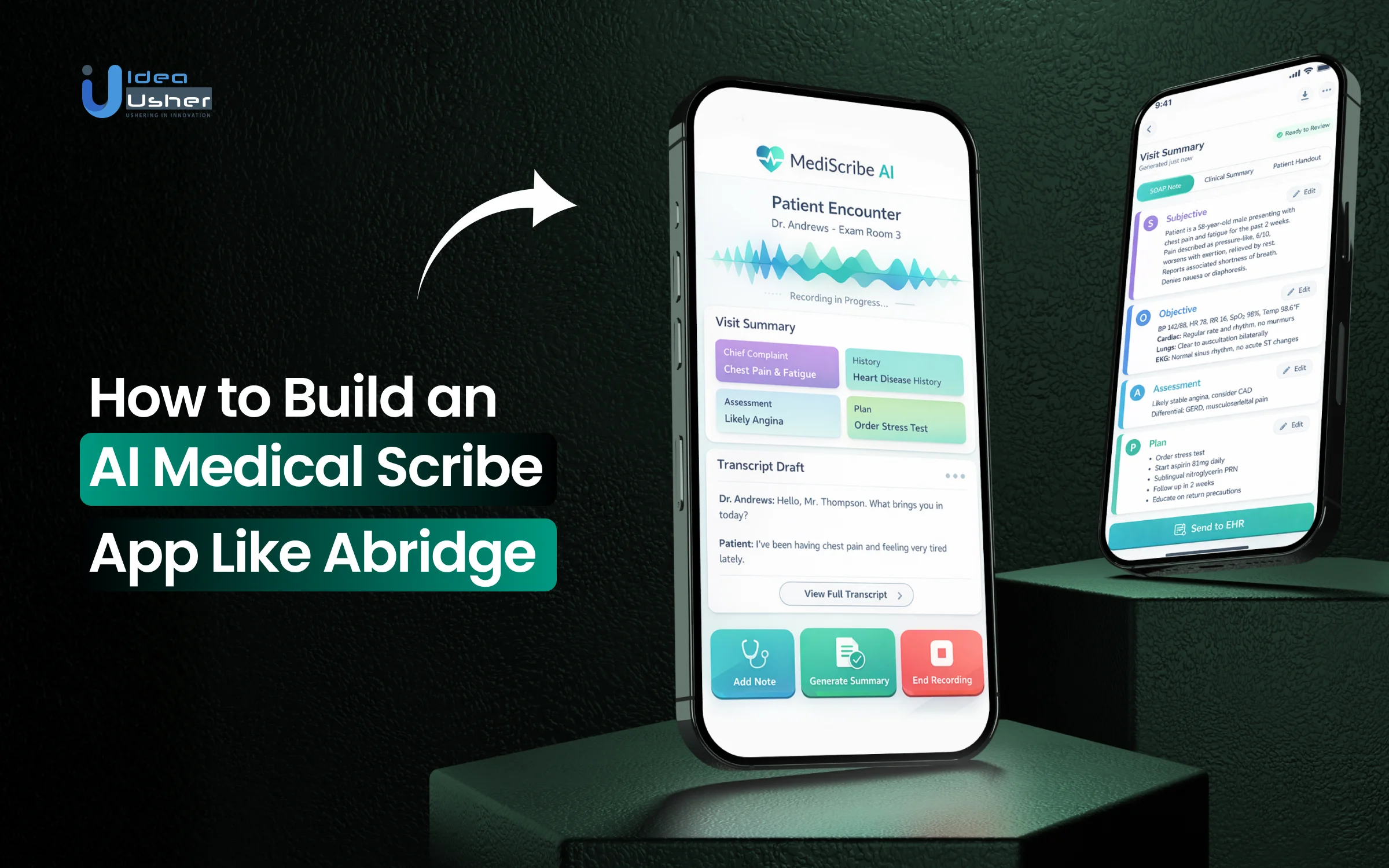
Clinical conversations contain critical details that must be accurately captured and converted into structured medical records, often under time pressure. Documenting these interactions manually can slow down care delivery and increase administrative burden for clinicians. These challenges are driving interest in Abridge AI app development, where AI systems assist in turning spoken interactions into clear, structured clinical documentation.
The integration of speech recognition, context understanding, medical terminology mapping, summarization, and EHR connectivity within a secure, compliant environment is essential for transforming conversations into usable medical records, going far beyond simple transcription. The effectiveness of the platform depends on how well these components preserve clinical accuracy while fitting naturally into existing care workflows.
In this blog, we explain how to build an AI medical scribe app like Abridge by examining core features, system architecture, and practical considerations involved in developing reliable and scalable AI-driven documentation tools for healthcare.
Why AI Medical Scribes Are Reshaping Healthcare?
The administrative requirements of modern medicine have reached a critical tipping point, with clinicians spending more time on data entry than patient care. This shift toward Abridge AI app development restores the provider-patient interaction as the global AI medical scribe market, projected to grow from $2.8 billion in 2025 to $14.6 billion by 2034 expanding at a CAGR of 20.2%, reshaping the healthcare industry.

Research indicates that implementing ambient AI reduces clinical documentation time by 60%,effectively restoring the “joy of medicine” for over-burdened providers. Additionally, clinicians using these tools experience a 46.6% lower cognitive load, allowing them to focus entirely on patient care rather than manual data entry.
A. The Documentation Burden in Modern Clinical Workflows
The current state of clinical documentation is defined by high-friction processes that impact both professional satisfaction and institutional revenue. Providers are often required to document every nuance of a visit to satisfy billing, legal, and regulatory standards, leading to a phenomenon known as professional exhaustion.
- Administrative Overload: Many clinicians spend twice as much time on EHR documentation as they do with patients, often extending work into personal hours.
- Cognitive Task Switching: Constantly shifting focus between a conversation and a keyboard leads to data inaccuracies and decreased diagnostic quality.
- The Click Crisis: Navigating complex software interfaces requires hundreds of manual interactions for a single patient encounter, slowing down the entire care delivery cycle.
B. Rise of Ambient Clinical Intelligence Systems
An AI medical scribe app utilizes ambient technology to function as an invisible observer. These systems leverage multi-speaker diarization and natural language understanding to parse clinical conversations in real-time without requiring manual intervention or dictation.
| Feature | Impact on Workflow |
| Passive Listening | Captures the natural dialogue between doctor and patient without needing a microphone interface. |
| Diarization | Distinguishes between the provider, the patient, and family members to ensure the note reflects the correct source. |
| NLU Processing | Extracts clinical intent from casual conversation, identifying symptoms, diagnoses, and treatment plans automatically. |
| Contextual Filtering | Ignores non-clinical small talk and focuses exclusively on the data required for a structured medical record. |
C. Market Demand for AI-Powered Medical Scribes
The urgency to adopt Abridge AI app development is driven by the need for scalability in healthcare operations. Organizations are seeking technology that can handle high patient volumes while maintaining the integrity of the medical record.
- Institutional Efficiency: Large health systems prioritize tools that integrate with existing infrastructures to increase patient throughput and reduce the cost of documentation.
- Operational Consistency: AI ensures that every note follows a standardized format, which is essential for billing accuracy and reducing claim denials across a large network of providers.
- Provider Retention: Reducing the clerical load is a primary strategy for healthcare organizations to combat turnover and maintain a stable workforce.
- Enhanced Patient Experience: Patients report higher satisfaction when their physician is focused on them rather than a computer screen during the consultation.
What Is An AI Medical Scribe App Like Abridge?
An AI medical scribe app like Abridge is a digital assistant that usesambient listening and generative AI to automatically transcribe and summarize doctor-patient conversations into structured clinical notes. This technology utilizes a Contextual Reasoning Engine to distinguish between casual patient interaction and medically significant data.
These tools are designed to alleviate “pajama time,” the hours clinicians spend on paperwork after work, saving them an average of 2 to 3 hours daily, creating a seamless bridge between the spoken word and the final electronic health record (EHR) entry.

A. From Voice Capture To Structured Clinical Notes
The transition from raw audio to a finalized medical note involves a sophisticated pipeline of machine learning models. This process ensures that the output is not just a transcript, but a synthesized document that reflects clinical logic and follows professional standards.
- Real-Time Transcription: High-fidelity speech-to-text engines convert spoken dialogue into a digital transcript as the conversation unfolds.
- Clinical Filtering: Natural language processing (NLP) models identify and remove “filler” speech, such as social pleasantries or unrelated interruptions, to focus on relevant medical facts.
- Medical Mapping: The system maps conversational evidence to specific clinical categories, such as history of present illness (HPI) or physical exam findings.
- Clinician Verification: Before the note is finalized, the provider reviews the draft, which remains linked to the original audio snippets for rapid verification and auditability.
B. How Ambient Listening Replaces Manual Input
Ambient listening is the core differentiator of an AI medical scribe app. It allows the technology to operate in the background without requiring the clinician to change their natural behavior or use specific “wake words.”
| Workflow Phase | Traditional Method | Ambient AI Method |
| Data Collection | Manual note-taking during or after the visit. | Automatic audio capture in the background. |
| Clinician Focus | Split between the screen and the patient. | 100% focused on the patient interaction. |
| Note Drafting | Typing from memory or shorthand notes. | Instant draft generation post-consultation. |
| EHR Entry | Manual copy-pasting or template clicking. | Direct integration and structured data sync. |
C. Key Outputs: SOAP Notes, Billing, and Summaries
Successful Abridge AI app development must deliver multiple high-value outputs from a single conversation. These outputs serve different stakeholders, from the treating physician to the billing department and the patient.
- SOAP Notes: The standard clinical format consisting of Subjective, Objective, Assessment, and Plan sections, organized automatically by the AI.
- Billing and Coding Support: Identification of ICD-10 and CPT codes based on the documented diagnosis and procedures, reducing claim denials.
- Patient After-Visit Summaries: Conversational transcripts are distilled into plain-language instructions that help patients remember their care plans.
- Structured Data for Analytics: Capturing discrete data points that can be used for population health management and internal quality reporting.

Core Features That Define Abridge-Like Platforms
The success of a clinical intelligence platform depends on its ability to handle complex medical dialogues while ensuring high data integrity. Modern systems must balance sophisticated backend processing with a frictionless user experience to provide immediate value.

1. Real-Time Speech-To-Text Medical Transcription
High-fidelity transcription is the foundation of the AI medical scribe app, converting diverse clinical dialogues into accurate text instantly. This process requires specialized models trained on extensive medical vocabularies to ensure every pharmaceutical name and anatomical term is captured correctly.
The system eliminates the need for manual dictation by utilizing automatic speech recognition (ASR) fine-tuned for healthcare. This ambient capture ensures that clinicians can remain fully engaged with their patients while the technology handles the heavy lifting of data recording.
2. Context-Aware Clinical Summarization Engine
A sophisticated reasoning engine drives Abridge AI app development, filtering social “small talk” from essential medical facts. This intelligent processing ensures the final clinical output remains concise and relevant by systematically stripping away non-clinical distractions.
The engine uses Large Language Models (LLMs) to synthesize fragmented conversations into a cohesive narrative. This semantic understanding allows the platform to summarize complex patient histories and physical findings with the same nuance as a human medical scribe.
3. Automated SOAP Note Generation Workflow
The platform must automatically categorize extracted information into the standard Subjective, Objective, Assessment, and Plan format. This automation drastically reduces the time providers spend on post-visit documentation, often saving several hours of administrative work daily.
Through structured data mapping, the app populates each section of the SOAP note based on conversational evidence. This creates a standardized clinical narrative that is ready for physician review and finalization immediately after the patient encounter concludes.
4. Multi-Language and Accent Adaptability
The AI medical scribe app must offer robust support for multiple languages and various regional accents to serve diverse populations. This inclusivity ensures that the quality of documentation remains consistent regardless of the primary language spoken in the room.
Advanced models are validated across dozens of languages, utilizing neural machine translation and accent-robust acoustic modeling. This multilingual processing capability allows for natural, free-flowing communication that the AI can accurately translate into standardized English clinical documentation.
5. EHR Integration With Systems Like Epic
Deep technical alignment with Electronic Health Records (EHR) is a critical moat in Abridge AI app development. Integration ensures that generated notes flow directly into the patient’s chart, maintaining a single source of truth for the health system.
The app becomes a native part of the clinician’s workspace by leveraging FHIR APIs and native integrations with platforms like Epic or Cerner. This bi-directional data sync eliminates the need for manual copy-pasting, streamlining the entire revenue cycle and documentation process.
6. Audit Trails Linked To Source Conversations
Trust in AI is established through transparency and the ability to verify every generated statement. Effective platforms link every sentence in a summary back to the specific moment in the original audio recording or transcript.
This linked evidence feature acts as a powerful tool for quality assurance and medicolegal protection. It provides an auditable ground truth, allowing clinicians to quickly highlight a note and hear the source conversation to confirm the accuracy of the AI’s interpretation.
7. HIPAA-Compliant Data Handling and Storage
Security is non-negotiable in Abridge AI app development, requiring a multi-layered approach to protect sensitive Patient Health Information (PHI). Every data point must be handled with the highest standards of encryption and access control to meet federal regulations.
The architecture must support end-to-end encryption and maintain strict SOC2 Type II compliance standards. Robust data sovereignty protocols ensure that audio recordings are processed securely and deleted according to institutional retention policies to safeguard patient privacy.
How Abridge Works: System Workflow Explained
Abridge uses an ambient AI workflow to convert clinician-patient conversations into structured medical documentation. The system operates through a multi-layered pipeline that progresses from raw audio capture to real-time EHR integration.

1. Capturing Clinician–Patient Conversations
The workflow begins with ambient listening using the Abridge mobile application.
- Consent & Selection: Clinicians obtain patient consent and select the relevant patient from their integrated EHR schedule (e.g., Epic).
- Passive Recording: The app records the conversation in the background without requiring “wake words” or specific verbal commands.
- Noise Handling: The system is designed to handle “busy” clinical environments, including background noise and cross-talk.
2. Processing Audio Using AI Speech Models
Captured audio is processed through a deep learning stack to create a high-fidelity transcript.
- Automatic Speech Recognition (ASR): Abridge uses specialized ASR models tuned for medical terminology across over 14 languages.
- Specialized Metrics: These models are optimized for a 24% relative reduction in word error rate and high recall of medical terms and new medication names compared to general-purpose models like OpenAI’s Whisper v3.
- Diarization: The system identifies and separates different speakers (e.g., distinguishing between clinician and patient) within seconds.
3. Applying Contextual Reasoning
The Contextual Reasoning Engine interprets the transcript to ensure clinical accuracy and relevance.
- Data Integration: It pulls information from disparate sources, including the current conversation, previous patient encounters, and health system-specific guidelines.
- Filtering: The engine distinguishes relevant medical information from “chitchat,” focusing only on data necessary for clinical documentation.
- Linked Evidence: Every AI-generated output is tied back to the original audio and transcript, allowing clinicians to verify information with a single click.
4. Structuring Outputs into Clinical Formats
Relevant data is organized into standardized, billable formats.
- SOAP Note Generation: The system automatically drafts SOAP notes (Subjective, Objective, Assessment, and Plan).
- Actionable Outputs: Beyond notes, the AI can predict medical problems and suggest orders or billing codes for clinician review.
- Patient Summaries: It also generates digestible Patient Visit Summaries (PVS) written at an 8th-grade reading level to improve patient understanding.
5. Syncing Notes with EHR Systems in Real Time
The final step involves seamless delivery into the clinician’s existing workflow.
- Direct Integration: Draft notes are “beamed” directly into the patient’s medical record in real time.
- Review & Sign-off: Clinicians use a web editor or mobile interface to review, edit, and finalize the AI-drafted notes before they are permanently synced.
- Full Integration: In systems like Epic (Haiku), this occurs within the EHR mobile app, while other setups may use “dot phrases” to pull the draft into the EHR template.
Designing UX For Zero-Touch Clinical Documentation
The primary goal of an AI medical scribe app is to disappear into the background of the clinical encounter. A zero-touch user experience ensures that the technology captures every critical detail without requiring the physician to divert their attention from the patient.

1. Creating Invisible and Non-Intrusive Interfaces
A successful interface for Abridge AI app development prioritizes minimalism, ensuring that the software does not compete for the clinician’s visual or mental attention during a high-stakes medical consultation.
- One-Tap Activation: The recording process should start with a single interaction, eliminating complex setup menus or configuration steps before the patient enters the room.
- Ambient Status Indicators: Subtle visual cues, such as a soft glowing border or a small icon, confirm the system is active without being distracting to the patient or provider.
- Background Operation: The application must maintain high-fidelity audio capture even when the device screen is locked or when other clinical apps are being used simultaneously.
2. Reducing Cognitive Load For Clinicians
Designing for healthcare requires a deep understanding of the mental fatigue providers face. The UX should focus on offloading clerical tasks rather than adding new digital responsibilities to the provider’s plate.
- Automated Summarization: By presenting a concise version of the encounter immediately, the app prevents the clinician from having to mentally reconstruct the conversation later in the day.
- Smart Categorization: The system should automatically sort information into the correct SOAP sections, reducing the need for the provider to manually organize their thoughts.
- Minimalist Dashboard: A clean, distraction-free view of the day’s appointments allows the doctor to see at a glance which notes are pending, drafted, or finalized.
3. Designing Review and Validation Workflows
Even with high-accuracy AI medical scribe app performance, clinicians must be able to quickly verify the generated text to ensure clinical safety and maintain their professional responsibility for the medical record.
- Evidence Linking: Each sentence in the AI-generated note should be interactive, allowing the user to click and instantly hear the specific audio snippet that justifies that statement.
- Highlighting Ambiguity: The interface should subtly flag areas where the AI has low confidence, such as a muffled medication dosage, prompting a quick human check.
- Inline Editing: Standardized editing tools must allow for rapid corrections or additions without forcing the user to navigate away from the primary summary view.
4. Balancing Automation With Human Oversight
The final documentation must always remain under the control of the licensed professional. The UX must facilitate a “human-in-the-loop” model where the AI serves as a draft-producer and the clinician as the final editor.
- Attestation Checklists: A streamlined finalization step ensures the clinician has reviewed the key sections including Assessment and Plan before the data is pushed to the EHR.
- Error Reporting Loops: Simple feedback mechanisms allow providers to flag incorrect transcriptions, which helps the system improve through continuous machine learning updates.
- Final Approval Sync: Once the clinician provides a digital “sign-off,” the system should handle the complex back-end task of syncing that data into the appropriate patient chart fields.
Step-By-Step Process To Build An AI Scribe App
Developing a clinical-grade ambient intelligence platform requires a meticulous architectural approach that prioritizes data integrity and clinician trust. The development lifecycle must balance cutting-edge machine learning with the rigid regulatory requirements of the healthcare environment.

1. Define Clinical Use Cases and Specialties
The initial phase of Abridge AI app development involves identifying specific medical workflows where ambient documentation provides the highest ROI. Different specialties, such as oncology or emergency medicine, have unique terminology and note-taking structures that the AI must master.
2. Design Ambient-First User Experience Flows
A successful AI medical scribe app requires an interface that stays out of the way during the patient encounter. The design team focuses on a “zero-touch” philosophy, ensuring that starting, pausing, and reviewing recordings is intuitive and lightning-fast.
3. Choose AI Models For Speech and NLP Tasks
The technical core of the system relies on selecting the right combination of Automatic Speech Recognition (ASR) and Large Language Models (LLMs). These models must be fine-tuned on medical datasets to handle complex pharmaceutical names and diagnostic jargon accurately.
4. Build Real-Time Data Processing Pipelines
Technical infrastructure for an AI medical scribe app must handle high-concurrency audio streaming with minimal latency. Developers build robust backend systems that can process, diarize, and summarize hours of clinical dialogue across thousands of simultaneous sessions without performance degradation.
5. Develop EHR Integrations and APIs
Strategic Abridge AI app development hinges on how well the platform talks to existing health record systems like Epic or Cerner. Engineering teams utilize FHIR standards to ensure that structured notes and billing codes flow seamlessly into the patient’s chart.
6. Implement Compliance and Security Layers
Patient data protection is the most critical constraint when building a healthcare platform. The development team integrates end-to-end encryption, multi-factor authentication, and strict SOC2 Type II protocols to ensure every byte of information remains HIPAA-compliant and secure.
7. Test With Clinicians In Real-World Settings
The final step involves rigorous beta testing within active clinical environments to refine the AI’s accuracy and the app’s usability. This iterative feedback loop helps developers identify edge cases, such as heavy accents or noisy exam rooms, before a full-scale market launch.
Cost Breakdown For Abridge-Like App Development
The financial commitment required for Abridge AI app development varies significantly based on the depth of clinical intelligence and the scale of institutional integration. While a foundational version focuses on accurate transcription, an enterprise-grade platform necessitates a robust infrastructure capable of handling complex medical workflows and high-concurrency data processing.
| Development Phase | MVP Level | Enterprise Level | Key Deliverables |
| Core AI Engine | $35,000 – $60,000 | $120,000 – $220,000 | Medical ASR, LLM fine-tuning, and contextual reasoning. |
| App Architecture | $25,000 – $45,000 | $80,000 – $140,000 | HIPAA-compliant cloud, mobile/web UX, and backend. |
| EHR Interoperability | $12,000 – $20,000 | $60,000 – $110,000 | HL7/FHIR APIs and deep Epic/Cerner integration. |
| Compliance & Security | $15,000 – $30,000 | $50,000 – $80,000 | AES-256 encryption, SOC2 Type II, and audit logs. |
| QA & Clinical Testing | $8,000 – $15,000 | $30,000 – $50,000 | Stress testing, bias detection, and provider trials. |
| Total Estimated Cost | $95,000 – $170,000 | $340,000 – $500,000 | A market-ready, scalable AI medical scribe app. |
Critical Factors Influencing Development Costs
The total investment for an AI medical scribe app is influenced by several high-impact variables that extend beyond initial coding. These factors determine the platform’s long-term viability and its ability to compete in the highly regulated healthcare technology sector.
- AI Model Training & Infrastructure: High-performance GPUs for real-time inference drive 30% to 40% of monthly spend. While APIs reduce R&D, custom-tuned models for medical sub-specialties require significant labeling and compute, often starting at $50,000.
- EHR Integration Complexity: Connecting to legacy systems is a major cost driver; standard FHIR setups cost ~$20,000, but custom deep-link integrations into Epic can exceed $100,000 depending on bi-directional data flow.
- Compliance & Security: Meeting 2026 HIPAA mandates costs $20,000–$80,000 initially. Maintaining trust requires another $15,000–$30,000 annually for penetration testing and independent audits.
- Maintenance & Model Updates: To prevent clinical errors and combat model drift, organizations should budget 15% to 25% of the original build cost annually for retraining and security hardening.
Tech Stack Required For AI Medical Scribe Apps
Building a robust AI medical scribe app necessitates a high-performance, resilient technology stack capable of handling sensitive medical data with zero latency. The architecture must balance heavy computational requirements for AI inference with the strict security protocols mandated by the healthcare industry.
| Component | Recommendations | Strategic Value for App Development |
| Frontend For Clinician-Facing Interfaces | React Native, Flutter, or Swift (iOS) | Delivers a responsive, “zero-touch” mobile experience that allows doctors to record encounters on-the-go without hardware friction. |
| Backend For Real-Time Processing | Node.js, Python (FastAPI), Go | Supports high-concurrency WebSocket connections for real-time audio streaming and rapid asynchronous data processing. |
| Speech Recognition and ASR Technologies | Whisper (Fine-tuned), Deepgram, Google Medical Transcription | Provides the foundational AI medical scribe app capability to convert complex clinical dialogue into accurate text across various accents. |
| NLP and LLMs For Clinical Understanding | GPT-4o, Claude 3.5 Sonnet, Med-PaLM 2 | Powers the Contextual Reasoning Engine to transform raw transcripts into structured, medically relevant SOAP notes and billing codes. |
| Cloud Infrastructure | AWS (HealthLake), Azure for Health, Google Cloud Platform | Ensures a HIPAA-compliant, auto-scaling environment that can handle thousands of simultaneous audio streams and heavy GPU workloads. |
| Database For Medical Data | PostgreSQL (RDS), MongoDB, Vector Databases (Pinecone) | Enables secure storage of relational patient data alongside vector embeddings for fast retrieval and evidence-based clinical audits. |
Building The Contextual Reasoning Engine
The Contextual Reasoning Engine is the intelligence layer that separates a standard transcription tool from a true clinical partner. It interprets the medical intent behind a conversation, ensuring that the final output is not just a collection of words, but a medically sound narrative that aligns with the clinician’s thought process and institutional requirements.

A. Mapping Conversations To Clinical Intent
A high-performing AI medical scribe app must look beyond literal words to understand the underlying clinical purpose of every exchange. This involves identifying whether a dialogue represents a new complaint, a follow-up on an existing condition, or a formal treatment recommendation.
- Intent Recognition: The engine categorizes conversational segments into clinical actions, such as “Patient History Gathering,” “Physical Examination,” or “Plan Discussion.”
- Contextual Anchoring: It recognizes when a clinician is referring to a previous note or a specific lab result mentioned earlier, ensuring the current documentation is chronologically and logically consistent.
- Non-Clinical Filtering: By distinguishing between social pleasantries and medical data, the system prevents “noise” from cluttering the final record, a hallmark of successful Abridge AI app development.
B. Extracting Entities Like Symptoms and Diagnoses
Entity extraction is the process of identifying and labeling specific medical data points within a natural conversation. This ensures that the structured output includes all necessary details for accurate clinical decision support and subsequent billing.
- Named Entity Recognition (NER): Specialized models identify medications, dosages, anatomical locations, and duration of symptoms with high precision.
- Semantic Mapping: The system maps conversational terms to standardized medical codes like ICD-10 or SNOMED-CT, which is essential for revenue cycle management.
- Attribute Linking: Extracted symptoms are automatically linked to their respective modifiers, such as severity, frequency, and relieving factors, to create a comprehensive clinical picture.
C. Maintaining Traceability For Compliance
Transparency is a prerequisite in the healthcare sector for trust and legal protection. Traceability ensures that every claim made in the AI-generated note can be verified against the original spoken evidence, providing an auditable “ground truth.”
- Linked Evidence Technology: Every sentence in the draft note is digitally tethered to a timestamped audio segment, allowing the clinician to verify the AI’s interpretation with one click.
- Audit Logging: The AI medical scribe app maintains detailed logs of every edit made by the clinician, providing a clear history of how the final document was reached for medicolegal purposes.
- Compliance Reporting: Traceability features simplify internal quality audits and ensure the platform meets the “High-Risk AI” documentation standards required by emerging global regulations.
D. Improving Accuracy With Feedback Loops
Continuous improvement is vital for maintaining the clinical relevance of the platform. By integrating a “clinician-in-the-loop” model, the system learns from human corrections to refine its future performance and adapt to specialty-specific nuances.
- Implicit Learning: When a clinician edits a draft note, the system analyzes the correction to identify patterns and reduce similar errors in future encounters.
- Specialty Fine-Tuning: Feedback from specific departments, such as cardiology or neurology, allows Abridge AI app development teams to create “recipes” that reflect the unique documentation styles of different specialties.
- Model Monitoring: Real-time performance tracking identifies “model drift,” ensuring that the AI’s accuracy remains above the 95% threshold required for enterprise-grade clinical environments.
EHR Integration: The Backbone Of Adoption
Deep integration with Electronic Health Records (EHR) is the primary driver for enterprise-scale adoption in the healthcare sector. For Abridge AI app development, ensuring that the ambient intelligence platform speaks the same language as existing clinical databases is essential for creating a frictionless, high-ROI workflow.

A. Why Epic Integration Drives Enterprise Demand
Strategic partnerships with dominant EHR providers like Epic have positioned Abridge as a leader in the ambient AI space. These integrations allow the software to operate natively within the clinician’s existing desktop and mobile environments, such as Epic’s Hyperdrive and Haiku platforms.
- Native Workspace Synergy: Clinicians can launch the AI medical scribe app directly from the patient’s chart, eliminating the need to toggle between multiple disconnected applications.
- Streamlined Procurement: Health systems are more likely to invest in tools that are already “Epic-vetted,” as it significantly reduces the IT burden and security vetting required for a system-wide rollout.
- Proven Scalability: Integration with a tier-one EHR demonstrates that the platform can handle the complex data requirements of the nation’s largest and most sophisticated medical institutions.
B. Using FHIR APIs For Interoperability
Modern healthcare interoperability is built on Fast Healthcare Interoperability Resources (FHIR), which provides a standardized framework for exchanging electronic health information. Utilizing these RESTful APIs ensures that data moves securely and consistently between the AI scribe and the EHR.
| FHIR Resource | Clinical Application |
| Patient Resource | Pulls demographic data and historical context to inform the AI’s understanding of the encounter. |
| Encounter Resource | Links the recorded conversation to a specific scheduled visit for accurate record-keeping. |
| DocumentReference | Allows the finalized, structured SOAP note to be pushed directly into the clinical notes section of the chart. |
| Observation Resource | Used to sync discrete data points, such as vital signs or specific physical exam findings, mentioned during the visit. |
C. Syncing Structured Notes Into Workflows
The true value of an AI medical scribe app is realized when the generated content populates the correct fields in the EHR automatically. This automation ensures that the clinical narrative is immediately available for billing, coding, and follow-up care coordination.
- Automated Field Mapping: The system identifies specific components like the “Chief Complaint” or “Plan” and injects them into the corresponding segments of the EHR template.
- Real-Time Draft Availability: Notes are often ready for review seconds after the encounter ends, allowing clinicians to finalize documentation while the patient details are still fresh in their minds.
- Revenue Cycle Optimization: By ensuring that every documented diagnosis is backed by conversational evidence, the system helps reduce claim denials and improves the accuracy of coding.
D. Handling Data Consistency and Latency Issues
Maintaining a perfectly synced state between a cloud-based AI engine and an on-premise or hosted EHR requires robust engineering to prevent data loss or “version conflict” during the documentation process.
- Asynchronous Processing: To avoid performance lags, the AI medical scribe app processes audio in the background and uses “webhooks” to notify the EHR once a note is ready for ingestion.
- Conflict Resolution Protocols: The system must detect if a human has already started a manual note in the EHR and provide a mechanism to merge or append the AI-generated content without overwriting existing data.
- State Management: Robust backend architecture ensures that even if a network connection is dropped mid-encounter, the locally cached audio is securely uploaded and processed as soon as connectivity is restored.
Challenges In Building Abridge-Like Platforms
Constructing a resilient ambient intelligence platform requires overcoming significant technical and institutional hurdles. From capturing clear audio in chaotic clinical settings to ensuring seamless data flow within aging hospital infrastructures, addressing these complexities is essential for a successful Abridge AI app development strategy.

1. Handling Medical Jargon and Noisy Environments
Challenge: Clinical settings are often loud, filled with equipment hums and overlapping voices, which can easily confuse standard speech recognition models.
Solution: Our developers implement advanced noise-suppression algorithms and multi-channel diarization. We fine-tune ASR models specifically on medical datasets to ensure specialized terminology is captured accurately despite environmental interference.
2. Achieving High Accuracy In Real-Time AI
Challenge: Generating clinically safe documentation requires near-perfect accuracy, as even minor AI hallucinations in dosages or diagnoses can lead to patient risk.
Solution: We utilize a dual-model verification system where a primary LLM generates the draft and a secondary specialist model audits the output against the transcript to flag inconsistencies for clinician review.
3. Integrating With Legacy Healthcare Systems
Challenge: Many hospitals still rely on outdated, “on-premise” EHR versions that lack modern API support, making real-time data synchronization extremely difficult.
Solution: Our engineering team builds custom middleware and HL7 connectors to bridge the gap. We utilize FHIR-standardized wrappers to ensure the AI medical scribe app communicates effectively with any legacy architecture.
4. Gaining Trust From Clinicians and Institutions
Challenge: Doctors are often skeptical of AI due to past “vaporware” experiences, while institutions fear the legal liabilities of automated documentation errors.
Solution: We foster trust by implementing evidence-based traceability, allowing doctors to verify any AI claim instantly. Our developers prioritize “Privacy by Design” to meet the strictest institutional security and compliance standards.
Real-World Impact: How AI Scribes Improve Care
The deployment of ambient intelligence in clinical settings has moved beyond theoretical benefits to deliver measurable improvements in healthcare delivery. By automating the most taxing administrative elements of a patient visit, these platforms are fundamentally changing the professional lives of clinicians.
1. Reducing Documentation Time By Up To 60%
The most immediate benefit of an AI medical scribe app is the drastic reduction in the time required to complete clinical charts. By capturing and structuring notes in real time, the platform eliminates the need for manual data entry after each patient encounter.
- Workflow Acceleration: Automated drafting allows notes to be ready for review within seconds, preventing the accumulation of “pajama time” charting.
- Administrative Efficiency: Clinicians can finalize their documentation during the gaps between appointments rather than dedicating hours at the end of the day.
Real-World Example: In a 2026 enterprise-wide rollout at Corewell Health, clinicians using Abridge reported a 48% decrease in after-hours work, allowing them to complete their professional duties within standard clinic hours.
2. Improving Clinician Productivity and Focus
When the burden of manual note-taking is removed, providers can see more patients without increasing their total working hours. This boost in productivity is achieved through a more streamlined documentation cycle that requires fewer clicks and less cognitive switching.
- Increased Patient Throughput: Systems reporting a 15% increase in patients seen per hour demonstrate the clear operational ROI of ambient technology.
- Reduced Cognitive Load: Clinicians experience a 46.6% lower cognitive load when they are not forced to memorize details while simultaneously conducting a complex physical exam.
Real-World Example: A landmark 2026 study published in JAMA found that primary care clinicians using an AI medical scribe app in more than half of their visits saw an increase in patient volume and a corresponding bump in monthly revenue.
3. Enhancing Patient Engagement During Visits
Ambient technology allows for a return to “eye-to-eye” medicine, where the provider is fully present for the patient. This shift significantly improves the therapeutic alliance and increases patient satisfaction scores across the board.
- Undivided Attention: With the AI medical scribe app handling the record-keeping, doctors no longer need to sit with their backs to the patient while typing on a computer.
- Improved Communication: Patients report feeling more “heard” and valued when their physician maintains consistent eye contact and active listening throughout the consultation.
Real-World Example: During a 90-day pilot of UChicago Medicine & Abridge, 90% of clinicians reported being able to give more undivided attention to their patients, directly correlating to higher patient engagement scores.
4. Lowering Burnout Across Healthcare Systems
Ambient AI serves as a powerful tool for workforce retention by addressing administrative overload, the root cause of professional dissatisfaction. Reducing daily documentation friction restores the “joy of medicine” for exhausted providers.
- Stress Reduction: Clinicians using these tools report a 16% reduction in EHR-related stress, leading to a more sustainable long-term career outlook.
- Mental Well-being: Lowering the perception of mental burden helps prevent the emotional exhaustion associated with modern clinical practice.
Real-World Example: Industry analysis from early 2026 showed that ambient AI scribes helped reduce clinician burnout from 51.9% to 38.8% in just 30 days of consistent use across multiple health systems.
Case Study: How AI Scribes Scale In Hospitals
Large-scale deployment of ambient intelligence requires a strategic roadmap that goes beyond simple software installation. Successful hospital implementations demonstrate that platforms must account for diverse clinical cultures, existing IT infrastructures, and the unique documentation needs of various medical specialties.

1. Deployment In Multi-Specialty Environments
Health systems scaling Abridge AI app development require models that grasp specific departmental nuances. Tailored templates and unique vocabularies across specialties like neurology or surgery ensure accurate, clinically relevant documentation.
- Adaptive Templates: The system must automatically switch its reasoning logic based on whether it is recording a surgical follow-up or a behavioral health consultation.
- Specialty Lexicons: High-performance ASR must handle the dense pharmaceutical jargon of cardiology as easily as the anatomical descriptions in orthopedics.
Real-World Example: UNC Healthsuccessfully expanded ambient AI across more than 55 medical specialties, supporting outpatient, emergency, and inpatient care settings simultaneously.
2. Adoption Challenges and Onboarding Strategy
The primary hurdle in hospital-wide scaling is not the technology itself, but the change management required for clinicians. A structured onboarding strategy, involving “super-users” and peer-led training, is essential to overcome initial skepticism and ensure high platform utilization.
- Phased Rollouts: Successful implementations start with a pilot group of tech-forward physicians before expanding to the broader medical staff to build internal momentum.
- Peer Mentorship: Utilizing respected clinicians to demonstrate the time-saving benefits helps mitigate the fear of AI-driven errors or workflow disruptions.
Real-World Example: CHRISTUS Health moved to an enterprise-wide rollout after a highly successful two-month pilot that demonstrated a 78% reduction in cognitive load for participating physicians.
3. Measurable ROI and Efficiency Gains
The value of an AI medical scribe app for hospital administrators is measured through increased patient throughput and a reduction in administrative overhead. These efficiency gains often translate into millions of dollars in reclaimed revenue and lower staff turnover costs.
- Reduced Documentation Time: Cutting chart closure time allows providers to see additional patients or focus on complex cases without increasing their shift length.
- Lower Denial Rates: Highly accurate, evidence-linked notes lead to better-supported billing codes, significantly reducing the frequency of insurance claim denials.
Real-World Example: Highmark Health launched an integration that enables real-time prior authorization during encounters, reducing approval times from days or weeks to just minutes.
4. Lessons Learned From Real Implementations
Early adopters have found that the success of the platform hinges on deep EHR integration and maintaining a “human-in-the-loop” philosophy. Technology should never operate in a vacuum; it must be an integrated part of the existing clinical ecosystem.
- Integration is King: If the AI scribe does not sync perfectly with Epic or Cerner, the friction of manual data transfer will eventually lead to abandonment by busy doctors.
- Transparency Builds Trust: Providing clinicians with the ability to “audit” the AI’s work via audio-linked evidence is the single most important factor in maintaining long-term user confidence.
Real-World Example: UPMC (University of Pittsburgh Medical Center) emphasizes that the “winner” in the AI space is the tool that treats workflow integration as the product rather than just the technology.
Timeline To Build An AI Medical Scribe App
Developing a market-ready ambient intelligence platform is a marathon of technical precision and regulatory alignment. The timeline for Abridge AI app development is typically divided into distinct phases that move from a core functional prototype to a highly integrated enterprise system capable of serving thousands of clinicians.
A. MVP Development Timeline Breakdown
The path to a Minimum Viable Product (MVP) generally spans 4 to 6 months, focusing on the essential “audio-to-SOAP” pipeline. This phase prioritizes a stable recording interface and a fine-tuned reasoning engine that can handle standard outpatient consultations.
| Phase | Duration | Key Focus Areas |
| Foundation & ASR | Months 1–2 | Setting up HIPAA-compliant cloud architecture and fine-tuning medical Speech-to-Text engines for high-accuracy transcription. |
| Reasoning Engine | Months 3–4 | Developing the NLU layer to filter non-clinical dialogue and mapping conversations to structured SOAP note formats. |
| UI/UX Development | Month 5 | Building the “zero-touch” mobile interface for clinicians and a secure web dashboard for note review and editing. |
| Beta Testing | Month 6 | Conducting closed-loop testing with a small group of medical advisors to refine the AI’s clinical logic and accuracy. |
B. Scaling From Prototype To Enterprise Solution
Transitioning from a functional prototype to a system-wide enterprise solution requires a significant shift toward interoperability and high-concurrency performance. This stage, which usually takes an additional 6 to 12 months, is what defines the success of Abridge AI app development in the corporate healthcare market.
| Scaling Tier | Duration | Requirements |
| EHR Interoperability | 4–6 Months | Building and certifying FHIR-based connectors for Epic, Cerner, and Meditech to allow seamless, two-way data synchronization. |
| Security Hardening | 2–3 Months | Achieving SOC2 Type II compliance, implementing advanced identity management (SSO), and establishing localized data residency. |
| Infrastructure Scaling | Ongoing | Optimizing backend pipelines to support thousands of simultaneous audio streams without latency or data loss during peak clinic hours. |
| Specialty Expansion | 3–5 Months | Developing specialty-specific reasoning “recipes” (e.g., Cardiology vs. Oncology) to ensure the AI understands unique departmental vocabularies. |
C. Iteration Cycles With Clinical Feedback
Post-launch success is driven by continuous iteration cycles, where real-world usage data informs model updates and UI refinements. These cycles are critical for reducing “model drift” and ensuring the AI keeps pace with evolving medical guidelines and pharmaceutical releases.
- Bi-Weekly Feedback Loops: Developers review clinician “edits” to the AI notes to identify recurring errors in specialty-specific terminology or formatting.
- Quarterly Model Retraining: Fine-tuning the LLM layers with de-identified datasets to improve accuracy in noisy environments or with complex patient histories.
- UX Evolution: Refining the “zero-touch” interface based on physical movement patterns in exam rooms to minimize the number of clicks required for note finalization.
Monetization Models For AI Scribe Platforms
Sustainable revenue architectures for AI medical scribe apps must balance high infrastructure costs with provider budgets. Strategic pricing aligns platform expenses with measurable clinical value and enhanced operational efficiency.
1. SaaS Subscription For Healthcare Providers
Individual practitioners and small clinics typically adopt a recurring monthly or annual subscription model for predictable costs. This approach provides tiered access to Abridge AI app development features, including ambient note-taking, specialized medical templates, and secure cloud storage for encounter transcripts.
2. Enterprise Licensing For Hospital Systems
Large-scale healthcare organizations benefit from volume-based licensing covering entire departments or multi-facility networks. These contracts include dedicated support and custom EHR integration, enabling leadership to manage AI medical scribe app deployments across thousands of diverse clinical users through advanced administrative dashboards.
3. Usage-Based Pricing For Transcription
A pay-as-you-go model tied to encounters or audio hours offers maximum flexibility for fluctuating patient volumes. This strategy ensures AI medical scribe app costs scale with utilization, providing an attractive entry point for cost-conscious medical groups.
4. Value-Based Pricing Tied To Efficiency Gains
This sophisticated model links platform costs to performance metrics, including a 50% reduction in “pajama time.” By aligning financial incentives with clinician wellness, Abridge AI app development partners demonstrate a direct, undeniable return on investment through increased billable patient throughput.
How IdeaUsher Builds AI Healthcare Solutions
The engineering philosophy at IdeaUsher is centered on the intersection of deep clinical empathy and high-performance machine learning. By leveraging a robust history of developing specialized medical software, our team ensures that every platform is built to withstand the rigors of high-volume clinical environments.
A. Our Experience In AI and Healthcare Apps
Our team offers years of specialized experience navigating complex medical data and clinician workflows. Having developed diverse solutions from booking systems to management tools, we understand the technical nuances required for healthcare success.
- Clinical Domain Expertise: Deep knowledge of medical terminology and hospital operations ensures that the AI logic aligns with professional standards.
- Portfolio Excellence: Our work includes Vezita, a comprehensive doctor-patient appointment system, and Allied Health, which streamlines patient management for specialized therapy.
- Proven Track Record: Experience in building high-traffic health platforms ensures that the architecture is both resilient and user-friendly.
B. End-To-End Development From Idea To Launch
The development process is a comprehensive journey that transforms a conceptual vision into a deployment-ready institutional tool. Every phase is managed with a focus on clinical utility and technical scalability to ensure the final product delivers immediate value.
- Strategic Blueprinting: Defining the specific clinical logic and specialty-specific templates required for the target medical environment.
- Agile Prototyping: Rapidly developing functional versions to gather clinician feedback and refine the ambient listening experience.
- Case Study Insight: In projects like MediPort, we managed the end-to-end integration of logistics and patient data, demonstrating our ability to handle complex, multi-stakeholder healthcare ecosystems.
C. Compliance-First Development Approach
Security is never an afterthought; it is the foundation upon which every clinical intelligence tool is built. By adhering to the most stringent global standards, the development process ensures that patient privacy and institutional integrity are never compromised.
- Regulatory Alignment: Every system is engineered to exceed HIPAA and SOC2 Type II requirements from the first line of code.
- Data Governance: Implementing advanced encryption and zero-data-retention protocols for raw audio to minimize legal and security risks.
- Portfolio Standard: Our work on HealthGR.AI showcases our commitment to secure, AI-driven healthcare analytics that prioritize data residency and administrative governance.
D. Custom AI Model Integration Expertise
The core of a successful scribe platform lies in its ability to understand the nuance of human speech and clinical intent. The team specializes in fine-tuning large language models to ensure they perform with high accuracy across diverse medical sub-specialties.
- Specialized ASR Fine-Tuning: Training speech-to-text engines to recognize complex pharmaceutical names and diagnostic jargon.
- Contextual Reasoning Engines: Building proprietary logic layers that distinguish between social “small talk” and billable medical evidence.
- Innovative Implementation: By integrating advanced AI models into projects like HealthGR.AI, we have demonstrated our capacity to turn raw healthcare data into actionable clinical insights through custom-built algorithms.
Future Trends In AI Medical Documentation
The trajectory of clinical documentation is moving toward a state of total ambient immersion, where the technology becomes an invisible but active participant in care. As we look toward 2027, the focus shifts from simple transcription to proactive clinical intelligence and seamless ecosystem integration.
1. Rise Of AI Copilots In Healthcare Workflows
AI is evolving into an active clinical copilot, offering real-time decision support and surfacing care gaps or differential diagnoses during encounters. This proactive intelligence ensures simultaneous documentation and reasoning, significantly reducing cognitive load while improving diagnostic accuracy through automated “can’t-miss” alerts.
2. Voice-First Interfaces In Clinical Settings
Future “zero-interface” medical environments will prioritize voice for hands-free data entry and retrieval. Clinicians will use voice commands to query histories and update charts, a shift especially vital for maintaining speed and hygiene in sterile operating rooms or emergency departments.
3. Predictive Analytics In Patient Care
Modern AI medical scribe apps integrate predictive modeling to identify at-risk patients early. By analyzing conversational data and EHR records, these tools predict risks like sepsis, transforming static records into dynamic population health assets that enable timely interventions and tailored treatments.
4. Integration With Telemedicine Platforms
As virtual care expands, integrating AI scribes into telemedicine platforms ensures documentation quality matches in-person visits. Features like multilingual triage and automated summaries bridge communication gaps, creating accessible, data-driven patient journeys across all digital touchpoints through synchronized audio-visual capture.
Conclusion
The shift toward ambient clinical intelligence represents a transformative era for healthcare, where technology finally works for the clinician rather than against them. By integrating Abridge AI app development into daily workflows, healthcare organizations can effectively eliminate the administrative friction that leads to burnout while simultaneously improving the precision of patient records. This transition from manual data entry to AI-assisted “zero-interface” documentation ensures that the provider’s focus remains on the patient. Ultimately, these advanced tools restore the joy of medicine, paving the way for a more efficient, human-centric future.
Build Your AI Medical Scribe App with IdeaUsher
Transform your vision into a market-leading clinical solution with our ex-FAANG/MAANG developers and over 500,000+ hours of development experience. We specialize in high-security, ambient intelligence platforms that redefine healthcare workflows. Partner with a proven AI development team to navigate complex EHR integrations and HIPAA compliance, ensuring your platform is engineered for enterprise-scale success.
- Get a free consultation with our experts to explore your project’s potential.
- Validate your idea with a technical roadmap tailored to your specific clinical use case.
- Launch faster with a proven AI development team dedicated to high-performance medical software.


FAQs
A.1. Development costs typically range from $95,000 to $500,000. Key expenses include high-performance GPU infrastructure, custom medical model training, HIPAA-compliant security layers, and complex bi-directional EHR integrations with systems like Epic.
A.2. Developers often combine large language models like GPT-4o with specialized medical speech-to-text engines. Success requires fine-tuning these models on proprietary clinical datasets to ensure accuracy across diverse medical specialties and terminologies.
A.3. Integration requires utilizing FHIR APIs and HL7 standards to ensure seamless data exchange. Building a custom “deep-link” allows the AI to push structured SOAP notes directly into specific EHR provider workflows.
A.4. Platforms must implement end-to-end encryption, strict access controls, and comprehensive audit trails. Developers must also sign Business Associate Agreements (BAAs) and undergo regular penetration testing to maintain data security and institutional trust.


