 (+971) 8007 4267
 (+91) 946 340 7140
 (+1) 628 432 4305

There’s something captivating about rare paintings, vintage watches, or signed vinyls that only a few people ever get to own. For most investors and collectors, these assets feel distant because the price entry is high and authentication is complex. That’s why tokenized fine art & collectibles marketplaces are getting popular.
With blockchain infrastructure, ownership can be fractional and accessible without sacrificing security or provenance. Investors could verify authenticity instantly and trade confidently on compliant digital marketplaces. Smart contracts automate royalty logic and ensure transparent governance.
We’ve built numerous tokenization and real-world asset platforms over the years, using decentralized ledger technologies and smart contract automation frameworks. As we’ve this expertise, we’re writing this blog to discuss the steps to develop a tokenized fine art & collectibles marketplace. Let’s start!
Key Market Takeaways for Tokenized Fine Art & Collectibles
According to Technavio, the non-fungible token market is estimated to grow by around USD 84.13 billion between 2024 and 2029 at roughly a 30.3% CAGR. This surge is driven by increasing demand for digital art, authenticated ownership, and tokenized collectibles, drawing both creators and investors into blockchain-based asset models. As this momentum builds, tokenized fine art and collectibles are emerging as one of the most promising real-world asset applications within the sector.
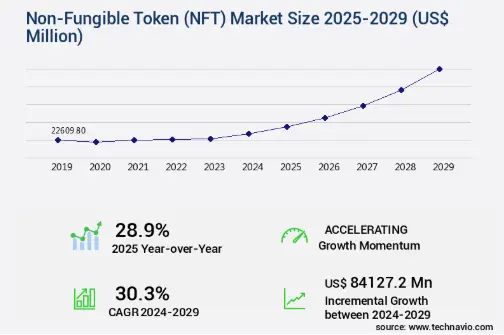
Source: Technavio
What makes this shift meaningful is how tokenization lowers barriers to investment. Instead of needing the full capital to purchase a rare painting or museum-grade collectible outright, fractional ownership allows investors to buy smaller shares secured on the blockchain. This creates a more accessible, transparent, and liquid alternative to the traditionally exclusive and slow-moving art market.
Real platforms are already proving the model works. Masterworks allows users to invest in shares of blue-chip art, treating fine art as a regulated investment product. CurioInvest has taken a similar path with high-value collectibles such as rare automobiles, opening markets once reserved for wealthy collectors.
What Is a Tokenized Fine Art & Collectibles Marketplace?
A tokenized fine art and collectibles marketplace is a next-generation digital platform where physical and digital luxury assets are converted into blockchain-based tokens that can be issued, traded, and transferred with efficiency far beyond traditional collecting or private markets. Instead of relying on galleries, dealers, or auction houses to broker exclusivity, these platforms turn rare assets into investable instruments supported by legal frameworks, digital custody, and transparent ownership records.
Why It Matters
For centuries, ownership of rare objects required wealth, connections, specialist knowledge, and often geographic access. Tokenization removes many of these barriers.
A single platform may support assets such as:
- Original paintings and museum-level sculptures
- Vintage timepieces and luxury watch collections
- Classic automobiles with documented racing lineage
- Investment-grade wines and spirits stored under ideal conditions
- Rare books, manuscripts, instruments, or cultural artifacts
Each token serves as a verifiable digital representation linked to an authenticated physical item stored in secure custody. The blockchain acts as the record-keeper, ensuring authenticity, tracking provenance, and enabling transparent ownership transfers.
The result is an ecosystem where fractional ownership, liquidity, and global participation become the norm rather than the exception.
Different Types of Tokenization Models
Different token structures serve different objectives. Selecting the right model determines regulatory exposure, investor fit, and business strategy.
1. Single-Asset Fractional Ownership (FNFT Model)
One specific asset is divided into fractional token shares. Each token holder owns a precise percentage of that single item.
Ideal use cases:
- Blue-chip artworks
- High-value collectibles with strong provenance
- Assets with emotional or cultural storytelling value
Technical approach: Often implemented through ERC-1155 or dedicated fractionalization protocols.
2. Portfolio or Index Tokenization (Basket Model)
Multiple assets are grouped into a managed portfolio, and a single token represents fractional ownership of the entire basket. The structure is similar to an ETF.
Ideal use cases:
- Investor-focused products
- Thematic collections or curated funds
- Markets with liquidity challenges at the individual-item level
Key advantage: Liquidity is concentrated into one token, which supports stronger marketplace activity.
3. Security Token Offerings (Regulated STO Framework)
Tokens follow regulated security token standards such as ERC-1400 or ERC-3643. The smart contract enforces compliance rules, identity verification, and jurisdictional restrictions.
Built-in features:
- KYC and AML verification
- Accredited investor checks when required
- Transfer rules based on regulations
- Automated payouts from revenue streams or asset appreciation
In most jurisdictions, fractionalized ownership of physical high-value assets is regulated as a security, making this framework essential for long-term compliance.
4. Hybrid Token Infrastructure
The platform combines multiple token types to create a full digital ecosystem. A typical hybrid model may include:
- Asset tokens representing ownership
- Governance tokens granting voting rights and direction over platform decisions
- Utility tokens for transaction fees, membership access, or platform rewards
Benefits:
- Multi-layered participation incentives
- Community-driven decision models
- Multiple revenue channels beyond asset sales
This model is often used by platforms building long-term communities, marketplaces, or decentralized ownership networks.
How Does a Tokenized Fine Art & Collectibles Marketplace Work?
A tokenized fine art and collectibles marketplace works by verifying an asset through experts and technology so the provenance and condition are trusted. Once verified, the asset is stored in secure custody and converted into digital ownership tokens through a compliant blockchain smart contract.
Investors can then buy or trade these tokens in a regulated environment where ownership transfers instantly and can scale globally while the physical asset stays protected.
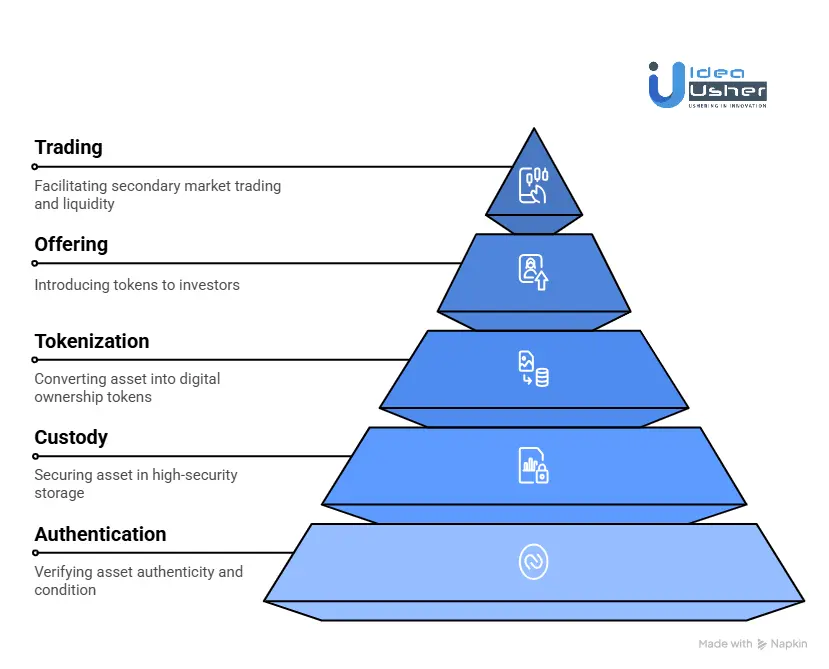
Phase 1: Authentication and Valuation
Tokenization is only as credible as the verification process behind it. High-value collectibles have long histories of forgery, undisclosed restoration, counterfeits, and contested provenance. A marketplace must solve these risks before offering the asset to investors.
A Multi-Layer Authentication Framework
Most leading platforms rely on a hybrid model that blends:
- Physical inspection by certified experts in the asset category
- Scientific and metadata validation using technology
- Historical provenance reconstruction using archival sources
Experts may include:
- Museum conservators
- Auction house specialists
- Brand-certified restoration master technicians
- Forensic imaging analysts
- Blockchain-based provenance investigators
Technology-Driven Validation
Advanced tools provide objective and repeatable verification:
| Asset Type | Technology Used |
| Fine Art | Multispectral imaging, pigment analysis, AI-powered signature analysis |
| Watches & Jewelry | Laser engraving micro-tagging, part authentication, ref. database matching |
| Cars | VIN authentication, mechanical diagnostics, digital maintenance logs |
| Wine & Spirits | IoT humidity and temperature logs, cork/bottle structure scans |
All data is converted into a tamper-resistant digital identity record stored on decentralized storage like IPFS or Arweave.
Valuation Methodology: Beyond Comparables
Pricing models typically combine auction history analysis, dealer and private sale records, insurance valuations, and predictive AI that measures market velocity, rarity premiums, and cultural relevance. These inputs help create a valuation framework that feels data-driven and disciplined rather than speculative, and platforms may bring in underwriters and investment committees to validate the final number and align it with risk exposure and expected investor demand.
Phase 2: Custody and Vaulting
Once authenticated and priced, the asset must be secured. This is where traditional luxury asset handling meets token economy infrastructure.
Institutional Custody Standards
Storage facilities may include:
- High-security art vaults with biometric access
- Museum-grade long-term preservation environments
- Climate-controlled wine and spirits repositories
- Automotive vaults with controlled driving protocols and periodic servicing
Custodians often act as legal and operational intermediaries, ensuring the digital representation is tied to a real physical object.
Continuous Status Reporting
Custody is not static. Investors expect proof that:
- The asset remains in its storage state
- No unauthorized handling occurred
- Insurance coverage remains active
- Conservation needs are documented and performed
Inspection reports, IoT telemetry, insurance renewals, and chain-of-custody updates are periodically submitted to the blockchain.
Phase 3: Tokenization and Regulatory Structuring
This is where the asset’s physical and legal identities are converted into a programmable security token.
Legal and Financial Engineering
Tokenization includes assigning ownership rights to a Special Purpose Vehicle or trust, mapping those rights to investors through blockchain-based tokens, and embedding legal obligations directly into the smart contract so ownership and compliance remain enforceable and transparent.
A regulatory framework determines whether the token is treated as:
- A regulated security
- A commodity
- A digital collectible
- A hybrid financial product
In most jurisdictions, fractionalized real-world assets qualify as securities.
Token Architecture Decisions
Common structures include:
| Token Model | Best For | Standard |
| Fractional Ownership | Single iconic assets | ERC-1155 |
| Security Tokens | Regulated fractional investment | ERC-1400 / ERC-3643 |
| Portfolio Tokens | Indexes and asset baskets | ERC-20 |
| Hybrid Tokens | Community governance + utility | Multi-token architecture |
Governance rules may cover:
- Voting on exhibitions or liquidation
- Restoration approvals
- Insurance provider changes
- Redemption rights for full physical buyouts
Phase 4: Primary Offering and Capital Formation
Once the tokenized asset is legally compliant and minted, it is introduced to investors.
Investor Experience Lifecycle
- Explore asset profiles and investment thesis
- Review disclosures and documentation
- Complete identity verification (KYC/AML)
- Connect a compliant wallet or use hosted custody
- Purchase tokens using fiat or crypto on-ramps
- Receive fractional ownership tokens with accompanying legal rights
Platforms may offer priority access for early community members, pre launch viewing through virtual exhibitions, and exclusive founder or collector rounds with tiered pricing models that reward early participation and create structured demand as the asset moves toward public offering.
Phase 5: Secondary Market Trading and Liquidity
This is where the economic value of tokenization becomes tangible. Secondary trading allows investors to exit positions, reallocate portfolios, or build exposure dynamically.
Trading Mechanisms
Most marketplaces integrate multiple liquidity engines:
- Order books for traditional financial traders
- Automated market makers for continuous pricing
- OTC trade desks for institutional blocks
- Periodic auctions for valuation recalibration
Advanced Financial Tools and Utilities
Tokens may be used to secure collateralized loans, participate in revenue sharing, earn staking rewards, and gain governance rights, and as the market matures these same tokens could support futures, options, and other structured financial products that operate much like traditional capital markets but sit on top of tokenized cultural assets.
How to Develop a Tokenized Fine Art & Collectibles Marketplace?
To build a tokenized fine art and collectibles marketplace, the process begins with a compliant security token framework aligned with KYC, AML, and investor verification. The physical asset is then connected to the blockchain through custody integrations and verifiable provenance. We have developed multiple platforms like this for clients, and this is our approach.
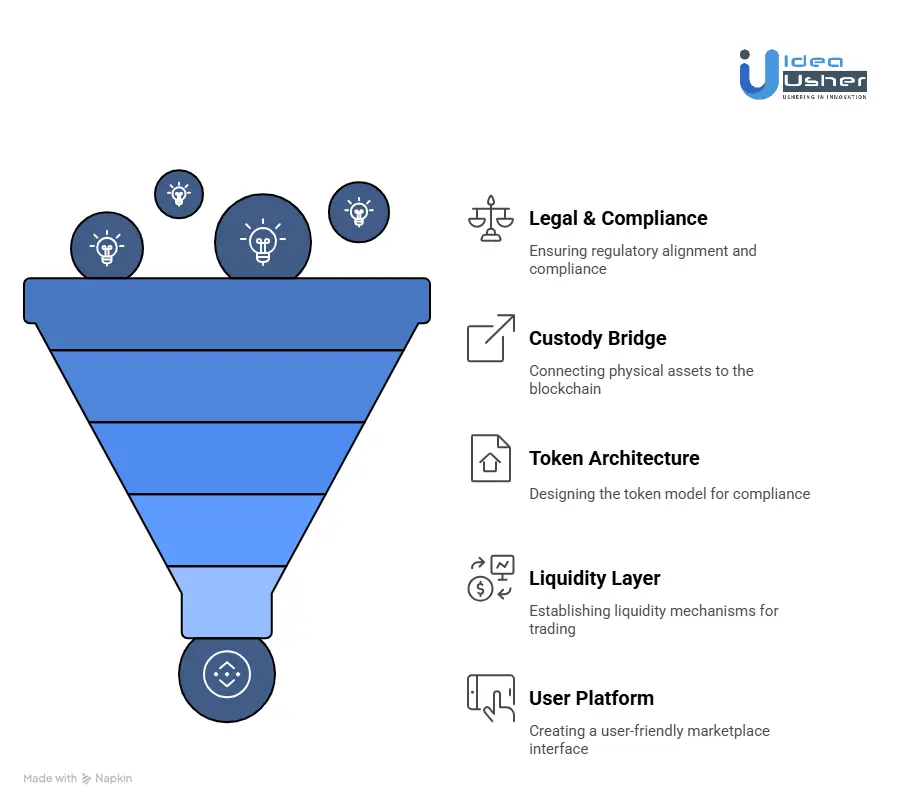
1. Legal & Compliance
We start by defining the regulatory structure that will govern the platform. Using a security token framework ensures alignment with STO regulations and future-proof compliance. Every compliance rule is embedded into smart contract logic, so the marketplace remains aligned across regions.
2. Custody Bridge
Next, we connect the physical asset to the blockchain with institutional-grade custody processes. Physical items are assigned tamper-resistant IoT or NFC identifiers, and each custody event is cryptographically recorded. This establishes an auditable link between the physical asset and its digital representation.
3. Token Architecture
Once custody is secured, we architect the token model using FNFTs or ERC-1400/3643 standards to support compliance and fractional ownership. Royalty logic, access controls, and permissioned transfers are encoded into the system to ensure only eligible holders can engage.
4. Liquidity Layer
With the token model finalized, we build the liquidity foundation using AMM pools, matching engines, or hybrid models depending on regulatory scope and asset type. Price oracles and discovery logic ensure accurate valuation throughout the trading lifecycle.
5. Develop Marketplace User Platform
Finally, we deliver a user-facing marketplace that investors trust. Wallet connections, dashboards, and intuitive transaction flows are designed to make participation frictionless. Optional governance and insurance features support long-term confidence and utility.
Successful Business Models for Tokenized Collectibles Marketplaces
The market for tokenized fine art and high-value collectibles has shifted from experimentation to maturity. What began as a niche blockchain initiative is now recognized as a credible segment of the global alternative asset economy. Several business models have emerged as consistently profitable, scalable, and attractive to both investors and creators.
1. The Curated Gallery Model
Positioning: Exclusivity, quality control, and brand-driven value premium
This model mirrors legacy fine art institutions such as Christie’s or Sotheby’s but operates entirely within digital infrastructure. Admission is highly selective with approval rates often below 5 percent. The goal is to cultivate scarcity, elevate perceived value, and build a loyal collector base focused on provenance and pedigree.
Revenue Structure
- Primary Sale Commission: 10–15 percent on initial transactions (higher than broad consumer marketplaces charging 2.5–5 percent)
- Secondary Royalties: 2.5–3 percent applied to lifetime resale activity
- Premium Placement Fees: $500–$5,000 for featured listings or promotional exposure
- Gallery-Style Services: Optional physical exhibitions with 20–30 percent service commission
- Membership Revenue: $50–$500 monthly for early access, private auctions, or advisory access
Market Proof
Platforms using this model, such as SuperRare, demonstrate strong retention and price appreciation:
- More than $300 million in lifetime volume
- 68 percent repeat-purchase rate among verified collectors
- Average sale value of $15,400 compared to roughly $450 on open marketplaces
- 85 percent of works purchased in 2020 later resold at higher valuations
This model performs best when scarcity and cultural value outweigh transaction volume.
2. The Fractional Ownership Platform
Positioning: Access to blue-chip assets previously limited to elite collectors
Fractionalization addresses accessibility barriers in the estimated $1.7 trillion global fine art market. Instead of one collector purchasing a $500,000 to $50 million piece, investors acquire tokenized shares ,granting proportional ownership rights. The platform operates similarly to an asset management firm and is responsible for compliance, storage, insurance, and reporting.
Revenue Structure
- Acquisition Fees: 2–5 percent at point of purchase
- Tokenization and Offering Fees: 3–7 percent of capital raised
- Management Fees: 1–2 percent of assets under management annually
- Performance Fees: 10–20 percent of appreciated value or sale proceeds
- Trading Fees: 1–1.5 percent for peer-to-peer transactions
Market Proof
Masterworks demonstrates the scalability of this model:
- More than $1.1 billion in assets under management
- Over $800 million raised through offerings
- More than 850,000 active investors averaging $5,200 each
- 32 percent average annualized returns across sold artworks
- More than $45 million earned in management fees in 2023
This model resonates strongly with retail and accredited investors seeking alternative investment exposure.
3. The Liquidity-as-a-Service Provider
Positioning: Technology backbone for existing art institutions rather than a competing marketplace
Instead of selling or curating art, this model supplies tokenization infrastructure, compliance modules, smart contract frameworks, and wallet layers to existing auction houses, galleries, and institutions. The platform acts as an enablement partner, allowing traditional players to enter the tokenization economy without building technology in-house.
Revenue Structure
- Platform Licensing: $50,000–$500,000 annually
- Transaction Fees: 0.5–1.5 percent of tokenized activity (often revenue-shared)
- Integration and Custom Development: $100,000 to $1 million or more
- Support and Maintenance: 15–25 percent of annual licensing fees
- Revenue Sharing: 10–30 percent of partner tokenization revenue
Market Proof
Providers such as Kaleido illustrate how this category scales:
- More than 100 enterprise-level clients including financial institutions
- More than $15 billion in blockchain transaction volume processed
- System capacity supporting over 10,000 transactions per second
This model appeals to institutions prioritizing compliance, interoperability, and low-risk modernization.
Challenges for a Tokenized Fine Art & Collectibles Marketplace
After building tokenized marketplaces for numerous clients, we have seen exactly where teams struggle and where platforms tend to fail. The obstacles in this space are real, and ignoring them can quickly lead to legal exposure, technical breakdowns, or a platform that nobody actually uses.
1. Regulatory Uncertainty
Tokenized assets exist at the intersection of fintech, securities law, blockchain, and traditional art investment. Every jurisdiction treats fractional art ownership differently. Some classify it as a financial security, others treat it as a commodity, and many are still undecided. One wrong classification can result in lawsuits, forced shutdowns, or blocked access to international markets.
How We Solve It
We design platforms so that compliance is part of the foundation rather than a last-minute add-on.
Key strategies include:
- Modular Regulatory Layers: The platform can enforce SEC compliance for U.S. investors while applying MiCA standards to EU users. This allows cross-border expansion without rebuilding core logic.
- Automated Jurisdiction Detection: Initial IP screening combined with verified residency documents ensures users only see asset offerings legally available in their jurisdiction.
- Legal Wrappers for Every Tokenized Asset: Each token is paired with a legally binding digital asset agreement defining rights, restrictions, transferability, and obligations.
2. Linking the Physical Asset to the Token
If a token says the artwork is secured in a vault but the physical piece has been moved, restored, damaged, or stolen, then the token becomes meaningless. This disconnect is the biggest trust vulnerability in real-world asset tokenization.
Our Solution
We create a verifiable connection between the blockchain and the physical world using:
Custodian Signatures: Minting or transferring a token requires signed approval from the authorized custodian, such as Brink’s or Malca-Amit.
Oracle-Based Proof of Status: Vault audits, humidity and movement sensor alerts, condition reports, and insurance status are fed on-chain using Chainlink.
Automatic Freeze Conditions
Trading halts if:
- The custodian reports a status change
- Oracle feeds detect insurance lapse
- Scheduled condition reports are missed
On-chain, the asset moves through states like: IN_VERIFIED_VAULT, IN_TRANSIT, UNDER_APPRAISAL, or FROZEN.
nly approved custodians or oracle addresses can update these states.
3. Avoiding a Marketplace With No Buyers
Tokenizing a multimillion-dollar artwork creates divisible ownership, not guaranteed liquidity. A marketplace without active trading becomes a museum, not an investment environment.
How We Build Sustainable Liquidity
We implement multiple liquidity layers rather than relying on a single order book.
Our approach includes:
Hybrid Automated Market Makers: Specialized AMM pools for categories such as “Contemporary Art 1960 to 1990” ensure continuous pricing even if individual assets trade infrequently.
Staged Incentives for Liquidity Providers
- Platform-funded liquidity mining to jumpstart volume
- Fee sharing for active LPs
- Governance rewards for long-term participation
Buy-Back and Stability Funds: A portion of platform fees creates a reserve used during market stress to reduce volatility and guarantee exit opportunities.
Using this structure, we typically achieve a bid-ask spread below 5 percent for core assets within ninety days of launch.
Tools & APIs for a Tokenized Fine Art & Collectibles Marketplace
Launching a tokenized fine art marketplace requires more than creating attractive NFTs. It requires building a regulated financial product disguised as an art platform. The technology must securely link physical assets to digital ownership, manage investor compliance, and scale as trading volume grows.
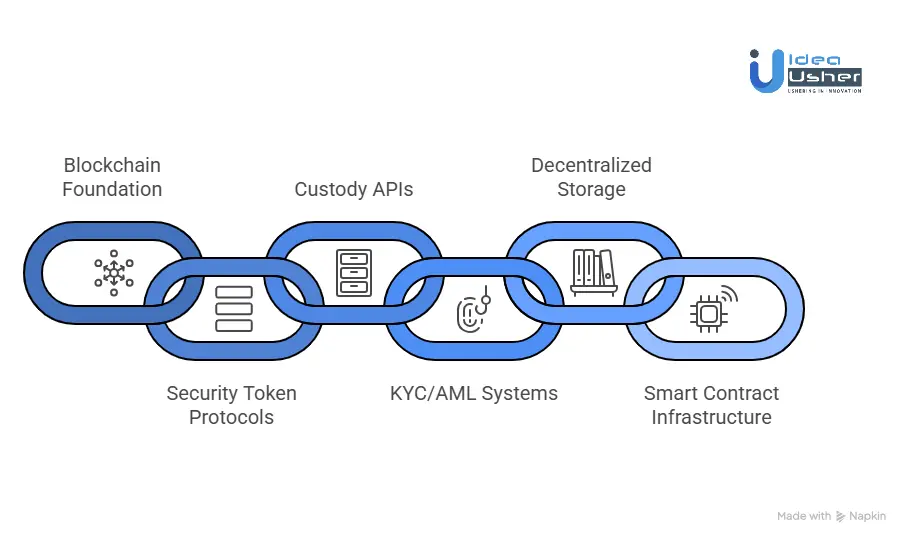
1. Blockchain Foundation
Your blockchain layer defines the cost, transaction speed, and trust level of the marketplace. The most common options include:
| Blockchain | Key Strengths | Best Use Case |
| Ethereum | High decentralization, strong security, institutional trust. Supports high-value assets. Can be paired with Polygon to reduce gas costs. | Ideal for premium art tokenization and long-term provenance where trust and immutability are top priorities. |
| Polygon (Layer 2) | Built on Ethereum but offers low fees and fast settlement. Suitable for scalable ownership transfers and secondary markets. | Best for fractional ownership models, frequent trades, and accessible user experiences. |
| Solana | Extremely fast processing and low-cost transactions. Designed for high throughput. | Works well for marketplaces expecting active trading, live bidding, or real-time marketplace mechanics. |
| Avalanche | Supports customizable sub-chains with rule-based compliance settings depending on jurisdiction. | Strong fit for globally regulated platforms requiring region-specific compliance controls. |
Practical Approach: Many platforms mint premium assets on Ethereum for trust and reliability and allow secondary marketplace trading on Polygon to reduce user costs.
2. Security Token Protocols
Fractional ownership of physical assets is considered a financial security rather than a consumer NFT. That means your token standard must support enforceable compliance.
- ERC-1400: A security-token framework with built-in transfer permissions, whitelisting, and on-chain compliance validation.
- ERC-3643: A newer standard designed for more complex compliance scenarios, including jurisdiction restrictions and advanced governance.
Why This Matters: These standards allow enforcement of accreditation requirements, geographic limitations, and eligible investor rules. Most regions require this if artwork ownership is fractionalized or tradeable as an investment.
3. Custody APIs
The confidence behind a tokenized physical asset depends on credible custody. A reliable partner ensures ownership records remain tamper-proof and verifiable.
Recommended solutions include:
- Brink’s API: A global leader for vaulting fine art and high-value physical assets. Vault status can trigger blockchain updates such as proof-of-custody or transfer logs.
- Paxos: Provides regulated digital asset custody and tokenization services. This is useful if working closely with financial regulators.
- Fireblocks: Industry-standard platform for securing private keys, treasury workflows, and platform operational wallets.
Best Practice: Use dual custody. Physical vaulting protects the asset and digital asset custody protects platform keys and treasury holdings.
4. KYC/AML Systems
A platform handling tradeable financial instruments must verify identity, prevent fraud, and enforce investment eligibility.
Strong providers include:
- SumSub: Offers identity verification, biometric checks, and risk scoring for high-value financial workflows.
- Blockpass: Designed for blockchain platforms with a strong emphasis on privacy and user-controlled identity.
- Persona: Allows full customization of verification flows to match brand style and user experience requirements.
These systems must integrate with your smart contracts so that only verified and permitted users can hold or transfer compliant security tokens.
5. Decentralized Storage
Metadata, appraisal documents, provenance records, and high-resolution image files must be stored in a durable and verifiable way.
Options include:
- IPFS: Decentralized content-addressed storage suitable for token metadata.
- Arweave: A permanent storage protocol where a single payment secures long-term retention.
- Hybrid (AWS + IPFS): Combines decentralized immutability with enterprise-grade speed and redundancy.
Before minting, all token assets and metadata should be permanently stored so the token remains meaningful even if the hosting company ceases operations.
6. Smart Contract Infrastructure
Smart contracts control core marketplace functions, including access control, compliance logic, ownership transparency, and future upgradability.
Key tools:
OpenZeppelin: A widely trusted contract library with audited modules for security, role control, upgradability, and pausability.
Chainlink Oracles: Essential for connecting blockchain automation with real-world data feeds, including:
- Asset custody verification
- Real-time valuation feeds
- Insurance or sensor-based events
- Identity and access permissions.
Top 5 Tokenized Fine Art & Collectibles Marketplaces
We took a deep look into the tokenized fine art and collectibles space and found platforms that offer strong ownership validation and reliable provenance through blockchain. You will notice that each marketplace has unique mechanics and may serve creators and collectors differently.
1. OpenSea
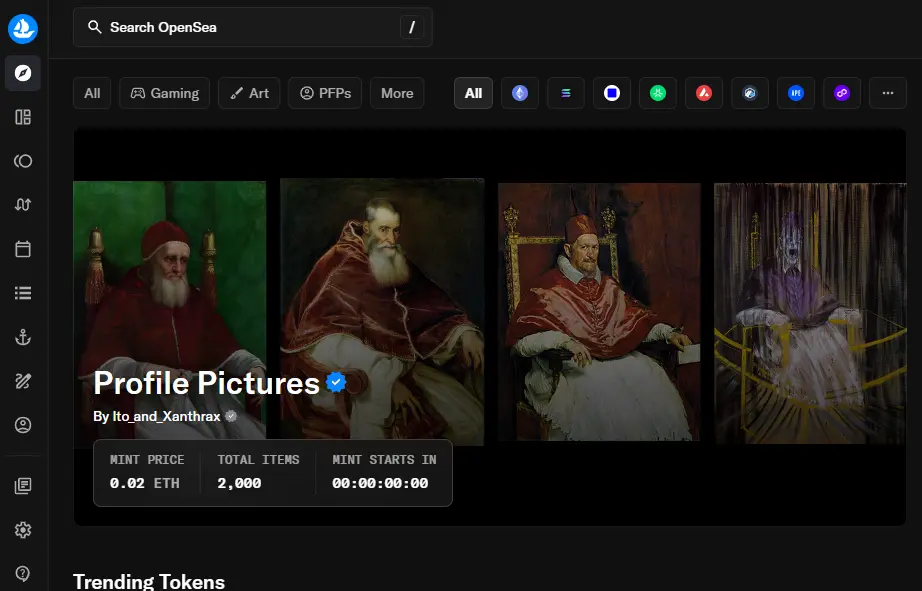
OpenSea is currently the largest NFT marketplace and supports a wide range of tokenized fine art and digital collectibles across multiple blockchains like Ethereum, Polygon, and Solana. It allows creators to mint, list, and sell their artworks easily, while collectors can browse millions of verified and unverified collections with transparent ownership records.
2. Rarible
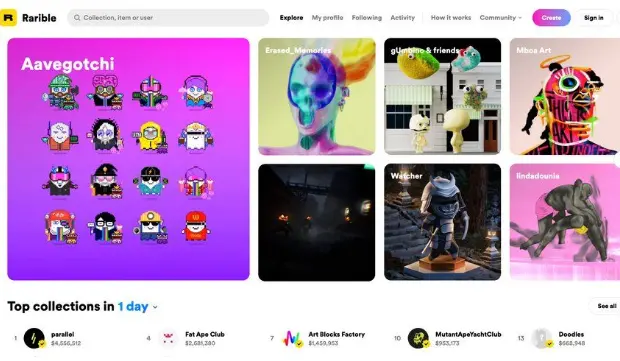
Rarible is a community-governed NFT marketplace known for its creator-friendly tools and decentralized governance model through the RARI token. It enables artists to mint their own NFTs without coding, set royalties, and retain direct control of their smart contracts. With a focus on creator empowerment and multi-chain support, it’s popular among independent artists and early-stage collectors.
3. SuperRare
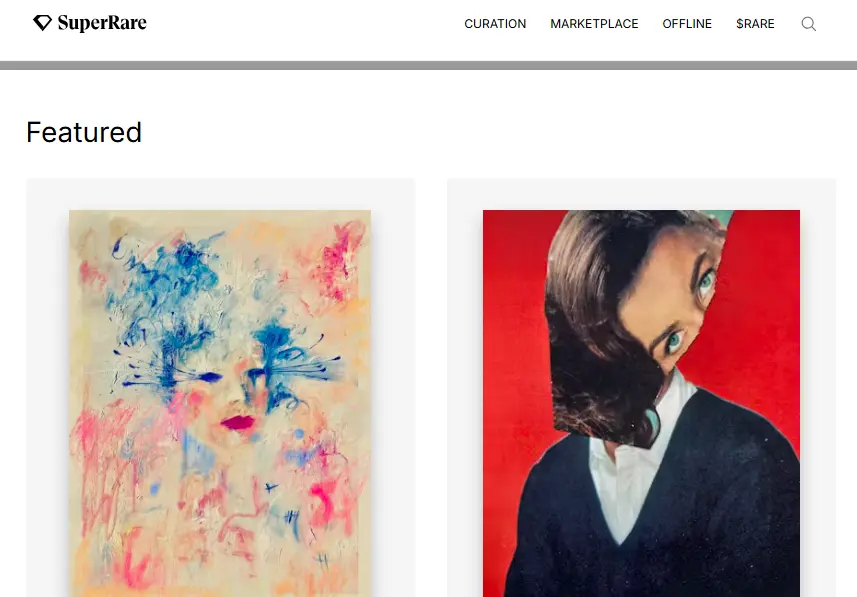
SuperRare is a curated digital art marketplace specializing in single-edition tokenized artworks rather than mass-produced collectibles. It operates more like a traditional fine-art gallery, only onboarding selected artists and offering premium, museum-quality digital works. Because of its exclusivity, SuperRare attracts serious collectors looking for high-end rare pieces and strong provenance.
4. Nifty Gateway
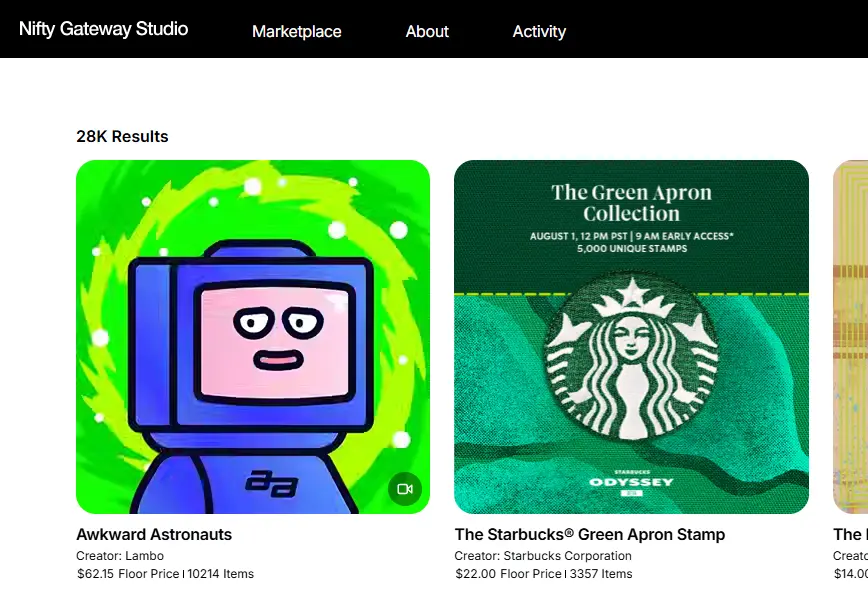
Nifty Gateway is known for limited-edition “drops” created in collaboration with established artists, brands, and cultural icons. It aims to bring tokenized art to the mainstream, offering easy credit card payments and custodial wallets for users unfamiliar with crypto. Its curated model and exclusive releases make it appealing to collectors seeking scarcity and cultural value.
5. Magic Eden
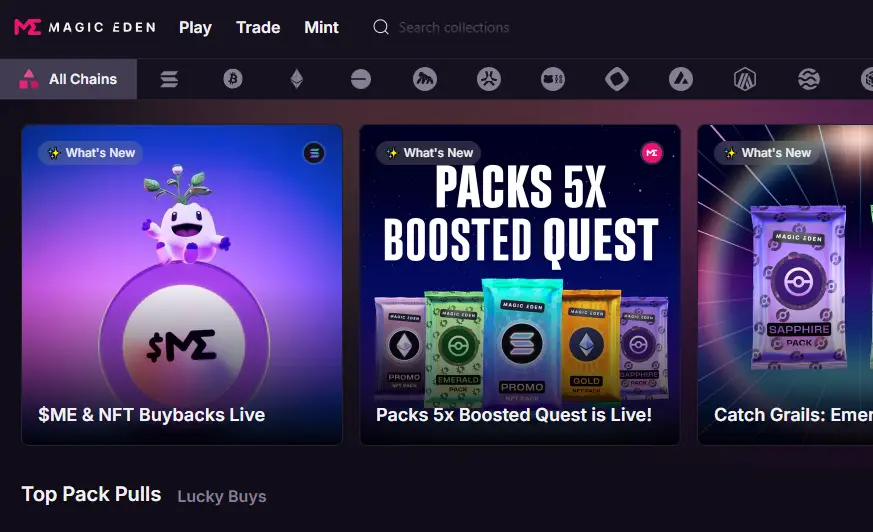
Magic Eden is a fast-growing NFT marketplace originally built on Solana and later expanded to multiple blockchains, offering low transaction fees and quick processing. While it hosts a variety of NFTs, it’s especially popular for digital collectibles and emerging artists, offering more affordable access than Ethereum-based platforms. Its community-driven ecosystem and multi-chain reach make it a strong competitor in the tokenized art space.
Conclusion
Tokenized fine art and collectibles marketplaces are no longer a theoretical idea, and they are already reshaping how ownership, liquidity, and investment strategies work for cultural and luxury assets. If you step into this space early, you could unlock new revenue models, stronger investor networks, and long-term competitive advantage as the market matures. At Idea Usher, we help enterprises build secure, compliant tokenized asset platforms, supporting everything from legal structuring to blockchain engineering and final product deployment so you can scale with confidence.
Looking to Develop a Tokenized Fine Art & Collectibles Marketplace?
IdeaUsher can help you plan and build the entire marketplace architecture from smart contracts to user workflows, using secure blockchain frameworks. The team can also integrate compliance layers and automated royalty payments to ensure the platform operates reliably.
With over 500,000 hours of coding experience and a team led by ex-MAANG/FAANG developers, we transform complex blockchain, legal, and financial concepts into seamless, scalable marketplaces.
- Fractional Ownership (FNFTs/STOs) to democratize access.
- Regulation-by-Design with on-chain KYC/AML to keep you secure.
- DeFi Integration to unlock liquidity from static collections.
- Ironclad RWA Bridging linking digital tokens to secured physical assets.
Check out our latest projects to see the caliber of technology we deliver.


FAQs
A1: Owning a tokenized version of artwork isn’t automatically the same as legally owning the physical piece, because the rights depend heavily on how the token and contract are structured. Sometimes, the NFT represents full ownership, and sometimes it only represents access, authentication, or metadata. So, unless the smart contract or legal agreement explicitly grants property rights, the buyer may only own the digital token, not the physical asset.
A2: Some platforms may require compliance with securities regulations if the artwork is fractionalized, monetized, or clearly positioned as an investment. In that case, the platform usually must handle KYC, AML checks, record keeping, and regulatory filings. So, compliance isn’t just a formality; it becomes a mandatory framework that protects both investors and the issuing platform.
A3: Royalties across marketplaces are enforced through on-chain standards like EIP-2981, which allow royalty rules to travel with the token. Because the logic is on-chain, marketplaces can automatically read and apply royalty payouts during secondary sales. While enforcement can vary, most serious platforms follow these standards because ignoring them damages trust, interoperability, and creator incentives.
A4: These tokens can be used in DeFi ecosystems, but only when there is a credible valuation system and a suitable collateral model. When those pieces are in place, the token could be used in lending protocols, liquidity pools, or even structured financial products. The challenge is proving stability, liquidity, and risk tolerance, but as the market evolves, these frameworks will likely become far more sophisticated and standardized.