 (+971) 8007 4267
 (+91) 946 340 7140
 (+1) 628 432 4305

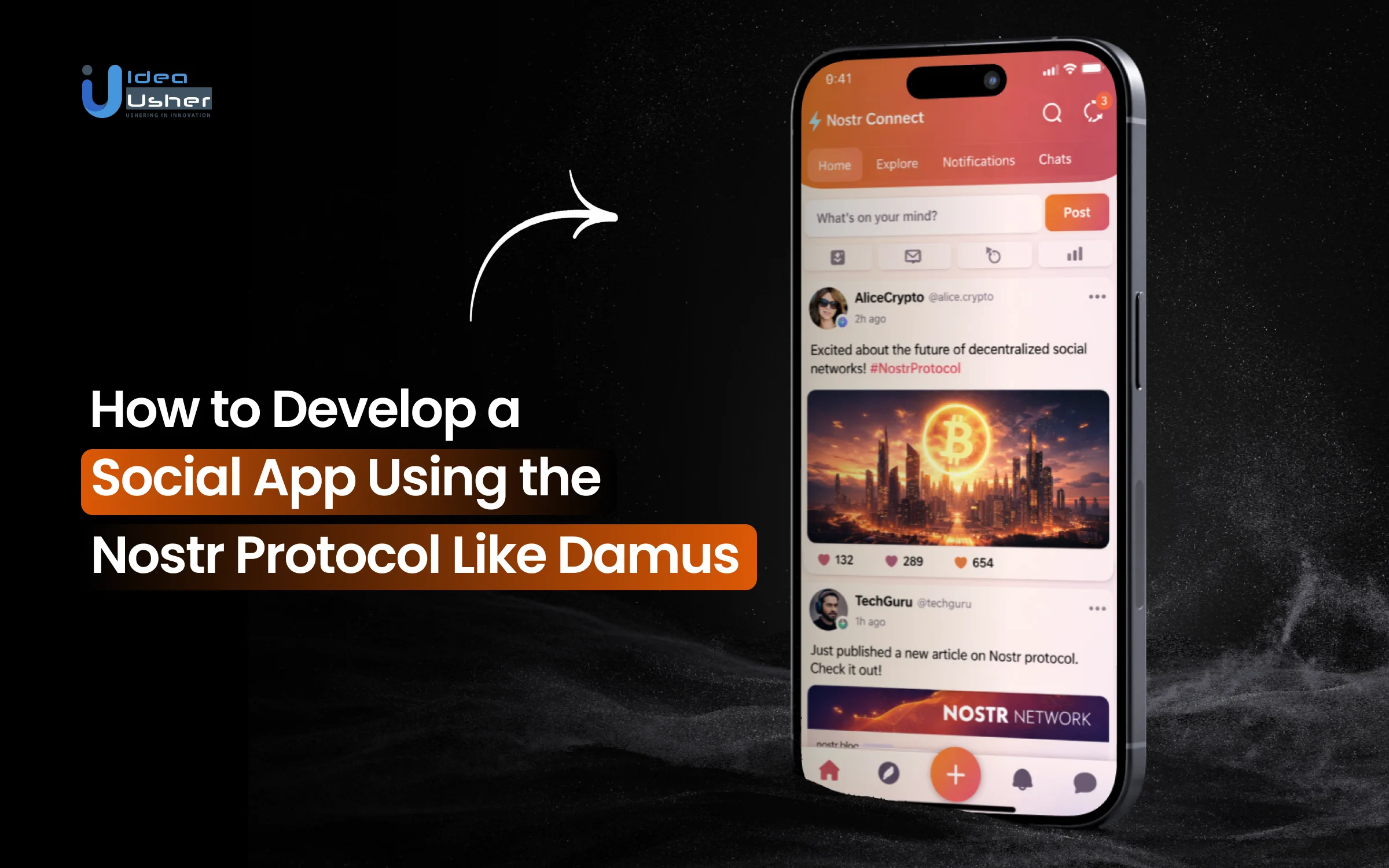
The internet once promised open conversations, yet many platforms gradually placed those conversations behind algorithms and platform rules. Creators may build large communities, but they still do not fully control their identity or audience. Accounts can disappear suddenly, and content visibility often depends on opaque ranking systems. This growing frustration has quietly pushed people to search for more open network models.
The Nostr protocol offers one such direction through a relay-based architecture that distributes data across independent servers. Users hold their identity through cryptographic keys, which can give them stronger ownership over their presence online. Because of this design, many startups are now building social apps on Nostr and they may gradually create a more resilient social ecosystem.
Over the years, we’ve built several Nostr-based social apps, powered by decentralized identity infrastructure and relay-based networking. As we have this expertise, we’re sharing this blog to discuss the steps to develop a social app like Damus using the Nostr protocol.
Why Founders Are Betting on Nostr-Based Social Apps?
According to Technavio, the social networking market size is projected to increase by USD 397.58 billion, growing at a CAGR of 22.7% from 2025 to 2030. This massive valuation is fueled by a shift toward data sovereignty and the integration of artificial intelligence for hyper-personalized experiences. For strategic investors, these figures signal a fundamental restructuring of how digital value is captured.

Source: Technavio
Founders are moving toward Nostr because it offers anti-fragility. Traditional social media investments are tied to a single company’s survival. If the platform fails or changes its API, the entire ecosystem dies. Nostr-based applications decouple the user interface from the database. This allows entrepreneurs to build products where the user base is portable, and the network effect is shared across a global protocol.
This model solves the cold start problem. In a traditional silo, a new app starts with zero users. On Nostr, a new application instantly taps into an existing cryptographic user base. This lowers customer acquisition costs and allows developers to focus on unique value propositions rather than expensive server maintenance.
User-Owned Social Graphs
In legacy models, the social graph is the private property of the corporation. When an entrepreneur builds on a centralized API, they are building on rented land. The shift toward Nostr represents a transition to sovereign digital identity.
On Nostr, your social graph is a cryptographic key pair. Data is stored across decentralized relays, so no single entity can de-platform a user. For investors, this creates a stable long-term asset. Value shifts from the data silo to the service layer, allowing for a competitive marketplace where the best user experience wins.
Limitations of Centralized Apps Like X and Instagram
Centralized giants are currently grappling with systemic failures that have created a vacuum for decentralized alternatives. These include:
- Algorithmic Opacity: Decision-makers worry about shadow-banning and opaque ranking systems that destroy organic reach.
- Censorship and Volatility: Platforms are subject to the whims of owners or shifting political pressures, making them high-risk environments for professional discourse.
- Lack of Data Consent: Business models rely on extracting user data without offering the user a share in the profit.
These platforms are also single points of failure. A technical glitch or a policy change at the corporate level can wipe out years of brand equity. High-net-worth investors recognize that centralization of influence is a systemic risk that must be hedged.
How Early Apps Like Damus Proved the Model Works
Damus served as the proof of concept the market was waiting for. By providing a mobile-first interface for the Nostr protocol, it demonstrated that decentralized social media can be intuitive. Within weeks, it attracted hundreds of thousands of users and tech luminaries.
The success of Damus highlighted two critical factors:
- Zaps (Micro-payments): Seamless integration of Bitcoin-based micro-payments proved users will pay for content in small increments.
- Protocol Interoperability: A user can post on one client and have it visible on another. This proved a unified global feed can exist without a central authority.

What Is the Nostr Protocol and Why It Changes Social App Architecture
Modern social apps usually rely on a “thick” backend where a single entity controls the database. Nostr flips this by moving power to the edges. Entrepreneurs no longer need to maintain massive, proprietary databases to own their audience. Instead, you build a “client” that interacts with a global, open-source data stream.
This shift prioritizes experience curation over data hoarding. In a traditional setup, a server crash or a policy change can kill a business. With Nostr, data lives on independent relays. If one goes offline, the app simply connects to another. This creates a resilient, low-overhead model that values uptime and user sovereignty.
Core Principles Behind Nostr
To understand the investment potential, look at the three pillars of the protocol:
- Keys (Identity): Users are identified by a Public Key ($NPUB$) and sign messages with a Private Key ($NSEC$). There are no passwords or email databases to leak.
- Events (Data): Every action, like a post, a like, or a profile update, is a signed JSON object called an “Event.”
- Relays (Storage): These are simple servers that store and forward events. They do not talk to each other; they only talk to users.
Investor Insight: Relays are “dumb pipes.” By commoditizing storage, Nostr allows developers to spend capital on superior user interfaces and features rather than expensive database scaling.
Not a Blockchain but Still Decentralized
Nostr is not a “crypto” project. It has no native token, no global state, and no heavy consensus mechanism. This lack of a blockchain structure allows it to handle the high frequency of social interactions without latency.
| Feature | Blockchain | Nostr Protocol |
| Speed | Limited by block times | Instant (Internet speed) |
| Cost | Gas fees per post | Near-zero/Free |
| Storage | Permanent/Expensive | Prunable/Cheap |
| Scalability | Complex (L2s needed) | Infinite (Add more relays) |
It achieves decentralization not through a shared ledger, but through distribution. Users choose which relays to trust, ensuring no single entity can silence the network.
Understanding NIPs
NIPs or Nostr Implementation Possibilities are the protocol’s blueprints. These community-driven standards ensure different apps remain compatible. They function as a modular toolkit for founders.
- NIP-01: The foundational rules for how data moves.
- NIP-05: Decentralized identity verification (mapping keys to DNS).
- NIP-57: The standard for “Zaps,” enabling Bitcoin Lightning payments.
You do not have to reinvent features like encrypted messaging; you simply implement the existing NIP. This significantly reduces R&D costs for new market entrants.
How Nostr Enables Cross-App Identity Portability
When users move from X to Instagram, they lose their followers and history. They start from zero. Nostr eliminates this friction through Identity Portability.
A user’s account is a cryptographic key. They can log into any Nostr app with that same key. Their followers and posts are immediately available. This forces apps to compete on quality rather than “lock-in” tactics. For investors, this creates a market where platform value is derived from pure utility and user experience.
How Does the Damus App Actually Work?
Damus is a decentralized social client that uses the Nostr protocol to eliminate central servers and data silos. It replaces traditional accounts with cryptographic keys, enabling a censorship-resistant feed where users truly own their identity. By integrating the Bitcoin Lightning Network, it facilitates direct peer-to-peer monetization through “Zaps” without platform fees.

Unlike traditional social media, Damus has no central brain. It is a client that lives on your device and speaks the Nostr language to a distributed network. When you open the app, it doesn’t log into a Damus server. Instead, it connects to multiple independent relays worldwide.
This architecture makes the app a sophisticated filter and signer. It handles cryptographic security locally, ensuring your private keys never leave your phone. The result is a platform that feels like a modern app but functions like a web browser where you choose your provider and own your data.
1. Event Creation and Signing
Every interaction in Damus is a standardized JSON object called an “Event.” Whether you are posting a note or following a peer, the process follows a strict cryptographic workflow:
- Creation: The app generates a data packet with your content, a timestamp, and a “kind” number.
- Signing: Your device uses your private key ($NSEC$) to sign this packet. This proves the post is yours and prevents tampering.
- Broadcasting: Damus sends this signed event to your selected relays. There is no central approval; if the relay is online, your message is live.
2. Relay Communication Flow
Relays are the backbone of the system, but they are intentionally “dumb.” They do not communicate with each other; they only listen to users and store what they are told.
The Flow:
- You publish to Relays A, B, and C.
- Your followers’ apps request new events from your Public Key ($NPUB$) from those same relays.
- The relays stream your signed events to your followers in real-time.
For an entrepreneur, this means server costs are virtually zero. You don’t need to scale a database for millions of users; the users bring their own connectivity and the relays provide the storage.
3. Feed Construction
In legacy apps, secret algorithms decide what you see to maximize engagement. Damus takes a different approach. Your feed is constructed locally on your device based on your specific subscriptions.
| Feature | Centralized (X/Instagram) | Damus (Nostr) |
| Logic | Algorithmic (Engagement) | Chronological (Time-based) |
| Filtering | Server-side (Shadow-banning) | Client-side (Mute lists) |
| Data Source | Single Proprietary Database | Multiple Open Relays |
The app aggregates data from all your connected relays, removes duplicates, and presents a clean timeline. This puts the user and the developer back in control of the information flow.
4. Lightning and Zaps
The most disruptive feature of Damus is the “Zap.” By integrating the Bitcoin Lightning Network, Damus enables a global economy that skips banks and app store fees.
Zaps work through the NIP-57 protocol. When you Zap a post, Damus requests a Lightning wallet to pay an invoice tied to that user’s public key. Once paid, a “Zap Receipt” is published to the relay as a public event. This creates a transparent, real-time leaderboard of support, allowing creators to monetize instantly without needing thousands of followers or ad-share agreements.

Key Features to Include in a Nostr-Based Social App
Developing competitive social apps on Nostr requires shifting from data ownership to user agency. The value lies in offering high-utility features that traditional platforms cannot match due to their centralized silos. By focusing on these core pillars, founders create tools for digital sovereignty rather than just another walled garden.
1. Decentralized Identity
Your platform must simplify NPUB and NSEC management without sacrificing security. Successful apps implement secure local storage or integrate with hardware signers so users never trust a server with their keys.
Iris.to demonstrates this by allowing users to log in with the same key pair across dozens of other sites, carrying their reputation and follows instantly to every new client they visit.
2. Real-Time Feed
A premium client must aggregate data from multiple independent relays for a high-speed experience. The technical moat lies in handling de-duplication and connectivity to ensure the feed remains resilient if specific relays fail.
Primal excels here by using a high-performance caching layer that aggregates data from numerous relays, providing the snappy, real-time response speed that professional users expect.
3. Private Messaging
Unlike legacy apps that store DMs in a readable database, Nostr apps use NIP-44 standards for end-to-end encrypted messaging. Messages are treated as specific events that only the sender and receiver can decrypt.
0xchat is a prime example, offering a secure communication platform where private chats and contacts are fully encrypted, ensuring that no intermediary or platform employee can ever read the messages.
4. Content Discovery
The opportunity here is to replace “black-box” algorithms with user-controlled discovery and open-source ranking. Instead of a server forcing content, the app offers client-side filters that let users choose their own “lenses.”
Satlantis innovates in this space by using social recommendations and interest-tagging to surface content and places, emulating real-life trust networks rather than using addictive, biased algorithms.
5. Native Monetization
Integrating the Bitcoin Lightning Network through NIP-57 allows for a “value-for-value” economy via Zaps. Your app can facilitate these payments or provide premium relay access, creating revenue without data harvesting.
Amethyst has successfully integrated this, allowing creators to receive instant micro-payments directly from their audience, bypassing the high fees and censorship risks associated with traditional payment processors.
How to Develop a Social App Using the Nostr Protocol Like Damus?
Building a social app like Damus using the Nostr protocol starts with implementing key-based identity and relay communication so events can be securely created and shared. A real-time client should then connect to multiple relays and efficiently process signed data for feeds and messaging.
We have built several social apps on the Nostr protocol, like Damus, and here is how the process typically works.

1. Defining Your Use Case
We start by identifying a high-value niche rather than replicating a general feed. Whether building a professional networking hub or a secure community for creators, we tailor the feature set to your specific audience. This strategic positioning ensures your app provides unique utility that attracts high-intent users underserved by general clients.
2. Custom Relay Strategy
We architect a custom relay strategy to guarantee speed and reliability. By deploying dedicated, high-performance relays, we ensure your platform remains snappy during network congestion. This hybrid approach gives your clients a curated, premium experience on your branded infrastructure while maintaining access to the global Nostr ecosystem.
3. Secure Key Management
Security is the foundation of every client we build. We implement advanced solutions like secure mobile enclaves and NIP-07 extensions to handle $NSEC$ and $NPUB$ keys. This ensures users enjoy a simple login experience while their cryptographic credentials never touch your servers, fulfilling the promise of true digital sovereignty.
4. Real-Time Event Streaming
We optimize the communication layer using WebSockets to handle real-time streaming. Our team focuses on efficient client-side filtering so the app only pulls necessary data. This results in a lightning-fast feed that updates instantly across all relays, providing a user experience that rivals or exceeds centralized social giants.
5. Native Lightning Integration
Monetization is baked into our process from day one. By integrating the Bitcoin Lightning Network via NIP-57, we enable Zaps for instant micro-payments. We also implement custom logic, such as pay-to-view content or premium relay access, creating revenue streams without the friction of traditional app store fees.
6. Scalable Client Architecture
To maximize reach, we build using cross-platform frameworks like Flutter or React Native. This allows us to deploy to iOS, Android, and Web simultaneously with a unified codebase. Your users enjoy a consistent identity and experience across all devices, ensuring they stay engaged whether at their desk or on the go.
7. Relay Performance Testing
Decentralized networks require unique testing rigor. We perform stress tests to see how the app handles data from slow or unreliable relays. By simulating various network conditions, we ensure the client handles relay gossip and de-duplication perfectly, making your product enterprise-grade and ready for high traffic.
8. Community-First Launch
We help you navigate the cold start problem by tapping into the existing Nostr community. Our launch strategy focuses on building in public and engaging early protocol adopters. This organic, trust-based approach creates a loyal user base of advocates who drive growth more effectively than traditional, expensive advertising.

Cost to Develop a Nostr-Based Social Media App
Developing social apps on the Nostr protocol is often more cost-efficient than traditional builds because you skip the expensive “backend” and database architecture. Instead, your budget is redirected into the client-side experience and cryptographic security.

MVP vs Full-Scale Product Cost Breakdown
Launching a social app on Nostr typically falls into two distinct tiers. The MVP focuses on core protocol compatibility such as signing events, basic feed aggregation, and profile management.
A Full-Scale Product adds the polish that moves users from centralized platforms: media optimization, complex search, and advanced monetization.
| Development Tier | Estimated Investment | Key Deliverables |
| Lean MVP | $30,000 – $60,000 | Basic post/follow/DM, NIP-01/04 compliance, single-platform (Web or Mobile). |
| Mid-Tier App | $80,000 – $150,000 | Cross-platform (iOS/Android), Zap integration, encrypted DMs (NIP-44), media caching. |
| Enterprise Platform | $200,000+ | Custom relay clusters, advanced AI-driven discovery, white-label branding, global scaling. |
Cost Impact of Relay Infrastructure
While the Nostr network is open, relying solely on public relays can lead to a sluggish experience for your users. To provide a premium feel, we recommend a dedicated relay strategy.
- Public Relay Usage ($0): Zero infrastructure cost, but you are at the mercy of third-party uptime and rate limits.
- Serverless Relay Cluster ($500 – $2,000/mo): Using modern cloud architectures, we can deploy a globally distributed relay that handles thousands of concurrent users with minimal overhead.
- High-Performance Dedicated Relay ($5,000 – $15,000 setup): For enterprise clients, we build custom Go or Rust-based relays designed for maximum throughput and 99.9% uptime.
Development Team Structure and Timeline
A typical project lasts between 3 to 8 months depending on complexity. We structure our teams to ensure the cryptographic plumbing is handled by specialists while the frontend stays intuitive and fast.
The Core Team:
1 Product Architect: Defines NIP implementations and feature roadmap.
1-2 Mobile/Web Developers: Focuses on the client-side experience (Flutter/React).
1 Backend/Relay Engineer: Manages custom infrastructure and Lightning integration.
1 UI/UX Designer: Ensures the keys and signatures logic doesn’t confuse average users.
Ongoing Costs
Budgeting doesn’t end at launch. To keep a decentralized social app healthy, we advise clients to allocate 15% to 25% of the initial build cost for annual maintenance.
- Protocol Evolution: Nostr moves fast. New NIPs emerge constantly; your app must be updated to remain compatible with the wider network.
- Security Audits: Since your app handles private keys or interfaces with signers, regular security reviews costing $5,000 to $15,000 are essential to maintain user trust.
- App Store Compliance: Maintaining availability on Apple and Google requires constant adjustments to meet their evolving policies regarding decentralized tech.
How to Build a Censorship-Resistant Social Experience?
When we develop social apps, true censorship resistance is an architectural requirement, not just a policy. By using the Nostr protocol, we move data away from a central database onto a resilient, distributed network. This ensures that even if one application faces pressure to remove content, the user’s digital identity remains intact on the protocol.

1. Designing for Relay Redundancy
We protect users by ensuring the client never relies on a single point of failure. If a relay goes offline or filters content, the app seamlessly switches to another provider.
- Multi-Relay Publishing: Every post is sent to 5-10 relays simultaneously to create immediate backups.
- Automatic Failover: Our clients detect connection drops and rotate to standby relays to maintain the live feed.
- Outbox Model: We implement NIP-65 so your app knows exactly where a user’s followers are active, ensuring messages reach their destination.
2. Ensuring Content Availability
Data on Nostr is only as permanent as the relays hosting it. We implement strategies to maximize data durability across the global network.
Pro Tip: We mix free community relays with paid premium ones. Paid relays offer stricter retention, acting as an archive, while free relays provide broad reach.
3. Moderation Without Central Control
In a decentralized app, you cannot delete a post from the network. Instead, we move moderation to the client side. This lets your app follow local laws without censoring the underlying protocol.
| Level | Action | Impact |
| Relay | Operator denies storage | Post exists elsewhere; user is not silenced. |
| Client | App filters content | Hidden from your UI, but stays on the protocol. |
| User | Mute and Block | User controls their own experience. |
4. Balancing Freedom and Abuse Prevention
To prevent spam without violating decentralized principles, we implement soft moderation tools that protect the community.
- Web of Trust (WoT): Algorithms prioritize content from people your friends follow, naturally burying spam.
- Proof of Work (PoW): We integrate relays that require a small computational tax to post, making bot farms expensive to run.
- NIP-05 Verification: DNS-based verification gives users “blue checks” tied to their own domains, identifying authentic voices.
Relay Infrastructure Decisions That Impact Scalability of a Social App
In the development of social apps, the critical choice is how the client interacts with relays. This dictates everything from feed speed to long-term storage of user history. Unlike centralized backends, this requires managing a network of pipes orchestrated to feel like a single, high-performance machine.
The focus should be on optimizing these connections to ensure the platform remains responsive, cost-effective, and resilient as the user base grows.
Own Relay vs Public
A hybrid strategy balances control with network effects. Public relays allow users to tap into an existing global audience, while private relays prevent vulnerability to third-party rate limits.
- Branded Relays: Dedicated relays guarantee uptime. Primal uses its own caching relays to provide a fast experience that public infrastructure cannot consistently match.
- Public Discovery: Integration with public relays ensures broad reach. Iris.to leverages relays like nos.lol so new users see active global conversations immediately.
- Private Instances: Invite-only relays offer a curated, spam-free environment. NostrChat utilizes specialized relay logic to create private rooms isolated from the main feed.
Cost and Latency
Relay selection impacts perceived speed. Public free relays are cost-effective but introduce latency during peak hours. Dedicated hardware provides the best performance at a higher price point.
| Infrastructure | Monthly Cost | Latency (ms) | Best Use Case |
| Public Free | $0 | 200 – 800+ | Bootstrapping and broad reach. |
| Managed VPS | $10 – $50 | 100 – 300 | Amethyst users often add these for backups. |
| Dedicated Rust | $150 – $500+ | < 30 | Enterprise, high-concurrency apps. |
Cost optimization is achieved by using client-side caching to reduce redundant queries, ensuring the budget is spent only on necessary data transfers.
Persistence and Retention
Data in Nostr is only permanent if a relay chooses to keep it. Retention policies must align with business goals. Snort.social allows users to select archival relays to ensure historical posts remain available if temporary relays prune data. A professional app requires long-term storage strategies using NIP-03 or paid archival relays to protect history.
Retention Tip: Implementing Garbage Collection on internal relays prunes low-engagement events like likes while keeping core Notes intact. Nostr.build uses similar logic for its media hosting to manage user-generated content efficiently.
Monitoring Health
A social app is only as good as its connection. Monitoring includes tracking WebSocket stability, event propagation speed, and signature validation load to ensure the CPU is not overwhelmed by cryptographic demands.
Automated alerts and failover scripts ensure that if a primary relay slows down, traffic shifts to a healthier node. Damus handles this by showing real-time connection status indicators for every relay, enabling users to prune slow nodes manually or automatically.

How to Architect Real-Time Feeds Using the Nostr Protocol?
In social apps, the user experience lives or dies by the speed of the feed. Unlike legacy platforms that rely on traditional polling, the Nostr protocol is designed for event-driven, real-time interactions. Building an app that feels instantaneous requires a shift in how data is requested and handled, moving away from request-response cycles toward persistent, streaming connections.
The goal is to provide a seamless flow where content appears as soon as it is signed by a user and accepted by a relay.
1. Event Streaming vs Traditional API Polling
Traditional social apps use REST APIs where the client must repeatedly “ask” the server for new data. This creates a choice between high server load and stale content. Nostr operates on an event-driven model using WebSockets to push updates automatically.
- REST Polling: High overhead, delayed updates, and redundant data transfer.
- WebSocket Streaming: Low latency, real-time delivery, and reduced bandwidth since data only moves when an event occurs.
By maintaining an open connection to multiple relays, a client receives new posts, likes, and “Zaps” the millisecond they are published. Amethyst utilizes this streaming model to ensure that a user’s global feed is always current without needing a manual “pull-to-refresh.”
2. Relay Aggregation Strategies
Because data is spread across many independent relays, a client must be smart about how it gathers information. Aggregation involves merging streams from different sources into a single, cohesive timeline.
- Gossip Protocol: The app identifies which relays a user’s followers are using and connects to those specific nodes to find their content.
- De-duplication: Since the same post can exist on ten different relays, the client must use the unique Event ID to ensure a user only sees one copy of each post.
- Tiered Fetching: Primal employs a strategy where it fetches the most recent “hot” data from high-speed caching relays first, while background-loading older history from archival relays.
3. Latency Optimization Techniques
Latency in decentralized apps is often caused by the physical distance to various relays or slow cryptographic verification. Optimizing for speed is essential for professional-grade applications.
Signature Verification Offloading:
Cryptographic checks can be computationally intensive. Moving signature validation to a background thread or a dedicated worker keeps the UI smooth and responsive.
Connection Pooling:
Instead of opening and closing connections, our clients maintain persistent “keep-alive” links to a core set of reliable relays to skip the handshake phase for every new request.
Edge Caching:
Many modern clients use NIP-11 to find relays with the best “Time to First Byte” based on the user’s geographic location. Iris.to effectively uses this to prioritize connections to the fastest local nodes, significantly cutting down initial load times.
How to Differentiate Your Nostr-Based Social App?
Differentiation in the social apps market is won through specialization. While general clients provide a broad experience, the real opportunity lies in building verticalized applications that solve specific problems for defined groups.
On Nostr, a competitive advantage is found in how a platform interprets and presents global protocol data to a specific audience rather than just providing a raw feed.
1. Niche Communities vs General Platforms
Focusing on a high-intent segment allows for a specialized lens on the global data stream. Since the protocol allows users to carry their identity anywhere, an app can stand out by offering deep utility for a specific vertical.
Vertical Utility:
Building tools specifically for long-form writers or broadcasters creates value that a general interface cannot match. Habla focuses on long-form blogging, while Zap.Stream targets the live-streaming community.
Targeted Experience:
Tailoring the UI to a niche, such as a code-centric view for developers, provides a reason to switch from general-purpose clients. Olas serves this developer niche directly.
Community Curation:
By defaulting to specific tags or interest-based relays, an app can feel like a private clubhouse. NostrChat utilizes this to create dedicated, secure chat environments.
2. Layering AI Features on Top of Nostr Data
Because all data on the protocol is public and structured, AI can be used to provide premium features that centralized platforms often keep hidden or use for surveillance.
Semantic Search:
Using machine learning to index relay data allows users to search for concepts rather than exact keywords. Primal uses advanced data processing to power a high-speed search and discovery engine.
Summarization Engines:
AI can provide catch-up summaries of long, decentralized threads, saving users time. Current has experimented with integrating PlebAI agents to assist users with content generation and interaction.
Intelligent Filtering:
Advanced processing can surface high-quality, trending content across the entire network, acting as a transparent recommendation engine. Nos.social works toward user-led moderation and filtering to improve feed quality.
3. Hybrid Models
A “Centralized UX + Decentralized Core” model offers the reliability of a traditional application with the sovereignty of a protocol. This is often the most effective path for providing a snappy experience to mainstream users.
Optimized Performance:
Hosting media and search indexes on proprietary servers provides a fast, familiar feel while core messages remain on the open network. Primal is the leading example of this, using custom caching infrastructure to outperform standard clients.
Guaranteed Availability:
Operating dedicated relays ensures that your users posts are always accessible. Plebstr provides a streamlined mobile experience that manages these infrastructure connections for the user.
Onboarding Bridges:
Offering simplified key management or faucet services lowers the barrier to entry. Nsec.app allows apps to offer “custodial” style ease-of-use without locking the user in permanently.
4. Building Network Effects Without Algorithms
In a protocol-based world, network effects are shared across every participating application. There is no need to build a user base from zero; instead, the focus is on capturing existing protocol traffic.
The Protocol Advantage:
When a user joins a new Nostr-based app like Amethyst, they immediately see their existing friends and followers from other platforms like Damus. The network effect is global from day one. To succeed, an app must simply provide a superior interface or a unique toolset that makes it the preferred gateway for that shared user base.
Why Choose Idea Usher to Build Your Social App?
IdeaUsher can help you build high-performance, decentralized platforms that redefine the digital experience. With over 500,000 hours of coding experience, our team of ex-MAANG developers brings world-class engineering standards to every project. We transform the complex mechanics of the Nostr protocol into intuitive social applications that prioritize user sovereignty.
Decentralized Expertise
The decentralized landscape requires deep knowledge of cryptography and distributed systems. Our team has delivered over 1,000 projects globally, including sophisticated dApps. We leverage this background to ensure your app is secure and fully compliant with evolving protocol standards.
End-to-End Delivery
We provide a full development journey from strategic roadmaps to final launch. We handle every technical hurdle, from UI/UX design that simplifies key management to deployment on global stores. This holistic approach lets you focus on growth while we manage the build.
Custom Relay and Zaps
We design custom relay architectures to ensure your platform remains fast and reliable. By integrating the Bitcoin Lightning Network, we enable real-time micro-payments known as Zaps. This provides a sustainable business model without relying on invasive data harvesting.
Scalable Architecture
Using modular coding and cross-platform frameworks, we reduce the time required to move from concept to a live product. Our architecture is built to scale seamlessly as your user base grows. Our senior engineering talent helps you capture market opportunities ahead of the competition.

Conclusion
Building a social app like Damus requires shifting to a “client-relay” architecture where users own their data via cryptographic keys. Success depends on building a “smart client” that handles Schnorr signatures, aggregates data from distributed relays, and implements NIPs for feeds and Lightning Zaps. By focusing on local caching and WebSocket management, you create a fast, censorship-resistant platform compatible with the global Nostr ecosystem.
FAQs
A1: Building a social app begins with identifying a niche and defining an MVP. The process moves through UI/UX wireframing, selecting a scalable tech stack, such as Nostr, for decentralized data, and developing core features like feeds and profiles. After testing, the app is launched in stores, followed by cycles of user feedback and updates.
A2: The golden rule is to provide genuine value and foster authentic engagement rather than just broadcasting content. In a decentralized landscape, this means respecting user sovereignty and data ownership. Success is measured by the quality of connections and the trust built between the users and the platform.
A3: Social media apps can be highly profitable, though models are shifting away from traditional data harvesting ads. Modern apps use diverse streams, including premium subscriptions, in-app purchases, and decentralized micro-payments like Bitcoin Zaps. By reducing infrastructure costs through distributed protocols, apps can achieve higher margins with more efficient teams.
A4: Gen Z is gravitating toward platforms that offer authenticity, privacy, and niche community-building over mass-market algorithms. They prefer short-form video, ephemeral messaging, and real-time, unpolished interactions. There is also a growing interest in anti-algorithmic platforms that give them control over their data and what they see.


