 (+971) 8007 4267
 (+91) 946 340 7140
 (+1) 628 432 4305

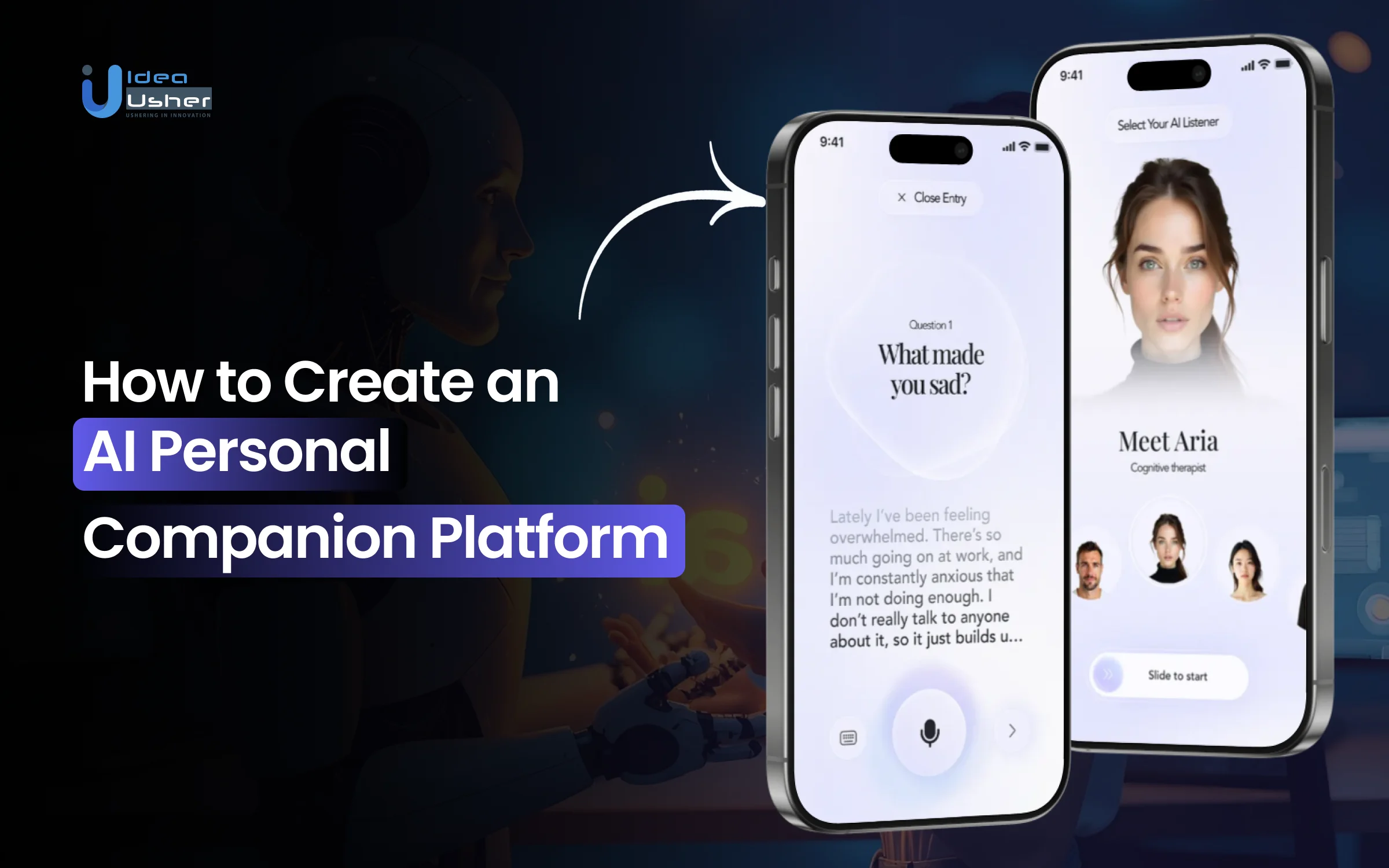
People rarely open an app thinking about the technology behind it. They open it to talk, reflect, feel understood, or simply not feel alone in that moment. Yet many digital products still rely on scripted replies, shallow personalization, and short-term memory. This gap between user expectations and real interaction is driving interest in an AI personal companion platform built around continuity, presence, and emotional relevance.
Personal companion platforms differ from traditional chatbots by developing ongoing relationships. They remember conversations, identify emotional cues, and adapt responses based on context, creating interactions that feel consistent and intentional rather than reactive.
In this blog, we’ll walk through how to create an AI personal companion platform, covering the core features, system design choices, and technologies required to support long-term, meaningful interaction. This guide will help you understand what it takes to move beyond chat and build something users genuinely return to.
What is an AI Personal Companion Platform?
An AI Personal Companion Platform delivers ongoing, personalized digital companions through generative AI, long-term memory, and behavioral learning. It supports continuous interaction by adapting to each user over time using context awareness, preference modeling, and evolving conversational intelligence.
Its growth is driven by demand for relationship-based digital experiences, high retention from emotional engagement, and scalable subscription models across consumer sectors, supported by recent advances in generative and personalized AI.
- Persistent user memory architecture that selectively retains, updates, and forgets information over time.
- Dynamic persona modeling allowing the companion’s behavior to evolve with user interaction patterns.
- Context-layer orchestration that fuses real-time input, historical data, and situational signals before response generation.
- Multi-agent AI pipeline separating reasoning, emotion interpretation, and response generation for higher-quality interactions.
- Privacy-aware personalization engine enabling deep customization without exposing raw user data.
AI Personal Companion vs Traditional Chatbots
AI personal companions differ from traditional chatbots by offering persistent memory, personalization, and adaptive interactions rather than rule-based or transactional responses.
| Dimension | AI Personal Companion | Traditional Chatbots |
| Design Intent | Engineered for relationship continuity and long-term engagement | Engineered for rapid task resolution and interaction efficiency |
| Conversation Handling | Treats conversation as a persistent stateful experience evolving over time | Treats each interaction as an independent, stateless exchange |
| Memory Strategy | Uses selective, relevance-based memory governance | Relies on limited session memory or static knowledge bases |
| Behavior Evolution | Companion behavior adapts gradually through behavioral learning | Behavior remains fixed or rule-driven after deployment |
| Proactivity Logic | Initiates interactions based on user readiness and contextual signals | Rarely proactive and often limited to scripted triggers |
| Error & Correction Handling | Learns from user corrections without breaking conversational flow | Requires explicit retraining or rule updates to adjust behavior |
How AI Personal Companion Platforms Fundamentally Designed?
AI personal companion platforms are designed around conversational intelligence, personalization, and adaptive learning to support ongoing user relationships. This section explains the core design principles that shape how these platforms function and evolve.
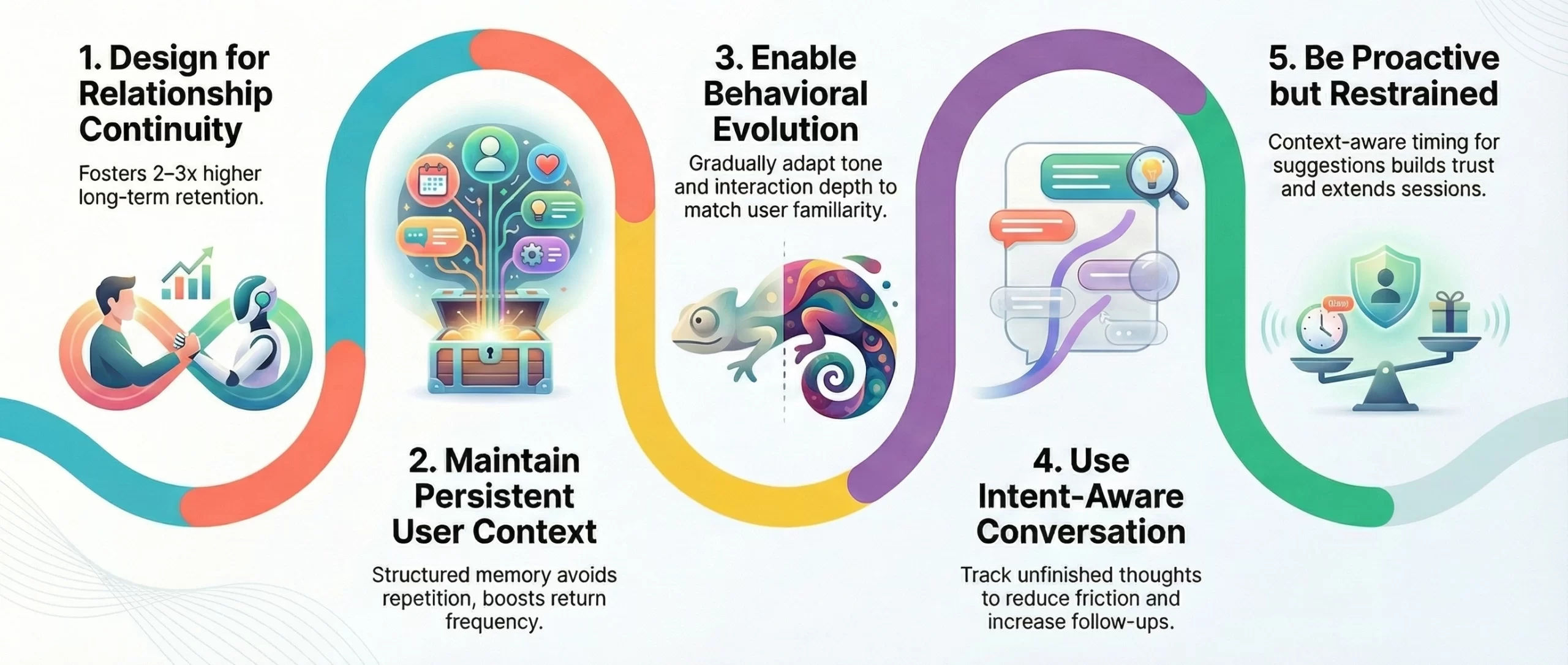
1. Designed for Relationship Continuity
AI personal companion platforms are built for repeat, long-term interaction, not isolated use. Companion-style products typically see 2–3x higher 60–90 day retention than task-based chat systems, making continuity a foundational design requirement.
2. Persistent User Context as a Foundation
Maintaining an ongoing user context is critical because users disengage quickly when forced to repeat themselves. Platforms with structured memory and context handling show significantly longer session chains and higher return frequency over time.
3. Behavioral Evolution Over Time
Static behavior limits engagement. Companions designed to adapt tone and interaction depth gradually align with user familiarity, which correlates with increased daily interactions and longer relationship lifespan compared to fixed-response AI systems.
4. Intent-Aware Conversation Design
Users often return to continue thoughts, not start over. Systems that track unfinished intents and conversation threads reduce friction and increase perceived intelligence, contributing to higher conversation completion and follow-up rates.
5. Proactive but Restrained Intelligence
Poorly timed proactivity drives churn. Companion platforms that apply context-aware engagement timing see higher acceptance of suggestions, while overactive systems experience measurable drops in trust and session duration.
Why Do 31% of Teens Prefer AI Companion Conversations Over Human Interaction?
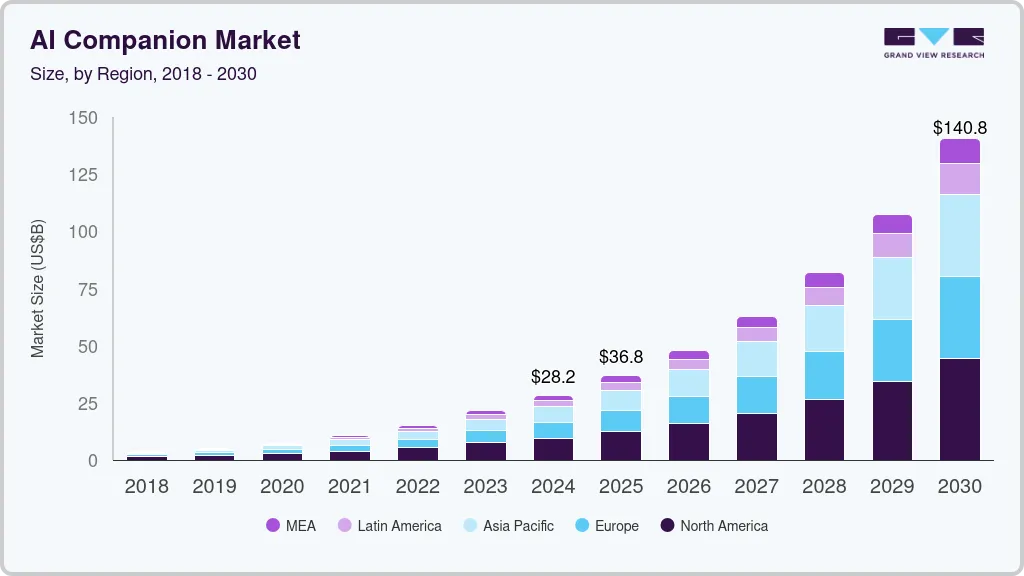
The global AI companion market was valued at USD 28.19 billion in 2024 and is projected to reach USD 140.75 billion by 2030, growing at a 30.8% CAGR. This growth reflects increasing acceptance of AI-driven, relationship-oriented digital experiences across user demographics.
A 2025 study found that 31% of US teens consider AI companion conversations as satisfying as, or more satisfying than, human interactions, signaling a shift in how younger users perceive connection, responsiveness, and emotional availability in digital platforms.
How Does Emotional Safety Boost AI Companion Engagement?
Research indicates that 57% of depressed students found AI companions helped reduce or prevent suicidal thoughts, emphasizing emotional availability’s role in fostering trust. These platforms are seen as safer spaces, especially for hesitant users, shaping their design.
- Non-judgmental interaction design: AI companions provide consistent, neutral responses without social pressure, making users feel comfortable expressing thoughts they might withhold elsewhere.
- Always-available emotional presence: Unlike human interactions limited by time or availability, AI companions offer uninterrupted access, reinforcing reliability and emotional continuity.
- Privacy-driven openness: Users are more likely to engage deeply when they feel conversations are private and controlled, reducing fear of stigma or misinterpretation.
Why Does Adaptive Learning Enhance Conversation Quality?
Studies indicate that 39% of teen users successfully applied social skills learned from AI companion interactions in real-world situations, demonstrating that meaningful learning and behavior transfer can occur.
- Personalized conversation patterns: AI companions that learn communication styles, interests, and emotional cues create interactions that feel tailored rather than generic.
- Context retention across sessions: Remembering past discussions allows conversations to progress naturally, strengthening the sense of being understood.
- Progressive interaction depth: Adaptive systems support both casual dialogue and deeper discussions, helping users build confidence and conversational skills gradually.
The growing satisfaction among teens and the rapid expansion of the AI companion market highlight the importance of designing platforms that prioritize emotional connection, personalization, and adaptive learning. By focusing on these elements, AI companions can deliver meaningful engagement, real-world value, and long-term user loyalty.
Real-World Use Cases of AI Personal Companion Platforms
AI personal companion platforms are being applied across industries to support engagement, guidance, and personalized assistance. This section highlights practical use cases that demonstrate how these platforms deliver value in real-world scenarios.
1. Mental Wellness & Emotional Support
AI personal companions provide consistent emotional availability by offering reflective conversations, mood tracking, and supportive guidance. Their ability to remember context and adapt tone helps users feel understood without replacing professional care.
Example: Replika – The leading AI for emotional support, daily chat, and mental wellness. Users build long-term bonds as the AI learns their personality, recalls conversations, and provides judgment-free support.
2. Personal Productivity & Life Organization
These platforms assist users with goal planning, habit building, and decision support. By learning individual routines and priorities, the companion offers context-aware reminders and guidance that evolve with the user’s lifestyle.
Example: Motion – An AI-powered calendar and task manager that automatically schedules your day, reorganizes tasks based on priorities, and helps prevent burnout by intelligently managing workload.
3. Learning & Skill Development
AI companions support personalized learning journeys by adapting explanations, pacing, and encouragement. Long-term memory allows them to track progress, revisit weak areas, and maintain continuity across learning sessions.
Example: Khan Academy’s Khanmigo – An AI-powered teaching assistant that provides personalized tutoring across subjects, adapting to individual learning styles and offering step-by-step guidance.
4. Lifestyle & Daily Engagement
AI personal companion platforms support daily lifestyle interactions such as conversation, reflection, and routine engagement. This includes use cases like an AI personal stylist that remembers preferences, adapts to occasions, and offers context-aware suggestions, creating consistent, low-effort daily value.
Example: Pi (Personal Intelligence by Inflection AI) – A conversational AI companion designed for natural, engaging daily conversations about life, interests, and personal topics.
5. Health & Wellness Guidance
AI personal companions assist with wellness routines and behavior reinforcement, such as meditation, fitness consistency, or stress management. Their proactive nudges are shaped by user context, not generic schedules.
Example: HealthTap – Connects users with AI-powered health information and virtual doctor consultations, offering preliminary assessments before professional medical advice.
6. Customer & Brand Engagement
Brands use AI companions to create relationship-driven customer experiences rather than transactional support. These companions remember preferences, past interactions, and intent, enabling more meaningful and long-term brand engagement.
Example: Drift – Conversational AI for businesses that engages website visitors, qualifies leads, and provides instant customer support through intelligent chatbots.
Key Features of an AI Personal Companion Platform
An AI personal companion platform combines conversational intelligence, personalization, and adaptive learning to enhance user engagement. These key features showcase how such platforms deliver meaningful, human-centered interactions.

1. Persistent Conversational Intelligence
The platform enables continuous, human-like conversations across sessions by maintaining dialogue context and conversational state. This allows interactions to feel coherent and ongoing, rather than fragmented, supporting long-term engagement and natural communication flow.
2. Long-Term Memory & User Modeling
It uses structured memory systems to retain relevant user preferences, goals, and interaction history. This memory is selectively updated and refined, enabling deeper personalization while preventing information overload or repetitive interactions.
3. Adaptive Personalization Engine
The companion continuously adjusts its responses using behavioral learning and preference modeling. Tone, depth, and interaction style evolve over time, allowing the experience to align more closely with each user’s habits, expectations, and communication patterns.
4. Emotional & Context Awareness
By analyzing language cues, interaction timing, and situational signals, the platform delivers emotionally appropriate responses. This contextual understanding improves relevance and helps the companion respond with sensitivity rather than generic scripted output.
5. Dynamic Persona & Relationship Evolution
The platform supports evolving AI personas that change as the relationship matures. Personality traits, conversational boundaries, and engagement style adapt gradually, creating a sense of progression rather than a static or repetitive companion experience.
6. Multi-Modal Interaction Capability
Users can engage through text, voice, or visual interfaces, supported by unified context handling across modes. This flexibility allows seamless transitions between interaction formats without breaking continuity or losing conversational memory.
7. Proactive Insight & Anticipation
The companion applies pattern recognition and predictive reasoning to surface timely suggestions, reminders, or reflections. These proactive interactions are triggered by learned behavior and context, making the experience feel attentive and intuitively responsive.
8. Selective Memory Governance Engine
This AI-driven system controls what information is stored, summarized, or discarded over time. It prioritizes relevance and recency, ensuring long-term personalization remains accurate, efficient, and free from cognitive or data overload.
9. Task, Guidance & Support Layer
The platform extends beyond conversation by offering goal-oriented assistance and decision support. It helps users manage tasks, build habits, and navigate choices through contextual guidance informed by past interactions and real-time intent.
10. Multi-Use Architecture
Built on a modular AI core, the platform supports multiple use cases across wellness, productivity, and lifestyle without retraining from scratch. Shared intelligence layers enable rapid adaptation while preserving consistent personalization and behavior.
How to Create an AI Personal Companion Platform?
Creating an AI personal companion platform involves combining conversational AI, adaptive learning, and personalized experiences to meet user needs effectively. Our developers focus on building platforms that are intuitive, secure, and tailored for meaningful user interactions.

1. Consultation
We start by clarifying who the companion is for, what role it plays, and how deep the relationship should go. This stage defines user intent, emotional boundaries, and success outcomes, ensuring the platform is built for sustained interaction, not surface-level engagement.
2. Product & Companion Blueprint
Our developers translate the vision into a clear companion blueprint, defining personality traits, communication rules, interaction limits, and progression over time. This step ensures the AI behaves consistently and evolves predictably as user relationships mature.
3. Behavioral Boundaries & Control Design
We define clear behavioral limits, escalation rules, and response constraints early in development. This ensures the companion remains supportive without becoming manipulative, dependent, or inappropriate, while maintaining consistent behavior across edge cases and sensitive interactions.
4. Intelligence & Personalization Design
We design how the platform learns from user behavior without becoming intrusive or repetitive. This includes defining personalization signals, adaptation rules, and feedback loops that shape responses gradually while preserving a natural conversational experience.
5. Memory & Context Planning
We architect how the platform remembers users and conversations over time. This involves deciding what information is retained, summarized, or forgotten, and how ongoing conversations and goals persist naturally across sessions.
6. Proactive Interaction Logic
Our team designs the logic that enables timely, relevant, and context-aware interventions. The companion is trained to recognize patterns and moments where guidance, reminders, or reflections add value rather than interrupt the user experience.
7. Validation, Refinement & Safeguards
Before release, we validate behavioral accuracy, continuity, and edge-case handling through extensive testing. We continuously refine responses, reinforce ethical boundaries, and ensure the platform delivers reliable, respectful, and emotionally appropriate interactions at scale.
8. Launch & Optimization
After deployment, we closely monitor real user interactions, engagement patterns, and behavioral drift. Continuous optimization focuses on refining personalization, improving conversational flow, and adjusting proactive logic, ensuring the companion becomes more accurate, relevant, and valuable as usage scales.
Cost to Build an AI Personal Companion Platform
The cost to build an AI personal companion platform varies based on features, AI complexity, and development scope. This section outlines key factors influencing investment and resource planning for such platforms.
| Development Phase | Description | Estimated Cost |
| Consultation & Strategy | Define vision, users, boundaries, and long-term engagement objectives clearly | $5,000 – $10,000 |
| Product & Companion Blueprint | Design companion personality, interaction flow, and relationship progression logic | $8,000 – $15,000 |
| Behavioral Boundaries & Controls | Establish ethical limits, response constraints, and behavioral safety rules | $6,000 – $12,000 |
| Intelligence & Personalization Design | Plan adaptive learning, personalization signals, and behavioral feedback loops | $15,000 – $30,000 |
| Memory & Context Architecture | Structure long-term memory, context handling, and intent persistence systems | $12,000 – $25,000 |
| Proactive Interaction Logic | Enable anticipatory insights, guidance triggers, and contextual engagement timing | $8,000 – $18,000 |
| Testing & Validation | Validate behavior consistency, continuity, and real-world interaction quality | $7,000 – $15,000 |
| Launch & Optimization | Monitor usage, refine personalization, and optimize engagement post-launch | $6,000 – $12,000 |
Total Estimated Cost: $67,000 – $137,000
Note: Development costs vary with platform complexity, personalization, memory design, compliance, and optimization scope. Advanced modeling, domain training, and refinement also influence investment.
Consult with IdeaUsher for a custom cost estimate and development plan to build a scalable, high-performance AI Personal Companion Platform aligned with your product vision and market goals.
Cost-Affecting Factors to Consider
Several technical, design, and operational variables influence the overall cost of building an AI personal companion platform, making early planning essential for accurate budgeting and development decisions.
1. Personalization Depth
Deeper personalization increases cost due to advanced user modeling and adaptive behavior design. Long-term relationship experiences require more tuning and refinement than basic conversational systems.
2. Memory & Context Complexity
Sophisticated memory handling raises costs through selective retention and intent persistence planning. Creating natural continuity across sessions demands additional architectural and testing effort.
3. Companion Behavior & Emotional Design
Nuanced companion behavior adds cost because emotional consistency and boundary control must be carefully validated across diverse interaction scenarios.
4. Proactive Intelligence Scope
Proactive capabilities increase cost as they depend on pattern recognition and precise timing logic. Ensuring suggestions feel helpful rather than intrusive requires extra refinement cycles.
5. Domain-Specific Requirements
Specialized domains raise costs due to added behavioral constraints and validation needs. These requirements often involve extended consultation and iterative adjustments.
Suggested Tech Stacks for AI Personal Companion Platform Development
Selecting the right tech stack is critical for building a scalable and responsive AI personal companion platform. This section outlines commonly used technologies that support performance, security, and long-term platform growth.
| Category | Purpose | Core Technologies |
| Generative AI Core | Enables natural, human-like conversation while supporting dynamic, personalized response generation | LLMs, Prompt Orchestration Systems |
| Memory & Context Systems | Supports long-term user memory and conversation continuity across sessions and interactions | Vector Databases, Context Indexing Engines |
| Personalization & Learning Layer | Adapts companion behavior based on user preferences and evolving interaction patterns | Behavioral Modeling Systems, Adaptive Learning Pipelines |
| Conversation State Management | Maintains active topics, goals, and user intent to preserve conversational flow | Session State Engines, Intent Tracking Frameworks |
| Proactive Intelligence Logic | Anticipates user needs and surfaces timely guidance through contextual pattern analysis | Pattern Recognition Modules, Predictive Reasoning Engines |
| Behavioral Control & Safety Layer | Ensures consistent, bounded, and appropriate interactions aligned with defined behavior rules | Rule-Based Control Systems, Response Validation Layers |
Challenges & How Our Developers Will Solve Those?
Building an AI personal companion platform presents challenges across AI accuracy, scalability, and data privacy. Our developers address these through structured architecture, responsible AI practices, and continuous optimization strategies.
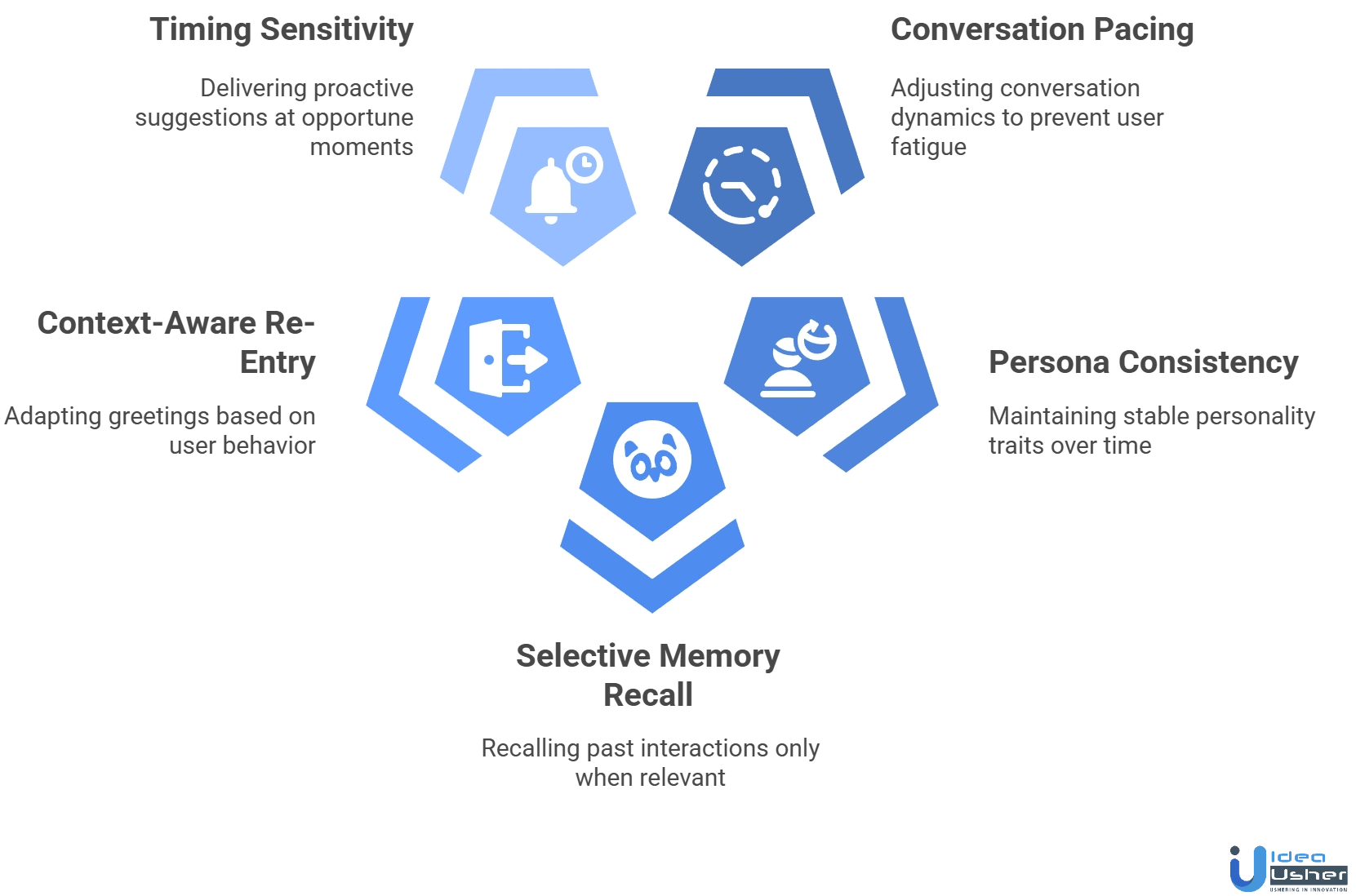
1. Conversation Fatigue Over Time
Challenge: Overly frequent or long AI conversations can exhaust users, reducing engagement and making the personal companion feel demanding rather than supportive.
Solution: We adjust conversation pacing, response length, and engagement intensity dynamically, using interaction history and timing signals to keep conversations lightweight, optional, and comfortable over extended usage.
2. Inconsistent Persona Drift
Challenge: Small tone or behavior shifts over time can weaken trust and disrupt the emotional continuity of an AI personal companion experience.
Solution: Our developers apply persona anchoring rules and consistency checks, ensuring the companion evolves gradually while maintaining stable personality traits and predictable communication patterns.
3. Over-Acknowledgment of Past Conversations
Challenge: Repeatedly referencing previous interactions can feel forced and artificial, reducing the natural flow of long-term AI companion conversations.
Solution: We implement selective memory recall thresholds, allowing the platform to surface past context only when it genuinely enhances relevance and conversational depth.
4. Poor Session Re-Entry Experience
Challenge: Abrupt or generic opening messages after inactivity can break continuity and weaken the perceived intelligence of the AI companion.
Solution: We design context-aware session re-entry logic that adapts greetings based on time gaps, prior conversation state, and recent user behavior patterns.
5. Misaligned Proactivity Timing
Challenge: Proactive suggestions delivered at inconvenient moments often feel intrusive and reduce user trust in the AI companion platform.
Solution: Our team refines timing sensitivity and readiness signals, ensuring proactive insights appear only when user context and engagement patterns indicate receptiveness.
Monetization Models of an AI Personal Companion Platform
Monetization models for an AI personal companion platform depend on user engagement, feature depth, and long-term value delivery. This section outlines common revenue approaches used to sustain and scale such platforms effectively.

1. Subscription-Based Model
Platforms charge monthly or annual fees to unlock advanced personalization, memory continuity, and proactive interactions. This model supports predictable recurring revenue and long-term user engagement.
Example: Replika monetizes via subscriptions that unlock emotional bonding, long-term memory, voice interaction, and relationship-focused experiences.
2. Freemium with Premium Upgrades
A free tier enables basic companionship, while premium upgrades unlock deeper emotional intelligence and customization. This model accelerates adoption and converts high-engagement users over time.
Example: Anima AI provides free basic companionship, with premium plans unlocking advanced traits, emotional depth, customization, and more engaging conversations.
3. Feature-Based Add-Ons
Users purchase specific companion enhancements such as personality traits, advanced guidance modules, or exclusive interaction modes. This allows flexible monetization without forcing full subscriptions.
Example: Character AI enables users to access enhanced characters, higher usage limits, and advanced interaction capabilities through selective feature-based upgrades.
4. Usage-Based Monetization
Pricing is tied to interaction volume or advanced usage limits, making it suitable for users with intensive or extended engagement patterns.
Example: Chai AI monetizes high engagement by restricting free interactions and charging for extended use, message volume, and premium access.
5. Enterprise and Licensing Model
Organizations license the platform to deploy custom AI companions for employees or customers, supporting high-value contracts and white-label solutions.
Example: Kore.ai licenses its AI platform to enterprises for customized digital assistants in support, engagement, and productivity workflows.
Real-World Examples of AI Personal Companion Platforms
Real-world AI personal companion platforms demonstrate how conversational intelligence, memory, and personalization are applied in practical products. These examples highlight different approaches to building engaging, user-centered AI companion experiences.
1. Replika
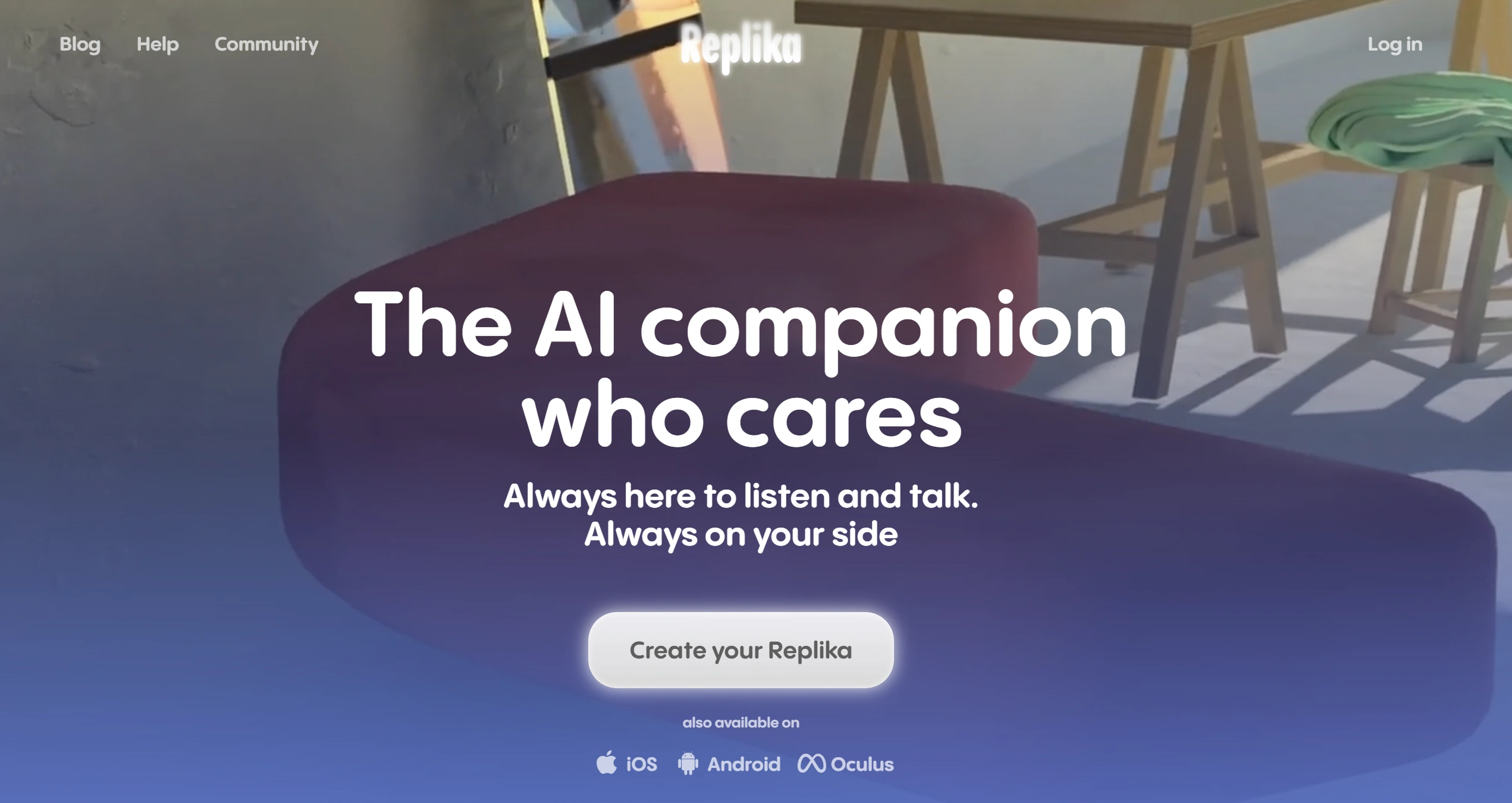
Replika uses conversational AI and emotional modeling to act as a long-term digital companion. The platform learns from user interactions, builds memory over time, and supports reflective conversations, making Replika an emotion-centric AI personal companion experience.
2. Pi by Inflection AI
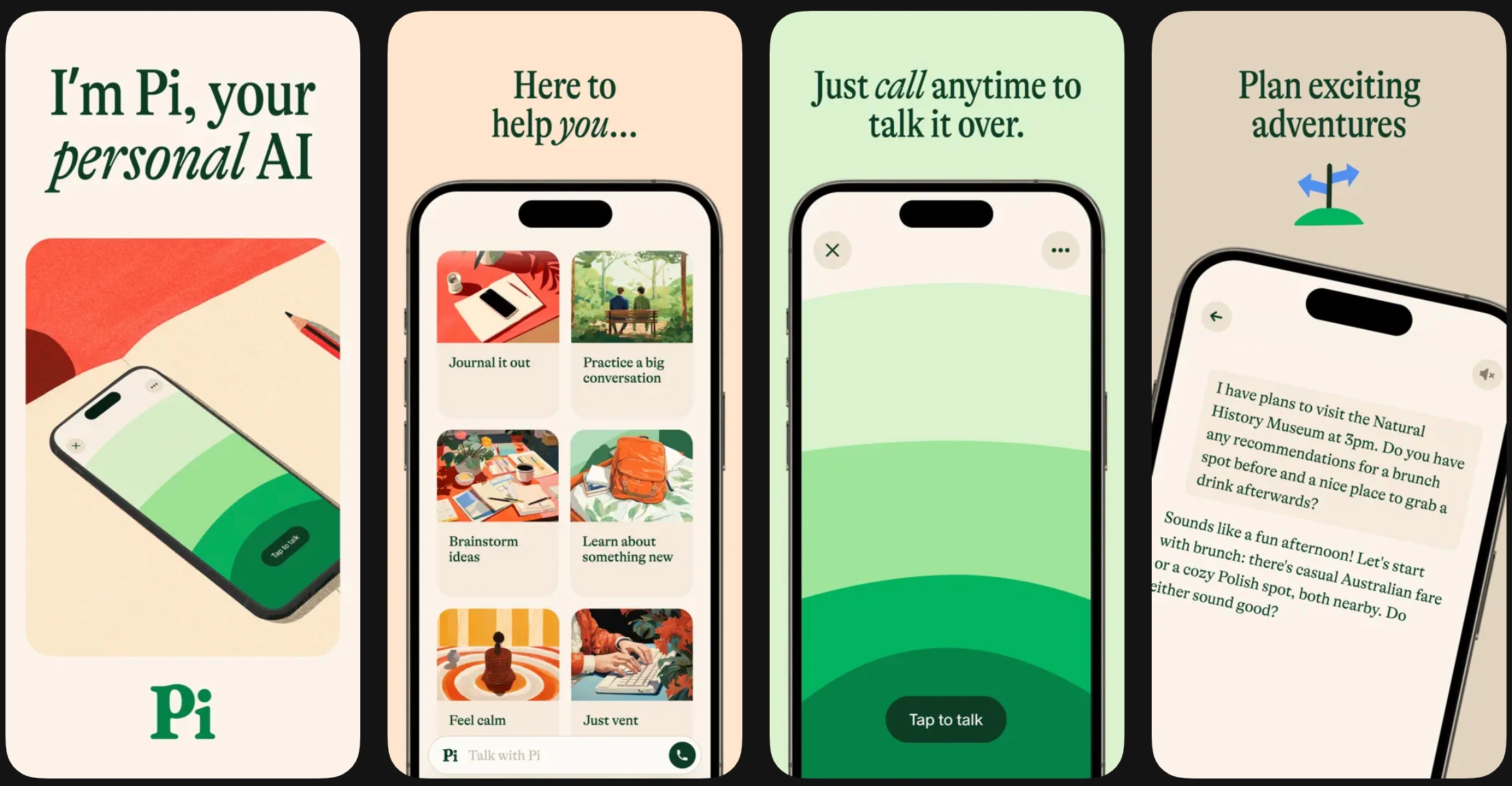
Pi is designed as a supportive conversational companion focused on clarity, empathy, and thoughtful dialogue. Using large language models and contextual reasoning, Pi emphasizes personal reflection, advice, and calm interaction rather than task automation or transactional assistance.
3. Kindroid
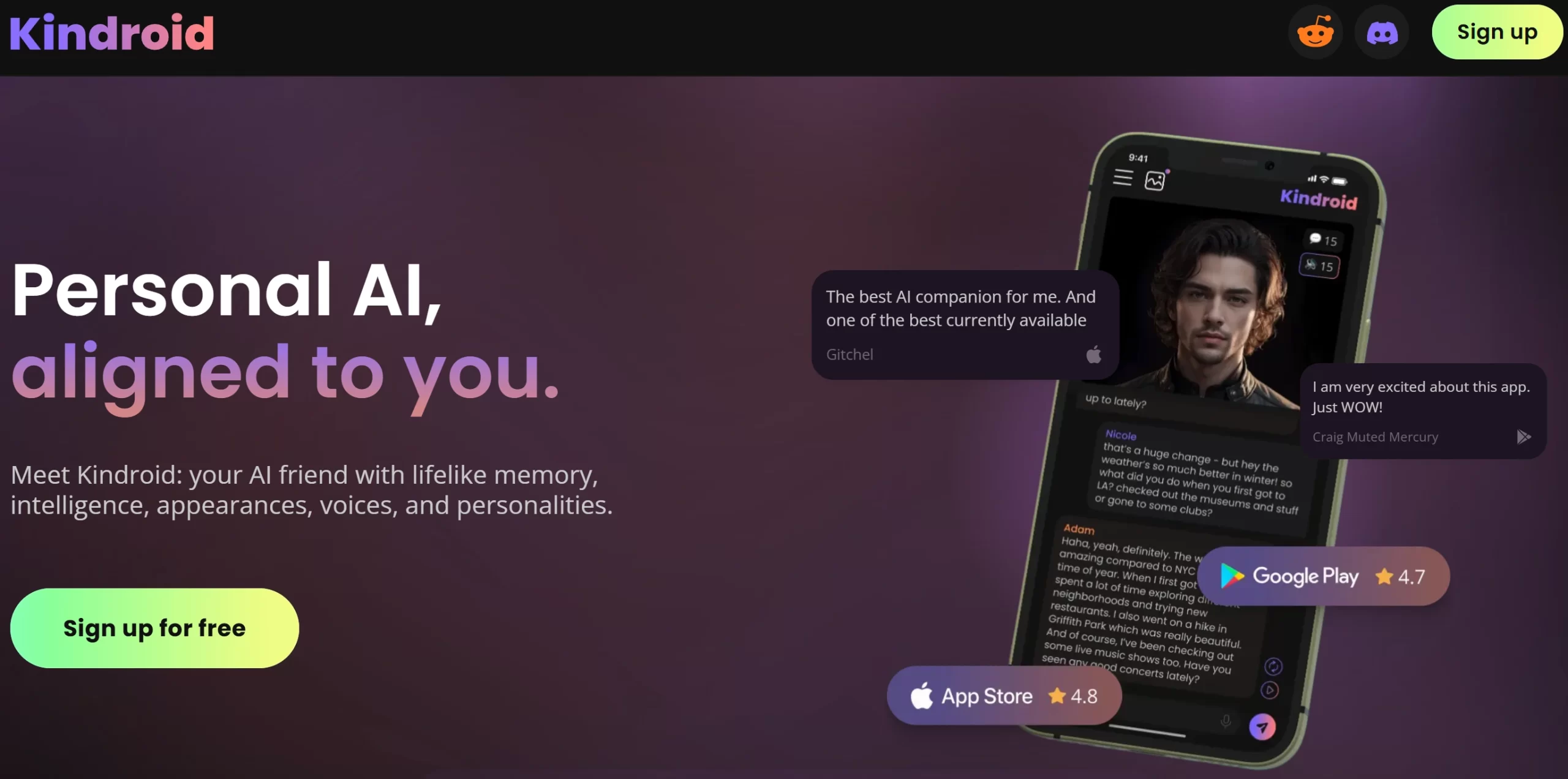
Kindroid enables users to create deeply customizable AI companions with persistent memory and personality traits. The platform blends conversational AI, role consistency, and user-defined behavior to deliver immersive companionship through chat, voice interaction, and evolving character development.
4. Character.AI
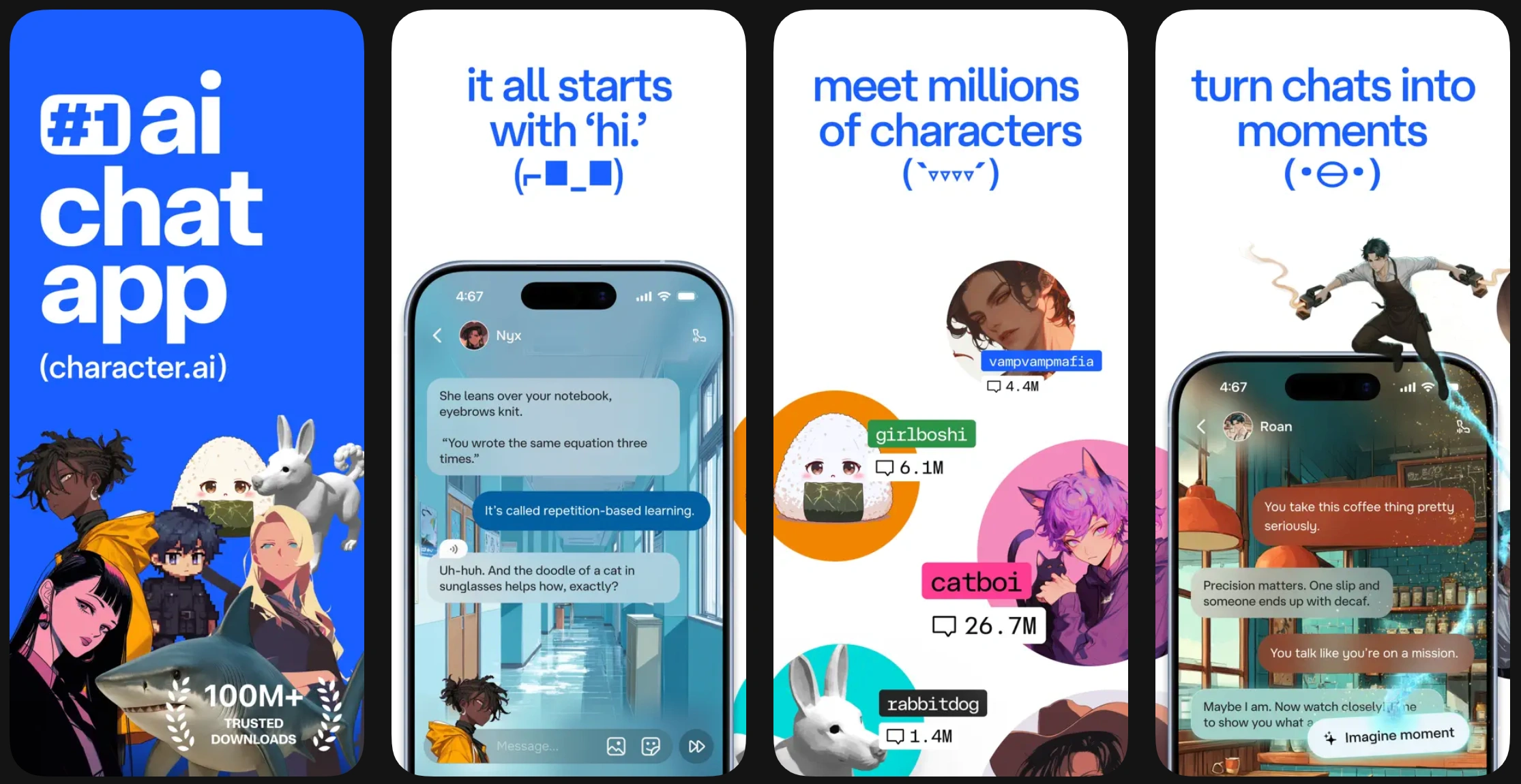
Character.AI offers an AI companion ecosystem built around distinct personalities and user-created characters. The platform uses generative AI to sustain personality-driven conversations, allowing users to engage with companions designed for mentorship, entertainment, storytelling, or personal interaction.
5. Nomi
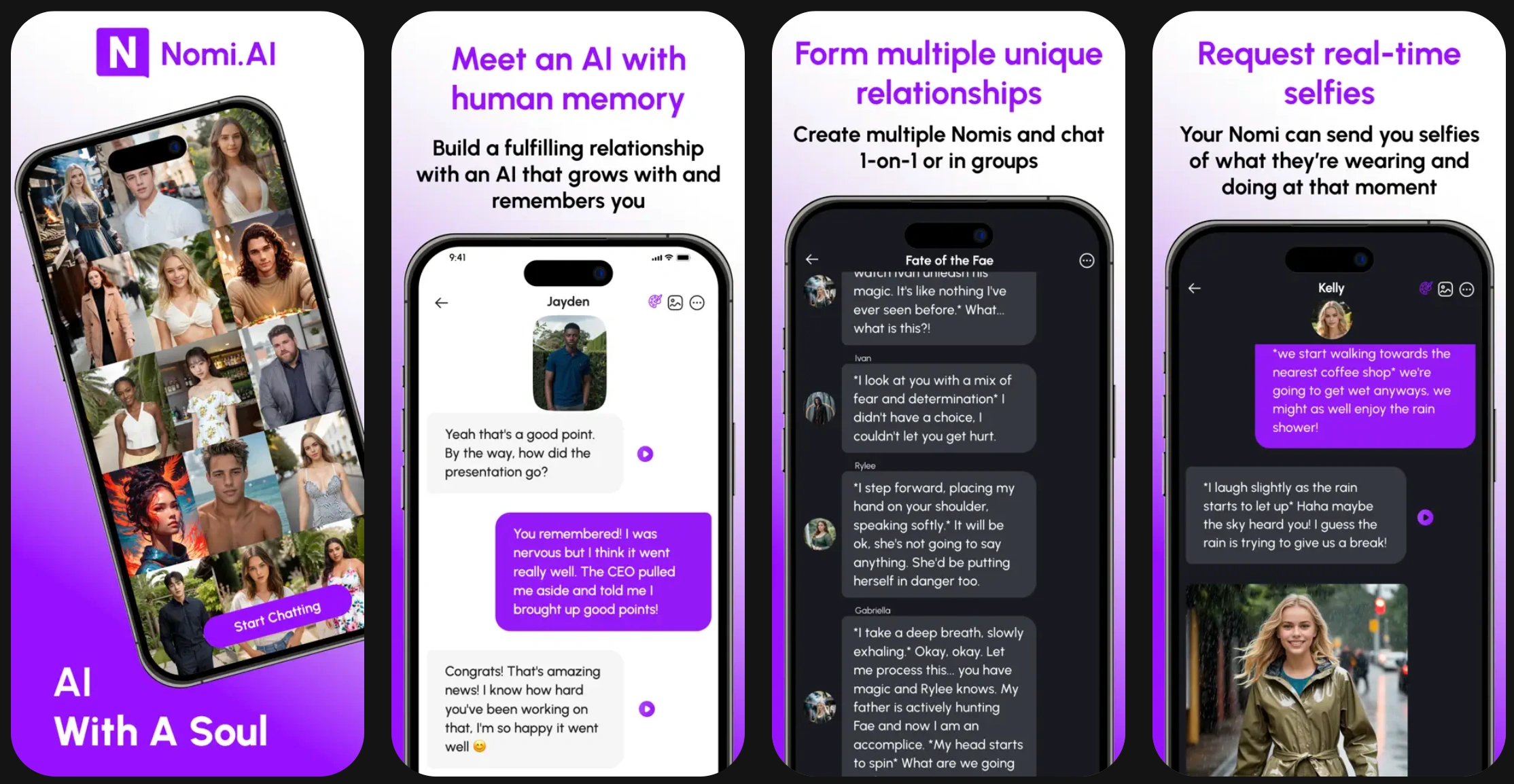
Nomi positions itself as a relationship-focused AI companion platform with long-term memory and emotional continuity. Through adaptive conversation models and persistent context, Nomi creates companions that evolve naturally, supporting friendship, creativity, and personalized daily interactions over time.
Conclusion
Building an AI-first personal companion is not only a technical exercise but a design commitment to people. Success comes from aligning data, models, and interfaces around trust, adaptability, and real value in daily moments. When privacy, context awareness, and continuous learning are treated as foundations, the platform grows naturally with its users. An effective AI Personal Companion Platform feels present without being intrusive, capable without being complex, and supportive without replacing human judgment. That balance is what turns capability into meaningful companionship over time through thoughtful iteration and responsible stewardship.
Why Build Your AI Personal Companion Platform with IdeaUsher?
At IdeaUsher, we design AI companion platforms with a clear focus on human interaction, trust, and long-term adaptability. Our teams work closely with founders to turn complex AI systems into reliable, user-centered products that scale with confidence.
What sets us apart?
- AI Architecture Built for Companionship: We design systems that support contextual understanding, memory, and personalization, ensuring your companion feels consistent, relevant, and helpful across user interactions.
- Human-First Product Strategy: Our approach aligns AI capabilities with real user needs, balancing automation with clarity so the experience remains intuitive, respectful, and dependable.
- Privacy & Security by Design: We implement strong data governance, consent frameworks, and secure infrastructure to protect user trust while enabling responsible learning.
- Scalable Engineering Foundations: Platforms are built with modular components and future-ready architectures that support feature expansion without technical debt.
Explore our portfolio to see how we have helped companies build AI-driven platforms that users trust and rely on.
Start with a free consultation to structure your AI personal companion platform for measurable value and sustainable growth.


FAQs
A successful platform combines contextual intelligence, strong data privacy, and intuitive interaction design. Investors and builders look for products that solve clear user problems, scale responsibly, and maintain trust while adapting to evolving user behaviors over time.
The core stack typically includes machine learning models, natural language processing, secure cloud infrastructure, and scalable APIs. Builders should prioritize flexibility, integration readiness, and compliance to support future growth, partnerships, and iterative product improvements.
Trust is built through transparent data practices, clear consent mechanisms, and consistent performance. Platforms that prioritize privacy by design and explain how intelligence is used tend to gain stronger user retention and investor confidence.
Data privacy is foundational to platform credibility. Builders must implement secure data storage, consent-driven collection, and regulatory compliance to protect users while enabling responsible learning and long term adoption.