

Key Takeaways
- An Innerworld-like mental health VR app features anonymous social interaction, immersive environments, and behavioral tools for community support.
- It includes avatar-based anonymous communities, interactive Cognitive Behavioral Immersion (CBI) tools, and guide-led support groups.
- Developers must define the support model, design user experience, build infrastructure, and integrate safety systems when creating such an app.
- Costs for building this VR app range from $80,000 to $2 million, depending on features and platform complexity.
- Compliance with privacy and safety regulations is crucial for handling sensitive user data and interactions.
Mental wellness remains one of healthcare’s largest unmet needs, yet most mental health apps address only isolated challenges like meditation, mood tracking or virtual consultations. This gap is driving mental health VR app development, as healthcare organizations build immersive platforms that combine anonymous communities, behavioral health tools, trained guides and virtual environments for continuous, scalable support.
Modern mental health VR platforms combine immersive 3D environments, anonymous avatars, guide-led support groups, CBT tools, mindfulness exercises, AI safety systems, real-time social experiences and cross-platform accessibility into a unified behavioral health ecosystem. Rather than standalone meditation or teletherapy apps, they provide persistent virtual communities for continuous peer support, coping skills, and accessible mental healthcare.
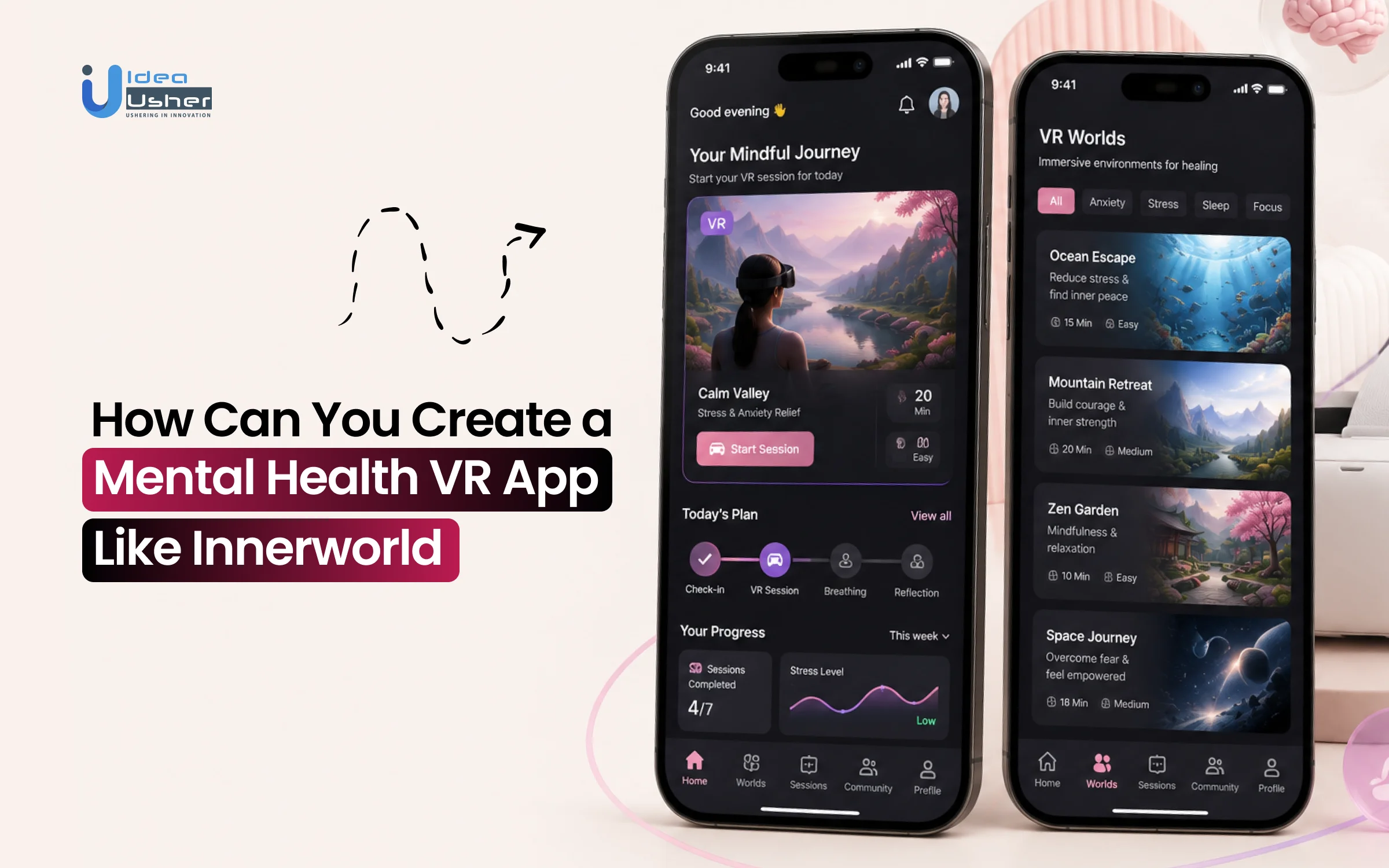
In this blog, we will talk about mental health VR app development like Innerworld, its core features, technology stack, development cost, business considerations and how IdeaUsher can help you build a secure, scalable and engaging immersive mental health VR app that delivers accessible, personalized, and impactful mental wellness experiences.
What Makes VR the Next Opportunity in Mental Health Support?
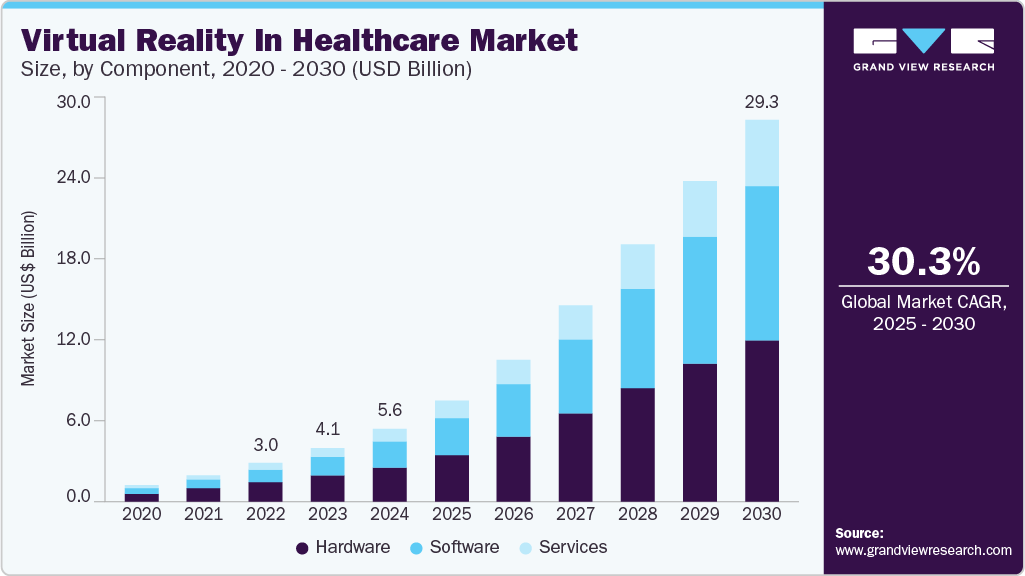
The digital mental health market is shifting structurally as the global VR healthcare market was valued at $5.6 billion in 2024 and is projected to reach $29.4 billion by 2030, growing at a 30.3% CAGR from 2025 to 2030. This expansion highlights the rising role of immersive technologies in healthcare, creating a significant opportunity for VR-based mental health platforms.
Conventional digital tools struggle to achieve sustained engagement and behavioral change in mental health. A 2025 meta-analysis of 33 studies involving 3,182 individuals revealed that VR therapy significantly improved anxiety symptoms compared to conventional interventions, yielding a -0.95 standardized mean difference. By combining spatial computing, presence-driven environments, and interactive peer experiences, VR delivers more immersive, engaging, and behavior-oriented support.
A. Where Traditional Mental Health Apps Leave Gaps
Different digital mental health formats address individual needs, yet many struggle with sustained engagement, real-world skill application, human connection, or scalable access. These gaps create opportunities for more immersive support models.
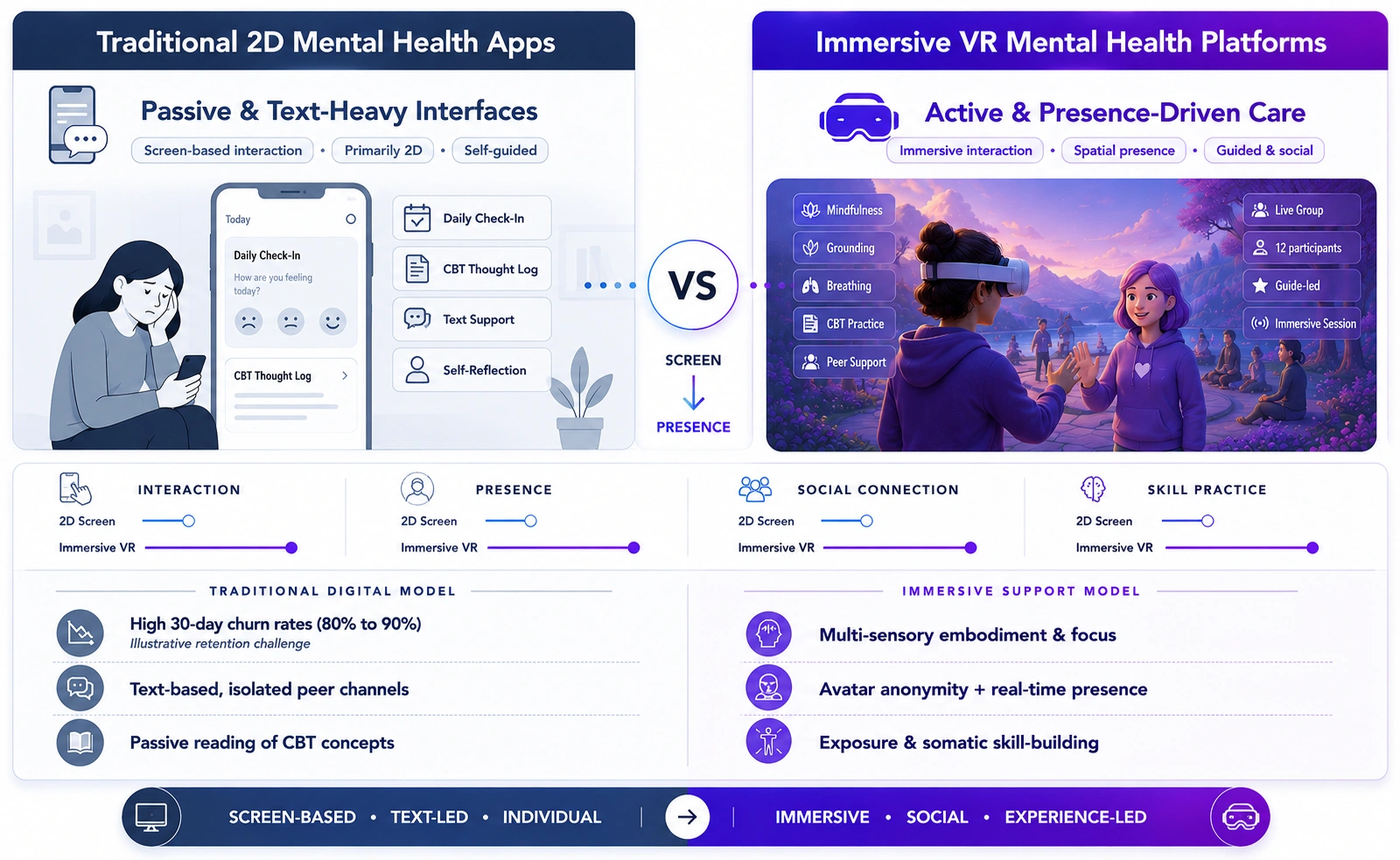
First-generation mobile applications made mental health resources broadly accessible, but their rely on flat 2D screens and self-guided reading creates fundamental care limitations:
- Passive Meditation Apps & High User Churn: Audio-guided meditation apps retain only 3.3%–5% of users after 30 days, with 80%–90%+ churn driven by passive engagement and real-world distractions.
- Self-Guided CBT & Somatic Transfer Gap: Text-based CBT improves understanding but fails to translate knowledge into real-time emotional regulation, with 70%+ of users struggling during actual panic or anxiety episodes.
- Teletherapy & Limited Scalability: 2D video therapy suffers from Zoom fatigue and therapist shortages, with 137 million Americans living in Mental Health Professional Shortage Areas where only 26.5% of demand is met.
- Text-Based Peer Communities & Social Isolation: Asynchronous forums lack real-time presence, causing up to 61% of users to disengage due to isolation, impersonal interactions, and concerns about identity exposure.
B. How VR Bridges the Gaps in Mental Health Support
Virtual reality transforms digital therapeutics by replacing flat screen consumption with active, embodied experiences that change how the brain processes stress, emotion, and social connection:
| Feature Dimension | Traditional 2D Health App | Immersive VR Platform | Psychological & Clinical Benefit |
| User Engagement | Passive reading/listening on a small screen (<5% 30-day retention). | Spatial visual and auditory immersion. | Blocks real-world environmental triggers, inducing 28%–47% acute stress/anxiety reduction. |
| Social Dynamics | Text forums or direct 2D video calls. | Customizable avatar representation. | Avatar anonymity lowers social stigma, increasing self-disclosure rates by over 40%. |
| CBT Application | Reading static worksheets or logging moods. | Controlled environment exposure therapy (VRET). | Yields a 0.82 standard mean difference reduction in anxiety symptoms vs. control. |
| Peer Connection | Asynchronous message boards. | Co-present spatial audio circles. | Recreates the feeling of “sitting in the same room,” fostering true social presence. |
The table establishes the broader shift from passive digital care to immersive support. The following capabilities show how VR can translate that shift into practical experiences around anonymity, behavioral practice, social presence, and stress management.
- Embodied Anonymity & Social Safety: Customizable 3D avatars reduce stigma and visual judgment, helping users open up 40% faster while lowering social anxiety by 30%–50% through the online disinhibition effect.
- VR Exposure Therapy & Active Skill Building: Virtual Reality Exposure Therapy (VRET) delivers controlled exposure for phobias, PTSD, and social anxiety, achieving SMD = -0.82, with 76% of patients preferring VR over traditional exposure therapy.
- Spatial Presence & Immersive Mindfulness: 360-degree VR environments and biofeedback sessions enhance mindfulness, producing 28%–47% immediate reductions in acute anxiety and stress within 5–10 minutes.
C. Why Healthcare Enterprises Are Investing in Mental Health VR
Healthcare providers, enterprise employers, and digital health organizations are moving beyond basic wellness apps toward VR platforms to improve clinical outcomes and capture predictable reimbursement streams:
- Scalable Mental Healthcare Delivery: With 137 million Americans in mental health shortage areas, VR enables clinicians to lead 10–20 patient avatar sessions simultaneously, increasing provider capacity by 500%–1,000%.
- Measurable Engagement & Biometric Insights: Unlike 2D apps, VR captures spatial movement, head tracking, and HRV while sustaining 70%–85% session completion, compared with 90%+ dropout rates in traditional apps.
- Enterprise Wellness & Employer Adoption: VR wellness programs achieve 3×–5× higher utilization than traditional Employee Assistance Programs (EAPs), addressing workforce burnout through immersive, on-demand mental health support.
- Healthcare Reimbursement & Cost Savings: HCPCS E1905 reimbursement supports VR CBT adoption, while inpatient VR programs save $5.39 per patient overall and ~$98.49 per accepting patient by reducing hospital stays.
The Enterprise Takeaway: Immersive mental health platforms succeed because they replace passive reading with active, presence-driven care. By combining avatar-based anonymity, spatial co-presence, real-time behavioral skill practice, and integrated clinical telemetry, VR transforms digital behavioral health into a scalable, enterprise-grade care model.
What Makes Innerworld Different From Other Mental Health Apps
Innerworld is an immersive mental health platform combining virtual reality, peer support, trained Guides, and evidence-based tools to help users manage anxiety, depression, stress, ADHD, loneliness, and grief. It features a proprietary Cognitive Behavioral Immersion™ (CBI) approach that integrates CBT techniques within immersive environments.
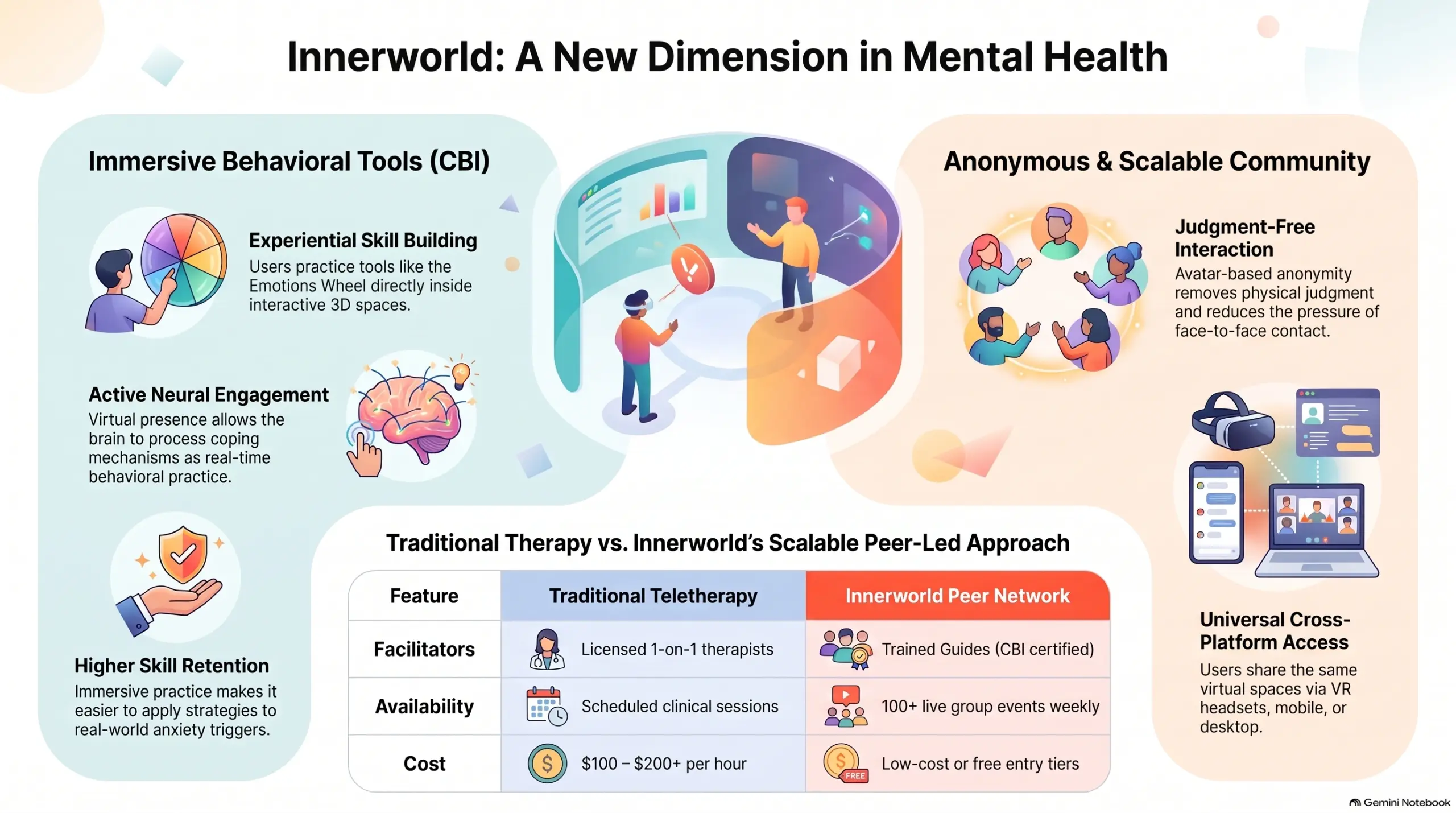
Accessible via mobile, tablets, desktops, and Meta Quest VR headsets, this “virtual mental health community” ensures anonymity via customizable avatars. Users attend 100+ weekly mental health events, support groups, courses, and meditations led by trained Guides. Innerworld uniquely combines immersive environments, community support, and structured behavioral tools.
A. Cognitive Behavioral Immersion™ as the Core Experience
Founder Noah Robinson developed Innerworld during his Clinical Psychology Ph.D. research at Vanderbilt University, adapting Aaron T. Beck’s Cognitive Behavioral Therapy (CBT) with Cognitive Behavioral Immersion™ (CBI) and Greenberger & Padesky’s Five-Part Model into immersive 3D environments linking thoughts, emotions, behaviors, bodily sensations, and environmental context.
- Experiential Skill Building: Users do not merely read about cognitive reframing or emotional regulation; they practice using structured tools (such as the Emotions Wheel, Thought Records, and the Wise Mind concept) directly inside interactive 3D spaces.
- Active Neural Engagement: Utilizing virtual environments heightens spatial presence, allowing the brain to process coping mechanisms as real-time behavioral practice rather than abstract concepts.
- Higher Skill Retention: Experiencing CBT principles inside immersive worlds helps bridge the translational void, making it easier for users to apply these behavioral strategies when encountering real-world anxiety triggers.
B. Anonymous Avatar-Based Social Interaction
One of the biggest barriers to seeking mental health support is the stigma, social anxiety, and fear of judgment associated with traditional therapy rooms or video calls. Innerworld solves this through complete avatar-based anonymity.
- Removal of Physical Judgment: Users customize 3D avatars to represent themselves in virtual worlds. This hides physical appearance, age, socioeconomic background, and personal home environments, eliminating visual judgment.
- Reduced Social Anxiety: Sharing vulnerabilities through an avatar lowers psychological defenses and alleviates the intense pressure of face-to-face eye contact, enabling participants to open up much faster than on traditional 2D video calls.
- Spatial Audio Connection: Despite visual anonymity, live spatial voice chat maintains the warmth, emotional inflection, and natural directional cues of real-world human conversation.
C. Guide-Led Peer Support Instead of Therapy
Instead of positioning itself purely as a clinical teletherapy platform constrained by high per-session fees and therapist shortages, Innerworld operates primarily as a guided peer support network.
| Operational Feature | Traditional Clinical Teletherapy | Innerworld Guided Peer Network |
| Primary Facilitators | Licensed 1-on-1 therapists | Trained Guides certified in CBI protocols |
| Delivery Model | Individual scheduled clinical sessions | 100+ live, on-demand group events per week |
| Cost & Scalability | $100 – $200+ per hour session | Low-cost subscription / free entry tiers |
| Community Dynamic | Isolated provider-to-patient link | Shared group processing & peer empathy |
This operating model shifts the focus from one-to-one clinical treatment toward scalable, structured peer support, with trained facilitation and recurring group experiences supporting consistent engagement.
- Extensive Guide Training: Innerworld Guides are non-clinical facilitators who undergo rigorous training in Cognitive Behavioral Immersion™ (CBI) and receive continuous supervision from licensed mental health professionals.
- High-Frequency Support Groups: Members gain access to over 100 live group events every week covering specific topics including general anxiety, depression, ADHD, grief, trauma, and stress management.
- Scalable Care Delivery: By leveraging peer support and group dynamics led by trained Guides, Innerworld delivers continuous mental health skill-building at a fraction of the cost of traditional private therapy.
D. Persistent Virtual Spaces for Mental Wellness
Unlike mobile apps that feel like isolated tools, Innerworld offers a persistent, 24/7 virtual environment where participants physically interact with visual tools inside the virtual worlds including Chain Analysis boards, DEAR MAN communication scripts, Thought Records, the STOP technique, Pro/Con Charts, and the Yerkes-Dodson stress curve.
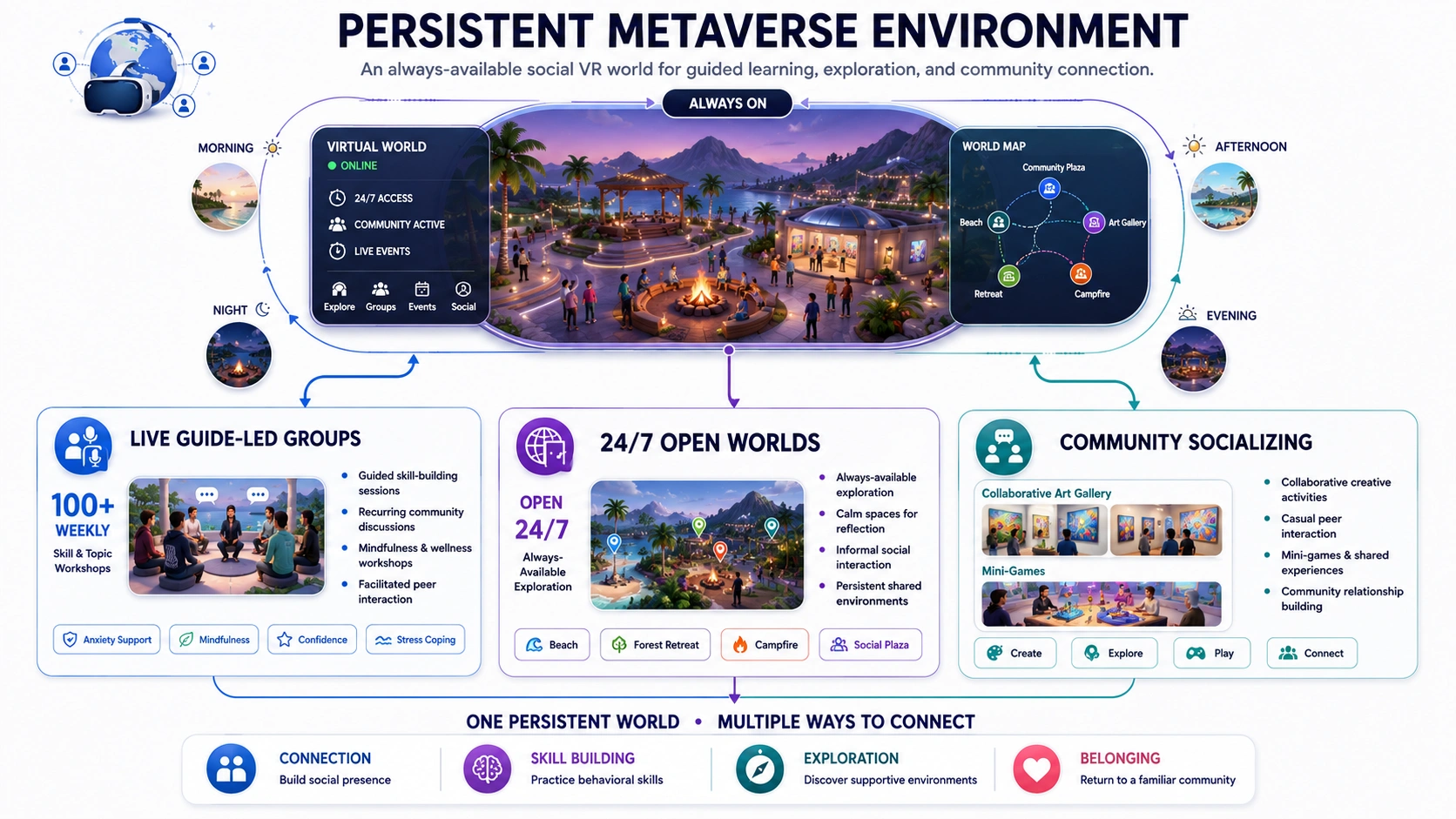
These persistent spaces extend support beyond scheduled sessions, combining structured behavioral tools, safe social interaction, and low-pressure activities within an always-available virtual community.
- Diverse Therapeutic Environments: Members can gather around a virtual campfire, relax on a sandy beach, explore peaceful mazes, or visit art galleries designed for creative expression and relaxation.
- 24/7 Safety Net & Guardians: The platform incorporates continuous 24/7 live facilitation (“Guardians”), strict community guidelines, proactive safety monitoring, and therapist oversight to ensure virtual spaces remain troll-free, safe, and supportive.
- Interactive Community Games: Beyond structured support groups, users can engage in low-pressure social games (such as Connect 4, 3D Tic-Tac-Toe, or drawing) that facilitate organic, non-clinical social connections and combat everyday loneliness.
E. Cross-Platform Accessibility & Medical XR
A common barrier for virtual reality platforms is hardware friction. Innerworld’s ecosystem integrates with broader digital health platforms like XRHealth, solidifying its role in the evolving medical XR (extended reality) landscape and corporate wellness programs.
- Full Cross-Play Compatibility: Users on Meta Quest VR headsets, iOS smartphones/tablets, Android devices, and desktop PCs share the exact same virtual spaces and live events in real time.
- Frictionless Entry: Members who do not own a VR headset can join group sessions on a phone or laptop, benefiting from avatar-based interaction, spatial environments, and guide-led skill building without buying expensive hardware.
- Continuous Mobility: Users can attend structured group events on a VR headset at home, then log in via their mobile device to access mood journaling, community chats, or support groups while on the go.
Core Features of an Innerworld-Like Mental Health VR App
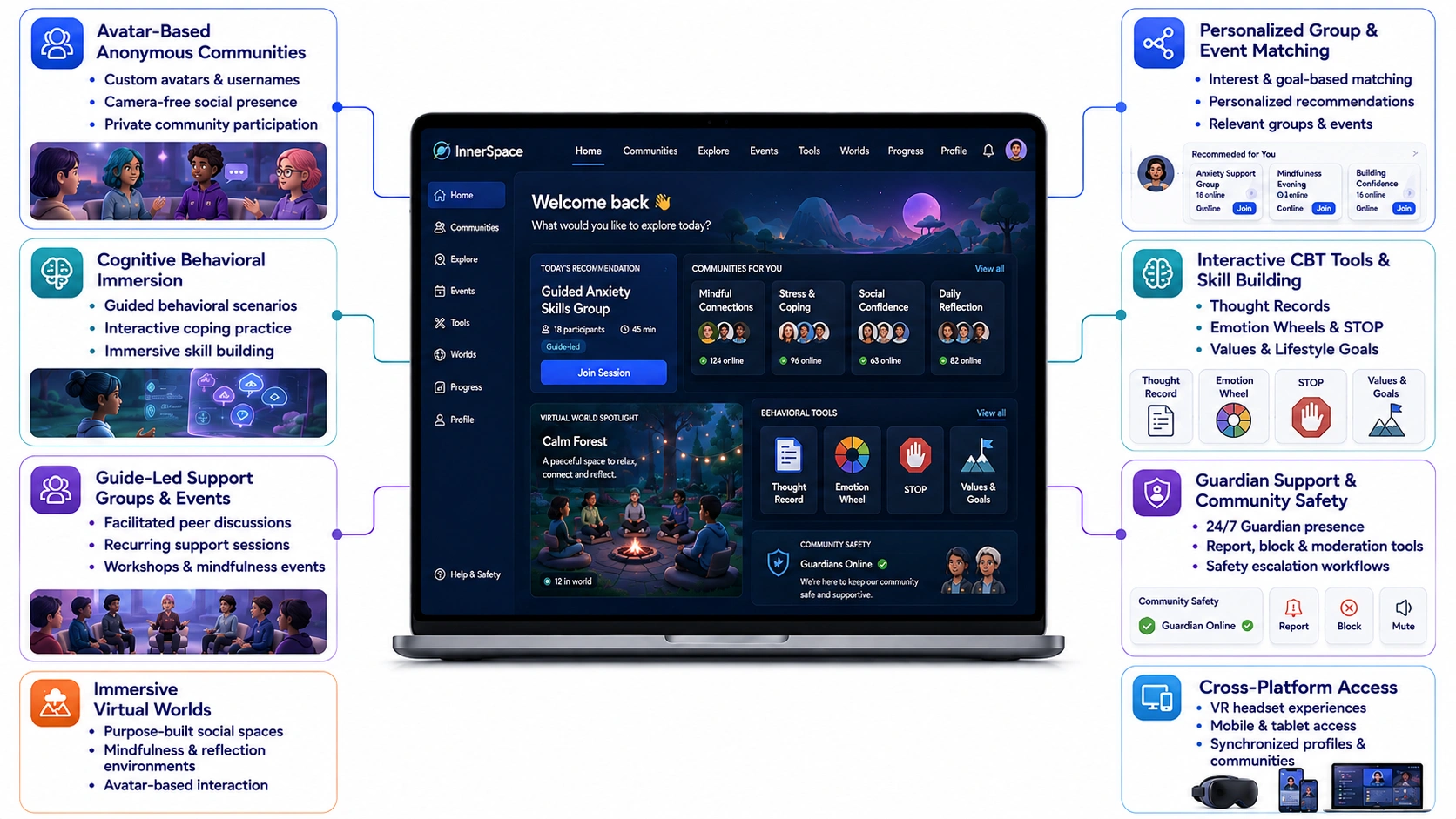
An Innerworld-like mental health VR app combines anonymous social interaction, immersive environments, behavioral tools, guided peer support, personalization, safety systems, and cross-platform access to create a connected digital mental health community.
1. Avatar-Based Anonymous Mental Health Communities
Customizable avatars and usernames enable anonymous participation without requiring camera-based interaction, creating avatar-based social presence in virtual communities. This approach can reduce hesitation around discussing sensitive experiences while allowing users to build connections, join groups, and participate without revealing their real identity.
2. Cognitive Behavioral Immersion Tools
Cognitive Behavioral Immersion (CBI) combines CBT principles with immersive experiences to make behavioral skill-building more interactive. The mental health VR app can use guided scenarios, coping techniques, and structured exercises within virtual environments, helping users practice mental health skills through active participation rather than passive content consumption.
3. Guide-Led Support Groups and Live Mental Health Events
Guide-led support groups provide structured human interaction through recurring sessions, workshops, educational events, meditations, and peer discussions. Trained Guides can facilitate conversations, introduce behavioral techniques, and maintain group structure while clearly remaining separate from licensed therapists or psychiatrists.
4. Immersive Virtual Worlds for Mental Health Support
Immersive virtual worlds create dedicated spaces for peer connection, behavioral practice, mindfulness, and social activities. Purpose-built 3D environments, virtual rooms, creative spaces, and guided experiences can use spatial interaction and avatar presence to make mental health support more engaging than conventional 2D applications.
5. Personalized Group and Event Matching
Personalized group and event matching helps users discover relevant support experiences based on their needs, interests, goals, and reported challenges. Onboarding assessments and recommendation logic can connect users with suitable events, groups, Guides, and recurring sessions while making a large community easier to navigate.
6. Interactive CBT Tools and Behavioral Skill Building
Interactive CBT tools turn evidence-based techniques into practical behavioral exercises users can complete within the platform. Features such as Thought Records, Emotion Wheels, STOP techniques, Values and Goals, and Lifestyle Balance can support self-reflection, coping practice, and structured skill development.
7. 24/7 Guardian Support and Community Moderation
24/7 Guardian support provides a human-led safety layer for users participating in vulnerable mental health conversations. Community guidelines, reporting and blocking tools, moderation workflows, escalation procedures, and Guardian oversight can help maintain a controlled environment while clearly defining the platform’s non-clinical support boundaries.
8. Cross-Platform Access Across VR, Mobile and Desktop
Cross-platform access allows users to participate through Meta Quest and other VR experiences alongside mobile, tablet, and desktop devices. Synchronized accounts, profiles, community access, and behavioral tools can extend the platform beyond VR owners while improving accessibility and expanding its potential user base.
How to Build a Mental Health VR App Like Innerworld
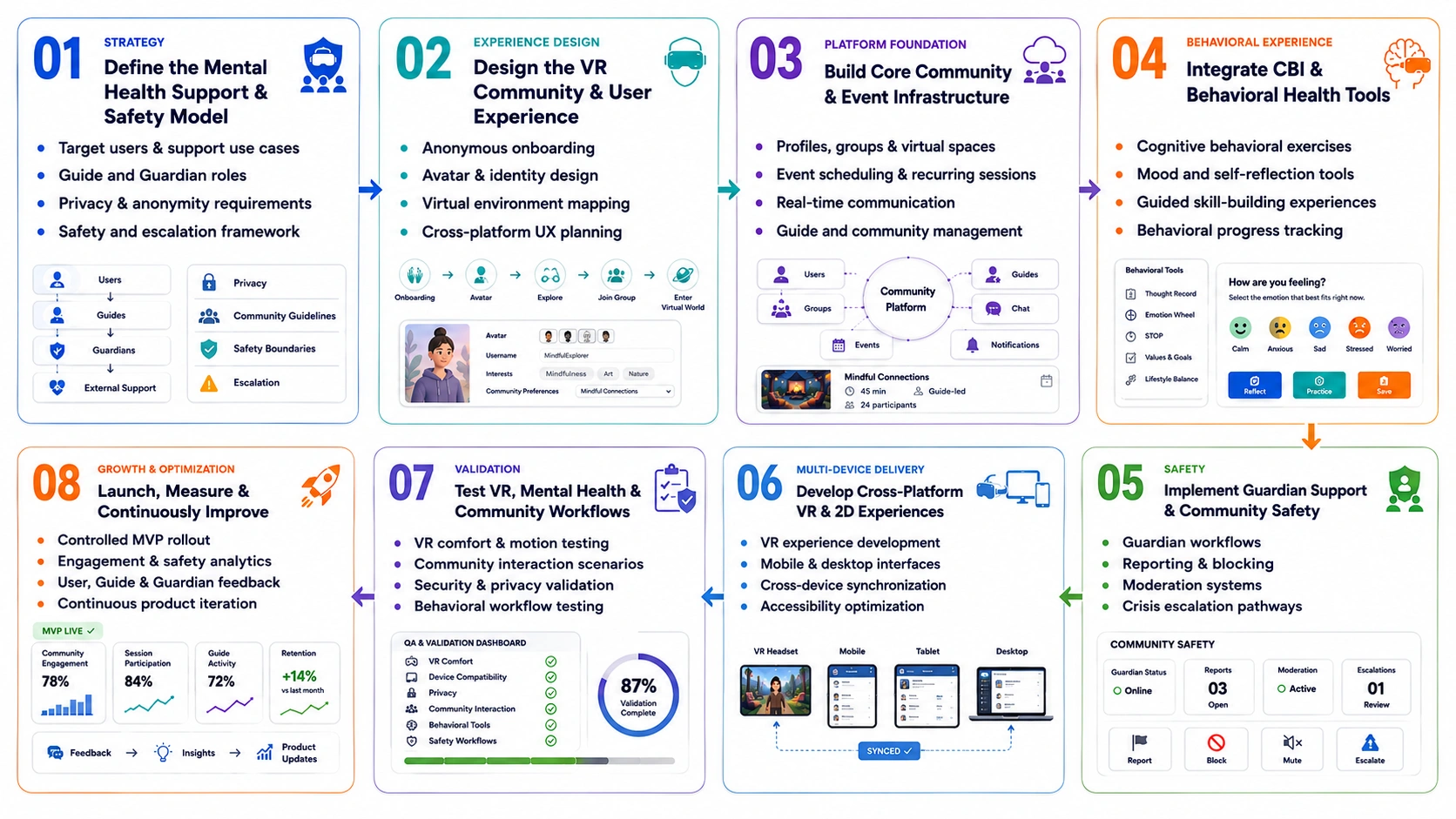
Building an Innerworld-like mental health VR app requires more than developing immersive 3D environments. The process must connect behavioral-health design, anonymous communities, live support, safety workflows, cross-platform delivery, and scalable technology.
1. Define the Mental Health Support and Safety Model
We first define the platform’s target users, mental health use cases, and support boundaries, then establish the roles of Guides and Guardians, privacy requirements, community guidelines, crisis protocols, and the behavioral framework.
- Target User Segmentation Analysis: Identifies primary mental health needs, usage patterns, and engagement expectations across different user groups.
- Safety Boundary Definition: Establishes clear limits between peer support, guided assistance, and professional mental health intervention pathways.
- Crisis Response Framework Design: Ensures structured escalation processes for high-risk situations, emergencies, and user distress signals.
- Privacy and Anonymity Architecture Planning: Defines data protection standards, identity masking, and secure user interaction protocols across the platform.
2. Design the VR Community and User Experience
Our designers map onboarding, anonymous profiles, customizable avatars, virtual environments, event discovery, group joining, and social interactions, ensuring the experience feels consistent across immersive VR and accessible 2D interfaces.
- User Onboarding Flow Design: Simplifies first-time access while reducing friction and improving early engagement within immersive environments.
- Avatar Customization System Planning: Enables users to express identity safely through flexible, inclusive, and emotionally supportive digital representations.
- Virtual Environment Mapping: Defines spaces for group interaction, relaxation, events, and guided mental health support sessions.
- Cross-Platform Experience Consistency: Ensures seamless interaction between VR headsets, mobile devices, and web-based user interfaces.
3. Build the Core Community and Event Infrastructure
Our developers build the platform foundation for user profiles, avatars, virtual spaces, event scheduling, live group sessions, recurring groups, Guide accounts, real-time communication, notifications, chat, and community management.
This table outlines the complete technology stack required to build a scalable, secure, and immersive mental health VR platform.
| Product Layer | Recommended Technologies | What It Handles |
| VR & 3D Experience | Unity, Unreal Engine, OpenXR | Immersive environments, virtual spaces, avatar interaction, spatial navigation, and VR experiences |
| Avatar & Virtual Identity | Unity/Unreal avatar systems, Ready Player Me or custom avatars | Customizable avatars, usernames, identity representation, animations, and social presence |
| Cross-Platform App | React Native, React, native SDKs where required | Mobile, tablet, desktop, account access, event discovery, behavioral tools, and non-VR participation |
| Backend & Data Layer | Node.js, Python, PostgreSQL, Redis | User profiles, groups, events, behavioral data, session state, recommendations, and application logic |
| Real-Time Social Layer | WebRTC, WebSockets | Live voice, text chat, group sessions, presence, notifications, and real-time community interaction |
| Virtual Event Infrastructure | WebRTC, WebSockets, event scheduling services | Guide-led sessions, recurring groups, event registration, participant management, and live-session coordination |
| Personalization & Matching | Python, recommendation algorithms, PostgreSQL | User assessments, interest matching, group recommendations, event discovery, and personalized experiences |
| Cloud & Content Delivery | AWS, Azure, or Google Cloud, CDN | 3D assets, media, user data, application hosting, storage, scaling, and reliable content delivery |
| Security & Privacy | OAuth 2.0, OpenID Connect, TLS, encryption, RBAC | Authentication, anonymous identities, access control, secure communication, and protection of sensitive user data |
Note: This stack is modular and scalable, allowing teams to iterate quickly, integrate new immersive features, and maintain strong performance, security, and user experience across VR and non-VR environments.
4. Integrate CBI and Behavioral Health Tools
We integrate CBT-based exercises and behavioral tools such as Thought Records, Emotion Wheels, STOP techniques, Values and Goals, and Lifestyle Balance, connecting structured skill-building with immersive and group experiences.
- Cognitive Behavioral Tool Integration: Embeds structured mental health exercises directly into user journeys and daily platform interactions.
- Emotional Tracking System Implementation: Enables users to monitor mood patterns and reflect on psychological states over time.
- Guided Self-Help Module Development: Provides step-by-step therapeutic exercises within immersive VR and 2D environments.
- Behavioral Progress Analytics Setup: Measures user engagement with mental health tools and tracks improvement over time.
5. Implement Guardian Support and Community Safety
Our team implements 24/7 Guardian workflows, community guidelines, reporting and blocking, moderation, escalation procedures, and crisis-resource pathways to protect users while maintaining clear boundaries between peer support and professional therapy.
- Real-Time Moderation System Deployment: Ensures continuous monitoring of conversations, interactions, and community behavior for safety.
- User Reporting and Blocking Mechanisms: Allow individuals to quickly manage harmful interactions and maintain personal safety control.
- Crisis Escalation Workflow Design: Routes high-risk cases to trained Guardians and external support resources when necessary.
- Community Guideline Enforcement Framework: Ensures consistent behavioral standards and safe engagement across all platform activities.
6. Develop Cross-Platform VR and 2D Experiences
We develop Meta Quest and other VR experiences alongside mobile, tablet, and desktop access, synchronizing profiles, communities, and behavioral tools while adapting interaction models, performance, and accessibility for each device.
- Cross-Device Synchronization Architecture: Ensures consistent user data, progress, and community access across all supported platforms.
- VR Performance Optimization Strategy: Improves frame rates, reduces latency, and enhances comfort for immersive mental health experiences.
- Adaptive Interface Design Implementation: Tailors user interactions for VR headsets, mobile screens, and desktop environments.
- Accessibility Compliance Integration: Ensures inclusive design for users with different physical, cognitive, and emotional needs.
7. Test Mental Health, VR, and Community Workflows
Our QA team tests VR comfort, accessibility, real-time sessions, avatar privacy, behavioral tools, moderation scenarios, escalation workflows, device compatibility, security, and community interactions before exposing the platform to a wider user base.
- VR Comfort and Motion Testing: Ensures users experience minimal motion sickness and maintain emotional stability during sessions.
- Community Interaction Scenario Testing: Validates group dynamics, communication flows, and social engagement within virtual environments.
- Security and Privacy Validation: Checks data protection, identity safety, and secure communication across all platform layers.
- Behavioral Workflow Testing: Ensures mental health tools function correctly under real-world usage and edge-case conditions.
8. Launch, Measure, and Improve the Platform
We launch through controlled MVP releases, onboard initial Guides and communities, monitor retention, session participation, group engagement, behavioral-tool usage, safety incidents, and user feedback, then use these insights to prioritize product improvements.
- Controlled MVP Rollout Strategy: Enables gradual user onboarding while minimizing operational and safety risks during early adoption.
- User Engagement Analytics Tracking: Measures participation in sessions, groups, and behavioral health activities across the platform.
- Feedback Collection and Analysis System: Gathers insights from users, Guides, and Guardians to guide product improvements.
- Continuous Iteration Framework: Prioritizes feature updates based on safety metrics, engagement data, and mental health outcomes.
Cost to Build a Mental Health VR App Like Innerworld
The cost to build a mental health VR app like Innerworld depends on its VR complexity, platform coverage, behavioral health features, community infrastructure, safety systems, and scalability requirements. Understanding these cost drivers helps businesses plan realistic budgets and prioritize the right MVP features.
Development costs can vary significantly based on the number of virtual environments, real-time features, integrations, and supported devices. A well-defined MVP scope can help control initial investment while creating a foundation for future platform expansion.
Phase-Wise Mental Health VR App Development Cost
The following breakdown estimates development costs by phase, showing how the budget can expand from a focused MVP to an enterprise-grade mental health VR platform. Each phase contributes to the platform’s overall functionality, scalability, security, and user experience.
| Development Phase | Estimated Cost (MVP → Enterprise) | What the Phase Covers |
| Product Discovery & Planning | $5,000 – $40,000 | Defines target users, mental health use cases, product scope, support model, workflows, and technical architecture. |
| UI/UX & VR Experience Design | $8,000 – $80,000 | Designs onboarding, avatars, virtual environments, navigation, events, community flows, and cross-platform user experiences. |
| VR & 3D Development | $20,000 – $300,000 | Builds immersive environments, avatar interaction, spatial navigation, virtual spaces, and core Meta Quest experiences. |
| Backend Infrastructure | $15,000 – $200,000 | Develops profiles, groups, events, Guide accounts, behavioral data, databases, APIs, and community management infrastructure. |
| Real-Time Communication | $10,000 – $120,000 | Implements voice, chat, presence, live group sessions, participant management, and real-time social interactions. |
| Behavioral Health Tools | $8,000 – $150,000 | Integrates CBT exercises, Thought Records, Emotion Wheels, STOP techniques, mindfulness, and structured skill-building workflows. |
| Safety & Guardian Systems | $10,000 – $150,000 | Builds moderation, reporting, blocking, Guardian workflows, escalation procedures, community guidelines, and safety controls. |
| Cross-Platform Development | $15,000 – $250,000 | Extends the platform across VR, mobile, tablet, and desktop with synchronized profiles, communities, and platform-specific experiences. |
| Testing & Launch | $8,000 – $120,000 | Covers VR usability, accessibility, privacy, security, device compatibility, real-time reliability, and safety workflow testing. |
| Total Estimated Cost | $80,000 – $2,000,000 | Complete end-to-end development covering the phases above, with the final cost depending on platform scope, complexity, integrations, and scalability requirements. |
Note: These ranges are indicative because development phases can overlap and costs depend heavily on feature depth, team location, VR complexity, number of supported platforms, compliance requirements, and third-party services. Enterprise builds may also require substantial ongoing infrastructure and maintenance costs.
Development Cost According to Platform Level
The mental health VR app development cost varies based on platform scope, feature complexity, supported devices, and scalability requirements. The following estimates provide a practical budget range for MVP, mid-level, and enterprise-grade platforms.
| Level | Estimated Range | Scope Definition |
| True MVP (limited VR + chat) | $80K – $150K | Basic VR environment, simple avatars, voice/chat, minimal backend, no advanced safety or clinical systems |
| Functional v1 (Innerworld-lite) | $150K – $400K | Multi-room VR, persistent avatars, real-time voice, basic moderation, early safety workflows, scalable backend foundation |
| Scaled Product | $400K – $900K | Multi-platform VR (Quest/PC/mobile), advanced moderation, structured community systems, CBT-inspired tools, content expansion pipeline |
| Enterprise Mental Health VR Platform | $900K – $2M+ | Clinical-grade safety systems, compliance (HIPAA/GDPR), 24/7 moderation, analytics, global scaling, redundancy, enterprise integrations |
Note: These mental health VR app development cost estimates reflect typical end-to-end development costs and may vary based on team location, VR complexity, AI/ML features, regulatory needs, and clinical validation or healthcare partnerships. Ongoing costs like moderation, cloud infrastructure, and safety staffing are not included.
Factors That Influence Development Budget
Several technical and product decisions directly impact the cost of building a mental health VR app like Innerworld. Defining these early helps set a realistic MVP scope, infrastructure needs, and long-term budget.
- Immersive VR Worlds & Avatar Ecosystem: Custom 3D environments, avatar creation, animations, interactive objects, and advanced customization require specialized artists and Unity/Unreal developers, typically adding $25,000–$150,000+.
- Real-Time Multiplayer & Social Infrastructure: Synchronized avatars, spatial voice chat, live events, and scalable networking architecture drive backend complexity, with costs ranging from $30,000–$200,000+.
- Cross-Platform VR Compatibility & Optimization: Supporting Meta Quest, PC VR, SteamVR, mobile, and web requires platform-specific optimization, performance tuning, and extensive QA, typically costing $20,000–$120,000+.
- Guide, Guardian & Safety Management Systems: Session management, moderation dashboards, user monitoring, reporting tools, and escalation workflows increase engineering effort, adding approximately $15,000–$100,000+.
- Spatial Voice Communication & Live Collaboration: WebRTC-based voice chat, private calls, group audio, latency optimization, and network infrastructure typically contribute $10,000–$80,000+.
- Clinical Validation, Privacy & Safety Compliance: Clinical content reviews, safety validation, HIPAA-ready privacy controls, documentation, and expert consultation generally add $10,000–$75,000+.
Compliance Requirements For Mental Health VR App Development
Mental health VR platforms can handle highly sensitive health information, behavioral data, voice interactions, and user-generated content. Compliance therefore depends on the platform’s users, business model, claims, data flows, geographic markets, and whether the product functions as a regulated medical device.
| Compliance Area | What to Apply | Requirements to Address |
| HIPAA Privacy & Security | HIPAA Privacy & Security Rule, HIPAA Breach Notification Rule | Implement PHI safeguards, access controls, BAAs, risk management, and breach notifications. |
| GDPR & Special-Category Health Data | GDPR (EU General Data Protection Regulation), Article 9 Health Data Provisions | Establish lawful basis, Article 9 compliance, DPIAs, data minimization, and transfer safeguards. |
| FTC Health Breach Notification Rule | FTC Health Breach Notification Rule | Maintain breach detection, security safeguards, and timely notifications to users, FTC, and media. |
| FDA Digital Health & Medical Device Rules | FDA Software as a Medical Device (SaMD) Regulations, Digital Health Guidance | Determine SaMD classification, document intended use, implement quality controls, and support regulatory submissions. |
| State Health Privacy & Consumer Privacy Laws | U.S. State Privacy Laws (e.g., CCPA/CPRA and other state-level health data laws) | Ensure consent, sensitive data protection, consumer rights, and compliant service agreements. |
| 42 CFR Part 2 | 42 CFR Part 2 (Substance Use Disorder Confidentiality Regulations) | Enforce Part 2 confidentiality, restrict disclosures, and securely manage substance use records. |
| Children’s Privacy Requirements | COPPA and equivalent global child privacy laws | Implement age verification, parental consent and child privacy safeguards. |
Note: Compliance requirements vary by product scope, user demographics, data practices, and target markets. Conduct legal and regulatory reviews early to identify applicable obligations, reduce launch risks, and establish privacy, security, and safety controls.
Practical Challenges in Building a Mental Health VR App
Building an Innerworld-like mental health VR app development involves complex engineering challenges beyond typical app development. Developers must address VR hardware limitations, real-time networking issues, cross-platform compatibility, and system reliability while ensuring a smooth and emotionally safe user experience.
1. VR Hardware Performance Optimization
Challenge: Supporting multiple VR devices with varying GPU power, memory limits, refresh rates, and tracking systems while maintaining consistent immersive performance.
Solution: We optimize rendering using LOD systems, baked lighting, occlusion culling, and shader simplification. Our developers also apply device-specific performance profiles, dynamic resolution scaling, and adaptive frame-rate fallback modes for smooth cross-device VR experiences.
2. Real-Time VR Networking and Synchronization
Challenge: Maintaining synchronized avatars, voice, gestures, and spatial positioning in real time despite latency, packet loss, and network jitter disruptions.
Solution: Our developers implement UDP-based networking, predictive interpolation, state reconciliation, and region-based servers. We also use lag compensation and fallback synchronization states to preserve continuity and immersion during unstable network conditions.
3. Cross-Platform VR Compatibility and Engine Updates
Challenge: Frequent updates to Unity/Unreal engines, VR SDKs, and device firmware can break features and create compatibility issues across platforms.
Solution: We use modular architecture, strict version control, automated regression testing, and CI/CD pipelines. Our developers run staged rollouts and multi-device testing to detect and fix compatibility issues before production deployment.
Build Your Mental Health VR App with IdeaUsher
IdeaUsher is an elite product engineering partner and spatial computing innovator with 11+ years of hyper-focused industry mastery across 50+ countries. Driven by 250+ niche experts, over 1,000+ completed projects, and a top-tier 4.9/5 Clutch credential, we construct custom immersive mental health platforms entirely from scratch.
We avoid generic templates, handcrafting scalable VR ecosystems with Cognitive Behavioral Immersion (CBI) frameworks, anonymous avatar networking, real-time spatial audio, and HIPAA-compliant data pipelines to secure your digital wellness market dominance.
Why Enterprises Partner With Us
Mental health providers, digital therapeutics startups, and healthcare networks choose us to build Innerworld-like VR platforms because we seamlessly convert clinical peer support, CBT principles, and social interaction into secure, immersive virtual worlds.
- CBT-Driven Immersive Therapy Experiences: We build interactive 3D CBT environments, mindfulness tools, guided skill modules, and evidence-based interventions that strengthen emotional resilience and psychological safety.
- Anonymous Social VR & Spatial Networking: We create low-latency multiplayer environments, customizable avatars, spatial audio systems, and expression tracking to enable authentic peer support while preserving anonymity.
- Cross-Platform VR & Mobile Experiences: We develop optimized Unity/Unreal applications for Meta Quest, PC VR, iOS, and Android, ensuring smooth performance across devices.
- AI Safety Guardrails & Community Moderation: We implement layered AI moderation, crisis escalation flows, content filtering, and role-based tools to help Guides maintain safe virtual communities.
- HIPAA-Compliant Cloud Infrastructure: We architect encrypted cloud systems that protect PHI, user data, and platform services through secure storage, isolated runtimes, and enterprise-grade controls.
- Zero Vendor Lock-In Delivery: We deliver clean, fully documented, auditable source code after mental health VR app development, ensuring full platform ownership and long-term deployment flexibility.
Ready to pioneer the future of accessible, community-driven mental health with a custom VR platform? Partner with Idea Usher’s principal spatial computing and digital health architects to map out your product build today.
Conclusion
A mental health VR app development like Innerworld requires a careful balance of immersive technology, anonymous community interaction, behavioral health tools, live support, safety systems, and cross-platform accessibility. The right development partner can turn these requirements into a scalable product without losing sight of user privacy, clinical boundaries, or real-world usability. IdeaUsher can help you define the product scope, design the VR experience, integrate behavioral tools, build secure infrastructure, and prepare your platform for launch and future growth.
FAQs
A.1. A mental health VR app development can cost around $80K to $2M+, depending on VR complexity, behavioral tools, real-time communities, safety systems, supported platforms, integrations, and scalability requirements.
A.2. A mental health VR app development should include anonymous avatars, immersive environments, live support groups, CBT-based tools, personalized matching, behavioral exercises, Guardian support, moderation, and cross-platform access.
A.3. Privacy requires anonymous identity options, encrypted communication, secure authentication, role-based access, data minimization, controlled permissions, and secure storage for sensitive behavioral and mental health information.
A.4. HIPAA requirements depend on the platform’s business model, users, partners, and handling of protected health information. A privacy assessment should determine applicable healthcare regulations before architecture and data workflows are finalized.