

Key Takeaways
- AI-powered cancer risk assessment platforms analyze patient history, symptoms and clinical data to identify cancer risks earlier and improve diagnostic accuracy.
- Core capabilities include AI risk scoring, multi-cancer detection, clinical decision support, referral automation and seamless EMR integration.
- Predictive oncology enables earlier intervention, faster referrals and improved patient outcomes while reducing unnecessary investigations and diagnostic delays.
- Healthcare interoperability, explainable AI, regulatory compliance and secure clinical workflows are essential for building scalable oncology platforms.
- How Idea Usher can help you build cancer risk assessment platform like C the Signs with AI-powered clinical decision support, predictive oncology models.
Cancer diagnosis is often delayed not because clinical evidence is unavailable, but because meaningful patterns remain hidden across fragmented patient data. This reality is accelerating demand for the cancer risk assessment tool like C the Signs as healthcare organizations move beyond symptom-based evaluations toward platforms that continuously analyze risk factors, clinical history and population health data to identify cancer earlier.
Traditional cancer assessment relied on symptom recognition and manual guideline reviews, often delaying diagnosis for non-specific presentations. Modern healthcare platforms increasingly combine AI-powered cancer risk assessment, clinical decision support, population risk stratification, tumor origin prediction, AI-driven referral automation, longitudinal monitoring, EMR integration, FHIR/HL7 interoperability, and evidence-based guidelines to accelerate accurate, consistent clinical decision-making.
In this blog, we explore how to build a cancer risk assessment tool like C the Signs, covering its key features, AI architecture, technology stack, development process, and how IdeaUsher can help build enterprise-grade oncology intelligence platforms that enable predictive, data-driven cancer detection and earlier clinical intervention.
Why AI Cancer Risk Platforms Are Growing Fast
The global AI in oncology market is valued at $8.3 billion in 2026 and is projected to reach $38.9 billion by 2033, growing at a 24.8% CAGR. Software and predictive risk platforms generate over 63% of market revenue, while cancer screening and early diagnostics account for 37.3%, reflecting rapid AI adoption across oncology.
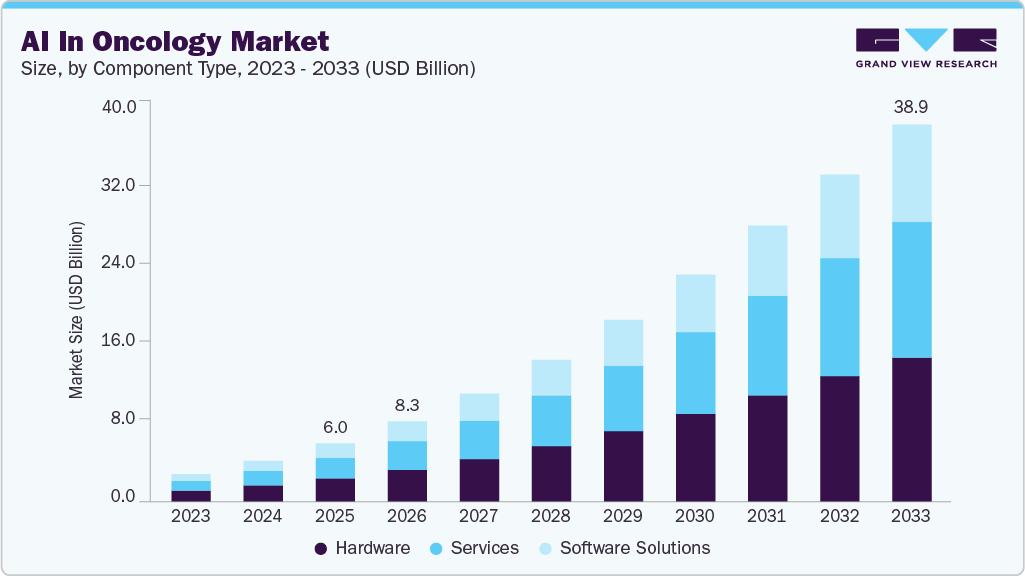
As adoption accelerates, oncology is shifting from reactive treatment to AI-driven risk stratification. With over 20 million new cancer cases annually and persistent shortages of radiologists and pathologists, healthcare providers are deploying machine learning models to identify high-risk individuals before symptoms develop.
A. The Shift From Symptom Checks to Predictive Risk Analysis
Traditional cancer screening guidelines rely primarily on static, population-wide demographics, predominantly age and family history. However, this coarse sorting leaves significant gaps, misclassifying high-risk younger adults as low-risk while subjecting low-risk individuals to unnecessary, high-friction procedures.
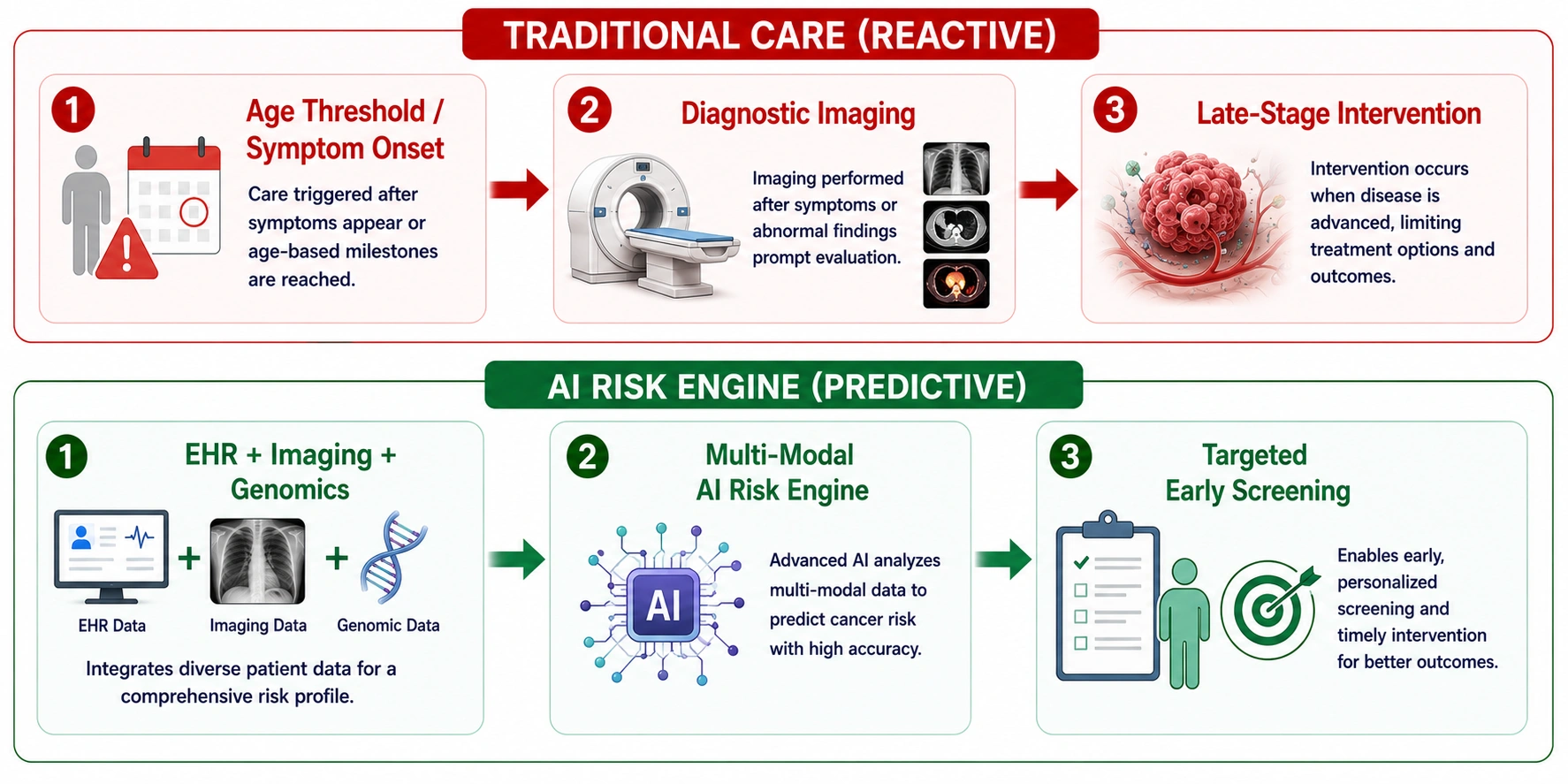
Predictive AI platforms replace static age brackets with dynamic, high-dimensional risk modeling:
- Multi-Modal Data Ingestion: The platform first combines EHR histories, polygenic risk scores (PRS), lifestyle factors, and subtle imaging biomarkers from routine mammograms and low-dose CT scans.
- Sub-Perceptual Pattern Recognition: AI then analyzes these datasets using deep learning models, achieving 89% pooled sensitivity and an AUC of 0.93 to detect structural and cellular abnormalities beyond human visual resolution.
- Longitudinal Risk Forecasting: Instead of a binary diagnosis, the platform generates time-based risk predictions, such as a 35% higher 5-year risk of invasive breast or lung cancer, enabling personalized surveillance.
- Extended Detection Lead Times: Finally, AI identifies subtle tissue density changes and nodule transformations 1–2 years earlier than conventional radiologist review, supporting earlier clinical intervention.
B. Why Healthcare Systems Need Earlier Cancer Detection
For hospital networks, payers, and health systems, expanding early detection capacity is both a clinical imperative and an economic necessity:
- The Survival Disparity: Detecting cancer at Stage I or II delivers 5-year survival rates above 90%, while Stage IV diagnoses reduce survival to 20–30% for major cancers, including lung, colorectal, and pancreatic.
- Bending the Oncology Cost Curve: Advanced-stage treatments, including targeted immunotherapies and prolonged ICU care, cost $100,000–$250,000+ per patient. Early-stage surgery or localized radiation is significantly more cost-effective.
- Mitigating Specialist Shortages: With growing shortages in oncology and radiology, AI-assisted imaging reduces radiologists’ interpretation and documentation workloads by 40–45%, enabling greater focus on complex cases while maintaining diagnostic throughput.
C. Where AI Fits Into Modern Oncology Workflows
Modern oncology increasingly relies on AI to augment clinical decision-making rather than replace physicians. By integrating with existing healthcare systems, AI continuously analyzes patient data, imaging, pathology, and clinical records to identify risks, improve diagnostic accuracy, and optimize treatment pathways across the care continuum.
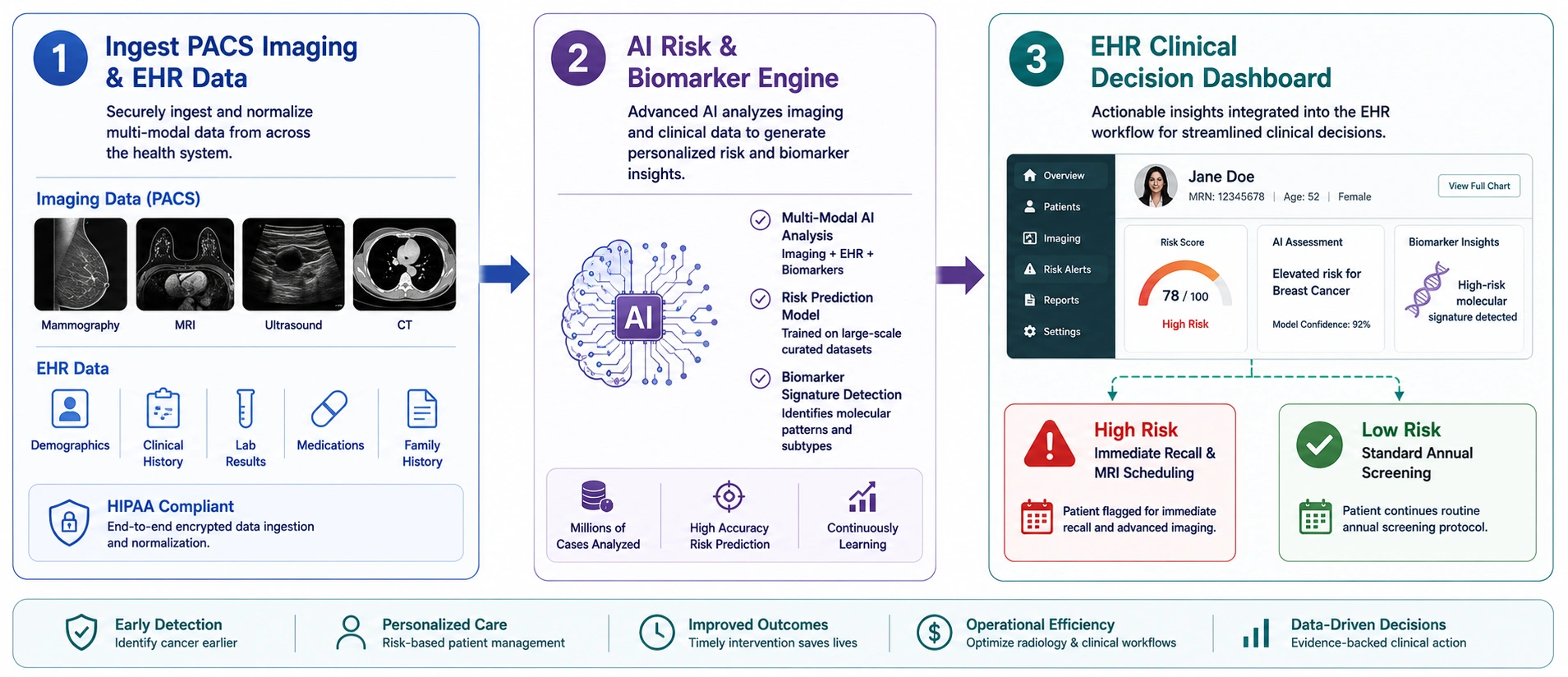
From screening to treatment selection, AI capabilities deliver measurable improvements in clinical accuracy, operational efficiency, and patient outcomes throughout oncology workflows.
| Workflow Stage | Primary AI Feature Extraction | Measurable Clinical & Operational Impact |
| Population Triage | Automated EHR mining for unflagged familial and genetic risk factors. | Identifies high-risk patients who miss standard screening guidelines. |
| Diagnostic Imaging | Computer vision nodule classification and density scoring (CT/Mammography). | Increases cancer detection yields by 17.6% while reducing false positives by up to 20%. |
| Endoscopy & Pathology | Real-time computer vision during colonoscopies and whole-slide pathology scans. | Increases adenoma detection rates (ADR) by 14% to 20%, catching precancerous polyps early. |
| Precision Matching | Natural language processing (NLP) trial matching engines. | Achieves 90.5% sensitivity in matching eligible patients to targeted clinical trials. |
These AI capabilities illustrate how intelligent decision support enhances every stage of the oncology workflow. Understanding how these technologies work together provides the foundation for exploring what a cancer risk assessment tool like C the Signs is and how it delivers earlier, more accurate clinical decisions.
What is a Cancer Risk Assessment Tool Like C the Signs
C the Signs is an AI-powered cancer risk assessment and clinical decision support platform that helps clinicians identify cancer risk earlier and more accurately. Instead of relying only on symptom checklists, it analyzes 1,000+ validated clinical data points, including symptoms, risk factors, demographics, lifestyle, and medical history, to recommend the most appropriate diagnostic or referral pathway in under 60 seconds.
The platform integrates with EMR systems such as EMIS, SystmOne, and Vision, creating an AI-driven early cancer detection ecosystem. It detects 100+ cancer types, predicts likely tumor origin, and recommends evidence-based investigations using validated pathways. Having identified 70,000+ cancer patients, it delivers 99% sensitivity and 94% tumor-origin prediction accuracy, enabling faster diagnoses and improved outcomes.
A. The Core Purpose Behind C the Signs
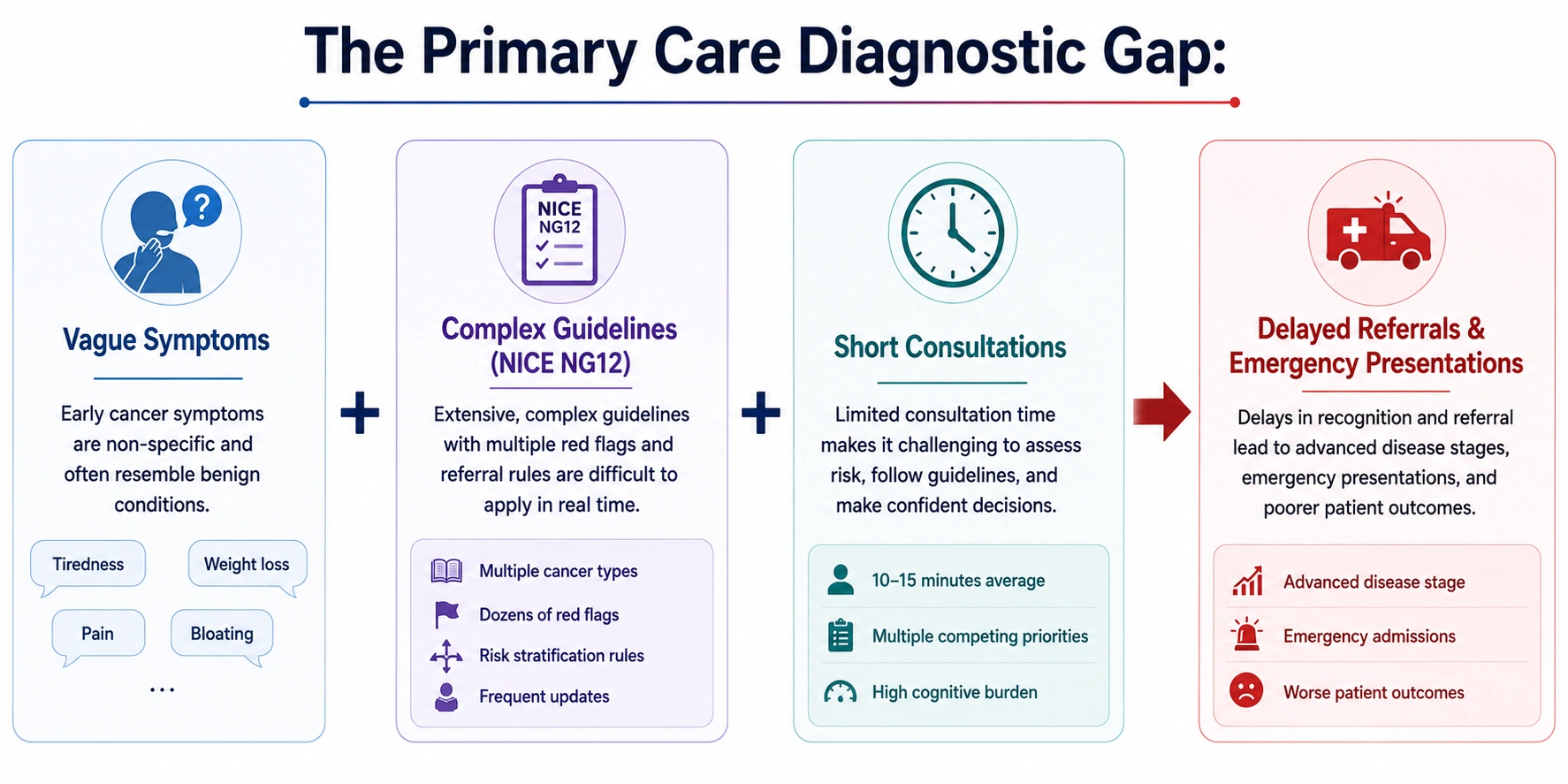
The primary mission of C the Signs is to eliminate late-stage cancer diagnoses and close the observational gaps that occur during routine primary care visits. Healthcare providers face systemic hurdles that delay cancer detection:
By cross-referencing tens of thousands of academically validated data points, C the Signs acts as a real-time clinical co-pilot, ensuring clinicians consider lesser-known cancers and order the correct diagnostic tests on day one.
- Symptom Complexity & Cognitive Overload: Many aggressive malignancies do not present with obvious “red flag” symptoms until they reach advanced stages. Expecting clinicians to memorize thousands of evolving referral guidelines across every organ system introduces risk of missed cues.
- The Diagnostic Delay Window: Patients often make multiple primary care visits with subtle, evolving symptoms before an urgent cancer referral is triggered. These cumulative delays allow tumors to progress from early, curable stages (Stage I/II) to late, metastatic stages (Stage III/IV).
- Emergency Presentation Reliance: Historically, a significant proportion of cancers are diagnosed only after patients present to emergency departments with severe complications, a pathway associated with lower survival rates and higher treatment costs.
- Inefficient & Inappropriate Referrals: Fragmented referral pathways lead to high volumes of inappropriate secondary care referrals. This clogs hospital diagnostic queues, inflating waitlists for high-risk patients.
B. How C the Signs Transforms the Cancer Diagnosis Journey
C the Signs integrates directly into existing EHR workflows (such as EMIS Web, SystmOne, and Vision) through a single-click toolbar, providing continuous decision support throughout the patient care lifecycle:
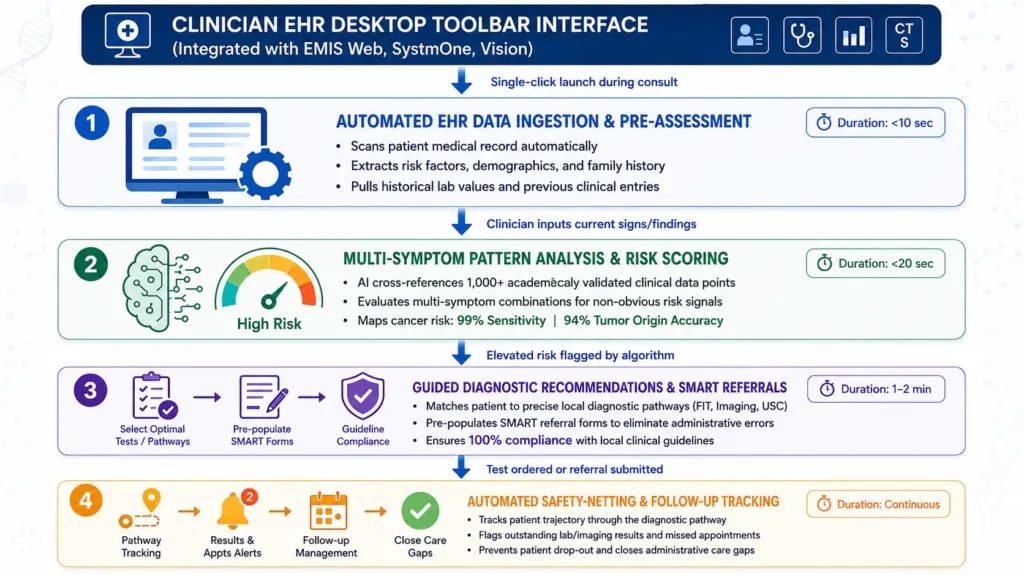
1. EHR Ingestion & Pre-Assessment (Duration: <10 Seconds)
During a patient consultation, the clinician opens C the Signs via a single-click desktop toolbar. The tool automatically scans the patient’s EHR history, pulling relevant risk factors, past lab results, family history, and demographic indicators.
2. AI Risk Analysis & Scoring (Duration: <20 Seconds)
The clinician inputs any current symptoms or physical examination findings. The AI algorithm cross-references these inputs against over 1,000 validated clinical data points, identifying subtle symptom combinations and mapping cancer risk with 99% sensitivity and 94% accuracy in predicting tumor origin.
3. Diagnostic Recommendations & Referrals (Duration: 1 to 2 Minutes)
If an elevated cancer risk is flagged, the platform recommends the precise local diagnostic pathway such as a Faecal Immunochemical Test (FIT), urgent imaging, or a specialist Urgent Suspected Cancer (USC) referral. It pre-populates SMART referral forms to ensure 100% clinical compliance.
4. Follow-Up & Safety-Net Tracking (Duration: Continuous)
Once a referral or test is ordered, the platform’s safety-netting module automatically tracks the patient’s progress. It flags outstanding test results or missed appointments, ensuring no patient falls through administrative gaps.
D. Why Healthcare Organizations Invest in Cancer Risk Assessment Tools
Deploying an AI cancer prediction platform delivers clear, measurable clinical, operational, and financial returns for integrated care systems, health authorities, and primary care networks:
| Value Dimension | Traditional Primary Care Model | C the Signs AI Platform Deployment | Measurable Impact & Strategic ROI |
| Cancer Detection Rate | Baseline detection subject to referral guidelines and clinician recall. | 12.3% increase in cancer detection rates across primary care populations. | Catches significantly more cancers at Stage I and II when 5-year survival reaches ~80%. |
| Diagnostic Speed | Multiple consultations spanning weeks or months. | Rapid risk assessment and pathway matching completed in under 30 seconds. | Reduces diagnostic time frames and speeds up treatment initiation. |
| Secondary Care Efficiency | High volume of non-specific or inappropriate urgent referrals. | 100% clinically appropriate referrals via pre-validated SMART forms. | Reduces unnecessary hospital appointments and frees up specialist capacity. |
| Healthcare Cost Economy | High treatment expenditures associated with late-stage emergency care. | 808% Return on Investment (ROI) with substantial annual cost savings. | Saves ~£1.5 million annually per health region by shifting care away from late-stage interventions. |
| Health Equity & Access | Deprived or minority groups face higher diagnostic delay rates. | Baseline inequality tracking across deprivation, ethnicity, and disability indices. | Narrows regional inequalities in cancer survival outcomes. |
The Enterprise Takeaway: Late-stage cancer detection creates significant clinical and financial burdens. Cancer risk assessment platform Like C the Signs transform EHR workflows with AI-driven early detection, enabling real-time risk stratification, faster diagnostic pathways, improved specialist utilization, and better patient outcomes while reducing operational costs.
Core Features of a Cancer Risk Platform like C the Signs
A modern cancer risk assessment platform combines AI, clinical intelligence, and healthcare interoperability to identify high-risk patients earlier and support faster clinical decisions. The following features form the foundation of a scalable, accurate, and enterprise-ready cancer detection solution.
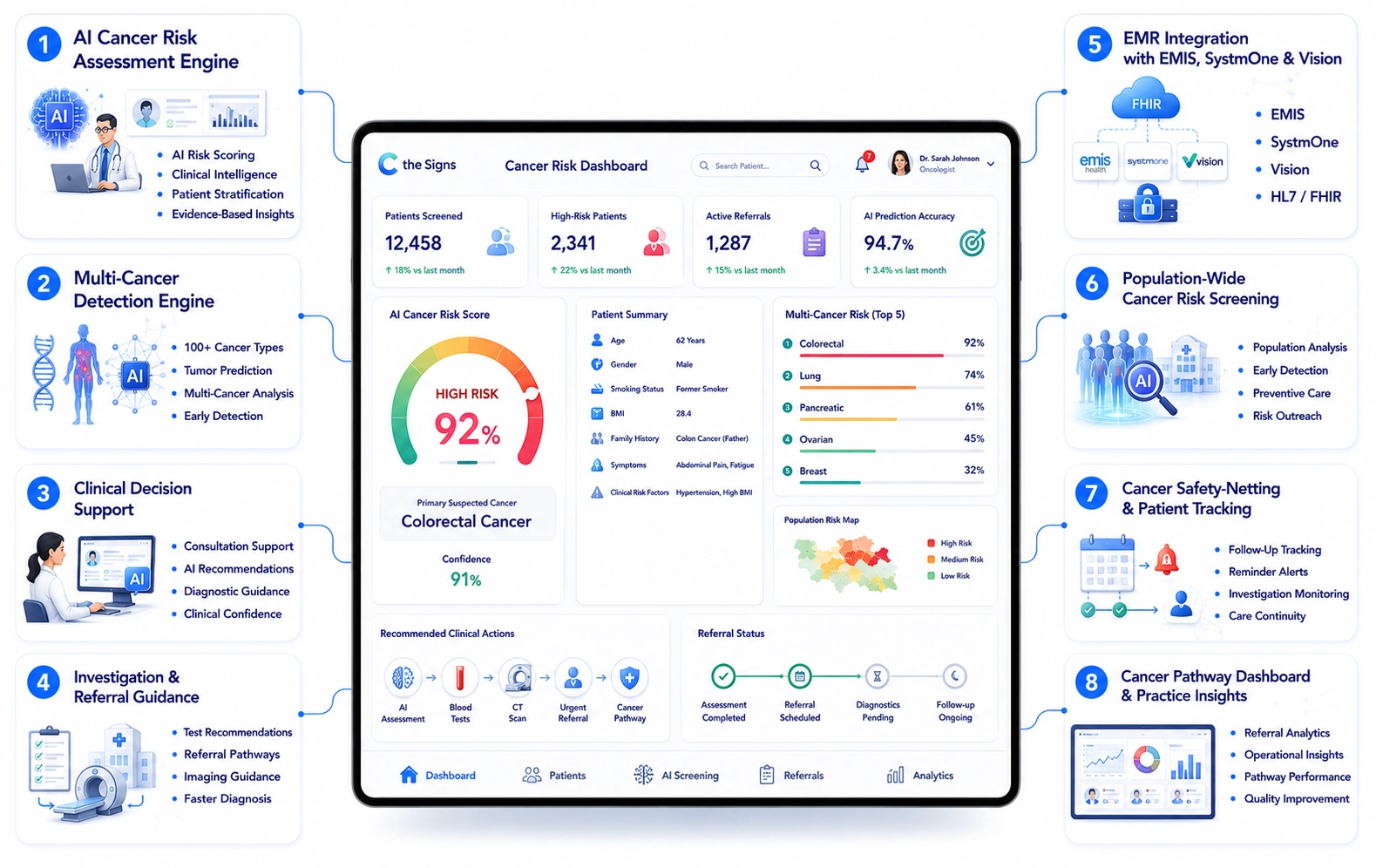
1. AI Cancer Risk Assessment Engine
An AI cancer risk assessment engine is the platform’s intelligence layer, analyzing symptoms, medical history, demographics, lifestyle, and family history to estimate cancer risk. It enables faster, more consistent risk stratification while supporting clinicians with evidence-backed recommendations during patient evaluations.
2. Multi-Cancer Detection Engine
A multi-cancer detection engine evaluates patient data for numerous cancer types simultaneously rather than focusing on a single disease. By identifying potential risks across 100+ cancers and predicting likely tumor origin, it improves early detection for patients presenting with complex or non-specific symptoms.
3. Clinical Decision Support During Consultations
Clinical decision support provides healthcare professionals with real-time, AI-driven recommendations during patient consultations. By combining patient information with validated clinical guidelines, it helps prioritize investigations, reduce diagnostic uncertainty, and strengthen decision-making while ensuring clinicians retain full control over patient care.
4. Evidence-Based Investigation & Referral Guidance
An intelligent referral guidance engine recommends the most appropriate diagnostic tests, imaging, specialist referrals, and cancer pathways based on established clinical guidelines. This standardizes care, accelerates diagnostic workflows, minimizes unnecessary investigations, and helps patients reach the right specialist faster.
5. EMR Integration with EMIS, SystmOne & Vision
Seamless EMR integration enables the platform to securely access patient records, eliminate duplicate data entry, and fit naturally into existing clinical workflows. Support for systems like EMIS, SystmOne, Vision, FHIR, and HL7 ensures interoperability and faster adoption across healthcare organizations.
6. Population-Wide Cancer Risk Screening
Population-wide cancer risk screening continuously analyzes electronic health records (EHRs) to identify individuals who may be at elevated cancer risk before symptoms become severe. This proactive approach supports preventive care, earlier intervention, targeted outreach, and better population health management.
7. Cancer Safety-Netting & Patient Tracking
Cancer safety-netting ensures patients remain on the correct diagnostic pathway through automated follow-up tracking, referral monitoring, reminder alerts, and investigation management. This reduces missed diagnoses, improves care continuity, and helps healthcare providers intervene before critical opportunities are lost.
8. Cancer Pathway Dashboard & Practice Insights
A centralized analytics dashboard gives healthcare organizations complete visibility into referral performance, diagnostic timelines, pathway efficiency, clinician activity, and population risk trends. These actionable insights support operational improvements, resource planning, quality assurance, and data-driven decision-making that strengthen cancer care delivery.
How to Build a Cancer Risk Assessment Tool Like C the Signs
Developing an AI cancer risk platform requires more than building predictive models. It involves combining clinical expertise, healthcare data, AI engineering, interoperability, and regulatory compliance into a secure, scalable solution that delivers accurate risk assessments and integrates seamlessly into real-world clinical workflows.
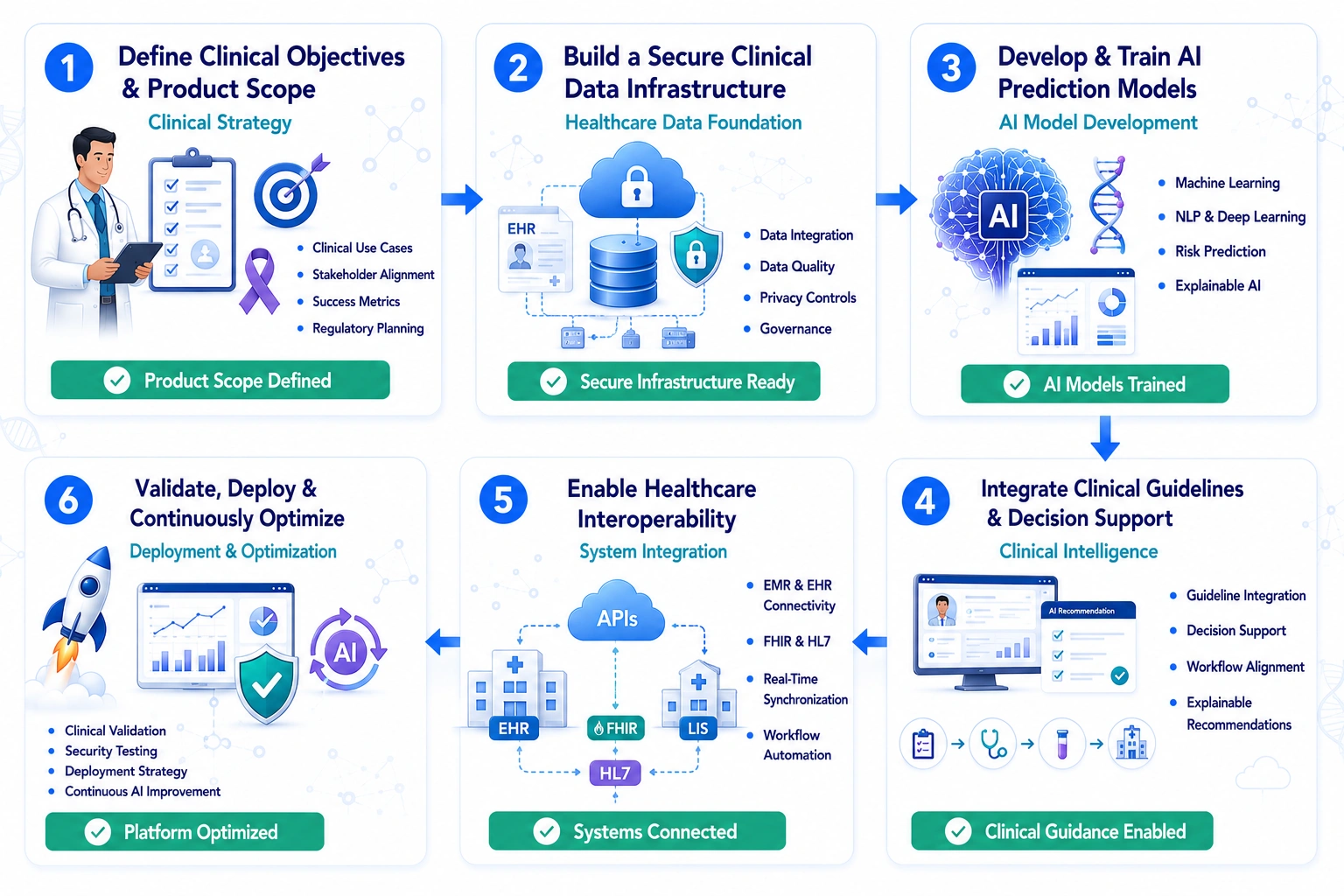
1. Define Clinical Objectives & Product Scope
We begin by defining the platform’s clinical purpose, target users, supported cancer types, healthcare settings, and success metrics. This discovery phase ensures every feature, workflow, and AI capability aligns with real clinical needs and business objectives.
- Clinical Use Case Definition: Identifies primary healthcare scenarios, patient segments, and cancer types the platform will support effectively.
- Stakeholder Alignment Strategy: Ensures collaboration between clinicians, administrators, and business teams to define clear product expectations and outcomes.
- Success Metrics Planning: Establishes measurable KPIs such as prediction accuracy, adoption rates, and clinical impact for ongoing evaluation.
- Regulatory Scope Identification: Determines applicable healthcare regulations and compliance requirements early to guide product design and development decisions.
2. Build a Secure Clinical Data Infrastructure
Our developers build a secure data foundation by integrating, cleaning, and standardizing healthcare information from multiple clinical sources. We also implement data governance, encryption, and compliance controls to ensure high-quality, privacy-first AI training and operations.
- Data Integration Framework: Connects multiple healthcare data sources including EHRs, labs, and imaging systems into a unified platform.
- Data Quality Management: Ensures accuracy, completeness, and consistency of clinical data through validation, cleaning, and normalization processes.
- Privacy and Security Controls: Implements encryption, access management, and audit mechanisms to protect sensitive patient information at all stages.
- Compliance and Governance Setup: Establishes policies and controls aligned with healthcare regulations to ensure responsible data usage and accountability.
3. Develop & Train AI Prediction Models
We develop machine learning models that analyze clinical data to generate cancer risk scores, detect multiple cancer types, and predict likely tumor origin. Every model is trained, validated, and optimized using clinically relevant datasets for reliable performance.
The table below outlines key AI models, techniques, and their roles in delivering accurate, explainable, and reliable cancer risk predictions.
| AI Model | AI Models / Techniques | Purpose in a Cancer Risk Platform |
| Machine Learning Models | Logistic Regression, Random Forest, Gradient Boosting | Learn patterns from clinical variables to generate personalized risk scores and improve prediction accuracy. |
| Natural Language Processing (NLP) | Named Entity Recognition (NER), BERT, Clinical NLP Models | Extract clinical insights from unstructured documents like notes, reports, and summaries for analysis. |
| Predictive Analytics Models | Time Series Analysis, Survival Analysis, Regression Models | Analyze patient histories and trends to identify individuals at high cancer risk early. |
| Deep Learning Models | CNNs, RNNs, Transformers | Detect complex patterns across datasets to enhance multi-cancer detection and tumor origin prediction. |
| Ensemble Learning Models | Bagging, Boosting, Stacking | Combine multiple model outputs to improve accuracy, reduce errors, and strengthen risk predictions. |
| Explainable AI (XAI) | SHAP, LIME, Feature Importance Analysis | Provide transparent explanations and confidence scores to help clinicians trust AI-driven decisions. |
Note: Together, these models create a robust, scalable AI system that enhances early detection, improves clinical decision-making, and delivers reliable, interpretable cancer risk predictions across diverse patient populations.
4. Integrate Clinical Guidelines & Decision Support
Our team embeds evidence-based clinical pathways directly into the platform so AI recommendations align with recognized medical standards. This enables clinicians to receive accurate investigation, referral, and treatment guidance while maintaining full clinical decision-making authority.
- Clinical Guideline Integration: Embeds standardized medical protocols to ensure AI recommendations align with accepted healthcare practices and treatment pathways.
- Decision Support Framework: Provides actionable insights and recommendations that assist clinicians without replacing their professional judgment.
- Workflow Integration Design: Aligns AI outputs with existing clinical workflows to ensure ease of use and minimal disruption.
- Explainability and Transparency: Ensures AI recommendations are understandable and traceable, helping clinicians trust and validate system outputs.
5. Enable Healthcare Interoperability
We integrate the platform with EMRs, EHRs, laboratories, imaging systems, and other healthcare applications using standards such as FHIR and HL7. This creates seamless data exchange, minimizes manual work, and supports efficient clinical workflows.
- System Integration Architecture: Connects various healthcare systems to enable smooth data exchange and unified patient information access.
- Standards-Based Connectivity: Uses protocols like FHIR and HL7 to ensure compatibility across different healthcare platforms and vendors.
- Data Synchronization Mechanisms: Maintains real-time updates across systems to ensure clinicians always access the latest patient information.
- Workflow Automation Enablement: Reduces manual data entry and administrative tasks by automating information flow between connected systems.
6. Validate, Deploy & Continuously Optimize
Before launch, we conduct clinical validation, security testing, usability assessments, and performance evaluations. After deployment, we continuously monitor AI accuracy, retrain models with new clinical evidence, and optimize the platform to maintain long-term reliability and compliance.
- Clinical Validation Process: Tests platform performance in real-world scenarios to ensure accuracy, safety, and clinical effectiveness before deployment.
- Security and Compliance Testing: Verifies system resilience against threats while ensuring adherence to healthcare data protection regulations.
- Deployment and Rollout Strategy: Plans phased implementation to ensure smooth adoption across healthcare environments with minimal disruption.
- Continuous Monitoring and Optimization: Tracks system performance and updates models regularly to maintain accuracy, compliance, and long-term value.
Cost to Build a Cancer Risk Assessment Tool Like C the Signs
The cost of developing a cancer risk assessment platform depends on its AI capabilities, clinical integrations, compliance requirements, and overall product complexity. Below is a realistic cost breakdown based on the major development phases followed by experienced healthcare AI development teams.
A phased cancer risk assessment tool Like C the Signs development cost breakdown helps estimate the investment required for planning, AI engineering, healthcare integrations, security, validation, and deployment while allowing businesses to scale the platform according to their product roadmap and budget.
| Development Phase | Estimated Cost (MVP → Enterprise) | What the Phase Covers |
| Clinical Discovery & Product Planning | $10,000 – $40,000 | Define clinical objectives, workflows, user personas, cancer coverage, feature roadmap, technical architecture, and project requirements. |
| UI/UX Design & Product Prototyping | $15,000 – $60,000 | Design clinician-friendly dashboards, patient workflows, wireframes, prototypes, accessibility, and responsive user experiences. |
| Clinical Data Infrastructure | $20,000 – $80,000 | Build secure healthcare databases, data pipelines, governance, encryption, data normalization, and regulatory-ready storage architecture. |
| AI Model Development & Training | $40,000 – $200,000 | Develop machine learning models, NLP pipelines, risk prediction, multi-cancer detection, model validation, and explainable AI capabilities. |
| Clinical Decision Support Development | $20,000 – $80,000 | Implement evidence-based investigation pathways, referral logic, clinical guidelines, and recommendation engines for clinicians. |
| Healthcare System Integration | $25,000 – $120,000 | Integrate EMRs, EHRs, laboratories, imaging systems, FHIR, HL7 APIs, authentication, and secure interoperability services. |
| Security, Compliance & Clinical Validation | $20,000 – $100,000 | Implement HIPAA, GDPR, security testing, penetration testing, audit logs, clinical validation, and regulatory readiness. |
| Testing, Deployment & Optimization | $15,000 – $70,000 | Perform quality assurance, cloud deployment, monitoring, AI retraining, performance optimization, bug fixes, and ongoing maintenance. |
| Total Estimated Cost | $100,000 – $1M+ | Combined cost of all development phases |
Note: These estimates provide a general guideline; actual cancer risk assessment platform costs may vary based on project scope, data availability, regulatory requirements, and customization needs. Careful planning and phased development help optimize investment and outcomes.
Development Cost by Platform Level
Different product stages require different levels of functionality. However, instead of relying on rigid pricing tiers, it is more accurate to view platform costs as overlapping ranges influenced by feature depth, AI maturity, and integration complexity.
The cancer risk assessment tool Like C the Signs development cost estimates below have been adjusted to better reflect real-world variability and avoid overly narrow or misleading cost brackets.
| Platform Level | Estimated Cost Range | Features Included |
| MVP (Early Validation) | $100,000 – $200,000+ | Basic AI risk scoring, clinician dashboard, patient data capture, limited cancer prediction models, authentication, minimal EMR integration, and reporting. |
| Growth / Mid-Level Platform | $200,000 – $450,000+ | Expanded cancer coverage, NLP capabilities, clinical decision support, referral workflows, improved UI/UX, interoperability, analytics, and enhanced security. |
| Enterprise-Grade Platform | $400,000 – $1M+ | Advanced AI (multi-cancer detection, explainable AI), population health screening, deep EMR integrations, FHIR/HL7 compliance, monitoring, analytics, and scalable infrastructure. |
Note: These ranges intentionally overlap because real-world projects rarely fit neatly into predefined tiers. Costs can increase significantly based on regulatory approvals, clinical validation requirements, AI model sophistication, and the scale of deployment. Many organizations start with a focused MVP and iteratively expand toward enterprise capabilities.
Factors That Influence Development Budget
The total investment varies according to clinical complexity, AI sophistication, healthcare integrations, compliance requirements, and long-term scalability. Understanding these cancer risk assessment tool Like C the Signs development cost drivers helps businesses prioritize features and plan development budgets more effectively.
- AI Clinical Decision Support: Developing models that analyze symptoms, medical history, lab results, and clinical guidelines typically costs $150,000–$600,000, including training, validation, explainability, and optimization.
- EHR & System Integrations: Integrating EHRs, HL7 FHIR APIs, LIS, imaging systems, and workflows typically costs $100,000–$400,000, depending on complexity.
- Clinical Knowledge & Guidelines Engine: Building engines for screening guidelines, referral pathways, red-flag symptoms, and risk scoring typically costs $80,000–$250,000, plus maintenance.
- Compliance & Security: Implementing HIPAA, GDPR, NHS DSP Toolkit, encryption, audit logging, and access controls typically adds $70,000–$200,000, including audits.
- Risk Prediction & Explainable AI: Developing risk scores, referral recommendations, cancer probability estimates, and explainability features typically costs $100,000–$300,000.
- Clinical Deployment & Workflow Integration: Embedding AI into workflows, optimizing UX, handling incomplete data, and enabling monitoring typically costs $80,000–$250,000.
Challenges in Building a Cancer Risk Assessment Tool Like C the Signs
Building an AI-powered cancer risk assessment tool Like C the Signs involves overcoming complex technical, clinical, and regulatory challenges. Successfully addressing these obstacles requires expertise in healthcare AI, interoperability, data governance, and clinical validation to deliver a trusted and scalable solution.
1. High-Quality Clinical Data Access
Challenge: Obtaining diverse, accurately labeled, and clinically validated healthcare datasets while maintaining data privacy, consistency, and regulatory compliance is one of the biggest development hurdles.
Solution: Our developers build secure data pipelines, standardize data from multiple healthcare sources, implement robust governance frameworks, and use clinically validated datasets to train reliable AI models without compromising patient privacy.
2. Accurate and Explainable AI Predictions
Challenge: Creating AI models that deliver consistently accurate cancer risk predictions while providing transparent reasoning clinicians can confidently understand and trust is technically demanding.
Solution: We combine machine learning, ensemble models, and Explainable AI techniques with continuous model validation, bias testing, and clinical benchmarking to produce accurate, transparent, and clinically reliable predictions.
3. Healthcare System Integration
Challenge: Ensuring seamless connectivity with different EMRs, EHRs, laboratory systems, and hospital platforms without disrupting existing clinical workflows requires extensive interoperability expertise.
Solution: Our team develops standards-based integrations using FHIR, HL7, and secure APIs, enabling reliable data exchange, automated workflows, and smooth deployment across diverse healthcare environments with minimal operational disruption.
Build Your Cancer Risk Assessment Platform with Idea Usher
IdeaUsher is an elite digital product engineering powerhouse and healthtech catalyst, leveraging 11+ years of industry expertise across 50+ countries. Backed by 250+ niche experts, 1,000+ completed projects, and a 4.9/5 Clutch rating, we build high-capacity clinical decision support applications from the ground up.
We skip generic templates to build premium, HIPAA-compliant cancer risk assessment platforms with automated symptom cross-referencing, multi-factor AI risk stratification, and real-time EHR diagnostic pathway routing to help you lead the digital health market.
Why Enterprises Partner With Us
Primary care networks, health systems, and healthcare leaders choose us to build AI-powered cancer risk assessment platforms because we convert complex patient records, non-specific symptoms, and evolving clinical guidelines into actionable diagnostic intelligence.
- AI-Powered Cancer Risk Assessment Engine: We develop intelligent algorithms that analyze symptoms, medical history, lab results, medications, and vital signs to generate evidence-based cancer risk scores within seconds.
- Clinical Guideline Decision Support: Our developers build dynamic clinical reasoning engines that map patient data against national and regional cancer referral guidelines, recommending appropriate investigations and referral pathways.
- Seamless EHR & Healthcare System Integration: We integrate platforms with EHRs, laboratory information systems, and HL7 FHIR standards, enabling AI recommendations directly within existing clinical workflows.
- Enterprise-Grade Security & Regulatory Compliance: Every platform is built with HIPAA, GDPR, HITECH, end-to-end encryption, audit logging, and RBAC to protect patient data and ensure regulatory compliance.
Ready to revolutionize primary care and early oncology detection with an AI-powered clinical decision support platform? Partner with Idea Usher’s healthcare technology and AI experts to transform your vision into a secure, scalable, and clinically validated solution.
Conclusion
Early cancer detection is becoming a strategic priority for healthcare organizations seeking to improve patient outcomes and reduce diagnostic delays. The cancer risk assessment tool Like C the Signs demonstrates how AI, clinical decision support, and healthcare interoperability can work together to deliver faster, evidence-based decisions. Whether you’re planning an MVP or an enterprise-grade solution, partnering with an experienced healthcare AI development company like IdeaUsher ensures your platform is secure, clinically aligned, scalable, and ready to meet evolving healthcare and regulatory requirements.
FAQs
A.1. The cancer risk assessment tool Like C the Signs development cost typically ranges from $100,000 to $1M+, depending on AI model complexity, healthcare integrations, regulatory compliance, clinical validation, security requirements, and whether the platform is developed as an MVP or an enterprise-grade solution.
A.2. EMR integration enables automatic access to patient records, reduces manual data entry, improves clinical workflow efficiency, supports real time risk assessment, and helps clinicians make faster evidence based decisions.
A.3. The core features of cancer risk assessment tool Like C the Signs typically include AI cancer risk assessment, multi-cancer detection, clinical decision support, evidence based investigation guidance, EMR integration, population risk screening, patient safety netting, and analytics dashboards for healthcare providers.
A.4. Yes. Advanced AI models can evaluate patient data for multiple cancer types simultaneously, helping clinicians identify potential risks earlier and prioritize appropriate investigations using evidence based clinical guidelines.