

Key Takeaways
- Bloktopia reflects the shift from creator platforms built on algorithms to community-owned ecosystems where participation, identity and monetization drive retention.
- It is a vertical creator metaverse platform built as a 21-floor skyscraper combining virtual real estate, creator zones, branded spaces, gaming and tokenized commerce.
- Core ecosystem includes NFT floor ownership, creator zones, event auditoriums, ad spaces, gaming lounges, marketplaces, wallet login and social networking hubs.
- Key success factors include scarcity through 21 floors, mall-like navigation, strong discoverability, multiple revenue streams and dense social interactions.
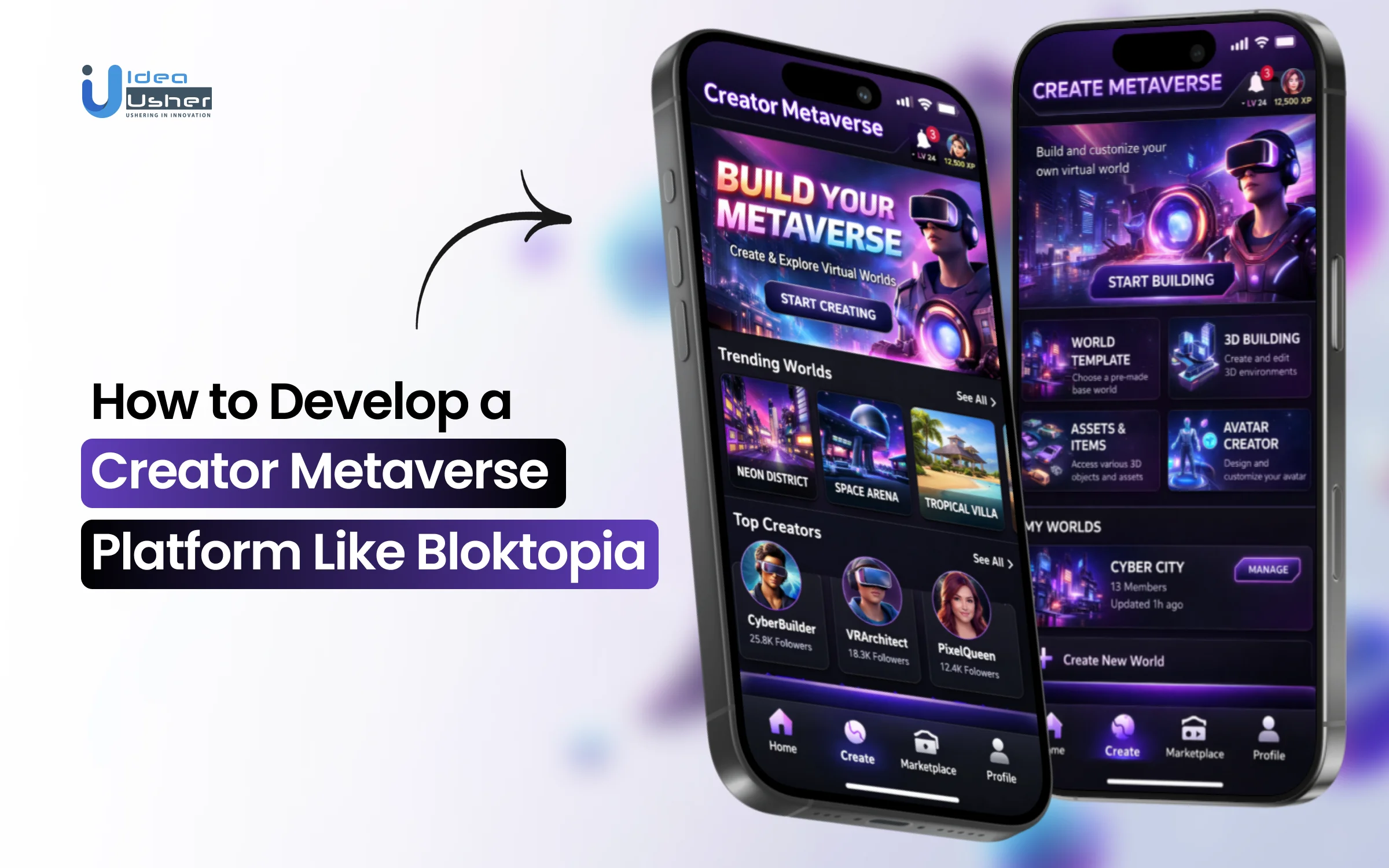
- Essential platform features include avatar identity systems, NFT land leasing, live events, UGC builder tools, token rewards, in-world ads and creator commerce tools.
- Revenue opportunities include virtual land sales, rental income, ad activations, premium memberships, ticketed events, marketplace fees, staking and brand partnerships.
Attention has become the least defensible asset in the creator economy where communities now hold more value than followers and participation drives stronger retention than views ever could. That shift is accelerating creator metaverse platform development where users no longer stay for content feeds alone as they seek ownership, identity, social status and interactive spaces where they can actively contribute.
Traditional creator platforms were optimized for ad revenue and algorithmic reach, limiting monetization control and loyalty. Bloktopia reflects the shift by combining virtual real estate, creator zones, branded experiences and tokenized economies, creating ecosystems where users engage directly and revenue expands through assets, memberships, events, commerce and stronger community behavior.
In this blog, we will explore the core features, architecture, costs and development process to build a platform like Bloktopia where the next growth wave comes from communities generating value within the product itself.
What Is Bloktopia and Why Is It Popular?
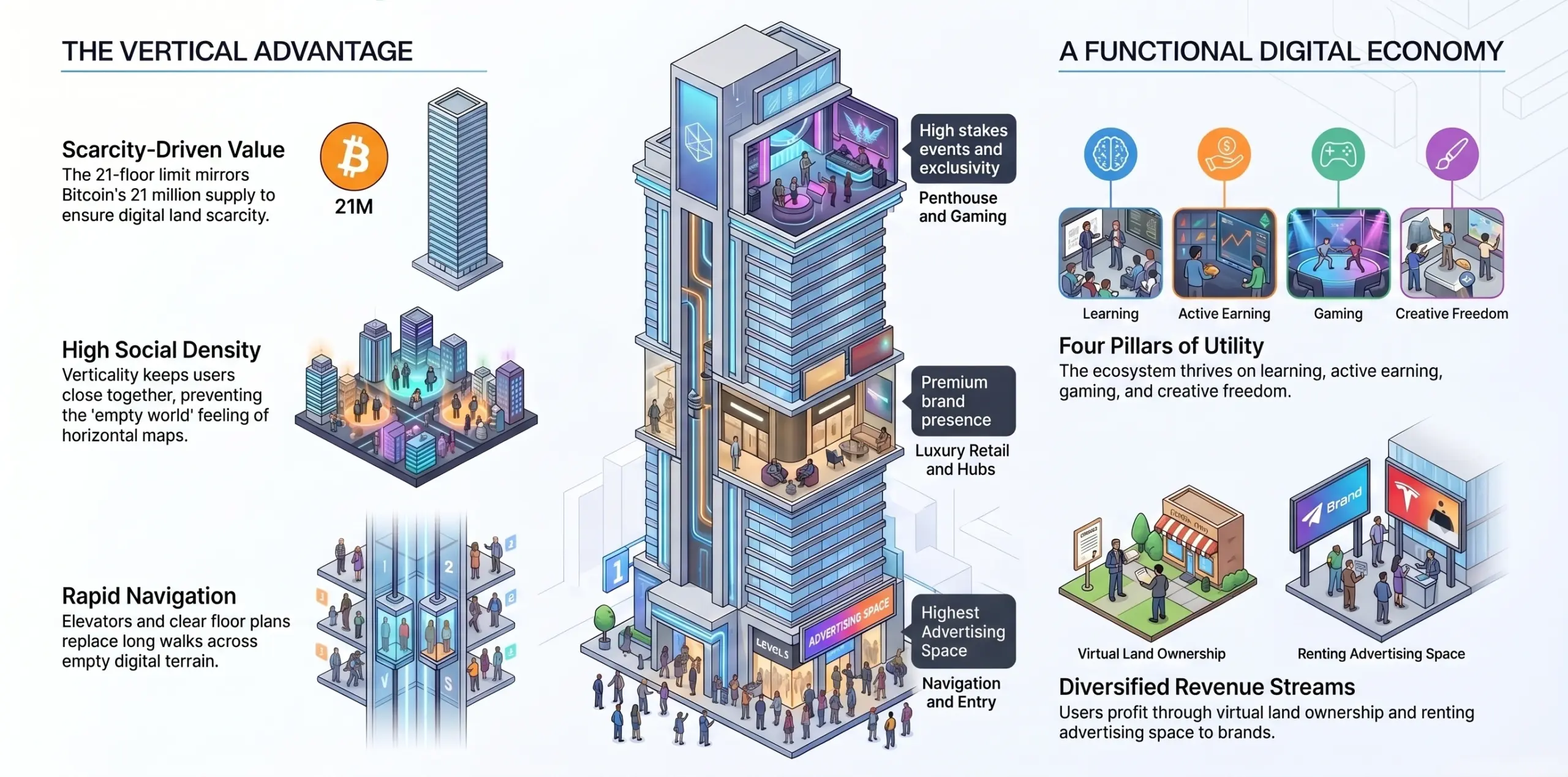
Bloktopia arrived as a massive vertical hub within the crypto world that redefined the metaverse experience. Instead of a flat map that stretches for miles, this project uses a 21 floor skyscraper to centralize activity and commerce. It gained traction because it gave people a single place to learn about blockchain while making money through virtual real estate. This skyscraper setup makes it much easier for people to find what they need without getting lost in a digital desert.
A. Real Utility Beyond Metaverse Hype
Most virtual worlds struggle to give people a reason to return after the first visit. This platform solved that by focusing on four distinct areas that keep the ecosystem moving. By offering more than just a 3D space, it creates a functional economy where every action has a purpose.
- Learning Resources: The ground floor provides live price feeds and a help desk where beginners get their footing in the crypto space.
- Active Earning: Users make a profit by holding land or renting out advertising space to major brands that want exposure.
- Gaming Content: High quality games are built directly into the floors to provide entertainment that rewards players with tokens.
- Creative Freedom: Simple tools allow anyone to build their own scenes or artwork to show off to the community.
B. Scarcity Model Behind the 21 Floors
The design of the building is not just for looks. It is a nod to the 21 million total supply of Bitcoin. By limiting the space to just 21 floors, the platform creates natural value for every square inch of digital land. This limited supply means that as more people join, the existing space becomes more valuable.
| Floor Type | Primary Use Case | Value Driver |
| Level 1 | Navigation and Entry | Highest foot traffic for ads |
| Level 6 | Luxury Retail and Hubs | Premium brand presence |
| Level 21 | Penthouse and Gaming | High stakes events and exclusivity |
C. Better Navigation Than Open Worlds
Horizontal metaverse platforms often feel empty because the population is spread too thin; however, vertical skyscrapers keep communities together, ensuring a busy social atmosphere and a familiar, mall-like navigation experience.
- Quick Movement: Elevators and clear floor plans replace long walks across empty digital terrain.
- Targeted Discovery: Brands can choose specific floors that match their audience such as a gaming floor or a trading floor.
- Social Density: Users are more likely to run into each other when they are all moving through the same 21 levels.
D. Crypto, Entertainment and Social in One Hub
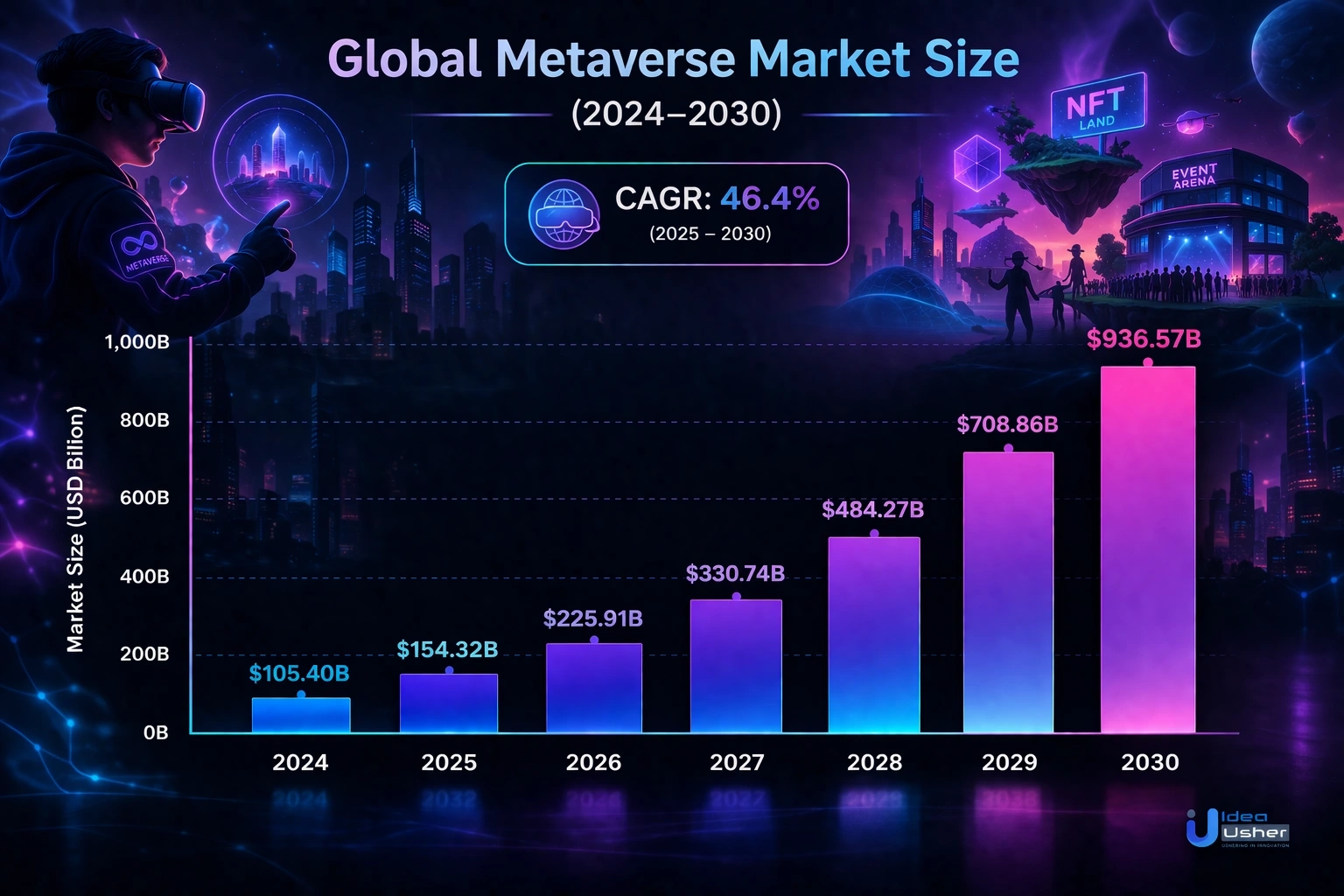
The real magic of this model is how it blends industries into one experience. It is not just for trading tokens but also a social lounge and cinema. People come for information and stay for community. This drives high retention and growth from USD 105.4 billion in 2024 to USD 936.57 billion by 2030 at 46.4% CAGR.
Why 2026 Is A Strong Entry Window
The current year represents a unique execution phase where the underlying technology has finally caught up with the original vision. High-speed connectivity and hardware efficiency have reached a critical mass, making creator metaverse platform development a viable and high-yield business move.
- Mixed Reality Accessibility: Cross-device functionality is now standard, with 70% of global smartphone shipments 5G-ready. This enables VR headsets, mobile phones and web browsers to access the same digital skyscraper with minimal latency and no hardware silos.
- Hardware Maturity: Lightweight standalone headsets and smart glasses are now mainstream. With 171 million active users, the metaverse has evolved beyond gaming into a broad ecosystem supporting professional networking and enterprise-scale communities.
- Clear Revenue Models: The sector has shifted from speculation to sustainable income. Software and platform services hold 48% market share, using virtual leasing, digital advertising and gated memberships to drive consistent cash flow.
- Regulatory Stability: The GENIUS Act and HKMA stablecoin regime provide legal clarity for large-scale investment, making virtual land and digital property ownership more secure and predictable for businesses.
The Growth Model Behind Bloktopia’s Success
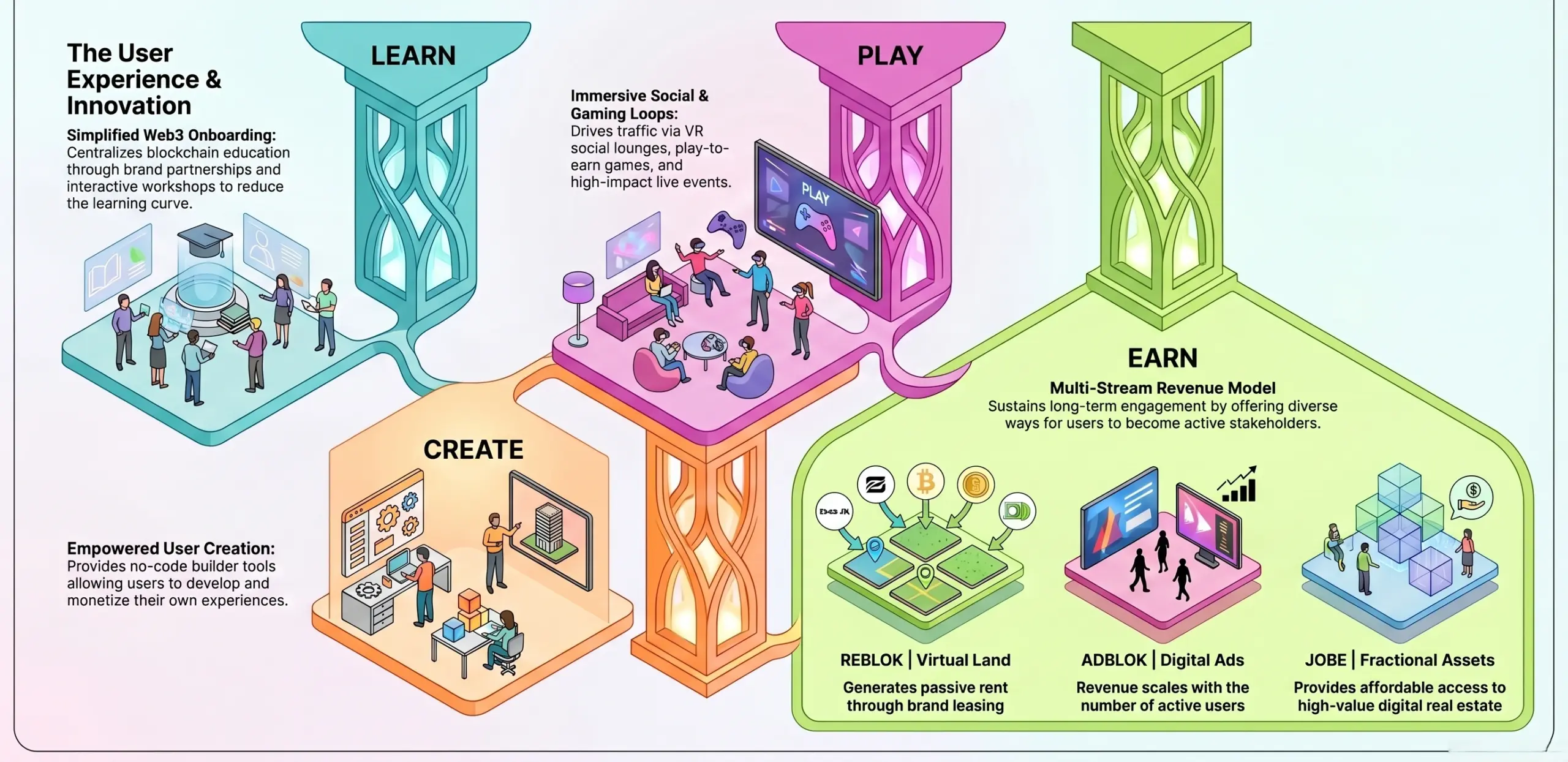
The platform’s rapid rise came from addressing key gaps in the early digital space. Built on four core pillars, it evolved from a simple 3D environment into a functional ecosystem, showcasing the impact of creator metaverse platform development in delivering daily value and fostering a community-driven destination.
A. Learn as a Web3 Onboarding Engine
This platform bridges the blockchain Web3 knowledge gap by simplifying complex information. It brings brands and influencers together, creating an easy entry point for newcomers to learn without feeling overwhelmed.
- Centralized Knowledge Hub: Instead of searching across dozens of websites, users find everything from basic wallet setup to advanced trading strategies in one location.
- Brand Partnerships: Global companies set up virtual offices to share their roadmap and vision which adds credibility to the entire environment and gives users direct access to verified info.
- Interactive Education: Learning is not just about reading text; it involves attending live events and workshops that make the information stick through immersive participation.
B. Earn Through Ownership and Rewards
A strong financial model sustains long-term engagement by offering multiple income streams. It creates a diverse economy where users find their niche, turning casual visitors into active stakeholders who help grow the ecosystem.
| Earning Method | Description | Key Advantage |
| REBLOK | Ownership of virtual retail space or land | Can be leased to brands for passive rent payments |
| ADBLOK | Revenue sharing from digital billboard ads | Scales directly with the number of daily active users |
| JOBE | Fractional ownership of larger assets | Makes high value real estate accessible for a wider audience |
C. Play Through Social and Gamified Loops
Entertainment is the glue that holds a community together. Without a fun element, a digital world feels like a workplace rather than a lifestyle destination. The skyscraper model allows for dedicated zones where people can relax and compete without the distractions found on the trading floors.
- Social Lounges: High quality VR spaces where users meet up, chat and network in a way that feels much more personal than a standard chat app or video call.
- Competitive Gaming: Integrated play to earn games give users a way to test their skills and win rewards while spending time on the platform.
- Live Events: From virtual concerts to product launches, these events create must-attend moments that drive massive spikes in traffic and keep the world feeling alive.
D. Create With User-Generated Experiences
User-generated content drives growth by letting users build scenes and experiences. This reduces developer burden and ensures the platform evolves continuously with fresh ideas from its community.
1. Simple Builder Tools: You do not need to be a professional coder to leave your mark. The platform provides intuitive drag and drop tools that make it easy to create beautiful 3D scenes and interactive elements.
2. Creative Monetization: Once a user creates a popular experience, they can find ways to monetize it through tips, entrance fees or exclusive access for their followers.
3. Community Governance: Token holders often get a say in how the creative direction of the platform moves forward which builds a deeper sense of belonging and pride in the project’s future.
Why The 21-Level Tower Design of Virtual Real Estate Drives Retention
The 21-level vertical design enhances retention by creating density and constant activity. In creator metaverse platform development, this stacked structure keeps users engaged, reduces digital isolation and concentrates experiences, making every floor feel vibrant and encouraging users to explore and stay longer.
A. Familiar Mall-Like User Navigation
A tower layout mirrors familiar real-world navigation, reducing complexity for new users. This intuitive structure helps people quickly engage with content, improving onboarding speed and overall user experience in the platform.
- Vertical Hierarchy: Just like a city office building or a shopping center, the most accessible services are on the ground floor with more niche or exclusive options higher up.
- Zero Travel Time: Instead of walking for minutes across an empty field, users move between different interest zones in seconds using simple elevator menus.
- Intuitive Layouts: Because each floor is a contained unit, creators can design specific environments that are easy to walk through without the risk of the user getting lost in a massive open world.
B. Premium Floors Create Demand Psychology
Limiting the platform to 21 levels creates scarcity and value. In creator metaverse platform development, this drives demand, making virtual land a sought-after asset that boosts engagement and long-term interest.
| Floor Category | Strategic Purpose | Market Demand |
| Level 1 (The Hub) | Entry point for all users with high visibility for global news and ads. | Highest for retail and awareness. |
| Mid-Tier (Level 2-20) | Specialized zones for tech, art, education and social clubs. | Focused on community building. |
| Level 21 (The Penthouse) | Exclusive high-stakes gaming and VIP networking lounges. | Maximum for luxury and prestige. |
C. Vertical Layout Improves Discoverability
A vertical layout funnels traffic through key levels, improving discovery for creators and brands. It creates a living city feel with natural flow, keeping the economy active and ensuring no part of the metaverse feels empty.
1. Forced Foot Traffic: Every user who wants to reach the top floors must pass through the lower ones which gives brands on those levels constant exposure to a rotating audience.
2. Zoned Interests: By grouping similar creators on the same floor, you make it easy for users to find what they like. A person interested in NFTs can spend their time on a dedicated gallery floor rather than searching a giant map.
3. Organic Networking: The limited space means users are more likely to run into each other. These random encounters are the foundation of a strong social community and turn a solitary experience into a shared digital life.
Multi-Revenue Streams of Creator Metaverse Platform Beyond Token Hype
A sustainable digital world needs more than token growth. In creator metaverse platform development, diversified revenue streams create stable cash flow, reduce reliance on speculation and enable consistent value exchange, turning short-term trends into long-term, resilient business models.
A. NFT Real Estate Sales and Leasing
Virtual land is the primary engine of the platform’s economy. Instead of just selling pixels, the skyscraper model offers functional spaces that brands and creators use for their digital headquarters. These spaces are sold as NFTs, giving owners full control over how they are used or monetized.
- REBLOK Ownership: This is the standard for owning a specific area within the building. Owners can build their own stores, offices or galleries to attract visitors.
- Passive Leasing: Landowners who do not want to manage their own space can rent it out to third-party brands. This creates a rental market similar to physical commercial real estate.
- Fractional Ownership (JOBE): To make the most valuable floors accessible, the platform allows multiple people to own a single piece of real estate. This spreads the cost and the rewards across a larger group of participants.
B. Advertising Zones and Brand Activations
Attention is the most valuable digital currency. A clear skyscraper layout highlights high-traffic zones for ads, attracting brands. Revenue is shared with landowners, creating a win-win of strong brand presence and steady income.
| Ad Type | Location | Primary Benefit |
| ADBLOK Totems | Main lobbies and elevators | High visibility for every user entering the tower |
| Branded Headquarters | Entire floor sections | Deep immersion for fans of a specific brand |
| Product Placement | Inside social and gaming zones | Subtle integration into the user experience |
C. Premium Events and Membership Access
Live events like concerts, product launches and crypto conferences drive traffic and revenue, giving users compelling reasons to log in simultaneously and engage with the platform. These moments are perfect opportunities to use ticket sales or gated access to generate revenue.
1. Tiered Access: Not every area of the skyscraper is open to everyone. Certain floors or events can be restricted to users who hold a specific amount of tokens or a special membership NFT.
2. Ticketing Systems: Just like a physical stadium, the platform can host paid events where users buy a digital ticket to watch a performance or attend a seminar in the M3TASPACES auditorium.
3. Exclusive Perks: Members might get early access to new land sales, limited edition avatar items or invitations to private networking lounges on the top levels.
D. Marketplace Fees and Creator Commerce
Marketplace fees drive steady revenue through commissions on avatar items and 3D assets. This creates continuous cash flow, keeps the economy active and enables users to earn as participation grows. This fee structure provides a constant stream of income that scales as the community becomes more active.
- Secondary Sales: When an NFT land parcel or a rare item is resold between users, a percentage of that sale goes back to the platform treasury.
- Creator Tools: Charging for premium building tools or assets helps fund the ongoing development of the world while giving creators better ways to build.
- Custom Services: Brands often pay for specialized design help to set up their virtual presence, creating a service-based revenue stream alongside the automated marketplace.
Key Features of Bloktopia-like Creator Metaverse Platform
Successful projects in this space focus on blending immersion with clear economic incentives. When looking at creator metaverse platform development, certain pillars must be present to attract and keep a loyal user base while providing real value for every participant.

1. Avatar Creation and Digital Identity
A user’s digital persona is their primary way of interacting with the world. Providing deep customization options allows people to express themselves while building a sense of ownership over identity.
- Detailed Customization: Users choose from various body types, facial features and styles to create a unique look that represents them accurately across the skyscraper.
- Branded Wearables: Collaboration with fashion houses allows for limited edition digital clothing that users buy to showcase their status and personal taste.
- Persistent Identity: The avatar remains consistent across different floors and events which builds a reliable social reputation for every individual in the community.
2. NFT Land Ownership and Virtual Leasing
Digital real estate forms the backbone of the virtual economy. By turning floor space into verifiable assets, the platform gives users a way to build, trade or rent out property.
- Verifiable Ownership: Every plot of land is tied to a secure digital record that proves who owns the space and what they can do with it.
- Flexible Leasing: Owners who do not want to run a business themselves can rent their space to brands looking for a temporary or permanent home.
- Secondary Market Activity: A thriving resale market allows property owners to exit their positions or upgrade to more prominent locations within the 21 level tower.
3. VR Social Spaces and Live Events
High quality social environments are essential for turning a static 3D model into a living community. These spaces host the gatherings that give the world its energy and social value.
- Immersive Networking: Virtual lounges and conference rooms provide a much more personal way to meet people compared to standard video calls or text chats.
- Large Scale Events: Dedicated auditoriums host live concerts, product launches and keynote speeches that bring thousands of users together at the same time.
- Real Time Interaction: Spatial audio and physics based movement make social encounters feel natural and engaging which helps people form genuine connections.
4. Creator Zones and UGC Tools
Enabling the community to build their own content reduces the workload for developers while keeping the environment fresh. Simple tools make certain that anyone can contribute their ideas to skyscraper.
- No Code Building: Intuitive drag and drop interfaces allow users to design rooms and experiences without needing to know any complex programming languages.
- Asset Libraries: A wide selection of pre-made 3D models and textures helps creators get started quickly while maintaining a high standard of visual quality.
- Monetization Rights: Creators keep the rights to what they build which allows them to charge for entry or sell their designs to other users.
5. In-World Ads and Brand Activations
Advertisements provide a steady stream of income that does not rely on selling assets. By placing ads in high traffic areas, the platform offers significant value to every corporate partner.
- Strategic Placement: Digital billboards are located near elevators and main hubs to make certain they get the maximum amount of views from passing traffic.
- Interactive Campaigns: Brands can create mini games or scavenger hunts that reward users for interacting with their products in a fun and memorable way.
- Revenue Sharing: A portion of the advertising income often goes to the landowners on that specific floor which encourages them to keep their space popular.
6. Wallet Login and Token Rewards
Seamless connectivity to digital assets is vital for a smooth user experience. Connecting a personal wallet allows for secure transactions and the distribution of rewards for active participation and loyalty.
- Secure Connectivity: Users log in using their existing crypto wallets which keeps their assets safe and removes the need for traditional usernames and passwords.
- Participation Incentives: The platform grants tokens to users who spend time exploring the world or contributing to the community in meaningful ways.
- Staking Systems: Holding the native token allows users to earn a yield or gain access to exclusive areas and early land sales.
7. NFT Marketplace and Virtual Commerce
An internal market allows for the easy exchange of goods and services within the world. This hub acts as the central point for all commerce between creators, brands and users.
- Direct Peer Trading: Users buy and sell items like wearables and collectibles directly from each other with the platform acting as a trusted middleman.
- Ticket Sales: The marketplace handles the distribution of passes for live events and exclusive clubs ensuring that all transactions are fast and secure.
- Digital Collectibles: Limited edition items and art pieces are easily browsed and purchased which helps drive the cultural value of the digital environment.
8. Gamification and Retention Systems
Keeping users coming back requires a system that rewards progress and engagement. These loops turn a one-time visit into a long-term habit by giving people clear goals to achieve daily.
- Quest Systems: Daily and weekly challenges encourage users to explore different floors and interact with new features they might have otherwise missed.
- Progression Badges: Earning rewards for reaching specific milestones helps users feel a sense of achievement and status within the growing community.
- Leaderboards and Competitions: Social rankings for games and creative contributions spark friendly rivalry and keep the most active users deeply involved with the platform.
How to Develop a Creator Metaverse Platform Like Bloktopia
Turning a visionary concept into a functional digital skyscraper requires a strategic roadmap that balances high-end 3D design with robust blockchain economics. This process focuses on building a scalable environment where brands and users can interact, trade and grow together successfully.
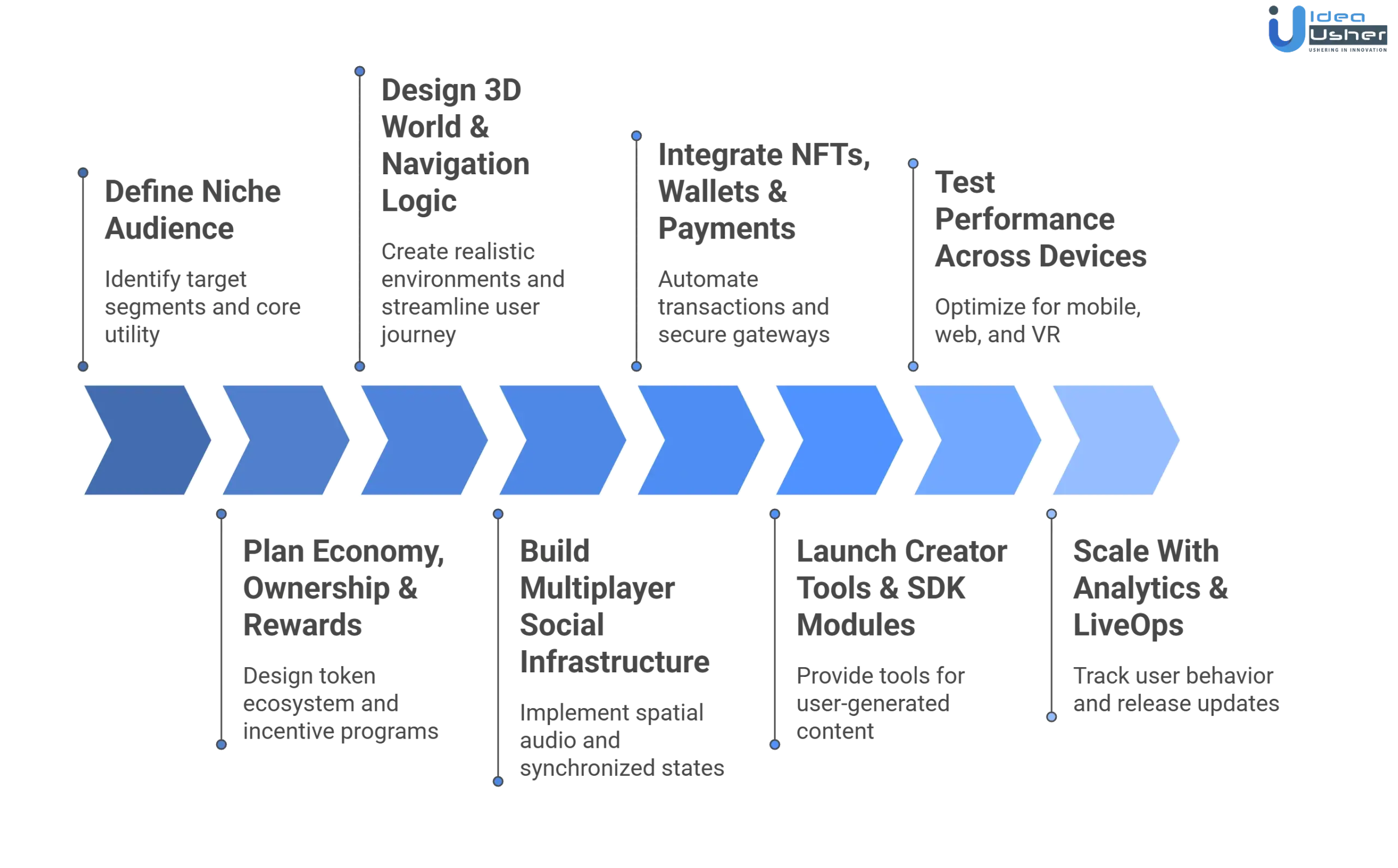
1. Define Niche Audience and Use Cases
Every profitable digital world starts with a specific focus. Success in creator metaverse platform development begins by identifying if your hub is for crypto education, luxury retail or gaming to build relevant features that solve user needs.
- Identify Target Segments: Research whether the primary users are crypto enthusiasts, corporate brands or social gamers to tailor the floor plans and activities.
- Establish Core Utility: Determine the main reason for users to visit, such as attending exclusive webinars, trading rare assets or playing social games.
- Brand Alignment: Create a framework that makes it easy for external companies to set up virtual offices and engage with the community directly.
2. Plan Economy, Ownership and Rewards
A healthy financial model is what makes a platform more than just a 3D model. Deciding how land is sold and how rewards are distributed keeps the internal marketplace active and participants motivated.
- Token Ecosystem: Design a native currency that users utilize for purchasing land, buying wearables and accessing premium levels within the skyscraper.
- Asset Scarcity: Map out the total number of real estate plots available to maintain value and drive a competitive secondary market for owners.
- Incentive Programs: Set up clear paths for people to earn by contributing content, hosting events or participating in the platform’s governance.
3. Design 3D World and Navigation Logic
Visual quality and ease of movement are critical for keeping people on the platform. The vertical skyscraper layout offers a logical flow that makes it easy for newcomers to find their way around.
- High-Fidelity Graphics: Use modern game engines to produce realistic environments that look professional and attract high-end brand partnerships.
- Vertical Flow: Organize floors by interest or category to streamline the user journey and make certain people find what they are looking for quickly.
- Interactive Elements: Build elevators, information kiosks and live data screens that make the world feel like a functioning, modern business hub.
4. Build Multiplayer Social Infrastructure
The metaverse is fundamentally about people connecting with one another. Building the pipes for real-time interaction makes the world feel like a living, breathing community rather than a static game or website.
- Spatial Audio: Implement sound systems that mimic real-world physics, allowing users to hear voices clearly based on their proximity to others.
- Synchronized States: Make certain that every action, from a dance move to a transaction, is updated instantly for everyone else on the floor.
- Scalable Servers: Use a technical backend that can handle thousands of simultaneous users without slowing down or crashing during major live events.
5. Integrate NFTs, Wallets and Payments
Frictionless transactions are the heart of a successful digital economy. Users need the ability to buy, sell and trade assets without running into technical barriers that slow down their experience.
- Wallet Connectivity: Allow users to log in with existing digital wallets to manage their assets, land titles and currency in one secure place.
- Smart Contracts: Automate the transfer of ownership and rental payments to remove the need for manual oversight and increase trust.
- Secure Gateways: Provide a smooth way for people to convert traditional currency into the platform’s native tokens to encourage more frequent spending.
6. Launch Creator Tools and SDK Modules
Giving users the ability to build their own experiences keeps the content fresh. Simple tools allow non-developers to create value which helps the platform grow without constant input from the developers.
- Visual Builder: Create a drag and drop interface that lets users customize their rooms and galleries with furniture, art and interactive objects.
- Developer Kits: Provide more advanced modules for those who want to build complex games or unique retail experiences within their owned floors.
- Asset Marketplace: Set up a hub where creators can sell their 3D models and textures to other participants, fueling the internal economy.
7. Test Performance Across Devices
A great platform must run smoothly on everything from high-end VR headsets to standard mobile phones. Constant testing across different hardware makes certain that the user experience remains consistent for everyone.
- Hardware Optimization: Refine the 3D assets to load quickly on mobile and web browsers without sacrificing the visual appeal of the environment.
- VR Compatibility: Focus on creating a nausea-free experience for users who prefer to explore the skyscraper using virtual reality equipment.
- Cross-Platform Sync: Make certain that a user can start their journey on a desktop and continue on mobile without losing any progress or data.
8. Scale With Analytics and LiveOps
Data provides the map for future growth and platform improvements. By tracking how users move through the skyscraper, the team can make informed decisions that keep the environment relevant and profitable.
- Behavioral Tracking: Monitor which floors get the most foot traffic to help brands choose the best locations for their ads and activations.
- Regular Updates: Keep the community engaged by releasing new levels, seasonal events and updated features based on what users enjoy most.
- Feedback Loops: Listen to the community and adjust the economic balance or feature set to maintain a fair and fun environment for all.
Investment Breakdown For Platform Development
The financial commitment required to build a vertical metaverse depends heavily on the depth of the 3D environment and the complexity of the blockchain features. An MVP allows for a faster market entry with core features while an enterprise-level solution provides a fully scaled 21 level skyscraper with advanced monetization and high-fidelity graphics.
| Development Phase | MVP Level | Enterprise Level | Key Deliverables |
| Strategy and Architecture | $10,000 – $18,000 | $35,000+ | Product roadmap, tokenomics design and technical blueprints |
| Blockchain and Smart Contracts | $30,000 – $45,000 | $110,000+ | Secure wallet login, NFT minting and land ownership logic |
| 3D World and Level Design | $25,000 – $40,000 | $90,000+ | Core skyscraper structure, Level 1 hub and navigation systems |
| Social and Multiplayer Engine | $20,000 – $35,000 | $70,000+ | Real-time spatial audio, avatars and synchronized interactions |
| Commerce and Marketplace | $15,000 – $25,000 | $55,000+ | Primary NFT sales and a secondary peer to peer marketplace |
| Testing and Deployment | $8,000 – $15,000 | $30,000+ | Security audits, load testing and multi-device optimization |
| Total Estimated Cost | $88,000 – $178,000 | $390,000+ | Complete end-to-end platform ready for market launch |
Key Factors Influencing Total Project Budget
The final price of creator metaverse platform development is not a static number because several technical choices drastically shift the workload. Understanding where the budget goes helps in prioritizing features that drive the highest return on investment while managing development timelines effectively.
- Visual Fidelity and Graphics: Opting for photorealistic 3D environments instead of simpler low-poly styles increases the design budget by 40% to 60%. High-end visuals demand more advanced rendering engines and intensive lighting and texture baking work.
- Device Support and Accessibility: A web-only platform is the most affordable route. Adding native VR headset support or mobile optimization typically adds 25% per platform due to the custom UI and performance tuning required.
- Number of Unique Assets: While repeating structures save money, custom brand headquarters and unique 3D models increase the workload. Designing 50 to 100 unique assets can add $15,000 to $30,000 in professional artist hours.
- Blockchain and Security Depth: A single-chain setup is simpler than a multi-chain ecosystem. Adding complex revenue sharing or staking models increases the technical scope and can raise engineering costs by $25,000 or more.
- User Capacity and Hosting: Backend costs scale with the number of simultaneous users. Supporting 1,000 concurrent participants versus 50,000 requires a vastly different server architecture, affecting both the initial build and monthly operational expenses.
Bloktopia Clone Scripts vs Enterprise VR Skyscraper Metaverse Dev
Many people exploring a clone script assume launching a virtual world is mainly about copying visuals. In reality, long term success depends on systems that keep creators around while providing the technical strength to grow without crashing or lagging.
| Metric | White-Label Clone Script | Custom Creator Metaverse Platform |
| Initial Investment | $20,000 to $80,000 | $250,000 to $2M+ |
| Time to Launch | 1 to 3 months | 4 to 12+ months |
| Core Architecture | Fixed templates | Modular scalable systems |
| Visual Experience | Generic 3D lobby | Branded immersive world |
| Creator Tools | Minimal or absent | Full UGC and monetization suite |
| Scalability | Low concurrency limits | Cloud autoscaling architecture |
| Revenue Models | Basic NFT sales | Ads, memberships, leasing and commerce |
| Security | Shared code risks | Custom audited systems |
| Brand Differentiation | Low | High |
A. Why Serious Platforms Need Custom Engineering
Building a world that stays relevant requires more than just a 3D model. It needs a technical backbone that can handle the complex demands of a growing community and a high stakes digital economy.
- Real-Time Multiplayer Infrastructure: Handling live events and creator spaces requires low-latency networking that goes far beyond what most basic templates can offer.
- Creator Economy Systems: Modern projects need more than just simple sales. They require subscriptions, rentals, tipping and deep analytics to keep participants active.
- Performance Across Devices: A professional platform must work flawlessly across VR headsets, desktops, mobile phones and web browsers without losing visual quality.
- Modular Growth Roadmap: Adding features like AI guides, DAO voting and loyalty systems requires a flexible architecture that a rigid clone script simply cannot provide.
B. Why Clone Scripts Usually Stall Growth
A ready made script might get you to market quickly but it often leads to a dead end. These shortcuts usually fail because they lack the unique identity and technical depth needed to survive.
- Generic User Experience: Visitors quickly recognize copied environments. Without a unique identity, it is nearly impossible to build genuine brand loyalty or long term interest.
- Poor Retention Loops: Most basic scripts lack the gamification and rewards that turn a one-time visitor into a daily user who contributes to the world.
- Hard to Scale: Adding thousands of users or hosting a major brand activation often exposes backend limitations that cause the entire system to fail under pressure.
- Technical Debt: Choosing a cheap shortcut early on often means you have to rewrite the entire code once the project starts to gain real traction.
- Security Exposure: Reused code and shared smart contracts increase the risk of exploits, putting your users’ assets and your brand’s reputation at high risk.
C. What Founders Should Build Instead In 2026
The market has moved past simple copies. Success today comes from identifying a specific niche and building a specialized environment that offers real utility and a fresh experience for the community.
- Niche Creator Communities: Focus on a specific industry like luxury fashion or tech education to build a dedicated and highly engaged user base.
- Mobile-First Immersive Platforms: Make the world accessible to the widest possible audience by prioritizing high quality performance on smartphones and tablets.
- Subscription Fan Ecosystems: Create recurring revenue through exclusive access levels and premium content that fans are happy to pay for every month.
- Virtual Commerce Hubs: Build a space where physical and digital goods meet, allowing brands to sell real products through an immersive 3D storefront.
- AI-Powered Creator Tools: Utilize artificial intelligence to help users build their own spaces faster, making the creation process fun and accessible for everyone.
A clone script might help you test an idea but custom development is what creates a business with real value. For those serious about this space, scalable engineering matters much more than just having a world that looks like something else. Custom builds provide the security, flexibility and unique features that turn a digital space into a profitable empire.
Key Challenges In Bloktopia-like Creator Metaverse Development
Launching a successful virtual hub involves navigating complex hurdles that can stall growth. By addressing technical and social obstacles early, we help you build a resilient environment that keeps people engaged and protects the value of your digital assets.
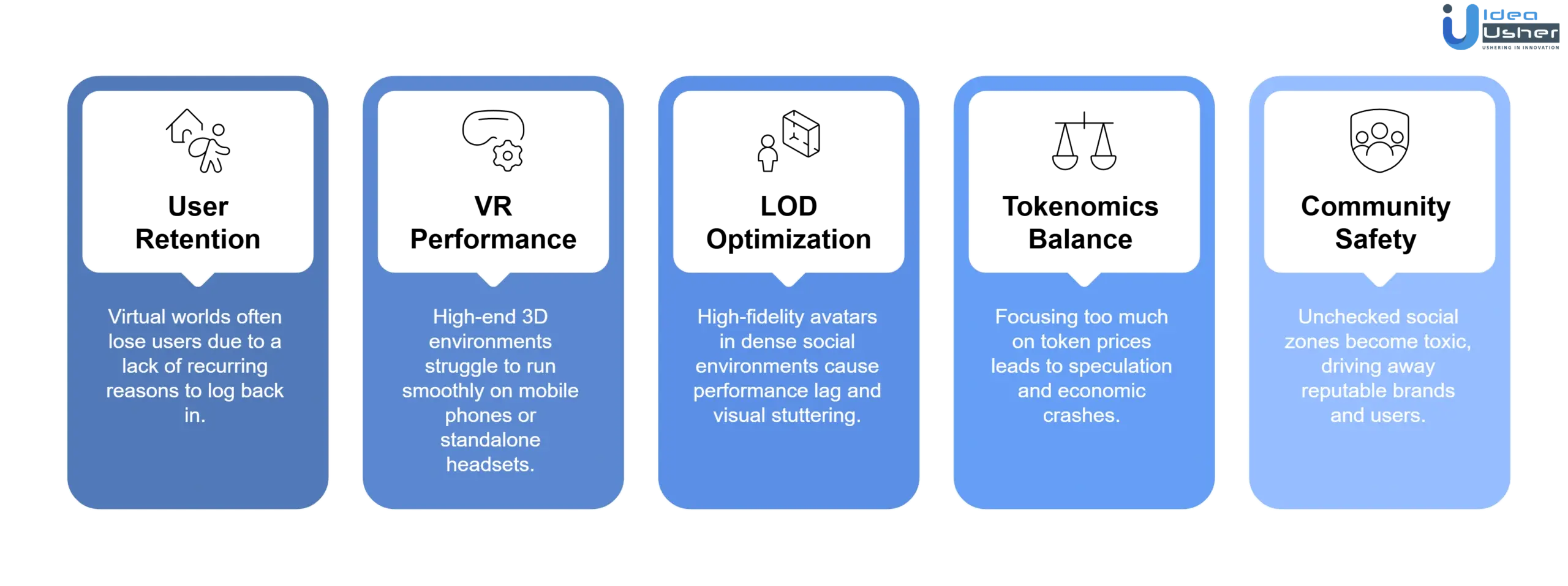
1. User Retention After First Visit
Challenge: Many virtual worlds lose most users after one day because they lack recurring reasons to log back in regularly.
Solution: Our team builds habit-forming quest lines and tiered loyalty rewards that give users a clear purpose for returning. We focus on social triggers that keep the community active and growing.
2. VR Performance and Device Limits
Challenge: High-end 3D environments often struggle to run smoothly on mobile phones or standalone headsets, causing lag and user frustration.
Solution: We use advanced optimization and asset compression to keep frame rates stable. Our developers make certain the world looks stunning while running perfectly on every piece of hardware your audience uses.
3. Optimize LOD For VR Metaverse Avatars
Challenge: High-fidelity avatars in dense social environments often cause severe performance lag and visual stuttering on mobile VR hardware headsets.
Solution: Our developers implement automated Level of Detail systems that dynamically simplify distant meshes and textures. This maintains a fluid 90 FPS while keeping the skyscraper vibrant and busy.
4. Balancing Tokenomics With Utility
Challenge: Focusing too much on token prices leads to speculation which can crash the economy if the platform lacks real use.
Solution: We design economic models where the token is vital for commerce and events. This keeps the market steady and makes certain that the financial value is backed by actual platform activity.
5. Moderation and Community Safety
Challenge: Unchecked social zones can become toxic or unsafe which drives away reputable brands and high-value users looking for quality interactions.
Solution: We integrate automated AI systems and reporting tools that monitor behavior in real time. This allows for a safe and professional environment that encourages people to stay and build relationships.
Monetization Models of Virtual Real Estate Metaverse
Building a virtual world is a significant investment that requires a clear plan for generating revenue. By diversifying how the platform makes money, you can build a stable economy that provides value to both the creators and the platform owners.

1. Virtual Real Estate Sales and Leasing
Selling digital land provides the initial capital needed to grow while leasing allows for a steady stream of income. This part of creator metaverse platform development turns every floor into a functional business asset.
- Primary Market Sales: Minting and selling land parcels directly to users allows them to own a piece of the skyscraper and build their own unique digital presence.
- Secondary Leasing Market: Landowners can rent their digital space to brands for virtual storefronts or corporate events, creating a recurring passive income stream for the property owners.
- Dynamic Property Values: As floor traffic increases, the valuation of owned land rises, encouraging a healthy secondary market where users can trade their assets for a profit.
2. Digital Advertising and Brand Activations
Advertising is a reliable way to generate cash flow without selling off core assets. By utilizing the vertical layout, you can place ads in high traffic areas where they get noticed by every visitor.
- Visual Ad Totems: Strategically placed billboards and blimps within the building offer massive visibility for companies looking to reach a targeted audience of active digital enthusiasts.
- Sponsored Zones: Brands pay for naming rights or dedicated sections within the tower where they can run immersive campaigns and engage directly with the passing community.
- Branded Events: Partnering with major firms to host virtual product launches provides a boost in revenue while bringing fresh content and new users to the skyscraper floors.
3. Staking and Liquidity Pools
Financial tools like staking encourage users to hold onto their tokens for longer periods. This helps stabilize the economy while rewarding the most loyal members for their participation and trust in the project.
- Token Yield Systems: Users can lock up native tokens in liquidity pools to earn a percentage back which keeps the currency circulating and maintains its overall market value.
- Joint Ownership Models: Programs like JOBE allow multiple users to own fractional shares of premium floors, making high value real estate accessible to a much larger audience of buyers.
- Protocol Governance: Holders of staked tokens can vote on platform changes, giving them a stake in the future direction of the project and increasing their long term commitment.
4. Play-To-Earn Mechanics
Giving people a way to earn while they participate keeps the community active and engaged. These mechanics turn everyday actions into rewarding experiences that drive traffic to every floor and increase time spent.
- Quest Based Rewards: Users earn tokens by completing educational tasks or exploring new levels which makes certain that every part of the skyscraper remains busy and well explored.
- Mini Game Competitions: High quality games built into the world provide a path for players to win digital assets based on their skill and time spent playing.
- Participation Incentives: Attending live concerts or networking events can be rewarded with exclusive NFT drops, creating a sense of excitement and value around every virtual gathering.
5. Marketplace Transaction Fees
The internal marketplace is the hub for all commerce between users. By taking a small cut of every transaction, the platform generates a continuous stream of revenue from every trade made within the building.
- Peer To Peer Trading: Every time a user sells an avatar or wearable to another person, the platform takes a small commission to fund ongoing development and maintenance.
- NFT Secondary Sales: Royalties on the resale of digital assets provide recurring income for both the original creators and the platform itself, supporting a stable creative economy.
- Service Fees: Charging for premium tools or specialized building services helps monetize the professional side of the metaverse while supporting those who build high quality interactive content.
Future Trends In Creator Metaverse Platforms
The landscape of virtual reality is shifting rapidly as we move through 2026. New technologies are making these digital skyscrapers more accessible and interactive. Staying ahead of these shifts is vital for successful creator metaverse platform development and consistent long-term growth.
1. AI-Powered World Building Tools
Automation is revolutionizing how we create digital spaces. Generative systems allow users to build complex environments through simple voice or text commands, drastically reducing the time needed to populate every floor.
Real World Example: HiberWorld utilizes its Hiber3D engine and integrated AI to allow users to generate complete, interactive 3D levels and environments instantly using simple natural language prompts.
2. Cross-Platform Mobile Metaverse Access
Accessibility is the key to mass adoption. Modern engines now support high-quality rendering on smartphones, allowing people to enter the skyscraper and interact with brands without needing expensive hardware or headsets.
Real World Example: ZEPETO has successfully scaled its user base by offering a mobile-centric 3D social world where millions of users customize avatars and shop for virtual goods daily.
3. Tokenized Fan Communities
Ownership is moving toward community-led growth. Brands are using digital tokens to grant fans voting rights on future content, exclusive access to floors and a share in the project’s success.
Real World Example: The ApeCoin DAO empowers its community to vote on the governance and development of the Otherside metaverse, giving fans a direct voice in how their virtual social hub evolves.
Why Choose IdeaUsher for Creator Metaverse Platform Development
Partnering with IdeaUsher allows you to skip the trial and error phase. We provide the technical depth and strategic guidance needed to build a profitable digital landmark efficiently.
A. Strategy to Launch With Revenue First
Our consultants focus on building a sustainable economy from day one like one of our projects Veelive. We design tokenomics and monetization loops that prioritize immediate cash flow, ensuring your investment begins generating value as soon as the first floors open.
B. End-to-End Design and Development
With over 500,000+ hours of experience, our team handles every aspect of the project. From high-fidelity 3D modeling to secure blockchain smart contracts, we deliver a polished, ready-to-scale skyscraper that meets global enterprise standards.
C. Faster MVP to Market Execution
Our elite team of ex-FAANG/MAANG developers utilizes modular frameworks to accelerate the build process. We focus on getting your core features live quickly, allowing you to capture market share and onboard brands while the competition is still in planning.
Conclusion
The evolution of the digital landscape necessitates a shift toward more centralized and engaging virtual environments. By focusing on a vertical, community-centric model, developers can solve the isolation issues found in traditional open-world maps. This strategic approach to creator metaverse platform development ensures that social interaction and financial utility coexist seamlessly within a familiar architectural framework. Prioritizing user-generated content and brand connectivity will ultimately foster a thriving, high-retention ecosystem that stands the test of time in the Web3 era.
FAQs
A.1. The budget typically ranges from $80,000 to over $500,000+. Costs depend on 3D environment complexity, blockchain integration and whether you use custom engineering or pre-built scripts for your skyscraper’s vertical levels.
A.2. Professional developers prioritize Unity or Unreal Engine for high-fidelity 3D rendering. For the backend, integrating Polygon or Ethereum ensures secure NFT ownership while WebGL allows users to access the platform via browsers.
A.3. Primary revenue stems from selling or leasing NFT land and skyscraper floors. You can also generate consistent income through in-world advertising zones, marketplace transaction fees and charging brands for premium virtual events.
A.4. A functional creator metaverse integrates 3D immersive environments, decentralized identity systems through avatars and blockchain-based asset ownership. These platforms require robust multiplayer infrastructure to support real-time social interactions and scalable creator tools.