

Key Takeaways
- GLP-1 clinic apps combine telehealth, prescription management and patient tracking into a scalable digital care platform.
- GLP1 app development costs range from $80K–$450K+, depending on AI features, EHR integrations and compliance requirements.
- Core features include dose tracking, telehealth consultations, medication management and clinician monitoring dashboards.
- Clinics invest in GLP-1 apps to improve patient retention, operational efficiency and recurring subscription revenue.
- How IdeaUsher can help you build HIPAA-compliant GLP-1 platforms with AI personalization, pharmacy integrations and healthcare infrastructure.
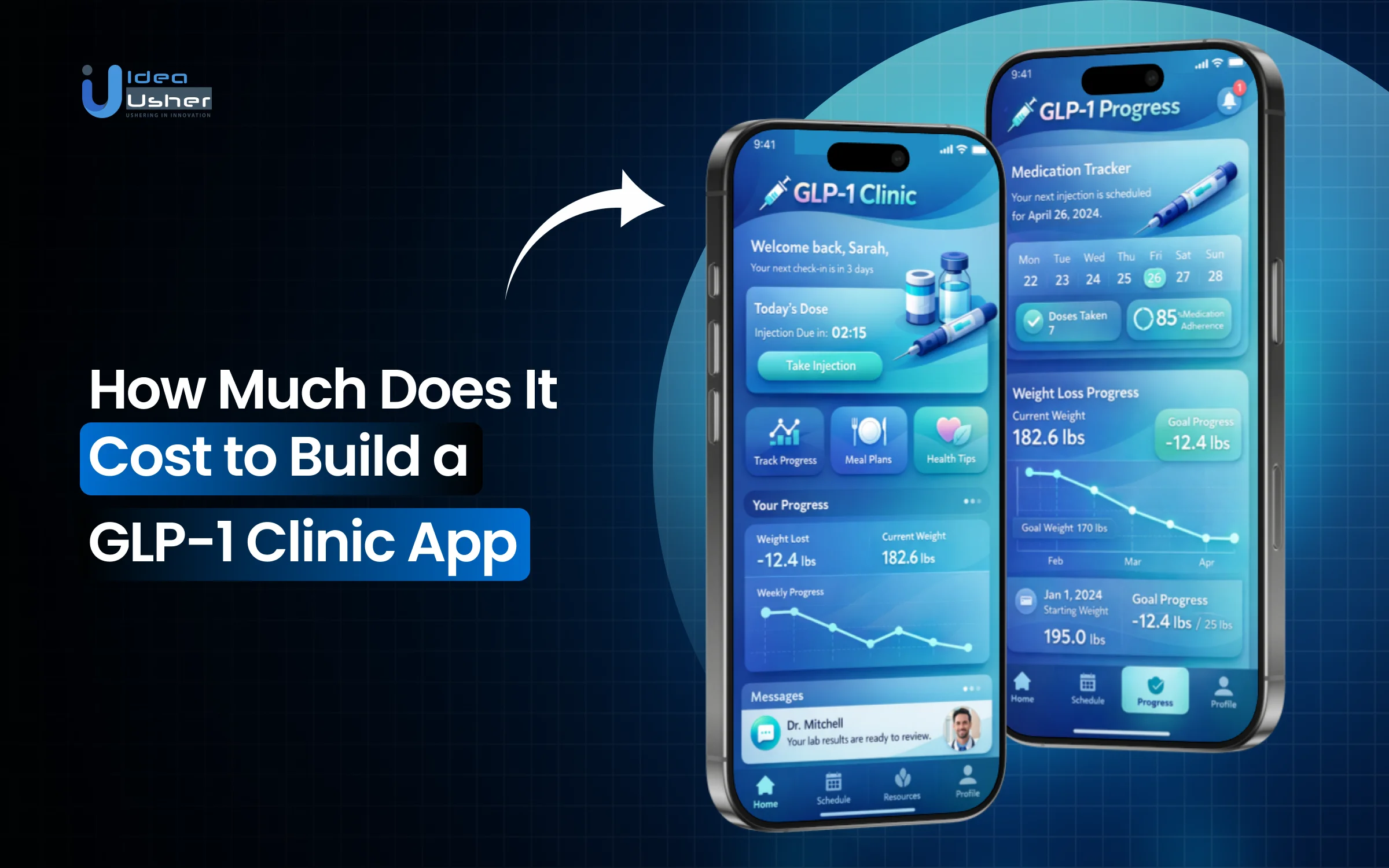
GLP-1 clinic apps sit at theintersection of telehealth, medication management and personalized care, which makes cost estimation more complex than a typical healthcare app. These platforms are expected to handle patient onboarding, eligibility assessments, prescription workflows, progress tracking and ongoing support within a single system,where glp1 app development cost depends on the depth of clinical automation and patient engagement.
The cost drivers become more layered when real-world usage is considered, as integrating telehealth, EHR connectivity, prescription management and compliance increases development effort. Complexity scales further with AI-driven insights, tracking systems and infrastructure for growing patient volumes. This is vital as GLP-1 care shifts toward digital platforms using subscription models and integrated services.
In this blog, we break down how much it costs to build a GLP-1 clinic app by examining key cost drivers, system components and the practical factors that influence overall development and operational investment.
Why GLP-1 Clinic Apps Are Scaling Fast In 2026?
The rapid expansion of GLP-1 receptor agonists has fundamentally altered the trajectory of the obesity and diabetes markets. Digital-first clinics are now the primary gateway for patients seeking these treatments because they offer a level of accessibility and clinical oversight that traditional healthcare settings often struggle to provide at scale.
A. Rise Of Digital Weight-Loss Platforms
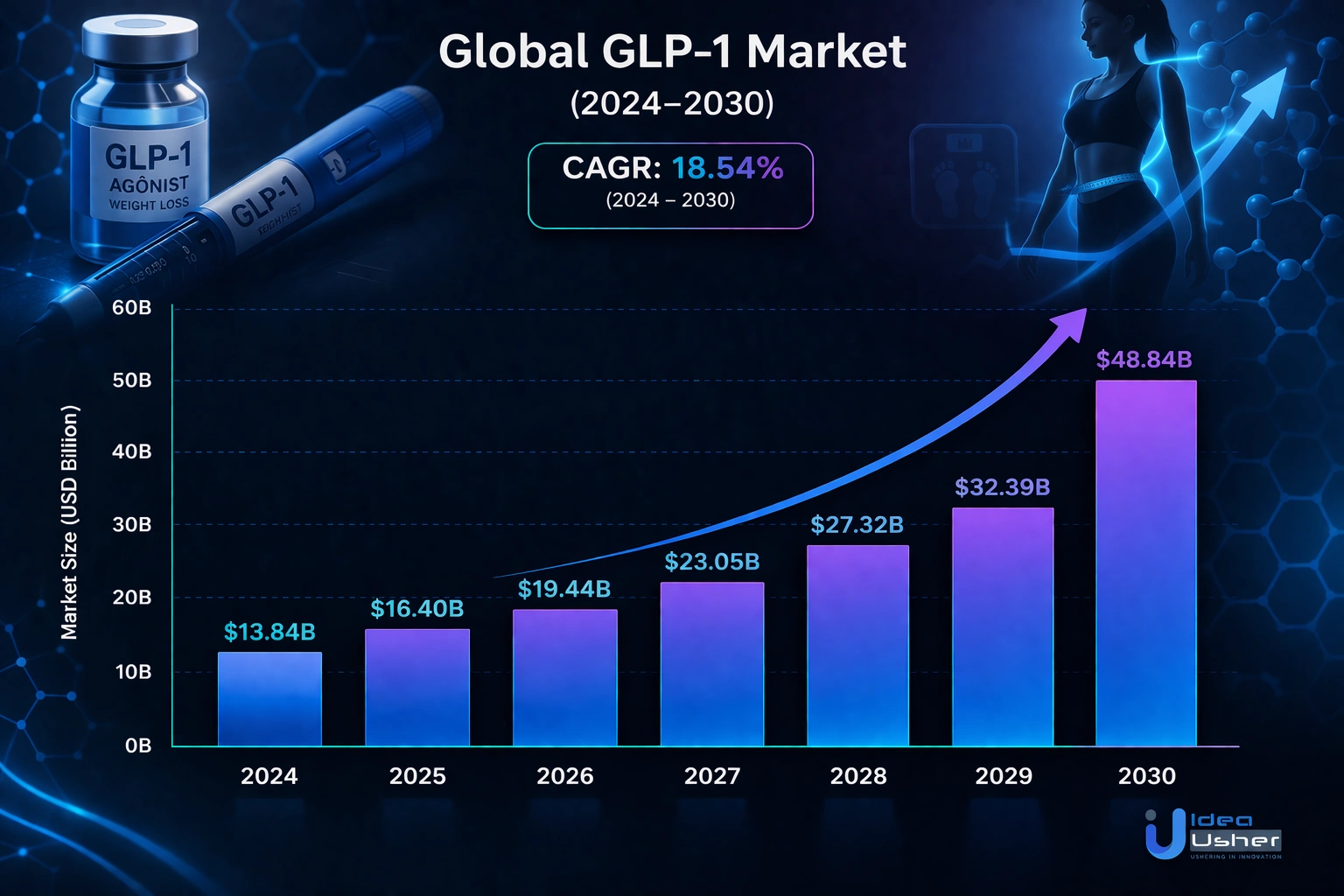
Modern patients are increasingly moving away from traditional brick and mortar weight loss clinics in favor of integrated digital platforms. As the market for GLP-1 agonists was valued at USD 13.84 billion in 2024 and is projected to reach USD 48.84 billion by 2030, growing at a CAGR of 18.54%, these apps provide a seamless user experience that combines medical consultations with long term lifestyle tracking.
Telehealth patients for GLP-1 therapy show 1.8 times higher odds of achieving significant weight loss than those in traditional care. Digital programs yielded a 14.2% mean weight loss over six months, surpassing the 12.8% seen in-person.
Telehealth cohorts show significantly higher adherence rates at 92% compared to 84% for traditional in-person patients. Integrated monitoring has shown that GLP-1 users experience a decreased risk of addiction-related behaviors when supported by a clinical team.
- Frictionless Onboarding: Integrated digital forms and automated ID verification allow for rapid patient intake without manual paperwork.
- Adherence Tools: Smart notifications and injection trackers ensure patients stay on their titration schedules, which is vital for clinical success.
- Data Centralization: Consolidating pharmacy records, lab results and patient-reported outcomes into one dashboard simplifies the provider experience.
- Scalability: Software allows a single clinical team to manage a much larger patient volume compared to physical clinic locations.
B. Demand For Remote Metabolic Care
Metabolic health management is a data intensive process that requires frequent monitoring and precise dose adjustments. Remote care models allow clinics to bypass the physical limitations of geographic location and specialist availability.
| Feature | Impact on Scaling |
| Asynchronous Consultations | Allows clinicians to review patient data and approve titrations without requiring a live video call for every interaction. |
| Wearable Integration | Data from continuous glucose monitors and smart scales flows directly into the clinician dashboard for data-driven interventions. |
| Automated Triage | AI-driven tools flag patients experiencing specific side effects, allowing the medical team to prioritize urgent cases. |
| Scalable Oversight | A single clinician can manage a larger patient panel when supported by automated logging and reminders. |
C. How Clinics Are Monetizing GLP-1 Programs
The monetization of a GLP-1 app is highly attractive due to the recurring nature of the treatment. Unlike acute care, metabolic management is a multi-year commitment, creating reliable and predictable revenue streams.
1. Direct Membership Fees
Most platforms use monthly subscriptions covering clinical oversight, lab orders and app access. This creates high-margin, recurring revenue streams that scale efficiently as the patient user base grows.
2. Pharmacy Integration and Fulfillment
Many clinics generate revenue through the fulfillment of the medication. This is achieved by partnering with compounding pharmacies or integrating with specialty pharmacy networks to handle the distribution of branded medications.
3. Tiered Service Levels
Clinics often offer different tiers of care to maximize revenue per user.
- Standard Tier: Includes basic medical oversight and access to the app.
- Premium Tier: Adds 1-on-1 nutritional counseling and 24/7 access to medical assistants.
- Elite Tier: Includes personal fitness programming and advanced metabolic testing.
4. B2B Corporate Wellness
Clinics increasingly sell platforms as corporate health benefits. This reduces long-term healthcare costs for businesses while providing clinics with a massive, pre-vetted patient pool for sustainable growth.
Core Features Required in a GLP-1 Clinic App
A GLP-1 clinic app is a digital healthcare platform designed to manage the treatment journey for patients taking GLP-1 receptor agonists (like Ozempic, Wegovy, Mounjaro and Zepbound) for weight loss or type 2 diabetes.
These apps act as a “virtual clinic,” bridging the gap between a patient’s prescription and their daily lifestyle by combining medical oversight with tracking tools
GLP-1 Clinic App Development Cost by Feature
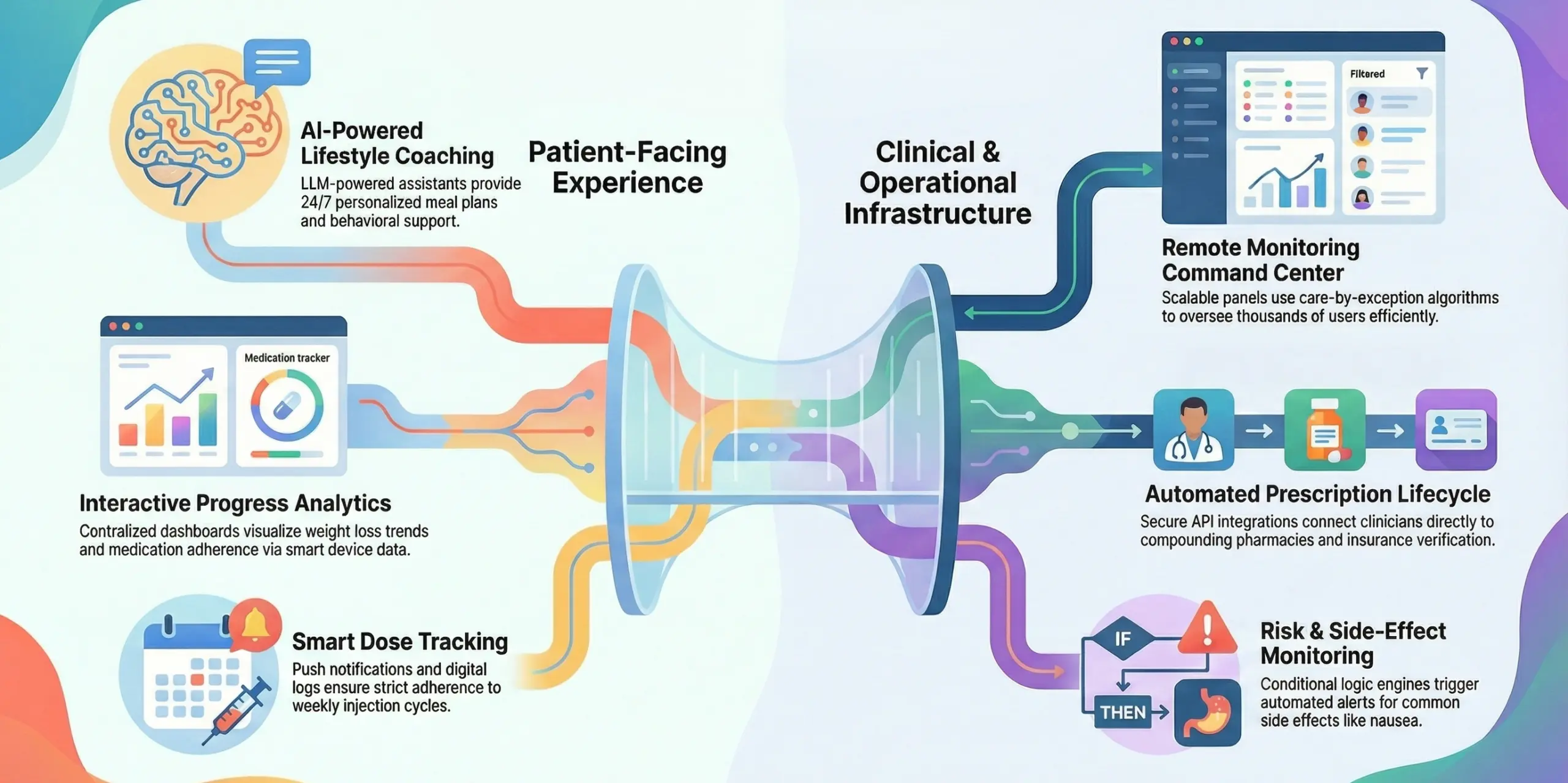
The cost of a GLP-1 clinic app depends largely on the features included. The table below provides an estimated development cost range for the most important modules typically found in modern GLP-1 treatment platforms.
| Feature | What It Does | Estimated Cost |
| Telehealth & Virtual Consultation | Enables remote patient evaluations, virtual consultations, and ongoing care management | $15,000 – $25,000 |
| Prescription & Medication Management | Handles e-prescriptions, medication refills, and pharmacy coordination | $20,000 – $35,000 |
| Dose Tracking & Injection Reminders | Tracks medication schedules and sends automated injection reminders | $8,000 – $12,000 |
| Side-Effect Logging & Risk Monitoring | Records symptoms and alerts clinicians about potential risks | $12,000 – $18,000 |
| AI Nutrition & Lifestyle Coaching | Provides personalized nutrition plans and behavioral health guidance | $25,000 – $45,000 |
| Patient Dashboard & Progress Analytics | Displays weight-loss progress, health metrics, and treatment outcomes | $10,000 – $15,000 |
| Clinician Monitoring Panel | Enables healthcare providers to monitor and manage patient populations remotely | $18,000 – $30,000 |
1. Telehealth And Virtual Consultation Flow
The architecture integrates real-time video and asynchronous reviews for remote eligibility screening and diagnosis. Automated intake forms filter candidates by BMI, enabling clinicians to conduct efficient, compliant virtual evaluations while ensuring seamless care without physical clinic visits.
Estimated cost: $15,000 – $25,000, driven by secure HIPAA-compliant video streaming integration and complex automated patient triage logic.
2. Prescription And Medication Management
The system automates the prescription lifecycle by connecting clinicians directly to compounding pharmacies. Because digital refills and insurance verification require secure API synchronization, these integrations often represent a significant portion of the total glp1 development cost and regulatory documentation.
Estimated cost: $20,000 – $35,000, due to complex E-prescribing (eRx) integrations and secure pharmacy API synchronization required for legal compliance.
3. Dose Tracking And Injection Reminders
The interface provides automated schedules and push notifications to ensure strict adherence to weekly injection cycles. By logging every dose, the platform maintains a digital titration log that helps clinicians adjust medication levels accurately.
Estimated cost: $8,000 – $12,000, covering custom notification logic and time-zone-aware scheduling databases for global patient accessibility.
4. Side-Effect Logging And Risk Monitoring
The module captures real-time patient feedback regarding common side effects like nausea or fatigue. Implementing these automated risk alerts influences the glp1 development cost based on the complexity of the conditional logic engines used to escalate cases.
Estimated cost: $12,000 – $18,000, driven by conditional logic engines that categorize symptom severity and escalate high-risk cases to clinicians.
5. AI-Based Nutrition And Lifestyle Coaching
The AI engine analyzes biometric data and dietary habits to offer personalized meal plans. While adding intelligent coaching modules increases the initial glp1 development cost, these LLM-powered assistants provide essential 24/7 behavioral support for long-term patient success.
Estimated cost: $25,000 – $45,000, reflecting the development of LLM-powered assistantsand proprietary algorithms for personalized metabolic health insights.
6. Patient Dashboard And Progress Analytics
The centralized hub visualizes weight-loss trends, body composition changes and medication adherence through interactive charts. By aggregating data from smart devices, the platform reinforces motivation and keeps patients aligned with their long-term clinical goals.
Estimated cost: $10,000 – $15,000, involving data visualization libraries and seamless integration with wearable health tech like Apple Health or Google Fit.
7. Clinician Panel For Remote Monitoring
The administrative command center allows medical teams to oversee thousands of users via care-by-exception algorithms. Designing a scalable panel is a primary factor in glp1 development cost, as it enables efficient remote monitoring without increasing clinic headcount.
Estimated cost: $18,000 – $30,000, depending on advanced data filtering capabilities and the complexity of the internal secure messaging infrastructure.
Cost Breakdown By Development Stages
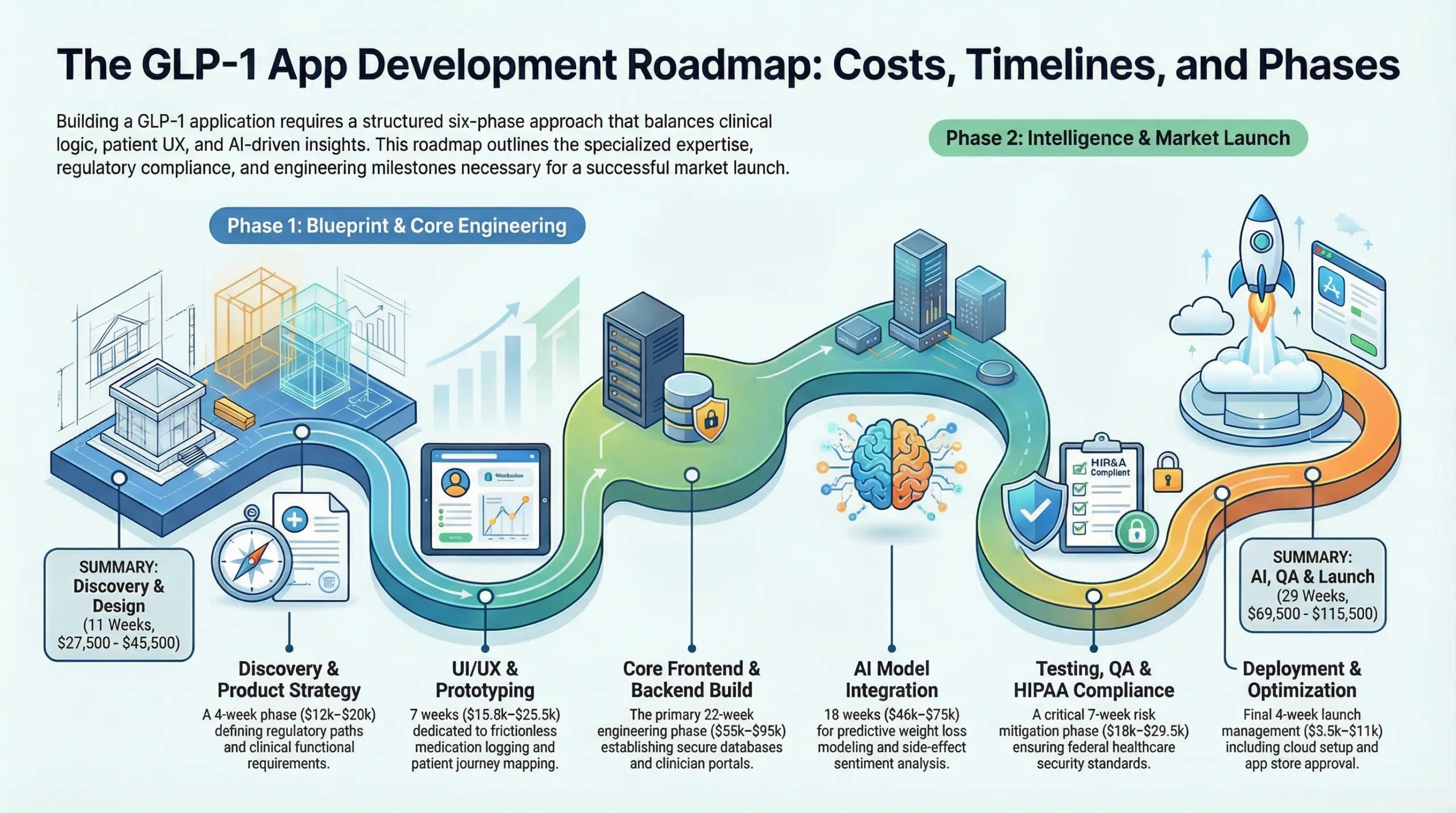
The total glp1 app development cost is distributed across several distinct phases, each requiring specialized expertise. This structured approach ensures that the clinical logic is sound, the user interface is intuitive and the technical architecture is scalable for high patient volumes.
1. Discovery And Product Strategy Phase
A successful digital health venture begins with a rigorous alignment of clinical goals and technical feasibility. This foundational phase prevents expensive mid-project pivots by defining the exact regulatory path and functional requirements before any code is written.
| Development Phase | Scope of Work | Timeline | Estimated Cost |
| Market & Competitor Analysis | Researching current GLP-1 providers and identifying feature gaps. | 1 Week | $3,000 – $5,000 |
| Regulatory & Compliance Mapping | Defining the requirements for HIPAA, GDPR and pharmacy laws. | 1 Week | $4,000 – $7,000 |
| Product Roadmap & SRS | Documenting every technical and functional requirement of the app. | 2 Weeks | $5,000 – $8,000 |
| Total Estimated Cost | Phase Completion | 4 Weeks | $12,000 – $20,000 |
2. UI/UX Design And Prototyping
The patient journey must balance clinical data with psychological encouragement. Designers focus on a frictionless interface for medication logging, as high-quality user experiences directly influence the overall glp1 development cost.
| Development Phase | Scope of Work | Timeline | Estimated Cost |
| User Persona & Journey Mapping | Defining the different paths for patients, doctors and admins. | 1 Week | $2,500 – $4,000 |
| Wireframing | Creating low-fidelity structural blueprints for all app screens. | 2 Weeks | $4,000 – $6,000 |
| High-Fidelity UI Design | Applying brand identity, colors and typography to the interface. | 3 Weeks | $7,000 – $12,000 |
| Clickable Prototyping | Building a simulated version of the app to test user transitions. | 1 Week | $2,000 – $3,500 |
| Total Estimated Cost | Visual & Experience Design | 7 Weeks | $15,500 – $25,500 |
3. Frontend And Backend Development
Engineers build the robust engine that powers the clinical workflows while ensuring the mobile interface remains responsive. This stage involves the most significant portion of the glp1 app development cost as it covers the actual construction of the database, logic and user-facing features.
| Development Phase | Scope of Work | Timeline | Estimated Cost |
| Database Architecture Setup | Designing secure, scalable structures for medical and personal data. | 2 Weeks | $6,000 – $10,000 |
| Core API Development | Building the logic for user auth, telehealth and subscriptions. | 6 Weeks | $15,000 – $25,000 |
| Mobile App Development | Coding the patient-facing app for iOS and Android platforms. | 8 Weeks | $20,000 – $35,000 |
| Clinician Web Portal | Creating the dashboard for doctors to manage patient panels. | 4 Weeks | $10,000 – $18,000 |
| Payment & Billing Logic | Integrating Stripe or similar for recurring membership fees. | 2 Weeks | $4,000 – $7,000 |
| Total Estimated Cost | Engineering & Construction | 22 Weeks | $55,000 – $95,000 |
4. AI Model Integration And Training
Intelligent features elevate a standard clinic app into a predictive metabolic health ecosystem. This high-priority stage involves training models to understand patient trends, provide 24/7 support and assist clinicians in identifying potential medical risks before they become critical.
| Development Phase | Scope of Work | Timeline | Estimated Cost |
| Data Collection & Pre-processing | Gathering and cleaning anonymized metabolic data for training. | 2 Weeks | $5,000 – $9,000 |
| NLP Chatbot Implementation | Building AI to answer common medication and side-effect questions. | 4 Weeks | $12,000 – $18,000 |
| Predictive Weight Loss Modeling | Developing algorithms to forecast patient progress based on data. | 4 Weeks | $10,000 – $15,000 |
| Side-Effect Sentiment Analysis | AI tools that flag high-risk symptoms in patient logs. | 3 Weeks | $7,000 – $12,000 |
| Nutritional Recommendation Engine | Personalizing meal advice based on GLP-1 specific needs. | 3 Weeks | $8,000 – $13,000 |
| Model Fine-tuning & Optimization | Adjusting the AI for higher accuracy and clinical safety. | 2 Weeks | $4,000 – $8,000 |
| Total Estimated Cost | Intelligence Implementation | 18 Weeks | $46,000 – $75,000 |
5. Testing, QA, And Compliance Validation
Patient safety and data security are the primary focuses during the quality assurance stage. Every feature undergoes rigorous stress testing to ensure the app functions flawlessly under load and remains fully compliant with stringent healthcare privacy regulations.
| Development Phase | Scope of Work | Timeline | Estimated Cost |
| Functional & UI Testing | Verifying that every button, link and feature works as intended. | 2 Weeks | $4,000 – $6,000 |
| Security & Penetration Testing | Simulating cyberattacks to find and fix potential vulnerabilities. | 2 Weeks | $6,000 – $10,000 |
| HIPAA Compliance Audit | Ensuring all data handling meets federal healthcare standards. | 2 Weeks | $5,000 – $8,500 |
| Load & Performance Testing | Testing how the app handles thousands of simultaneous users. | 1 Week | $3,000 – $5,000 |
| Total Estimated Cost | Risk Mitigation | 7 Weeks | $18,000 – $29,500 |
6. Deployment And App Store Launch
The final transition from development to a live environment requires careful coordination with mobile marketplaces and cloud providers. This phase ensures the app is discoverable, functional and ready to onboard its first cohort of metabolic health patients.
| Development Phase | Scope of Work | Timeline | Estimated Cost |
| Cloud Infrastructure Setup | Configuring AWS or Azure for medical-grade hosting. | 1 Week | $2,000 – $4,000 |
| App Store Optimization (ASO) | Writing descriptions and selecting keywords for visibility. | 1 Week | $1,500 – $3,000 |
| Final Production Release | Submitting the app and managing the approval process. | 2 Weeks | $2,000 – $4,000 |
| Total Estimated Cost | Launch Management | 4 Weeks | $5,500 – $11,000 |
Estimated Cost To Build A GLP-1 Clinic App
The financial investment required to launch a metabolic health platform varies by clinical scale and automation. Decision-makers must determine if an MVP or a comprehensive ecosystem aligns with their goals, as these choices directly dictate the total glp1 development cost.
A. MVP Cost For Early-Stage Clinics
The Minimum Viable Product (MVP) focuses on the core patient journey, prioritizing medical safety and regulatory compliance over complex automation. This version is designed to get a clinic operational and revenue-positive with the least amount of initial capital.
| Metric | Details |
| Estimated Budget | $40,000 – $80,000 |
| Primary Focus | HIPAA-compliant intake, telehealth and basic dose logging. |
| Development Time | 3 to 4 months. |
| Key Advantage | Rapid market entry and immediate validation of the clinical model. |
B. Mid-Level Platform With Core Features
A mid-level platform is built for clinics ready to scale by automating repetitive administrative and logistical tasks. At this stage, the glp1 app development cost covers deeper integrations that allow the clinical team to manage significantly higher patient volumes.
| Metric | Details |
| Estimated Budget | $100,000 – $220,000 |
| Primary Focus | Pharmacy API integrations, automated titration alerts and lab syncing. |
| Development Time | 5 to 7 months. |
| Key Advantage | Reduced manual labor and improved patient retention through better tools. |
C. Advanced AI-Powered GLP-1 Ecosystem
Enterprise-grade ecosystems are designed for nationwide clinics that utilize data as a competitive advantage. These platforms integrate sophisticated machine learning models to personalize the metabolic journey and predict patient outcomes with high accuracy.
| Metric | Details |
| Estimated Budget | $250,000 – $450,000+ |
| Primary Focus | Predictive AI coaching, computer vision for injections and full EHR bi-directional sync. |
| Development Time | 8 to 12+ months. |
| Key Advantage | Superior clinical outcomes and a highly defensible technological moat. |
D. Cost Comparison By Region (US Vs India)
Geographical location remains the most significant variable in determining the final budget. Selecting a development hub requires balancing hourly rates against domain expertise and familiarity with regional healthcare regulatory frameworks.
| Region | Avg. Hourly Rate | MVP Level | Enterprise Level | Talent Density |
| United States | $120 – $210 | $85,000 – $155,000 | $350,000 – $650,000 | Very High |
| India | $25 – $50 | $40,000 – $80,000 | $100,000 – $220,000 | Very High |
| Eastern Europe | $45 – $85 | $52,000 – $98,000 | $190,000 – $300,000 | High |
| Western Europe | $90 – $160 | $75,000 – $130,000 | $280,000 – $480,000 | High |
Note: IdeaUsher has delivered 1000+ digital products with a team of 250+ pre-vetted developers, helping healthcare startups and clinics build scalable, cost-efficient, and compliant GLP-1 platforms.
Factors That Influence GLP-1 App Development Cost
The total glp1 app development cost is not a fixed figure but a variable outcome of several architectural and business decisions. From the depth of the clinical workflow to the geographic location of your engineering team, each choice carries a distinct price tag and a long-term impact on the platform’s scalability and maintenance requirements.
1. Feature Complexity and Workflow Depth
The primary driver of the budget is the depth of the patient management lifecycle. A basic application might handle simple scheduling, whereas a high-end platform automates the entire clinical protocol from titration to maintenance.
(Estimated Cost Impact: $40,000 – $95,000+)
- Medical Intake and Screening ($10,000 – $20,000): Advanced logic is required to screen for contraindications (such as a history of medullary thyroid carcinoma) through dynamic, branch-logic surveys.
- Titration and Dose Management ($15,000 – $25,000): The system must calculate and track complex dose escalation schedules (e.g., 0.25mg to 0.5mg transitions) including automated alerts for the next injection.
- Inventory and Cold-Chain Logistics ($10,000 – $25,000): If the clinic handles fulfillment, the app needs to integrate with shipping partners that support temperature-controlled logistics for GLP-1 medications.
- Side-Effect Logging and Risk Monitoring ($5,000 – $25,000): Real-time symptom tracking with automated red-flag triggers for clinical intervention ensures patient safety and reduces liability.
2. AI and Personalization Capabilities
Modern platforms are moving away from static programs toward AI-driven metabolic coaching. Integrating machine learning increases the development effort but significantly improves patient outcomes and retention.
(Estimated Cost Impact: $30,000 – $80,000+)
- Predictive Analytics ($15,000 – $35,000): AI models can analyze initial weight-loss velocity to predict long-term success or suggest dosage adjustments to the clinician.
- Personalized Nutrition Engines ($10,000 – $25,000): Beyond simple calorie counting, these systems use LLMs (Large Language Models) to suggest meal plans that specifically counteract common GLP-1 side effects like nausea or muscle loss.
- Automated Patient Support ($5,000 – $20,000): AI chatbots trained on clinical protocols can handle up to 80% of non-clinical patient inquiries, such as “How do I store my pen?” or “I missed a dose, what do I do?”
3. Third-Party Integrations and APIs
The GLP-1 app functions as a centralized hub connecting healthcare services. Each integration involves licensing and custom API maintenance, which significantly impacts the overall GLP-1 development cost and data security.
(Estimated Cost Impact: $22,000 – $61,000+)
| Integration Category | Purpose | Implementation Cost | Cost Impact |
| EHR/EMR Systems | Syncing patient records with existing medical databases (Epic, Cerner). | $10,000 – $25,000 | High |
| Pharmacy APIs | Real-time prescription tracking and fulfillment. | $5,000 – $15,000 | High (Custom Middleware) |
| Payment Gateways | Handling recurring subscriptions (Stripe/PayPal). | $2,000 – $5,000 | Moderate (Standard API) |
| Wearable SDKs | Syncing data from Apple Health, Google Fit, or smart scales. | $3,000 – $10,000 | Moderate (Ongoing Maintenance) |
| Twilio/SendGrid | Secure HIPAA-compliant messaging and alerts. | $2,000 – $6,000 | Low (Usage-based fees) |
4. Compliance Requirements (HIPAA, GDPR)
The GLP-1 development cost remains non-negotiable regarding security. Building HIPAA-compliant infrastructure requires data encryption, multi-factor authentication, and detailed audit trails to protect sensitive health information and ensure regulatory identifiers remain secure.
(Estimated Cost Impact: $15,000 – $40,000)
| Requirement | Implementation Detail | Business Importance | Est. Setup Cost |
| Data Encryption | AES-256 for storage and TLS 1.3 for transmission. | Prevents unauthorized data breaches. | $5,000 – $12,000 |
| Audit Logs | Tracking every time a medical record is viewed or edited. | Essential for regulatory compliance and safety. | $4,000 – $10,000 |
| BAA Agreements | Legal contracts with all cloud and third-party providers. | Shifts liability and ensures ecosystem-wide security. | $6,000 – $18,000 (Incl. Legal) |
5. UI/UX Design and Patient Experience
The psychology of weight loss requires a design language that is encouraging, clean, and intuitive for daily use. High-quality UI/UX design focuses on reducing the friction of logging daily habits while managing the emotional aspects of a long-term medical journey.
(Estimated Cost Impact: $18,000 – $45,000)
- Behavioral Design ($5,000 – $12,000): Using “nudges” and gamification to encourage daily logging and hydration, which are critical for metabolic health.
- Clinician Dashboard Efficiency ($8,000 – $20,000): Designing a complex interface for doctors that allows them to review 50+ patient profiles in an hour without “click fatigue.”
- Accessibility Standards ($5,000 – $13,000): Ensuring the app is usable for a wide demographic including those with varying levels of digital literacy or vision impairments (WCAG 2.1 compliance).
6. Platform Choice (iOS, Android, Web)
The decision to build natively for each platform or use a cross-platform framework like Flutter or React Native significantly impacts the development budget. Native apps offer the best performance but require two separate development teams and distinct codebases.
Strategic Platform Options:
- Native Development ($120,000 – $200,000+): Offers the highest performance and best hardware integration but increases the development effort because you must build separate iOS (Swift) and Android (Kotlin) apps.
- Cross-Platform Frameworks ($80,000 – $130,000): A more cost-effective middle ground that uses a single codebase (React Native or Flutter) to deploy across both iOS and Android platforms, saving roughly 30% to 40% in initial development labor.
- Progressive Web Apps (PWA) ($40,000 – $75,000): Lower cost and faster to deploy, though they lack certain deep-level mobile integrations (like background sync or advanced push notifications).
Hidden Costs of Building a GLP-1 Clinic App
Launching a GLP-1 clinic app involves more than just development expenses. Several operational, compliance, and infrastructure costs emerge after launch and should be considered when planning the overall investment.
1. HIPAA Compliance Audits
HIPAA compliance does not end after launch. Most clinics must perform periodic security assessments. Expect to pay $5,000 to $15,000 per year for third-party compliance reviews to identify vulnerabilities and maintain regulatory readiness.
2. Business Associate Agreements (BAAs)
GLP-1 platforms depend on cloud and analytics vendors, and HIPAA requires Business Associate Agreements (BAAs) for any partner handling Protected Health Information (PHI). While basic providers may include BAAs, secure healthcare-grade micro-services often demand premiums, increasing monthly licensing costs by $200 to $1,000+.
3. Pharmacy API Licensing Fees
Integrating with pharmacy networks for automated GLP-1 prescription routing and fulfillment isn’t free. Many networks charge an upfront onboarding fee of $2,500 to $10,000, plus ongoing transaction-based fees ranging from $0.50 to $2.00 per prescription processed.
4. Cloud Infrastructure and Storage
As patient volumes grow, infrastructure costs scale up quickly. Healthcare applications cannot use basic shared hosting; they require specialized, high-availability environments. Due to mandatory end-to-end encryption and redundant backup systems, monthly hosting bills typically scale from $500 per month at launch to $3,000+ per month as your patient base expands.
5. Security Monitoring and Penetration Testing
To prevent catastrophic data breaches and maintain patient trust, clinics must invest in formal, external hacking simulations. Annual independent penetration testing generally runs between $8,000 and $25,000, depending on the complexity of your application’s architecture.
6. Ongoing Maintenance and Updates
Launch day is just the beginning of your capital expenditure.The 20% Rule: Most healthcare platforms allocate between 15% and 25% of their original development cost each year for maintenance. If your app cost $150,000 to build, budget $22,500 to $37,500 annually for feature enhancements and mandatory security patches.
MVP vs Full-Scale GLP-1 Platform Cost
The strategic choice between a lean market entry and an all-encompassing ecosystem dictates the initial glp1 development cost for most clinics. Many successful platforms prioritize a focused feature set to gather clinical data before committing to high-capital, long-term infrastructure.
A. What to Include in an MVP First
The goal of an MVP is to facilitate a safe, compliant prescription path while minimizing technical overhead. This approach reduces the initial glp1 development cost, prioritizing a “clinical safety layer” that allows for rapid patient acquisition and faster revenue generation.
| Essential MVP Feature | Business and Clinical Purpose |
| HIPAA-Compliant Intake | Secure collection of medical history and blood work to ensure patient eligibility. |
| Asynchronous Telehealth | Secure messaging and photo uploads for physician review without requiring real-time video. |
| Basic Dose Tracker | A simple calendar interface for patients to log their weekly injections and current weight. |
| Payment & Subscription | Automated billing for the consultation and the medication to ensure steady cash flow. |
B. When to Scale to Advanced Features
The decision to scale should be triggered by operational bottlenecks or patient data rather than arbitrary timelines. Transitioning to a sophisticated platform is justified when manual processes hinder growth and increase the glp1 development cost. Indicators that it is time to invest in advanced scaling:
- Administrative Fatigue: When your clinical team spends more than 20% of their time on pharmacy follow-ups or manual titration reminders.
- High Churn Rates: If patients stop logging data after month three, it is time to invest in AI-driven engagement and behavioral coaching.
- Data Fragmentation: When lab results, pharmacy orders and patient chats are stored in separate silos, making clinical decisions difficult.
- Multi-State Expansion: When moving into new territories requires automated consent forms and state-specific prescribing logic.
C. Cost Impact of Scaling the Platform
The glp1 development cost scales non-linearly as backend architectures are rebuilt for higher concurrency. Shifting from feature-building to workflow optimization ensures the ecosystem handles complex data relationships and growing patient volumes.
- Infrastructure Upgrades: Moving to auto-scaling cloud environments to handle thousands of concurrent users can increase monthly hosting costs by 300% or more.
- API Maintenance: Managing 5 to 10 different third-party integrations (EHR, Labs, Pharmacy, Wearables) requires dedicated DevOps resources to ensure uptime.
- Security Audits: As the patient database grows, the cost of regular penetration testing and SOC2 Type II compliance audits becomes a significant recurring line item.
- Personalization Engines: Implementing machine learning for predictive weight-loss modeling requires specialized data scientists, which can add $50,000 to $150,000 to the annual development budget.
Timeline to Build a GLP-1 Clinic App
Launching a specialized metabolic health platform requires a strategic balance between speed-to-market and clinical safety. The glp1 app development cost roadmap in 2026, is dictated by the complexity of your titration logic and the depth of your third-party pharmacy and laboratory integrations.
A. MVP Development Timeline (3–5 Months)
The MVP phase is a sprint to establish a “functional core” that allows for safe prescribing and patient monitoring. This timeline focuses on high-impact features that facilitate immediate revenue generation while maintaining strict HIPAA compliance for all initial patient data.
| Phase | Duration | Key Deliverables |
| Discovery & Design | 3–4 Weeks | Product requirements, HIPAA-compliant UI/UX wireframes and clinical workflow mapping. |
| Core Development | 8–10 Weeks | Backend architecture, secure medical intake forms and basic telehealth integration. |
| Testing & Compliance | 3–4 Weeks | Security penetration testing, BAA agreements and end-to-end pharmacy routing checks. |
| Launch Prep | 1–2 Weeks | App Store/Play Store submission and clinician training on the admin dashboard. |
B. Full-Scale Platform Timeline (6–10 Months)
Moving beyond the MVP involves building a comprehensive ecosystem designed for nationwide scale. This timeline accounts for the intricate engineering required to automate labor-intensive clinical tasks and integrate AI-driven metabolic insights for long-term patient success.
| Phase | Duration | Key Deliverables |
| Advanced Integration | 8–12 Weeks | Bi-directional EHR syncing and automated API connections with large-scale lab networks. |
| AI & Automation | 10–14 Weeks | Machine learning models for titration adjustments and AI-powered nutrition/side-effect coaching. |
| Scaling & Optimization | 4–6 Weeks | Multi-state regulatory logic, advanced analytics dashboards and load testing for high concurrency. |
| Beta & Refinement | 4 Weeks | User acceptance testing (UAT) with a subset of patients to fine-tune the behavioral nudges. |
C. Factors That Delay Development
Even with a well-defined roadmap, several variables can extend the glp1 app development cost in terms of time. Identifying these bottlenecks early allows for better resource allocation and more realistic launch expectations.
- Regulatory and Legal Review: Delays often occur during the drafting of Business Associate Agreements (BAAs) or when legal teams must vet asynchronous telehealth protocols across different state lines.
- Third-Party API Readiness: Waiting for credentials or documentation from compounding pharmacies and legacy EMR systems can halt the integration phase of development.
- App Store Medical Scrutiny: Both Apple and Google perform rigorous reviews on “Medical” category apps, often requiring additional documentation regarding clinical oversight and prescribing licenses.
- Complex Clinical Logic: Designing an automated titration engine that accounts for every possible patient contraindication requires extensive collaboration between developers and medical directors.
- Data Migration Hurdles: If moving from an existing manual system or a generic EMR, the process of cleaning and mapping historical patient data into the new platform can be time-intensive.
Tech Stack for GLP-1 Clinic App Development
Selecting the right technological foundation is critical for glp1 app development cost and balancing performance with the rigid security requirements of healthcare. The chosen stack must support real-time data processing, HIPAA-compliant communication and the seamless integration of complex clinical titration logic for metabolic patients.
| Component | Recommended Stack | Strategic Role in Development |
| Frontend and Mobile Technologies | React Native, Flutter, Swift, Kotlin | Enables cross-platform efficiency or native performance for high-engagement patient interfaces. |
| Backend Architecture | Node.js, Python (Django/FastAPI), PostgreSQL | Provides a robust, scalable environment for managing complex medical records and titration logic. |
| AI and Data Analytics Tools | TensorFlow, PyTorch, OpenAI API | Powers predictive weight-loss modeling and automated side-effect screening using clinical datasets. |
| Telehealth and EHR Integrations | WebRTC, Twilio Video, Redox, Health Gorilla | Facilitates secure, high-definition virtual consultations and bi-directional syncing with medical records. |
| Cloud Infrastructure | AWS (HIPAA-eligible), Google Cloud Healthcare | Offers isolated, compliant environments for storing protected health information with 99.9% uptime. |
| API & Third-Party Integration | Stripe (Billing), SendGrid (Alerts), Onfido (ID) | Automates mission-critical business functions like prescription billing and identity verification. |
| Data Privacy & Encryption Standards | AES-256 (At-Rest), TLS 1.3 (In-Transit), OAuth 2.0 | Ensures all patient interactions meet the highest security benchmarks to mitigate legal and data risks. |
| DevOps CI/CD Pipelines | Docker, Kubernetes, Jenkins, GitHub Actions | Streamlines the glp1 app development cost by allowing for rapid, automated testing and secure code deployment. |
Monetization Models for GLP-1 Apps
Sustainable revenue in metabolic health requires balancing clinical oversight with recurring value. In 2026, the most successful platforms move beyond one-time fees toward integrated, high-margin memberships that justify the initial glp1 app development cost.

1. Subscription-Based Weight Programs
This model generates steady recurring revenue by charging patients a monthly fee for platform access, continuous clinical monitoring and health coaching. It aligns business growth with long-term patient adherence and successful metabolic outcomes.
2. Pay-Per Consultation Model
Ideal for early-stage clinics, this transactional approach charges patients for individual synchronous or asynchronous medical evaluations. It lowers the entry barrier for new users while providing immediate cash flow to fund further platform enhancements.
3. Medication and Pharmacy Integration
Clinics can capture additional margins by integrating direct pharmacy fulfillment into the app experience. By streamlining the prescription lifecycle and offering transparent pricing on GLP-1 medications, the platform becomes a comprehensive one-stop health shop.
4. Corporate Wellness Partnerships
Scaling through B2B channels involves offering the platform as a white-labeled benefit to self-insured employers. This model secures large patient cohorts and provides predictable, long-term contracts by reducing obesity-related healthcare costs for corporations.
Real GLP-1 Platforms Leading the Market
Analyzing the current market leaders reveals how specialized features and user-centric design drive engagement. These platforms provide a roadmap for the essential functionalities that define a high-value, modern weight-management ecosystem.
1. Pep (ShredApps)
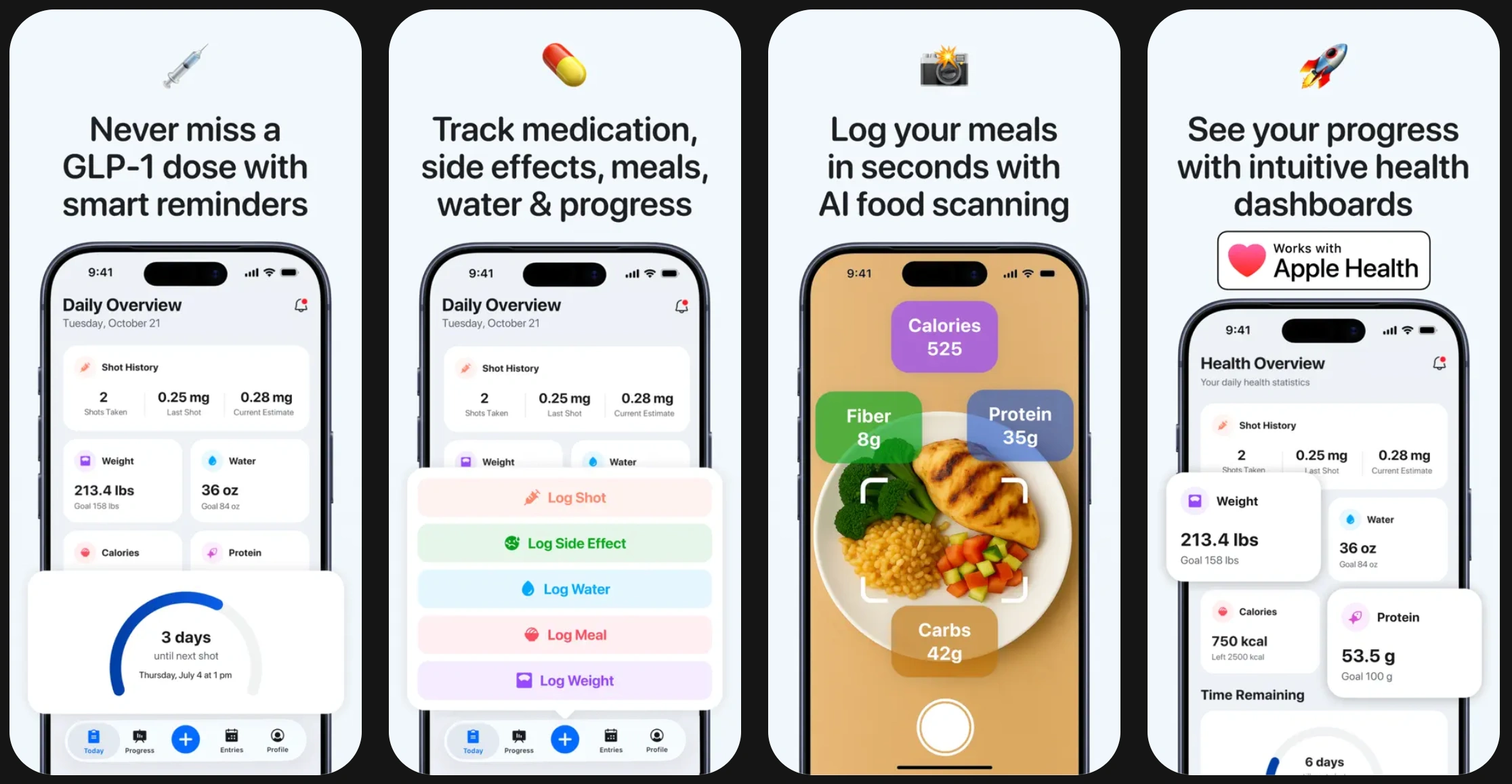
The Pep app by ShredApps is an all-in-one platform that excels by integrating an AI-powered food scanner that provides instant nutritional estimates via photo recognition. It supports both injections and oral pills, offering smart medication level charts based on clinical data and custom reminders for titration.
2. Shot Pal GLP-1 Tracker
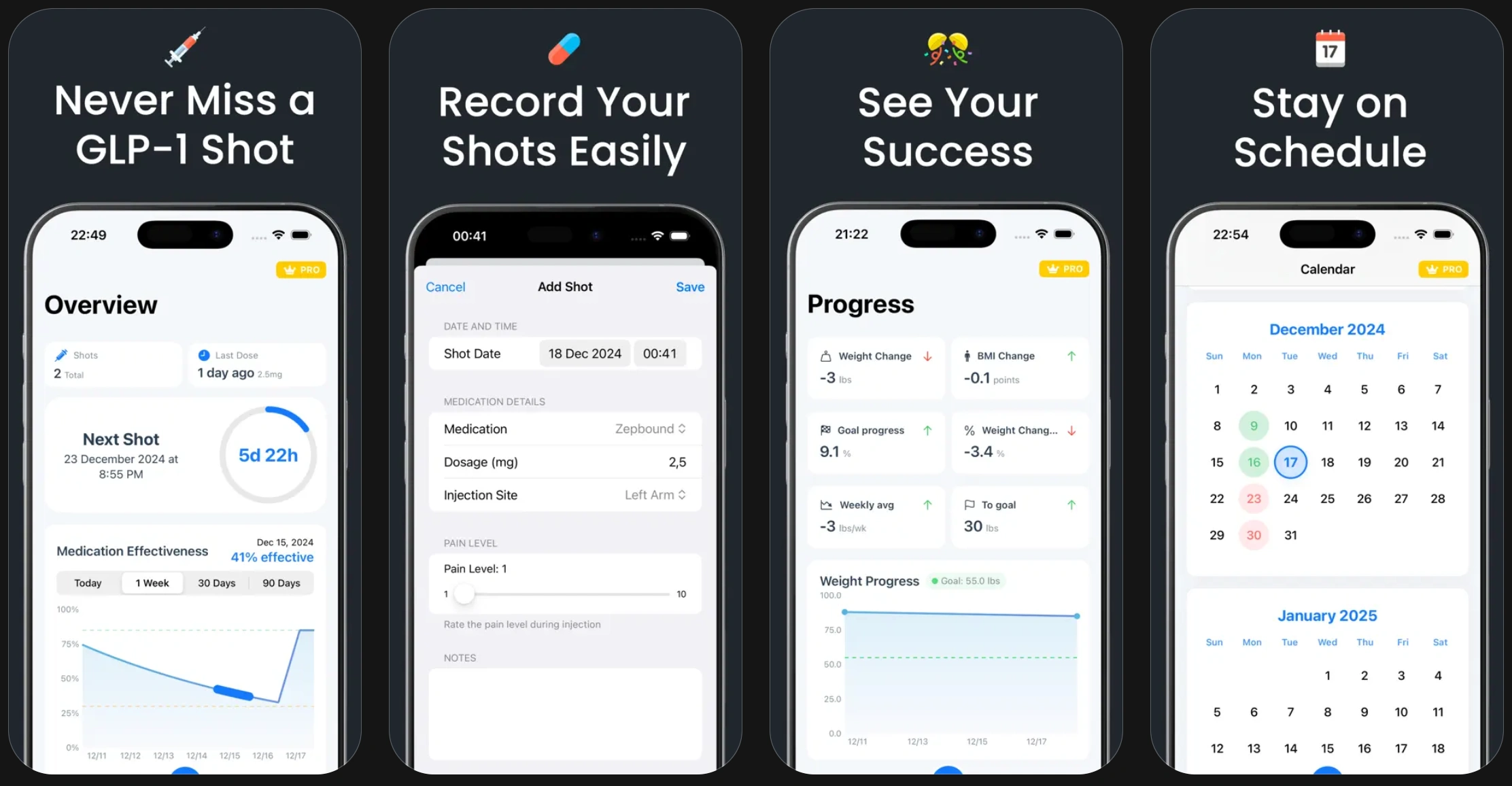
Shot Pal prioritizes clinical safety with a dedicated body map feature for tracking and rotating injection sites. Its comprehensive dashboard monitors weight loss, glucose control and side-effect patterns, allowing users to generate detailed PDF reports for their healthcare providers.
2. Weightly: Mounjaro & Ozempic Tracker
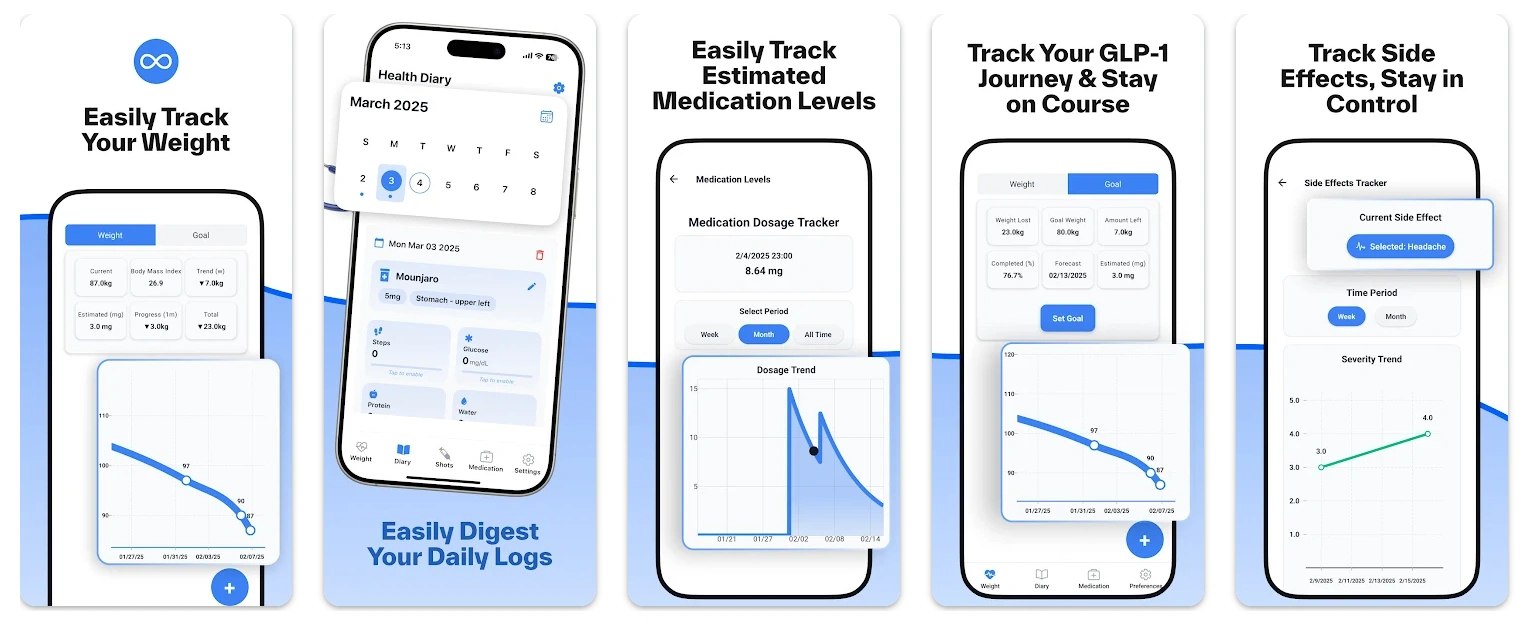
Weightly focuses on simplicity and visual progress, utilizing interactive graphs to highlight weekly weight fluctuations and symptom trends. It features a streamlined digital journal for logging appetite changes and nausea, making it an ideal entry-level tool for new patients.
4. Shotsy GLP-1 Tracker
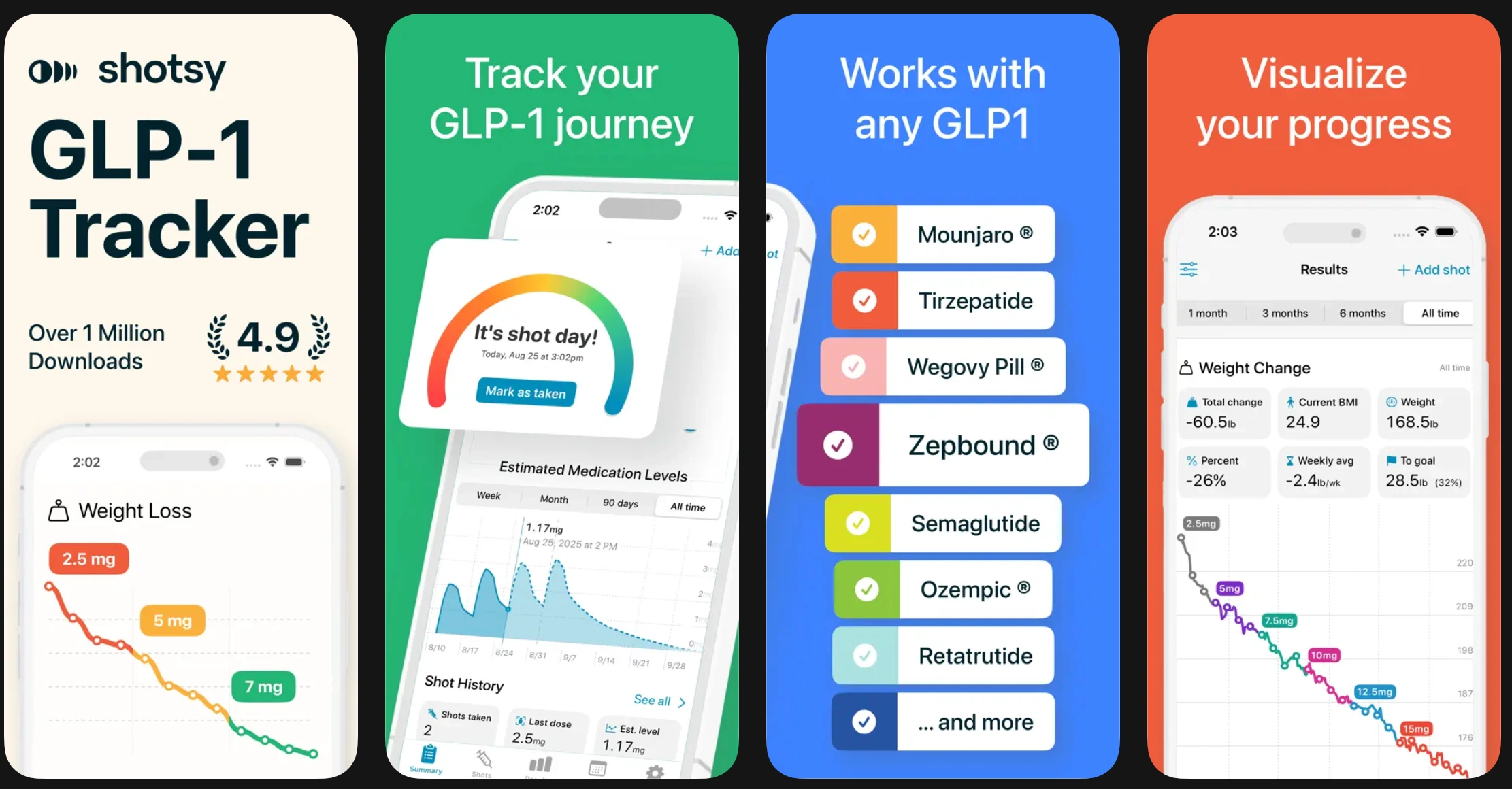
Shotsy is designed for precision, offers advanced titration scheduling and estimated medication level charts derived from peer-reviewed data. It features native Apple Health integration to sync biometrics and includes specific maintenance settings for users who have reached their goal weight.
5. Gala GLP-1 Tracker
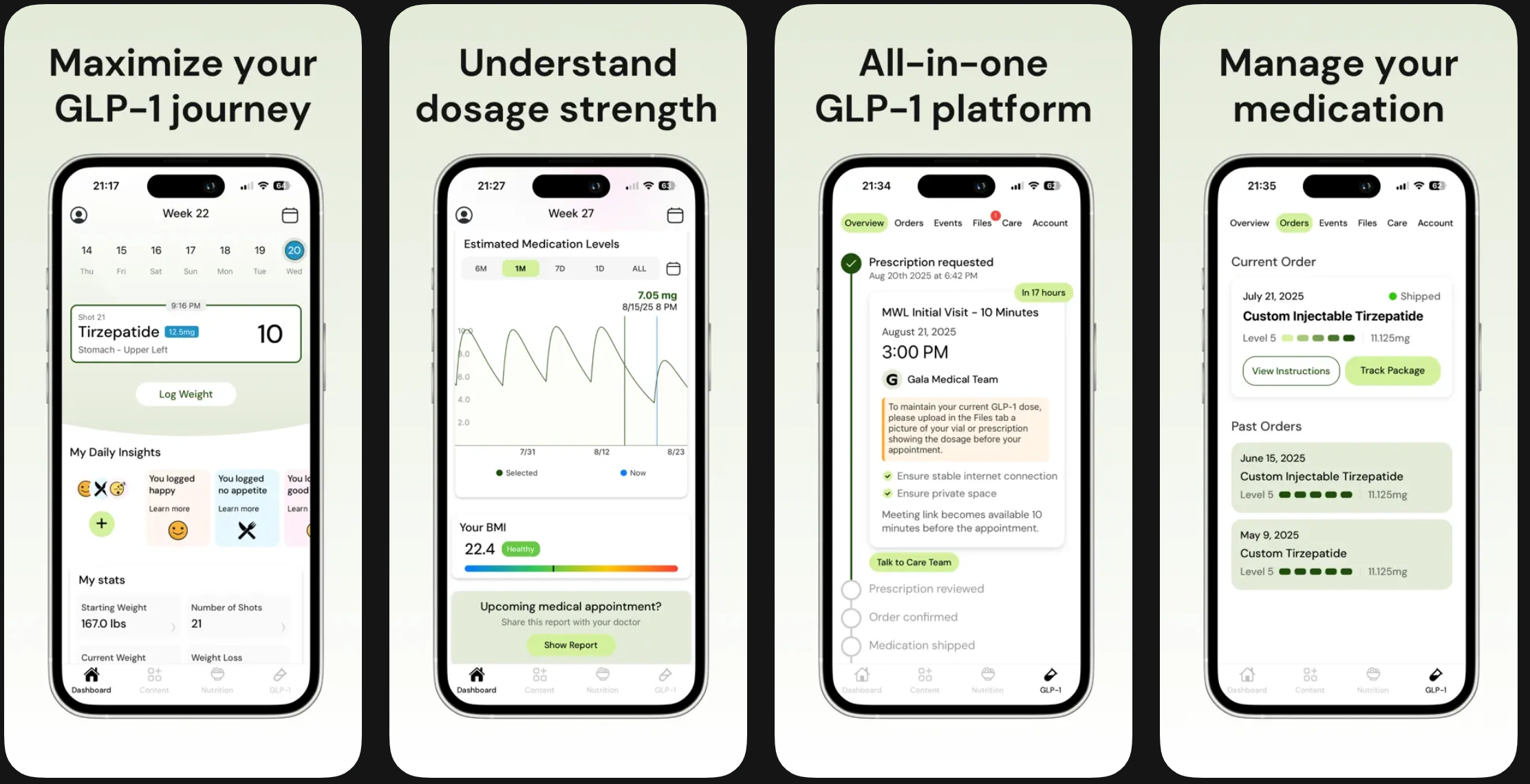
Gala leverages an AI-centric approach to metabolic health, combining calorie and macro tracking with a photo-based logging system. The app provides deep analytics on medication effectiveness, helping users observe long-term patterns and recalibrate their wellness objectives through data-driven insights.
How IdeaUsher Builds Scalable GLP-1 Apps?
IdeaUsher leverages deep technical expertise to transform complex clinical requirements into seamless digital experiences. Our focus remains on creating high-performance, secure platforms that drive patient adherence and long-term metabolic health outcomes.
A. Experience in Healthcare App Development
We understand the nuances of patient-provider workflows with a proven track record in medical software. Our team builds robust systems that handle sensitive health data while ensuring a friction-less user experience for clinicians and patients alike.
B. AI-Driven Personalization Expertise
We integrate advanced machine learning models to provide predictive weight-loss insights and automated nutritional guidance. Our AI engines analyze patient biometrics in real-time to suggest titration adjustments and proactively manage potential medication side effects.
C. End-to-End Product Development Approach
Our developers manage the entire lifecycle from initial discovery to post-launch scaling of your platform. Our comprehensive strategy includes market analysis, UI/UX design, core engineering and continuous optimization to ensure your app remains a market leader.
D. Compliance-First Development Process
We adhere to a security-by-design philosophy ensuring every line of code meets HIPAA and GDPR standards. We implement rigorous AES-256 encryption, multi-factor authentication and immutable audit trails to protect your clinic from regulatory risks.
E. Seamless Third-Party Ecosystem Integration
We specialize in connecting your app with essential external services including compounding pharmacies, lab networks and legacy EHR systems. This interconnected architecture ensures automated prescription routing and real-time data syncing across the entire healthcare continuum.
Cost Optimization Strategies for Founders
Maximizing the value of the initial glp1 app development cost requires a disciplined approach to resource allocation. By focusing on high-impact functionalities, founders can reduce financial waste and achieve a faster path to profitability.
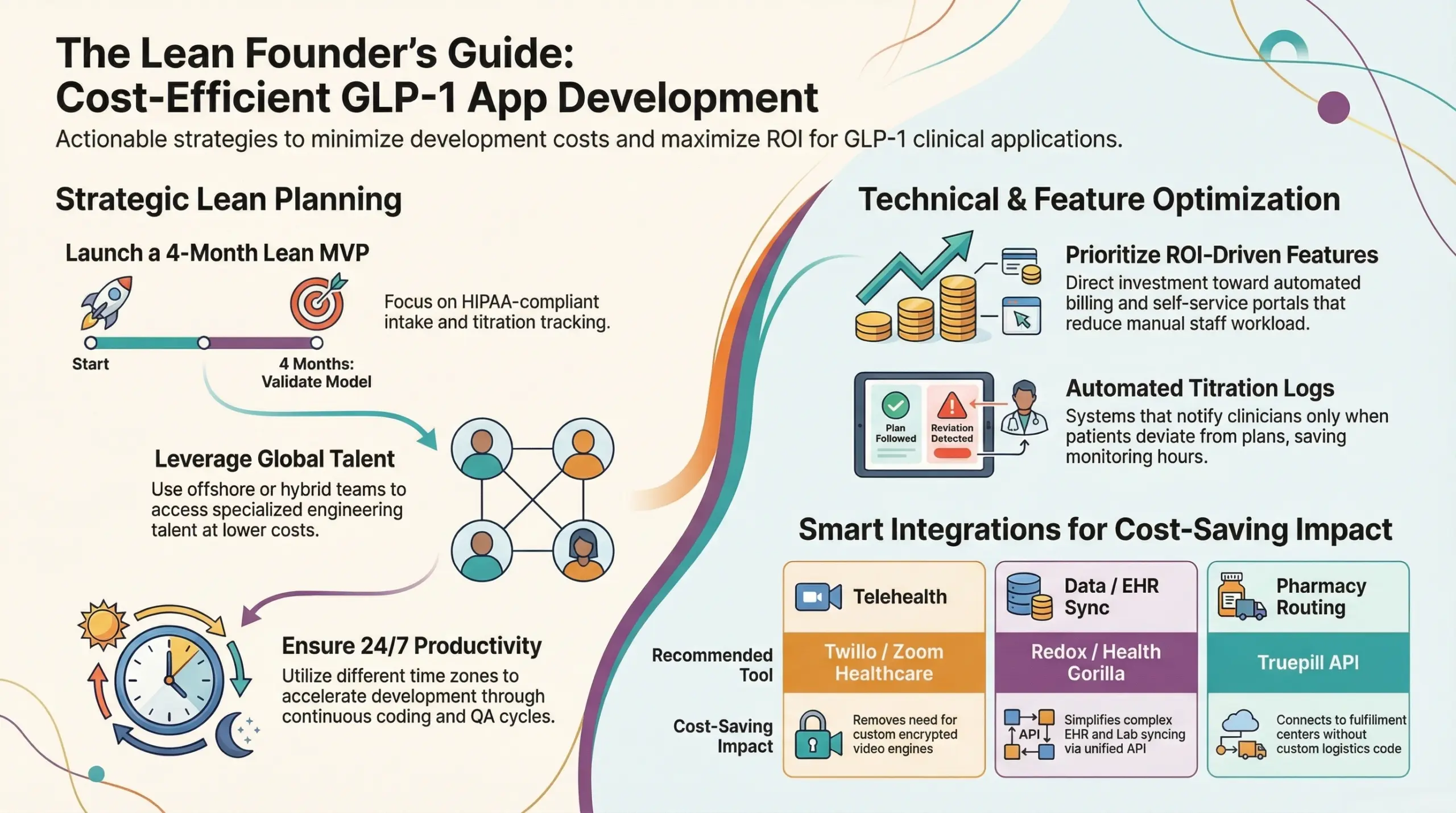
A. Start with a Lean MVP Approach
Launching a Minimum Viable Product allows you to validate your clinical model with real users while minimizing upfront capital risk. This strategy ensures that the core “prescribing engine” is functional before investing in secondary aesthetic features.
- Core Validation: Focus on HIPAA-compliant intake and basic titration tracking to prove the business model.
- Reduced Time-to-Market: A lean build allows for a launch in under 4 months, enabling early revenue generation.
- User-Led Development: Real-world patient feedback guides future high-cost feature investments.
- Risk Mitigation: Prevents over-engineering features that patients may not actually find useful in a clinical setting.
B. Use Pre-Built APIs and Modules
Building every component from scratch is often inefficient and increases the risk of security vulnerabilities. Utilizing established, healthcare-specific middleware can save hundreds of development hours while ensuring industry-standard reliability.
| Category | Recommended Integration | Cost-Saving Impact |
| Telehealth | Twilio Video / Zoom for Healthcare | Eliminates the need to build a custom, encrypted video streaming engine. |
| Data Interoperability | Redox / Health Gorilla | Simplifies complex EHR and Lab syncing through a single unified API. |
| Identity Verification | Persona / Onfido | Automates the legal requirement for patient ID checks and fraud prevention. |
| Pharmacy Routing | Truepill API | Connects the app directly to fulfillment centers without custom logistics code. |
C. Outsource to Reduce Development Cost
Partnering with an experienced offshore or hybrid development team provides access to high-tier engineering talent at a fraction of the cost of domestic hiring. This approach allows for a more extensive feature set within the same budget.
- Global Talent Access: Hire specialized healthcare developers who understand titration logic and PHI security.
- 24/7 Productivity: Leveraging different time zones can accelerate the development lifecycle through continuous coding and QA cycles.
- Lower Operational Overhead: Avoid the high costs of local recruitment, office space and employee benefits.
- Flexible Scaling: Easily ramp the team up or down based on the current phase of the project roadmap.
D. Prioritize Features Based on ROI
Investment should be directed toward features that either drive patient retention or significantly reduce the manual workload of your clinical staff. Every line of code should serve a clear business or clinical objective.
- Automated Billing: Integrating recurring subscription models ensures consistent cash flow with zero manual invoicing.
- Self-Service Portals: Allowing patients to view lab results and reschedule consultations reduces the burden on support staff.
- Automated Titration Logs: Systems that notify clinicians only when a patient deviates from their plan save hours of routine monitoring.
- Analytics Dashboards: Data-driven insights help identify which patient cohorts are most profitable and which marketing channels are working.
Is It Worth Investing in a GLP-1 Clinic App?
The global surge in metabolic health awareness has transformed GLP-1 medications into a generational market opportunity. The global GLP-1 receptor agonist market is estimated to reach $101.4 billion by 2026, with the obesity-specific segment projected to grow at a staggering CAGR of 25.3% through 2033. Investing in a dedicated digital infrastructure is no longer a luxury but a strategic necessity for capturing high-lifetime-value patients in an increasingly crowded telehealth landscape.
A. ROI Potential in Digital Weight Care
The return on investment for a specialized platform is driven by its ability to transition a clinic from manual, low-margin consultations to a scalable, high-margin subscription model. Recent market data indicates that AI-powered coaching platforms can improve patient adherence by 38% to 47%, directly correlating to higher billing cycles and reduced churn.
| ROI Driver | Financial Impact | Strategic Benefit |
| Operational Automation | Reduces clinical administrative time by up to 60%. | Allows a lean medical team to manage 5x more patients without increasing headcount. |
| Adherence Improvement | Digital adjuncts increase medication adherence by 15% to 35%. | Prevents the “revenue leak” caused by early treatment discontinuation. |
| Market Growth | Global obesity GLP-1 market hitting $10.1 billion in 2026. | High demand ensures a consistent flow of new patient acquisitions. |
| Data Valuation | Collects proprietary longitudinal metabolic data. | Builds a valuable digital asset for future acquisition or pharmaceutical partnerships. |
B. Long-Term Patient Retention Value
In the GLP-1 market, the highest costs are associated with initial patient acquisition; therefore, profitability is found in long-term retention. Studies show that up to 57% of patients may discontinue GLP-1 therapy within the first six months without digital support. An app serves as the “digital glue” that maintains the patient relationship through the critical maintenance phase.
- Clinical Adherence: Patients using a dedicated app are 98% more likely to reach the 5% weight loss milestone within 6 months due to consistent tracking.
- Side-Effect Management: Real-time logging allows clinicians to address GI issues which affect 44% of patients before they lead to therapy abandonment.
- Weight Maintenance: Digital groups often see a 1.8 kg greater weight loss compared to standard care due to continuous behavioral nudging and education.
- Engagement Frequency: Successful users engage with their treatment app more than every other day, creating a high-frequency touchpoint for the clinic brand.
C. Competitive Advantage for Clinics
As the availability of GLP-1 medications becomes commoditized, the “product” is no longer just the drug, it is the experience and the support system surrounding it. A custom app allows a clinic to capture emerging market demand with a high-tech, high-trust solution.
- Brand Authority: A white-labeled, professional app builds immediate trust with high-net-worth patients who expect a premium digital experience.
- Clinical Precision: Specialized titration engines provide a level of safety that generic “pill-mill” telehealth platforms cannot match.
- Speed of Service: Integrated pharmacy and lab workflows mean patients receive their medication faster, addressing the primary consumer pain point of supply logistics.
- Evidence-Based Outcomes: Leveraging data to prove a 22.7% mean weight loss (seen in adherent 12-month cohorts) becomes your most powerful marketing tool.
Build Your GLP-1 Clinic App with IdeaUsher!
The development of a high-stakes metabolic platform requires a partner with deep technical heritage and a history of navigating complex regulatory landscapes across the global healthcare sector.
A. Custom Cost Estimate for Your App
The initial phase includes a glp1 app development cost analysis by our ex-FAANG/MAANG developers. This breakdown ensures your budget aligns with the clinical titration logic required for a market-leading ecosystem.
B. Strategic Free Consultation with Experts
The collective knowledge from over 500,000+ hours of development experience is available to your team. Our architects evaluate your goals, from pharmacy integrations to AI-driven patient monitoring, ensuring a seamless clinical deployment.
C. Scalable Platform for Your GLP-1 Idea
The successful launch of AI and healthcare solutions for enterprises like Kamelion, Vezita and MediPort proves our scalability. We build HIPAA-compliant infrastructure that combines high-performance engineering with the security necessary for growth.
Conclusion
The global surge in metabolic health care has transformed digital infrastructure from a luxury into a strategic necessity. Investing in a specialized platform allows clinics to transition from manual, low-margin consultations to a scalable, high-margin subscription model. While the glp1 development cost varies based on automation and AI integration, the long-term ROI is driven by enhanced patient retention and clinical efficiency. By prioritizing a compliance-first approach, founders can build a secure, future-proof ecosystem that leads the competitive landscape of digital weight management.
FAQs
A.1. The glp1 development cost typically ranges from $80,000 to $400,000+. Total investment depends on feature complexity, AI integration and whether you launch a lean MVP or a comprehensive metabolic health ecosystem.
A.2. The geographical location of the engineering team is the most significant variable in glp1 development cost. Drastic differences in hourly rates between North America, Eastern Europe and South Asia directly dictate the final budget.
A.3. Full compliance with HIPAA and GDPR regulations is a non-negotiable requirement. Essential technical safeguards include AES-256 encryption, multi-factor authentication and immutable audit trails for all patient interactions and clinical data.
A.4. Artificial Intelligence serves as a foundation for personalized nutrition coaching and predictive risk monitoring. These automated systems allow clinics to manage larger patient volumes without a proportional increase in administrative staff.