

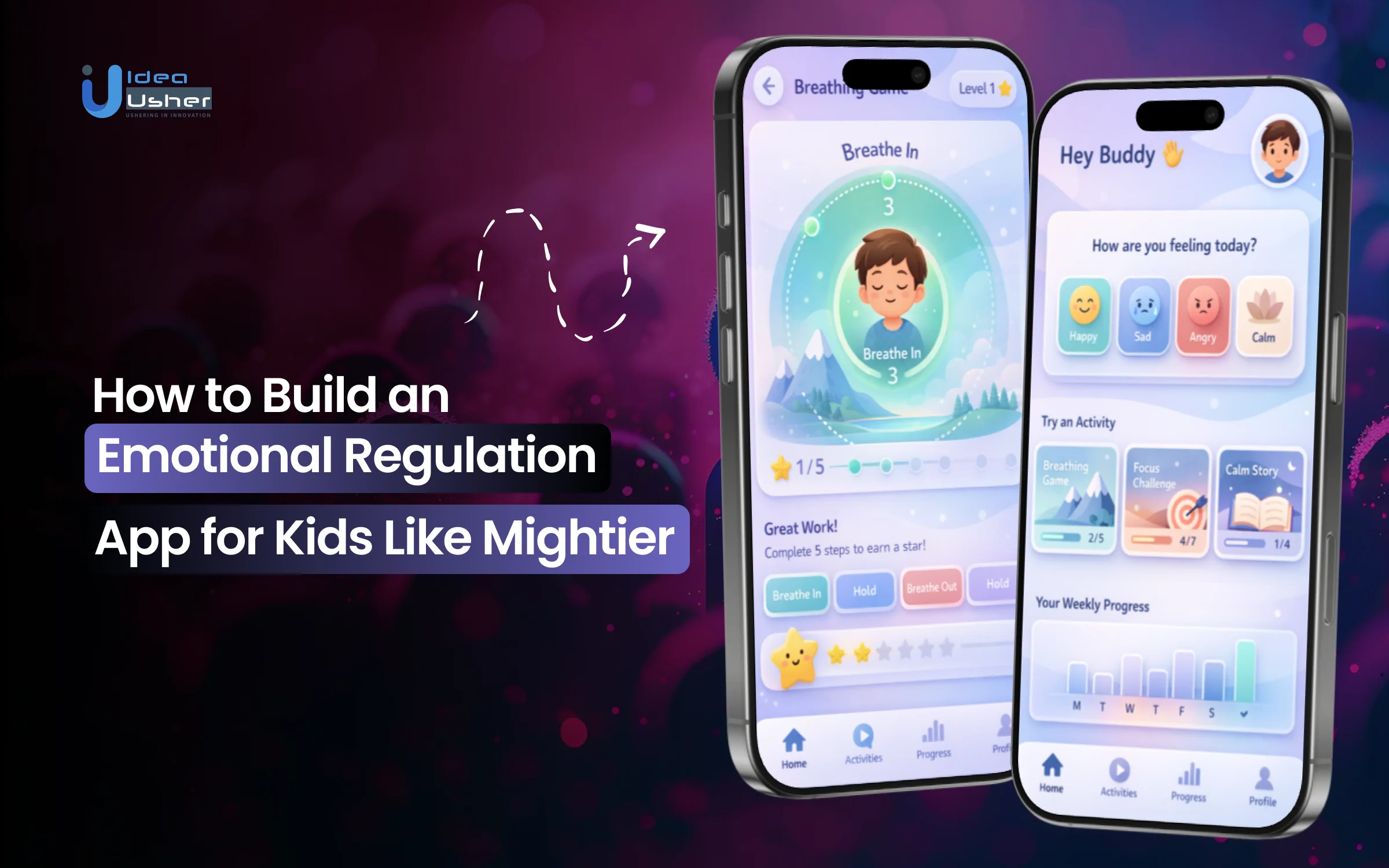
Helping children manage frustration and anxiety requires tools beyond simple reminders. Modern interest in a Mightier like emotional regulation app for kids reflects a shift toward guided, real-time practice. These interactive experiences allow children to recognize and respond to internal triggers through consistent reinforcement.
The platform’s success depends on how biofeedback integration, progress tracking, and parental controls work together to support age-appropriate design. This cohesive system ensures emotional learning remains engaging without overwhelming the user. The platform’s success depends on balancing age-appropriate design with essential privacy and safety standards.
In this blog, we explain how to build an emotional regulation app for kids like Mightier by examining core features, system architecture, and practical considerations involved in creating a safe and effective digital tool for emotional development.
Why Are Emotional Regulation Apps for Kids Rising?
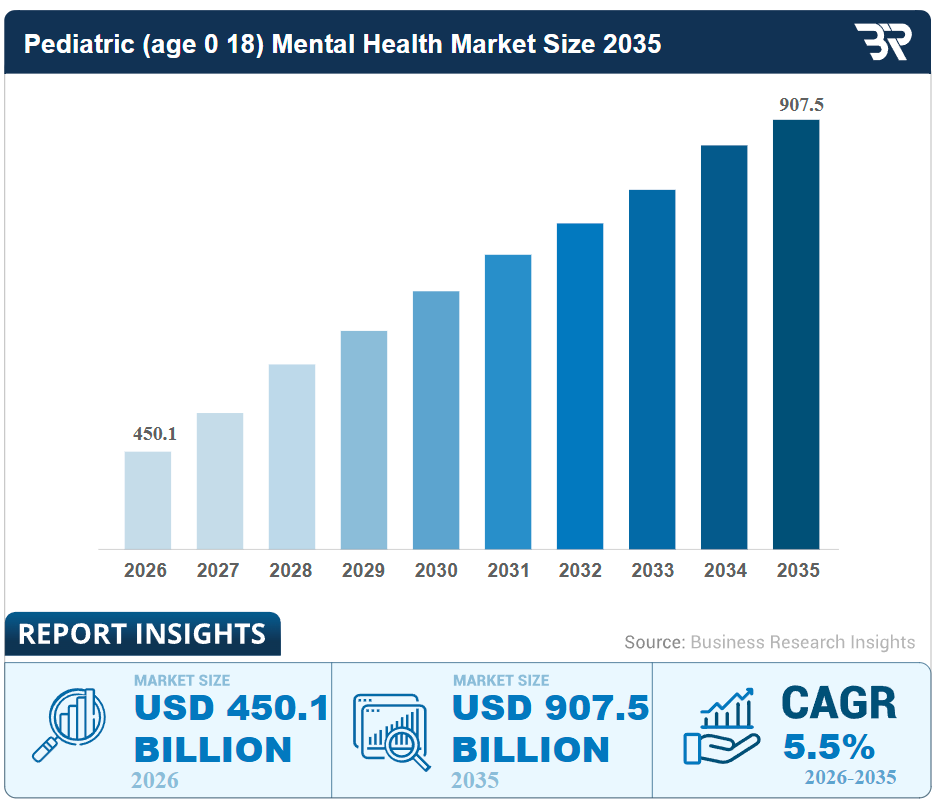
The landscape of pediatric mental health shifts toward proactive, tech-enabled solutions,the market is projected to grow from $450.1B in 2026 to $907.5B by 2035 (5.5% CAGR). The Mightier like emotional regulation app offers scalable resilience, intervening early to manage emotional challenges before they escalate into clinical crises.
Users have experienced a 62% reduction in emotional outbursts and tantrums. 87% of families report seeing measurable behavioral improvements in their child within 90 days.
Research shows a 45% improvement in symptoms when biofeedback games are used alongside traditional therapy (like ABA) compared to therapy alone.
Caregivers report significantly lower parenting-related stress after six weeks of use, while 75% to 87% of families observe notable behavioral improvements within the first three months.
Targeted biofeedback training can lead to a 30% reduction in migraine frequency and significant improvements in focus and impulse control for children with ADHD.
A. Growing Need for Digital Emotional Health Tools
Digital tools bypass traditional barriers like high costs and long wait times, providing immediate, consistent support that fits seamlessly into a child’s daily routine.
The Mightier like emotional regulation app serve as a bridge between professional therapy sessions, ensuring that emotional regulation techniques are practiced regularly rather than discussed occasionally.
Key drivers for the adoption of these tools include:
- Immediate Accessibility: Digital platforms provide 24/7 support, allowing children to practice calming techniques the moment they experience a trigger.
- Consistency of Care: Unlike weekly appointments, an app offers daily reinforcement, which is critical for habit formation in younger users.
- Data-Driven Insights: Modern tools can track physiological and behavioral trends, offering a clear picture of progress that manual tracking often misses.
- Reduced Stigma: Providing support through a familiar interface like a tablet or smartphone makes mental health care feel like a natural part of life.
B. How Gamified Therapy Is Replacing Traditional Methods
Gamification replaces repetitive, clinical exercises with interactive challenges, requiring children to remain calm to progress, which significantly boosts engagement levels.
This shift from passive listening to active participation fundamentally changes how a child internalizes emotional control.
| Feature | Traditional Methods | Gamified Digital Therapy |
| Engagement | Relies on verbal communication and focus. | Uses immersive environments and rewards. |
| Feedback | Delayed (provided by an adult later). | Real-time (visualized via in-game mechanics). |
| Practice | Often feels like “homework” or a chore. | Integrated into play, increasing compliance. |
| Application | Theoretical scenarios and roleplay. | Active regulation during high-stress gameplay. |
C. Market Demand for Kids’ Mental Wellness Apps
The demand for validated results, parents and schools are shifting to Mightier like emotional regulation app from entertainment toward active, measurable content. This transition is bolstered by an ecosystem of healthcare providers integrating digital therapeutics into existing educational frameworks.
Factors contributing to this market growth:
- Focus on Evidence-Based Results: Users are prioritizing platforms backed by clinical research and institutional partnerships over generic wellness apps.
- Institutional Integration: Schools are increasingly adopting emotional regulation tools as part of their social-emotional learning (SEL) curricula.
- Shift in Consumer Spending: There is a significant increase in household budgets allocated toward supplemental developmental tools that offer long-term behavioral benefits.
- Scalable Impact: Digital platforms allow for a single solution to reach thousands of users simultaneously, meeting a massive global demand that physical clinics cannot fulfill.
What Is Mightier and Why It Works So Well?
Mightier is a clinically validated, biofeedback-driven mobile gaming platform designed to help children (typically ages 6–14) develop emotional regulation skills through play.
Developed by clinicians and scientists from Boston Children’s Hospital and Harvard Medical School, it uses a “heart rate as a controller” mechanic to teach kids how to manage stress, frustration, and anxiety in real-time.
How Mightier Loop Works:
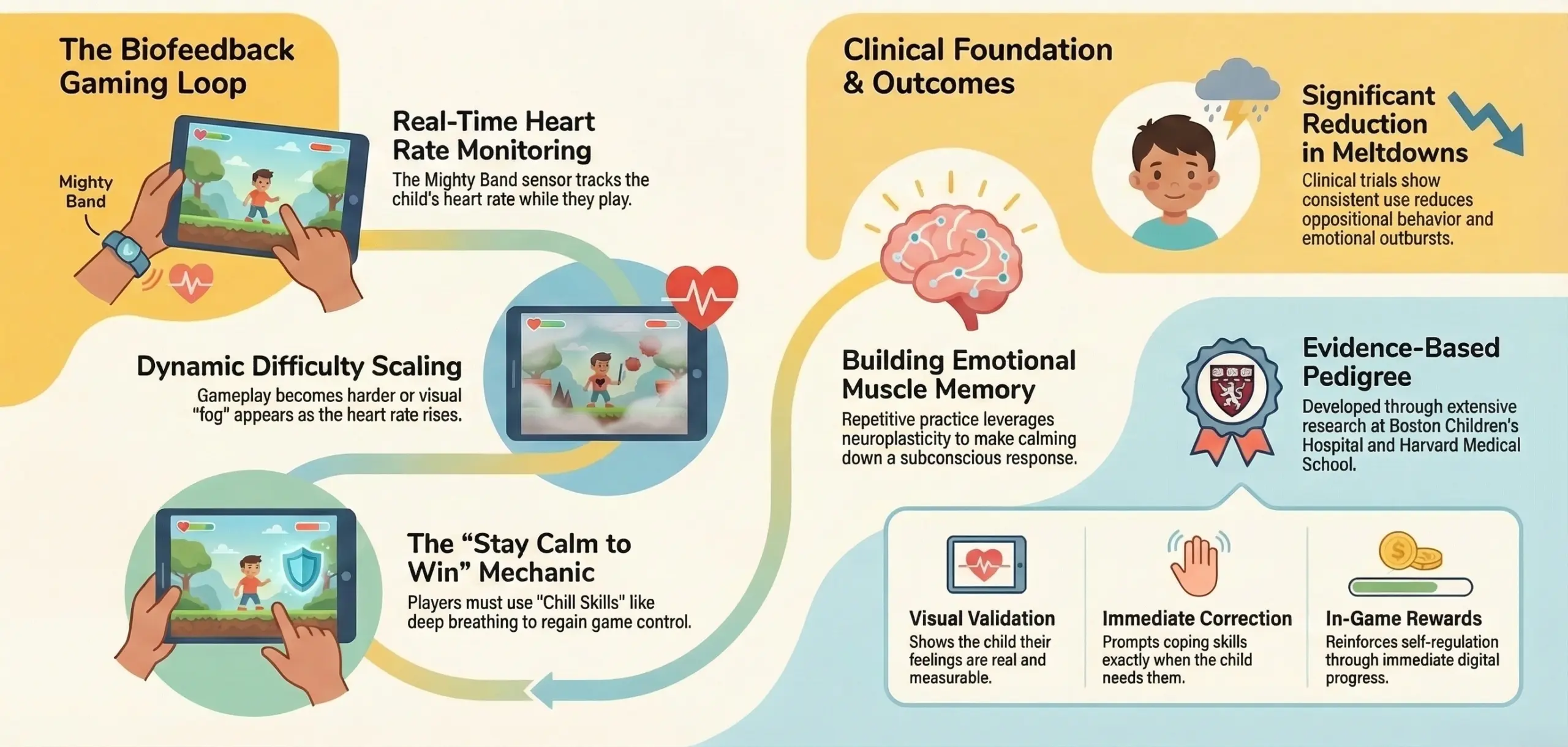
The program relies on a three-part system to build “emotional muscle memory”:
- Biofeedback Sensor: Children wear a Bluetooth heart rate monitor (the “Mighty Band”) on their arm while playing.
- The “Gizmo”: An on-screen meter visualizes the child’s heart rate. When their heart rate stays in the “Blue Zone” (calm), gameplay is normal. If they become frustrated or excited and enter the “Red Zone,” the game becomes more difficult. For example, the screen may fill with smoke or the controls may become less responsive.
- Cooling Down: To continue playing and earn rewards, the child must use a “Chill Skill” (such as deep breathing or progressive muscle relaxation) to bring their heart rate back down to the blue zone.
A. Core Concept Behind Biofeedback Gaming
The fundamental innovation of Mightier like emotional regulation app is the integration of biofeedback into a gaming loop. Unlike standard apps that simply track mood, biofeedback gaming creates a direct link between a child’s internal physiological state and the digital world they are interacting with.
- The Feedback Loop: A wearable sensor monitors the heart rate in real time, transmitting this data to the app.
- Dynamic Difficulty Scaling: As the child’s heart rate rises due to excitement or frustration, the game environment changes. This might include increased difficulty, visual “fog” on the screen, or disabled abilities.
- The “Stay Calm to Win” Mechanic: To succeed in the game, the child must actively lower their heart rate. This forces the use of regulation techniques, such as deep breathing, to regain control of the gameplay.
- Subconscious Mastery: Over time, the act of calming down under pressure becomes a muscle memory response rather than a forced exercise.
B. How Real-Time Emotion Tracking Improves Behavior
Real-time tracking offers objectivity missing in verbal therapy. By visualizing an “emotion meter,” children can identify loss of control and physiological frustration early, enabling immediate behavioral correction and self-regulation. This immediate visibility is a powerful tool of Mightier like emotional regulation app for behavioral change.
| Component | Function in Behavior Improvement |
| Visual Validation | Shows the child that their feelings are real and measurable, reducing confusion. |
| Immediate Correction | Provides an instant prompt to use a coping skill exactly when it is needed. |
| In-Game Rewards | Reinforces the positive behavior of self-regulation through immediate digital progress. |
| Generalization | Encourages the child to apply these “win” strategies in real-world stressful situations. |
C. Clinical Backing and Research Foundations
The effectiveness of this model is rooted in rigorous academic and medical research. Developing a Mightier like emotional regulation app of this caliber requires more than just a creative concept; it demands a foundation built on proven psychological frameworks and clinical validation.
- Institutional Collaboration: The framework was developed through extensive research at Boston Children’s Hospital and Harvard Medical School, ensuring the mechanics align with pediatric neurological development.
- Clinical Trials: Data from various studies indicate that children using biofeedback gaming show significant reductions in “meltdowns” and oppositional behavior after consistent use.
- Neuroplasticity Focus: The games are designed to leverage neuroplasticity, helping the brain build new pathways for emotional control through repetitive, rewarded practice.
- Professional Trust: The platform is built on established medical research, it gains immediate credibility with healthcare providers and educational institutions who require evidence-based solutions.
Key Features of an App Like Mightier
Biofeedback platforms require synchronized hardware and interactive software to turn physiological data into real-time gameplay, fostering active emotional development. The low-latency architecture ensures effective therapy. These features of Mightier like emotional regulation app must engage children, provide parent data, and apply clinical logic to promote proactive regulation.

1. Heart Rate Based Biofeedback Integration
The app connects wearable sensors via Bluetooth Low Energy allows the system to access autonomic nervous system data. This establishes a physiological baseline for each child, tracking heart rate variability and beats per minute to determine their real-time emotional “zone.
This integration uses physiological data moving beyond simple tracking as a primary input for game logic. By analyzing heart rate in real-time, the system transforms biological signals into a dynamic game controller that drives the entire user experience.
2. Emotion-Aware Game Mechanics System
Game engines trigger visual and mechanical modifiers like fog or screen shaking when a child enters a “Red Zone.” These environmental shifts simulate internal stress, forcing the brain to practice active self-regulation to progress.
Difficulty scales using proportional-integral-derivative logic, ensuring the challenge matches the user’s arousal. By rewarding a physiological shift back to calm, the game transforms the body into a controller, reinforcing the link between states.
3. AI-Based Emotional Pattern Recognition
AI moves beyond simple triggers to provide predictive emotional support. By analyzing historical data, algorithms identify specific patterns preceding frustration, allowing the system to recognize nuances in a child’s struggle before total dysregulation.
The Mightier like emotional regulation app dynamically adjusts the difficulty curve or suggests preemptive exercises based on AI insights. This ensures the experience feels intelligent and personalized, delivering the right support at the optimal time to prevent crises.
4. Guided Breathing and Mindfulness Modules
When high stress is detected, the app pivots to integrated mindfulness modules. These “cool-down” mini-games use visual rhythms to teach deep breathing, ensuring the transition from gameplay to regulation is seamless and supportive.
Tying mindfulness success to the immediate restoration of the main game reinforces utility. Children learn that deep breathing is a practical tool yielding tangible results, building confidence in their ability to manage stress.
5. Parent Dashboard With Behavioral Insights
A comprehensive dashboard translates raw physiological data into actionable behavioral insights. Caregivers can view long-term trends and identify effective coping strategies, moving beyond simple graphs to provide a clear picture of developmental emotional progress.
These evidence-based reports empower parents to lead informed conversations with teachers or therapists. This ensures a unified approach of Mightier like emotional regulation app to the child’s growth, backed by data that highlights resilience and specific areas for improvement.
6. Reward Systems for Emotional Progress
The incentive structure celebrates calmness and mastery over high scores. Digital currency and unlocks are tied to navigating high-stress moments within a target heart rate zone, shifting “winning” to internal self-control and agency. (34 words)
The system builds long-term engagement in a therapeutic context by rewarding the process of regulation. Children develop a sense of agency, viewing emotional control as a skill that unlocks new digital worlds and achievements.
How Biofeedback Gaming Actually Works in Apps?
The efficacy of the Mightier like emotional regulation app depends on its ability to create a seamless bridge between a child’s internal physiological state and their external digital environment.
This process goes beyond data tracking by creating a biocybernetic loop where the user’s body acts as a controller, using real-time biological signals to adjust challenges and train emotional self-regulation.
A. Connecting Wearables to the App Ecosystem
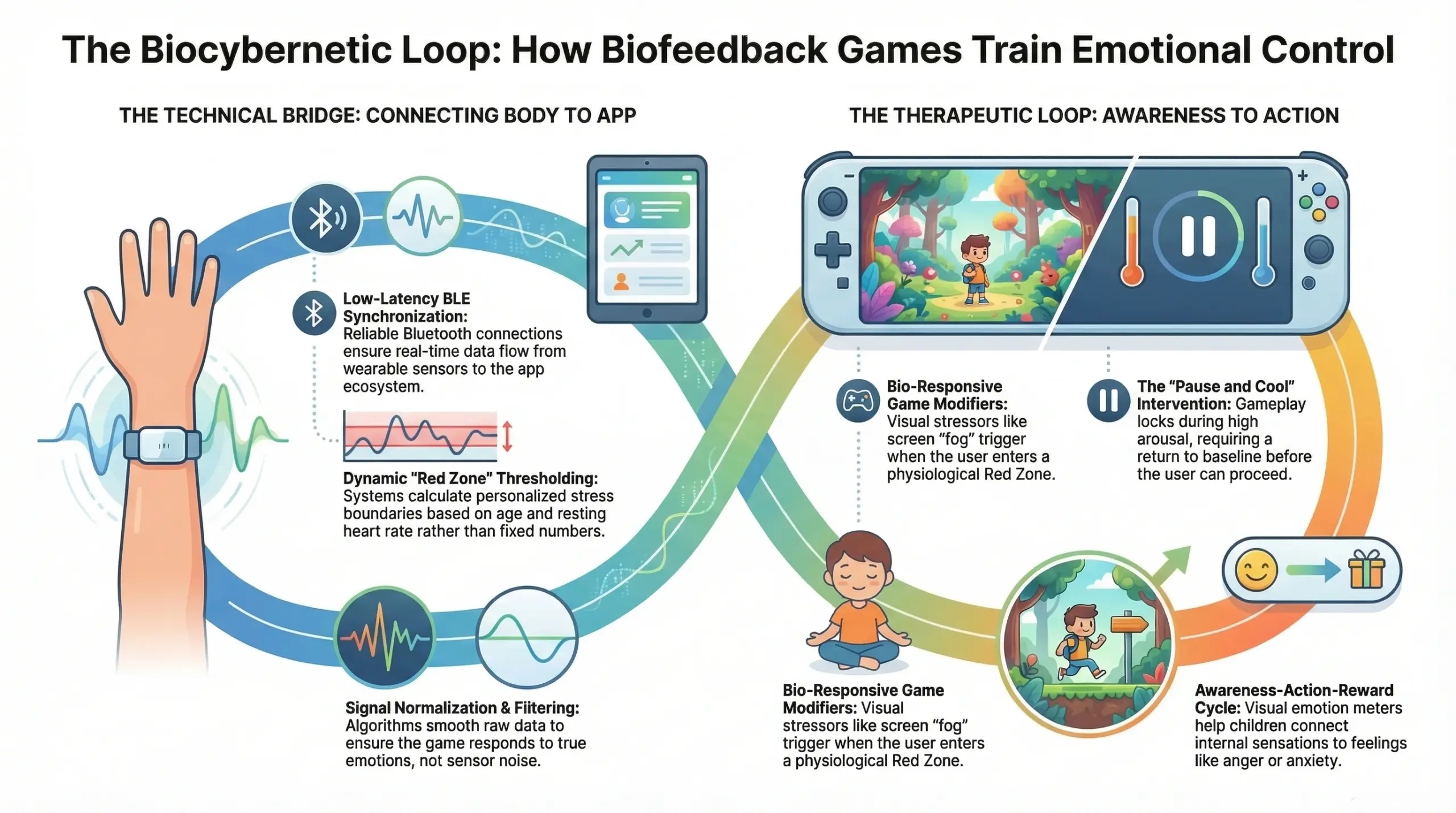
The first technical hurdle in building a biofeedback-driven app requires a low-latency, reliable connection via Bluetooth Low Energy (BLE). This ensures continuous data transmission between the wearable sensor and mobile device without significant battery drain.
- GATT Profile Integration: Utilize standard Heart Rate Profiles (HRP) to ensure universal compatibility between the app and third-party sensors like Polar, Garmin, or proprietary hardware.
- Central vs. Peripheral Roles: The app acts as the GATT Client (Central) to request data, while the wearable serves as the GATT Server (Peripheral) to broadcast heart rate updates.
- Data Parsing and Normalization: Implement algorithms to smooth raw data packets and filter “noise,” ensuring the game responds to genuine emotional shifts rather than momentary sensor errors.
- Bluetooth Handshaking: Deploy robust auto-reconnection logic and state persistence to prevent therapeutic disruption if a sensor disconnects during high-stress gameplay.
B. Translating Heart Rate Into Game Difficulty
Once the heart rate data is successfully ingested, it must be translated into “Game States.” This is the core logic that differentiates a medical tool from a game. The system must decide how “hot” or “cold” a user is based on their unique physiological baseline.
- Dynamic Thresholding: Calculate personalized “Red Zones” based on age, resting heart rate, and session history rather than fixed BPMs to ensure the challenge remains developmentally appropriate.
- Visual and Mechanical Modifiers: Trigger environmental shifts like screen shaking or “fog” when a user enters the Red Zone, simulating the internal sensation of being overwhelmed.
- The Control Law: Use PID controllers to modulate difficulty; the system rewards physiological shifts by scaling back challenges proportionally as the user returns to a calm state.
- Cognitive Loading: Increase difficulty by requiring users to solve complex puzzles while under physiological stress, mimicking real-world scenarios like exams or social conflicts.
C. Real-Time Feedback Loop for Emotional Control
This technology creates an “Awareness-Action-Reward” cycle. By visualizing an on-screen emotion meter, children gain an objective view of their internal state, providing a vital new perspective for those struggling with emotional dysregulation.
- Interoceptive Awareness: The Mightier like emotional regulation app builds the ability to sense internal bodily signals, using an on-screen “emotion meter” to help children objectively connect a racing heart to feelings of anger or anxiety.
- The “Pause and Cool” Prompt: Upon detecting sustained high arousal, the system triggers a guided breathing intervention, locking gameplay until the sensor confirms the heart rate has returned to a safe baseline.
- Neuroplasticity and Reinforcement: By repeatedly rewarding the transition from “Red” to “Blue,” the brain strengthens neural pathways for self-soothing, making the game’s “win condition” synonymous with a calm physiological state.
- Behavioral Generalization: Practicing regulation during active physiological stress ensures skill transfer to real-world scenarios, offering a more effective therapeutic result than traditional skills learned in a static, quiet environment.
Mightier like Emotional Regulation App Development Process
The development of biofeedback-based emotional regulation tool requires a structured approach combining clinical psychology and software engineering to ensure engaging experiences and measurable therapeutic outcomes for children.
The process begins with conceptual alignment and ends with rigorous validation, ensuring every feature serves the ultimate goal of emotional mastery.
1. Define Target Age and Emotional Goals
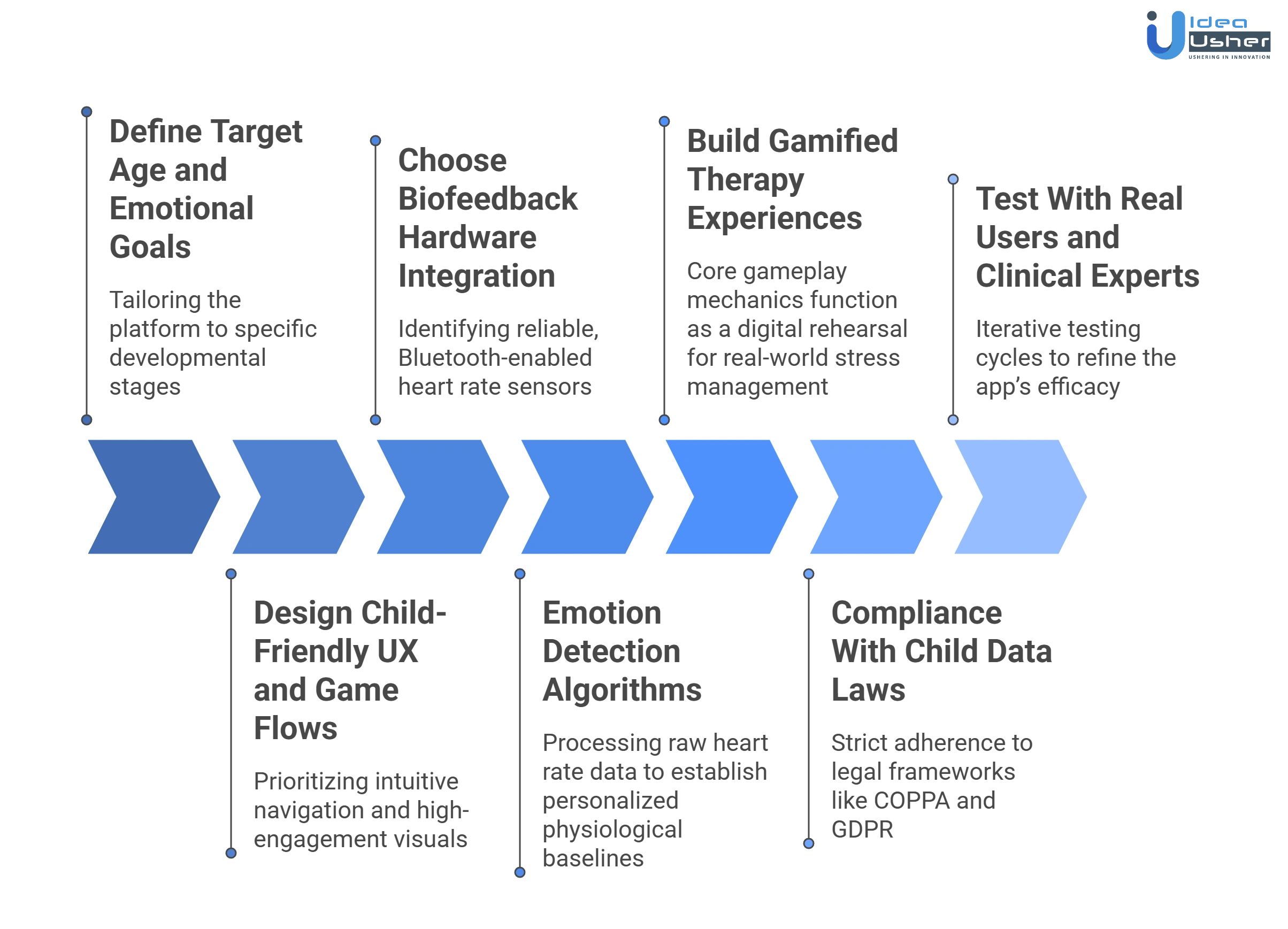
The initial phase focuses on tailoring the platform to specific developmental stages, such as ages 6–14. Clear emotional benchmarks, including frustration tolerance and impulse control, dictate the underlying psychological framework and clinical logic.
2. Design Child-Friendly UX and Game Flows
User experience design prioritizes intuitive navigation and high-engagement visuals that minimize cognitive overload. The game flow must seamlessly transition between high-intensity challenges and calming intervention screens to maintain a balanced and effective therapeutic rhythm.
3. Choose Biofeedback Hardware Integration
Hardware selection involves identifying reliable, Bluetooth-enabled heart rate sensors that offer high sampling rates. Integration requires a robust communication protocol to ensure low-latency data transmission, which is vital for providing immediate physiological feedback during gameplay.
4. Develop Emotion Detection Algorithms
Sophisticated algorithms process raw heart rate data to establish personalized physiological baselines for every user. These models must accurately distinguish between physical exertion and emotional arousal to trigger appropriate in-game environmental changes and interventions.
5. Build Gamified Therapy Experiences
Core gameplay mechanics function as a digital rehearsal for real-world stress management. By rewarding children for lowering their heart rate during difficult levels, the app reinforces the biological connection between calm states and successful outcomes.
6. Ensure Compliance With Child Data Laws
Strict adherence to legal frameworks like COPPA and GDPR is mandatory for protecting sensitive pediatric information. Development teams must implement end-to-end encryption, verifiable parental consent modules, and rigorous data minimization practices to ensure total security.
7. Test With Real Users and Clinical Experts
Iterative testing cycles involve both target users and child psychologists to refine the app’s efficacy. Clinical experts validate the therapeutic impact, while user feedback ensures the gaming elements remain compelling enough for long-term habituation.
Mightier like Emotional Regulation App for Kids Development Cost
Building a Mightier like emotional regulation app requires strategic capital allocation, balancing MVP needs with long-term scalability.
The following breakdown outlines the investment required across different development stages, followed by the critical factors that influence the final budget.
| Development Phase | MVP Level | Enterprise Level | Key Deliverables |
| Discovery & Planning | $8,000 – $15,000 | $25,000 – $50,000 | Market research, clinical logic mapping, and interactive prototypes. |
| UI/UX Design | $12,000 – $20,000 | $40,000 – $75,000 | Gamified interfaces, parent dashboards, and child-friendly assets. |
| Core Development | $45,000 – $80,000 | $150,000 – $300,000 | BLE sensor integration, emotion-aware game engine, and backend. |
| QA & Clinical Testing | $10,000 – $18,000 | $35,000 – $70,000 | Security audits, bug fixing, and pediatric specialist validation. |
| Compliance & Launch | $5,000 – $12,000 | $20,000 – $45,000 | COPPA/GDPR certifications and app store deployment. |
| Total Estimated Cost | $75,000 – $145,000 | $270,000 – $340,000+ | A fully validated, market-ready emotional regulation platform. |
Cost-Affecting Factors of Mightier like Emotional Regulation App Development
The final investment for a biofeedback-driven app is influenced by technical precision and regulatory requirements. Unlike standard wellness apps, the integration of physical hardware and sensitive pediatric data introduces unique layers of complexity that directly impact the development hours and expertise required.
Significant factors driving the total expenditure include:
- Hardware and Latency: Supporting diverse Bluetooth sensors and maintaining sub-100ms latency requires senior engineering, typically adding 20% to the core development budget.
- Game Engine Sophistication: Transitioning from 2D puzzles to high-fidelity 3D environments across multiple games can increase design and development hours by 30%.
- Regulatory Security: Implementing HIPAA and COPPA-compliant infrastructure with end-to-end encryption and audits typically accounts for 15% to 25% of total project costs.
- AI and Machine Learning: Developing custom ML models for predictive emotional pattern recognition requires data science expertise, adding $30,000 to $60,000 to the initial build.
- Maintenance and Content: Annual post-launch costs run 15% to 20% of initial development, covering high-frequency data hosting, security patches, and new gaming content.
Tech Stack Required for Such an App
Building a Mightier like emotional regulation app requires a sophisticated technological foundation that can handle real-time physiological data, immersive gaming, and secure parent-facing analytics. The stack must prioritize low-latency communication and data integrity to ensure the therapeutic “feedback loop” remains effective.
| Component | Technology Recommendations | Rationale & Key Deliverables |
| Frontend Game Experience | Unity (C#) or Godot Engine | Unity is the industry standard for cross-platform 2D/3D games, offering extensive asset stores and AR/VR support. Godot provides a lightweight, open-source alternative with a highly efficient scene-based architecture. |
| Backend & Data Processing | Node.js or Python (FastAPI) | Node.js excels at handling asynchronous, real-time events like continuous heart rate streams. FastAPI is ideal for integrating Python-based AI models and clinical logic with high performance. |
| Wearable Integration | Bluetooth Low Energy (BLE) & GATT Profiles | Standardized BLE protocols ensure compatibility with medical-grade sensors (Polar H10, Garmin). The Generic Attribute Profile (GATT) allows the app to ingest heart rate and HRV data with minimal battery drain. |
| AI & Emotion Recognition | TensorFlow Lite or PyTorch Mobile | Edge AI frameworks enable local emotional pattern recognition, ensuring real-time difficulty scaling while protecting user privacy through device-level processing. |
| Cloud Infrastructure | AWS (HealthLake) or Google Cloud (Healthcare API) | Healthcare clouds provide HIPAA/COPPA compliance, secure FHIR storage, and the scalability required for thousands of simultaneous sessions. |
| Real-Time Database | Redis or MongoDB Atlas | Redis is used as a fast, in-memory data store for the immediate game-state updates. MongoDB serves as a flexible document store for long-term behavioral trends and parent dashboard reports. |
Designing for Kids: UX That Drives Engagement
Designing the Mightier like emotional regulation app for children requires a shift from utility to engagement. In emotional regulation platforms, the interface must balance high-stakes mechanics with a soothing aesthetic to guide users toward calm without feeling clinical.
A. Visual Feedback Systems Kids Understand
Effective emotional regulation depends on a child’s ability to recognize their internal state through external cues. Visual feedback systems serve as a “digital mirror,” translating complex physiological data into simple, intuitive graphics that require zero technical explanation.
- The Color-Coded Emotion Meter: Utilizing a familiar “Stoplight” system (Green for calm, Yellow for rising stress, Red for dysregulation) allows children to instantly gauge their status.
- Dynamic Environmental Changes: As stress levels rise, the game world can physically change and perhaps the screen begins to “freeze” or “fog up”, providing a tactile sense of losing control.
- Avatar Interaction: A child’s in-game character can reflect their physiological state through animations, such as visible heavy breathing or a glowing “aura” that changes color based on heart rate.
- Calm-Down Progress Bars: During breathing exercises, a rhythmic, expanding-and-contracting circle helps the child sync their breath with the app, providing a visual goal for their physical effort.
B. Game Design That Rewards Calm Behavior
Biofeedback apps invert traditional gaming logic by rewarding emotional control over speed or intensity. Success depends on the ability to remain calm under pressure, requiring a fundamental shift in how win conditions are programmed.
- Patience-Based Mechanics: Certain game actions, like opening a treasure chest or casting a spell, might only trigger once the heart rate stays in the “Green Zone” for a sustained five-second period.
- Difficulty Inversion: Instead of the game getting harder as the player succeeds, the game becomes easier and more fluid as the player’s heart rate drops, directly rewarding the act of self-soothing.
- Resilience Badges: Users earn specialized rewards for “Quick Recoveries”, moments where they successfully moved from a Red Zone back to a Green Zone within a specific timeframe.
- Non-Punitive Failure: If a child becomes too frustrated, the game should never offer a “Game Over” screen. Instead, it should gently transition into a mandatory “Power Up” (breathing) phase to help them rejoin the action.
C. Accessibility for Neurodivergent Children
A significant portion of the target audience for emotional regulation tools includes children with ADHD, Autism, or Sensory Processing Disorders. Accessibility in this context is not just a feature; it is a core requirement for therapeutic efficacy and safety.
- Sensory Customization: The UX must include “Sensory Profiles” that allow parents to toggle off high-frequency sounds, flashing lights, or haptic vibrations that might trigger a sensory meltdown.
- Clear, Literal Communication: Instructions should avoid metaphors or abstract language, using direct, simple text accompanied by icons to ensure children with varying verbal abilities can navigate the app.
- Predictable Navigation: Neurodivergent users often thrive on routine and predictability. The app’s architecture should be consistent, with clearly defined “Safe Zones” or home screens that are always accessible.
- Adjustable Response Times: Recognizing that motor coordination and reaction times vary, the app should allow for “Game Speed” adjustments, ensuring that the physical challenge of the game does not overshadow the emotional goal.
Compliance and Safety in Kids Mental Health Apps
Operating in pediatric digital health requires strict adherence to global data protection frameworks. Ensuring privacy-by-design is a foundational requirement to build user trust and maintain long-term clinical and regulatory acceptance.

1. COPPA and GDPR-K Requirements Explained
COPPA (US) and GDPR-K (Europe) regulate digital interactions with minors, prioritizing parental control and data minimization. These frameworks mandate strict protections against unauthorized tracking and data harvesting to ensure a secure, private environment for children.
- Verifiable Parental Consent (VPC): Platforms must implement a robust mechanism to ensure a legal guardian has approved the child’s data collection before any account is fully activated.
- Zero Ad-Targeting Policy: Strict compliance requires a total ban on behavioral advertising and third-party tracking pixels that could profile a child’s habits for commercial gain.
- The Right to Erasure: Parents must have an immediate, accessible way to review their child’s data and request its permanent deletion from all servers and backups.
- Data Minimization: Developers should only collect the absolute minimum data necessary for the app to function; for example, avoiding the collection of precise geolocation if it is not core to the therapy.
2. Data Privacy in Biofeedback Applications
Biofeedback apps manage sensitive biometric information linked to physical identity. Unlike passwords, compromised heart rate patterns cannot be changed, necessitating elite security tiers, end-to-end encryption, and localized data processing to protect child privacy.
- End-to-End Encryption (E2EE): All data transmitted from the wearable sensor to the app, and subsequently to the cloud, must be encrypted to prevent interception during the “Bluetooth handshake” or transit.
- Local Data Processing: To enhance privacy, as much data as possible should be processed “on-edge” (on the device) rather than being sent to a central server for analysis.
- De-identification Protocols: When heart rate data is stored for research or pattern recognition, it must be stripped of all Personally Identifiable Information (PII) to ensure it cannot be traced back to an individual child.
- Secure Hardware Audits: Using third-party sensors requires verifying their own privacy standards to ensure the hardware itself is not leaking data to unauthorized external APIs.
3. Ethical Design for Emotional AI Systems
As AI becomes more integrated into emotional detection, ethical design must prevent the software from becoming manipulative or overly intrusive. The goal is to support the child’s autonomy rather than creating a dependency on the digital interface for emotional stability.
- Avoiding “Dark Patterns”: Ethical design prohibits the use of psychological triggers that encourage excessive screen time or “addictive” loops solely to increase engagement metrics.
- Algorithmic Bias Mitigation: Developers must ensure that emotion-detection models are trained on diverse datasets to avoid misinterpreting the physiological responses of children from different backgrounds or those with various neurodivergent traits.
- Transparency of AI Logic: While children may not understand the backend, parents should have access to clear explanations of how the AI makes decisions regarding their child’s “emotional zones.”
- Human-in-the-Loop Integration: The AI should act as a supportive tool that encourages real-world interaction, ultimately aiming to empower the child to regulate themselves without the app’s constant presence.
Timeline to Develop a Biofeedback Gaming App
The development of a biofeedback-driven app is a specialized process requiring precise data synchronization and clinical safety. A 6 to 12-month roadmap ensures technical stability, market credibility, and regulatory compliance.
A. MVP Timeline for Core Features
The initial MVP phase typically spans 12 to 16 weeks, focusing on the essential “Stay Calm to Win” gaming loop.
- User Persona Design: Focus on children aged 6–14 to tailor the discovery and design process.
- Game Development: Build the first 3–5 core games featuring the primary interactive mechanics.
- Core Infrastructure: Establish functional user accounts and the primary game engine architecture.
- Dashboard & Testing: Launch a basic parent dashboard and prepare the system for hardware testing.
B. Time Needed for AI and Sensor Integration
Integrating BLE sensors and developing custom emotion-detection algorithms adds approximately 8 to 12 weeks to the schedule.
- Data Normalization: Dedicate time to smoothing raw heart rate data and building the “Control Law” for difficulty scaling.
- Edge AI Implementation: Run pattern recognition models locally on-device to ensure low latency and high data privacy.
- Sensor Syncing: Finalize the Bluetooth handshake protocols to ensure stable connections during intense gameplay sessions.
C. Testing and Clinical Validation Phase
For a mental health tool, the final 10 to 14 weeks are dedicated to rigorous QA and clinical oversight.
- Usability Trials: Conduct sessions with children and pediatric psychologists to verify the effectiveness of regulation interventions.
- Compliance Certification: Secure necessary COPPA/GDPR-K certifications and complete external security audits.
- Biometric Security: Perform final stress tests on encryption protocols to ensure all sensitive data handling meets healthcare standards.
Key Milestone Summary
This summary outlines the critical development phases and their expected durations. It provides a high-level roadmap to ensure the project remains on track for launch.
| Milestone | Estimated Duration | Primary Focus |
| Phase 1: Discovery & MVP Design | 4 – 6 Weeks | User stories, wireframing, and clinical logic mapping. |
| Phase 2: Game Engine Development | 8 – 10 Weeks | Building the core interactive environment and assets. |
| Phase 3: Biofeedback & AI Sync | 8 – 12 Weeks | BLE integration and emotion-aware algorithm tuning. |
| Phase 4: Regulatory & Safety Audit | 4 – 6 Weeks | COPPA compliance, data encryption, and legal review. |
| Phase 5: Clinical Beta Testing | 6 – 8 Weeks | Pilot testing with real users and specialist feedback. |
| Total Time to Market | 30 – 42 Weeks | From conceptualization to a validated launch. |
Monetization Models for Emotional Health Apps
A sustainable revenue strategy for digital therapeutics must balance accessibility with the high costs of clinical validation. Success relies on recurring value models that ensure long-term trust for caregivers.
1. Subscription Plans for Families
The primary revenue driver for consumer-facing platforms rely on tiered subscriptions for recurring revenue. This model funds ongoing research and content expansion while providing families with predictable costs and continuous access to an evolving library of games and analytics.
- Monthly vs. Annual Access: Offering a lower-cost annual commitment encourages the long-term use necessary for behavioral change, while monthly plans provide a low-barrier entry point for skeptical users.
- Premium Feature Tiers: Basic access may include the core gaming loop, while premium tiers unlock advanced AI-driven behavioral reports, personalized coaching tips, and multiple child profiles for larger households.
- Family Sharing Licenses: A single subscription should allow for multiple user profiles with independent data tracking, making the app a cost-effective solution for families with more than one child.
2. B2B Partnerships With Schools and Clinics
B2B expansion reaches children through daily institutions like schools and clinics. These partners increasingly seek “turnkey” digital tools to support social-emotional learning (SEL) programs and professional patient care plans.
- School District Licensing: Bulk licensing deals for entire school districts provide a steady, high-volume revenue stream and integrate the tool into the classroom environment as a “regulation station” for students.
- Clinical Referral Programs: Partnering with pediatricians and therapists allows professionals to “prescribe” the app to patients. In some regions, this opens the door for insurance reimbursement, significantly increasing the app’s market reach.
- White-Label Opportunities: Large healthcare providers may seek a custom-branded version of the platform to integrate into their own patient portals, providing a high-value consulting and development fee.
3. Hardware Plus Software Bundling Strategy
Since the core value proposition relies on biofeedback, the monetization strategy must account for the physical heart rate sensor. A “Razor and Blade” model or a bundled upfront cost can help manage the logistics of hardware distribution.
- The Starter Kit Model: Charge an upfront fee covering the wearable sensor and initial service months to recoup manufacturing costs immediately.
- Hardware-as-a-Service (HaaS): Provide the sensor “free” with higher-tier subscriptions, lowering entry barriers while recovering hardware costs over 6–12 months.
- Retail and Pharmacy Distribution: Partner with health retailers to sell sensors as physical products, driving app adoption through high-visibility retail presence.
Challenges in Building Emotional AI Apps
Building emotional AI for children requires navigating complex physiological data and high user expectations. Our developers integrate clinical insights with robust engineering to ensure accuracy and long-term engagement.
1. Accuracy in Emotion Detection Systems
Challenge: Distinguishing between a heart rate spike caused by physical movement versus one caused by genuine emotional frustration remains a significant technical hurdle.
Solution: Our developers implement sophisticated motion-filtering algorithms and personalized baseline calibration. By syncing accelerometer data with heart rate monitors, the system accurately isolates emotional arousal from physical exertion during active gameplay sessions.
2. Balancing Fun With Therapeutic Value
Challenge: Games that are too clinical lose engagement, while games that are too stimulating can accidentally over-arouse a child’s nervous system.
Solution: We utilize a “Stealth Learning”framework where therapeutic interventions are core game mechanics. Our designers work with psychologists to ensure that calming down is the only way to unlock high-value rewards.
3. Ensuring Long-Term User Engagement
Challenge: Sustaining interest in a therapeutic tool beyond the initial novelty phase is difficult for children who crave constant digital variety.
Solution: Our team develops a modular content pipeline with seasonal challenges, unlockable character paths, and meta-progression systems. This ensures the app evolves with the child’s skill level, maintaining long-term behavioral habituation.
What Makes IdeaUsher the Right Tech Partner
Selecting a development partner requires clinical precision and creative execution. IdeaUsher provides the technical maturity to bridge complex hardware integration with engaging pediatric experiences, ensuring high performance and user safety.
A. Experience in Health and AI App Development
Leveraging 500,000+ hours of development experience, our team builds sophisticated health systems like Allied Health Australia, Allayya, Vezita, etc. We integrate clinical-grade AI and real-time biometric processing to ensure every emotional regulation tool is accurate and effective.
B. Expertise in Gamification and Child UX
Our ex-FAANG/MAANG developers specialize in creating immersive, child-centric interfaces. We balance high-engagement gaming mechanics with therapeutic requirements, ensuring neurodivergent accessibility and long-term user habituation through expert-led design and execution.
C. End-to-End Development and Compliance Support
Having worked with numerous enterprises for various types of products and solutions, we provide comprehensive COPPA and GDPR-K support. We manage everything from hardware syncing to secure, cloud-based data scaling.
Conclusion
Building a sophisticated emotional regulation app like Mightier requires a precise fusion of clinical validation, biofeedback technology, and engaging game design. By leveraging real-time heart rate data to drive gameplay, developers can transform therapeutic practice into an intuitive, rewarding experience for children. For those ready to innovate in the pediatric mental health space, the opportunity lies in creating data-driven, scalable solutions that offer measurable behavioral impact. Partnering with a team that understands the intersection of medical compliance and high-performance gaming is the first step toward building a market-leading digital therapeutic.


FAQs
A.1. Mightier uses a “Mighty Band” heart rate monitor to track emotional intensity in real-time. As a child’s heart rate rises during gameplay, the game becomes more difficult, forcing them to practice calming techniques like deep breathing to succeed.
A.2. The strategy involves “stealth learning” where children play engaging arcade games while a background engine monitors physiological stress. When stress thresholds are met, the app triggers “Cool Down” prompts, turning emotional management into a necessary skill for game progression.
A.3. The emotional regulation app development requires a robust mobile framework like Flutter or React Native paired with Bluetooth Low Energy (BLE) protocols for sensor communication. The backend must handle high-frequency data streams to ensure the game reacts instantly to heart rate fluctuations.
A.4. Successful models utilize a “Subscription-as-a-Service” (SaaS) approach that includes the hardware kit and access to a library of validated games. B2B opportunities also exist by partnering with school districts and pediatric clinics seeking evidence-based behavioral health tools.