


Universities now need to operate like digital-first organizations, while still managing complex academic, administrative, and compliance needs. Student engagement, faculty support, admissions, analytics, and internal operations generate more data and decisions than traditional systems can handle. As a result, universities are turning to AI SaaS platforms that add intelligence to existing workflows without disrupting core processes.
Academic effectiveness relies on embedding intelligence into daily workflows. AI insights, automation, and predictive analytics must integrate with SIS, LMS, ERP, and other institutional data systems. Scalability, privacy, explainability, and access control also determine if the platform can be adopted without governance or trust issues.
In this blog, we explore AI SaaS for universities by breaking down key features, recommended tech stack choices, and monetization models, helping institutions and solution builders understand how to design sustainable, scalable AI platforms for higher education.
What is a University-Grade AI SaaS Platform?
A University AI SaaS Platform is a cloud-based “Software-as-a-Service” environment specifically engineered to meet the high-security, high-scale, and regulatory requirements of higher education institutions.
Unlike generic AI tools, these platforms are “university-grade” because they integrate deeply into the campus ecosystem, handling everything from student lifecycle management to complex academic workflows, while maintaining strict data privacy standards like FERPA or GDPR.
Core Functional Pillars
Core functional pillars define how AI platforms support academic, administrative, and engagement workflows, creating measurable institutional impact by improving efficiency, optimizing resources, and enhancing student success at scale.
| Pillar | Functionality | Institutional Impact |
| Academic | Automated grading, plagiarism detection, and outcome-based assessment. | Reduces faculty workload by up to 60%. |
| Administrative | Intelligent timetabling, smart admissions filtering, and financial forecasting. | Optimizes classroom usage and resource allocation. |
| Engagement | 24/7 AI-powered student support chatbots and personalized learning paths. | Improves student retention by 15-20% through proactive intervention. |
How does a University-Grade AI SaaS Platform Work?
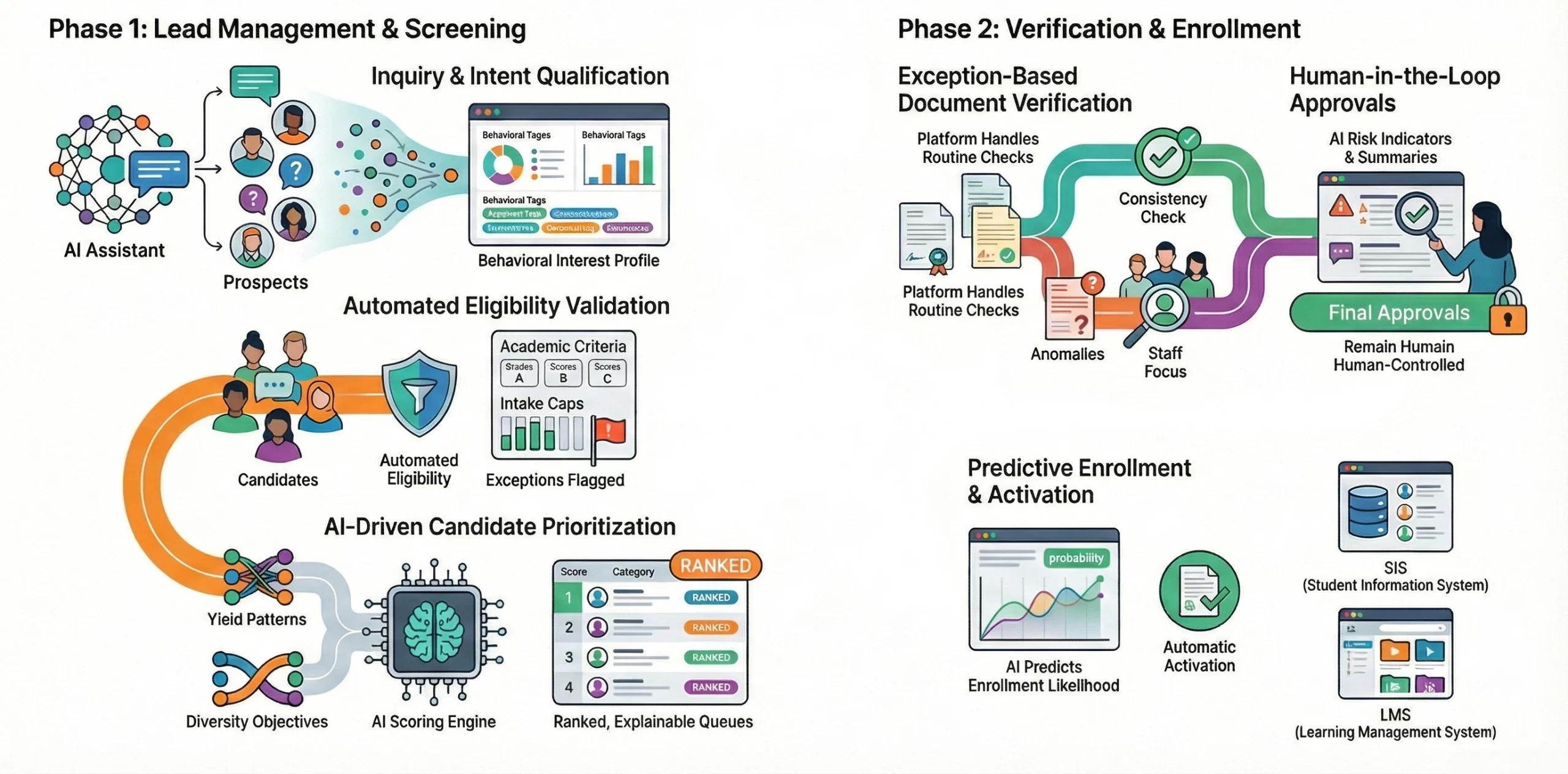
A university AI SaaS platform transforms fragmented campus systems into a unified intelligence layer. The following admissions example shows how data, AI reasoning, workflows, and human oversight operate together as one coordinated system.
1. Inquiry & Lead Qualification
AI assistants engage prospective students across websites, portals, email, and chat, answering program-specific questions using official eligibility rules and fee structures. Beyond answering queries, the platform qualifies intent, tags interests, and builds early behavioral profiles that influence downstream screening and conversion strategies.
2. Application & Eligibility Check
Once applications are submitted, the platform validates academic criteria, prerequisites, intake caps, reservation rules, and regulatory constraints in real time. Applications failing policy checks are auto-flagged with reasons, while borderline cases are routed for conditional review, preventing wasted evaluation effort later.
3. AI-Driven Screening & Prioritization
Instead of flat application lists, AI scores candidates using academics, entrance results, engagement signals, historical yield patterns, and diversity objectives. Admissions teams receive ranked, explainable queues, enabling consistent decisions across reviewers while reducing bias and processing delays.
4. Document Verification & Resolution
The platform automatically validates documents for completeness, data consistency, duplication, and anomalies. Only exceptions such as missing pages, mismatched records, or suspicious patterns, are escalated, allowing staff to focus on risk handling rather than routine checks.
5. Approvals & Offer Issuance
Applications move through configurable approval hierarchies aligned with institutional governance. AI provides decision summaries, risk indicators, and compliance checks, while final approvals remain human-controlled. Approved candidates receive personalized offers, timelines, and next-step guidance automatically.
6. Enrollment, Fee Closure & System Activation
Post-offer, AI continuously predicts enrollment likelihood using response behavior, communication engagement, and payment progress. The platform triggers reminders, optimizes outreach, monitors fee completion, and automatically activates student records across SIS, LMS, and finance upon confirmation.
The 4-Layer Architecture Behind an AI SaaS Platform
A university AI SaaS platform is built on a layered architecture. Each layer converts raw campus data into intelligent, automated, and actionable operations.
| Architecture Layer | What Happens in This Layer | Admissions Workflow Impact |
| Data Integration Layer (Input) | Securely connects SIS, LMS, CRM, finance, and document systems into a unified data hub | Pulls applicant data, documents, payments, and engagement signals in real time |
| AI Orchestration Layer (Brain) | Applies machine learning models, LLMs, and policy logic to unified data | Scores applicants, validates eligibility, predicts enrollment likelihood, and flags risks |
| Application & Workflow Layer (Action) | Executes automated workflows, approvals, alerts, and AI-driven tasks | Routes applications, triggers document checks, sends offers, and nudges candidates |
| Presentation Layer (Interface) | Delivers role-based dashboards, portals, and AI assistants | Gives admissions teams ranked queues and insights instead of raw application lists |
Why University-Grade AI SaaS Platforms are Gaining Popularity?
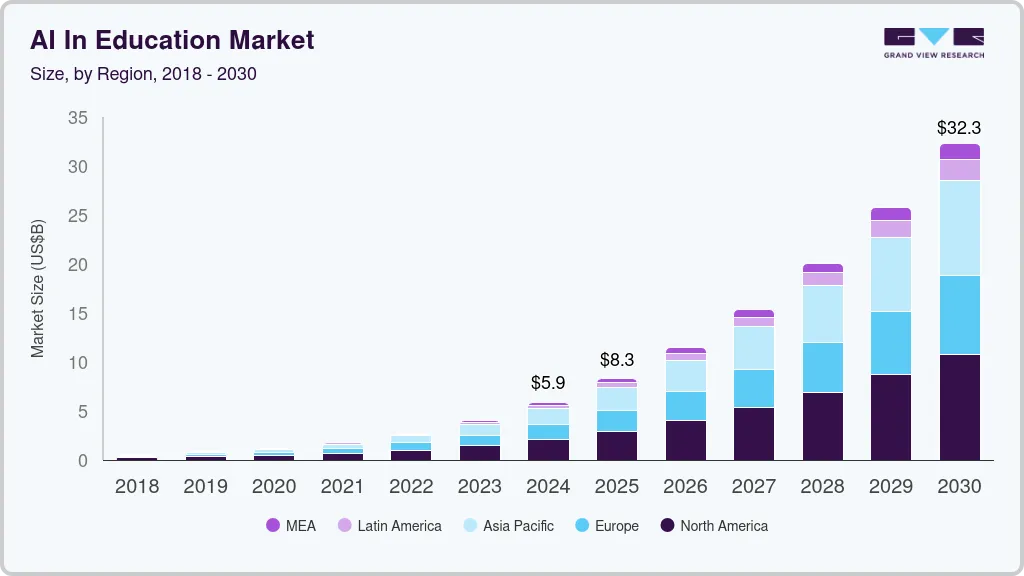
The global AI in education market size was estimated at USD 5.88 billion in 2024 and is projected to reach USD 32.27 billion by 2030, growing at a CAGR of 31.2% from 2025 to 2030. This surge is accelerating demand for university AI SaaS platforms that deliver scalable features, modern tech stacks, and sustainable monetization models for universities.
Universities using AI-driven early alert systems have seen student retention rates improve by 10–15% by proactively identifying and supporting at-risk students before they drop out.
In parallel, AI tutoring platforms have demonstrated 20–40% improvements in learning outcomes compared to traditional teaching methods across several pilot studies, reinforcing AI’s role in enhancing personalized learning.
AI-driven personalized learning is significantly enhancing academic outcomes, increasing student achievement by 20–30%. Engagement levels are also rising sharply, with students in AI-enhanced active learning programs showing up to 10× higher engagement compared to traditional learning environments.
Student preferences and career outlooks further highlight AI’s growing role in education. Around 60% of students prefer using AI-powered apps for late-night study support rather than waiting to email an instructor, while 74% view AI competency as a vital skill that will shape their future professional careers.
Core Features of an AI SaaS Platform for Universities
Core university AI SaaS platform enables intelligent learning management, student success analytics, and administrative automation, integrating securely with campus systems to enhance engagement, efficiency, compliance, and data-driven academic decision-making.

1. Policy-Aware AI Assistant
An AI assistant grounded in institutional policies, handbooks, and regulations. It answers eligibility, academic, and administrative questions with source-backed responses, controlled prompts, and audit logs, eliminating hallucinations and reducing dependency on support staff.
2. Role-Based User Dashboards
Personalized dashboards for students, faculty, administrators, and leadership. Each role sees only relevant data, actions, alerts, and KPIs, improving daily efficiency while preventing data overload and cross-role access issues.
3. AI Admissions Management
Automates application screening, eligibility checks, document validation, and applicant communication. The system flags incomplete or risky applications early, reduces manual review time, and improves enrollment conversion without increasing admissions team workload.
4. Student Lifecycle Intelligence
Tracks student engagement, academics, attendance, and financial behavior from admission to graduation. AI continuously analyzes signals to surface risks, milestones, and intervention opportunities before issues impact retention or academic outcomes.
5. Academic Compliance Automation
Continuously validates credit requirements, attendance rules, prerequisites, and degree policies. Prevents compliance violations, student disputes, and last-minute eligibility failures by catching issues in real time instead of end-of-semester audits.
6. Fee & Scholarship Intelligence
Provides transparent fee calculations, automated scholarship eligibility checks, dues visibility, and payment reminders. AI identifies defaulter risk early and supports revenue protection without aggressive manual follow-ups or financial ambiguity for students.
7. Approval Workflow Automation
Digitizes approvals for admissions exceptions, leaves, fee waivers, and academic requests. Configurable workflows enforce policy logic, reduce turnaround time, and maintain complete approval histories for audits and accountability.
8. Explainable AI Decisions
Every AI recommendation includes reasoning, data references, and confidence indicators. This builds trust with faculty and administrators while ensuring AI-driven decisions remain reviewable, defensible, and compliant with academic governance standards.
9. Unified Campus Data View
Breaks departmental silos by unifying admissions, academics, finance, and administration data into a single interface. Users gain real-time visibility without switching tools, reducing coordination delays and operational blind spots.
10. Drop-Off & Revenue Risk Alerts
Predictive alerts identify disengaged students, enrollment drop-offs, unpaid dues, and academic risks early. Universities act proactively, protecting retention and revenue instead of reacting after damage is already done.
Advanced Differentiation Features for University AI SaaS Platforms
Advanced AI differentiation features empower university AI SaaS platforms with adaptive learning, predictive analytics, and ethical AI governance, delivering personalized student outcomes, operational intelligence, and secure, explainable, institution-ready innovation at scale.
1. Autonomous AI Workflow Agents
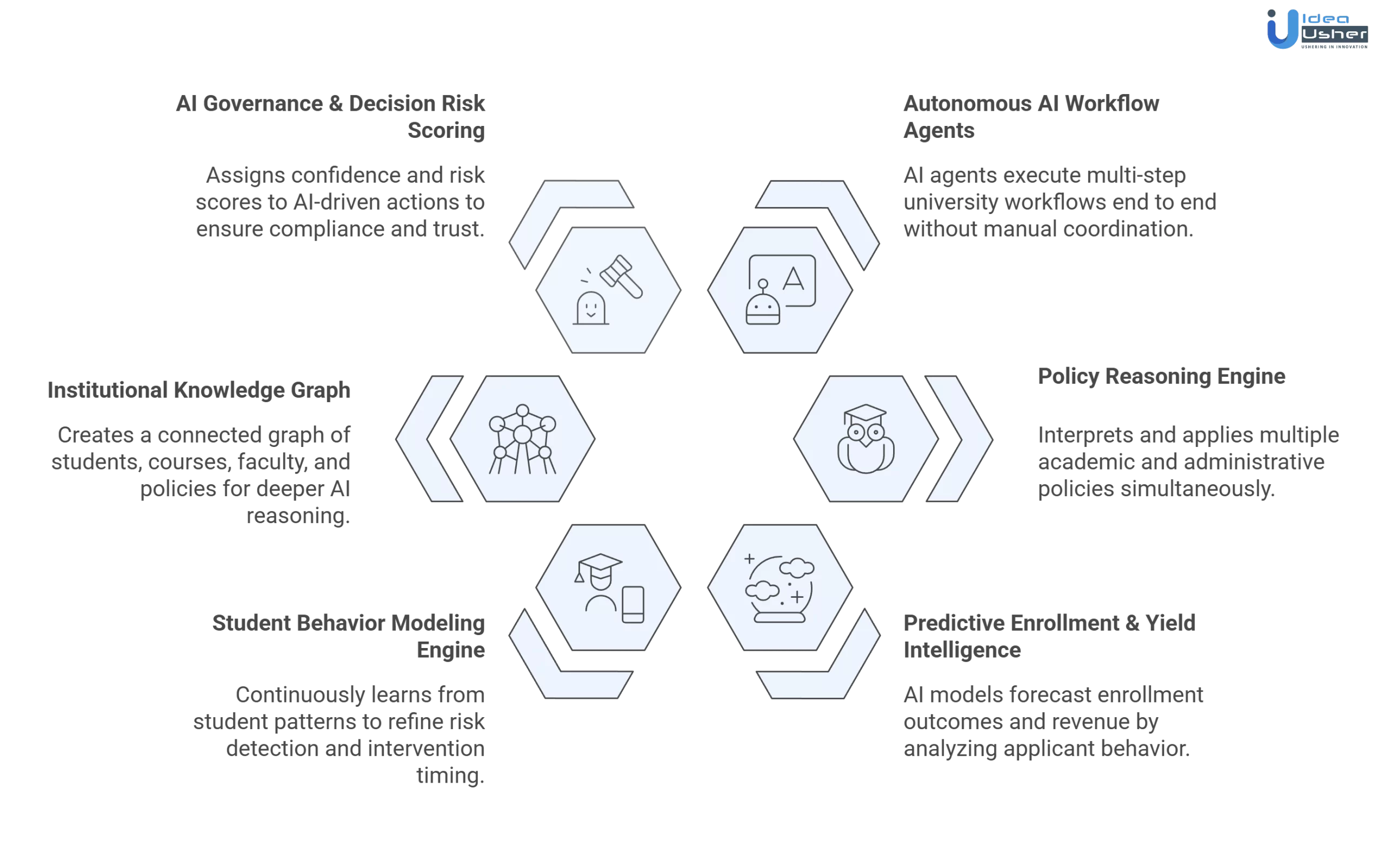
AI agents execute multi-step university workflows end to end such as resolving admissions holds, validating eligibility, triggering approvals, and updating systems, without manual coordination, reducing operational load and turnaround time across departments.
2. Policy Reasoning Engine
Unlike basic RAG systems, this engine interprets, compares, and applies multiple academic and administrative policies simultaneously, enabling accurate decisions in complex edge cases such as exceptions, transfers, scholarships, and regulatory overlaps.
3. Predictive Enrollment & Yield Intelligence
AI models forecast enrollment outcomes, seat utilization, and fee realization by analyzing applicant behavior, historical yield, and real-time engagement signals, helping universities optimize intake targets and revenue before admission cycles close.
4. Student Behavior Modeling Engine
Continuously learns from academic performance, attendance, platform usage, and financial behavior to refine risk detection, engagement scoring, and intervention timing as student patterns evolve over semesters.
5. Institutional Knowledge Graph
Creates a connected graph of students, courses, faculty, policies, approvals, outcomes, and decisions, enabling deeper AI reasoning, cross-domain insights, and explainable recommendations beyond flat database queries.
6. AI Governance & Decision Risk Scoring
Every AI-driven action is assigned a confidence and risk score, automatically enforcing human review where required, ensuring compliance, trust, and safe AI adoption in high-stakes academic and financial decisions.
Enterprise Tech Stack for Building AI SaaS for Universities
An enterprise-grade university AI SaaS platform tech stack prioritizes security, scalability, compliance, and integration, enabling personalized learning, analytics, and automation while meeting institutional governance, data privacy, reliability standards, requirements.

1. Data & Integration Layer
This layer connects the AI SaaS platform with existing university systems and data sources. It ensures information flows accurately, consistently, and in real time across departments without disrupting current operations.
| Component | Tech Stacks | Business & Operational Impact |
| SIS, LMS, ERP, CRM Integrations | REST APIs, GraphQL, MuleSoft, Apache Camel | Enables faster integrations without replacing existing systems, reducing deployment time and institutional disruption |
| Real-Time Data Pipelines | Apache Kafka, AWS Kinesis | Allows instant updates and alerts for admissions, dues, and compliance during peak academic periods |
| Batch Data Pipelines | Apache Airflow, AWS Glue | Supports reliable reporting, forecasting, and historical analysis without impacting live system performance |
| Data Normalization & Mapping | dbt, Apache Spark, Snowflake | Ensures consistent data across departments, preventing reporting errors and operational conflicts |
| Event-Driven Processing | AWS EventBridge, Kafka Streams | Automates actions when data changes, minimizing manual monitoring and delayed responses |
2. AI & Intelligence Layer
The intelligence layer defines how AI understands, reasons, and responds within university environments. It focuses on accuracy, policy alignment, governance, and safety for high-stakes academic and administrative decisions.
| Component | Tech Stacks | Business & Operational Impact |
| LLM Selection Strategy | OpenAI, Azure OpenAI, LLaMA, Mistral | Balances AI performance, cost control, and data privacy based on university-specific requirements |
| RAG Architecture | LangChain, LlamaIndex, Pinecone, Weaviate | Ensures AI responses remain accurate, explainable, and grounded in official university documents |
| Policy Reasoning Engine | Python Services, Neo4j | Handles complex policy scenarios like exceptions and transfers without manual interpretation |
| Prompt Safety & Guardrails | Guardrails AI, OpenAI Moderation | Prevents incorrect or unsafe AI outputs in high-stakes academic and financial workflows |
| Model Governance & Versioning | MLflow, Weights & Biases | Tracks AI changes over time, enabling audits, accountability, and controlled model improvements |
3. Application & Workflow Layer
This layer powers how users interact with the university AI SaaS platform and how university processes are executed. It translates complex academic workflows and approvals into scalable, user-friendly, and automation-ready applications.
| Component | Tech Stacks | Business & Operational Impact |
| Backend Frameworks | Node.js, Spring Boot, FastAPI | Enables faster feature development while supporting high concurrency during admissions and exam cycles |
| Workflow Orchestration | Temporal, Camunda | Automates long-running university processes without breaking when delays or approvals occur |
| Approval Hierarchies | BPMN, Drools Rule Engine | Enforces academic and administrative policies consistently across departments and use cases |
| Frontend Applications | React, Next.js | Delivers fast, role-based user experiences for students, faculty, and administrators |
| Multi-Tenant SaaS Design | Docker, Kubernetes, Terraform | Supports multiple universities securely while simplifying scaling, updates, and infrastructure management |
4. Security & Compliance Stack
Universities handle sensitive student, academic, and financial data. This layer ensures the university AI SaaS platform meets regulatory requirements, protects institutional trust, and enables safe, auditable AI usage at scale.
| Component | Tech Stacks | Business & Operational Impact |
| Identity & Access Management | Keycloak, Auth0, Azure AD | Ensures secure, role-based access without complex user management for IT teams |
| Data Encryption | AES-256, TLS 1.3 | Protects sensitive student and financial data during storage and transmission |
| Compliance & Audit Logging | ELK Stack, AWS CloudTrail | Provides complete visibility into system activity for audits and regulatory reviews |
| Data Isolation | Kubernetes Namespaces, VPCs | Prevents data leakage between universities, departments, and environments |
| AI Usage Monitoring | OpenAI Usage APIs, Custom Dashboards | Tracks AI usage, costs, and risk to prevent misuse and budget overruns |
Monetization Models That Work for AI SaaS in Higher Education
Effective monetization models for university AI SaaS platforms balance institutional budgets with measurable value, enabling scalable revenue through flexible pricing while aligning with university procurement, usage patterns, and long-term adoption.

1. Per-Student / Per-Enrollment Pricing
The platform is priced based on active students or confirmed enrollments, not logins. This model scales naturally with university growth and is easy to justify internally because cost directly tracks institutional size and intake volume.
Example: Ellucian prices core systems based on student scale, aligning software cost with enrollment size, institutional growth, and predictable budgeting across admissions, academics, and finance operations.
2. Module-Based Licensing
Universities license specific modules such as admissions, academics, finance, or compliance. This reduces entry friction, supports phased rollouts, and creates predictable expansion revenue as more departments adopt the platform.
Example: Anthology allows universities to license LMS, student success, and engagement modules independently, enabling phased adoption, department-led buying, and expansion without forcing full-platform commitments upfront.
3. Enterprise or Multi-Year Contracts
A fixed annual or multi-year contract bundles platform access, defined AI usage limits, and support. This matches university budgeting cycles and provides vendors with stable, long-term recurring revenue.
Example: Workday operates on long-term enterprise contracts covering HR, finance, and student systems, matching university budget cycles and prioritizing stability, scalability, and institutional-wide digital transformation.
4. Usage-Based AI Pricing
AI-heavy features are monetized based on actions like policy queries, workflow executions, or document analysis. This prevents margin erosion from heavy AI usage while keeping base platform pricing predictable.
Example: Civitas Learning monetizes advanced analytics and AI insights based on usage and impact, allowing institutions to scale intelligence capabilities while controlling costs tied to data volume and engagement.
5. Premium AI Intelligence Add-Ons
Advanced capabilities such as predictive enrollment modeling, policy reasoning engines, or institutional intelligence dashboards are sold as add-ons. These features justify higher pricing and differentiate the platform from standard EdTech SaaS.
Example: Blackboard offers advanced analytics and intelligence as premium add-ons, enabling universities to upgrade insights and outcomes without replacing their core LMS infrastructure.
Examples of AI SaaS Platforms for Universities in The Market
AI SaaS platforms for universities deliver intelligent learning, student analytics, and administrative automation. These are some AI SaaS platform examples currently shaping innovation across higher education institutions worldwide.
1. Ellucian
Ellucian modernizes legacy SIS and ERP systems at enterprise scale, embedding analytics and AI within traditional university operations, making it reliable for compliance-heavy institutions but slower to evolve AI-first capabilities.
What this platform still lacks
- AI-native architecture beyond ERP augmentation
- Autonomous AI agents executing cross-system workflows
- Flexible, usage-aligned AI pricing models
2. ProcessMaker
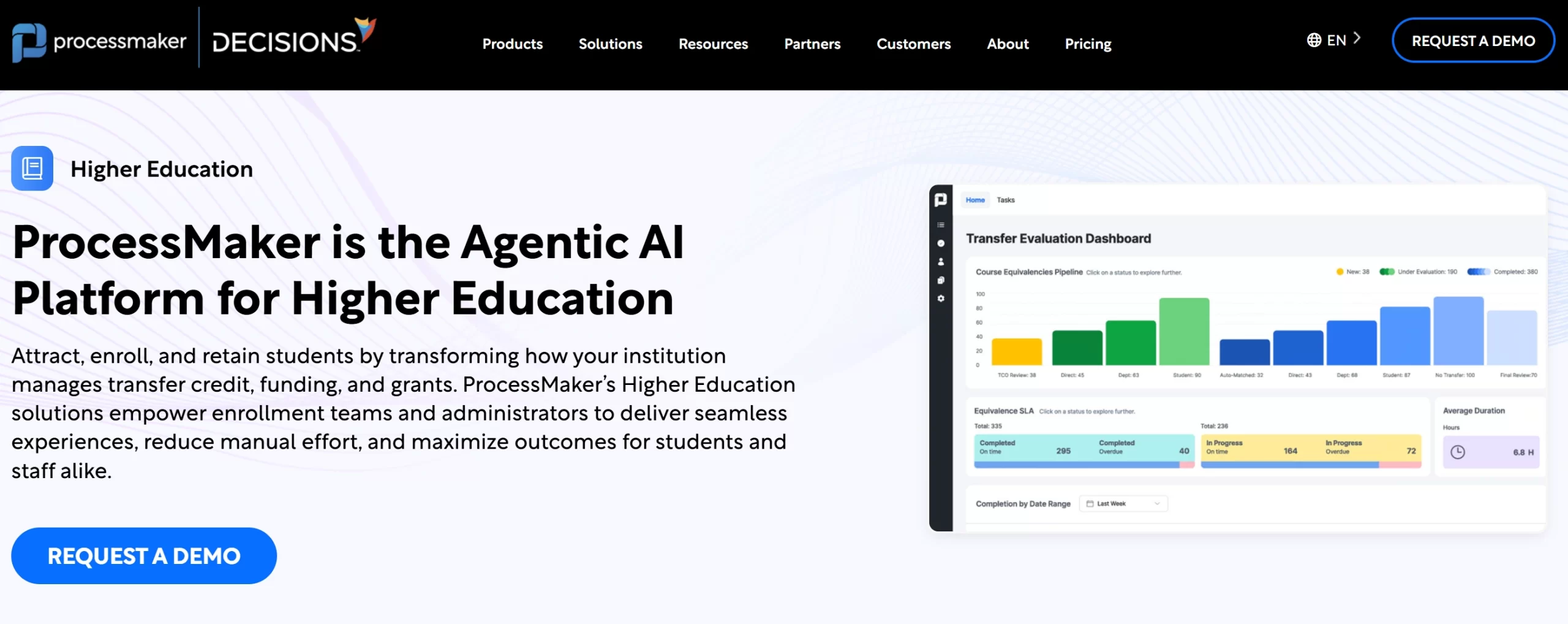
ProcessMaker is an enterprise workflow automation platform used by universities to digitize complex approvals, forms, and administrative processes, integrating with SIS and ERP systems rather than replacing core academic platforms.
What this platform still lacks
- Native student lifecycle or enrollment intelligence
- Policy-aware AI reasoning specific to academic regulations
- Autonomous AI agents executing end-to-end university workflows
- Institutional-level analytics beyond process efficiency metrics
3. Creatrix Campus
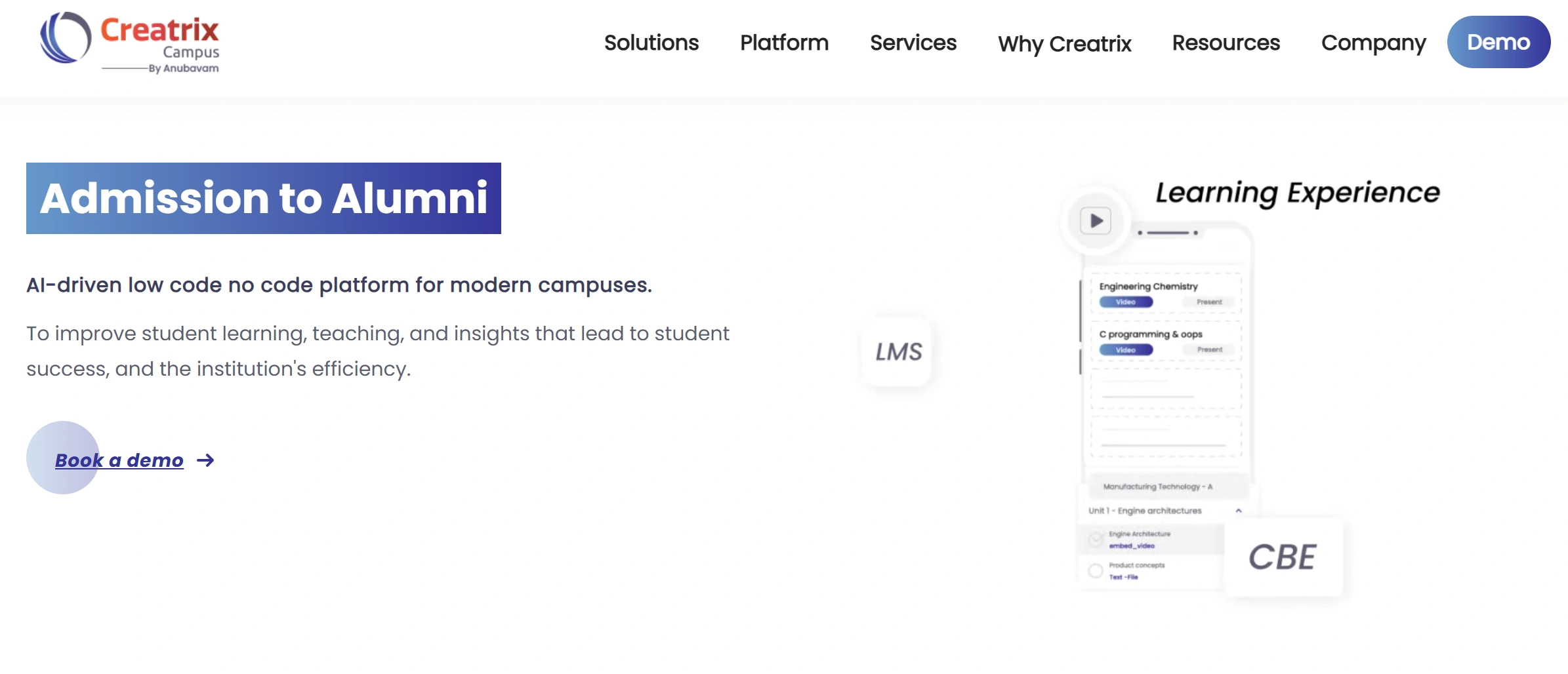
Creatrix Campus positions itself as an AI-first, modular campus platform, digitizing academic and administrative lifecycles with stronger automation depth than legacy SIS tools, particularly for mid-sized institutions.
What this platform still lacks
- Leadership-level predictive and scenario intelligence
- Institutional knowledge graphs for advanced reasoning
- Formal AI governance and decision risk frameworks
4. Classter
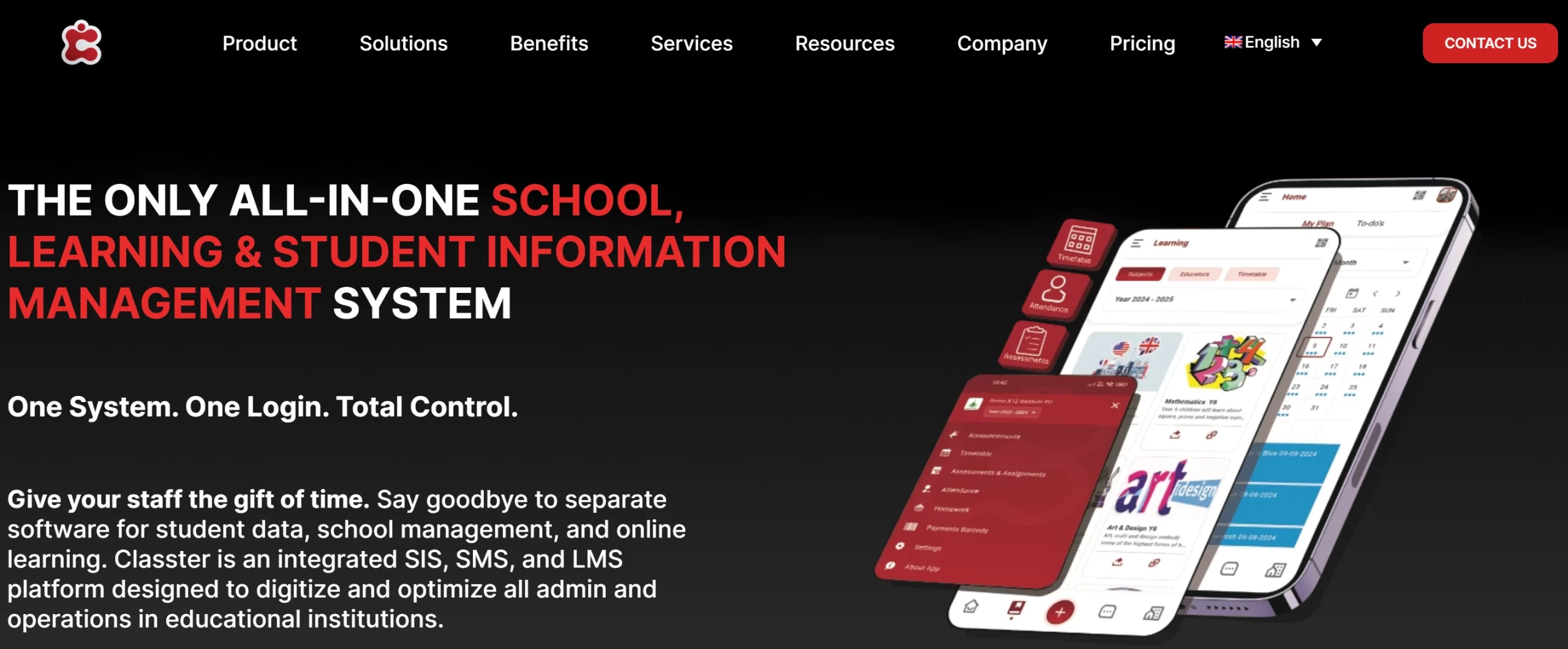
Classter is a cloud-native, modular SIS designed for flexibility and multi-institution management, prioritizing configurable workflows and faster deployments over advanced AI-driven intelligence or autonomous decision-making.
What this platform still lacks
- Policy reasoning across complex academic and financial rules
- AI-driven exception handling and compliance automation
- Cross-department intelligence beyond SIS boundaries
5. Kuali Build

Kuali Build focuses on no-code form and workflow automation for governance-heavy university processes, excelling in approvals and routing but intentionally remaining system-agnostic and non-intelligent by design.
What this platform still lacks
- Embedded AI for reasoning and decision support
- Student or enrollment intelligence capabilities
- End-to-end automation across academic and financial systems
Conclusion
An effective university AI SaaS platform combines intelligent features, a scalable technology stack, and sustainable monetization models to meet the evolving needs of modern institutions. By leveraging cloud-native infrastructure, AI-driven automation, and secure data management, universities can streamline operations and enhance digital experiences. Equally important is choosing flexible pricing strategies that support long-term growth and adoption. As demand for intelligent education solutions continues to rise, well-designed AI SaaS platforms offer universities a powerful path toward operational efficiency, innovation, and future-ready digital transformation.
Launch a University-Grade AI SaaS Platform with IdeaUsher!
We specialize in building AI SaaS platforms for enterprise and education markets, backed by ex-FAANG and MAANG developers with over 500,000 hours of AI product development experience. Using this expertise, we design university AI SaaS platforms aligned with market demand, monetization strategy, compliance, and institutional buying needs.
Why Work With Us?
- Higher Education Product Strategy: We design AI features that solve real academic and administrative challenges.
- Enterprise SaaS Tech Stack Expertise: Our platforms are secure, scalable, and built for multi-institution deployment.
- Monetization and Go-To-Market Focus: We help structure pricing models aligned with university budgets and buying cycles.
- Compliance and Trust by Design: Our AI systems meet data privacy, governance, and ethical AI expectations of institutions.
Explore our portfolio to see how we build secure, scalable AI products that help organizations launch, grow, and succeed in complex enterprise markets.
Get in touch for a free consultation and take the first step toward launching your AI SaaS platform for universities.


FAQs
A.1. An AI SaaS platform should include adaptive learning, student success analytics, automated advising, predictive enrollment insights, faculty dashboards, and secure integrations that improve outcomes while reducing administrative workload across academic and operational teams.
A.2. The best tech stack combines cloud platforms, scalable databases, API first backend services, machine learning frameworks, identity management, and analytics tools, ensuring performance, interoperability, security, and long-term maintainability for enterprise university clients.
A.3. Monetization works best through institution-level subscriptions, tiered feature pricing, per student licensing, and premium analytics add-ons, aligning cost with university size, usage intensity, and measurable value delivered across departments.
A.4. Enterprises validate demand by piloting with select institutions, engaging academic and IT stakeholders, mapping budget cycles, proving compliance readiness, and demonstrating clear ROI through improved retention, efficiency gains, and data-driven decision making.