 (+971) 8007 4267
 (+91) 946 340 7140
 (+1) 628 432 4305

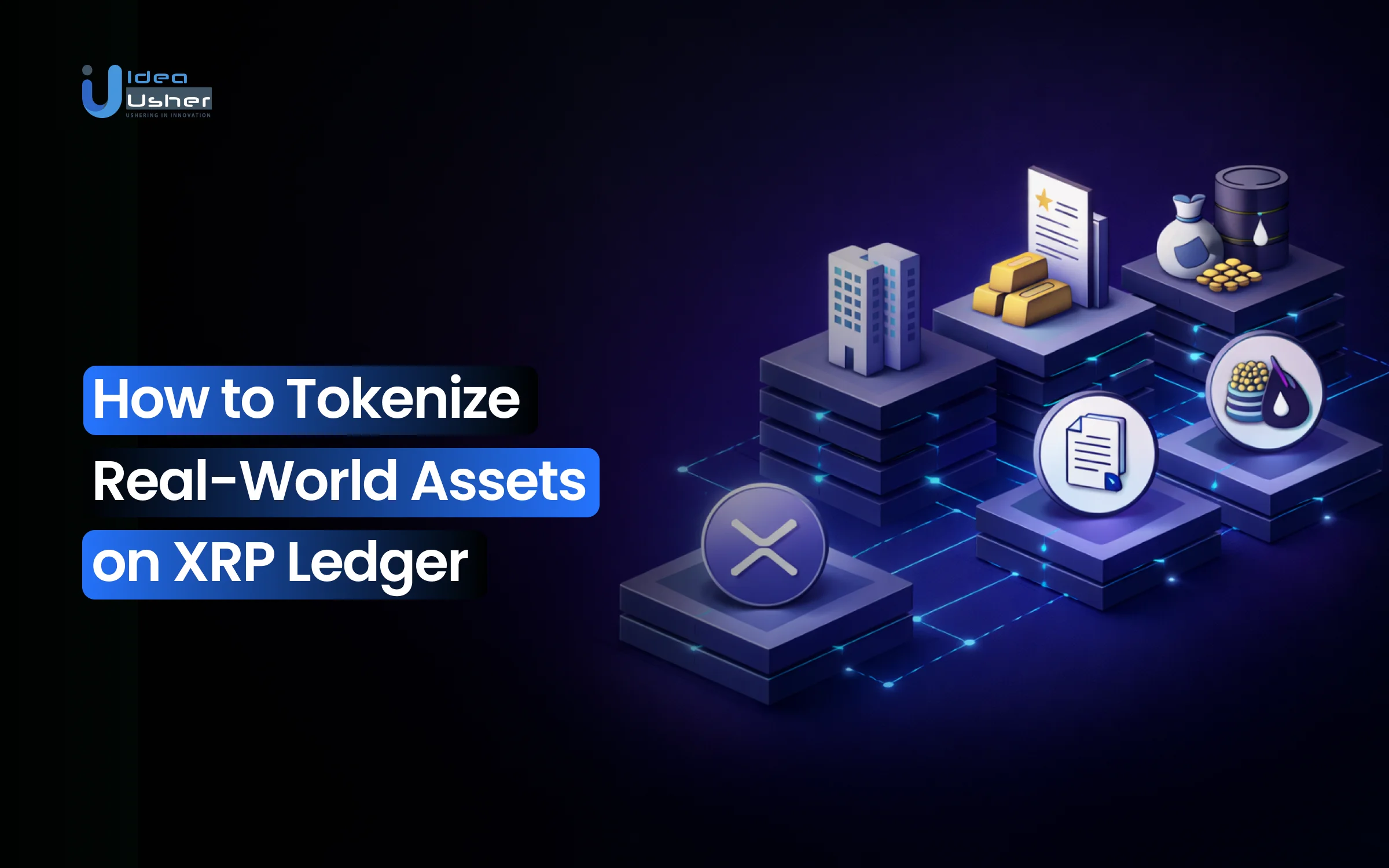
Real-world asset tokenization starts long before a token is issued on chain. Ownership validation, custody arrangements, compliance rules, and redemption logic all need to be defined in the physical world first. These requirements shape how teams approach the decision to tokenize real-world assets on XRP Ledger, where asset representation must stay tightly aligned with off-chain realities rather than abstract token models.
On the technical side, the XRP Ledger offers native features that shape how tokenization platforms are built, including built-in token standards, fast settlement, and predictable transaction costs. Using these capabilities effectively requires planning around issuance workflows, trust lines, transfer controls, and integration with custody and compliance systems. Success depends less on minting tokens and more on how these components operate together as a complete system.
In this blog, we explain how to tokenize real-world assets on XRP Ledger by breaking down the core requirements, platform architecture, and operational considerations involved in building compliant and scalable asset tokenization solutions.

What Is Real-World Asset (RWA) Tokenization?
Real-World Asset (RWA) tokenization converts ownership rights of physical or traditional financial assets into digital tokens on a blockchain. Assets like real estate, commodities, artwork, corporate bonds, or intellectual property are represented as cryptographically secured tokens that can be held, traded, and transferred. This creates a digital certificate of ownership mirroring the economic value and legal rights of the underlying asset.
Tokenizing assets enables fractional ownership, better liquidity, and global access not available in traditional systems. High-value assets can be divided, lowering barriers and boosting capital flow. Illiquid assets can be traded more efficiently, settled faster, and accessed by more investors through digital platforms and smart contracts.
Why Businesses Should Build RWA-Tokenization Platform on XRP Ledger?
Building an RWA-tokenization platform on the XRP Ledger enables efficient asset issuance, fast settlement, and low transaction costs. This section outlines why XRPL is a practical foundation for enterprise-grade asset tokenization.

1. Financial-Grade Throughput & Finality
The XRPL achieves deterministic finality in 3-5 seconds with transaction fees averaging $0.0002. This predictable, sub-penny cost structure is essential for high-frequency RWA functions like dividend distributions, fractional ownership micro-payments, or carbon credit retirement, eliminating gas fee volatility.
2. Native Issuance with Built-In Liquidity
The XRPL treats every asset, including RWAs, as a first-class citizen. This native integration allows seamless listing on the built-in DEX from day one. Tokenized assets gain immediate access to a non-custodial order book, bypassing external AMMs or centralized listing processes.
3. The Compliance-First Ledger
The XRPL is architected with “regulated DeFi” in mind, offering granular asset controls like Authorized Trustlines, Clawback, and Freeze capabilities. These core protocol features provide essential legal and operational safety rails for institutions tokenizing traditional asset classes, while aligning with ISO 20022 standards.
4. Sustainable Infrastructure Advantage
The XRP Ledger’s Federated Consensus algorithm is inherently carbon-neutral with a negligible energy footprint, over 120,000x more efficient than proof-of-work networks. This foundational advantage reduces ESG reporting overhead and aligns with green RWAs like renewable energy credits or sustainable supply chain tokens.
5. On-Ledger Programmability with Hooks
Hooks are lightweight smart contract-like functionalities deployed directly on the ledger. For RWA platforms, Hooks enable automated royalty payments, coupon distributions, or escrow releases without the cost or complexity of Turing-complete virtual machines.
6. Positioning for the Future of Value Exchange
Building on the XRPL positions you within an emerging institutional digital asset corridor. The ledger bridges Central Bank Digital Currencies (CBDCs) and tokenized private markets, enabling seamless interaction with digital money and high-integrity assets.
Benefits of Tokenizing Real-World Assets on XRP Ledger
Tokenizing real-world assets on the XRP Ledger improves liquidity, transparency, and settlement efficiency through native asset issuance and low-cost transactions. These are the key advantages of using XRPL for asset tokenization.

1. Faster Settlement With Minimal Cost
The XRP Ledger enables near-instant settlement with consistently low transaction fees, significantly reducing delays, reconciliation overhead, and intermediary costs compared to traditional asset transfer, clearing, and settlement systems used in legacy financial markets.
2. Built-In Token Issuance
Tokenization on XRPL uses native issued assets and Multi-Purpose Tokens (MPTs), eliminating the need for heavy smart contracts while improving reliability and reducing development risk.
3. Compliance-Ready Controls
Issuer authorization, trust lines, freeze, and clawback features allow businesses to enforce regulatory rules directly on-chain, supporting jurisdictional compliance and investor eligibility requirements.
4. Native Decentralized Exchange (DEX) Liquidity
XRPL’s built-in decentralized exchange enables compliant secondary trading and liquidity discovery for tokenized assets, allowing peer-to-peer transfers and market access without depending entirely on centralized platforms or external trading infrastructure.
5. Fractional Ownership and Market Access
Tokenization on XRPL allows high-value real-world assets to be divided into fractional units, lowering entry barriers, expanding global investor participation, and unlocking liquidity for traditionally illiquid asset classes such as real estate and private investments.
6. Enterprise-Grade Transparency and Auditability
All token issuance, transfers, and supply changes are recorded immutably on the XRP Ledger, providing real-time transparency, simplified auditing, and verifiable ownership records for regulators, issuers, custodians, and investors.
Key Market Takeaways of the Real-World Asset Tokenization
The RWA tokenization market is rapidly growing, expected to increase from $0.59 billion in 2024 to $0.67 billion in 2025 at a 12.9% CAGR. Growth is driven by institutional adoption, demand for on-chain liquidity, and clearer regulations supporting compliant asset tokenization.

Users on XRP Ledger RWA platforms invest 5-7x more frequently in tokenized assets than traditional platforms, with average investments of $250-$2,000 versus $5,000-$25,000 in traditional markets. Surveys show 78-82% satisfaction with building diversified portfolios with smaller capital.
Real-world assets tokenized on blockchain platforms experience 40-60% improvement in liquidity compared to traditional asset markets. On XRP Ledger specifically, tokenized assets show 24/7 trading availability with settlement times reduced from 3-5 business days to under 5 seconds, increasing asset velocity by 300-400%.
Types of Real-World Assets to Tokenize on XRP Ledger
The XRP Ledger supports tokenization of diverse real-world assets, from financial instruments and real estate to commodities and digital collectibles. These are some real-world assets that can be effectively tokenized on XRPL.

1. Financial Instruments & Debt
Tokenizing private equity, VC shares, bonds, and invoices unlocks liquidity. On the XRP Ledger, tokenized U.S. Treasuries and regulated debt products show XRPL’s support for compliant issuance, fractional ownership, and efficient settlement.
Example: Ondo Finance’s tokenized U.S. Treasuries issued on the XRP Ledger, showing institutional use of XRPL for regulated financial tokens.
2. Tangible Commodities & Natural Resources
Precious metals, carbon credits, and energy products can be digitized for fractional trading and provenance tracking. Commodity-backed tokens show how immutable records and low-cost transfers unlock liquidity in traditionally illiquid assets.
Example: Zoniqx leverages XRPL to issue tokenized real-world assets with efficient settlement and low transaction costs.
3. Real Estate & Property
Commercial, residential, and land assets can be tokenized into fractional, tradeable units. XRPL real estate pilots show how on-ledger settlement, programmability, and global access modernize property investment and ownership.
Example: Platforms such as Prypco Mint tokenize title deeds on XRPL in Dubai to enable fractional property ownership and broaden investor access.
4. Fixed-Income Securities and Bonds
Debt instruments like bonds and treasury bills can be issued as digital securities directly on XRPL for faster settlement and transparent ownership tracking.
Example: OpenEden and Archax are moving tokenized US Treasury Bills and institutional bond products onto the XRP Ledger for compliant, on-chain trading.
5. Tokenized Commodities
Physical commodities or money market fund shares can be represented as XRPL tokens with real-world value and liquidity.
Example: Franklin Templeton’s sgBENJI token, issued on XRPL via DBS Digital Exchange, exemplifies tokenized money market funds with institutional participation.
6. Tokenized Funds and Investment Vehicles
Investment funds, liquidity pools, and pooled capital vehicles can be digitized on XRPL to create tradable investment tokens with secondary market capabilities.
Example: sgBENJI also serves as a tokenized fund instrument, showing how pools of capital can be mobilized on the XRP Ledger.
7. Art & Collectibles (High-Value NFTs)
Physical art, collectibles, and luxury assets can be tokenized as real-world-backed NFTs. XRPL NFT marketplaces and provenance projects show how ownership, authenticity, and legal records can be stored on-chain for high-value physical assets.
Example: Aesthetes is an XRPL-based NFT marketplace that creates “phygital” NFTs representing physical artworks, enabling fractional ownership and low-cost transactions on the XRP Ledger.
How to Tokenize Real-World Assets on XRP Ledger?
Tokenizing real-world assets on the XRP Ledger involves issuing compliant digital tokens backed by physical or financial assets. This section explains the core steps and considerations for implementing asset tokenization on XRPL.

1. Identify the Asset
To begin tokenization, businesses first identify the real-world asset and define its legal ownership framework. This includes asset verification, rights mapping, and creating compliant legal entities so XRPL-issued tokens represent enforceable off-chain ownership.
2. Value the Asset
Next, professionals value the asset to determine token supply and pricing. The platform enforces compliance requirements such as KYC, AML, investor eligibility, and jurisdictional rules through XRPL controls, including trust lines and issuer authorization.
3. Issue Tokens on XRP Ledger
To tokenize the asset, issuers create native XRPL-issued tokens or Multi-Purpose Tokens (MPTs). Token metadata links legal documentation to on-chain assets, while trust lines and issuer settings define who can hold and transfer tokens.
4. Enable Ownership, Transfer, and Settlement
The XRP Ledger immutably records token ownership once businesses issue tokens. Businesses enable peer-to-peer transfers and secondary liquidity through XRPL’s built-in decentralized exchange (DEX), benefiting from near-instant settlement and low transaction costs.
5. Manage Redemption and Reconciliation
Finally, redemption rules are enforced by locking or burning tokens on XRPL when investors exit. Off-chain custodial systems reconcile blockchain records with real-world assets, maintaining continuous alignment between digital tokens and actual ownership.
Architecture of an RWA Tokenization Platform on XRP Ledger
The architecture of an RWA tokenization platform on the XRP Ledger defines how assets are securely issued, managed, and settled. This section highlights the key technical components that enable scalable tokenization on XRPL.
| Architecture Layer | Purpose | What It Handles in an RWA Tokenization Platform |
| Asset Tokenization Layer | Asset digitization and token logic | Defines token structure, supply, fractional ownership rules, and links digital tokens to real-world asset metadata. |
| XRP Ledger Integration Layer | Blockchain interaction and settlement | Manages token issuance, trust lines, transfers, transaction validation, and on-chain settlement on the XRP Ledger. |
| Compliance and Identity Layer | Regulatory enforcement and access control | Enforces KYC/AML checks, investor eligibility rules, jurisdictional restrictions, and issuer-defined access controls. |
| Custody and Asset Management Layer | Asset safeguarding and reconciliation | Handles custody records, asset backing verification, audits, and reconciliation between on-chain tokens and off-chain assets. |
| User and Admin Application Layer | User interaction and platform operations | Provides investor and admin dashboards for asset access, transfers, compliance monitoring, and platform governance. |
Issuer Accounts and Token Lifecycle Management on XRP Ledger
Issuer accounts on the XRP Ledger manage the creation, distribution, and overall lifecycle of real-world asset tokens. This section outlines issuer responsibilities and how XRPL-based platforms handle token lifecycle management.

1. Role of Issuer Accounts
Issuer accounts are the authoritative entities that create and manage issued assets on XRPL. They define token parameters, establish trust lines with holders, and act as the on-chain anchor linking legal ownership, compliance rules, and off-chain asset backing.
2. Trust Lines and Holder Authorization
XRPL uses trust lines to control who can hold an issued token. Issuers can require authorization before a trust line becomes active, enabling allowlist-based access, investor eligibility enforcement, and jurisdictional restrictions directly at the ledger level.
3. Supply Management, Minting, and Burning
Token lifecycle management includes controlled minting to reflect new asset issuance and burning or locking during redemptions. Issuer accounts manage circulating supply so on-chain token balances remain fully aligned with real-world asset availability.
4. Compliance Actions: Freeze, Clawback, and Restrictions
Issuer accounts can apply compliance actions such as freezing transfers, restricting accounts, or clawing back tokens when required by regulation or legal orders. These controls help enterprises respond to audits, disputes, or regulatory changes without compromising ledger integrity.
5. Lifecycle Events and Ongoing Governance
Beyond issuance, issuer accounts oversee lifecycle events like corporate actions, ownership updates, and asset maturity. Governance processes ensure tokens evolve alongside real-world asset changes while maintaining transparency, auditability, and operational continuity on XRPL.
How We Develop RWA-Tokenized Platforms on the XRP Ledger?
Developing RWA-tokenized platforms on the XRP Ledger requires secure architecture, compliant asset issuance, and seamless on-ledger integration. This section describes our structured approach to building reliable tokenization solutions on XRPL.
1. Compliance-Ready Platform Design
We start by designing the platform architecture with security and regulatory alignment as core principles. Our developers map legal requirements, asset rights, and jurisdictional rules into the system design before any on-chain implementation begins.
2. XRPL-Native Token Design
We design the token model specifically for the XRP Ledger, using issued assets or Multi-Purpose Tokens (MPTs). This includes defining supply, fractionalization logic, trust lines, issuer controls, and metadata that accurately represent real-world asset ownership.
3. Built-In Compliance and Access Control
Our developers integrate KYC/AML workflows and configure XRPL features such as issuer authorization, freeze controls, and Hooks. This ensures only eligible participants can hold or transfer tokenized assets, directly enforcing compliance at the ledger level.
4. Custody Integration and Asset Backing
We connect the platform with custodians or asset managers to keep real-world assets securely held and verifiable. On-chain token balances are continuously reconciled with off-chain custody records, ensuring full asset backing and maintaining investor trust.
5. Scalable XRPL Integration
We integrate reliable XRPL node connectivity and real-time transaction monitoring to support high-volume issuance, transfers, and settlements. The platform leverages XRPL’s fast finality and low fees to deliver consistent, institutional-grade performance.
6. Testing, Launch, and Monitoring
Before launch, we conduct extensive functional testing, compliance validation, and security reviews. Post-deployment, we monitor transactions, custody alignment, and platform performance to ensure long-term stability and regulatory readiness.
Top RWA Tokenization Platforms on the XRP Ledger
Several platforms on the XRP Ledger actively showcase how teams can securely tokenize and manage real-world assets at scale. This section highlights leading XRPL-based RWA tokenization platforms and the core capabilities they deliver.
1. Ondo Finance (OUSG)

Ondo Finance issues tokenized U.S. Treasury products like OUSG on the XRP Ledger, enabling 24/7 minting, redemption, and institutional access to tokenized government securities with fast settlement and enhanced liquidity.
2. Zoniqx

Zoniqx leverages XRP Ledger infrastructure to issue and manage real-world asset tokens with compliance controls, lifecycle management, and secondary trading, supporting institutional asset classes and regulatory alignment globally.
3. Sologenic

Sologenic enables tokenization and trading of stocks, ETFs, and commodities on the XRP Ledger using tokenized asset representations and decentralized exchange tools, simplifying access to traditional financial markets.
4. OpenEden

OpenEden is a regulated platform that tokenizes U.S. Treasury bills on XRP Ledger. Its TBILL tokens, backed by short-term U.S. government debt and complying with KYC/AML standards, have gained support from Ripple. The platform’s on-chain value locked shows XRPL’s potential for compliant RWA issuance and yield assets.
5. Aesthetes

Aesthetes is an XRPL-based NFT marketplace that tokenizes physical artworks into “phygital” NFTs, bridging fine art and blockchain to enable discover, collect, and trade phygital tokens at low cost and with fast settlement on the XRP Ledger. It has attracted thousands of users and won support through programs like the XRP Ledger Grants.
Conclusion
Building a structured approach to tokenization requires clarity across technology, compliance, and asset governance. When teams tokenize real-world assets on XRP Ledger, they gain transparency and settlement simplicity. The platform’s native issuance, liquidity, and control mechanisms support institutional use cases across markets. Success depends on aligning legal frameworks with on-ledger design, securing issuer controls, and planning lifecycle management early. With thoughtful architecture and disciplined execution, asset tokenization on XRPL can evolve into a reliable foundation for scalable digital finance. This guide explains how to Tokenize Real-World Assets on XRP Ledger.


FAQs
A.1. An RWA tokenization platform on XRP Ledger requires issuer accounts, trust line management, asset lifecycle controls, compliance integrations, secure custody, and off chain asset verification aligned with legal ownership structures.
A.2. XRP Ledger offers native asset issuance, fast settlement, low transaction costs, and built-in liquidity through its decentralized exchange, making it efficient for issuing and managing tokenized real-world assets at scale.
A.3. Issuer-level controls, allowlisting, trust line restrictions, identity verification, and regulatory framework integrations ensure compliance across asset issuance, transfer, and redemption.
A.4. Ownership is verified through off chain legal agreements, custody arrangements, and documentation linked to on ledger tokens, ensuring that digital ownership accurately reflects real world asset rights.


