

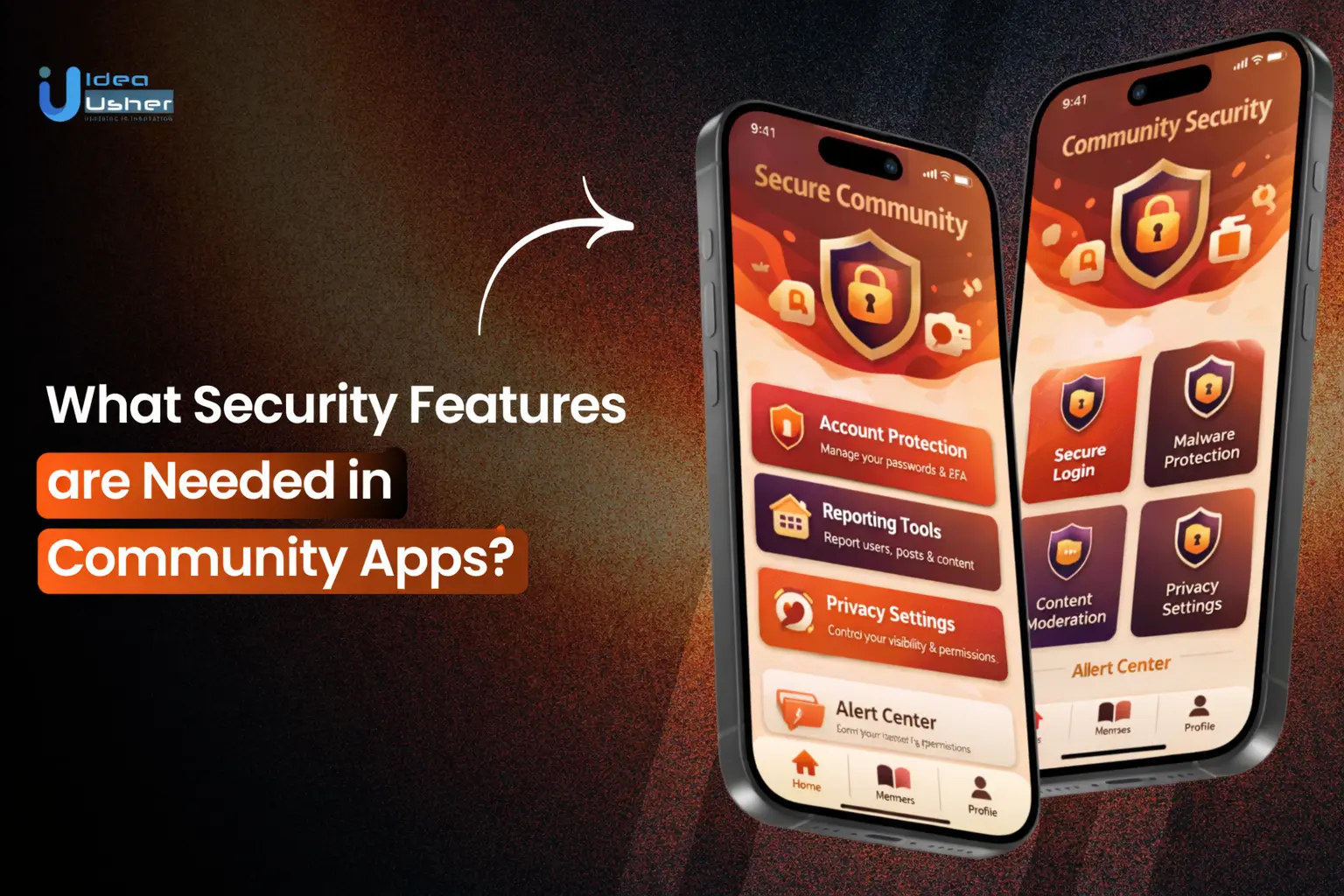
Getting people into a group is usually simple, but managing what happens next can quickly become complex. As community apps grow, they must carefully control who can see information and who can take action. This shift has quietly pushed community apps toward more structured and intelligent access systems. Users now expect clear boundaries, and they often want permissions that adapt to different roles.
It is important to carefully choose security features when building community apps because they directly prevent unauthorized access and help maintain data integrity. Without these controls, information may spread incorrectly, and actions may become unpredictable. A well-built system should ideally enforce access rules while still keeping the experience smooth.
Over the years, we’ve developed several secure community platforms, powered by zero-trust security architecture and identity management systems. With this expertise, we’re sharing this blog to break down why the right security features are essential in community apps.
Market Demand for Community Apps
According to Global Market Statistics, the global digital online community platform market was valued at USD 26,217.72 million in 2026 and is projected to reach USD 119,597.8 million by 2035, exhibiting a CAGR of 16.2%. This trajectory signals a massive capital shift. For investors, this represents a transition from rented social media reach to owned digital infrastructure where data and engagement are controlled assets.

Source: Global Market Statistics
Developing a proprietary platform is now a strategic hedge against the volatility of third-party algorithms. By capturing this demand, entrepreneurs move beyond simple networking into building high-value ecosystems. These walled gardens offer superior ROI through direct monetization, higher user lifetime value, and total sovereignty over the user experience.
Why Users Leave Open Platforms
Users are exiting legacy social networks due to a collapse in the noise-to-signal ratio. These platforms prioritize ad revenue over user utility, leading to algorithmic fatigue and data privacy concerns. For high-value users, the lack of curation has turned public feeds into digital liabilities rather than assets.
Strategic investors recognize that rented land offers no security. On open platforms, a sudden policy change can devalue a brand overnight. Private community apps like Mighty Networks solve this by offering:
- Data Sovereignty: Full control over governance and privacy.
- Curated Environments: Gated access ensures high-quality discourse.
- Algorithmic Freedom: Users see what is relevant, not what is boosted.
Rise of Niche Communities
The future of digital interaction is fragmented, and that fragmentation is where the highest margins exist. We are seeing a surge in micro platforms designed for specific professional standards or specialized interests. These niche spaces offer a level of depth that general-purpose platforms cannot replicate.
For an entrepreneur, targeting a vertical like high end investors or specialized medical professionals creates a high moat business.
For example, Circle has successfully capitalized on this by allowing creators to host discussions and events within a private, branded ecosystem. These users often pay a premium for exclusive access, facilitating immediate recurring revenue. Similarly, hyperlocal apps are gaining traction by solving physical world logistics and networking needs that global platforms ignore.
Industries Driving Demand
Specific sectors are aggressively seeking custom community solutions to replace fragmented tools and unlock new revenue streams:
- Finance & Wealth: Private investor circles require secure, encrypted environments for sharing sensitive market insights and co-investing.
- Professional Coaching: High-ticket consultants need a unified brand experience that combines course delivery with direct mentorship.
- Healthcare: Patient advocacy and medical research groups demand high-security spaces to discuss sensitive data and verified information.
- Enterprise: Large organizations are replacing static intranets with community-first apps to foster global innovation and protect intellectual property.

Why Security Defines Community App Success?
Security is the fundamental value proposition for modern community apps. High-net-worth users join private ecosystems specifically for protection. Building a proprietary app creates a digital vault for intellectual property and personal data, transforming a technical requirement into a core asset.
Trust as a Growth Lever
Trust is the primary currency of the digital economy. Positioning security as a brand pillar creates a significant competitive advantage. When members feel safe, they share deeper insights, conduct more transactions, and advocate for the platform within their elite networks.
A trust moat prevents competitors with lower standards from poaching your user base. Platforms like Kajabi have thrived by offering this secure, branded home for high-value clients.
Why Users Exit Unsafe Apps
The cost of a security lapse is irreversible. Once a user perceives a platform as vulnerable to data leaks or harassment, they exit immediately. Professionals have zero tolerance for environments that compromise their anonymity or subject them to automated noise.
Retention depends on the social contract. If communications feel vulnerable, users migrate to smaller circles. For example, professional startups often leave Discord if the open nature of the server system leads to unmoderated security risks.
Private vs Public Platforms
Private community apps operate on a model where access is a privilege and security is the standard. This differs from public platforms designed for mass data harvesting.
- Controlled Access: Vetting processes prevent the entry of bad actors.
- Data Insulation: Insights stay within a closed loop rather than being shared with third-party aggregators.
- Monetization Alignment: Private platforms profit from stability and member satisfaction rather than controversy.
Types of Data Community Apps Must Protect
Platform success hinges on data integrity within modern community apps. When members join an exclusive digital environment, they deposit sensitive information into your care. A breach is not just a technical failure; it is a breach of the investment contract between the platform owner and the user base.
Strategic value is created when intellectual property and personal details are insulated from predatory data scraping. Protecting these data sets requires a multi-layered defense strategy to transform potential liabilities into secured assets.
Personal Identity and Member Profiles
High-value community profiles house professional credentials, social links, and verified identities. For example, Hivebrite specializes in managing highly sensitive member directories for alumni and professional associations, ensuring that identity data is accessible only to verified peers.
- Risk Profile: Identity theft and doxing are primary concerns for high-profile users.
- Strategy: Use hashed storage and anonymization for profile data not explicitly shared.
- The Goal: Ensure individual identities remain shielded through robust encryption even if a database is compromised.
Private Messages and Group Conversations
The value of a private community lies in the unfiltered exchange of ideas. Whether it is a business strategy or a sensitive industry insight, this data is the lifeblood of the platform. This is why privacy-first messaging apps like Session have gained traction, as they function without collecting any metadata that could link a conversation to a real-world identity.
Technical Insight: End-to-end encryption is essential. It ensures conversations remain private between the sender and receiver, preventing even administrators from intercepting content.
Without this privacy, users self-censor. This leads to declining engagement and devalues the platform. Technical architecture must guarantee that private actually means private.
Payments and Shared Financial Data
For platforms utilizing subscription models or in-app marketplaces, financial data protection is paramount.
| Data Type | Protection Standard | Business Impact |
| Credit Card Info | PCI DSS Compliance | Prevents fraud and legal liability. |
| Transaction History | Encrypted Ledger | Protects user habits from competitors. |
| Payout Details | Multi Factor Auth (MFA) | Ensures revenue reaches stakeholders. |
Integrate with high-tier gateways like Stripe to offload risks while maintaining a seamless user experience.
Location and Activity Data Risks
Activity data can be revealing. For a community of high-net-worth individuals, location data is a physical security risk. Metadata can be used to reconstruct a user’s life through login patterns.
To mitigate this:
- Minimize Collection: Only track location if essential for hyperlocal features.
- Regular Purging: Delete non-essential activity logs every 30 to 90 days.
- Obfuscation: Use geo-fencing instead of precise GPS coordinates to protect member privacy.
Core Security Features Every Community App Must Have
Building high-value community apps requires a robust technical foundation to protect both the user experience and your capital investment. These core features are the non-negotiable pillars of any professional-grade platform.

1. Role-Based Access Control
RBAC ensures members only interact with data and features specific to their tier. For an entrepreneur, this allows seamless management of tiered experiences, where premium content or administrative tools are strictly siloed.
Platforms like Thinkific utilize these granular permissions to ensure only paying students or specific moderators have access to private community wings.
2. Multi-Factor Authentication
MFA is the primary defense against account takeovers. In high-stakes communities, relying on passwords alone is a significant risk. Integrating biometric verification or time-based one-time passwords adds a layer that deters most automated attacks.
LinkedIn leverages MFA extensively to protect professional identities and networking data from unauthorized access.
3. End-to-End Encryption
End-to-end encryption guarantees that private conversations remain entirely confidential and accessible only to participants. By ensuring that no one can intercept message data, you create a safe harbor for sensitive business discussions.
This level of privacy is a major differentiator for apps like Telegram, which offers secret chats to attract users wary of mainstream data harvesting.
4. AES-256 Storage Standards
Advanced Encryption Standard with a 256-bit key is the global benchmark for protecting data at rest. Utilizing AES-256 ensures that even if storage is compromised, the data remains indecipherable to unauthorized parties. For an investor, this technical standard is the ultimate insurance policy.
Salesforce employs this level of encryption to secure proprietary business data housed within its community clouds.
5. Session and Device Tracking
Effective session management monitors active connections and automatically terminates suspicious logins. By providing users with a dashboard to view and revoke access from specific devices, you empower them to control their own security.
Slack provides a gold standard for this, allowing administrators to track exactly where and when an account was accessed to prevent session hijacking.
Advanced Security Features That Build Trust
Advanced security differentiates premium community apps from basic social tools. For an investor, these features represent a defensive moat that protects the platform’s reputation and ensures high-level member retention.
1. Biometric Login
Integrating FaceID and fingerprint recognition provides a frictionless yet highly secure entry point. This eliminates the risk of stolen or weak passwords and is a standard for communities dealing with high-value transactions.
Apps like Revolut have set the benchmark for this, using biometrics to verify identity before allowing access to sensitive financial social circles.
2. AI Moderation
Modern AI models can detect toxic behavior, hate speech, or spam in real-time before it reaches the community feed. This proactive approach maintains the professional decorum required by elite memberships.
Reddit utilizes advanced automated tools to filter millions of interactions, ensuring that community standards are upheld without constant manual oversight.
3. Fraud Detection
Machine learning algorithms can flag anomalous behavior, such as rapid login attempts or unusual transaction patterns. These alerts act as an early warning system for the platform owner to prevent financial loss or data scraping.
Stripe provides an integrated example of this, where its Radar technology identifies and blocks fraudulent activity within community-led marketplaces.
4. Anonymous Reporting
Member safety is enhanced when users can report harassment or policy violations without fear of retaliation. A secure, anonymous reporting loop ensures that the community remains self-policing and high-quality.
Platforms like Blind rely on these protected feedback channels to allow professionals to share insights and report issues while maintaining total personal privacy.
5. Threat Monitoring
Real-time monitoring systems track server health and potential external attacks, such as DDoS or SQL injections. For a platform owner, this constant vigilance ensures 100% uptime and protects the capital value of the digital infrastructure.
Cloudflare is a prime example of a service that integrates these monitoring tools to shield community platforms from large-scale web threats.
Security Architecture Behind Scalable Community Apps
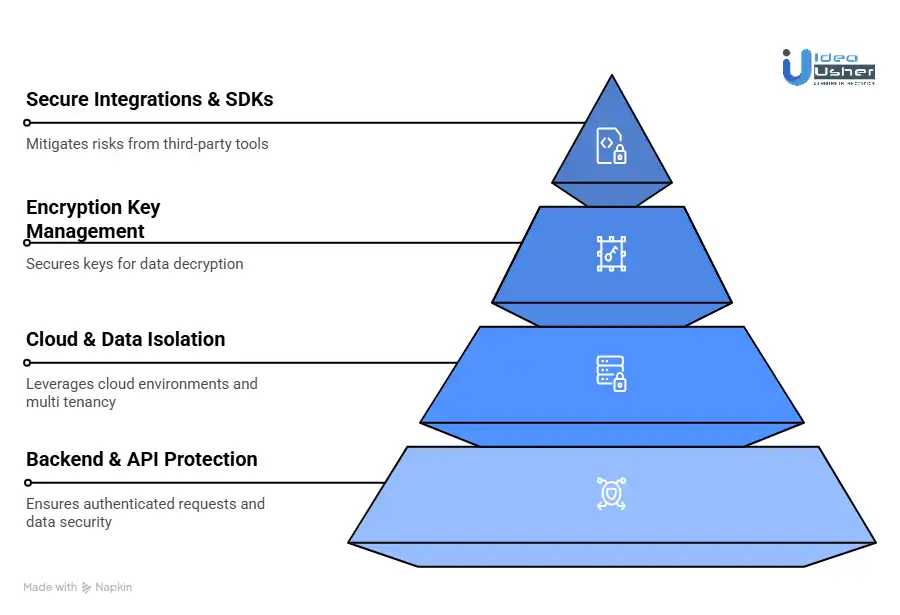
A resilient architecture is the invisible engine driving high-value community apps. For a platform to scale, the infrastructure must be designed to handle heavy traffic without compromising user data or system performance. This technical foundation transforms a simple social tool into a robust enterprise asset.
1. Backend and API Protection
The backend serves as the gatekeeper for every platform interaction. Implementing robust API security such as OAuth 2.0 and rate limiting, ensures that only authenticated requests are processed.
- Risk: Automated scrapers harvesting member data.
- Solution: Token-based authentication and restricted API endpoints.
- Example: Mighty Networks utilizes these advanced layers to allow creators to scale while keeping private content strictly inaccessible to unauthorized bots.
2. Cloud and Data Isolation
Modern platforms leverage cloud environments like AWS or Google Cloud to provide elastic scaling and physical security. Data isolation through multi tenancy logic ensures that one user’s environment is logically separated from another’s.
Architecture Note: Virtual Private Clouds act as a digital perimeter. This ensures that database traffic never touches the public internet. This air gapping is essential for communities handling proprietary industry secrets.
Circle relies on this type of secure cloud architecture to host thousands of independent communities. This ensures that a vulnerability in one niche group cannot spill over into another, protecting the collective integrity of the entire network.
3. Encryption Key Management
While data encryption is standard, the security of the keys used to unlock that data separates professional apps from amateur ones.
| Strategy Component | Purpose | Business Benefit |
| Hardware Security Modules (HSM) | Physical key storage. | Prevents software based theft. |
| Automatic Rotation | Periodic key updates. | Limits the window of vulnerability. |
| Granular Access | Identity based decryption. | Ensures even admins cannot see all data. |
Vault by HashiCorp is frequently integrated into community tech stacks to manage these secrets. It ensures that even if a server is accessed, the data remains an indecipherable string to any intruder.
4. Secure Integrations and SDKs
Most apps rely on third party tools for analytics, video hosting, or newsletters. Each integration is a potential entry point for attackers if not properly vetted. Using sandboxed SDKs and strict Content Security Policies mitigates this risk.
Zapier serves as a primary example of a secure bridge; it allows community owners to connect disparate apps through encrypted webhooks. This allows for massive functional expansion without ever exposing the core database to external vulnerabilities.
Compliance Requirements You Cannot Ignore
Navigating the legal landscape is non-negotiable for community apps. Compliance is not just a checkbox; it is a shield against astronomical fines and a powerful trust signal for your members. When you align your technical stack with global standards, you prove that your platform is a professional-grade environment rather than an unmonitored digital wild west.

1. GDPR and Global Privacy Laws
The General Data Protection Regulation, or GDPR, and its international counterparts like CCPA mandate that users have total control over their personal data. For a community owner, this means providing clear “right to be forgotten” tools and transparent data processing agreements.
- Key Action: Implement a “Data Export” button for members.
- Safety Net: Ensure your privacy policy is written in plain language, not just legal jargon.
- Example: Disciple Media excels here by providing automated GDPR-compliant tools that let hosts manage member data deletion requests with a single click.
2. SOC 2 and Enterprise Standards
If your community targets corporate clients or B2B networking, SOC 2 compliance is the gold standard they will demand. This audit proves that your internal processes for security, availability, and confidentiality are airtight.
Investor Note: Achieving SOC 2 status significantly increases the valuation of a community platform. It moves the conversation from “is this safe?” to “we have independent proof that this is safe.”
Kajabi has built a massive user base of high-ticket coaches and consultants by maintaining rigorous internal security controls that satisfy these high-level enterprise expectations.
3. HIPAA for Health Communities
Communities focusing on wellness, medical networking, or patient support must adhere to the Health Insurance Portability and Accountability Act or HIPAA. This requires a specific type of data handling where health information is stored in “hardened” silos.
| Compliance Pillar | Requirement | Risk of Non-Compliance |
| Data Siloing | Separating health info from profiles. | Major legal penalties. |
| Audit Logs | Tracking every person who views data. | Loss of professional license. |
| BAA Agreements | Legal contracts with hosting providers. | Platform shutdown. |
Brightsquid is an example of a specialized community platform designed entirely around these medical-grade security requirements, allowing doctors and patients to communicate without risk.
4. Regional Compliance for Local Apps
Different territories have unique demands, such as China’s PIPL or Canada’s PIPEDA. If your community app is hyper-local, your data residency, where the actual servers are located, becomes a legal focal point.
Many local niche apps use AWS Regions to ensure that data generated in Germany stays on servers within Germany. This localized approach prevents the legal complications of cross-border data transfers and makes your app more attractive to local governments and strictly regulated industries.
How Top Community Apps Handle Security?
Success in the community space is a result of how well a platform protects its vibe and its data. High-end community apps don’t just react to threats; they build environments where security is a feature, not a hurdle. By studying market leaders, we see how technical architecture translates into member trust.
Invite-Only Models
Exclusivity is a primary security layer. By moving away from open door policies, elite platforms ensure every participant is vetted. This reduces the attack surface by eliminating anonymous bots and bad actors before they see the login screen.
- The Strategy: Application-based entry or referral-only loops.
- The Benefit: High signal-to-noise ratio and reduced moderation load.
- Example: Bettermode provides templates for gated communities that allow admins to approve every member. Similarly, LoftOS uses invite-only workflows to help professional networks build secure, “high-trust” digital ecosystems.
Scalable Moderation
As a community grows, manual oversight becomes impossible. Top-tier apps utilize a hybrid approach, combining human intuition with machine speed to maintain order.
- AI Filtering: Instant removal of obvious spam and prohibited media.
- Keyword Watchlists: Flagging sensitive topics for human review.
- Community Flags: Empowering members to report issues.
Hive Moderation is the engine behind many large-scale platforms, using visual AI to scan images in real-time. Discourse also excels here, using an automated “trust level” system that grants members more permissions as they prove themselves to be helpful, non-toxic contributors.
Privacy vs. Engagement
There is a natural tension between locking everything down and encouraging meaningful interaction. If security is too intrusive, users stop sharing; if it is too loose, they feel exposed.
Design Principle: Friction should only exist where it adds value. Biometric login is good friction because it feels high-tech and secure. Complex, 20-character password resets every month are bad friction that kills daily active usage.
LinkedIn manages this balance by giving users granular control over activity visibility. In the social learning space, Disco uses AI to personalize engagement while keeping member data strictly siloed, ensuring that “social” doesn’t mean “public.”
Architecture Lessons
The most resilient apps are built on Zero Trust principles. This means the system assumes every request is a potential threat until proven otherwise. This shift from perimeter based security to identity based security allows apps to function safely across any network.
| Platform | Key Lesson |
| Slack | Granular channel permissions prevent internal data spills. |
| Discord | Robust role based hierarchies are essential for massive groups. |
| Circle | Isolated data “tenants” ensure one community’s breach cannot affect another. |
The ultimate lesson is that security must be distributed. It should live in the API, the database, and the user interface simultaneously. When security is woven into the architecture from day one, the platform becomes an appreciative asset that members are willing to pay a premium to join.
How Security Impacts User Retention Metrics in Community Apps?
Retention is the lifeblood of community apps. While features draw members in, security keeps them there. A single data scare can trigger a mass exodus, making security a vital retention engine that stabilizes platform value.

1. Trust Signals and DAU
Daily Active Users or DAU thrive in psychologically safe environments. Visible “trust signals” reassure members that their data is handled with care, encouraging higher quality contributions.
- Verified Badges: Confirms identities and reduces impersonation fears.
- Encrypted Status: Simple icons on private channels encourage candid talk.
- Active Moderation: Seeing spam removed proves the host is protecting the space.
Disciple Media uses these cues to build safe havens. By keeping security visible yet non-intrusive, they maintain engagement without compromising professional atmosphere.
2. Security UX Drop-Off Points
Poor security creates friction that kills growth. If joining a conversation requires too many hoops, users simply stop logging in. Identifying these friction points is essential to preventing churn.
The Paradox: Complex passwords often lead to a “log in later” attitude that turns into permanent churn. Apps should favor biometrics or magic links. Similarly, intrusive scans feel like spyware; transparent, server-side AI is a smoother alternative.
3. Measuring Safety Perception
Safety is a feeling as much as a technical reality. To protect the bottom line, owners must measure how members perceive their security.
The Community Safety Score tracks how comfortable users feel sharing sensitive info. Mighty Networks provides analytics to see where conversations stall. Often, a dip in a subgroup correlates with a rise in noise or a perceived lack of privacy. Monitoring these patterns allows managers to proactively reinforce security and stabilize retention.
Why Choose IdeaUsher for Community Apps?
Choosing the right partner determines whether your platform is a fragile experiment or a resilient enterprise. IdeaUsher can engineer secure, high-performance community apps that protect your intellectual property and member trust from day one.
Security-First Builds
Our process treats security as a foundation, not a final polish. With over 500,000 hours of coding experience, our team of ex-MAANG/FAANG developers implements the rigorous standards used by global tech giants. We deploy real-world solutions that withstand high-traffic stress while maintaining absolute data integrity.
Custom Aligned Architecture
Every community has unique DNA; templates often leave gaps. We design custom architectures specifically for your use case, from hardened medical privacy to global fan base scalability. By siloing data and optimizing API layers, we meet your specific needs without compromising system speed.
Built for Long-Term Growth
We bridge the gap between initial compliance and massive scale. Our builds ensure that as you double your user base, security doesn’t become a bottleneck. From navigating global data laws to AI moderation, we provide the technical roadmap to turn a niche group into a secure market leader.
Conclusion
The success of community apps rests on the protection surrounding every interaction. By weaving encryption and intelligent moderation into the platform’s fabric, developers create a sanctuary for members to collaborate. This commitment fosters the deep psychological trust necessary for a digital space to thrive. When security is a core feature, the platform scales with confidence and long-term resilience.
FAQs
A1: These are the specialized tools and protocols designed to protect user data, privacy, and interactions within a digital group. Unlike general web security, community features focus heavily on identity verification, content moderation, and permission-based access to ensure the “walled garden” remains safe and exclusive.
A2: Security is typically layered to provide a comprehensive defense-in-depth strategy. These levels include Physical Security (protecting server hardware), Network Security (using firewalls and encryption), Application Security (coding against vulnerabilities like SQL injection), and Administrative Security (implementing policies, user training, and access controls).
A3: Communities thrive on trust, and members are only willing to share sensitive information if they feel protected. Robust security prevents data breaches, blocks malicious actors, and stops toxic behavior from ruining the member experience. Without these protections, engagement drops and the platform’s reputation and financial value quickly erode.
A4: The 5 C’s represent a strategic framework for managing risk: Confidentiality (keeping data private), Compliance (meeting legal standards), Consistency (applying rules uniformly), Control (managing who accesses what), and Continuity (ensuring the platform stays online during an attack). Together, they form the backbone of a resilient community infrastructure.