



Building a music royalties platform often seems manageable at the concept stage, with clear inputs, predictable payouts, and defined rights structures. In practice, teams quickly face fragmented data sources, inconsistent reporting standards, and overlooked edge cases. These constraints sit at the core of many music royalties platform development mistakes, where systems designed for simplicity struggle under real-world usage and scale.
Many of these issues surface around royalty calculations, ownership tracking, payout accuracy, and compliance handling. Small assumptions made during early development can compound over time, leading to delayed payments, disputes, or loss of trust among stakeholders. Addressing these challenges requires careful system design, realistic data modeling, and workflows that can adapt as volume and complexity increase.
In this blog, we outline common mistakes when building music royalties platforms by examining where teams underestimate complexity, how constraints emerge during execution, and what to consider early on to avoid costly rework later.

The Groundwork for Music Royalties Platform Development
Early decisions often shape the most common music royalties platform development mistakes seen across the industry. This foundation sets expectations for accuracy, system flexibility, and long-term operational confidence.
A. What a Music Royalties Platform Actually Manages?
A music royalties platform acts as the operational core for tracking music usage and distributing earnings. It collects data from multiple music consumption channels and translates that data into payable royalties for rights holders.
The platform must align usage records with ownership structures, royalty rules, and payment schedules. This responsibility introduces technical, legal, and financial challenges that many teams fail to anticipate during early planning stages.
B. Structural Components That Define Royalties Systems
Every royalties platform relies on several structural components that work together to produce accurate results. Weakness in any of these areas often leads to downstream errors.
- Revenue stream handling: Platforms must process income from streaming, broadcasting, live performance reporting, and licensing deals. Each stream follows unique reporting cycles and calculation logic.
- Rights ownership mapping: The system must assign earnings to songwriters, publishers, performers, and labels based on agreed ownership percentages that may change over time.
- Territory-specific logic: Regional rules influence royalty rates and reporting requirements. Platforms must apply geographic logic without fragmenting global data views.
- Usage data validation: Platforms must verify incoming data accuracy to filter duplicates, missing fields, and reporting anomalies before calculations begin.
- Royalty calculation logic: Systems must apply correct rate formulas and splits consistently across all revenue sources and reporting periods.
C. Early Platform Decisions That Influence Long-Term Performance
Design decisions made at the beginning of development shape how well a royalties platform performs as it scales. Teams that overlook foundational planning often struggle to maintain accuracy and reliability.
- Data normalization strategy: Platforms must standardize incoming data from different sources to prevent duplication, mismatches, and revenue leakage.
- Change management controls: Ownership updates and contract changes should apply forward without altering historical payouts or reports.
- Scalability readiness: Systems must handle growth in catalog size, data volume, and reporting partners without performance degradation.
- Audit and reporting transparency: Platforms should generate clear audit trails that allow stakeholders to trace calculations and payout outcomes.
- Integration flexibility: Systems must support new data partners, formats, and APIs without requiring full platform reengineering.
Clear groundwork reduces confusion before deeper platform issues begin to surface. Teams that acknowledge structural complexity early avoid many music royalties platform development mistakes that stem from rushed assumptions. This foundation prepares platforms to handle scale, change, and accountability with greater confidence.
How Common Platform Mistakes Impact Rights Holders and Operators?
Common music royalties platform development mistakes directly affect rights holders and operators by disrupting payouts, data accuracy, and trust. This section outlines how these issues influence operational stability and stakeholder confidence.
| Platform Mistake Area | Impact on Rights Holders | Impact on Platform Operators |
| Inaccurate usage data handling | Missed earnings, incorrect payouts, and delayed royalty statements | Increased disputes, reconciliation work, and loss of platform credibility |
| Inflexible calculation logic | Incorrect splits after ownership changes and failed retroactive payments | Manual fixes, system rework, and higher operational costs |
| Limited transparency and reporting | Confusion around earnings sources and reduced trust in reported figures | Higher support volume and longer resolution cycles |
| Weak compliance and licensing alignment | Risk of underpayment or contract violations | Legal exposure, regulatory issues, and partner relationship damage |
| Poor change and audit management | Inability to verify historical payouts | Failed audits and difficulty defending calculations |
Data Accuracy and Usage Reporting Requirements
Accurate data handling defines how reliably a music royalties platform calculates and distributes earnings. Many platforms fail because they underestimate the volume, inconsistency, and operational impact of usage data across multiple reporting sources.
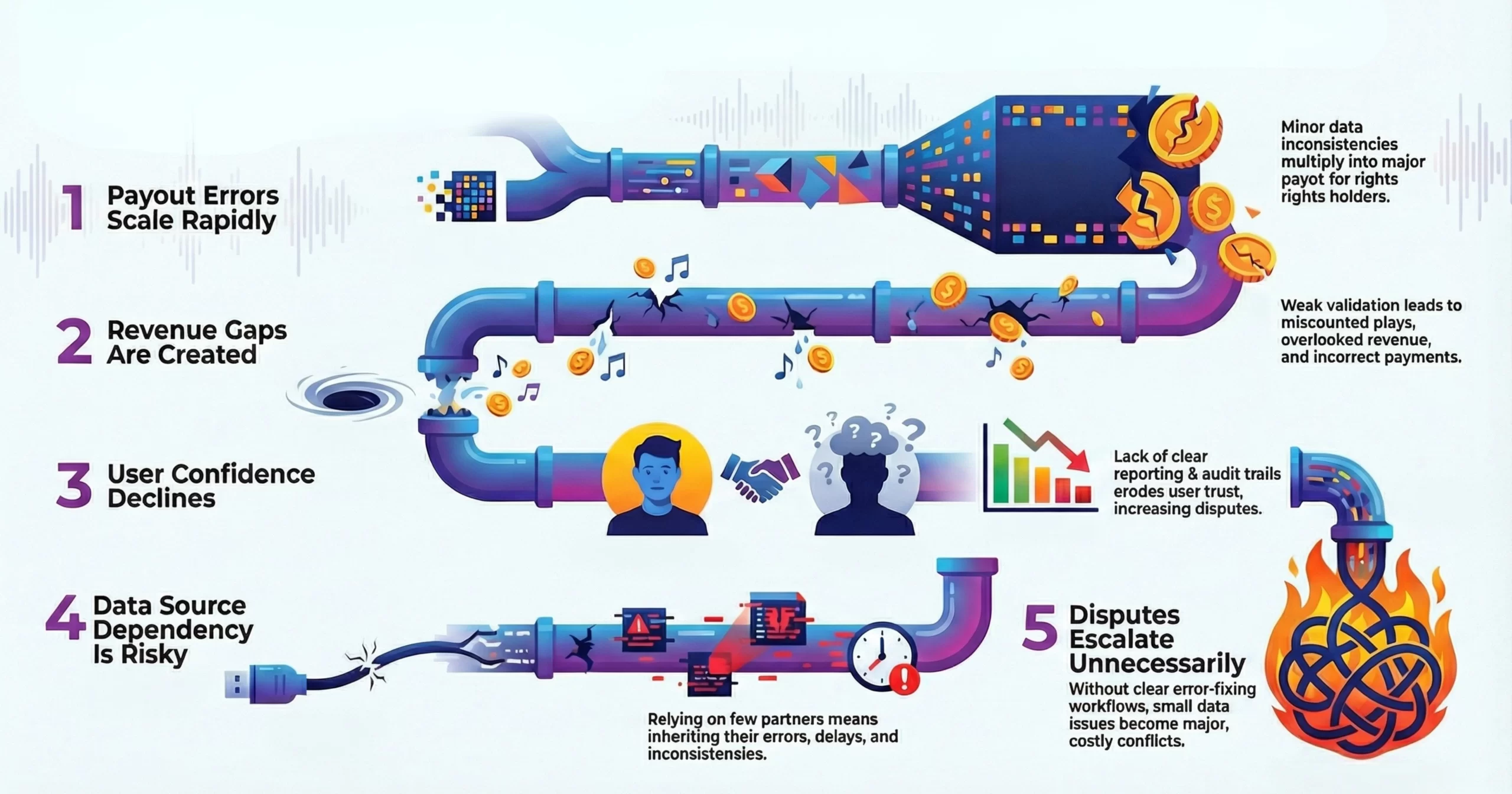
1. Usage Data Drives Every Royalty Outcome
Usage data directly determines royalty calculations across streaming, broadcast, and licensing channels. Platforms must align usage records with correct metadata, territories, and timestamps. Small inconsistencies quickly scale into payout errors that affect thousands of rights holders.
2. Weak Data Processing Creates Revenue Gaps
Platforms often receive incomplete, delayed, or duplicated usage reports from multiple partners. Without strong normalization and validation processes, systems miscount plays, overlook revenue, or create overpayments that reduce long term platform credibility.
3. Reporting Logic Shapes User Confidence
Clear reporting logic helps users understand how platforms convert usage into earnings. When systems lack audit trails, flexible views, or timely reports, disputes increase and trust declines among rights holders and administrators.
4. Data Source Dependency Creates Hidden Risks
Many platforms rely heavily on a limited number of reporting partners for usage data. When a source changes formats, delays delivery, or reports inaccurately, the platform inherits those issues and exposes users to inconsistent royalty outcomes.
5. Poor Error Resolution Workflows Escalate Disputes
Platforms often detect data issues but lack structured resolution workflows. Without clear flags, correction cycles, and communication logs, small reporting errors escalate into long-running disputes that drain operational resources and damage stakeholder relationships.
How the $104.61B Artist Market Drives Music Royalties Platform Growth?
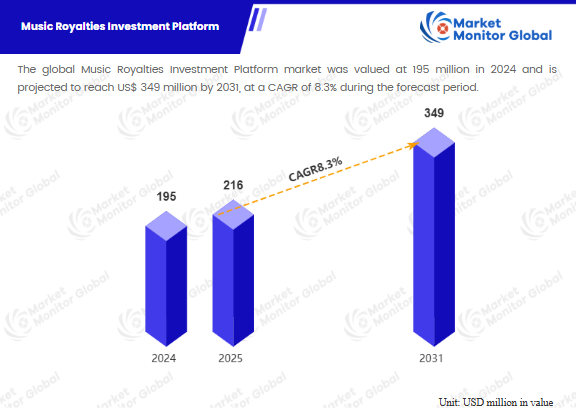
The global music royalties investment platform market is expected to reach around US$349 million by 2031, growing at an estimated 8.3% CAGR. This growth reflects rising demand for structured access to music-based income and alternative asset exposure.
At the same time, the independent artist market stands at $104.61 billion in 2024 and is projected to grow to $149.91 billion by 2029. This expansion significantly increases the volume of royalty-generating assets entering digital ecosystems.
A. How Independent Artists Expand Royalties Platform Demand?
The rapid growth of independent artists reshapes the economics of music royalties platforms by increasing both participation volume and operational complexity. This shift creates sustained demand for platforms that can manage rights, income, and reporting at scale.
- Self-Managed Catalog Growth: Independent artists retain ownership of masters and publishing rights, increasing demand for direct royalty collection, administration, and payout services.
- Platform Dependence for Royalty Operations: Without label infrastructure, creators rely on platforms for reporting, compliance, collection, and cross-territory royalty management.
- Fragmented Multi-Source Income Streams: Royalties flow from streaming, social, sync, and performance channels, requiring aggregation and consolidated financial visibility.
- Global First Distribution Behavior: Independent releases reach international markets by default, creating complex regional royalty flows that platforms are built to manage.
B. Why This Growth Supports Sustainable Platform Revenue?
As independent artist participation expands, music royalties platforms benefit from revenue models that scale with activity, administration, and long-term asset management rather than short-term creative performance.
- Recurring Revenue From Active Accounts: Platform revenue scales with active artists and catalogs through subscriptions, administration fees, or managed royalty percentages.
- Transaction-Based Monetization at Payout Stages: Payout processing, withdrawals, and currency conversions generate consistent transaction-level revenue as royalty activity increases.
- Growing Demand for Financial Visibility Tools: Analytics, performance reporting, and earnings forecasting create additional monetization as artists manage music as a business asset.
- Long Term Platform Retention as Catalogs Mature: Ongoing royalty generation encourages sustained platform use, compounding revenue as catalogs continue to perform over time.
The continued expansion of the independent artist market strengthens the economic foundation of music royalties platforms. As more creators manage rights independently and generate income across multiple channels, platforms become essential infrastructure for organizing, processing, and monetizing royalty flows at scale.
Designing Inflexible Royalty Calculation and Payout Logic
Rigid calculation and payout structures limit how effectively a music royalties platform responds to real-world changes. Platforms that hardcode rates, splits, and payout rules often struggle when contracts evolve, catalogs expand, or new revenue sources emerge.
1. Static Royalty Rules Fail in Dynamic Environments
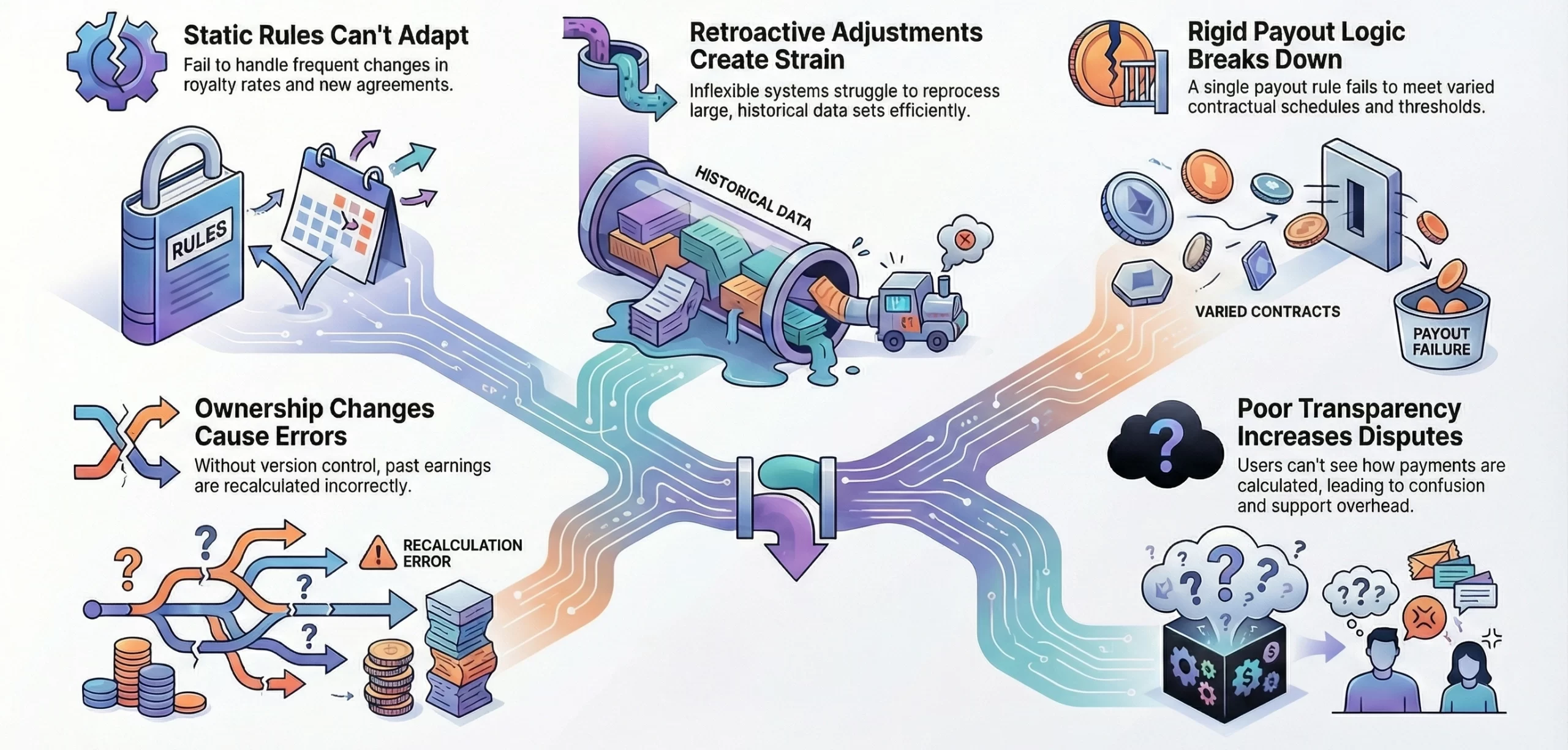
Royalty rates and calculation methods change frequently across deals and territories. Platforms that rely on fixed logic cannot adjust quickly to new agreements. This rigidity forces manual workarounds that increase errors and slow down payment cycles.
2. Ownership Split Changes Require Version Control
Ownership rights evolve through catalog acquisitions, writer updates, and publishing changes. Platforms must apply new royalty splits going forward while preserving historical payouts. Without version-controlled logic, systems may recalculate past earnings incorrectly, creating avoidable errors and disputes.
3. Retroactive Adjustments Create Operational Strain
Late usage data and contract updates often require retroactive recalculations. Inflexible systems struggle to reprocess large data sets efficiently. This limitation delays corrections and creates confusion among rights holders expecting accurate back payments.
4. Payout Timing and Threshold Logic Often Break Down
Different stakeholders expect different payout schedules and minimum thresholds. Platforms that apply one payout rule across all users fail to meet contractual obligations. Flexible payout logic supports varied payment frequencies, currencies, and minimum balances.
5. Limited Financial Transparency Increases Disputes
When users cannot clearly see how platforms calculate and release payments, disputes increase. Transparent calculation breakdowns and payout histories help users verify earnings and reduce support overhead for platform operators.
Overlooking Transparency and Rights Holder Visibility
Transparency defines how much confidence rights holders place in a music royalties platform. When platforms fail to show how earnings move from usage to payout, users question accuracy and intent. Visibility gaps often create friction even when calculations remain technically correct.
1. Limited Access to Detailed Earnings Breakdowns
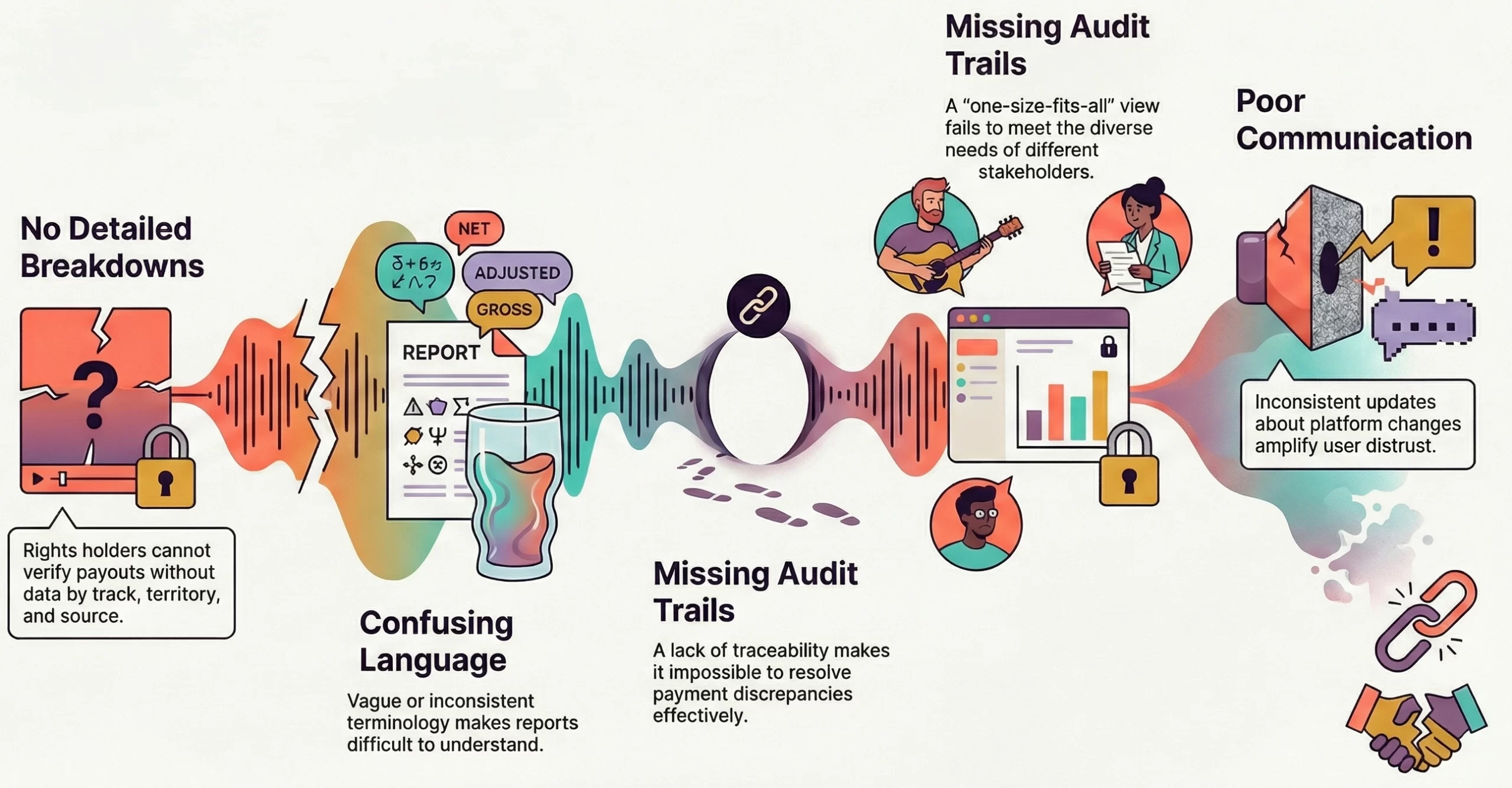
Rights holders expect to see how each usage event contributes to their earnings. Platforms that provide only summary totals hide critical context. Without detailed breakdowns by track, territory, and source, users struggle to verify payouts.
2. Unclear Reporting Language Confuses Stakeholders
Complex royalty data requires clear labeling and consistent terminology. Platforms that use vague or inconsistent language make reports harder to interpret. Confusion increases support requests and reduces confidence in reported figures.
3. Missing Audit Trails Reduce Accountability
Audit trails allow users to trace payouts back to original usage data and applied rates. Platforms that lack traceability cannot explain discrepancies effectively. This limitation weakens accountability and complicates dispute resolution.
4. One Size Fits All Dashboards
Different stakeholders require different views of royalty data. Songwriters, publishers, and administrators analyze earnings differently. Platforms that force a single dashboard structure limit usability and fail to support diverse decision-making needs.
5. Poor Communication Amplifies Trust Issues
Transparency extends beyond dashboards and reports. Platforms must communicate changes in data sources, calculation logic, and payout schedules clearly. When communication remains inconsistent, even minor platform issues feel significant to users.
Ignoring Legal, Licensing, and Compliance Requirements
Legal and licensing frameworks directly influence how music royalties platforms operate across territories and partners. Platforms that treat compliance as an afterthought expose themselves to reporting failures, contractual breaches, and long term operational risk.
1. Licensing Terms Shape Royalty Distribution Logic
Every license defines how platforms calculate, report, and distribute royalties. Platforms must reflect rate structures, usage definitions, and payment conditions accurately. When systems ignore license-specific logic, payouts drift away from contractual expectations.
2. Territory-Based Regulations Affect Reporting Obligations
Music royalties operate under region-specific laws and collection society rules. Platforms must apply local reporting formats, timelines, and rate caps correctly. Failure to respect territorial requirements often leads to delayed payments and compliance disputes.
3. Contract Changes Require Immediate System Alignment
Licensing agreements evolve through renewals, amendments, and renegotiations. Platforms must update calculation logic and reporting rules promptly. Delayed alignment creates discrepancies between contract terms and actual payouts.
4. Data Retention and Audit Readiness Matter
Regulators and partners often require historical royalty records for audits. Platforms must store usage data, calculation logic, and payout histories securely. Weak retention policies limit audit readiness and increase legal exposure.
5. Cross-Border Payments Increase Compliance Complexity
International royalty payouts involve tax rules, currency conversions, and withholding requirements. Platforms must handle these elements accurately. Mismanagement of cross-border payments creates financial risk and damages stakeholder confidence.
Building Scalable and Trustworthy Music Royalties Platforms
Strong music royalties platforms succeed when teams design systems with long-term adaptability in mind. Platforms must support growth in catalogs, users, and revenue sources without sacrificing calculation accuracy or reporting clarity.
1. Flexibility Supports Industry Change
Music rights, revenue models, and reporting standards evolve continuously. Platforms that rely on configurable logic and modular architecture adjust faster to new licensing terms, territories, and distribution partners. Flexibility reduces reliance on manual intervention.
2. Transparency Reinforces Stakeholder Confidence
Clear reporting and accessible audit trails help users understand how platforms calculate earnings. When rights holders can trace payouts back to usage data, trust grows and dispute volume decreases across the platform ecosystem.
3. Scalable Data Infrastructure
As data volumes increase, platforms must process usage records efficiently. Scalable infrastructure supports higher ingestion rates, faster calculations, and timely reporting without system slowdowns or processing backlogs.
4. Compliance Awareness
Platforms that embed compliance considerations into system design avoid costly corrections later. Proactive handling of licensing rules, tax requirements, and data retention strengthens platform stability across jurisdictions.
5. User Centric Design
Different stakeholders interact with royalty data in different ways. Platforms that offer adaptable dashboards and reporting views improve usability. Strong user experience encourages long-term adoption and reduces support dependency.
6. Configuration-Driven Logic
Platforms that rely on configuration instead of hardcoded rules adapt more easily to change. Configurable rates, splits, and thresholds allow teams to respond to new agreements without redeploying systems or risking calculation inconsistencies.
7. Strong Internal Controls
Internal controls help platforms detect anomalies before payouts occur. Validation checks, exception handling, and approval workflows reduce the risk of incorrect payments and protect both operators and rights holders from avoidable financial errors.
8. Continuous Monitoring
Royalties platforms benefit from ongoing monitoring of data quality, calculation outcomes, and payout behavior. Regular reviews help teams identify patterns, surface recurring issues, and refine system logic before small problems escalate.
Conclusion
Building a reliable music royalties platform requires more than technical ambition. Many teams underestimate how small decisions affect transparency, trust, and long-term sustainability. By understanding common music royalties platform development mistakes, you gain clarity on where platforms fail and why users lose confidence. Issues around data accuracy, rights management, compliance, and scalability rarely appear overnight; they grow quietly when fundamentals are ignored. Treat these mistakes as guidance, not criticism. Careful planning, informed architecture, and consistent validation help transform complex royalty systems into dependable products that serve creators and stakeholders.
Why Choose IdeaUsher for Music Royalties Platform Development?
At IdeaUsher, we specialize in building music royalties platforms designed to handle complex rights data, accurate royalty calculations, and evolving ownership structures. Our experience spans platforms that require transparency, compliance readiness, and scalable payout systems for multiple stakeholders.
Why Work With Us?
- Royalty System Expertise: We design platforms that address common music royalties platform development mistakes before they impact payouts or trust.
- Rights and Data Accuracy: Our solutions support version-controlled rights management, audit-ready reporting, and reliable revenue distribution.
- Scalable Architecture: Built to support growing catalogs, users, and revenue streams without compromising accuracy.
- Industry Focus: We understand the operational realities of labels, publishers, and independent creators.
Explore our portfolio to see how we have delivered reliable music technology platforms for diverse use cases.
Connect with our team to discuss building a music royalties platform that prioritizes accuracy, transparency, and long term stability.


FAQs
A.1. The most common mistakes include inaccurate rights data handling, poor royalty calculation logic, a lack of version control for ownership changes, and weak compliance design. These issues often lead to payout errors, disputes, and loss of trust among rights holders.
A.2. Many platforms fail because they underestimate data complexity and reporting requirements. Without strong ingestion, validation, and reconciliation processes, royalty calculations become unreliable, especially when handling multiple revenue sources and changing ownership structures.
A.3. Poor rights management leads to incorrect splits, recalculated historical payouts, and disputes between stakeholders. Platforms without structured rights versioning and audit trails struggle to maintain accuracy as catalogs, writers, and publishing agreements evolve.
A.4. You should prioritize data accuracy, scalable architecture, compliance readiness, and transparent reporting. Addressing these areas early helps avoid long-term operational risks and ensures the platform can support growth, audits, and complex royalty scenarios.