 (+971) 8007 4267
 (+91) 946 340 7140
 (+1) 628 432 4305

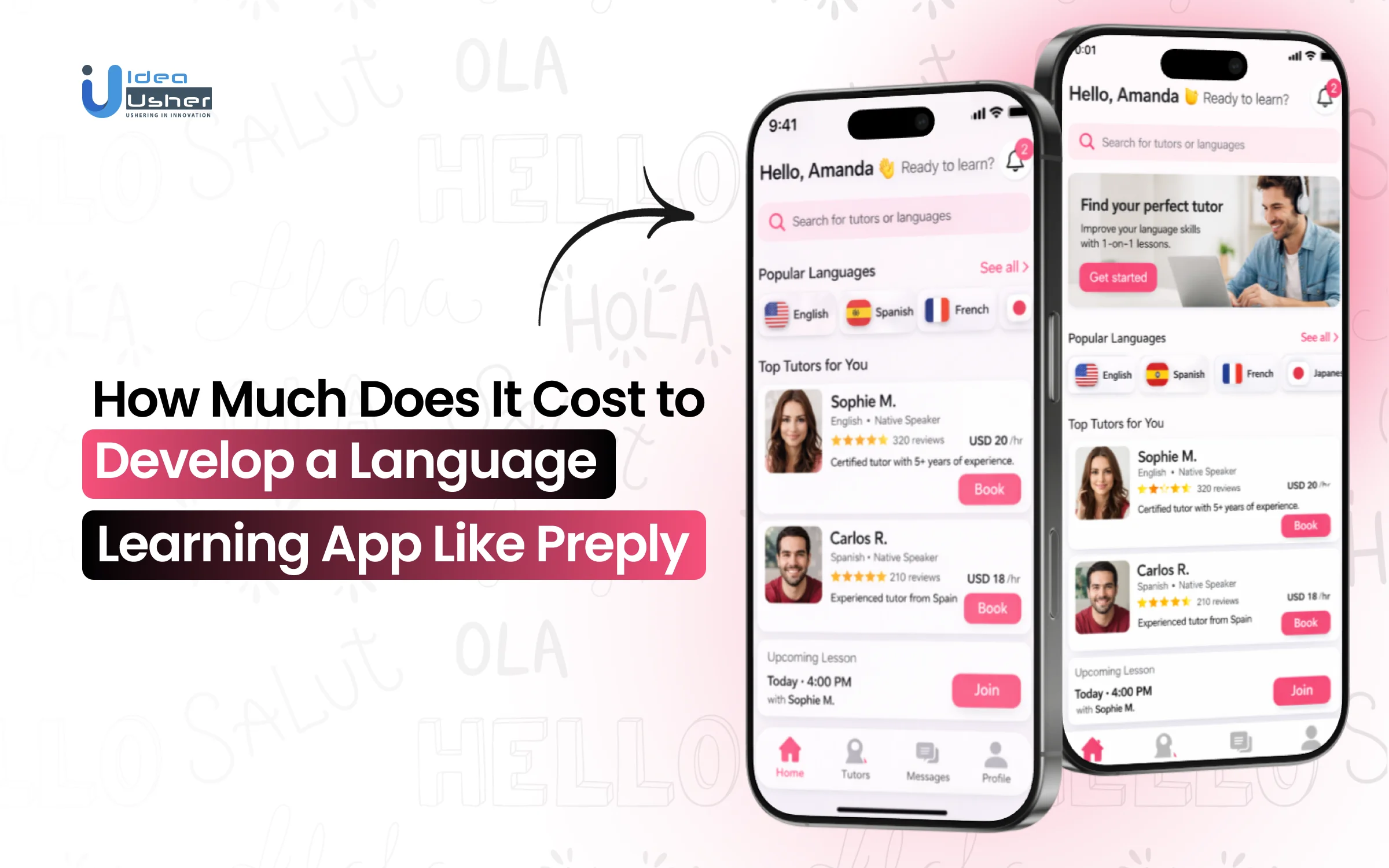
Language learning platforms today go far beyond simple lesson delivery. Modern apps combine live tutoring, scheduling systems, progress tracking, payments, and personalized learning paths within a single experience. For enterprises planning to launch a similar platform, understanding the language learning app development cost depends largely on how these capabilities are structured and integrated rather than on the interface alone.
Once real functionality is mapped out, development scope expands quickly. Features such as tutor marketplaces, video communication, booking systems, recommendation engines, and payment handling all introduce technical and operational complexity. Infrastructure choices, scalability requirements, and user experience expectations further influence how development costs evolve as the platform grows.
In this blog, we break down how much it costs to develop a language learning app like Preply by examining core feature requirements, development components, and the practical factors that determine overall platform investment.

What is a Language Learning App, Preply?
Preplyis a global online language learning marketplace and app connecting students with independent tutors for live one-on-one video lessons in English, Spanish, French, Chinese, Japanese, Arabic, and more. It offers a human-led, AI-enabled environment that prioritizes real-time conversation and personalized guidance over gamified or drill-based language apps.
At the intersection of digital education and global tutoring, Preply emphasizes authentic communication, cultural exchange, and practical language use. Rather than automated exercises, it promotes mentor-guided learning, building fluency through interactive dialogue, contextual feedback, and continuous human interaction.
Core Components
- 1-on-1 Tutoring Marketplace: It hosts over 100,000 professional tutors from 180 countries, teaching more than 90 languages and various other subjects.
- Personalized Instruction: Unlike fixed-curriculum apps, Preply tutors adapt every lesson to the specific goals (e.g., business, travel, exam prep), proficiency level, and learning pace of the student.
- Integrated Virtual Classroom: Lessons take place within the Preply Classroom, a proprietary virtual environment equipped with video chat, a shared whiteboard, and interactive notes.
- AI-Powered Learning Ecosystem: It leverages artificial intelligence to enhance human-led instruction through tools like Lesson Insights (session summaries), Daily Exercises, and smart matching algorithms that connect learners with tutors based on budget and schedule.
A. Business Model: The Marketplace
Preply operates as a two-sided marketplace that connects independent tutors with students. Its business model focuses on human-led, 1-on-1 instruction rather than automated, gamified drills. Preply’s business model is built on three main pillars:
- Tutor Autonomy: Tutors are independent contractors who set their own hourly rates, manage their own calendars, and design their own lesson plans.
- Student Personalization: Students use an AI-driven algorithm to find tutors based on specific criteria such as language, price, availability, and learning goals.
- Vertical Integration: Preply provides the entire infrastructure for the lesson, including the Preply Classroom (video and whiteboard tools), payment processing, and learning materials.
B. Revenue Model: How Preply Makes Money
Preply’s primary income comes from a commission-based structure applied to tutor earnings and a subscription model for students.
1. Tiered Commission Structure
Preply takes a percentage of every lesson fee paid by the student. This commission is tiered based on the tutor’s experience on the platform to encourage long-term retention:
Trial Lessons: Preply takes 100% commission on the first lesson a student has with a new tutor.
Subsequent Lessons: After the trial, the commission rate decreases based on the total number of hours a tutor has taught:
- 0–20 hours: 33%
- 21–50 hours: 28%
- 51–200 hours: 25%
- 201–400 hours: 22%
- 400+ hours: 18%
2. Student Subscriptions
Rather than a “pay-as-you-go” system, students must purchase monthly subscriptions for a set number of hours (e.g., 4, 8, 12, or 20 hours per month). This ensures predictable, recurring revenue and encourages consistent learning habits.
3. Preply Business (B2B)
Preply offers corporate language training solutions for companies (such as TikTok and Unilever). Businesses pay for customized programs to improve employee communication skills, providing a high-margin revenue stream.
4. Additional Revenue Streams
Preply also earns supplementary income through service-related fees and optional promotional features on the platform, in addition to its main commission and subscription revenues.
- Cancellation Fees: Fees charged for last-minute cancellations or rescheduling help protect tutor earnings and provide minor platform revenue.
- Marketing & Promotions: Tutors can pay for increased visibility in student search results to attract more bookings.
Revenue Stats of Preply
Preply’s revenue has scaled significantly, driven by US market expansion and corporate B2B services.
Estimated Annual Revenue (2025/2026): Ranges from $147.9 million to $485.5 million depending on reporting methods.
Historical Revenue:
- 2021: ~$50M.
- 2020: ~4X growth from previous levels due to digital shift.
Revenue Drivers:
- 95% of revenue comes from language courses.
- US Market: Accounts for roughly one-third of total revenue.
- B2B Segment: “Preply Business” grew by 230% between 2021–2022
Global Market Growth Language Learning Apps
The global online language learning market size was estimated at USD 22.12 billion in 2024and is projected to reach USD 54.83 billion by 2030, growing at a CAGR of 16.6% from 2025 to 2030. This growth is driving businesses to build platforms like Preply that connect learners with tutors through digital language learning solutions.

The rising demand for such platforms is also reflected in global learning trends. Around 1.5 billion people worldwide are actively studying a foreign language, and language learning apps recorded 316 million downloads in 2024 alone.
Research also shows that students using online learning platforms achieved an average score of 77.1 compared to 69.8 for those relying on traditional methods after 12 weeks of study. Additionally, 68.57% of teachers report higher student engagement in virtual classrooms, highlighting the effectiveness of digital language learning environments.
Beyond academic benefits, language learning also offers strong career advantages, further boosting the demand for digital platforms. Bilingual employees earn 5% to 20% more on average than monolingual peers, while 39% of UK employers consider language skills a high hiring priority.
At the enterprise level, demand is also rising, with the B2B segment expected to account for over 56% of the market by 2025 as companies invest in workforce language training.
How the Preply Online Language Learning Platform Works?
The Preply ecosystem operates as a sophisticated bridge between global demand for linguistic fluency and a diverse supply of certified educators. By integrating automated vetting with a personalized user journey, the platform transforms the traditional tutoring model into a scalable, data-driven learning experience.

1. Student Sign-Up and Language Goal Setup
Students begin by defining specific objectives, such as business proficiency or exam preparation. Preply’s onboarding algorithm captures these variables to calibrate the dashboard, ensuring the subsequent tutor recommendations align perfectly with the learner’s timeline and budget.
2. Tutor Onboarding and Profile Verification
Educators undergo a rigorous multi-stage vetting process where credentials and identity are manually verified. This high barrier to entry ensures a premium marketplace, mandating high-quality introductory videos and professional certifications to build immediate trust with students.
3. Tutor Discovery Through Smart Search Filters
The platform utilizes granular filters including price, availability, and specialty. This “Smart Search” functionality uses real-time data to match students with tutors who fit their specific niche, significantly reducing the friction typically found in manual selection.
4. Booking Trial Lessons and Scheduling Sessions
Preply’s integrated calendar synchronizes time zones automatically, allowing for seamless trial bookings. These initial sessions function as a low-risk assessment of chemistry, enabling students to commit to long-term learning plans only after confirming the tutor’s pedagogical style.
5. Live Video Lessons with Interactive Learning Tools
Lessons occur within a proprietary virtual classroom equipped with collaborative whiteboards and real-time chat. These integrated tools allow for structured curriculum delivery and instant feedback, creating an immersive digital environment that mirrors the efficacy of in-person instruction.
6. Payments, Reviews, and Tutor Payouts
A secure escrow-style system handles transactions, releasing funds only after lesson confirmation. The dual-sided review system maintains high accountability, while automated payout structures ensure tutors are compensated promptly via global gateways, fostering a reliable professional marketplace.
Must-Have Features in a Preply-Like Language Learning App
Building a competitive marketplace demands high-conversion infrastructure balancing student convenience with tutor retention. Prioritize frictionless discovery and data-backed credibility, factors that fundamentally drive the overall language learning app development cost.

1. Advanced Tutor Search and Smart Filters
Strategic discovery is driven by multidimensional filtering, allowing students to segment the global tutor pool by hourly rates, native fluency, and real-time availability. This precision reduces choice paralysis and accelerates the path to booking.
2. AI Tutor Matching and Recommendations
Beyond basic search, predictive algorithms analyze student learning goals such as TOEFL prep or business Spanish to serve personalized tutor suggestions. This data-driven matching increases long-term retention by ensuring pedagogical compatibility from the first interaction.
3. Tutor Profiles with Ratings
Trust is the marketplace’s primary currency. High-conversion profiles integrate verified certifications, video introductions for personality assessment, and transparent student reviews, providing the social proof necessary for users to commit to their first paid session.
4. Lesson Scheduling and Calendar
Automated scheduling engines must handle complex cross-border time zone synchronization. By providing a real-time view of a tutor’s calendar, the app eliminates back-and-forth messaging, allowing students to secure lesson slots with a single click.
5. Real-Time Video Lessons
The core value proposition lies in an integrated virtual classroom. By embedding low-latency video, collaborative whiteboards, and real-time document sharing, the platform creates a professional environment superior to generic, third-party video calling software.
6. In-App Messaging
A secure communication layer facilitates pre-booking consultations, allowing students to vet a tutor’s methodology. This feature keeps all interactions within the platform ecosystem, protecting user privacy and ensuring a cohesive, end-to-end user experience.
7. Secure Payments and Commission Management
A robust financial core must manage automated escrow, diverse payment gateways, and tiered commission structures. This ensures tutors are paid reliably while the platform maintains a sustainable revenue model through seamless, automated service fee deductions.
8. Learning Progress Tracking
Retention is sustained through visible growth. By providing lesson summaries, vocabulary logs, and milestone tracking, the app transforms individual sessions into a structured journey, encouraging students to book recurring packages to meet their goals.
Advanced Features That Differentiate Language Learning Apps
To lead in the saturated EdTech market, platforms must embrace intelligent automation, significantly influencing the language learning app development cost. Modern language apps are now transitioning into comprehensive, AI-driven learning ecosystems. These key features solve long-standing pedagogical challenges.

1. AI Pronunciation Feedback Systems
Using Natural Language Processing (NLP), these systems provide phoneme-level analysis of a student’s speech. By comparing voice input against native phonetic models, the app offers instant, non-judgmental corrections on intonation and stress, accelerating accent reduction.
2. Real-Time Translation and AI Assistants
Integrated AI sidekicks offer on-demand semantic translations during live chats, preserving context and idiomatic nuances. These assistants act as a safety net, reducing learner anxiety and facilitating continuous conversation even when specialized vocabulary is missing.
3. Gamified Learning and Retention Mechanics
Beyond simple badges, advanced gamification leverages “habit loops” through streaks, competitive leaderboards, and experience-based leveling. Data shows these mechanics increase daily active usage by transforming repetitive vocabulary drills into a rewarding, high-engagement digital experience.
4. Smart Tutor Pricing and Dynamic Availability
Algorithmic pricing allows tutors to optimize rates based on peak demand, specialized subjects, or time-sensitive availability. This creates a self-regulating marketplace where students find better value during off-peak hours while high-demand educators maximize their hourly ROI.
Cost to Develop a Language Learning App like Preply
Developing a language learning marketplace involves complex technical components, significantly impacting the overall language learning app development cost. Each module’s scalability and feature requirements determine the total investment. These key features ensure long-term market authority.

1. UI/UX Design for Student and Tutor Apps
Design plays a critical role in the success of a language learning marketplace. A well-structured UI ensures students can easily discover tutors, book lessons, and manage learning progress across mobile and web platforms.
| Component | MVP – Mid-Scale Cost | Enterprise Cost | What to Build |
| User Research & Journey Mapping | $2,000 – $5,000 | $6,000 – $12,000 | Defines student and tutor journeys including discovery, booking, and lesson flow. |
| Wireframes & UX Architecture | $2,500 – $6,000 | $7,000 – $15,000 | Structural layouts for tutor search, profile viewing, scheduling, and dashboards. |
| Visual UI Design System | $3,000 – $7,000 | $10,000 – $20,000 | Design components, typography, color systems, and scalable UI guidelines. |
| Mobile App Interface Design | $3,000 – $8,000 | $12,000 – $25,000 | Interfaces for both students and tutors across iOS and Android platforms. |
| TOTAL (Approx.) | $10,500 – $26,000 | $35,000 – $72,000 | Complete design system supporting the marketplace learning experience. |
2. Backend and Database Architecture
Backend infrastructure powers the entire platform by handling user data, lesson scheduling, tutor discovery, and platform logic. A scalable backend ensures the marketplace can support thousands of concurrent learners and tutors.
| Component | MVP – Mid-Scale Cost | Enterprise Cost | What to Build |
| Backend API Development | $8,000 – $20,000 | $25,000 – $60,000 | APIs that power tutor discovery, bookings, messaging, and account management. |
| Database Architecture | $4,000 – $10,000 | $12,000 – $30,000 | Structured data systems storing user profiles, lesson history, payments, and analytics. |
| Lesson Scheduling Engine | $5,000 – $12,000 | $15,000 – $35,000 | Logic managing tutor availability, time zones, and automated booking confirmations. |
| Communication Systems | $3,000 – $8,000 | $10,000 – $25,000 | Push notifications, email alerts, and reminders for lessons and platform activity. |
| TOTAL (Approx.) | $20,000 – $50,000 | $62,000 – $150,000 | Core infrastructure that powers the platform’s operations and scalability. |
3. Video Calling and Real-Time Lesson Infrastructure
Live video lessons are the core experience of a Preply-like platform. Reliable real-time communication systems ensure smooth tutor–student interaction while supporting tools like chat, screen sharing, and lesson collaboration.
| Component | MVP – Mid-Scale Cost | Enterprise Cost | What to Build |
| WebRTC Video Integration | $8,000 – $20,000 | $20,000 – $50,000 | Real-time video communication enabling live tutor-student lessons. |
| Screen Sharing & Lesson Tools | $3,000 – $7,000 | $10,000 – $25,000 | Features for sharing materials, whiteboards, and interactive learning content. |
| Real-Time Chat & Notes | $2,000 – $5,000 | $7,000 – $18,000 | Messaging tools allowing students and tutors to exchange notes during lessons. |
| Session Recording & Storage | $3,000 – $8,000 | $12,000 – $30,000 | Recording lessons for review and storing them securely on cloud infrastructure. |
| TOTAL (Approx.) | $16,000 – $40,000 | $49,000 – $123,000 | Infrastructure supporting high-quality real-time learning sessions. |
4. AI Tutor Matching and Recommendation Engine
Smart recommendation systems improve tutor discovery by matching students with instructors based on learning goals, skill levels, and preferences. AI-driven matching also increases lesson bookings and overall user engagement.
| Component | MVP – Mid-Scale Cost | Enterprise Cost | What to Build |
| Tutor Matching Algorithm | $5,000 – $12,000 | $15,000 – $40,000 | Algorithm matching students with tutors based on goals, skill level, and preferences. |
| Search Ranking Optimization | $4,000 – $10,000 | $12,000 – $30,000 | Ranking logic prioritizing tutors based on ratings, performance, and availability. |
| Learning Preference Analysis | $4,000 – $9,000 | $10,000 – $25,000 | Data modeling that identifies student learning styles and preferences. |
| Recommendation Engine | $6,000 – $15,000 | $18,000 – $45,000 | AI-powered suggestions for tutors, lessons, and personalized learning paths. |
| TOTAL (Approx.) | $19,000 – $46,000 | $55,000 – $140,000 | Intelligent systems improving tutor discovery and learning outcomes. |
5. Payment and Commission Management
A secure payment infrastructure is essential for managing transactions between students and tutors. The system must support global payments, automate commission distribution, and maintain compliance with financial security standards.
| Component | MVP – Mid-Scale Cost | Enterprise Cost | What Is Being Built |
| Payment Gateway Integration | $3,000 – $7,000 | $8,000 – $20,000 | Secure payment systems supporting credit cards and global transactions. |
| Lesson Credit & Wallet System | $4,000 – $10,000 | $12,000 – $30,000 | Wallet infrastructure allowing students to purchase lesson packages. |
| Tutor Commission Logic | $3,000 – $8,000 | $10,000 – $25,000 | Automated commission calculations and revenue distribution. |
| Global Payment Compliance | $2,500 – $6,000 | $8,000 – $20,000 | Systems ensuring compliance with international payment regulations. |
| TOTAL (Approx.) | $12,500 – $31,000 | $38,000 – $95,000 | Payment infrastructure that powers the marketplace revenue model. |
6. Admin Panel and Marketplace Control System
The admin panel acts as the operational backbone of the platform. It enables administrators to manage tutors, monitor platform activity, track revenue, and maintain quality control across the entire marketplace ecosystem.
| Component | MVP – Mid-Scale Cost | Enterprise Cost | What Is Being Built |
| Tutor Management Dashboard | $4,000 – $10,000 | $12,000 – $30,000 | Admin tools to approve tutors, manage profiles, and track performance. |
| Student Account Management | $3,000 – $8,000 | $10,000 – $25,000 | Tools for monitoring student activity, resolving disputes, and managing accounts. |
| Platform Analytics & Reporting | $4,000 – $9,000 | $12,000 – $30,000 | Data dashboards showing lesson bookings, revenue, and platform growth metrics. |
| Content & Moderation Tools | $2,500 – $6,000 | $8,000 – $20,000 | Systems ensuring tutor quality and maintaining platform standards. |
| TOTAL (Approx.) | $13,500 – $33,000 | $42,000 – $105,000 | Control center for managing and scaling the language learning marketplace. |
Estimated Total Cost to Develop a Preply-Like Language App
The total Preply-like language learning app development cost varies based on platform scale, features, and infrastructure. Below is an estimated cost range for different development stages.
| Platform Stage | Estimated Cost | What Includes In This Stage |
| MVP Platform | $63,000 – $150,000 | Core tutor marketplace with tutor discovery, booking system, live video lessons, payments, and a basic admin dashboard to validate the product idea. |
| Mid-Scale Platform | $180,000 – $350,000 | A scalable learning platform with advanced search filters, improved video infrastructure, smart tutor recommendations, analytics dashboards, and enhanced platform stability. |
| Enterprise Platform | $350,000 – $700,000+ | A fully scalable global platform with AI tutor matching, advanced analytics, enterprise-grade infrastructure, high-performance video systems, and global payment capabilities. |
Consult with IdeaUsher to get a tailored language learning app development cost estimate based on your platform requirements, feature roadmap, scalability needs, and long-term vision for building a language learning marketplace like Preply.
Key Factors That Influence Language Learning App Development Cost
Capital requirements for a language marketplace are dictated by the depth of the “Learning Logic” integrated into the backend. In 2026, the shift from simple directories to intelligent ecosystems has recalibrated standard language learning app development cost to account for higher data processing and real-time synchronization needs.
1. Platform Complexity and Feature Depth
Development costs are fundamentally driven by the number of user roles and the intricacy of the pedagogical workflows being automated.
The Cost Fluctuation: $70,000 – $150,000+
Why it varies:
- Workflow Logic: Basic connectivity is affordable, but enterprise systems with multi-level role permissions (Admin, Tutor, Student, Corporate Manager) increase backend architecture costs by 30%–40%.
- 2026 Benchmark: Custom-built platforms now prioritize “Agentic UI,” where the interface adapts based on learner progress, a feature that typically adds $15,000 – $25,000 to the design and frontend phase.
2. AI Matching and Recommendation Systems
Modern marketplaces use sophisticated algorithms to ensure pedagogical compatibility, moving beyond basic keyword searches to intent-based discovery.
The Cost Fluctuation: $15,000 – $50,000 (Integration) | $70,000+ (Custom Models)
Why it varies:
- Inference Costs: Utilizing third-party APIs (like OpenAI or Gemini) for matching costs less upfront but incurs monthly token expenses. Custom-tuned models for niche languages require high-quality labeled data, which consumes 60%–80% of the AI budget.
- Predictive Analytics: Systems that predict “learner churn” or “tutor success rates” based on historical session data are now standard for enterprise-grade apps, often requiring an additional $20,000 for data pipeline architecture.
3. Video Infrastructure for Live Lessons
The virtual classroom is the centerpiece of the platform, requiring high-availability infrastructure that supports interactive learning tools.
The Cost Fluctuation: $12,000 – $40,000
Why it varies:
- Infrastructure Choice: Using SDKs like Agora or Twilio reduces initial development time but introduces scaling costs. In 2026, low-latency requirements (<50ms) for global sessions necessitate a 15%–20% premium for specialized WebRTC engineering.
- Interactive Layers: Features like real-time auto-captioning and collaborative code/whiteboard editors add roughly $5,000 – $8,000 per tool due to the need for synchronized state management.
4. Marketplace Payments and Commission Logic
Handling split payments and multi-currency payouts across international borders requires a high-security financial core.
The Cost Fluctuation: $8,000 – $18,000
Why it varies:
- Compliance & Escrow: Implementing automated “Hold-and-Release” logic (escrow) to protect both students and tutors adds significant security overhead.
- 2026 Fraud Prevention: AI-driven fraud detection that analyzes transaction patterns in real-time is now a “must-have,” typically costing $12,000 – $25,000 to build an audit-ready, PCI-DSS compliant system.
5. Scalability for Global Language Platforms
Architecture must be designed to sustain performance as user volume grows across diverse geographic regions.
The Cost Fluctuation: $15,000 – $45,000 (Initial Setup)
Why it varies:
- Cloud Orchestration: Moving from a single-server setup to a microservices architecture with auto-scaling (AWS/GCP) ensures the platform doesn’t crash during peak hours.
- Latency Management: Global platforms require Content Delivery Networks (CDNs) and localized edge computing to ensure video lessons remain fluid in regions with varying internet stability, increasing infrastructure costs by 20% annually.
Challenges in Building Tutor Marketplace Platforms
Establishing a resilient tutor marketplace requires navigating a complex intersection of technical stability and operational trust. In a 2026 landscape, platform owners must solve for high-concurrency video demands while maintaining a secure, frictionless financial environment for a global user base.
1. Tutor Supply and Marketplace Liquidity
Challenge: Maintaining a balanced ratio between student demand and tutor availability to prevent user churn caused by choice paralysis or lack of options.
Solution: Our developers implement AI-driven “Demand Forecasting” tools and tiered onboarding incentives. This ensures high-liquidity across all time zones by strategically recruiting tutors based on real-time student search data and regional gaps.
2. Video Quality and Latency Issues
Challenge: Delivering high-definition, synchronized video and audio across varying international internet infrastructures without frustrating delays or dropped connections during critical lessons.
Solution: We utilize a globally distributed mesh network and WebRTC optimization. By integrating adaptive bitrate streaming and edge computing, our team ensures sub-100ms latency, providing a seamless classroom experience regardless of the user’s location.
3. Fraud Prevention and Tutor Verification
Challenge: Protecting the marketplace from identity theft, fake credentials, and payment fraud that can compromise platform integrity and discourage legitimate users.
Solution: We integrate multi-factor biometrics and automated document verification APIs. Our developers also build AI-powered behavioral monitoring systems to flag suspicious transaction patterns and verify pedagogical certifications against global databases in real-time.
4. Global Payments and Currency Handling
Challenge: Managing complex cross-border transactions, high exchange fees, and diverse local payment preferences while ensuring the platform remains compliant with international tax laws.
Solution: We deploy a multi-currency payment gateway with automated localized tax calculation (VAT/GST). Our infrastructure supports split-payment logic and instant payouts to digital wallets, minimizing conversion losses and maximizing tutor satisfaction worldwide.
Conclusion
Navigating the language learning app development cost requires a strategic balance between innovative AI features and a resilient, scalable infrastructure. While an MVP may launch the platform, long-term market leadership in 2026 depends on delivering low-latency classrooms and personalized, data-driven student experiences. By prioritizing high-conversion features like smart matching and secure global payments, you ensure a high ROI and sustainable growth. Partnering with experienced developers allows you to mitigate technical challenges and transform your vision into a high-performance, authoritative marketplace that redefines the digital education landscape.
Why Choose IdeaUsher for Language Learning App Development?
Building a platform like Preply requires a complex blend of real-time video infrastructure, payment gateways, tutor marketplace dynamics, and AI-powered learning aids.
We build AI-driven products across industries, specializing in performance systems, model integration, and scalable infrastructure. Our expertise helps us develop language learning apps that balance feature richness, user acquisition costs, and long-term business sustainability.
Our ex-FAANG and MAANG engineers bring over 500,000+ hours of hands-on AI development experience, allowing us to architect language platforms aligned with tutor workflows, student progress tracking, and diverse monetization models.
Why Hire Us:
- Marketplace & AI Expertise: We build high-traffic marketplaces, deploy robust matching and speech recognition models, and deliver smooth video tutoring, even in low-bandwidth regions.
- Custom Feature Development: We build unique differentiators like AI pronunciation correction, automated scheduling, payment Escrow, giving a proprietary edge over standard tutoring platforms.
- Full-Cycle Ownership: We manage infrastructure, global CDN for video calls, international data law compliance, and scalable architectures, ensuring your app is advanced and ready for launch.


FAQs
A.1. Building a high-quality language marketplace generally takes 4 to 10 months. A basic MVP focusing on essential scheduling and video features can be launched in approximately 4 months, while an enterprise-grade platform with custom AI matching and advanced analytics requires 9+ months of rigorous development and testing.
A.2. In 2026, AI is a major cost driver but offers the highest ROI. Integrating third-party APIs for basic speech recognition may add $5,000 – $15,000, whereas building a proprietary AI Tutor Matching Engine or real-time pronunciation feedback system can increase the budget by $30,000 – $70,000 depending on the complexity of the machine learning models.
A.3. For a tutor marketplace, a Web-first approach is often recommended because tutors prefer managing lessons on larger screens. However, to capture the student market, Cross-Platform Development (using Flutter or React Native) is the most cost-effective strategy, allowing you to launch on both iOS and Android simultaneously for about 30% less than building two separate native apps.
A.4. Beyond development, you should budget 15% to 25% of the original cost annually for maintenance. This covers critical server hosting (especially for video-heavy traffic), security updates, third-party API subscription fees (like video SDKs or payment gateways), and periodic feature enhancements to stay competitive in the evolving EdTech landscape.


