


Key Takeaways
- Demand to hire Breeze.js developers is rising in 2026 as businesses need faster client-side apps, real-time interactions and smarter frontend data management for complex products.
- Breeze.js helps manage entity models, change tracking, caching, validation and API synchronization, making it valuable for data-heavy web applications.
- Key benefits include reduced server load, offline capability, atomic saves, cleaner state management and better long-term maintainability.
- Hiring costs typically range from $35–$150/hour, $5,500–$20,000/month for dedicated developers depending on seniority and architecture complexity.
- How IdeaUsher provides top pre-vetted Breeze.js developers with real project experience, rapid onboarding, seamless collaboration and strong expertise in React, Angular, .NET and enterprise data workflows.
When to Hire Breeze.js Developers for Client-Side Apps in 2026
Many web apps slow down not because of weak ideas, but because the frontend cannot manage growing data complexity efficiently. That is why more teams choose to hire breeze.js developers for client-side apps in 2026. Users now expect fast interfaces, real-time interactions and seamless data handling without lag or reload friction.
Traditional frontend setups often struggle with complex entity management, offline support and frequent synchronization as products scale. Breeze.js addresses this by enabling rich client-side data models, change tracking, caching and efficient API communication, helping teams achieve smarter orchestration, cleaner state management and responsive performance while reducing maintenance costs and unstable rebuild cycles.
In this blog, we will talk about when to hire Breeze.js developers, required skills, hiring models, cost factors and how to choose the right team to build frontends that scale with growing data demands instead of breaking under them.
Why Businesses Hire Breeze.js Developers for Modern Client-Side Apps
Enterprise businesses are replacing brittle wrappers with Breeze.js, a professional-grade Data Management Engine. It provides essential infrastructure for querying, caching and change tracking, ensuring developers don’t waste time rebuilding complex data systems from scratch.
The global cross-platform and client-side application development market is projected to grow from USD 7.8 billion in 2024, is projected to reach USD 35.2 billion by 2034 (16.3% CAGR), driven by demand for lightweight framework-driven front-end architectures where Breeze.js improves data binding and client-side state management.
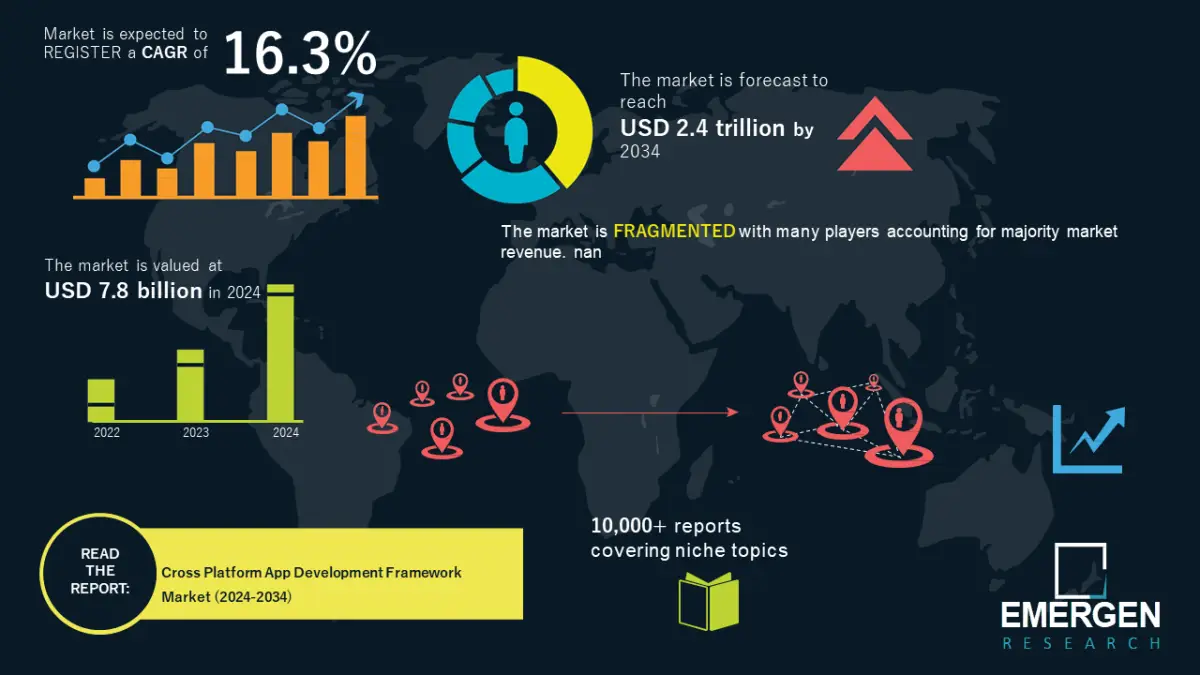
The global web and client-side application development ecosystem is expanding rapidly in 2026 as over 40–45% of new applications adopt modern JavaScript-based frameworks to improve performance, responsiveness, and cross-platform compatibility.
Below is an exploration of why this specialized expertise is becoming a cornerstone for enterprise-level web development.
A. Growing Demand for Responsive and Data-Driven Web Platforms
Modern users demand applications that offer instantaneous feedback. Whether managing a high-stakes CRM, a fintech dashboard or a logistics engine, the interface must maintain its fluid performance even while navigating the complexities of massive, interconnected datasets.
- Offline Capability: Users want to keep working even when the Wi-Fi drops.
- Real-time Feedback: If a value changes in one part of the app, it should reflect everywhere immediately.
- Reduced Server Load: By intelligently caching data on the client side, apps don’t have to pester the server for every single interaction.
The Reality Check: Building a responsive UI is easy. Building a responsive, data-consistent, multi-user, transactional UI is where most projects lose their way.
B. Why Businesses Need Specialized Breeze.js Expertise
A standard JavaScript developer might handle basic JSON while failing to grasp the power of the EntityManager. Hiring a specialized Breeze.js expert who knows the ins and outs of Metadata and Navigation Properties ensures that your front-end architecture is as scalable as your back-end.
Here is a quick look at what a specialized developer brings to the table compared to standard manual data handling:
| Feature | Manual Data Handling | Breeze.js Expert Approach |
| Change Tracking | Manual flags and messy is Dirty logic. | Automatic tracking of every property change. |
| Data Validation | Validated on the server only (slow). | Integrated client-side validation rules. |
| Complex Queries | Hard-coded API endpoints for every filter. | Dynamic, LINQ-style queries on the client. |
| Batch Saving | Multiple API calls; risky transaction logic. | Atomic Save Changes for multiple entities. |
C. How Staff Augmentation Helps Companies Scale Faster
The tech talent market in 2026 is moving faster than ever. Finding, vetting, and onboarding a full-time Breeze.js specialist can take months, while competitors use that time to launch new features. Staff augmentation provides a strategic shortcut and IdeaUsher provides top pre-vetted Breeze.js developers for your business project.
- Instant Domain Knowledge: You bypass the learning curve tax. The developer arrives ready to audit your current data layer and implement optimizations.
- Flexibility for Peak Demand: If you’re pushing for a major Q3 release, you can scale your team up with experts and then scale back down once the architecture is stabilized.
- Cross-Pollination of Skills: A temporary expert often leaves your permanent team better than they found them, teaching best practices for state management and API integration that last long after the contract ends.
Breeze.js represents more than a mere library; it is a professional philosophy for maintaining data integrity. For organizations developing heavy-lift enterprise platforms, securing specialized expertise is a strategic insurance policy against the long-term risks of technical debt and the data-drift nightmares that collapse complex systems.
What is Breeze.js and Why Does It Matter for Client-Side Development?
Managing data on the client side can quickly become a chaotic endeavor in modern web development. As applications move away from simple request-response cycles toward complex, persistent states, developers need tools that handle data with the same rigor as a backend database.
Breeze.js is designed to solve the Data Problem in JavaScript applications. While frameworks like React, Angular or Vue handle the User Interface (UI), Breeze handles the Data Model. It brings the power of an Object-Relational Mapper (ORM) tool typically found on servers like Entity Framework or Hibernate directly into the browser.
A. Overview of Breeze.js as a Client-Side Data Management Library
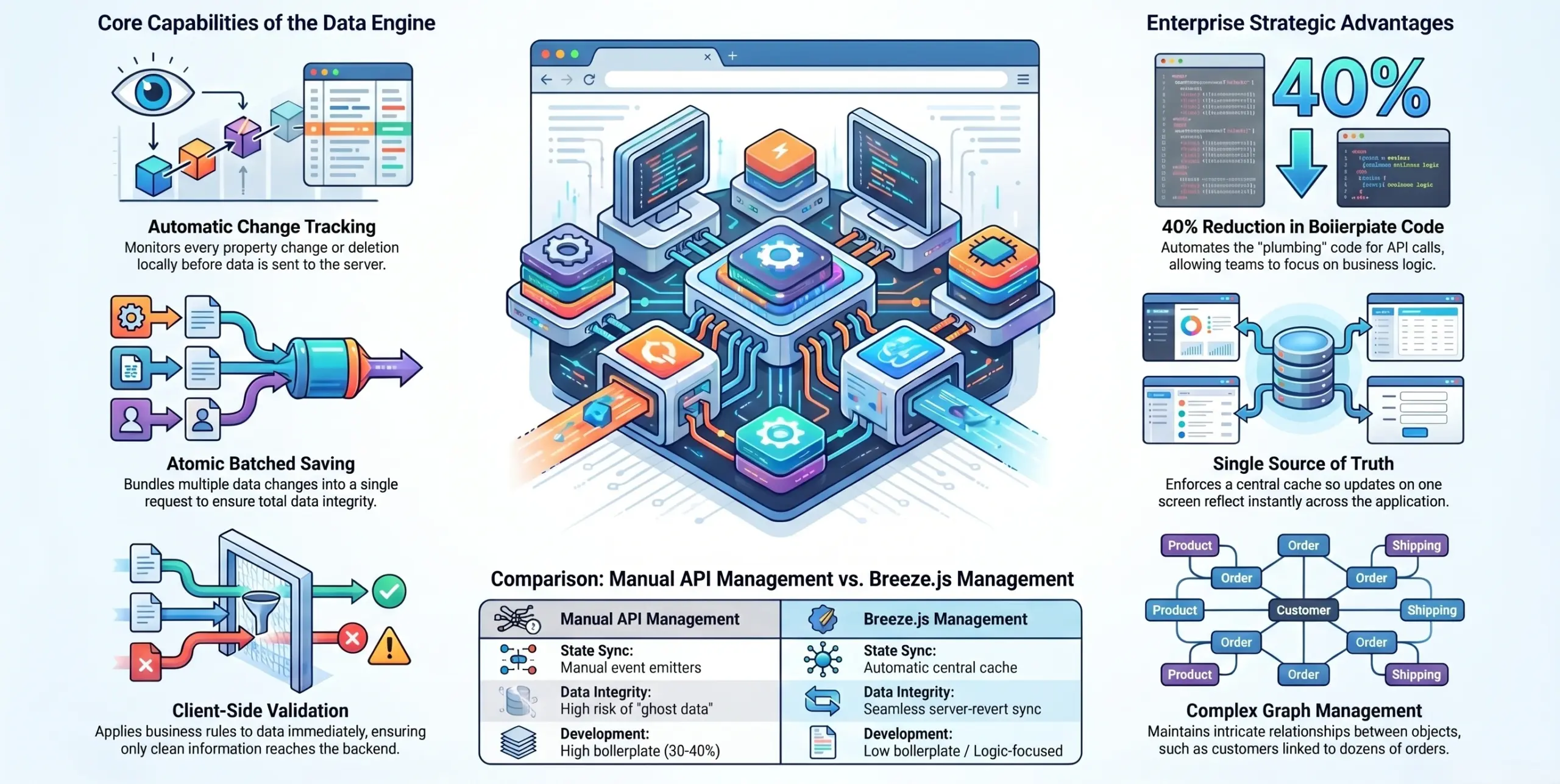
Breeze.js functions as a high-performance Data Management Engine. It utilizes a powerful local cache to manage complex entities with database-level precision, offering a complete infrastructure for:
- Querying: Using a rich query language to filter, order, and expand data directly from the client.
- Change Tracking: Automatically monitoring every property change, addition, or deletion made by the user.
- Validation: Applying business rules to data before it ever leaves the client, ensuring only clean data is sent to the server.
- Batched Saving: Bundling multiple changes into a single, atomic save request to maintain data integrity.
B. Core Benefits for Enterprise-Grade Applications
The heavy-lift enterprise platforms where data integrity is central to the architecture, rely on Breeze.js as a strategic insurance policy. It provides professional-grade stability that basic manual API interactions cannot replicate:
- Complex Graph Management: Data is rarely flat in enterprise systems as a single customer might have dozens of orders, each with multiple lineItems. Breeze manages these complex graphs, maintaining the relationships between objects even when they are edited or moved.
- Seamless Data Synchronization: Breeze ensures the client-side cache and the server-side database stay in sync. If a save fails on the server, Breeze can revert the client-side changes to prevent ghost data from confusing the user.
- Reduced Boilerplate: Developers often spend 30-40% of their time writing plumbing code to track changes and manage API calls. Breeze automates this, allowing the team to focus on business logic.
- Offline Support: Breeze maintains a local entity cache and provides a natural foundation for applications that need to function offline or in low-connectivity environments.
C. Why Businesses Still Rely On Breeze.js In Complex Systems
Many large-scale businesses prefers hire breeze.js developers for several strategic reasons despite the emergence of newer state management libraries (like Redux or Pinia):
- Deep Integration with .NET and Built for heavy-duty backends like Entity Framework and Web API, Breeze imports schema metadata so the frontend instantly understands backend data types and constraints.
- Maintainability of Fat Clients: For applications with hundreds of screens, Breeze centralizes data management, preventing complex codebases from becoming tangled by disconnected API calls.
- The Single Source of Truth: Breeze enforces a single cache for the entire application. If a user updates a Product Price on one screen, that change is immediately reflected across every other component in the app without needing complex event emitters.
- Legacy Stability: Finance and healthcare organizations rely on Breeze.js as a stable, battle-tested solution for mission-critical systems. It manages high data density more effectively than many modern alternatives.
Why Companies Choose to Hire Breeze.js Developers for Client-Side Apps
The Breeze.js developer is a master of the data lifecycle while a general front-end developer is good at the user interface. For complex, data-centric applications, the difference between a functional UI and a scalable enterprise solution often lies in how the underlying data is managed.
IdeaUsher provides specialized Breeze.js developers, helping businesses transition from inefficient data fixes to scalable, professional-grade architectures.
A. Advanced Entity Management and Data Synchronization
General front-end developers typically handle data using simple state management or basic API calls. However, in an enterprise environment, data isn’t just a list of items; it’s a web of interconnected entities.
- The Entity Manager: Breeze.js devs utilize the EntityManager’s local cache for instant, complex operations like filtering thousands of records without server calls.
- Automatic Synchronization: Experts implement automatic change tracking, ensuring updates propagate throughout the app immediately without manual plumbing.
B. Faster Integration with APIs and Backend Systems
One of the primary reasons businesses seek Breeze.js expertise is its ability to speak the same language as the backend.
- Metadata Sharing: Breeze.js can consume metadata directly from the server (especially in .NET/Entity Framework environments). This means the developer doesn’t have to manually redefine data models on the front end.
- Out-of-the-box OData Support: Specialists can quickly set up complex querying capabilities using OData or Web API, allowing the frontend to request exactly the data it needs (and nothing more) without writing custom backend endpoints for every view.
C. Reduced Development Errors in Data-Heavy Applications
Data integrity is the biggest risk in modern client-side apps. Generalists often struggle with stale data or race conditions where two different parts of the app try to update the same record.
- Atomic Saves: Breeze.js developers use save bundles to ensure that a group of related changes like a new invoice and its ten line items are saved as a single transaction. If one part fails, the whole thing rolls back, preventing corrupted data.
- Client-Side Validation: By using Breeze’s validation engine, developers can catch errors (like a negative price or a missing required field) before the data ever leaves the user’s browser, providing a better user experience and reducing server-side processing load.
D. Better Long-Term Maintainability
As applications grow, spaghetti code usually forms around data handling. A generalist might solve a problem with a quick fix, but a Breeze.js developer builds a structured data layer that is easier to maintain over years of service.
- Standardized Data Patterns: Because Breeze enforces a specific way of handling entities, any new developer joining the team can easily understand how data flows through the system.
- Decoupled Logic: A specialist ensures that the business logic (the how of the data) is separated from the UI logic (the how of the display). This makes it significantly easier to update the look of the app without breaking the critical data functions that run the business.

When Should You Hire Breeze.js Developers for Your Project?
The complexities of large-scale data management requires precision from the outset. This is where IdeaUsher provides elite Breeze.js developers who streamline intricate relational editing and data plumbing, ensuring your product remains robust and scalable through every phase of launch.
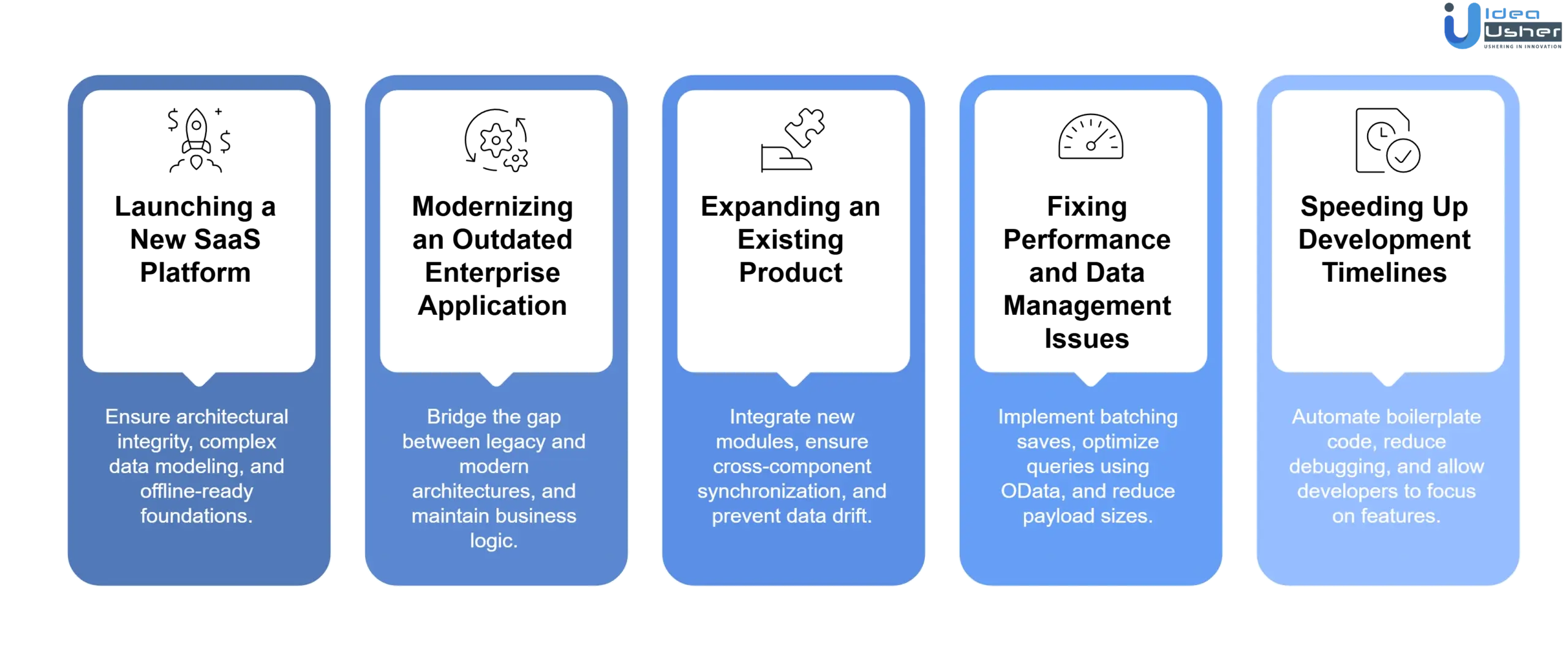
A. Launching a New Client-Side SaaS Platform
When building a SaaS from scratch, speed-to-market is everything. However, building an MVP that can’t scale is a common startup killer.
- Architectural Integrity: A Breeze expert ensures your data layer is robust from Day-1.
- Complex Data Modeling: If your SaaS involves multi-tenant data, nested relationships, or sophisticated filtering, Breeze allows you to build these features in weeks rather than months.
- Offline-Ready Foundations: If your SaaS requires anywhere access, a Breeze expert can set up local caching and synchronization early, preventing a massive refactor later.
B. Modernizing an Outdated Enterprise Web Application
Many enterprise systems are still running on old-school architectures where the server does all the heavy lifting. Moving these to a modern JavaScript frontend is a massive undertaking.
- Bridging the Gap: Breeze.js is excellent at mapping legacy database schemas (like SQL Server via Entity Framework) directly to modern JavaScript objects.
- Maintaining Business Logic: A specialist can import existing server-side validation rules directly into the client, ensuring your modernized app behaves exactly like the original.
C. Expanding an Existing Product with New Features
If your application is growing and you’re starting to see data drift (where the UI shows one value but the database has another), it’s time for a Breeze.js specialist.
- Module Integration: Adding a new module (e.g., adding an Invoicing module to a Project Management app) requires stitching new data into the existing cache.
- Cross-Component Sync: A Breeze expert can ensure that a change made in the new module reflects instantly across the entire application without a page refresh.
D. Fixing Performance and Data Management Issues
If your app feels sluggish or janky when saving data, the problem is likely your data sync strategy.
- Batching Saves: Instead of 50 API calls for a complex form, a Breeze developer can configure a single transaction.
- Query Optimization: Specialists use OData or specialized Web API adapters to ensure the client only fetches exactly what it needs, reducing payload sizes by up to 80%.
E. Need to Speed Up Development Timelines
The most expensive thing in software development is boilerplate code. Writing manual isDirty flags, validation logic, and undo/redo functionality for every single field is a massive time sink.
- Automated Plumbing: Because Breeze handles change tracking and validation automatically, your developers can focus on building features rather than writing infrastructure.
- Reduced Debugging: Many Heisenbugs (bugs that disappear when you try to find them) are caused by inconsistent state. By using a centralized EntityManager, a Breeze expert eliminates an entire class of state-related bugs.
Industries That Commonly Need Breeze.js Developers
Breeze.js is effectively an Object-Relational Mapper (ORM) for the browser. This makes it the go-to choice for industries where data isn’t just a list of items, but a massive, interconnected web of entities that must stay synchronized across multiple screens.
1. SaaS and CRM Platforms
Customer Relationship Management (CRM) tools are the ultimate test for data libraries. In a modern CRM, a single Customer entity is linked to dozens of Deals, hundreds of Activities, and multiple Contact Persons.
- Relational Navigation: Developers use Breeze.js to allow users to navigate from a Deal to its Associated Contact to that contact’s Company without ever reloading the page.
- Contextual Intelligence: By caching the entire relationship graph locally, the UI can provide instant insights (e.g., This client has 3 overdue tickets) without making a new API call every time the user clicks a tab.
2. Healthcare Portals
In healthcare, data accuracy is a matter of compliance and patient safety. Portals for clinicians or patients deal with complex Patient Records that include vitals, prescriptions, and history.
- Transactional Integrity: When a doctor updates a patient’s record, they might change a medication, add a note, and schedule a follow-up. Breeze.js allows these to be saved as a single transaction. If one part fails, none are saved, preventing partial records that could lead to medical errors.
- Offline Access: For practitioners in clinics with spotty Wi-Fi, a Breeze.js developer can implement Offline-First logic, allowing data to be saved to local storage and synced automatically once the connection returns.
3. Fintech Dashboards
Financial applications require an absolute source of truth and an audit trail of every change. Whether it’s a portfolio manager or a personal banking app, the data must be reactive and precise.
- Change Tracking for Audits: Breeze.js tracks exactly which property was changed and what its original value was. This is invaluable for building the Audit Logs required by financial regulations.
- Complex Projections: Fintech dashboards often need to flatten complex data (e.g., calculating a total portfolio value from hundreds of individual assets). Breeze.js allows for LINQ-style projections on the client side, significantly reducing the amount of data transferred over the wire.
4. Logistics and Operations Systems
Managing a fleet of trucks or a global supply chain involves massive datasets that change in real-time. These systems are often read-heavy but update-critical.
- Efficient Querying: Logistics managers need to filter thousands of shipments by status, destination, and priority. A Breeze.js expert can use OData-compliant queries to fetch only the necessary slices of data, keeping the dashboard snappy.
- Conflict Resolution: In a warehouse where multiple operators might be updating the same inventory record, Breeze.js’s built-in concurrency handling ensures that one person’s update doesn’t accidentally overwrite another’s.
5. Marketplace and Booking Platforms
High-traffic marketplaces (like travel booking or freelance platforms) have a unique challenge: Resource Contention. You cannot have two people book the same hotel room at the same time.
- Client-Side Validation: Breeze.js can import validation rules from the server. This means a booking platform can tell a user a date is unavailable before they even hit the Book Now button, reducing server load and user frustration.
- Sandbox Environments: Developers can create Sandboxes in the Breeze cache. This allows a user to try out a complex booking (adding flights, hotels, and tours) in a local-only state before committing the entire package to the database.
Why Staff Augmentation is the Smartest Way to Hire Breeze.js Developers
Managing complex data in rich-client applications requires a specific touch. While Breeze.js is a powerhouse for managing data state, entities and validation, finding local developers who master its intricacies can be a bottleneck. Staff augmentation through Idea Usher bridges this gap, offering a high-velocity alternative to traditional hiring.
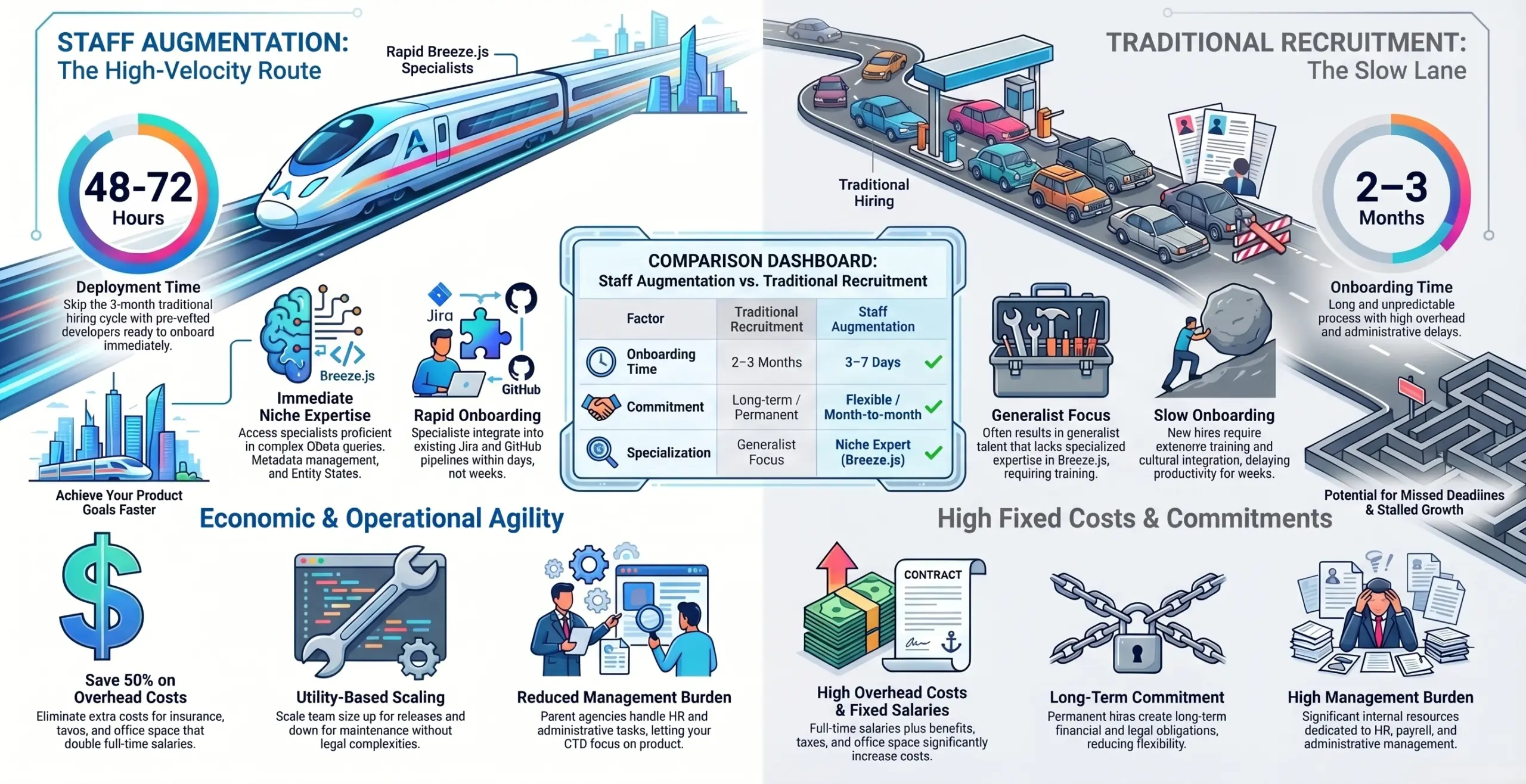
1. Faster Than Traditional Recruitment
Traditional hiring can take three months or more through job postings, screening, and interviews. Idea Usher provides pre-vetted Breeze.js developers within 48 to 72 hours, helping businesses avoid delays and launch products faster.
- Pre-Vetted Talent: Augmentation partners maintain a roster of developers who have already been technically vetted.
- Rapid Onboarding: Because these specialists are used to jumping into existing projects, the ramp-up time is days rather than weeks.
- Example: A fintech startup needing to ship a Portfolio Audit feature can have a Breeze.js expert in their Slack channel within 48 to 72 hours.
2. Lower Cost Than Building In-House Teams
A full-time hire costs significantly more than their base salary. When you factor in health insurance, 401(k) contributions, office space, hardware, and payroll taxes, the real cost can be 1.5x to 2x the salary.
- Project-Based Pricing: With staff augmentation, you pay for the expertise you need, only for as long as you need it.
- Zero Hiring Risk: If a project gets put on hold or requirements change, you aren’t left with a high-salary specialist and no work for them to do.
3. Immediate Access to Niche Breeze.js Specialists
Breeze.js is a specialized Data Management Engine built for complex data architectures, making it distinct from UI libraries like React. Finding experts proficient in its Metadata management and Entity States is difficult via generalist job boards.
- Deep Expertise: You get someone who knows how to handle Complex OData queries and Entity Framework mapping immediately.
- Modern Examples:
- Established: A healthcare firm can bring in a specialist to ensure HIPAA-compliant data caching.
- Emerging: An AI-driven logistics platform can hire a specialist to manage the Digital Twin data graphs that generic JS developers would struggle to optimize.
4. Flexible Scaling Based on Project Demand
Development needs aren’t static. You might need a team of five during the Architecture & Build phase, but only one for Maintenance.
- Burst Capacity: Scale up your team for a major Q4 release and scale back down in Q1 without the awkwardness or legal complexity of layoffs.
- Project-Based Agility: This model allows you to treat your development capacity like a utility and pay for what you use, when you need it.
5. Reduced Management Overhead
Managing a full-time employee involves performance reviews, career pathing, and interpersonal dynamics.
- Output-Oriented: Augmented developers are managed by their parent agency for administrative tasks, meaning your CTO or Lead Dev can focus on product milestones rather than HR paperwork.
- Self-Managed Pros: Specialists in Breeze.js are usually senior-level professionals who require minimal hand-holding; they know how to integrate into your Jira, GitHub, and CI/CD pipelines autonomously.
| Hiring Factor | Traditional Recruitment | Staff Augmentation |
| Onboarding Time | 2–3 Months | 3–7 Days |
| Commitment | Long-term / Permanent | Flexible / Month-to-month |
| Specialization | Generalist focus | Niche expert (Breeze.js) |
| Administrative Burden | High (HR, Payroll, IT) | Low (Single Invoice) |
Why Hire Breeze.js Developers from IdeaUsher?
The partner you choose during building complex, data-driven applications to handle your technical execution can be the difference between a seamless launch and a stalled project.
At IdeaUsher, you aren’t just getting a coder; you’re getting a partner who understands that in modern web apps, data integrity is the bottom line. We specialize in bridging the gap between how it works and how it scales.

1. Pre-Vetted Developers With Real Project Experience
We don’t believe in learning on your dime. Every Breeze.js developer at IdeaUsher goes through a rigorous vetting process that tests more than just syntax:
- Top 1% Talent: Our rigorous vetting process filters for developers who understand the deeper mechanics of the EntityManager, OData, and Web API integration.
- Deep Technical Assessment: Our experts are tested on complex entity management, metadata handling, and client-side caching strategies.
- Real-World Application: We prioritize developers who have successfully deployed Breeze.js in high-stakes environments like healthcare portals, fintech dashboards, and large-scale SaaS platforms.
- Domain Expertise: Our team understands the nuances of the industries they serve, ensuring the data models they build are compliant with industry standards and business logic.
2. Fast Onboarding for Urgent Development Needs
Aggressive project timelines necessitate immediate action, which is why we have streamlined our deployment process to ensure rapid talent integration.
- Ready-to-Deploy Talent: We maintain a roster of niche specialists who are ready to integrate into your workflow within days.
- Standardized Integration: Our developers are trained to adapt quickly to your existing codebase and internal tools, minimizing the ramp-up period and maximizing productivity from day one.
3. Flexible Hiring Models for Startups and Enterprises
Every project has unique budgetary and scaling requirements. We offer a range of engagement models designed to fit your specific needs:
- Staff Augmentation: Scale your existing team quickly to meet a deadline.
- Dedicated Teams: A full-stack unit focused exclusively on your product’s long-term roadmap.
- Project-Based Hiring: Bring in specialized Breeze.js expertise for a specific phase or feature of your development cycle.
4. Seamless Collaboration with Internal Teams
A developer is only as good as their ability to communicate. We treat our team as an extension of yours, ensuring that culture and collaboration are never an afterthought.
- Cultural Alignment: Our developers are trained in international business standards and collaborative workflows.
- Time Zone Synchronization: We work around your schedule to ensure that meetings, stand-ups, and code reviews happen when it’s most convenient for you.
- Tool Alignment: We integrate directly into your existing Jira, GitHub, Slack, and Trello workflows.
5. Transparent Communication and Agile Execution
We believe that transparency is the foundation of trust. Our development process is built on clear milestones and constant feedback loops.
- Agile Sprints: We work in iterative cycles, delivering functional updates frequently so you can see your product take shape in real-time.
- Daily Stand-ups: Stay informed with regular updates on progress, roadblocks, and upcoming tasks.
- Direct Access: Direct collaboration with developers and managers enables transparent, lag-free communication to ensure all project goals are met precisely.
Breeze.js Development Services Offered by IdeaUsher
Managing data density is the core of modern client-side development. We provide end-to-end Breeze.js services designed to transform how your application handles complex entity models, from initial architecture to long-term maintenance.
1. Dedicated Breeze.js Developer Hiring
We offer access to the top 1% of technical talent through our flexible hiring models. Whether you need a single specialist to lead your data layer or a team to scale your production, our Breeze.js developers are pre-vetted for their ability to manage complex Object Graphs and browser-based caching.
- Flexible Models: Choose from Dedicated Developer, Managed Team, or Staff Augmentation based on your project’s specific budget and timeline.
- Domain Expertise: Our developers bring deep experience in data-heavy sectors like Fintech, Healthcare (HIPAA compliant), and SaaS.
2. Full Client-Side App Development Support
Building a modern Single Page Application (SPA) requires more than just a beautiful UI; it requires a robust data engine. IdeaUsher provides comprehensive support throughout the entire application lifecycle:
- Architecture Design: We build the Single Source of Truth within your client-side cache to ensure data consistency across every screen.
- End-to-End Execution: From initial ideation to final deployment on cloud infrastructures like AWS or Azure, we handle the technical plumbing so you can focus on user experience.
3. Legacy App Modernization using Breeze.js
Is your legacy system slowing down your business? We specialize in transforming outdated, clunky web applications into high-speed, modern platforms without losing critical data integrity.
- Refactoring & Re-architecting: We use Breeze.js to bridge the gap between your legacy backend (like .NET or Java) and a modern frontend (like Angular or React).
- Metadata Integration: By importing existing database schemas as Breeze metadata, we ensure your new application honors all the business rules and constraints of your original system.
4. API Integration and Backend Connectivity
Breeze.js is only as powerful as its connection to your server. Our developers are experts in creating seamless data bridges between the client and the backend.
- OData & Web API: We specialize in integrating Breeze with complex APIs, enabling rich querying (filtering, sorting, and expanding) directly from the browser.
- Secure Data Sync: We implement atomic save bundles, ensuring that multiple related changes are committed to your database in a single, secure transaction, preventing data corruption.
5. Performance Optimization and Maintenance Support
A data-heavy app can quickly become sluggish if not managed correctly. We provide specialized optimization services to ensure your platform remains light and lightning-fast.
- Cache Management: We optimize the Breeze EntityManager to reduce server round-trips, significantly lowering your cloud costs and improving load times.
- Ongoing Maintenance: Beyond the launch, we provide continuous monitoring, bug fixes, and performance tuning to ensure your application evolves alongside your business needs.
How IdeaUsher’s Staff Augmentation Process Works
Our process is built on speed, precision, and cultural alignment. At IdeaUsher, we’ve stripped away the typical friction of recruitment to create a staff augmentation model that feels less like hiring and more like upgrading. Here is how we bridge the gap from your initial requirement to a fully integrated team member.
1. Understanding Your Technical Requirements
The process begins with a deep dive into your project’s DNA. We don’t just look at the tech stack; we look at the data complexity.
- The What and How: Are you building a greenfield SaaS platform or refactoring a legacy .NET system?
- Integration Points: We identify exactly where Breeze.js fits into your architecture whether it’s managing complex entity graphs, handling OData, or optimizing client-side caching.
- Team Dynamics: We assess your current workflow (Scrum, Kanban, or Waterfall) to ensure the developer we provide fits your team’s rhythm.
2. Matching You with The Right Breeze.js Developers
Once we understand the mission, we dive into our curated talent pool. Because Breeze.js is a niche skill, we don’t rely on generic search terms.
- The Specialist Filter: We look for developers who have specific experience in entity management and client-side ORMs.
- Industry Alignment: If you’re in fintech, we match you with developers who understand transaction integrity. If you’re in healthcare, we prioritize those familiar with data privacy and complex validation rules.
3. Interview and Selection Process
We believe you should have the final word on who joins your inner circle. After we pre-vet candidates, we present you with the top 2-3 specialists.
- Technical Validation: You can conduct your own technical interviews or live coding sessions to see how the developer handles real-world Breeze.js scenarios.
- Culture Check: This is your chance to ensure the developer’s communication style and problem-solving approach align with your internal culture.
4. Quick Onboarding and Sprint Alignment
Traditional onboarding takes weeks; ours takes days. We handle the heavy lifting of administrative setup so your new developer can start contributing to the codebase immediately.
- Tools & Access: We ensure the developer is synced with your Jira, Slack, and GitHub repositories from Day 1.
- Sprint Zero: The developer joins your next stand-up or sprint planning session, quickly absorbing the project’s immediate priorities and long-term milestones.
5. Ongoing Delivery and Scaling Support
Our relationship doesn’t end once the contract is signed. We remain your partners throughout the entire engagement to ensure the partnership remains productive.
- Performance Monitoring: We conduct regular check-ins to ensure the developer is meeting your expectations and project velocity remains high.
- Flexible Scaling: If your project grows and you suddenly need three more developers or if you hit a maintenance phase and need to scale back, we adjust the team size with minimal lead time.
- Dedicated Account Management: You’ll have a single point of contact at IdeaUsher to handle any logistical or administrative needs, allowing your internal leads to stay focused on the product.
IdeaUsher’s Phase-by-Phase Staff Augmentation Breakdown
| Phase | Timeline | Key Outcome |
| Consultation | Day 1 | A clear roadmap of the required talent. |
| Shortlisting | Day 1-2 | Access to the top 1% of pre-vetted specialists. |
| Interviews | Day 2-3 | Direct technical validation by your team. |
| Onboarding | Day 3-5 | Developer is active in your sprints and shipping code. |
Key Skills Our Breeze.js Developers Bring to Your Team
A Breeze.js developer is more than just a frontend coder; they are essentially Data Architects for the client side. Because Breeze.js sits at the intersection of complex UI and relational databases, our developers bring a specific, high-level toolkit to your project.
At IdeaUsher, we ensure our developers don’t just know the how, but also the why behind data integrity and application performance.
1. JavaScript and TypeScript expertise
Modern web applications require a type-safe environment to prevent the common bugs associated with large-scale data handling.
- TypeScript Mastery: Our developers use TypeScript to define strong interfaces for your entities, ensuring that errors are caught during development rather than at runtime.
- Modern ES6+ Logic: They utilize the latest JavaScript features like async/await, destructuring, and arrow functions to write clean, maintainable, and highly efficient code.
2. Breeze.js entity and metadata management
This is the core of the Breeze ecosystem. Our developers are experts in configuring how your application perceives and manipulates data.
- EntityManager Configuration: They skillfully manage the cache, ensuring that the application only holds the data it needs to remain responsive.
- Metadata Store: They can manually define or import metadata to ensure the client-side objects perfectly mirror your server-side database schema, including complex many-to-many relationships.
- Navigation Properties: They set up smart objects that allow your UI to navigate from an Invoice to a Customer to a Region effortlessly.
3. Angular, React, and SPA framework experience
Breeze.js is rarely used in isolation; it’s designed to power Single Page Applications (SPAs).
- Framework Agnostic: Whether your stack is built on the robust structure of Angular (which has a long history with Breeze) or the flexible component logic of React, our developers ensure a seamless integration.
- State Management Integration: They know how to make Breeze.js work alongside tools like Redux or the Angular RxJS store, ensuring that data updates in Breeze are reflected instantly across your UI components.
4. REST API and backend integration knowledge
A Breeze.js specialist must understand the other side of the wire. They bridge the gap between frontend and backend.
- OData & Web API: They have extensive experience working with .NET Entity Framework and OData producers, which are the primary languages Breeze uses to communicate with servers.
- JSON/REST Optimization: For non-.NET environments, they can configure Breeze to talk to any RESTful API, ensuring that data payloads are minimized and query parameters are optimized for speed.
5. Debugging and performance optimization skills
When a web app starts to lag under the weight of 10,000 records, a generalist might suggest more RAM. A Breeze.js expert knows better.
- Query Optimization: They use eager-loading (Expand) and projection (Select) to ensure the app only fetches the exact data needed, preventing “over-fetching” that slows down mobile users.
- Cache Tuning: They know how to manage the lifecycle of the local cache, clearing out stale data and preventing memory leaks in long-running browser sessions.
- Advanced Debugging: Using the Breeze Lab tools and browser profilers, they can track down elusive data-sync bugs or performance bottlenecks that would baffle a generalist developer.
Cost to Hire Breeze.js Developers from IdeaUsher in 2026
The cost of hiring a Breeze.js developer is primarily driven by their level of seniority and the complexity of your data architecture. Because Breeze.js is a specialized tool used for enterprise-grade data management, these developers typically fall into the mid-to-senior price brackets.
IdeaUsher offer competitive and transparent pricing structures for 2026, ensuring that you can access niche Breeze.js expertise without the ballooning costs of traditional local hiring
A. Hourly hiring model
The hourly model is ideal for companies that have an undefined project scope or need immediate assistance with specific tasks, such as fixing a data-sync bug or optimizing a local cache.
- Average Range: $35 – $150 per hour.
- Junior/Mid-level: $35 – $75/hr (Best for implementing basic entities and UI integration).
- Senior/Specialist: $85 – $150/hr (Best for architectural design, metadata configuration, and performance tuning).
This model offers maximum flexibility, allowing you to pay as you go and pivot your project requirements mid-build without long-term financial commitments.
B. Monthly dedicated developer model
For long-term projects or ongoing product evolution, the monthly dedicated model provides the best value and team consistency. This ensures the developer becomes deeply familiar with your institutional knowledge and codebase.
- Average Range: $5,500 – $20,000 per month.
- Offshore (India/South Asia): $5,500 – $13,000/mo.
- Nearshore/Onshore: $14,000 – $20,000+/mo.
A dedicated developer functions as a full-time member of your team, providing 160 hours of focused work per month. This model is preferred for building large-scale SaaS platforms or modernizing enterprise legacy systems.
C. Team augmentation pricing factors
Several key variables influence the final quote for Breeze.js staff augmentation:
| Factor | Impact on Cost |
| Seniority Level | Senior developers with 5+ years of ORM experience command a 30-50% premium but work 2x faster. |
| Tech Stack Complexity | Integrating Breeze.js with complex backends (e.g., .NET Core, OData, or custom Java APIs) increases the skill requirement. |
| Project Duration | Longer-term contracts (6+ months) typically qualify for discounted monthly rates compared to short bursts. |
| Timezone Alignment | Requiring 100% overlap with North American or European business hours may slightly increase the rate. |
D. Why outsourcing reduces total development cost
Many businesses mistakenly only look at the hourly rate, but the real savings of hiring through IdeaUsher come from the reduction of hidden overhead costs:
- Zero Recruitment Costs: The average cost to hire a US-based developer is approximately $4,700 in administrative and advertising fees. We handle all vetting and hiring.
- No Employee Benefits: You are not responsible for health insurance, 401(k) contributions, or payroll taxes, which can add 30-40% to a local salary.
- Reduced Infrastructure Spend: We provide the hardware, high-speed internet, and office space, saving you thousands in operational “burn rate.”
- Scaling Flexibility: It is significantly easier and cheaper to scale an outsourced contract down when a project hits a maintenance phase than it is to conduct a corporate layoff.
Strategic Investment: In-House Hiring vs. IdeaUsher Augmentation
The table below breaks down the total cost of ownership for a senior developer. By choosing staff augmentation, you essentially trade administrative drag for development velocity.
| Cost Component | In-House (US/Western EU) | IdeaUsher Augmentation |
| Annual Base Salary | $120,000 – $160,000 | $65,000 – $110,000 |
| Benefits & Taxes | + $30,000 – $50,000 | Included |
| Recruitment Fee | $20,000 – $30,000 | $0 |
| Equipment & Software | $5,000+ | Included |
| Total Year 1 Cost | $175,000 – $245,000+ | $65,000 – $110,000 |
Why Businesses Choose IdeaUsher Over Traditional Hiring Methods
Modern enterprises are moving away from “buying” employees and toward “accessing” expertise. Here is how IdeaUsher transforms your engineering capacity from a bottleneck into a competitive advantage.
A. Save months in recruitment time
Traditional recruitment is a grueling marathon. From posting a job to the developer’s first day, the process often consumes 8–12 weeks.
- The “IdeaUsher Speed”: We bypass the sourcing, screening, and initial technical vetting phases. Because our Breeze.js developers are already in our network, we can reduce your “Time-to-Hire” by up to 80%.
- Zero Lag: We often have developers ready to start within the same week you contact us, meaning your sprint velocity doesn’t have to suffer while you wait for a new hire to serve their notice period elsewhere.
B. Access global-level expertise instantly
Local hiring limits you to a 50-mile radius or the pool of people willing to relocate. This is particularly dangerous when looking for niche skills like Breeze.js.
- Specialized Pedigree: At IdeaUsher, we provide access to the top 1% of global talent developers who have built complex systems for a variety of industries, from Fintech to Healthcare.
- Instant Maturity: You aren’t hiring someone who wants to learn Breeze.js; you are hiring someone who has already mastered its integration with Angular, React, and .NET.
C. Reduce hiring risks and overhead costs
Every new hire is a gamble. If a permanent employee doesn’t work out after six months, the cost of severance, recruitment, and lost productivity can exceed $100k.
- De-Risked Scaling: With IdeaUsher, you have a “trial” environment built-in. If a developer isn’t the perfect fit, we provide a replacement immediately with no legal hurdles, no HR headaches.
- Financial Agility: You eliminate the permanent “overhead tax” of benefits, office space, and specialized equipment. You pay for the code that is shipped, not the administrative weight of an employee.
D. Focus internal resources on growth and strategy
Your core team should be focusing on innovation, not infrastructure maintenance.
- Offload the “Plumbing”: Let IdeaUsher’s specialists handle the complex data-syncing, cache management, and metadata mapping of Breeze.js. This frees your in-house architects to focus on user experience, market-fit, and long-term product strategy.
- Simplified Management: We handle the payroll, compliance, and developer retention. Your project managers get to focus on what matters most: hitting milestones and driving ROI.
Traditional Recruitment vs. IdeaUsher’s Staff Augmentation
| Aspect | Traditional Hiring | IdeaUsher Model |
| Recruitment Cycle | 60 – 90 Days | 3 – 5 Days |
| Technical Risk | High (Uncertain Skillset) | Minimal (Pre-Vetted Specialists) |
| Operational Focus | HR & Onboarding Heavy | 100% Roadmap & Execution |
| Scalability | Rigid & Slow | Highly Elastic |
The Strategic Shift: Choosing IdeaUsher isn’t just an outsourcing decision; it’s a decision to make your engineering department more agile, cost-effective, and focused on the future.
Conclusion
Choosing the right development partner is the final step in securing your application’s future. By hiring Breeze.js developers from IdeaUsher, you gain more than just technical expertise; you gain a scalable, data-driven foundation built for longevity. Our streamlined staff augmentation process eliminates recruitment delays, allowing you to scale faster and build better client-side apps with confidence. Don’t let complex data management slow your growth. Partner with IdeaUsher for flexible, expert-led solutions that turn your technical challenges into a seamless, high-performance user experience.
FAQs
A.1. Specialists should possess deep expertise in JavaScript and TypeScript, alongside a mastery of the Breeze.js entity manager. Proficiency in SPA frameworks like Angular or React and RESTful API integration is also essential.
A.2. Businesses can save over $100,000 in the first year alone by bypassing recruitment fees (typically $20,000 to $30,000) and infrastructure spends. This allows for higher development velocity at a lower total investment.
A.3. Staff augmentation provides rapid access to niche expertise without the long-term overhead of traditional hiring. This model allows businesses to scale engineering teams quickly and meet urgent product delivery milestones.
A.4. Staff augmentation significantly reduces expenses by eliminating recruitment fees, equipment costs, and employee benefits. While an in-house hire can cost up to $245,000 annually, the augmentation model ranges between $65,000 and $110,000.