 (+971) 8007 4267
 (+91) 946 340 7140
 (+1) 628 432 4305

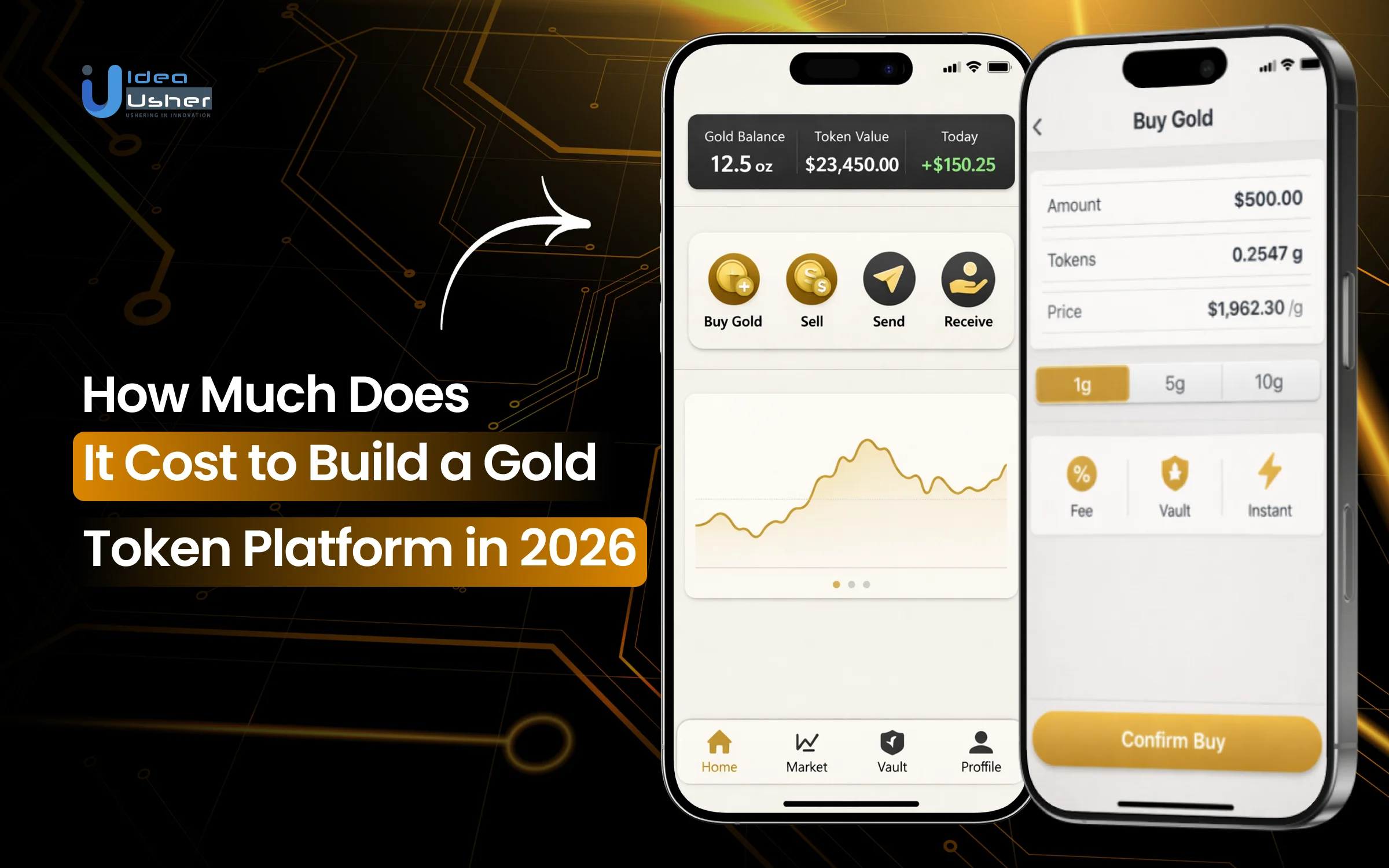
Estimating the cost of a gold token platform often begins with blockchain development, but that is only a small part of the overall expense. The real cost is driven by non-negotiable requirements such as custody integration, regulatory compliance, reserve verification, security controls, and redemption mechanisms. These constraints shape the gold tokenization platform cost, making it dependent on scope, jurisdiction, and operational depth rather than a fixed build figure.
Execution realities add another layer of cost beyond initial development. Integrating vault providers, implementing audit and reporting workflows, managing compliance across regions, and maintaining system reliability all require sustained investment. Ongoing expenses such as security audits, infrastructure scaling, and operational support often exceed early estimates, especially for platforms designed for long term use and institutional trust.
In this blog, we explain how much it costs to build a gold token platform in 2026 by breaking down the key cost drivers, development components, and operational factors that influence budget planning for a compliant and scalable solution.

What Is a Gold Tokenization Platform?
A gold tokenization platform is a digital system that converts physical gold into blockchain-based tokens that represent verified ownership of a specific quantity of gold. The platform connects physical gold reserves with digital tokens through secure custody, transparent valuation, and auditable records. Each token derives its value directly from real, allocated gold stored in regulated vaults.
Businesses leverage gold tokenization platforms for fractional ownership, real-time settlement, and global access to gold-backed digital assets. These platforms don’t just issue tokens but serve as integrated financial systems managing sourcing, custody, trading, redemption, compliance, and reconciliation.
- Asset-backed token architecture: The platform links each token to a specific gold weight via on-chain metadata and off-chain records, ensuring accurate value and redemption.
- Custodial verification and proof-of-reserves logic: The system integrates with licensed gold vaults to confirm storage, ownership, and allocation through periodic audits and cryptographic reporting mechanisms.
- Smart contract issuance and redemption engine: Smart contracts control token minting, burning, and redemption rules, enforcing supply discipline and preventing unbacked token creation.
- Real-time gold pricing oracle integration: The platform pulls verified spot prices from trusted data providers to maintain accurate token valuation across trading and settlement activities.
- Compliance-aware transaction monitoring layer: Built-in compliance logic enforces jurisdictional rules, identity verification, transaction limits, and reporting obligations without manual intervention.
- Multi-layer security and wallet infrastructure: The platform secures digital assets through hardware-backed key management, role-based access control, and transaction approval workflows.
What Core Systems Must Work Together to Tokenize Physical Gold?
Tokenizing physical gold requires smooth coordination between blockchain, storage, and payment systems. This overview highlights the infrastructure enabling secure digital ownership.
| Core System | Role in Gold Tokenization | Why This System Is Critical for Trust |
| Physical gold custody and vault management | Stores and safeguards allocated gold under regulated conditions while maintaining ownership records | Establishes real asset backing and prevents synthetic or fractional reserve exposure |
| Asset verification and reserve reporting | Confirms gold quantity, purity, and allocation through audits and reconciliation processes | Provides continuous assurance that tokens represent real, existing gold |
| Blockchain network and token standard | Hosts the gold-backed tokens and records ownership transfers immutably | Ensures transparency, traceability, and tamper-resistant transaction history |
| Smart contract issuance and control logic | Manages token minting, burning, and redemption rules | Prevents unauthorized minting and enforces one-to-one asset backing |
| Pricing oracle and valuation feeds | Supplies real-time gold spot prices for accurate token valuation | Maintains fair valuation and prevents price manipulation |
| Compliance and identity verification layer | Enforces KYC, AML, and jurisdictional rules across user actions | Aligns the platform with financial regulations and reduces legal exposure |
| Wallet infrastructure and asset security | Protects user assets through secure key management and access controls | Protects token ownership from theft, misuse, or operational failures |
| Backend settlement and reconciliation engine | Synchronizes on-chain token data with off-chain gold records | Detects discrepancies early and supports audit and regulatory reviews |
How Gold Tokenization Is Driving a 30% Rise in Market Engagement?
The tokenization market is expanding, expected to grow from $3.38 billion in 2024 to $4.1 billion in 2025 at a 21.4% CAGR. This growth shows rising industry adoption, with tokenized gold platforms emerging as a key driver, offering investors secure, real-world-backed digital assets.

Tokenized gold democratizes investment, boosting market engagement by up to 30%, particularly among young and emerging-market investors, according to a Deloitte study.
Fractional tokenization of physical assets lowers minimum investment and enables direct peer-to-peer transfers, eliminating intermediaries and clearing delays.
- Lower entry costs make gold accessible to millions of retail investors.
- Blockchain technology ensures transparent proof of reserve and immutable ownership records.
- Cross-border access eliminates the friction of traditional gold brokerage systems.
A New Era of Gold Investment
Tokenized gold is reshaping how investors see stable assets. By early 2025, its market cap topped $1.4 billion, with $2 billion entering crypto through these tokens. Unlike traditional gold, tokenized gold lets anyone own a verified fractional share, removing high barriers and regional limits.
- Fractional ownership models let investors hold as little as 0.01 grams of gold or even $0.01 worth (0.0000031 PAXG), making gold investment more inclusive.
- Tokens are actively traded 24/7 on crypto exchanges, providing liquidity that traditional gold markets, limited to banking hours, simply can’t match.
- Platforms like Tether Gold (XAUT) and PAX Gold (PAXG) maintain 1:1 physical gold backing, with Tether Gold alone managing $1.3–$2 billion in reserves and purchasing around 100 tons of physical gold annually.
Together, these features bridge the gap between stability and accessibility—two factors that have long been in tension in precious-metal markets.
Efficiency and Transparency Gains Through Blockchain
A PwC study reported that blockchain-based tokenization can reduce transaction costs by up to 70% and cut settlement times from several days to just minutes.
These efficiencies and on-chain auditability boost trust in the gold market. Each token is traceable to a verified reserve, and third-party audits ensure they are physically backed by gold in secure vaults.
- Smart contracts automate settlement and ownership transfer.
- Continuous auditing ensures transparency and investor confidence.
- Reduced middleman fees enhance long-term returns for holders.

Why Gold Token Platform Development Is Capital Intensive?
Gold tokenization platform cost remains high due to infrastructure, regulatory compliance, security, and custody requirements. This section explains why development demands significant upfront investment and long-term financial planning.

1. Physical Asset Backing
Gold token platforms must support allocated physical gold from launch, requiring regulated vaults, insured storage, and verified ownership records. These create ongoing costs for custody, audits, and reconciliation, adding permanent real-world obligations beyond digital systems.
2. Financial-Grade Technology
A gold token platform functions as financial infrastructure, requiring custom smart contracts, secure backends, wallets, and oracles. These systems must ensure accurate backing, enforce redemption, and sync on- and off-chain data, increasing development time and costs.
3. Regulatory and Compliance Readiness
Gold tokenization covers commodities, securities, and payment rules. Platforms need identity checks, transaction monitoring, reporting, and legal controls before launch. Scaling teams must adapt compliance for different jurisdictions, incurring legal, operational, and advisory costs beyond development.
4. Enterprise-Level Security
Gold-backed digital assets draw high-value transactions and skilled threats. Platforms need advanced key management, access controls, audit logs, and regular security testing. Security is an ongoing investment to meet regulations and protect user trust.
5. Operational Complexity
A gold token platform must operate reliably over time, managing reconciliation, support, compliance, monitoring, and scaling. These duties raise staffing, tooling, and maintenance costs, increasing the platform’s capital intensity.
How Much Does It Cost to Build a Gold Token Platform in 2026?
Gold tokenization platform cost in 2026 depends on features, compliance, security, and infrastructure choices. This section outlines estimated budgets and factors shaping development investment for informed planning and forecasting needs.

Phase 1: Discovery, Architecture, and Regulatory Assessment
Phase 1 defines the strategic, technical, and compliance foundation of the platform and directly influences the overall gold tokenization platform cost. Businesses use this phase to validate feasibility, select the right jurisdictional approach, and design an architecture that supports physical gold backing without creating regulatory or technical debt.
Phase 1 Cost Breakdown
| Cost Component | Estimated Cost Range | What This Covers |
| Product discovery and requirements analysis | $8,000- $12,000 | Business goals, platform scope, user roles, and functional requirements |
| Technical architecture and system design | $12,000 – $18,000 | Blockchain selection, system workflows, data flow mapping |
| Regulatory and compliance assessment | $8,000 – $15,000 | Token classification, jurisdiction review, compliance planning |
| Gold custody and reserve model planning | $8,000 – $15,000 | Custody structure, vault workflow design, reserve management logic |
| Risk analysis and initial cost forecasting | $5,000 – $10,000 | Security risk review, phased budget estimation |
Estimated Phase 1 Total Cost: USD 20,000 to USD 50,000
Key Takeaways From Phase 1
- Early regulatory clarity prevents costly rework during development and launch
- Architecture decisions determine future scalability and integration complexity
- Custody planning ensures one-to-one gold backing from the start
- Risk assessment highlights security and compliance gaps before implementation
- Accurate cost forecasting improves budgeting for later development phases
Phase 2: Core Platform and Smart Contract Development
Phase 2 represents the largest portion of the gold tokenization platform cost because it converts strategy into a functional system. During this phase, development teams build the blockchain layer, backend services, and core token logic that connects physical gold reserves with digital ownership records.
Phase 2 Cost Breakdown
| Cost Component | Estimated Cost Range | What This Covers |
| Smart contract development and token logic | $35,000 – $60,000 | Token issuance, burning, redemption rules, and access controls |
| Backend platform development | $40,000 – $70,000 | Asset management logic, user accounts, transaction handling |
| Blockchain network integration | $15,000 – $30,000 | Network setup, node configuration, transaction workflows |
| Admin and operations dashboard | $8,000 – $14,000 | Platform controls, asset monitoring, reporting views |
| API development and system integrations | $10,000 – $20,000 | Custody systems, pricing feeds, internal services |
Estimated Phase 2 Total Cost: USD 65,000 to USD 110,000
Key Takeaways From Phase 2
- Smart contract logic enforces asset backing and supply discipline
- Backend systems synchronize on-chain tokens with off-chain gold records
- Blockchain integration affects scalability, performance, and transaction costs
- Admin tools enable operational control and regulatory reporting
- Well-structured APIs support future integrations and platform growth
Phase 3: Compliance Implementation and Security Hardening
Phase 3 focuses on regulatory readiness and platform protection, both of which significantly shape the gold tokenization platform cost in 2026. This phase ensures the platform can operate legally, protect user assets, and withstand security threats before it reaches real users.
Phase 3 Cost Breakdown
| Cost Component | Estimated Cost Range | What This Covers |
| KYC and identity verification integration | $15,000 – $30,000 | User onboarding, identity checks, verification workflows |
| AML and transaction monitoring systems | $15,000 – $30,000 | Risk scoring, transaction alerts, compliance rules |
| Smart contract security audit | $20,000 – $40,000 | Contract review, vulnerability analysis, and remediation |
| Infrastructure security setup | $15,000 – $25,000 | Key management, access controls, and environment hardening |
| Compliance reporting and logging tools | $10,000 – $20,000 | Audit logs, reporting dashboards, and regulatory documentation |
Estimated Phase 3 Total Cost: USD 35,000 to USD 80,000
Key Takeaways From Phase 3
- Identity verification protects the platform from fraud and regulatory breaches
- Transaction monitoring supports ongoing compliance obligations
- Smart contract audits reduce financial and reputational risk
- Infrastructure security safeguards wallets, keys, and sensitive data
- Reporting tools support audits and regulatory reviews
Phase 4: Integration, Testing, and Pre-Launch Readiness
Phase 4 prepares the platform for real-world operation and directly affects the final gold tokenization platform cost before launch. This phase focuses on ensuring that all systems work together reliably under expected usage and regulatory conditions.
Phase 4 Cost Breakdown
| Cost Component | Estimated Cost Range | What This Covers |
| System integration and end-to-end testing | $20,000 – $35,000 | Cross-system workflows, failure handling, reconciliation checks |
| User acceptance and functional testing | $10,000 – $20,000 | Feature validation, usability checks, issue resolution |
| Performance and load testing | $10,000 – $20,000 | Stress testing, scalability validation, bottleneck identification |
| Compliance validation and documentation | $10,000 – $15,000 | Final compliance checks, policy documentation |
| Deployment and environment setup | $8,000 – $15,000 | Production setup, monitoring tools, release preparation |
Estimated Phase 4 Total Cost: USD 35,000 to USD 50,000
Key Takeaways From Phase 4
- Integration testing ensures accurate synchronization between gold reserves and tokens
- User testing improves reliability and reduces post-launch issues
- Performance testing validates scalability under real usage
- Compliance validation supports regulatory confidence
- Proper deployment reduces launch-day risks
Phase 5: Launch, Monitoring, and First-Year Operational Costs
Phase 5 covers the transition from development to live operation and completes the gold tokenization platform cost picture. This phase focuses on maintaining platform stability, regulatory compliance, and user trust during the first year after launch.
Phase 5 Cost Breakdown
| Cost Component | Estimated Cost Range | What This Covers |
| Platform launch and go-live support | $8,000 – $15,000 | Production rollout, incident response, launch coordination |
| Infrastructure hosting and monitoring | $15,000 – $30,000 | Cloud services, uptime monitoring, performance alerts |
| Compliance operations and reporting | $12,000 – $25,000 | Ongoing KYC reviews, regulatory reporting, audits |
| Security monitoring and maintenance | $10,000 – $20,000 | Threat detection, patching, access reviews |
| Technical support and maintenance | $15,000 – $30,000 | Bug fixes, updates, system optimizations |
Estimated Phase 5 First-Year Cost: USD 20,000 to USD 35,000
Key Takeaways From Phase 5
- Launch support ensures stability during initial user onboarding
- Infrastructure costs scale with usage and transaction volume
- Ongoing compliance protects operating licenses and trust
- Security maintenance reduces exposure to evolving threats
- Continuous technical support sustains platform performance

Estimated Total Cost by Platform Scope in 2026
This summary view consolidates the full gold tokenization platform cost across all development and operational phases. It helps businesses quickly align their budget expectations with platform ambition and regulatory reach.
Total Cost Comparison Table
| Platform Scope | Estimated Total Cost | Typical Use Case | What This Scope Supports |
| Minimum Viable Platform | $65,000 – $150,000 | Pilot launches and controlled market testing | Core gold-backed token issuance, limited compliance, single jurisdiction |
| Mid-Scale Platform | $165,000 – $250,000 | Regional or growth-stage platforms | Automated compliance, secure custody integration, scalable transactions |
| Full-Scale Enterprise Platform | $260,000 – $550,000+ | Institutional-grade and global operations | Multi-jurisdiction compliance, advanced security, high transaction volume |
Key Budget Insights
- MVP builds focus on validation rather than scale or geographic expansion
- Mid-scale platforms balance compliance, performance, and cost efficiency
- Full-scale platforms prioritize resilience, regulatory depth, and institutional trust
- Early scope definition prevents budget overruns and rework
- Long-term operational costs matter as much as initial development spend
What Factors Influence the Gold Token Platform Development Cost in 2026?
Gold tokenization platform cost in 2026 is shaped by technology choices, compliance needs, security layers, and scalability goals. This section presents the key factors influencing development budgets and strategic planning.
1. Platform Scope and Feature Depth
Platform scope defines how much functionality the platform delivers at launch and how much complexity the system must support. Broader scope increases development time, testing effort, and infrastructure requirements.
- User access and role management: Multiple user roles require structured permission logic, access controls, and administrative workflows across the platform.
- Token functionality and redemption options: Advanced redemption rules and asset handling logic increase smart contract complexity and backend coordination.
- Trading, transfer, and settlement features: High-frequency or real-time transactions demand scalable infrastructure, optimized processing, and performance tuning.
Typical cost impact: USD 50,000 to USD 200,000 depending on feature depth and transaction volume.
2. Smart Contract Complexity and Audit Requirements
Smart contracts enforce the rules that govern gold-backed tokens. More complex logic increases development effort and audit scope.
- Minting and burning control mechanisms: Supply control logic prevents unbacked token creation and supports asset integrity.
- Redemption enforcement rules: Redemption logic must accurately reflect physical gold availability and custody status.
- Audit scope and remediation cycles: Security audits often require revisions that extend timelines and cost.
Typical cost impact: USD 30,000 to USD 100,000 depending on contract logic and audit depth.
3. Blockchain Network Selection and Transaction Model
The choice of blockchain network directly affects development complexity, transaction costs, and scalability. Each network introduces different tooling, performance characteristics, and long-term operational implications.
- Public vs permissioned blockchain architecture: Public networks require careful optimization to control transaction fees and performance, while permissioned networks rely on custom governance rules and network management logic.
- Transaction throughput and confirmation behavior: Higher throughput and faster confirmation targets demand optimized transaction handling, queue management, and scalable infrastructure.
- Network tooling and ecosystem maturity: Mature blockchain ecosystems accelerate development through established tools and libraries but may introduce higher operational or usage-related costs.
Typical cost impact: USD 20,000 to USD 80,000 based on network choice and transaction design.
4. Wallet Infrastructure and Asset Custody Integration
Wallet design affects user experience, security, and operational control. Custodial and non-custodial approaches carry different technical burdens.
- Custodial vs non-custodial wallet: Custodial wallets require secure private key storage, access control policies, and internal authorization processes, while non-custodial models demand robust client-side security and recovery design.
- Multi-signature and approval workflows: Multi-signature requirements introduce additional backend logic, approval sequencing, and transaction validation layers to prevent unauthorized asset movement.
- User recovery and access management: Account recovery mechanisms require secure fallback processes, identity revalidation, and protection against social engineering or unauthorized access attempts.
Typical cost impact: USD 30,000 to USD 90,000 depending on custody model.
5. Security Architecture and Risk Management Level
Security standards influence how much infrastructure and tooling the platform requires. Higher security expectations raise both setup and maintenance costs.
- Key management and access control systems: Secure key storage, role-based permissions, and controlled access policies protect digital assets and limit operational risk.
- Infrastructure hardening and monitoring: Hardened environments combined with continuous monitoring improve threat detection and ensure platform stability.
- Incident response and security testing: Regular security testing and response planning help identify vulnerabilities early and reduce potential impact.
Typical cost impact: USD 40,000 to USD 120,000 based on security posture and risk tolerance.

How to Optimize Gold Tokenization Platform Costs Without Compromising Security?
Optimizing gold tokenization platform cost requires balancing security, compliance, and technical efficiency. Strategic planning and informed design choices help businesses control expenses while building secure, scalable platforms for long-term use.

1. Start With a Phased Development Approach
A phased development approach helps businesses control spending and risks by prioritizing token issuance, custody, and compliance. It avoids early feature development, improves budget discipline, speeds up validation, and facilitates future expansion without major architectural changes.
2. Choose Technology Based on Long-Term Viability
Technology choices affect maintenance and resilience. Selecting stable blockchains, supported frameworks, and proven tools reduces issues and debt. Long-term focused platforms are more cost-effective as they develop.
3. Limit Regulatory Scope in Early Stages
Regulatory ambition impacts development costs and timelines. Platforms launching in a single jurisdiction lower legal complexity and compliance costs. This enables faster execution and future expansion via modular compliance design.
4. Invest Early in Smart Contract and Security Design
Investing early in smart contract design and security prevents costly fixes later. Clear controls and access management lower vulnerability risks. Platforms that prioritize security protect capital and reputation.
5. Use Modular Integrations and Reusable Components
Modular system design cuts costs by isolating core logic from dependencies. Reusable components ease integration with custodians, oracles, and compliance tools, lowering upgrade efforts and enabling platform service replacements or extensions without disruption.
6. Plan Operational Costs Alongside Development Costs
Operational expenses influence total ownership cost alongside initial development. Planning for monitoring, compliance, reporting, and maintenance early prevents unexpected post-launch costs. Proactive operational planning fosters sustainable growth and predictable long-term costs.
Common Mistakes That Increase Gold Tokenization Platform Costs
Common mistakes often drive the gold tokenization platform cost higher than expected during development and launch. Understanding these pitfalls helps businesses plan budgets realistically and build compliant, scalable platforms with confidence.

1. Underestimating Regulatory Complexity Early
Many teams delay regulatory planning, causing redesigns, launch delays, and repeated legal reviews. Gold-backed platforms face stricter scrutiny, and late compliance decisions often require costly changes to architecture and workflows.
2. Overengineering Features Before Market Validation
Some teams invest heavily in advanced features before validating real user demand, inflating scope and extending timelines without guaranteed adoption. Prioritizing essential functions helps maintain budget control and adapt efficiently.
3. Choosing Technology Without Scalability Planning
Technology decisions made without scalability considerations often require costly refactoring. Platforms that select tools or networks based only on short-term convenience face higher infrastructure and migration costs as usage grows.
4. Treating Security as an Afterthought
Delaying security implementation increases risk and remediation cost. Platforms that integrate security late must rework smart contracts, access controls, and infrastructure. Early security planning reduces long-term expenses and operational exposure.
5. Ignoring Operational Costs After Launch
Many cost estimates focus only on development and overlook post-launch requirements. Compliance operations, system monitoring, and maintenance generate ongoing expenses. Platforms that fail to plan for these costs experience budget overruns during live operations.
6. Relying on Inexperienced Development Teams
Gold tokenization requires specialized expertise across blockchain, compliance, and asset-backed systems. Inexperienced teams often underestimate complexity, produce fragile implementations, and require extensive rework. Expertise reduces trial-and-error costs and improves delivery efficiency.
Conclusion
Building a gold tokenization platform in 2026 requires careful financial planning, technical discipline, and regulatory awareness. Development costs reflect the responsibility of managing real-world assets through digital systems, not unnecessary complexity. Businesses that approach gold tokenization with a phased strategy, informed technical choices, and early compliance planning achieve better cost control and long-term stability. Understanding where costs originate and how to manage them enables smarter investment decisions and more resilient platform design.
Ready to Build Your Gold Token Platform with IdeaUsher?
Understanding the cost of building a gold token platform is just the first step. At IdeaUsher, we help businesses transform these estimates into fully functional, compliant, and scalable blockchain solutions. From smart contract architecture to secure asset-backed token frameworks, our team ensures every dollar you invest delivers long-term value.
Why Partner with IdeaUsher?
- End-to-End Gold Tokenization Expertise: We design platforms that align with regulatory requirements while maintaining transparency and trust.
- Cost-Optimized Development: Our approach focuses on reducing unnecessary overhead without compromising security or scalability.
- Asset Backed Token Architecture: Our platforms include real-time reserve tracking and verification systems that strengthen investor trust and ensure transparency.
- Advanced Security Frameworks: We implement audited smart contracts, multi-layer authentication, and data encryption to protect assets and user information.
Explore our portfolio to see how we’ve helped companies launch secure and scalable blockchain products.
Contact us today for a free cost consultation and roadmap, and let’s turn your gold token platform idea into a market-ready solution.


FAQs
A.1. The estimated cost depends on features, blockchain selection, and compliance needs. A basic MVP can start around $65,000 – $120,000, while a fully scalable platform with audits, custody integrations, and regulatory frameworks can reach $300,000+.
A.2. Yes, regulatory approvals are often required depending on your region. You may need licenses, asset verification, AML compliance, and legal documentation to operate legally and avoid future penalties or shutdowns.
A.3. Ethereum, Polygon, and Binance Smart Chain are popular choices due to security and ecosystem support. The best option depends on transaction costs, scalability, developer availability, and your target user base.
A.4. Essential security features include smart contract audits, multi signature wallets, encrypted databases, KYC verification, and regular vulnerability testing. Strong security protects user funds and maintains long term platform credibility.


