 (+971) 8007 4267
 (+91) 946 340 7140
 (+1) 628 432 4305


Smaller businesses often manage VAT compliance within daily operations, using accounting software and manual checks for exemptions, place-of-supply rules, and VAT deadlines. As transactions grow and Federal Tax Authority expectations around accuracy and record keeping tighten, this approach becomes fragile, driving demand for custom AI tax platforms for UAE SMEs that streamline compliance without extra overhead.
That strain becomes visible in everyday workflows. Invoicing data must align with UAE VAT treatment, expense records need consistent classification, and exceptions have to be identified well before filing deadlines. AI can support these processes by reducing repetitive checks and improving accuracy, but only when it operates within real accounting flows, provides explainable decisions, and allows human review to stay aligned with local tax regulations.
In this blog, we explain how to develop a custom AI tax platform for UAE SMEs by covering core features, system architecture, and practical considerations involved in building a solution that fits local compliance needs while remaining scalable and easy to operate.

Overview of Custom AI Tax Platform for UAE SMEs
A Custom AI Tax Platform for UAE SMEs refers to an artificial-intelligence-enabled tax compliance and reporting system specifically designed to help small and medium-sized enterprises (SMEs) in the United Arab Emirates (UAE) manage their tax obligations more easily, accurately, and efficiently than traditional manual methods.
Unlike traditional software, these platforms use machine learning (ML), natural language processing (NLP), and automated data extraction actively analyze and validate data in real-time to ensure it aligns with evolving Federal Tax Authority (FTA) regulations.
What “Custom AI Tax Platform” Actually Means in the UAE Context?
Tax compliance in the UAE is no longer optional or simple. Custom AI tax platforms help SMEs manage VAT, corporate tax, filings, deadlines, and regulatory changes accurately while reducing manual effort and compliance risks.
1. Dual-Engine Compliance (VAT + Corporate Tax)
Unlike generic tools, custom UAE platforms handle two distinct tax realities from a single data source. The VAT Layer analyzes every transaction, validates TRNs, and prepares VAT 201 returns. The Corporate Tax Layer identifies non-deductible expenses like the 50% limit on client entertainment while tracking the AED 375,000 tax-free threshold.
2. Bilingual Document Intelligence
Built for the UAE’s multilingual environment, Multimodal AI automatically extracts data from Arabic and English invoices. QR Code Decoding directly reads and validates official FTA QR codes on receipts, ensuring tax compliance is verified at the source before processing begins.
3. Real-Time Threshold Monitoring
For Free Zone SMEs, De Minimis Tracking monitors “non-qualifying” revenue in real-time, preventing sudden jumps from 0% to 9% corporate tax. Registration Alerts proactively notify businesses when they approach mandatory VAT or Corporate Tax registration thresholds, ensuring continuous compliance.
4. Direct EmaraTax Integration
Platforms communicate directly with the EmaraTax portal via APIs. Automated Filing generates and submits returns in the exact XML formats required by the FTA. An immutable 7-year audit trail of every document and classification allows instant retrieval during an FTA inquiry.
5. Predictive Strategy and Scenario Modelling
AI platforms forecast tax impacts of business decisions like new branches or tax groups. Cash Flow Forecasting prevents liquidity “shocks” by tracking taxable income in real-time. Optimization Recommendations highlight missed savings like eligible Small Business Relief (SBR) for revenues up to AED 3 million.
Why AI Tax Platform in The UAE for SMEs Gaining Popularity?
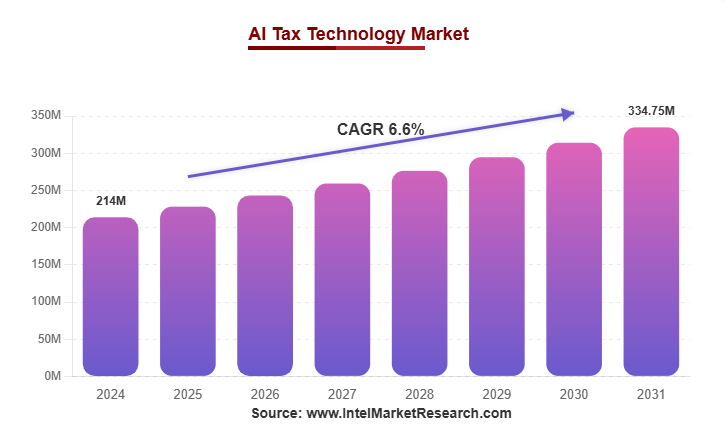
The global AI tax technology market was valued at USD 214 million in 2024. Projected to grow from USD 229 million in 2025 to USD 329 million by 2032 with a CAGR of 6.6%, this growth mirrors increasing UAE SME demand for AI tax platforms that simplify VAT compliance, automate filings, and adapt to local tax changes.
In the UAE, AI-powered tax and finance platforms are rapidly transforming compliance from a manual, periodic task into a real-time, automated function. Current data shows that 49% of UAE organizations are actively deploying AI in finance, significantly higher than the 35% global average.
AI-driven e-invoicing and tax automation tools help businesses significantly reduce operational overhead. Within three years of implementation, organizations can lower compliance costs by up to 25%, while overall compliance time decreases by 30–60%, enabling faster filings and improved resource utilization across finance teams.
In terms of accuracy and risk reduction, AI-powered systems achieve over 90% accuracy in tax liability calculations and reduce filing errors by 35–45%. Automated tax claim matching further strengthens compliance by cutting fake or fraudulent billing by more than 80%.
UAE Tax Use Cases Your AI Platform Must Handle from Day One
UAE tax compliance demands accuracy from the start. Any AI tax platform must reliably handle core VAT and corporate tax use cases before expanding into advanced automation or analytics.

1. AI-Driven VAT Classification
Why it’s critical: UAE SMEs frequently misclassify supplies such as Standard Rated versus Zero Rated transactions, exposing them to penalties, reassessments, and delayed refunds.
Platform requirements:
- Item-level VAT classification: Ingest product and service descriptions and accurately map them to UAE VAT categories including Standard Rated, Zero Rated, and Exempt.
- Reverse charge enforcement: Apply UAE-specific reverse charge logic for imports and cross-border GCC supplies.
- Pre-filing error detection: Flag missing TRNs, incorrect tax rates, and calculation mismatches before data reaches the FTA filing stage.
Real-world example:
Zoho Books (AI-powered version) uses AI-assisted categorization when an SME creates an invoice. For example, when a user invoices “Camel Milk,” the system learns to correctly classify region-specific products such as Labneh, mobile top-ups, or consultancy services under the appropriate UAE VAT category.
How the logic works: The AI analyzes historical transactions to determine whether a supply is domestic (5% VAT) or export-related (Zero Rated), reducing manual judgment errors.
2. Corporate Tax Eligibility Logic
Why it’s critical: With the introduction of UAE Corporate Tax, SMEs struggle to interpret thresholds, Free Zone conditions, and qualifying income rules.
Platform requirements:
- Qualifying income assessment: Automatically evaluate transactions to determine whether Free Zone income qualifies for the 0% Corporate Tax regime.
- Threshold tracking: Monitor revenue continuously and alert businesses as they approach the AED 375,000 mandatory registration threshold.
- Exemption and relief logic: Apply exemptions for intra-group transfers, reorganizations, and restructuring reliefs during reconciliation, not as manual adjustments.
Real-world example:
Xero, combined with UAE-focused tax and analytics add-ons, analyzes revenue streams for a Free Zone e-commerce SME. If sales are made from Dubai Free Zone to a Mainland Abu Dhabi customer, the system flags that income as potentially non-qualifying for the 0% tax rate.
How the logic works: Customer location and transaction metadata are analyzed to separate Mainland exposure (potential 9% liability) from foreign or qualifying income streams.
3. Invoice Intelligence
Why it’s critical: SMEs operate on unstructured data streams including scanned invoices, PDFs, and emailed documents that are not tax-ready by default.
Platform requirements:
- High-accuracy data extraction: Capture vendor name, TRN, invoice date, net value, and VAT amount from scanned and digital invoices.
- Contextual line-item understanding: Use NLP to interpret line-item descriptions and automatically assign correct VAT treatment without manual tagging.
- UAE format validation: Enforce mandatory Arabic fields and invoice structure requirements as defined by UAE VAT regulations.
Real-world example:
Alaan uses OCR optimized for the UAE market. When an employee uploads a receipt from Carrefour or Lulu, the AI extracts Arabic and English text, captures the supplier TRN, and validates VAT eligibility.
Validation logic: Extracted TRNs are checked against the FTA’s public structure to confirm whether the invoice qualifies for input tax recovery.
4. Automated Return Preparation
Why it’s critical: Manual return preparation increases error rates and creates bottlenecks during FTA filing windows.
Platform requirements:
- Return auto-population: Generate VAT Form 201 and Corporate Tax returns directly from validated transaction data.
- SME-specific adjustments: Support common scenarios such as bad debt relief, capital asset adjustments, and partial recoverability through guided workflows.
- Human review checkpoints: Implement a four-eye review mechanism where AI-flagged anomalies must be approved before submission.
Real-world example:
Tally Solutions, with UAE VAT add-ons, auto-generates FTA-compliant return formats. Its AI layer highlights abnormal entries, such as unusually large expenses, and enforces managerial review before returns are finalized.
Workflow logic: VAT Form 201 is prepared in the background while accountants focus only on AI-flagged exceptions instead of reviewing every transaction.
5. Audit-Ready Documentation
Why it’s critical: FTA audits require immediate justification of tax positions, not post-hoc explanations.
Platform requirements:
- Digital audit trail: Maintain a transparent log explaining every classification decision, including AI reasoning and rule references.
- Source document linkage: Link each return line item directly to its originating invoice or supporting document.
- Plain-language explanations: Allow non-technical SME owners to view clear explanations of how tax figures were calculated.
Real-world example:
HubReit enables holding companies to trace Corporate Tax provisions back to subsidiary-level transactions, maintaining a transparent audit trail.
Explainability in action: If tax liability drops, users can drill down to the exact period and transaction, such as a capital asset purchase that triggered input VAT recovery.
6. Multi-Entity and Multi-TRN Management
Why it’s critical: Many UAE SMEs operate multiple legal entities, branches, or TRNs within group structures.
Platform requirements:
- Strict TRN segregation: Ensure complete isolation of data across entities to prevent cross-contamination of tax records.
- Flexible reporting views: Toggle between consolidated group views for management and individual entity views for statutory filing.
- Inter-entity transaction handling: Reconcile related-party transactions such as management fees and cost sharing accurately for VAT and Corporate Tax purposes.
Real-world example:
Oracle NetSuite enables a holding company to segregate financial data across multiple TRNs while supporting consolidated oversight through its OneWorld architecture.
AI layer logic: Inter-company transactions such as management fees are automatically invoiced with correct VAT treatment, then eliminated during consolidation to prevent Corporate Tax double-counting.
What UAE Tax Regulations Should an AI Tax Platform Comply With?
An AI tax platform in the UAE must align with national tax laws and regulatory frameworks. The table below shows key UAE tax regulations, compliance requirements, and reporting obligations the platform must support.
| UAE Regulation | What the Regulation Covers | What the Platform Must Enforce |
| UAE VAT Law (Federal Decree-Law No. 8 of 2017) | VAT applicability, rates, exemptions, reverse charge, and filing obligations | Encode VAT treatment rules and reverse charge logic, invoice validation and support Form 201 preparation aligned with FTA requirements |
| UAE VAT Executive Regulations | Detailed guidance on VAT classification, documentation | Apply granular VAT logic for Zero Rated and Exempt supplies, including bad debt relief and capital asset |
| Federal Tax Authority (FTA) VAT Guides | Practical interpretation of VAT law issued by FTA | Maintain versioned rule logic based on official FTA guidance to avoid misinterpretation |
| UAE Corporate Tax Law (Federal Decree-Law No. 47 of 2022) | Corporate Tax applicability, rates, exemptions | Implement Corporate Tax eligibility checks, apply Free Zone qualifying income logic, and enable return preparation |
| Free Zone Corporate Tax Rules | Conditions for 0% Corporate Tax eligibility | Flag non-qualifying income, separate Mainland vs Free Zone transactions, and maintain audit-ready evidence |
| UAE Transfer Pricing Rules | Related-party transaction and documentation | Identify inter-company transactions, enforce the arm’s length principle, and support documentation readiness |
| UAE Economic Substance Regulations (ESR) | Substance requirements for certain activities | Track relevant income, accurate activity classification, and support ESR reporting |
| UAE Invoice Compliance Requirements | Mandatory invoice fields and formats | Validate TRN presence, enforce Arabic language requirements, and correct tax amount disclosure |
| UAE Record Retention Rules | Minimum record retention periods | Maintain secure, searchable records with a complete audit trail for mandated retention |
| UAE Data Protection and Hosting Guidelines | Handling sensitive financial and tax data | Enforce role-based access control, apply data encryption, and ensure UAE-compliant data residency |
Core Features of Custom AI Tax Platform for UAE
A custom AI tax platform for UAE automates compliance, calculations, reporting, and risk management for businesses. These features enable accuracy, efficiency, real-time insights, regulatory alignment, scalability, and confident decision-making.

1. AI VAT Classification Engine
The AI engine reads transaction descriptions and assigns the correct UAE VAT rate such as Standard, Zero-rated, or Exempt. Referencing FTA regulations, the system eliminates manual coding errors at the source and ensures accurate classification before entries reach financial records or tax returns.
2. Automated VAT Return Prep
The platform aggregates classified transaction data to populate the FTA VAT 201 form. It reconciles accounts and invoice data, flags discrepancies, and ensures returns are accurate and properly formatted for review and filing.
3. Corporate Tax Readiness
Real-time revenue monitoring tracks progress against the AED 375,000 Corporate Tax registration threshold. The system analyzes income sources to determine eligibility for the 0% Free Zone tax rate, providing clear alerts and strategic insights to support timely registration and proper business structuring.
4. Invoice Capture & Validation
Advanced OCR technology captures data from scanned invoices in Arabic and English. The system instantly validates invoices against UAE law, checking for required Arabic fields and active supplier TRN. This step prevents VAT claims on invalid invoices that could be rejected by the FTA.
5. Real-Time Tax Risk Alerts
A continuous monitoring engine scans transactions in real time, applying FTA rules to detect risks instantly. The system flags issues such as VAT claimed on personal expenses, suppliers with inactive TRNs, or incorrectly coded entertainment costs, enabling finance teams to resolve problems before they become audit liabilities.
6. Audit-Ready Data Traceability
Every tax return figure is fully traceable with a single click. Users can drill down from summary totals to specific invoices and original scanned documents. This transparent trail streamlines auditor responses and reduces time spent on FTA queries.
7. Human Review Workflows
The AI handles initial data processing and flags low-confidence items for human review. A manager approves these exceptions before finalizing the data. This workflow balances automation speed with the accountability and professional judgment required in finance operations.
8. Multi-Entity Dashboard
A single, consolidated dashboard manages multiple group companies or client entities. This view simplifies group structures, enables easy TRN switching, and facilitates inter-company reconciliations to ensure accurate VAT accounting for transactions between related UAE businesses.
9. Role-Based Dashboards
Each dashboard view is tailored to user roles. Owners view compliance and cash status at a glance. Finance teams access prioritized task lists. Accountants see detailed workpapers with drill-down and journal entry tools.
10. Tax Forecasting & Cash Flow
The platform analyzes current sales and purchases to forecast upcoming VAT or Corporate Tax liability. It translates future obligations into actionable cash flow insights, like daily saving targets, to help avoid cash crunches and support growth planning.
Development Process of Custom AI Tax Platform for UAE SMEs
The development of a custom AI tax platform ensures UAE SMEs achieve compliant, efficient, and scalable tax management. Our developers follow a structured, secure, and regulation-focused approach to deliver accurate automation, seamless integration, and long-term business value.
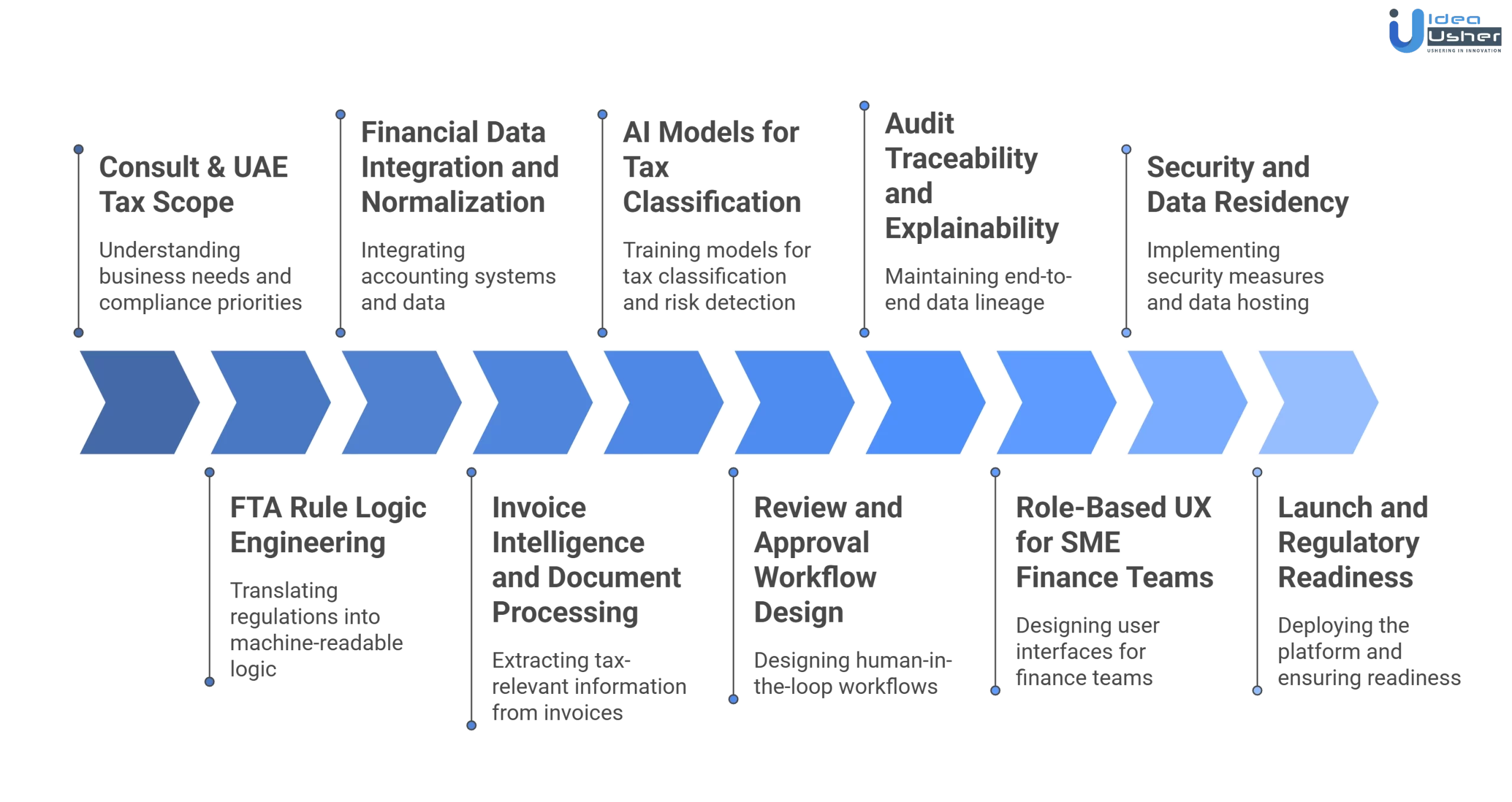
1. Consult & UAE Tax Scope
We consult with the client to understand business objectives, growth plans, and compliance priorities. Our developers then map VAT, Corporate Tax exposure, Free Zone applicability, TRN structure, and transaction complexity, defining compliance boundaries, automation depth, and whether the platform targets advisory-led or self-service SMEs.
2. FTA Rule Logic Engineering
Our team translates Federal Tax Authority regulations into machine-readable logic. VAT treatment, exemptions, thresholds, and filing timelines are encoded as versioned rules, allowing regulatory updates without refactoring core platform architecture.
3. Financial Data Integration and Normalization
Our developers integrate accounting systems, ERPs, POS tools, and bank feeds. Disparate charts of accounts, invoice structures, and currencies are normalized into a tax-grade data layer suitable for downstream AI interpretation.
4. Invoice Intelligence and Document Processing
We implement OCR and NLP pipelines optimized for Arabic-English invoices. Tax-relevant fields are extracted, VAT numbers validated, inconsistencies flagged, and missing compliance data intercepted before polluting tax calculations.
5. AI Models for Tax Classification and Risk
Our data science team trains models to classify VAT categories, detect anomalous transactions, and surface compliance risks. Rule-augmented AI ensures every prediction remains explainable, auditable, and regulator-safe.
6. Review and Approval Workflow Design
We engineer human-in-the-loop workflows for accountants and business owners. High-risk transactions trigger structured reviews, combining AI recommendations with manual approvals to prevent blind automation in regulated tax operations.
7. Audit Traceability and Explainability
Our platform maintains end-to-end data lineage from source transaction to filed return. Every figure is traceable, explainable, and reproducible, enabling audit readiness and reducing exposure during Federal Tax Authority inspections.
8. Role-Based UX for SME Finance Teams
We design distinct dashboards for owners, finance teams, and advisors. Interfaces prioritize exception-first views, filing readiness indicators, and compliance health summaries instead of overwhelming users with raw reports.
9. Security and Data Residency
Our developers implement role-based access control, activity logging, and UAE-compliant data hosting. Sensitive financial data remains protected while enabling controlled collaboration between SMEs, accountants, and tax consultants.
10. Launch and Regulatory Readiness
We deploy the platform using parallel runs against manual filings to validate accuracy. Continuous rule updates, AI recalibration, and regulatory change absorption are built in without disrupting SME filing cycles.
Development Cost of Custom AI Tax Platform for UAE SMEs
The development cost of a custom AI tax platform for UAE SMEs varies based on scope, features, and technical complexity. The table below outlines estimated costs according to functionality, compliance needs, AI capabilities, and development effort.
| Development Phase | What We Deliver | Estimated Cost |
| Consultation | UAE tax scope definition, business objectives alignment, automation feasibility, and compliance boundaries | $5,000 – $8,000 |
| FTA Rule Logic Engineering | Machine-readable VAT and Corporate Tax rules with versioned regulatory update capability | $8,000 – $15,000 |
| Financial Data Integration | ERP, accounting, POS, and bank integrations with tax-grade data normalization layer | $10,000 – $18,000 |
| Invoice Intelligence Setup | Arabic-English OCR, invoice field extraction, VAT validation, and data inconsistency detection | $12,000 – $22,000 |
| AI Tax Models & Risk Engine | VAT classification, anomaly detection, explainable AI models, and risk scoring framework | $18,000 – $30,000 |
| Review & Approval Workflows | Human-in-the-loop workflows, approval logic, exception handling, and role-based task routing | $7,000 – $12,000 |
| Audit Traceability Layer | End-to-end data lineage, explainability views, audit logs, and compliance-ready reporting | $8,000 – $14,000 |
| Role-Based UX Design | Owner, finance team, and accountant dashboards with exception-first, filing-ready interfaces | $6,000 – $10,000 |
| Security & Data Governance | RBAC, activity logging, UAE data residency compliance, and secure collaboration controls | $6,000 – $10,000 |
| Validation & Controlled Rollout | Parallel filing validation, accuracy benchmarking, go-live readiness, and post-launch optimization | $5,000 – $9,000 |
Total Estimated Cost: $64,000 – $126,000+
Note: Actual development costs may vary based on data complexity, regulatory coverage, AI model depth, integrations, and long-term scalability requirements.
Consult with IdeaUsher to evaluate your tax requirements, technical scope, and receive a tailored cost estimate and development roadmap.
Development Challenges of a Custom AI Tax Platform for UAE SMEs
Developing AI VAT software involves challenges related to data accuracy, compliance, system integration, and evolving tax regulations. Our developers address these challenges through robust data modeling, compliance-driven design, continuous learning algorithms, and secure, scalable architecture.
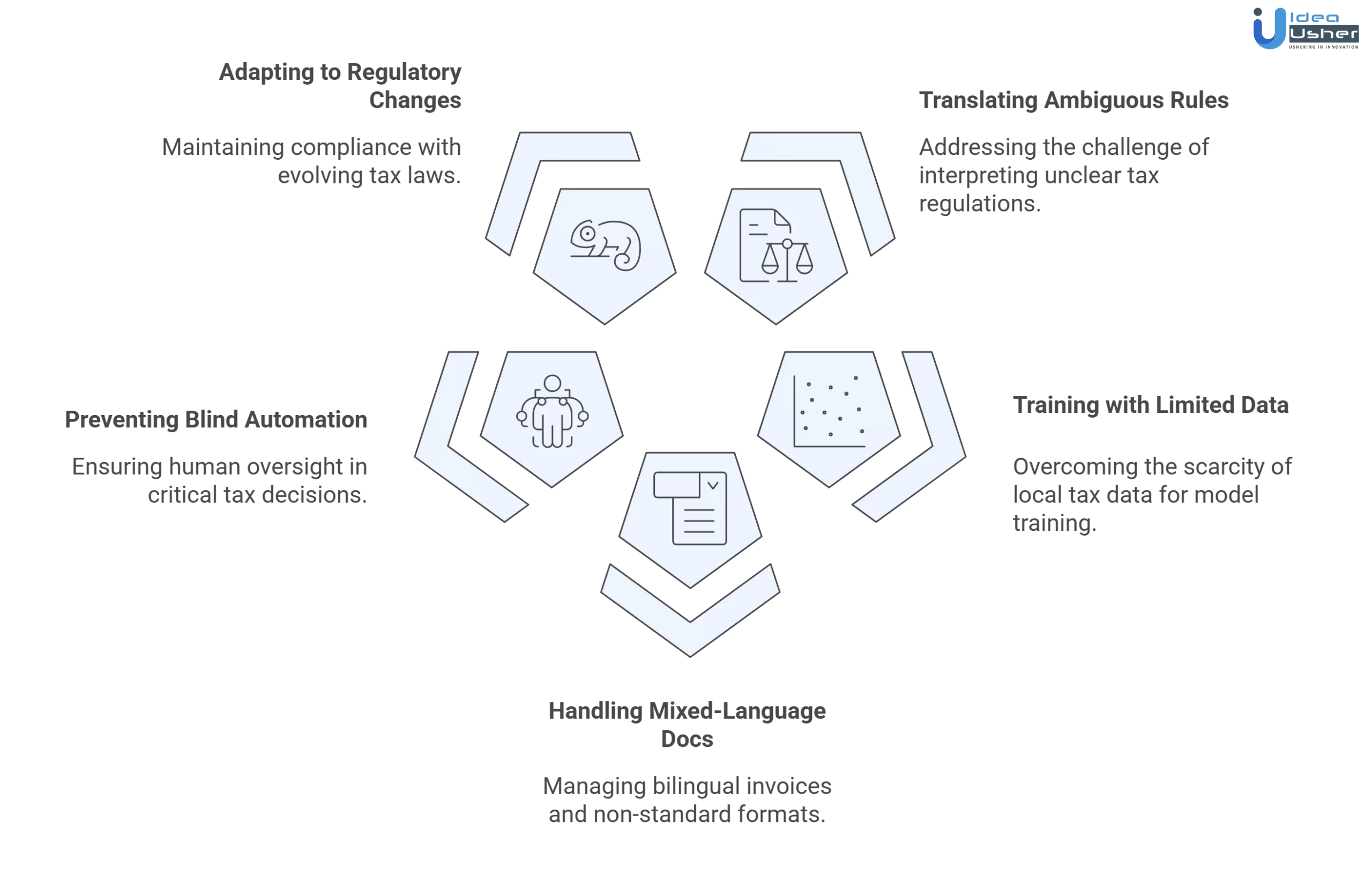
1. Translating Ambiguous Rules
The challenge: FTA regulations often leave room for interpretation, especially around qualifying income, mixed-use transactions, Free Zone conditions, and exemptions. Pure rule engines fail when guidance is contextual rather than binary.
Solution: We combine policy-as-code with rule-augmented AI, encoding hard rules where explicit and layering contextual AI decisioning where interpretation is required. Every decision is versioned, explainable, and mapped back to regulatory references.
2. Training with Limited Data
Challenge: UAE tax datasets are fragmented, private, and inconsistent. Generic global tax datasets do not reflect local invoice formats, Arabic descriptors, or FTA-specific compliance nuances.
Solution: We use weak supervision, synthetic data generation, and incremental learning. Models are trained using anonymized historical data, simulated tax scenarios, and continuous feedback loops from human reviews instead of relying on massive static datasets.
3. Handling Mixed-Language Docs
Challenge: UAE invoices often contain bilingual text, inconsistent layouts, and non-standard fonts. Off-the-shelf OCR engines misread TRNs, VAT amounts, or supplier names, leading to compliance failures.
Solution: We implement language-aware OCR pipelines with document layout detection and post-extraction validation. Extracted fields are cross-verified against VAT rules and checksum logic to prevent OCR errors from entering tax calculations.
4. Preventing Blind Automation
Challenge: Over-automation creates regulatory risk. SMEs cannot afford AI making unreviewed tax decisions that may trigger penalties or audits.
Solution: We design human-in-the-loop workflows by default, where AI handles classification and risk detection, but high-impact decisions require structured approval. Confidence thresholds and exception routing ensure automation never bypasses accountability.
5. Adapting to Regulatory Changes
Challenge: UAE tax regulations evolve. Hard-coded logic makes platforms brittle, forcing costly redeployments and risking compliance gaps during rule changes.
Solution: We separate regulatory logic from core application code. Tax rules are modular, version-controlled, and hot-swappable, allowing updates to be deployed independently without disrupting live SME filing cycles.
Examples of AI Tax Platform in The UAE
AI tax platforms in the UAE are modernizing tax compliance through automation, accuracy, and real-time regulatory alignment for businesses of all sizes. These platforms leverage AI to simplify VAT processes, ensure FTA compliance, and reduce manual tax management efforts.
1. Tax Star
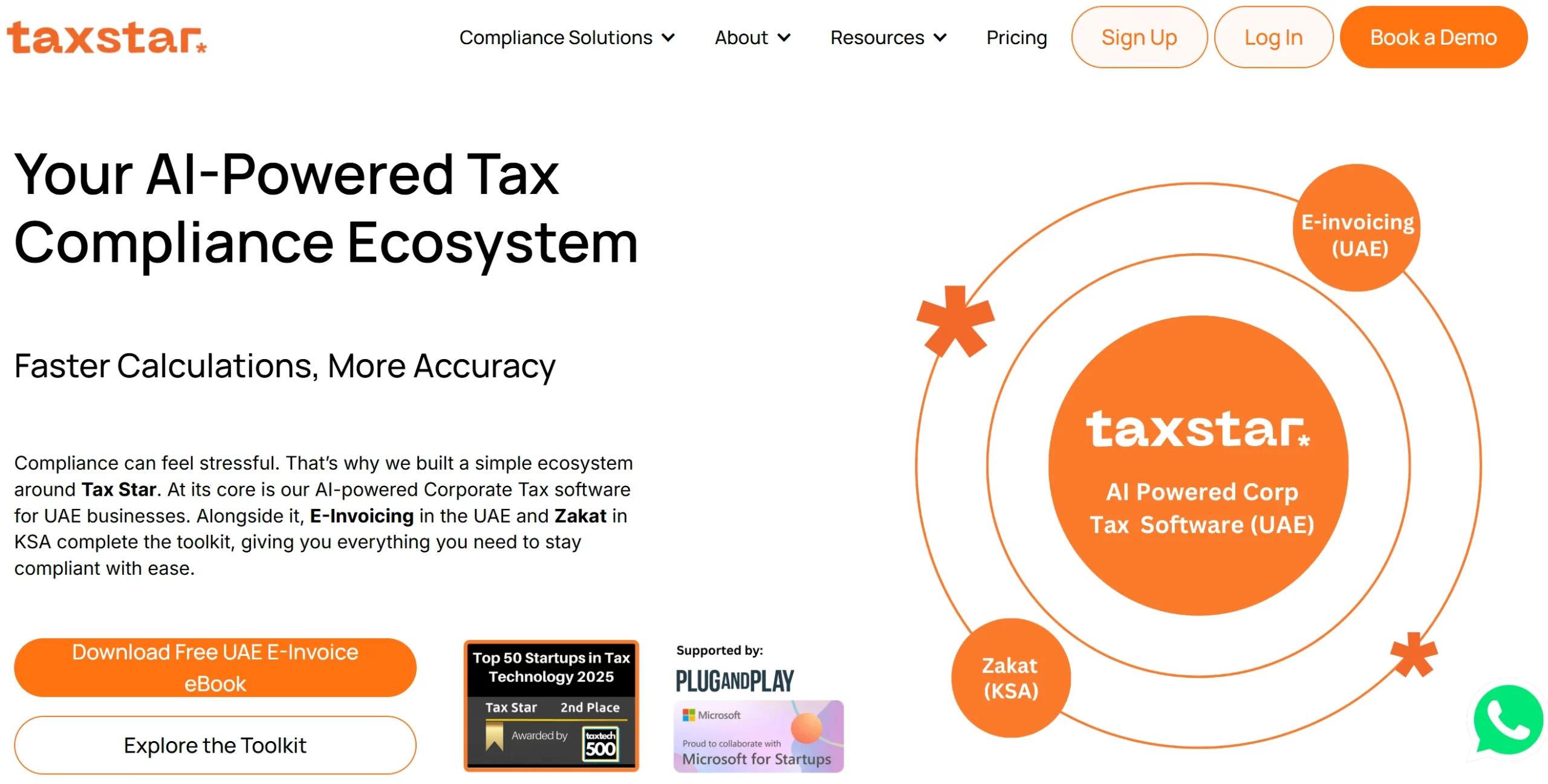
Tax Star is a Dubai-based AI tax platform specializing in automated Corporate Tax and VAT calculations. It offers FTA-compliant return preparation, deadline tracking, e-invoicing support, and accounting integrations, helping UAE SMEs reduce compliance risk and manual tax workload.
2. Skrooge
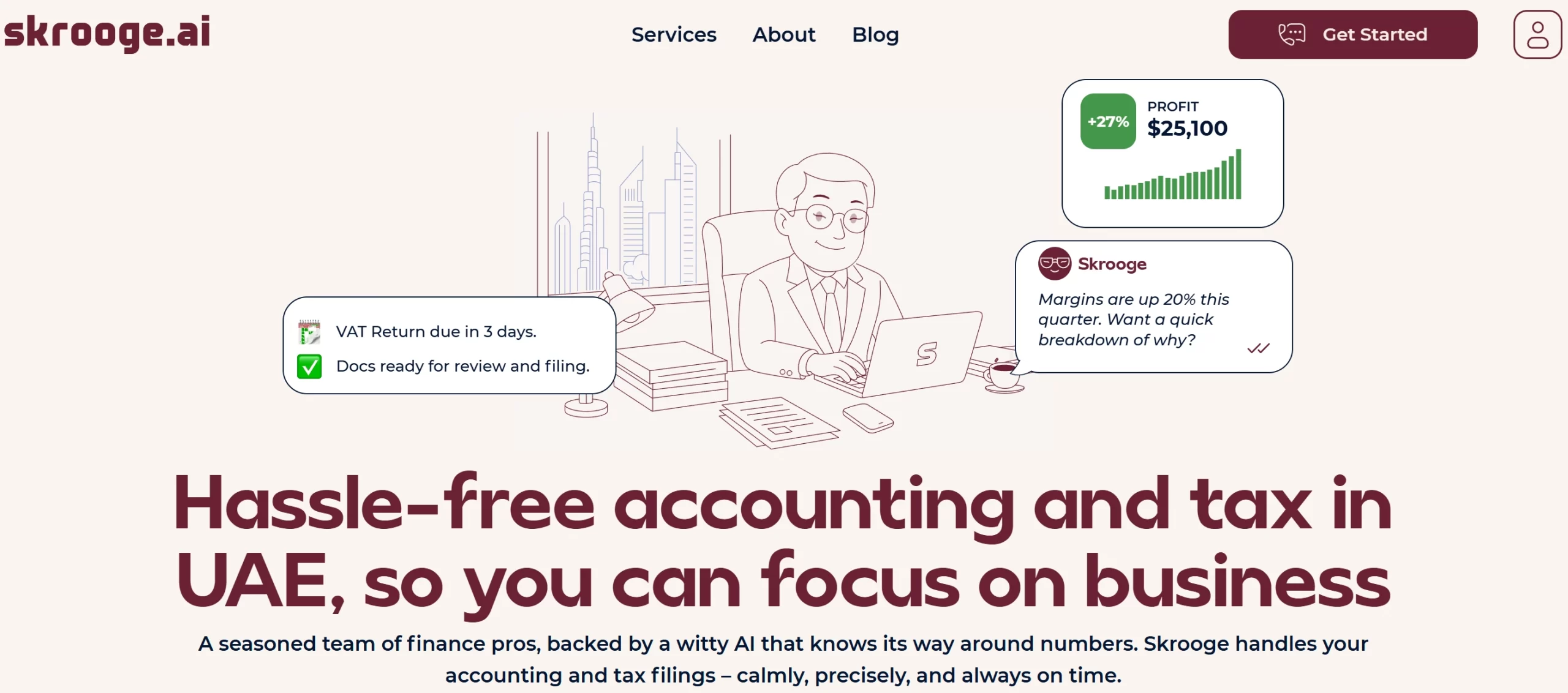
Skrooge.ai is an AI-powered accounting and tax platform that automatically pulls invoices from emails, reconciles transactions, and validates 20+ VAT and Corporate Tax compliance checks, combining automation with expert accountants for accurate, audit-ready financial and tax reporting.
3. TaxGPT
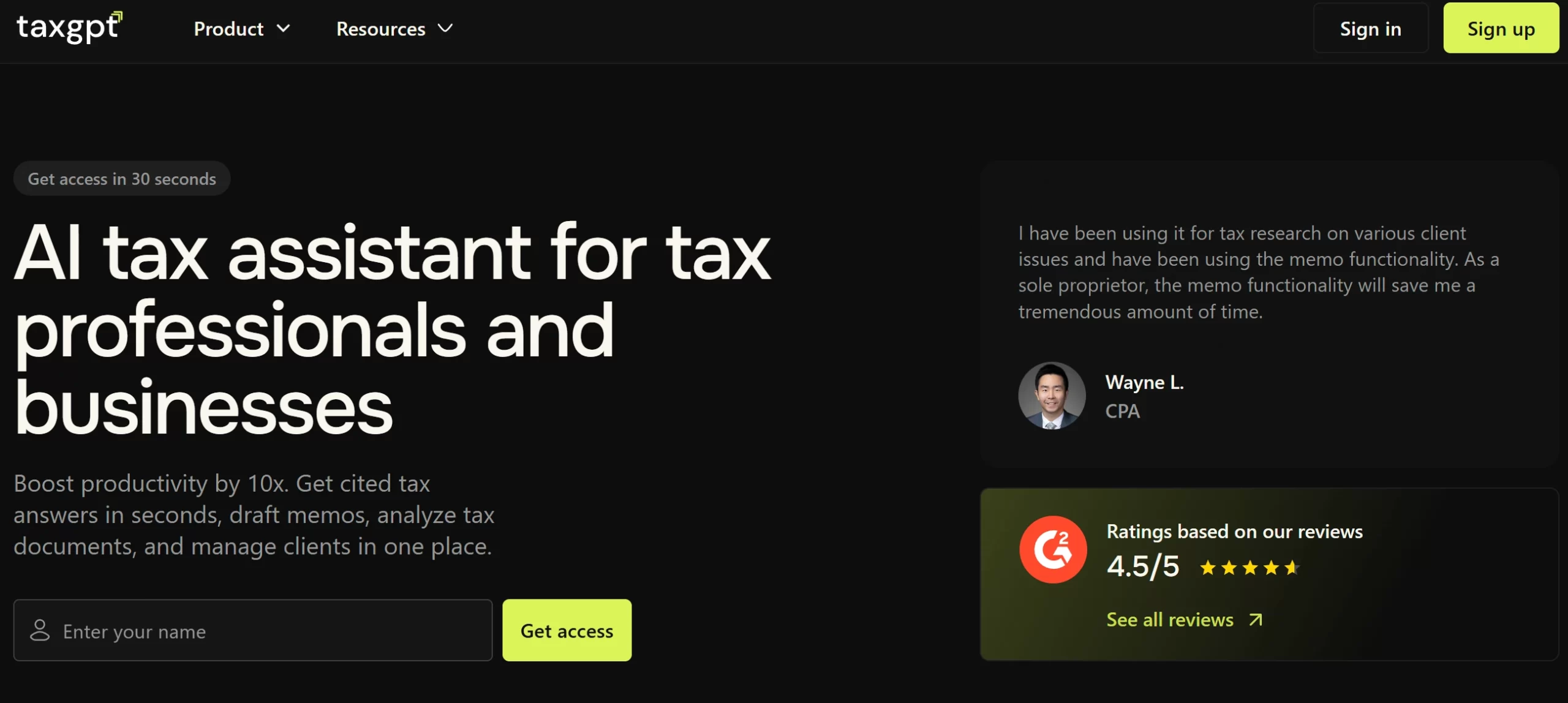
TaxGPT is a conversational AI tax assistant using Natural Language Processing to answer complex UAE VAT and Corporate Tax questions in simple language, offering real-time guidance, scenario-based explanations, and faster compliance decision-making for SMEs and finance professionals.
4. UAE TAX AI
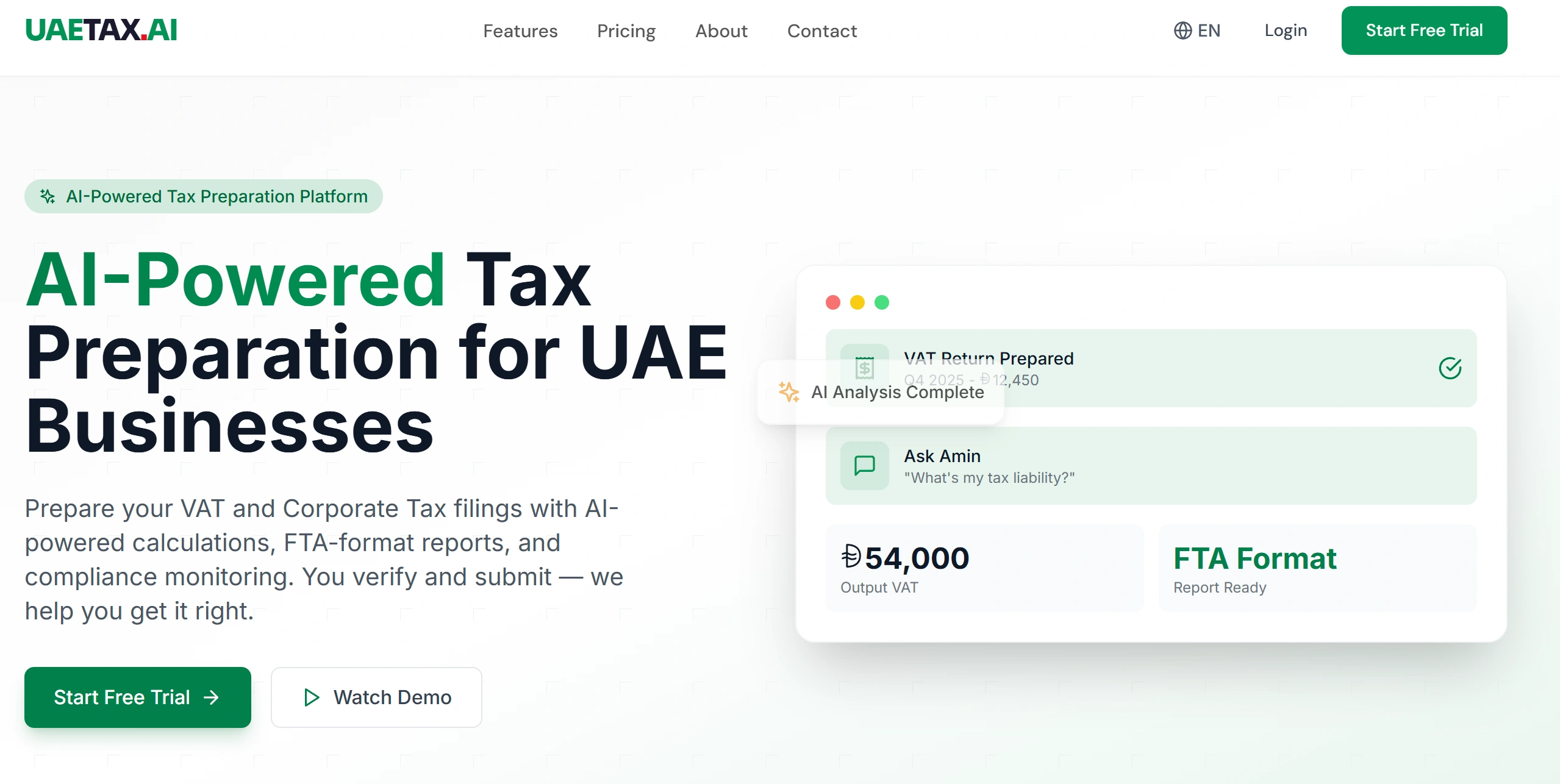
UAE TAX AI is an AI-driven compliance platform featuring “Amin,” an intelligent assistant that tracks UAE tax law updates, supports small business relief monitoring, and assists with automated VAT and Corporate Tax calculations aligned with Federal Tax Authority requirements.
5. TaxSey
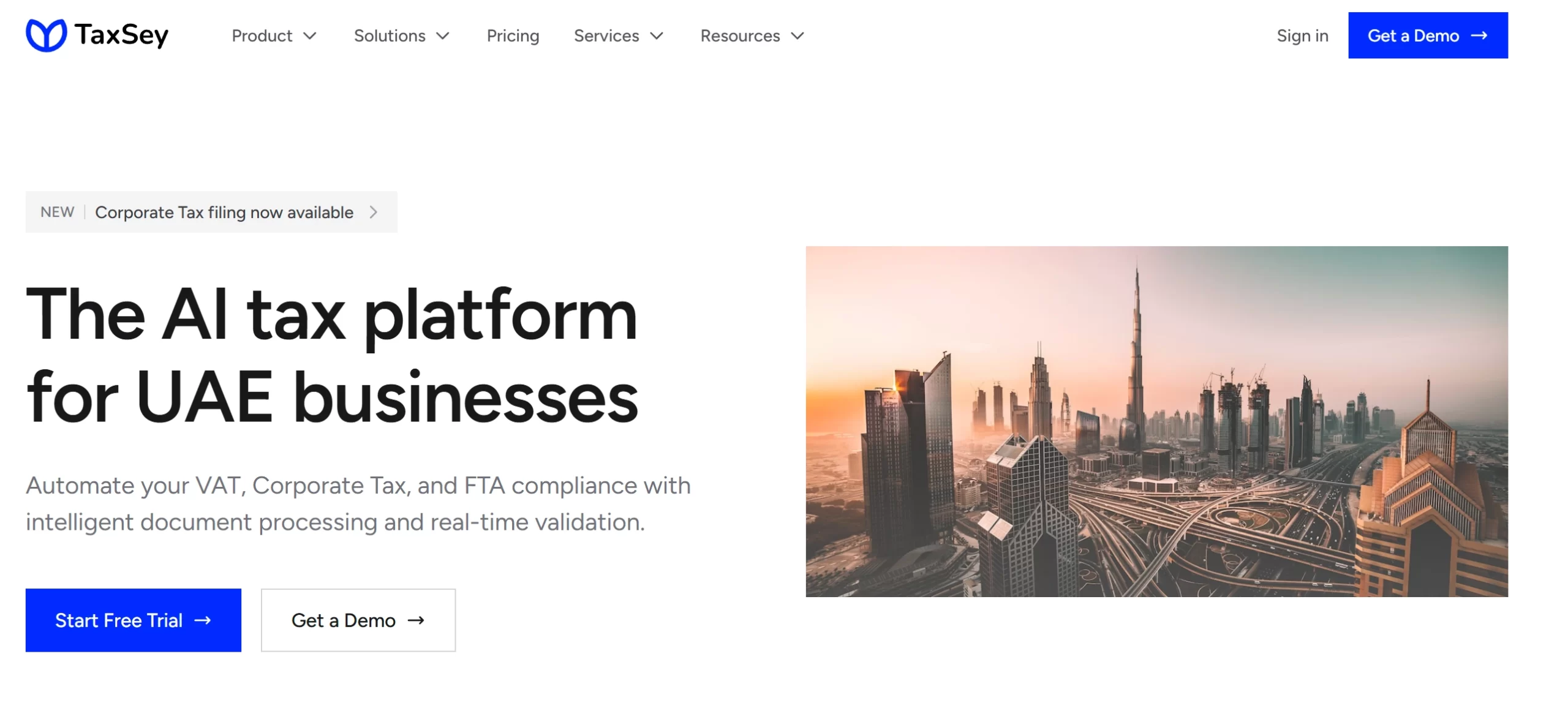
TaxSey is a comprehensive AI-powered UAE tax compliance platform offering automated VAT and Corporate Tax filings, real-time FTA validation, intelligent document extraction, and seamless accounting integrations, helping SMEs and consultants improve accuracy, efficiency, and regulatory compliance.
Conclusion
Building a custom AI tax platform for UAE SMEs can rely on streamlines tax management through automation and real-time compliance. By aligning AI with UAE regulations and SME needs, businesses reduce errors, improve accuracy, and simplify VAT reporting. A custom AI tax platform that enterprises adopt also enhances decision-making, saves time, and supports scalable growth. With the right strategy, SMEs can confidently manage evolving tax requirements and remain competitive in the UAE market.
Build a Custom AI Tax Platform for UAE SMEs with IdeaUsher!
We have successfully designed and delivered enterprise-grade AI platforms for numerous businesses, helping them streamline operations, enhance decision-making, and achieve scalable, long-term growth.
With ex-MAANG/FAANG engineers and 500,000+ engineering hours, we build AI-driven tax platforms optimized for UAE VAT, Corporate Tax, and SME scalability.
Why Partner with Us?
- AI-First SaaS Architecture: Modular, cloud-native platforms built for automation, analytics, and future expansion
- UAE Compliance–Driven Design: Tax rules, audit readiness, and data privacy embedded at the core
- Seamless System Integrations: Smooth connectivity with ERPs, accounting tools, invoicing systems, and banks
- Secure & Scalable Deployment: Multi-tenant SaaS architectures with enterprise-grade security controls
Discover our portfolio to understand how our software development expertise builds reliable, scalable, and future-ready digital solutions for diverse business needs.
Get in touch to discuss your custom AI tax platform requirements for UAE SMEs.


FAQs
A.1. The platform must align with UAE VAT laws, Corporate Tax regulations, FTA guidelines, data privacy rules, and real-time reporting requirements. It should also support audit trails and documentation standards mandated by UAE authorities.
A.2. The biggest risks include misinterpreting FTA rules, over-automating without human review, lacking audit traceability, and using non-explainable AI models, each of which can expose SMEs to penalties and compliance failures.
A.3. Yes, custom AI tax platforms are designed to integrate seamlessly with ERP, accounting, invoicing, and payroll systems used by UAE SMEs. This enables automated data flow and eliminates duplicate data entry.
A.4. Security is ensured through encryption, role-based access, secure cloud infrastructure, and compliance with UAE data protection standards. Regular security audits and monitoring further safeguard sensitive financial data.