

Key Takeaways
- Custom development gives you full control, ownership, unique features and better scalability. White-label short-drama apps launch faster and cost less upfront.
- A white-label short-vertical-drama app works well when you want to test content demand and monetization first. However, you may face limited customization, vendor lock-in, infrastructure limits and less control over your data.
- A white-label app usually costs $4,500 – $30,000 and can take 1 – 4 weeks. Custom development can cost $47,000 – $835,000+ and may take several months.
- A hybrid vertical-drama app approach uses prebuilt technology with custom features that can help you launch faster, giving you more room to grow later.
- The best short-vertical drama app development choice depends on your budget, launch time, customization needs, content plan, audience size and ownership goals.
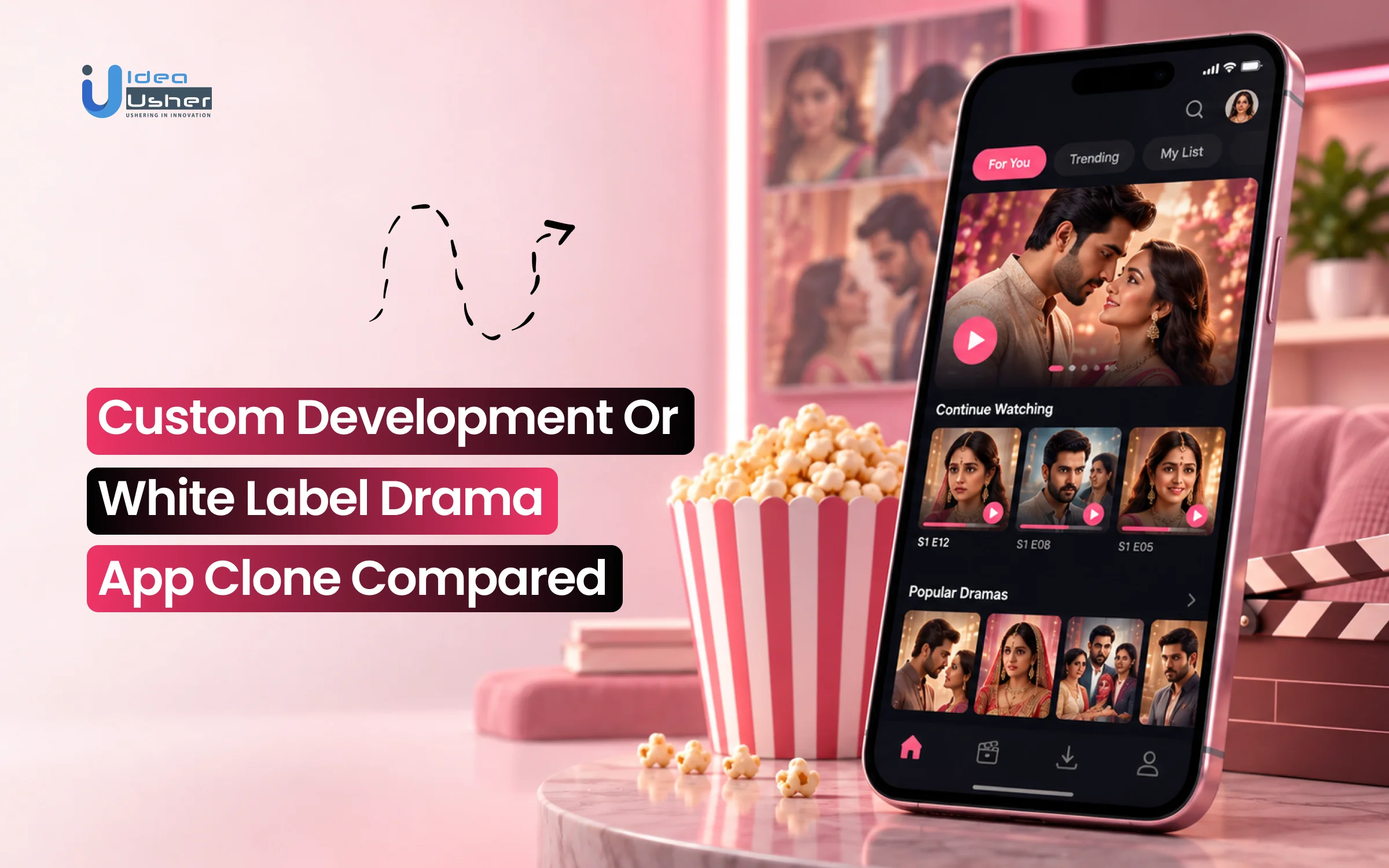
Short-drama platforms are reshaping entertainment, forcing founders to balance launch speed, technology ownership and product differentiation. That brings enterprises to a question “Should I spend months building a drama platform that differentiates my business, or launch faster using technology that already exists?” The custom vs white label drama app development decision is not simply about development cost. It is about how much of the product, technology and business model a founder wants to own as the platform grows.
Custom development gives you more control over the app, content, payments and future features. A white-label drama app clone provides ready-made infrastructure and faster market entry, while hybrid development combines existing technology with custom-built features where differentiation matters most.
In this blog, we will talk about custom development vs white-label drama app clones, hybrid development, costs, timelines, scalability and how to choose the right short-form vertical drama app for long-term growth, helping businesses balance development costs, customization, speed to market and future scalability.
What Is A Vertical Drama App & What Makes It Different?
A vertical drama app, also called a micro-drama or short-drama app, is a mobile-first streaming platform built for serialized, high-intensity fictional video series filmed in portrait (9:16) orientation. Originating from China’s duanju (short drama) format, these platforms deliver 60- to 120-second episodes across fast-paced 60- to 100-episode mini-series.
Unlike traditional video-on-demand platforms, vertical drama apps blend cinematic storytelling with free-to-play gaming mechanics. Instead of flat subscriptions, they hook viewers with free episodes and monetize via microtransactions, virtual coin wallets, paywalls, and rewarded ads.
A. Why Short Episodes Change The Product Architecture
A short-drama platform requires a different technical approach because viewers move through content rapidly. This affects app behavior, resource management and backend coordination, making architecture central to product performance.
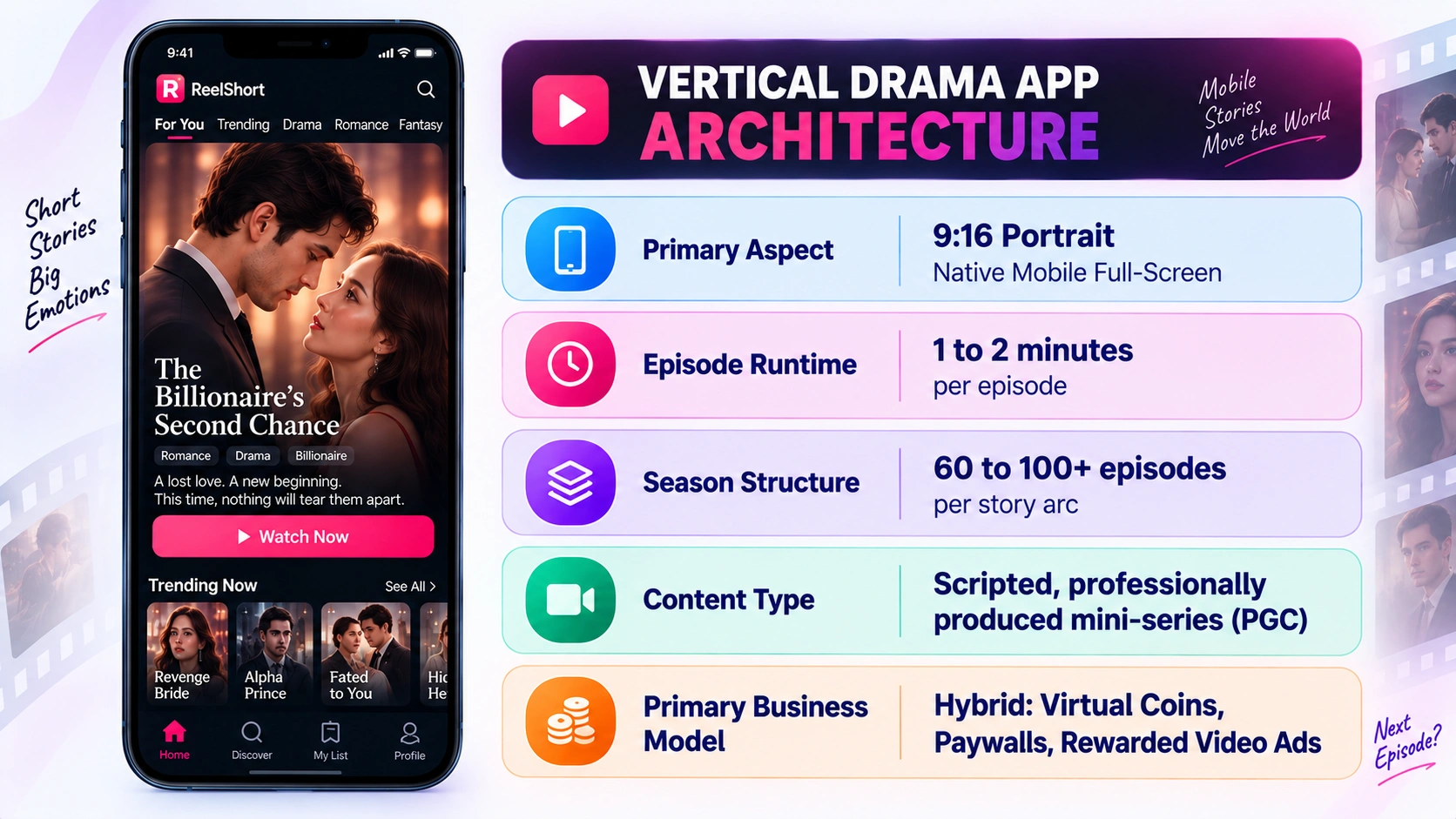
Splitting multi-hour narrative arcs into 60 to 100 bite-sized, 9:16 portrait episodes fundamentally alters playback requirements, UI navigation, and user flow:
| Architectural Challenge | Conventional OTT (Netflix / Max) | Vertical Drama Platform (ReelShort / DramaBox) |
| Episode Length & Orientation | 45–60 min horizontal (16:9) video | 60–120 second vertical (9:16) portrait video |
| Playback Flow | Manual selection from a catalog grid; slow startup buffer acceptable | Continuous swipe-up progression; auto-play with sub-500ms startup |
| Pre-Fetching Logic | Buffers minutes of the current single long video | Aggressively pre-buffers the next 2–3 discrete video files in memory |
| Drop-off Pacing | Mid-roll ads or end-of-episode credits | Cliffhangers every 55 seconds tied directly to episode unlock gates |
| Consumption Velocity | 1–3 videos per viewing session | 30–50 discrete video requests per 30-minute watch session |
These architectural differences directly shape the viewer experience and technical requirements. Short-drama platforms must optimize playback, discovery, retention and analytics around rapid, continuous consumption rather than traditional long-form viewing.
- Short Episodes & Rapid Discovery: With episodes lasting around 60 seconds, users have little patience for traditional browsing. The home interface should start video playback immediately when the app opens.
- Cliffhanger-Driven Retention: Unlike traditional shows with gradual development, vertical dramas compress conflict into seconds. Tension begins within 5 seconds, escalates by 30 seconds and ends on an emotional cliffhanger that encourages an immediate unlock.
- Continuous Vertical Playback: Episode transitions should avoid loading spinners, black screens and manual controls. The player should switch videos seamlessly within the vertical scroll gesture.
- High-Frequency Telemetry: Platforms cannot rely on long-form completion events. Analytics should capture second-by-second drop-off rates at episode boundaries to optimize paywall placement and identify engagement losses.
B. Why A Short Drama App Needs More Than Video Streaming
The video player is only the visible edge of a complex operational system. Behind it, transactional, content and personalization systems support reliable viewing, flexible monetization and scalable operations.
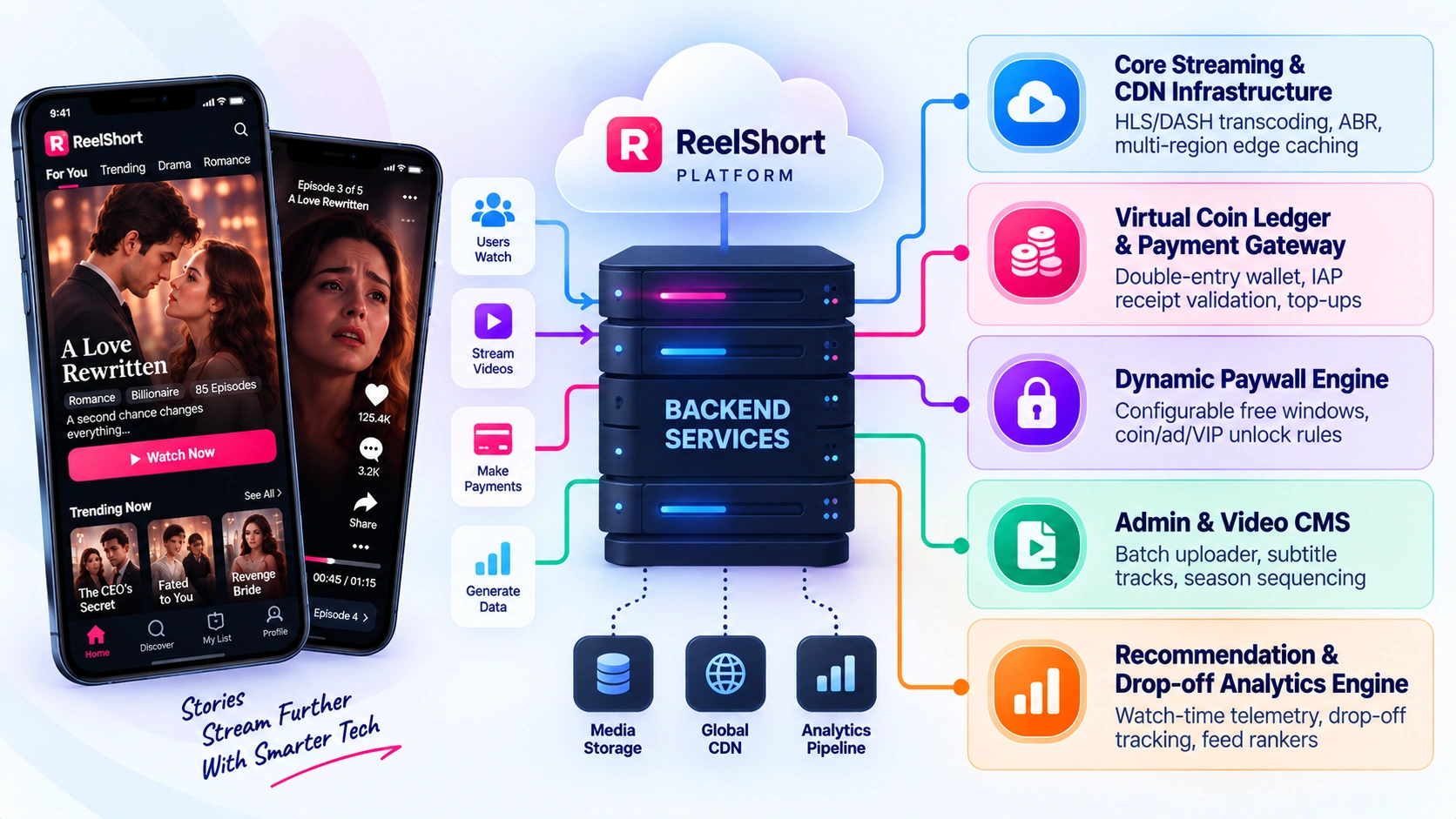
A production-ready short-drama application relies on an interconnected suite of backend services designed around transactional monetization and content management:
- Video Delivery Infrastructure: Master files require automated transcoding via AWS Elemental MediaConvert or FFmpeg into multi-bitrate HLS, combined with global edge CDN caching through CloudFront/Fastly to maintain sub-second Time-to-First-Frame (TTFF).
- Coin Wallet & Entitlement Ledger: Unlike subscription-only apps using a simple has_active_subscription flag, short-drama apps need a high-concurrency double-entry ledger. It tracks purchased and expiring reward coins, records micro-deductions and validates Apple/Google IAP receipts server-side.
How Fast Is The Global Microdrama Market Growing?
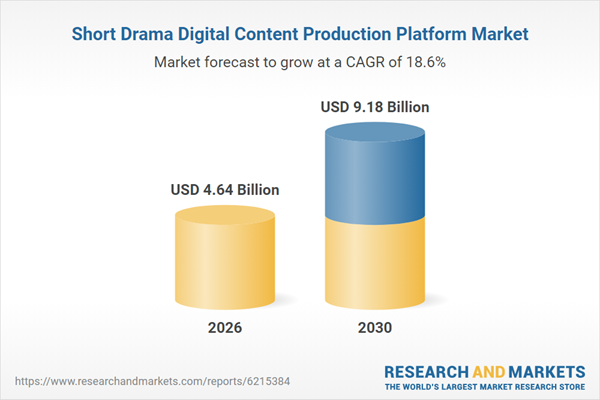
The short-drama digital content production platform market is projected to grow from $3.91 billion in 2025 to $4.64 billion in 2026 and will reach $9.18 billion by 2030, at a CAGR of 18.9%. This growth highlights the rising demand for mobile-first, short-form entertainment and creates strong opportunities for platforms that can scale content efficiently.
The global media and entertainment market reached $1.1 trillion in 2025, up from $1.03 trillion in 2024, and is forecast to reach $9.5 billion by 2030, according to Omdia. Meanwhile, global short-drama downloads topped 850 million in Q1 2026, up 140 percent year over year, according to Sensor Tower.
A. What Is Driving Short-Form Drama App Growth?
The three forces compound each other: near-zero production costs, algorithmic mobile discovery and micro-transaction monetization. AI tooling has cut production costs by roughly 90 percent, flooding the market with new titles, per Sensor Tower.
- Mobile-first discovery replaces traditional marketing: TikTok, Kuaishou, and short-video feeds surface episodes directly to viewers, cutting acquisition costs relative to a traditional streaming launch.
- Micro-transaction monetization matches micro-content: Coin unlocks convert impulse viewing into revenue in a way monthly subscriptions cannot capture at this content length.
- Global media growth is shifting online: Online video drove $64 billion of the industry’s $70 billion revenue increase in 2025, according to Omdia, effectively subsidizing new formats like microdrama.
- Telco bundling is opening new markets: Indonesia’s Telkomsel already bundles FlexTV access with mobile data plans, a distribution model spreading across price-sensitive Southeast Asian markets.
- Demand is broadening beyond China: Southeast Asia accounts for 32 percent of global downloads, Latin America 23 percent, and India 22 percent, per Powerdrill’s analysis of Sensor Tower data.
B. Why Market Growth Matters For Drama App Founders
Category growth at this pace changes the calculus for new entrants. HOLYWATER’s $22 million raise in January 2026, the largest microdrama round outside Asia, shows exactly where investor capital is heading.
- Market size supports multiple winners, not just one: Even at $14 billion, the top three platforms capture only about 60 percent of non-China revenue, leaving room for regional and niche players.
- Early movers are securing brand and distribution deals: Partnerships like ReelShort’s Crocs collaboration show the category maturing past pure app-store growth.
- Investor scrutiny is rising alongside the capital: 2026 due diligence increasingly demands real unit economics rather than download charts, which favors founders who plan cost structure from day one.
- Regional gaps remain wide open: Japan’s microdrama revenue alone is forecast to exceed $1.2 billion by 2030, still an underdeveloped market relative to China and Southeast Asia.
- Consolidation is coming, and timing matters: Streaming Lens projects the field will narrow to an estimated 5 to 8 surviving platforms as user acquisition costs rise, making the next 12 to 24 months decisive for new entrants.
Custom Drama App Development: What You Actually Own
Custom drama app development gives businesses full ownership and control over the technology behind their streaming platform. Instead of adapting a prebuilt system, you can shape the user experience, content infrastructure, monetization logic and integrations around specific business requirements and growth goals.
This ownership also creates greater flexibility for scaling, optimization and future innovation, allowing teams to modify the platform as viewer behavior, content strategies and revenue models evolve.
A. Product Architecture Built Around Your Business
A custom build allows you to engineer specialized platform logic rather than fitting your business into rigid SaaS limits:
- Regional-Language Adaptations: Support multi-track audio switching, localized VTT/SRT subtitles, and region-specific payment gateways.
- Creator-Led Ecosystems: Deploy multi-tenant portals with automated rev-share payouts and episode upload workflows for independent studios.
- Hybrid Monetization: Combine micro-coin ledgers, rewarded ad networks (AdMob/ironSource), and weekly VIP passes without third-party rev-share cuts.
- Proprietary Recommendation Engines: Build custom recommendation models trained on your audience’s watch velocity and drop-off patterns.
- Ecosystem Integrations: Connect directly with your existing SVOD platforms, web-novel libraries, or CRM data warehouses.
B. Full Control Over The User Experience
Custom engineering eliminates the clunky transitions common in generic video scripts, letting you fine-tune every touchpoint:
- Custom Video Player Optimization: Optimize client-side pre-fetching (AVPlayer/ExoPlayer), memory limits and adaptive bitrate switching for instant swipe transitions, even on low-spec mobile devices.
- Unconstrained Discovery & Navigation: Build custom home feeds, from full-screen auto-playing reels to curated genre carousels and personalized continue-watching sections.
- Granular Paywall Control: Dynamically position paywalls, such as Episode 6 for casual viewers and Episode 10 for high-intent users, using remote config without App Store updates.
- Native In-App Purchase Flows: Use lightweight bottom sheets for coin top-ups while keeping playback active, reducing checkout friction and potential churn.
- Tailored User Journeys: Create personalized viewing loops with gamified streak rewards, watch notifications and dynamic cliffhanger recommendations.
C. When Custom Development Creates A Real Advantage
Custom development is worth the investment when your software architecture is your competitive advantage. If your strategy relies on proprietary content IP, unique monetization rules, or higher streaming margins at scale, owning your platform protects your valuation and prevents technical bottlenecks.
| Business Scenario | White-Label / SaaS Fit | Custom Development Advantage |
| Testing a Raw Hypothesis | High: Fast, low-cost proof of concept for 1–2 pilot titles. | Low: High initial engineering investment for unvalidated demand. |
| Proprietary Content Studio | Low: Inflexible rights management and basic upload tools. | High: Custom studio ingestion, DRM security, and automated rev-share splits. |
| High Transaction Volume | Low: Recurring SaaS platform fees erode margin on every coin sold. | High: Zero third-party revenue share; direct payment gateway routing. |
| Regional / Global Expansion | Low: Hardcoded payment methods and standard CDN topologies. | High: Local payment rails (Pix, UPI, e-wallets) and localized multi-CDN edges. |
| Long-Term Enterprise Valuation | Low: Zero IP value in the underlying software stack. | High: 100% ownership of the tech stack, data pipelines, and user assets. |
Scaling to millions of mobile viewers makes custom development essential to owning your platform. It gives you control over performance, monetization, content operations, and user experience, allowing your team to adapt as user needs evolve.
White-Label Drama App Clone: What You Get Out Of The Box
A white-label drama app clone is a ready-to-use software solution that mirrors key user experience and monetization features of platforms like ReelShort or DramaBox. Instead of constructing streaming services and payment systems from scratch, founders buy an existing codebase and customize it with their own branding, colors, and domains.
While white-label scripts drastically lower the barrier to entry, they introduce structural trade-offs between launch velocity and architectural flexibility.
A. Prebuilt Features That Reduce Engineering Time
Turnkey platforms provide a ready-made technical foundation for launching a micro-drama service. They include essential streaming, content management, authentication, monetization and analytics features, reducing initial engineering effort and helping businesses enter the market faster.
| Platform Module | Included Core Functionality |
| Vertical Video Player | 9:16 portrait playback, auto-play progression, basic local caching, and gesture-driven vertical swiping. |
| Video CMS | Admin interface to batch-upload video files, set season order, sequence episodes, and upload subtitle files (.srt/.vtt). |
| Admin Dashboard | Operational console for managing registered users, tracking orders, editing currency rates, and reviewing flagged content. |
| Authentication System | Social login (Google, Apple ID), phone/SMS OTP, and anonymous guest viewing modes. |
| Virtual Coin Wallet | Ledger tracking purchased coin balances, reward coins, transaction histories, and promotional drops. |
| Episode Paywalls | Configurable locking engine (e.g., Episodes 1–5 free, remainder pay-per-view via coins or ads). |
| Subscription & IAP | Pre-integrated Apple In-App Purchase and Google Play Billing for coin bundles and recurring VIP passes. |
| Ad Mediation | Out-of-the-box SDK slots for rewarded video ads (Google AdMob, Unity Ads) to enable free-tier unlocks. |
| Basic Analytics | High-level reporting dashboards displaying DAU/MAU, total gross revenue, top-performing series, and basic completion rates. |
These prebuilt capabilities can significantly shorten development timelines and reduce upfront costs, allowing businesses to focus resources on content acquisition, audience growth and market validation rather than rebuilding standard platform functionality.
B. Why White-Label Is Attractive For First-Time Founders
For non-technical founders and indie production studios, a white-label base significantly reduces early risk:
- Rapid Time to Market: Ready-to-deploy codebases can be configured, branded, and submitted to app stores in 2 to 4 weeks, compared to 4 to 8 months for custom builds.
- Low Initial Capital Expenditure: Entry pricing typically ranges from $4,000 to $15,000, shifting financial resources into pilot content production and paid user acquisition.
- Lowered Technical Complexity: Pre-wired database schemas, payment callbacks, and CDN connectors eliminate the need to hire a full in-house engineering team during the proof-of-concept phase.
- Market Validation: Lets operators test genre demand (e.g., romance, suspense, drama) and early paywall conversion before investing in custom infrastructure.
C. Where White-Label Solutions Can Fall Short
White-label platforms can accelerate launch, but their prebuilt architecture and vendor dependencies may become limiting as the business grows. Understanding these constraints helps founders assess whether speed outweighs control, flexibility and long-term scalability.
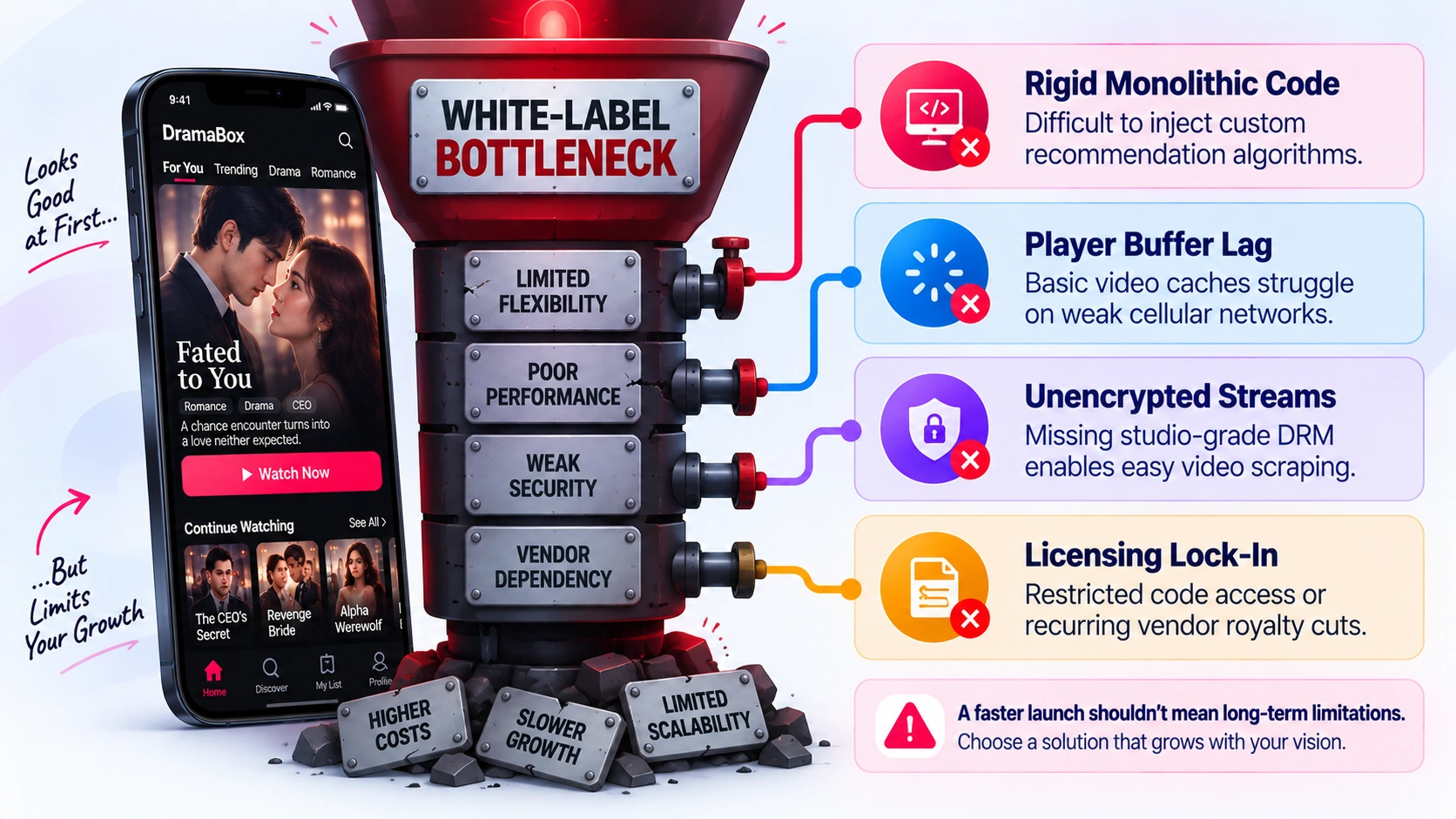
As adoption increases, these limitations can affect product differentiation, infrastructure performance, data ownership and security. The following areas highlight where pre-packaged solutions may create challenges for growing platforms.
- Limited UI/UX Customization: Most white-label apps use standardized Flutter or React Native templates. Changing the core player, checkout flows or adding branching narratives may require rewriting tightly coupled code.
- Restricted Code Access & Vendor Lock-In: Most vendors license compiled binaries or charge ongoing SaaS platform fees (or 5%–15% revenue cuts), preventing you from transferring your user database or hosting independently.
- Infrastructure & CDN Bottlenecks: Cheap turnkey scripts often stream static MP4 files from basic cloud storage instead of using adaptive HLS/DASH streaming. This can cause buffering, higher mobile drop-offs and increased bandwidth costs.
- Security & Piracy Risks: Turnkey solutions may lack studio-grade DRM (Widevine and FairPlay). Without tokenized streams and screen-recording protection, premium content can be copied and redistributed quickly.
D. What Founders Should Check Before Buying
If you choose the white-label route to validate your concept, conduct strict technical due diligence before signing a license:
- Source Code Ownership: Confirm in writing that you receive 100% unencumbered, non-obfuscated source code with zero recurring royalty fees or vendor dependencies.
- Adaptive Bitrate Support: Verify whether the video player uses adaptive HLS/DASH streaming or simply plays raw MP4 files.
- Receipt Validation Architecture: Ensure in-app purchases are validated via secure, server-side webhooks rather than trusted client-side checks that can be easily bypassed.
- Data Portability: Confirm that you retain full access to raw PostgreSQL/MySQL databases and telemetry logs, allowing you to migrate user accounts, coin balances, and content libraries to a custom platform as your audience scales.
How Much Does It Cost To Build Short Vertical Drama App
The short vertical drama app development cost depends on its features, platforms, infrastructure and customization needs. Businesses should evaluate these factors carefully because each one directly affects development complexity, resources and overall investment.
A. White-Label Vs Custom Drama App Cost At A Glance
Founders comparing two quotes side by side rarely need every line item at once. This view lines up license cost, timeline, and ownership terms directly, so the trade-off is visible in a single glance.
| Development Dimension | White-Label Solution (Turnkey) | Custom Development (MVP to Enterprise) |
| Initial Software License / Build | $4,500 – $18,000 (One-time license) | $47,000 – $830,000+ (Engineering scope) |
| Delivery Timeline | 2 to 4 weeks (Rebranding & setup) | 3 to 6+ months (Full agile sprint cycle) |
| UI/UX Customization | $1,500 – $4,000 (Limited to styling/assets) | $5,000 – $15,000 (Complete bespoke design system) |
| Video Infrastructure Setup | $500 – $1,500 (Basic S3/CDN configuration) | $4,000 – $10,000 (Automated HLS pipelines, ABR, DRM) |
| Ongoing Monthly Cloud & CDN | $500 – $2,500/mo (Scales with traffic) | $800 – $4,000/mo (Optimized caching & high-scale edges) |
| Ongoing Maintenance & Updates | $300 – $1,000/mo or per-ticket support | $1,500 – $3,500/mo (Dedicated SLA & feature releases) |
| Code Ownership & IP | Frequently restricted or licensed | 100% Client-owned IP and unencumbered source code |
The line that changes the calculus most often is code ownership. A white-label license keeps the build cost low, but the IP frequently stays restricted or licensed back to the vendor, which limits resale value and negotiating leverage in a future funding round.
Custom development costs more upfront and monthly, but the client owns the source code outright, which lets a platform be extended, re-licensed, or sold without a vendor’s permission down the line.
B. By Development Approach
White-label pricing starts near $4,500, while a full custom platform can exceed $835,000. Most founders enter through white-label, then scale the platform once revenue data justifies it.
| Approach | Cost Range | Timeline | Team Size |
| White-label template license | $4,500 – $18,000 | 2 – 4 weeks | Vendor-managed |
| White-label with source code | $12,000 – $30,000 | 1 – 4 weeks | Vendor-managed |
| Custom MVP | $47,000 – $104,000 | 8 – 12 weeks | 5 – 7 (lead, backend x2, mobile x2, QA) |
| Mid-scale custom platform | $104,000 – $250,000 | 4 – 6 months | 8 – 12 |
| Full-scale custom platform | $250,000 – $835,000+ | 6 – 12 months | 12 – 20+ |
The cheapest way to launch a micro-drama app in 2026 is a white-label template license, priced from $4,500 with a two to four week timeline.
According to IdeaUsher’s project experience, most first-time founders in this category do not start with a $47,000 custom MVP. They launch on a white-label build, use it to test content and retention with real viewers, and only then commit capital to a custom rebuild.
For instance, mid-budget founders can license a $12,000–$30,000 white-label app to validate their niche, then hire developers to add enterprise features like DRM and AI recommendations to the existing codebase rather than rebuilding.
Ranges reflect 2026 vendor and infrastructure rates and are a budgeting reference, not a fixed quote. A white-label build compresses most rows in the feature table into a single license fee; a custom build prices each one individually, which is the real source of the spread between quotes.
What Drives Custom vs White-Label Drama Apps Cost?
Custom vs white label drama app development costs differ primarily due to their underlying development models. Custom projects demand independent investment in engineering, design, and infrastructure, whereas white-label solutions package pre-existing technology into a faster, more affordable option with limited customization. That gap between the leaders and the rest is where the build decision matters most.
A. Why The Development Cost Is Not The Same
Development costs vary because platform scope, infrastructure, customization, content workflows, monetization and security require different levels of engineering. These factors directly affect the budget, timeline and resources needed to build the platform.
- Platform Scope: Supporting iOS, Android, web, and TV adds development and testing costs. A viewer app costs less than a complete multi-platform solution.
- Apps and Dashboards: A basic viewer app is less expensive than one with a creator portal, admin dashboard, CMS, and analytics panel.
- Custom UI/UX: Prebuilt templates reduce costs, while custom swipe interactions, layouts, and unlock experiences require additional design and engineering.
- Streaming infrastructure: CDN egress runs 0.005 to 0.085 dollars per GB in 2026 depending on provider and volume. A 1,000-concurrent-viewer platform can hit 1,836 dollars a month in delivery alone before discounts.
- CMS and Content Complexity: Multilingual content, scheduled releases, creator submissions, episode management, and moderation require more advanced backend workflows.
- Recommendations and Monetization: Basic trending feeds cost less than AI personalization. Subscriptions, coin wallets, episode unlocks and rewarded ads require separate integrations and testing.
- Security, Analytics, and Scalability: DRM licensing through EZDRM, Axinom, or BuyDRM, payment security, fraud prevention and multi-region infrastructure increase costs for platforms targeting rapid growth.
B. What A White-Label Quote May Not Include
White-label quotes often exclude customization, source-code ownership, feature changes, payment fees, content licensing, maintenance and app-store costs. Check these items before comparing vendors or approving a development budget.
- Branding and UI Customization: Logo, colors, and basic styling may be included, but customized onboarding, navigation, or unlock flows often cost extra.
- Source-Code Ownership: Full source-code access and ownership may require a premium package. Confirm the licensing terms before signing the agreement.
- Feature Modifications: Features outside the standard template, such as advanced recommendations, creator tools, or custom monetization, are usually charged separately.
- Payment gateway fees: Apple and Google take 15 to 30 percent commission on in-app purchases; Stripe-style web payments run near 2.9 percent plus 30 cents per transaction.
- Content Licensing: Drama production, content acquisition, dubbing, subtitles, and licensing fees are usually not included in the app development quote.
- Maintenance and Support: Bug fixes may be covered for a limited period, while updates, monitoring, new features, and long-term technical support often require a separate contract.
- App-Store Deployment: Apple and Google developer accounts, store fees, compliance requirements, and additional submission support may be billed separately.
C. Which Option Offers Better Long-Term Value?
The right custom vs white label drama app development option depends on your growth goals, budget and need for control. White-label solutions prioritize speed and capital efficiency, while custom development supports ownership, scalability and long-term value.
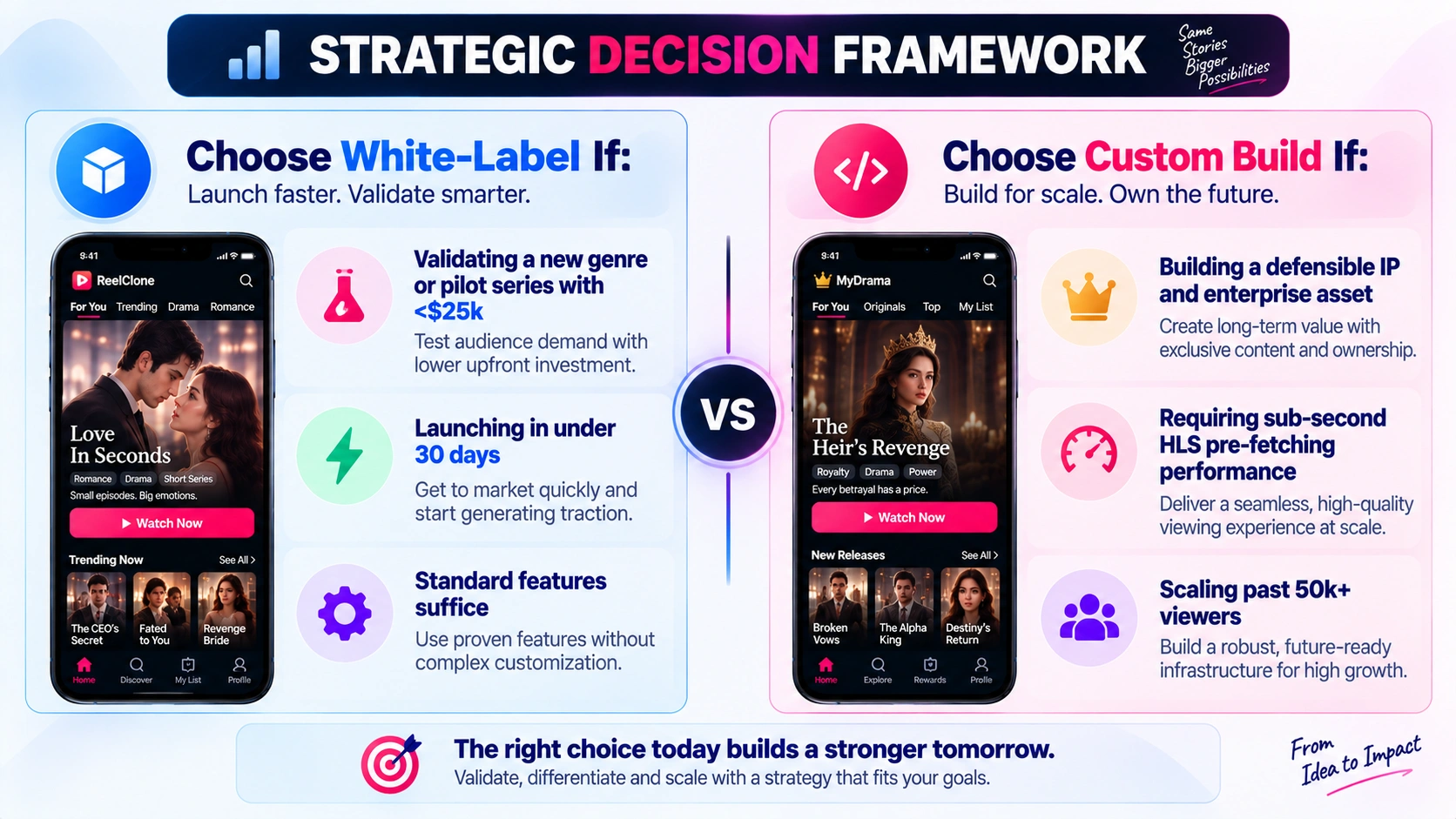
The White-Label Advantage: White-label deployment suits independent studios and first-time entrepreneurs testing niche demand. A $10,000 deployment preserves working capital for content licensing, performance marketing and customer acquisition cost (CAC) validation.
The Custom Development Advantage: Custom engineering targets funded startups and growing media firms seeking higher long-term ROI. It eliminates vendor dependency, platform fees, and streaming bottlenecks while offering complete control over code and telemetry data. Additionally, proprietary software provides a defensible commercial asset for future acquisitions or investment.
Which Drama App Development Approach Is Right For Your Business?
The right approach of custom vs white label drama app development depends on your budget, launch timeline, customization needs and growth plans. White-label solutions suit fast market testing, while custom development offers greater control. Hybrid development balances speed, flexibility and long-term scalability for growing businesses.
A. When Should You Choose Custom Development?
Custom development fits founders who already know their niche works and are building for scale rather than testing an idea. According to IdeaUsher, the decision usually comes down to control, not just budget.
- Full IP ownership matters: Investors and acquirers weigh source-code ownership heavily during due diligence, and a licensed white-label codebase can complicate that valuation.
- The feature set is genuinely unique: A recommendation model, content format, or monetization mechanic that no template supports has to be engineered from scratch.
- Budget supports $47,000 and up: Custom MVP pricing starts near this figure, with a 3 to 6 month build cycle most founders should plan for.
- The platform is expected to pass 100,000 users: This is roughly where recommendation and DRM costs become material, per the feature-level table above, and template infrastructure starts limiting performance.
- A future fundraise is likely: Clean, unencumbered IP is a standard requirement in most Series A and later due diligence checklists.
B. When Should You Choose A White-Label Drama App?
A white-label build fits founders validating demand before committing serious capital. With 331 active micro-drama apps tracked in 2026 and roughly 70 percent expected to shut down or get absorbed within two years, speed to market and low burn matter more than a bespoke platform at this stage.
- Budget is under $30,000: This covers a white-label license with source-code access, the upper end of the turnkey range.
- Launch needs to happen inside 4 weeks: White-label deployment timelines run 2 to 4 weeks against 3 or more months for a custom build.
- The goal is testing content or a language market: Retention and monetization data from a live app beats any amount of upfront planning.
- A proven monetization stack is enough: Coin wallets, subscriptions, and ad SDKs are already wired and tested across other operators’ deployments.
- Full IP ownership is not yet a priority: Early-stage validation rarely depends on owning the underlying source code.
C. When Hybrid Drama App Development Makes The Most Sense
A hybrid approach, launching on white-label infrastructure and commissioning custom work on top of it, is what most operators actually end up doing between validation and scale. IdeaUsher sees this as the most common path for founders who want speed without giving up a growth ceiling.
- The core platform performs, but one feature does not: A custom recommendation engine or a bespoke UI can be built on top of a white-label backend without a full rebuild.
- Source-code access was included in the original license: This is what makes extension possible; confirm this term before choosing a white-label vendor, as covered earlier in this article.
- Traction is proven but a full rebuild is not yet justified: Extending an existing codebase is materially cheaper than starting a custom MVP from zero.
- Content strategy is confirmed but infrastructure needs to scale: CDN, DRM, and analytics can be upgraded independently of the core viewer app.
- The long-term plan is a phased migration to custom: Hybrid development is typically a transitional stage, not a permanent architecture, on the way to a fully owned platform.
Build Your Vertical Drama App With IdeaUsher
IdeaUsher operates as an enterprise product engineering partner, leveraging 11+ years of software expertise, 250+ technical specialists and a 4.9/5 Clutch rating across 1,000+ completed builds. We engineer custom, high-concurrency vertical drama streaming platforms tailored to capture audiences and drive micro-monetization.
From Drama App Idea To Launch-Ready Platform
We support businesses from initial drama app concepts to launch-ready platforms, covering product strategy, design, development, streaming, monetization and backend operations to create scalable experiences aligned with business and audience goals.
- Product Discovery & UI/UX Design: Immersive vertical-first interfaces designed for effortless one-handed swiping.
- Custom & Hybrid Development: Tailored mobile and web architectures balancing native player performance with cross-platform efficiency.
- White-Label Evaluation: Evaluating accelerated foundation frameworks versus bespoke builds based on time-to-market goals.
- Streaming & Monetization Integration: Adaptive bitrate streaming (HLS/DASH), multi-CDN distribution, virtual coin wallets, pay-per-episode gating, and ad-network integrations.
- Backend & Admin Operations: High-capacity CMS portals for scheduling episode drops, managing digital rights, and analyzing viewer engagement telemetry.
Choose The Development Approach That Fits Your Roadmap
We help businesses analyze the trade-offs between full custom engineering, white-label adaptation and hybrid frameworks to define a lean MVP scope that accelerates launch while safeguarding long-term architectural scalability and zero vendor lock-in.
Planning to launch a short vertical drama app? Discuss your custom vs white label drama app development idea with IdeaUsher and explore the right approach for your business. Connect with our media streaming architects today to review your concept, target audience, content strategy, and monetization roadmap.
Conclusion
The right drama app development approach depends on your business goals, budget, and long-term vision. White-label solutions offer a faster, cost-effective way to validate content demand, while custom development provides greater control over features, ownership, and scalability. A hybrid approach can balance both priorities when flexibility matters. Careful evaluation of infrastructure, monetization, and vendor terms helps avoid costly limitations. IdeaUsher can guide you through custom vs white-label drama app development and choose the right foundation for your short drama streaming platform.
FAQs
A.1. Custom development builds a platform around specific business requirements, while white-label solutions provide prebuilt functionality. Custom offers greater control, whereas white-label prioritizes faster deployment and lower initial engineering costs.
A.2. White-label template licenses cost $4,500–$18,000, while source-code packages cost $12,000–$30,000. Custom MVPs range $47,000–$104,000, with larger platforms reaching $835,000+, depending on scope, infrastructure, integrations, customization, maintenance, and scalability requirements.
A.3. White-label development suits startups validating content demand and monetization. However, custom development is preferable for unique features and long-term ownership, while hybrid development balances faster launch with future scalability.
A.4. White-label drama apps typically support branding and limited interface changes. Deeper customization, including recommendation engines, creator tools, and unique monetization features, depends on provider capabilities and licensing terms.