 (+971) 8007 4267
 (+91) 946 340 7140
 (+1) 628 432 4305

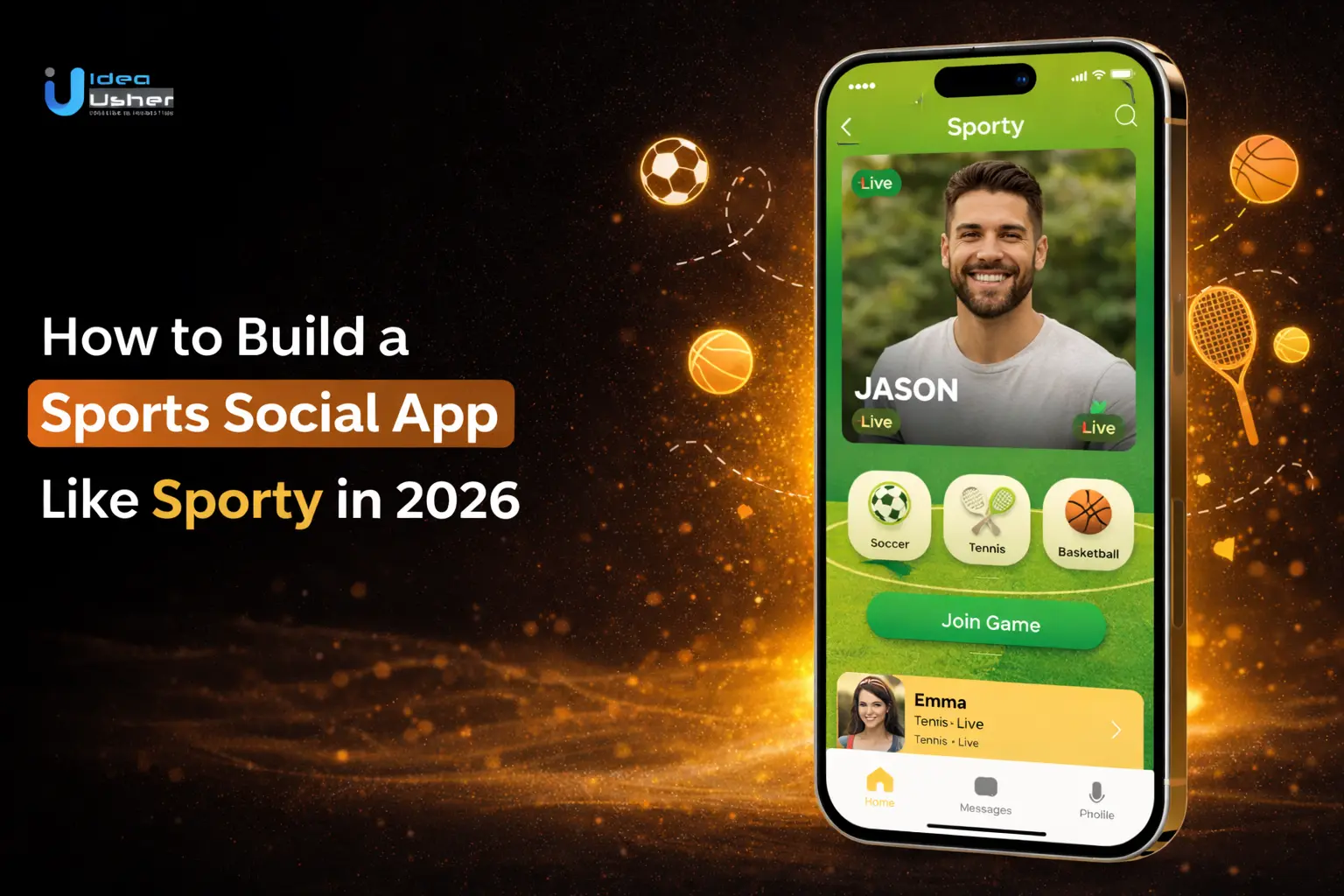
Local sports communities have always existed, but they were often fragmented and hard to access. Entry could be difficult for new players who were not already connected. Many people have started using sports social apps because they can simplify game discovery and improve coordination between players.
Organizers could also manage events more efficiently through structured scheduling tools. These platforms can steadily increase visibility for local games and active groups. Players may quickly find relevant matches and join communities that share the same activity level. What was once informal now operates on more scalable and reliable coordination systems.
Over the years, we’ve developed a lot of sports social platforms that use technologies like geospatial intelligence and real-time matchmaking systems. As we have this expertise, we’re sharing this blog to discuss the steps to develop a sports social app like Sporty.
Why Are Sports Social Apps Scaling Fast in 2026?
According to Grand View Research, the global social networking market is undergoing a massive shift, projected to grow from USD 49.09 billion in 2022 to USD 310.37 billion by 2030. For strategic investors, this expansion signals a move away from generic social media toward high-utility, niche ecosystems. Building a platform like Sporty in 2026 is no longer about simple networking; it is about engineering social infrastructure that bridges the gap between digital engagement and real-world athletic participation.
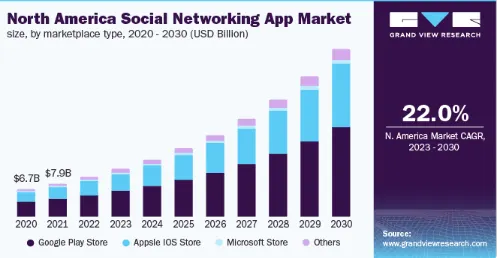
Source: Grand View Research
This rapid scaling is fueled by a specialized, high-intent environment that avoids the engagement fatigue seen on broader platforms. By integrating AI-driven matchmaking and digitizing local facility access, these apps have become essential lifestyle tools rather than mere software. For entrepreneurs, the opportunity lies in owning a specific vertical where athletic subcultures and community-driven data create high-value, resilient investment returns.
From Fitness Apps To Social Ecosystems
The first wave of fitness technology was solitary, focused on the quantified self through step counters and calorie trackers. However, 2026 marks the definitive end of the lonely workout era. We have seen a massive migration from purely analytical fitness apps to comprehensive social sports ecosystems. Users are no longer satisfied with just seeing their own data; they want that data to be the currency of their social lives.
Modern platforms now integrate:
- Performance Benchmarking: Real-time leaderboards that compare your 5K time or padel ranking not just globally, but within your specific local neighborhood. Strava has mastered this by turning individual GPS data into a competitive social feed, proving that data is more valuable when it is communal.
- Activity-Based Networking: The LinkedIn for Athletes model where your athletic resume, including matches played and skill level, facilitates real-world meetups.
- Facility Integration: Direct APIs into court booking systems and gym management software, making the app the operating system for the user’s physical movement.
Gen Z Demand For Social Experiences
Gen Z, now the primary economic driver of the app economy, is paradoxically the most digitally native yet the most digitally fatigued generation. In 2026, their sports consumption has shifted from passive viewing to active, shareable participation. They treat sports as a form of social currency, an opportunity to create content while engaging in vibe-check marketing.
For this demographic, a sports app must feel socially legible. This means the UX must prioritize community discovery over individual achievement.
We see this successfully executed in platforms like Stadium Live, which blends avatar-based digital hanging out with real-world sports fandom to capture the Gen Z metaverse-to-pitch pipeline.
Research shows that 90% of Gen Z discovers sports through social media before deciding to play. Successful apps in 2026 are those that function as mass connectors, using short-form video and group-chat-centric coordination to make physical meetups feel as frictionless as sending a DM.
Beyond Subscriptions And Ads
The subscription apocalypse has forced 2026 developers to innovate beyond the standard monthly paywall. High-net-worth investors are looking for hybrid monetization models that diversify revenue streams and increase Average Revenue Per User (ARPU). In a sports social context, this means moving toward transaction-based and utility-based revenue.
Strategic monetization in 2026 includes:
- Marketplace Commissions: Taking a percentage of court bookings, trainer fees, or tournament entry fees facilitated through the platform.
- In-App Commerce: Contextual shoppable moments where users can purchase gear or supplements recommended by their local community influencers.
- Tiered Access and Micro-transactions: Charging for boosted game invites, premium matchmaking filters, or exclusive access to high-demand local leagues.
- B2B Data Partnerships: Providing anonymized trend data to sports brands and local governments to help them understand where to invest in new facilities or product lines.
Why Sporty-Style Apps Hook Users?
The success of a sports social app is engineered through community psychology and the removal of logistical friction. High “addictiveness” in this sector translates directly to elevated Life Time Value and minimal churn.
Sporty capitalizes on this by offering a unified interface where users can Find Games, Book Courts, and Join Groups in seconds. By digitizing the “pickup game,” the platform transforms a fragmented manual process into a streamlined digital ecosystem that encourages daily active use.
The platform creates a “digital third place” between home and work. When a user manages their social circle and physical health through the Sporty interface, the app shifts from a utility to a lifestyle requirement.
This creates a defensible moat; once a user has established their local reputation and team history, the switching costs become too high to migrate to a competitor.
Real-Time Discovery
The “velocity of discovery” determines user retention. Decision fatigue is the primary barrier to physical activity; Sporty solves this by using hyper-local data to present immediate opportunities through its Activities feed.
Reducing the time between the intent to play and a confirmed booking captures high-intent users before they lose momentum. Key discovery drivers include:
- Geospatial Precision: The Find Games feature uses GPS-driven feeds to provide dynamic activity lists within a tight radius.
- Predictive Matchmaking: Suggests games based on skill level to ensure a balanced, engaging experience for all participants.
- Urgency Triggers: Notifications for “last spot available” in a local match drive instant conversions and fill rosters quickly.
Social Accountability
While a booking tool is a utility, a social network is a self-sustaining ecosystem. Peer-to-peer pressure is the most effective retention tool available.
When a user uses the Join Groups feature to become part of a recurring league or club, the cost of skipping a session becomes social rather than just personal, significantly reducing user drop-off.
This creates a powerful network effect where each new user increases the platform’s value. Users build digital identities through attendance and engagement, turning exercise into a status-driven activity. This results in organic growth as users invite their own circles to Join Groups and coordinate games.
Booking & Community Interaction
The historical friction in sports has been the disconnect between finding partners and securing venues. The Book Courts feature, integrated with a community interface, creates a “closed-loop” ecosystem.
This is where the platform monetizes high-frequency behavior through transaction fees and premium memberships. Key integration benefits include:
- Seamless Transactions: The Book Courts system allows users to secure facilities instantly, removing the awkwardness of manual debt collection or phone calls.
- Session Extension: In-app communication tools keep users engaged in the app long after the physical match ends, fostering deeper community bonds.
- B2B Value: Facility owners receive a turn-key management tool that fills vacant slots and provides usage analytics.
Core Features Users Expect in Sports Social Apps
The modern user landscape for sports social apps is defined by a demand for a frictionless transition from digital browsing to physical activity. To capture market share, a platform must serve as a comprehensive tool that handles both social discovery and logistical execution.
A centralized approach ensures the platform is the primary operating system for a user’s active lifestyle. This functionality creates a seamless journey from the first click to the final whistle.
1. Location-Based Discovery
The heart of the platform is a real-time feed using GPS data to display nearby games. This removes the “search” burden by presenting opportunities within the user’s immediate vicinity.
For example, Playo has successfully scaled by showing users exactly which matches are starting within a few kilometers. By prioritizing proximity, the app significantly lowers the barrier to spontaneous activity.
2. Instant Venue Booking
Modern users expect an “on-demand” experience for sports facilities. High-performance apps eliminate phone calls by providing real-time availability and instant confirmation.
Platforms such as Playtomic demonstrate the power of this feature for racket sports. This transparency benefits both the user and the facility owner by optimizing occupancy and streamlining payments.
3. Community Management
Robust group functionality allows users to move beyond one-off games and build lasting sports networks. Whether it is a football club or a yoga circle, these groups serve as micro-ecosystems.
Reclub is a prime example of a platform that excels here by offering tools to manage recurring events. This feature drives retention by fostering deep-rooted social connections.
4. Integrated Coordination Tools
Effective coordination is the difference between a successful game and a last-minute cancellation. In-app communication allows participants to discuss logistics without migrating to external apps.
TeamSnap has long set the standard for this, keeping team logistics organized within a single thread. Keeping the conversation in-app increases session time and platform stickiness.
5. Skill-Level Matchmaking
To ensure high-quality gameplay, the platform must categorize users by ability. Skill-level filters and ratings allow athletes to find matches that challenge them without being overwhelming.
RacketPal utilizes a proprietary rating system to pair players of similar expertise. This data-driven approach is critical for maintaining user satisfaction and long-term engagement.
6. Tournament Hosting
For power users, the ability to organize large-scale events or structured tournaments is essential. The infrastructure must handle registrations, scheduling, and bracket management automatically.
Specialist apps like Tourney showcase how digital tools can replace complex spreadsheets with automated brackets. This utility attracts high-value organizers and creates a recurring cycle of engagement.
Advanced Features That Differentiate Your Sports Social Apps
In a crowded market, basic utility is no longer enough to maintain a competitive advantage. To truly disrupt the space, sports social apps must move beyond coordination and into the realm of intelligent optimization.
By leveraging emerging technologies, a platform can provide a personalized experience that feels bespoke to every user. These advanced features turn a simple booking tool into a sophisticated performance and social ecosystem.
1. AI-Powered Matchmaking
Artificial intelligence can analyze user behavior, play style, and cancellation history to predict the perfect match. Unlike static filters, AI learns from every interaction to suggest games where the user is most likely to have a positive experience.
For instance, Sworkit uses algorithmic logic to suggest workouts; a similar approach in sports social apps ensures high-quality, balanced matches. This data-driven layer keeps players returning by maximizing the quality of every session.
2. Dynamic Booking Pricing
Revenue management is a critical pain point for venue owners. Implementing dynamic pricing models allows for fluctuating rates based on demand, time of day, or even weather conditions.
This mirrors the success of Mindbody in the wellness space, where “last-minute” deals fill off-peak slots. This approach maximizes yield for the facility while providing budget-friendly options for price-sensitive users.
3. Gamification & Rewards
Turning physical activity into a digital game significantly boosts daily active usage. By introducing tiered leaderboards, badges, and tangible rewards for consistency, the app taps into the user’s competitive nature.
Strava has mastered this through “Segments” and challenges, creating a powerful psychological loop. When users compete for local status, they become deeply anchored to the platform’s social hierarchy.
4. Wearable Integrations
A modern sports app must exist within the user’s existing hardware ecosystem. Seamlessly syncing data from Apple Watch, Garmin, or Whoop allows the platform to verify match intensity and health metrics.
By integrating with Apple Health, the app becomes a holistic health diary. This data can be used to validate “active” status and provide deeper insights into a user’s athletic progress over time.
5. Video & Content Sharing
Sports are inherently visual and performative. Providing tools to upload, edit, and share match highlights directly to a social feed turns every game into a content opportunity.
Platforms like Hudl show the value of video in performance analysis; bringing this to the amateur level allows users to celebrate their “pro moments.” This user-generated content acts as a powerful, organic marketing engine.
How to Build a Sports Social App Like Sporty?
To build a sports social app like Sporty, the platform should integrate geospatial discovery and real-time matchmaking so users can quickly find relevant games nearby. It must also efficiently support scheduling and group coordination so players can consistently connect and engage without friction.
We’ve built several sports social apps like Sporty, and here’s how we do it.
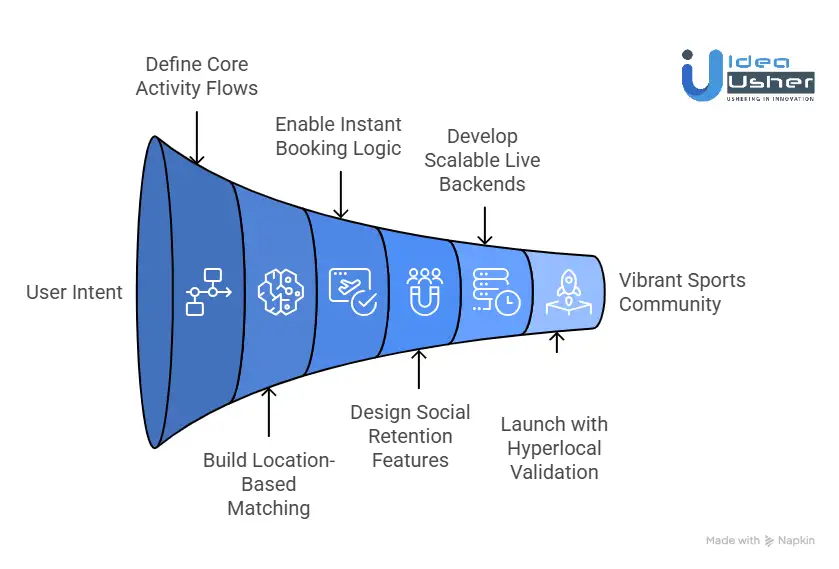
1. Define Core Activity Flows
We begin by mapping the “path to play” to eliminate friction points between a user’s intent and their arrival at a venue. Our design team creates high-conversion UI/UX that prioritizes speed and clarity.
By streamlining these core flows, we ensure the journey from the home screen to a confirmed booking is seamless. This strategy ensures your app captures and retains high-intent users from their very first session.
2. Build Location-Based Matching
We implement sophisticated geospatial indexing that serves hyper-relevant matches based on a user’s precise coordinates. We build a dynamic, live feed that reacts to the user’s movement.
This makes the platform feel responsive to the user’s immediate environment. This real-time relevance is the primary engine that drives spontaneous activity and keeps your community vibrant and active.
3. Enable Instant Booking Logic
Our engineering team builds robust booking engines capable of handling complex variables like tiered pricing and overlapping facility hours. We integrate real-time inventory management to ensure 100% accuracy.
This precision eliminates the risk of double bookings. It builds essential trust with your facility partners, who rely on your platform to manage their primary revenue-generating assets.
4. Design Social Retention Features
We design social architectures that transform a simple utility into a “digital third place.” By developing features like athlete profiles and community threads, we foster deep user loyalty.
We build professional-grade networking tools tailored specifically for athletes. When participants build a documented match history on your app, the switching costs become a powerful driver of long-term retention.
5. Develop Scalable Live Backends
We architect backends designed to perform under the pressure of peak “after-work” hours and concurrent tournament requests. Utilizing cloud-native infrastructures, we ensure zero-latency updates.
Every chat message, booking confirmation, and score update occurs instantly. This scalable foundation is critical for maintaining a premium user experience during periods of rapid, viral growth.
6. Launch with Hyperlocal Validation
Our strategic recommendation is to achieve “market liquidity” by winning one city at a time before expanding. We focus on hyper-local growth to ensure a high density of active players.
This concentrated approach focuses on creating a high density of participants and venues in specific zones. It validates your business model and proves demand to stakeholders before you scale across wider territories.
Cost to Build a Sports Social App Like Sporty
The capital required to develop a sports social app depends on the depth of the ecosystem you wish to build. High-performance apps aren’t just about code; they are about real-time data reliability and user trust. Whether you are seeking an entry-level version to test a local market or a robust, feature-rich platform to dominate a region, understanding the financial architecture is the first step toward a successful launch.
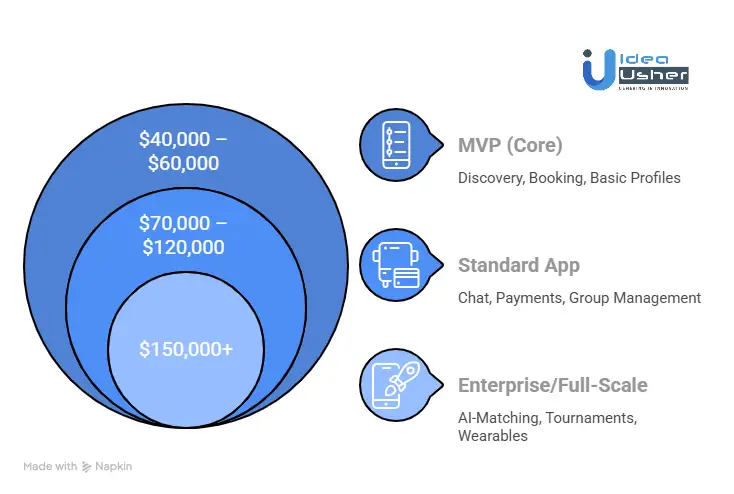
MVP vs Full-Scale Platform Cost Breakdown
An MVP focuses on the “Path to Play” while a full-scale platform builds a “Digital Third Place.”
| Version | Target Focus | Estimated Budget |
| MVP (Core) | Discovery, Booking, Basic Profiles | $40,000 – $60,000 |
| Standard App | Chat, Payments, Group Management | $70,000 – $120,000 |
| Enterprise/Full-Scale | AI-Matching, Tournaments, Wearables | $150,000+ |
The MVP is designed for speed-to-market. It provides enough value to validate your business model with real users without over-engineering features that haven’t been tested.
Feature Complexity and Cost Impact
Every advanced interaction adds layers to both the frontend design and the backend logic. Complexity is the primary driver of development hours.
- Logic Heavy: Real-time scheduling and conflict resolution for court bookings require high-precision backend engineering.
- Data Intensive: Dynamic feeds that update based on a user’s moving GPS coordinates demand optimized geospatial indexing.
- Social Architecture: Building private messaging and community walls involves real-time socket connections and data storage management.
Pro Tip: “Simple” features often hide complexity. For example, a “Split Payment” feature isn’t just a UI button; it involves escrow logic, refund handling, and multi-party transaction security.
Third-Party Integrations and Hidden Costs
Beyond the initial development, your monthly “run rate” is influenced by the external services that keep the app functional. These costs scale as your user base grows.
- Maps & Location: Charges for every thousand map loads or location lookups.
- Payment Processing: Transaction fees (typically 2.9% + $0.30) and monthly gateway subscriptions.
- Communication: Costs for SMS verification, push notifications, and in-app chat hosting.
- Cloud Infrastructure: Hosting fees for databases and media storage that fluctuate based on traffic.
Why Location-Based Sports Social Apps Win Locally?
Success in the sports social sector is rarely about global reach on day one. It is about dominating the “five-mile radius.” By focusing on the immediate proximity of the user, a platform moves from being a directory to a vital neighborhood utility.
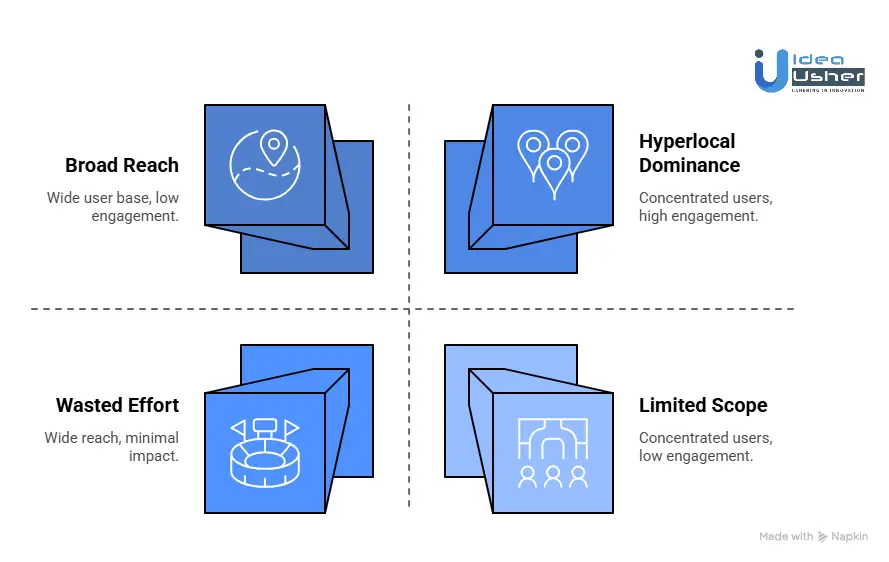
When digital interactions lead to consistent physical meetings, the app becomes an indispensable part of a player’s weekly routine. This hyperlocal focus is the primary driver behind the most resilient platforms in the industry.
1. Hyperlocal Retention
Discovery is the antidote to player churn. When a user sees a game happening at the park at the end of their street, the friction to join vanishes. This creates a powerful psychological “hook” because the opportunity is both immediate and convenient.
- Low Friction: Reducing travel time makes sports a daily habit rather than a planned excursion.
- Familiarity: Seeing local landmarks and familiar faces in the feed builds instant platform trust.
- Consistency: Proximity ensures that even busy professionals can fit a match into their schedule.
2. Faster Network Effects
Network effects in sports apps are geographic. A thousand users spread across a country provide zero value, but a hundred users in a single zip code create a thriving marketplace. Geo-targeting allows for a concentrated “liquidity” of players and venues.
The Density Rule: Platform value is determined by the number of active games within a 15-minute drive of the user, not the total number of global downloads.
By focusing marketing spend on specific clusters, every new user added to the cluster increases the value for everyone else in that neighborhood. This leads to a self-sustaining cycle of organic invites and recurring bookings.
3. City-First Scaling Strategy
The most efficient way to grow is to treat every city as a startup. Instead of a broad, thin launch, a “beachhead” strategy involves saturating a single metro area to prove the unit economics before moving to the next.
- Validation: Establish a high density of venues and players in one city to test engagement levels.
- Refinement: Use local feedback to tweak matchmaking algorithms and booking logic for that specific culture.
- Replication: Once the “playbook” for one city is perfected, it can be deployed rapidly across new territories with predictable results.
How to Design Sports Social Apps for Instant Matchmaking?
The primary goal of a sports social app is to move a user from “interest” to “action” in the shortest time possible. Design plays a silent but critical role in this transition. By removing cognitive barriers, a platform can facilitate matches that feel spontaneous yet perfectly coordinated.
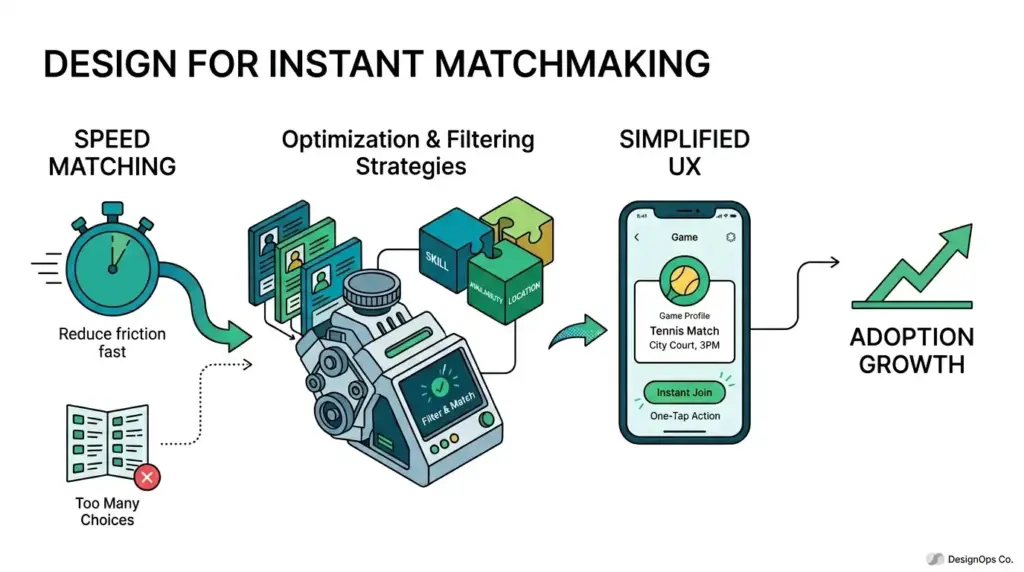
Superior matchmaking design is about creating “flow” where the interface disappears, leaving only the opportunity to play. This requires a meticulous focus on the first 60 seconds of the user experience and the intelligent presentation of choices.
1. Reducing Signup-to-Game Time
High-performance onboarding is a race against user abandonment. The “Aha! moment” occurs when a user sees a game they actually want to join. Apps like Bsport have mastered this by offering a guest-browsing experience that lets users see local schedules before committing to a full profile.
- Social Sign-In: One-tap entry via existing accounts to bypass tedious form fields.
- Location Defaults: Instantly populating the feed based on current GPS data.
- Action-First Entry: Allowing users to browse available games before they are asked to create a profile.
2. Smart Skill & Availability Filters
Vague filters lead to mismatched games and poor user experiences. Intelligent filtering systems ensure that a casual player isn’t accidentally booked against a professional. Heja excels at this by simplifying team availability, making it clear exactly who can show up and at what skill level.
| Filter Type | Data Source | User Benefit |
| Skill Level | Self-assessment + History | Balanced, competitive matches. |
| Availability | Calendar + Preferred Times | Matches that fit a busy schedule. |
| Proximity | Real-time GPS | Minimized travel for last-minute play. |
Design Tip: Instead of a simple “Beginner/Expert” toggle, use descriptive tags like “Can hold a 5-shot rally” to provide clearer context for skill matching.
3. UX for Quick Decision-Making
Decision fatigue is a major conversion killer. The interface must present just enough information for a user to say “yes” without feeling overwhelmed. Visual hierarchy should prioritize the most important data: time, location, and the current number of players.
- Card-Based Layouts: Clean, swipeable cards that highlight “Spots Remaining” in high-contrast colors to create a subtle sense of urgency.
- Visual Proof: Showing profile thumbnails of players already joined to build social trust and “FOMO.”
- One-Tap Booking: A prominent, persistent “Join Game” button that stays within thumb-reach at all times, reducing the physical effort of the transaction.
How Sporty-Like Apps Achieve Network Effects?
The value of sports social apps scales exponentially as more users join. This is the classic “network effect.” A platform with two players is a directory; a platform with two thousand is a thriving digital ecosystem.
Achieving this critical mass requires more than just marketing; it requires a structural approach to social liquidity. By focusing on high-density clusters rather than broad coverage, a platform can create an environment where every new user increases the value for everyone else in that specific geography.
1. Seeding Micro-Communities
A successful rollout prioritizes depth over breadth. Instead of targeting a whole city, start with a single sports complex or a specific neighborhood park. This ensures that when a new user signs up, they immediately see active games in their immediate vicinity.
- Proximity Power: Five users at one court are more valuable than fifty users across five different cities.
- Visual Proof: Seeing that a local “pickup” game is already 80% full encourages the final few players to commit.
- The “Water Cooler” Effect: Users who meet in person through the app are significantly more likely to return to the digital platform to coordinate the next session.
2. Leveraging Local Organizers
Every sport has “super-connectors”, the captains, coaches, and organizers who do the heavy lifting of coordination. By providing these individuals with professional-grade tools, the app inherits their existing networks.
If you give the person who usually sends ten WhatsApp messages a single button to manage their entire roster, they will bring their entire team to your platform for you.
- Founder Status: Granting early organizers “Verified” or “Elite” badges to provide social status.
- Roster Management: Automating the tedious task of tracking who has paid and who is attending.
- Conflict Resolution: Using automated waitlists to fill spots when a regular player drops out at the last minute.
3. Referral Loops via Shared Play
Growth is most authentic when it happens on the field. Integrated referral systems turn every match into an acquisition opportunity. When a player realizes they are one person short for a Saturday match, the app should make it effortless for them to invite a friend who isn’t yet on the platform.
| Trigger | Action | Result |
| “One Player Short” | Share “Join My Game” link via SMS | New user joins to fill the slot. |
| “Post-Match High” | Share match result/photo to social media | Organic brand awareness to peers. |
| “Friend Activity” | Notification: “Your friend just booked a court” | Re-engagement of dormant users. |
Apps like Spond demonstrate how focusing on the organizer’s needs can pull entire groups into the ecosystem simultaneously. This “group-onboarding” is far more efficient than trying to acquire individual users one by one through traditional ads.
Why Choose IdeaUsher for Sports Social Apps?
Selecting a partner with deep technical knowledge is vital for building a high-performance sports community. At IdeaUsher, we combine engineering excellence with digital innovation to unite fans and athletes.
With over 500,000 hours of coding experience, our team of ex-MAANG/FAANG developers brings elite-level architecture to every project. We have successfully delivered over 1,000 solutions, helping brands like Gold’s Gym scale with cutting-edge technology.
Scalable Social Platforms
Sports apps must handle massive traffic spikes during live events. Our team builds robust architectures that support real-time interactions and high-speed data processing. We ensure your platform remains stable even when thousands of fans engage simultaneously.
End-to-End Growth Support
We guide your project from initial strategy and UI/UX design to final deployment. Our partnership continues after launch with dedicated support for user acquisition and performance optimization. We provide the technical agility needed to scale as your community grows.
Custom Sports Features
We design specialized features like fan loyalty programs and community tools seen in apps like Playo or Strava. Our process prioritizes sustainable revenue through custom strategies such as premium memberships and e-commerce. We turn sports passion into a thriving business.
Conclusion
Building a sports social app requires more than just a booking feature. It requires a deep understanding of community dynamics and technical scalability. Focusing on hyperlocal density and seamless UX allows you to create an essential daily utility. Robust location-based matching ensures users stay active and engaged.
With strategic monetization and the right engineering partner, your app can bridge the gap between digital coordination and real-world play. This transforms a simple idea into a thriving sports ecosystem.
FAQs
A1: Start by identifying a specific athletic niche or geographic territory to dominate. Design high-fidelity prototypes and build a scalable backend for real-time interactions. Partnering with an experienced team ensures the platform handles complex logic like geospatial matching and secure payments.
A2: Investment typically ranges from $40,000 to over $150,000, depending on technical depth. A basic version focusing on discovery and booking sits at the lower end. Comprehensive platforms with AI matchmaking and multi-venue management require a larger budget for higher complexity.
A3: A competitive app must include real-time booking, location-based discovery, and secure payments. Social elements like athlete profiles, group chats, and skill verification are critical for retention. Advanced platforms also integrate wearable data and automated tournament brackets.
A4: These platforms function as a marketplace connecting athletes with facilities and players. The app uses GPS to show nearby games and manages scheduling to prevent conflicts. Integrated tools allow players to coordinate details while the backend handles transactions and confirmations.