 (+971) 8007 4267
 (+91) 946 340 7140
 (+1) 628 432 4305

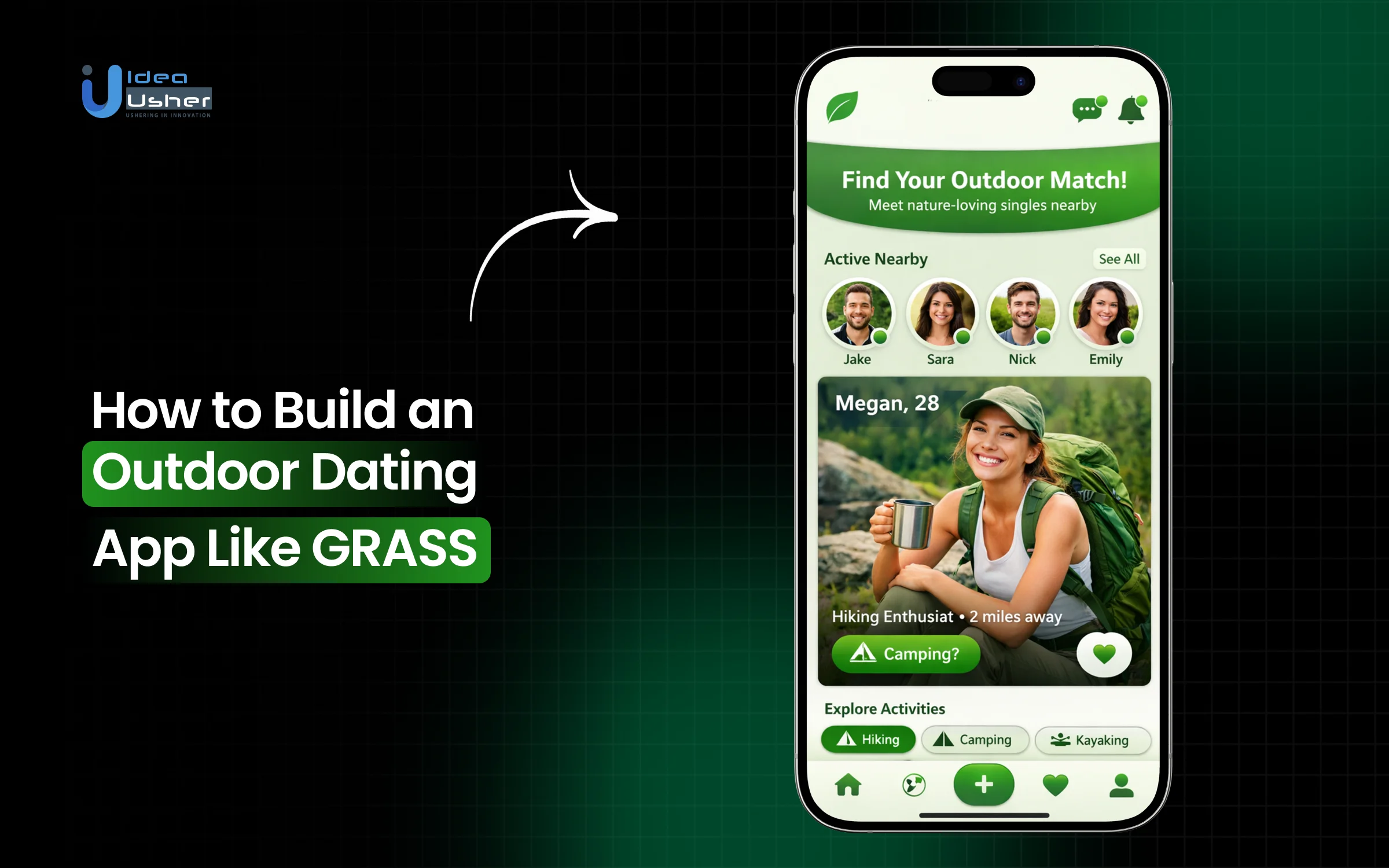
Not every meaningful moment is planned, and some connections may quietly form in between simple pauses. Most dating platforms still rely on structured flows, and this can limit how naturally people interact. Over time, this model may start to feel transactional rather than experiential. Many people have started using outdoor dating apps because they want more authentic interactions and less screen-driven engagement.
They may also prefer shared activities like walking or hiking, which can naturally build comfort. This shift may gradually reduce digital fatigue and improve engagement quality. As awareness of mental well-being grows, users increasingly seek calmer and more natural interactions.
Over the years, we’ve developed numerous outdoor dating platforms powered by context-based matching and social graph enrichment engines. As we have this expertise, we’re sharing this blog to discuss the steps to build an outdoor dating app like GRASS.
Why Outdoor Dating Apps Are Gaining Traction?
According to Tech Sciresearch, the Global Dating Apps Market will grow from USD 10.97 Billion in 2025 to USD 17.58 Billion by 2031 at a 8.18% CAGR. This trajectory signals a major shift as investors pivot away from legacy apps facing user fatigue. By moving digital connections into the physical world, new platforms are capturing high-value demographics tired of the “swipe economy” and endless digital small talk.

Source: Tech Sciresearch
For entrepreneurs, this transition offers superior monetization through the Experience Economy. These platforms move beyond simple subscriptions to include venue partnerships, event ticketing, and gear commerce. Shifting to outdoor-centric models is a strategic move to capture the “Intentional Dating” market share by replacing static profiles with high-fidelity, real-world engagement.
Shift to Real-World Experiences
Swipe fatigue has pushed the industry toward Experience-First Discovery. Leading platforms now prioritize activity-based prompts over text bios. This reduces “ghosting” and increases the conversion from a digital match to a physical meeting.
- The 75-Minute Test: Activity-based dates like hiking are 1.25x more likely to lead to a second date than dinner.
- Lower Pressure: Shared activities provide a natural conversational buffer for more authentic interactions.
- Higher Loyalty: Apps that assist with real-world logistics see better retention because they provide actual utility.
For example, the app GRASS has successfully pivoted away from the traditional match-first model. It allows users to browse open invites to local outdoor events and join instantly, effectively bypassing the swipe-and-wait cycle.
Demand for Interest-Based Apps
The era of generalist apps is ending. Users now gravitate toward environments where shared values are the primary filter. In the outdoor sector, this means hyper-specific communities for climbers, hikers, or cyclists.
Niche platforms often command a higher Average Revenue Per User (ARPU). Users pay a premium for a curated ecosystem with less noise. A platform for 100,000 dedicated enthusiasts is often more profitable than a general app with 1 million unsegmented users.
Take Oak, a platform specifically designed for the climbing community. By focusing on “sharing beta” and planning routes together, it creates a high-utility environment that a general app like Tinder cannot replicate. This creates a more defensible business model against larger competitors.
Rise of Community-Led Discovery
We are entering the era of trust-based social discovery. Users are moving away from public social media into gated communities. In dating, this manifests as platforms prioritizing group activities over 1-to-1 matching.
- Safety: Community models use peer-to-peer verification. Participation in group events reduces the risk of fake profiles.
- Network Effects: Group excursions create self-sustaining ecosystems. Users stay for the community even when not actively dating.
- B2B Revenue: These platforms bridge to local economies. You can partner with gear retailers and fitness studios for lead generation.
By 2031, the best platforms will function as a social operating system. The goal is no longer just finding a date. It is about finding a tribe through shared physical adventure.

What Makes GRASS Stand Out?
GRASS succeeds by treating dating as a bridge to the physical world rather than a digital end goal. Traditional apps maximize time in the app, but GRASS focuses on real-world ROI. For entrepreneurs, this solves the dead-end conversation problem, attracting high-intent users who value efficiency.
This shift transforms the platform into a logistical engine. By focusing on memories over matches, it builds deep brand loyalty. In a crowded market, GRASS stands out by making dating a natural byproduct of an active lifestyle.
“Plan And Do” Vs Traditional Dating UX
Traditional apps use a Chat-First UX that leads to high drop-off rates. GRASS inverts this with “Outdoor Activity Matching.” Here, the primary engagement isn’t a text, but a specific plan.
This eliminates swipe fatigue. Using the “Create an Activity Invitation” feature, users propose itineraries like a Saturday morning hike. This transparency removes the anxiety of the first move and matches people based on shared momentum.
FindBuddy And Open Event-Based Matching
The “FindBuddy” feature enables community-led growth through “Group Adventures.” Unlike binary 1-to-1 matching, this allows users to host or join group sessions like beach volleyball or cycling tours.
This creates a low-stakes environment that reduces social pressure. For the business owner, it generates network effects and B2B opportunities. Local gear shops and venues can sponsor these events, creating a Social-as-a-Service revenue stream.
Safety-First Design With Verified Profiles
Safety is the ultimate barrier for female users. GRASS addresses this with its “Three Layers of Protection” system. By requiring “Face Verification” and identity checks, it ensures a 100% verified community.
Beyond identity, the app uses “Activity Safety Reminders” and encourages group meetings. This built-in social proof acts as a deterrent for bad actors. For investors, this trust is a powerful moat that justifies premium pricing.
Lifestyle-Based AI Matching Logic
GRASS utilizes a user’s “Outdoor Passport” to drive matching logic. This profile captures real activity photos and preferred sports. The AI prioritizes Activity Compatibility over surface-level aesthetics.
This results in high-fidelity matches. The algorithm identifies users with synchronized lifestyles, matching two people who actually run 5ks on Tuesday mornings. This granularity ensures long-term sustainability for the connections made on the platform.
Key Features Your Outdoor Dating App Must Have
To maximize lifetime value, outdoor dating apps must implement mechanics that incentivize physical activity. Moving beyond simple utility, these advanced features create a sticky ecosystem where users stay active even when they aren’t looking for a direct match.
1. Event Discovery And Activity Feeds
A dynamic feed allows users to browse live opportunities for engagement instead of static feeds. By showcasing local activities, the app becomes a daily destination for discovery. Everydate uses this model by allowing users to post date ideas like museum visits, which others can browse and like in a central feed.
2. Matchless Open Invites
Removing the binary match requirement accelerates the user journey from screen to street. By allowing users to broadcast an itinerary, you eliminate the friction of mutual swiping. GRASS exemplifies this by letting users join Activity Invitations for hiking or running directly, bypassing the traditional match-and-wait cycle.
3. Real-Time Proximity Filters
Precision in geography is critical for outdoor-focused platforms. Integrated mapping ensures that users find partners within a reasonable distance, maximizing meet-up likelihood. Happn has pioneered this hyper-local approach by showing profiles of people you have physically crossed paths with during your day.
4. AI Lifestyle Matching
Advanced algorithms should prioritize behavioral compatibility over surface-level traits. By analyzing activity frequency and skill levels, the system pairs individuals with synchronized routines. In 2026, Tinder introduced its Chemistry tool, which uses AI to scan interests and camera rolls to curate daily reports of lifestyle-compatible matches.
5. Contextual In-App Chat
Messaging is more effective when anchored to a specific plan. Providing a dedicated space to discuss logistics like meeting points removes the awkwardness of typical small talk. Bumble enhances this through context-aware prompts that allow users to engage in meaningful Q&A about their planned activities rather than generic openers.
6. Safety And Verification Tools
Building a trusted ecosystem requires multi-layered security protocols. Biometric checks and identity validation ensure the community remains exclusive to verified individuals. Platforms like Match now integrate real-time Face Checks and liveness detection, providing the peace of mind necessary to transition from an app to a remote trial.
Advanced Features That Drive Engagement in Dating Apps
To maximize lifetime value, outdoor dating apps must implement mechanics that incentivize physical activity. Moving beyond simple utility, these advanced features create a sticky ecosystem where users stay active even when they aren’t looking for a direct match.
1. Outdoor Activity Gamification
Gamification transforms the pursuit of a partner into a rewarding lifestyle journey. By introducing badges for achievements like peak summits or morning runs, apps encourage users to maintain active profiles.
Strava has mastered this through challenges that push users to compete, proving that social validation is a powerful driver for consistent engagement.
2. Verified Social Proof
Trust is built through transparency and shared history. By allowing users to showcase past excursions or gear, platforms create a layer of social proof that static bios cannot match.
GRASS utilizes the “Outdoor Passport” to feature real-life activity photos, allowing users to see a match’s genuine participation in the lifestyle they claim to love.
3. Micro-Community Groups
Scaling from one-on-one dates to group-based discovery builds a more resilient network. Facilitating micro-communities around specific sports like bouldering or surfing lowers the pressure of individual meetings.
Meetup remains a leader in this space by aggregating individuals into interest-based groups, ensuring users remain in the community even after finding a partner.
4. Behavioral Smart Recommendations
Advanced AI should move beyond what users say they like and focus on what they actually do. By tracking which events a user joins or the intensity of their sports tags, the app can offer hyper-relevant suggestions.
How to Build an Outdoor Dating App Like GRASS?
To build an outdoor dating app like GRASS, the platform must focus on activity-based matching and should carefully integrate location data to enable real-world meetups. It can effectively combine event planning features with a scalable backend so users can easily discover outdoor experiences and gradually form meaningful connections.
We have built several outdoor dating apps like GRASS, and here is how the process usually works.

1. Persona And Intent Definition
We identify specific outdoor subcultures like trail runners or climbers to ensure your app resonates with high-intent users. By understanding whether your audience seeks solo partners or group excursions, we tailor the onboarding journey to highlight lifestyle compatibility over surface-level aesthetics.
2. Activity-Led Matching Design
We move beyond the fatigue of traditional swiping by engineering discovery models centered on shared plans. Our team builds interfaces where the primary interaction is browsing and joining upcoming itineraries. This turns your app into a marketplace of experiences, making the “first move” natural and activity-focused.
3. Real-Time Coordination Tools
To ensure matches actually meet, we integrate robust planning features that handle event logistics within the app. From managing RSVPs to setting meeting point pins and gear checklists, we solve the friction of a first date. This utility keeps your users returning to the platform as their primary social coordinator.
4. Advanced Location Intelligence
We utilize sophisticated geolocation APIs to suggest nearby trailheads, parks, or climbing gyms based on user habits. By prioritizing “Common Grounds” where both users frequently spend time, our proximity logic ensures matches are geographically convenient, significantly increasing the probability of a physical encounter.
5. Multi-Layered Safety Protocols
Security is our top priority for offline interactions. We implement real-time check-ins and live location sharing with trusted contacts to provide peace of mind during remote dates. Our biometric and identity verification systems create a high-trust ecosystem, which is a critical business moat in the modern market.
6. Niche Community Launch
To solve the “Cold Start” problem, we help you dominate a specific geographic region or sport first. By achieving high user density within a single city, we create the liquidity needed for a functional marketplace. This strategic entry ensures a strong foundation before scaling into broader categories.
Cost to Build an Outdoor Dating App like GRASS
Estimating the cost of building outdoor dating apps involves balancing core functionality with the specialized tools that make the platform unique. We focus on providing a clear ROI by prioritizing high-impact features that drive user engagement from day one.

MVP Vs Full-Scale App Cost Breakdown
Launching an MVP allows you to test the market quickly, while a full-scale app builds a long-term competitive moat.
| Phase | Estimated Cost | Delivery Timeline | Key Focus |
| MVP Build | $40,000 to $65,000 | 3 to 4 Months | Core matching, basic activity feed, and identity verification. |
| Full-Scale App | $100,000 to $250,000+ | 8 to 12 Months | Advanced AI matching, real-time group logistics, and custom mapping. |
Key Cost Drivers In Development
Three primary factors dictate the final price of your platform:
- Platform Choice: Developing natively for both iOS and Android generally costs 30% more than using cross-platform frameworks like Flutter or React Native.
- Intelligence Layers: Integrating AI for lifestyle matching and behavioral analysis adds significant complexity to the backend architecture.
- Third-Party APIs: Real-time geolocation, biometric safety checks, and high-fidelity mapping services require ongoing integration and licensing fees.
Hidden Costs Founders Overlook
Many entrepreneurs plan for the build but forget the “Day 2” expenses that keep the app alive:
- API Usage Fees: Services like SMS verification, map loads, and push notifications are usually pay-as-you-go. As you scale, a $500 monthly bill can quickly jump to $5,000.
- Maintenance & Updates: Expect to spend 15–20% of your initial development cost annually on bug fixes, OS updates (iOS/Android), and security patches.
- Content Moderation: Once you have thousands of users, you will need either AI-automated tools or human moderators to ensure the community remains safe and on-theme.
- Legal & Compliance: Data privacy (GDPR/CCPA) and terms of service specific to “physical activity” risks require professional legal review to protect your business.
How “Plan and Do” Replaces Swipe Fatigue in Outdoor Dating Apps?
The “Plan and Do” model is the antidote to the digital graveyard of unfinished conversations. By centering the user journey on an event rather than a profile, outdoor dating apps bypass the fatigue that plagues traditional swiping platforms.
In an activity-led ecosystem, the goal is to collect memories rather than matches. This shift from “Who are you?” to “What are we doing?” changes the entire psychological profile of the user base.
Action-First Better Retention
Traditional apps suffer from a leaky bucket problem where users swipe, get bored by ghosting, and delete. Action-first dating fixes this by providing immediate utility.
- Higher Intent: Users seek a partner for a Saturday trail run rather than just seeking validation.
- Reduced Ghosting: It is harder to ignore a specific invitation than a generic “Hey.” GRASS proves this by focusing on activity-first invites that convert digital interest into real-world attendance.
- Deeper Loyalty: When an app helps someone finally climb a specific peak, the brand affinity is significantly stronger than a standard dating platform.
Modern systems move conversations away from interview-style questioning. When users connect over shared interests, small talk is replaced by logistics.
This creates a natural environment where personalities are revealed through action, like handling a steep climb, rather than a curated bio. Everydate captures this by allowing “Date Ideas” to serve as the primary icebreaker.
Designing Meetup Flows
To facilitate meetings, the UI must act as a social coordinator. Here is how the flow is structured:
| Step | Digital Action | Real-World Result |
| 1. The Hook | User posts a “Sunset Paddleboard” invite. | Visibility to interested local partners. |
| 2. The Entry | Interested users “Request to Join” the plan. | High-intent filtering of compatible partners. |
| 3. The Bridge | Chat opens for “Logistics & Gear.” | Direct path to scheduling without awkwardness. |
| 4. The Meet | In-app “Arrival Check-in” and map pin. | Safe, coordinated physical encounter. |
By automating the “Ask,” the most significant barrier to dating is removed. The app doesn’t ask the user to be a romantic lead; it asks them to be an adventurer.
Building a Matchless Dating Experience Model in Dating Apps
Traditional dating platforms create a bottleneck where two people must both swipe right before a single word is exchanged. In outdoor dating apps, this barrier is being dismantled in favor of open participation. By shifting the focus from mutual approval to shared interest, these platforms accelerate the journey from a screen to the wilderness.

1. Eliminating Open Participation Barriers
The matchless model operates on a broadcast system. Instead of waiting for a match, a user posts an open invitation for an activity like a morning surf session or a sunset hike. This allows anyone within the community to express interest, removing the anxiety of the swipe and replacing it with the excitement of an upcoming plan.
Instant Social Discovery via Events
By prioritizing events over profiles, the app becomes a live map of opportunities. Users discover people based on their active presence in the world. GRASS utilizes this by letting users see who is “Going” to a specific trailhead, allowing social discovery to happen naturally through the lens of a shared event.
Reducing Traditional Funnel Drop-offs
The standard dating funnel is notoriously leaky: Swipe → Match → Small Talk → Ghosting
- Standard Funnel: 100 swipes ≈ 5 matches ≈ 1 conversation ≈ 0 meetups
- Activity Funnel: 1 event post ≈ 10 interested users ≈ 5 logistical chats ≈ 3 real world participants
This shift significantly reduces user churn because the reward (a real-world activity) happens much faster.
2. Designing Spontaneous Connections
Spontaneity is the heartbeat of the outdoor lifestyle. However, designing for “the moment” requires a sophisticated technical backend that can handle real-time location data without draining a user’s battery or compromising their privacy.
Frictionless Location Discovery
Successful outdoor platforms use passive geolocation to alert users when they are near a social hub. If a user is at a popular bouldering gym or a well-known park, the app can highlight other active users in the same vicinity. This turns a solo outing into a potential social connection without the need for pre-planning.
Timing-Based Suggestions
Context is everything. An app should understand the difference between a Tuesday afternoon and a Saturday morning.
- Weekday Afternoons: Suggest quick, local meetups like park runs or post-work climbs.
- Weekend Mornings: Suggest high-effort excursions like mountain biking or day hikes.
- Evening Windows: Pivot toward social mixers or outdoor gear swaps.
By aligning suggestions with the user’s likely schedule, the app stays relevant to their daily rhythm.
Spontaneity vs. Safety
Spontaneity must never come at the cost of security. To manage this balance, the following protocols are essential:
- Safe-Zone Geofencing: Real-time discovery is only active in verified public zones like parks, gyms, or cafes.
- Encrypted Check-ins: Users must check in to a location for their presence to be visible, ensuring they are only found when they want to be.
- Identity Verification: Much like Everydate, requiring a verified badge for spontaneous meetups ensures that the person you meet at the trailhead is exactly who they claimed to be.
AI Matching Based on Lifestyle, Not Profiles
Traditional dating apps rely on static bios that often fail to reflect reality. In outdoor dating apps, AI moves beyond what users say about themselves and focuses on what they actually do.
This transition from “Profile Matching” to “Lifestyle Matching” ensures that a casual walker isn’t paired with a high-altitude mountaineer.
Activity Data Recommendations
Algorithms now ingest data from wearable devices and past app behaviors to build a dynamic fitness profile. If a user consistently logs 10km runs on Saturday mornings, the AI prioritizes showing them, along with other high-endurance athletes. GRASS utilizes this by suggesting “Activity Partners” whose physical pace and difficulty threshold actually align, preventing the frustration of mismatched expectations on a first date.
Intent vs. Preferences
Preferences are passive (e.g., “I like hiking”), while intent is active (e.g., “I want to hike a 14er this Sunday”). AI can distinguish between these two layers:
- Preference Layer: Filters for general interests like cycling or camping.
- Intent Layer: Analyzes real-time search queries and event “saves” to find immediate compatibility.
- The Result: A user looking for a chill beach day won’t be matched with someone planning a grueling dawn patrol surf session. Dig applies similar logic for dog owners, ensuring that a high-energy pup is matched with a human looking for an active “dog park” date rather than a quick walk.
Continuous Behavioral Learning
The system learns through a feedback loop of real-world interactions. If a user frequently ignores mountain biking invites but accepts every invitation for rock climbing, the AI automatically reshapes their feed.
- Everydate leans into this behavioral intelligence by surfacing “Date Ideas” that have historically triggered high engagement.
- Similarly, LFG (Looking for Group) uses these behavioral cues to suggest niche sport meetups, ensuring the “Recommended” tab feels truly personal to the user’s actual movement patterns.
Safety Systems for Real-World Meetups in Dating Apps
Safety is the cornerstone of any outdoor dating app. Because users often meet in remote areas like trailheads or parks, the platform must provide a robust security net. Building trust is not just about features; it is about creating a culture where every adventurer feels protected.

Trusted Interaction Verification
Identity theft and “catfishing” are significant risks in digital dating. A multi-step verification process ensures that the person you meet at the climbing gym is the same person from the profile.
- Photo Liveness: Users perform a real-time gesture to prove they aren’t using a static photo.
- Government ID Sync: Integrating services like Stripe Identity or Onfido to cross-reference legal names.
- Trust Score: GRASS incorporates a “vouched” system where users can earn badges for being a reliable and safe partner.
- Social Proof: Everydate leverages community reviews to ensure participants maintain a high standard of conduct.
Community Moderation Tools
A self-policing community is the most scalable way to maintain safety. By providing users with intuitive reporting tools, the platform can quickly identify and remove bad actors before they cause harm.
Automated AI moderators should scan for offensive language or suspicious behavior patterns, such as sending the same copy-pasted message to hundreds of users. When a report is filed, a human-in-the-loop system ensures that the context, such as a canceled hike or a gear dispute, is understood before taking action.
Emergency Location Sharing
When a match moves from a chat to a trail, the app’s role as a guardian begins. Real-time safety features are non-negotiable for remote excursions.
| Feature | Function | Benefit |
| Safety Timer | User sets an “Expected Return” time for a date. | Alerts emergency contacts if the user doesn’t check in. |
| Live Location | Sharing real-time GPS coordinates with a “Buddy.” | Provides a digital breadcrumb trail for off-grid hikes. |
| Panic Button | One-tap SOS signal to local authorities. | Instant response for medical or personal emergencies. |
By embedding these layers into the UI, the app moves from being a simple matching tool to a vital safety companion for every outdoor enthusiast.
Data Signals That Improve Match Quality in Dating Apps
In outdoor dating apps, AI moves beyond what users say about themselves and focuses on what they actually do. This transition from profile matching to lifestyle matching ensures that a casual walker is not paired with a high-altitude mountaineer.
1. Activity Data Recommendations
Algorithms now ingest data from wearable devices and past app behaviors to build a dynamic fitness profile. If a user consistently logs 10km runs on Saturday mornings, the AI prioritizes showing them, along with other high-endurance athletes.
GRASS utilizes this by suggesting activity partners whose physical pace and difficulty threshold actually align, preventing the frustration of mismatched expectations on a first date.
2. Matching Based on Intent
Preferences are passive, such as liking hiking, while intent is active, such as wanting to hike a specific peak this Sunday. AI can distinguish between these two layers:
- Preference Layer: Filters for general interests like cycling or camping.
- Intent Layer: Analyzes real-time search queries and event saves to find immediate compatibility.
- The Result: A user looking for a chill beach day will not be matched with someone planning a grueling dawn patrol surf session. Dig applies similar logic for dog owners, ensuring that a high-energy pup is matched with a human looking for an active dog-park date rather than a quick walk.
3. Continuous Behavioral Learning
The system learns through a feedback loop of real-world interactions. If a user frequently ignores mountain biking invites but accepts every invitation for rock climbing, the AI automatically reshapes their feed.
Everydate leans into this behavioral intelligence by surfacing date ideas that have historically triggered high engagement. Similarly, LFG uses these behavioral cues to suggest niche sport meetups, ensuring the recommended tab feels personal to the user’s actual movement patterns.
Why Founders Choose IdeaUsher for Outdoor Dating Apps?
Choosing the right development partner is the difference between a static profile app and a dynamic logistical engine. IdeaUsher specializes in the technical nuances that make outdoor dating apps thrive in the real world.
Activity Platform Expertise
Outdoor social platforms require more than a chat interface. The team understands activity-led discovery, engineering “Plan and Do” workflows that move users from screens to trailheads without friction.
Beyond Generic Templates
Generic templates cannot handle real-time geolocation or gear-sharing logistics. With over 500,000 hours of coding experience, our team of ex-MAANG/FAANG developers builds custom architectures tailored to active lifestyles.
Scalable Growth Support
The journey continues past the MVP. Idea Usher provides a comprehensive roadmap covering UI design, post-launch scaling, and feature updates, ensuring your niche community grows into a market-leading platform.
Conclusion
Building an app like GRASS replaces passive swiping with active coordination. The core is an event-management engine that lets users broadcast invitations for real-world activities like hikes or runs. By skipping the matching phase, you remove digital friction and focus on direct social participation.
To ensure success, integrate high-precision GPS for trailhead discovery, AI for lifestyle alignment, and robust safety tools like real-time location sharing. This model transforms the experience from a catalog into a live social hub, turning every user into an adventurer rather than just a profile.
FAQs
A1: The 333 rule provides structured checkpoints to evaluate a new connection. It suggests checking in with yourself after three dates to assess initial chemistry, after three weeks to observe consistency in different settings, and after three months to decide on long-term compatibility once the honeymoon phase settles.
A2: Start by shifting the focus from profiles to activities through a Plan and Do model. You should integrate features like GPS trailhead discovery, skill-level filters, and event-based invitations. Partnering with a specialized team like Idea Usher ensures your app handles the technical complexity of real-time location and offline logistics.
A3: Yes, most dating apps thrive on a Freemium model. Revenue is generated through tiered subscriptions for unlimited invites, in-app purchases like “Spotlights” or “Super Likes,” and affiliate partnerships with outdoor gear brands. Some platforms also monetize via ticketed group events or premium verification badges.
A4: Essential features include Activity Broadcasting to host meetups, Wearable Integration (Garmin/Apple Watch) to verify fitness levels, and Safe-Zone Geofencing. High-quality platforms also include weather API updates, gear-sharing checklists, and emergency SOS buttons for remote trail safety.


