


Key Takeaways
- Organizations are adopting PSD2-powered open banking platforms for secure data sharing, payments, and better financial services.
- Modern platforms combine bank APIs, consent management, payment initiation, AI analytics, and secure authentication.
- Building a successful solution requires secure infrastructure, PSD2 compliance, API integrations, scalable architecture, and interoperability.
- These platforms improve payment efficiency, financial connectivity, customer control, and business growth, creating opportunities for fintech innovation.
Many organizations still think of PSD2 as something they need to comply with. However, the banks and fintech companies seeing the most growth are using it to build better financial products and reach more customers. As secure data sharing becomes a standard part of modern banking, interest in PSD2-powered open banking platforms continues to rise. They help businesses deliver smoother payment experiences, connect with third-party services, and give customers greater control over their financial data.
Having worked on fintech and open banking solutions, we’ve seen how important secure APIs, consent management, and regulatory compliance are to a successful platform. In this guide, we’ll share the key steps, technologies, and best practices involved in building an open banking platform that meets PSD2 requirements.
Market Demand for Global Open Banking Industry
According to Fortune Business Insights, the global open banking market was valued at USD 35.30 billion in 2025 and is expected to grow from USD 42.10 billion in 2026 to USD 190.94 billion by 2034, at a CAGR of 20.8%. As open banking adoption accelerates, PSD2-powered platforms are becoming the foundation for secure data sharing and account-to-account payments. For businesses, this creates an opportunity to build financial products that are more connected, scalable, and aligned with the future of digital banking rather than simply meeting regulatory requirements.
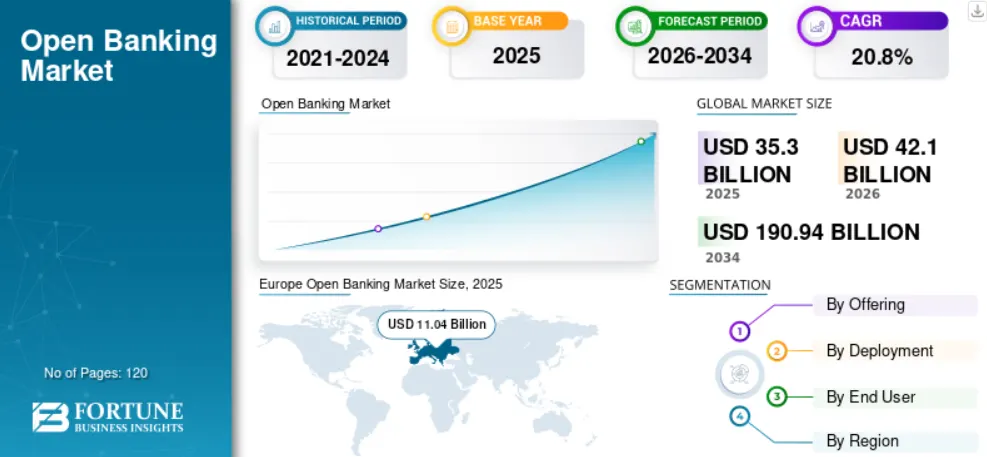
Source: Fortune Business Insights
Institutional appetite is no longer driven by compliance mandates alone; it is fueled by software-like gross margins, stickier enterprise retention rates, and structural shifts in how money moves globally. Building a platform in this space places you directly at the intersection of data aggregation, account-to-account payments, and embedded financial infrastructure.
Market Size & Forecast
The numbers behind this expansion reflect a fundamental re-platforming of consumer and commercial banking. Valued in the tens of billions, current market estimates show the sector expanding past $340 billion over the coming decade, compounding at a rate of roughly 27% annually.
This sustained growth curve is driven by several underlying dynamics:
- High-margin revenue streams: Open banking platforms monetize via API call volumes, monthly recurring developer seats, and fee-per-transaction models for payment initiation.
- Disruption of legacy card rails: Direct bank-to-bank settlements bypass traditional card networks, cutting merchant processing fees significantly while improving settlement speed.
- Shift toward open finance: The market scope is expanding beyond basic checking and savings data to encompass investments, mortgages, insurance, and payroll connectivity.
Early market entry yields compounding network effects; as your platform integrates more financial institutions and enriches raw transactional data, the cost to switch away from your rails becomes prohibitively high for software developers and enterprise clients.
PSD2 & Fintech Innovation
The Revised Payment Services Directive in Europe served as the regulatory catalyst for this sector, effectively stripping traditional banks of their data monopoly and handing control back to account holders. By mandating that banks expose standardized, secure APIs to licensed Third-Party Providers, PSD2 lowered the barrier to entry for financial product creation. This framework created two core categories of operations that form the backbone of modern fintech platforms:
- Account Information Services (AIS): Enables software to read, categorize, and analyze historical ledger data from multiple accounts in real time.
- Payment Initiation Services (PIS): Allows platforms to push funds directly from a user’s bank account to a merchant or recipient without credit card intermediaries.
Two distinct platforms demonstrate how entrepreneurs have leveraged PSD2 framework rails into commercial scale:
- Tink: Built as a pure-play open banking aggregator in Sweden, Tink capitalized on European PSD2 access to scale its API across thousands of banks. Visa ultimately acquired the company in a deal valued at $2.15 billion, demonstrating the enterprise M&A appetite for secure data rails.
- Yapily: Operating on an infrastructure-only model, Yapily connects developers directly to bank APIs across Europe. Despite early-stage scaling costs, the platform generated over $3.5 million in annual revenues while expanding its footprint across thousands of financial institutions.
Outside of regulatory-heavy zones, market forces follow similar patterns. In North America, market leaders like Plaid achieved revenues over $500 million by solving data connectivity before explicit regulations were established. Markets with strict frameworks like PSD2 offer immediate compliance certainty, while market-led regions offer rapid consumer adoption. A well-designed technical architecture can capture value across both environments.
Key Investing Sectors
The buyer persona for open banking services extends far beyond standalone fintech apps. Non-financial enterprises are increasingly embedding banking functionality into their core products to increase customer lifetime value and improve margins. Investing in open banking infrastructure puts you in the position of a digital toll road.
As these verticals continue to digitize their payment workflows and credit risk models, your platform captures revenue on every data request and transaction authorized across the network.
| Target Industry | Primary Integration Use Case | Business Impact |
| Digital Lending Platforms | Real-time income and cash flow verification via AIS APIs | Reduces underwriting time from days to seconds; slashes default rates |
| E-Commerce & Marketplaces | Direct account-to-account payments at checkout via PIS APIs | Eliminates 2-3% card processing fees; prevents payment fraud |
| SaaS & Accounting Software | Automatic, multi-bank feed reconciliation | Increases product stickiness; drives user retention |
| Wealth Management & Wealthtech | Unified portfolio aggregation across disparate institutions | Provides holistic views of client net worth to optimize automated advisory |
How PSD2 Works: The Complete Open Banking Ecosystem Explained
PSD2 is more than a regulatory framework. It provides the technical foundation for secure and standardized data sharing between banks and authorized third-party providers. Instead of building separate integrations for every financial institution, businesses can connect through standardized APIs, making it much easier to develop scalable open banking products and deliver consistent user experiences.
Key Players: ASPSPs, AISPs, PISPs & TPPs
The regulatory framework divides all participants into specific functional roles, each carrying its own licensing rules and technical requirements:
- ASPSP (Account Servicing Payment Service Provider): These are traditional banks and building societies. They hold customer deposits, host account data, and are legally required to build and maintain open APIs.
- AISP (Account Information Service Provider): Entities authorized to read financial data. AISPs pull account balances, historical transactions, and identity records to feed into budgeting software, credit-scoring tools, and wealth apps.
- PISP (Payment Initiation Service Provider): An entity authorized to initiate payments. PISPs push funds directly from a customer bank account to a merchant ledger without going through card networks.
- TPP (Third-Party Provider): The umbrella term for any licensed business operating as an AISP, a PISP, or both.
A strong operational example of a PISP platform is TrueLayer. Operating out of the UK, TrueLayer built an open banking payment network that processes over $116 billion in annual payment volume. By positioning itself as an enterprise PISP, the platform captures high-volume transaction fees across e-commerce, wealth management, and digital marketplaces.
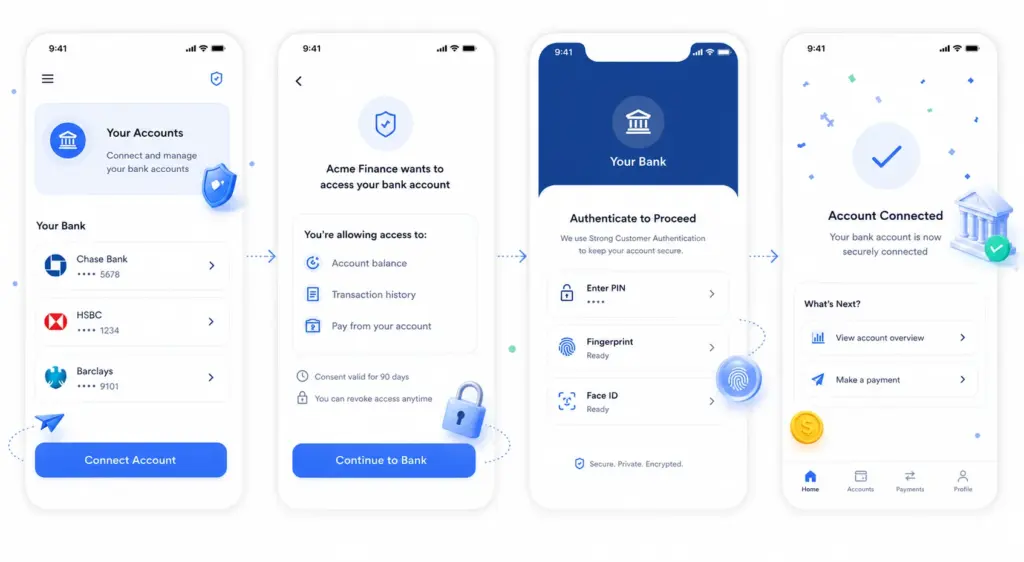
How Consent, OAuth & API Access Work?
Data sharing in open banking never involves sharing raw login credentials. The entire framework relies on OAuth 2.0 protocols to guarantee secure authorization.
- Initiation: The user selects your platform to aggregate accounts or make a direct payment.
- Redirection: Your system redirects the user to their bank app using secure OAuth channels.
- Authentication: The user logs into their bank directly and grants explicit permission for specified data points or payment amounts.
- Token Generation: The bank issues a short-lived access token back to your platform.
- Data Retrieval: Your API uses this token to fetch structured JSON data or trigger the payment.
Consent for reading data is time-limited and typically requires renewal every 90 to 180 days. Users can revoke access at any time through their bank dashboard, making user trust a primary metric for your platform design.
Another platform leveraging this exact API access model is Token.io. By offering turnkey open banking infrastructure across Europe, Token.io established API connections to over 567 million bank accounts. Their infrastructure platform generates annual revenue exceeding $15 million by helping major payment providers embed direct bank payments into existing checkout systems.
Strong Customer Authentication Explained
Strong customer authentication is the security backbone of European open banking. It requires multi-factor authentication for digital payments and data access, drastically reducing chargebacks and fraudulent transactions. To satisfy SCA, an authentication flow must combine at least two independent factors:
- Knowledge: Something only the user knows, such as a password or PIN.
- Possession: Something only the user has, such as a registered smartphone or hardware token.
- Inherence: Something the user inherently is, verified through fingerprint scans, facial recognition, or voice checks.
Technical Insight: For payment initiation, SCA requires dynamic linking. The authentication code generated during checkout must be mathematically tied to both the exact transfer amount and the specific recipient. If either detail changes, the token becomes invalid, making real-time tampering practically impossible.
Key Features of Open Banking Platforms with PSD2
Deploying a competitive open banking platform requires modular functionality that bridges regulatory mandates with commercial value. High-net-worth investors and tech founders look at these platforms as multi-faceted toolkits designed to collect high-value financial data and execute zero-friction payments. Each core feature serves a direct market need, turning technical compliance into monetization channels across B2B and B2C software segments.
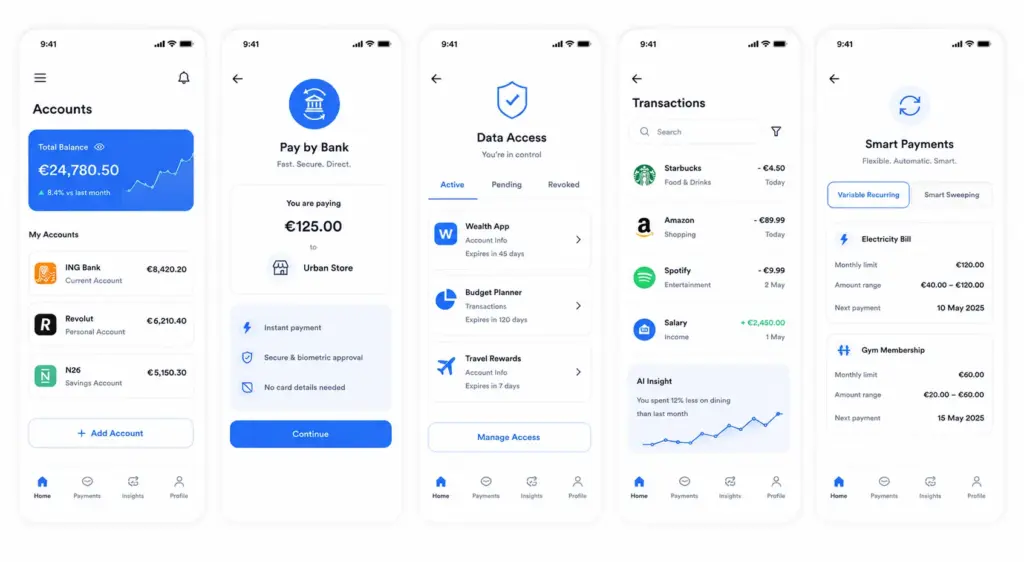
1. Multi-Bank Account Aggregation
Consumers and corporate treasurers often manage capital across several different institutions. Multi-bank aggregation solves this fragmentation by pulling balances, credit limits, and historical ledgers into a single screen. Users link their accounts via OAuth, allowing the platform to stream live balance updates directly into their dashboard. Instead of logging into separate portals, CFOs get instant portfolio views and retail users see complete spending profiles.
2. Instant Account-to-Account Payments
Direct bank payments skip legacy card schemes entirely. By acting as a licensed Payment Initiation Service Provider, the platform triggers push payments straight from the payer bank account to the merchant settlement account. When a shopper reaches checkout, they select Pay by Bank instead of entering credit card numbers. The platform routes them to their mobile banking app to approve the transfer using biometrics.
- Speed: Settlement happens in seconds over local fast payment rails.
- Cost: Bypasses interchange fees, saving merchants up to 80% on transaction processing.
- Conversion: Eliminates manual card entry and reduces checkout abandonment.
3. Smart Consent Management
Explicit consent forms the trust layer of open banking. Platforms must offer fine-grained controls so users know exactly what data points they share and for how long. Through a self-serve security portal, users review every active connection granted to third-party apps. They can extend data access privileges or revoke permissions with a single click.
| Consent State | Platform Action | User Impact |
| Active Authorization | Pulls refreshed ledger data automatically | Uninterrupted app service |
| Pending Renewal (90-180 Days) | Triggers automated re-authentication notification | Simple biometric approval |
| Revoked Access | Immediately terminates API tokens and purges cached keys | Full privacy control |
4. AI Transaction Enrichment
Raw transaction strings from traditional bank feeds are famously cryptic. Machine learning models transform unreadable text lines into structured, intelligence-ready data streams. App developers run this enriched data through analytics engines to display clean logos, clear merchant names, and precise expense categories. Individuals track where their money goes, while digital lenders use the clean data to verify borrower income instantly.
5. Variable Recurring Payments
Variable Recurring Payments act as the open banking replacement for traditional direct debits and standing orders. They allow authorized software to pull varying amounts of money from a customer account on a flexible schedule. Users set upper payment limits and define time rules during initial setup. Once authorized, utility companies or subscription apps pull dynamic payments within those set guardrails without asking for manual authorization every billing cycle.
- Smart Sweeping: Automatically moves excess funds from a current account to a savings account to optimize interest yields.
- Flexibility: Adjusts monthly subscription charges dynamically based on actual service usage.
6. White-Label Banking APIs
Building bank connectivity from scratch requires years of engineering effort and regulatory maintenance. White-label API suits package this complex architecture into developer-friendly software development kits. Fintech startups embed these SDKs directly into their mobile apps. Customers experience a smooth, fully branded banking environment while your underlying platform handles the API routing, token refreshes, and banking compliance in the background.
7. Real-Time Fraud and Risk Monitoring
Security frameworks must monitor every data request and payout for anomalous activity. Real-time monitoring systems evaluate risk vectors before transactions reach settlement engines. The platform continuously analyzes transaction velocity, account age, balance changes, and geolocation data. If a payment request strays from established behavioral baselines, the platform flags the transaction or triggers additional authentication steps.
Risk Strategy Note: By evaluating historical account health before initiating a payment, platforms virtually eliminate NSF rejections and unpaid debit fees, keeping transaction failure rates below 1%.
How to Build an Open Banking Platform with PSD2?
Building a commercial open banking platform requires combining strict financial compliance with enterprise-grade software architecture. The objective is to construct a scalable bridge between complex banking legacy systems and front-end fintech applications. Deploying this infrastructure successfully demands clear technical planning at each phase of development.
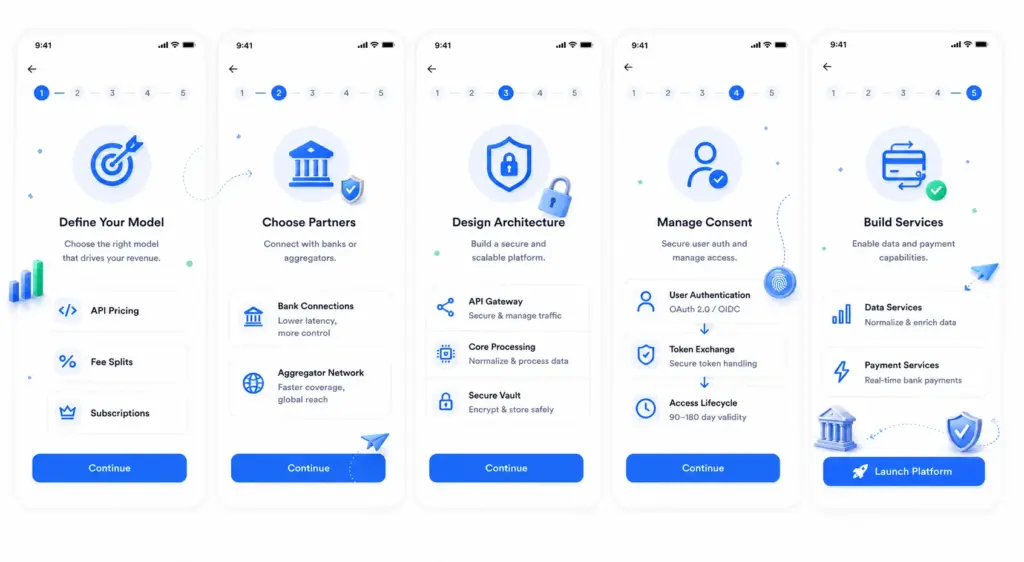
1. Define Open Banking Business Model
Before writing core code, founders must align technical scope with clear revenue drivers. Choosing the right commercial model dictates both your licensing path and engineering budget.
- API Usage Pricing: Charging developers fixed fees per successful API call or aggregated data request.
- Transaction Fee Splits: Monetizing payment initiation by taking a basis-point percentage on direct bank transfers.
- Tiered Enterprise Subscriptions: Offering tiered monthly access packages based on connected bank accounts and active user limits.
2. Choose PSD2 APIs and Banking Partners
Building deep bank coverage requires connecting to individual financial institutions or leveraging existing aggregator pipelines. Direct connections yield maximum control over transaction latency, while partner coverage accelerates immediate geographic reach. Selecting partners depends heavily on API stability, uptime SLAs, and geographical focus across targeted markets.
3. Design Secure Platform Architecture
The engineering layer must process high volumes of financial payloads without sacrificing system reliability. Microservice architecture works best here, keeping data ingestion isolated from core payment processing modules.
- API Gateway Layer: Handles incoming traffic, manages rate limits, and routes external developer requests safely.
- Core Processing Engine: Executes normalization rules to transform disparate bank JSON payloads into uniform formats.
- Secure Vault Storage: Encrypts sensitive financial data at rest and isolates access keys in secure hardware modules.
4. Build Consent and Identity Management
Data privacy standards demand explicit user authorization for every bank connection. Your identity stack must seamlessly guide users through bank authentication while maintaining full audit logging for regulatory checks.
| Process Step | Technical Execution | Security Standard |
| Authentication Flow | Redirects user to native bank app | OAuth 2.0 / OIDC |
| Token Handling | Exchanges authorization codes for access tokens | AES-256 Encryption |
| Lifecycle Tracking | Enforces 90-to-180 day token expiration windows | Automated Revocation |
5. Develop Payment and Data Services
This module acts as the functional engine of your product suite. Software engineering teams build dedicated endpoints for both Account Information Services and Payment Initiation Services.
- Data Services: Normalizes unstructured bank statements into structured categories using custom classification algorithms.
- Payment Rails: Connects directly to local instant payment settlement systems to confirm transaction status in real time.
6. Ensure PSD2 Compliance and Security
Security protocols must meet strict central bank mandates before commercial launch. Building robust defenses prevents costly regulatory halts and protects your institutional reputation. Payment initiation calls must include dynamic linking, binding the authentication token directly to both the monetary value and the payee account details.
7. Test and Launch
Rigorous sandbox testing ensures your API platform performs reliably under high load. Testing teams simulate thousands of concurrent banking calls to verify system stability before going live. Once live, engineering efforts pivot toward monitoring response latencies, maintaining high API availability, and onboarding institutional enterprise clients.
Cost to Build an Open Banking Platform with PSD2
Capital investment required to launch a PSD2-compliant open banking platform varies significantly based on technical scope, geographic coverage, and licensing requirements. Investors and founders should view this expense as building a long-term utility asset where upfront software engineering costs unlock high-margin API transaction revenues down the line.
Proper budget planning requires separating one-time infrastructure setup costs from ongoing regulatory maintenance and server overhead.
- Proof of Concept MVP ($60,000 to $120,000): Focuses on basic Account Information Services (AIS) across a narrow selection of 10 to 20 bank APIs. Includes standard OAuth consent management, basic transaction normalization, and a developer portal for API testing.
- Mid-Scale Commercial Platform ($150,000 to $350,000): Covers both AIS and Payment Initiation Services (PIS) across hundreds of regional banks. Adds AI transaction enrichment, automated token renewal flows, and Strong Customer Authentication dynamic linking.
- Enterprise Infrastructure ($400,000 to $900,000+): Full-scale multi-country connectivity across thousands of banking institutions. Features high-availability microservices, advanced real-time fraud monitoring, custom white-label SDKs, and multi-tenant developer hubs.
Key Factors That Influence Development Cost
The cost of building an Open Banking Platform with PSD2 depends on the features you plan to offer, the level of security required, and the complexity of bank integrations. Understanding these factors early helps you set a realistic budget, prioritize the right functionality, and avoid unexpected development costs as your platform grows.
| Expense Category | Typical Price Range | Key Cost Drivers |
| API Integration & Core Engine | $40,000 to $150,000 | Number of bank integrations, direct connections versus aggregator fallbacks, data normalization algorithms. |
| PSD2 Licensing & Legal Guidance | $30,000 to $90,000 | National competent authority application fees, legal retainers for regulatory filings, compliance policy documentation. |
| Security & SCA Frameworks | $25,000 to $80,000 | Dynamic linking protocols, biometric token handling, HSM key management, penetration testing. |
| Compliance Audits & Certifications | $20,000 to $60,000 | Third-party security assessments, ISO 27001 readiness, GDPR validation. |
| DevOps & Cloud Infrastructure | $15,000 to $50,000 | AWS/GCP multi-region setup, automated CI/CD deployment pipelines, disaster recovery configurations. |
Reduce PSD2 Platform Development Costs
Starting with a focused use case helps reduce development costs and speeds up product validation. Many businesses begin with an Account Information Service (AISP) that lets users securely view and manage financial data before expanding into payment initiation features. This approach allows you to test market demand, onboard customers faster, and generate early revenue without investing heavily in payment infrastructure.
To accelerate development, many startups rely on open banking aggregators and pre-built compliance services instead of building every integration from scratch. This reduces engineering effort and shortens the time to market, allowing your team to focus on the features that differentiate your platform while gradually moving to direct bank integrations as the business grows.
Industries Benefiting Most from PSD2 Open Banking
Open banking APIs serve as connective tissue for digital business models, letting non-bank applications read live ledgers and trigger instant payments. For technology investors, this integration creates multi-industry distribution channels for API infrastructure. When enterprise software embeds banking capabilities, customer retention spikes while customer acquisition costs decline sharply across vertical markets
1. Fintech and Digital Banking
Neobanks and digital wallets rely on open banking to fund consumer accounts without paying high credit card processing fees. Instead of typing in card numbers, users initiate account transfers straight from their primary bank. Revolut integrated European open banking rails to let users aggregate external balances and top up accounts instantly. This functionality processes billions in volume while cutting payment gateway overhead dramatically.
2. Lending and Credit Platforms
Traditional credit underwriting relies on outdated credit bureau reports that miss real time cash flow health. Open banking gives digital lenders read-only access to multi-month transaction histories directly from source accounts.
- Instant Verification: Evaluates income streams and recurring expenses in seconds.
- Lower Default Rates: Analyzes real spending habits rather than static credit scores.
- Automated Auditing: Eliminates manual PDF bank statement uploads for borrowers.
Klarna utilizes open banking data services through its dedicated platform arm to run instant affordability checks during point-of-sale financing. This automated verification maintains rapid checkout speeds without raising loan risk profiles.
3. Wealth Management and Investing
Wealthtech platforms need holistic financial visibility to deliver automated portfolio advice and wealth management services. Open banking bridges disparate brokerage, savings, and investment accounts into one real-time view.
| Capability | Old Method | Open Banking Solution |
| Account Sync | Manual entry or screen scraping | Direct AISP OAuth API connection |
| Portfolio Funding | 3-day ACH or wire transfer | Instant Account-to-Account deposit |
| Data Security | Storing cleartext passwords | Tokenized bank authorization |
Nutmeg uses open banking payment rails to streamline client portfolio top-ups. Investors approve transfers in their banking app, moving investment funds into wealth accounts instantly without delay.
4. Insurance and InsurTech
Insurance providers leverage open banking data to refine underwriting risk models and pay out claims instantly. Real-time access to bank ledgers verifies premium payment history and validates policyholder identity details automatically. Lemonade leverages open banking infrastructure across European markets to verify customer account details instantly. This validation ensures immediate claim payouts directly into policyholder bank accounts without manual processing friction.
5. ERP and Accounting Software
Enterprise resource planning tools and cloud accounting platforms save hundreds of engineering hours by automating bank reconciliation workflows. Open banking pipes live corporate bank transactions straight into general ledgers daily.
- Transaction Pull: Accounting software fetches raw bank feeds automatically every morning.
- Auto-Categorization: AI algorithms match statement lines against outstanding sales invoices.
- Reconciliation: Ledger entries sync instantly, eliminating manual data entry for finance teams.
Xero embeds open banking feeds to deliver automated real-time bank reconciliation for small business owners. This connection powers daily financial reporting while driving enterprise platform retention rates skyward.
Top 5 Open Banking Platforms with PSD2 in the USA
We researched several leading open banking platforms with PSD2 capabilities to understand what makes them successful. Each platform takes a slightly different approach, but they all focus on secure data sharing, reliable API connectivity, and user-controlled consent. Looking at these examples can help you understand the features, architecture, and product strategies that are shaping modern open banking solutions.
1. Plaid
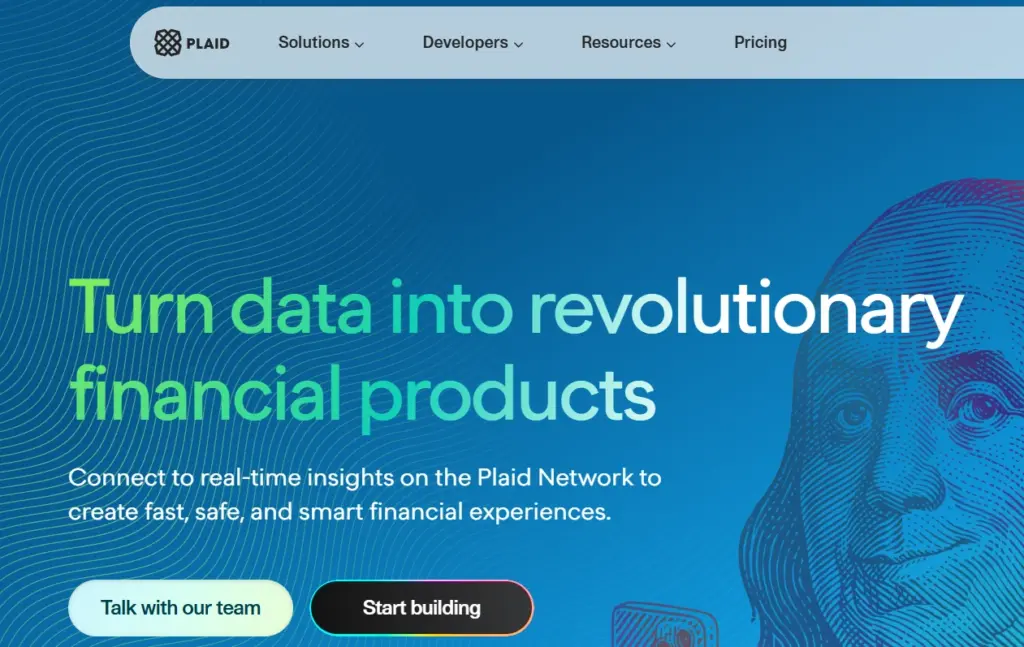
Plaid is one of the most widely adopted open banking platforms in the United States, connecting thousands of banks and financial institutions through a single API. It enables secure account linking, transaction history, identity verification, balance checks, and payment integrations, making it a preferred choice for fintech apps, lending platforms, and personal finance solutions. Although primarily focused on the U.S., Plaid also supports PSD2-compliant connectivity in several European markets.
2. MX
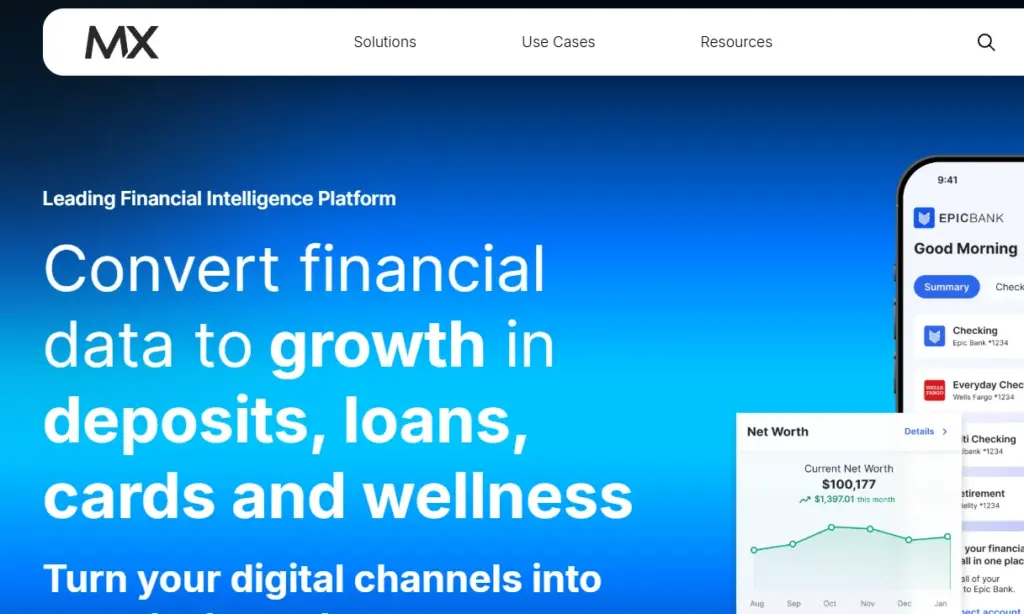
MX is a leading open banking and financial data platform that specializes in data aggregation, enrichment, and customer financial insights. Banks, credit unions, and fintech companies use MX to build digital banking experiences, improve personal financial management, and support lending decisions. Its advanced data categorization and broad financial institution coverage make it a strong enterprise alternative to Plaid in North America.
3. Akoya
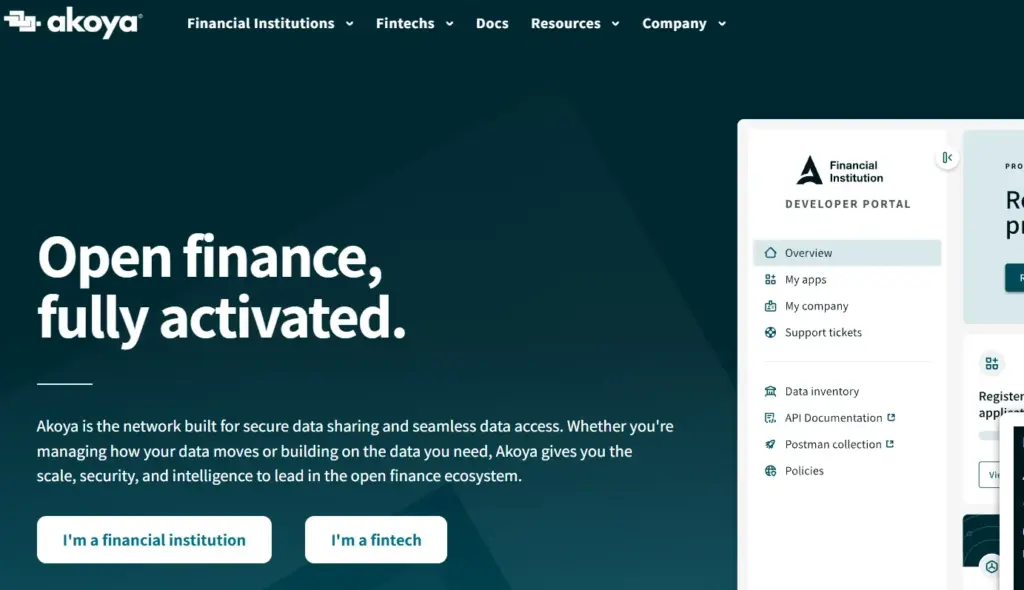
Akoya is a U.S.-focused open finance platform that enables secure, API-based sharing of consumer-permissioned financial data between banks, fintechs, and data aggregators. It supports thousands of financial institutions through a single integration while emphasizing OAuth authentication, privacy, and regulatory compliance. Although the U.S. follows CFPB Section 1033 rather than PSD2, Akoya is built around the same principles of secure, consent-driven open banking.
4. Yodlee
Yodlee, part of Envestnet, is one of the longest-established financial data aggregation platforms. It offers account aggregation, transaction enrichment, cash flow analytics, and wealth management solutions for banks, fintech companies, and investment platforms. Its extensive global connectivity and analytics capabilities make it a popular choice for large financial institutions serving multiple markets.
5. TrueLayer
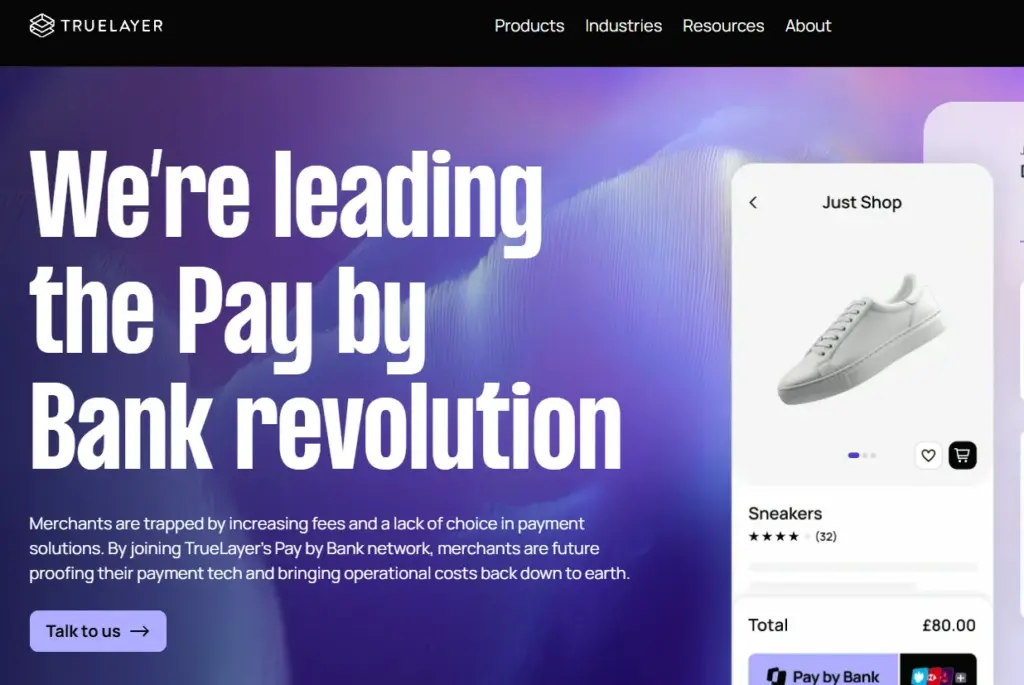
TrueLayer is a PSD2-native open banking platform best known for secure account connectivity and payment initiation across Europe, while also expanding its presence in North America. Businesses use it to build instant bank payments, account verification, and financial data services through developer-friendly APIs. It is particularly well suited for companies operating across both U.S. and European markets that require PSD2-compliant integrations.
Build an Open Banking Platform with PSD2 with IdeaUsher
Taking an open banking vision from concept to market deployment requires an engineering partner that understands strict regulatory frameworks and modern financial architecture. At IdeaUsher, we build custom API platforms that turn compliance mandates into profitable monetization engines. With over 500,000 hours of coding experience, our team of ex-MAANG/FAANG developers designs enterprise-grade infrastructure built to handle millions of secure financial requests reliably.
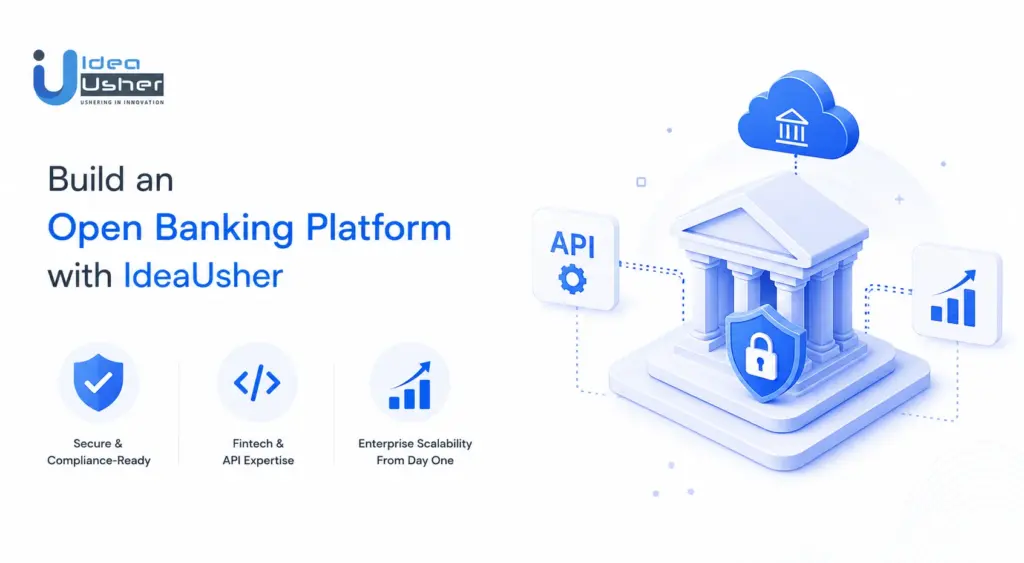
Secure & Compliance-Ready Platforms
Regulatory compliance cannot be an afterthought when processing real money and sensitive financial data. We engineer security directly into the underlying code stack to keep your platform fully aligned with global open banking rules.
- Turnkey SCA Implementation: Integrated multi-factor authentication with biometrics and dynamic linking built directly into payment flows.
- Consent Management Hubs: Granular dashboards that let end users manage, renew, or revoke data access permissions effortlessly.
- Audit-Ready Logging: Immutable record-keeping pipelines that simplify national central bank regulatory filings.
Fintech & API Expertise
Building robust open banking software means bridging modern cloud microservices with legacy banking protocols. Our engineering team brings deep hands-on expertise in connecting disaggregated bank APIs into unified developer platforms. Our team handles the heavy lifting of API normalization, OAuth handshake orchestration, and data enrichment, letting you focus entirely on your core business model.
Enterprise Scalability From Day One
Your infrastructure must be designed to process thousands of transactions per second without performance drops. We build modular, cloud-native architectures that grow alongside your active user base.
| System Capability | Engineering Approach | Business Impact |
| High Availability | Multi-region auto-scaling deployments | 99.99% system uptime |
| Data Normalization | AI-driven transaction categorization | Enriched, actionable customer data |
| Low-Latency Payments | Direct routing to fast local settlement rails | Instant payment confirmation |
Conclusion
The first step in building an open banking platform with PSD2 is defining the problem you want to solve and designing the platform around it. Once the core platform is in place, you can gradually expand with more bank integrations and payment services based on user demand. This step-by-step approach helps you launch faster, manage development costs, and build a platform that is ready for long-term growth.
Things to Know About Open Banking Platforms with PSD2
A1: An open banking platform with PSD2 enables banks to securely share customer-approved financial data with licensed third-party providers through standardized APIs. This makes it possible to build services like account aggregation, payment initiation, budgeting tools, and embedded finance while ensuring customers stay in control of who can access their information.
A2: If you’re building a platform that offers regulated payment or account information services in the European Economic Area, PSD2 compliance is generally required. Businesses must follow rules around customer consent, Strong Customer Authentication (SCA), and secure API communication to operate legally and protect user data.
A3: PSD2 encourages innovation by allowing banks and fintech companies to work together through secure APIs. Businesses can launch new financial products more quickly, streamline payments, and offer personalized financial services. At the same time, customers gain greater transparency and full control over how their banking data is shared.
A4: Security is one of the core principles of PSD2. The regulation requires Strong Customer Authentication, encrypted API communication, and explicit customer consent before any financial information is shared. These safeguards help reduce fraud while ensuring that only authorized providers can access banking data.