 (+971) 8007 4267
 (+91) 946 340 7140
 (+1) 628 432 4305

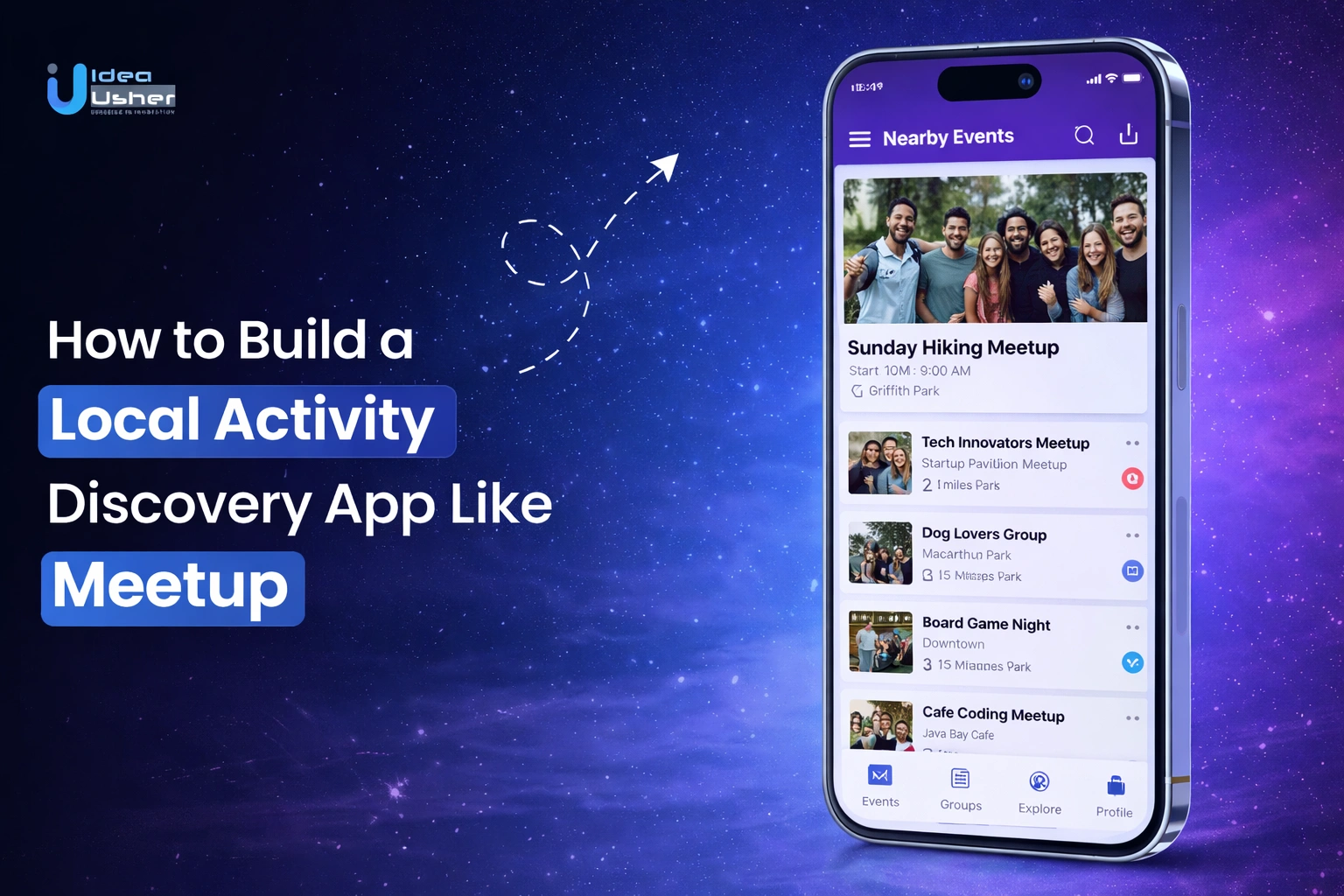
Finding and joining local activities often depends on scattered information across social media, event pages, and word of mouth, making discovery inconsistent and time-consuming. People seeking shared-interest connections want a simpler way to discover events, join groups, and engage in real-world experiences, driving demand for Meetup like local activity discovery apps that unify discovery, participation, and community.
The platform requires more than event listings, integrating group creation, event management, location handling, recommendations, notifications, and engagement features. The effectiveness of the platform depends on how well these systems connect people with relevant experiences while maintaining reliability, ease of use, and consistent community interaction.
In this blog, we explain how to build a local activity discovery app like Meetup by examining core features, architectural considerations, and practical steps involved in creating a scalable and engaging activity discovery platform.
Why Local Discovery Apps Are Scaling Fast in 2026
The global local event discovery platforms market is expanding rapidly in 2026, driven by rising demand for community-driven and real-world experiences. Valued at around $7.6 billion in 2025, it is projected to reach $17.0 billion by 2032, growing at a CAGR of 12.1%.

This growth is fueled by increasing interest in local experiences, social engagement, and AI-powered event discovery, making Meetup like local activity discovery app that fills the gap between online browsing and offline participation.
A. Shift from Social Media to Real-World Communities
Modern users are moving away from traditional social networks that offer endless scrolling but little personal fulfillment. There is a growing demand for platforms that serve as a bridge to the physical world, where the primary goal is meeting people in person.
- Engagement Quality: Unlike digital-only interactions, real-world communities foster deeper loyalty and higher user retention rates.
- Reduced Digital Fatigue: Users are actively looking for reasons to put down their devices and engage in hobbies, sports, or professional networking.
- The Trust Factor: Physical meetups build a level of social trust and accountability that is often missing in anonymous online forums.
B. Rise of Hyperlocal and Interest-Based Platforms
The trend toward “hyperlocal” means users want to discover what is happening in their immediate vicinity. Precision in location-based data allows these apps to provide highly relevant suggestions that fit into a user’s daily life.
| Feature Focus | Impact on User Experience |
| Micro-Niche Groups | Connects users with very specific interests, from niche tech stacks to local craft groups. |
| Proximity Logic | Reduces the barrier to entry by showing events within walking or short driving distance. |
| Real-Time Discovery | Allows users to find “happening now” activities, increasing spontaneous app usage. |
C. Market Size and Growth of Activity Discovery Apps
The “Experience Economy” continues to outpace traditional sectors. People are allocating more of their disposable income toward activities, workshops, and social events, driving the valuation of discovery platforms upward.
- High Growth Rates: The sector is seeing consistent double-digit growth as more industries integrate event-based marketing.
- Revenue Diversification: Beyond simple ads, these platforms thrive on organizer subscriptions, ticket transaction fees, and sponsored event placements.
- Global Scalability: While the focus is local, the software architecture is globally scalable, allowing a single platform to serve thousands of cities simultaneously.
D. Why Startups are Investing in Meetup-like Apps
Building a Meetup like local activity discovery app is an attractive move because it creates a defensible network effect. Once a community is established in a specific city, it becomes a self-sustaining ecosystem that is difficult for competitors to disrupt.
- Valuable User Data: These apps collect high-intent data regarding where people go and what they enjoy, which is incredibly useful for localized advertising.
- Low Barrier to Entry: Modern APIs for mapping, payments, and messaging make it easier than ever to deploy a sophisticated MVP.
- Community Moat: The real value lies in the active groups and organizers. Once you own the local social graph, you have a permanent edge in that market.
What Makes Meetup a Category-Leading Platform?
Meetup is a social discovery platform used to find and build local communities based on shared interests. Unlike social media apps focused on digital interaction, a Meetup like local activity discovery app’s primary goal is to facilitate in-person gatherings, from professional networking and hobbyist groups to social outings and outdoor adventures.

A. Core Concept: Event-Driven Social Networking
At its heart, the platform functions as an event-driven network where the social graph is built around shared activities rather than existing friendships. This allows users to expand their social circles based on what they do, rather than who they already know.
- Action-Oriented Discovery: The interface is designed to push users toward an RSVP, making the transition from “interested” to “attending” seamless.
- Organizer Empowerment: The platform provides a suite of tools that turn casual hobbyists into community leaders, effectively crowdsourcing the creation of content (events).
- Interest-Based Taxonomy: By categorizing groups into specific niches such as “Outdoor Adventures” or “Tech Networking,” the platform ensures high relevancy for every user.
B. Community-First vs Content-First Platforms
While most modern apps prioritize a “content-first” approach to keep users scrolling, Meetup utilizes a “community-first” model. This distinction is vital for anyone building a Meetup like local activity discovery app, as it changes how features are prioritized and developed.
| Feature Type | Content-First Platforms (Instagram/TikTok) | Community-First Platforms (Meetup) |
| Primary Metric | Likes, Shares, and Watch Time | RSVPs, Check-ins, and Group Growth |
| User Interaction | One-to-Many (Influencer to Follower) | Many-to-Many (Member to Member) |
| Monetization | Programmatic Ad Placements | Organizer Subscriptions and Event Fees |
| End Goal | Virtual Retention | Physical Attendance |
C. How Meetup Drives Real-World Engagement
The platform uses a combination of psychological triggers and functional tools to ensure that digital interest leads to physical presence. This is achieved through a carefully mapped user journey that reduces the friction of meeting strangers.
- Iterative Notifications: Timely reminders about upcoming events and “new group” alerts keep the platform top-of-mind without being intrusive.
- Social Proof: Seeing a list of attendees and past event photos builds the confidence necessary for a new user to attend their first meetup.
- Localized Algorithms: The search engine prioritizes “Nearby” and “Starting Soon,” creating a sense of urgency and accessibility that broad social media lacks.
D. Key success Metrics Behind Meetup’s Growth
Analyzing the data points that drive growth reveals how a local discovery platform scales. These metrics are the vital signs of a healthy, self-sustaining ecosystem.
- Group Density per City: A critical mass of groups in a specific geographic area ensures that any user who signs up finds immediate value.
- Organizer Retention Rate: Since organizers are the backbone of the platform, keeping them active through low-friction management tools is essential.
- Repeat Attendance: The ultimate sign of a successful community is the percentage of users who attend more than one event with the same group, indicating true social bonding.

Core Features Required in a Meetup-Like App
A Meetup like local activity discovery app requires a balanced architecture that combines real-time performance, social psychology, and seamless event management to reduce user hesitation and drive participation. These features drive participation through real-time systems, geolocation, and seamless interactions, creating a scalable, community-driven ecosystem with continuous engagement.

1. User Onboarding with Interest Mapping
The onboarding process is the most critical phase for a Meetup like local activity discovery app. Instead of generic sign-ups, deep interest-mapping helps users select specific categories, hobbies, and professional goals.
This data eliminates “cold starts” by immediately populating feeds with relevant groups. Gathering secondary data like travel distance and availability ensures recommendations perfectly align with the user’s real-world lifestyle.
2. Smart Local and Virtual Event Discovery
Discovery serves as the primary engine for any Meetup like local activity discovery app. Using semantic search and geolocation, the platform provides highly relevant, real-time suggestions for neighborhood-specific gatherings.
A hybrid model supporting both physical and virtual events maintains high engagement regardless of location. Granular filters for time, cost, and accessibility ensure every user finds activities that fit their schedule.
3. Group Ccreation and Community Management
The true value of a discovery app lies in its groups, which act as the permanent pillars of the community. Organizers require a powerful suite of tools to brand their communities, manage recurring schedules, and set specific membership approval requirements.
A robust management system supports hierarchical scaling through local chapters and sub-groups. Empowering community leaders with these professional capabilities ensures a consistent stream of high-quality, curated events for the members.
4. RSVP System with Attendee Tracking
The RSVP system bridges the gap between digital browsing and physical attendance. It must handle complex logistics like waitlist management, guest limits, and custom registration questions for every event.
Real-time attendee tracking provides organizers with essential data for venue planning. Integrated QR code check-ins improve event security while accurately measuring the “show-up rate,” the ultimate metric for success.
5. In-App Chat and Discussion Threads
Communication tools build rapport and trust before members meet in person. Discussion threads facilitate long-form resource sharing, while real-time chat allows for immediate coordination between organizers and attendees during events.
These social layers transform a simple listing site into a living ecosystem. By fostering constant interaction, the platform encourages daily app usage and strengthens the social bonds within each community.
6. Personalized Event Recommendations Engine
Sophisticated algorithms match users with events they may not have discovered through manual search. By analyzing past attendance and behavior, the AI proactively surfaces high-relevancy suggestions tailored to specific interests.
This engine also accounts for temporal data, suggesting professional mixers on weekdays and outdoor activities on weekends. Personalized discovery reduces choice paralysis, significantly increasing the conversion rate from view to RSVP.
7. Organizer Dashboards and Analytics
Data-driven insights are vital for maintaining high event quality. Dedicated dashboards provide organizers with key metrics on group growth, engagement levels, and member demographics to help them refine their offerings.
These analytics serve as a primary tool for monetization. Offering “Pro” tiers with advanced data visualizations attracts professional hosts and commercial event planners seeking to maximize their reach.
8. Push Notifications and Reminders
Well-timed notifications are the primary driver of physical attendance in a busy landscape. A tiered strategy including event alerts and RSVP deadlines keeps the community momentum alive from discovery to arrival.
Customization options allow users to control their alert frequency, preventing notification fatigue. When implemented correctly, these nudges act as a gentle heartbeat, ensuring the platform remains an indispensable part of social planning.
Advanced Features That Differentiate Your App
A competitive Meetup like local activity discovery app relies on advanced technologies that enhance personalization, trust, and engagement beyond basic event listings and social discovery features. These features enable smarter recommendations, safer interactions, and higher user retention through data-driven insights and behavioral design.

1. AI-powered Event Recommendations
Advanced engines in 2026 utilize machine learning to analyze attendance history, seasonal trends, and linguistic patterns. This shifts the Meetup like local activity discovery app from reactive searching to proactive discovery, identifying perfect matches before users even begin browsing.
2. Geo-Fencing for Hyperlocal Targeting
Geo-fencing creates virtual perimeters to trigger real-time, context-aware notifications. This transforms the local activity discovery app into a proactive companion, alerting users to nearby gatherings starting soon and significantly increasing spontaneous participation and event foot traffic.
3. Paid Events and Ticketing Integrations
A seamless monetization layers allow organizers to manage secure ticket sales, early-bird pricing, and refunds directly.Built-in payment gateways professionalize the platform, attracting high-quality hosts while generating clear revenue streams through transaction fees within a contained user journey.
4. Social Graph and Friend-Based Discovery
The social graph integration allows users to see which existing contacts are attending specific events. This “friend-of-a-friend” model provides essential social proof, lowering entry barriers for hesitant members and strengthening community bonds through verified real-world connections.
5. Community Moderation and Trust Systems
Advanced trust systems incorporate verified profiles, background check integrations, and AI-driven sentiment analysis to flag harassment. Implementing “Trust Scores” based on attendance reliability and positive feedback ensures a safe, welcoming environment that protects both users and brand reputation.
6. Gamification for User Engagement
Behavioral psychology drives long-term retention through digital badges, “Event Streaks,” and contributor leaderboards. Turning participation into a rewarding experience helps onboard new members via introductory “quests,” making the initial social jump feel like a rewarding and achievable game.
7. Integration with Calendars and Maps
Deep integration with external tools like Google Calendar and Apple Maps ensures frictionless logistics. Automated syncing and “one-tap” ride-hailing transitions users from the app to the physical world, making the platform an indispensable part of their social planning routine.
Step-by-Step Process to Build the App
The development of a Meetup like local activity discovery app requires a systematic approach that balances user experience with technical scalability. Success depends on moving from a strategic niche focus to a robust, high-performance digital infrastructure.

1. Defining Niche, Audience, and Use Cases
Market entry begins with the identification of a specific underserved community or geographic region. This phase involves mapping user personas and documentable pain points to ensure the platform solves actual social friction rather than just offering generic event listings.
2. Competitor Analysis and Feature Mapping
Direct and indirect competitors provide a blueprint for essential industry standards and potential market gaps. A detailed feature matrix helps prioritize high-value functionalities that differentiate the app while ensuring the core utility remains competitive with established global social platforms.
3. UX Design for Discovery and Engagement
The user interface focuses on reducing the cognitive load required to find and join local groups. Wireframes must prioritize map-based exploration and frictionless RSVP flows, ensuring that the transition from digital browsing to physical attendance feels intuitive and safe.
4. Building MVP with Core Features
Initial development cycles prioritize a Minimum Viable Product that includes user profiles, geolocation search, and basic group management. This lean approach allows for the validation of the core value proposition without over-engineering complex secondary features during the early launch.
5. Testing with Real Community Scenarios
Beta testing involves deploying the platform within a controlled environment of active organizers and attendees. Real-world feedback during this stage uncovers logistical bottlenecks in the check-in process and helps refine the notification frequency to maximize actual event turnout.
6. Scaling with Cloud and Microservices
The transition from a local pilot to a multi-city platform requires a modular backend architecture. Cloud-native microservices ensure that search queries, real-time messaging, and high-traffic event registrations remain performant as the user base expands across different time zones.
Cost Breakdown for Building a Local Activity Discovery App
The financial commitment required to build a Meetup like local activity discovery app varies significantly based on the depth of the feature set and the intended scale of the user base. For most projects in 2026, the strategy involves starting with a lean MVP (Minimum Viable Product) to validate the core community-building concept before scaling into a high-performance enterprise ecosystem.
| Development Phase | MVP Level | Enterprise Level | Key Deliverables |
| Discovery & Planning | $5,000 – $10,000 | $15,000 – $30,000 | Product Roadmap, SRS, Tech Architecture |
| UI/UX Design | $8,000 – $15,000 | $25,000 – $60,000 | Clickable Prototypes, Custom UI Kits |
| Mobile Development | $25,000 – $45,000 | $80,000 – $180,000 | iOS & Android Apps (Flutter/Native) |
| Backend & APIs | $15,000 – $25,000 | $50,000 – $120,000 | Database, Server Logic, Admin Panel |
| QA & Security | $5,000 – $12,000 | $20,000 – $50,000 | Unit Testing, Penetration Testing, HIPAA/GDPR |
| Deployment & Launch | $3,000 – $7,000 | $10,000 – $25,000 | App Store Setup, Cloud Infrastructure (AWS/GCP) |
| Total Estimated Cost | $61,000 – $114,000 | $160,000 – $260,000 | Fully Functional & Scalable Platform |
Cost-Affecting Factors During Development
While the basic structure of the app remains consistent, several variables can cause the budget to fluctuate. Managing these factors early in the planning stage prevents unexpected cost overruns and ensures the capital is allocated toward features that drive the most user engagement.
- Recommendation Engine Complexity: Basic rule-based sorting is standard, but AI-driven personalization adds $15,000–$35,000 to the backend budget for advanced data processing and predictive matching.
- Geographical Developer Location: North American teams cost $150–$250 per hour, whereas offshore teams in India ($35–$70/hr) can reduce total development expenditure by approximately 60%.
- Platform Architecture Choice: Building separate native iOS and Android apps increases budgets by 1.7x compared to using cross-platform frameworks like Flutter, which utilize a single codebase.
- Third-Party API Integrations: Essential services like Stripe, Twilio, and Google Maps Premium add $1,500–$3,000+ each in setup fees and ongoing monthly operational costs.
- Post-Launch Maintenance: Ongoing technical support requires an annual budget of 15% to 20% of the initial development cost for security patches, server upkeep, and OS compatibility.
Technology Stack for Meetup-Like App Development
Selecting a robust and scalable technology stack is a critical decision that impacts the long-term performance and maintenance costs of a Meetup like local activity discovery app. The architecture must support high-concurrency event registrations, real-time communication, and precise geolocation services while maintaining a fluid user interface across various devices.
| Component | Recommended Technology | Strategic Value & Insights |
| Frontend frameworks for seamless UX | Flutter or React Native | Single codebases reduce development time by 40% while maintaining native-like performance and fluid animations for high-quality event browsing. |
| Backend architecture for real-time events | Node.js or Go (Golang) | These technologies excel at asynchronous I/O and high concurrency, ensuring sub-second latency for real-time chat and live event updates. |
| Databases for user and event management | PostgreSQL & MongoDB | A hybrid approach balances structured relational profiles with flexible, unstructured data for event descriptions, tags, and active community threads. |
| APIs for maps, payments, and messaging | Google Maps, Stripe, & Twilio | Industry-leading integrations provide essential geofencing, secure global transaction processing, and reliable SMS triggers for automated event reminders and alerts. |
| Cloud infrastructure and scalability | AWS or Google Cloud (GCP) | serverless functions ensure the platform handles massive traffic spikes during major local festivals without performance degradation. |
How IdeaUsher Builds Scalable Community Apps
IdeaUsher transforms complex social concepts into high-performance digital ecosystems. Our development methodology prioritizes technical resilience and human-centric design, ensuring every Meetup like local activity discovery app scales seamlessly from launch to global expansion.
A. Our Approach to Product Strategy
Our developers strategize after identifying core user behaviors and market gaps to define a lean, high-impact roadmap. We prioritize features that validate your business model quickly, allowing for rapid deployment and data-driven iterations based on early user interactions.
B. Designing Retention-Focused User Journeys
Our designers create intuitive flows that guide users from initial discovery to their first physical event. We focus on reducing social anxiety through clear interface cues, social proof elements, and frictionless RSVP systems that encourage long-term participation.
C. Building Real-Time and Location-Based Features
Our developers implement high-precision geolocation and WebSocket-driven messaging to ensure every interaction feels instantaneous. We build the “Live” experience into the app, allowing users to discover and coordinate activities with pinpoint accuracy in their immediate vicinity.
D. Ensuring Scalability for Growing Communities
We architect backends using microservices and cloud-native solutions to handle sudden traffic spikes during major city events. Our engineering team ensures your platform maintains sub-second latency even as your user base grows from thousands to millions.
E. Post-Launch Support and Optimization
Our commitment continues beyond the App Store launch through consistent security patches and feature iterations. We analyze user behavior data to refine the recommendation algorithms, ensuring the platform evolves alongside the shifting needs of your community.
Monetization Models for Activity Discovery Apps
Building a sustainable Meetup like local activity discovery app requires a multi-layered revenue strategy. The design monetization frameworks that balance platform profitability with the organic growth of the community.

1. Subscription Plans for Organizers
Professional organizers and businesses pay a recurring fee to access advanced community management tools. This tier typically includes unlimited event creation, custom branding, and automated email marketing to keep their member base consistently engaged.
2. Commission on Paid Events
The platform acts as a secure intermediary for ticketed workshops, classes, and social gatherings. By integrating a seamless payment gateway, the app earns a percentage-based commission or flat fee on every successful transaction.
3. Featured Listings and Promotions
Organizers can pay to have their events highlighted at the top of local search results or category feeds. This high-visibility placement drives higher RSVP rates and is particularly valuable for new groups seeking rapid growth.
4. Brand Partnerships and Sponsorships
Local businesses and global brands pay to sponsor specific categories or large-scale community events. This model allows companies to reach a highly targeted, intent-driven audience while providing additional value or discounts to the app’s users.
5. Premium Community Features
Individual members can subscribe to an “Elite” or “Pro” tier to unlock exclusive social benefits. These features often include early access to popular events, ad-free browsing, and unique profile badges that signify active community leadership.
Real Challenges in Building Meetup-Like Platforms
Developing a Meetup like local activity discovery app involves navigating complex social dynamics and technical hurdles. Our team focuses on engineering solutions that bridge the gap between digital coordination and successful real-world interactions while maintaining a secure, high-quality ecosystem.
1. Solving the Cold Start Problem
Challenge: New platforms often struggle to attract users when there are no active groups or events to browse during the launch.
Solution: Our developers implement automated data aggregation and “seed” event tools that populate the map with public local activities, ensuring every new user finds immediate value upon their first login.
2. Balancing Supply and Demand of Events
Challenge: Maintaining a consistent ratio between active organizers providing content and enough local members to fill those events is difficult.
Solution: We build internal recommendation triggers that alert organizers to high-demand, low-supply niches in their specific area, using data-driven insights to encourage the creation of highly relevant, popular gatherings.
3. Ensuring User Safety and Moderation
Challenge: Physical meetups carry inherent risks, requiring robust systems to verify identities and prevent harassment within private group chat threads.
Solution: Our team integrates AI-powered sentiment analysis and mandatory profile verification protocols, allowing us to proactively flag suspicious behavior and provide organizers with instant, “one-tap” member blocking and reporting tools.
4. Driving Consistent User Engagement
Challenge: Users often download discovery apps for a single event and then delete them once their immediate social need is met.
Solution: We engineer behavioral “nudge” engines that utilize personalized push notifications and localized “trending” alerts, keeping the platform top-of-mind by continuously matching the user’s evolving interests with nearby opportunities.
Growth Strategy for Launching the App
Launching a Meetup like local activity discovery app requires a sophisticated blend of digital visibility and community-level trust. The strategy focuses on capturing intent-driven search traffic while fostering organic, person-to-person growth within specific geographic hubs.

A. Building Initial User Communities
Securing a “seed” audience is the primary step toward creating the network effect necessary for long-term platform viability. Focus on high-engagement micro-niches ensures the app feels active from the first day.
- Targeted Outreach: Identify and recruit existing community leaders from platforms like Facebook Groups or Discord to migrate their activities to your more specialized tool.
- Founder-Led Events: Organize exclusive, high-value launch events in key cities to demonstrate the app’s utility and gather early user-generated content.
- Incentivized Founding Members: Offer “Founding Member” badges and permanent premium features to the first 1,000 users who host or attend multiple events.
B. Leveraging Local SEO and Event Pages
Visibility in 2026 is heavily influenced by “Zero-Click” searches and AI-driven local discovery. Optimizing the platform as a primary source for neighborhood-specific queries is essential for organic growth.
- Hyper-Local Landing Pages: Create dedicated, SEO-optimized pages for every neighborhood (e.g., “Tech Networking in Brooklyn” or “Yoga Classes in Bandra”) featuring real-time event feeds.
- Schema Markup Implementation: Use “Event” and “LocalBusiness” structured data to ensure your listings appear as rich snippets and in voice search results.
- Google Business Profile Synergy: Encourage organizers to link their event pages to their local business profiles, creating a web of local authority that search engines prioritize.
C. Influencer and Organizer Partnerships
Strategic alliances with local tastemakers can accelerate user acquisition faster than traditional paid advertising. Focus on partners who already command significant trust within specific interest-based communities.
- Co-Branded Experiences: Partner with local cafes, gyms, or co-working spaces to host “Official App Meetups,” providing them with foot traffic in exchange for promotion.
- Micro-Influencer Takeovers: Collaborate with local creators to document their experience using the app to find and join a new community.
- Organizer Affiliate Program: Reward prolific organizers with “Boost” credits or revenue-sharing opportunities when they bring a significant number of new members to the platform.
D. Retention Strategies for Repeat Engagement
The long-term value of a Meetup like local activity discovery app is found in repeat attendance. Behavioral psychology should be utilized to move users from one-time attendees to consistent community members.
- Personalized “Nudge” Engine: Use AI to send timely notifications about “Similar Groups” or “Events Your Friends are Attending” to keep the app top-of-mind.
- Gamified Milestones: Implement digital rewards for “Attendance Streaks” or “Community Contribution,” tapping into the user’s sense of social achievement.
- Feedback Loops: Automate post-event surveys that allow members to rate their experience, ensuring organizers maintain high standards and users feel heard.
E. Scaling Through Referrals and Network Effects
True growth occurs when existing users become the primary marketing channel. Building viral loops into the product architecture turns every RSVP into a potential referral for the platform.
- Smart Invite Links: Enable “Bring a Friend” features where users can easily share private invite links that grant guests skip-the-line access or discounts.
- Social Graph Integration: Allow users to sync contacts to see who else is on the platform, creating an immediate sense of familiar community.
- Tiered Referral Rewards: Offer “Pro” organizer tools or ad-free experiences to users who successfully refer a specific number of active event hosts.
Conclusion
The future of community building lies in seamless, real-world engagement driven by hyper-local discovery. Developing a local activity discovery app like Meetup requires a strategic balance of AI-powered recommendations, robust community management, and secure monetization models. By prioritizing user safety and retention-focused features, founders can effectively solve the “cold start” problem and foster thriving ecosystems. Ultimately, success depends on transforming digital RSVPs into meaningful human connections, ensuring your platform becomes a trusted bridge between online interests and vibrant, local social experiences in 2026.
Why Choose IdeaUsher for Your App Development?
Choosing the right development partner is the most critical decision in your journey to build a Meetup like local activity discovery app. At IdeaUsher, we combine strategic product consulting with high-tier engineering to ensure your platform isn’t just a directory, but a thriving, scalable ecosystem.
Our team, featuring ex-FAANG/MAANG developers, brings a level of technical rigor that guarantees sub-second latency and robust security from day one.
With over 500,000+ hours of experience, we have worked with numerous enterprises to build and launch various products and solutions across the global market. We understand that community apps require a unique balance of complex geolocation logic and human-centric design.
By partnering with us, you leverage deep industry expertise to transform your vision into a market-leading platform that drives real-world engagement and long-term profitability.
Why Hire Us:
- Proven expertise in social and community apps: We specialize in the unique social mechanics and high-concurrency requirements of activity-based platforms.
- End-to-end development and consulting: From initial market research and UI/UX to backend deployment and post-launch scaling, we handle the entire lifecycle.
- Agile development with faster time-to-market: Our iterative process ensures you launch a high-quality MVP quickly to capture early market share.
- Custom solutions tailored to your niche: We avoid cookie-cutter templates, building bespoke features that specifically serve your target audience and community goals.
- Transparent pricing and communication: We provide clear project milestones and consistent updates, ensuring your investment is always aligned with your business objectives.


FAQs
A.1. The Meetup like local activity discovery app development generally costs between $61,000 and $114,000 for an MVP. Final pricing depends on features like real-time mapping, AI-driven event recommendations, and complex payment gateway integrations.
A.2. Most local activity discovery app generates revenue through organizer subscription plans, ticketing commissions, and featured event promotions. Brand partnerships with local venues and premium community features also provide significant, scalable income streams for growing platforms.
A.3. Focus on a hyper-local niche or a single city to build density quickly. Partnering with established local influencers and event hosts helps populate the platform with quality content before your global launch.
A.4. Essential features include user interest mapping, an intuitive RSVP system, and robust organizer dashboards. Secure in-app messaging and automated push notifications are also critical for driving consistent user engagement and event attendance.


