 (+971) 8007 4267
 (+91) 946 340 7140
 (+1) 628 432 4305

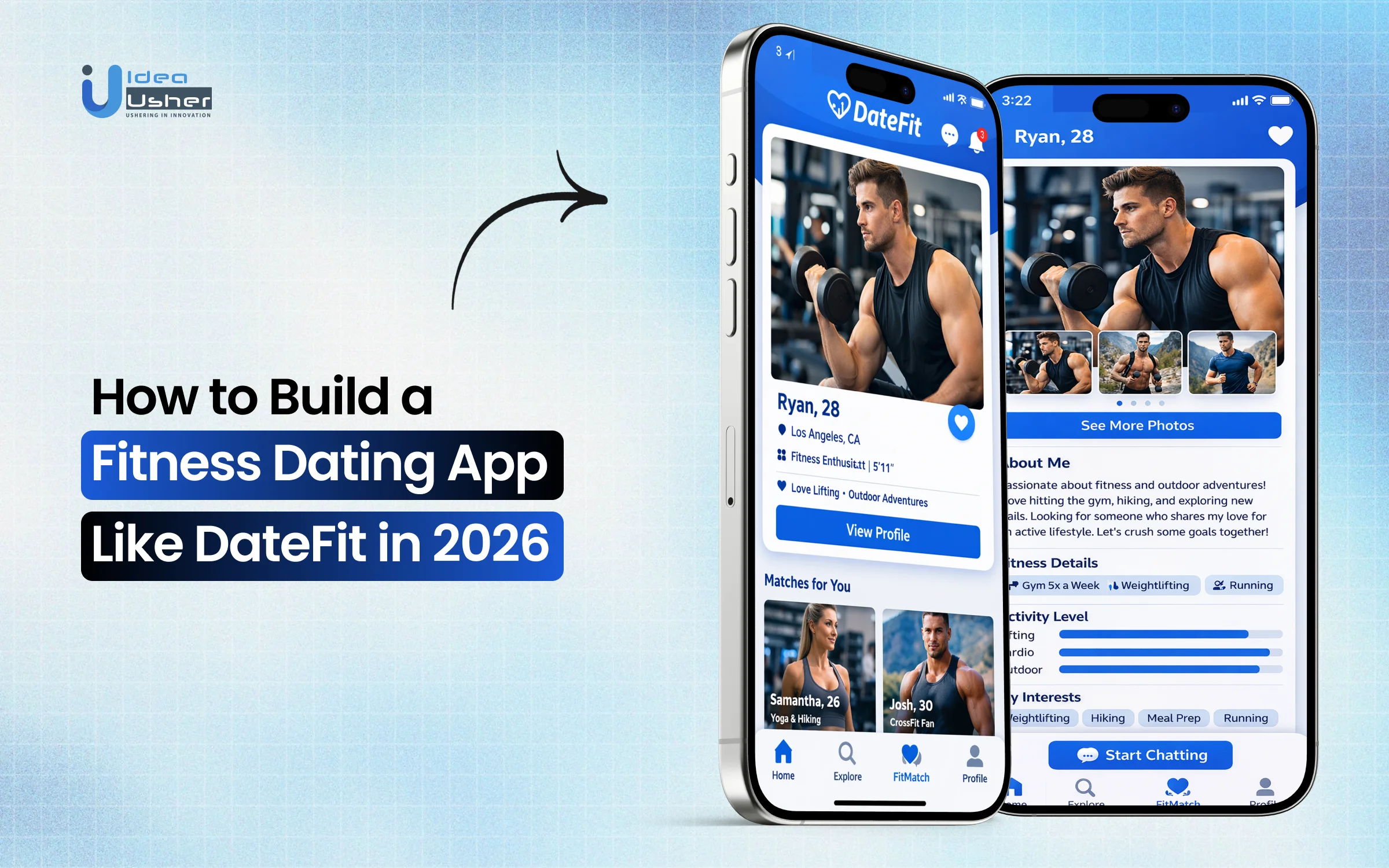
Consistency in fitness often depends on the environment that shapes daily habits. When social circles do not support routines, progress may gradually slow down. Many individuals start strong but may lose direction without shared accountability. The popularity of fitness dating apps has been increasing as people become more health-conscious and want social systems that reinforce their routines.
Fitness dating apps can create a structured social layer that supports behavioral consistency. These platforms may align users with those who share similar activity levels and long-term health goals. Over time, this alignment can reinforce habit loops and improve adherence to routines.
Over the years, we’ve developed numerous fitness-focused dating platforms, powered by behavioral AI systems and real-time activity tracking architectures. As we have this expertise, we’re sharing this blog to discuss the steps to develop a fitness dating app like DateFit.
Why Fitness Dating Apps Are Scaling Fast in 2026?
According to Grand View Research, the global online dating application market was valued at USD 7,939.2 million in 2022. It is projected to reach USD 14.42 billion by 2030, growing at a CAGR of 7.6%. While these numbers show overall market health, the real growth in 2026 is happening in high-intent niche verticals.

Source: Grand View Research
Investors are pivoting away from mass-market platforms toward lifestyle-specific ecosystems. Fitness dating represents the intersection of health consciousness and high disposable income. Users who invest in premium gyms and wearable tech are statistically more likely to pay for digital services that optimize their social lives.
The Shift to Lifestyle Matchmaking
The swipe fatigue of recent years has hit a breaking point. High-value users now prioritize lifestyle alignment over digital catalogs of faces. Traditional apps often match people with fundamentally incompatible daily routines.
Lifestyle matchmaking solves this friction. For a dedicated athlete, a partner who ignores health is a disruption. Matchmaking now focuses on shared rhythms. Platforms like Fitafy have capitalized on this by matching users based on specific dietary preferences and fitness levels, ensuring a “swole-mate” isn’t just a gym partner but a lifestyle match.
- Intentionality: Modern users want matches that fit their existing schedules.
- Third Space Integration: Apps are becoming bridges between the digital world and physical clubs.
- Value Perception: Matching based on how people live reduces churn and increases satisfaction.
Why Niche Communities Drive Retention
The biggest risk for a dating app is success churn, which occurs when users delete the app after finding a partner. Fitness platforms bypass this by functioning as social-fitness hybrids. The platform remains a daily utility even after a romantic connection is made.
Apps like Datefit illustrate this by incorporating an activity feed where users can post, like, and chat regardless of their relationship status. This community-first approach ensures the app stays on the phone.
- Accountability Loops: Shared workout challenges turn the app into a daily habit.
- Ecosystem Stickiness: Syncing wearable data from Apple Health or Garmin creates a high barrier to switching.
- Hyper-Targeting: Segmenting into sub-niches, such as yoga or triathlons, creates a sense of belonging that mass-market apps cannot offer.
Capitalizing on Current Market Gaps
The market remains fragmented despite recent growth. There is significant white space for sophisticated investors who focus on deep technical integration.
- Verified Partnerships: There is an opportunity to partner with luxury gym chains to offer “Verified Member” status. This solves the primary pain points of safety and trust.
- Behavioral AI: Current gaps exist in using AI to analyze activity patterns. The next winning platform will match users based on actual habits, such as frequenting the same trails.
- The 50+ Demographic: Active adults over 50 have the highest disposable income. A platform dedicated to health-span and companionship in this age group is a high-margin opportunity.

What Makes DateFit’s Model Work So Well?
DateFit succeeds by moving away from the scarcity model of traditional dating. Most platforms lose utility the moment a user finds a partner. DateFit has built a lifestyle ecosystem that remains relevant regardless of relationship status. By positioning itself as a community hub rather than just a matchmaking tool, the platform secures higher daily active usage and reduces the churn associated with successful dating.
From an investment standpoint, this model is highly attractive because it diversifies the user base. It captures both the single demographic and the massive market of fitness enthusiasts looking for platonic training partners. This dual utility creates a more resilient platform that can withstand market shifts and changing social trends.
Dual-Mode: Dating and Friendships
A primary strategic move is the integration of the Find Friends Through Fitness feature alongside its dating interface. This functionality allows users to toggle between seeking a romantic partner and seeking a workout companion. It solves a major pain point for fitness enthusiasts: finding someone who matches their intensity, schedule, and training style.
- Broadened User Acquisition: By including a platonic track, the app attracts users who might avoid standard dating apps.
- Safety and Comfort: The friend-finding feature lowers the barrier to entry by fostering a community-first environment.
- Network Effects: As more users join for the social aspect, the dating pool naturally expands, creating a self-sustaining cycle of growth.
Interest-Led vs. Generic Matching
Generic apps rely on broad geographic data and surface-level tags. DateFit utilizes Intelligent Matching that prioritizes how a person actually spends their time. Whether a user is a professional bodybuilder, a weekend hiker, or a yoga practitioner, the algorithm prioritizes compatibility in daily habits.
This is critical for busy professionals who view their time as their most valuable asset. They are looking for someone whose lifestyle already mirrors their own.
- Reduced Friction: When two people match based on shared interests, the first date is already pre-vetted for shared values.
- Higher Conversion: Interest-led matches result in higher message response rates because the common ground is immediately obvious.
Feeds That Trigger Engagement
Unlike the static profiles seen on legacy apps, DateFit employs a dynamic Activity Feed. This acts as a social layer where users can post workouts, share nutrition tips, and interact through likes and comments. This transforms the app from a periodic check to a daily destination.
- Organic Discovery: Users can discover potential matches through their posts and personality, mimicking real-world interactions in a gym.
- Enhanced Retention: The feed creates a sticky experience. Even if a user isn’t actively swiping, they open the app to see what their fitness community is doing.
- Seamless Experience: With the Swipe-up, In-screen Profile feature, users can view full details and history without leaving their current screen, maintaining the flow of engagement.
Core Features Your Fitness Dating App Must Have
Developing a competitive fitness dating app requires more than a simple matching interface. To attract high-value users and maintain long-term retention, the architecture must support a lifestyle-first experience. Each feature should be designed to reduce social friction while emphasizing the health-conscious identity of the user base.
1. Profile and Habit Tracking
A successful platform must allow users to showcase their dedication through data-driven profiles. Instead of static bios, users should be able to display their training frequency and dietary preferences.
For example, Fitafy allows users to specify their dietary habits and fitness levels, ensuring that potential matches are aligned on the effort they put into their personal health.
2. Smart Activity Matching
The matching engine should prioritize specific wellness goals and disciplines over generic interests. By categorizing users based on preferred training styles like endurance or strength, the algorithm creates higher-quality connections.
Datefit utilizes this by matching users who share specific passions, ensuring a marathon runner is paired with someone who understands long-distance training commitments.
3. Dynamic Social Interaction
A real-time content stream is essential for moving beyond the transactional nature of swiping. By allowing members to share their progress and post-workout insights, the app fosters organic engagement.
The app StrongHer integrates community-focused social features that enable users to build rapport through likes and comments, making the transition from digital interaction to an in-person workout natural.
4. Proximity-Based Discovery
Local connectivity is the backbone of any fitness community. Integrated mapping features allow users to find others who frequent the same training zones or outdoor trails. TeamUp uses location-based discovery to help users find local training partners and classes, turning the digital connection into a tangible, real-world partnership within the immediate geographic area.
5. Groups and Accountability Circles
To drive community growth, the platform must support group-based communication and collaborative challenges. Accountability circles allow users to join sub-groups focused on specific milestones. Strava excels here by allowing users to join clubs and challenges, providing a support system that keeps users coming back even after they have found a partner.
6. Consistency Gamification
Incorporating game mechanics is a powerful way to ensure daily active usage. By rewarding users for hitting their activity streaks or completing app-wide challenges, you create a psychological incentive for engagement.
Squatify uses reward-based systems to help users stay on track with their health goals while keeping them deeply embedded in the app ecosystem.
Advanced Features That Drive User Stickiness
To capture the top tier of the market, a platform must move beyond basic matching. Stickiness in 2026 is defined by how deeply fitness dating apps integrate into a user’s daily performance and social identity.
The objective is to create an ecosystem where the cost of leaving is high. When a user has their health data, social circle, and event calendar synced to one interface, the platform becomes a core lifestyle asset rather than a simple dating tool.
1. AI Match Scoring via Lifestyle Data
Modern matchmaking requires more than shared interests. Advanced platforms utilize machine learning to analyze behavioral patterns rather than just user-provided bios. By assigning compatibility scores based on sleep cycles and recovery habits, the app ensures matches are logistically aligned.
Fitafy leads this trend by using granular habit-based filters to match daily routines.
2. Wearable and Health Integrations
Direct synchronization with hardware is a critical retention driver. Pulling data from devices like Garmin or Apple Watch provides a verified look at a user’s progress. This adds a layer of authenticity that traditional apps lack.
Strava demonstrates this power by allowing users to share real-time performance data, creating a high-trust environment backed by objective metrics.
3. Event-Based Meetups and Challenges
Successful niche apps move users from digital chat to physical action quickly. Features for organized group runs or HIIT sessions reduce the friction of a traditional first date.
Datefit leverages this through its community-centric events, encouraging users to meet in low-pressure, activity-focused environments. This strategy effectively turns the entire city into a venue for the platform’s ecosystem.
4. Creator-Led Fitness Communities
Involving industry influencers and certified trainers in the social layer provides expert-level value. Allowing creators to host private challenges or post exclusive content gives the platform instant credibility.
StrongHer utilizes this community-driven model to empower its members, proving that users are far less likely to churn when they feel part of an elite, guided group.
How to Build a Fitness Dating App Like DateFit in 2026?
Building a fitness dating app like DateFit in 2026 may start with defining how users will connect through fitness goals, habits, and activity preferences. The product should then be built around smart matching, location-aware discovery, and secure real-time engagement features that can support more natural interactions.
We have worked on several fitness dating apps like DateFit, and here is how we approach building them.

1. Validating the Fitness Niche
We begin by identifying friction points within high-value fitness subcultures. Rather than building a generic sports app, we analyze engagement patterns in premium segments like hybrid athletes or longevity enthusiasts. This ensures the MVP solves a legitimate logistical problem for the target demographic.
2. Dual Dating and Friend Journeys
Our architecture supports two distinct states: the search for a romantic partner and a platonic training peer. We implement a seamless toggle between these modes to capture a broader user base. This dual-path design is a strategic move to prevent success churn and ensure the app remains a permanent lifestyle fixture.
3. Activity-Based Matching Logic
We engineer matching engines around lifestyle compatibility rather than surface-level aesthetics. Our logic accounts for variables such as workout intensity and peak activity times. This lifestyle-first algorithm ensures users connect with those whose daily rhythms and health priorities naturally align.
4. Social Feeds for Repeat Usage
Static profiles are relics of the past; we drive engagement through dynamic, content-rich social layers. By integrating a feed for workout milestones and real-time updates, we transform the app into a daily habit. This facilitates organic discovery and allows users to verify consistency before messaging.
5. Smart Data Integration
We achieve technical depth through direct API integrations with wearables like Apple Health and Garmin. By pulling in verified performance data, your app provides a level of authenticity that manual bios cannot replicate. This allows for advanced compatibility scores based on actual training loads.
6. Focused Launch and Rapid Scaling
Our go-to-market strategy involves dominating a specific geographic hub or fitness discipline before expanding. We help you partner with boutique gyms to build a dense, high-quality user base quickly. This concentrated growth model ensures every match has a high probability of leading to a real-world workout.
Cost to Build a Fitness Dating App Like DateFit
Developing successful fitness dating apps requires a surgical understanding of capital allocation. We move beyond rough estimates to provide a data-backed blueprint for your investment goals.
Whether you seek a lean validation tool or a market-disrupting powerhouse, precision is vital to ensure your technical infrastructure scales with your user base.

MVP vs. Full-Scale Breakdown
An MVP tests the fitness-first hypothesis on a limited budget, while a full-scale build focuses on market dominance.
- The MVP ($35,000 to $75,000): Focuses on non-negotiables like secure auth, a basic activity feed, and location discovery. It proves niche engagement within 3 to 5 months.
- The Mid-Range Build ($75,000 to $180,000): Adds the Dual-Mode toggle for friends vs. dating, push notifications, and polished UI to reduce churn.
- Full-Scale Enterprise ($200,000 to $450,000+): A global-ready product with custom AI matching, real-time video, and deep wearable integrations.
Complexity vs. Budget Impact
Every high-tech addition carries a development tax. It is rarely just about the code; it is about logic complexity and server load.
Pro Tip: Real-time chat with typing indicators can add $10,000 to $20,000 as it requires persistent WebSocket connections rather than simple database calls.
| Feature Type | Cost Impact | Technical Reason |
| Wearable Sync | +$12k to $25k | Normalizing data from Garmin, Apple, and Whoop APIs. |
| AI Matching | +$15k to $40k | Training models on lifestyle behavioral data. |
| Video Profiles | +$8k to $15k | Heavy lifting on CDN networks and storage. |
| In-App Purchases | +$5k to $10k | Managing secure subscription and gated logic. |
Hidden Costs Founders Miss
Launch is only the beginning. Maintenance is not just bug fixing; it is keeping the app alive against OS updates. Expect to spend 15% to 20% of the initial build cost annually on mandatory updates.
Server costs also scale exponentially. A $500 monthly bill can spike to $5,000 during viral growth. Finally, trust and safety moderation via human teams or AI filters can cost $1,000 to $8,000 monthly, depending on volume.
Building a Dual-Mode Dating and Social Engine
Modern fitness dating apps function as comprehensive ecosystems, serving users whether they seek a soulmate or a spotter. Architecting these systems ensures romantic and social modes remain distinct yet complementary. This structure prevents the platform from feeling like a cluttered social network while maintaining high-intent matchmaking.
1. Romantic vs. Friendship Journeys
Users seeking dates have different success metrics than those seeking training partners. Mapping these distinct paths requires adjusting the metadata prioritized during discovery.
- The Romantic Track: Prioritizes physical attraction, long-term lifestyle compatibility, and personality via video prompts.
- The Friendship Track: Prioritizes training schedules, gym locations, and specific PR goals or athletic disciplines.
Technical Note: A “Shared Core” database allows journeys to differ while fitness data (Strava syncs, workout logs) remains the unified source of truth for both modes.
2. Preventing Feature Conflict
The biggest risk in a dual-mode engine is identity confusion. Preventing users from seeing romantic prompts in a professional training context requires Strict Data Siloing.
- Gated Profiles: Users create sub-profiles where dating-specific answers stay hidden from the friendship side.
- Algorithm Weighting: Matching logic adjusts to ignore attraction-based variables when in “Friendship” mode, focusing strictly on athletic synergy.
- Privacy Shields: Filters allow users to block dating visibility for specific gym regulars they only want to interact with platonically.
3. Seamless UX Mode Switching
Transitioning between dating and social modes must be intuitive. If the switch is buried, users ignore it; if it is too easy to trigger accidentally, it creates social friction.
- The Contextual Toggle: A branded switch at the top of the feed provides immediate visual feedback. Switching triggers a subtle UI color shift to indicate the active mode.
- The Dual Inbox: Separating “Fits” (romantic) from “Partners” (training) within the messaging tab prevents accidental messages to the wrong contact.
| Design Element | Dating Mode Focus | Friendship Mode Focus |
| Main Action | Swipe or Like | Connect or Train |
| Primary Data | Personality & Lifestyle | Discipline & Frequency |
| UX Visuals | Soft, Warm Tones | Energetic, High-Contrast |
How to Design a Fitness Dating UX That Converts?
High-converting fitness dating apps prioritize functionality over aesthetics. The interface must translate complex health metrics into relatable social signals while maintaining an intuitive flow. Success is measured by how quickly a user transitions from scrolling to scheduling a real-world workout.

Onboarding That Captures Intent
Effective onboarding is a technical balancing act. It must gather deep lifestyle data without causing user fatigue.
- Verified Biometrics: Integration with HealthKit or Google Fit during the first 30 seconds eliminates manual entry errors.
- Lifestyle Tagging: Users select specific training intensities and dietary preferences to calibrate the matching engine immediately.
- Identity Verification: Automated photo to activity prompts ensure users are as active as their profiles claim.
Balancing Dating and Social Flows
A dual-purpose UI requires a clear visual hierarchy to prevent choice paralysis. Much like the community-driven interface of Gritness, the design should allow for seamless movement between group activities and private matching.
Strategic UI elements, such as color-coded profile borders, instantly signal if a user is available for a date or simply looking for a Saturday morning run partner. This clarity reduces social anxiety and improves the quality of interactions.
Reducing Activity Matchmaking Friction
Matching on fitness is too broad; matching on Thursday at 6 PM for a 5k is actionable.
- Shared Calendars: Interactive scheduling tools let users post Open Sessions that others can join with a single tap.
- Proximity Triggers: Real-time location data highlights potential matches currently at the same gym or park.
- Intensity Filters: Platforms like Gymder have found success by focusing on real-time location and specific workout types, ensuring partners are physically compatible for a shared session.
Designing for Habit and Retention
Retention is built through psychological hooks that reward consistency.
- Streak Gamification: Visual badges for consecutive days of app usage or logged workouts drive daily logins.
- Push Notification Logic: Timely alerts sent after a user finishes a workout, when endorphins are high, increase the likelihood of positive social engagement.
- Community Challenges: Leaderboards and group goals transform the individual experience into a collective one, making the app a permanent part of the user’s fitness identity.
How Dual-Mode Matching Impacts User Retention?
User retention in fitness dating apps hinges on the platform’s ability to remain relevant as a user’s social needs evolve. By offering both romantic and platonic paths, an app moves from being a temporary tool to a permanent lifestyle utility.
This versatility ensures that even if a user finds a partner, the app continues to provide value as a hub for finding training peers.

How Dual-Mode Matching Impacts User Retention?
1. Intent Switching Behavior
Users frequently fluctuate between seeking a romantic connection and a workout partner based on their current training cycle or personal life. Data shows that users often engage with the friendship mode during high-intensity training phases when they need specific accountability.
- Cyclical Usage: A user might focus on dating during the off-season but switch to friendship mode when preparing for a marathon or competition.
- Contextual Engagement: Interactions in friendship mode often lead to higher daily active usage because the barrier to a training session is lower than the barrier to a formal date.
2. Reducing Churn with Flexible Paths
Traditional dating apps suffer from “success churn” where the app is deleted once a match is found. A dual-mode engine solves this by allowing the user to transition into a community-contributor role without leaving the ecosystem.
- Relationship Protection: Couples can stay on the platform in “Friendship Only” mode to find other active couples for group hikes or double dates.
- Activity Diversification: If a user is not finding romantic success, the ability to easily pivot to finding a running club or gym buddy prevents the frustration that leads to uninstalls.
- Variable Interaction: By offering low-pressure social touchpoints, like joining a public group workout, the app reduces the “burnout” common in swipe-heavy interfaces.
3. Building Long-Term Engagement Loops
Long-term loyalty is secured when the app becomes the primary record of a user’s social fitness life.
Apps like Sweatt and TeamUp have demonstrated that integrating social validation with physical progress creates a powerful “sticky” effect.
- The Progress Loop: Users post workout achievements to a social feed, receiving validation from both friends and romantic interests, which triggers a dopamine response tied to the app.
- The Mutual Goal Loop: When two users commit to a 30-day challenge together, the app becomes the essential communication and tracking tool for that shared journey.
- The Event Loop: Hosting or promoting local fitness events within the app creates a bridge between digital matching and physical community, solidifying the app’s place in the user’s weekly routine.
How to Build for Local Fitness Communities?
Scaling fitness dating apps requires a transition from digital matching to physical presence. A successful platform must function as a localized map of athletic activity, connecting users not just by interest, but by proximity to the same squat racks and trailheads. By fostering these hyperlocal clusters, the app becomes an essential tool for navigating the local fitness scene.
1. Hyperlocal Discovery
Generic location filters are insufficient for athletes who value convenience. Precision geo-fencing allows users to find partners within a specific running radius or at the exact commercial gym they attend.
- Venue Tagging: Users check into specific CrossFit boxes or climbing gyms to see who else is training in real-time.
- Micro-Clustering: The algorithm prioritizes matches within a 5-mile radius to ensure that a “let’s train” invite is actually feasible.
- Heatmaps: Visualizing active zones helps users identify popular workout spots for safe, public first meetups.
2. Real-World Meetups
The primary goal is to move the interaction offline as quickly as possible. This requires specialized tools that reduce the “planning friction” often found in standard dating apps.
Technical Insight: Integrating an “Open Session” broadcast feature allows a user to pin a workout to a local map. Other users can “Join” the session, automatically creating a group chat for coordination.
| Feature | Community Benefit | Technical Requirement |
| Gym Check-ins | Increases serendipitous meetings. | GPS Geo-fencing & Venue API. |
| Group Runs | Lowers the pressure of 1-on-1 dates. | Collaborative Map Plotting. |
| Verified Venues | Ensures safety at partner gyms. | Business Profile Integration. |
3. Privacy and Location
While proximity is the engine of the app, user safety is the priority. High-precision location data must be handled with extreme care to prevent stalking or harassment.
- Ghost Mode: Users can browse the community while keeping their own location hidden from the public map.
- Blurred Radii: Instead of showing an exact street address, the app shows a general “0.5 miles away” indicator until a mutual match is confirmed.
- Safe Zone Exclusions: We recommend allowing users to “blackout” specific areas, such as their home or workplace, where their profile will never appear to others.
Why Choose IdeaUsher for Fitness Dating Apps?
Choosing a partner is the difference between a static app and a high-performance engine. Idea Usher focuses on the technical nuances that make fitness dating apps thrive.
Niche Social Expertise
Building for fitness communities requires more than a chat interface. The team understands activity-led discovery, engineering “Plan and Do” workflows that move users from screens to gyms and trails without friction.
Scalable Architecture
Generic templates cannot handle real-time geolocation or health-data syncing. With over 500,000 hours of coding experience, our team of ex-MAANG/FAANG developers builds custom, scalable architectures tailored to active lifestyles and high concurrent user loads.
Conversion-Focused UX
The journey continues past the MVP. Idea Usher provides a comprehensive roadmap covering intuitive UI design, post-launch scaling, and feature updates, ensuring your niche community grows into a market-leading platform through high retention.
Conclusion
Building an app like DateFit prioritizes active movement over static bios. The core is an activity-driven discovery engine that pairs users based on real-time fitness goals and shared workout routines. By syncing wearable data, the platform ensures matches are based on genuine physical compatibility.
To lead the market, integrate proactive AI that suggests recovery-focused dates when biometrics indicate fatigue. Combined with robust verification and safety check-ins, this shifts the experience from a simple dating app to an essential lifestyle tool for health-conscious singles.
FAQs
A1: Focus on a “Plan and Do” architecture rather than just swiping. Start by integrating GPS for finding local gyms or trails, and use a “workout partner” toggle to reduce pressure. Partnering with an expert team like Idea Usher ensures you can handle technical hurdles like real-time location syncing and wearable data integration.
Q2: Most apps use a hybrid revenue model. This includes tiered subscriptions for premium filters, in-app purchases like “profile boosts,” and affiliate partnerships with fitness gear brands. You can also monetize through sponsored local events or by offering “expedited verification” for users who want to prove their authenticity quickly.
A3: In the current market, a basic MVP typically ranges from $25,000 to $45,000. For a feature-rich platform with AI matching and wearable syncing, costs can scale between $100,000 and $250,000. Total investment depends on your choice of platform (iOS, Android, or Cross-platform) and the complexity of your security systems.
A4: Essential features include Wearable Syncing (Apple Health/Garmin) to verify activity, Activity Broadcasting for hosting group workouts, and Skill-Level Filters. High-quality apps also prioritize safety with “Expected Return” timers for outdoor dates and photo liveness checks to eliminate fake profiles.


